Preparation is the key to success in any interview. In this post, we’ll explore crucial Artificial Insemination Technology interview questions and equip you with strategies to craft impactful answers. Whether you’re a beginner or a pro, these tips will elevate your preparation.
Questions Asked in Artificial Insemination Technology Interview
Q 1. Describe the process of artificial insemination in cattle.
Artificial insemination (AI) in cattle is a reproductive technology that involves depositing semen into the uterus of a cow to achieve pregnancy. It’s a crucial tool in modern cattle farming, allowing for genetic improvement and efficient breeding practices. The process typically begins with selecting a superior bull’s semen, either fresh or frozen. The semen is then carefully prepared for insemination. The cow’s estrus cycle (heat) must be monitored meticulously, ensuring that insemination occurs at the optimal time for fertilization. A trained technician uses an insemination gun to deposit the semen precisely into the uterine cervix. Post-insemination, the cow is monitored for signs of pregnancy.
Step-by-step process:
- Estrus Detection: Careful observation of the cow for signs of heat, such as restlessness, mounting other cows, and clear mucus discharge.
- Semen Preparation: Thawing frozen semen (if applicable) according to the manufacturer’s instructions. This involves carefully controlling the temperature to avoid damaging the sperm cells.
- Insemination: Using an insemination gun, the semen is carefully deposited through the cervix and into the uterine body. Proper technique is critical to ensure the semen reaches the optimal location for fertilization.
- Pregnancy Confirmation: A pregnancy test is performed approximately 30 days post-insemination to confirm successful fertilization.
Think of it like this: instead of the natural mating process, we’re carefully delivering the ‘package’ (semen) directly to its destination (the uterus) at the perfect moment. This allows for controlled breeding, improving herd genetics and efficiency.
Q 2. Explain the importance of semen evaluation before AI.
Semen evaluation before AI is paramount to ensuring successful insemination and maximizing the chances of pregnancy. A thorough evaluation assesses various aspects of the semen sample, providing insights into its quality and fertilizing potential. This helps identify any issues that might hinder fertility and allows for informed decision-making regarding its use.
Key aspects of semen evaluation include:
- Sperm Concentration: Determining the number of sperm cells per milliliter of semen. A high concentration generally indicates better fertilizing capacity.
- Motility: Assessing the percentage of sperm cells that are actively moving. Good motility is essential for sperm cells to reach and fertilize the egg.
- Morphology: Examining the shape and structure of the sperm cells. Abnormally shaped sperm are often less fertile.
- Viability: Determining the percentage of live sperm cells. Only live sperm can fertilize an egg.
- Acrosomal Integrity: Assessing the condition of the acrosome, a specialized structure on the sperm head crucial for fertilization. Damage to the acrosome reduces the chances of successful fertilization.
Imagine trying to plant seeds with very few viable seeds or seeds with structural damage – your chances of a successful harvest are drastically reduced. Similarly, poor semen quality directly impacts the success rate of AI.
Q 3. What are the common methods for cryopreservation of semen?
Cryopreservation, or freezing, of semen is crucial for long-term storage, transportation, and the widespread use of superior genetics. The most common method employs a controlled-rate freezing technique, where the semen is progressively cooled and then frozen in liquid nitrogen. This slow cooling process minimizes the formation of ice crystals that could damage the sperm cells.
Common cryopreservation methods include:
- Slow Freezing: This method involves gradually reducing the temperature of the semen sample in the presence of a cryoprotective agent (CPA), such as glycerol or ethylene glycol. The CPAs protect the sperm cells from damage during freezing. This method is widely used due to its relative simplicity and effectiveness.
- Vitrification: This involves rapidly cooling the semen sample to extremely low temperatures, bypassing the ice crystal formation process entirely. It is often considered to offer potentially better sperm survival rates than slow freezing but requires specialized equipment and expertise.
The choice between these methods often depends on the available resources and the specific needs of the breeding program. Proper cryopreservation techniques are essential for maintaining the fertility of the semen and ensuring its effectiveness when thawed for AI.
Q 4. How do you select the appropriate insemination time for optimal results?
Accurate timing of AI is critical for success, as the window of opportunity for fertilization is relatively short. The optimal insemination time is determined by carefully observing the cow’s estrous cycle and identifying the precise moment of ovulation, when the egg is released from the ovary.
Methods for determining the optimal time:
- Visual Observation: Careful monitoring for behavioral signs of estrus, such as restlessness, mounting behavior, and standing heat (allowing other cows to mount).
- Use of Estrus Detection Aids: These include heat detection patches, pedometers (to monitor activity changes), and tail paint markers.
- Hormonal Assays: Blood or milk samples can be analyzed to measure progesterone levels, aiding in predicting the time of ovulation.
- Ultrasound Examination: Using ultrasound technology to monitor follicle development in the ovary and predict the time of ovulation.
A common practice is to inseminate the cow 12-18 hours after the onset of estrus, aiming to coincide with ovulation. Precise timing improves the chances of successful fertilization, ensuring that the sperm cells and egg meet at the right moment.
Q 5. What are the potential complications associated with AI?
While AI is a highly effective reproductive technology, potential complications can arise. These range from minor inconveniences to more significant problems affecting the success of the procedure or the overall health of the cow.
Potential complications:
- Cervical Trauma: Improper insemination technique can lead to injury of the cervix.
- Uterine Infection (Metritis): Introduction of bacteria during the procedure can cause uterine infections.
- Incomplete Insemination: Failure to deposit the semen properly into the uterine body can reduce the chances of pregnancy.
- Embryonic Loss: Even with successful fertilization, the embryo might not implant or might be lost early in pregnancy.
- Ovarian Cysts: Some cows can develop ovarian cysts, disrupting the normal estrous cycle.
Careful technique, sterile equipment, and monitoring of the cow post-insemination are essential for minimizing the risk of these complications. In some cases, specific treatments might be required to address complications.
Q 6. How do you identify and address uterine infections affecting AI success?
Uterine infections can significantly reduce the success rate of AI. Prompt identification and treatment are crucial. Symptoms can include vaginal discharge (pus), fever, and reduced appetite. A veterinarian can diagnose uterine infections through physical examination, culture of vaginal or uterine samples, and ultrasound imaging.
Addressing uterine infections:
- Diagnosis: Veterinary examination, including physical examination, rectal palpation, and possibly uterine cytology or culture.
- Treatment: Antibiotic therapy tailored to the specific bacteria identified. The choice of antibiotics is based on culture and sensitivity testing.
- Supportive Care: This may include intravenous fluids to maintain hydration and non-steroidal anti-inflammatory drugs to manage pain and inflammation.
- Uterine Lavage: In some cases, flushing the uterus with sterile solutions may be beneficial.
Prevention is key. Maintaining proper hygiene during AI, using sterile equipment, and managing any existing health conditions in the cows are essential steps to prevent uterine infections.
Q 7. Discuss different techniques for semen collection and processing.
Semen collection and processing involves several steps, ensuring the quality and quantity of the semen obtained. The methods employed depend on factors such as the species of animal, the scale of the operation and the intended use of the semen (fresh or frozen).
Semen Collection Techniques:
- Artificial Vagina (AV): The most common method for collecting semen from bulls. This involves using a device that mimics the female reproductive tract, stimulating the bull to ejaculate.
- Electro-ejaculation: This method is used primarily when the AV method is not feasible. Electrodes are inserted rectally to stimulate ejaculation.
- Gloves and Hand Collection: This is a method sometimes used for animals that cannot be collected with other methods but demands careful handling and expertise.
Semen Processing Techniques:
- Evaluation: As previously discussed, semen quality is assessed using microscopy to determine concentration, motility, morphology, and viability.
- Extension: Diluting the semen with an extender that contains nutrients and cryoprotective agents, helping to preserve sperm cells and increase the number of doses obtained.
- Packaging: Semen is typically packaged into straws or vials for AI.
- Freezing (Cryopreservation): As mentioned earlier, the process of freezing semen for long-term storage.
Proper collection and processing techniques are vital to ensuring that the semen remains viable and fertile, maximizing the chances of successful AI.
Q 8. What are the advantages and disadvantages of using frozen vs. fresh semen?
The choice between fresh and frozen semen in artificial insemination (AI) involves a trade-off between convenience and potential fertility.
- Fresh Semen: Advantages include higher motility (movement) and potentially higher fertility rates due to reduced cryodamage (damage from freezing). Disadvantages include logistical challenges – the need for immediate insemination, limited availability due to transportation constraints, and higher costs. Imagine trying to transport fresh milk across the country – very difficult, right? Fresh semen is similarly fragile.
- Frozen Semen: Advantages include greater accessibility, extended shelf life, easier transportation and storage, and reduced disease transmission risks since semen can be tested prior to freezing. Disadvantages include reduced motility and potential for lower fertility due to the cryopreservation process. Think of freezing food – the texture often changes. Similarly, freezing alters sperm characteristics.
The best option depends on the specific situation, including the distance to the insemination site, breed availability, and cost considerations. For example, a large-scale operation might benefit from frozen semen’s wide availability, while a small, local farm might opt for fresh semen if it can be sourced locally.
Q 9. Explain the role of estrus synchronization in AI protocols.
Estrus synchronization, the process of manipulating a female animal’s estrous cycle (heat period) so that multiple animals come into heat simultaneously, is crucial for efficient AI.
Without synchronization, AI would require constant monitoring of individual animals to identify the precise time for insemination, a labour intensive and inefficient process. Synchronization allows for group insemination, thus saving time and resources. Common synchronization methods include using hormones like prostaglandins or GnRH to induce ovulation at a predicted time. Think of it as scheduling a large group meeting; synchronization ensures everyone arrives at the ‘meeting’ (ovulation) at the same time. This facilitates a streamlined AI program and reduces overall cost.
Q 10. Describe the different types of insemination catheters and their applications.
Various insemination catheters are used in AI, each designed for specific applications.
- Conventional Catheters: These are simple, flexible tubes used for depositing semen into the uterine body. They are suitable for most species.
- Spiral Catheters: Designed with a spiral tip to aid in navigating the cervix, these are helpful in species with more challenging cervical anatomy.
- Folley Catheters: Inflatable catheters that can be positioned in the uterus and hold semen in place for a longer period, potentially improving fertility.
- Computer-guided catheters: These advanced tools use imaging techniques like ultrasound to guide the precise placement of the catheter within the reproductive tract, increasing accuracy.
The choice of catheter depends primarily on the species being inseminated and the operator’s experience. For example, a spiral catheter might be preferred for cattle with a particularly tight cervix, while a conventional catheter would suffice for swine.
Q 11. How do you assess the success rate of an AI procedure?
Assessing the success of AI involves tracking several key metrics, often over a longer period.
- Pregnancy Rate: This is a primary measure, reflecting the percentage of inseminated females that become pregnant. This is usually determined through ultrasound examination several weeks post-insemination.
- Conception Rate: Similar to pregnancy rate, but refers specifically to the percentage of females that conceived within a defined timeframe.
- Farrowing Rate (in swine): The percentage of pregnant females that successfully give birth to live offspring.
- Calving Rate (in cattle): The percentage of pregnant females that successfully give birth to live offspring.
Factors influencing the success rate include semen quality, proper insemination technique, estrus synchronization effectiveness, and overall animal health. Data analysis and farm records help pinpoint areas for improvement in AI protocols.
Q 12. What are the biosecurity measures to prevent contamination during AI?
Biosecurity is paramount in AI to prevent contamination and disease transmission.
- Strict Hygiene: Maintaining a sterile environment using disinfectants like iodine before and after each insemination is crucial.
- Proper Equipment Sterilization: Insemination equipment including catheters, gloves, and AI guns must be thoroughly sterilized between each use.
- Semen Handling: Semen must be handled according to manufacturer’s instructions, ensuring proper thawing and minimizing exposure to contamination.
- Personnel Hygiene: Technicians should wear clean, protective clothing, including gloves and masks, to minimize the risk of disease transmission.
Adhering to these measures helps maintain herd health and maximize the overall success of the AI program. A contaminated environment can quickly lead to infections and reproductive failure, undermining the benefits of AI.
Q 13. Explain the concept of sexed semen and its application in AI.
Sexed semen is semen that has been processed to separate X-chromosome bearing sperm (which produce females) from Y-chromosome bearing sperm (which produce males).
This technology allows farmers to choose the sex of their offspring, significantly impacting breeding strategies. For example, dairy farmers might prefer female offspring for milk production, while beef producers might favour males for meat production. While more expensive than conventional semen, the ability to control the sex ratio can lead to significant long-term economic benefits. The technology utilizes sophisticated cell sorting techniques based on slight differences in DNA content between X and Y sperm.
Q 14. Describe the impact of genetic selection on AI programs.
Genetic selection plays a pivotal role in modern AI programs.
By carefully selecting sires (male parents) with desirable genetic traits – such as increased milk production, disease resistance, or superior meat quality – AI facilitates the rapid improvement of herd genetics. This process relies on accurate recording and analysis of animal performance data combined with genomic evaluation to identify superior sires. By using semen from genetically superior bulls, AI accelerates the rate at which favorable traits spread throughout the herd, improving overall efficiency and profitability. Think of it as upgrading your farm’s software – genetic selection upgrades the underlying genetic code of your animals.
Q 15. What are the ethical considerations in using AI technology?
Ethical considerations in Artificial Insemination (AI) are multifaceted and crucial for responsible application. They revolve around animal welfare, genetic diversity, and the potential for misuse.
- Animal Welfare: Ensuring the humane treatment of animals throughout the AI process is paramount. This includes minimizing stress and pain during handling, insemination, and subsequent pregnancy monitoring. Poor techniques can lead to injury or infection. For instance, improper handling can cause injuries, while incorrect semen handling can reduce fertility.
- Genetic Diversity: Over-reliance on a few superior sires can lead to reduced genetic diversity, making the herd vulnerable to diseases and environmental changes. Strategies to maintain genetic diversity, such as using a wider range of sires and carefully selecting breeding animals, are essential.
- Commercialization and Access: The high cost of AI technology and superior genetics can exacerbate inequalities in livestock production, creating an unfair advantage for larger operations over smaller, family-owned farms. Fair and equitable access to AI services must be considered.
- Potential for Misuse: AI technology could be misused for unethical purposes, such as creating clones for specific traits, potentially overlooking animal health and welfare in the process. Strict regulations and ethical guidelines are needed to prevent such misuses.
Addressing these concerns requires collaboration between scientists, veterinarians, policymakers, and animal welfare organizations to establish clear ethical guidelines and responsible practices in AI technology.
Career Expert Tips:
- Ace those interviews! Prepare effectively by reviewing the Top 50 Most Common Interview Questions on ResumeGemini.
- Navigate your job search with confidence! Explore a wide range of Career Tips on ResumeGemini. Learn about common challenges and recommendations to overcome them.
- Craft the perfect resume! Master the Art of Resume Writing with ResumeGemini’s guide. Showcase your unique qualifications and achievements effectively.
- Don’t miss out on holiday savings! Build your dream resume with ResumeGemini’s ATS optimized templates.
Q 16. How do you manage and troubleshoot AI equipment malfunctions?
Managing and troubleshooting AI equipment malfunctions requires a systematic approach combining preventative maintenance with prompt and effective responses to problems.
- Preventative Maintenance: Regularly scheduled cleaning, calibration, and servicing of equipment (e.g., insemination guns, semen storage tanks, thawing units) are crucial. This involves checking for leaks, ensuring proper temperature control, and verifying the functionality of all components. Think of it like regularly servicing your car to prevent major breakdowns.
- Troubleshooting: When a malfunction occurs, the first step is to identify the problem. Is the problem with the equipment itself, the power supply, or user error? A systematic approach using flowcharts or diagnostic tools can be extremely beneficial. For example, if the insemination gun is not working, we first check the battery, then the gun’s mechanisms, and finally, for any blockages.
- Record Keeping: Maintaining detailed records of equipment use, maintenance, and repairs is essential for tracking performance and identifying recurring issues. This data can inform decisions about equipment replacement or upgrades. Proper documentation streamlines troubleshooting and ensures compliance with regulations.
- Expert Assistance: If the problem cannot be resolved internally, seeking assistance from qualified technicians or engineers is essential. Many manufacturers provide technical support and repair services.
A proactive approach to equipment management ensures optimal performance, minimizes downtime, and safeguards the success of AI procedures.
Q 17. Discuss the economic benefits of AI in livestock production.
AI in livestock production offers substantial economic benefits by improving reproductive efficiency and genetic gain.
- Increased Reproductive Efficiency: AI allows for the use of superior genetics from a wider pool of sires, regardless of their geographical location. This leads to increased conception rates, shorter calving intervals, and higher overall productivity. Imagine a bull known for exceptional milk production – AI allows widespread use of its genetics, boosting milk yields across a farm significantly.
- Genetic Improvement: AI facilitates targeted selection of superior animals based on desirable traits (milk yield, growth rate, disease resistance). This accelerates genetic improvement and increases profitability over time. A simple example is breeding for disease resistance, leading to lower veterinary costs and healthier herds.
- Reduced Labor Costs: AI can automate or simplify certain aspects of reproduction management, reducing labor needs and associated costs. For example, using automated estrus detection systems decreases the time spent monitoring animals.
- Improved Herd Health: Through improved genetics and efficient management practices, AI contributes to improved herd health, reducing disease incidence and associated costs.
The cumulative effect of these benefits leads to enhanced profitability and sustainability in livestock operations. Careful planning and investment in appropriate AI technology are key to realizing these economic advantages.
Q 18. What are the key performance indicators (KPIs) for AI success?
Key Performance Indicators (KPIs) for AI success are crucial for monitoring program effectiveness and making data-driven improvements.
- Conception Rate: The percentage of inseminated animals that become pregnant. This is a primary measure of AI effectiveness and can reveal issues with technique or semen quality.
- Pregnancy Rate: The percentage of animals that maintain pregnancy until term. This takes into account early embryonic loss.
- Services per Conception (SPC): The average number of insemination attempts required to achieve a pregnancy. A lower SPC indicates higher efficiency.
- Calving Interval: The time between successive calvings in a cow. A shorter interval reflects improved reproductive performance.
- Non-return Rate: The percentage of animals that do not return to estrus within a specified timeframe after insemination. A high non-return rate suggests successful pregnancies.
- Genetic Gain: Improvement in desired traits (milk yield, growth rate etc.) in offspring generated through AI. This is a long-term indicator of AI success.
Regular monitoring of these KPIs provides valuable feedback for optimizing AI protocols, improving technician training, and maximizing the return on investment.
Q 19. How do you maintain accurate records and documentation in AI procedures?
Maintaining accurate records and documentation in AI procedures is essential for monitoring performance, ensuring traceability, and meeting regulatory requirements.
- Individual Animal Records: Each animal’s reproductive history, including dates of insemination, sire used, pregnancy diagnosis results, and calving date, should be meticulously documented. This is often managed using electronic databases or herd management software.
- Semen Records: Detailed records of semen source, collection date, storage conditions, and thawing procedures must be maintained to ensure traceability and quality control. This includes batch numbers and any quality tests performed on the semen.
- Technician Records: Tracking the performance of AI technicians, including insemination rates and pregnancy outcomes, can identify areas for improvement in training or techniques.
- Equipment Logs: Maintaining detailed logs of equipment use, maintenance, and repairs is crucial for ensuring optimal performance and troubleshooting malfunctions. This includes service records and calibration dates.
- Compliance: Accurate record-keeping is critical for ensuring compliance with animal health regulations and traceability standards. This is particularly important for maintaining breeding records and verifying genetic lineage.
Using a well-structured database, spreadsheet, or software dedicated to AI record keeping ensures accuracy, efficiency, and easy access to crucial information.
Q 20. Explain the role of reproductive hormones in AI.
Reproductive hormones play a vital role in AI by regulating the estrous cycle and preparing the female reproductive tract for fertilization.
- Follicle-Stimulating Hormone (FSH): Stimulates follicle development in the ovary, leading to the production of estrogen.
- Luteinizing Hormone (LH): Triggers ovulation, the release of the mature egg from the follicle.
- Estrogen: Responsible for the development of secondary sexual characteristics and preparing the uterus for implantation. Its rise in concentration is often used to identify estrus.
- Progesterone: Maintains pregnancy after fertilization by suppressing further ovulation and preparing the uterus for embryo implantation.
Understanding the interplay of these hormones is crucial for successful AI. Hormonal manipulation, using techniques like synchronization protocols, can enhance reproductive efficiency by bringing multiple animals into estrus at the same time, simplifying the timing of insemination. These protocols aim to precisely time hormone administration to enhance the chances of a successful pregnancy, increasing efficiency of the AI process.
Q 21. Describe the different methods for detecting estrus in animals.
Detecting estrus (heat) in animals is crucial for successful AI, as insemination should ideally occur within a narrow window of time around ovulation. Several methods are employed, ranging from visual observation to technological advancements.
- Visual Observation: This is a traditional method involving careful observation of behavioral changes indicative of estrus, such as restlessness, bellowing (in cattle), mounting other animals, or clear mucus discharge. It requires skilled observation and considerable time commitment.
- Pedometers/Activity Monitors: These devices measure the animal’s activity levels, with increased activity often indicating estrus. This is less labor-intensive than visual observation, but requires careful calibration and interpretation of the data.
- Tail Paint/Marking Devices: These tools help track mounting activity within a herd by visually showing which animals are exhibiting behaviors associated with estrus.
- Ultrasound: Transrectal ultrasound examination allows for visualization of the ovaries and follicles, allowing for precise timing of ovulation. This is a more sophisticated and accurate method but requires specialized equipment and expertise.
- Hormone Detection: Testing for specific hormones, such as estrogen, in blood or urine samples can also provide indications of the estrous cycle. This method can be more objective and less labor-intensive than visual observation.
The choice of method depends on factors like herd size, resources available, and desired level of accuracy. A combination of methods often provides the most reliable results, especially in larger herds.
Q 22. What are the effects of stress on reproductive performance in AI?
Stress significantly impacts reproductive performance in artificial insemination (AI). Both the animal undergoing AI and the technician handling the procedure can be affected. In females, stress hormones like cortisol can suppress the hypothalamic-pituitary-gonadal (HPG) axis, disrupting ovulation, reducing receptivity to mating, and negatively impacting embryo development. This can manifest as reduced pregnancy rates and increased embryonic mortality. For example, a stressful transportation or handling process prior to AI can significantly lower the success rate. In males, stress can reduce sperm production, motility, and morphology, resulting in lower quality semen that is less effective during AI. Even subtle stressors such as loud noises or unfamiliar environments can impact these processes. Managing stress through proper handling techniques, providing a calm environment, and minimizing disruptions during AI procedures is crucial for maximizing reproductive success.
Q 23. How do you handle and resolve client concerns regarding AI outcomes?
Addressing client concerns about AI outcomes requires empathy, transparency, and clear communication. I begin by actively listening to their concerns, validating their feelings, and acknowledging the disappointment associated with a failed AI procedure. Then, I thoroughly review all aspects of the process, including semen quality analysis reports, the timing of insemination relative to ovulation, and any factors potentially contributing to a negative outcome, such as uterine infections or undetected abnormalities. I explain the findings clearly, using non-technical language where needed. For example, I might say, “The semen sample showed good motility, but perhaps the timing of insemination was slightly off,” instead of using complex terminology. If appropriate, we explore alternative reproductive strategies or further diagnostics to improve chances of success in future attempts. Maintaining open communication, even if the outcome isn’t ideal, builds trust and fosters a strong professional relationship.
Q 24. What are the latest advancements in AI technology and their impact on the field?
Recent advancements in AI technology are revolutionizing the field. One significant area is improved semen analysis techniques, including computer-assisted semen analysis (CASA) systems that provide more objective and detailed evaluations of sperm quality parameters. This leads to more informed decisions about semen selection and processing for AI. Another advancement is the development of sexed semen technology, allowing producers to select the sex of offspring. This has significant economic implications in livestock production, for instance, enabling farmers to target female offspring in dairy herds. Furthermore, there are ongoing research efforts focusing on improving cryopreservation techniques to enhance the viability and fertility of frozen semen, reducing post-thaw sperm damage. These advancements directly impact the efficiency and success rates of AI procedures across numerous species.
Q 25. Discuss the importance of continuing education in reproductive technology.
Continuing education is absolutely vital in reproductive technology. The field is constantly evolving, with new techniques, technologies, and scientific understandings emerging regularly. Staying current is essential to provide the best possible care and achieve optimal outcomes. This includes attending conferences and workshops, participating in professional development courses, reading peer-reviewed journals, and engaging in continuing professional development (CPD) programs. For example, new techniques in embryo manipulation, advancements in genomic selection, or updated best practices for handling specific species all require continuous learning. By prioritizing continuing education, I maintain my expertise and ensure I’m delivering the most effective and up-to-date AI services to my clients.
Q 26. How do you maintain a sterile environment during AI procedures?
Maintaining a sterile environment during AI is paramount to prevent contamination and ensure the procedure’s success. This involves strict adherence to aseptic techniques throughout the process. This starts with thorough hand washing and disinfection, using appropriate antiseptic solutions. The equipment, including catheters, syringes, and other instruments, is sterilized using autoclaving or appropriate chemical sterilants. The entire work area is cleaned and disinfected before each procedure. In addition to physical sterilization, maintaining appropriate environmental controls, such as air filtration and controlled humidity, further mitigates the risk of contamination. Every step, from semen preparation to insemination, is executed with meticulous attention to detail to minimize the risk of infection and maximize the chance of successful pregnancy.
Q 27. What is your experience with different species in AI applications?
My experience encompasses a wide range of species in AI applications. I’ve worked extensively with bovine (cattle), porcine (swine), and ovine (sheep) animals. Each species presents unique challenges and requires specialized knowledge of their reproductive physiology, optimal insemination techniques, and semen handling protocols. For instance, the timing of ovulation and the technique used for catheter placement vary significantly between these species. Additionally, the semen processing and storage requirements also differ based on species-specific characteristics. My experience with these diverse species has provided me with a broad understanding of AI techniques and their adaptation to different reproductive systems.
Q 28. Describe a situation where you had to troubleshoot a problem during an AI procedure.
During an AI procedure on a bovine animal, I encountered a situation where the catheter wouldn’t advance past the cervix. After initial attempts, I suspected a cervical constriction or a slight misalignment. I carefully re-evaluated the anatomical landmarks, utilizing palpation to better guide the catheter. I also adjusted the angle of insertion slightly. Once I’d verified the catheter’s position with an ultrasound, I slowly and gently proceeded. I avoided forceful attempts to prevent injury to the reproductive tract. This methodical approach, combined with careful observation and adjustment, enabled successful catheter placement, and the AI procedure was completed without further incident. The key takeaway was the importance of patience, precise technique, and the use of complementary technologies like ultrasound imaging to resolve unexpected challenges.
Key Topics to Learn for Artificial Insemination Technology Interview
- Reproductive Physiology: Understanding the reproductive cycles of target species, hormonal regulation, and factors influencing fertility.
- Semen Collection and Processing: Mastering techniques for semen collection, evaluation (motility, morphology, concentration), and processing for optimal insemination.
- Cryopreservation Techniques: Learning the principles and practical aspects of freezing and thawing semen, including cryoprotectant selection and optimization.
- Artificial Insemination Techniques: Familiarize yourself with various AI techniques (e.g., transcervical, intrauterine), equipment, and best practices for different species.
- Quality Control and Assurance: Understanding procedures for ensuring the quality and safety of semen throughout the entire process, from collection to insemination.
- Record Keeping and Data Analysis: Developing proficiency in maintaining accurate records, analyzing data to assess insemination success rates, and identifying areas for improvement.
- Reproductive Technologies Integration: Understanding how AI integrates with other reproductive technologies, such as embryo transfer and sexed semen.
- Biosecurity and Hygiene Protocols: Understanding and applying stringent biosecurity measures to prevent disease transmission and maintain semen quality.
- Troubleshooting and Problem Solving: Developing the ability to diagnose and resolve common issues related to semen quality, AI techniques, and reproductive performance.
- Ethical Considerations: Familiarizing yourself with ethical considerations and best practices related to animal welfare and responsible use of AI technologies.
Next Steps
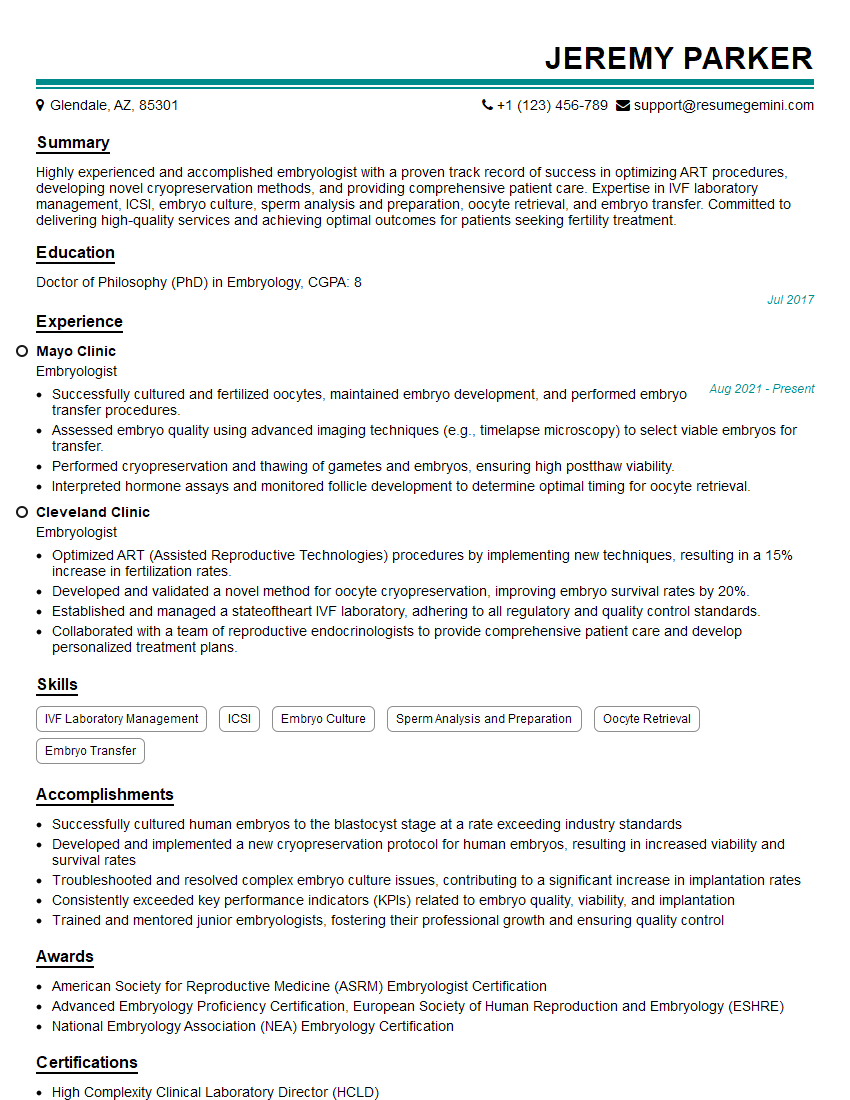
Mastering Artificial Insemination Technology opens doors to a rewarding career in animal reproduction and agricultural sciences. To significantly boost your job prospects, a well-crafted, ATS-friendly resume is crucial. ResumeGemini is a trusted resource to help you build a professional resume that highlights your skills and experience effectively. Examples of resumes tailored to Artificial Insemination Technology are provided to help guide your resume creation process. Take the next step towards your dream career by leveraging ResumeGemini’s expertise.
Explore more articles
Users Rating of Our Blogs
Share Your Experience
We value your feedback! Please rate our content and share your thoughts (optional).
What Readers Say About Our Blog
Very informative content, great job.
good