Every successful interview starts with knowing what to expect. In this blog, we’ll take you through the top ASME Code interview questions, breaking them down with expert tips to help you deliver impactful answers. Step into your next interview fully prepared and ready to succeed.
Questions Asked in ASME Code Interview
Q 1. Explain the difference between ASME Section VIII, Division 1 and Division 2.
ASME Section VIII, Division 1 and Division 2 both cover the design and construction of pressure vessels, but they differ significantly in their approach. Division 1 is a rules-based code, providing prescriptive design rules and readily applicable formulas. Think of it as a cookbook – you follow the recipe, and you get a reliable result. It’s simpler to use and widely adopted for a broad range of vessels. Division 2, on the other hand, is a performance-based code. It focuses on demonstrating the fitness-for-service of the vessel through detailed analysis and justification. This allows for more innovative designs and potentially more cost-effective solutions, but requires significantly more engineering expertise and detailed calculations. Imagine it as designing a custom-made dress – requires much more skill and tailoring to fit the specific needs.
In short: Division 1 is prescriptive, simpler, and widely used; Division 2 is performance-based, more complex, and suitable for advanced or specialized vessels.
Q 2. Describe the process of a pressure vessel design in accordance with ASME Section VIII, Division 1.
Designing a pressure vessel according to ASME Section VIII, Division 1 is a multi-step process. It begins with defining the vessel’s intended service conditions, including pressure, temperature, and the contents it will hold. Next, you select a suitable material, considering its allowable stress at the operating temperature (as defined in Section II, Part D). Then, the process involves determining the required shell thickness, head thickness, and nozzle reinforcements based on the code’s equations and formulas. This often includes considering factors such as corrosion allowance, weld joint efficiency, and possible loading conditions beyond internal pressure, like external loads or wind.
Crucially, all calculations must be meticulously documented, and the design must adhere to the code’s requirements for fabrication, inspection, and testing. Finally, a detailed drawing package needs to be created, incorporating all design aspects and complying with the relevant ASME standards. Once fabrication is complete, the vessel undergoes inspections and tests (such as hydrotesting) to confirm compliance with the design and code requirements.
For instance, designing a simple cylindrical pressure vessel will involve applying formulas to calculate the minimum shell thickness based on internal pressure, radius, and material properties. Any required reinforcement at nozzles or openings needs to be calculated and documented following specific procedures detailed within the code. All calculations must be neatly presented and properly referenced.
Q 3. What are the different types of weld joints permitted by ASME Section IX?
ASME Section IX, which covers welding and brazing qualifications, permits various weld joints, broadly classified by their geometry and preparation methods. These include:
- Butt Joints: Where two pieces are joined end-to-end, resulting in a smooth, continuous surface. These are common in pressure vessel construction.
- Fillet Joints: Formed by welding the edges of two intersecting pieces, creating a triangular weld bead. Often used for joining plates to other components.
- Lap Joints: Where two pieces overlap, and the weld is applied to the overlapping surfaces. Simpler than butt joints but generally weaker.
- Tee Joints: Formed when one piece joins another at a right angle. Often used for attaching nozzles to vessels.
- Corner Joints: Welding two pieces joined at a 90-degree angle. Similar in principle to Tee Joints.
Section IX also details specific weld joint configurations such as single bevel, double bevel, and J- or U-groove preparations. The choice depends on factors like material thickness, accessibility, and desired weld strength. The details of the joint preparation are as critical as the welding process itself to ensure the required weld quality and joint strength.
Q 4. Explain the significance of Non-Destructive Examination (NDE) in ASME Code compliance.
Non-Destructive Examination (NDE) is vital for ensuring ASME Code compliance, as it allows for the detection of flaws and imperfections in pressure vessel materials and welds without damaging the component. These imperfections, if undetected, could compromise the vessel’s integrity and safety. Common NDE methods include:
- Visual Inspection (VT): A basic but essential method, checking for surface defects.
- Radiographic Testing (RT): Uses X-rays or gamma rays to detect internal flaws.
- Ultrasonic Testing (UT): Uses high-frequency sound waves to detect internal discontinuities.
- Magnetic Particle Testing (MT): Detects surface and near-surface cracks in ferromagnetic materials.
- Liquid Penetrant Testing (PT): Detects surface-breaking flaws in most materials.
The specific NDE methods employed depend on the material, the welding process, and the criticality of the component. ASME Section V provides detailed procedures and acceptance criteria for these methods. A comprehensive NDE program is crucial for ensuring the pressure vessel is free from flaws that could lead to catastrophic failure. Think of it as a medical checkup for the vessel, ensuring it is healthy and safe for operation.
Q 5. How do you determine the allowable stress for a material according to ASME Section II, Part D?
The allowable stress for a material, as per ASME Section II, Part D, is found by referencing the material’s specification in the code. Each material has its properties listed, including its allowable stresses at different temperatures. This data is crucial for determining the minimum required thickness during vessel design.
For example, if you’re designing with SA-516 Grade 70 steel, you’d look up this material in Section II, Part D. The table will provide the allowable stresses (usually denoted as S) for various temperatures. It’s critical to select the correct stress value corresponding to the vessel’s operating temperature. Failure to do so could lead to an under-designed vessel, risking failure. These values often depend on the temperature and the type of loading (e.g., tensile, shear). Always ensure you use the appropriate allowable stress from the code.
Remember, this allowable stress is a crucial input in various pressure vessel design equations provided in Section VIII, Division 1. Selecting the incorrect stress value could have serious consequences.
Q 6. Describe the different types of pressure relief devices and their applications.
Pressure relief devices protect pressure vessels from over-pressurization, preventing catastrophic failure. Several types exist:
- Safety Valves: These are spring-loaded devices that open automatically when the pressure exceeds a preset value, relieving pressure to the atmosphere. They are typically used for fast-acting protection against sudden pressure surges.
- Relief Valves: Similar to safety valves, but usually offer a more precise pressure setpoint and controlled pressure release. They may be used for situations requiring more gradual pressure release.
- Rupture Disks: These are thin, usually metallic, diaphragms designed to burst at a specific pressure. Once ruptured, they provide a one-time pressure relief. They are often used in applications where a rapid pressure release is required and a resealable relief device is undesirable.
- Pressure Limiting Valves (PLVs): These valves regulate pressure by opening or closing to maintain the pressure within a specific range.
The selection of the appropriate pressure relief device depends on factors like the vessel’s operating pressure, the potential for pressure surges, the nature of the contained fluid, and environmental considerations. ASME Section VIII, Division 1, provides guidance on the sizing and selection of pressure relief devices.
Q 7. What are the requirements for pressure vessel hydrotesting according to ASME Section VIII, Division 1?
ASME Section VIII, Division 1, specifies requirements for hydrotesting pressure vessels. Hydrotesting involves filling the vessel with water and pressurizing it to a predetermined test pressure, typically exceeding the design pressure. This test verifies the vessel’s structural integrity.
The test pressure is typically 1.5 times the maximum allowable working pressure (MAWP). Before hydrotesting, a thorough visual inspection is required to check for any obvious defects. During testing, the vessel must be carefully monitored for leaks and deformation. After the test, the vessel must be thoroughly drained and inspected to ensure that no damage occurred during the testing process. A detailed report of the hydrotest procedure and results should be recorded. This report documents the applied pressure, the duration of testing, and any observations made during the process. This documentation is essential for maintaining the vessel’s operational history and ensuring compliance with the ASME code.
Hydrotesting is a critical aspect of ensuring the safety and reliability of a pressure vessel, and careful adherence to the code’s requirements is paramount.
Q 8. Explain the concept of fatigue analysis in pressure vessel design.
Fatigue analysis in pressure vessel design is crucial because it predicts the vessel’s lifespan under cyclic loading. Imagine a pressure vessel in a refinery – it’s constantly subjected to pressure fluctuations during operation. These repeated stress cycles can lead to microscopic cracks that propagate over time, eventually causing failure, even if the maximum stress remains below the material’s yield strength. Fatigue analysis aims to quantify this effect, determining the number of cycles a vessel can withstand before failure.
ASME Section VIII, Division 2, provides guidance on fatigue analysis. The process involves:
- Defining the loading spectrum: Identifying all the cyclic loads the vessel will experience (e.g., pressure surges, thermal cycles).
- Stress analysis: Calculating the stress at critical locations in the vessel due to these loads using finite element analysis (FEA) or other suitable methods.
- Fatigue life prediction: Using fatigue curves (S-N curves) for the material to determine the number of cycles to failure based on the calculated stress range.
- Safety factor application: Applying appropriate safety factors to ensure a sufficient margin against fatigue failure.
Failure to account for fatigue can lead to premature failure and catastrophic consequences. Therefore, it’s a crucial aspect of ensuring the safety and reliability of pressure vessels.
Q 9. What are the limitations of the ASME Code?
While ASME Code is a widely accepted and comprehensive standard, it does have limitations:
- Limited applicability to specific materials and operating conditions: The code primarily covers commonly used materials and typical operating conditions. For exotic materials or extreme operating environments (e.g., cryogenic temperatures, highly corrosive environments), additional analysis beyond the code’s provisions may be necessary.
- Conservative design approach: The code often adopts a conservative approach to ensure safety, which can lead to over-designed and more expensive vessels. More sophisticated analysis might allow for optimized designs.
- Lack of specific guidance for some advanced manufacturing techniques: The code’s coverage of advanced manufacturing techniques like additive manufacturing (3D printing) is still evolving. Specific considerations for these techniques may be needed.
- Reliance on material properties: The accuracy of the design relies heavily on the accuracy of the material properties provided. Improperly tested or characterized materials can compromise the integrity of the pressure vessel.
- Interpretation challenges: The code can be complex and ambiguous in some areas, requiring experienced engineers to interpret correctly. Incorrect interpretation can lead to design flaws.
It’s essential for engineers to understand these limitations and supplement the code with additional analysis where necessary to ensure safe and reliable designs.
Q 10. How do you interpret ASME Section VIII, Division 1, Figure UW-12?
ASME Section VIII, Division 1, Figure UW-12 shows allowable stresses for various weld joint efficiencies. It’s a crucial figure for designing welded pressure vessels. The figure is essentially a lookup table that depends on the type of weld joint used (e.g., butt welds, fillet welds), the type of weld (e.g., double-welded butt joint, single-welded butt joint with backing strip), and the applicable material.
To interpret it, you start by identifying the type of weld joint from your design. Then, you locate the appropriate curve in the figure corresponding to that type of weld. Finally, the intersection of that curve with the allowable stress from the material’s specification gives you the effective allowable stress (S) you can use in your design calculations. This effective stress considers the potential reduction in strength due to the welding process.
For example, if you use a double-welded butt joint and your material has an allowable stress of 15,000 psi, the figure might indicate an effective stress of 12,000 psi. You then use this reduced value in your calculations to ensure sufficient safety margin.
Q 11. What is the importance of material traceability in ASME Code compliance?
Material traceability is paramount for ASME Code compliance because it ensures that the materials used in the construction of the pressure vessel meet the required specifications and quality standards. Without proper traceability, there’s a risk of using substandard materials that could compromise the vessel’s integrity, leading to potential failures.
Material traceability involves documenting the entire chain of custody of the material, from its origin (mill certificate) to its final installation in the vessel. This documentation typically includes:
- Mill certificates: Providing chemical composition, mechanical properties, and heat treatment information.
- Heat numbers: Unique identifiers tracing the material’s batch or heat.
- Test reports: Documenting results of material tests (e.g., tensile tests, impact tests).
- Inspection reports: Verifying material conformity to specifications throughout the manufacturing process.
Without this meticulous documentation, the manufacturer cannot guarantee the vessel’s compliance with the ASME Code, ultimately endangering the safety and reliability of the vessel.
Q 12. Describe the different types of corrosion and how they affect pressure vessel design.
Various types of corrosion can significantly affect pressure vessel design. Understanding these mechanisms is crucial for selecting appropriate materials and implementing corrosion mitigation strategies.
- Uniform corrosion: This is a relatively predictable type of corrosion where the material degrades uniformly across its surface. It can be mitigated through material selection (e.g., using more corrosion-resistant materials) and protective coatings.
- Pitting corrosion: This involves localized corrosion that forms pits or cavities on the surface, leading to unpredictable and potentially catastrophic failure. It often occurs in stagnant or low-flow conditions. Selection of corrosion-resistant alloys and proper design to eliminate stagnant areas can be effective.
- Crevice corrosion: This occurs in confined spaces or crevices where oxygen or other reactants are depleted, creating a localized corrosive environment. Proper design to eliminate crevices is crucial, and the use of sealants can be helpful.
- Stress corrosion cracking (SCC): This occurs when a material is simultaneously subjected to tensile stress and a corrosive environment. It is often insidious as cracking may occur with minimal observable corrosion. Careful material selection, stress reduction techniques, and corrosion inhibitors are necessary.
- Galvanic corrosion: This happens when two dissimilar metals are in contact in the presence of an electrolyte. The more active metal corrodes preferentially. This can be mitigated by using similar metals or introducing electrical insulation between them.
The design of pressure vessels must consider the potential for each type of corrosion. This often involves material selection, the addition of corrosion inhibitors, protective coatings, and careful consideration of the operating environment.
Q 13. Explain the concept of design by rule versus design by analysis.
ASME code allows for two primary approaches to pressure vessel design: design by rule and design by analysis.
Design by rule uses simplified equations and pre-defined parameters specified in the code. It’s a more straightforward approach suitable for common vessel geometries and materials under relatively standard conditions. It relies on established formulas and tables within the ASME code to determine wall thicknesses and other critical parameters. It’s simpler and faster but might lead to more conservative (and potentially over-designed) vessels.
Design by analysis employs more sophisticated engineering analysis techniques, such as finite element analysis (FEA), to determine stresses and strains within the vessel under various loading conditions. It allows for more detailed and optimized designs for complex geometries or non-standard operating conditions. This approach offers flexibility but demands more expertise and computational resources.
The choice between these approaches depends on factors like the complexity of the design, the operating conditions, the availability of resources (time and expertise), and the desired level of design optimization. Often, a combination of both approaches is employed. For instance, the major components might use design by analysis, while simpler parts utilize design by rule.
Q 14. What are the key differences between ASME B31.1 and ASME B31.3?
ASME B31.1 and ASME B31.3 are both standards for piping systems, but they cover different applications:
- ASME B31.1: Covers power piping. It’s primarily used for piping systems in power generation plants, refineries, and other high-pressure, high-temperature applications. It often deals with larger diameter pipes and more stringent requirements due to the critical nature of these systems.
- ASME B31.3: Covers process piping. This standard applies to piping systems in chemical plants, refineries, and other process industries, generally handling a wider variety of fluids and pressures than power piping. It often features smaller diameter pipes, and the design considerations vary depending on the transported fluid.
Key differences include the scope of application, design pressures and temperatures, material allowances, and specific design requirements. For example, B31.1 has more stringent requirements regarding stress analysis and fatigue considerations, reflecting the higher stakes associated with power piping.
Selecting the correct standard is vital for ensuring the safe and reliable operation of piping systems. An incorrect choice could lead to designs inadequate for the intended service conditions.
Q 15. Explain the concept of a ‘fitness-for-service’ assessment.
Fitness-for-service (FFS) assessment is a crucial process in ASME Code compliance, determining if a component with a flaw (like a crack or corrosion) can continue operating safely. Instead of automatically condemning a damaged component, FFS uses engineering analysis to evaluate the risk. It considers the flaw’s size, location, type, and the component’s operating conditions to determine whether the remaining structural integrity is sufficient to prevent failure under expected loads.
Think of it like this: Imagine a small dent in your car’s bumper. Instead of immediately replacing the entire bumper, a mechanic might assess the damage and determine that the dent doesn’t compromise the structural integrity of the car. FFS performs a similar assessment for pressure vessels, ensuring safety and avoiding unnecessary replacements.
The process typically involves:
- Flaw characterization: Determining the size, shape, and location of the flaw using non-destructive examination (NDE) techniques.
- Stress analysis: Calculating the stresses acting on the component during operation.
- Failure assessment: Evaluating the risk of failure based on the flaw and stress analysis, often using established fracture mechanics methods outlined in ASME Section XI.
- Remaining life assessment: Determining how long the component can continue to operate safely with the flaw present.
A successful FFS assessment allows continued operation, potentially saving significant time and costs compared to replacement.
Career Expert Tips:
- Ace those interviews! Prepare effectively by reviewing the Top 50 Most Common Interview Questions on ResumeGemini.
- Navigate your job search with confidence! Explore a wide range of Career Tips on ResumeGemini. Learn about common challenges and recommendations to overcome them.
- Craft the perfect resume! Master the Art of Resume Writing with ResumeGemini’s guide. Showcase your unique qualifications and achievements effectively.
- Don’t miss out on holiday savings! Build your dream resume with ResumeGemini’s ATS optimized templates.
Q 16. What are the requirements for pressure vessel stamping and certification?
ASME pressure vessel stamping and certification ensures that a vessel meets the rigorous safety requirements of the code. The ‘U’ stamp signifies that the vessel has been designed, manufactured, and inspected by an authorized inspection agency in accordance with the ASME Boiler and Pressure Vessel Code. This provides assurance that the vessel has been built to withstand its intended operating pressures and temperatures.
The requirements are stringent and involve several steps:
- Design review: Ensuring the design calculations and specifications meet ASME Code requirements.
- Material certification: Verifying that materials used meet the required specifications and trace-ability.
- Fabrication inspection: Monitoring the manufacturing process to ensure welding, heat treatment, and other aspects meet Code standards. This often includes witnessing of welding procedures.
- Non-destructive examination (NDE): Utilizing techniques like radiography, ultrasonic testing, and magnetic particle inspection to identify flaws.
- Hydrostatic testing: Subjecting the vessel to pressure exceeding its operating pressure to verify its structural integrity.
- Stamping and certification: Once all requirements are met, an authorized inspector applies the ‘U’ stamp and issues a certificate of compliance.
Failure to meet these requirements can lead to serious consequences, including vessel failure and potential harm to personnel or the environment. A ‘U’ stamp signifies that the pressure vessel is built to a globally recognized standard.
Q 17. How do you handle deviations from ASME Code requirements?
Deviations from ASME Code requirements require careful consideration and a documented justification. Simply ignoring them is unacceptable and can have serious safety implications.
The approach involves:
- Documenting the deviation: Clearly stating the specific Code requirement that is being deviated from and the proposed alternative.
- Engineering justification: Providing a thorough explanation of why the deviation is necessary and how it will not compromise safety. This often involves engineering calculations and analysis.
- Alternative design analysis: Showing that the proposed alternative meets or exceeds the intent of the original Code requirement.
- Review and approval: Submitting the documentation to the appropriate authorities, including the owner, design engineer, and authorized inspection agency, for review and approval.
- Tracking and monitoring: Maintaining records of the deviation and its impact throughout the project lifecycle.
An example might be using a different weld procedure than specified in the code, provided a thorough analysis demonstrates its suitability for the application. However, this requires a rigorous justification and approval process.
Q 18. What are some common causes of pressure vessel failures?
Pressure vessel failures can stem from various sources, often stemming from a combination of factors rather than a single cause. Common causes include:
- Material defects: Flaws in the base material, such as inclusions or cracks, can initiate failure under pressure.
- Design flaws: Inadequate design calculations, incorrect stress analysis, or improper selection of materials can lead to failure.
- Fabrication errors: Poor welding practices, improper heat treatment, or other manufacturing defects can significantly weaken the vessel.
- Corrosion: Internal or external corrosion weakens the vessel’s walls over time, increasing the risk of failure.
- Overpressure: Exceeding the vessel’s design pressure can lead to catastrophic failure.
- Fatigue: Repeated cycles of pressure can cause fatigue cracks, eventually leading to failure. This is often exacerbated by corrosive environments.
- Improper operation: Incorrect operating procedures or lack of maintenance can accelerate vessel degradation.
Investigating failures requires a meticulous approach. A thorough failure analysis, often involving metallurgical examination and finite element analysis, is necessary to determine the root cause and prevent similar failures in the future.
Q 19. Describe the process for conducting a pressure vessel inspection.
Pressure vessel inspection is a multi-step process, crucial for ensuring continued safe operation. The frequency and extent of inspections depend on factors like vessel age, operating conditions, and material properties. ASME Section VIII, Division 1 provides guidance on inspection requirements.
A typical inspection includes:
- Visual inspection: A thorough visual examination to identify external corrosion, damage, or leaks.
- Non-destructive examination (NDE): Utilizing techniques such as radiography, ultrasonic testing, and magnetic particle inspection to detect internal flaws.
- Pressure testing (hydrostatic or pneumatic): Subjecting the vessel to pressure to verify its integrity and leak tightness.
- Documentation: Meticulous record-keeping of all inspection findings, including photographs, measurements, and assessment of findings.
- Data analysis and interpretation: Assessing inspection data to determine the overall condition of the vessel and recommend any necessary repairs or maintenance.
Regular inspections are vital. Early detection of issues allows for timely corrective actions, preventing catastrophic failures and maintaining safety.
Q 20. Explain the importance of maintaining proper documentation in ASME Code compliance.
Proper documentation is paramount in ASME Code compliance. It serves as a crucial record of the vessel’s history, design, fabrication, inspection, and maintenance. This documentation is essential for ensuring safety, traceability, and regulatory compliance.
The importance lies in:
- Traceability: Demonstrating that all aspects of the vessel’s lifecycle have adhered to Code requirements.
- Safety assurance: Providing a comprehensive history that supports the continued safe operation of the vessel.
- Regulatory compliance: Meeting the requirements of various regulatory bodies.
- Legal protection: Providing evidence of compliance in case of incidents or legal disputes.
- Maintenance planning: Informing future maintenance and repair activities.
Without proper documentation, it becomes impossible to verify compliance, leading to increased risks and potential legal issues. Think of it as a vessel’s ‘medical record’—essential for tracking its health and ensuring its long-term well-being.
Q 21. What is the role of a Code Compliance Engineer in a project?
A Code Compliance Engineer plays a critical role in ensuring that pressure vessels and other equipment conform to the ASME Code. They act as the technical expert, responsible for interpreting Code requirements and applying them throughout the project lifecycle.
Their responsibilities typically include:
- Design review: Reviewing design calculations, specifications, and drawings to ensure compliance with ASME Code.
- Material selection and verification: Ensuring that materials meet Code requirements.
- Fabrication oversight: Monitoring the manufacturing process to verify adherence to Code requirements.
- Inspection planning: Developing and implementing an effective inspection program.
- NDE evaluation: Interpreting results of non-destructive examination tests.
- Deviation management: Handling deviations from Code requirements.
- Documentation review: Ensuring that all relevant documentation is complete and accurate.
The Code Compliance Engineer is ultimately responsible for ensuring that the pressure vessels are built, operated, and maintained safely and in accordance with the ASME Code, minimizing risks and protecting human life and the environment.
Q 22. How do you ensure the quality of welds in pressure vessel fabrication?
Ensuring the quality of welds in pressure vessel fabrication is paramount for safety and reliability. It’s a multi-faceted process encompassing meticulous planning, execution, and inspection, all governed by stringent ASME Section IX requirements.
Firstly, we start with welder qualification. Welders must demonstrate proficiency through rigorous testing, proving their ability to produce sound welds meeting the specified code requirements. This usually involves performing weld tests on test coupons to specific weld procedures (WPS) which are qualified and approved beforehand. The WPS details every aspect of the welding process: electrode type, preheat temperature, welding parameters etc. These WPS are then reviewed and approved by Welding Engineers.
Secondly, stringent non-destructive examination (NDE) techniques are employed throughout the process. These include visual inspection (VT), radiographic testing (RT), ultrasonic testing (UT), and magnetic particle testing (MT) – the specific methods depend on the weld type, material, and ASME code requirements. For example, critical welds in high-pressure vessels would likely require both RT and UT. Any detected flaws are assessed for acceptability against ASME Section VIII, Division 1 criteria.
Thirdly, a robust quality control program is essential. This involves maintaining meticulous records, verifying materials, and ensuring adherence to approved welding procedures. Regular audits and inspections are crucial to ensure consistent compliance. We also ensure proper post-weld heat treatment (PWHT), if required, to relieve stress and enhance the weld’s metallurgical properties. Think of it like stress-relieving a piece of metal after it’s been heavily worked; PWHT does the same for welds.
Finally, traceability is key. Every stage of the welding process, from material sourcing to final inspection, is documented and traceable, enabling us to identify and rectify any issues swiftly. This detailed documentation provides confidence in the integrity of the pressure vessel.
Q 23. Describe your experience with specific ASME codes, such as Section VIII, Division 1 or Section IX.
My experience with ASME codes, particularly Section VIII, Division 1 and Section IX, spans over [Number] years. I’ve been involved in numerous projects ranging from small-scale pressure vessels to large-scale industrial reactors, all requiring strict adherence to these codes.
In Section VIII, Division 1, my expertise lies in design, material selection, and stress analysis. I’m proficient in calculating allowable stresses, performing fatigue analyses, and designing pressure vessels to meet specific operating conditions. I’ve worked with various materials, including carbon steel, stainless steel, and alloys, and understand the implications of material selection on the design and fabrication process. I have also extensively used ASME Section VIII, Division 2 for more complex pressure vessel design and analysis scenarios.
With regard to Section IX, my experience is centered around welding qualification and procedure development. I’ve developed numerous Welding Procedure Specifications (WPS) tailored to specific materials and welding processes, ensuring compliance with the code’s stringent requirements. I’m thoroughly familiar with various non-destructive testing (NDT) methods, and I’ve directly overseen NDT inspection of numerous welds, ensuring the welds meet the required standards.
One particular project involved designing a high-pressure reactor vessel for a chemical processing plant. Using Section VIII, Division 1, we calculated the required wall thickness, determined appropriate nozzle reinforcement, and ensured complete compliance with the relevant code sections, including all applicable safety factors. The process also involved developing and qualifying WPS’s per Section IX to ensure consistent high-quality welding throughout.
Q 24. Explain your understanding of the different types of pressure vessels and their applications.
Pressure vessels come in various shapes, sizes, and materials, each suited for specific applications. Broadly, they can be categorized based on their design and operating conditions.
- Horizontal and Vertical Vessels: These are the most common types, differentiated by their orientation. Horizontal vessels are often used for storage, while vertical vessels might be used for reactors or separators. The orientation choice depends on factors such as space constraints, liquid level monitoring needs, and the specific process requirements.
- Spherical and Ellipsoidal Vessels: These designs offer higher pressure capabilities due to their ability to better distribute stresses, making them suitable for high-pressure applications like gas storage or certain types of reactors. They also are optimal for minimizing material usage for a given volume.
- Jacketed Vessels: These vessels incorporate an outer shell for heating or cooling, often used in chemical processes where temperature control is critical. The jacket allows for indirect heating or cooling of the contents.
- Autoclaves: Specifically designed for high-temperature and high-pressure processes, often found in sterilization or chemical synthesis applications.
- Cryogenic Vessels: Used for storing and handling extremely low-temperature liquids, requiring specialized insulation and materials to prevent heat transfer.
The choice of pressure vessel type depends heavily on the application. A refinery might use a large horizontal vessel for crude oil storage, while a pharmaceutical plant might use a jacketed vessel for a chemical reaction that needs precise temperature control. Each application dictates the design, material selection, and safety requirements.
Q 25. What are some of the challenges you have faced in complying with ASME Codes?
Compliance with ASME Codes presents numerous challenges. One common issue is ensuring that all materials used in construction meet the stringent material traceability requirements. This involves thorough documentation and verification of material properties, certificates of compliance, and chemical analysis reports. The process of securing all necessary documentation can be extremely time-consuming.
Another challenge is interpreting and applying the code itself. The ASME Code is extensive and complex, often requiring expert interpretation to ensure proper application in specific design and fabrication situations. Ambiguity can sometimes arise, requiring careful review and consultation with other engineers and code experts.
Managing changes during the project lifecycle can also be challenging. Changes to design, material specifications, or fabrication processes require thorough assessment and documentation to ensure ongoing compliance. This often involves updating drawings, WPS’s, and other relevant documents, which can be a significant administrative undertaking.
Finally, managing the regulatory environment and ensuring compliance with local and international standards alongside ASME requirements adds another layer of complexity. This requires staying updated on the latest codes, standards, and regulatory requirements. A recent project faced challenges with international codes, differing from the ASME codes and demanding a meticulous cross-referencing and reconciliation process.
Q 26. How do you stay current with changes and updates to the ASME Code?
Staying current with ASME Code changes and updates is crucial for maintaining compliance and ensuring the safety and reliability of pressure vessels. I employ several strategies to achieve this.
- ASME Membership and Subscriptions: Active membership in ASME provides access to the latest code updates, interpretations, and addenda. This allows me to receive timely notifications of changes and access detailed documentation regarding revisions.
- Professional Development Courses and Seminars: Regular attendance at workshops, seminars, and training courses keeps my knowledge up-to-date on code changes and best practices. This often includes opportunities for interaction with other industry professionals, leading to valuable knowledge sharing.
- Industry Publications and Journals: Staying informed through publications such as Pressure Vessel International and other related journals ensures I am aware of the industry’s best practices and any significant changes or interpretations of the ASME Code.
- Networking and Collaboration: Engaging with other professionals and experts in the field allows me to share knowledge and discuss interpretations and challenges related to code compliance. Regular discussions with peers helps stay abreast of evolving best practices.
This multifaceted approach guarantees that my knowledge remains current, allowing me to provide the highest level of expertise in pressure vessel design and fabrication. This commitment to continuing education makes me confident in my ability to apply the latest code provisions and design pressure vessels to the most current standards.
Q 27. Describe your approach to problem-solving in situations involving ASME Code compliance.
My approach to problem-solving regarding ASME Code compliance involves a structured and systematic process. I begin by clearly defining the problem and its context, gathering all relevant information such as drawings, specifications, and test results.
Next, I thoroughly review the applicable sections of the ASME Code, consulting any relevant interpretations or addenda. I also consider industry best practices and any past experiences with similar issues. The next step involves brainstorming potential solutions, carefully evaluating each option against its technical feasibility, cost-effectiveness, and impact on safety and compliance.
Once a solution is selected, I implement it carefully, documenting each step and ensuring that any changes to the design or fabrication process are properly documented and approved. I ensure strict adherence to all relevant ASME requirements throughout the process. Finally, I perform a thorough verification to ensure the solution solves the problem, meets all relevant code requirements, and maintains the safety and integrity of the pressure vessel. If further ambiguities arise, I would consult with other engineers or code experts and document those discussions.
For instance, if a weld was found to have a flaw during inspection, I wouldn’t simply scrap the component. Instead, I would determine the flaw’s severity based on ASME Section VIII, Division 1, Appendix 4, and whether it could be repaired following the guidance within ASME Section IX. If repair is possible and is within the allowable limits as dictated by the code, I would carefully manage the repair process to guarantee the integrity of the weld.
Q 28. Explain the difference between a design code and a construction code.
The distinction between a design code and a construction code is crucial in pressure vessel engineering. The design code, such as ASME Section VIII, Division 1 or 2, specifies the rules and requirements for designing pressure vessels to ensure they can safely withstand the intended operating pressures and temperatures. It focuses on the engineering calculations, material selection, stress analysis, and overall design parameters necessary to achieve a safe and functional pressure vessel.
Conversely, a construction code, such as ASME Section IX, focuses on the fabrication and construction aspects of pressure vessels. It outlines the requirements for welding, non-destructive testing, and quality control procedures needed to ensure the vessel is built according to the design specifications and maintains its integrity. It dictates the standards for manufacturing, assembly, and testing during the fabrication process.
Think of it as a blueprint (design code) and a building instruction manual (construction code). The blueprint dictates the building’s size, features, and structural integrity while the building manual details the steps for constructing the building according to the blueprint, using specified materials and construction methods. Both are vital for creating a safe and functional structure, in this case, a pressure vessel. The design code dictates what needs to be built, and the construction code dictates how it should be built.
Key Topics to Learn for ASME Code Interview
- Section VIII, Division 1: Rules for Construction of Pressure Vessels: Understand the fundamental design rules, including stress calculations, material selection, and fabrication requirements. Focus on practical application of these rules in various pressure vessel designs.
- Section II, Part D: Properties of Materials: Learn how to interpret material properties and select appropriate materials based on design requirements and operating conditions. Practice problems involving material selection and allowable stress calculations are crucial.
- Non-destructive Examination (NDE): Familiarize yourself with common NDE methods like radiography, ultrasonic testing, and liquid penetrant testing. Understand their applications in ensuring pressure vessel integrity and compliance with ASME Code.
- Weld Design and Inspection: Master the principles of weld design, including weld joint types, weld symbols, and weld inspection procedures. Understand the implications of welding defects on pressure vessel safety.
- Pressure Relief Devices: Gain a thorough understanding of the selection, sizing, and installation of pressure relief valves. Be prepared to discuss the different types of relief devices and their applications.
- Design by Analysis (DBA): If applicable to your target role, understand the principles and application of DBA methods in pressure vessel design. This often involves finite element analysis (FEA).
- ASME Code Case Interpretations: Be aware that specific interpretations of the code exist and how these may impact designs and calculations. Understanding where to find and apply these is valuable.
Next Steps
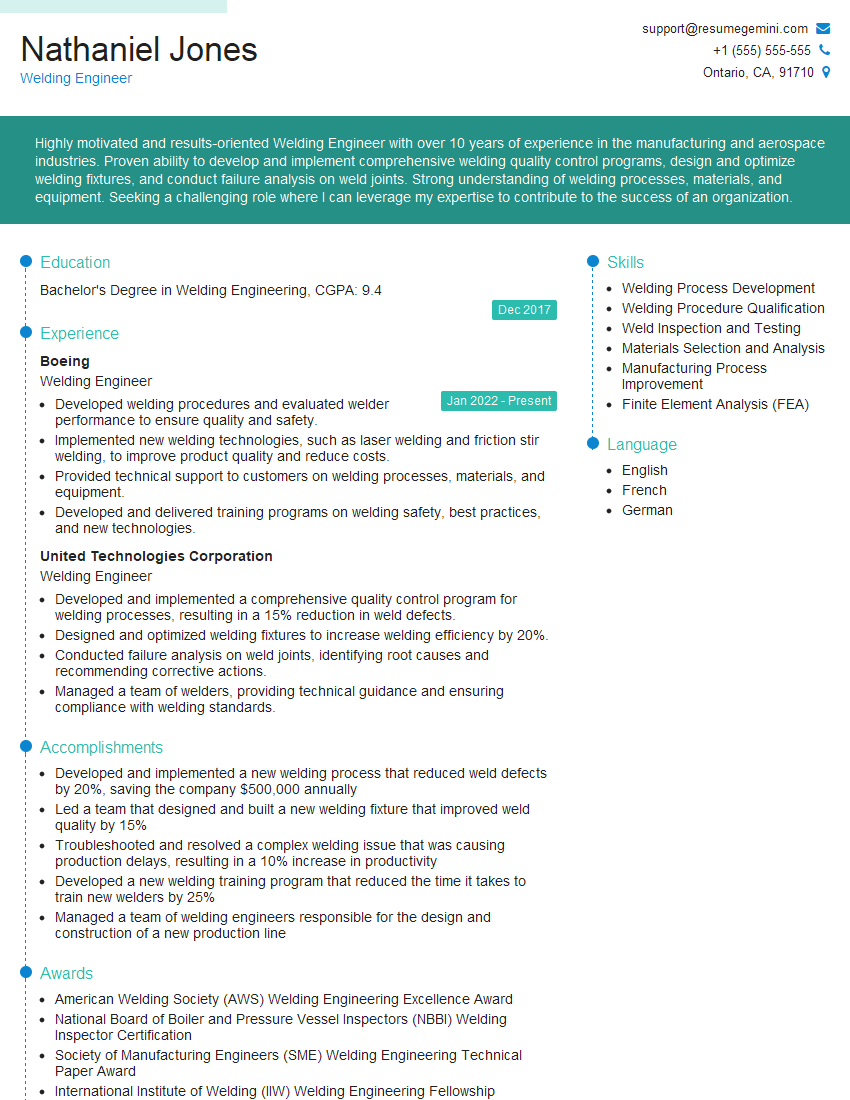
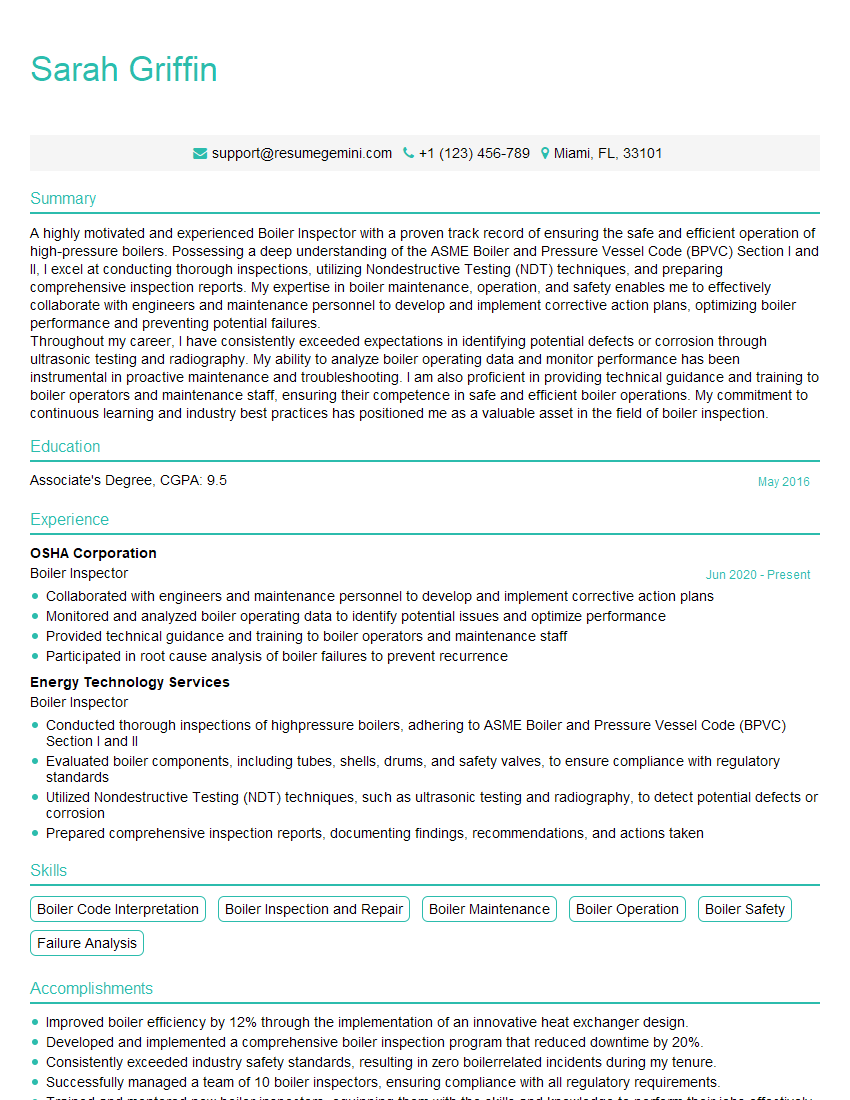
Mastering ASME Code is paramount for career advancement in engineering, opening doors to challenging and rewarding roles within the pressure vessel and related industries. A strong understanding of these codes demonstrates technical expertise and commitment to safety. To maximize your job prospects, invest time in creating an ATS-friendly resume that highlights your ASME Code knowledge and relevant experience. ResumeGemini is a trusted resource to help you build a professional and impactful resume, ensuring your skills and experience shine. Examples of resumes tailored to ASME Code expertise are available to guide you through the process. Don’t delay, begin building your future today!
Explore more articles
Users Rating of Our Blogs
Share Your Experience
We value your feedback! Please rate our content and share your thoughts (optional).
What Readers Say About Our Blog
Very informative content, great job.
good