Are you ready to stand out in your next interview? Understanding and preparing for Injury Documentation interview questions is a game-changer. In this blog, we’ve compiled key questions and expert advice to help you showcase your skills with confidence and precision. Let’s get started on your journey to acing the interview.
Questions Asked in Injury Documentation Interview
Q 1. Explain the importance of accurate and timely injury documentation.
Accurate and timely injury documentation is paramount for several reasons. It forms the cornerstone of effective treatment, enables appropriate resource allocation, aids in preventing future injuries, and provides crucial legal protection for both the injured individual and the organization involved. Think of it as a medical detective story; the documentation is the evidence that helps us understand what happened, how severe it was, and what needs to be done.
Timeliness ensures that critical information is available promptly for immediate treatment decisions. Delays can lead to complications or missed opportunities for intervention. Accuracy ensures that the documented information is a true reflection of the injury, preventing misdiagnosis and treatment errors. An inaccurate record could lead to incorrect diagnoses and ineffective treatment plans.
- Example: A delayed record of a head injury might delay the administration of crucial medications, leading to worsened neurological outcomes.
- Example: An inaccurate description of a back injury might lead to a treatment plan focusing on the wrong area, delaying recovery.
Q 2. Describe your experience with different types of injury documentation forms.
Throughout my career, I’ve worked extensively with various injury documentation forms, including simple incident reports, detailed medical evaluations, and comprehensive workers’ compensation forms. Each form serves a unique purpose and requires a different level of detail.
- Incident Reports: These typically focus on the circumstances surrounding the injury—the date, time, location, witnesses, and a brief description of the event. They are usually concise and readily accessible in case of an immediate investigation.
- Medical Evaluations: These are more comprehensive, including detailed descriptions of the injuries sustained, diagnostic tests performed (X-rays, MRIs, etc.), prognosis, and recommended treatment plans. They often involve complex medical terminology and require a high degree of medical knowledge.
- Workers’ Compensation Forms: These are specific legal documents used to document injuries sustained in the workplace. They often require precise adherence to specific state or federal regulations and may include information regarding lost wages, medical expenses, and return-to-work plans. These forms are crucial for insurance claims and legal proceedings.
My experience with these diverse forms has honed my ability to adapt to different reporting requirements and ensure the completeness and accuracy of the information captured.
Q 3. How do you ensure the confidentiality of patient information within injury documentation?
Confidentiality is paramount in injury documentation. I adhere to strict protocols to safeguard patient information, complying with regulations like HIPAA (Health Insurance Portability and Accountability Act) in the United States and equivalent regulations in other jurisdictions.
- Secure Storage: All documentation is stored in secure, password-protected electronic systems or in locked, physically secure cabinets. Access is restricted to authorized personnel only.
- Data Encryption: Electronic records are encrypted both in transit and at rest to protect against unauthorized access.
- Access Control: Access to patient information is limited using role-based access control, meaning that only those with a legitimate need to access the information (e.g., treating physicians, case managers) are granted access.
- Compliance Training: I undergo regular training on data privacy and security best practices to ensure continued compliance with relevant regulations.
Maintaining confidentiality is not just a matter of compliance; it’s about earning and maintaining the trust of our patients. It’s crucial for building strong doctor-patient relationships.
Q 4. What software or systems are you proficient in for managing injury documentation?
I am proficient in several software and systems for managing injury documentation. My experience includes:
- Electronic Health Records (EHR) systems: Such as Epic, Cerner, and Meditech. These systems provide a centralized repository for patient medical information, allowing for efficient record-keeping, improved communication between healthcare providers, and better patient care.
- Workers’ compensation management software: These systems are specifically designed to manage the complex processes involved in workers’ compensation claims, including injury reporting, medical bill tracking, and case management.
- Database Management Systems (DBMS): My familiarity with SQL and other database languages allows me to efficiently manage and query large datasets of injury information for analysis and reporting.
I am adept at using these tools to ensure that information is accurately recorded, easily accessible, and securely stored.
Q 5. How would you handle an incomplete or inaccurate injury report?
Handling incomplete or inaccurate injury reports requires a systematic approach. The first step is to identify the missing or inaccurate information. This often involves reviewing the initial report, contacting the individual who completed the report (if possible), and, when appropriate, consulting with the injured person and any witnesses to clarify the situation.
Once the missing or erroneous information is identified, I would take steps to correct it. This could involve contacting the individual who completed the original report to request clarification, conducting follow-up interviews, reviewing medical records, or ordering additional diagnostic tests. I would document all steps taken to resolve the inconsistencies and update the report with the verified information.
If I encounter significant inconsistencies or evidence of falsification, I would escalate the matter to the appropriate supervisory personnel to determine whether further investigation is warranted.
Q 6. Describe your process for verifying the accuracy of injury documentation.
Verifying the accuracy of injury documentation is an ongoing process. I use a multi-faceted approach:
- Cross-referencing information: I compare information from multiple sources, such as the initial incident report, medical records, witness statements, and any photographic or video evidence to ensure consistency.
- Reviewing medical records: I carefully review medical reports, diagnostic test results, and treatment notes to corroborate the documented injuries.
- Clinical examination (where applicable): A physical examination of the injured person can provide valuable insights that can be compared with the documented information.
- Independent medical examination (IME): In cases of significant disagreement, an independent medical professional might be consulted for an objective assessment.
This comprehensive approach helps to ensure the completeness and accuracy of the documentation, creating a reliable record of the injury and subsequent treatment.
Q 7. What are the legal and regulatory requirements surrounding injury documentation?
Legal and regulatory requirements surrounding injury documentation vary by jurisdiction, but there are common themes. These requirements are designed to ensure accurate and reliable records, protect patient rights, and provide transparency in legal and insurance proceedings.
- HIPAA (US): In the US, HIPAA regulations govern the privacy and security of Protected Health Information (PHI), requiring stringent measures to protect patient confidentiality.
- Workers’ Compensation Laws (vary by state/country): Specific regulations dictate the necessary information for workplace injury claims, often involving detailed reporting procedures and documentation requirements for insurance purposes.
- OSHA (US): The Occupational Safety and Health Administration in the US sets standards for workplace safety and record-keeping related to workplace injuries and illnesses.
- Data Protection Acts (vary by country): Many jurisdictions have laws regulating data protection and privacy, influencing how personal injury information is collected, stored, and used.
Staying up-to-date on these regulations is crucial for maintaining compliance and ensuring the legal validity of injury documentation. Failure to comply can lead to significant legal ramifications, including fines and legal action.
Q 8. How do you ensure compliance with HIPAA regulations in injury documentation?
Ensuring HIPAA compliance in injury documentation is paramount. It’s all about protecting patient privacy and adhering to strict regulations. This involves several key steps. First, I always make sure that all patient information, including names, addresses, medical record numbers, and any details related to their injury, is handled with utmost confidentiality. This means using secure systems for storage and transmission of data, and restricting access to authorized personnel only. Second, I strictly adhere to the minimum necessary standard, accessing and using only the information absolutely required for the specific task. For instance, if I’m documenting a specific knee injury, I don’t access unrelated medical history. Third, I follow strict protocols for document disposal, ensuring any paper records are securely shredded and electronic records are deleted according to organizational policy. Finally, I stay updated on all HIPAA regulations and our organization’s policies and procedures, attending relevant training sessions and proactively seeking clarification whenever needed. Think of it like guarding a valuable treasure – you need multiple layers of security to keep it safe.
Q 9. Explain the differences between subjective and objective findings in injury documentation.
Subjective and objective findings represent two distinct aspects of injury documentation. Subjective findings are what the patient reports – their symptoms, feelings, and perceptions. For example, a patient might say, ‘My knee pain is a 7 out of 10 on a pain scale,’ or ‘I feel a sharp stabbing pain when I bend my knee.’ These are based on the patient’s experience and can vary. Objective findings, on the other hand, are based on verifiable evidence obtained through examination or testing. This includes things like swelling, bruising, range of motion limitations measured with a goniometer (a tool to measure angles), or results from imaging studies like X-rays or MRIs. Let’s say a patient reports knee pain (subjective). My objective findings could be: ‘2cm of swelling noted on the right knee,’ ‘Decreased range of motion in right knee flexion by 30 degrees,’ and ‘Positive Lachman test indicating anterior cruciate ligament injury.’ The difference is crucial – objective findings provide quantifiable data to support the diagnosis and treatment plan, while subjective findings contribute vital contextual information about the patient’s experience.
Q 10. How do you handle discrepancies between a patient’s statement and other documented evidence?
Discrepancies between a patient’s statement and other documented evidence require careful attention and thorough investigation. I would first review all available documentation, including the patient’s history, examination notes, imaging reports, and any witness statements. If there are minor discrepancies, I’d try to clarify them with the patient, perhaps addressing any misunderstanding or memory lapses. If the discrepancies are significant, however, I would document them carefully, outlining the differences and the rationale for any conclusions drawn. For example, if a patient states they didn’t fall, but the injury suggests a fall, I would document both the patient’s statement and the objective findings that suggest a fall (e.g., specific type of injury commonly associated with falls). I would then document my attempts to resolve the discrepancies and any additional investigations carried out. The goal is to build a comprehensive picture of the events leading to the injury, acknowledging all data points, regardless of any inconsistencies. Transparency and accurate record-keeping are key here. In some cases, further investigation may involve consultations with other healthcare professionals or even legal consultation.
Q 11. Describe your experience with coding and billing related to injuries.
My experience with coding and billing related to injuries is extensive. I am proficient in using various coding systems, including ICD-10-CM for diagnosis codes and CPT for procedural codes. This involves selecting the most accurate codes to reflect the patient’s diagnoses and procedures related to their injuries. For example, an ankle sprain would require specific ICD-10 codes for the type and severity of the sprain, and the CPT codes would reflect whether or not an x-ray was taken or any other procedures were performed. Accurate coding is crucial for reimbursement. I regularly stay updated on changes in coding guidelines and industry best practices, and attend regular coding compliance training sessions. I also understand the nuances of medical billing procedures, ensuring claims are submitted accurately and timely to maximize reimbursement while adhering to all regulatory requirements. I regularly perform audits to ensure accuracy in coding to minimize any chances of audit denials or claim issues.
Q 12. How do you prioritize tasks when managing a high volume of injury documentation?
Managing a high volume of injury documentation requires a structured approach to prioritize tasks. I utilize several strategies. First, I prioritize cases based on urgency and severity. Cases involving immediate medical needs, significant injuries, or legal implications take precedence. Second, I use a task management system, whether electronic or paper-based, to keep track of all documentation tasks and their deadlines. This allows me to efficiently track progress and avoid missing critical deadlines. Third, I break down large tasks into smaller, more manageable steps to prevent feeling overwhelmed and increase efficiency. Fourth, I proactively communicate with colleagues and supervisors to discuss caseloads and potential workflow improvements. Finally, I delegate tasks when possible and leverage technology to streamline certain processes. This may involve utilizing automated systems for generating reports or using templates to standardize documentation. This is all about efficient time management—working smartly, not just hard.
Q 13. What is your experience with electronic health records (EHRs) and injury documentation?
My experience with Electronic Health Records (EHRs) and injury documentation is extensive. I am proficient in using various EHR systems, and I am adept at utilizing their features to efficiently document injuries. EHRs streamline the process, improving accuracy and reducing documentation time. I utilize EHRs to record patient history, examination findings, diagnostic test results, treatment plans, progress notes, and other relevant information. I’m familiar with various EHR functionalities, including templating for standardized documentation, automated reporting, and secure messaging. This allows for efficient data management and streamlined communication among healthcare professionals. Moreover, EHRs offer features for tracking injury-related outcomes and facilitating communication regarding the patient’s progress. I’m comfortable using various EHR systems and can adapt quickly to new systems as needed.
Q 14. How do you utilize injury documentation to assist in the claims process?
Injury documentation plays a vital role in the claims process. Accurate and comprehensive documentation is essential to support the claim and ensure appropriate reimbursement. I utilize injury documentation to provide clear and concise information about the nature and extent of the injury, including the mechanism of injury, diagnosis, treatment provided, and prognosis. This includes providing detailed supporting evidence, such as imaging reports and test results. Well-documented claims are less likely to be denied due to lack of sufficient information. Clear and consistent documentation ensures that all stakeholders – the patient, insurance companies, and legal professionals (if needed) – have access to the necessary information for a swift and successful claims process. I ensure the documentation supports the medical necessity of all procedures and treatment rendered to prevent any issues. It’s like providing a strong foundation for the claim—the better the foundation, the less likely the claim will collapse.
Q 15. How do you maintain the integrity of injury documentation over time?
Maintaining the integrity of injury documentation over time is crucial for accurate record-keeping and legal defensibility. Think of it like building a strong foundation for a house – if the foundation is weak, the entire structure is at risk. We achieve this through several key strategies:
- Using a standardized format: Consistent templates ensure all essential information is captured reliably and uniformly across all reports. This includes date, time, location of injury, description of the event, and detailed injury specifics.
- Employing secure electronic health record (EHR) systems: EHR systems offer robust security features, including access controls, audit trails, and encryption, protecting data from unauthorized access and alteration. They also allow for easy retrieval and version control.
- Regular data backups: Regular backups, stored offsite, protect against data loss due to system failures or natural disasters. The frequency of backups should align with the sensitivity of the data.
- Proper storage and archival: Physical records, if any, should be stored in secure, climate-controlled environments. This protects against degradation and loss.
- Following established retention policies: Complying with relevant legal and regulatory requirements regarding data retention ensures that records are kept for an appropriate duration and then disposed of securely.
For example, in a worker’s compensation case, a consistently maintained and accurate record is vital to proving the link between the injury and the workplace. Any gaps or inconsistencies can undermine the claim.
Career Expert Tips:
- Ace those interviews! Prepare effectively by reviewing the Top 50 Most Common Interview Questions on ResumeGemini.
- Navigate your job search with confidence! Explore a wide range of Career Tips on ResumeGemini. Learn about common challenges and recommendations to overcome them.
- Craft the perfect resume! Master the Art of Resume Writing with ResumeGemini’s guide. Showcase your unique qualifications and achievements effectively.
- Don’t miss out on holiday savings! Build your dream resume with ResumeGemini’s ATS optimized templates.
Q 16. Describe your experience with different types of injury – traumatic, repetitive stress, etc.
My experience encompasses a wide range of injuries, including traumatic injuries and repetitive stress injuries (RSIs). Traumatic injuries, like fractures or lacerations, are often sudden and caused by a single event. Documentation focuses on the mechanism of injury, the immediate effects, and subsequent treatment. For instance, a broken leg sustained in a car accident would require a detailed description of the accident, the fracture location and type, and the treatment provided (e.g., casting, surgery).
RSIs, on the other hand, develop gradually over time due to repetitive movements or sustained postures. These can be more challenging to document, as the onset is less defined. Examples include carpal tunnel syndrome in a data entry clerk or tendinitis in a construction worker. The documentation emphasizes the nature of the repetitive tasks, duration of exposure, and gradual onset of symptoms. It’s often necessary to include job analysis details to establish the causal link.
Beyond these, I’ve also worked with various other types including overuse injuries, chemical burns, and soft-tissue injuries – each requiring tailored documentation to ensure accuracy and completeness.
Q 17. What is your understanding of the legal implications of inaccurate injury documentation?
Inaccurate injury documentation has significant legal implications. It can lead to:
- Delayed or denied compensation claims: Incomplete or inaccurate information can prevent workers from receiving benefits they are entitled to, leading to financial hardship.
- Malpractice lawsuits: Inaccurate documentation can be used as evidence in medical malpractice cases, potentially leading to significant legal and financial repercussions for healthcare providers.
- Criminal charges: In some cases, falsifying injury documentation can lead to criminal charges, with severe penalties including fines and imprisonment.
- Loss of credibility: Inaccurate records can damage the credibility of the healthcare provider or organization, affecting future cases and reputation.
For example, if a physician fails to accurately document a patient’s allergy, and the patient suffers a reaction due to the administration of medication, it can lead to a malpractice suit. The inaccurate documentation would be significant evidence in the case.
Q 18. How do you stay updated on changes and best practices in injury documentation?
Staying updated is paramount in this field. I achieve this through:
- Continuing medical education (CME) courses: These courses provide updates on the latest injury classification systems, documentation best practices, and relevant legal changes.
- Professional organizations: Membership in organizations like the American Medical Association or relevant occupational health organizations provide access to journals, conferences, and networking opportunities.
- Regulatory updates: I regularly review updates from regulatory bodies like OSHA and HIPAA to ensure compliance.
- Professional journals and publications: Reading peer-reviewed articles keeps me abreast of research findings and emerging trends in injury documentation and management.
- Online resources and webinars: Many online platforms offer webinars and continuing education modules on injury documentation best practices.
Regularly reviewing these sources allows me to adapt my practices and maintain proficiency.
Q 19. Explain your experience with working with physicians, patients, and other healthcare professionals.
Effective collaboration with physicians, patients, and other healthcare professionals is essential for accurate and comprehensive injury documentation. I work closely with physicians to clarify clinical findings and ensure consistency between clinical notes and injury reports. With patients, I foster open communication to obtain a detailed history of the injury and understand the impact it has on their daily life. This includes not only the physical aspects but also psychological and social consequences.
Collaboration with other healthcare professionals, like physical therapists or occupational therapists, provides additional perspectives and insights, improving the accuracy and completeness of the documentation. For example, the physical therapist’s assessment of range of motion and functional limitations adds valuable information to the overall picture, enriching the report and enabling effective treatment planning.
Q 20. Describe a situation where you had to resolve a conflict related to injury documentation.
In one instance, there was a disagreement regarding the cause of a worker’s back injury. The worker claimed the injury was work-related, while the employer disputed this, suggesting it was pre-existing. The documentation from the initial visit was somewhat vague. I resolved the conflict by:
- Reviewing all available documentation: This included medical records, witness statements, and workplace incident reports.
- Interviewing the worker and relevant witnesses: I gathered additional information to clarify inconsistencies and establish a clearer timeline of events.
- Consulting with the treating physician: I discussed the discrepancies with the physician to obtain their professional opinion on causality and the potential role of pre-existing conditions.
- Facilitating communication between the worker, employer, and insurer: I ensured that all parties had the opportunity to present their perspectives and that their concerns were addressed.
- Preparing a comprehensive report summarizing the findings: The report clearly articulated the evidence supporting and disputing the work-relatedness of the injury. This allowed for an informed decision regarding compensation claims.
The process helped reach a mutually acceptable conclusion, even if it wasn’t entirely in favor of either side initially. The focus remained on transparency and fairness.
Q 21. How do you manage stress and prioritize tasks when dealing with a high volume of injury reports?
Managing stress and prioritizing tasks with a high volume of injury reports requires a strategic approach. I utilize several strategies to ensure efficiency and accuracy:
- Prioritization Matrix: I use a prioritization matrix (like an Eisenhower Matrix) to categorize reports based on urgency and importance, focusing on the most critical cases first.
- Time Management Techniques: I employ time-blocking and the Pomodoro Technique to allocate specific time slots for specific tasks, improving focus and reducing burnout.
- Workflow Optimization: Streamlining processes and using technology (like automated report generation tools) where possible reduces processing time.
- Delegation: If possible, I delegate tasks to appropriately trained staff to share the workload.
- Self-Care: Prioritizing sleep, exercise, and breaks is essential for preventing stress and maintaining productivity.
Thinking of it like a juggler, you need to keep multiple balls in the air – but with a system in place, it is manageable. Regular breaks and prioritization are key to avoid dropping any balls.
Q 22. How familiar are you with various state regulations regarding injury reporting?
State regulations regarding injury reporting vary significantly, impacting how we document injuries across different healthcare settings and industries. My familiarity stems from years of experience working with OSHA (Occupational Safety and Health Administration) guidelines, HIPAA (Health Insurance Portability and Accountability Act) regulations, and specific state-level mandates for workers’ compensation and mandatory reporting of certain injuries. I’m proficient in navigating these diverse regulatory landscapes, ensuring compliance by tailoring documentation practices to each jurisdiction. For example, California might have stricter reporting requirements for certain types of workplace injuries than Texas, necessitating different procedures for each state.
I regularly update my knowledge through professional development courses, legal updates, and membership in relevant professional organizations. This keeps me abreast of changes in legislation and ensures the accuracy and legality of the injury reports I manage or review.
Q 23. Describe your experience with using data analytics to improve injury documentation processes.
Data analytics plays a crucial role in optimizing injury documentation. In my previous role, we used data analytics to identify patterns and trends in workplace injuries. For example, by analyzing injury reports, we discovered a high incidence of back injuries among warehouse workers during peak seasons. This finding allowed us to implement targeted preventative measures, like ergonomic training and improved lifting techniques. This led to a significant reduction in back injuries.
We utilized tools like SQL to query databases containing injury reports, extracted key variables like injury type, location, and employee characteristics, and visualized the data using Tableau. This allowed us to identify high-risk areas and employees, informing proactive interventions and resource allocation. SELECT injury_type, COUNT(*) AS injury_count FROM injury_reports GROUP BY injury_type ORDER BY injury_count DESC; (Example SQL query). This process significantly improved the efficiency and effectiveness of our injury prevention strategy.
Q 24. How would you identify and address potential biases in injury documentation?
Identifying and addressing biases in injury documentation is critical for ensuring fairness and accuracy. Biases can stem from various sources, including implicit biases of the reporting personnel, incomplete information, or even the structure of the documentation forms themselves. For instance, a consistently vague description of an injury type across reports from a particular department might hint at a bias in reporting or a lack of training.
To mitigate biases, I employ several strategies. First, I ensure standardized documentation forms and training for all personnel involved in reporting. This promotes consistency and reduces the impact of individual biases. Second, I regularly audit reports to detect patterns that suggest potential biases. Third, I encourage a culture of open communication and feedback to identify and address systemic issues. Finally, using blind review processes, where identifying information is removed before analysis, can help minimize bias in data interpretation.
Q 25. What steps do you take to ensure the long-term accessibility and searchability of injury documentation?
Long-term accessibility and searchability of injury documentation are paramount. We achieve this using a combination of strategies. First, we use a robust electronic health record (EHR) or dedicated injury database system. These systems offer efficient search functionalities and data organization.
Second, we use a consistent, standardized naming convention for files, folders, and data fields within the system. This makes it easy to locate specific information. Third, we utilize metadata tagging—enriching data with relevant keywords and attributes—to improve searchability and retrieval accuracy. Finally, we utilize regularly scheduled data backups and ensure compliance with data archival and retention policies to guarantee long-term accessibility and avoid data loss.
Q 26. How do you ensure the completeness of injury documentation in various clinical settings?
Ensuring complete injury documentation in diverse clinical settings requires a multifaceted approach. It begins with clearly defined protocols and checklists tailored to each setting. For example, an emergency room requires a different approach than a primary care clinic. The checklist for an ER would be more focused on immediate treatment and triage, while a primary care clinic would allow for more thorough history taking.
Regular training for healthcare personnel on proper documentation procedures and the use of standardized forms is essential. This involves not only explaining *what* to document but also *how* to document it effectively and consistently. Ongoing monitoring and audits help identify gaps and areas for improvement. Finally, incorporating feedback mechanisms allows for continuous refinement and addresses any emerging challenges in achieving complete documentation.
Q 27. Describe your experience with creating and maintaining standardized injury documentation protocols.
Creating and maintaining standardized injury documentation protocols involves a collaborative and iterative process. It begins with stakeholder engagement—involving healthcare professionals, legal counsel, and administrative staff—to gather input and ensure buy-in. This step ensures the protocol reflects the practical needs and legal requirements of the organization.
The next step is drafting the protocols, incorporating best practices, regulatory guidelines, and input gathered during stakeholder engagement. The protocols should be clear, concise, and easily understood. Then, a pilot program is implemented to test the practicality and effectiveness of the protocols. Finally, regular reviews and updates ensure the protocols remain relevant, accurate, and compliant with evolving regulations and best practices.
Q 28. What are the key performance indicators (KPIs) you would use to measure the effectiveness of injury documentation processes?
Key performance indicators (KPIs) for measuring the effectiveness of injury documentation processes include the completeness and accuracy of reports. We can measure completeness by calculating the percentage of reports with all required fields filled. Accuracy can be assessed through audits and comparisons against external benchmarks. Other critical KPIs include timeliness of reporting, the rate of error detection, and the overall cost-effectiveness of the process. For example, a KPI of ‘Time to report completion’ would measure efficiency. A low average time would indicate an efficient process, whereas a high average may suggest issues in the documentation process.
These KPIs, when tracked and analyzed over time, provide valuable insights into the efficacy of our injury documentation system, allowing us to make data-driven improvements and maintain high standards of accuracy and efficiency.
Key Topics to Learn for Injury Documentation Interview
- Legal Aspects of Documentation: Understanding HIPAA compliance, legal terminology, and the importance of accurate and objective reporting.
- Different Injury Types and Documentation Techniques: Mastering the specific documentation needs for various injuries (e.g., musculoskeletal, traumatic brain injury, burns), including appropriate terminology and assessment methods.
- Charting and Reporting Systems: Familiarity with electronic health record (EHR) systems and different charting methods, including SOAP notes and progress notes. Demonstrate proficiency in accurate data entry and retrieval.
- Medical Terminology and Abbreviations: A strong grasp of relevant medical terminology and common abbreviations used in injury documentation. Be prepared to define and utilize them correctly.
- Practical Application: Case Studies & Scenarios: Practice analyzing hypothetical injury scenarios and crafting concise, comprehensive documentation reflecting appropriate medical and legal considerations.
- Record Keeping & Data Integrity: Understanding the importance of maintaining complete, accurate, and consistent medical records; addressing potential challenges in maintaining data integrity.
- Privacy & Confidentiality: Deep understanding of patient privacy rights and the importance of maintaining confidentiality in all aspects of injury documentation.
- Communication & Collaboration: Demonstrate an understanding of effective communication with medical professionals and other stakeholders regarding injury documentation.
Next Steps
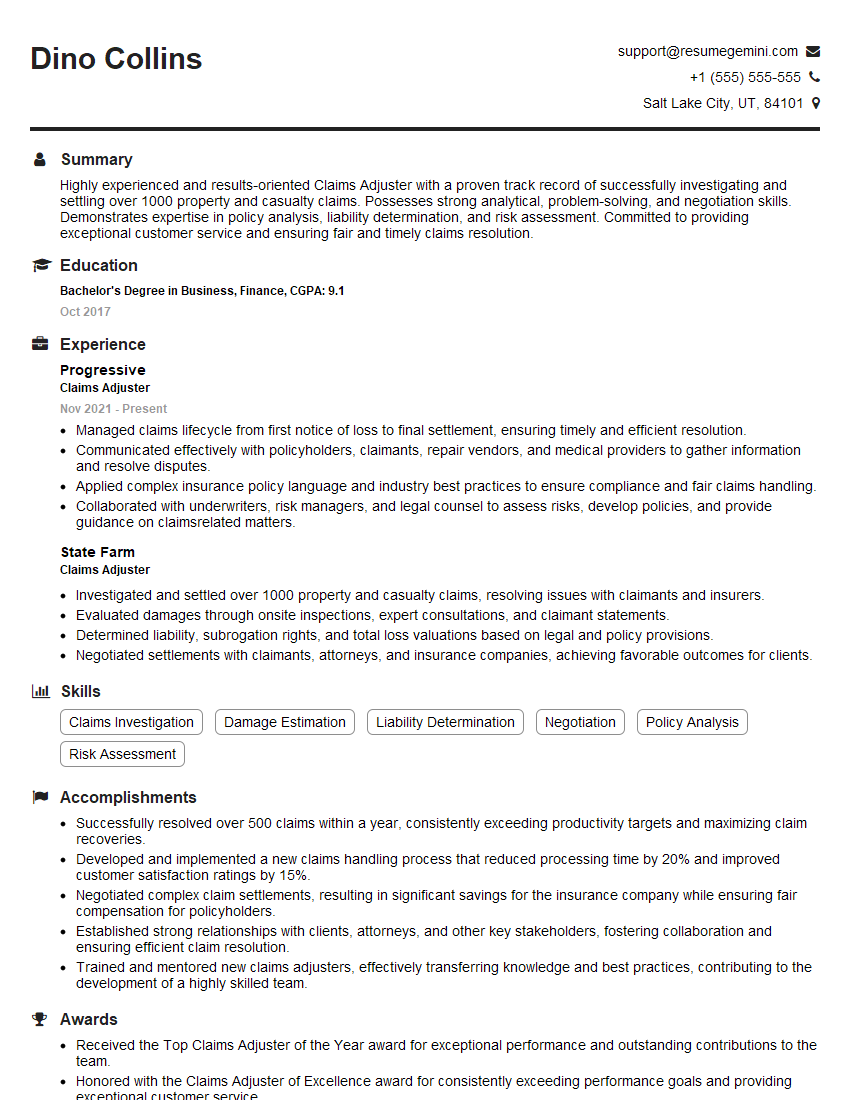
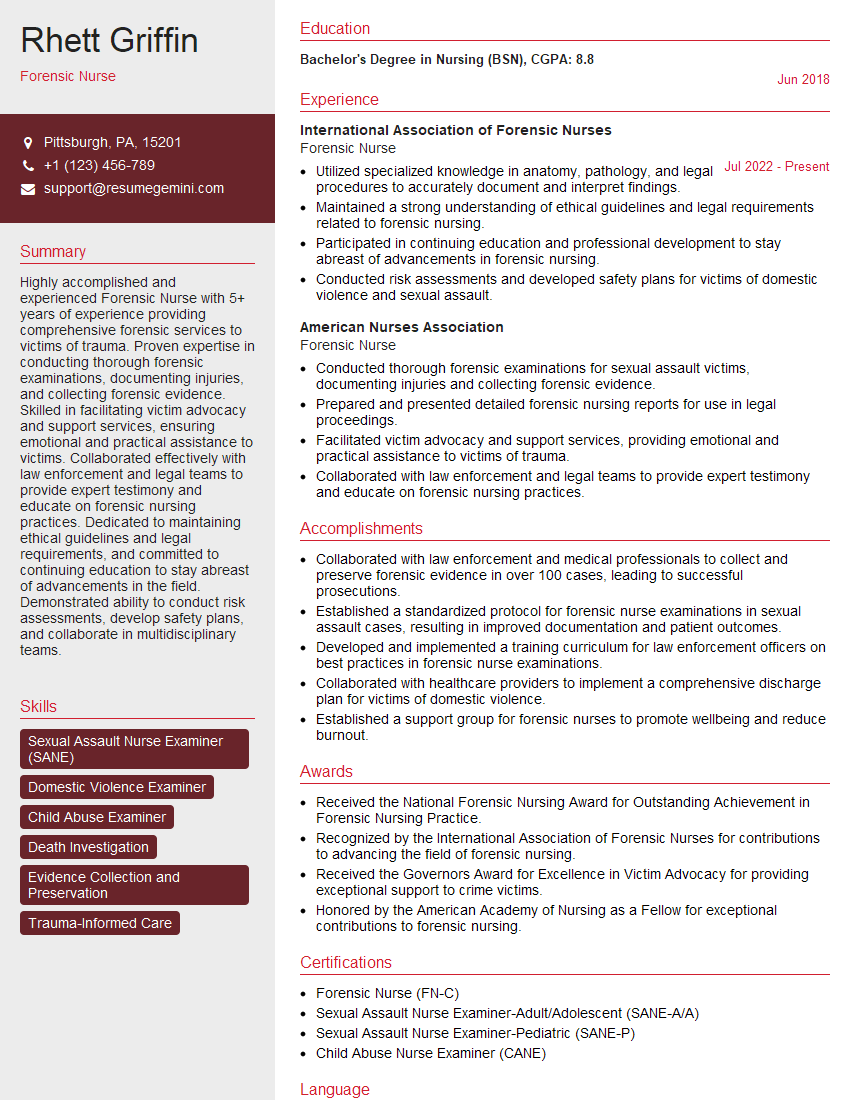
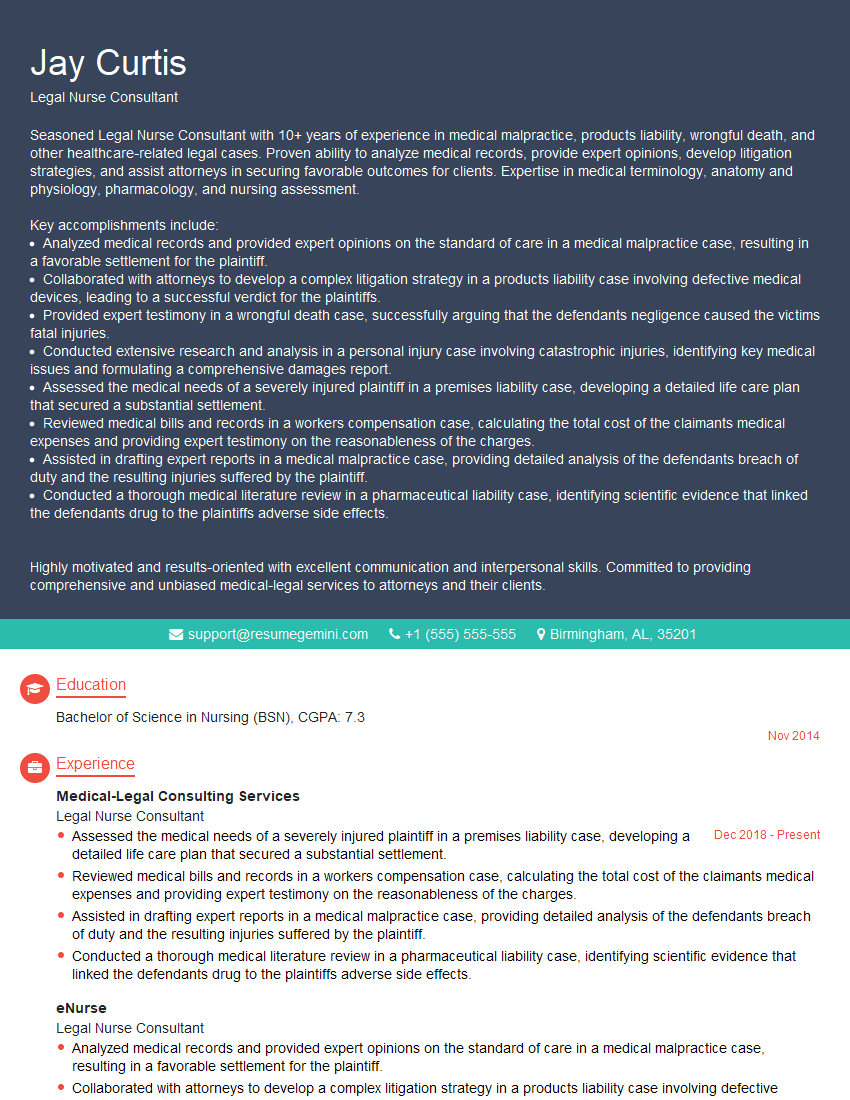
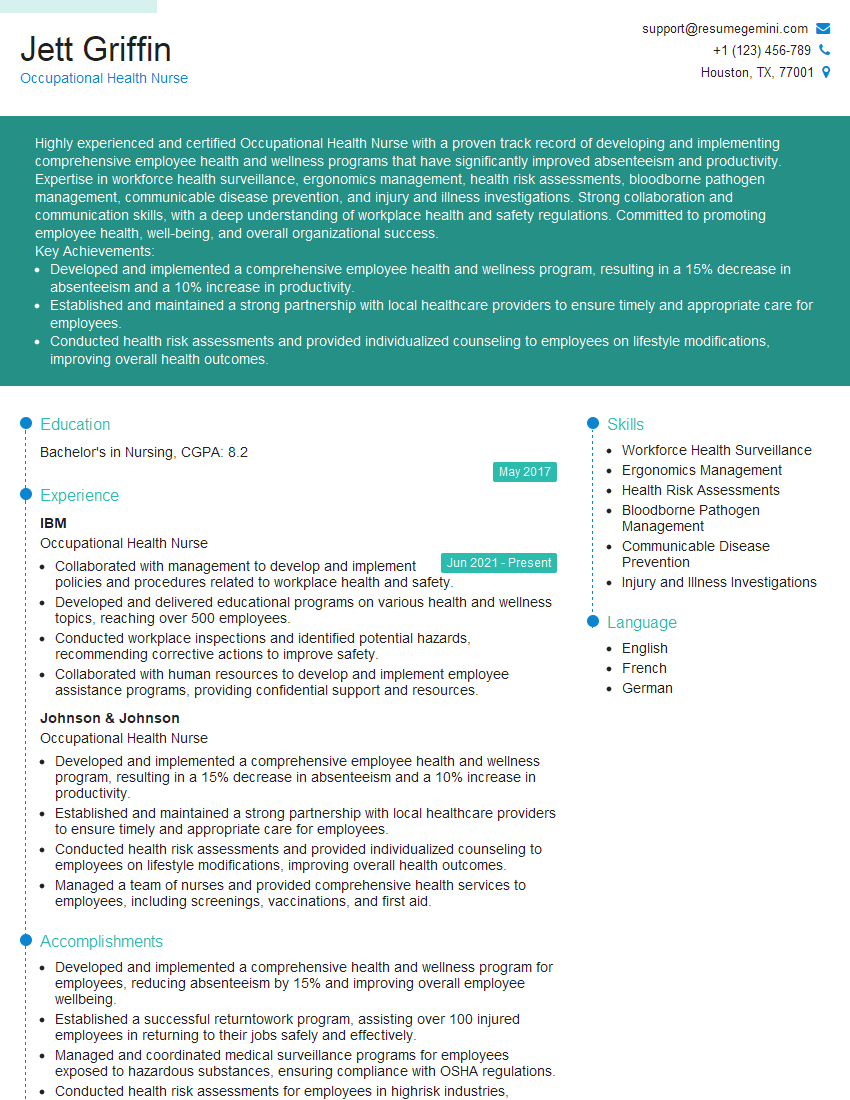
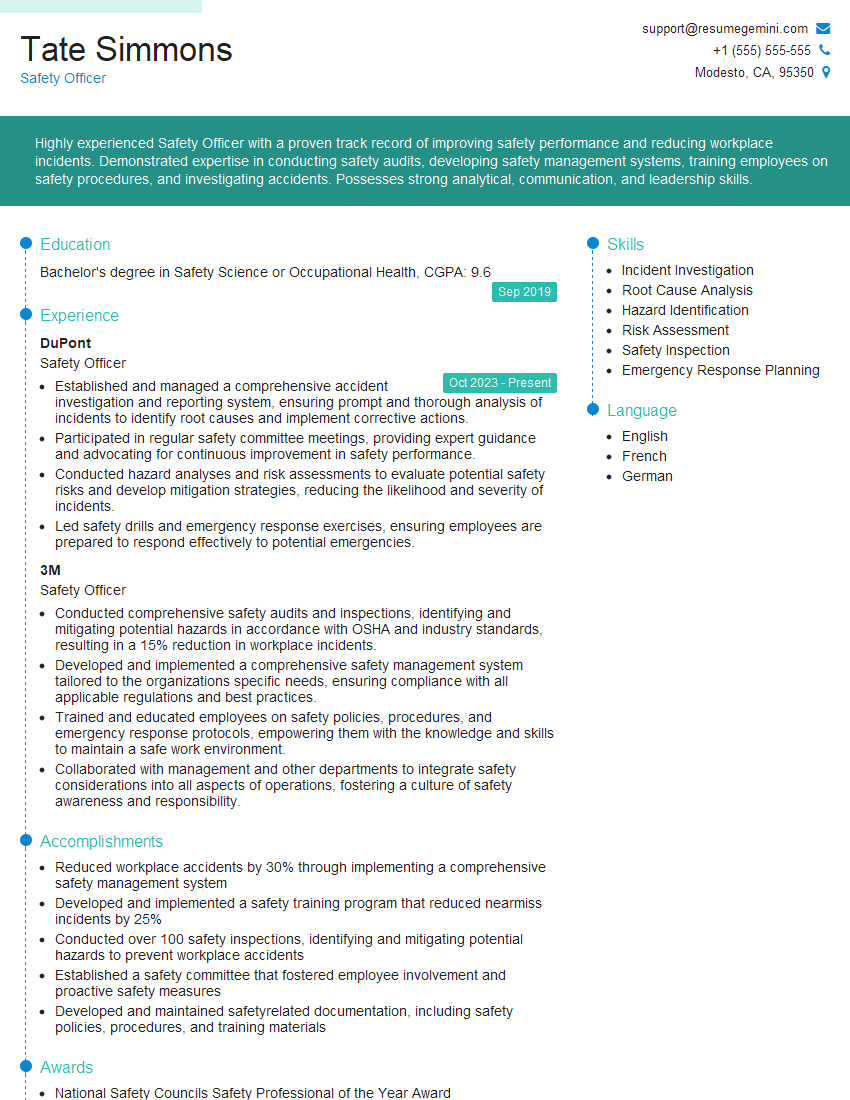
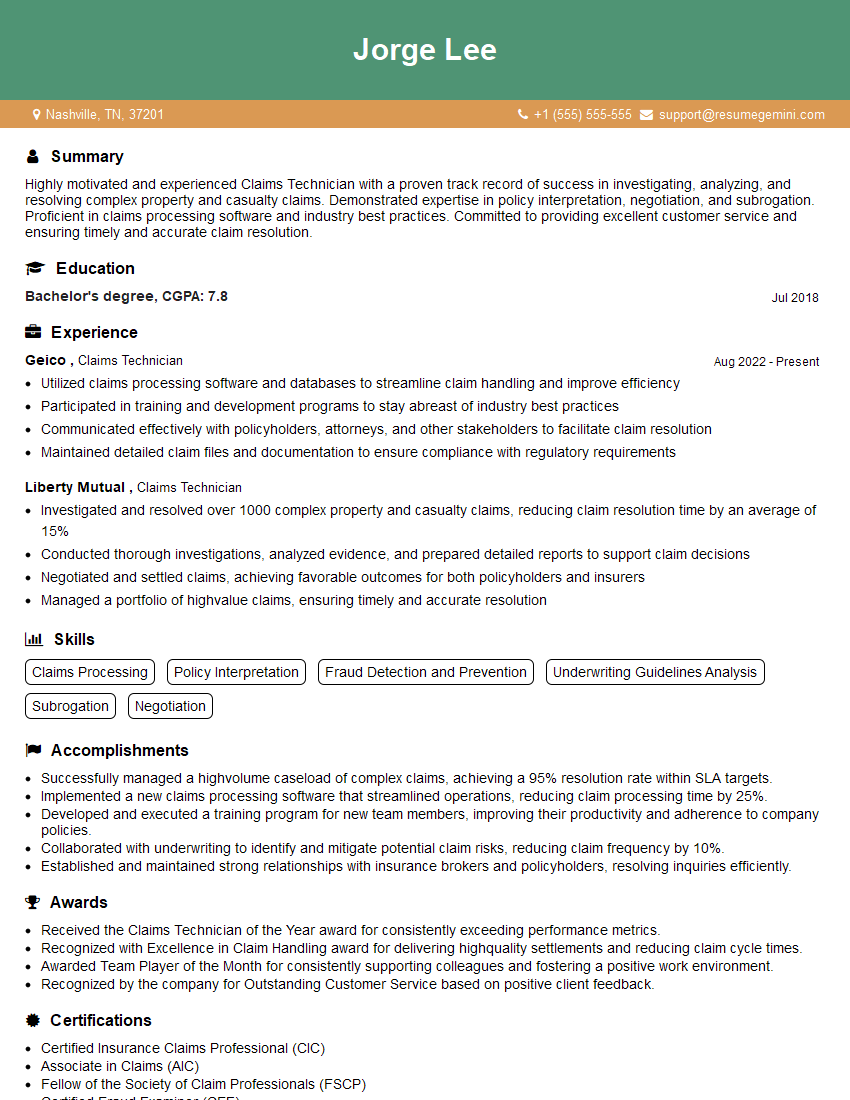
Mastering injury documentation is crucial for advancing your career in healthcare. Precise and comprehensive documentation is paramount for patient care, legal protection, and efficient healthcare operations. Building a strong, ATS-friendly resume is essential to showcasing your skills and experience effectively to potential employers. ResumeGemini is a trusted resource that can help you create a professional and impactful resume. We provide examples of resumes tailored to Injury Documentation to help you get started. Invest the time to build a resume that highlights your capabilities and positions you for success.

Explore more articles
Users Rating of Our Blogs
Share Your Experience
We value your feedback! Please rate our content and share your thoughts (optional).
What Readers Say About Our Blog
Very informative content, great job.
good