Feeling uncertain about what to expect in your upcoming interview? We’ve got you covered! This blog highlights the most important Panel Flutter interview questions and provides actionable advice to help you stand out as the ideal candidate. Let’s pave the way for your success.
Questions Asked in Panel Flutter Interview
Q 1. Explain the phenomenon of panel flutter.
Panel flutter is a self-excited aeroelastic instability that occurs in thin panels, like those found on aircraft wings or spacecraft, when subjected to airflow. Imagine a flag flapping violently in the wind – that’s a simplified analogy. Instead of a flag, we have a flexible panel, and instead of simple wind, we have airflow that interacts with the panel’s vibrations in a complex feedback loop. This interaction causes the panel to oscillate with increasing amplitude, potentially leading to structural failure. The key is that the airflow itself *fuels* the vibrations, unlike forced vibrations caused by an external source.
Q 2. Describe the key parameters influencing panel flutter.
Several key parameters significantly influence panel flutter. These can be broadly categorized into aerodynamic, structural, and geometric parameters. Aerodynamic parameters include the airflow velocity (Mach number is often used), air density, and dynamic pressure. Structural parameters include the panel’s material properties (Young’s modulus, Poisson’s ratio, density), its thickness, and its boundary conditions (clamped, simply supported, etc.). Geometric parameters include the panel’s aspect ratio (length-to-width ratio) and its curvature. The interplay of these parameters determines the critical flutter velocity – the speed at which flutter initiates. A small change in any of these can drastically alter the flutter behavior.
Q 3. What are the different methods used to analyze panel flutter?
Various methods are employed to analyze panel flutter, each with its strengths and weaknesses. These include:
- Linearized Aeroelasticity: This approach uses linearized aerodynamic theories (like piston theory or doublet-lattice method) coupled with structural models (often finite element method). It’s computationally efficient but limited to small oscillations. It provides a critical flutter velocity, but might not accurately predict post-flutter behavior.
- Nonlinear Aeroelasticity: This handles larger oscillations and nonlinearities in the aerodynamic and structural behavior using more complex models and computational methods. This approach is more realistic but computationally more expensive.
- Experimental Methods: Wind tunnel testing is crucial for validating analytical models and investigating complex flutter phenomena. It involves measuring the panel’s response to different airflow conditions.
- Computational Fluid Dynamics (CFD): CFD simulations can provide highly detailed aerodynamic information, but they are computationally intensive and require significant expertise. They are particularly useful for understanding the complex flow patterns around the panel.
Q 4. Explain the role of aerodynamic forces in panel flutter.
Aerodynamic forces are central to panel flutter. The airflow exerts pressure on the panel’s surface, which varies with the panel’s deflection and velocity. As the panel oscillates, this pressure distribution changes, creating aerodynamic forces that can either dampen or amplify the vibrations. In panel flutter, the feedback loop is such that the aerodynamic forces *add energy* to the oscillations, causing them to grow exponentially. The interaction between the panel’s motion and the resulting pressure distribution is what makes panel flutter a self-excited phenomenon.
Q 5. How does structural damping affect panel flutter?
Structural damping plays a vital role in resisting panel flutter. Damping dissipates energy from the panel’s vibrations, counteracting the energy input from aerodynamic forces. Higher damping reduces the likelihood of flutter and increases the critical flutter velocity. This damping can be inherent to the panel’s material (material damping) or arise from structural joints and connections. Insufficient damping allows the aerodynamic forces to dominate, leading to unstable oscillations. Adding damping treatments, like viscoelastic layers, is a common strategy for mitigating panel flutter.
Q 6. Describe the limitations of linear aeroelasticity in panel flutter analysis.
Linear aeroelasticity, while useful for initial assessments, has several limitations in panel flutter analysis. Primarily, it assumes small oscillations and linear aerodynamic and structural behavior. This assumption breaks down as the oscillations grow larger, especially near or beyond the critical flutter velocity. Nonlinear effects, such as large deflections, material nonlinearities, and aerodynamic stall, are ignored in linear analysis, leading to inaccurate predictions of post-flutter behavior and potentially underestimating the severity of the instability. Linear analysis often fails to capture limit cycle oscillations (LCOs), which are sustained oscillations with a constant amplitude after the initial growth.
Q 7. What are the advantages and disadvantages of using finite element methods for panel flutter analysis?
Finite element methods (FEM) are widely used for panel flutter analysis, offering several advantages:
- Geometric Flexibility: FEM can handle complex panel geometries and boundary conditions.
- Material Modeling: It allows for the inclusion of complex material properties, including anisotropy and nonlinearities.
- Computational Efficiency (relative): While computationally intensive, FEM offers a more efficient way to handle complex geometries compared to analytical methods.
However, FEM also has limitations:
- Mesh Dependency: The accuracy of results depends on the mesh refinement, requiring careful mesh generation.
- Computational Cost: Especially for nonlinear analysis and coupling with CFD, the computational cost can be substantial.
- Aerodynamic Model Choice: The accuracy relies heavily on the choice and accuracy of the coupled aerodynamic model.
Q 8. Explain the concept of critical flutter speed.
Critical flutter speed is the airspeed at which an aerodynamic surface, like a panel on an aircraft wing or a spacecraft, becomes dynamically unstable and undergoes self-excited, potentially destructive oscillations. Imagine a flag flapping violently in the wind – that’s a form of flutter. The critical flutter speed is the wind speed where that violent flapping begins. Below this speed, the panel might vibrate slightly, but these vibrations are damped and don’t grow. Above the critical speed, the vibrations grow exponentially, leading to potentially catastrophic failure.
This instability arises from a complex interaction between aerodynamic forces, structural stiffness, and inertia. The aerodynamic forces can actually supply energy to the panel’s vibrations, overcoming damping and causing them to grow uncontrollably. It’s crucial to identify and design against this phenomenon for safety and structural integrity.
Q 9. How do you determine the critical flutter speed using computational methods?
Determining the critical flutter speed computationally typically involves solving the equations of motion for the panel, considering both its structural dynamics and the unsteady aerodynamic forces acting upon it. This is often a complex task that requires advanced numerical techniques. Common methods include:
- Finite Element Method (FEM): FEM is widely used to model the structural dynamics of the panel, discretizing it into smaller elements and solving for the displacements and stresses at each element. This provides a detailed representation of the panel’s vibrational behavior.
- Aerodynamic modeling techniques: These range from simple piston theory (for supersonic flows) to more sophisticated unsteady aerodynamic solvers like doublet-lattice methods or computational fluid dynamics (CFD) for more accurate predictions, especially at lower speeds. CFD provides the most accurate representation of the airflow but is computationally intensive.
- Eigenvalue analysis: Once the equations of motion are formulated, eigenvalue analysis is performed to find the natural frequencies and damping ratios of the panel’s vibration modes. The critical flutter speed corresponds to the condition where at least one mode’s damping ratio becomes zero or positive, indicating instability.
Software packages like NASTRAN, ANSYS, and specialized flutter analysis tools are commonly used to perform these calculations. The process often involves iterative refinement of the model and validation against experimental data.
Q 10. What are some common experimental techniques for investigating panel flutter?
Experimental techniques for investigating panel flutter often involve subjecting a scaled model of the panel to controlled airflow in a wind tunnel or using shaking tables to simulate vibrations. Common methods include:
- Wind tunnel testing: This involves mounting the panel in a wind tunnel and gradually increasing the airflow speed while monitoring the panel’s vibrations using accelerometers or strain gauges. This allows direct observation of the onset of flutter and measurement of the critical flutter speed.
- Shaking table testing: In this method, the panel is mounted on a shaking table which provides controlled sinusoidal excitation. By varying the excitation frequency and amplitude, the dynamic response of the panel is studied. This helps determine the natural frequencies and damping characteristics of the panel and provides information about the system’s damping behaviour.
- Free vibration testing: The panel is deflected and released, and its subsequent free vibrations are measured. This allows for the determination of its natural frequencies and damping characteristics which are essential for flutter analysis.
These experiments allow for validation of computational models and provide valuable insights into the flutter phenomenon that can be difficult to capture purely through simulations.
Q 11. Discuss the use of wind tunnel testing in panel flutter research.
Wind tunnel testing plays a vital role in panel flutter research, providing a controlled environment to experimentally validate computational models and observe the actual flutter behavior. A wind tunnel allows for precise control over airflow parameters like speed, turbulence intensity, and angle of attack. This enables researchers to systematically study the influence of these parameters on the critical flutter speed and the overall flutter characteristics. High-speed wind tunnels are particularly valuable for studying flutter in high-speed aircraft or aerospace vehicles.
During testing, various sensors (accelerometers, strain gauges) are strategically placed on the panel to measure its vibrations and strain under varying flow conditions. This data helps determine the critical flutter speed, the vibration modes involved in the flutter instability, and how the flutter onset is affected by different parameters. High-fidelity wind tunnel testing is expensive, but crucial for verifying the safety of aircraft and other structures.
Q 12. Explain how nonlinearities affect panel flutter behavior.
Nonlinearities in the panel’s structural behavior or aerodynamic forces significantly influence panel flutter. Linear models, while computationally simpler, often fail to accurately capture the complex behavior observed in reality, especially near and beyond the critical flutter speed.
- Geometric nonlinearities: These arise from large deflections of the panel, causing changes in its stiffness and aerodynamic loading. This often leads to limit cycle oscillations (LCOs) – sustained oscillations at a specific amplitude even after the initial transient response. The panel may oscillate violently but not necessarily experience catastrophic failure immediately.
- Material nonlinearities: Nonlinearities in the material constitutive relations can also influence flutter behavior. For instance, if the material is viscoelastic, the damping will be frequency-dependent, thus impacting the system’s response to the airflow.
- Aerodynamic nonlinearities: The aerodynamic forces on the panel may not be linearly proportional to the panel’s motion. This can lead to complex interactions and unpredictable behavior.
Accounting for nonlinearities often requires more sophisticated numerical methods, potentially involving nonlinear eigenvalue analysis or time-domain simulations. These simulations can provide insight into the complex interaction between different modes of vibration and the potential for chaotic behavior. Ignoring these effects can lead to inaccurate predictions of the critical flutter speed and potential for structural failure.
Q 13. Describe different types of panel flutter suppression techniques.
Several techniques are employed to suppress panel flutter and enhance structural stability. These methods focus on either increasing the panel’s inherent damping or altering its aerodynamic characteristics to prevent the energy transfer that causes flutter. Examples include:
- Passive damping techniques: These involve incorporating damping materials (e.g., viscoelastic layers) into the panel structure to dissipate vibrational energy. This can significantly increase the critical flutter speed.
- Active flutter suppression: This involves using sensors to monitor the panel’s vibrations and actuators to apply corrective forces to counter the flutter motion. Active control systems adjust based on the panel’s real-time response, providing more effective flutter suppression compared to passive techniques.
- Aerodynamic design modifications: This includes changes to the panel’s geometry, such as adding leading-edge or trailing-edge devices, or modifying the panel’s surface to reduce aerodynamic forces and improve its stability.
- Stiffness modification: Increasing the stiffness of the panel structure itself, for instance through rib stiffeners, also effectively increases the critical flutter speed.
The choice of suppression technique depends on various factors, including the panel’s design, the operating conditions, and the level of flutter suppression required.
Q 14. How do you account for temperature effects in panel flutter analysis?
Temperature significantly affects panel flutter behavior by altering the panel’s material properties (like stiffness and thermal expansion) and affecting the aerodynamic forces. Increased temperature generally reduces the panel’s stiffness, leading to a lower critical flutter speed. The aerodynamic forces can also be influenced by temperature-dependent variations in air density and viscosity. These variations can change the airflow pattern and the overall interaction between the panel and the fluid flow.
To account for temperature effects, material properties are defined as a function of temperature in the computational model. For example, the Young’s modulus and coefficient of thermal expansion may be input as temperature-dependent parameters in Finite Element analysis. Additionally, the aerodynamic model should account for the changing density and viscosity of air as a function of temperature. For instance, if you’re running a CFD simulation, you will need to input the temperature-dependent fluid properties. The accurate prediction of flutter at different operating temperatures is crucial for ensuring the safety and reliability of flight vehicles and other applications.
Q 15. Explain the role of boundary conditions in panel flutter.
Boundary conditions are crucial in panel flutter analysis because they define how the panel interacts with its surroundings. They dictate the constraints on the panel’s movement, significantly influencing the flutter onset speed and frequency. Imagine a panel attached to an aircraft; the boundary conditions would specify if the panel is rigidly clamped, simply supported (like a beam resting on supports), or has some degree of flexibility at its edges. Incorrect boundary conditions can lead to inaccurate flutter predictions, potentially underestimating or overestimating the critical flutter speed. Common boundary conditions include clamped, simply supported, and free edges. The choice depends on the specific panel configuration and its connection to the structure.
- Clamped: The panel is rigidly fixed at its edges, preventing any displacement or rotation.
- Simply supported: The panel is supported along its edges, allowing rotation but preventing displacement.
- Free: The panel is unsupported at its edges, allowing both rotation and displacement.
For example, modeling a panel in a stiffened aircraft structure requires careful consideration of the stiffener’s effect on the boundary conditions. Overly simplified boundary conditions can lead to significant errors in the predicted flutter speed.
Career Expert Tips:
- Ace those interviews! Prepare effectively by reviewing the Top 50 Most Common Interview Questions on ResumeGemini.
- Navigate your job search with confidence! Explore a wide range of Career Tips on ResumeGemini. Learn about common challenges and recommendations to overcome them.
- Craft the perfect resume! Master the Art of Resume Writing with ResumeGemini’s guide. Showcase your unique qualifications and achievements effectively.
- Don’t miss out on holiday savings! Build your dream resume with ResumeGemini’s ATS optimized templates.
Q 16. What are some common software tools used for panel flutter analysis?
Several software tools are used for panel flutter analysis, each with its strengths and weaknesses. These tools often involve a combination of finite element analysis (FEA) for the structural model and computational fluid dynamics (CFD) for the aerodynamic model. The selection of software depends on the complexity of the geometry, the required accuracy, and computational resources available.
- NASTRAN: A widely used FEA software capable of handling complex structures and aerodynamic loads. Often used in conjunction with aerodynamic codes for panel flutter analysis.
- ABAQUS: Another popular FEA software package providing advanced capabilities for nonlinear analysis and material modeling, which can be critical for accurate panel flutter predictions.
- ANSYS: A comprehensive simulation suite offering FEA, CFD, and other analysis tools, allowing for a fully integrated approach to panel flutter prediction.
- Specialized Panel Flutter Codes: Several research institutions and aerospace companies have developed in-house codes tailored for panel flutter analysis. These codes often incorporate advanced aerodynamic models and efficient solution algorithms.
The choice of software often involves trade-offs between accuracy, computational cost, and user familiarity. Simpler geometries might be adequately handled by a more general-purpose FEA software, while complex geometries might require specialized codes or a combined CFD-FEA approach.
Q 17. Describe your experience with unsteady aerodynamic modeling.
My experience with unsteady aerodynamic modeling encompasses various techniques used to capture the time-varying forces acting on a panel during flutter. Accurate unsteady aerodynamic modeling is vital because the aerodynamic forces are inherently linked to the panel’s motion; they are not constant but change as the panel vibrates. This coupling is what causes flutter.
I’ve worked extensively with doublet lattice methods, which are relatively efficient for calculating unsteady aerodynamic loads on lifting surfaces. These methods discretize the surface into panels, computing the influence coefficients between them to determine the aerodynamic forces. I’ve also applied more advanced techniques like unsteady vortex lattice methods and computational fluid dynamics (CFD) simulations, depending on the complexity of the geometry and flow conditions. CFD, while computationally more demanding, offers greater fidelity, especially for complex flow phenomena such as separation and shock waves.
A key aspect of unsteady aerodynamic modeling is the choice of the appropriate aerodynamic theory. For low-speed flows, linear potential flow theory is often sufficient, but for high-speed flows, compressibility effects must be considered, leading to more sophisticated models. Successfully integrating these aerodynamic models with the structural model in a coupled aeroelastic analysis is crucial for accurate panel flutter predictions.
Q 18. How do you validate the results of a panel flutter analysis?
Validating the results of a panel flutter analysis is critical to ensure the accuracy and reliability of the predictions. This typically involves several steps and comparisons:
- Comparison with Experimental Data: The most reliable validation method is comparing the predicted flutter speeds and frequencies with experimental data from wind tunnel tests or flight tests. This provides a direct measure of the model’s accuracy. Discrepancies should be investigated to identify potential sources of error, such as inaccurate material properties, boundary conditions, or aerodynamic models.
- Mesh Convergence Study: Performing a mesh convergence study in FEA or CFD ensures that the solution is independent of the mesh resolution. Refining the mesh and observing the effect on the predicted flutter characteristics indicates the accuracy of the discretization.
- Model Order Reduction (MOR) Verification: If MOR techniques are employed to reduce the computational cost, verifying the accuracy of the reduced-order model is vital. This ensures the reduced model adequately captures the crucial dynamics of the full-order model.
- Sensitivity Analysis: A sensitivity analysis examines the impact of variations in input parameters (such as material properties, geometry, and aerodynamic coefficients) on the predicted flutter characteristics. This helps identify the most influential parameters and assess the uncertainty in the predictions.
The goal is not to achieve perfect agreement, as some discrepancy is expected due to modeling simplifications and experimental uncertainties. However, a reasonable correlation between predictions and experimental data, along with a thorough uncertainty assessment, provides confidence in the accuracy of the analysis.
Q 19. Discuss the challenges in predicting panel flutter in complex geometries.
Predicting panel flutter in complex geometries presents several challenges due to the increased complexity of the structural and aerodynamic models. Some key difficulties include:
- Mesh Generation: Generating accurate and efficient meshes for complex geometries can be time-consuming and challenging. Poor mesh quality can significantly impact the accuracy of both the structural and aerodynamic analyses.
- Computational Cost: The computational cost of analyzing complex geometries can be significantly higher than for simple panels, often requiring high-performance computing resources.
- Aerodynamic Modeling: Complex geometries can exhibit complex flow patterns, including separation and shock waves, necessitating sophisticated aerodynamic models that capture these effects accurately. This often necessitates the use of high-fidelity CFD methods, which are computationally expensive.
- Coupling of Structural and Aerodynamic Models: Accurately coupling the complex structural and aerodynamic models in a coupled aeroelastic analysis requires careful consideration of the interaction between the two. Inaccurate coupling can lead to erroneous flutter predictions.
Addressing these challenges often involves using advanced numerical techniques such as adaptive mesh refinement, model order reduction, and efficient solution algorithms to reduce the computational cost and improve accuracy. Advanced aerodynamic models and higher-order FEA elements are also essential to capture the intricate details of complex geometries.
Q 20. What are some of the recent advancements in panel flutter research?
Recent advancements in panel flutter research focus on improving accuracy, efficiency, and the handling of increasingly complex scenarios. Several key areas include:
- High-Fidelity CFD Methods: The use of advanced CFD methods, such as large eddy simulation (LES) and detached eddy simulation (DES), allows for more accurate prediction of unsteady aerodynamic loads, particularly in the presence of flow separation and turbulence.
- Reduced-Order Modeling (ROM): ROM techniques are being developed to reduce the computational cost of panel flutter analyses, particularly for complex geometries and high-fidelity aerodynamic models. These techniques aim to capture the essential dynamics of the system while reducing the number of degrees of freedom.
- Data-Driven Methods: Machine learning and other data-driven approaches are being explored to predict panel flutter characteristics from experimental data or simulations, potentially reducing the reliance on computationally expensive simulations.
- Nonlinear Aeroelasticity: Research is ongoing to improve the understanding and prediction of panel flutter in the nonlinear regime, where large deflections and nonlinear material behavior play a significant role.
- Active Flutter Suppression: Development of active control strategies to suppress panel flutter is an active area of research. This involves designing actuators and control algorithms to mitigate flutter instability.
These advancements are driven by the need to design lighter, more efficient, and safer aerospace structures, pushing the boundaries of computational capabilities and theoretical understanding.
Q 21. Explain the concept of flutter derivatives.
Flutter derivatives represent the aerodynamic forces acting on an oscillating panel, expressed as functions of the panel’s motion. They quantify the unsteady aerodynamic effects crucial in understanding flutter. Instead of directly calculating aerodynamic forces for every possible panel motion, flutter derivatives provide a simplified representation. They are essentially aerodynamic influence coefficients relating the aerodynamic forces to the panel’s displacement and velocity. For instance, a specific flutter derivative might represent the lift force generated due to the panel’s vertical velocity.
These derivatives are typically expressed as complex functions of the reduced frequency (a dimensionless parameter relating the frequency of oscillation and the freestream velocity), Mach number (for compressible flows), and other relevant parameters. They are crucial inputs for aeroelastic analyses, as they effectively link the panel’s motion to the aerodynamic forces causing or preventing flutter. Accurately obtaining these derivatives is fundamental to accurate panel flutter prediction, whether through experimental measurement, theoretical calculation, or computational methods.
The common flutter derivatives include those associated with vertical displacement, vertical velocity, pitching displacement, and pitching velocity. Their values dictate how strongly the aerodynamic forces respond to these different modes of motion, influencing the stability of the panel.
Q 22. How do you interpret flutter derivatives in the context of panel flutter?
Flutter derivatives, in the context of panel flutter, represent the rates of change of aerodynamic forces acting on a flexible panel with respect to its motion. These derivatives are crucial because they dictate the feedback mechanism between the panel’s deformation and the aerodynamic loads. A positive derivative implies that an increase in panel displacement leads to an increase in aerodynamic force in the same direction, potentially leading to unstable flutter. Conversely, a negative derivative suggests a stabilizing effect.
For instance, a positive plunge derivative (∂L/∂ḣ, where L is lift and ḣ is plunge velocity) signifies that increasing the downward velocity of the panel increases the upward aerodynamic force, creating a positive feedback loop that can amplify oscillations. Understanding and accurately calculating these derivatives are paramount for predicting and preventing panel flutter.
In practice, these derivatives are often determined through computational fluid dynamics (CFD) simulations or experimental testing, using methods such as unsteady pressure measurements and correlation with panel motion data. These data are then incorporated into aeroelastic models to predict the panel’s behavior under different flight conditions.
Q 23. Describe your experience with experimental modal analysis.
My experience with experimental modal analysis (EMA) is extensive. I’ve used it extensively to characterize the dynamic properties of aerospace structures, including panels prone to flutter. EMA allows us to identify the natural frequencies, mode shapes, and damping ratios of a structure. This information is fundamental to predicting panel flutter onset.
In a typical project, I would use impact hammers or shakers to excite the panel while measuring its response using accelerometers strategically placed across its surface. The resulting data are processed using specialized software to extract the modal parameters. This involves techniques like curve fitting and modal assurance criteria (MAC) to ensure the accuracy and reliability of the results.
For example, I once worked on a project where EMA was crucial in identifying a previously unknown resonance frequency in a composite panel. This hidden resonance, not initially predicted by finite element analysis (FEA), turned out to be dangerously close to a critical flight condition and could have led to flutter if not detected. EMA enabled us to design effective mitigation strategies, preventing a potential catastrophic failure.
Q 24. How do you incorporate uncertainties in panel flutter analysis?
Incorporating uncertainties in panel flutter analysis is critical for realistic predictions. These uncertainties stem from various sources, such as material property variations, manufacturing tolerances, aerodynamic modeling inaccuracies, and environmental factors (temperature, pressure). Ignoring these uncertainties can lead to overconfidence in the analysis and potentially unsafe designs.
I typically address uncertainties using probabilistic methods, such as Monte Carlo simulations. This involves creating a statistical representation of the uncertain parameters, drawing samples from their probability distributions, and running multiple panel flutter analyses for each sample. The resulting distribution of flutter speeds provides a range of possible outcomes, reflecting the inherent uncertainties in the problem. This allows for a more robust design that accounts for the likelihood of different scenarios.
Another approach involves using fuzzy logic or interval analysis to represent and propagate uncertainties through the analysis. These methods can provide insights into the sensitivity of the flutter boundary to specific uncertain parameters, guiding design optimization and risk mitigation strategies. Choosing the appropriate method depends heavily on the specific project and the nature of the uncertainties.
Q 25. Discuss the role of material properties in panel flutter.
Material properties play a dominant role in panel flutter. The stiffness, density, and damping characteristics of the panel material directly influence its natural frequencies, mode shapes, and susceptibility to flutter. For example, a stiffer material will increase the natural frequencies, generally delaying the onset of flutter, while a higher damping material dissipates energy more efficiently, also increasing the flutter speed.
The choice of material, therefore, is a critical design consideration. High-strength, lightweight materials are often desirable in aerospace applications, but they may have lower damping properties, making them more prone to flutter. A careful trade-off must be made between strength, weight, and damping characteristics to ensure a safe and efficient design.
Furthermore, the anisotropy and heterogeneity of composite materials present additional challenges, as their material properties can vary significantly depending on the fiber orientation and manufacturing processes. This requires advanced material modeling techniques to accurately capture the material behavior in the flutter analysis. The use of advanced composite materials opens possibilities for tailoring material properties to enhance flutter resistance, for instance by integrating damping layers or employing special fiber orientations.
Q 26. Explain the difference between static and dynamic aeroelasticity in relation to panel flutter.
Static aeroelasticity concerns the deformation of an aircraft structure under steady aerodynamic loads. In this context, the aerodynamic loads are considered constant, and the analysis focuses on finding the equilibrium configuration of the structure. Dynamic aeroelasticity, on the other hand, considers the interaction between the structure’s dynamic response and unsteady aerodynamic forces. Panel flutter is a classic example of dynamic aeroelasticity, where the unsteady aerodynamic forces are responsible for exciting the panel’s vibrations, leading to potentially catastrophic self-excited oscillations.
Imagine a wing. In static aeroelasticity, we would analyze how the wing deforms under the weight of the aircraft and the lift generated by steady flight. In dynamic aeroelasticity (panel flutter analysis in this case), we are concerned with how the wing might vibrate due to unsteady airflow, even small fluctuations which can interact with its structural modes, leading to oscillations.
While static analysis is important for understanding the static strength and stiffness of a structure, dynamic aeroelasticity, and hence panel flutter analysis, is crucial for ensuring that the structure can withstand dynamic loads and avoid potentially destructive aeroelastic instabilities.
Q 27. How do you address the computational cost associated with panel flutter simulations?
Panel flutter simulations can be computationally expensive, especially for complex geometries and unsteady aerodynamic models. High-fidelity CFD simulations, coupled with structural finite element models, require significant computational resources and time. Several strategies are employed to mitigate the computational cost.
One common approach is to utilize reduced-order models (ROMs). ROMs simplify the system by reducing the number of degrees of freedom while retaining the essential dynamic characteristics. Methods like Krylov subspace methods or proper orthogonal decomposition (POD) can significantly reduce computational time and memory requirements. These methods essentially capture the most important features of the system, letting us skip less important calculations.
Another strategy is to employ efficient numerical techniques for solving the governing equations. For instance, implicit time integration schemes can offer better stability and potentially larger time steps compared to explicit methods, thus reducing the overall simulation time. Furthermore, parallel computing techniques can be used to distribute the computational workload across multiple processors, accelerating the analysis significantly. The choice of techniques usually is dictated by accuracy needs and available computational resources.
Q 28. Describe your experience with various panel flutter mitigation strategies.
I have experience with various panel flutter mitigation strategies. These can be broadly categorized into passive and active methods.
Passive methods aim to modify the structural properties or aerodynamic environment to increase the flutter speed. Examples include:
- Stiffening the panel: Increasing the panel’s stiffness through the use of stronger materials or structural reinforcements increases the natural frequencies, thus shifting the flutter speed to higher values.
- Adding damping: Incorporating damping materials, such as viscoelastic layers, dissipates vibrational energy, making the panel less susceptible to flutter.
- Aerodynamic modifications: Modifying the panel’s shape or adding aerodynamic fairings can alter the aerodynamic forces and improve flutter stability.
Active methods involve using actuators and sensors to actively control the panel’s vibrations and suppress flutter. This typically requires real-time feedback control systems.
For example, piezoelectric actuators can be embedded within the panel to generate counteracting forces in response to detected vibrations. These systems are more complex to design and implement but can offer more effective control of flutter, especially in critical scenarios. The choice of mitigation strategy hinges on factors like weight constraints, cost considerations, and required level of flutter suppression.
Key Topics to Learn for Panel Flutter Interview
- State Management in Panel Flutter: Understand and compare different state management solutions like Provider, Riverpod, BLoC, and GetIt. Practice implementing them in various scenarios.
- Panel Structure and Layout: Master the use of `PanelController`, `Panel` widget, and its properties for creating responsive and dynamic panel interfaces. Practice creating complex panel layouts and animations.
- Panel Animations and Transitions: Learn how to create smooth and engaging animations for panel transitions using `AnimatedBuilder`, `TweenAnimationBuilder`, or animation packages. Consider different animation types and their performance implications.
- Data Handling and APIs: Be prepared to discuss fetching and handling data from APIs using packages like `http` or `dio`. Demonstrate proficiency in handling asynchronous operations and error management.
- Testing in Panel Flutter: Understand the importance of testing and demonstrate knowledge of testing frameworks like `flutter_test` and approaches like widget testing and integration testing for Panel functionalities.
- Asynchronous Programming: Demonstrate a strong grasp of asynchronous programming concepts, including Futures, Streams, and async/await, particularly within the context of panel interactions and data fetching.
- Accessibility and Best Practices: Showcase awareness of accessibility guidelines and best practices for building inclusive Panel Flutter applications. This includes considerations for screen readers and keyboard navigation.
- Performance Optimization: Discuss techniques for optimizing the performance of Panel Flutter applications, such as using the right widgets, minimizing rebuilds, and optimizing asset loading.
- Debugging and Troubleshooting: Be prepared to discuss common debugging techniques and strategies for resolving issues related to Panel Flutter development.
Next Steps
Mastering Panel Flutter significantly enhances your skillset as a Flutter developer, opening doors to exciting opportunities in building interactive and engaging user interfaces. To maximize your chances of landing your dream job, focus on crafting a compelling and ATS-friendly resume that highlights your Panel Flutter expertise. ResumeGemini is a valuable resource to help you build a professional and impactful resume. Take advantage of their tools and the examples of resumes tailored to Panel Flutter expertise they provide to present yourself effectively to potential employers.

Engineering Manager Resume Sample

Project Engineer Resume Sample

Systems Engineer Resume Sample

Research Scientist Resume Sample

Design Engineer Resume Sample

Integration Engineer Resume Sample
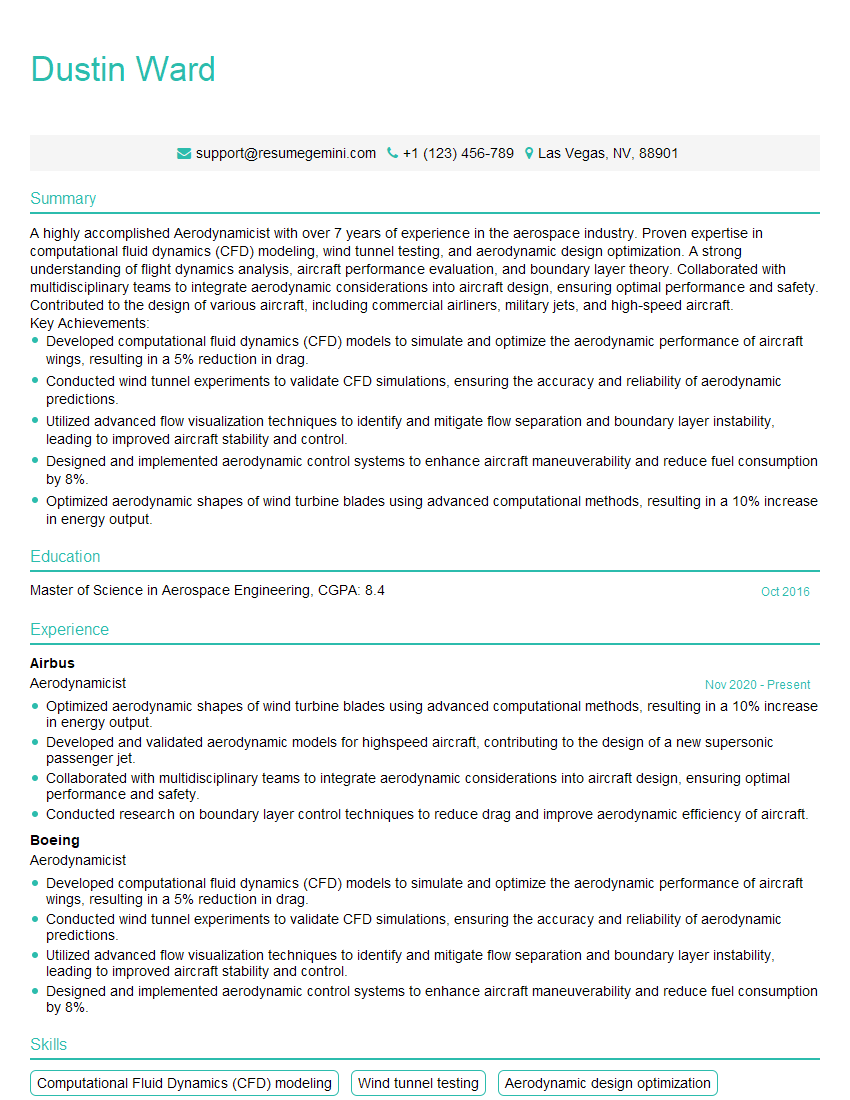
Aerodynamicist Resume Sample
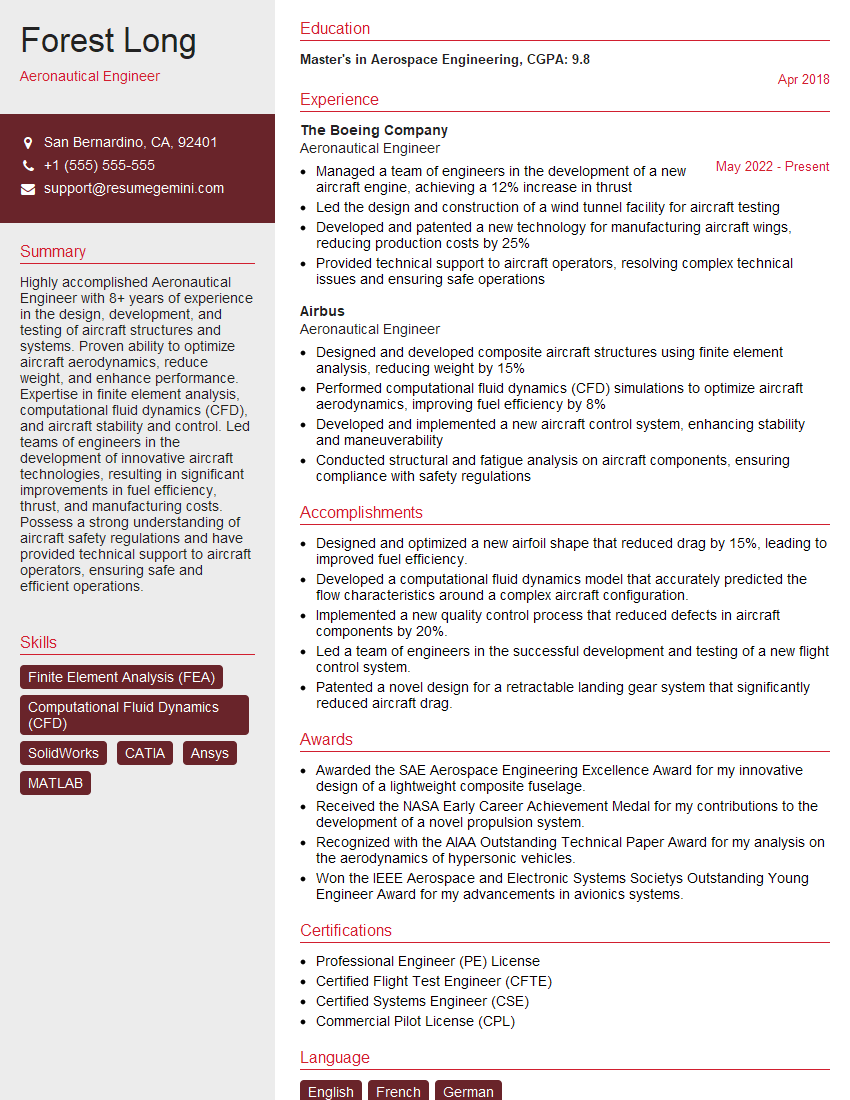
Aeronautical Engineer Resume Sample

Aerospace Engineer Resume Sample
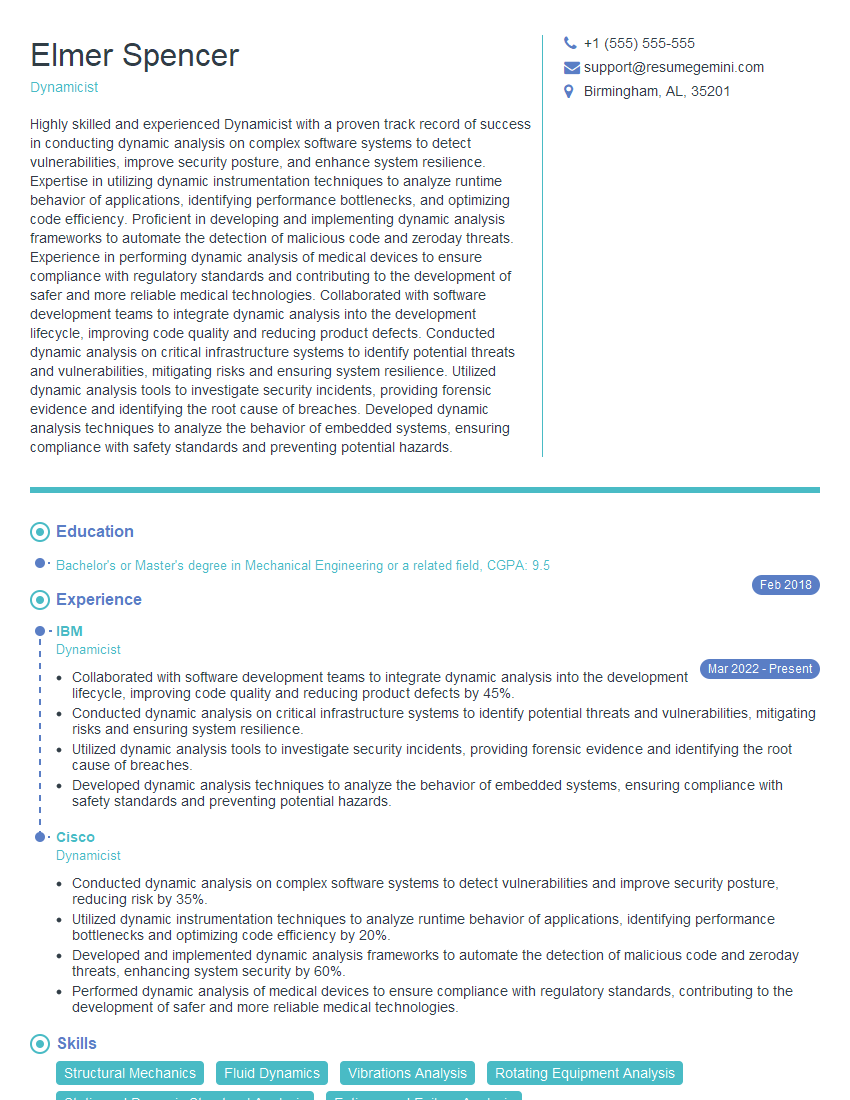
Dynamicist Resume Sample

Structures Engineer Resume Sample
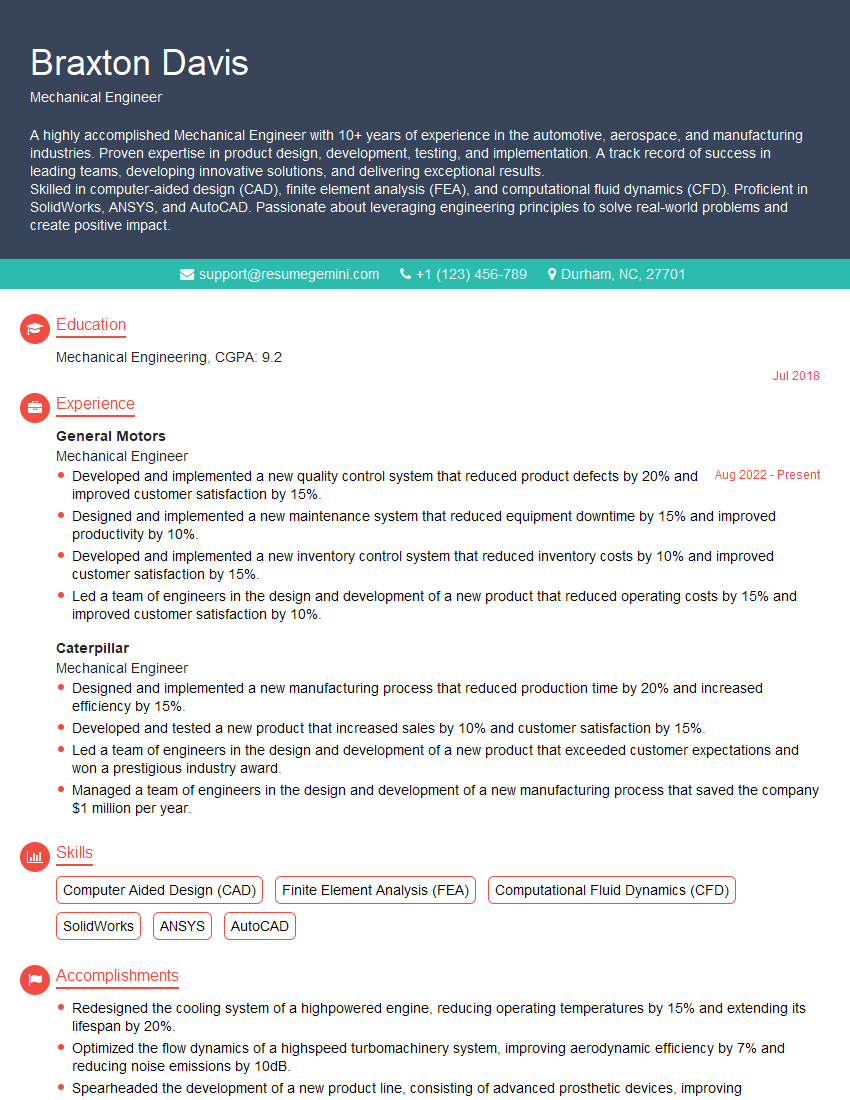
Mechanical Engineer Resume Sample
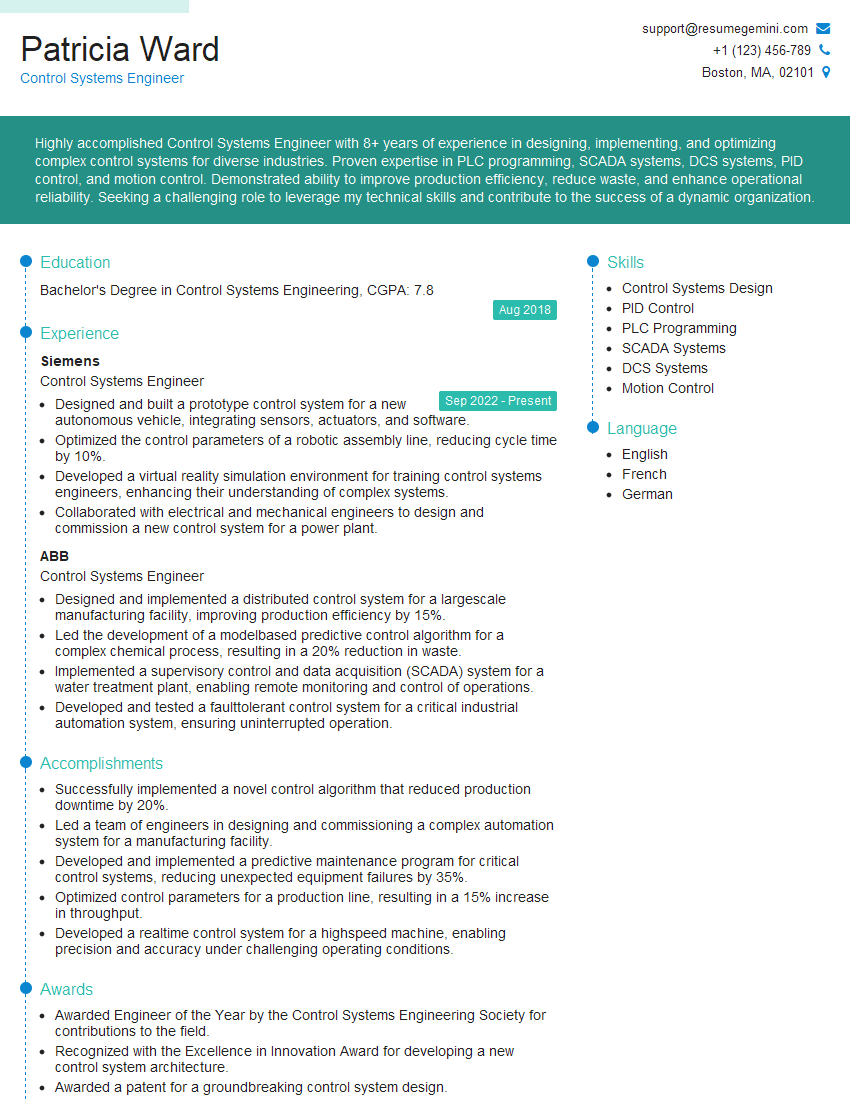
Control Systems Engineer Resume Sample
Explore more articles
Users Rating of Our Blogs
Share Your Experience
We value your feedback! Please rate our content and share your thoughts (optional).
What Readers Say About Our Blog
Very informative content, great job.
good