Unlock your full potential by mastering the most common Plant Health Diagnosis interview questions. This blog offers a deep dive into the critical topics, ensuring you’re not only prepared to answer but to excel. With these insights, you’ll approach your interview with clarity and confidence.
Questions Asked in Plant Health Diagnosis Interview
Q 1. Describe the common symptoms of fungal, bacterial, and viral diseases in plants.
Distinguishing between fungal, bacterial, and viral plant diseases relies on carefully observing symptoms. These symptoms often overlap, requiring a multi-faceted approach to diagnosis.
- Fungal diseases frequently present with leaf spots (often circular with a defined margin), powdery mildew (white powdery coating), damping-off (seedling rot), and fruit rots (soft, decaying areas). Examples include early blight in tomatoes (Alternaria solani) showing concentric rings on leaves and late blight (Phytophthora infestans) causing brown lesions on potato leaves and tubers.
- Bacterial diseases often manifest as wilting (vascular diseases), soft rots (watery, foul-smelling decay), leaf spots (irregular, water-soaked lesions), and bacterial ooze (a slimy liquid on plant surfaces). Fire blight (Erwinia amylovora) in apples and pears causes blackened, shepherd’s crook-like branches, while bacterial leaf spot in many plants results in small, brown spots.
- Viral diseases typically result in mosaic patterns (mottling) on leaves, stunting (reduced plant growth), yellowing (chlorosis), and leaf deformation (curling or rolling). Examples include Tobacco mosaic virus (TMV), producing mosaic patterns on tobacco and other plants, and cucumber mosaic virus (CMV) which affects many plants causing stunting and mosaic patterns.
Remember that environmental factors can significantly influence symptom expression, making accurate identification challenging.
Q 2. Explain the importance of proper sample collection and handling for accurate plant disease diagnosis.
Proper sample collection and handling are paramount for accurate diagnosis. Contamination can lead to misidentification, compromising treatment decisions.
- Sample Selection: Collect representative samples, including both healthy and diseased tissue. For systemic diseases (affecting the entire plant), samples should be taken from multiple areas, including roots, stems, and leaves. For localized diseases, focus on the affected area.
- Sample Size: Collect sufficient material for multiple tests, ensuring enough tissue for microscopic examination, molecular analysis, and pathogen isolation.
- Sample Handling: Avoid cross-contamination. Use clean tools (scissors, knives, etc.). Place samples in clean, labeled bags or containers to prevent dehydration and maintain sample integrity. Proper labeling includes the plant species, location, date, and suspected symptoms. Keep samples cool and transport them to the lab promptly to prevent microbial changes.
- Preservation: Some samples need special preservation methods. For instance, viruses might require freezing for molecular analysis while fungi may benefit from preservation in silica gel.
Imagine trying to diagnose a human illness with a poorly collected or mishandled sample; the results would be unreliable. Similarly, meticulous sample handling is crucial in plant pathology.
Q 3. What are the key diagnostic tools and techniques used in plant health diagnosis?
Plant health diagnosis employs a range of tools and techniques, often used in combination:
- Visual Inspection: The initial, critical step. This involves carefully observing plant symptoms and noting their location, distribution, and severity.
- Microscopy: Light microscopy identifies fungal structures (hyphae, spores), bacteria (rods, cocci), and nematodes. Electron microscopy provides higher resolution for detailed cellular structure analysis.
- Molecular techniques: Polymerase chain reaction (PCR) is widely used to detect specific pathogens’ DNA or RNA. Next-generation sequencing (NGS) allows for broader pathogen detection and identification, even in complex samples. ELISA (Enzyme-Linked Immunosorbent Assay) is a serological technique that detects pathogen antigens or antibodies.
- Pathogen Isolation and Culture: Isolating the pathogen on a suitable growth medium helps confirm its identity and study its characteristics.
- Histology: Examining thin plant tissue sections under a microscope helps reveal the pathogen’s location and its impact on plant cells.
The choice of diagnostic tools depends on factors like the suspected pathogen, the availability of resources, and the urgency of the situation.
Q 4. How do you differentiate between biotic and abiotic plant disorders?
Distinguishing between biotic (living organism caused) and abiotic (environmental factor caused) disorders requires careful observation and consideration of various factors.
- Biotic disorders are caused by living organisms like fungi, bacteria, viruses, nematodes, and parasitic plants. Symptoms often show patterns or localized lesions, and the presence of the pathogen can be confirmed through laboratory tests.
- Abiotic disorders result from environmental stresses such as drought, nutrient deficiencies, extreme temperatures, salinity, herbicide damage, and air pollution. Symptoms are usually more generalized, affecting the entire plant or large sections uniformly. There’s no pathogen present; instead, there are visible signs of stress such as leaf burn, chlorosis, wilting, or stunted growth.
For example, a yellowing plant could be due to a virus (biotic) causing a mosaic pattern or due to nutrient deficiency (abiotic) affecting the entire plant evenly. A thorough investigation including environmental history and laboratory testing is crucial for accurate diagnosis.
Q 5. Describe your experience with different plant disease identification methods, such as microscopy and molecular techniques.
My experience encompasses a wide range of plant disease identification methods. I’ve extensively used microscopy, including both light and electron microscopy, for visualizing fungal hyphae, bacterial cells, and viral inclusions within plant tissues. This has helped me directly observe the pathogen and its interaction with the host plant.
Furthermore, I have considerable experience with molecular techniques such as PCR and ELISA. PCR has been invaluable in detecting specific pathogens directly from plant tissues, even when symptoms are subtle or the pathogen is present in low concentrations. ELISA has proven useful for rapid detection of certain plant viruses in field settings. My work has included developing and optimizing protocols for various molecular methods, ensuring accurate and reliable results. NGS technologies have recently expanded my capabilities to simultaneously detect and identify multiple pathogens in complex samples, providing a holistic view of the plant’s disease profile.
Q 6. What are the major groups of plant pathogens, and how do they infect plants?
Plant pathogens encompass diverse groups, each with unique infection mechanisms:
- Fungi: They penetrate plant tissues via wounds or natural openings (stomata). They secrete enzymes that break down plant cell walls, absorbing nutrients. Fungal spores are dispersed by wind, water, or insects.
- Bacteria: They enter plants through wounds, natural openings, or even directly through the epidermis. Bacteria can colonize intercellular spaces or invade plant cells, leading to tissue destruction or dysfunction.
- Viruses: They are obligate intracellular parasites requiring a host for replication. They are transmitted through vectors (insects, nematodes) or mechanically (via contaminated tools). Viruses replicate within plant cells, disrupting cellular processes and often causing systemic infections.
- Nematodes: These microscopic worms penetrate plant roots, feeding on plant cells. They cause root damage, reducing water and nutrient uptake, leading to wilting and stunted growth.
- Parasitic Plants: These plants attach to and draw nutrients from their host plants, weakening and ultimately harming them. Examples include mistletoe and dodder.
Understanding how different pathogens infect plants is key to developing effective management strategies.
Q 7. Explain the concept of disease triangles and its application in plant health management.
The disease triangle illustrates the interplay of three essential components necessary for disease development: a susceptible host, a virulent pathogen, and a favorable environment. It’s a powerful concept in plant health management.
Susceptible Host: The plant must possess genetic traits or physiological conditions that make it vulnerable to the pathogen. Varieties with resistance genes will be less susceptible. Nutrient deficiencies or stress can weaken plants, increasing their vulnerability.
Virulent Pathogen: The pathogen needs to be aggressive enough to overcome the plant’s defense mechanisms. Factors such as pathogen aggressiveness, inoculum level (amount of the pathogen), and pathogen diversity influence disease development.
Favorable Environment: Environmental conditions like temperature, humidity, rainfall, and light influence pathogen survival, spread, and infection success. For example, many fungal diseases thrive in humid environments.
Application in Plant Health Management: The disease triangle guides disease management strategies by targeting one or more of its components. Strategies include:
- Host Resistance: Planting resistant cultivars reduces the susceptible host component.
- Pathogen Control: Employing methods like crop rotation, sanitation, biological control (introducing beneficial microorganisms), or chemical control reduces the virulent pathogen component.
- Environmental Modification: Adjusting planting dates, irrigation practices, or using protective coverings modifies the favorable environment component.
By disrupting the balance of the disease triangle, we can effectively minimize disease occurrence and severity.
Q 8. How do environmental factors influence the development of plant diseases?
Environmental factors play a crucial role in the development and severity of plant diseases. Think of it like this: a plant’s health is a delicate balance, and environmental stress tips the scales in favor of disease. Factors like temperature, humidity, rainfall, and sunlight directly influence the pathogen’s lifecycle and the plant’s susceptibility.
- Temperature: Many fungal diseases thrive in cool, damp conditions. For example, late blight in potatoes flourishes in cool, wet weather. Conversely, high temperatures can suppress some diseases but favor others, like some viral infections.
- Humidity: High humidity provides the ideal environment for spore germination and disease spread, particularly for fungal and bacterial pathogens. Think of the fuzzy growth you might see on a damp fruit – that’s a fungal infection thriving in high humidity.
- Rainfall: Excessive rain can lead to waterlogged soils, reducing oxygen availability to roots and making plants more susceptible to root rot diseases. It also facilitates the spread of waterborne pathogens.
- Sunlight: Insufficient sunlight weakens plants, making them more vulnerable to various diseases. Strong sunlight can also affect pathogen survival in some cases.
- Soil conditions: Poor soil drainage, nutrient deficiencies, and soil pH imbalances can weaken plants and increase susceptibility to diseases. For example, alkaline soil can exacerbate iron chlorosis.
Understanding these interactions is vital for effective disease management. We use this knowledge to predict disease outbreaks, select disease-resistant cultivars, and implement appropriate cultural practices.
Q 9. Discuss integrated pest and disease management strategies.
Integrated Pest and Disease Management (IPM) is a holistic approach that minimizes the reliance on chemical pesticides and promotes sustainable pest and disease control. It emphasizes a combination of strategies to achieve effective and environmentally sound management.
- Cultural practices: These include crop rotation, proper fertilization, irrigation management, and sanitation to create an environment less favorable to pests and diseases. For example, rotating crops can break the lifecycle of soilborne pathogens.
- Biological control: This involves using natural enemies of pests and diseases, such as beneficial insects, nematodes, or microorganisms, to suppress their populations. For instance, introducing ladybugs to control aphids.
- Resistant varieties: Choosing plant varieties with inherent resistance to common pests and diseases reduces the need for chemical interventions. Many seed companies offer disease-resistant cultivars.
- Chemical control: This is used judiciously as a last resort, only when other methods are insufficient. The focus is on targeted application of the least toxic pesticides possible, minimizing environmental impact.
- Monitoring and surveillance: Regular monitoring of plant health and pest populations allows for early detection of problems, enabling timely and effective interventions. This prevents minor issues from escalating into major outbreaks.
IPM strategies are tailored to specific situations, considering factors like the type of crop, the pest or disease involved, and the environmental conditions. It requires careful planning, observation, and a multi-faceted approach.
Q 10. Explain the role of quarantine and sanitation in preventing plant disease outbreaks.
Quarantine and sanitation are crucial preventative measures in preventing plant disease outbreaks. They act as the first line of defense, preventing the introduction and spread of pathogens.
- Quarantine: This involves restricting the movement of plants, plant products, and other potentially contaminated materials to prevent the introduction of pests and diseases from other areas. This is particularly important for importing plants or plant material from other countries or regions. Think of it as a ‘plant health checkpoint’ at borders.
- Sanitation: This focuses on eliminating sources of infection within a given area. It includes practices such as removing and destroying infected plants, cleaning and disinfecting tools and equipment, and maintaining a weed-free environment. Removing infected plant debris prevents the pathogen from overwintering and infecting healthy plants the following season.
Effective quarantine and sanitation protocols are essential for protecting both commercial and home gardens from devastating plant diseases. They work best when implemented proactively and consistently.
Q 11. How would you manage a disease outbreak in a commercial greenhouse?
Managing a disease outbreak in a commercial greenhouse requires a rapid and coordinated response. Time is of the essence to prevent widespread damage.
- Rapid Assessment: Identify the affected plants, the extent of the damage, and the likely cause of the disease. Collect samples for laboratory diagnosis if necessary.
- Containment: Isolate infected plants to prevent the spread of the disease. This might involve moving infected plants to a separate area or disposing of them completely.
- Treatment: Based on the diagnosis, apply appropriate control measures. This could include applying fungicides, bactericides, or other approved treatments according to label instructions. Biological controls might be employed for certain pathogens.
- Sanitation: Thoroughly clean and disinfect the greenhouse, including benches, tools, and equipment. Remove infected plant debris immediately and dispose of it properly.
- Monitoring: Continue monitoring the plants closely after treatment to ensure that the disease is under control and to detect any potential recurrence.
- Prevention: Implement improved greenhouse management practices to prevent future outbreaks. This may include improving ventilation, adjusting humidity levels, or implementing better sanitation protocols.
Communication with relevant authorities and other growers in the area is crucial during an outbreak to prevent further spread.
Q 12. Describe your experience with pesticide application and safety protocols.
I have extensive experience with pesticide application, adhering strictly to safety protocols. My training emphasizes responsible use and minimizing risks to human health, the environment, and non-target organisms.
- Personal Protective Equipment (PPE): I always use appropriate PPE, including gloves, eye protection, respirators, and protective clothing, depending on the pesticide and application method. This is non-negotiable for safety.
- Calibration and Application Techniques: Accurate calibration of application equipment ensures the correct dosage is applied, avoiding unnecessary pesticide use and potential environmental contamination. I’m proficient in various application methods, including spraying, dusting, and soil drenching, selecting the best method for each situation.
- Labeling and Safety Data Sheets (SDS): I meticulously follow all instructions on pesticide labels and consult SDS before handling any pesticide. This includes understanding the toxicity, hazards, and first-aid procedures for each product.
- Environmental Considerations: I’m aware of the environmental impact of pesticides and always consider strategies to minimize drift and runoff. This includes appropriate timing of applications, considering weather conditions, and selecting pesticides with lower environmental impact.
- Disposal: I follow proper procedures for disposal of empty pesticide containers and any leftover materials, in accordance with local regulations.
I’ve worked extensively with various pesticide types, including fungicides, insecticides, and herbicides, and always prioritize safety and responsible stewardship.
Q 13. What are some common nematodes affecting plants, and how do you manage them?
Nematodes are microscopic roundworms that can significantly impact plant health. Some common plant-parasitic nematodes include root-knot nematodes (Meloidogyne spp.), cyst nematodes (Heterodera spp.), and lesion nematodes (Pratylenchus spp.).
- Root-knot nematodes cause galls or knots on plant roots, disrupting water and nutrient uptake. This leads to stunted growth and reduced yields.
- Cyst nematodes form cysts on roots, which contain eggs that can survive in the soil for extended periods. This results in reduced plant vigor and yield losses.
- Lesion nematodes feed on plant roots, causing lesions that can lead to root damage, reduced water uptake and increased susceptibility to secondary infections.
Management strategies for nematodes often involve an integrated approach:
- Resistant cultivars: Planting nematode-resistant varieties is the most effective and sustainable approach.
- Crop rotation: Rotating crops with non-host plants can help reduce nematode populations in the soil.
- Soil solarization: Covering soil with clear plastic during the summer months can raise soil temperature and kill nematodes.
- Biofumigation: Incorporating certain plants into the soil, such as mustard, can produce biocidal compounds that suppress nematode populations.
- Nematocides (Chemical control): This is a last resort, used only when other methods are ineffective and should be applied according to label instructions, emphasizing careful application and safety precautions.
Proper diagnosis of the specific nematode species is critical for effective management. Soil testing can help identify the presence and abundance of specific nematodes.
Q 14. How do you interpret plant tissue test results and use them to guide treatment strategies?
Plant tissue tests provide valuable insights into a plant’s nutritional status and can be crucial in diagnosing nutrient deficiencies or toxicities. Interpreting these results requires careful consideration of various factors.
I usually start by comparing the nutrient levels found in the sample to the established optimal ranges for that specific plant species. For example, a low level of nitrogen might indicate a nitrogen deficiency, while excessively high levels of boron might point to boron toxicity.
However, simply looking at individual nutrient levels isn’t sufficient. I consider several factors:
- Plant species: Nutrient requirements vary greatly between different plant species.
- Growth stage: Nutrient demand changes throughout the plant’s life cycle.
- Soil conditions: Soil pH and other soil properties can influence nutrient availability.
- Symptoms: I correlate the lab results with the observed symptoms on the plant to confirm the diagnosis. Visual symptoms can help pinpoint nutrient deficiencies (e.g., chlorosis for iron deficiency) and can also help differentiate nutrient problems from other disorders.
Based on the interpretation of the tissue test results and associated symptoms, I can develop a targeted treatment strategy. This might involve soil amendments to correct pH, foliar fertilization to supply deficient nutrients, or other corrective measures. It’s important to remember that tissue tests are just one piece of the puzzle; they should be used in conjunction with other diagnostic tools to arrive at a comprehensive diagnosis and treatment plan.
Q 15. Explain the significance of plant resistance in disease management.
Plant resistance, also known as host resistance, is a crucial aspect of disease management. It refers to a plant’s inherent ability to withstand or limit the infection and damage caused by pathogens (bacteria, fungi, viruses, nematodes). Instead of relying solely on chemical interventions, which can have environmental drawbacks and lead to resistant pathogen strains, leveraging plant resistance offers a sustainable and environmentally friendly approach to disease control.
The significance lies in several key areas:
- Reduced reliance on chemical controls: Resistant varieties minimize the need for pesticides, reducing costs and environmental impact.
- Sustainable agriculture: It supports the principles of integrated pest management (IPM), a holistic approach combining multiple strategies for effective and environmentally sound pest control.
- Economic benefits: Higher yields and reduced losses contribute to improved profitability for farmers.
- Enhanced food security: Protecting crops from diseases contributes to a stable and reliable food supply.
For example, many modern wheat varieties incorporate resistance genes against prevalent fungal diseases like stem rust, significantly reducing crop losses and the need for extensive fungicide applications. Similarly, breeding programs continuously develop disease-resistant potato varieties to combat late blight, a devastating disease that historically caused widespread famines.
Career Expert Tips:
- Ace those interviews! Prepare effectively by reviewing the Top 50 Most Common Interview Questions on ResumeGemini.
- Navigate your job search with confidence! Explore a wide range of Career Tips on ResumeGemini. Learn about common challenges and recommendations to overcome them.
- Craft the perfect resume! Master the Art of Resume Writing with ResumeGemini’s guide. Showcase your unique qualifications and achievements effectively.
- Don’t miss out on holiday savings! Build your dream resume with ResumeGemini’s ATS optimized templates.
Q 16. Describe the methods used to assess plant disease severity.
Assessing plant disease severity involves quantifying the extent of disease impact on the plant. Several methods exist, ranging from simple visual estimations to sophisticated statistical analyses. The choice of method depends on the specific disease, the crop, and the level of detail required.
- Visual Estimation: This is a common and relatively quick method where the disease severity is visually assessed and scored based on a predefined scale (e.g., 0-5 scale, where 0 represents no disease and 5 represents severe disease). This scale often considers the percentage of affected plant parts (leaves, stems, fruits).
- Disease Incidence: This indicates the percentage of plants within a population showing symptoms of the disease. It’s useful for monitoring the spread of the disease but doesn’t directly measure the severity on individual plants.
- Area Under the Disease Progress Curve (AUDPC): This is a more advanced method that accounts for both the disease incidence and severity over time. It integrates the rate and extent of disease development, providing a more comprehensive measure of disease impact.
- Statistical Software & Image Analysis: For large-scale assessments or when greater precision is needed, statistical software and image analysis techniques can be employed to analyze digital images of diseased plants. These methods automate data collection and allow for precise quantification of disease symptoms.
Imagine assessing the severity of powdery mildew on grapevines. A visual estimation might involve assigning a score based on the percentage of leaf area covered by the white fungal growth. While this provides a general idea, AUDPC would offer a more precise assessment by incorporating the disease development over the growing season.
Q 17. What are some common plant viruses, and how are they transmitted?
Plant viruses are obligate intracellular parasites; they need a living host cell to replicate. They are diverse, and their transmission methods vary widely.
Common Plant Viruses:
- Tobacco Mosaic Virus (TMV): Affects a wide range of plants, causing mosaic patterns on leaves. Transmission occurs through contaminated tools, hands, or even via seeds.
- Potato Virus Y (PVY): Causes significant yield losses in potatoes and other solanaceous crops (e.g., tomatoes, peppers). It’s primarily transmitted by aphids.
- Cucumber Mosaic Virus (CMV): A very common virus affecting many plant species, causing mottling, stunting, and leaf deformation. It has a broad range of transmission vectors, including aphids and mechanical transmission.
- Citrus tristeza virus (CTV): Causes significant damage to citrus trees, ranging from mild symptoms to tree death. It’s primarily transmitted by aphids.
Transmission Methods:
- Mechanical Transmission: Direct contact with infected plants or tools can spread the virus.
- Vector Transmission: Many viruses are transmitted by insects, such as aphids, whiteflies, leafhoppers, and thrips. These vectors acquire the virus while feeding on infected plants and subsequently transmit it to healthy plants.
- Seed Transmission: Some viruses can be transmitted through seeds, leading to the spread of disease across generations.
- Graft Transmission: In propagation through grafting, viruses can be easily transmitted from infected scions to healthy rootstocks.
Understanding the transmission method is crucial for effective disease management. For instance, controlling aphid populations is crucial for managing PVY in potatoes.
Q 18. What are the principles of disease forecasting and its role in preventative measures?
Disease forecasting is the prediction of the likelihood and severity of plant diseases based on environmental factors and disease dynamics. It plays a crucial role in preventative disease management by allowing growers to anticipate outbreaks and take proactive steps to minimize losses.
Principles of Disease Forecasting:
- Monitoring Environmental Factors: Key factors like temperature, humidity, rainfall, and wind speed are monitored. Specific thresholds of these parameters can trigger disease development.
- Disease Development Models: Mathematical models that integrate environmental data with disease biology are used to predict disease onset and progression. These models often incorporate factors such as pathogen inoculum levels (e.g., spores, bacteria), host susceptibility, and the length of time conditions are favorable for disease development.
- Early Warning Systems: Data from monitoring networks and predictive models are used to generate early warnings, alerting growers to potential outbreaks.
- Risk Assessment: Disease forecasting provides an assessment of the risk of disease outbreaks, allowing for targeted interventions where the risk is highest.
Role in Preventative Measures:
- Strategic Fungicide/Bactericide Application: Forecasts help optimize the timing and frequency of pesticide applications, reducing environmental impact while maximizing effectiveness.
- Resistant Cultivar Selection: Understanding the forecasted risk allows growers to select suitable resistant cultivars best adapted to the anticipated disease pressure.
- Cultural Practices: Forecasts may guide decisions on planting dates, irrigation management, and crop rotation, aiming to minimize disease incidence.
For example, forecasting systems for late blight in potatoes use weather data to predict the risk of outbreaks, enabling growers to initiate fungicide applications proactively before the disease becomes widespread. This results in better disease control with fewer pesticide applications.
Q 19. Describe your experience with using plant diagnostic keys and guides.
Plant diagnostic keys and guides are essential tools for identifying plant diseases. My experience spans various formats, from traditional printed keys to online interactive platforms. I’m proficient in using both dichotomous keys, which involve a series of choices leading to identification, and polytomous keys, offering multiple choices at each step.
I’ve used numerous guides, including those specific to particular plant species or regions. These guides often include detailed descriptions of symptoms, photographs, illustrations, and information on the causal agents of diseases. I’ve found these resources invaluable in diagnosing diseases in field settings, research projects, and diagnostic clinics. Accurate identification is crucial as the management strategies vary greatly depending on the pathogen. For example, a fungal disease requires a different approach than a viral or bacterial one.
Beyond traditional guides, I am experienced in using digital diagnostic tools and online databases. These databases offer access to vast amounts of information and images, streamlining the identification process and often providing updated information on emerging diseases.
A recent example involved diagnosing a disease affecting orchids in a commercial greenhouse. By carefully analyzing the symptoms using a combination of a printed orchid disease guide and online images, I was able to identify the problem as a specific type of bacterial soft rot, leading to recommendations for sanitation, cultural adjustments, and targeted bactericidal treatments.
Q 20. How do you determine the economic threshold for plant disease control?
The economic threshold (ET) for plant disease control is the level of disease severity at which the cost of control measures is equal to the potential economic loss from the disease. In simpler terms, it’s the point where it becomes economically beneficial to intervene and manage the disease.
Determining the ET is a crucial decision in disease management, balancing the costs of control strategies (e.g., pesticide applications, resistant cultivars) against the potential yield losses and reduced quality if no action is taken. It involves several factors:
- Cost of control measures: This includes the price of pesticides, labor, equipment, and any other resources needed.
- Value of the crop: The market price of the harvested product directly affects the potential loss from disease.
- Disease impact on yield and quality: This requires quantifying how the disease reduces the quantity and quality of the harvest. This often involves field studies and data analysis.
- Efficacy of control measures: The effectiveness of different control strategies in reducing disease severity and economic losses must be considered.
The calculation of ET can be complex and often involves modeling techniques and economic analysis. A simplified approach might be:
ET = (Cost of control / (Crop value per unit * Yield loss per unit disease severity)) * Disease severity at which control is initiated
For example, if the cost of applying a fungicide is $100 per hectare, the crop value is $500 per ton, yield loss per unit disease severity is 0.05 tons/hectare, and the disease severity at which control begins is 20%, then the ET would be approximately 20%. Anything below 20% disease severity would not justify the cost of applying the fungicide.
It’s important to note that the ET is not static; it can change based on market prices, the availability of cost-effective control measures, and evolving disease dynamics.
Q 21. How do you communicate diagnostic results to growers or other stakeholders?
Communicating diagnostic results effectively is crucial to ensuring growers understand the disease problem and implement the appropriate management strategies. My approach involves a clear and concise explanation tailored to the audience’s level of understanding.
Key elements of my communication strategy include:
- Clear and simple language: Avoid technical jargon unless necessary, and explain any specialist terms.
- Visual aids: Using photographs or diagrams of the disease symptoms enhances understanding.
- Specific recommendations: Provide clear and actionable recommendations for disease management, tailored to the specific situation.
- Multiple communication channels: Reports may be delivered in various formats such as written reports, presentations, or even through a personal meeting to address any questions.
- Follow-up: Provide support and follow-up to ensure the recommendations are being implemented effectively and to assess their impact.
For instance, when communicating with a grower, I would start by clearly stating the disease identified, explaining the symptoms observed, and showing photographs for confirmation. I then explain the likely cause of the disease and provide step-by-step recommendations for management, emphasizing the best approach considering their specific situation and resources. I might provide links to relevant publications or websites for further information and schedule a follow-up visit to check on the progress.
Communicating effectively with growers builds trust, ensuring the practical application of the diagnostic results, which leads to better disease management and improved crop production.
Q 22. Describe your experience working with different types of plant materials (e.g., fruits, vegetables, ornamentals).
My experience spans a wide range of plant materials, encompassing fruits, vegetables, and ornamentals. Working with fruits, like apples and citrus, often involves diagnosing fungal diseases such as apple scab or citrus canker, requiring detailed observation of lesions and microscopic analysis to confirm pathogen identity. With vegetables, such as tomatoes and potatoes, I’ve encountered viral diseases like tomato mosaic virus and bacterial diseases like potato blight. These require careful examination for characteristic symptoms like mosaic patterns or leaf wilting. Finally, my work with ornamentals, including roses and azaleas, focuses on fungal and pest problems – diagnosing diseases like black spot on roses or root rot on azaleas, often necessitating soil analysis and pest identification.
Each plant type presents unique challenges. For example, the delicate nature of flowers necessitates gentle handling during symptom assessment, while the dense foliage of certain vegetables can make it harder to detect early infection signs. My approach always involves a detailed visual inspection followed by appropriate diagnostic tests tailored to the plant species and suspected pathogen.
Q 23. What are the challenges and limitations of plant disease diagnosis?
Plant disease diagnosis is fraught with challenges. One major hurdle is the often-subtle and overlapping nature of symptoms. Many diseases cause similar visual manifestations, making accurate identification difficult based on appearance alone. Imagine trying to distinguish between two similar-looking leaf spots – one caused by a fungus and another by a bacterium. Laboratory tests are essential in these cases.
Another challenge is the influence of environmental factors. Nutrient deficiencies or stress from drought or excessive moisture can mimic disease symptoms, leading to misdiagnosis. For instance, leaf chlorosis (yellowing) can be caused by a nutrient deficiency or a viral infection. This is where my broad knowledge of plant physiology comes in.
Lastly, the sheer diversity of plant pathogens and the constant emergence of new diseases pose significant challenges. Keeping up-to-date with the latest research is crucial to accurately diagnose emerging threats.
Q 24. What software or databases do you utilize for plant disease identification?
My work relies heavily on a combination of software and databases. I frequently use image analysis software to enhance microscopic images of pathogens and assess lesion characteristics quantitatively. This helps in detailed analysis, going beyond simple visual observation. I also use specialized databases such as those provided by national plant pathology organizations and universities. These databases hold extensive information on plant diseases, including symptom descriptions, pathogen characteristics, and recommended control measures. For example, I might use a database to confirm a suspicion of early blight in tomatoes based on a combination of images and environmental information. Furthermore, I utilise various plant disease identification apps, always critically evaluating their outputs alongside my own experience and further testing.
Q 25. How do you stay updated on the latest research and advancements in plant pathology?
Staying current in plant pathology is critical. I achieve this through several avenues. I regularly subscribe to and read scientific journals such as Phytopathology and Plant Pathology. I actively participate in professional organizations, attending conferences and workshops to hear about cutting-edge research and network with colleagues. I also use online resources like PubMed and Google Scholar to track down specific publications, and I follow leading researchers in the field through their publications and presentations. This continuous learning ensures that I’m always equipped to handle the latest disease challenges.
Q 26. Describe your experience in conducting field surveys to assess plant health.
Field surveys are an integral part of my work. They involve systematically assessing plant health in a given area, typically a farm or field, to identify and quantify the extent of disease or pest infestations. This process usually begins with a reconnaissance walk to gain a broad overview. I then establish transects or sampling plots, carefully selecting representative areas within the field to capture variability. During the survey, I thoroughly examine plants, recording the incidence (percentage of plants infected) and severity (degree of infection per plant) of diseases or pest damage. I note environmental factors such as soil type, drainage, and weather conditions, which can contribute significantly to the problem. I typically collect samples for further laboratory analysis to confirm diagnoses and pinpoint the specific pathogen or pest involved. Each survey is carefully documented and results are analysed to provide recommendations for management.
For example, in a recent survey assessing a potato field, I identified a localized outbreak of potato late blight. The survey not only confirmed the presence of the disease but also helped to determine its distribution and severity, aiding in targeted management strategies to prevent wider spread.
Q 27. How do you prioritize different plant health issues in a field setting?
Prioritizing plant health issues in the field requires a structured approach. My approach is based on a risk assessment. This involves considering the severity of the problem, the potential for spread, and the economic impact on the crop. For example, a rapidly spreading disease with high potential yield loss takes priority over a less severe issue that is unlikely to affect a significant portion of the crop. I also assess the feasibility and cost-effectiveness of different interventions. A disease easily controlled with a low-cost treatment will take precedence over a difficult-to-manage disease that requires extensive resources and will likely still result in some yield loss. This prioritization process allows for efficient resource allocation and maximizes the impact of management efforts.
Q 28. Explain your understanding of plant-microbe interactions.
Plant-microbe interactions are complex and diverse, encompassing both beneficial and detrimental relationships. Beneficial interactions include mycorrhizal fungi forming symbiotic relationships with plant roots, enhancing nutrient uptake. Rhizobia bacteria in the root nodules of leguminous plants fix atmospheric nitrogen, providing a crucial nutrient source. Detrimental interactions involve pathogens like bacteria, fungi, viruses, and nematodes causing disease. Pathogens can penetrate plant tissues, producing toxins or disrupting metabolic processes. The outcome of a plant-microbe interaction depends on several factors, including plant genotype, pathogen virulence, and environmental conditions.
Understanding these interactions is vital for disease management. For instance, we can promote beneficial microbes to suppress pathogens or utilize resistant plant varieties to reduce the susceptibility to infection. My work involves assessing these interactions to develop targeted control strategies. A comprehensive understanding of these relationships is fundamental to developing sustainable and effective plant disease management strategies.
Key Topics to Learn for Plant Health Diagnosis Interview
- Plant Pathology Fundamentals: Understanding disease cycles, pathogen identification (fungi, bacteria, viruses, nematodes), and host-pathogen interactions. This forms the bedrock of accurate diagnosis.
- Diagnostic Techniques: Mastering both visual assessment (symptom identification) and laboratory techniques (microscopy, molecular diagnostics, serology). Practical experience here is invaluable.
- Pest and Disease Management Strategies: Knowledge of integrated pest management (IPM) principles, including cultural, biological, and chemical control methods, demonstrates a holistic approach to plant health.
- Environmental Factors: Analyzing the impact of abiotic stresses (drought, nutrient deficiencies, temperature extremes) on plant health and differentiating them from biotic issues. This showcases critical thinking skills.
- Data Analysis and Interpretation: Understanding how to collect, analyze, and interpret data from field observations, laboratory tests, and diagnostic tools. Strong analytical abilities are key.
- Communication and Reporting: Effectively communicating diagnostic findings to stakeholders (farmers, researchers, regulatory agencies) using clear and concise language, both verbally and in written reports. This demonstrates professional competency.
- Emerging Diseases and Technologies: Familiarity with newly emerging plant diseases and advancements in diagnostic technologies, showing adaptability and continuous learning.
Next Steps
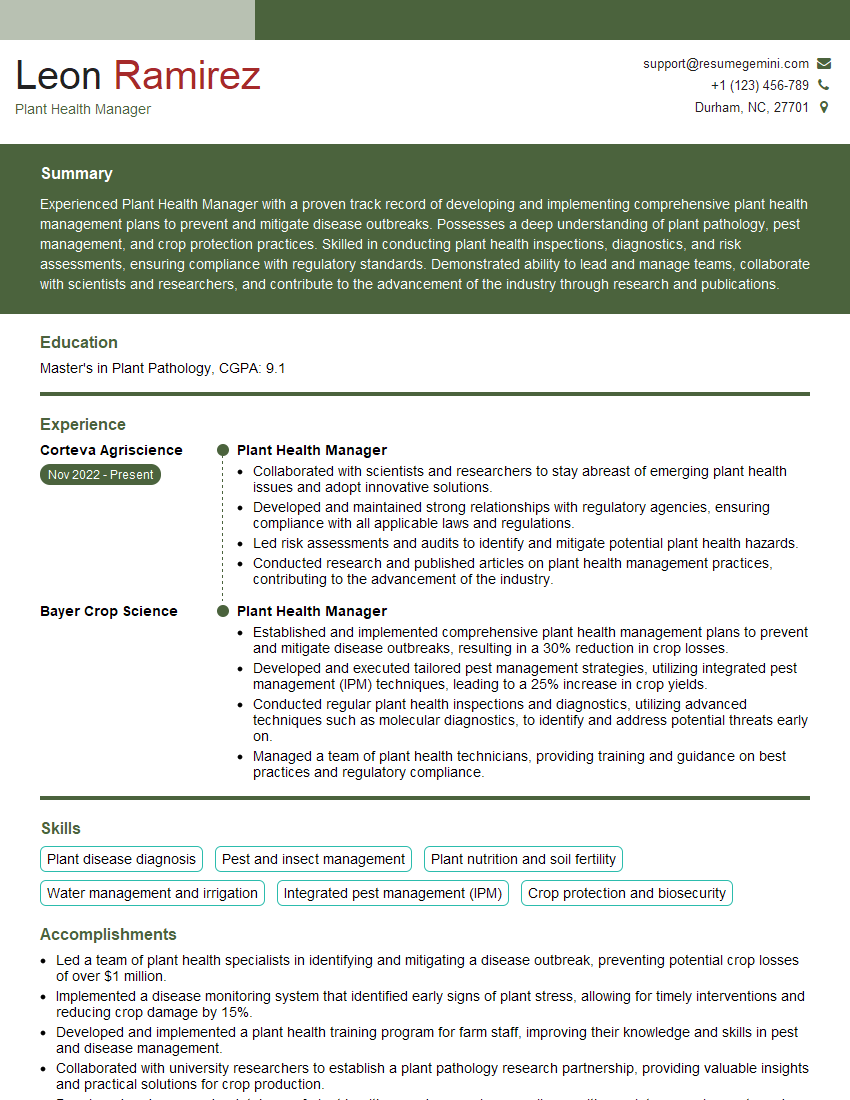
Mastering Plant Health Diagnosis opens doors to exciting career opportunities in agriculture, research, and environmental conservation. A strong understanding of these principles is highly sought after by employers. To maximize your job prospects, create an ATS-friendly resume that effectively highlights your skills and experience. ResumeGemini is a trusted resource that can help you build a professional and impactful resume. We provide examples of resumes tailored specifically to Plant Health Diagnosis to guide you in crafting your own compelling application materials.
Explore more articles
Users Rating of Our Blogs
Share Your Experience
We value your feedback! Please rate our content and share your thoughts (optional).
What Readers Say About Our Blog
Very informative content, great job.
good