Interviews are more than just a Q&A session—they’re a chance to prove your worth. This blog dives into essential Manufacturing Engineering and Design interview questions and expert tips to help you align your answers with what hiring managers are looking for. Start preparing to shine!
Questions Asked in Manufacturing Engineering and Design Interview
Q 1. Explain your experience with Lean Manufacturing principles.
Lean Manufacturing focuses on eliminating waste and maximizing value for the customer. It’s not just about cost reduction; it’s about optimizing the entire process to deliver a superior product efficiently. My experience involves implementing Lean principles across various projects, resulting in significant improvements in throughput, reduced lead times, and improved quality.
- Value Stream Mapping: I’ve led several value stream mapping exercises to visually identify and eliminate waste (muda) in production processes. For example, in a previous role, we identified unnecessary transportation steps in our assembly line by rearranging workstations, reducing material handling time by 25%.
- 5S Methodology: I’ve implemented 5S (Sort, Set in Order, Shine, Standardize, Sustain) to create a more organized and efficient workspace. This resulted in a safer work environment and improved employee morale, alongside a reduction in search time for parts.
- Kaizen Events: I’ve participated in numerous Kaizen events, focusing on continuous improvement through small, incremental changes. One project involved implementing a new fixture that improved the ergonomics of a specific assembly task, reducing operator fatigue and increasing production speed.
Q 2. Describe your experience with Six Sigma methodologies in a manufacturing setting.
Six Sigma is a data-driven methodology focused on reducing variation and improving process capability. My experience includes leading Six Sigma projects using DMAIC (Define, Measure, Analyze, Improve, Control) to address critical quality issues and enhance manufacturing processes.
- DMAIC Cycle: I’ve successfully utilized the DMAIC cycle in numerous projects. For instance, we tackled a high defect rate in a plastic injection molding process. Through data analysis, we pinpointed the root cause to be inconsistent material temperature. Implementing a new temperature control system reduced the defect rate by 80%.
- Statistical Process Control (SPC): I have extensive experience with SPC charts (e.g., control charts, Pareto charts) to monitor process stability and identify potential problems proactively. This proactive approach prevented many quality issues from reaching the customer.
- Design of Experiments (DOE): I’ve used DOE to optimize process parameters and improve product quality. In one instance, we optimized the cutting parameters in a CNC machining process, leading to a 15% increase in tool life and improved surface finish.
Q 3. How do you improve manufacturing efficiency?
Improving manufacturing efficiency is a multifaceted challenge that requires a holistic approach. It involves identifying bottlenecks, optimizing processes, and leveraging technology to enhance productivity.
- Process Optimization: This includes streamlining workflows, reducing waste, and improving equipment utilization. For instance, implementing a Kanban system can significantly improve material flow and reduce inventory costs.
- Technology Integration: Automation, robotics, and advanced manufacturing technologies can drastically improve efficiency. I’ve been involved in integrating robotic arms into assembly lines, improving throughput and reducing labor costs.
- Employee Training and Empowerment: A skilled and motivated workforce is crucial. Providing employees with proper training and empowering them to contribute to improvement initiatives can lead to significant gains in efficiency.
- Data Analysis: Regularly analyzing production data to identify trends and inefficiencies is crucial for continuous improvement. This data-driven approach helps in making informed decisions and prioritizing improvement efforts.
Q 4. What is your experience with CAD/CAM software?
I possess extensive experience with various CAD/CAM software packages, including SolidWorks, AutoCAD, and Mastercam. My expertise extends to 3D modeling, design for manufacturing (DFM), and generating CNC machining programs.
- 3D Modeling and Design: I proficiently use CAD software to create detailed 3D models of components and assemblies, ensuring designs are manufacturable and meet specified requirements.
- CAM Programming: I can generate CNC programs for various machining operations (milling, turning, drilling) optimizing toolpaths for efficiency and surface finish.
- DFM: I incorporate DFM principles throughout the design process to minimize manufacturing costs and lead times. This includes considering material selection, tooling, and assembly methods.
Q 5. How would you troubleshoot a production line bottleneck?
Troubleshooting a production line bottleneck requires a systematic approach. I would follow these steps:
- Identify the Bottleneck: Use data analysis (cycle time measurements, production rates) to pinpoint the specific stage causing the slowdown. Visual aids like spaghetti diagrams can help map material flow and identify constraints.
- Analyze the Root Cause: Once the bottleneck is identified, investigate the underlying reasons. Is it due to equipment malfunction, insufficient labor, material shortages, or poor process design?
- Develop Solutions: Based on the root cause analysis, propose solutions such as equipment upgrades, process improvements, workforce adjustments, or implementing a lean manufacturing technique like Kaizen.
- Implement and Monitor: Implement the chosen solution, closely monitor its effectiveness, and make adjustments as needed. Regularly collect data to ensure the bottleneck is resolved and the overall production efficiency is improved.
- Prevent Future Bottlenecks: Use this experience to improve future processes and prevent similar bottlenecks. This could involve preventative maintenance, process standardization, or improved planning.
Q 6. Describe your experience with different manufacturing processes (e.g., injection molding, CNC machining).
My experience encompasses a wide range of manufacturing processes. I have hands-on experience with injection molding, CNC machining, sheet metal fabrication, and 3D printing.
- Injection Molding: I understand the process from mold design to part ejection and have experience optimizing injection parameters to achieve desired part quality and cycle times.
- CNC Machining: I’m proficient in programming and operating CNC machines for various materials, and I understand tool selection, cutting parameters, and fixture design for optimal machining efficiency.
- Sheet Metal Fabrication: I’m familiar with various sheet metal forming techniques (bending, punching, welding) and the design considerations for manufacturability.
- 3D Printing (Additive Manufacturing): I have experience with various 3D printing technologies (FDM, SLA) and their applications in prototyping and low-volume production.
This diverse background allows me to effectively design products considering the capabilities and limitations of different manufacturing processes, leading to cost-effective and efficient production.
Q 7. How do you ensure product quality in a manufacturing environment?
Ensuring product quality involves a comprehensive approach that begins with design and continues through manufacturing and delivery.
- Quality Control at Each Stage: Implementing quality checks at every stage of the manufacturing process – from incoming raw materials inspection to final product testing – is vital. This prevents defects from propagating through the process.
- Statistical Process Control (SPC): Using SPC charts allows for real-time monitoring of process parameters and early detection of potential problems. This proactive approach helps prevent defects before they become widespread.
- Preventative Maintenance: Regular maintenance of equipment helps prevent malfunctions that can lead to poor quality. This includes scheduled maintenance and predictive maintenance using sensors and data analysis.
- Employee Training: Well-trained employees are essential to maintaining quality standards. This includes training on proper procedures, quality control techniques, and problem-solving skills.
- Continuous Improvement: Regularly reviewing the quality system and implementing improvements based on data analysis and feedback is crucial for continuous enhancement of product quality.
Q 8. Explain your understanding of Design for Manufacturing (DFM).
Design for Manufacturing (DFM) is a systematic approach to product design that considers the manufacturing process from the very beginning. It’s about optimizing the design to make the product easier, cheaper, and faster to manufacture, while maintaining quality and functionality. Instead of designing a product first and then figuring out how to make it, DFM integrates manufacturing considerations throughout the design process.
- Material Selection: Choosing materials readily available, easily machinable, and cost-effective for the chosen manufacturing process (e.g., injection molding, CNC machining).
- Part Simplification: Reducing the number of parts, simplifying shapes, and minimizing assembly steps to reduce manufacturing time and cost. For example, consolidating multiple parts into a single molded component.
- Tolerance Analysis: Defining appropriate manufacturing tolerances to avoid unnecessary precision, thereby reducing costs while ensuring functionality.
- Process Capability Analysis: Understanding the limitations of the chosen manufacturing process and designing the product within those capabilities to minimize defects.
For example, in designing a plastic enclosure, DFM might involve selecting a standard readily-available plastic material, designing the part with features that are easily molded, and avoiding intricate geometries that would increase manufacturing complexity and cost. A successful DFM strategy leads to reduced manufacturing lead times, lower production costs, and higher quality products.
Q 9. How do you manage project timelines and budgets in a manufacturing setting?
Managing project timelines and budgets in manufacturing requires a structured approach. I typically utilize a combination of techniques, including Work Breakdown Structure (WBS), critical path method (CPM), and Earned Value Management (EVM).
- Work Breakdown Structure (WBS): This breaks down the project into smaller, manageable tasks, allowing for better resource allocation and progress tracking. Each task gets a clear definition, responsible party, and estimated time and cost.
- Critical Path Method (CPM): This identifies the sequence of tasks that determines the shortest possible project duration. It helps to prioritize tasks and highlight potential bottlenecks. Any delay on the critical path directly impacts the overall project schedule.
- Earned Value Management (EVM): This combines scope, schedule, and cost data to provide a comprehensive view of project performance. It uses metrics like Planned Value (PV), Earned Value (EV), and Actual Cost (AC) to identify variances and take corrective actions.
Furthermore, regular meetings with the team, proactive risk management, and close monitoring of actual versus planned progress are crucial for staying on track. Regular budget reviews, coupled with variance analysis, help in identifying potential overruns and implementing cost-saving measures. For instance, if a specific component is experiencing unexpected cost escalation, we would explore alternative suppliers or design modifications to mitigate the impact.
Q 10. Describe your experience with statistical process control (SPC).
Statistical Process Control (SPC) is a powerful tool for monitoring and improving manufacturing processes. It uses statistical methods to identify and manage process variability, aiming to minimize defects and maintain consistent product quality. My experience involves applying various SPC techniques such as control charts (e.g., X-bar and R charts, p-charts, c-charts).
- Control Charts: These visually represent process data over time, allowing for the identification of trends, shifts, and out-of-control points. For example, an X-bar and R chart helps monitor the average and range of a measured characteristic, indicating whether the process is stable and within acceptable limits.
- Process Capability Analysis: This determines whether a process is capable of meeting specified customer requirements. Cp and Cpk indices are commonly used to assess process capability.
- Control Chart Interpretation: Identifying patterns and anomalies in control charts to pinpoint potential sources of variation and proactively address them before defects arise. For example, a sudden upward trend in the average indicates a possible process shift.
In a previous role, we used SPC to monitor the diameter of a critical component in an assembly. By analyzing control charts, we identified a pattern of increasing variation, ultimately tracing it to a worn-out machine tool. Replacing the tool immediately stabilized the process and reduced scrap.
Q 11. How do you handle conflicts within a manufacturing team?
Conflict within a team is inevitable, but how it’s handled dictates its impact. My approach focuses on open communication, collaborative problem-solving, and fair conflict resolution.
- Open Communication: Encouraging team members to openly express their concerns and perspectives in a respectful manner. Active listening is key to understanding the root causes of disagreements.
- Collaborative Problem-Solving: Facilitating discussions aimed at finding mutually acceptable solutions. This involves brainstorming, exploring different options, and reaching a consensus through compromise and collaboration.
- Mediation (if necessary): If direct communication isn’t resolving the conflict, I would step in as a mediator to guide the discussion, ensuring fair representation for all involved parties.
- Focus on shared goals: Reminding the team of the common objectives and how individual contributions are vital to success. This fosters a sense of shared responsibility and reduces individualistic approaches to conflict.
For example, in a previous project, a disagreement arose between the engineering and production teams regarding design specifications. By facilitating a meeting where both teams openly discussed their concerns and constraints, we were able to identify a compromise that satisfied both parties while maintaining product quality and manufacturing efficiency.
Q 12. Explain your experience with root cause analysis.
Root cause analysis (RCA) is a systematic approach to identifying the underlying causes of problems, rather than just addressing the symptoms. It aims to prevent recurrence by targeting the root causes of defects or failures.
- 5 Whys: A simple yet effective technique that involves repeatedly asking “Why?” to delve deeper into the cause of a problem. It helps to uncover the underlying reasons behind a chain of events.
- Fishbone Diagram (Ishikawa Diagram): A visual tool used to brainstorm and categorize potential causes of a problem. It helps to identify potential causes related to people, methods, materials, machines, measurements, and environment.
- Fault Tree Analysis (FTA): A deductive reasoning approach that starts with the undesired event (top event) and works backward to identify the contributing causes.
In a past project, we experienced repeated failures in a welding process. Using the 5 Whys, we uncovered that the root cause was a poorly calibrated welding machine due to infrequent maintenance. Implementing a regular preventative maintenance schedule completely eliminated the problem, significantly improving product quality and reducing scrap.
Q 13. How familiar are you with different types of automation (e.g., robotics, PLC)?
I have extensive experience with various types of automation, including robotics and Programmable Logic Controllers (PLCs).
- Robotics: I’m familiar with industrial robots used in various manufacturing processes such as welding, painting, assembly, and material handling. This includes understanding robot programming, safety protocols, and integration with other manufacturing systems.
- PLCs (Programmable Logic Controllers): I’m proficient in programming PLCs using ladder logic and other programming languages. PLCs are essential for controlling automated machinery and processes, including sequencing operations, monitoring sensors, and managing safety interlocks.
- SCADA (Supervisory Control and Data Acquisition): Experience with SCADA systems for monitoring and controlling large-scale manufacturing processes, providing real-time data visualization and process optimization.
For instance, in a previous project, we implemented a robotic arm to automate a repetitive assembly task. This resulted in a significant increase in throughput, improved consistency, and a reduction in labor costs. The robot’s movements were precisely controlled by a PLC, ensuring seamless integration with the overall production line.
Q 14. How would you implement a new manufacturing process?
Implementing a new manufacturing process requires a structured and phased approach.
- Feasibility Study: Assess the technical and economic viability of the new process, comparing it against existing methods. This includes evaluating potential costs, benefits, and risks.
- Process Design: Develop detailed process specifications, including equipment selection, material flow, workflow design, and quality control measures.
- Pilot Run: Conduct a small-scale trial run of the new process to identify and address any issues or bottlenecks before full-scale implementation.
- Training: Provide comprehensive training to operators and maintenance personnel on the new process and equipment. This includes both theoretical knowledge and hands-on practical training.
- Implementation: Gradually transition to the new process, possibly starting with a phased rollout to minimize disruption to existing production.
- Monitoring and Optimization: Continuously monitor the performance of the new process using key performance indicators (KPIs) and make adjustments as needed to optimize efficiency and quality.
For example, when introducing a new CNC machining center, we conducted a pilot run with a few prototype parts to test the machine’s capabilities and the accuracy of the programming. This helped us to identify minor tooling adjustments needed before launching full-scale production, minimizing scrap and downtime.
Q 15. Describe your experience with failure analysis.
Failure analysis is a systematic investigation into why a product or process failed to meet its intended function. It involves a multi-step process of identifying the failure mode, determining the root cause, and recommending corrective actions to prevent future occurrences. My experience encompasses various methodologies, from visual inspection and dimensional measurement to advanced techniques like destructive testing (e.g., tensile testing, fractography) and material analysis (e.g., SEM, EDS).
For example, in a previous role, we experienced a significant increase in the failure rate of a plastic injection molded component. Through a meticulous failure analysis process, involving visual inspection, dimensional checks, and material analysis using SEM, we pinpointed the root cause to be a combination of insufficient material flow during injection molding and a slight deviation in the mold geometry. This led to internal stresses in the component, resulting in premature cracking. Implementing corrective actions, such as mold modification and adjusting injection parameters, resolved the issue, significantly reducing failure rates and saving considerable cost.
I’m proficient in using various software tools for data analysis and report generation associated with failure analysis.
Career Expert Tips:
- Ace those interviews! Prepare effectively by reviewing the Top 50 Most Common Interview Questions on ResumeGemini.
- Navigate your job search with confidence! Explore a wide range of Career Tips on ResumeGemini. Learn about common challenges and recommendations to overcome them.
- Craft the perfect resume! Master the Art of Resume Writing with ResumeGemini’s guide. Showcase your unique qualifications and achievements effectively.
- Don’t miss out on holiday savings! Build your dream resume with ResumeGemini’s ATS optimized templates.
Q 16. What are the key considerations for designing a manufacturable product?
Designing for manufacturability (DFM) is a crucial aspect of product development, ensuring a product is not only functional but also cost-effective and efficient to produce. Key considerations include:
- Material Selection: Choosing materials readily available, easily processed, and meeting performance requirements.
- Manufacturing Processes: Selecting appropriate manufacturing methods like casting, machining, injection molding, or 3D printing based on the design complexity, volume, and cost targets.
- Simplification of Design: Reducing the number of parts, avoiding complex geometries, and using standard components to streamline the manufacturing process.
- Tolerance Analysis: Defining acceptable variations in dimensions and ensuring manufacturability within these tolerances. This often involves using statistical methods.
- Assembly Considerations: Designing for easy and efficient assembly, minimizing the number of assembly steps and special tools.
- Cost Analysis: Evaluating the manufacturing cost at each stage of the process, from material selection to assembly, and identifying potential cost-saving measures.
For instance, designing a part with undercuts in injection molding would significantly increase manufacturing complexity and cost. A simple design change, eliminating the undercut, would enhance manufacturability and reduce costs.
Q 17. How do you ensure safety standards are met in a manufacturing environment?
Ensuring safety in a manufacturing environment requires a multifaceted approach, adhering to strict protocols and regulations. This involves:
- Risk Assessment: Identifying potential hazards (e.g., machinery, chemicals, ergonomics) and evaluating the associated risks.
- Safety Training: Providing comprehensive safety training to all employees, covering procedures, equipment usage, and emergency response.
- Machine Guarding: Implementing appropriate machine guarding to prevent accidents, complying with OSHA or equivalent regulations.
- Personal Protective Equipment (PPE): Ensuring employees have and utilize the necessary PPE, such as safety glasses, gloves, and hearing protection.
- Emergency Procedures: Establishing clear emergency procedures and conducting regular drills to ensure preparedness for incidents.
- Regular Inspections: Conducting regular inspections of machinery, equipment, and the work environment to identify and address potential hazards.
- Compliance with Regulations: Adhering to all relevant safety regulations and standards, including local and national legislation.
A real-world example would be implementing lockout/tagout procedures for machinery maintenance, ensuring that equipment is safely de-energized before any work is performed. This prevents accidental starts and serious injuries.
Q 18. How do you stay current with advancements in manufacturing technology?
Staying updated on manufacturing technology advancements is essential for remaining competitive. I actively engage in several strategies:
- Industry Publications and Journals: Regularly reading industry publications like Modern Machine Shop and Manufacturing Engineering to stay abreast of new technologies and trends.
- Conferences and Trade Shows: Attending industry conferences and trade shows, like IMTS or FABTECH, to network with peers and see the latest equipment and processes in action.
- Online Courses and Webinars: Utilizing online learning platforms like Coursera and edX to expand knowledge on specific technologies, such as additive manufacturing or automation.
- Professional Organizations: Participating in professional organizations like SME (Society of Manufacturing Engineers) for access to resources, networking opportunities, and continuing education.
- Industry Networking: Engaging in networking events to learn from experienced professionals and stay informed about emerging trends.
For example, recently I completed an online course on advanced robotics in manufacturing, enhancing my knowledge of collaborative robots and their potential applications in automation.
Q 19. Explain your understanding of tolerance analysis.
Tolerance analysis is the process of determining the allowable variations in dimensions and tolerances of components to ensure the final product functions correctly within specified limits. It involves assessing the cumulative effect of individual tolerances on the overall assembly. This is crucial for ensuring proper fit, function, and interchangeability of parts.
Methods include:
- Worst-Case Analysis: This method assumes the maximum possible deviation of each tolerance in the worst possible direction, often resulting in overly conservative estimates.
- Statistical Tolerance Analysis: This approach uses statistical methods, such as Monte Carlo simulation, to model the probability distribution of the assembly dimensions, providing a more realistic assessment of tolerance stack-up.
For instance, in designing an engine block, tight tolerances are crucial for precise piston fit. Statistical tolerance analysis is employed to model the variations in piston diameter, cylinder bore, and other dimensions, ensuring the assembly meets functional requirements with high probability while optimizing manufacturing costs by not being overly stringent on tolerances.
Q 20. Describe your experience with supply chain management in a manufacturing context.
My experience with supply chain management in manufacturing includes selecting and managing suppliers, negotiating contracts, monitoring inventory levels, and coordinating logistics. I understand the importance of optimizing the supply chain for efficiency, cost-effectiveness, and risk mitigation.
In a previous role, we implemented a just-in-time (JIT) inventory system. This significantly reduced storage costs and inventory holding risks. We also strategically diversified our supplier base to mitigate potential disruptions from single-source dependencies. This involved careful supplier selection criteria, performance monitoring, and building strong supplier relationships.
Proficient in using ERP and MRP software to manage the entire supply chain process from procurement to delivery.
Q 21. How do you handle pressure and tight deadlines?
Handling pressure and tight deadlines is a key aspect of manufacturing engineering. I approach this through a combination of effective planning, prioritization, and teamwork:
- Prioritization: I use a prioritization matrix to identify critical tasks and allocate resources effectively.
- Effective Planning: I create detailed project plans with clear milestones, timelines, and resource allocation. Utilizing tools like Gantt charts helps visualize the project’s progress.
- Communication: I maintain open and transparent communication with team members and stakeholders, keeping them informed of progress and potential challenges.
- Delegation: When possible, I delegate tasks effectively, ensuring the right people are working on the right tasks.
- Problem-Solving: I proactively identify and address potential problems, taking corrective actions to mitigate risks and keep the project on track.
- Flexibility: I am flexible and adapt to changing priorities and unforeseen challenges.
A recent example involved meeting a tight deadline for a new product launch. By prioritizing tasks, efficiently delegating, and working closely with the team, we successfully launched the product on schedule and met all quality standards.
Q 22. How do you prioritize tasks in a fast-paced manufacturing environment?
Prioritizing tasks in a fast-paced manufacturing environment requires a structured approach that balances urgency and importance. I typically employ a combination of methods, starting with a clear understanding of the production schedule and any impending deadlines. This involves reviewing the Manufacturing Execution System (MES) data and identifying bottlenecks or critical path activities.
Next, I utilize a prioritization matrix, often a variation of the Eisenhower Matrix (Urgent/Important), to categorize tasks. This helps to visually separate tasks that require immediate attention from those that can be scheduled for later. For example, a machine malfunction requiring immediate repair would be categorized as Urgent and Important, while preventative maintenance might be Important but not Urgent.
Finally, I communicate these priorities clearly to the team, ensuring everyone understands the rationale behind the task order. This involves regular team meetings and transparent updates through the MES system. This collaborative approach not only ensures efficient task completion but also fosters a sense of shared responsibility and ownership within the team.
- Method: Eisenhower Matrix (Urgent/Important)
- Tool: Manufacturing Execution System (MES)
- Outcome: Efficient task completion, improved team communication, minimized production downtime.
Q 23. Describe a time you had to solve a complex manufacturing problem.
During my time at [Previous Company Name], we faced a significant challenge with a new automated assembly line. The line, designed to increase production by 40%, was experiencing frequent stoppages due to inconsistent component feeding. The initial troubleshooting efforts by the technicians were unsuccessful, leading to significant production delays and costing the company thousands of dollars daily.
I approached the problem systematically, beginning with a thorough review of the line’s design specifications and the MES data logging the stoppages. I identified a pattern – the stoppages correlated with specific batches of components. I hypothesized that variations in component dimensions were causing the feeding mechanism to malfunction. This hypothesis was confirmed after conducting detailed dimensional analysis of the components from different batches.
The solution involved a two-pronged approach: First, we implemented a stricter quality control process for incoming components, tightening the tolerances allowed. Second, we re-engineered a small part of the feeding mechanism to make it more robust and less sensitive to minor dimensional variations. The modifications were designed using CAD software and simulations were performed to ensure they worked correctly before implementation.
The results were immediate and dramatic. Stoppages were reduced by 90%, leading to a significant improvement in production efficiency and a substantial cost savings. This experience reinforced the importance of data-driven problem solving, systematic analysis, and collaboration with technicians in resolving complex manufacturing issues.
Q 24. What is your experience with different types of materials and their properties?
My experience encompasses a wide range of materials, including metals (aluminum, steel, titanium), polymers (ABS, nylon, polycarbonate), and composites (carbon fiber reinforced polymers). I understand the crucial role material selection plays in product design and manufacturing, considering factors such as strength, durability, weight, cost, machinability, and environmental impact.
For instance, selecting aluminum for a lightweight aerospace component requires understanding its properties such as high strength-to-weight ratio, excellent corrosion resistance, and ease of machining. Conversely, choosing a polymer for a consumer product might prioritize factors like low cost, ease of processing, and flexibility.
My knowledge extends to material testing methodologies, including tensile testing, hardness testing, and impact testing, which are crucial for ensuring materials meet specified requirements. I’m familiar with material data sheets and specifications, which are critical for selecting appropriate materials for a given application.
Q 25. How familiar are you with different types of manufacturing software?
I have extensive experience with various manufacturing software packages. My proficiency includes CAD software such as SolidWorks and AutoCAD for design and modeling, CAM software like Mastercam for CNC programming, and PLM (Product Lifecycle Management) systems like Teamcenter for managing product data throughout its lifecycle.
I am also familiar with MES (Manufacturing Execution System) software for real-time monitoring and control of manufacturing processes. I have experience using ERP (Enterprise Resource Planning) systems for managing inventory, scheduling, and other business processes. My skills include using simulation software to optimize manufacturing processes and predict potential issues before they arise.
Finally, I’m adept at using data analysis tools to interpret manufacturing data and identify areas for improvement. This includes statistical process control (SPC) software and data visualization tools.
Q 26. Explain your experience with capacity planning and forecasting.
Capacity planning and forecasting are critical aspects of efficient manufacturing. My experience involves leveraging both historical data and predictive modeling to optimize resource allocation and meet production demands. This involves analyzing factors such as production lead times, machine utilization rates, labor availability, and anticipated order volume.
For example, in a previous role, I utilized time-series forecasting techniques to predict future demand for a specific product line. This involved analyzing historical sales data, identifying seasonal trends, and incorporating external factors like economic indicators. The forecast was then used to develop a detailed production schedule, ensuring that sufficient resources were available to meet demand without overstocking or experiencing production bottlenecks.
Furthermore, I have experience with capacity planning tools and techniques, including line balancing, simulation, and bottleneck analysis. These tools help to optimize the allocation of resources across different production lines, maximizing efficiency and minimizing costs.
Q 27. Describe your understanding of quality control systems.
My understanding of quality control systems is comprehensive, encompassing various methodologies and tools. I’m familiar with both preventative and corrective quality control measures, and I prioritize implementing robust systems that minimize defects and ensure product quality meets or exceeds customer expectations.
My experience includes implementing and managing quality control systems based on statistical process control (SPC) methodologies. This involves using control charts to monitor process variability and identify sources of variation. I’m also experienced in implementing Six Sigma methodologies to reduce defects and improve process efficiency.
Beyond statistical methods, I understand the importance of visual inspection, testing, and documentation. This includes creating and maintaining quality control plans, conducting regular audits, and implementing corrective actions when necessary. Furthermore, I am familiar with ISO 9001 standards and other relevant quality management systems.
Key Topics to Learn for Manufacturing Engineering and Design Interview
- Manufacturing Processes: Understand various manufacturing methods like machining, casting, forging, additive manufacturing (3D printing), and their respective applications. Consider the trade-offs between speed, cost, and precision for each process.
- Design for Manufacturing (DFM): Learn principles of designing products for efficient and cost-effective manufacturing. This includes understanding material selection, tolerance analysis, and assembly considerations.
- CAD/CAM Software: Demonstrate familiarity with industry-standard CAD (Computer-Aided Design) and CAM (Computer-Aided Manufacturing) software. Be prepared to discuss your experience with specific software packages and their applications in the design and manufacturing process.
- Quality Control and Statistical Process Control (SPC): Understand methods for ensuring product quality, including statistical process control techniques like control charts and process capability analysis. Be able to discuss how quality is maintained throughout the manufacturing lifecycle.
- Supply Chain Management: Gain an understanding of how materials and components flow through the manufacturing process, from sourcing to delivery. This includes inventory management, logistics, and supplier relationships.
- Automation and Robotics: Familiarize yourself with the role of automation and robotics in modern manufacturing. Understand the benefits and challenges associated with implementing automated systems.
- Lean Manufacturing Principles: Be prepared to discuss lean manufacturing concepts like waste reduction, continuous improvement (Kaizen), and value stream mapping. Highlight how these principles can be applied to optimize manufacturing processes.
- Materials Science: Develop a solid understanding of the properties of different materials (metals, polymers, composites) and their suitability for various manufacturing applications. This includes knowledge of material selection criteria and failure analysis.
- Problem-Solving and Analytical Skills: Practice applying your engineering knowledge to solve real-world manufacturing problems. Be prepared to discuss your approach to troubleshooting and process optimization.
Next Steps
Mastering Manufacturing Engineering and Design opens doors to exciting and rewarding career opportunities in a constantly evolving field. A strong foundation in these key areas positions you for success in a competitive job market. To maximize your chances, create an ATS-friendly resume that showcases your skills and experience effectively. ResumeGemini is a trusted resource to help you build a professional and impactful resume. We provide examples of resumes tailored specifically to Manufacturing Engineering and Design to help you get started.
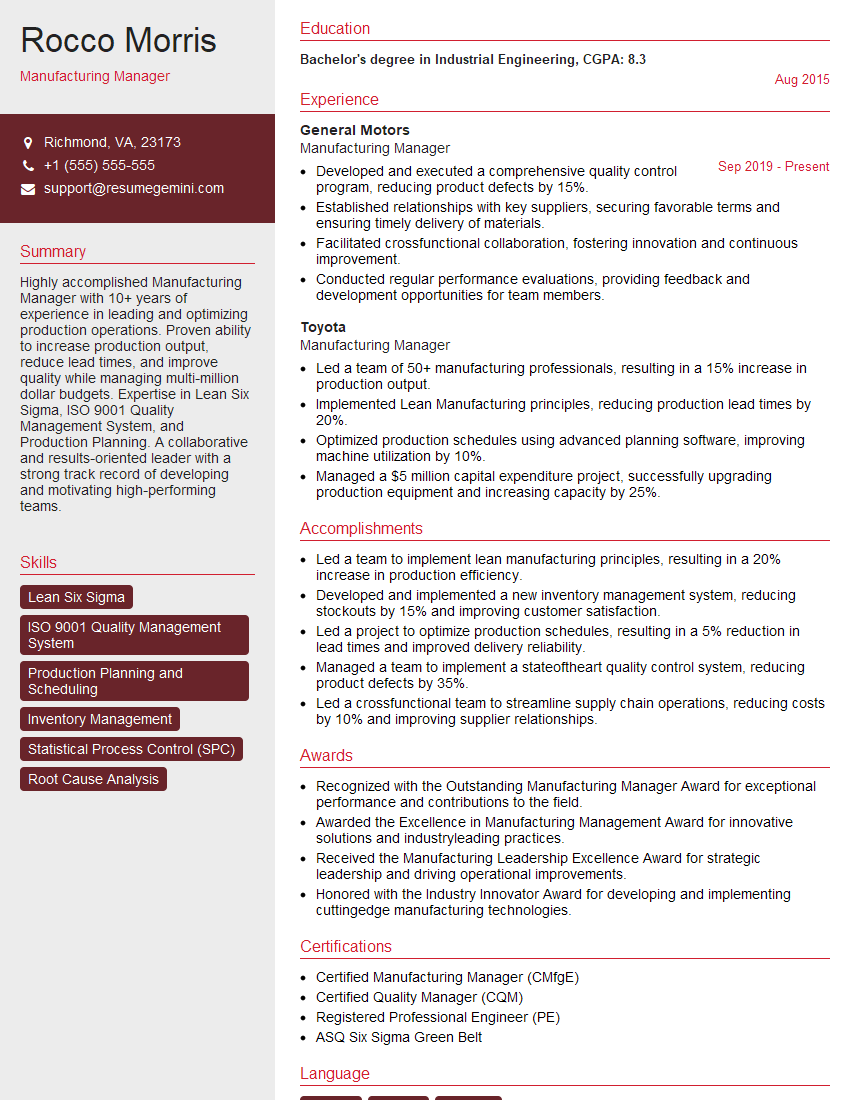
Manufacturing Manager Resume Sample
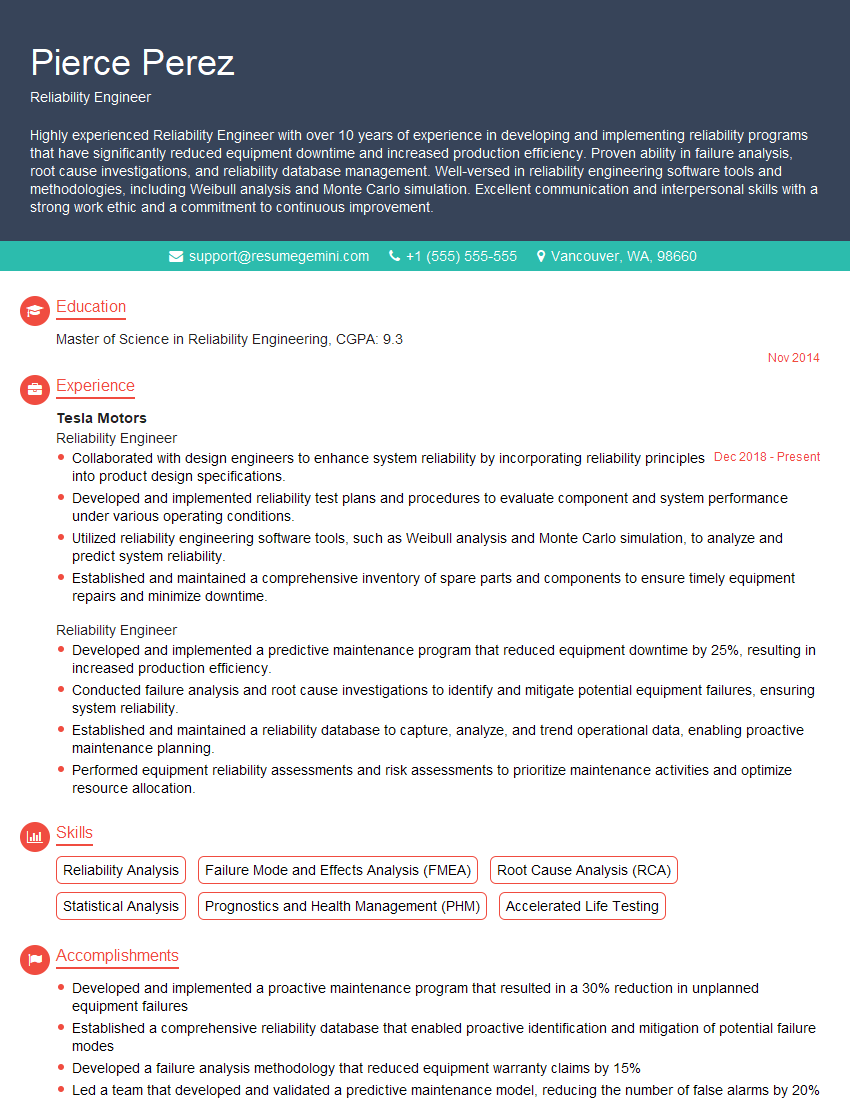
Reliability Engineer Resume Sample
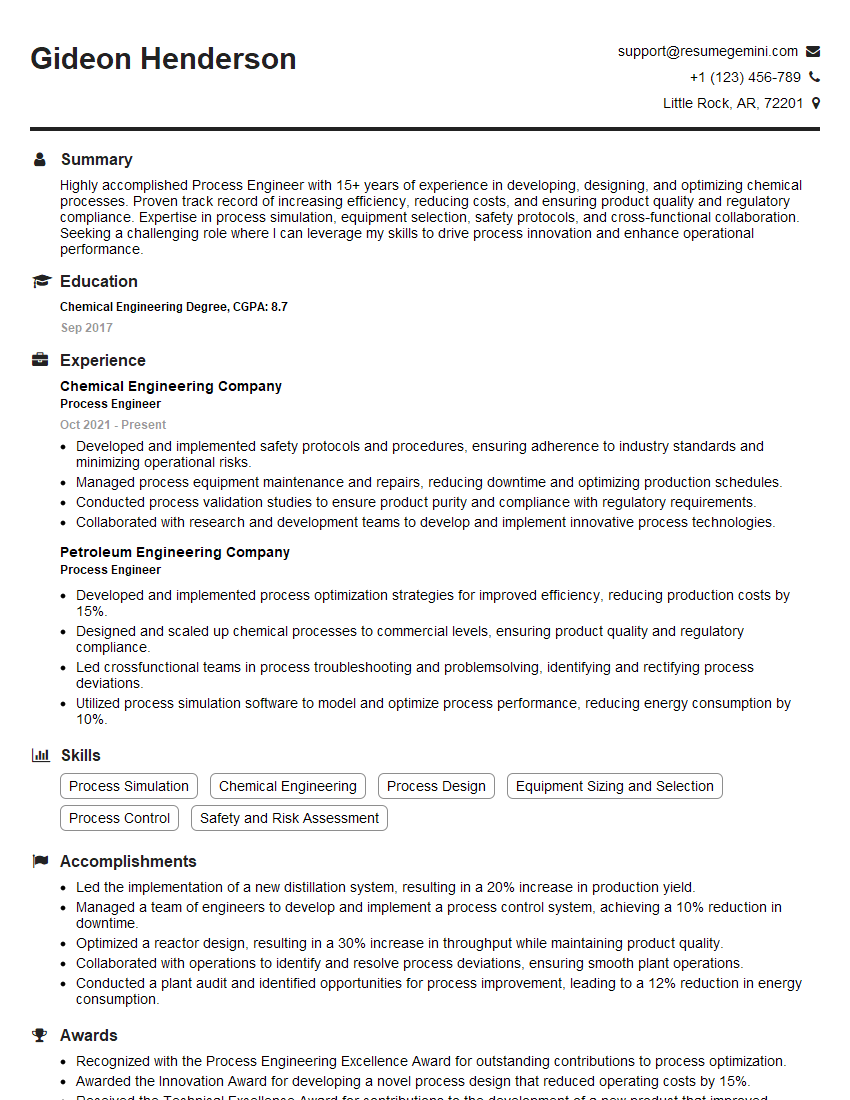
Process Engineer Resume Sample
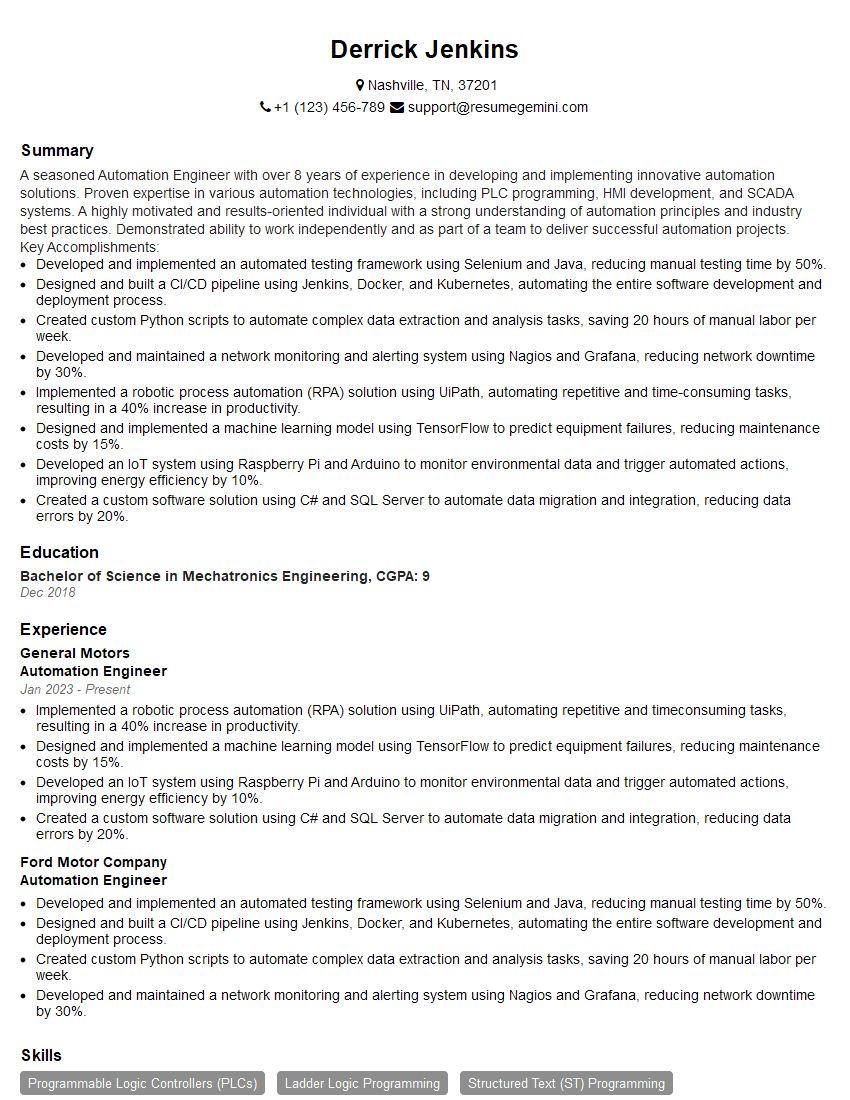
Automation Engineer Resume Sample
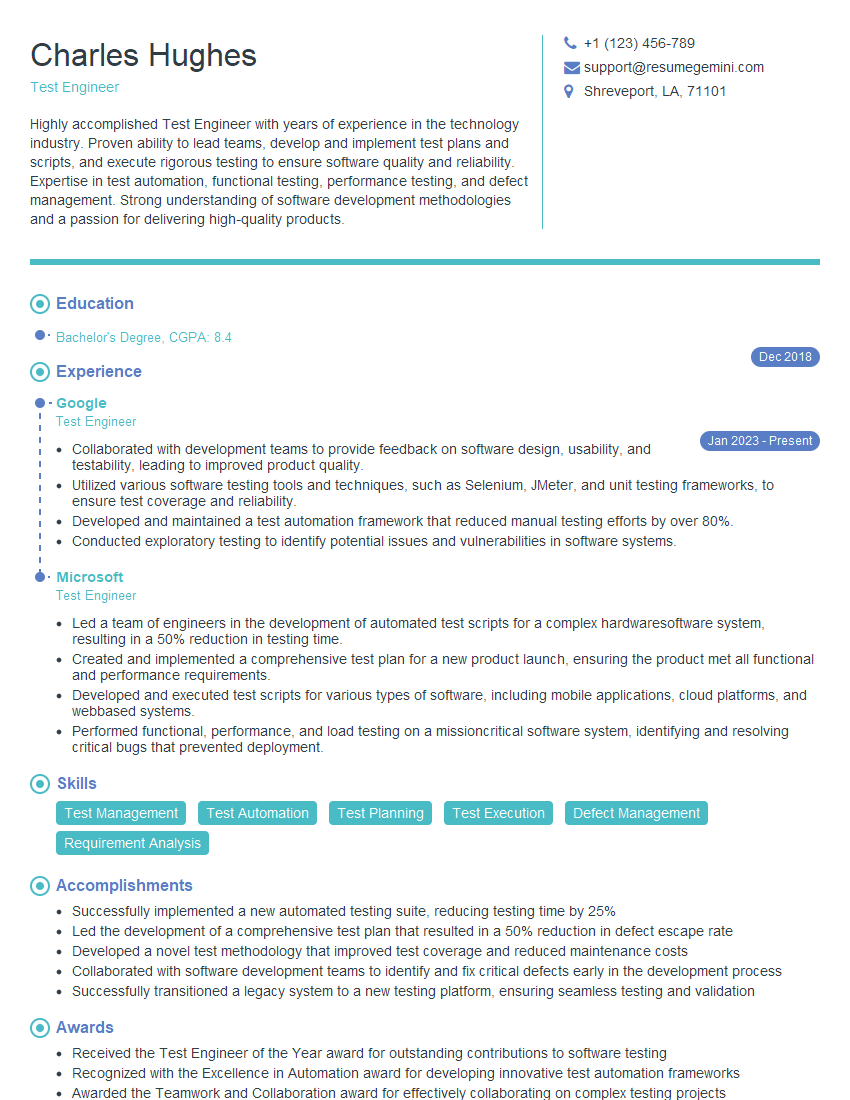
Test Engineer Resume Sample
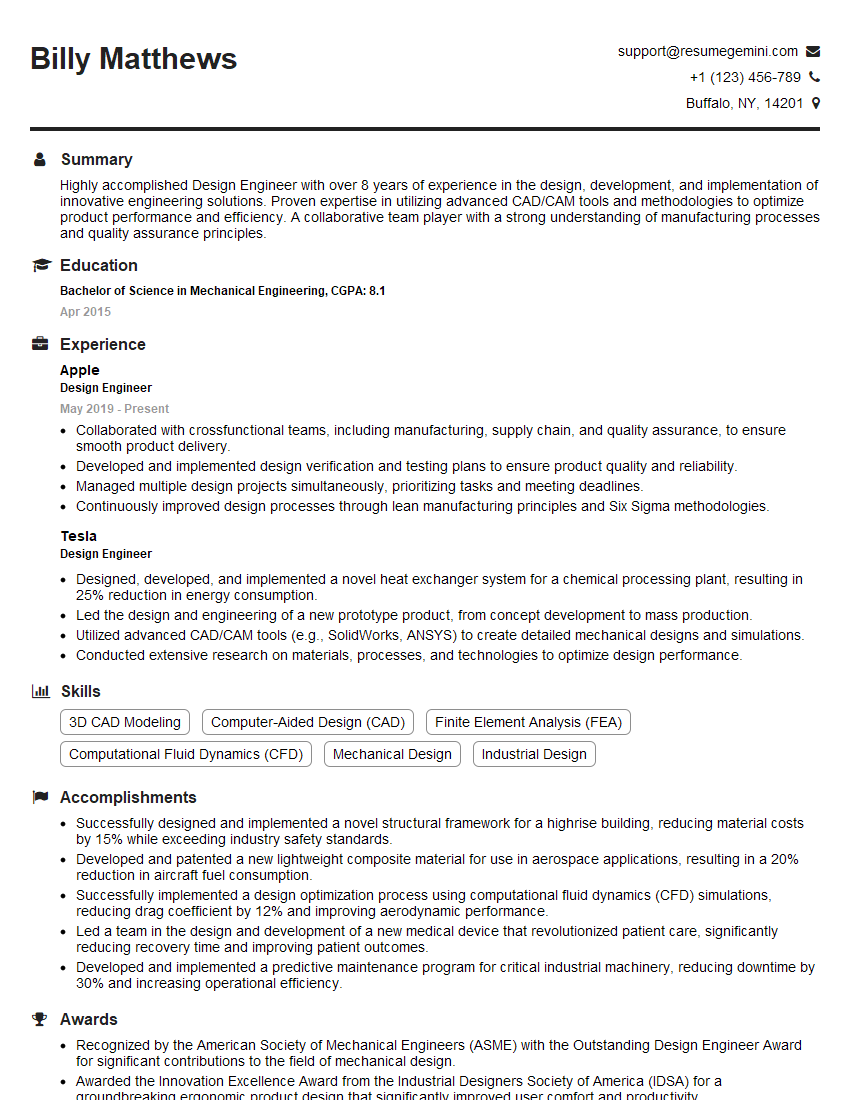
Design Engineer Resume Sample
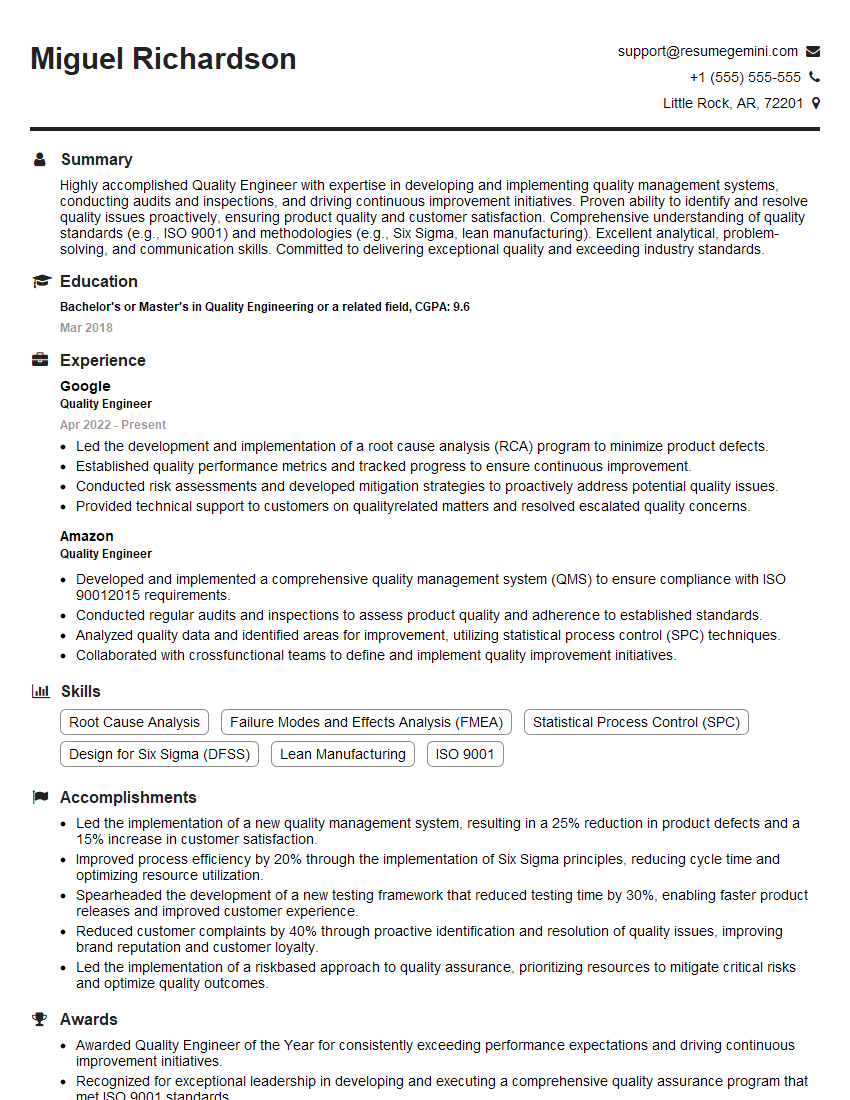
Quality Engineer Resume Sample
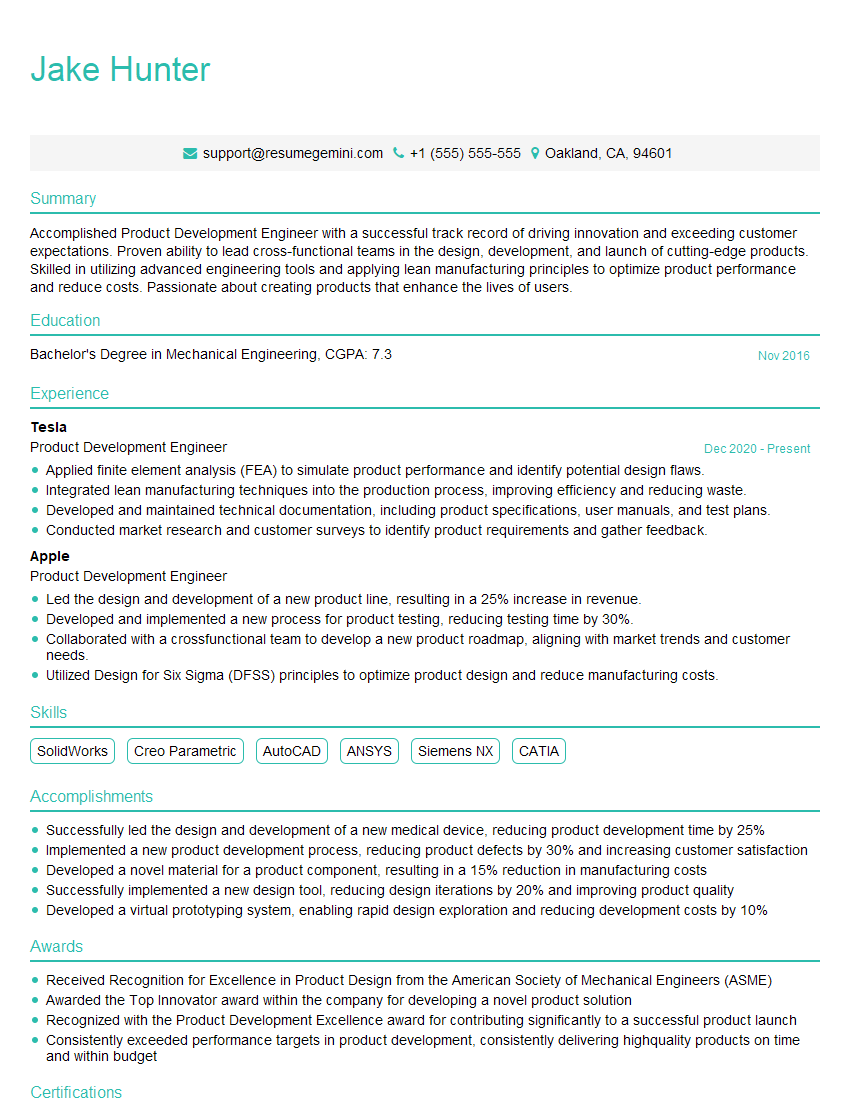
Product Development Engineer Resume Sample
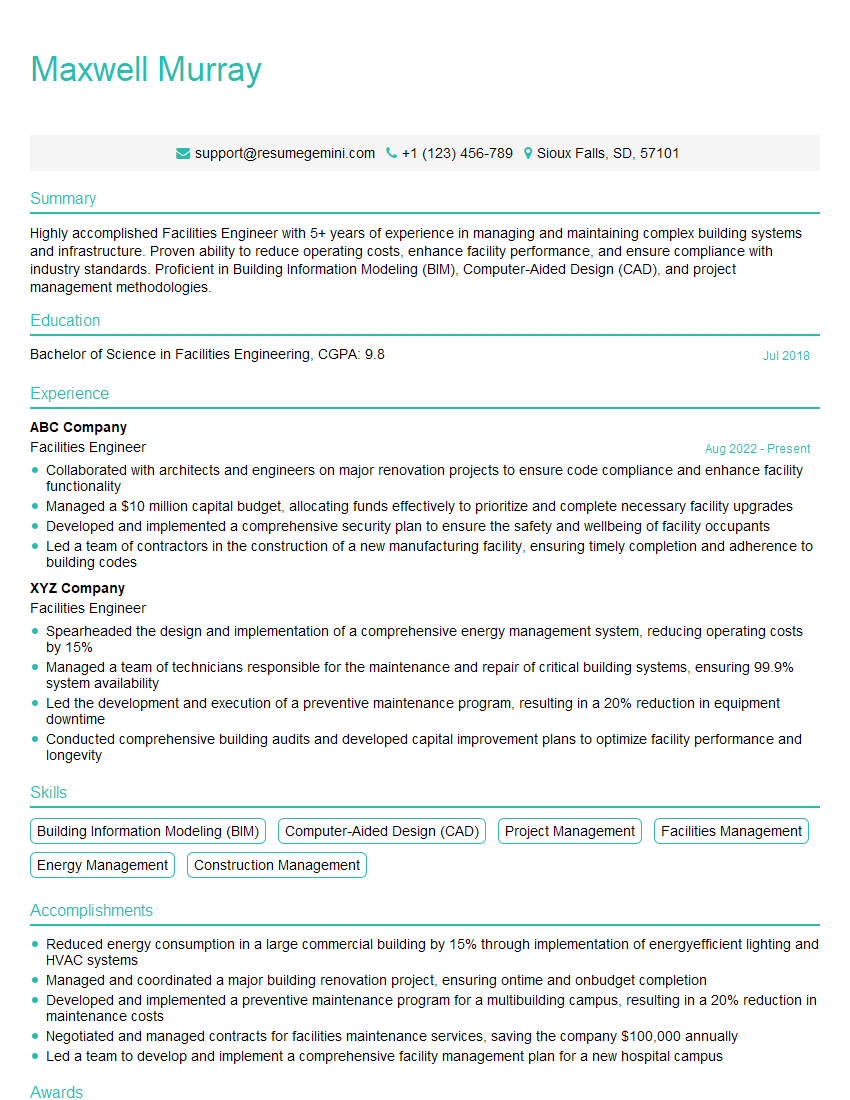
Facilities Engineer Resume Sample
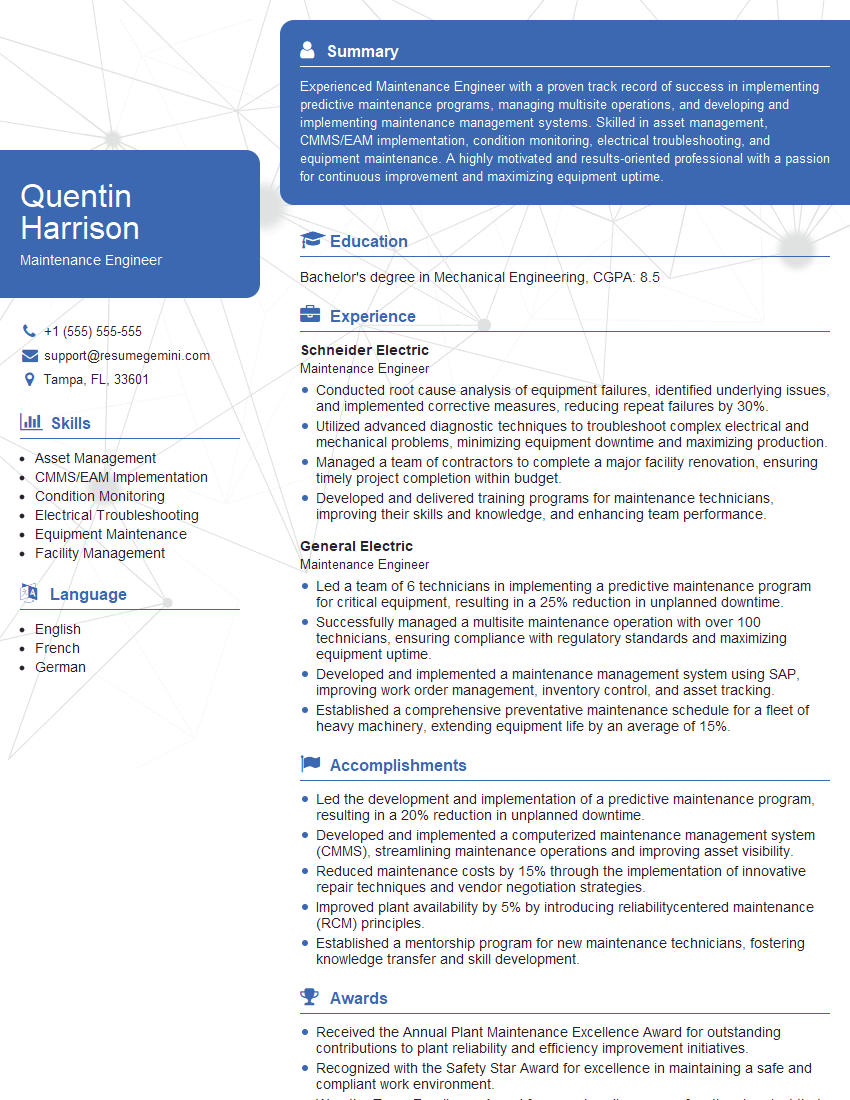
Maintenance Engineer Resume Sample
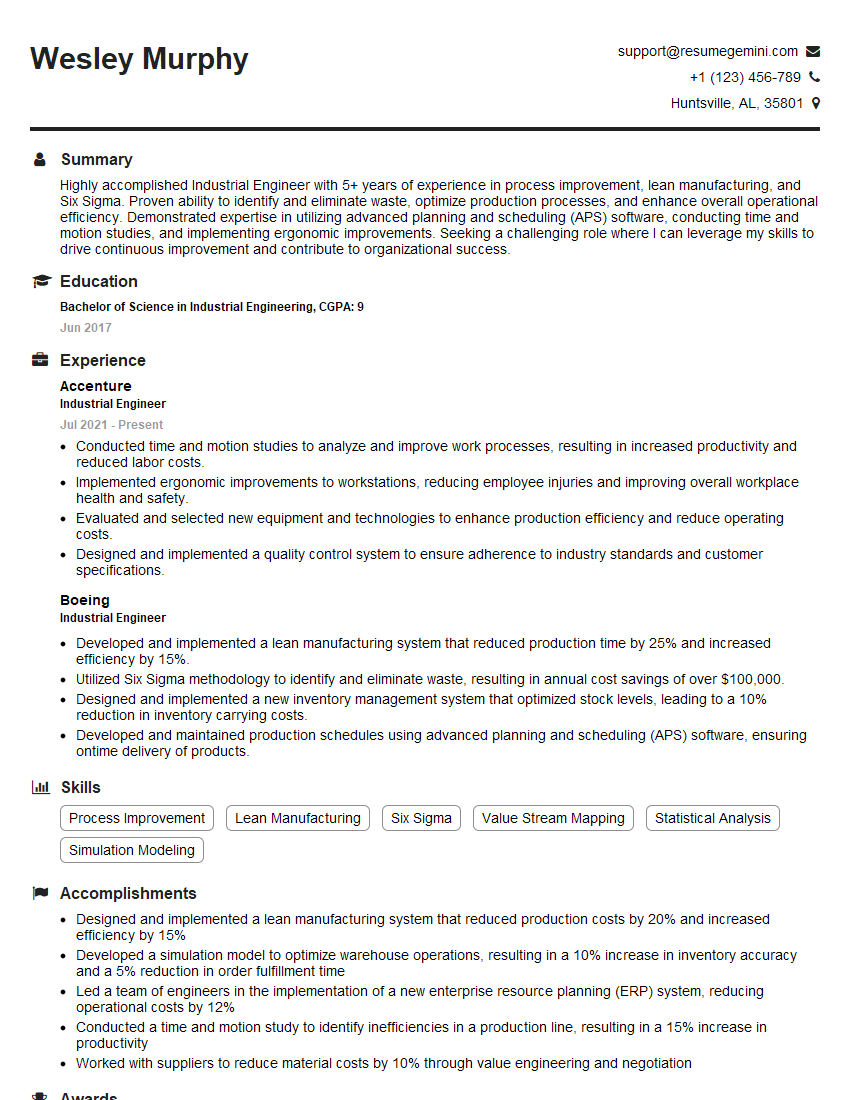
Industrial Engineer Resume Sample
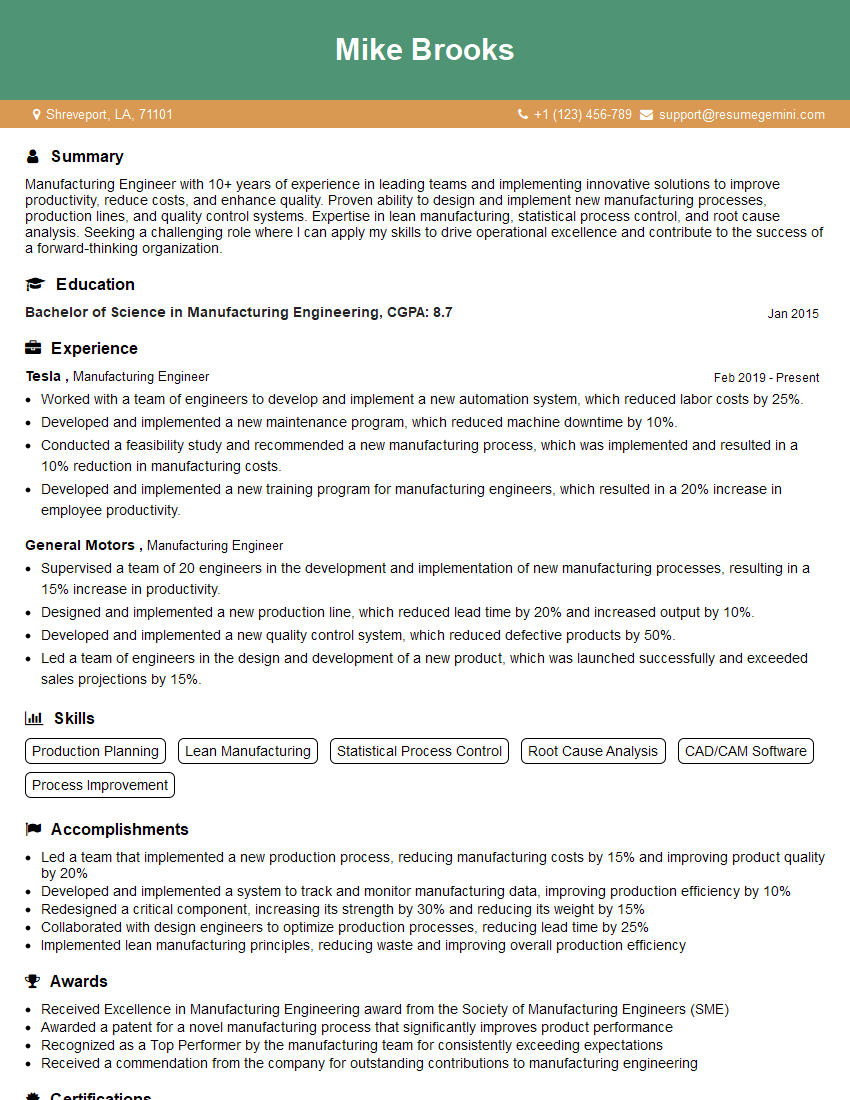
Manufacturing Engineer Resume Sample
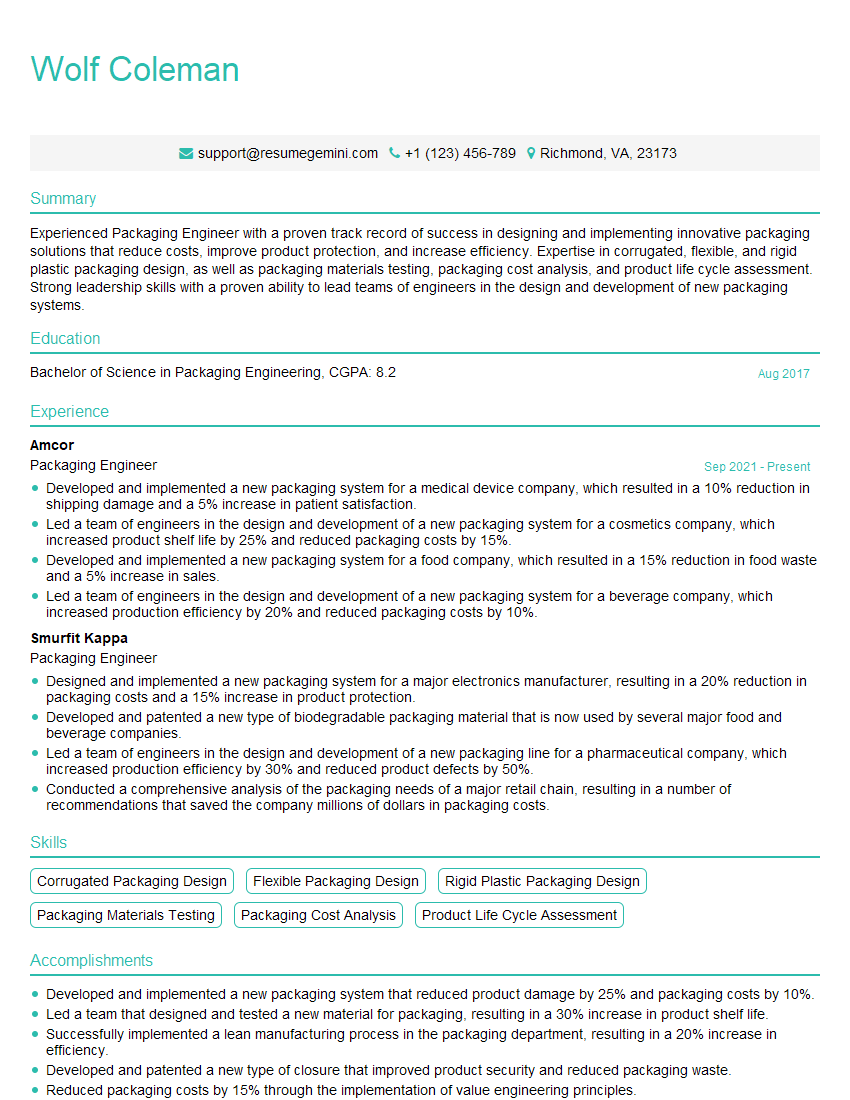
Packaging Engineer Resume Sample
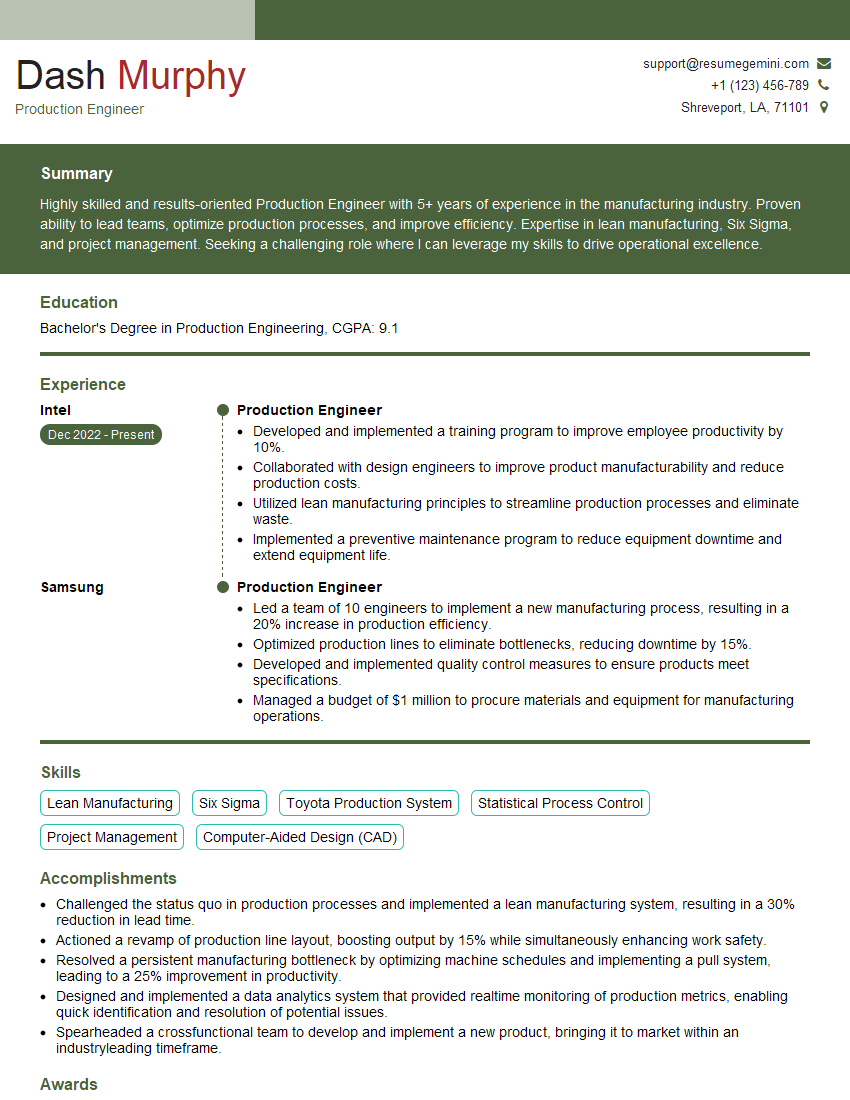
Production Engineer Resume Sample
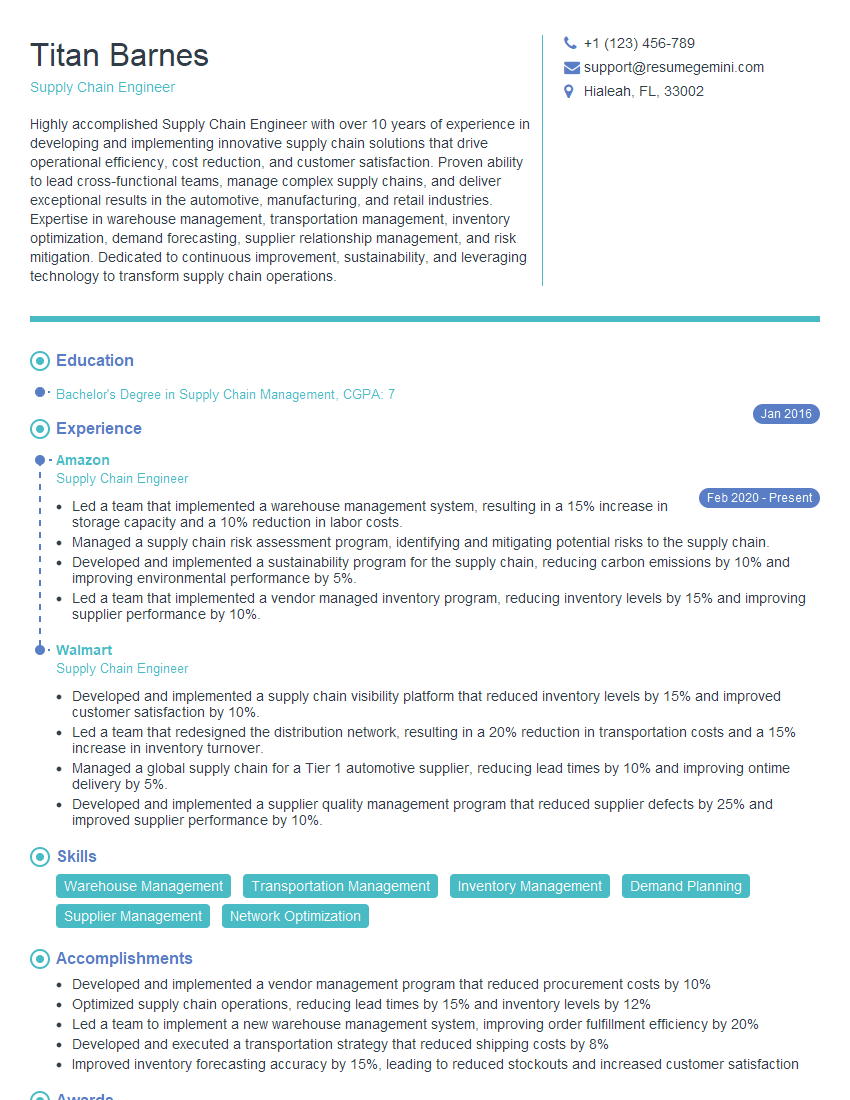
Supply Chain Engineer Resume Sample
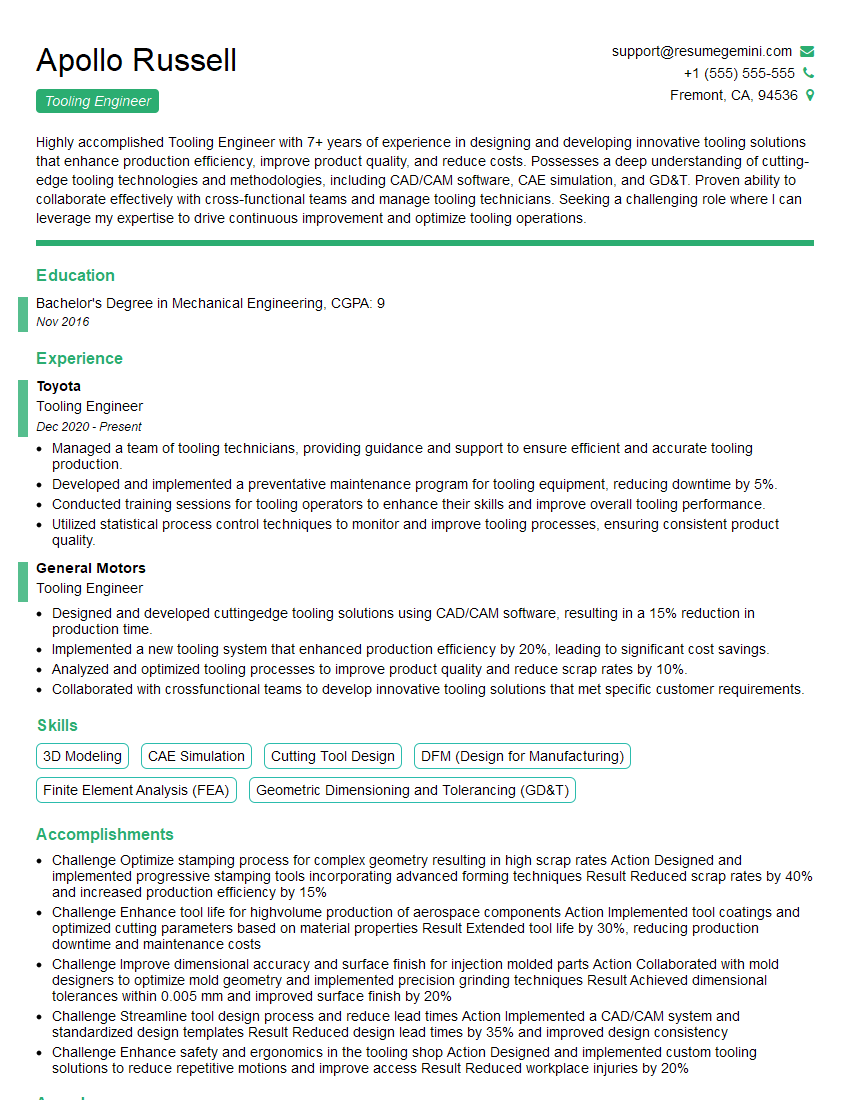
Tooling Engineer Resume Sample
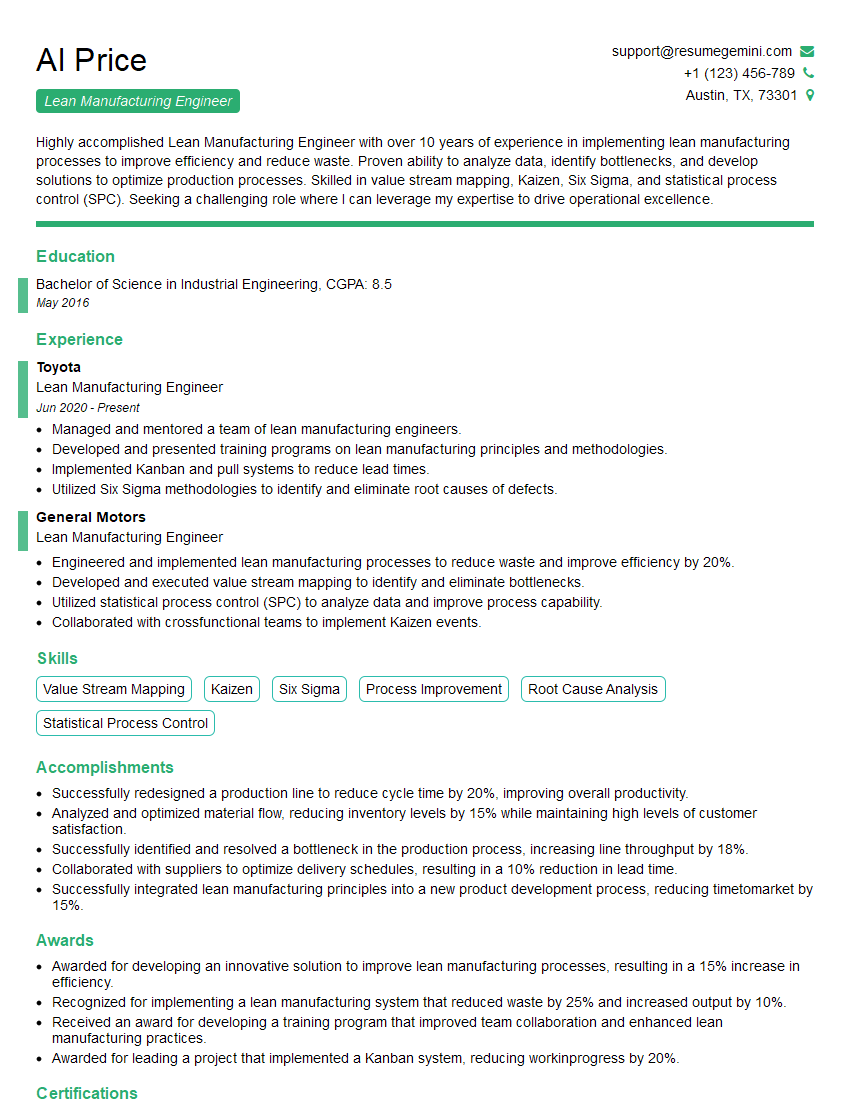
Lean Manufacturing Engineer Resume Sample
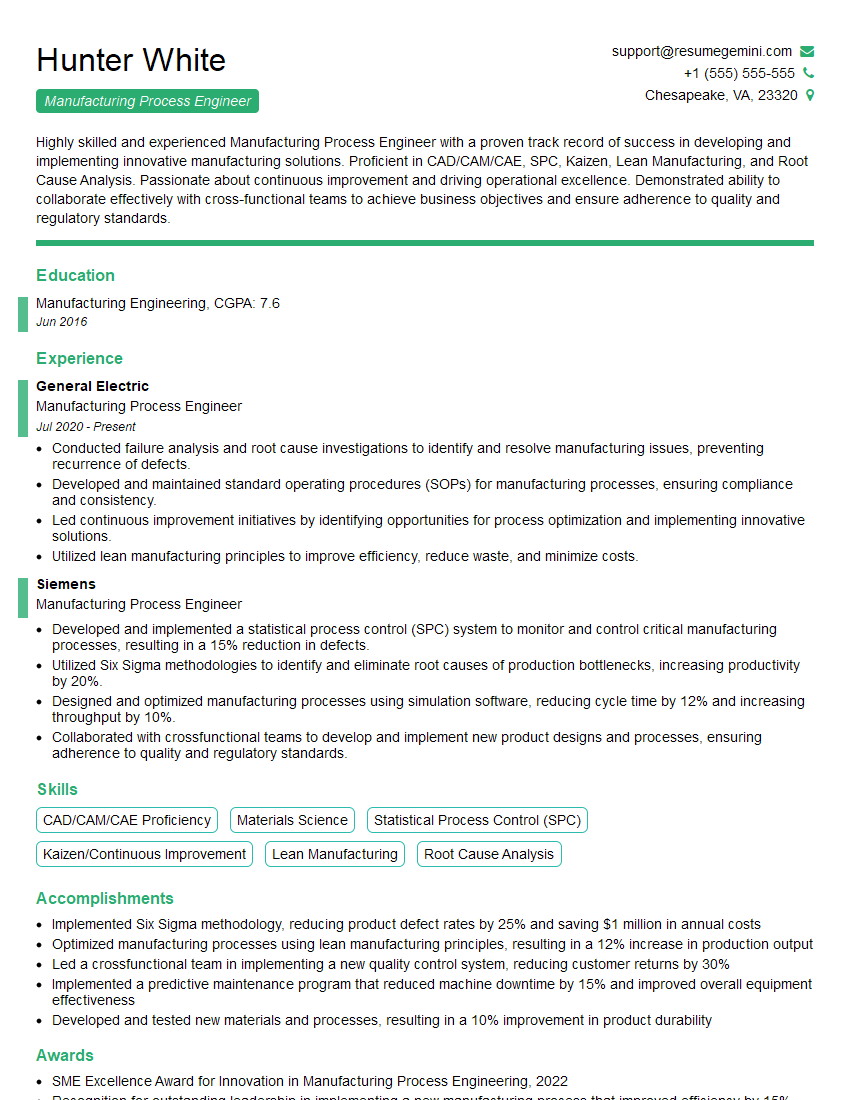
Manufacturing Process Engineer Resume Sample
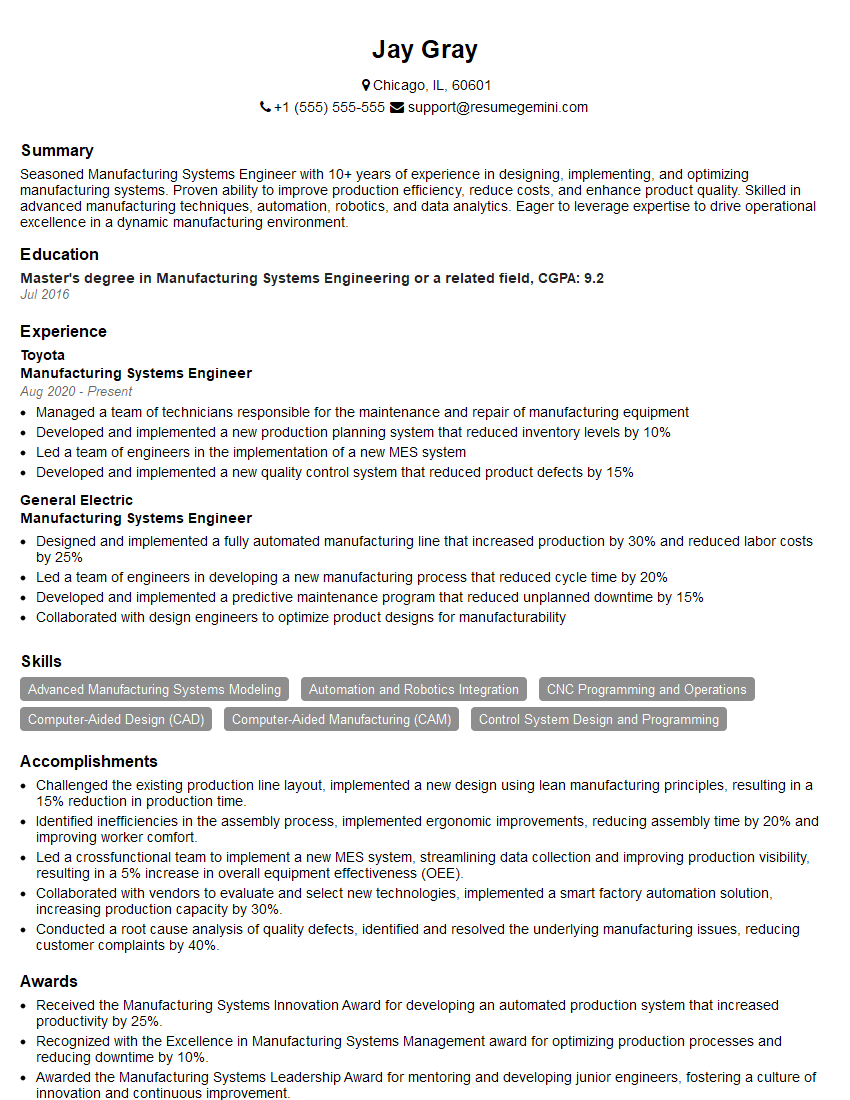
Manufacturing Systems Engineer Resume Sample
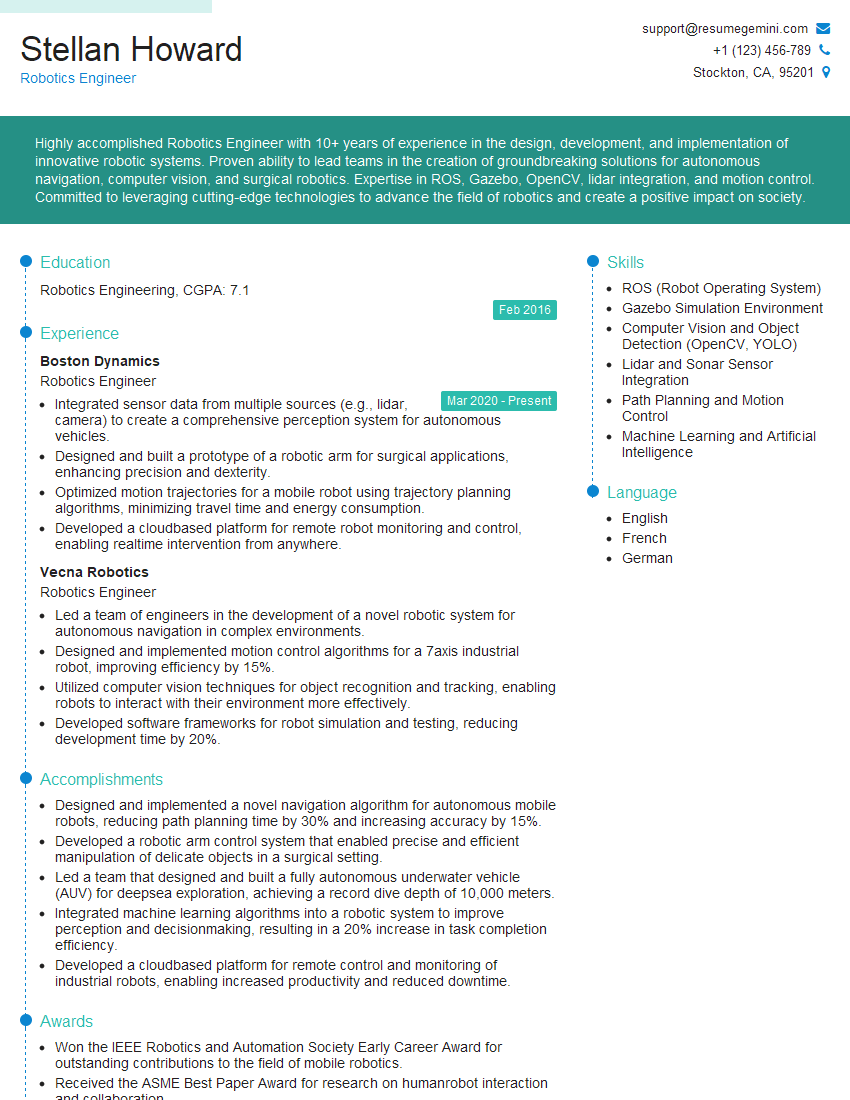
Robotics Engineer Resume Sample
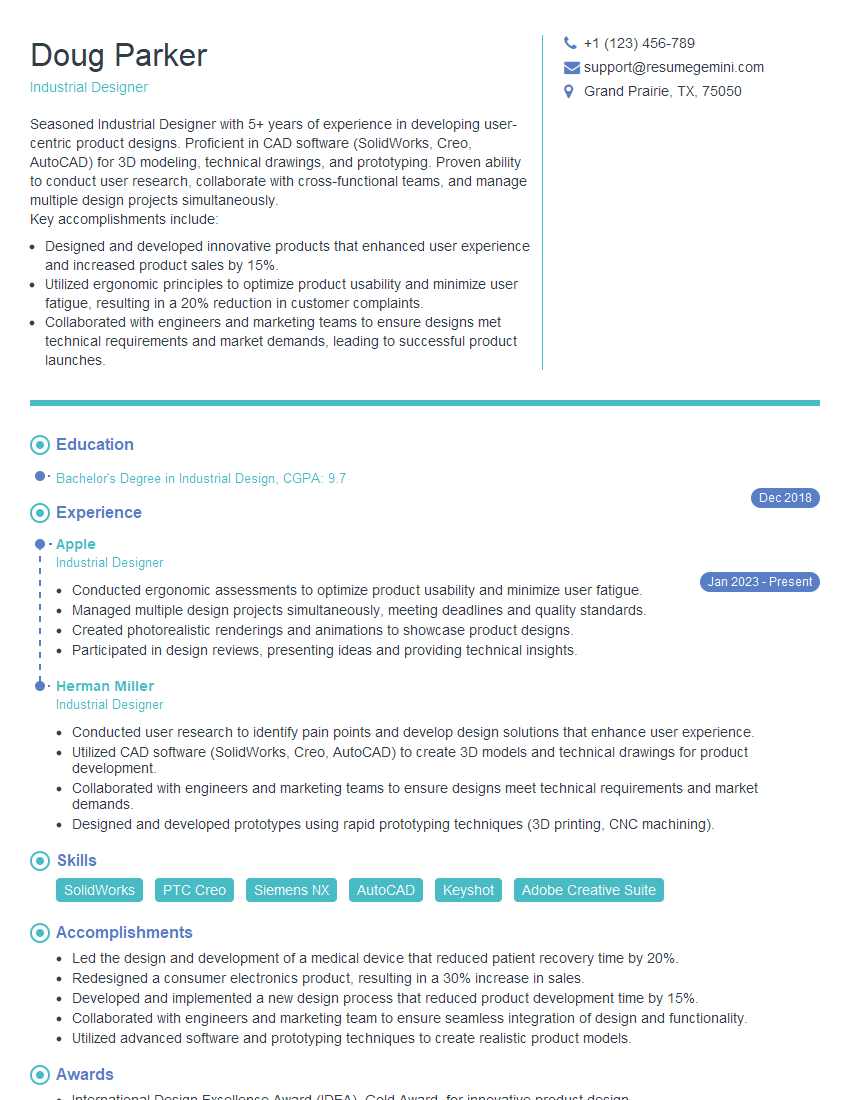
Industrial Designer Resume Sample
- Manufacturing Manager
- Reliability Engineer
- Process Engineer
- Automation Engineer
- Test Engineer
- Design Engineer
- Quality Engineer
- Product Development Engineer
- Facilities Engineer
- Maintenance Engineer
- Industrial Engineer
- Manufacturing Engineer
- Packaging Engineer
- Production Engineer
- Supply Chain Engineer
- Tooling Engineer
- Lean Manufacturing Engineer
- Manufacturing Process Engineer
- Manufacturing Systems Engineer
- Robotics Engineer
- Industrial Designer
Explore more articles
Users Rating of Our Blogs
Share Your Experience
We value your feedback! Please rate our content and share your thoughts (optional).
What Readers Say About Our Blog
Very informative content, great job.
good