Interviews are more than just a Q&A session—they’re a chance to prove your worth. This blog dives into essential Lean Manufacturing Value Stream Mapping interview questions and expert tips to help you align your answers with what hiring managers are looking for. Start preparing to shine!
Questions Asked in Lean Manufacturing Value Stream Mapping Interview
Q 1. Define Value Stream Mapping.
Value Stream Mapping (VSM) is a lean manufacturing technique used to visually represent the flow of materials and information required to bring a product or service to the customer. It’s essentially a detailed flowchart that provides a comprehensive overview of all steps involved in a process, highlighting areas of waste and inefficiency.
Think of it like a map of your manufacturing process, showing every step from raw materials to the finished product delivered to the client. This visual representation allows teams to easily identify bottlenecks, areas for improvement, and opportunities for streamlining the entire process.
Q 2. Explain the purpose of a Value Stream Map.
The primary purpose of a Value Stream Map is to identify and eliminate waste (muda) within a process. By visualizing the entire flow, teams can pinpoint areas where time, materials, or effort are being wasted without adding value for the customer. This leads to improved efficiency, reduced costs, and faster lead times.
Ultimately, the goal is to optimize the value stream, ensuring that every step adds value and contributes to the timely and cost-effective delivery of a high-quality product or service.
Q 3. What are the key elements of a Value Stream Map?
Key elements of a Value Stream Map include:
- Process Steps: Each step in the process is represented visually, typically with boxes or symbols.
- Material Flow: Arrows indicate the movement of materials throughout the process.
- Information Flow: Arrows also show the flow of information, such as orders, approvals, or data.
- Inventory Levels: The amount of inventory at each stage is indicated. This often highlights areas of excessive inventory.
- Lead Time: The total time it takes to complete the process is displayed, broken down by each step.
- Data: Key metrics such as production volume, cycle time, and defect rates are usually incorporated.
- Waste Identification: Areas of waste (muda) are clearly marked.
These elements work together to provide a clear and concise overview of the entire process, making problem areas easily identifiable.
Q 4. Describe the different types of Value Stream Maps.
There are primarily two types of Value Stream Maps:
- Current State Map: This map depicts the existing process as it currently operates, including all inefficiencies and waste. It’s the baseline for improvement efforts.
- Future State Map: This map shows the envisioned improved process after implementing changes to eliminate waste and improve efficiency. It serves as a roadmap for implementation.
Some variations exist, such as material and information flow maps that focus specifically on those aspects. However, the current and future state maps remain the foundation of most VSM implementations.
Q 5. How do you identify waste in a Value Stream Mapping process?
Identifying waste in a VSM process involves a careful analysis of the current state map. This often involves a team workshop where individuals familiar with the process can contribute their knowledge. Look for areas where:
- Lead times are excessively long. Pinpoint bottlenecks and areas with significant delays.
- Inventory levels are high. This suggests overproduction or inefficient storage.
- Process steps seem redundant or unnecessary. Challenge the purpose of each step.
- Movement of materials or information is excessive. Optimize the layout and communication flows.
- Defects are frequent. Investigate the root causes of defects.
By analyzing these aspects, you can effectively pinpoint waste and prioritize areas for improvement.
Q 6. What are the seven wastes (muda)?
The seven wastes (muda) in Lean are:
- Transportation: Unnecessary movement of materials or products.
- Inventory: Excess materials or work-in-progress (WIP).
- Motion: Unnecessary movement of people.
- Waiting: Idle time waiting for materials, information, or equipment.
- Overproduction: Producing more than is needed.
- Over-processing: Doing more work than is necessary.
- Defects: Errors that lead to rework or scrap.
These wastes represent areas where resources are consumed without adding value to the product or service.
Q 7. Explain the concept of ‘takt time’.
Takt time is the rate at which a company must produce goods or services to meet customer demand. It’s calculated by dividing the available production time by the customer demand.
For example, if a company has 8 hours of production time per day (480 minutes) and needs to produce 240 units per day, the takt time is 480 minutes / 240 units = 2 minutes per unit. This means the process must produce one unit every 2 minutes to meet demand. Takt time is a crucial metric for balancing production with customer requirements, preventing overproduction and ensuring timely delivery.
Q 8. How do you calculate takt time?
Takt time is the pace at which a company must produce to meet customer demand. Think of it as the heartbeat of your production line. It’s calculated by dividing the available production time by the customer demand.
Formula:
Takt Time = Available Production Time / Customer Demand
Example: Let’s say you have 8 hours of production time per day (480 minutes), and your customer demands 240 units per day. Your takt time would be 480 minutes / 240 units = 2 minutes per unit. This means you need to produce one unit every 2 minutes to meet customer demand.
It’s crucial to consider factors like breaks and planned downtime when calculating available production time for a realistic takt time.
Q 9. What is the difference between lead time and cycle time?
Lead time and cycle time are both crucial metrics in Lean manufacturing, but they represent different aspects of the production process. Imagine ordering a pizza:
- Lead Time: This is the total time it takes from the moment you place your order until the pizza arrives at your door. It encompasses all steps, including order placement, preparation, baking, delivery, and so on.
- Cycle Time: This is the time it takes to complete one specific step in the process. In our pizza example, the cycle time might be the time it takes to prepare the toppings or bake the pizza itself.
In a manufacturing setting, lead time is the total time a product spends in the entire value stream, while cycle time focuses on the individual processing time of a single step or operation.
Q 10. How do you measure lead time and cycle time in a Value Stream Map?
Measuring lead time and cycle time on a Value Stream Map involves analyzing the flow of the product or service through the different process steps. For both metrics, you need to record the time spent at each step.
- Lead Time: This is measured from the start of the process (e.g., raw material arrival) to the end (e.g., finished product delivery). On a Value Stream Map, you would sum up the processing time, queue time, and any transportation time across all steps involved.
- Cycle Time: You measure this for each individual step. For example, if the ‘assembly’ step on your map takes 5 minutes per unit, the cycle time for assembly is 5 minutes.
Using visual aids like swim lanes, boxes representing process steps, and time annotations helps in visualizing and calculating these metrics accurately on the Value Stream Map.
Q 11. Explain the concept of ‘value-added’ and ‘non-value-added’ activities.
Distinguishing between value-added and non-value-added activities is fundamental in Lean. Value-added activities are those that the customer is willing to pay for because they transform the product or service and bring it closer to the final desired state. Non-value-added activities consume resources but do not add value from the customer’s perspective.
Example: Imagine a furniture manufacturer.
- Value-added: Assembling the furniture, applying the finish, and packaging the finished product are all value-added because these directly contribute to the final product that the customer wants.
- Non-value-added: Inventory storage, searching for missing parts, unnecessary movement of materials, and defects requiring rework are non-value-added. These activities increase cost and lead time but don’t improve the product’s core value.
Identifying and eliminating non-value-added activities is a key goal in Lean, as it leads to efficiency improvements and reduced costs.
Q 12. How do you use Value Stream Mapping to identify bottlenecks?
Value Stream Mapping is excellent for identifying bottlenecks. A bottleneck is any point in the process that restricts the overall flow. On a Value Stream Map, bottlenecks are easily identified because they exhibit:
- High inventory: A large buildup of work-in-progress (WIP) before the bottleneck step.
- Long processing times: The bottleneck step will typically have a significantly longer cycle time compared to other steps.
- Long lead times: The cumulative lead time will be largely affected by the bottleneck step.
By visually representing the flow of materials and information, the Value Stream Map makes these bottlenecks immediately apparent, allowing you to focus improvement efforts on the most critical areas.
Q 13. Describe your process for developing improvement recommendations based on a Value Stream Map.
After completing the Value Stream Map and identifying bottlenecks, the next step is to develop improvement recommendations. My process generally involves:
- Analyze the Data: Carefully review the lead time, cycle time, inventory levels, and the location of bottlenecks identified on the map.
- Brainstorm Solutions: Use brainstorming techniques like 5 Whys, Kaizen events, or even simply discussing the issues with the team to generate potential solutions. Focus on addressing the root causes of the bottlenecks and non-value-added activities.
- Prioritize Solutions: Choose the solutions that offer the greatest impact with the least effort and resources. Use techniques like a prioritization matrix.
- Develop an Action Plan: Create a detailed action plan with specific tasks, responsible parties, timelines, and measurable targets.
- Implement and Monitor: Implement the chosen improvements and monitor the results to ensure they achieve the desired outcome. Regularly review the Value Stream Map to assess the effectiveness of the changes.
The goal is to create a more streamlined and efficient process with reduced lead times, less inventory, and improved quality.
Q 14. How do you prioritize improvement opportunities?
Prioritizing improvement opportunities is critical, as resources are always limited. I often use a combination of techniques:
- Impact vs. Effort Matrix: This simple matrix plots the potential impact of an improvement against the effort required to implement it. High-impact, low-effort improvements should be prioritized.
- Value Stream Mapping Analysis: The map itself helps prioritize by highlighting the biggest bottlenecks and areas with the longest lead times—these are usually the best places to start.
- Cost-Benefit Analysis: Quantify the potential cost savings or revenue increases of each improvement opportunity to make data-driven decisions.
- Customer Focus: Improvements that directly enhance customer satisfaction or reduce defects should be given higher priority.
The prioritization process is iterative. After implementing the top priorities, you re-map the value stream to reassess and adjust priorities based on the changes.
Q 15. What are some common challenges encountered when creating Value Stream Maps?
Creating accurate and effective Value Stream Maps (VSMs) can be challenging. Common hurdles include:
- Data Collection Difficulties: Gathering precise data on process times, cycle times, inventory levels, and defect rates across various departments can be time-consuming and require meticulous record-keeping. Inaccurate or incomplete data leads to flawed maps and ineffective improvement strategies.
- Resistance to Change: Employees involved in the mapped processes might resist changes suggested by the VSM due to fear of job security or discomfort with new methods. This resistance can hinder the implementation of improvement initiatives.
- Lack of Stakeholder Involvement: A successful VSM requires active participation from all relevant stakeholders. Failure to include all necessary people – from shop floor workers to management – can lead to a lack of ownership and buy-in, ultimately hindering implementation.
- Defining Value: Accurately identifying what constitutes ‘value’ from the customer’s perspective is crucial. Misunderstanding customer needs can result in a VSM that optimizes the wrong aspects of the process.
- Complexity of the Process: Analyzing and representing highly complex processes with numerous steps, interactions, and dependencies can be daunting, demanding a simplified, yet accurate, representation for clarity.
- Scope Definition Challenges: Determining the appropriate scope of the VSM is crucial. Too narrow a scope limits the benefits, while too broad a scope creates an unwieldy and difficult-to-interpret map.
Addressing these challenges requires careful planning, strong leadership, effective communication, and the use of appropriate tools and techniques.
Career Expert Tips:
- Ace those interviews! Prepare effectively by reviewing the Top 50 Most Common Interview Questions on ResumeGemini.
- Navigate your job search with confidence! Explore a wide range of Career Tips on ResumeGemini. Learn about common challenges and recommendations to overcome them.
- Craft the perfect resume! Master the Art of Resume Writing with ResumeGemini’s guide. Showcase your unique qualifications and achievements effectively.
- Don’t miss out on holiday savings! Build your dream resume with ResumeGemini’s ATS optimized templates.
Q 16. How do you overcome resistance to change during Value Stream Mapping implementation?
Overcoming resistance to change during VSM implementation is crucial for success. My approach is multi-faceted:
- Education and Communication: I begin by clearly explaining the purpose of VSM, its benefits, and how it will improve the process, emphasizing positive impacts on individuals and the organization. I involve the team in the mapping process from the beginning.
- Collaboration and Participation: I encourage active participation from all stakeholders, ensuring they feel heard and their concerns addressed. Joint problem-solving fosters ownership and buy-in.
- Addressing Concerns: I openly address any concerns or fears about job security or workload changes. Demonstrating that the VSM aims to improve efficiency, reduce waste, and empower employees, rather than eliminate jobs, is key.
- Pilot Projects: Starting with a small-scale pilot project allows for testing and refining the VSM process before implementing it across the organization. This shows tangible results and builds confidence.
- Celebrate Successes: Recognizing and celebrating early successes reinforces positive attitudes toward the VSM initiative. This creates momentum and encourages further participation.
- Incentivization: Depending on the organizational context, incorporating incentives can motivate employees to participate actively and embrace the changes brought about by VSM.
For example, in a previous engagement, I encountered resistance from machine operators who were initially hesitant about new workflow suggestions arising from the VSM. By actively involving them in the mapping and improvement process, demonstrating the time saved by the changes and celebrating their contributions, I was able to overcome their initial resistance and gain their enthusiastic support.
Q 17. Describe your experience with different Value Stream Mapping software tools.
I’ve used several VSM software tools throughout my career, each with strengths and weaknesses:
- Process mapping software: Lucidchart, draw.io, and Microsoft Visio offer intuitive interfaces for creating visual representations of processes. However, their capabilities for advanced analytics and data integration are limited. They are great for initial visualization and communication but might lack the depth for complex analysis.
- Lean software: More specialized Lean software like Value Stream Mapping Pro or Planview Lean are more robust, allowing for data input, calculations of lead times and cycle times, and advanced analysis features. They usually come with a steeper learning curve and higher cost.
- Spreadsheet software: While less visually appealing, spreadsheets (Excel, Google Sheets) can be effective for data collection and calculation, especially for simpler processes. They are highly customizable but lack the visual appeal and automated calculations of specialized VSM software. They are great for basic data tracking but require manual calculation of KPIs.
My tool selection depends on the complexity of the process, the data analysis requirements, and the budget constraints of the project. In simpler cases, even a whiteboard session with sticky notes can be very effective.
Q 18. How do you ensure data accuracy during Value Stream Mapping?
Data accuracy is paramount in VSM. I employ these strategies:
- Direct Observation: I conduct direct observations of the process on the shop floor to capture real-time data. This helps mitigate inaccuracies caused by relying solely on secondary data sources.
- Multiple Data Sources: I gather data from multiple sources (e.g., production records, time studies, interviews with workers) to validate information and identify potential inconsistencies.
- Data Validation: I employ statistical techniques to identify outliers and errors in the data and review the data for reasonableness.
- Team Verification: The data is reviewed and verified by the team involved in the mapping process, ensuring buy-in and promoting accuracy.
- Regular Updates: The VSM is periodically reviewed and updated to reflect any changes in the process, maintaining its relevance and accuracy over time.
For example, during a recent VSM project, I initially noticed discrepancies between reported cycle times and my direct observations. Through further investigation, we uncovered a hidden bottleneck in the process, highlighting the importance of multiple data sources and ground-truthing observations.
Q 19. How do you involve stakeholders in the Value Stream Mapping process?
Stakeholder involvement is crucial for the success of VSM. My approach includes:
- Define Key Stakeholders: Identify all individuals and departments directly or indirectly involved in the process (e.g., production, quality, engineering, purchasing, sales).
- Structured Workshops: Conduct workshops or meetings where stakeholders actively participate in the mapping process, contributing their expertise and perspectives.
- Cross-Functional Teams: Form cross-functional teams representing diverse perspectives, fostering collaborative problem-solving and breaking down siloed thinking.
- Regular Feedback Loops: Establish mechanisms for continuous feedback, allowing stakeholders to contribute to the evolution of the VSM throughout the project.
- Visual Aids: Utilize visual aids, like whiteboards or digital collaboration tools, to promote engagement and understanding among participants.
In one project, I used a series of Kaizen events, involving shop floor workers alongside management, to develop and refine the VSM iteratively. This inclusive approach ensured widespread ownership and resulted in effective problem-solving and buy-in from all stakeholders.
Q 20. What are some key performance indicators (KPIs) used to measure the effectiveness of Value Stream Mapping initiatives?
KPIs used to measure the effectiveness of VSM initiatives should align with the project goals. Common KPIs include:
- Lead Time: The total time it takes to complete the entire process.
- Cycle Time: The time it takes to produce one unit of product or service.
- Inventory Levels: The amount of work-in-progress (WIP) inventory.
- Throughput: The rate at which the process produces finished goods or services.
- Defect Rate: The percentage of defective products or services.
- Cost per Unit: The cost of producing one unit of product or service.
- Customer Satisfaction: This requires capturing customer feedback related to the process’s outputs.
By tracking these KPIs both before and after VSM implementation, it’s possible to quantify improvements in efficiency, quality, and cost. For instance, a reduction in lead time and inventory levels, coupled with an increase in throughput, directly demonstrates the effectiveness of the VSM initiative.
Q 21. How do you present Value Stream Mapping results to management?
Presenting VSM results to management requires clarity, conciseness, and compelling visuals. My approach includes:
- Executive Summary: Start with a concise executive summary highlighting key findings and recommendations.
- Visual Representation: Use the VSM itself as the primary visual aid, guiding management through the process flow and highlighting areas for improvement.
- Data-driven Insights: Support claims with quantifiable data, such as KPIs (lead time reduction, cost savings, etc.).
- Prioritized Recommendations: Present clear, prioritized recommendations for improvement, focusing on the most impactful actions.
- Next Steps & Timeline: Outline the next steps for implementation, including timelines, responsibilities, and resource allocation.
- Interactive Presentation: Engage the audience through questions and discussion, creating a two-way dialogue.
I often use a story-telling approach, starting with the ‘as-is’ state, highlighting problems and inefficiencies, and then transitioning to the ‘to-be’ state, showcasing the proposed improvements and their projected impact. This helps management visualize the transformation and the potential return on investment.
Q 22. Explain the relationship between Value Stream Mapping and Lean principles.
Value Stream Mapping (VSM) is intrinsically linked to Lean principles. It’s a visual tool that helps identify and eliminate waste (muda) within a process, a core tenet of Lean. Lean focuses on delivering maximum customer value with minimal waste. VSM acts as a powerful diagnostic tool, allowing us to pinpoint areas where waste is occurring—be it excess inventory, unnecessary movement, waiting time, or defects—all of which are directly targeted by Lean methodologies.
For example, if we identify a significant waiting time between process steps using VSM, this points directly to a Lean principle violation. Addressing this might involve implementing Kanban or improving workflow to eliminate the bottleneck and reduce the wait time, directly aligning with Lean’s goal of continuous flow.
Q 23. How does Value Stream Mapping support continuous improvement?
VSM directly supports continuous improvement (Kaizen) by providing a clear, visual representation of a process. By mapping the current state, we highlight areas for improvement. The future state map, developed collaboratively, then lays out a roadmap for achieving those improvements. This creates a tangible target and motivates teams to work towards measurable goals.
The iterative nature of VSM further enhances continuous improvement. After implementing changes based on the future state map, a new current state map is created, allowing us to assess the effectiveness of the implemented improvements and identify any new areas of waste. This cycle of mapping, improvement, and reassessment fosters a culture of ongoing optimization.
Q 24. Describe a time you used Value Stream Mapping to solve a problem.
In a previous role at a manufacturing plant, we experienced significant delays in the assembly line, leading to production bottlenecks and customer order delays. We implemented a VSM exercise. The current state map clearly showed excessive inventory buildup between stations, long transportation times, and significant idle time for operators due to material shortages.
Through collaborative workshops, we identified several improvement opportunities including implementing a Kanban system to manage inventory flow between stations, optimizing material handling procedures, and redesigning the workstation layout for improved ergonomics and efficiency. The future state map incorporated these changes. After implementation, we saw a 25% reduction in lead time, a 15% increase in throughput, and a significant decrease in work-in-progress inventory, demonstrating the effectiveness of VSM in solving real-world problems.
Q 25. What is the difference between a current state and future state Value Stream Map?
The current state VSM depicts the ‘as-is’ process, showing the current workflow, inventory levels, lead times, and areas of waste. It’s a factual representation of the existing situation. In contrast, the future state VSM represents the ‘to-be’ process, illustrating how the process will ideally operate after improvements are implemented. It’s a vision of the optimized process, outlining changes to eliminate identified waste.
Imagine mapping a restaurant. The current state map would show all the bottlenecks – a crowded kitchen, slow order-taking, lengthy wait times. The future state map would show a smoother flow – improved kitchen layout, faster order systems, less wait time. The difference highlights the impact of planned improvements.
Q 26. How do you handle unexpected events or deviations during the Value Stream Mapping process?
Unexpected events are inevitable during VSM implementation. My approach involves incorporating a degree of flexibility and contingency planning. We acknowledge potential disruptions during the initial mapping phase and include a section in the future state map to address them. For instance, if a machine is prone to breakdowns, we might incorporate buffer stock or planned maintenance into the future state map.
During the implementation phase, we employ regular monitoring and feedback loops. If unforeseen events occur, we document them, analyze their impact, and adjust the plan accordingly. This agile approach ensures that the VSM remains a dynamic and relevant tool throughout the improvement process.
Q 27. Describe your experience with different Lean methodologies beyond Value Stream Mapping.
Beyond VSM, my experience includes extensive work with other Lean methodologies. I’ve implemented 5S for workplace organization, Kaizen events for focused improvement projects, and Poka-Yoke for error-proofing processes. I’m also proficient in Kanban systems for managing workflow and have experience with Lean Six Sigma methodologies for process optimization and defect reduction. I have used these in various combinations depending on the specific problem at hand.
For instance, during a Kaizen event, the data from a previously completed VSM played a key role in determining the focus area and setting improvement goals. The 5S methodology provided the foundation for a more organized workspace that significantly improved the efficiency of the value stream.
Q 28. How do you measure the return on investment (ROI) of Value Stream Mapping projects?
Measuring the ROI of VSM projects requires a multifaceted approach. We don’t solely focus on immediate cost reductions. Instead, we consider various factors like:
- Reduced lead times: Calculating the cost savings from faster delivery times.
- Improved throughput: Quantifying the increase in production or service delivery.
- Lower inventory costs: Estimating the savings from reduced work-in-progress and finished goods.
- Defect reduction: Calculating the cost savings from fewer rework and scrap.
- Improved employee morale and productivity: Though harder to quantify directly, this contributes significantly to long-term ROI.
We use both qualitative and quantitative data to demonstrate the overall return. We compare pre- and post-implementation metrics and present the results in a clear and concise manner, often using visual aids like graphs and charts to illustrate the improvements achieved. The long-term benefits often outweigh the initial investment in time and resources, contributing to a solid overall ROI.
Key Topics to Learn for Lean Manufacturing Value Stream Mapping Interview
- Value Stream Identification and Mapping: Understanding the process of identifying all steps in a value stream, from raw materials to finished product, and visually representing it using a value stream map.
- Value-Added vs. Non-Value-Added Activities: Differentiating between activities that directly contribute to customer value and those that don’t, and strategies for eliminating or reducing waste (muda).
- Waste Reduction Techniques (Muda): Deep understanding of the seven (or eight) wastes (Transportation, Inventory, Motion, Waiting, Overproduction, Over-processing, Defects, and potentially Non-utilized Talent) and practical approaches to eliminate them from the value stream.
- Lead Time Reduction Strategies: Identifying bottlenecks and implementing strategies to shorten the overall lead time of the process.
- Process Improvement Tools: Familiarity with tools like 5S, Kaizen, Kanban, and Poka-Yoke and their application in optimizing value streams.
- Data Analysis and Interpretation: Analyzing data from value stream maps to identify areas for improvement and measure the effectiveness of implemented changes.
- Future State Mapping: Developing a future state map that visualizes the improved process after implementing changes and waste reduction strategies.
- Communication and Collaboration: Understanding the importance of effective communication and collaboration across different departments and teams involved in the value stream.
- Metrics and KPIs: Defining and tracking key performance indicators (KPIs) to measure the success of value stream mapping initiatives.
- Presentation and Reporting: Effectively communicating findings and recommendations from value stream mapping exercises to stakeholders.
Next Steps
Mastering Lean Manufacturing Value Stream Mapping is crucial for career advancement in today’s competitive manufacturing landscape. It demonstrates your ability to think critically, solve problems efficiently, and drive continuous improvement. To significantly boost your job prospects, create a compelling and ATS-friendly resume that highlights your skills and experience in this area. ResumeGemini is a trusted resource that can help you build a professional resume that stands out. They offer examples of resumes tailored to Lean Manufacturing Value Stream Mapping to help you get started. Take the next step towards your dream career – build your best resume today!

Operations Manager Resume Sample
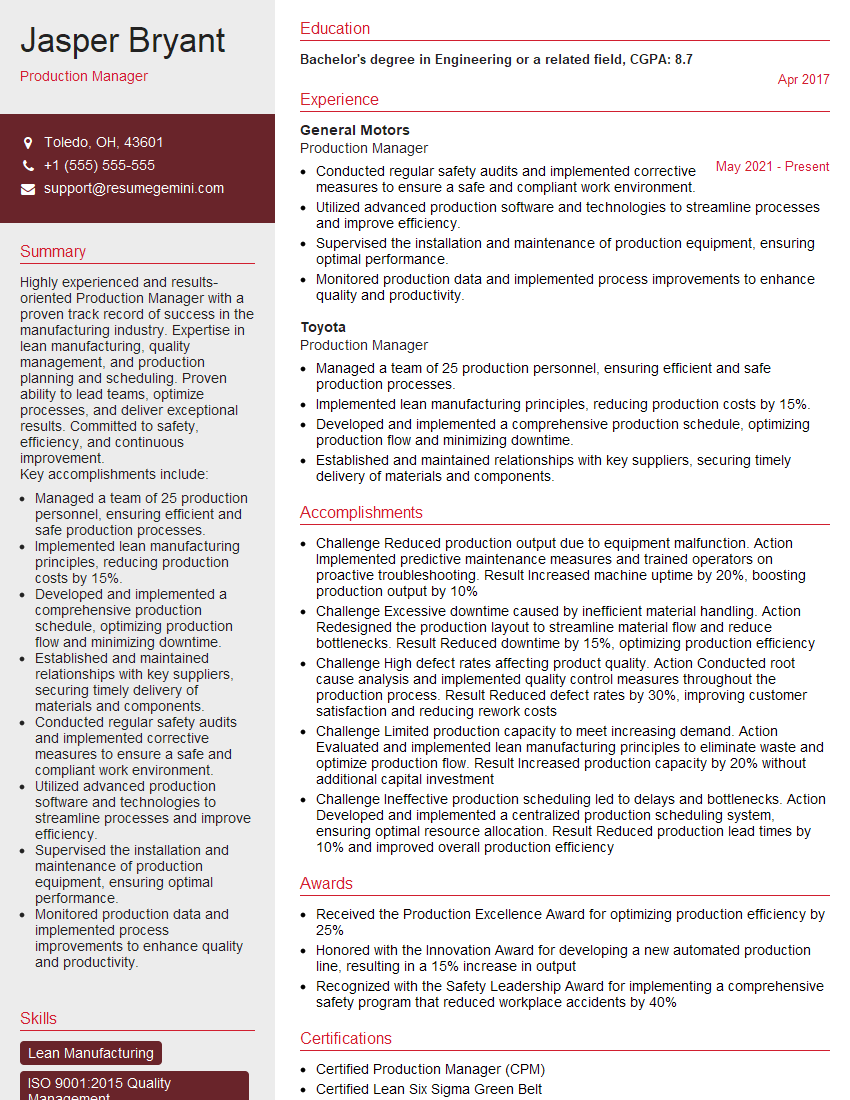
Production Manager Resume Sample
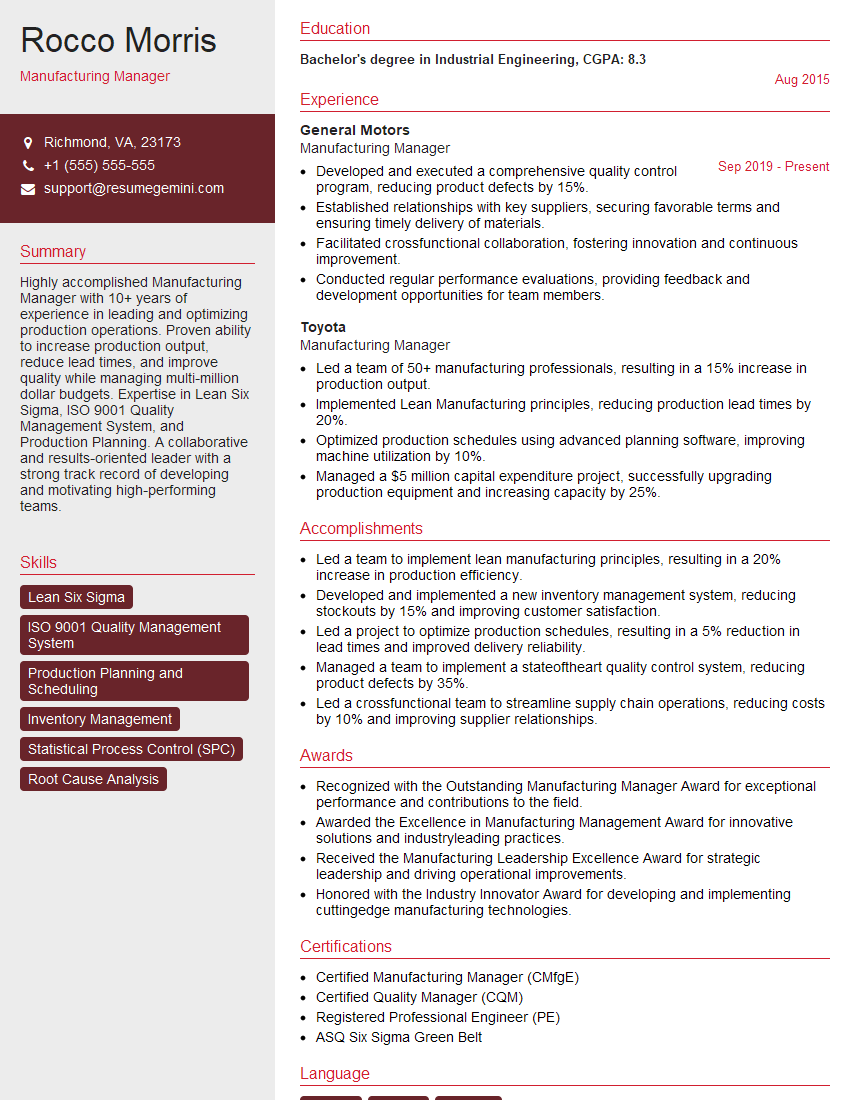
Manufacturing Manager Resume Sample
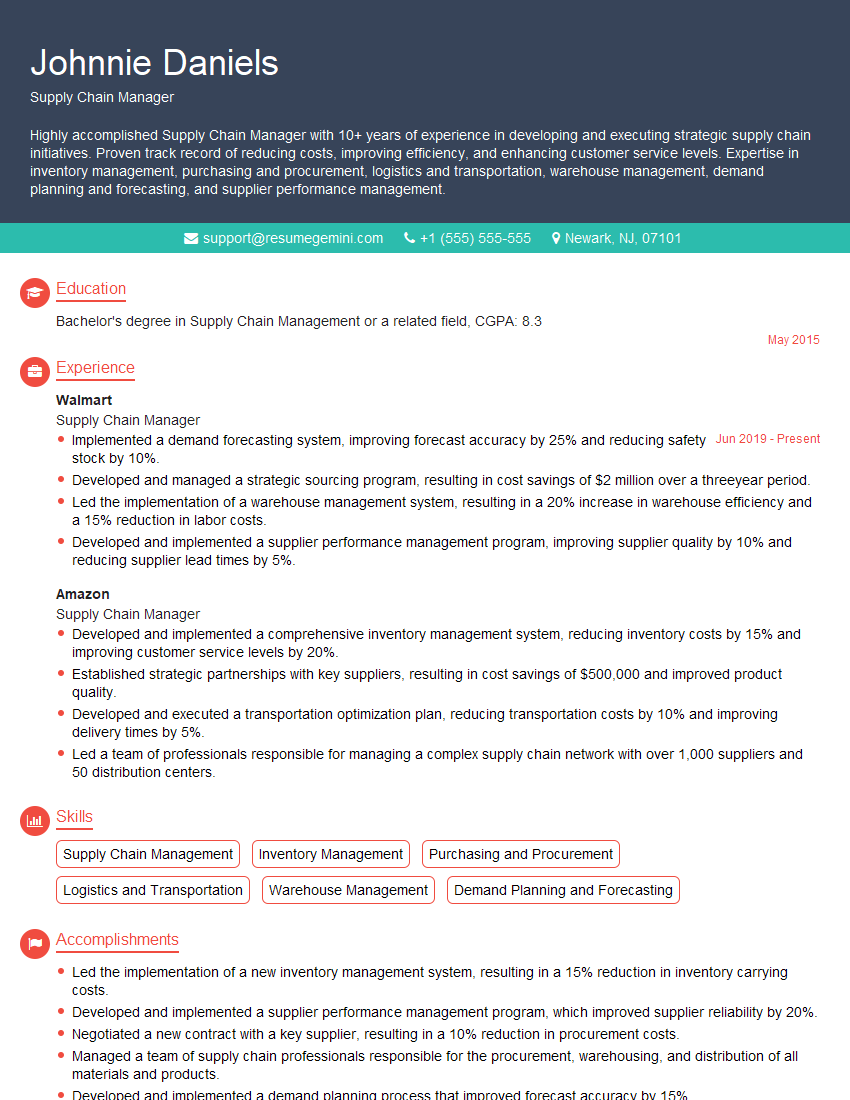
Supply Chain Manager Resume Sample
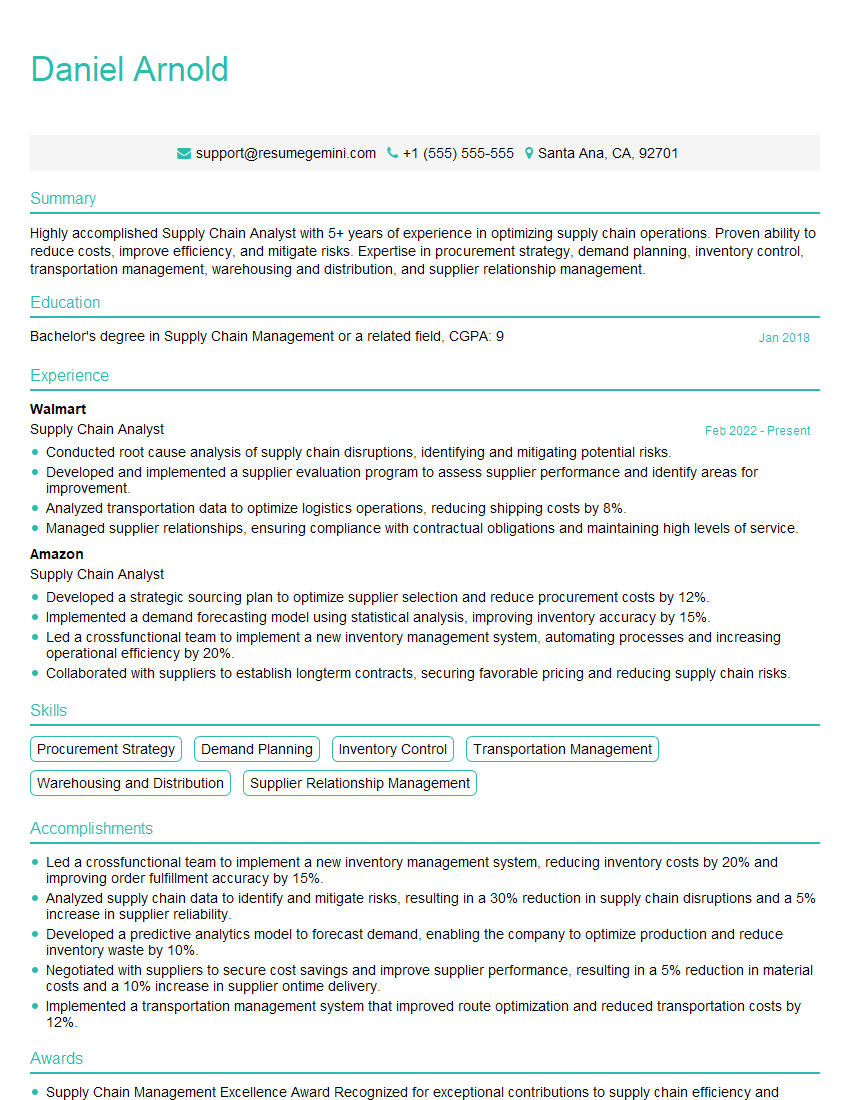
Supply Chain Analyst Resume Sample
Business Process Analyst Resume Sample
Process Engineer Resume Sample
Quality Engineer Resume Sample
Operations Analyst Resume Sample
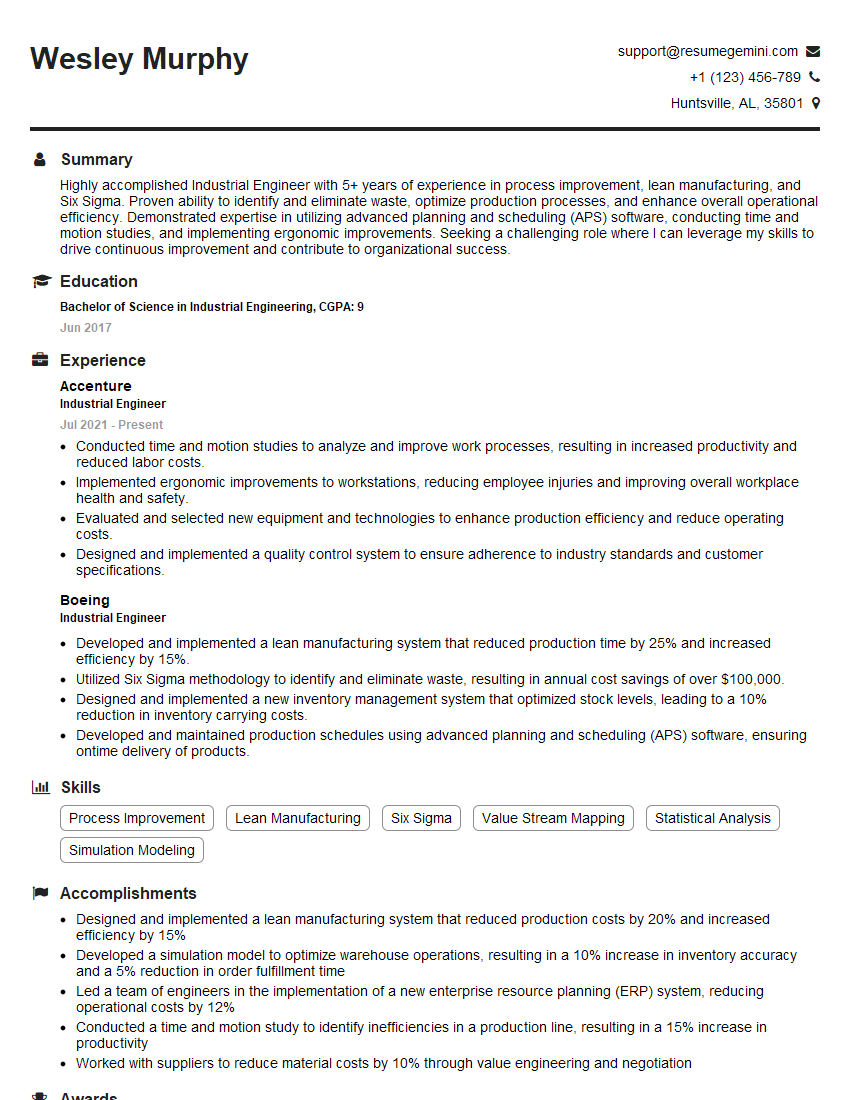
Industrial Engineer Resume Sample
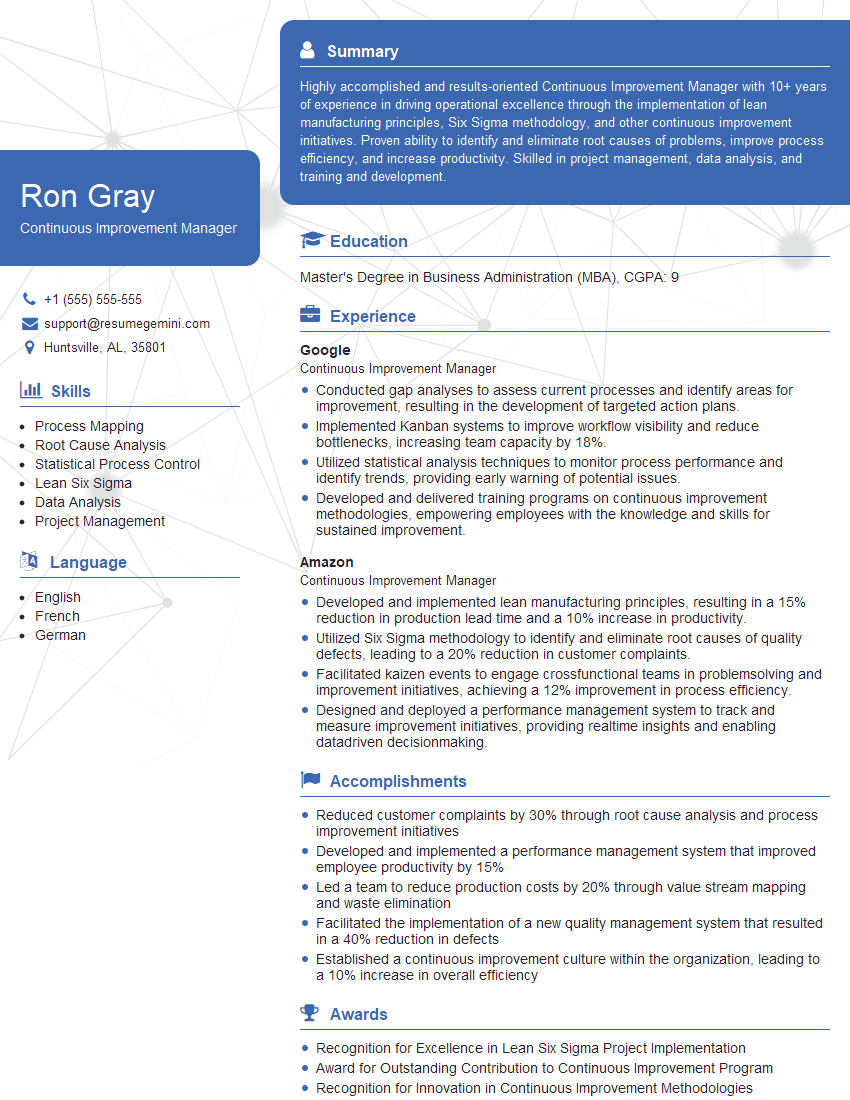
Continuous Improvement Manager Resume Sample
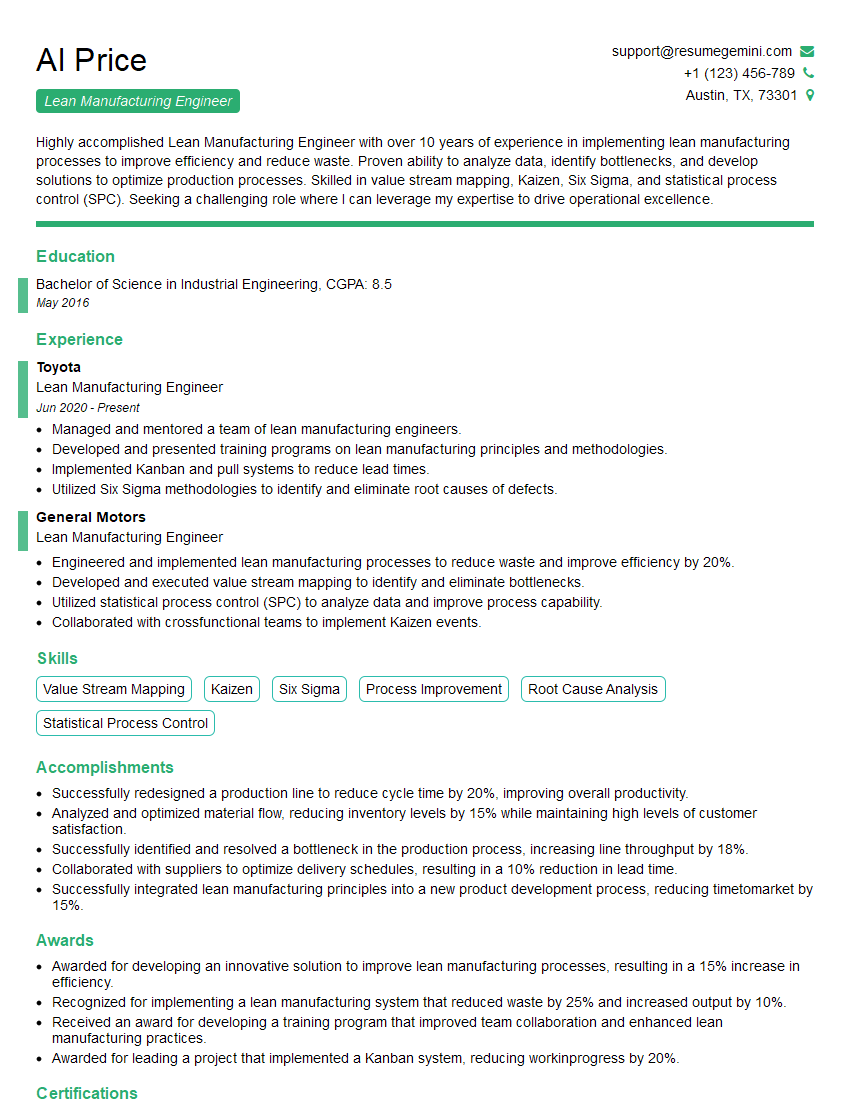
Lean Manufacturing Engineer Resume Sample
Explore more articles
Users Rating of Our Blogs
Share Your Experience
We value your feedback! Please rate our content and share your thoughts (optional).
What Readers Say About Our Blog
Very informative content, great job.
good