Are you ready to stand out in your next interview? Understanding and preparing for Grain Blending and Mixing interview questions is a game-changer. In this blog, we’ve compiled key questions and expert advice to help you showcase your skills with confidence and precision. Let’s get started on your journey to acing the interview.
Questions Asked in Grain Blending and Mixing Interview
Q 1. Explain the importance of accurate ingredient weighing in grain blending.
Accurate ingredient weighing is paramount in grain blending because it directly impacts the final product’s quality and consistency. Think of baking a cake: if you use the wrong amount of flour, the cake will be either too dry or too gummy. Similarly, in grain blending, inaccurate weighing leads to variations in the proportions of different grains, resulting in inconsistent nutritional value, processing characteristics, and ultimately, the final product’s quality. Even small deviations can significantly affect the end-use properties of the blend, for example, the protein content in animal feed or the baking quality of flour blends.
For instance, if a blend requires 60% wheat and 40% rye, a slight imbalance, say 58% wheat and 42% rye, might not seem drastic, but it could alter the dough’s elasticity, affecting the bread’s texture and volume. Precise weighing ensures that the desired specifications are met, minimizing variability and maximizing the efficiency of the entire process.
Q 2. Describe different grain blending methods and their suitability for various applications.
Several grain blending methods exist, each suitable for specific applications. The choice depends on factors like the scale of operation, grain characteristics, desired blend homogeneity, and budget constraints.
- Batch Blending: This is the simplest method, where all ingredients are weighed and mixed in a single container. It’s suitable for smaller-scale operations and relatively simple blends. Imagine a farmer mixing different types of seeds in a wheelbarrow before planting. While simple, it can be less efficient for large volumes and achieving complete homogeneity can be challenging.
- Continuous Blending: This method involves a continuous flow of grains into a mixing system, where they are blended while in motion. This is ideal for large-scale operations requiring high throughput and consistent blend quality. Think of a large-scale flour mill where different types of wheat are constantly being blended for consistent flour production. This offers better homogeneity compared to batch blending.
- In-Transit Blending: Grains are blended during transport using specialized equipment like screw conveyors or pneumatic systems. This is efficient for moving large quantities of material and minimizing handling. This method is particularly useful for transferring grains from silos to processing units.
The selection of a blending method is crucial and should be aligned with the specific needs of the production process. For example, a bakery might prefer batch blending for smaller, custom orders, while a large feed mill would benefit from continuous blending for mass production.
Q 3. How do you ensure consistent grain blend quality throughout a production run?
Maintaining consistent grain blend quality throughout a production run requires a multi-pronged approach that includes careful monitoring and control at every stage of the process. This begins with the rigorous quality checks of incoming ingredients and continues through blending and storage.
- Calibration and Maintenance: Regularly calibrating weighing equipment and ensuring that blending machinery is in optimal working condition prevents deviations. Imagine a scale that’s slightly off; that small error will compound over time, leading to significant inaccuracies in the final product.
- Real-Time Monitoring: Employing online sensors and analyzers for moisture, temperature, and other crucial parameters allows for immediate adjustments during the blending process, preventing large-scale inconsistencies. Think of a dashboard that provides real-time updates on the blend composition, alerting operators to any deviations from the set parameters.
- Statistical Process Control (SPC): Regularly sampling and analyzing the blended material throughout the production run helps identify trends and potential problems early on. SPC techniques enable proactive adjustment to prevent deviations and improve the overall quality consistency.
- Proper Storage: Consistent storage conditions are essential. Grains should be stored in a way that prevents segregation or degradation, maintaining quality and consistency until further processing.
By implementing these strategies, producers can ensure the end product consistently meets the required specifications.
Q 4. What are the common quality control checks performed during grain blending?
Quality control checks during grain blending are critical to ensure the final product meets the specified standards. These checks encompass various aspects of the blend’s composition and properties.
- Visual Inspection: Checking for foreign materials, discoloration, and signs of insect infestation. A quick visual inspection can sometimes reveal immediate problems.
- Moisture Content Determination: Using a moisture meter to ensure the blend’s moisture content is within the acceptable range, crucial for preventing spoilage and maintaining processing properties.
- Particle Size Analysis: Measuring the particle size distribution of the blend to confirm it’s within the required specifications. This is important for processing and flow properties.
- Chemical Analysis: Testing for protein, fat, fiber content, and other key nutrients, depending on the application, to verify nutritional value.
- Proximate Analysis: Determining the moisture, ash, protein, fat, and fiber content to assess the overall composition of the blend.
The frequency and specific tests performed will vary depending on the type of grain, the intended application, and regulatory requirements. But, consistent monitoring and record-keeping are essential for ensuring traceability and maintaining quality standards.
Q 5. How do you handle variations in grain moisture content during the blending process?
Variations in grain moisture content pose a significant challenge in blending. Different moisture levels can affect the flowability, processing, and storage stability of the blend. Imagine trying to mix dry sand with wet sand – the wet sand will clump, preventing even distribution.
To handle these variations, several strategies are employed:
- Pre-conditioning: Adjusting the moisture content of individual grains before blending, often through drying or conditioning processes, to ensure uniformity.
- Moisture Metering: Utilizing moisture meters at different stages of the blending process to monitor and control moisture levels. This enables real-time adjustments to compensate for any imbalances.
- Blending Strategies: Employing blending techniques that account for moisture variations. For example, introducing grains with lower moisture content later in the process to improve distribution.
- Temperature Control: Monitoring and regulating temperature throughout the process, since temperature changes can affect moisture content.
The approach depends on the scale of the operation and the degree of moisture variation. However, addressing this variability is crucial to create a consistent and high-quality grain blend.
Q 6. Explain the role of particle size distribution in grain blending.
Particle size distribution significantly impacts grain blending. A uniform particle size distribution is crucial for creating a homogenous blend with consistent flow and processing characteristics. Think of mixing sand with pebbles; if the sizes are vastly different, the smaller particles will get trapped between the larger ones, resulting in an uneven mixture.
A wide variation in particle sizes can lead to:
- Segregation: Larger particles might separate from smaller ones during handling and transport, disrupting the blend’s uniformity.
- Poor Flowability: A wide range of particle sizes can reduce flowability, creating inconsistencies in the blending process and the final product.
- Uneven Processing: Inconsistent particle sizes can cause uneven processing during further stages like milling or extrusion.
Therefore, understanding and managing particle size distribution is important. Techniques like sieving and size reduction can be used to improve the homogeneity of the blend and ensure consistent processing.
Q 7. How do you troubleshoot inconsistencies in grain blend color or texture?
Inconsistencies in grain blend color or texture point to problems in the blending process or with the source materials. Troubleshooting requires a systematic approach:
- Review Ingredient Specifications: Verify that the incoming grains meet the required quality specifications in terms of color and texture. Are there variations in the source material itself?
- Check Blending Equipment: Inspect the blender for any malfunction or inadequate mixing action. Are there any dead spots in the blender where thorough mixing isn’t occurring?
- Analyze Blending Process: Examine the process parameters such as mixing time, speed, and sequence of ingredient addition. Are these settings correct and consistent?
- Investigate Storage Conditions: Check for any conditions during storage that might affect the color or texture of the blend, such as excessive moisture or temperature fluctuations.
- Sampling and Analysis: Conduct thorough sampling and analysis of the blend to pinpoint the source of the inconsistency. This might involve laboratory testing to determine the cause of the color or texture variation.
By systematically investigating each of these aspects, the cause of the inconsistencies can be identified and corrected, ensuring future blends meet quality standards. Often, it involves tracing back through the process, starting from the final product and working backward to find the source of the deviation.
Q 8. Describe your experience with automated grain blending systems.
My experience with automated grain blending systems spans over 15 years, encompassing design, implementation, and optimization across various scales. I’ve worked with systems ranging from small-scale batch blenders used in feed mills to large-capacity continuous flow systems in grain processing plants. These systems typically involve sophisticated control systems using PLCs (Programmable Logic Controllers) and SCADA (Supervisory Control and Data Acquisition) software. This allows for precise control over ingredient proportions, ensuring consistent product quality. For example, in one project, we integrated a new automated system in a large flour mill that reduced blending time by 40% while simultaneously improving the uniformity of the final flour blend. The system used load cells to accurately measure ingredient flow, and sophisticated algorithms to optimize blending cycles based on real-time data. Another project involved designing a system for a feed mill to blend various grains and supplements according to specific nutritional requirements for different animal species. This involved extensive programming and configuration of the PLC to handle complex recipes and ensure precise control over ingredient ratios.
Q 9. What are the safety precautions you follow during grain blending operations?
Safety is paramount in grain blending. My safety protocols begin with rigorous training for all personnel on safe operating procedures, including lockout/tagout procedures for equipment maintenance, proper use of personal protective equipment (PPE) such as respirators and hearing protection, and emergency response procedures. We maintain a clean and organized workspace to prevent tripping hazards and ensure proper ventilation to minimize dust inhalation. Regular equipment inspections and maintenance are crucial to identify and address potential hazards before they lead to accidents. Furthermore, we employ dust suppression systems in the blending process to mitigate explosion risks, particularly in the presence of combustible dusts. We also utilize sensors and alarms for detecting high dust concentrations or equipment malfunctions. Specific safety procedures include clearly marked emergency shut-off switches readily accessible to all operators, and regular safety audits conducted by an independent safety professional.
Q 10. How do you maintain accurate inventory records for grain ingredients?
Accurate inventory management is achieved through a combination of physical stock checks and automated data collection systems. We utilize barcode or RFID technology for tracking grain ingredients from the point of delivery to the blending process and subsequent storage. This data is fed into an inventory management system which provides real-time updates on stock levels, helping us prevent stockouts and overstocking. Regular physical stock checks are conducted to reconcile the automated data and ensure accuracy. This involves checking quantities against the system records, assessing grain quality, and flagging any discrepancies for investigation. We employ a robust system of documentation, including receiving reports, blending logs, and inventory reports, that are stored both electronically and in physical archives for traceability and auditing purposes.
Q 11. What are the potential causes of grain spoilage and how do you prevent it?
Grain spoilage can result from various factors, including insect infestation, mold growth, and moisture damage. Insect infestations can be prevented through proper storage conditions, including low moisture levels and adequate temperature control. Regular inspection and pest control measures are crucial. Mold growth is prevented through maintaining low moisture levels and good ventilation, preventing moisture build-up that fosters mold spores. Moisture damage is controlled by ensuring proper drying of grains before storage and maintaining appropriate storage conditions. To prevent spoilage, we utilize airtight storage facilities, monitor temperature and humidity levels consistently using sensors and alarms, and implement a rigorous cleaning and sanitation program of storage facilities and equipment. We regularly test grains for moisture content, insect infestation, and presence of mycotoxins. If any spoilage is detected, the affected grain is promptly removed and disposed of properly to prevent contamination.
Q 12. Explain your understanding of FIFO (First-In, First-Out) inventory management.
FIFO, or First-In, First-Out, is a vital inventory management principle that ensures the oldest stock is used before the newest. This is especially critical for grains, which have limited shelf lives. In a FIFO system, the oldest received grains are the first to be used in blending. This prevents the accumulation of old, potentially spoiled grain and minimizes losses due to spoilage. Imagine it like a queue; the first grains that arrive are the first ones to leave. We implement FIFO in our grain blending operations by clearly labeling incoming grains with their delivery dates, storing them in designated areas according to their arrival dates, and using a management system that prioritizes the oldest grain stocks during the blending process. Regular inventory tracking allows us to monitor stock rotations and ensure adherence to FIFO principles. This methodology reduces waste, maintains consistent product quality and safeguards against loss due to spoilage.
Q 13. Describe your experience with different types of grain storage and handling equipment.
My experience encompasses a wide range of grain storage and handling equipment. This includes various types of silos (flat-bottomed, hopper-bottom), grain bins, conveyors (belt, screw, bucket elevators), and cleaning equipment (screens, aspirators). I’m proficient in the operation and maintenance of these systems. I understand the advantages and disadvantages of different silo types and their suitability for specific grains and storage capacities. For instance, hopper-bottom silos are particularly efficient for discharge but require careful design to prevent bridging and flow issues. Understanding conveyor systems, their capacity, and potential bottlenecks is critical for efficient grain handling. Regular maintenance, including lubrication and inspections, is key to preventing downtime and ensuring safe operation. I have worked with various automated systems for controlling grain flow, such as load cells and level sensors, which integrate with the overall blending process. Furthermore, my experience includes the handling and operation of specialized equipment like grain dryers and cleaning systems, essential for maintaining grain quality and preventing spoilage.
Q 14. How do you interpret and act upon grain quality test results?
Grain quality test results, such as moisture content, protein levels, test weight, and the presence of impurities or mycotoxins, are crucial for blending and ensuring product consistency. I interpret these results within the context of the specific grain type and intended application. For example, high moisture content may indicate potential spoilage risk, while low protein levels might affect the final product quality. I utilize this information to adjust blending formulas, select appropriate grain sources, and make informed decisions about grain storage and handling. If the test results show unacceptable quality parameters, I would investigate the cause, potentially tracing the issue back to the source of the grain or a problem during handling or storage. This might involve implementing corrective actions, such as drying the grain, removing contaminated batches, or adjusting the blending recipe to compensate for quality variations. Documentation of these results, decisions, and corrective actions is vital for maintaining product quality and traceability.
Q 15. What are the common challenges in grain blending and how have you overcome them?
Grain blending, while seemingly straightforward, presents several challenges. Inconsistent grain quality from different sources is a major hurdle. Variations in moisture content, size, and even the presence of foreign materials can lead to uneven blends and affect the final product’s quality. Another common challenge is achieving a homogenous blend, especially when dealing with large quantities and diverse grain types. Finally, maintaining consistent blend recipes and accurate weighing are crucial for repeatability and meeting customer specifications.
To overcome these, I’ve employed several strategies. For inconsistent quality, I implement rigorous quality control measures at the receiving end, including sampling and testing. This data informs the blending process, allowing us to adjust the blend ratios to compensate for variations. To achieve homogeneity, I’ve experimented with different blending equipment and techniques, optimizing parameters like mixing time and speed for different grain combinations. I’ve found that multi-stage blending with pre-blending and final blending stages can significantly improve uniformity. Finally, implementing robust automated weighing systems and recipe management software eliminates human error and ensures consistent blending.
Career Expert Tips:
- Ace those interviews! Prepare effectively by reviewing the Top 50 Most Common Interview Questions on ResumeGemini.
- Navigate your job search with confidence! Explore a wide range of Career Tips on ResumeGemini. Learn about common challenges and recommendations to overcome them.
- Craft the perfect resume! Master the Art of Resume Writing with ResumeGemini’s guide. Showcase your unique qualifications and achievements effectively.
- Don’t miss out on holiday savings! Build your dream resume with ResumeGemini’s ATS optimized templates.
Q 16. Explain your experience with maintaining and troubleshooting grain blending equipment.
My experience with grain blending equipment spans various types, from simple auger systems to sophisticated high-capacity mixers. Maintenance involves regular inspections for wear and tear, particularly on moving parts like augers, belts, and motors. Lubrication schedules are meticulously followed to minimize friction and prolong equipment life. I’m proficient in troubleshooting common issues like clogged augers (often caused by bridging of fine grains), malfunctioning sensors (affecting weighing accuracy), and motor failures. Preventative maintenance is key. For instance, regular cleaning prevents buildup, minimizing the risk of cross-contamination and improving efficiency.
Troubleshooting usually involves a systematic approach. I start by identifying the symptoms (e.g., uneven blend, slow mixing), checking the obvious (e.g., power supply, sensor readings), and then progressively investigate more complex components. I utilize diagnostic tools, often built into the equipment, and consult manufacturer manuals to identify and resolve issues. In one instance, a persistent problem with inconsistent weighing was traced to a faulty load cell. Replacing it immediately resolved the issue. Documenting all maintenance activities and troubleshooting steps is crucial for future reference and continuous improvement.
Q 17. How do you ensure the efficient use of resources (energy, water, etc.) during grain blending?
Efficient resource utilization is paramount in grain blending. Energy consumption can be significantly reduced by optimizing blending parameters. Using the correct mixer for the job and setting optimal speeds and times are crucial. For example, using a high-speed mixer for a large batch could increase energy consumption, while a low speed mixer could not sufficiently blend. I’ve seen improvements by implementing energy-efficient motors and drives. Water usage is minimal in most grain blending operations; however, minimizing cleaning water through efficient cleaning procedures is important. The use of closed-loop systems for dust collection minimizes waste and improves worker safety. Regular equipment maintenance also contributes to reduced energy consumption by preventing inefficiencies due to wear and tear.
In practice, this translates into regular monitoring of energy and water usage, identifying areas for improvement, and implementing best practices. This might involve switching to more efficient equipment or training operators on optimal operating procedures. Data logging from equipment allows for analyzing performance and identifying areas where adjustments can lead to significant resource savings. The financial benefits of these efficient practices are substantial, contributing to reduced operational costs and improved profitability. It also aligns with environmental sustainability goals.
Q 18. How do you manage and resolve conflicts within a team environment during grain blending operations?
Conflict resolution is crucial in a team environment. Open and respectful communication is the foundation of my approach. I encourage team members to express their concerns openly and without fear of retribution. I actively listen to all perspectives, ensuring that everyone feels heard and valued. When conflicts arise, I facilitate a structured discussion, focusing on finding common ground and solutions that benefit the entire team. My strategy involves defining the problem clearly, brainstorming potential solutions collaboratively, and then agreeing on a course of action.
For instance, a disagreement about the optimal blending sequence for a particular order was resolved through collaborative problem-solving. We analyzed the pros and cons of different approaches, considering factors such as blending time, energy consumption, and equipment capacity. The team eventually agreed on a sequence that optimized the overall process. I firmly believe that a supportive and collaborative work environment enhances productivity and job satisfaction.
Q 19. Explain your understanding of GMP (Good Manufacturing Practices) in the context of grain blending.
Good Manufacturing Practices (GMP) are crucial in grain blending to ensure food safety and quality. In this context, GMP encompasses all aspects from receiving raw materials to delivering the final blend. It includes stringent hygiene practices, such as regular cleaning and sanitation of equipment and facilities, to prevent contamination. Proper storage conditions, including temperature and humidity control, are essential to maintain grain quality. Effective pest control and the prevention of cross-contamination between different grain types are also vital. Implementing a robust traceability system is crucial for identifying the source of any potential contamination or quality issue. Accurate record-keeping and documentation are central to compliance and continuous improvement.
Practical application involves following standardized operating procedures (SOPs) for each step of the process. Employee training on GMP principles and hygiene practices ensures consistent adherence to standards. Regular internal audits and external inspections help identify gaps and ensure continuous compliance with regulatory requirements. A well-defined GMP program not only protects consumer health but also safeguards the company’s reputation and prevents costly recalls.
Q 20. How do you document and track grain blending processes?
Documentation and tracking are essential for efficient grain blending operations and regulatory compliance. I utilize a combination of manual and automated systems. Manual records include batch sheets, where details like grain type, quantity, moisture content, and blending parameters are meticulously documented. Automated systems, such as software integrated with weighing equipment and material handling systems, capture data electronically. This data includes real-time information on the blending process, helping to ensure consistency and identify deviations. The system enables complete traceability of each blend, allowing us to readily access the history of any particular batch.
The use of barcodes and RFID tags on grain containers helps ensure accurate tracking of materials throughout the process. This data is stored in a central database, allowing for efficient data analysis and reporting. This information is crucial for managing inventory, optimizing the blending process, and complying with traceability requirements. Regular backups and data security measures are crucial to prevent data loss. This comprehensive documentation provides invaluable insights for process optimization and continuous improvement.
Q 21. What are the key factors influencing the shelf life of grain blends?
Several factors influence the shelf life of grain blends. Moisture content is a key determinant; higher moisture content promotes microbial growth and accelerates deterioration. Storage temperature and humidity play significant roles. Lower temperatures and lower humidity slow down enzymatic activity and microbial growth, extending shelf life. The presence of insects and rodents can lead to contamination and spoilage. Proper storage conditions are essential; that is, clean, dry, and well-ventilated facilities. The type of grains in the blend also influences shelf life; some grains are naturally more susceptible to spoilage than others.
To extend shelf life, proper handling and storage are paramount. Maintaining low moisture levels during the blending and storage processes is vital. Regular inspection for insect infestation is essential, and if detected, immediate action should be taken to prevent spread. Controlling storage temperature and humidity reduces the risk of spoilage. Packaging also plays a role. Airtight packaging minimizes exposure to moisture and oxygen, which are crucial for reducing deterioration. Understanding these factors allows for the optimization of storage conditions and the implementation of effective strategies to ensure the longest possible shelf life for grain blends.
Q 22. Describe your experience with different types of grain mixers (e.g., ribbon blenders, drum mixers).
My experience encompasses a wide range of grain mixers, each with its own strengths and weaknesses. Ribbon blenders, for instance, are excellent for achieving homogenous blends of materials with differing particle sizes and densities. Their rotating helical ribbon effectively lifts and moves the material, preventing segregation and ensuring thorough mixing. I’ve used these extensively in blending grains for animal feed, achieving excellent uniformity in nutrient distribution. In contrast, drum mixers, also known as horizontal drum mixers, are particularly useful for larger-scale operations and materials that are less prone to breakage. The tumbling action within the rotating drum promotes a gentle mixing process, ideal for sensitive grains that might be damaged by more aggressive blending methods. I’ve worked with drum mixers in the processing of grains intended for human consumption, where gentle handling is paramount. Finally, I have also experience with Paddle Mixers and vertical mixers for various applications in grains and other materials. Each mixer choice is driven by the specific needs of the blend, the scale of the operation, and the sensitivity of the grains involved. The selection process involves considering factors such as material characteristics, desired mixing time, and energy efficiency.
Q 23. How do you ensure the traceability of ingredients throughout the grain blending process?
Traceability is crucial in the grain blending industry, ensuring both quality and safety. We implement a rigorous system that begins with detailed records of each incoming grain shipment. This includes information such as the supplier, origin, date of harvest, moisture content, and any relevant quality certifications. Each ingredient is assigned a unique batch number, meticulously tracked throughout the entire process. We use a dedicated software system to manage these batch numbers, linking them to the specific mixer used, the blending recipe, the date and time of mixing, and the resulting blend’s unique batch number. This ensures that any lot can be fully traced, from its origin to the final product. Moreover, we regularly conduct quality control checks at various stages, with samples analyzed for consistency and conformance to standards. This data is digitally recorded and integrated into the overall traceability system. In the rare event of a quality issue, this comprehensive system allows us to quickly identify the source and implement corrective actions.
Q 24. What are the legal and regulatory requirements related to grain blending in your region?
Legal and regulatory requirements surrounding grain blending vary depending on the location. In my region, we must adhere strictly to food safety regulations, including those related to the prevention of cross-contamination. This involves maintaining separate storage facilities for different grain types, regularly sanitizing equipment, and implementing stringent quality control measures to ensure that our blends meet all relevant safety and purity standards. We also have regulations concerning labeling, which requires accurate declaration of ingredients, nutritional information, and any potential allergens. There are also rules around proper waste management and disposal of by-products. Finally, we must maintain detailed records of all our operations, including ingredient sourcing, blending procedures, quality control data, and product distribution, for audits and regulatory inspections. Compliance is not merely a legal obligation; it is fundamental to maintaining customer trust and upholding the highest standards of food safety.
Q 25. Describe your experience with process optimization techniques in grain blending.
Process optimization in grain blending involves a multi-faceted approach. One key strategy is improving the efficiency of the mixing process itself. This might involve adjusting the mixer’s speed, blending time, or the sequence in which ingredients are added to achieve the desired homogeneity with minimal energy consumption. We also use statistical process control (SPC) to continuously monitor the blending process, identifying and correcting deviations from ideal parameters early on. Data analytics play a vital role, allowing us to identify trends and patterns that influence blend quality. For example, by analyzing historical data on ingredient properties and blending parameters, we can optimize recipes to improve the consistency and stability of our blends. Another strategy is to improve the efficiency of upstream and downstream operations. This might involve streamlining ingredient handling, improving storage systems, or optimizing packaging processes. Continuous improvement is a core principle; we regularly review our processes and identify areas for improvement, leading to greater efficiency, reduced waste, and improved overall product quality.
Q 26. How would you address a situation where a grain blend fails to meet quality specifications?
If a grain blend fails to meet quality specifications, our immediate response involves a thorough investigation. We first retrace the blend’s history using our traceability system, identifying the specific batch number, ingredients used, and the mixing parameters. Next, we conduct detailed laboratory analyses on the failed blend to pinpoint the exact cause of the deviation – whether it’s due to an issue with an ingredient, a problem with the mixing process, or something else entirely. Once the root cause is identified, we implement corrective actions to prevent recurrence. This might involve rejecting a batch of substandard ingredients, recalibrating the mixer, or adjusting the blending recipe. Depending on the severity and nature of the issue, we might need to re-blend the affected batch or even initiate a recall, notifying relevant parties and taking necessary steps to mitigate potential consequences. A thorough post-incident analysis is conducted to refine our quality control procedures and prevent similar issues from happening again.
Q 27. Explain your familiarity with different types of grain sensors and their applications.
My familiarity with grain sensors is extensive. We utilize near-infrared (NIR) spectroscopy for rapid analysis of grain composition, providing real-time data on moisture content, protein levels, and other key parameters. This allows for immediate adjustments to the blending process to maintain consistency. Other sensors such as moisture meters ensure the accurate measurement of moisture content in incoming grains and finished blends, crucial for quality control and preventing spoilage. We also employ flow meters to precisely control and monitor ingredient flow during the blending process, ensuring the accurate proportions of each component are incorporated into the final mix. Finally, temperature sensors help monitor the temperature of the grains during processing, preventing overheating and ensuring the integrity of sensitive components. The selection of specific sensors depends on the particular application, considering factors like accuracy, speed of measurement, and cost-effectiveness.
Q 28. How do you manage inventory control in the event of a sudden increase in demand for a specific grain blend?
Managing inventory control during a sudden surge in demand for a specific grain blend necessitates a multi-pronged approach. First, we immediately assess our current inventory levels of the required ingredients and the capacity of our blending equipment. If we have sufficient ingredients and mixing capacity, we prioritize production to meet the increased demand. However, if there are shortages in key ingredients, we expedite procurement from our suppliers, potentially negotiating priority shipments to ensure timely delivery. Furthermore, we may need to optimize our production schedule, potentially reallocating resources from lower-priority blends to prioritize the high-demand product. Transparency with our customers is crucial; we communicate estimated delivery times and potential delays, maintaining open communication to manage expectations. Finally, the event triggers a review of our demand forecasting and inventory management systems. The goal is to better predict future fluctuations in demand and adjust our inventory levels accordingly, minimizing potential supply chain disruptions in the future.
Key Topics to Learn for Grain Blending and Mixing Interview
- Grain Properties and Characteristics: Understanding the physical and chemical properties of various grains (moisture content, protein levels, size distribution) and how these impact blending outcomes.
- Blending Processes and Equipment: Familiarity with different blending techniques (batch, continuous), types of mixers (horizontal, vertical, ribbon), and their operational principles. This includes understanding the factors influencing mixing efficiency and homogeneity.
- Quality Control and Assurance: Knowledge of sampling methods, analytical techniques for assessing blend quality (e.g., near-infrared spectroscopy), and implementation of quality control procedures to ensure consistent product quality.
- Process Optimization and Troubleshooting: Ability to identify and solve problems related to inefficient mixing, segregation, or inconsistent blend composition. This involves understanding the impact of process parameters (e.g., mixing time, speed, ingredient ratios) on the final product.
- Safety and Regulations: Awareness of relevant safety regulations and best practices in handling grains and operating mixing equipment. Understanding procedures for preventing contamination and ensuring workplace safety.
- Material Handling and Storage: Understanding the principles of grain storage, including factors affecting grain quality during storage and the importance of proper handling to avoid damage or contamination.
- Scale-Up and Design: For more senior roles, understanding the principles of scaling up blending processes from lab-scale to industrial-scale operations and the considerations involved in designing efficient and effective blending systems.
Next Steps
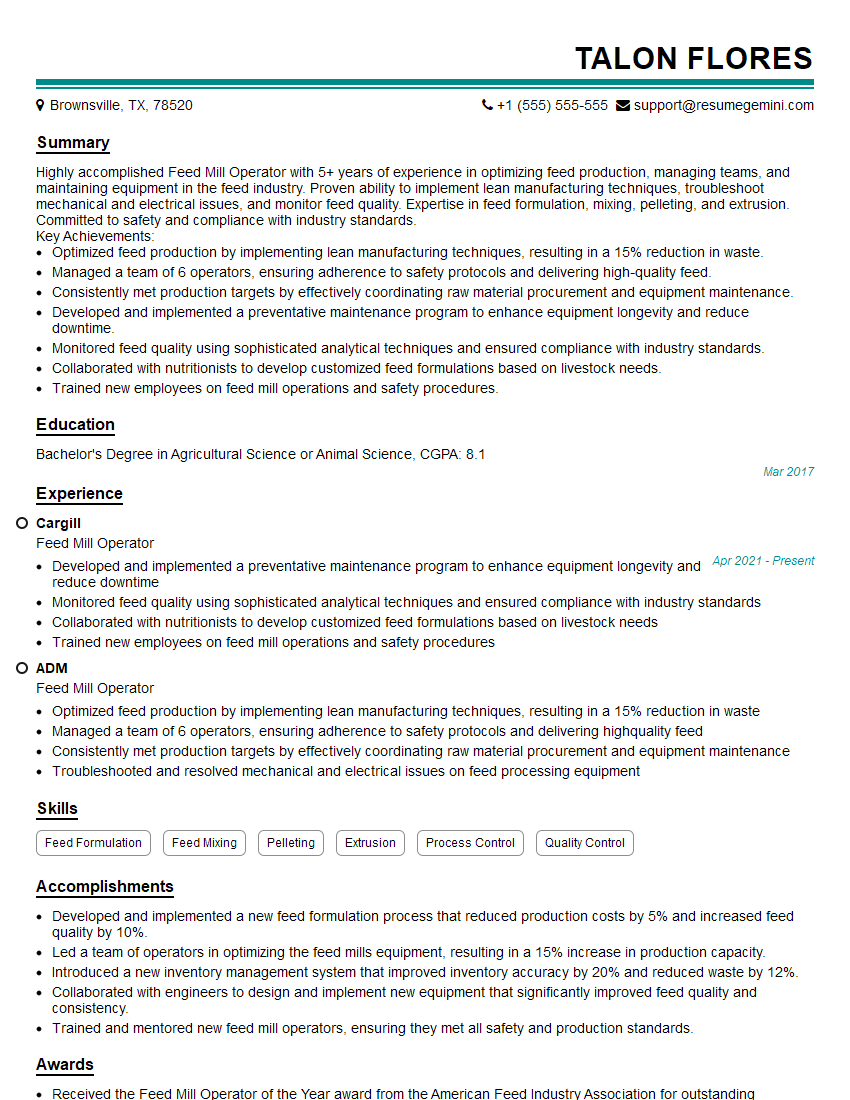
Mastering Grain Blending and Mixing opens doors to exciting career advancements within the agricultural, food processing, and feed industries. A strong understanding of these principles demonstrates technical expertise and problem-solving skills highly valued by employers. To significantly boost your job prospects, create an ATS-friendly resume that highlights your key skills and experience. ResumeGemini is a trusted resource to help you build a professional and impactful resume, tailored to showcase your expertise in Grain Blending and Mixing. Examples of resumes specifically designed for this field are available to help you get started.
Explore more articles
Users Rating of Our Blogs
Share Your Experience
We value your feedback! Please rate our content and share your thoughts (optional).
What Readers Say About Our Blog
Very informative content, great job.
good