Interviews are opportunities to demonstrate your expertise, and this guide is here to help you shine. Explore the essential Plate Inspection interview questions that employers frequently ask, paired with strategies for crafting responses that set you apart from the competition.
Questions Asked in Plate Inspection Interview
Q 1. Explain the different types of plate defects you might encounter during inspection.
Plate defects can be broadly categorized into surface and subsurface imperfections. Surface defects are visible to the naked eye or with low magnification, while subsurface defects require non-destructive testing (NDT) methods for detection.
- Surface Defects: These include cracks (e.g., surface cracks, laps, seams), inclusions (e.g., slag, oxides), and laminations (layers of material that have not bonded properly). Think of a cake with layers that haven’t fused—that’s a lamination! Inclusions are like bits of unwanted material mixed into the batter.
- Subsurface Defects: These are internal flaws and are harder to detect. Examples include porosity (small holes within the material), internal cracks, and lack of fusion (incomplete bonding between different parts of the plate during manufacturing). Imagine tiny air bubbles trapped inside the cake – that’s porosity.
- Geometric Imperfections: These aren’t necessarily ‘defects’ in the material itself, but deviations from the specified dimensions, such as variations in thickness or camber (curvature).
The severity of a defect depends on its size, location, orientation, and the intended application of the plate. A small surface scratch might be acceptable for a low-stress application, but a large crack would be a critical defect in a pressure vessel.
Q 2. Describe your experience with ultrasonic testing (UT) on steel plates.
Ultrasonic testing (UT) is my go-to method for detecting subsurface defects in steel plates. I’ve extensively used UT equipment to inspect plates intended for various applications, from pressure vessels to structural components. The process involves transmitting high-frequency sound waves into the plate and analyzing the reflected signals. These reflections indicate discontinuities within the material.
My experience includes using both contact and immersion UT techniques. Contact UT utilizes a probe that is directly coupled to the plate’s surface, while immersion UT involves submerging the plate in a water bath. The choice depends on the plate’s geometry and surface condition. I’m proficient in interpreting the resulting UT waveforms to identify the type, size, and location of defects. For example, a sharp, high-amplitude reflection might suggest a crack, while a diffuse, low-amplitude reflection could indicate porosity.
I’ve also used UT to measure plate thickness and verify the material’s homogeneity. Accurate calibration and proper technique are paramount to get reliable results. I regularly calibrate my equipment using standard test blocks to ensure accuracy and maintain detailed records of each inspection.
Q 3. What are the acceptance criteria for plate imperfections according to relevant codes (e.g., ASME, API)?
Acceptance criteria for plate imperfections are defined in various codes and standards, such as ASME Section VIII, Division 1 (for pressure vessels) and API 650 (for storage tanks). These codes specify allowable defect sizes and types based on the plate’s thickness, material grade, and intended application. They typically use a combination of numerical limits and qualitative descriptions. For example, a code might specify a maximum allowable crack length in relation to the plate’s thickness or set limits on the total area of inclusions.
The acceptance criteria aren’t fixed; they often involve engineering judgment. Factors like the stress level on the plate and the possibility of crack propagation are considered. A defect that’s acceptable in one application might be unacceptable in another. This highlights the importance of understanding the specific code requirements and the application’s demands when making acceptance decisions. Sometimes, repair or rejection of the plate may be necessary if the defects exceed the allowable limits.
Q 4. How do you determine the appropriate inspection technique for a specific plate and its intended application?
Selecting the appropriate inspection technique is crucial and depends on several factors:
- Type of Material: Ferrous metals (like steel) are often inspected using magnetic particle testing (MT) or ultrasonic testing (UT), while non-ferrous metals might require dye penetrant testing (PT) or UT.
- Plate Thickness: Thin plates may be suitable for PT or MT, while thicker plates require UT.
- Type of Defects Expected: Surface defects are easily detected with PT or MT, while subsurface defects need UT or radiographic testing (RT).
- Intended Application: High-stress applications need more rigorous inspection methods and stricter acceptance criteria.
- Accessibility: The accessibility of the plate’s surface will influence the choice of testing technique. For example, immersion UT might be required for large or complex geometries.
Often, a combination of techniques is employed to ensure comprehensive inspection. For instance, visual inspection might be supplemented by MT or UT for a more thorough assessment.
Q 5. Explain the process of preparing a plate inspection report.
Preparing a thorough inspection report is essential for documenting the findings and ensuring traceability. My reports typically include:
- Project Information: Client name, project details, plate identification, and date of inspection.
- Inspection Methods Used: Description of the NDT techniques applied, equipment used, and personnel involved.
- Findings: Detailed description of all defects identified, including their type, size, location, and orientation. This often involves sketches or photographs.
- Acceptance/Rejection Criteria: Reference to the relevant codes and standards used to determine acceptance or rejection.
- Conclusion: Summary of the inspection results and recommendations, including whether the plate meets the acceptance criteria or requires repair or rejection.
- Inspector’s Signature and Certification: Confirmation of the inspector’s qualifications and the integrity of the inspection process.
All data is carefully documented and organized to maintain clarity and consistency. Digital reporting is increasingly common, allowing for easy sharing and archiving of inspection data.
Q 6. What are the limitations of visual inspection in plate inspection?
Visual inspection, while seemingly simple, has limitations in plate inspection. It’s primarily useful for detecting obvious surface defects, but it cannot detect subsurface flaws or very small surface imperfections.
- Limited Depth: Visual inspection only reveals surface features. Subsurface defects are invisible to the naked eye.
- Subjectivity: The interpretation of findings can be subjective, especially when dealing with subtle surface imperfections. Different inspectors might have slightly different assessments.
- Accessibility Limitations: Visual inspection might be difficult or impossible on complex geometries or in hard-to-reach areas.
- Fatigue and Bias: Long inspection periods can lead to inspector fatigue, reducing accuracy and increasing the likelihood of missing defects. Preconceived notions or biases can also impact the objectivity of visual inspection.
Therefore, visual inspection is often used as a preliminary assessment and should be complemented by more sophisticated NDT methods for a complete evaluation.
Q 7. Describe your experience with magnetic particle testing (MT) on steel plates.
Magnetic particle testing (MT) is a widely used NDT method for detecting surface and near-surface discontinuities in ferromagnetic materials like steel. I have considerable experience in performing MT inspections on steel plates of varying thicknesses and geometries. The process involves magnetizing the plate and applying ferromagnetic particles (usually a dry powder or a wet suspension) to its surface.
Defects disrupt the magnetic flux lines, causing the particles to accumulate at the defect locations, making them visible. I’m skilled in using both dry powder and wet fluorescent techniques. The choice depends on the sensitivity required and the type of defect being sought. Wet fluorescent MT offers higher sensitivity, especially for detecting fine cracks. I am familiar with different magnetization techniques like longitudinal and circular magnetization, chosen based on the type and orientation of expected defects. Proper cleaning of the plate’s surface before and after testing is crucial for accurate results.
Interpretation of MT results involves careful observation of the particle patterns. I have extensive experience in identifying and classifying various types of defects based on the pattern of the accumulated particles. My experience also includes using specialized MT equipment and interpreting the results obtained. Accurate documentation and reporting of the findings are crucial.
Q 8. How do you interpret UT, MT, and RT results?
Interpreting results from Ultrasonic Testing (UT), Magnetic Particle Testing (MT), and Radiographic Testing (RT) requires a thorough understanding of each method’s principles and limitations. Each technique reveals different types of flaws.
UT uses high-frequency sound waves to detect internal flaws. A discontinuity shows up as a change in the sound wave’s reflection or transmission. I analyze the amplitude, distance, and shape of these signals to determine the size, location, and type of defect (e.g., crack, inclusion). A flaw’s characteristics are compared against acceptance criteria defined in the relevant codes and standards (like ASME Section V). For instance, a large, sharply defined reflection might indicate a crack, whereas a diffuse reflection could suggest porosity.
MT detects surface and near-surface flaws in ferromagnetic materials. The process involves magnetizing the plate and applying a ferromagnetic particle suspension. Flaws disrupt the magnetic field, causing the particles to accumulate, revealing the defect’s location and shape. Interpretation involves assessing the indication’s length, width, and sharpness to determine the severity. A long, sharp indication might be a crack, while a diffuse indication could be a surface imperfection.
RT uses X-rays or gamma rays to create an image of the internal structure of the plate. Discontinuities appear as variations in the image density. I carefully examine the radiographs, looking for indications such as lack of fusion, porosity, or inclusions. The size, shape, and location of these indications are carefully measured and compared against acceptance standards. For example, a dark area in the radiograph could suggest a void or inclusion.
Q 9. What safety precautions do you take during plate inspection?
Safety is paramount during plate inspection. My precautions include:
- Personal Protective Equipment (PPE): Always wearing safety glasses, hearing protection (especially during UT), gloves, and appropriate clothing to protect against potential hazards.
- Safe handling of equipment: Carefully handling and transporting heavy plates and inspection equipment to prevent accidents. Using proper lifting techniques and equipment where necessary.
- Radiation safety (for RT): Following strict radiation safety protocols during radiographic testing, including using lead shielding, monitoring radiation levels with dosimeters, and minimizing exposure time.
- Hazardous materials handling: Taking necessary precautions when working with chemicals or penetrants used in liquid penetrant testing (PT).
- Environmental considerations: Being aware of potential hazards such as uneven surfaces, confined spaces, or extreme weather conditions. Ensuring the work area is well-lit and free of obstructions.
- Lockout/Tagout Procedures: Following all lockout/tagout procedures before conducting any inspection on equipment in operation or that contains energy sources.
Regular safety training and adherence to company safety policies are critical parts of my work process.
Q 10. How do you handle discrepancies found during inspection?
Discrepancies found during inspection are addressed systematically. First, I carefully re-examine the area in question, using different techniques if necessary to verify the initial finding. I then document the discrepancy thoroughly, including photographs and detailed descriptions of the location, size, and appearance of the indication.
Next, I consult relevant codes and standards to determine the acceptability of the flaw based on its size and location. This often involves looking at specific acceptance criteria within industry codes like ASME Section VIII for pressure vessels or ASTM standards for materials properties.
If the discrepancy is deemed unacceptable, I immediately report it to my supervisor and the relevant stakeholders. Depending on the nature of the discrepancy, the plate may need to be repaired, rejected, or further inspected. A detailed report, including pictures, measurements, and recommendations, is always produced. Clear and open communication throughout this process is essential.
For example, if I find a crack exceeding the allowable limit during UT inspection of a pressure vessel plate, I would report it immediately, preventing potential catastrophic failure. A complete evaluation might involve metallurgical analysis and detailed engineering assessments to determine the best course of action.
Q 11. Explain the difference between laminar and transverse cracking in plates.
Laminar and transverse cracking represent different orientations of cracks within a plate. Both indicate serious material defects and could compromise structural integrity.
Laminar cracks run parallel to the plate’s surface. They are often caused by defects introduced during the steelmaking process, such as inclusions or incomplete solidification. These cracks are difficult to detect visually and often require advanced NDT methods like UT to find them. They can significantly weaken the plate’s strength in the rolling direction.
Transverse cracks run perpendicular to the plate’s surface, often caused by stresses applied during rolling, forming, or welding. These are more easily detectable using visual inspection or MT, as they frequently show up on the surface. They can negatively affect the plate’s tensile strength and cause premature failure under load.
Imagine a deck of cards: laminar cracks are like cuts running parallel to the faces of the cards, whereas transverse cracks cut through the deck of cards, perpendicular to the faces. Both types are detrimental to structural integrity, but they arise from different sources and affect the plate in distinct ways.
Q 12. What is the significance of plate thickness in determining the inspection method?
Plate thickness is a critical factor in selecting the appropriate inspection method. Different NDT methods have different capabilities and limitations regarding the depth of penetration and the types of flaws they can detect.
For thin plates (typically less than 6 mm), surface inspection methods like MT and PT are often sufficient to detect surface and near-surface flaws. These methods are quicker and less expensive.
For thicker plates (6 mm and above), volume inspection methods like UT and RT become necessary to detect internal flaws. UT can penetrate deep into the material, while RT provides an image of the internal structure. The choice between UT and RT often depends on factors like the type of material, the desired level of detail, accessibility, and the presence of other factors such as complex geometries. RT, for example, can image internal flaws very well in steel plates but can have limitations regarding speed and cost.
For example, a thin sheet metal component might only require MT, while a thick pressure vessel plate would demand UT or RT to assure its integrity.
Q 13. Describe your experience with radiographic testing (RT) on steel plates.
I have extensive experience performing radiographic testing (RT) on steel plates of various thicknesses and compositions. My experience includes using both X-ray and gamma ray sources, depending on the plate thickness and the desired level of detail. I am proficient in setting up and operating the equipment, processing and interpreting radiographs, and recognizing various types of discontinuities. I am also experienced in film radiography and digital radiography, understanding both the advantages and limitations of each method.
My work has involved inspecting plates for various applications, including pressure vessels, pipelines, and structural components. I’m familiar with interpreting radiographs according to relevant codes and standards (like ASME Section V) and writing detailed inspection reports that include the location, size, and type of any identified discontinuities. I’ve also been involved in projects requiring specialized RT techniques, such as real-time RT, which can shorten inspection time and decrease costs.
A recent example involved inspecting thick steel plates for a pressure vessel. Using gamma radiography, we identified several small inclusions that were well below the acceptance criteria. However, the meticulous documentation and analysis prevented potential problems later in the assembly process.
Q 14. How do you ensure the accuracy and reliability of your inspection results?
Ensuring accuracy and reliability of inspection results involves a multifaceted approach.
- Calibration and verification of equipment: Regular calibration of all inspection equipment is crucial to ensure accuracy. This includes ultrasonic transducers, magnetic particle equipment, and radiographic sources. Calibration certificates and records are meticulously maintained.
- Adherence to standards and procedures: I strictly adhere to relevant codes, standards, and company procedures to ensure consistency and reliability. This is pivotal for maintaining high standards of quality control.
- Proper technique and training: Continuous training and upskilling maintain my proficiency in various NDT techniques. This enables the consistent application of best practices during the inspection process.
- Quality control checks: Internal checks and audits of my work are implemented to monitor accuracy and consistency. This includes peer reviews and internal assessments.
- Documentation and reporting: Detailed records and reports are maintained, including photographs, measurements, and interpretations of the findings. This ensures traceability and accountability.
- Independent verification (when applicable): In some instances, independent verification of results from another qualified inspector might be necessary to ensure confidence in the results.
By combining these measures, I maintain a high degree of confidence in the accuracy and reliability of my inspection results.
Q 15. What are the common causes of pitting corrosion in steel plates?
Pitting corrosion in steel plates is a localized form of corrosion that results in the formation of small, pits or cavities on the surface. It’s like a tiny pockmark on the skin of the plate. This is a significant concern because it weakens the structural integrity over time.
- Stagnant Water: The most common cause is the presence of stagnant water, particularly if it’s contaminated with chlorides, sulfates, or other corrosive substances. Imagine a puddle sitting on a steel plate for weeks – the slow, chemical attack creates the pitting.
- Oxygen Concentration Cells: Variations in oxygen concentration on the plate’s surface can also lead to pitting. Areas with less oxygen become anodic (more easily corroded) compared to oxygen-rich areas, leading to localized attack.
- Chemical Composition: The steel’s chemical composition itself can play a role. Inclusions within the steel, or variations in alloying elements, can act as preferential sites for corrosion initiation.
- Microbiological Influence: Certain bacteria can accelerate corrosion, contributing to pitting, especially in marine environments. Think of them as tiny corrosion factories.
Understanding these causes allows for preventative measures, such as proper surface cleaning, protective coatings, and selecting corrosion-resistant steel alloys.
Career Expert Tips:
- Ace those interviews! Prepare effectively by reviewing the Top 50 Most Common Interview Questions on ResumeGemini.
- Navigate your job search with confidence! Explore a wide range of Career Tips on ResumeGemini. Learn about common challenges and recommendations to overcome them.
- Craft the perfect resume! Master the Art of Resume Writing with ResumeGemini’s guide. Showcase your unique qualifications and achievements effectively.
- Don’t miss out on holiday savings! Build your dream resume with ResumeGemini’s ATS optimized templates.
Q 16. Explain your understanding of different welding defects in plates.
Welding defects are imperfections that occur during the welding process, affecting the quality and structural integrity of the welded joint. They can range from minor cosmetic flaws to severe defects that compromise safety.
- Porosity: This refers to small gas pockets within the weld metal. Imagine tiny bubbles trapped inside. Porosity weakens the weld and can create pathways for corrosion.
- Inclusion: These are non-metallic particles (like slag or oxides) that become embedded in the weld. They act like impurities, disrupting the weld’s continuity and strength.
- Cracks: These are fractures in the weld metal or heat-affected zone (HAZ). Cracks are critical because they drastically reduce the weld strength and can propagate under stress.
- Lack of Fusion: This occurs when the weld metal doesn’t properly fuse with the base metal, creating a weak bond and potentially a failure point. Think of it as two pieces of metal only touching, not merging.
- Undercutting: This is an erosion of the base metal along the edge of the weld. This leaves a groove which can act as a stress concentration site.
Identifying and characterizing these defects is crucial during inspection. Methods such as visual inspection, radiography, and ultrasonic testing are commonly employed.
Q 17. How do you identify and classify different types of surface discontinuities?
Surface discontinuities are imperfections on the surface of a steel plate. They can be classified based on their shape, size, and origin.
- Scratches: These are elongated marks caused by frictional contact. Think of a dragging tool across the plate.
- Dents: These are localized indentations caused by impacts or deformation.
- Gouges: These are deeper and more irregular grooves, often caused by tooling or mechanical damage. They’re more severe than scratches.
- Seams: These are surface irregularities caused during the rolling process of the steel plate. They are often elongated and relatively shallow.
- Laminations: These are internal separations in the steel plate that sometimes extend to the surface. They indicate a defect in the manufacturing process.
Classification involves visual inspection, often aided by magnification, to determine the type, size, and location of the discontinuity. This assessment is crucial for determining the severity and potential impact on the structural integrity.
Q 18. Describe your experience with documenting and reporting your findings.
My approach to documentation and reporting is meticulous and adheres to industry standards.
I typically use a combination of methods. This includes:
- Detailed Inspection Reports: These reports include date, time, location, inspection methods used, and a detailed description of each defect, including its location, size, type, and severity (using relevant codes, like ASME Section V). I always include photographic or other visual evidence.
- Digital Imaging: Digital cameras and other NDT equipment capture images and data that are attached to the report for a clear, permanent record.
- Data Management Systems: I am proficient in using software to manage and organize inspection data, ensuring efficient retrieval and analysis. This allows for easier tracking of findings over time.
- Clear Communication: I am adept at communicating my findings clearly and concisely to stakeholders, ensuring they understand both the nature of the defects and the implications.
My goal is to provide comprehensive, unambiguous documentation that serves as a reliable reference for future decisions and analyses.
Q 19. What are your strategies for managing large-scale plate inspection projects?
Managing large-scale plate inspection projects requires a structured approach.
- Project Planning: A well-defined plan is critical, including a detailed scope of work, timeline, resource allocation, and clear communication channels. I always begin with a thorough understanding of the project goals and requirements.
- Team Management: Effective team management ensures everyone is working efficiently and towards common goals. This includes providing clear instructions and regular check-ins.
- Quality Control: Maintaining quality control throughout the project is paramount, employing standardized procedures and rigorous verification of findings. I ensure the work meets all quality requirements.
- Risk Assessment: Identifying and mitigating potential risks – such as delays, equipment malfunctions, and safety hazards – is crucial. I proactively address these to avoid problems.
- Data Analysis and Reporting: I ensure all data is accurately recorded and analyzed to provide comprehensive reports that highlight key findings and recommendations. This data is vital for decision-making.
In a large project, I prioritize efficient resource utilization and timely delivery without compromising quality or safety.
Q 20. Explain how you would determine the root cause of a recurring plate defect.
Troubleshooting recurring plate defects requires a systematic investigation.
- Data Collection: The first step involves gathering comprehensive data on the recurring defect. This includes details about its location, type, size, and frequency of occurrence. Are there any patterns?
- Root Cause Analysis: Utilize techniques such as the “5 Whys” or Fishbone diagrams to identify the underlying causes. Each instance of “why” digs deeper into the root of the problem.
- Material Review: Inspect the steel’s chemical composition, manufacturing process, and handling procedures. Look for inconsistencies that might contribute to the defect.
- Process Evaluation: Evaluate the manufacturing or fabrication process, focusing on areas that could potentially lead to the recurring defect. Are the parameters correct? Are there operator issues?
- Environmental Factors: Consider environmental factors like temperature, humidity, and exposure to corrosive substances. This helps determine if the environment is contributing.
- Corrective Actions: Based on the root cause analysis, develop and implement corrective actions to prevent future occurrences of the defect. This step is crucial to prevent the problem from recurring.
A methodical approach, coupled with thorough data analysis, is key to successfully identifying the root cause of recurring defects.
Q 21. What is your experience with different types of calibration standards for NDT equipment?
My experience encompasses various calibration standards used for NDT equipment. Calibration is crucial for ensuring the accuracy and reliability of test results.
- Ultrasonic Testing (UT): For UT equipment, calibration involves using standard blocks with known thicknesses and features. These blocks help verify the accuracy of the equipment’s measurements.
- Radiographic Testing (RT): Calibration for RT includes using penetrameters of known thicknesses and materials to evaluate the quality of the radiographic image and ensure the sensitivity of the equipment. The penetrameters are like tiny rulers.
- Magnetic Particle Testing (MT): MT equipment calibration involves checking the strength and consistency of the magnetic field. This ensures that surface and near-surface discontinuities are properly detected.
- Liquid Penetrant Testing (PT): For PT, the calibration involves verifying the penetrant’s ability to reveal discontinuities and the effectiveness of the cleaning process.
I am familiar with national and international standards for NDT equipment calibration (e.g., ASTM, ISO). Adherence to these standards ensures the reliability and validity of all test results.
Q 22. How do you maintain and calibrate your inspection equipment?
Maintaining and calibrating inspection equipment is crucial for ensuring accurate and reliable results. This involves a multi-step process depending on the specific equipment used. For example, ultrasonic testing (UT) equipment requires regular calibration using standardized test blocks. These blocks have known discontinuities, allowing us to verify the accuracy of the equipment’s readings. We compare the equipment’s measurement of the known discontinuity to the block’s specifications. Any deviation beyond acceptable tolerances necessitates recalibration or repair. Similarly, for visual inspection tools like borescopes, we ensure proper lighting and focus, often using calibration charts or known good reference images. For liquid penetrant testing (LPT) equipment, we verify the cleanliness and potency of the chemicals involved by conducting test panels. This entire process is meticulously documented, and calibration records are maintained to comply with industry standards and traceability requirements. Furthermore, regular preventative maintenance, such as cleaning probes, replacing worn parts, and checking for any damage, is essential to prolong the lifespan and accuracy of the equipment.
- Ultrasonic Testing (UT): Calibration using standardized test blocks with known flaws.
- Liquid Penetrant Testing (LPT): Verification of chemical potency using test panels.
- Visual Inspection: Regular checks of lighting, focus, and overall functionality.
- Documentation: Meticulous record-keeping of all calibration activities.
Q 23. Describe a situation where you had to make a difficult decision during an inspection.
During an inspection of a large pressure vessel, I discovered a significant crack in a weld that was not initially flagged in the preliminary visual inspection. This was a critical finding because this vessel was used for high-pressure applications. The initial inclination was to halt the operation immediately and report the finding. However, the vessel was crucial for a production line that was already operating under a very tight deadline. Shutting it down would have caused significant financial losses for the company. Therefore, I had to carefully weigh the risks. I initiated a thorough investigation, involving advanced non-destructive testing techniques like UT to pinpoint the crack’s size, depth, and orientation. My team worked closely with structural engineers and welding specialists to assess the risk and develop a temporary repair plan. After careful analysis, we agreed on a plan to partially shut down the vessel for immediate localized repair while maintaining essential operations. This allowed the client to minimize production downtime and ensure safe operation while we scheduled a full repair for a later time. The key was effective communication, collaboration, and a data-driven decision-making process. We prioritized safety, while also accounting for the economic consequences.
Q 24. How do you stay current with the latest advancements in plate inspection techniques?
Staying current in plate inspection involves continuous professional development. I actively participate in industry conferences, workshops, and webinars to learn about emerging techniques and technologies. I’m also a member of several professional organizations, such as [mention relevant professional organizations, e.g., ASNT], which provide access to the latest publications, research papers, and training courses. Furthermore, I regularly review industry journals and publications to keep up with the latest advancements in non-destructive testing (NDT) methods. This includes exploring new software for data analysis and interpretation, improved sensor technologies, and enhanced automation in inspection procedures. For example, recent advancements in phased array ultrasonic testing allow for faster and more detailed inspections. Continuous learning is a vital part of maintaining my expertise in this ever-evolving field.
Q 25. What software or tools are you familiar with for data management in plate inspection?
I’m proficient in several software packages commonly used for data management in plate inspection. This includes specialized NDT software like [mention specific software examples, e.g., Olympus OmniScan X3, Zetec M2M], which allows for the acquisition, analysis, and reporting of inspection data from various NDT methods. These programs can generate detailed reports with images, measurements, and analysis results. I also have experience using general data management tools such as spreadsheets (Excel, Google Sheets) and databases (Access, SQL) to organize and track inspection data, calibration records, and client information. Finally, familiarity with cloud-based solutions ensures data security and accessibility.
Q 26. Explain your understanding of relevant codes and standards for plate inspection.
My understanding of relevant codes and standards for plate inspection is comprehensive. I’m familiar with ASME Section VIII, Division 1 and 2, for pressure vessel inspection, and API standards for pipeline inspection. I also have a thorough understanding of relevant ISO standards related to NDT methods. These codes and standards outline the acceptable limits for flaws, procedures for inspection, and documentation requirements. My experience includes applying these standards in various industrial settings, ensuring compliance with regulatory requirements and maintaining the highest standards of safety. Understanding these codes isn’t just about memorizing them; it’s about interpreting them in practical scenarios and making informed decisions based on the specific context of each inspection. For instance, the acceptance criteria for a flaw in a pressure vessel might be stricter than for a similar flaw in a less critical component. Therefore, detailed knowledge of applicable codes and standards is essential for accurate assessment and reporting.
Q 27. Describe your experience with working under pressure and meeting tight deadlines.
I thrive under pressure and consistently meet tight deadlines. In my previous role, we faced several situations where unexpected issues or urgent requests necessitated working long hours and coordinating with multiple teams. For instance, during a critical inspection of a refinery’s process line, a sudden equipment failure threatened to significantly delay the project. By working closely with the maintenance team, coordinating schedules, and optimizing inspection procedures, we managed to complete the inspection on time and ensure that the refinery’s operations remained minimally disrupted. I’m comfortable managing multiple priorities, adapting quickly to changing circumstances, and maintaining clear communication throughout the process. My ability to work efficiently and effectively under pressure enables me to deliver consistent, high-quality results, even in challenging situations.
Q 28. What are your salary expectations for this role?
My salary expectations for this role are in the range of $[Insert Salary Range]. This is based on my experience, skills, and the requirements of this position, considering the industry standard for professionals with my qualifications and expertise in plate inspection. I’m open to discussing this further and aligning my compensation expectations with the overall compensation package offered.
Key Topics to Learn for Plate Inspection Interview
- Visual Inspection Techniques: Understanding different types of surface defects (pitting, cracks, laminations), their identification, and the appropriate documentation methods.
- Non-Destructive Testing (NDT) Methods: Familiarity with relevant NDT techniques like ultrasonic testing (UT), magnetic particle testing (MT), and dye penetrant testing (PT) as applied to plate inspection.
- Material Standards and Specifications: Knowledge of relevant material standards (e.g., ASTM, ASME) and their impact on acceptance criteria for plate inspection.
- Practical Application: Understanding the workflow of a plate inspection process, from initial assessment to final report generation, including the use of relevant tools and equipment.
- Defect Classification and Reporting: Accurately classifying and documenting identified defects according to industry standards and company procedures. This includes understanding the severity and potential impact of different defects.
- Safety Procedures and Regulations: Thorough understanding of all relevant safety protocols and regulations concerning plate inspection in industrial settings.
- Problem-Solving and Critical Thinking: Ability to analyze inspection results, identify potential problems, and propose effective solutions. This includes understanding the implications of defective plates and how to prevent future issues.
- Calibration and Maintenance: Understanding the importance of equipment calibration and regular maintenance to ensure accurate and reliable inspection results.
Next Steps
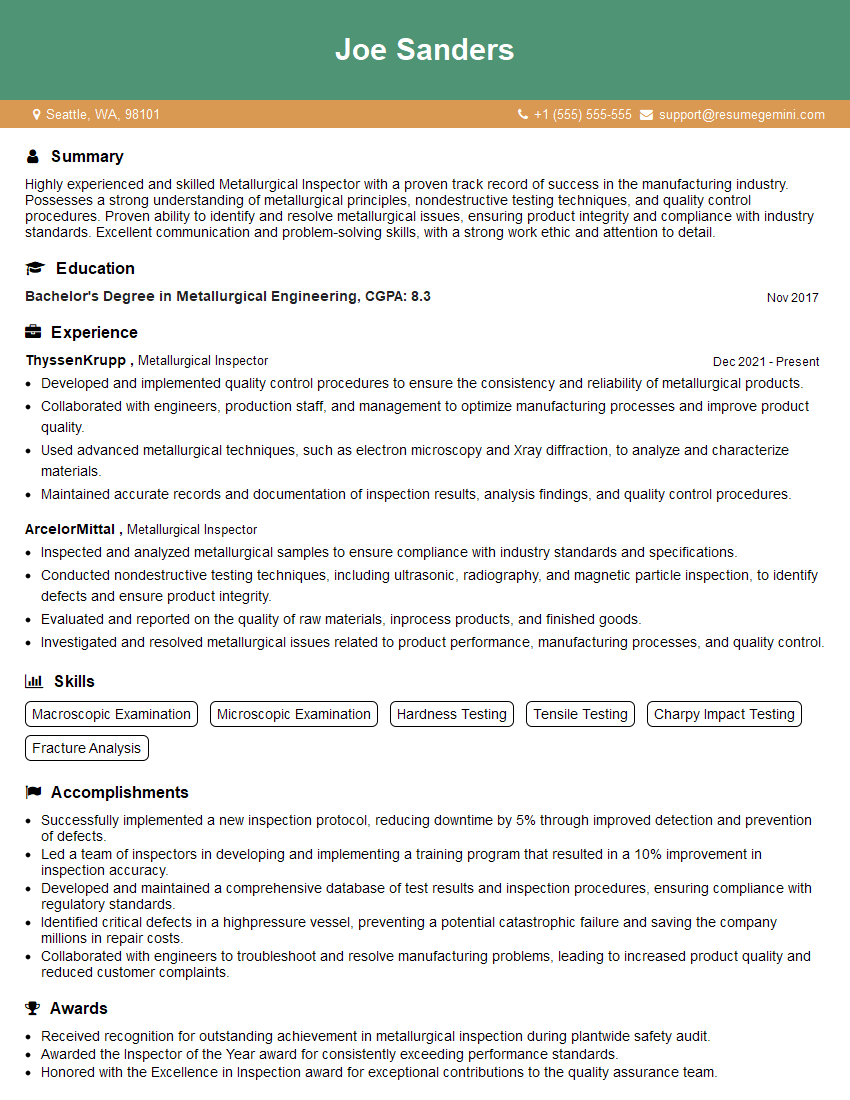
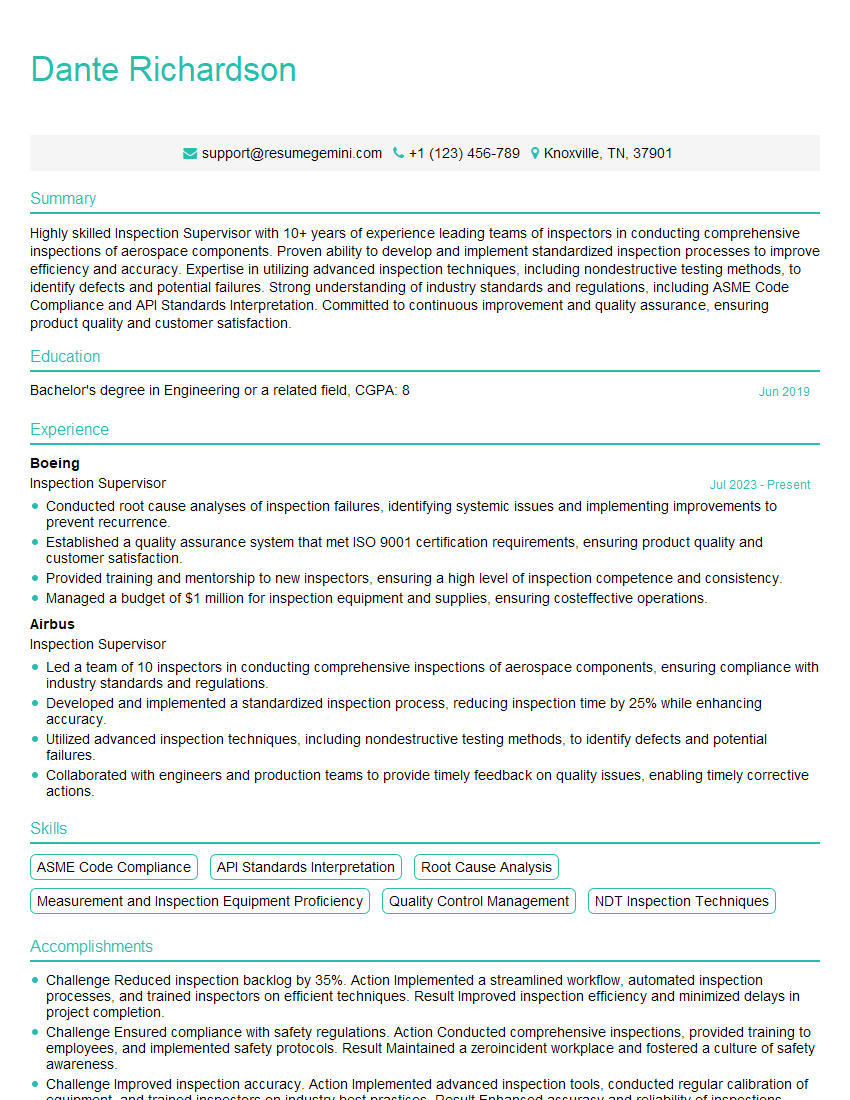
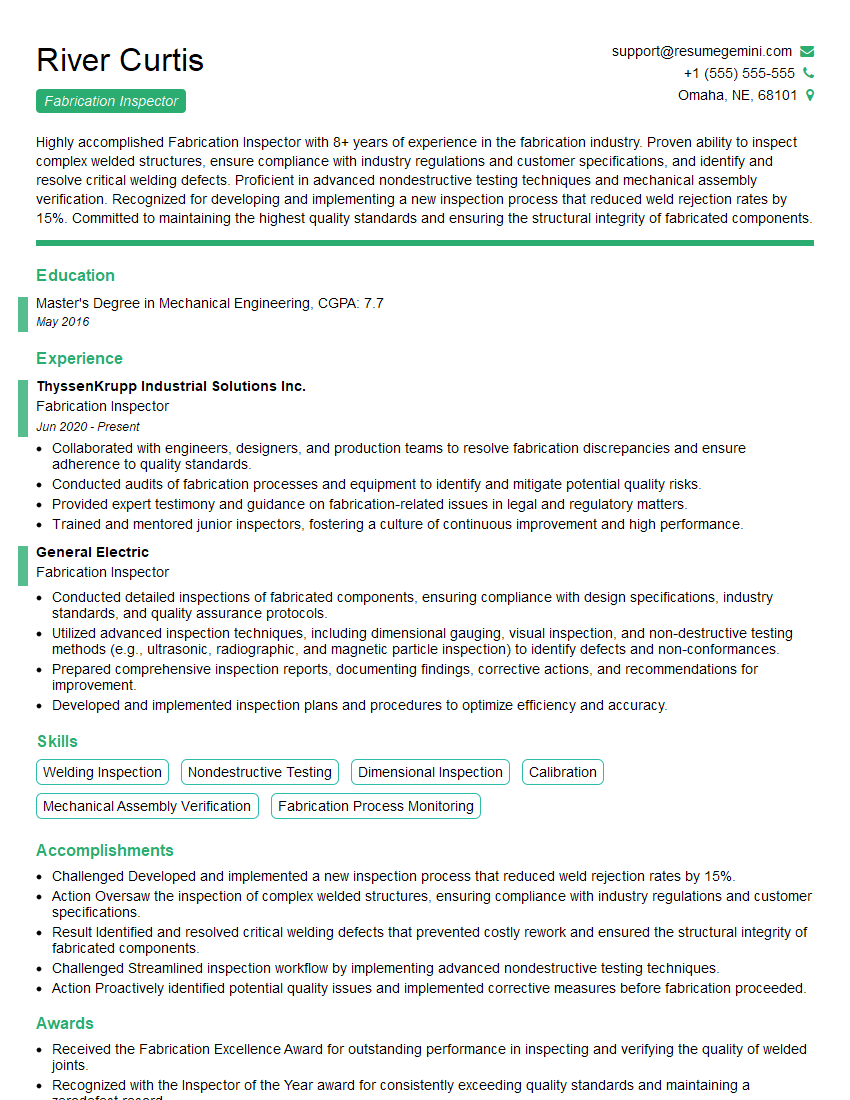
Mastering Plate Inspection opens doors to exciting career opportunities in various industries requiring rigorous quality control. A strong understanding of this field is highly sought after, leading to increased earning potential and career advancement. To significantly boost your job prospects, crafting an ATS-friendly resume is crucial. This ensures your application gets noticed by recruiters and hiring managers. We strongly recommend using ResumeGemini to build a professional and impactful resume that highlights your skills and experience effectively. ResumeGemini offers examples of resumes tailored to Plate Inspection to help you get started. Invest in your future – build a winning resume today.


Explore more articles
Users Rating of Our Blogs
Share Your Experience
We value your feedback! Please rate our content and share your thoughts (optional).
What Readers Say About Our Blog
Very informative content, great job.
good