Are you ready to stand out in your next interview? Understanding and preparing for Hide Drying interview questions is a game-changer. In this blog, we’ve compiled key questions and expert advice to help you showcase your skills with confidence and precision. Let’s get started on your journey to acing the interview.
Questions Asked in Hide Drying Interview
Q 1. Explain the different methods of hide drying.
Hide drying methods are crucial for preserving the hide’s quality and preventing spoilage. They broadly fall into two categories: natural and artificial drying.
- Natural Drying: This involves exposing the hides to the sun and air. It’s a traditional method, cost-effective, but highly dependent on weather conditions, making it slow and inconsistent. The risk of insect infestation and uneven drying is also high. Think of it like letting laundry air dry – it works, but it’s slow and prone to issues if the weather isn’t ideal.
- Artificial Drying: This utilizes controlled environmental conditions to accelerate the drying process. This includes methods like:
- Forced-air drying: Hides are placed in drying chambers with fans circulating warm, dry air. This provides consistent drying and minimizes defects, leading to higher quality leather. Think of it like using a clothes dryer – much faster and more reliable.
- Vacuum drying: This method removes moisture under reduced pressure, speeding up drying and reducing the risk of shrinkage and cracking. This is a more advanced technique ideal for high-value hides.
- Freeze-drying: This is a specialized method where hides are frozen and then subjected to vacuum, allowing the ice to sublimate directly into vapor. It preserves the hide’s structure extremely well but is expensive.
The choice of method depends on factors like hide type, climate, available resources, and the desired quality of the finished product.
Q 2. What are the optimal temperature and humidity levels for hide drying?
Optimal temperature and humidity for hide drying are crucial for achieving high-quality leather. The ideal conditions aim to prevent spoilage while avoiding excessive shrinkage or cracking. The exact values depend on the specific hide type and drying method but generally:
- Temperature: A range of 25-35°C (77-95°F) is commonly used for initial stages, gradually decreasing as drying progresses. Higher temperatures can cause excessive shrinkage and hardening, compromising the leather’s softness and flexibility. Too low and the drying time dramatically increases, leading to spoilage.
- Humidity: Should be kept relatively low, ideally below 50% relative humidity, to encourage efficient moisture evaporation. High humidity slows drying and increases the chances of mold and mildew growth. Think of it like trying to dry clothes in a humid environment – it takes forever!
Precise control is best achieved with artificial drying methods, allowing for precise adjustments throughout the drying process to maintain the ideal conditions for optimal results.
Q 3. Describe the process of hide fleshing and its importance in drying.
Hide fleshing is the critical process of removing the subcutaneous fat, muscle tissue, and other unwanted materials from the hide’s flesh side before drying. It’s analogous to cleaning and preparing meat before cooking.
Importance in Drying:
- Prevents spoilage: Flesh left on the hide provides a breeding ground for bacteria and insects, leading to decay and damage. Removing it ensures the hide dries cleanly and safely.
- Improves drying efficiency: Flesh acts as an insulator, slowing down the drying process. Efficient fleshing ensures even drying and reduces overall time.
- Enhances leather quality: Proper fleshing leads to a cleaner, more consistent leather product with better appearance and texture. It’s essential for producing high-quality leather.
Fleshing is typically done using machines equipped with sharp blades or knives, but hand fleshing is sometimes used for smaller hides or delicate areas. Thoroughness is key to maximize benefits.
Q 4. How do you identify and prevent hide damage during the drying process?
Hide damage during drying can significantly reduce leather quality and value. Identifying and preventing this damage requires careful monitoring and proper handling.
Identifying Damage:
- Scratches and cuts: These are visible surface imperfections that can affect the leather’s appearance.
- Shrinkage and cracking: Uneven or excessive drying can lead to hide shrinkage and the formation of cracks. This often shows up as stiffness and diminished flexibility.
- Mildew and mold: High humidity and improper hygiene can lead to fungal growth, causing discoloration and rotting.
- Insect damage: Infestations by insects like hide beetles can severely damage hides, causing holes and reducing their value.
Preventing Damage:
- Proper pre-treatment: Careful fleshing, salting, and soaking are vital steps to prepare hides for drying.
- Controlled environment: Use of controlled-environment drying systems minimizes the risk of uneven drying and damage from environmental factors.
- Regular inspection: Frequent monitoring during drying allows for early detection and correction of problems.
- Hygiene and sanitation: Maintaining clean drying areas and using proper hygiene protocols can prevent mold and insect infestations.
Q 5. What are the common defects found in dried hides, and how are they addressed?
Common defects in dried hides often stem from improper handling or drying conditions. Addressing these defects requires careful assessment and sometimes specialized techniques.
- Scars and brands: These are often unavoidable and are assessed during grading.
- Holes and cuts: These may be repairable depending on their size and location, sometimes with patching or careful stitching.
- Shrinkage: Excessive shrinkage may be unavoidable depending on the process; however, controlling drying conditions minimizes this.
- Color variations: Uneven drying can lead to color inconsistencies; advanced techniques like drum dyeing can sometimes compensate.
- Mildew stains: These may be cleaned depending on severity; otherwise, the affected areas may need to be trimmed.
The approach to addressing these defects depends on their severity and the intended use of the leather. Minor defects may be acceptable in some applications, while more severe issues necessitate repairs or disposal.
Q 6. Explain the role of airflow in efficient hide drying.
Airflow plays a critical role in efficient hide drying. Think of it like a wind helping clothes dry faster on a clothesline.
Role of Airflow:
- Enhanced Moisture Removal: Airflow facilitates the removal of moisture from the hide’s surface, accelerating the drying process. Without proper airflow, moisture remains trapped, leading to uneven drying and increased risk of spoilage.
- Improved Drying Uniformity: Consistent airflow ensures uniform moisture removal across the hide’s surface, minimizing shrinkage and cracking.
- Reduced Drying Time: Increased airflow significantly reduces the overall drying time, resulting in better efficiency and cost savings.
- Prevention of Mold and Mildew: Proper airflow helps to keep the drying environment dry, reducing the chances of mold and mildew growth. This is very important to maintain the integrity of the hide and produce high quality leather.
In artificial drying systems, strategically placed fans and carefully designed chambers are crucial for optimizing airflow, enhancing the overall efficiency of the drying process.
Q 7. How does hide thickness affect the drying time?
Hide thickness directly affects drying time. Thicker hides take significantly longer to dry than thinner ones, similar to how a thicker steak takes longer to cook than a thin one.
Impact of Thickness:
- Increased Drying Time: The longer the distance moisture has to travel from the interior to the surface of a thick hide, the longer it takes to dry. This increases the overall process time and may increase the risk of spoilage before completion.
- Uneven Drying: Thicker hides are more prone to uneven drying, with the exterior drying faster than the interior. This can lead to stress and cracking as the inner sections continue to shrink while the outer layer has already dried.
- Impact on Quality: Longer drying times for thicker hides increase the chances of defects like shrinkage and cracking. Careful monitoring and perhaps modifications to the drying process are required for optimal results.
Effective strategies for handling thicker hides include pre-treatment methods to enhance moisture removal, such as pre-splitting, and careful control of the drying conditions.
Q 8. What are the different types of drying equipment used in tanneries?
Tanneries utilize a variety of drying equipment, each with its own strengths and weaknesses, depending on factors like hide type, scale of operation, and desired final product characteristics. The choice often involves a balance between cost, efficiency, and quality.
- Tunnel Dryers: These are enclosed chambers where hides are hung on frames and exposed to controlled airflow and temperature. They offer excellent control over the drying process, ensuring even drying and minimizing damage. They are commonly used for larger tanneries processing significant volumes of hides.
- Rotary Dryers: These cylindrical drums rotate slowly, tumbling the hides and exposing all surfaces to heat and airflow. While efficient for large-scale operations, they can cause more damage to delicate hides due to the tumbling action.
- Stack Dryers: Simpler and less expensive than tunnel or rotary dryers, these involve stacking hides in a controlled environment with good airflow. They are suitable for smaller-scale operations but require more manual labor and offer less precise control over drying conditions.
- Vacuum Dryers: These advanced dryers use vacuum to reduce the boiling point of water, allowing for lower temperatures and faster drying times while minimizing damage. They are often used for high-value hides requiring delicate handling.
- Air Dryers (Open Air): In some scenarios, particularly in smaller tanneries or in certain climates, air drying is used. Hides are simply spread out in a well-ventilated area. This is the most economical method but is heavily reliant on weather conditions and offers the least control.
The selection of the optimal equipment is a crucial decision, often involving a detailed analysis of numerous factors.
Q 9. Describe your experience with maintaining hide drying equipment.
Maintaining hide drying equipment is crucial for ensuring consistent quality, minimizing downtime, and preventing safety hazards. My experience includes regular inspection, preventative maintenance, and troubleshooting. I’ve worked with all the types mentioned above.
Regular Inspection: This includes daily checks of airflow, temperature, humidity, and the condition of the equipment itself – looking for wear and tear, leaks, or malfunctions. For instance, in tunnel dryers, I’d carefully monitor the fan motors, heating elements, and the integrity of the chamber seals.
Preventative Maintenance: This involves scheduled servicing, including cleaning, lubrication, and replacement of worn parts. In rotary dryers, for example, regular lubrication of the rotating drum is essential to prevent mechanical failure. Cleaning is paramount to prevent build-up that can affect efficiency and potentially lead to fire hazards.
Troubleshooting: I’ve encountered numerous issues, from malfunctioning heating elements to blocked air filters. I’m proficient in diagnosing problems using a combination of practical experience and technical documentation. For example, identifying inconsistent drying might require checking the airflow distribution within a tunnel dryer, or a gradual decrease in drying efficiency could signal a failing motor.
Effective maintenance requires a keen eye for detail, a strong understanding of the equipment’s mechanics, and a proactive approach to problem-solving. A well-maintained system translates directly to improved product quality and reduced operational costs.
Q 10. How do you ensure the quality and consistency of dried hides?
Ensuring the quality and consistency of dried hides requires a multi-faceted approach encompassing meticulous control at every stage, from pre-treatment to final inspection.
- Precise Control of Drying Parameters: Maintaining consistent temperature and airflow throughout the drying process is paramount. Deviations can lead to uneven drying, resulting in defects like wrinkles, cracks, or excessive shrinkage. Monitoring and adjusting these parameters frequently, using sensors and data logging systems, is critical.
- Regular Quality Checks: Throughout the drying process, hides are subjected to regular inspections. This includes visual checks for blemishes, uniform color, and proper moisture content. Moisture meters are used to measure the water content precisely.
- Careful Handling: Preventing damage during handling is essential. Gentle movement and avoidance of harsh contact are important. Proper racking and stacking techniques minimize wrinkles and other imperfections.
- Statistical Process Control (SPC): Implementing SPC helps track and analyze key drying parameters over time. This allows for the identification of trends and helps maintain consistency in the finished product.
- Calibration and Verification: Regular calibration of measuring instruments, such as thermometers and moisture meters, ensures accurate readings and consistent quality control.
By combining rigorous control, regular inspection, and data-driven approaches, we strive for consistently high-quality dried hides.
Q 11. What are the environmental considerations in hide drying?
Hide drying has significant environmental implications that need careful consideration. The primary concerns are energy consumption, air emissions, and water usage.
- Energy Consumption: Drying requires significant energy input, primarily for heating the air. Employing energy-efficient dryers, optimizing drying cycles, and utilizing renewable energy sources can lessen the environmental impact. For example, switching to heat pumps or solar thermal systems can significantly reduce reliance on fossil fuels.
- Air Emissions: The drying process can release volatile organic compounds (VOCs) and other pollutants into the atmosphere. Using efficient equipment and implementing proper ventilation systems to capture and treat these emissions is critical. Installation of air scrubbers and filters can significantly mitigate this issue.
- Water Usage: Although drying reduces water content, pre-treatment processes typically involve significant water usage. Minimizing water usage during pre-treatment through efficient rinsing techniques and water recycling systems is beneficial. Implementing closed-loop water systems can significantly reduce freshwater consumption.
- Waste Management: Proper management of solid waste generated during drying, such as dust and off-cuts, is crucial. Recycling or disposal according to environmental regulations is mandatory.
Environmental responsibility is not just an ethical obligation but also increasingly important for regulatory compliance and maintaining a positive brand image.
Q 12. How do you handle variations in hide types (e.g., cattle, sheep, goat)?
Different hide types (cattle, sheep, goat, etc.) require tailored drying processes due to variations in thickness, density, and fiber structure. Cattle hides, for example, are generally thicker and require longer drying times compared to thinner sheep or goat hides.
Adjusting Drying Parameters: The drying temperature, airflow, and duration are adjusted depending on the hide type. Thicker hides may necessitate lower temperatures to prevent damage, while thinner hides might tolerate higher temperatures for faster drying. This requires a deep understanding of each hide type’s characteristics and its response to various drying conditions.
Specialized Equipment: In some cases, specialized equipment may be used to handle different hide types optimally. For instance, delicate sheepskin might benefit from vacuum drying to prevent damage, whereas tougher cattle hides might be more suited to tunnel dryers.
Experienced Personnel: Trained personnel with experience in handling diverse hide types are crucial for ensuring optimal drying results. Their expertise in identifying potential problems and making necessary adjustments is indispensable.
A successful operation involves creating customized drying profiles for each hide type based on extensive testing and experience, ensuring that each type achieves the desired final quality without damage or defects.
Q 13. Explain the importance of pre-treatment before hide drying.
Pre-treatment before hide drying is crucial for preparing the hides for optimal drying and achieving the desired final product quality. It involves a series of processes designed to remove impurities, reduce microbial contamination, and prepare the hides for the next stage.
- Cleaning: Removing dirt, blood, and other impurities is essential to prevent staining and odor during drying. This usually involves washing and soaking.
- Fleshing: Removing excess fat and muscle tissue improves drying efficiency and prevents undesirable smells.
- Liming: A crucial step for unhairing and opening the hide’s fiber structure, allowing for better penetration of tanning agents in later stages. Liming also helps to prevent putrefaction.
- Bating: This enzymatic treatment helps to remove residual lime and soften the hide, leading to a more pliable and supple finished product.
- Pickling: This step helps to preserve the hides and prepare them for tanning. Pickling adjusts the pH of the hides, preparing them for the tanning process.
Proper pre-treatment significantly impacts the final quality of the dried hide, influencing its strength, softness, and overall appearance. Neglecting these steps can lead to inferior product quality and even spoilage.
Q 14. What safety measures are crucial during hide drying operations?
Safety is paramount in hide drying operations. Several critical measures must be implemented to protect personnel and the environment.
- Personal Protective Equipment (PPE): Workers should always use appropriate PPE, including gloves, safety glasses, and respirators to protect against chemical hazards, dust inhalation, and potential mechanical injuries.
- Proper Ventilation: Adequate ventilation systems are essential to remove dust, moisture, and potential harmful gases generated during the drying process. This minimizes the risk of respiratory problems and ensures a safe working environment.
- Fire Prevention: Hide drying involves high temperatures and flammable materials. Regular inspection of electrical equipment, proper storage of flammable materials, and a well-defined fire safety plan are crucial. Fire extinguishers should be readily accessible.
- Machine Guards: Moving parts of drying equipment should be properly guarded to prevent accidental contact and injury. Regular inspections and maintenance are necessary to ensure these guards are functional.
- Lockout/Tagout Procedures: Strict lockout/tagout procedures should be followed before performing any maintenance or repair work on the equipment to prevent accidental start-up.
- Emergency Response Plan: A comprehensive emergency response plan should be in place to deal with any accidents or emergencies, including fire, chemical spills, or injuries.
- Training and Supervision: All personnel involved in hide drying operations should receive proper training on safety procedures and the use of PPE. Regular supervision and compliance checks ensure adherence to safety guidelines.
A proactive approach to safety minimizes risks, ensures the well-being of workers, and maintains a responsible and efficient operation.
Q 15. How do you monitor the moisture content of hides during drying?
Monitoring moisture content is crucial for achieving optimal hide drying. We use a combination of methods to ensure accuracy and consistency. The most common is using a moisture meter, a handheld device that measures the percentage of moisture within a sample of the hide. We take readings from multiple points across the hide, including thicker and thinner areas, as moisture distribution can be uneven.
Another method involves the use of electronic sensors integrated into the drying system itself. These sensors provide continuous monitoring, generating data that can be tracked and analyzed to optimize drying parameters. Think of it like an internal thermostat, but for hide moisture. This real-time data allows for immediate adjustments to temperature and airflow, preventing over-drying or under-drying. Finally, we also utilize a more traditional method of checking hide flexibility and weight. A properly drying hide will gradually become more supple and lose weight in proportion to its initial wet weight.
Career Expert Tips:
- Ace those interviews! Prepare effectively by reviewing the Top 50 Most Common Interview Questions on ResumeGemini.
- Navigate your job search with confidence! Explore a wide range of Career Tips on ResumeGemini. Learn about common challenges and recommendations to overcome them.
- Craft the perfect resume! Master the Art of Resume Writing with ResumeGemini’s guide. Showcase your unique qualifications and achievements effectively.
- Don’t miss out on holiday savings! Build your dream resume with ResumeGemini’s ATS optimized templates.
Q 16. Describe your experience with different drying schedules.
My experience encompasses various drying schedules, each tailored to specific hide characteristics and desired end-product quality. A fast drying schedule is used for thinner hides or when time is of the essence. This involves higher temperatures and increased airflow, but carries a higher risk of uneven drying and potential damage. Conversely, a slow drying schedule is preferred for thicker hides, allowing for gradual moisture removal and reducing the chance of shrinkage or cracking. This method is more energy-efficient but takes longer.
We also employ variable drying schedules, adjusting parameters based on real-time moisture readings. This dynamic approach offers the best balance between efficiency and quality. For instance, we might initially use high temperatures to reduce the moisture content rapidly, followed by lower temperatures for the final drying stage to ensure uniform moisture and prevent damage. The specific schedule is selected considering factors such as hide thickness, species, and the final intended use of the leather.
Q 17. How do you troubleshoot common problems in the hide drying process?
Troubleshooting hide drying involves a systematic approach. One common problem is uneven drying, resulting in areas of over-drying (hard, brittle patches) or under-drying (soft, spongy areas). This is often caused by inconsistent airflow or improper hide placement within the dryer. The solution is to adjust airflow and potentially redistribute hides.
Another frequent issue is hide shrinkage, which can be a result of over-drying or high temperatures. We address this by closely monitoring temperature and moisture content, ensuring a slower drying process, especially in thicker areas of the hide. Case hardening, where a hard outer layer forms while the inside remains damp, is another common issue. This is typically resolved by adjusting airflow and increasing humidity during the later stages of drying to allow moisture to escape from the interior gradually.
Finally, microbial growth is addressed by maintaining a clean drying environment, ensuring good air circulation and potentially incorporating antimicrobial agents if necessary. Each problem has its specific solution, and a thorough understanding of drying principles is key to addressing these challenges effectively.
Q 18. What are the key indicators of properly dried hides?
Properly dried hides exhibit several key indicators. First and foremost, the moisture content should be within the acceptable range (typically 10-14%, although this can vary slightly depending on specifications). We use moisture meters to verify this.
Secondly, the hide should be uniform in texture; there should be no hard, brittle areas or soft, spongy patches. A consistent, supple feel across the hide indicates uniform drying. Thirdly, the hide should exhibit minimal shrinkage compared to its original wet weight and size. Excessive shrinkage indicates either an overly aggressive drying schedule or inherent defects in the hide. Finally, the hide should be free from cracks, wrinkles, and other physical imperfections, which are usually signs of uneven drying or over-drying.
Q 19. How do you ensure the efficient use of energy in the hide drying process?
Energy efficiency in hide drying is crucial for economic and environmental reasons. We utilize several strategies to optimize energy consumption. First, we employ high-efficiency drying systems designed to minimize energy loss. This can include features like improved insulation, optimized airflow patterns, and efficient heat exchangers.
Secondly, we carefully monitor and control drying parameters, ensuring that the process is tailored to the specific characteristics of the hides. This avoids unnecessary energy expenditure by preventing over-drying. Thirdly, we pre-treat hides appropriately before drying; this ensures consistent moisture content throughout the hide, maximizing the efficiency of the drying process. Finally, we regularly maintain and service our drying equipment, ensuring that it is operating at peak efficiency. In essence, we think of it like precision cooking; each step of the process is crucial in optimizing energy use.
Q 20. What are the advantages and disadvantages of different drying methods?
Various drying methods exist, each with its own advantages and disadvantages. Air drying is a traditional method, offering simplicity and low capital investment. However, it is slower, less controllable, and more susceptible to environmental factors. Vacuum drying offers faster drying times and better control over moisture removal, but requires specialized equipment and higher energy costs.
Drum drying is suitable for large volumes but can be less gentle on hides and may lead to uneven drying. Spray drying is fast but requires significant initial investment and may lead to significant hide damage. The choice of method depends on factors such as scale of operation, budget, and desired quality of the final product. Each method’s balance between speed, cost and quality is a key factor to consider.
Q 21. How do you handle rejected or damaged hides?
Rejected or damaged hides are handled carefully to minimize losses and prevent contamination. Depending on the nature of the damage, we might attempt to salvage the hide by selective trimming or re-processing. If salvage is not possible, we segregate the rejected hides to prevent contamination of good quality hides.
These rejected hides might be used for lower value applications, or if the damage is severe, they may be disposed of responsibly according to environmental regulations. Documentation of the rejection process, including reasons for rejection and appropriate disposal methods, is meticulous and crucial for maintaining quality control and compliance.
Q 22. Explain your understanding of the drying process’s impact on leather quality.
The hide drying process significantly impacts leather quality. Proper drying prevents microbial growth, reduces shrinkage, and preserves the hide’s inherent structure and strength. Insufficient drying leads to undesirable consequences such as rotting, stiffening, and a reduction in the leather’s overall quality and value.
- Under-drying: Results in a damp hide susceptible to mold and bacterial growth, leading to putrefaction and off-odors. The leather becomes weak and prone to tearing.
- Over-drying: Makes the hide brittle and inflexible, significantly reducing its pliability and making it difficult to process further. It can also cause cracking and surface imperfections.
- Uneven drying: Creates inconsistencies in the leather’s properties, leading to variations in thickness, strength, and flexibility across the hide. This can affect the final product’s appearance and performance.
Think of it like baking a cake; under-baking leaves it soggy and unappetizing, while over-baking creates a dry, crumbly texture. Similarly, controlled drying of hides is crucial for producing high-quality leather.
Q 23. Describe your experience with quality control procedures in hide drying.
My experience in quality control for hide drying involves a multi-step approach, focusing on both the process and the final product. We begin with careful selection of hides, ensuring they are properly pre-treated and free from defects. During drying, we monitor temperature, humidity, and airflow rigorously, using calibrated instruments to maintain optimal conditions. Regular visual inspections are conducted, checking for discoloration, uneven drying, and other imperfections. Finally, we employ standardized testing methods to assess the final product’s characteristics, including thickness, tensile strength, and elongation. We maintain detailed records of each batch, ensuring traceability and facilitating continuous improvement.
For instance, if we detect an unusually high rate of shrinkage in a particular batch, we investigate the cause, whether it’s a problem with the pre-treatment, drying parameters, or even a batch of hides with inherent differences. This systematic approach allows us to quickly identify and rectify issues, maximizing yield and ensuring consistent quality.
Q 24. What are the regulatory requirements you are familiar with in hide drying?
Hide drying is subject to several regulations, primarily focusing on environmental protection and worker safety. These regulations vary depending on the location and can include:
- Wastewater discharge regulations: Limits on the discharge of pollutants, such as organic matter and chemicals, from the tannery into waterways. This often necessitates the implementation of wastewater treatment systems.
- Air emission standards: Regulations governing the release of pollutants into the atmosphere, particularly from the drying process itself. This frequently necessitates the use of air scrubbers or other pollution control technologies.
- Occupational safety and health regulations: Regulations designed to protect workers from hazards associated with hide drying, including exposure to chemicals, dust, and high temperatures. These regulations dictate the use of personal protective equipment (PPE) and safe working practices.
- Animal welfare regulations: Regulations governing the humane treatment of animals and the sourcing of hides. This ensures ethical practices throughout the supply chain.
Compliance with these regulations is crucial for the legal and ethical operation of any hide drying facility.
Q 25. How do you manage waste generated during the hide drying process?
Waste management in hide drying is a critical aspect of responsible operation. We employ a multi-pronged approach to minimize and effectively manage waste generated during the process.
- Minimization: We focus on optimizing the drying process to reduce waste generation. This involves careful selection of hides, precise control of drying parameters, and efficient water usage in pre-treatment processes.
- Recycling: Where possible, we recycle waste materials. For instance, solid waste, such as trimmings and off-cuts, can be used for composting or as a supplementary fuel source.
- Treatment: Wastewater is treated in a dedicated facility to remove organic matter and other pollutants before discharge, ensuring compliance with environmental regulations.
- Disposal: Any remaining waste that cannot be recycled or treated is disposed of responsibly, in accordance with local regulations.
We regularly audit our waste management practices to ensure continuous improvement and environmental sustainability. Our goal is to minimize our environmental footprint and operate as responsibly as possible.
Q 26. Explain the role of technology in optimizing hide drying.
Technology plays a vital role in optimizing hide drying. Modern systems use automated controls to monitor and adjust temperature, humidity, and airflow precisely, ensuring consistent and efficient drying. This reduces energy consumption, improves leather quality, and minimizes waste. Examples include:
- Automated climate control systems: These systems utilize sensors and actuators to maintain optimal drying conditions throughout the process, minimizing human intervention and ensuring consistency.
- Data logging and analysis: Sophisticated systems record and analyze data related to temperature, humidity, airflow, and other parameters, providing valuable insights for process optimization and quality control.
- Energy-efficient drying technologies: Innovative drying technologies, such as vacuum drying and infrared drying, can significantly reduce energy consumption compared to traditional methods.
- AI-powered systems: The application of AI and machine learning can improve predictive maintenance, optimize drying parameters based on real-time data, and enhance overall efficiency.
The adoption of these technologies not only improves the efficiency and quality of hide drying but also enhances environmental sustainability by reducing energy and water consumption.
Q 27. Describe a time you successfully solved a problem in the hide drying process.
During a particularly hot summer, we experienced a significant increase in hide cracking during the drying phase. Initial investigations pointed towards the high ambient temperatures affecting the drying process. However, after a thorough analysis of the data, we discovered that it wasn’t simply the temperature, but rather the combination of high temperature and low humidity that was causing the issue. The hides were drying too quickly on the surface, while the interior remained moist. This rapid surface drying caused the hides to become brittle and crack.
To solve this, we implemented a two-stage drying approach. The first stage involved a slightly lower temperature and higher humidity to allow for uniform moisture evaporation throughout the hide. The second stage then involved a higher temperature to complete the drying process. This modification significantly reduced the cracking rate, and we were able to maintain consistent leather quality despite the challenging environmental conditions. This problem-solving experience highlighted the importance of thorough data analysis and the adaptability required in managing a dynamic process like hide drying.
Q 28. What are your salary expectations for this role?
My salary expectations for this role are in the range of $80,000 to $100,000 per year, depending on the specific benefits package and responsibilities included. This is based on my extensive experience in hide drying, proven problem-solving skills, and proven track record of improving efficiency and quality.
Key Topics to Learn for Hide Drying Interview
- Hide Preparation: Understanding pre-drying processes like salting, fleshing, and curing, and their impact on the final product quality.
- Drying Methods: Familiarize yourself with various drying techniques (e.g., air drying, freeze drying, drum drying) and their respective advantages and disadvantages. Consider energy efficiency, time constraints, and impact on hide characteristics.
- Quality Control: Learn about the methods used to monitor and ensure the quality of hides during the drying process. This includes assessing moisture content, shrinkage, and overall hide condition.
- Equipment and Technology: Gain an understanding of the machinery and technology involved in hide drying, including their operation, maintenance, and troubleshooting.
- Environmental Considerations: Explore the environmental impact of hide drying processes and best practices for minimizing waste and pollution.
- Safety Procedures: Understand and be prepared to discuss the safety protocols and regulations related to hide drying operations.
- Process Optimization: Be ready to discuss strategies for improving efficiency and reducing costs within the hide drying process. This could include analyzing bottlenecks and proposing solutions.
- Industry Standards and Regulations: Understand relevant industry standards and regulations pertaining to hide drying and leather production.
Next Steps
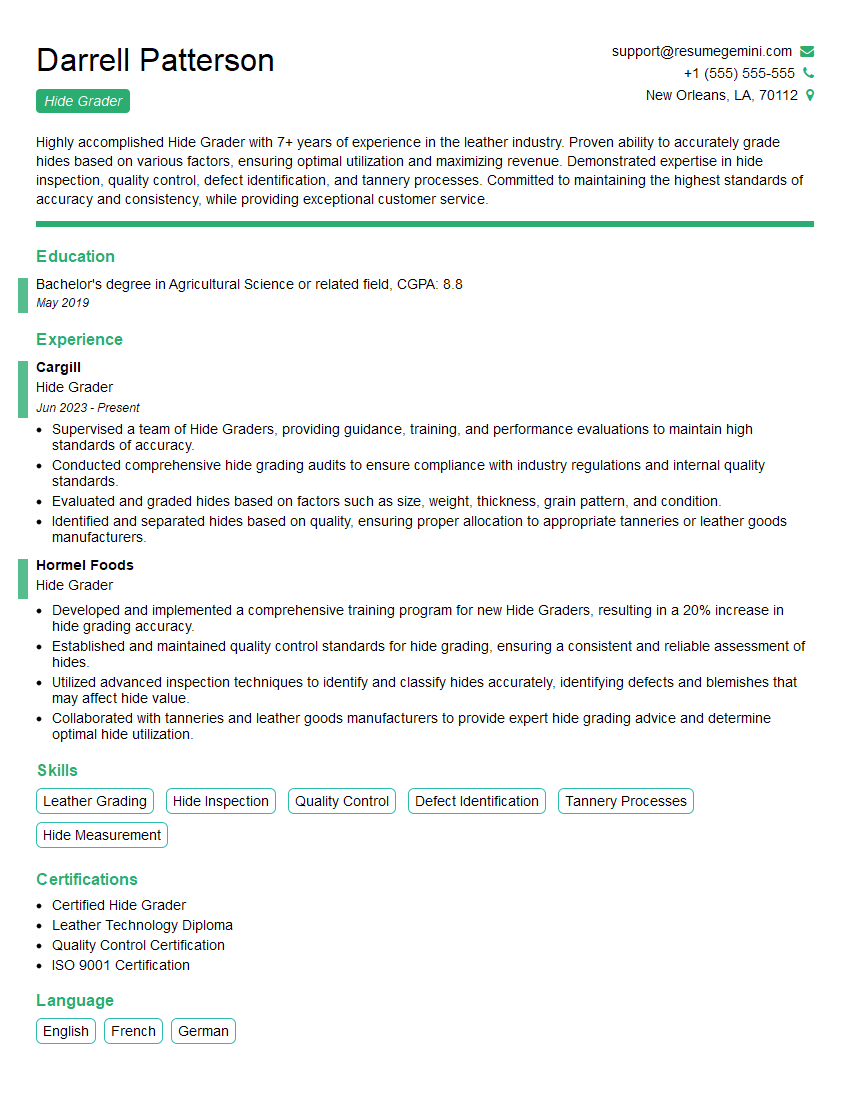
Mastering hide drying techniques opens doors to exciting career opportunities within the leather and tanning industries. These roles offer diverse challenges and the chance to contribute to a significant manufacturing process. To maximize your job prospects, it’s crucial to create an ATS-friendly resume that effectively highlights your skills and experience. ResumeGemini is a trusted resource that can help you build a professional and impactful resume. We provide examples of resumes tailored specifically to the hide drying industry to give you a head start. Invest time in crafting a strong resume—it’s your first impression on potential employers.



Explore more articles
Users Rating of Our Blogs
Share Your Experience
We value your feedback! Please rate our content and share your thoughts (optional).
What Readers Say About Our Blog
Very informative content, great job.
good