Cracking a skill-specific interview, like one for Noise Reduction and Sound Isolation Techniques, requires understanding the nuances of the role. In this blog, we present the questions you’re most likely to encounter, along with insights into how to answer them effectively. Let’s ensure you’re ready to make a strong impression.
Questions Asked in Noise Reduction and Sound Isolation Techniques Interview
Q 1. Explain the difference between sound absorption and sound isolation.
Sound absorption and sound isolation are two distinct but complementary approaches to noise control. Sound absorption deals with reducing the reverberation and intensity of sound within a space by converting sound energy into heat. Think of it like a sponge soaking up water – the sound waves are absorbed, and less sound bounces around. Sound isolation, on the other hand, focuses on preventing sound from traveling between spaces. This involves blocking the transmission of sound waves. Imagine a wall acting as a barrier, preventing sound from passing through.
For example, installing acoustic panels on the walls of a recording studio absorbs sound within the room, reducing echoes. In contrast, using a double-wall construction with insulation in between isolates a bedroom from outside noise.
Q 2. What are the common materials used for sound absorption and their applications?
Many materials excel at sound absorption, each with its specific applications. Porous materials, such as acoustic foams, mineral wool, and fiberglass, are highly effective. These materials have a network of interconnected pores that trap sound waves, converting them into heat energy. They are commonly used in recording studios, home theaters, and office spaces to reduce echo and reverberation.
Fibrous materials like polyester and recycled cotton are also used in sound absorption panels, draperies, and acoustic ceiling tiles. They offer good absorption, especially at higher frequencies. Resonant absorbers, such as Helmholtz resonators, are more specialized and effective at absorbing specific frequencies. These can be crucial for tackling particular noise problems, such as low-frequency hums.
The choice of material depends on the frequency range of the noise to be controlled, the desired level of absorption, and the aesthetic requirements of the space.
Q 3. Describe different sound isolation techniques for walls, floors, and ceilings.
Effective sound isolation requires careful consideration of the construction and materials used. For walls, techniques include double-wall construction with resilient channels (to decouple the two layers), adding insulation within the cavity, and using dense materials like concrete or masonry. A staggered stud wall, where the studs in the two walls are offset, also provides improved isolation.
Floors require impact sound isolation to reduce noise transmission from footsteps. This is achieved using resilient underlayments (such as rubber or cork) beneath the flooring, floating concrete slabs, or resilient channels under the flooring structure. Suspended ceilings also play a critical role in floor noise isolation.
For ceilings, strategies similar to walls are used. Suspended ceilings, with insulation in the plenum (the space above the ceiling), are very effective. Decoupling the ceiling from the supporting structure is key to reducing sound transmission.
Remember, sound isolation is a systems approach – each element must be designed to work together for optimal performance.
Q 4. How do you measure sound transmission loss (STL)?
Sound Transmission Loss (STL) measures how effectively a barrier reduces sound transmission. It’s expressed in decibels (dB) and represents the difference in sound pressure levels between the source room and the receiving room. The higher the STL value, the better the isolation. STL is measured using a standardized test method, such as ASTM E90 or ISO 140-3.
The process involves generating a known sound source in a controlled environment (the source room), then measuring the sound pressure level in an adjacent room (the receiving room). The difference between the two levels is the STL. This requires specialized equipment, including sound-level meters, speakers for sound generation, and sophisticated data acquisition systems. Professional acoustic consultants usually conduct these tests.
Q 5. Explain the concept of Noise Reduction Coefficient (NRC).
The Noise Reduction Coefficient (NRC) is a single-number rating that indicates the average sound absorption of a material at frequencies of 250, 500, 1000, and 2000 Hz. It ranges from 0 to 1, where 0 represents no absorption and 1 represents complete absorption. The NRC is widely used to compare the sound absorption capabilities of different materials and is useful for quick assessment in architectural and design applications.
For example, an NRC of 0.8 indicates that the material absorbs 80% of sound energy at those frequencies. It’s important to remember that NRC doesn’t reflect absorption at other frequencies and is therefore not a complete picture of a material’s acoustic properties.
Q 6. What are the different types of sound barriers and their effectiveness?
Various types of sound barriers are employed depending on the noise source and the environment. Solid barriers, such as concrete walls or earth berms, are effective at blocking high-frequency noise but can be less effective at lower frequencies. Mass-loaded vinyl (MLV) is a flexible barrier that adds mass to a wall or other structure, thus increasing its sound isolation capabilities. It’s often used in conjunction with other materials.
Acoustical barriers are specifically designed to absorb sound and block transmission. They often incorporate porous materials for absorption and denser materials for blocking. Green barriers (such as vegetation) provide some noise reduction, particularly at higher frequencies. Their effectiveness depends on factors such as the density and height of the vegetation.
The effectiveness of each barrier depends on various factors such as the frequency of the noise, the barrier’s mass and thickness, and the presence of flanking paths (other ways for sound to bypass the barrier).
Q 7. How do you assess the impact of noise on human health and well-being?
Noise pollution significantly impacts human health and well-being. Prolonged exposure to excessive noise can lead to a range of problems, including hearing loss, stress, hypertension, sleep disturbances, cardiovascular disease, and reduced cognitive performance. Children are particularly vulnerable to the negative effects of noise.
Assessing the impact involves considering the intensity and frequency of the noise, the duration of exposure, and the individual’s sensitivity. This may involve conducting noise surveys to measure sound levels, questionnaires to assess the impact on people’s lives, and epidemiological studies to investigate correlations between noise exposure and health outcomes. The World Health Organization (WHO) provides guidelines for acceptable noise levels in various settings.
Q 8. Explain the concept of reverberation time and its impact on acoustic design.
Reverberation time (RT60) is the time it takes for sound to decay by 60 decibels (dB) after the source stops. Think of it like the echo in a room – a short RT60 means the sound dies away quickly, while a long RT60 creates a lingering, echoing effect. In acoustic design, RT60 is crucial. A concert hall needs a longer RT60 to enhance the richness of the music, while a recording studio requires a short RT60 for clear, crisp audio without unwanted reflections. Getting the RT60 right involves careful consideration of room dimensions, surface materials (absorbing vs. reflecting), and the addition of acoustic treatments like bass traps and diffusion panels.
For example, a recording studio with a long RT60 will have muddy recordings, difficult to mix. Conversely, a classroom with a very short RT60 might sound ‘dead’ and lack warmth. The ideal RT60 depends heavily on the intended use of the space.
Q 9. Describe different methods for controlling noise in industrial settings.
Controlling noise in industrial settings often involves a multi-pronged approach, combining engineering controls, administrative controls, and hearing protection.
- Engineering Controls: These focus on modifying the noise source or the path of sound. Examples include using quieter machinery, installing noise barriers (e.g., enclosures around noisy equipment), applying vibration damping materials, and optimizing the layout of the facility to separate noisy areas from quieter ones. Think of a factory replacing noisy punch presses with quieter robotic arms, or installing sound-absorbing baffles on the ceilings.
- Administrative Controls: These focus on managing worker exposure. This includes scheduling quieter tasks during certain times, implementing work rotation programs to limit exposure to high-noise levels, providing training on hearing safety, and establishing quiet zones within the workspace.
- Hearing Protection: When engineering and administrative controls are insufficient, hearing protection such as earplugs or earmuffs becomes essential to limit worker exposure to hazardous noise levels. Proper fitting and training are critical for effectiveness.
A holistic approach, combining all three methods, is usually the most effective way to control noise in a demanding industrial environment.
Q 10. How do you design for effective sound isolation in a recording studio?
Designing a recording studio for effective sound isolation is a critical process that focuses on minimizing external noise intrusion and preventing internal sound leakage. This involves meticulous attention to detail in several areas:
- Room-within-a-room construction: This technique builds an inner shell (the recording space) completely isolated from the outer shell (the building). A resilient channel and decoupled walls and ceilings are essential in interrupting sound transmission between the two shells.
- Multiple layers of soundproofing materials: Using multiple layers of drywall with staggered studs, insulation, and sound-dampening materials significantly reduces sound transmission through walls, floors, and ceilings. The goal is to break up the path of sound.
- Airtight seals: Doors and windows should be soundproofed, using heavy-duty construction, seals, and possibly multiple doors or airlocks. All gaps and cracks should be carefully sealed to stop sound leakage.
- Acoustic treatment within the control room: While isolation keeps outside noise out, the room’s interior requires treatment to optimize sound quality. This includes using sound-absorbing materials such as acoustic foam, bass traps, and diffusers to manage reflections and achieve a desired acoustic environment.
The overall goal is to create a ‘floating room’ environment where outside noise is minimized and internal sound doesn’t leak out.
Q 11. What are some common noise pollution control regulations?
Noise pollution control regulations vary by location (country, state, or municipality), but common themes include:
- Ambient noise limits: Regulations often specify maximum allowable sound levels at certain times of day (e.g., quieter limits at night) in various zones (residential, industrial, commercial).
- Occupational noise exposure limits: These limits dictate maximum permissible noise levels workers can be exposed to over a given period. They are often based on the 8-hour time-weighted average (TWA) sound level. Exceeding these limits often requires employers to implement noise control measures and provide hearing protection.
- Construction noise restrictions: Specific rules govern noise levels during construction projects, often limiting work hours and requiring noise mitigation strategies.
- Vehicle noise standards: Regulations exist to set limits on noise produced by vehicles like cars, trucks, and motorcycles.
These regulations often use decibel (dB) limits, sometimes incorporating A-weighting (dB(A)), which adjusts measurements to reflect human hearing sensitivity. Failure to comply can result in fines and legal action.
Q 12. Explain the use of flanking transmission in sound isolation.
Flanking transmission refers to the transmission of sound through indirect pathways, bypassing the primary sound isolation elements. Imagine a wall designed to block sound, but the sound travels through the ceiling, floor, or even through flanking structures like pipes or ductwork and then re-enters the receiving room. This significantly reduces the effectiveness of the primary sound isolation.
To mitigate flanking transmission, careful attention must be paid to the entire structure. This often requires continuous seals around pipes and ductwork that penetrate the main sound isolation elements. Decoupling floors and ceilings, using resilient channels for wall construction, and selecting construction materials that minimize sound transmission are crucial techniques for reducing flanking transmission. Proper design and airtight construction are key.
Q 13. How do you calculate the Sound Pressure Level (SPL)?
Calculating the Sound Pressure Level (SPL) involves using a sound level meter that measures the sound pressure in Pascals (Pa) and converts it into decibels (dB). The formula is:
SPL = 20 * log10(p/pref)Where:
SPLis the sound pressure level in dBpis the measured root mean square (RMS) sound pressure in Pascals (Pa)prefis the reference sound pressure, typically 20 µPa (20 micropascals)
In practice, sound level meters do this calculation automatically, displaying the SPL directly. However, understanding the underlying formula helps in interpreting the data and understanding the logarithmic nature of the decibel scale.
Q 14. What is the significance of the A-weighting scale in noise measurement?
The A-weighting scale is a filter applied to sound level measurements that adjusts them to reflect the frequency-dependent sensitivity of the human ear. Our ears are less sensitive to low-frequency sounds and more sensitive to mid-frequency sounds. The A-weighting curve de-emphasizes low-frequency sounds and emphasizes the frequencies to which humans are most sensitive.
Therefore, A-weighted decibels (dB(A)) provide a more accurate representation of how loud a sound is *perceived* by the average person than unweighted sound measurements. dB(A) is commonly used in noise regulations and environmental noise assessments, as it offers a better correlation to human hearing perception and potential noise-induced hearing loss.
Q 15. Describe different types of noise measurement equipment and their use.
Noise measurement relies on specialized equipment to quantify sound levels accurately. The type of equipment used depends heavily on the specific application and the nature of the noise being measured.
Sound Level Meters (SLMs): These are the workhorses of noise measurement. They measure sound pressure levels (SPLs) in decibels (dB), usually weighted using the A-weighting scale (dBA) which approximates the human ear’s response to sound. Different SLMs offer varying features such as frequency analysis, data logging, and even integration with software for sophisticated analysis. Think of them as the basic thermometer for sound.
Sound Intensity Meters: Unlike SLMs which measure sound pressure, these measure the sound intensity – the rate of sound energy flow per unit area. This is particularly useful for identifying noise sources and determining their contribution to the overall noise level. They are more complex and expensive but give a more complete picture.
Dosimeters: These are worn by individuals to measure their personal noise exposure over time. They’re crucial in occupational settings to assess worker risk and ensure compliance with safety regulations. Imagine them as a ‘sound diary’ for a worker’s shift.
Octave Band Analyzers: These break down the sound into specific frequency bands (octaves), providing a detailed frequency spectrum. This is invaluable for identifying dominant frequencies and selecting appropriate noise control strategies. This is like getting a detailed breakdown of the components of a sound, revealing what frequencies are most problematic.
The choice of equipment depends on the specific objectives of the measurement. For a simple assessment of overall noise levels, an SLM suffices. However, pinpointing noise sources and understanding the frequency content requires more sophisticated equipment like intensity meters and octave band analyzers.
Career Expert Tips:
- Ace those interviews! Prepare effectively by reviewing the Top 50 Most Common Interview Questions on ResumeGemini.
- Navigate your job search with confidence! Explore a wide range of Career Tips on ResumeGemini. Learn about common challenges and recommendations to overcome them.
- Craft the perfect resume! Master the Art of Resume Writing with ResumeGemini’s guide. Showcase your unique qualifications and achievements effectively.
- Don’t miss out on holiday savings! Build your dream resume with ResumeGemini’s ATS optimized templates.
Q 16. How do you analyze and interpret noise data?
Analyzing noise data involves more than just looking at decibel readings. It requires a systematic approach to understand the context and draw meaningful conclusions.
Data Organization: The first step involves organizing the data – creating tables, graphs, and charts to visualize the sound levels and their distribution over time and frequency. This allows for easy identification of trends and patterns.
Statistical Analysis: Calculating statistical parameters like mean, standard deviation, and percentiles helps understand the variability of the noise levels. This allows us to move beyond single measurements to understand the overall noise profile.
Frequency Analysis: Analyzing the frequency spectrum, as obtained from octave band analyzers, is crucial. This reveals which frequencies dominate and can point towards the source and type of noise. For example, a dominant low-frequency noise might suggest a mechanical vibration source, while high-frequency noise might indicate air turbulence.
Correlation with other data: Noise data is rarely interpreted in isolation. It is often correlated with operational parameters, environmental conditions, and other relevant factors to fully understand its cause and variability.
Comparison with standards: Finally, comparing the measured noise levels with relevant regulations and guidelines (e.g., OSHA standards) is essential to assess the potential risk to human health and the environment. This informs our decisions regarding mitigation actions.
For example, if we observe a high peak in the low-frequency range in a factory setting, we might investigate the operation of large machinery or potential structural vibrations as potential noise sources.
Q 17. Explain the concept of sound intensity and its importance in noise control.
Sound intensity is a measure of the power of sound waves passing through a unit area. It differs from sound pressure which is a measure of the pressure fluctuations caused by the sound waves. While sound pressure is measured at a point, sound intensity is a vector quantity, representing both the magnitude and direction of the sound energy flow. It’s essentially the rate at which sound energy is transported.
Sound intensity is crucial in noise control because it directly reflects the power of the sound source. Knowing the intensity allows us to accurately determine the source strength and effectiveness of noise control measures. For instance, a sound intensity map can identify the areas of highest sound energy radiation from a machine, pinpointing where noise reduction strategies need to be most focused. Unlike sound pressure level, which can be affected by reflections and reverberation, sound intensity is a more accurate measure of the true power of the sound source.
Imagine shining a light; sound intensity is akin to the amount of light energy emitted by the source. Sound pressure would be akin to the light perceived at a specific point on a surface, affected by both the light source and reflections from other surfaces.
Q 18. Describe the impact of frequency on sound absorption and isolation.
Frequency plays a significant role in both sound absorption and isolation. Different materials and structures behave differently at different frequencies.
Sound Absorption: Porous materials like acoustic foams and fibrous materials are more effective at absorbing higher-frequency sounds. Lower-frequency sounds tend to pass through or reflect off these materials more easily. This is why you often see thick, porous panels used to absorb higher-pitched sounds in recording studios, but require more substantial and strategically placed materials (bass traps) to handle low-frequency ‘rumble’.
Sound Isolation: Mass is crucial for sound isolation. Heavy, dense materials are more effective at blocking sound across all frequencies, though their effectiveness decreases at higher frequencies. However, the resonance frequency of a structure also plays a significant role; a wall can be less effective at blocking sound at frequencies where it resonates.
Think of it this way: high-frequency sounds are like small, fast pebbles easily absorbed by a porous sponge (absorption). Low-frequency sounds are like large, slow boulders that require a much more substantial barrier (isolation) to be stopped. The resonance effect is like hitting a bell at just the right frequency – it will vibrate much more strongly than other frequencies.
Q 19. How do you handle noise problems caused by HVAC systems?
HVAC systems are notorious noise culprits. Addressing noise problems originating from them requires a multi-pronged approach.
Proper Design and Installation: The most effective noise control starts with proper design. This includes selecting quieter equipment, using vibration isolation mounts to decouple the system from the building structure, and designing ductwork to minimize air turbulence and noise propagation.
Acoustic Treatment: Adding sound-absorbing materials to ductwork, plenums, and fan rooms can significantly reduce noise levels. This can include lining ducts with acoustic blankets or installing baffles within the ductwork to control air flow and dampen sound.
Vibration Isolation: Using vibration isolation mounts under fans, pumps, and other equipment effectively prevents noise transmission through building structures. This is analogous to placing a rubber mat under a washing machine to reduce its vibrations.
Maintenance: Regular maintenance is key to prevent noise problems from escalating. This includes checking for loose parts, ensuring proper fan balancing, and keeping air filters clean. These simple maintenance tasks can prevent small issues from becoming much larger ones later on.
For example, a humming noise from an air handler can be addressed by vibration isolation mounts, while whistling noises in the ducts can be reduced by adding acoustic liner and potentially adjusting the air flow to reduce turbulence.
Q 20. What are the best practices for designing quiet spaces in buildings?
Designing quiet spaces requires careful consideration of all noise transmission pathways. This is a holistic process involving architectural design, material selection, and mechanical systems design.
Location and Site Planning: Choosing a site away from major noise sources and carefully orienting the building to minimize noise intrusion is a fundamental step. This is analogous to selecting a quiet spot in a park for relaxation.
Mass and Decoupling: Using heavy, dense construction materials for walls, floors, and ceilings helps block sound. Decoupling these elements from each other through techniques like resilient channels or floating floors can further reduce noise transmission.
Sound Absorption: Incorporating sound-absorbing materials within the room (e.g., carpets, curtains, acoustic panels) helps reduce reverberation and improve speech clarity. This prevents echoes and makes the space feel more calming.
Mechanical System Design: Quiet HVAC systems and other mechanical equipment are crucial. This involves specifying quieter equipment, incorporating vibration isolation, and designing ductwork to minimize noise.
Architectural Features: Design choices like using staggered wall studs, sound-isolating windows, and air gaps between building elements contribute to noise control. The goal is to break up the transmission path for the sound.
A successful quiet space might involve a combination of these approaches, including using heavy concrete walls with resilient channels, sound-absorbing ceiling tiles, double-glazed windows, and a very quiet mechanical system. Each choice is carefully made to minimize the transmission of sound.
Q 21. How do you address noise complaints effectively?
Addressing noise complaints requires a professional and systematic approach that prioritizes both empathy and problem-solving.
Thorough Investigation: Start by thoroughly investigating the complaint. This includes understanding the nature of the noise, when it occurs, its perceived loudness, and its impact on the complainant. Document everything carefully.
On-site Measurement: Conducting sound level measurements at the location of the complaint is essential to objectively quantify the noise levels. This provides a factual basis for further analysis.
Noise Source Identification: Identify the source of the noise. This may involve investigating various potential sources and using techniques like sound intensity measurements or listening carefully to identify the nature of the sound. For instance, it could be a nearby road, construction site, or malfunctioning appliance.
Develop a Mitigation Plan: Once the source is identified, develop a mitigation plan. This might involve engineering controls (e.g., noise barriers, vibration isolation), administrative controls (e.g., adjusting work schedules), or hearing protection. The choice of solutions will depend on the nature of the source and the feasibility of each option.
Communication and Follow-up: Open communication with the complainant throughout the process is crucial. Keep them informed of the investigation’s progress, proposed solutions, and implementation timeline. Follow up to ensure that the mitigation measures are effective and that the complaint is resolved to their satisfaction.
A successful outcome involves not only reducing the noise levels but also building trust and demonstrating responsiveness to the complainant’s concerns. The goal is to find a mutually satisfactory solution that respects everyone’s needs.
Q 22. Explain the role of vibration isolation in noise control.
Vibration isolation plays a crucial role in noise control because many noise sources originate from vibrations. Think of a machine: its vibrations travel through its supporting structure, radiating noise into the surrounding environment. Vibration isolation aims to break this transmission path. By placing a machine on isolators – devices designed to absorb or redirect vibrations – we significantly reduce the amount of vibration energy reaching the structure and, consequently, the noise generated.
Imagine a washing machine: the spinning drum creates vibrations that travel through the floor, causing noise in neighboring rooms. Proper vibration isolation mounts significantly reduce this noise transfer.
Q 23. What are the different types of vibration isolators and their applications?
Vibration isolators come in various types, each suited for different applications and frequency ranges:
- Passive Isolators: These are the most common and rely on materials with high damping properties (like rubber, elastomers, or springs) to absorb vibrational energy. They’re effective for isolating low-frequency vibrations and are widely used in machinery mounting, HVAC systems, and building structures.
- Active Isolators: These use sensors and actuators to actively counteract vibrations. They’re more complex and expensive but provide superior isolation, especially for high-frequency vibrations and sensitive equipment like microscopes or precision manufacturing tools. They continuously measure vibrations and apply counteracting forces to minimize movement.
- Hybrid Isolators: These combine passive and active elements, offering a balance of performance and cost-effectiveness. They might use a passive isolator as a primary stage, followed by an active system for fine-tuning isolation at higher frequencies.
The choice of isolator depends on factors such as the frequency and amplitude of the vibration source, the weight of the equipment, and the level of isolation required.
Q 24. How do you design for noise control in transportation infrastructure?
Designing for noise control in transportation infrastructure requires a multifaceted approach, considering the entire system. It begins with selecting quieter components like low-noise tires for vehicles or quieter train wheels. This is followed by implementing noise barriers along roadways or railway lines to block sound propagation. These barriers can be earth berms, solid walls, or even carefully designed sound-absorbing screens.
Further strategies include optimizing road surfaces to reduce tire-road noise, using noise-reducing pavements, and implementing noise mitigation measures at the source, such as quieter engine designs for vehicles or more effective track designs for railways. In urban environments, urban planning plays a vital role; strategically placing noise-sensitive areas farther from major transportation routes helps significantly. Finally, numerical modeling and simulations are used extensively to predict and optimize noise levels before construction, ensuring effectiveness.
Q 25. Explain your experience with different sound modeling software.
I have extensive experience with several leading sound modeling software packages, including SoundPLAN, CadnaA, and NoiseMap. My expertise extends beyond simply using these tools to interpreting the results and applying the findings to optimize noise reduction strategies. SoundPLAN, for instance, excels in modeling complex urban environments, while CadnaA provides robust capabilities for analyzing industrial noise sources. The selection of software depends greatly on the project’s scale, complexity, and specific requirements.
Beyond the software itself, I am proficient in using the data they generate for creating detailed noise maps, identifying critical noise sources, and demonstrating the effectiveness of implemented mitigation measures to clients and regulatory bodies.
Q 26. Describe a challenging noise reduction project you have worked on and the solutions you implemented.
One challenging project involved reducing noise pollution from a large industrial fan located near a residential area. The initial noise levels far exceeded acceptable limits. The simple solution of replacing the fan was cost-prohibitive. Therefore, we employed a multi-pronged approach.
First, we conducted detailed acoustic surveys to pinpoint the primary noise sources and transmission paths. This revealed significant noise radiating from the fan’s housing and its supporting structure. Second, we implemented vibration isolation using high-performance elastomeric mounts. This significantly reduced the structure-borne noise. Third, we designed and installed an acoustic enclosure around the fan, using sound-absorbing materials to minimize airborne noise transmission. Finally, we incorporated berms and strategically planted vegetation to further attenuate the sound before it reached the residences. Through this combined effort, we achieved a significant reduction in noise levels, exceeding regulatory requirements and satisfying resident concerns.
Q 27. What are the latest advancements in noise reduction technologies?
Recent advancements in noise reduction technologies include the rise of metamaterials with exceptional sound absorption capabilities and the increasing use of active noise cancellation techniques in more diverse applications. Metamaterials are artificially engineered structures that can manipulate sound waves in unprecedented ways, leading to highly effective sound absorbers and silencers. Active noise cancellation is becoming more sophisticated and affordable, providing effective noise reduction in various settings, from headphones to entire rooms.
Furthermore, advancements in computational acoustics allow for ever-more-accurate noise modeling and prediction, improving the design and efficacy of noise reduction strategies. The integration of AI and machine learning also shows promising potential for optimizing noise control systems and predicting noise levels with higher accuracy.
Q 28. How do you stay current with the latest industry standards and best practices in noise control?
Keeping abreast of the latest industry standards and best practices is crucial. I actively participate in professional organizations like the Institute of Noise Control Engineering (INCE) and attend industry conferences and workshops regularly. This allows me to engage with leading experts, learn about cutting-edge technologies, and stay updated on the latest research. I also subscribe to relevant journals and technical publications, ensuring I’m constantly informed about advancements in the field. Furthermore, I participate in continuing education courses to maintain my professional certifications and expand my knowledge.
Key Topics to Learn for Noise Reduction and Sound Isolation Techniques Interview
- Fundamentals of Acoustics: Understanding sound waves, frequency, intensity, and decibels. This forms the bedrock of all noise control strategies.
- Sound Absorption: Exploring different absorption materials and their applications in reducing reverberation and echo within spaces. Consider practical examples like acoustic panels in recording studios or theaters.
- Sound Isolation/Transmission Loss: Mastering concepts of sound transmission through various materials and structures. Think about applications in building design, focusing on wall constructions and window specifications for optimal soundproofing.
- Noise Control Strategies: Learning about practical methods for noise reduction, including active noise cancellation, vibration damping, and the use of barriers. Be prepared to discuss real-world scenarios and potential solutions.
- Measurement and Analysis Techniques: Familiarity with sound level meters, frequency analysis, and other tools used to assess and quantify noise levels. Understanding data interpretation is crucial.
- Building Codes and Regulations: Understanding relevant building codes and regulations related to noise pollution and sound isolation. This demonstrates practical awareness and responsibility.
- Specific Applications: Exploring noise reduction techniques in diverse areas such as architectural acoustics, industrial noise control, or transportation noise mitigation. This shows versatility and broad understanding.
- Problem-Solving Approach: Practicing identifying noise sources, analyzing their characteristics, and proposing effective solutions. Be ready to discuss your problem-solving process.
Next Steps
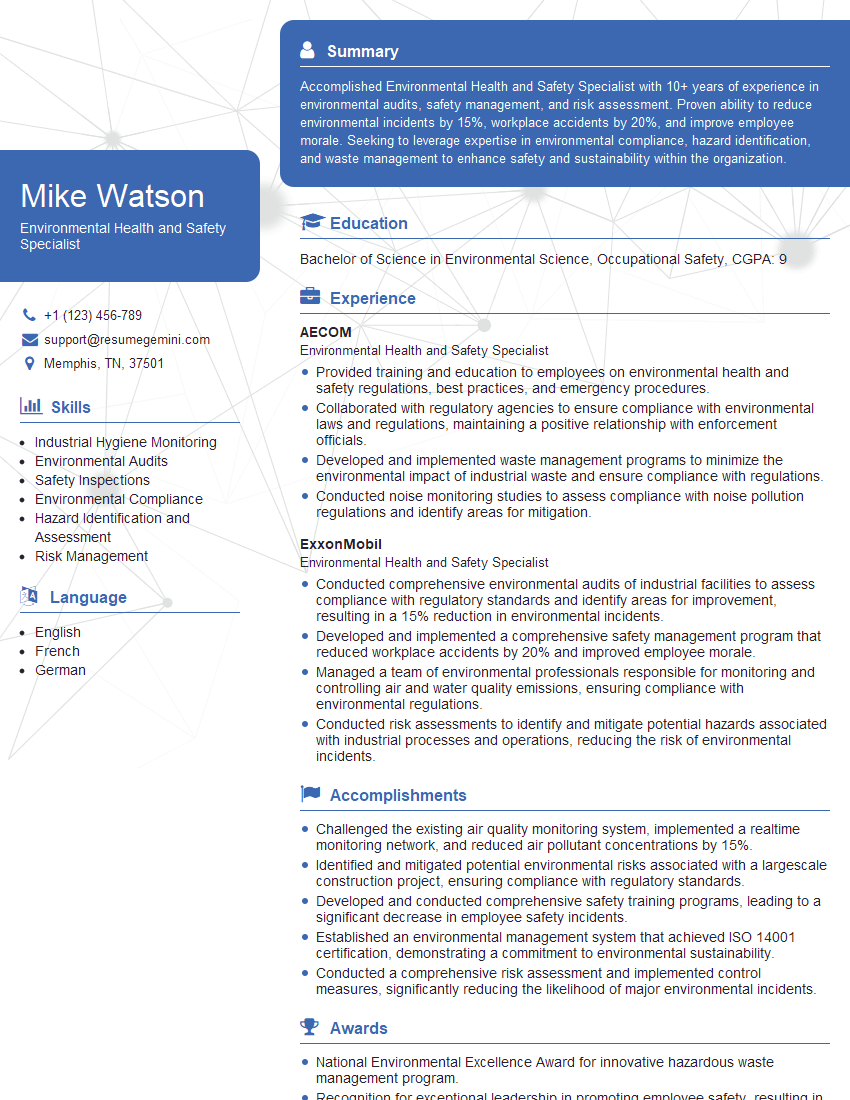
Mastering Noise Reduction and Sound Isolation Techniques opens doors to exciting career opportunities in diverse fields, offering excellent growth potential. A strong resume is vital in showcasing your skills and experience to potential employers. Crafting an ATS-friendly resume significantly improves your chances of getting noticed. ResumeGemini is a trusted resource to help you build a professional and impactful resume that highlights your expertise in this specialized field. Examples of resumes tailored to Noise Reduction and Sound Isolation Techniques are available to help you get started.

Explore more articles
Users Rating of Our Blogs
Share Your Experience
We value your feedback! Please rate our content and share your thoughts (optional).
What Readers Say About Our Blog
Very informative content, great job.
good