Interviews are opportunities to demonstrate your expertise, and this guide is here to help you shine. Explore the essential Film and Television Industry Knowledge interview questions that employers frequently ask, paired with strategies for crafting responses that set you apart from the competition.
Questions Asked in Film and Television Industry Knowledge Interview
Q 1. Explain the difference between a line producer and a production manager.
While both line producers and production managers are crucial for keeping a film production on track, their roles differ significantly. Think of the production manager as the big-picture strategist and the line producer as the day-to-day tactician.
The production manager is responsible for the overall budget, schedule, and logistics of the production. They work closely with the director and producers to develop the production plan, securing locations, managing crew hires, and overseeing the overall workflow. They’re focused on creating the infrastructure for a smooth production.
The line producer, on the other hand, takes that plan and makes it a reality. They are responsible for the day-to-day budget management, negotiating deals with vendors, tracking expenses, and ensuring the production stays within budget. They are constantly problem-solving and making on-the-ground decisions to keep things moving efficiently. A great analogy is that the production manager designs the blueprint of a house, while the line producer builds the house.
For example, the production manager might secure a location, while the line producer negotiates the permit fees and schedules the crew to work there. Both are vital, but their skill sets and responsibilities are distinctly different.
Q 2. Describe your experience with various camera formats (e.g., film, digital, etc.).
My experience encompasses a wide range of camera formats, from traditional film to various digital sensors. I’ve worked extensively with 35mm film, appreciating its unique grain and cinematic quality – a classic choice for projects needing a particular aesthetic. Digital formats I’ve utilized include RED, Arri Alexa, and Blackmagic cameras. Each presents different strengths and challenges.
Film offers a beautiful, organic look, but it’s expensive and involves specific processing requirements. It demands careful planning and a deep understanding of its limitations.
Digital offers greater flexibility, allowing for immediate playback and easier adjustments during production. The varying sensor sizes and dynamic ranges (like those found in RED and Alexa cameras) allow for creative control over image quality, from high resolution to shallow depth of field. Blackmagic cameras offer a cost-effective alternative for certain projects.
Choosing the right format depends heavily on the project’s budget, aesthetic goals, and post-production workflow. For instance, a low-budget indie film might opt for the efficiency of Blackmagic, while a high-budget feature film aiming for a classic look might choose 35mm.
Q 3. What is your experience with different editing software (e.g., Avid, Premiere, Final Cut Pro)?
My editing proficiency spans several industry-standard platforms. I’m highly proficient in Avid Media Composer, which remains a mainstay in professional editing, especially for high-end feature films and television. I’m also adept at Adobe Premiere Pro, a versatile and widely used option known for its user-friendly interface and powerful features. My experience also includes Final Cut Pro, Apple’s robust editing software, particularly useful for smaller projects or fast-turnaround productions.
Each software has its own strengths. Avid is known for its powerful timeline and collaborative features, making it ideal for large teams. Premiere Pro offers excellent flexibility and integration within the Adobe Creative Cloud ecosystem. Final Cut Pro is known for its intuitive interface and speed, suitable for editors who value quick workflows. My ability to adapt between these platforms ensures I can contribute effectively to a wide range of projects.
Q 4. How do you handle budget constraints in film production?
Budget constraints are an inevitable part of filmmaking, requiring a proactive and strategic approach. My strategy revolves around meticulous pre-production planning and continuous monitoring of expenses throughout the production.
- Detailed Budgeting: I start with a comprehensive budget breakdown, identifying potential cost overruns early on. This involves using budgeting software to track every expense.
- Creative Problem-Solving: When faced with limitations, I explore creative solutions. This might involve finding cost-effective locations, utilizing readily available equipment, or adjusting the shooting schedule to reduce expenses.
- Negotiation and Vendor Relationships: Building strong relationships with vendors can lead to better deals and flexibility in payments.
- Value Engineering: This involves analyzing each line item in the budget to identify areas where costs can be reduced without sacrificing quality. For example, we might opt for a slightly less expensive lens if it meets the project’s needs.
- Contingency Planning: A buffer in the budget is crucial to handle unforeseen expenses. This ensures the production remains on track even in the face of unexpected challenges.
By employing these strategies, I can maintain project quality while adhering to budgetary limitations.
Q 5. Describe your understanding of storyboarding and its importance in filmmaking.
Storyboarding is a crucial pre-production process involving creating a sequence of drawings or images that visually represent the shots planned for a film or video. It’s essentially a visual roadmap for the entire production.
Its importance is multifaceted:
- Visual Communication: Storyboards act as a common language between the director, cinematographer, and other crew members, ensuring everyone is on the same page regarding shot composition, camera angles, and action.
- Pre-Visualization: It allows the director and team to visualize the film’s flow and make necessary adjustments before production begins, saving time and resources.
- Planning and Efficiency: It streamlines the shooting process by providing a clear plan, leading to more efficient use of time and resources on set.
- Budgeting and Scheduling: Storyboards help in accurately estimating the shooting schedule and budget by providing a clear picture of the required shots and resources.
For instance, a complex action sequence would be meticulously storyboarded to ensure the action flows smoothly and the safety of the cast and crew is maintained. It’s an invaluable tool for visualizing and planning any film’s visual narrative.
Q 6. What is your experience with scheduling and managing crews?
Scheduling and crew management are integral to successful filmmaking. My approach emphasizes meticulous planning and effective communication.
Scheduling: I utilize specialized scheduling software to create detailed shooting schedules, factoring in various elements like location availability, actor schedules, and equipment rentals. The schedule incorporates buffer time to account for unforeseen delays. I constantly monitor and adjust the schedule based on real-time developments, making sure that all departments are informed of any changes.
Crew Management: I focus on building a strong team environment and maintaining open communication with each crew member. This includes clearly defining roles and responsibilities, providing regular updates, and fostering a collaborative atmosphere. Effective communication is crucial during unexpected problems, ensuring the project stays on schedule.
For example, if a location becomes unavailable, I would immediately find an alternative, adjust the schedule accordingly, and communicate the changes to the cast and crew, minimizing disruptions.
Q 7. How familiar are you with various sound recording techniques?
My familiarity with sound recording techniques extends across various approaches, from traditional boom operation to more advanced techniques.
I understand the importance of microphone selection for different situations, using boom mics for dialogue, lavalier mics for close-up recordings, and shotgun mics for capturing distant sounds. Mixing techniques are equally critical, ensuring proper balance and clarity in the final mix. I am experienced in utilizing field recording techniques to capture ambient sounds and effects that enrich the overall sound design. This might involve using external recording devices for improved quality in challenging locations.
Furthermore, I understand the importance of sound design in enhancing the storytelling. This involves combining different sounds and using sound effects to create a cohesive soundscape that complements the visual narrative. Post-production sound editing and mixing are equally crucial, involving noise reduction, dialogue cleanup, and adding special effects. The goal is always to create a soundscape that enhances the emotional impact and realism of the film.
Q 8. Explain the role of a script supervisor and their importance on set.
The script supervisor, often called a ‘script sup,’ is a crucial member of the film or television crew. Their primary role is to maintain the continuity of the production. This means ensuring that everything matches from shot to shot and day to day – dialogue, actor positions, props, wardrobe, and even the lighting setups. They are the meticulous record-keepers, meticulously tracking every detail captured on film.
Their importance cannot be overstated. Inconsistencies, however small, can break the viewer’s immersion. Imagine a character with a coffee cup in one shot, then it magically disappears in the next. The script supervisor prevents these errors. They work closely with the director, actors, and various departments to ensure that everything is consistent with the script and previous takes.
Practical Example: During a scene where a character is eating a sandwich, the script supervisor would note the exact number of bites taken, the sandwich’s condition, and the character’s position for each take. If the scene is shot over multiple days, the script supervisor will ensure that continuity is maintained, using detailed logs and photographs.
Q 9. How would you approach managing a challenging actor on set?
Managing a challenging actor requires diplomacy, patience, and a strong understanding of human psychology. My approach centers around proactive communication and collaboration.
- Understanding the Root Cause: I would first attempt to understand the source of the actor’s challenging behavior. Is it performance-related anxiety, creative differences, or personal issues? Open communication, without judgment, is essential here.
- Empathetic Communication: I’d foster a respectful dialogue, actively listening to their concerns and validating their feelings. This creates a safe space for them to express themselves without fear of reprimand.
- Collaborative Problem-Solving: Instead of confrontation, I would approach the situation collaboratively, seeking common ground to find solutions that meet both the production needs and the actor’s needs.
- Clear Expectations: From the start, clear expectations about their role, schedule, and on-set behavior should be established. This prevents misunderstandings and potential conflicts.
- Involving the Director: If the issues persist despite attempts at resolution, I’d involve the director. Their experience and authority can be crucial in navigating complex situations.
Real-world example: I once worked with an actor who struggled with memorizing lines. Instead of criticizing them, I worked with them to find strategies that worked for them, like breaking down long lines into smaller chunks or using mnemonic devices. This approach fostered trust and significantly improved their performance.
Q 10. What is your experience working with different types of lighting equipment?
My experience encompasses a wide range of lighting equipment, from basic tungsten lamps to sophisticated LED and HMI systems. I’m proficient in using various modifiers such as softboxes, umbrellas, and reflectors to shape and control the light. I understand the principles of three-point lighting (key, fill, and back), and can adapt my lighting techniques to match the mood and style of the scene.
- Tungsten lighting: I’m familiar with the color temperature and intensity limitations of tungsten, and how to use gels to modify the color.
- LED lighting: I understand the advantages of LED lighting, including energy efficiency and color accuracy, and how to use DMX controllers for precise control.
- HMI lighting: I’m adept at using HMI lights for bright, outdoor scenes, and understand the safety precautions necessary when working with this powerful equipment.
I can also work with practical lighting, using existing light sources within a location and strategically augmenting them with additional lighting equipment to achieve the desired look.
Q 11. Describe your process for selecting locations for a film or television project.
Location scouting is a crucial aspect of pre-production, impacting not just the visual aesthetic but also the budget and logistics of a project. My process involves a detailed approach, starting with understanding the script’s needs.
- Script Analysis: First, I thoroughly analyze the script, identifying the key locations and their specific requirements. This includes considering factors like the setting’s mood, time of day, and overall atmosphere.
- Research and Initial Scouting: I conduct thorough research, including online databases, property listings, and consultation with local resources. This helps identify potential locations that match the script’s description.
- On-site Visit and Assessment: Once potential locations are identified, I conduct on-site visits to assess their suitability. This involves examining aspects like access, parking, permits, neighboring properties, and potential obstacles.
- Photography and Documentation: I take detailed photographs and videos of potential locations from various angles and under different lighting conditions. This helps visualize how the scene will look.
- Logistics and Feasibility: Finally, I evaluate the feasibility of each location considering factors like budget, crew accessibility, equipment transport, and potential permits required. The final choice must also take into account local restrictions, accessibility, weather, and insurance.
Example: For a period drama set in the 1920s, I’d look for locations with appropriate architecture, and I’d carefully consider the background elements to ensure they accurately reflect the era.
Q 12. Explain your understanding of color correction and grading.
Color correction and color grading are post-production processes that significantly impact a film or television project’s visual appeal. While both deal with color, they serve different purposes.
Color correction is the process of fixing color imbalances and inconsistencies in footage to restore the image to a neutral, accurate representation. This might involve adjusting white balance, removing color casts, and fixing exposure issues. It’s about achieving technical accuracy.
Color grading, on the other hand, is a creative process where the color palette is manipulated to enhance the mood, style, and overall visual storytelling. This might involve changing the saturation, contrast, and hue to create a specific look. For instance, a film noir might use desaturated colors and deep shadows, while a vibrant fantasy film might employ a saturated, richly colored palette. Color grading is about artistic expression.
Software like DaVinci Resolve, Adobe Premiere Pro, and Avid Media Composer are commonly used for both color correction and grading. Understanding both these processes is crucial for maintaining visual continuity and ensuring that the final product meets the director’s vision.
Q 13. How do you ensure continuity in a film or television production?
Ensuring continuity in film and television production involves meticulous attention to detail throughout the entire process. It’s a collaborative effort involving numerous departments, and the script supervisor plays a crucial role.
- Detailed Script Notes: Maintaining accurate script notes, documenting everything from dialogue and actions to prop placement and character details, is essential. This includes taking photographs and maintaining meticulous logs.
- Communication and Collaboration: Constant communication with the director, actors, and various departments (wardrobe, set design, etc.) is key. Any changes must be communicated to all relevant parties.
- Shot Lists and Storyboards: Using detailed shot lists and storyboards allows for a clear understanding of what needs to be filmed and how. This helps minimize discrepancies.
- Regular Checks and Monitoring: Continuously monitoring the continuity during filming, checking for any changes or inconsistencies, is crucial. This involves observing the set, reviewing dailies, and comparing them with the script notes.
- Post-Production Review: In post-production, checking and correcting continuity errors during editing ensures a seamless viewing experience for the audience.
For example, if an actor’s hair changes between shots, the script supervisor will flag it, potentially leading to a reshoot or digital fix in post-production.
Q 14. What are some of the ethical considerations in filmmaking?
Ethical considerations in filmmaking are multifaceted and crucial for responsible production. Key areas include:
- Respect for Talent and Crew: Fair wages, safe working conditions, and respect for the creative contributions of all individuals involved are paramount. This includes ensuring proper accreditation and preventing exploitation.
- Authenticity and Representation: Avoiding cultural appropriation and stereotypical portrayals is critical. Seeking diverse voices in storytelling and ensuring responsible representation of different cultures and communities is essential.
- Environmental Responsibility: Minimizing the environmental impact of production through sustainable practices is increasingly important. This includes careful waste management, responsible energy use, and selecting environmentally friendly locations.
- Transparency and Accountability: Maintaining transparency in financing, production, and distribution, and being accountable for the content produced, are fundamental aspects of ethical filmmaking.
- Data Privacy and Security: Respecting the privacy and ensuring the security of personal data collected during production (cast, crew, or location details) must be ensured.
Ignoring these ethical concerns can result in legal issues, reputational damage, and ultimately, a lack of credibility within the industry.
Q 15. How familiar are you with various post-production workflows?
Post-production workflows encompass all processes after principal photography concludes. My familiarity spans various stages, from initial dailies review and editorial assembly to color correction, visual effects (VFX), sound design, and final mastering for distribution. I’m proficient in both linear and non-linear editing systems, with expertise in software like Avid Media Composer, Adobe Premiere Pro, and DaVinci Resolve. My experience includes managing large-scale projects involving multiple editors, VFX artists, and sound engineers, ensuring seamless collaboration and adherence to deadlines. For example, on a recent documentary, I oversaw the intricate process of integrating archival footage, newly shot interviews, and motion graphics, requiring meticulous organization and quality control at each stage.
- Dailies Review & Assembly: Reviewing raw footage, selecting usable takes, and creating rough cuts.
- Nonlinear Editing: Assembling the footage, adding transitions and effects, and creating the final narrative flow.
- Color Correction & Grading: Refining the visual look of the project to achieve a consistent and aesthetically pleasing result.
- Visual Effects (VFX): Integrating CGI, compositing, and other visual enhancements.
- Sound Design & Mixing: Creating the soundtrack, including dialogue, music, and sound effects.
- Mastering & Delivery: Preparing the final deliverables for various platforms.
Career Expert Tips:
- Ace those interviews! Prepare effectively by reviewing the Top 50 Most Common Interview Questions on ResumeGemini.
- Navigate your job search with confidence! Explore a wide range of Career Tips on ResumeGemini. Learn about common challenges and recommendations to overcome them.
- Craft the perfect resume! Master the Art of Resume Writing with ResumeGemini’s guide. Showcase your unique qualifications and achievements effectively.
- Don’t miss out on holiday savings! Build your dream resume with ResumeGemini’s ATS optimized templates.
Q 16. Describe your experience with visual effects and compositing.
My experience in visual effects and compositing is extensive. I’ve worked on projects ranging from short films requiring subtle digital enhancements to feature films needing complex CGI integration. My skills encompass compositing using software like After Effects and Nuke, as well as working with 3D artists and animators to achieve seamless integration of CGI elements within live-action footage. I understand the technical aspects of keying, rotoscoping, tracking, and paint/roto work. A recent project involved seamlessly replacing a background cityscape with a fantastical alien landscape, requiring precise tracking and meticulous compositing to maintain photorealism.
I understand the importance of managing file sizes and optimizing renders for efficiency, especially in high-volume VFX projects. I’ve used various techniques, including pre-composing complex elements and utilizing render layers for efficient troubleshooting and compositing. My focus is always on creating believable and impactful visual effects that serve the narrative and overall aesthetic of the project.
Q 17. Explain your understanding of aspect ratios and their impact on storytelling.
Aspect ratios, the proportional relationship between the width and height of an image, significantly impact storytelling. Different aspect ratios evoke distinct moods and can influence how the audience perceives the narrative and characters. For example, the classic widescreen format (like 2.39:1) creates a cinematic feel often associated with epics or thrillers, while a more square or 1:1 aspect ratio can feel more intimate and claustrophobic, suitable for character studies or psychological dramas. A shift in aspect ratio within a film itself can be a powerful storytelling device, indicating a change in location, time, or even character perspective.
- 2.39:1 (Scope): Widescreen format, common in feature films, creating an expansive feel.
- 16:9 (HD): Standard widescreen format for television and many online platforms.
- 4:3 (Standard Definition): Older television format, sometimes used for a nostalgic feel.
- 1:1 (Square): Used for social media and some artistic films, offering a more intimate feel.
Choosing the right aspect ratio is a collaborative decision between the director, cinematographer, and editor, and it needs to align with the overall narrative goals. I always consider the aspect ratio implications during the pre-production phase and throughout the post-production process to ensure the final product maximizes its storytelling potential.
Q 18. How do you handle conflicts between different departments on a production?
Conflicts between departments are inevitable in any large-scale production. My approach is proactive and collaborative. I believe in open communication and transparency. First, I try to understand the root cause of the conflict. Is it a scheduling issue, creative difference, budget limitation, or communication breakdown? Once the underlying issue is identified, I facilitate a meeting involving all relevant parties. This meeting aims to create a safe space for everyone to express their concerns and find a common ground.
I advocate for compromise and finding solutions that benefit the overall project, often relying on data and factual information to make informed decisions. Sometimes, it requires prioritizing tasks or finding creative workarounds. In situations where the conflict cannot be immediately resolved, I document the issue, the agreed-upon plan, and deadlines to ensure accountability. Mediation and negotiation are crucial skills in navigating these situations successfully. It’s not about ‘winning’ but finding the best outcome for the film or show.
Q 19. What is your experience with marketing and distribution of films or television shows?
My experience with marketing and distribution extends to working with marketing teams to develop strategies for promoting films and television shows. This involves providing input on trailers, promotional materials, and online campaigns. I understand the importance of understanding target audiences and tailoring messaging accordingly. In some projects, I’ve been involved in the selection of festivals and other distribution channels. This includes understanding submission guidelines and building relationships with distributors. I have a clear understanding of how to package materials for different platforms and formats, ensuring the project is presented in the best possible light to potential viewers. I’ve assisted with developing marketing strategies that utilize social media engagement, creating behind-the-scenes content to generate excitement and build anticipation for release.
Q 20. Describe your understanding of different narrative structures.
Narrative structures are the fundamental frameworks used to organize a story. Several common structures exist, each impacting how the story unfolds and the audience experiences it. Understanding these structures is key to crafting engaging and impactful narratives.
- Linear Narrative: Events are presented chronologically, following a clear cause-and-effect relationship. This is the most common structure.
- Nonlinear Narrative: Events are presented out of chronological order, using flashbacks, flash-forwards, or other techniques to create suspense or reveal information gradually. Pulp Fiction is a prime example.
- Episodic Narrative: A series of self-contained stories, often seen in television series, each episode presenting a new conflict or theme.
- In Medias Res: The story begins in the middle of the action, pulling the audience into the narrative immediately. The Iliad is a classic example.
- Circular Narrative: The story ends where it begins, completing a cycle.
I’m adept at recognizing and applying various narrative structures effectively. The choice of structure significantly influences pacing, character development, and thematic exploration. The best structure depends on the story’s goals and the desired audience experience.
Q 21. Explain the difference between a feature film and a short film.
Feature films and short films differ primarily in length and scope. Feature films generally range from 90 to 180 minutes and tell complex narratives with multiple characters and plotlines. They often have larger budgets and production teams, aimed at theatrical release or major streaming platforms. Short films, on the other hand, typically last under 40 minutes and focus on a more concise narrative with a limited cast and setting. They often serve as a platform for emerging filmmakers or explore specific themes or ideas in a focused way. While short films can be less expensive to produce, the storytelling must be extremely efficient and impactful within the limited timeframe.
Both formats require skillful storytelling, but the constraints and opportunities differ significantly. A short film needs to grab the audience immediately, while a feature film has more room for character development and plot twists. I have experience working on both formats, understanding the nuances of each and how to tell compelling stories within their respective limitations.
Q 22. What are some of the legal considerations in filmmaking?
Navigating the legal landscape of filmmaking is crucial for a successful production. Key considerations include copyright and intellectual property, ensuring you have the rights to use any copyrighted material – scripts, music, images, etc. Failure to do so can lead to costly lawsuits. Another critical area is contracts; meticulously drafted agreements with actors, crew, locations, and distributors are essential to protect all parties involved. This includes understanding SAG-AFTRA (Screen Actors Guild – American Federation of Television and Radio Artists) and other union contracts, which dictate working conditions and compensation.
Liability and insurance are paramount. Comprehensive insurance policies covering accidents, property damage, and potential legal claims are vital. Finally, privacy rights must be respected, particularly when filming in public spaces or including individuals who haven’t given explicit consent. Understanding laws surrounding defamation and libel is also necessary, ensuring all portrayed events and individuals are handled responsibly. Think of it like building a house; a strong legal foundation is the cornerstone of a project’s success.
Q 23. How familiar are you with different film genres and their conventions?
My familiarity with film genres is extensive. I understand the distinct narrative structures, thematic concerns, and stylistic conventions that define each genre. For instance, a romantic comedy relies on witty dialogue, relatable characters, and a predictable, yet satisfying, happy ending. Conversely, a horror film utilizes suspense, jump scares, and often explores themes of fear, the unknown, and vulnerability. Genres like thriller, science fiction, western, and documentary each have their own established tropes and expectations. This knowledge allows me to analyze a script’s potential marketability and to tailor creative decisions to best fit the intended genre’s conventions while still delivering something fresh and engaging. I can recognize when a script blends genres effectively (like a romantic thriller) or when it deviates too far from established expectations, potentially alienating audiences.
Q 24. Describe your experience with casting and selecting talent.
Casting is a multifaceted process that requires a keen eye for talent and a strong understanding of character development. It begins with thoroughly understanding the script and envisioning the ideal physical and personality traits for each role. Then, I collaborate with casting directors to identify potential actors through auditions, reviewing headshots and reels, and sometimes conducting callbacks. My approach involves assessing not only an actor’s acting ability but also their chemistry with other cast members and their ability to embody the character’s emotional depth and nuances. I’ve had experiences where an actor’s portrayal surpassed my initial expectations, highlighting the importance of open-mindedness during the selection process. Effective casting significantly impacts a film’s success; a poorly cast role can derail the entire project, while the right actor can elevate a film to new heights.
Q 25. How do you manage risk and safety on a film set?
Risk management on a film set is a top priority, encompassing several key areas. Safety protocols are established from the outset, including thorough risk assessments of each location and scene. This often involves liaising with safety officers and implementing measures to mitigate hazards. Emergency procedures are clearly communicated to the entire crew, with appropriate training provided in areas like first aid and fire safety. We use specific equipment such as safety harnesses for stunts, ensuring compliance with all relevant regulations and industry best practices. Insurance plays a vital role, providing coverage for accidents and potential liabilities. Open communication between crew members and a proactive approach to identifying and addressing potential problems are essential to creating a safe and productive filming environment. Prevention is always better than cure; the goal is to anticipate problems and actively address them before they impact production.
Q 26. Explain your understanding of film financing and budgeting.
Film financing and budgeting require a strong grasp of financial planning and management. Securing funding often involves pitching the project to investors, producers, studios, or securing grants. The budget is meticulously crafted, outlining all anticipated expenses, from pre-production costs (scriptwriting, location scouting, casting) to principal photography (crew salaries, equipment rentals, catering) and post-production (editing, visual effects, sound mixing, marketing). A detailed breakdown is crucial for accurate financial tracking during production. Contingency funds are usually included to cover unexpected expenses. Keeping the project within budget requires careful planning, monitoring expenditures, and regular financial reporting. Effective budgeting and financial control are essential not only to complete the film but also to ensure its profitability.
Q 27. What are some of the challenges in adapting a novel or play for the screen?
Adapting a novel or play for the screen presents unique challenges. The primary challenge lies in translating a complex narrative and rich character development often found in literary works into a visually engaging cinematic experience. This often requires streamlining the plot, focusing on key narrative threads, and sometimes condensing extensive backstory. Character development may need to be adjusted to fit the shorter format of a film, and visual storytelling techniques must be employed to effectively convey emotions and relationships. Balancing faithfulness to the source material with the demands of cinematic storytelling is a delicate art. For example, a novel might span years, but a film needs to condense those experiences into a few hours, necessitating careful consideration of what to include and exclude.
Q 28. Describe your experience with working with unionized crews.
Working with unionized crews requires adherence to collective bargaining agreements, ensuring fair wages, working conditions, and benefits for all crew members. Understanding the specific rules and regulations of each union (like IATSE for various crafts and Teamsters for transportation) is essential to maintain a harmonious and productive work environment. This includes coordinating with union representatives, ensuring proper paperwork is completed, and adhering to safety regulations mandated by the collective agreements. Strong communication and collaboration with union representatives are key to avoiding potential conflicts and ensure timely completion of the project. While it adds a layer of complexity, working with union crews often guarantees a highly skilled and experienced workforce dedicated to quality production.
Key Topics to Learn for Film and Television Industry Knowledge Interview
- Production Processes: Understanding pre-production, production, and post-production stages, including budgeting, scheduling, and crew roles.
- Genres and Formats: Familiarity with various film and television genres (drama, comedy, documentary, etc.) and formats (feature films, short films, TV series, streaming content).
- Storytelling Techniques: Knowledge of narrative structure, character development, screenplay analysis, and cinematic techniques.
- Industry Trends and Technologies: Staying updated on current trends in filmmaking, distribution, and emerging technologies (e.g., VR, AR, AI).
- Legal and Business Aspects: Basic understanding of copyright, intellectual property, contracts, and distribution agreements.
- Practical Application: Analyzing successful films and TV shows, identifying effective storytelling choices, and understanding the challenges faced in various production roles.
- Problem-solving: Thinking critically about potential production issues, offering solutions, and demonstrating your ability to adapt to changing circumstances.
- Specific Roles and Responsibilities: Researching roles of interest within the industry, understanding the required skill sets, and preparing to discuss how your experience aligns.
Next Steps
Mastering Film and Television Industry Knowledge is crucial for career advancement. A strong understanding of production processes, storytelling techniques, and industry trends will set you apart from other candidates and demonstrate your commitment to the field. To maximize your job prospects, focus on creating an ATS-friendly resume that showcases your skills and experience effectively. ResumeGemini is a trusted resource that can help you build a professional and impactful resume tailored to the film and television industry. Examples of resumes tailored to Film and Television Industry Knowledge are available to help guide your process. Invest in crafting a compelling resume; it’s your first impression on potential employers.
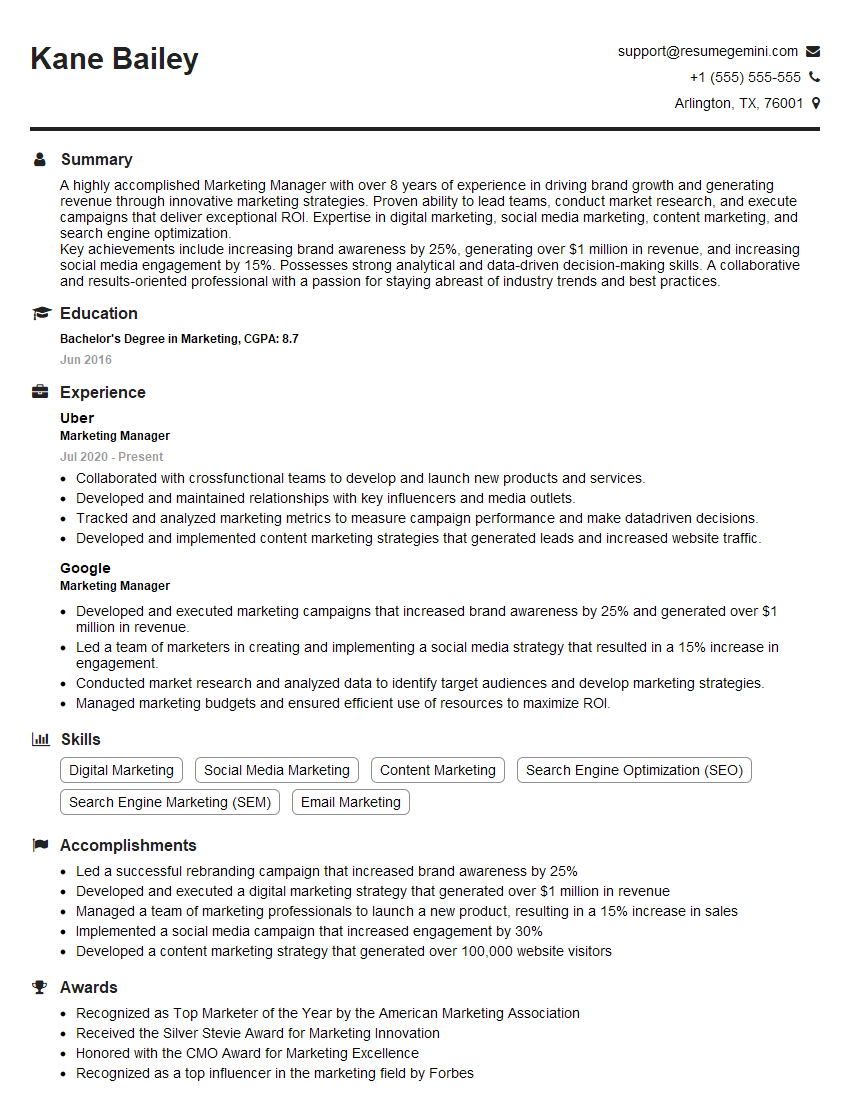
Marketing Manager Resume Sample

Production Coordinator Resume Sample
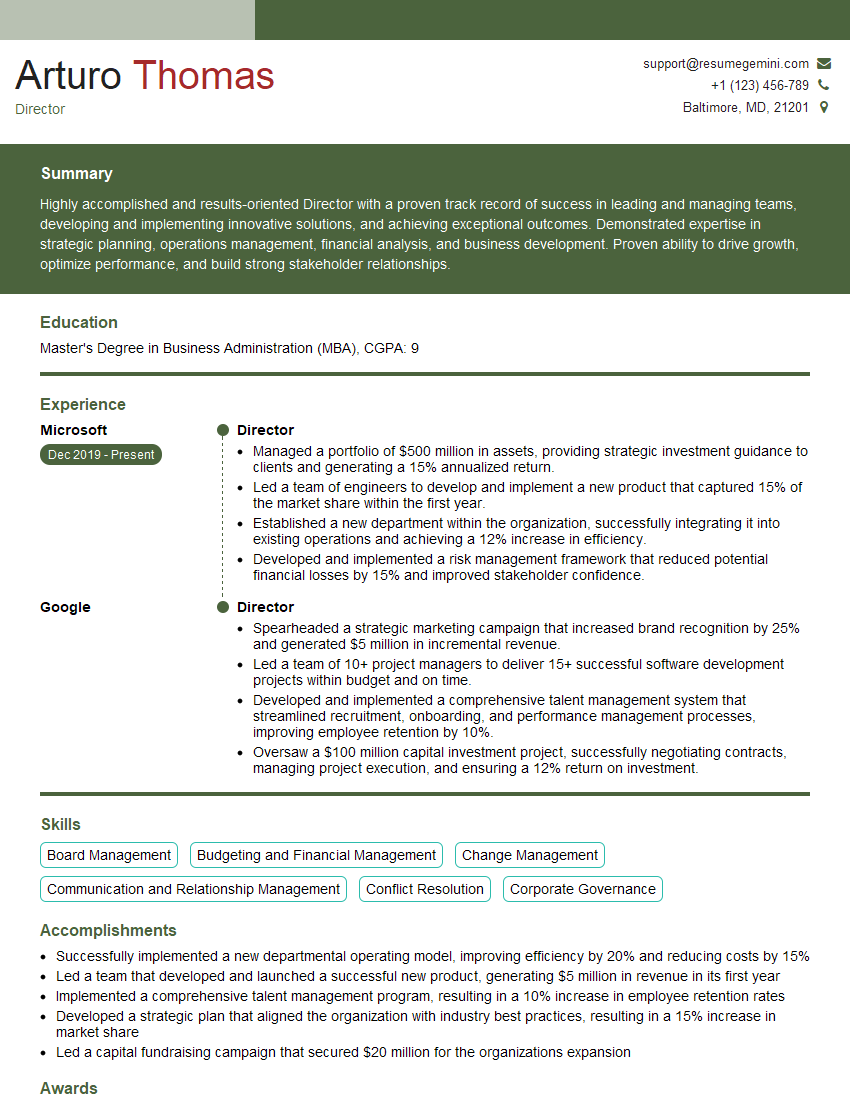
Director Resume Sample
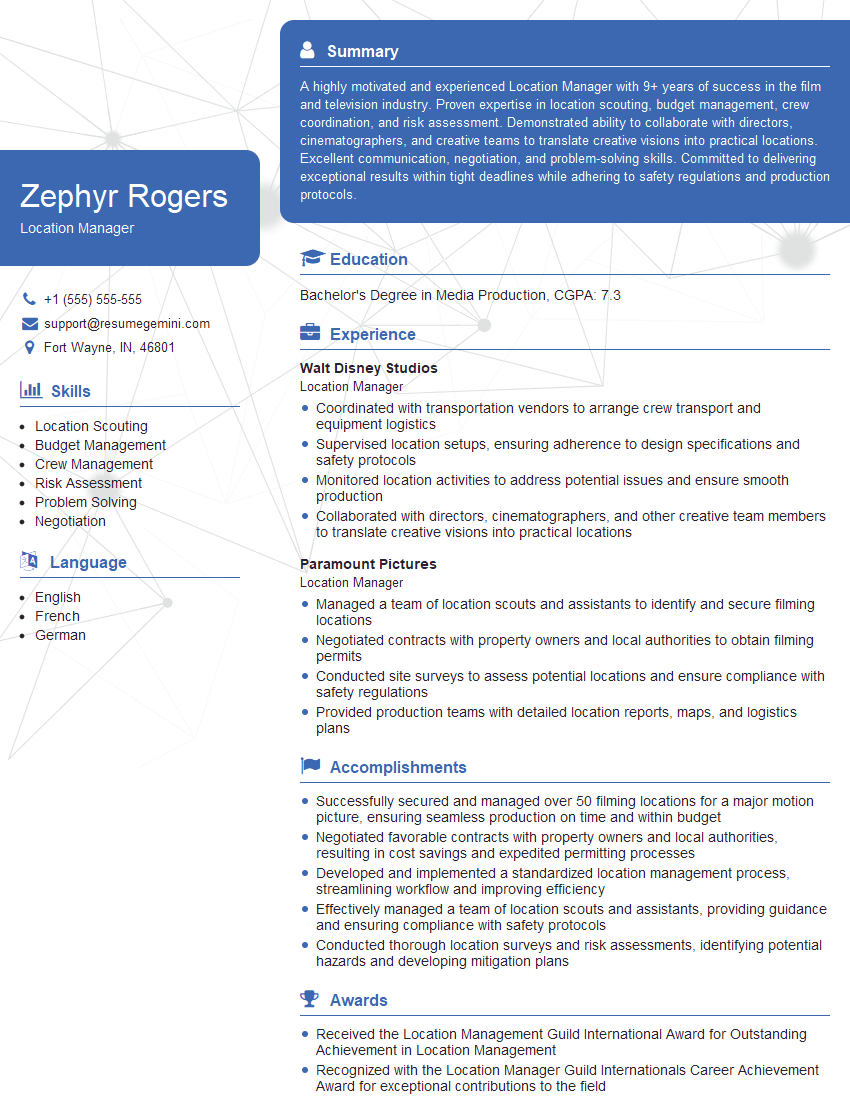
Location Manager Resume Sample
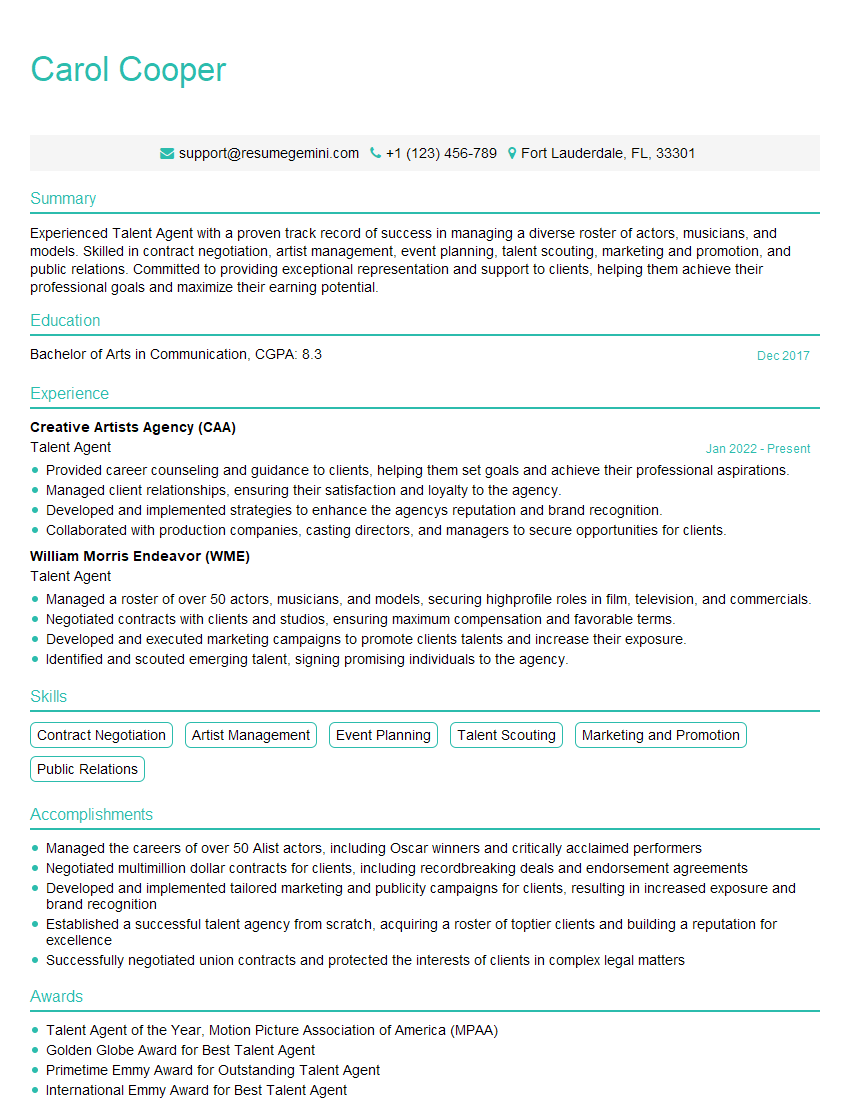
Talent Agent Resume Sample
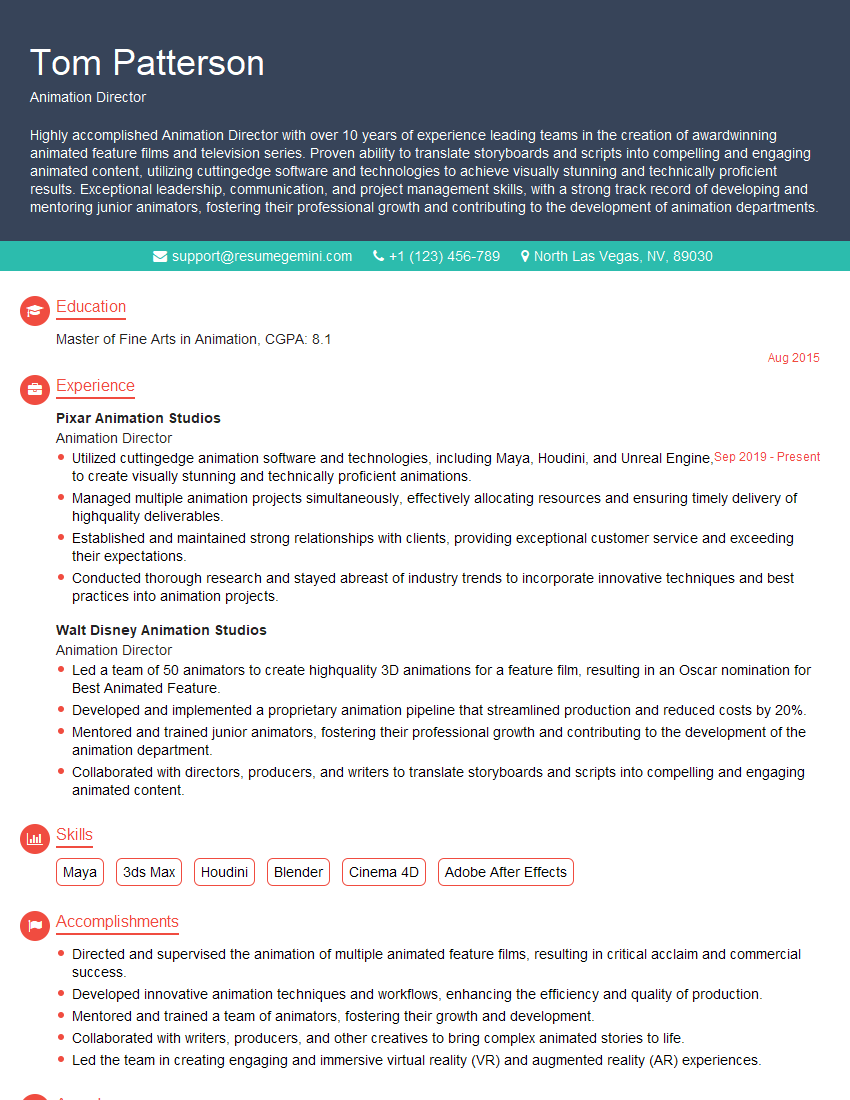
Animation Director Resume Sample
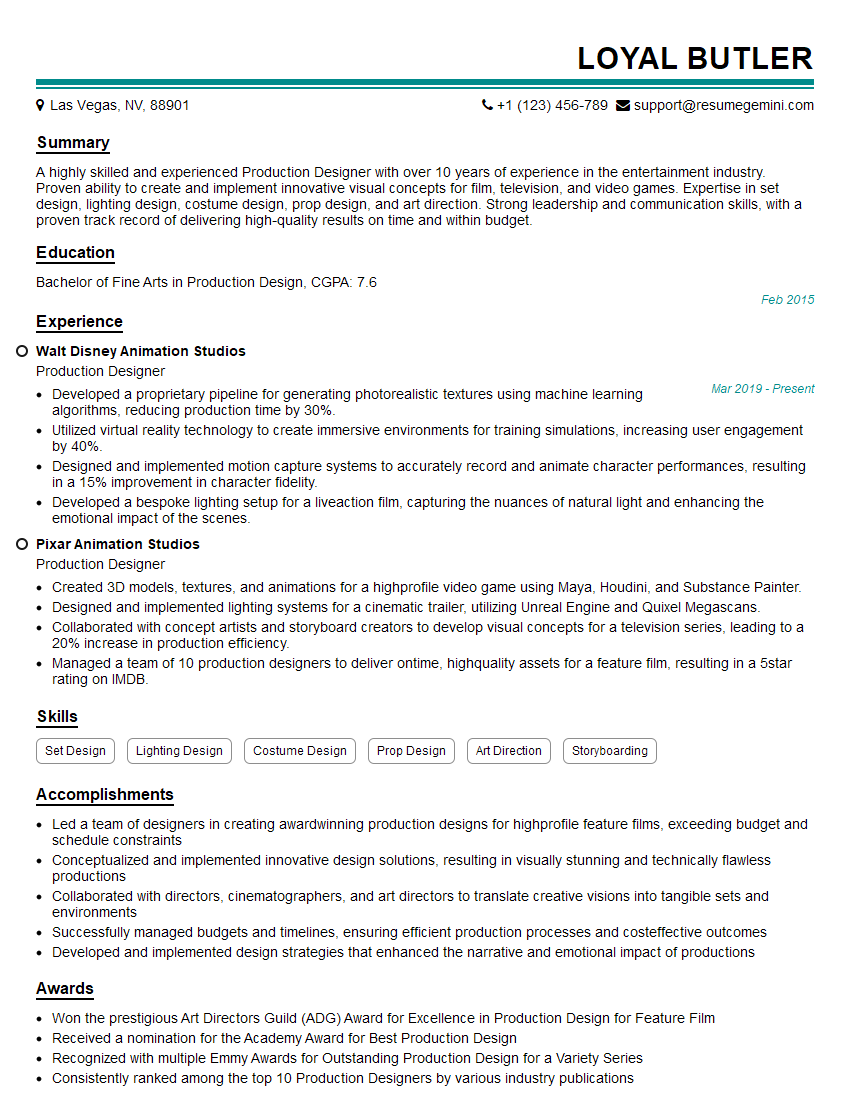
Production Designer Resume Sample
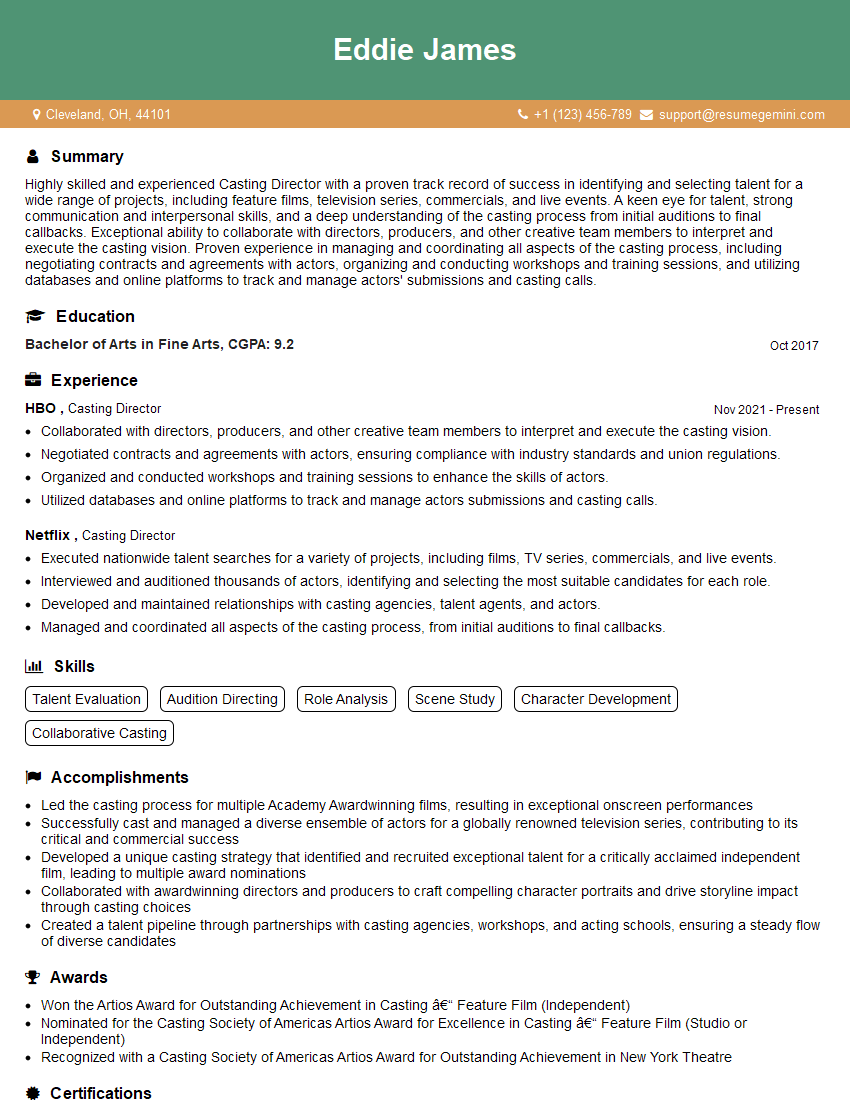
Casting Director Resume Sample
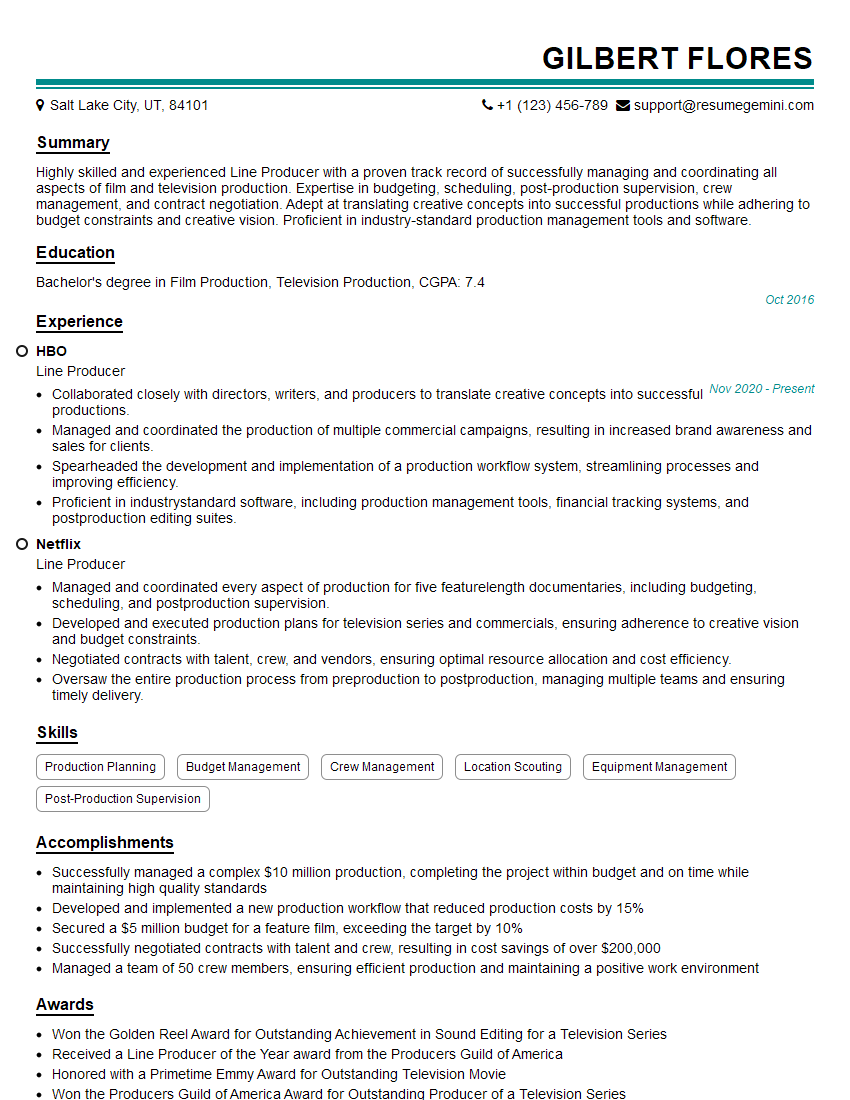
Line Producer Resume Sample
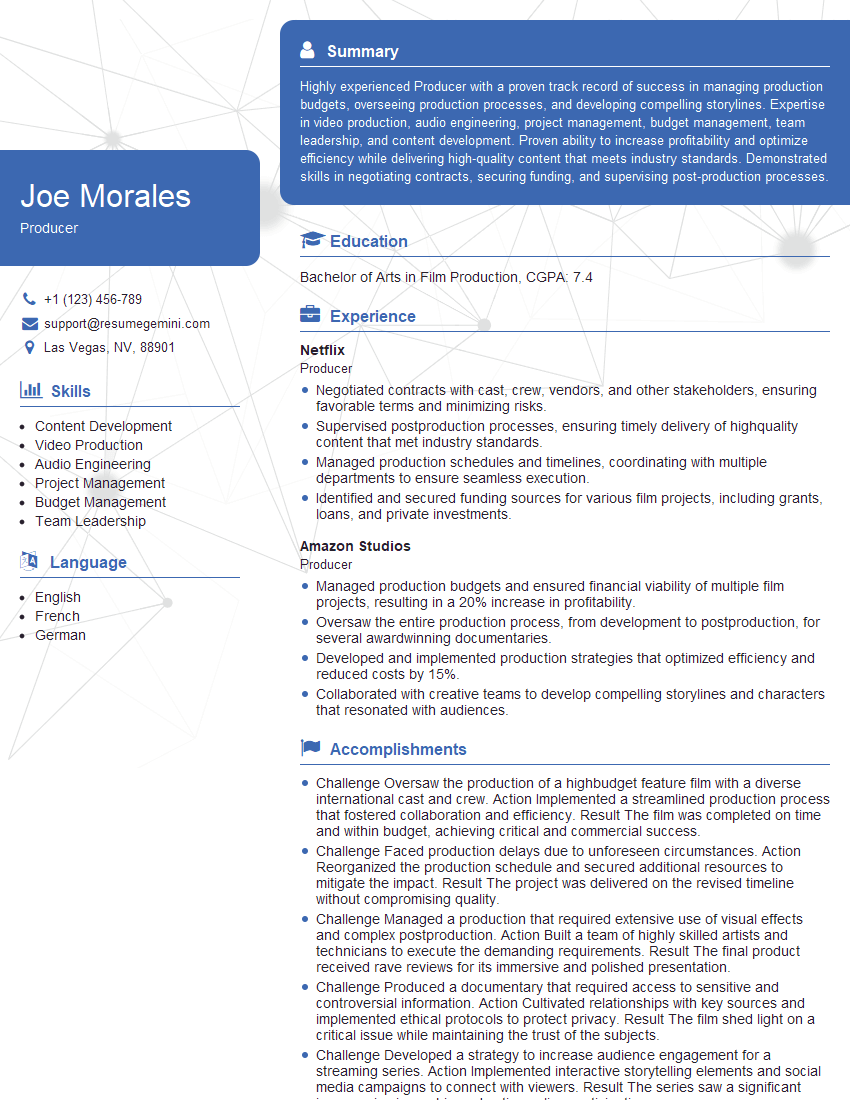
Producer Resume Sample
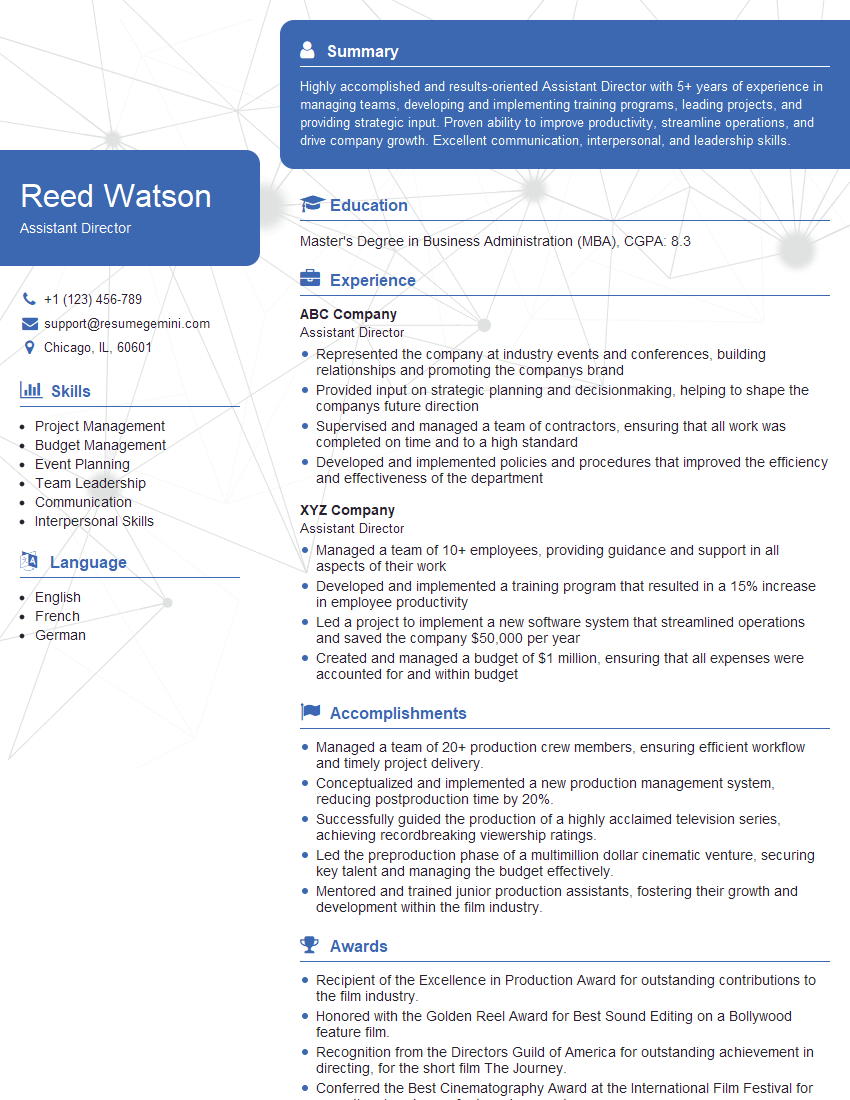
Assistant Director Resume Sample
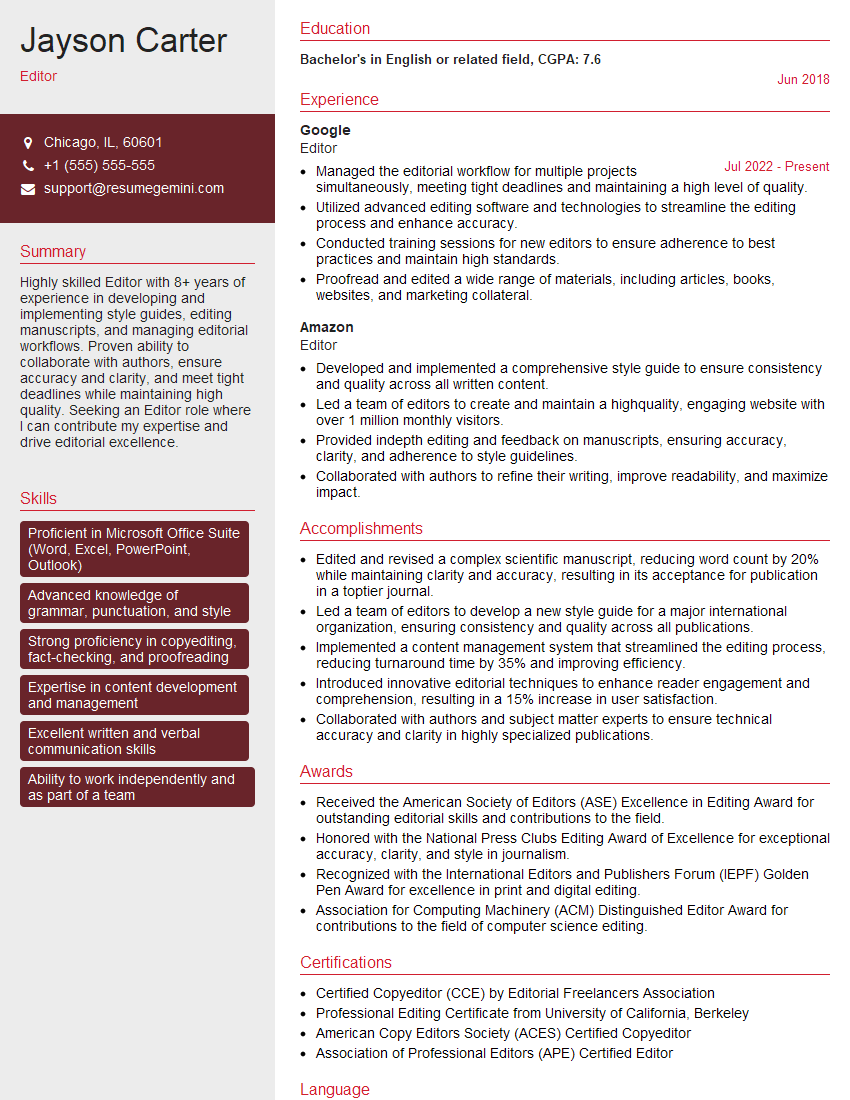
Editor Resume Sample
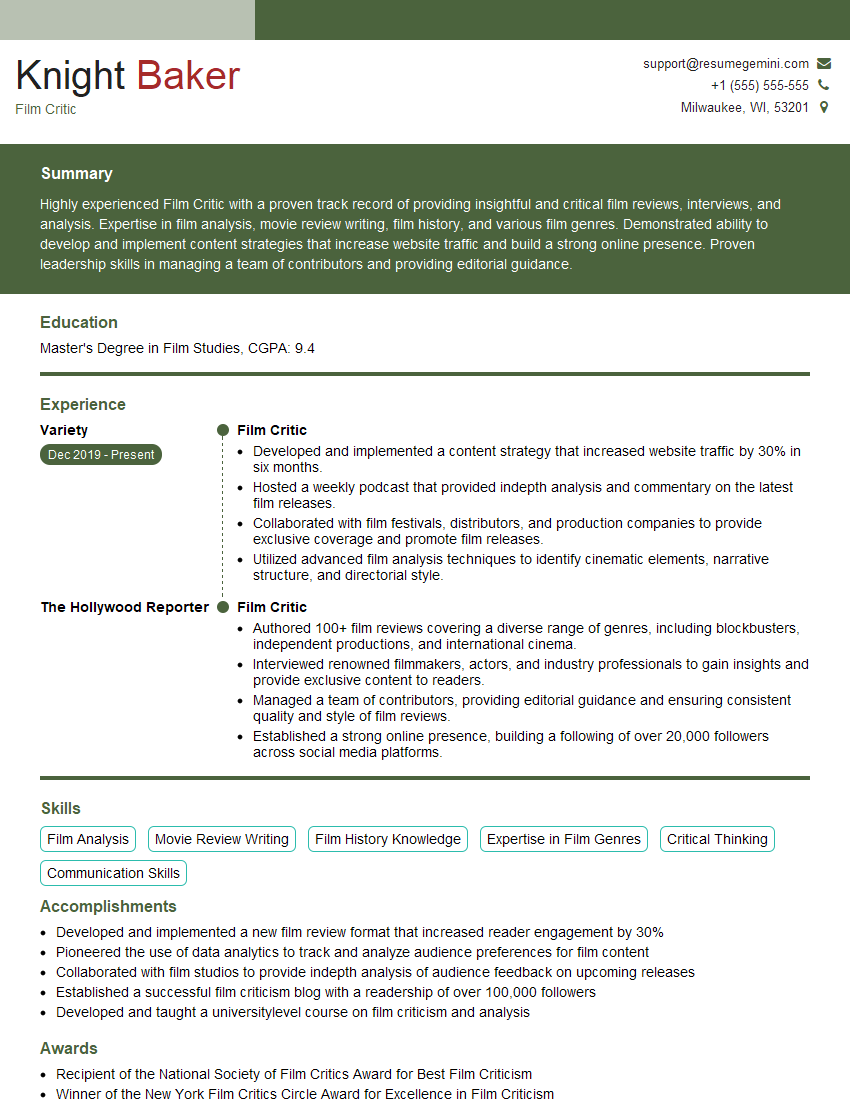
Film Critic Resume Sample
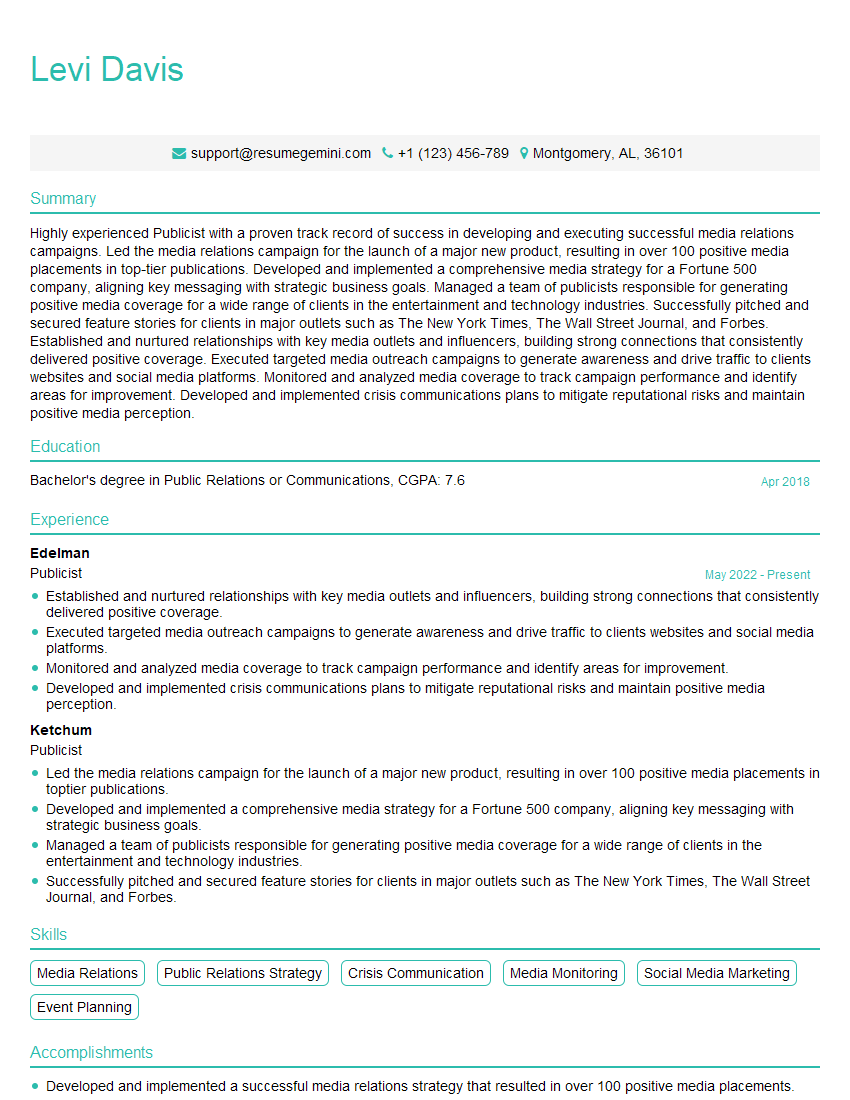
Publicist Resume Sample
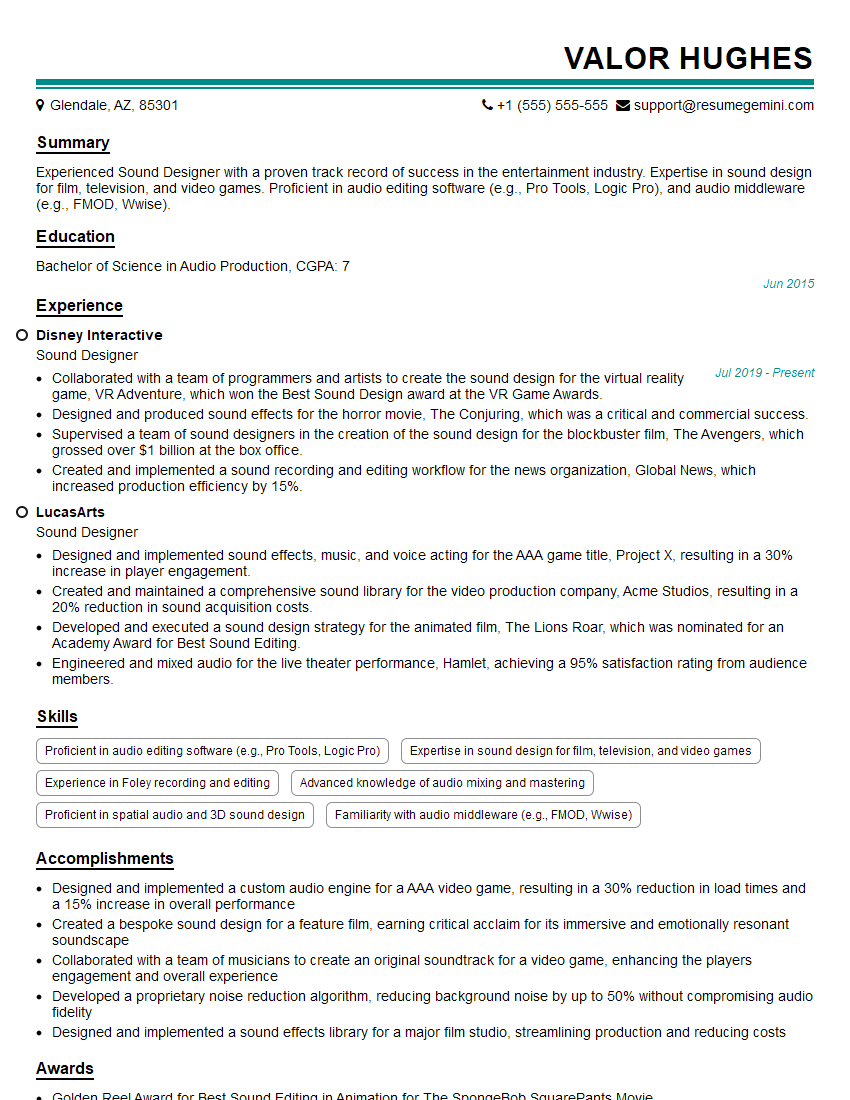
Sound Designer Resume Sample
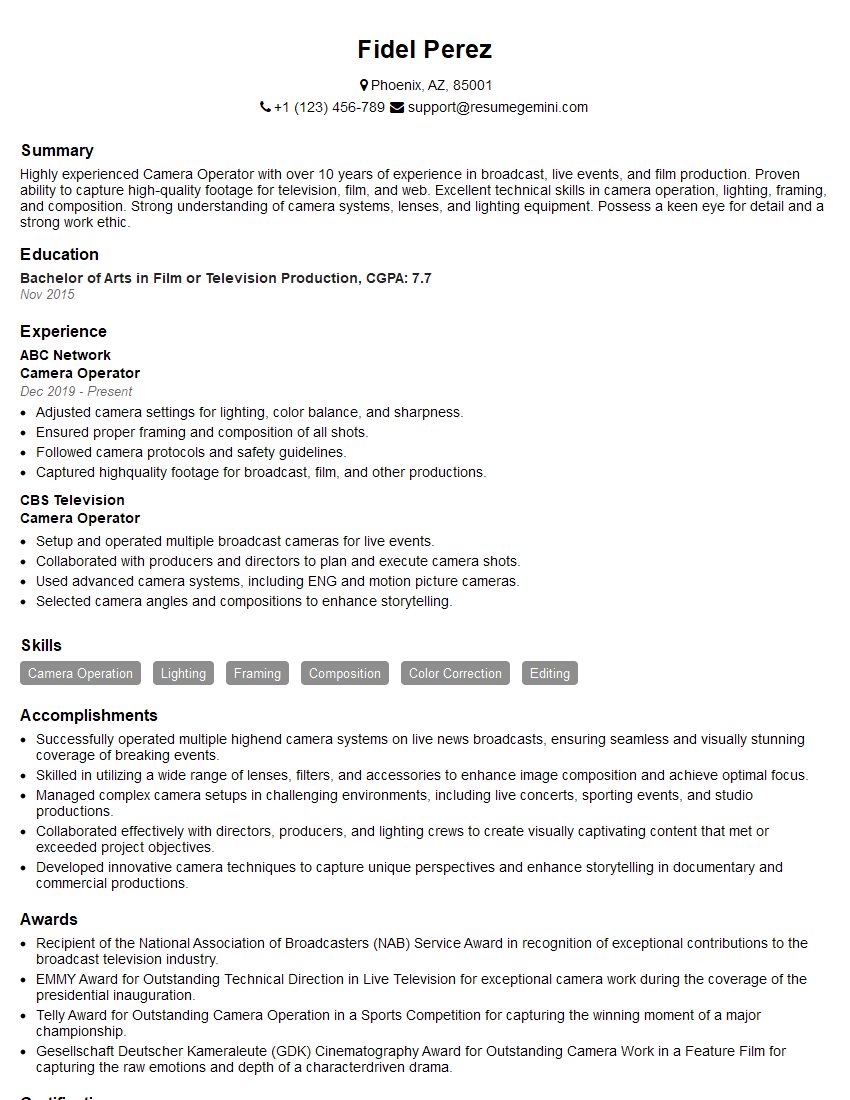
Camera Operator Resume Sample
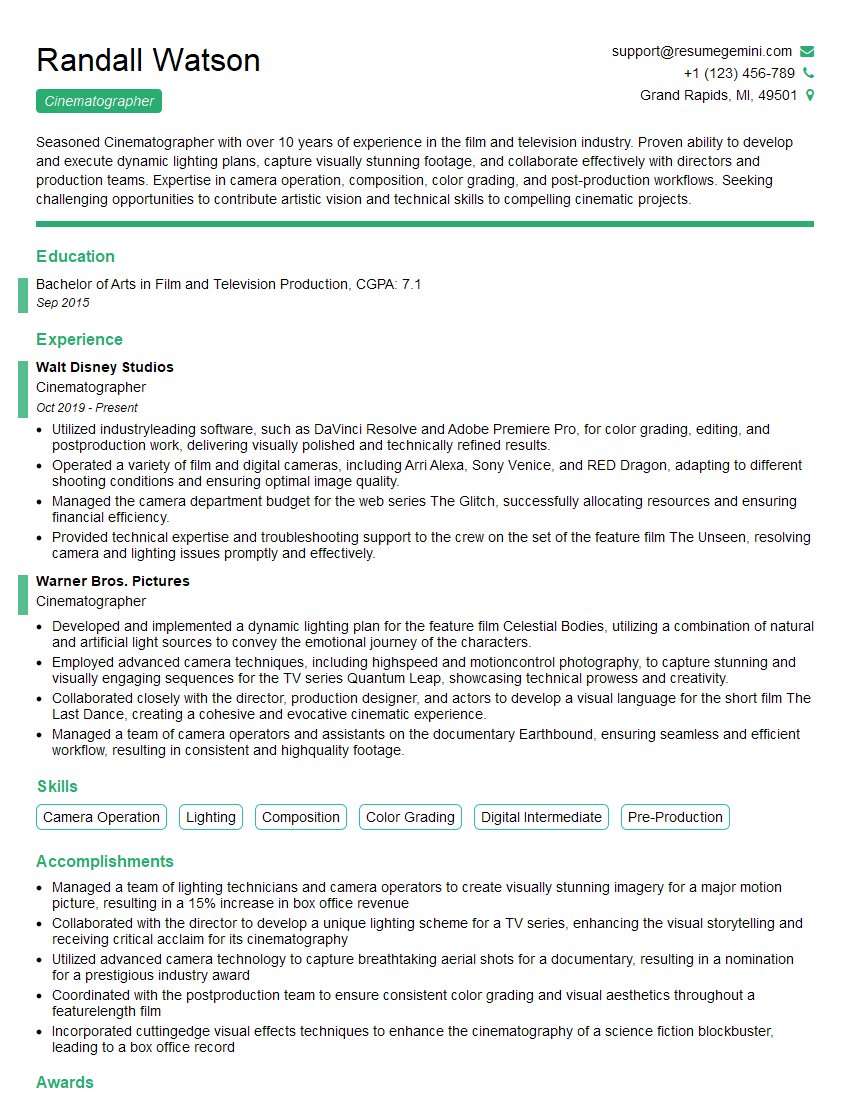
Cinematographer Resume Sample
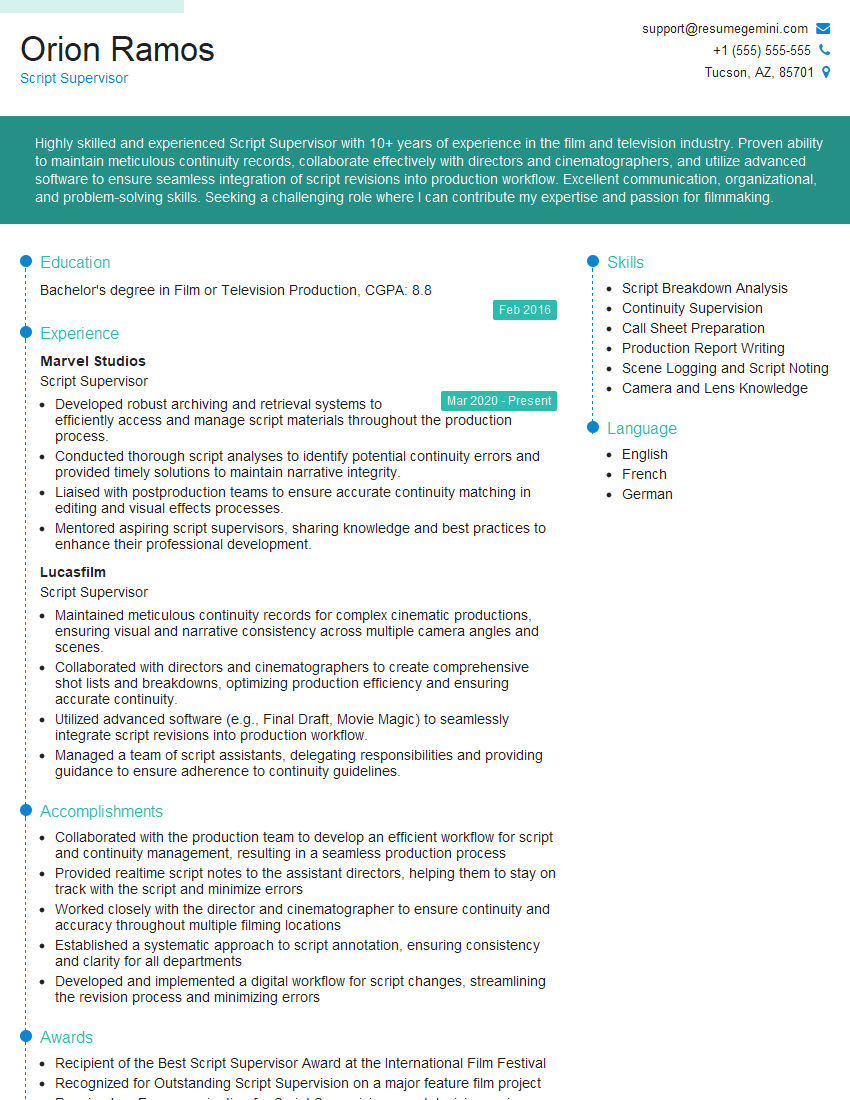
Script Supervisor Resume Sample
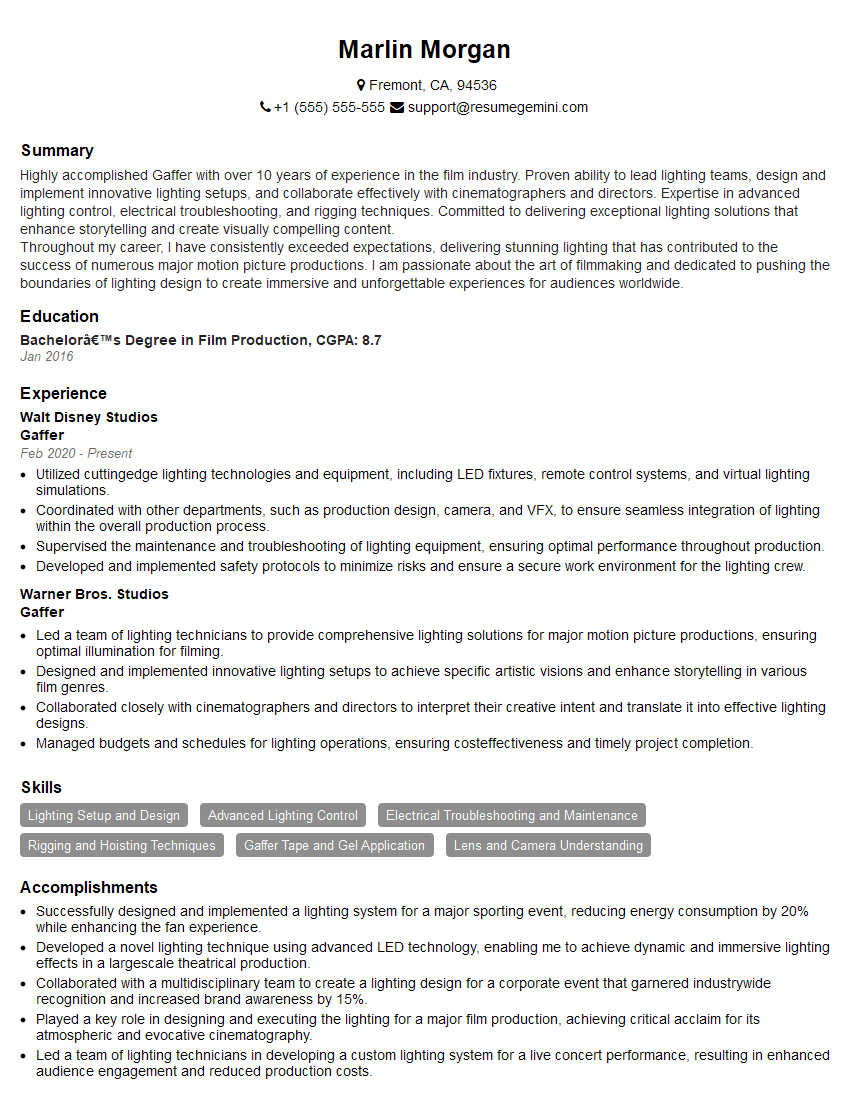
Gaffer Resume Sample
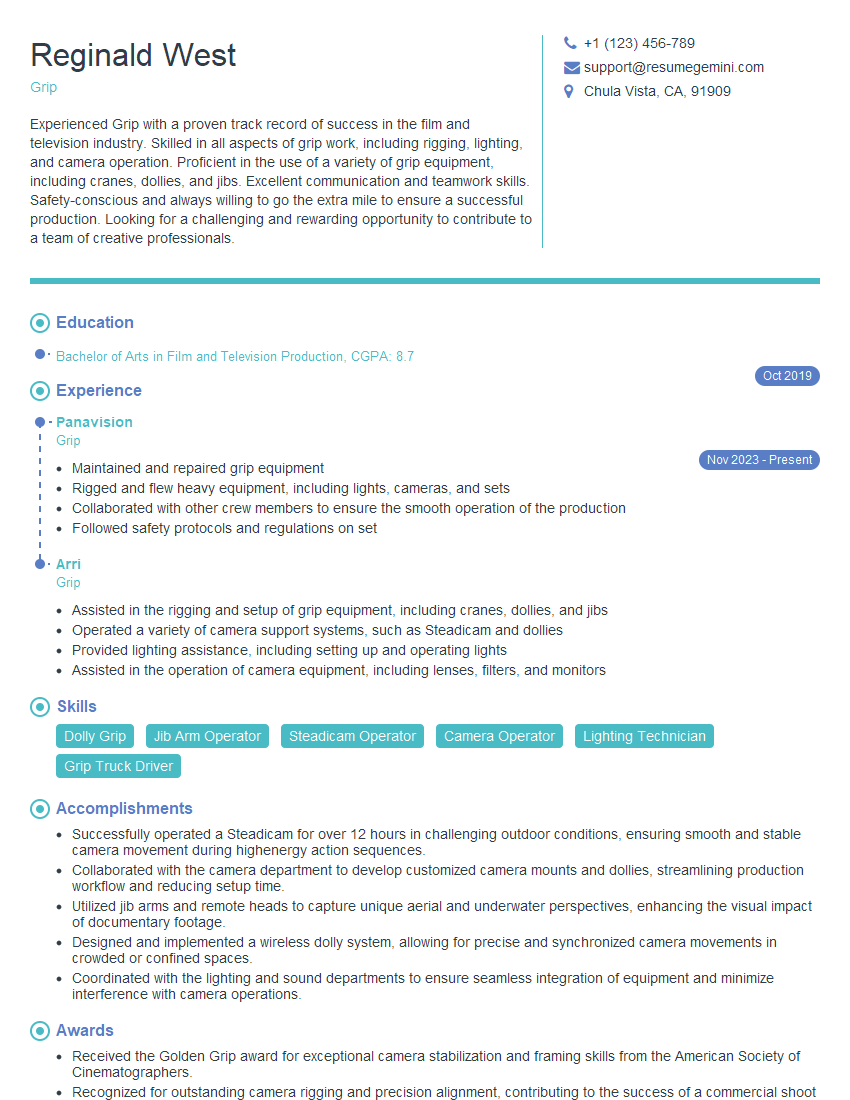
Grip Resume Sample
Explore more articles
Users Rating of Our Blogs
Share Your Experience
We value your feedback! Please rate our content and share your thoughts (optional).
What Readers Say About Our Blog
Very informative content, great job.
good