The right preparation can turn an interview into an opportunity to showcase your expertise. This guide to Roadway Design (Horizontal and Vertical Alignment) interview questions is your ultimate resource, providing key insights and tips to help you ace your responses and stand out as a top candidate.
Questions Asked in Roadway Design (Horizontal and Vertical Alignment) Interview
Q 1. Explain the difference between horizontal and vertical alignment in roadway design.
Horizontal and vertical alignments are fundamental components of roadway design, defining the path of a road in two dimensions. Think of it like drawing a road on a map: the horizontal alignment dictates the plan view – the twists and turns, curves, and straights – while the vertical alignment dictates the profile view – the ups and downs, grades, and vertical curves.
Horizontal alignment focuses on the plan or map view of the road, outlining the horizontal position of the centerline. This involves designing straight sections (tangents) and horizontal curves (circular or spiral). It primarily affects driver comfort and safety through factors like centrifugal force.
Vertical alignment focuses on the profile or side view, dictating the elevation changes along the centerline. This includes designing gradients (slopes) and vertical curves, transitioning between different grades. Key considerations here are sight distance and drainage.
Q 2. What are the key design considerations for horizontal curves?
Designing safe and comfortable horizontal curves requires careful attention to several factors:
- Design Speed: The speed at which the majority of vehicles are expected to travel. This is crucial because it directly impacts the required radius of the curve.
- Radius of Curve: The larger the radius, the gentler the curve and the safer it is at higher speeds. Smaller radii require lower design speeds.
- Superelevation (Banking): Tilting the roadway towards the inside of the curve to counteract centrifugal force. This significantly improves safety and comfort.
- Sight Distance: Ensuring sufficient visibility around the curve to allow drivers adequate time to react to obstacles or other vehicles. This often involves clearing sight obstructions.
- Transition Curves (Spiral Curves): These are used to gradually introduce the curvature of the circular curve, easing the transition for drivers and reducing the shock effect on the vehicle.
- Environmental Considerations: The design must consider the impact on the surrounding environment, including minimizing land disturbance and protecting natural features.
Q 3. How do you determine the appropriate radius for a horizontal curve?
Determining the appropriate radius for a horizontal curve is a crucial step in roadway design. It’s primarily governed by the design speed and the amount of superelevation. Several formulas are used depending on the design standards being followed, but the core principle is balancing safety and driver comfort.
A common approach is using a design equation that considers the design speed (V), superelevation (e), and side friction factor (f):
R = V^2 / (g(e + f))Where:
- R = radius of the curve
- V = design speed
- g = acceleration due to gravity (approximately 9.81 m/s²)
- e = superelevation
- f = side friction factor
The values for ‘e’ and ‘f’ are typically obtained from design standards and are based on factors such as the curve’s type and the expected traffic conditions. For example, a higher design speed will necessitate a larger radius. Similarly, a higher superelevation allows for a smaller radius at the same design speed.
Q 4. Describe different types of vertical curves and their applications.
Vertical curves are used to transition between two different roadway grades (slopes). There are two main types:
- Crest Vertical Curves: These are used where the road goes over a hill or summit, resulting in a concave downward curve. Sight distance is a major design consideration here.
- Sag Vertical Curves: These are used where the road goes into a valley or dip, resulting in a convex upward curve. Drainage is a major concern in sag curves, with the need to ensure proper water runoff.
Applications: Crest vertical curves improve sight distance, enhancing safety by allowing drivers to see oncoming vehicles or obstacles. Sag vertical curves, on the other hand, primarily manage drainage to prevent water ponding on the road surface, which could cause hydroplaning. They also play a role in headlight sight distance at night.
Q 5. What are the design criteria for vertical curves related to sight distance?
Sight distance is paramount when designing vertical curves, especially crest vertical curves. Insufficient sight distance can lead to accidents. Two primary sight distances are considered:
- Stopping Sight Distance (SSD): The minimum distance a driver needs to see an obstruction to be able to stop safely before colliding with it. This is influenced by design speed, reaction time, and deceleration rate.
- Passing Sight Distance (PSD): The distance a driver needs to safely overtake another vehicle. This involves both the driver’s ability to see oncoming traffic and the length of time required for overtaking maneuvers.
Design criteria typically dictate a minimum length of the vertical curve that ensures the required SSD or PSD is met, ensuring drivers have enough distance to react to potential hazards.
Q 6. How do you calculate the length of a vertical curve?
The length of a vertical curve is calculated to ensure adequate sight distance and a comfortable transition between grades. Several methods exist, but a common approach involves using formulas that relate curve length (L), design speed (V), grade difference (A), and the allowable rate of change of grade (K).
The formula is often expressed as:
L = (A * S^2) / KWhere:
- L = length of the vertical curve
- A = algebraic difference between the grades (in decimal)
- S = sight distance (SSD or PSD)
- K = rate of change of grade (expressed as a ratio)
The value of K is a design parameter specified by the relevant highway design standards. The length ‘L’ is calculated to provide the minimum sight distance required for safety. For example, a higher grade difference will require a longer curve length to ensure a gradual transition.
Q 7. Explain the concept of superelevation and its purpose.
Superelevation, also known as banking, is the practice of tilting the road surface towards the inside of a horizontal curve. Imagine a race track – the curves are banked to help cars navigate them at high speeds safely.
Purpose: Superelevation counteracts the centrifugal force acting on a vehicle traveling around a curve. Centrifugal force pushes the vehicle outwards, potentially causing it to skid or overturn. By banking the road, a component of the vehicle’s weight helps to oppose the centrifugal force, increasing stability and allowing for higher speeds around curves while maintaining safety.
The amount of superelevation is carefully calculated based on design speed and curve radius. There are typically limits on the maximum superelevation to prevent discomfort or excessive forces on vehicles.
Q 8. How do you design for proper drainage in roadway design?
Proper drainage is paramount in roadway design to prevent water damage to the pavement structure, ensure driver safety, and protect the environment. It involves a multifaceted approach encompassing both horizontal and vertical design elements.
Key Considerations:
- Cross Slopes (Superelevation): Roads are crowned, meaning they slope gently from the center to the edges (typically 2-4%). This directs water runoff towards the shoulders and ditches.
- Ditches and Swales: These are designed to collect and convey runoff water away from the roadway. The size and shape are determined by the drainage area, rainfall intensity, and soil type. Proper ditch design includes consideration of vegetation management to prevent clogging.
- Culverts and Pipes: These are used to convey water under the roadway, typically at low points or crossings. Their design involves hydraulic calculations to ensure adequate capacity during peak flow events. Proper sizing prevents backwater flooding and erosion.
- Inlets and Catch Basins: These structures intercept runoff from the roadway surface and direct it into the drainage system. They are strategically located to efficiently collect water and prevent ponding.
- Stormwater Management: Modern roadway design incorporates sustainable drainage systems (SuDS), aiming to reduce the volume and impact of stormwater runoff. This might include bioretention areas, infiltration basins, or permeable pavements.
Example: Designing a roadway in a hilly region requires careful consideration of cross slopes and the placement of culverts to manage higher volumes of runoff compared to a flat area.
Q 9. What are the common design standards and guidelines for roadway design?
Roadway design standards and guidelines vary by country, state, and even local jurisdiction. However, common themes include safety, functionality, and environmental considerations. Key design elements often governed by standards include:
- Geometric Design: This covers horizontal and vertical alignment (curves, grades), sight distance, lane widths, and intersection design. Standards like AASHTO (American Association of State Highway and Transportation Officials) provide detailed guidance.
- Pavement Design: This involves selecting appropriate pavement materials and thicknesses based on traffic volume, soil conditions, and climate. Design life and maintenance costs are crucial factors.
- Drainage Design: As mentioned previously, this focuses on managing stormwater runoff to prevent damage and ensure safety. Hydraulic calculations and hydrological data are essential.
- Environmental Considerations: Minimizing environmental impact through mitigation of habitat disruption, noise reduction, and air quality improvement is increasingly important. This is often regulated through environmental impact assessments (EIAs).
- Accessibility: Designs must comply with accessibility standards to accommodate people with disabilities, including curb ramps, accessible pedestrian signals, and appropriate crosswalk design.
These standards are often codified in design manuals and specifications that provide detailed requirements and calculation procedures. Non-compliance can lead to project delays, cost overruns, and safety hazards.
Q 10. Describe your experience with CAD software used for roadway design.
I have extensive experience using various CAD software packages for roadway design, most notably AutoCAD Civil 3D and MicroStation. My proficiency encompasses all aspects of the design process, from initial surveying data import to the creation of detailed construction drawings.
Specific Skills:
- Surface Modeling: Creating accurate digital terrain models (DTMs) from survey data, crucial for designing the vertical alignment and drainage.
- Alignment Design: Developing horizontal and vertical alignments, including curve design, superelevation, and grading.
- Cross-Sectioning: Generating cross-sections to visualize the roadway geometry and design drainage features.
- Drainage Design: Modeling drainage systems using CAD software to ensure proper hydraulic capacity and to analyze potential flooding.
- Quantity Takeoffs: Calculating quantities of materials needed for construction using CAD software’s analytical capabilities.
- Plan Production: Producing detailed construction drawings, including plans, profiles, cross-sections, and details.
I am proficient in using these tools to collaborate effectively with other design professionals, ensuring a coordinated and efficient design process.
Q 11. How do you incorporate environmental considerations into roadway design?
Incorporating environmental considerations is crucial for responsible roadway design. This goes beyond simply complying with regulations; it involves proactively minimizing environmental impacts and seeking sustainable solutions. Key aspects include:
- Habitat Preservation: Identifying and avoiding sensitive ecological areas, such as wetlands and endangered species habitats, whenever possible. Mitigation measures, such as habitat restoration or creation of wildlife corridors, are employed when unavoidable impacts occur.
- Water Quality Protection: Implementing best management practices (BMPs) to reduce stormwater pollution, including the use of SuDS mentioned earlier. This minimizes the impact of runoff on water bodies.
- Air Quality Management: Considering the impact of vehicle emissions on air quality, potentially using design strategies to reduce vehicle idling or encourage alternative transportation modes.
- Noise Pollution Mitigation: Using noise barriers, sound absorbing pavements, and optimized roadway alignment to minimize noise pollution on nearby communities.
- Visual Impact Assessment: Evaluating the visual impact of the roadway on the landscape and incorporating design elements to minimize visual intrusion. This might include landscaping and the use of natural materials.
Example: A project near a river would necessitate a detailed assessment of potential impacts on the river ecosystem, and the implementation of measures to prevent erosion and water pollution.
Q 12. Explain your experience with hydraulic modeling for roadway drainage.
Hydraulic modeling is a critical aspect of roadway drainage design. I have extensive experience using hydraulic modeling software, such as HEC-RAS (Hydrologic Engineering Center’s River Analysis System) and SWMM (Storm Water Management Model), to analyze the flow of water in drainage systems. This allows for the design of efficient and safe drainage infrastructure.
My experience includes:
- Model Calibration and Validation: Using observed flow data to calibrate and validate the hydraulic models, ensuring accuracy and reliability.
- Floodplain Analysis: Determining the extent of potential flooding under various rainfall scenarios, allowing for informed design decisions to mitigate flood risks.
- Culvert and Pipe Sizing: Using hydraulic modeling to determine the appropriate size and type of culverts and pipes needed to convey stormwater flows.
- Design Optimization: Using modeling to explore various design alternatives and optimize the drainage system for cost-effectiveness and efficiency.
- Reporting and Documentation: Preparing comprehensive reports documenting the hydraulic analysis and presenting the results to stakeholders.
Hydraulic modeling is not simply a technical exercise; it’s a crucial tool for making informed decisions to ensure the safety and longevity of roadway infrastructure while minimizing environmental impacts.
Q 13. How do you manage conflicts between different design elements in roadway design?
Conflicts between design elements are inevitable in roadway projects. Effective conflict resolution requires a collaborative approach, incorporating input from various disciplines and stakeholders. Common strategies include:
- Iterative Design Process: Using an iterative process where different design aspects are reviewed and adjusted as needed. This allows for early identification and resolution of conflicts.
- Design Coordination Meetings: Holding regular meetings involving all relevant disciplines (geometric design, structural, drainage, environmental) to discuss potential conflicts and identify solutions.
- 3D Modeling and Visualization: Utilizing 3D modeling software to visualize the design and identify clashes between different elements, like utilities and road structures.
- Trade-off Analysis: In cases where conflicts cannot be fully resolved, performing a trade-off analysis to weigh the advantages and disadvantages of different design options.
- Stakeholder Consultation: Engaging with stakeholders (local communities, utility companies) to understand their concerns and incorporate their input into the design process. This helps mitigate potential conflicts and build consensus.
Example: A conflict between a proposed alignment and a protected wetland might necessitate a design adjustment, potentially involving the use of bridges or culverts to minimize the impact on the wetland ecosystem.
Q 14. What is the significance of sight distance in roadway design?
Sight distance is a crucial safety consideration in roadway design, referring to the distance a driver can see ahead under various conditions. Sufficient sight distance is vital for drivers to react to obstacles or changing conditions, preventing accidents. Several types of sight distance are considered:
- Stopping Sight Distance (SSD): The minimum distance needed for a driver to stop safely when encountering an unexpected obstacle. This accounts for perception-reaction time and braking distance.
- Passing Sight Distance (PSD): The distance needed for a driver to safely overtake another vehicle. This takes into account the length of the overtaking vehicle, the speed of both vehicles, and the time required for a safe maneuver.
- Intersection Sight Distance (ISD): The distance needed for drivers to see approaching vehicles at intersections. This ensures drivers have enough time to react and avoid collisions.
Factors Affecting Sight Distance:
- Vertical Alignment: Grades and curves can significantly impact sight distance. Crest vertical curves require specific design considerations to ensure adequate sight distance over the crest.
- Horizontal Alignment: Sharp horizontal curves restrict sight distance, necessitating appropriate curve design and potential sight distance improvements, such as clearing vegetation.
- Obstructions: Trees, buildings, or other obstructions can limit sight distance, necessitating the removal or mitigation of these obstacles.
Sight distance calculations are critical in roadway design, influencing the design of horizontal and vertical alignments, intersection geometry, and the placement of signage and other traffic control devices.
Q 15. Describe your experience with design software such as Civil3D or MicroStation.
My expertise in roadway design is deeply intertwined with proficiency in design software. I’ve extensively used both Autodesk Civil 3D and Bentley MicroStation for over eight years, leveraging their capabilities across the entire design lifecycle. In Civil 3D, I’m adept at creating surface models from survey data, designing horizontal and vertical alignments, generating cross-sections, and producing detailed construction plans. I utilize its powerful features like corridor modeling to efficiently manage complex design elements and automate tasks. My experience with MicroStation includes similar functionalities, particularly its strengths in handling large datasets and collaborative design environments. I’m comfortable using both software packages to produce accurate, high-quality deliverables, adapting my approach based on project requirements and client preferences. For instance, on a recent highway project, Civil 3D’s corridor modeling significantly streamlined the design process, allowing for efficient analysis of earthwork volumes and optimal alignment adjustments. In another project involving a complex urban interchange, MicroStation’s powerful CAD features proved invaluable for detailed design and coordination with other disciplines.
Career Expert Tips:
- Ace those interviews! Prepare effectively by reviewing the Top 50 Most Common Interview Questions on ResumeGemini.
- Navigate your job search with confidence! Explore a wide range of Career Tips on ResumeGemini. Learn about common challenges and recommendations to overcome them.
- Craft the perfect resume! Master the Art of Resume Writing with ResumeGemini’s guide. Showcase your unique qualifications and achievements effectively.
- Don’t miss out on holiday savings! Build your dream resume with ResumeGemini’s ATS optimized templates.
Q 16. How do you handle changes in design requirements during a project?
Handling design changes is a crucial aspect of roadway projects. My approach is systematic and collaborative. First, I thoroughly analyze the change request, understanding its implications for the overall design and project schedule. This often involves discussions with stakeholders to clearly define the scope of the modifications. Next, I evaluate the impact on existing design elements, considering potential conflicts and downstream consequences. Using parametric modeling techniques in Civil 3D or MicroStation, I can quickly assess the effects of modifications on various aspects such as alignment, grading, drainage, and structures. If the changes are significant, I might initiate a formal change order process, documenting the adjustments, associated costs, and schedule implications. Through transparent communication and proactive problem-solving, I ensure that design changes are integrated smoothly and efficiently, minimizing disruptions and maintaining project quality. For example, on a recent project, a late change in the location of a utility easement required re-routing a section of the roadway. Using parametric modeling, I quickly adapted the design and coordinated with the utility company, minimizing project delays.
Q 17. What are the common challenges encountered in roadway design?
Roadway design presents numerous challenges. One of the most common is balancing competing design objectives. For instance, minimizing environmental impact might conflict with optimizing traffic flow or minimizing construction costs. Right-of-way constraints, particularly in urban areas, often necessitate creative solutions. Another major challenge is managing stakeholder expectations. Balancing the needs of residents, businesses, and various government agencies requires effective communication and negotiation. Technical challenges include dealing with complex terrain, designing for varying traffic volumes and speeds, and ensuring the design meets accessibility standards. Furthermore, integrating sustainable design principles, such as minimizing carbon footprint and promoting alternative transportation modes, adds another layer of complexity. For example, designing a roadway through a sensitive wetland area necessitates careful consideration of environmental regulations and mitigation strategies.
Q 18. Describe your experience with public presentations or stakeholder engagement in roadway design projects.
Public presentations and stakeholder engagement are essential parts of my workflow. I have extensive experience presenting design concepts to diverse audiences, including community members, government officials, and other project stakeholders. My presentations are designed to be clear, concise, and visually engaging, using maps, diagrams, and 3D renderings to illustrate key design features and address potential concerns. I actively encourage audience participation and feedback, fostering a collaborative environment where constructive criticism is valued. I’ve found that utilizing interactive tools and online platforms during virtual presentations greatly enhances audience engagement. For instance, on a recent project, an online survey was used to gather feedback on different design alternatives, improving community buy-in and leading to a better final product. Active listening and responding effectively to public comments are crucial for successful engagement.
Q 19. Explain the importance of geometric design in roadway safety.
Geometric design is paramount for roadway safety. It encompasses all aspects of the roadway’s physical layout, including horizontal alignment (curves), vertical alignment (grades), cross-section design (lanes, shoulders), and sight distance. Proper geometric design minimizes the risk of crashes by providing drivers with adequate time and space to react to unexpected situations. For instance, appropriate curve radii and superelevation (banking) reduce the risk of run-off-road crashes. Sufficient sight distance, achieved through appropriate design of vertical and horizontal alignments, allows drivers to see obstacles in time to avoid collisions. Well-designed cross-sections provide adequate space for vehicles and accommodate various user types, minimizing conflicts. Standards like AASHTO’s A Policy on Geometric Design of Highways and Streets provide guidelines for designing safe and efficient roadways. Failure to adhere to these standards can result in higher crash rates and increased severity of accidents.
Q 20. How do you ensure the design meets accessibility standards?
Ensuring accessibility is a critical aspect of roadway design. My designs adhere to guidelines established by the Americans with Disabilities Act (ADA) and other relevant accessibility standards. This includes providing accessible curb ramps, crosswalks, and pedestrian facilities. I incorporate features such as tactile paving at intersections to aid visually impaired pedestrians. Adequate sidewalk widths, clear signage, and appropriate lighting are also key elements of accessible design. Throughout the design process, I consult accessibility guidelines and consider the needs of all users, including pedestrians, cyclists, and individuals with disabilities. For example, when designing an intersection, I’d ensure that curb ramps meet ADA requirements for slope and width, and that sufficient space is provided for wheelchair users to safely navigate the crossing. Regular review of design plans against accessibility checklists is integral to this process.
Q 21. What is your experience with different pavement types and their selection criteria?
I have experience with a variety of pavement types, including asphalt concrete, Portland cement concrete (PCC), and various stabilized materials. The selection of pavement type depends on several factors, including traffic volume and type, environmental conditions (climate, soil type), cost considerations, and desired lifespan. Asphalt concrete is commonly used for its flexibility, relatively low initial cost, and ease of construction and maintenance. PCC offers greater durability and longer lifespan but typically has higher initial costs. Stabilized materials, like soil-cement or lime-treated base courses, are often used in base layers to improve the structural capacity of the pavement. The selection process typically involves a pavement design analysis, considering factors like traffic loading, subgrade strength, and climate data. Software such as AASHTOWare Pavement ME Design is often employed to determine the appropriate pavement structure and material specifications to meet performance requirements. For instance, in a high-traffic area with heavy truck loads, PCC might be preferred for its superior load-bearing capacity, while in a low-traffic residential area, asphalt concrete might be a more cost-effective choice.
Q 22. How do you incorporate traffic volume and speed data in your design process?
Traffic volume and speed data are fundamental to roadway design. They dictate the capacity and level of service a road needs to provide. We use this data to determine the number of lanes, the design speed, and the appropriate geometric design elements.
For instance, a high-volume, high-speed highway requires wider lanes, longer passing sight distances, and gentler curves compared to a low-volume residential street. We typically use traffic counts (Average Annual Daily Traffic or AADT) and speed studies to establish these parameters. Software like HCS (Highway Capacity Software) helps analyze this data and predict future traffic conditions, allowing us to design for future growth and avoid bottlenecks.
In practice, I might use AADT data to justify the need for additional lanes or an improved interchange design. Speed studies help determine appropriate curve radii and sight distances to ensure driver safety at the design speed. These data points are crucial for justifying design choices to stakeholders and ensuring the project meets performance expectations.
Q 23. What is the role of geometric design in reducing traffic accidents?
Geometric design plays a crucial role in accident reduction. By carefully designing horizontal and vertical alignments (curves and grades), sight distances, and cross-sectional elements (lane widths, shoulders, medians), we can create a safer driving environment.
For example, proper superelevation on curves helps vehicles navigate turns at higher speeds safely by counteracting centrifugal force. Adequate sight distances at intersections and along curves prevent collisions caused by obstructed views. Wider lanes and shoulders provide more space for driver error and reduce the severity of crashes. Clear and consistent pavement markings also improve driver guidance and reduce confusion. In essence, good geometric design anticipates driver behavior and minimizes the potential for hazardous situations.
I always prioritize designing for the 85th percentile driver—that is, designing for the driver who is slightly above average in their capabilities. This approach accounts for driver error while not sacrificing efficiency for the average or better drivers. Ultimately, a well-designed roadway is inherently safer, reducing the likelihood and severity of accidents.
Q 24. How familiar are you with AASHTO design guidelines?
I’m very familiar with AASHTO (American Association of State Highway and Transportation Officials) design guidelines. They are the industry standard for roadway design in the United States and form the basis of many of my design decisions. I routinely reference the AASHTO Green Book (A Policy on Geometric Design of Highways and Streets) and other AASHTO publications for guidance on design elements such as horizontal and vertical alignment, sight distances, intersection design, and pavement markings.
AASHTO provides a framework for best practices, including safety considerations, design speed criteria, and design standards for various road types. My proficiency extends to understanding the rationale behind these guidelines and adapting them to specific project constraints and local contexts. I am comfortable interpreting and applying the design criteria to different scenarios and justifying any deviations from the standard guidelines based on sound engineering principles and project-specific needs.
Q 25. Describe your approach to optimizing roadway design for cost-effectiveness.
Optimizing roadway design for cost-effectiveness requires a balanced approach. It’s not just about minimizing initial construction costs but also considering life-cycle costs, including maintenance and potential future upgrades. My approach involves several key steps:
- Value Engineering: This involves critically evaluating all design aspects to identify potential cost savings without compromising safety or functionality. For example, we might explore using alternative construction materials or simplifying the design of drainage systems.
- Early Stakeholder Engagement: Involving stakeholders (local communities, environmental agencies, and utility companies) early in the design process helps avoid costly revisions later on.
- Computer Modeling and Simulation: Software tools allow for comprehensive cost estimation and analysis of different design alternatives, helping to identify the most cost-effective solution.
- Prioritization of Design Features: Focusing on essential design features first and phasing in less critical elements later can minimize upfront costs.
For example, in one project, by strategically shifting the alignment slightly, we were able to reduce the amount of earthwork needed, resulting in significant cost savings.
Q 26. Explain how you ensure compliance with local regulations and codes.
Compliance with local regulations and codes is paramount. I begin by thoroughly researching all applicable regulations, including those at the state, county, and municipal levels. This includes reviewing zoning ordinances, building codes, environmental regulations, and any specific design standards adopted by the local authorities.
Throughout the design process, I meticulously check that all aspects of the design adhere to these regulations. This might involve incorporating specific requirements for pavement design, drainage systems, landscaping, and accessibility features. I document all compliance efforts, and I regularly coordinate with relevant agencies to ensure that the design meets all approval requirements. Non-compliance can lead to significant delays and costs, so proactive compliance is crucial.
Q 27. How do you use design software to perform design checks and analysis?
I utilize various design software packages for design checks and analysis. These include:
- Civil3D: For creating detailed roadway designs, including horizontal and vertical alignments, cross-sections, and earthwork calculations.
- OpenRoads Designer: For similar purposes as Civil3D, offering a comprehensive suite of tools for roadway design and analysis.
- HCS (Highway Capacity Software): To analyze traffic flow and determine the level of service provided by the design.
- Geopak: For various aspects of civil engineering design, including drainage and utility modeling.
These software packages allow me to perform automated checks for compliance with design standards, analyze the geometric design for safety, and simulate traffic flow under various conditions. The results of these analyses inform design iterations and ensure that the final design meets performance criteria.
Q 28. Describe a challenging roadway design project and how you overcame the difficulties.
One challenging project involved designing a new highway section through a mountainous region with steep slopes and environmentally sensitive areas. The primary difficulties included minimizing environmental impact, managing challenging terrain, and adhering to stringent safety standards while staying within budget.
To overcome these difficulties, we employed a multidisciplinary approach. We collaborated closely with environmental consultants to develop mitigation strategies and minimize the project’s footprint. We utilized advanced 3D modeling to analyze different alignment options, optimizing the design to minimize earthwork and reduce the impact on sensitive habitats. We also employed innovative construction techniques to minimize disruptions during construction. The successful completion of this project demonstrated the importance of meticulous planning, stakeholder collaboration, and the application of advanced technologies in navigating complex design challenges.
Key Topics to Learn for Roadway Design (Horizontal and Vertical Alignment) Interview
- Horizontal Alignment: Understanding design elements like curves (simple, compound, reverse), tangents, and their impact on sight distance, superelevation, and cross-sectional design.
- Vertical Alignment: Mastering the principles of grades, vertical curves (crest and sag), and their influence on sight distance, driver comfort, and drainage design. Practical application includes calculating curve lengths and grades.
- Geometric Design Standards: Familiarity with AASHTO (American Association of State Highway and Transportation Officials) or other relevant design standards and their application in real-world projects.
- Sight Distance Calculations: Understanding and applying various sight distance formulas (stopping sight distance, passing sight distance) and their implications for safe roadway design.
- Superelevation and Transition Curves: Knowing how to design and calculate superelevation transitions to ensure driver safety and comfort on horizontal curves.
- Drainage Design Considerations: Understanding the integration of drainage design with horizontal and vertical alignment to prevent water accumulation and erosion.
- Intersection Design: Applying principles of horizontal and vertical alignment to optimize intersection safety and efficiency, including sight triangles and curve radii.
- Software Proficiency: Demonstrating knowledge and experience using relevant roadway design software (e.g., AutoCAD Civil 3D, MicroStation).
- Problem-Solving Approaches: Developing the ability to analyze design challenges, identify constraints, and propose effective solutions within the context of design standards and practical considerations.
- Design Considerations for Different Terrain: Adapting design principles to varied terrains (e.g., mountainous, flat) while adhering to safety standards and minimizing environmental impact.
Next Steps
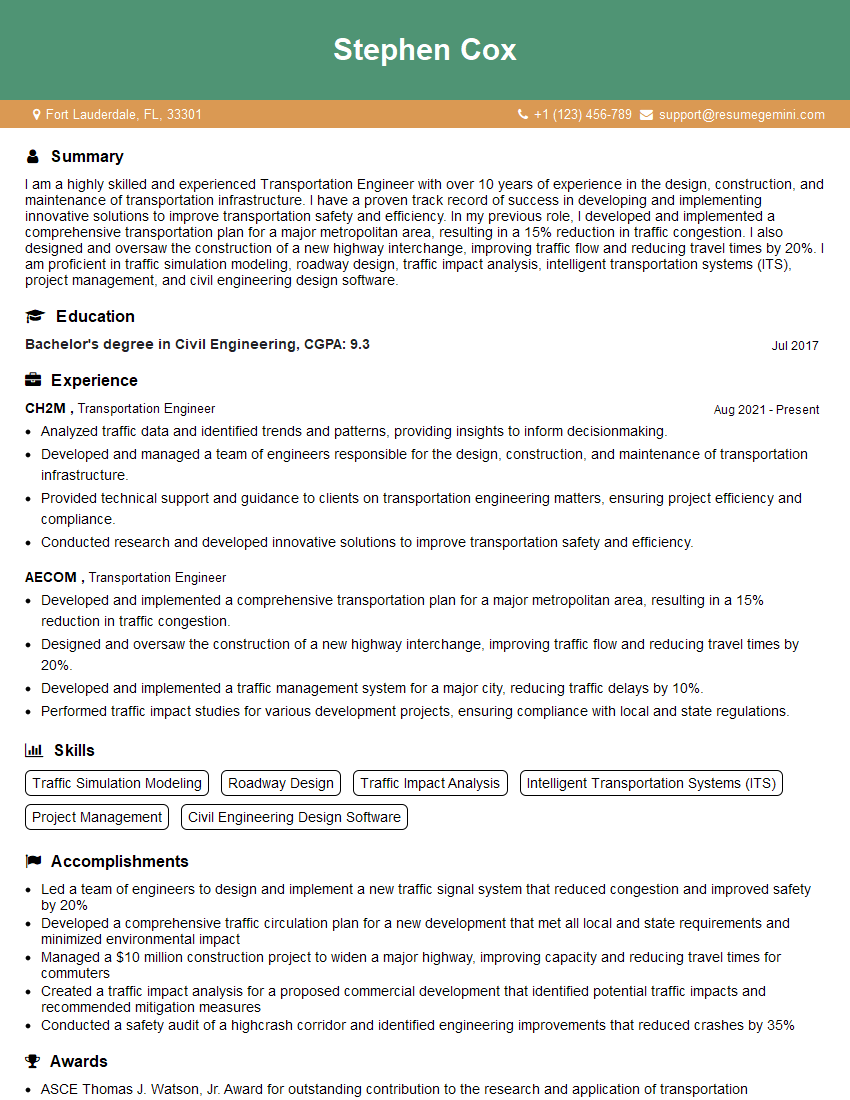
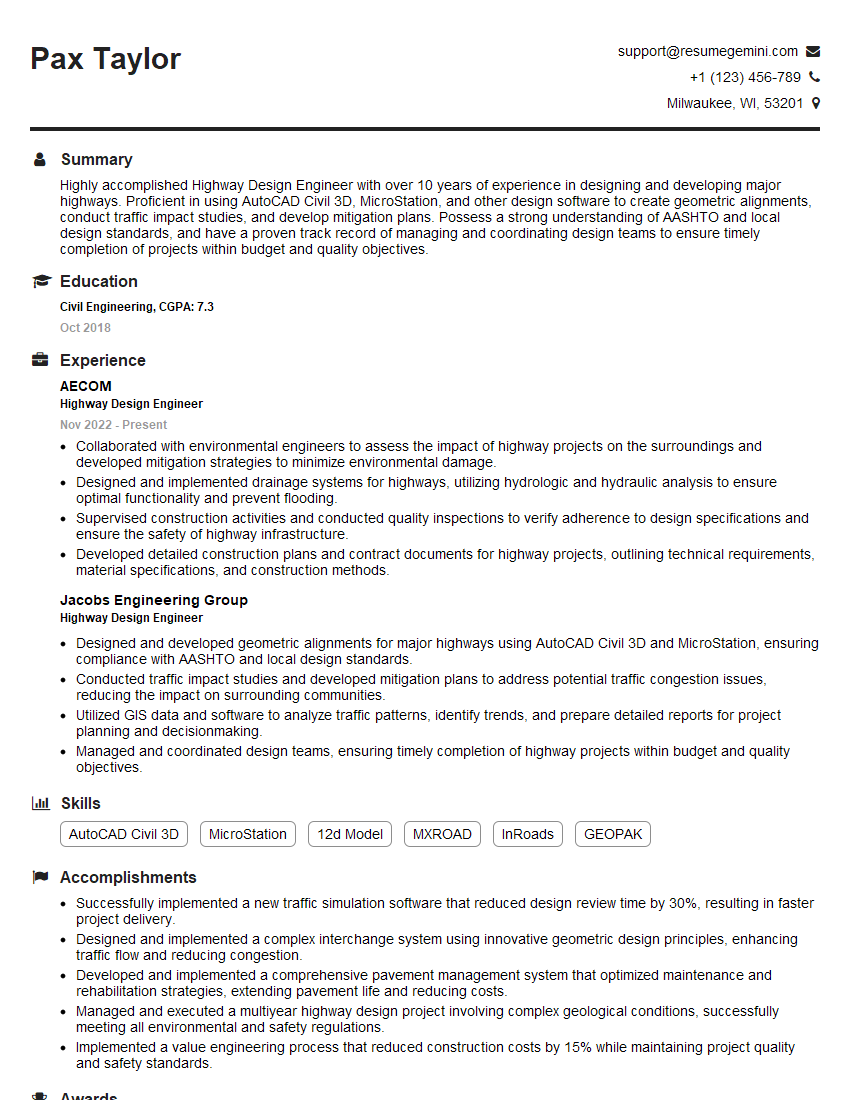
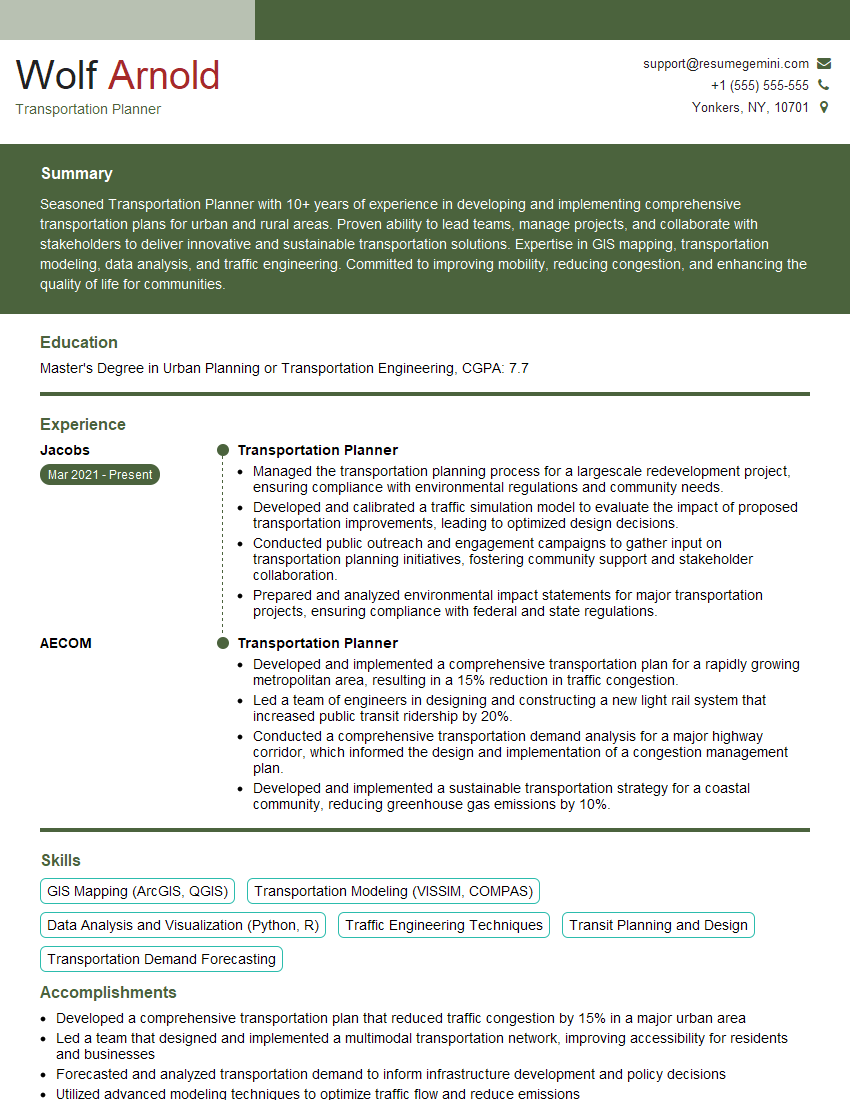
Mastering Roadway Design (Horizontal and Vertical Alignment) is crucial for career advancement in the civil engineering field, opening doors to diverse and challenging projects. A strong understanding of these concepts will significantly improve your interview performance and ultimately, your career prospects. To enhance your job search, focus on creating an ATS-friendly resume that effectively highlights your skills and experience. ResumeGemini is a trusted resource to help you build a professional and impactful resume. Examples of resumes tailored to Roadway Design (Horizontal and Vertical Alignment) are available to guide your resume creation process, ensuring you present yourself effectively to potential employers.

Explore more articles
Users Rating of Our Blogs
Share Your Experience
We value your feedback! Please rate our content and share your thoughts (optional).
What Readers Say About Our Blog
Very informative content, great job.
good