The thought of an interview can be nerve-wracking, but the right preparation can make all the difference. Explore this comprehensive guide to Hand Building (Ceramic) interview questions and gain the confidence you need to showcase your abilities and secure the role.
Questions Asked in Hand Building (Ceramic) Interview
Q 1. Describe your experience with pinch pot technique.
Pinch pot is a fundamental hand-building technique where a ball of clay is manipulated using your thumbs and fingers to create a hollow form. It’s like sculpting a vessel from the inside out. I’ve used this technique extensively, from creating tiny whimsical teacups to larger, more substantial bowls. The process begins with a well-wedged ball of clay, ensuring even moisture distribution to prevent cracking. Then, I create a small indentation with my thumb, gradually enlarging the opening while simultaneously thinning the walls, rotating the clay as I work. For larger pinch pots, I often add coils or slabs to build up the form further. It’s a technique that requires sensitivity and patience. You must feel the clay and allow it to guide you. I often use this method for quick prototypes or for smaller functional pieces where a unique, organic shape is desired.
For example, I once created a series of miniature pinch pots depicting different types of fruits – the organic nature of the pinch technique perfectly captured the varied shapes and forms.
Q 2. Explain the coil method of hand building.
The coil method is another foundational hand-building technique. It involves rolling out long, snake-like ropes of clay, known as coils, and layering them to construct a three-dimensional form. Think of it like building with clay ‘sausages.’ The success of this technique lies in consistently rolling even coils and carefully joining them to ensure a strong and seamless structure. The coils are placed on top of each other, often slightly overlapping, creating a strong, layered structure. I often use this method for creating larger, taller vessels such as vases or pitchers where pinch-potting would become impractical. After layering, the coils are carefully joined by blending them with a slip (a liquid clay mixture), ensuring a smooth transition between layers. Then, I use a variety of tools to refine the form – a sponge to smooth the surface and my fingers to further sculpt and refine.
For instance, I used the coil method to create a large, decorative jar. I carefully constructed it using various sized coils, gradually increasing the size as I progressed. This allowed me to create graceful curves and refine the overall form.
Q 3. How do you achieve smooth surface transitions in hand-built ceramics?
Achieving smooth surface transitions is crucial for the aesthetic and structural integrity of hand-built ceramics. The key is to carefully join the clay components – be it coils, slabs or pinched forms – using slip (liquid clay) and then smoothing techniques. I use a variety of tools to achieve this: a sponge helps to remove excess slip and blend the edges of adjoining coils or slabs; my fingers, carefully working the clay, create a seamless transition; and metal ribs or other sculpting tools help in refining the surface and creating desired textures.
The process is iterative. I might apply slip, smooth with a sponge, then use a rib to refine the surface further. This process is repeated until a smooth transition is achieved. For particularly challenging joints, I might use a small amount of extra slip to create a more fluid transition. Remember, patience is key. Rushing this process can lead to visible joins and ultimately, weaken the piece.
Q 4. What are the advantages and disadvantages of using different types of clay for hand building?
Different clay types significantly impact the hand-building process. For example, earthenware clays are generally easier to work with, forgiving of mistakes and ideal for beginners. However, they often require lower firing temperatures. Stoneware clays are stronger and more durable after firing but can be more challenging to work with, especially for beginners, as they are less forgiving during the hand-building process, requiring more experienced handling. High-fire clays offer exceptional strength and durability but are even more challenging to work with and require specific firing procedures.
- Advantages of Earthenware: Easy to work with, forgiving, less prone to cracking during drying.
- Disadvantages of Earthenware: Lower firing temperature, often less durable.
- Advantages of Stoneware: Strong, durable, withstands high temperatures.
- Disadvantages of Stoneware: Can be more challenging to work with, prone to cracking if not handled correctly during drying.
My choice of clay depends on the project. For a delicate pinch pot, earthenware is ideal. For a large, robust piece, I’d opt for stoneware to ensure sufficient strength and durability.
Q 5. Describe your process for creating a slab-built form.
Slab building involves creating flat sheets of clay which are then joined to form a three-dimensional structure. I begin by rolling out even slabs of clay using a rolling pin and clay slab roller to ensure consistent thickness. The thickness depends on the final piece’s intended size and structural integrity; thinner slabs are suitable for smaller pieces, and thicker ones are needed for larger, more robust forms. The slabs can be scored and slipped to join them securely. I often use templates and score and slip the edges carefully before joining. The scoring creates a key for the slip to adhere to. Once the form is built, I refine it further using smoothing techniques mentioned earlier.
For example, I created a large rectangular box using slab construction. I cut out the sides and base according to measurements and carefully joined them, ensuring the corners were well-aligned and smoothly blended. I then added decorative elements such as handles by scoring and attaching additional slabs.
Q 6. Explain how you ensure structural integrity in your hand-built pieces.
Structural integrity in hand-built pieces is paramount. It begins with the careful preparation of the clay – thorough wedging to remove air pockets is crucial to prevent cracking. Then, the joining techniques are essential. I always score and slip the surfaces before joining them. The scoring creates a mechanical bond, and the slip provides a glue-like action. The thickness of the walls is also crucial; thinner walls are more prone to cracking, while thicker walls offer more strength. For larger pieces, I might incorporate additional structural elements – adding supports or armatures inside the piece to reinforce the structure. Avoid abrupt changes in thickness within a piece as these create stress points. Even drying is also very important to prevent cracking.
For instance, in a tall vase constructed using coils, I’d ensure the coils are even and carefully joined, and I might add a small clay support inside to prevent it from collapsing during drying and firing.
Q 7. What are some common problems encountered during the drying process of hand-built ceramics and how do you address them?
The drying process is a critical stage where many problems can occur. Uneven drying is the most common culprit, leading to cracking or warping. This happens when one part of the piece dries faster than others, creating stress. I address this by ensuring slow, even drying. This could involve wrapping the piece in plastic for the initial stages to maintain moisture and then gradually reducing the plastic cover as the piece dries.
Another common problem is cracking. Cracks usually originate from air pockets within the clay, uneven drying, or too-rapid drying. To mitigate this, I ensure the clay is thoroughly wedged to remove air pockets and that drying is gradual. If cracks do appear, it might be possible to repair them using slip, but often it signifies a larger problem that requires taking additional steps to ensure even drying.
Warpage occurs due to uneven drying or clay that hasn’t been evenly wedged. Slow drying is the key here, and using a drying rack that allows for proper airflow helps to prevent this issue.
Q 8. Explain your understanding of shrinkage rates in different clay bodies.
Shrinkage in clay is a crucial aspect of hand-building ceramics. It refers to the reduction in size a clay body undergoes as it dries and then fires. Different clay bodies, composed of varying mixtures of clays, grog (ground-up fired clay), and other materials, exhibit different shrinkage rates. These rates are typically expressed as percentages. For example, a clay body might have a 6% shrinkage rate during drying and another 8% during firing, totaling a 14% linear shrinkage.
High-fire stoneware clays, for instance, generally have a lower shrinkage rate compared to earthenware clays. This is because stoneware clays often contain grog, which acts as a filler, reducing the overall shrinkage. Conversely, earthenware clays, being more plastic, often demonstrate a higher shrinkage rate. The presence of organic materials can also significantly affect shrinkage; they burn out during firing, leaving void spaces and potentially increasing shrinkage.
Understanding shrinkage rates is essential for creating well-proportioned and functional pieces. I account for shrinkage by creating larger forms to compensate for the size reduction during the drying and firing stages. Careful record-keeping of clay body properties including shrinkage rates is crucial for consistent results.
Q 9. How do you prevent cracking during the drying and firing process?
Preventing cracking during drying and firing is paramount for successful ceramic work. Cracking results from uneven drying or rapid temperature changes. It’s like trying to dry a wet sponge too quickly; it will crack. My approach focuses on slow, even drying and controlled firing schedules.
To prevent drying cracks, I ensure even moisture distribution in the piece. Thick sections dry more slowly than thin sections; this differential drying can cause stress and cracks. To mitigate this, I often use techniques like wedging to ensure the clay is homogenous, and I create even wall thicknesses wherever possible. Slow drying in humidity-controlled environments, or even wrapping partially dried pieces in plastic for a time, can significantly reduce cracking.
During firing, controlled temperature increases are essential. A gradual heating schedule prevents rapid expansion and contraction, allowing the piece to adjust more smoothly. My kiln programs are carefully crafted to ensure slow, even heating and cooling rates for each clay body type. The firing profile itself is customized according to the clay and glaze. Larger, denser pieces require even slower firing schedules compared to smaller pieces.
Q 10. Describe your experience with different firing techniques (e.g., bisque firing, glaze firing).
Bisque firing and glaze firing are two distinct stages in the ceramic process. Bisque firing is the first firing of the un-glazed piece, typically at a lower temperature (around 1800°F or 982°C), to harden the clay body and prepare it for glazing. This firing makes the clay strong enough to handle glazing and the subsequent glaze firing.
Glaze firing is the second firing where the glazed piece undergoes higher temperatures (often exceeding 2000°F or 1093°C depending on the glaze and clay type), melting the glaze and creating a durable, waterproof surface. I have extensive experience with both electric and gas kilns for both bisque and glaze firings. My understanding of kiln operation and the careful calibration of temperature and time are key to successfully managing both firing processes. I typically perform test firings with small samples to refine my firing schedules before firing large batches of work.
Q 11. What are your preferred types of glazes and why?
My preferred glazes often fall into the categories of matte, semi-matte, and crystalline glazes. I am drawn to the subtle depth and velvety surface of matte glazes. They offer a softer, less reflective finish that complements many forms and enhances the tactile quality of the ceramic piece. Semi-matte glazes provide a nice balance between a matte and glossy finish. They are less likely to be affected by crazing compared to higher gloss glazes.
Crystalline glazes appeal to me because of their unique ability to create unpredictable and visually fascinating surfaces. They involve specialized recipes and firing techniques, so careful attention to detail during the firing process is crucial for producing desired crystalline effects. The unpredictable nature of crystalline glazes is part of their charm.
My glaze choices are driven by the aesthetics I want to achieve, as well as the practical considerations like their compatibility with the clay body and their firing behavior. I regularly experiment with different glaze recipes, adapting them to suit my artistic vision and material capabilities. I meticulously document my glaze test results to build a consistent and reliable collection of glaze recipes.
Q 12. Explain your glazing techniques and how you achieve desired effects.
My glazing techniques are diverse and depend on the desired effect. For a uniform, even glaze coverage, I use dipping or pouring techniques. Dipping involves immersing the bisque-fired piece fully into a glaze bucket. Pouring requires careful control to ensure complete coverage without creating runs or drips. I’ve mastered controlling glaze consistency and viscosity for each method.
For more complex effects, I employ brushing, sponging, or spraying. Brushing allows for intricate designs and varied glaze applications; sponging can create textured surfaces and subtle color variations; spraying offers precise control and can be used to achieve very fine details. Sometimes, I layer glazes to achieve unique combinations of color and texture, ensuring that glazes are compatible to avoid adverse reactions. Each technique requires specific glaze application skills that come with experience.
Q 13. How do you troubleshoot glaze problems like crazing or pinholing?
Crazing and pinholing are common glaze problems that can be frustrating, but troubleshooting them is part of the learning process. Crazing, a network of fine cracks in the glaze surface, usually happens when the glaze shrinks more than the clay body during cooling. This is often caused by using a glaze that is too high a coefficient of thermal expansion than the clay. I address this by selecting a glaze with a compatible coefficient or adjusting the clay body.
Pinholing, small holes in the glaze surface, is often caused by trapped gases during firing. It can be caused by using glazes that are too thick and have excessive amounts of volatile materials in their compositions. I tackle this by adjusting the glaze recipe or altering the firing schedule to allow gases to escape more easily. Ensuring that the glaze is properly mixed and free from contaminants are also crucial to preventing pinholing. Careful record-keeping of glaze and firing parameters is vital for identifying and addressing these issues.
Q 14. Describe your experience with different kiln types and their functionalities.
My experience encompasses both electric and gas kilns. Electric kilns provide excellent temperature control and consistency, making them ideal for precise glaze firings. I appreciate their ease of use and predictable firing schedules. However, they can be more expensive to operate and have limitations in terms of maximum firing temperatures.
Gas kilns, on the other hand, can reach higher temperatures and often have a faster firing rate; they are better suited for certain types of high-fire processes. But they require more skill and experience to manage correctly, requiring meticulous attention to airflow and burner adjustments. Each kiln type has its own strengths and weaknesses, and my choice depends on the specific project requirements and the desired outcome. My understanding of different kiln types and firing parameters is crucial for producing consistently high-quality work.
Q 15. How do you maintain and troubleshoot kiln issues?
Kiln maintenance is crucial for the longevity and safety of your equipment. It involves regular cleaning, careful monitoring of temperature fluctuations, and prompt troubleshooting of any issues. Regular cleaning prevents buildup of ash and glaze residue, which can affect firing consistency and even cause damage to the kiln elements. I always thoroughly clean my kiln after each firing, removing any debris with a brush and vacuum.
Troubleshooting involves understanding the symptoms. For example, if the kiln isn’t heating properly, I’d first check the power supply and fuses. A blown fuse is a common culprit, easily replaced. Then I’d check the kiln elements themselves for any visible damage, burnouts or loose connections. If the elements are intact and the power supply is fine, then the problem might lie within the kiln’s control system, potentially needing professional attention. Uneven heating, on the other hand, might indicate poor insulation or a problem with the kiln’s internal fan, leading to an imbalance in airflow. This necessitates careful examination of the internal components.
In short, proactive maintenance, including regular inspections, preventative cleaning, and a troubleshooting plan, ensures a safe and reliable kiln operation.
Career Expert Tips:
- Ace those interviews! Prepare effectively by reviewing the Top 50 Most Common Interview Questions on ResumeGemini.
- Navigate your job search with confidence! Explore a wide range of Career Tips on ResumeGemini. Learn about common challenges and recommendations to overcome them.
- Craft the perfect resume! Master the Art of Resume Writing with ResumeGemini’s guide. Showcase your unique qualifications and achievements effectively.
- Don’t miss out on holiday savings! Build your dream resume with ResumeGemini’s ATS optimized templates.
Q 16. Describe your experience with surface decoration techniques (e.g., carving, stamping, incising).
Surface decoration is where I can truly express my artistic vision! I’m proficient in several techniques, each offering unique textural and aesthetic results. Carving involves directly removing clay from the surface, creating lines, patterns, or three-dimensional forms. I’ve used this to create intricate designs on both functional pieces like bowls and sculptural pieces. For example, I once carved a detailed map onto a ceramic globe.
Stamping, on the other hand, uses pre-made stamps (which I’ve often designed and made myself) to impress patterns into the clay. This technique is great for creating repetitive motifs or adding texture. I frequently use custom stamps with nature-inspired elements. Incising is similar to carving, but uses sharper tools to cut finer lines or create more detailed designs. I often combine incising with carving for more complex designs. I might incise fine lines within a larger carved area, creating depth and shadow.
The choice of technique depends entirely on the desired aesthetic and the scale of the project. Each technique allows for a different level of control and precision.
Q 17. What are your preferred tools for hand building?
My tool kit is an extension of my hands! It’s carefully curated to match my style and the demands of the project. Essential tools include various sized sponges, for smoothing and shaping clay; a variety of modeling tools made from wood, metal, or rubber, for adding detail and refining forms; and wire sculpting tools which allow me to cut and refine areas with precision. I also heavily rely on simple tools like a needle tool for incising fine lines and a rib tool, which helps to create texture on the surface of the clay.
Beyond these basics, I have several specialized tools, for example, a fettling knife for trimming excess clay, and various sizes of syringes to fill narrow openings with clay. The most important aspect of my tool selection is their versatility and adaptability to different hand-building techniques. I prefer well-made tools that are comfortable to hold and durable enough to withstand repeated use.
Q 18. Describe your approach to creating a ceramic sculpture.
Creating a ceramic sculpture is a journey of exploration. It often begins with a concept, a sketch or even just an idea. Then I’ll start with a structural armature, if needed, to support the final form of the piece. This armature might be made of wire or other strong material to provide the support for larger or more complex sculptures.
I usually begin by building the main forms using hand-building techniques like pinch, coil, or slab building, depending on the desired form and texture. Then I carefully refine the forms, adding details and textural elements, perhaps using carving or stamping techniques. I might let the clay dry partially between stages, allowing me to more easily refine the form and adjust proportions. The process is iterative—I’ll often step back, assess the piece, and continue refining until it matches my vision. The final stages involve ensuring the piece is structurally sound, which might include adding internal supports or strengthening vulnerable areas.
Q 19. How do you plan and execute a large-scale ceramic project?
Large-scale ceramic projects require meticulous planning and execution. The process starts with a comprehensive design plan, including detailed sketches and scale models. I break down the project into smaller, manageable sections to streamline the process. For example, if creating a large mural, I might design and build the individual tiles separately before assembling them on the wall.
Material calculations are critical. Estimating the amount of clay needed is essential, factoring in shrinkage and potential waste. Structural considerations are crucial, particularly for larger pieces. The weight and potential stress points must be carefully considered, and internal supports might be incorporated to prevent cracking or collapse. Large-scale projects require a robust firing schedule and might necessitate the use of a larger kiln, or a multi-stage firing process.
Collaboration is often key for large-scale projects. I might work with assistants or other artists to manage the construction, transport, and installation of the completed piece.
Q 20. How do you manage your time and workflow in a studio setting?
Time management in a studio is essential for productivity and creative flow. I use a combination of techniques to maintain a structured workflow. I start each day with a plan, outlining the tasks I want to accomplish. This allows me to prioritize, ensuring that I address the most critical tasks first. I segment my day to separate tasks which require different levels of focus and physical energy. For example, I might dedicate a period to more physically demanding tasks like hand-building, and a later time to more meticulous tasks, like surface decoration.
Regular cleaning of my workspace is integral to my routine. A clutter-free environment is a much more conducive environment for creativity. I also allocate specific times for research, planning, and administrative tasks, ensuring these critical elements are not neglected.
Q 21. Describe your experience working with different clients or collaborators.
I’ve had the pleasure of collaborating with a diverse range of clients and collaborators throughout my career, from private collectors to architects and interior designers. These collaborations have enriched my experience, pushing me creatively and providing valuable insights into different perspectives. For example, working with an architect on a ceramic installation for a building involved understanding the architectural design and incorporating the ceramic elements seamlessly into the space. This required close communication and a shared understanding of both artistic and structural considerations.
Collaborating with other artists has fostered mutual growth and led to the creation of exciting and innovative projects. Different artists bring unique skills and approaches, which can lead to unexpected and inspiring results. Ultimately, successful collaboration is built upon clear communication, mutual respect, and a shared commitment to the project’s success.
Q 22. How do you handle feedback and critiques on your work?
Feedback is crucial for growth in ceramics, much like a sculptor refining a masterpiece. I approach critiques constructively, separating subjective opinions from objective observations. For example, if someone comments on the ‘lack of warmth’ in a piece, I analyze the form, color, and texture to understand what might be contributing to that impression. If it’s a valid point about the piece’s overall impact, I’ll consider adjustments in subsequent work. If the feedback is purely subjective and doesn’t align with my artistic vision, I acknowledge it politely but ultimately trust my own judgment. I maintain a portfolio of my work and feedback, allowing me to track my evolution and identify recurring themes or areas for improvement.
Q 23. How do you stay current with trends and advancements in the field of ceramics?
Staying current in ceramics involves a multi-pronged approach. I regularly attend workshops and conferences, both local and international, to learn new techniques and network with other artists. I actively engage with online ceramic communities, forums, and social media groups, like Instagram and blogs, absorbing new information and inspirations. I also subscribe to ceramic journals and magazines which provide in-depth articles on new materials, firing techniques, and design trends. This continuous learning process ensures I’m abreast of innovative glazes, new clay bodies, and emerging design aesthetics. For example, recently I learned about the use of raku firing techniques combined with new low-temperature glazes, which completely changed my creative direction.
Q 24. Describe your experience with safety procedures in a ceramics studio.
Safety is paramount in a ceramics studio. My experience encompasses all aspects, from proper handling of raw materials to safe use of equipment. I always wear a dust mask when handling dry clay to avoid inhaling silica dust. When working with glazes, I use gloves and eye protection. I meticulously clean my workspace after each session, disposing of hazardous waste according to regulations. Understanding the proper use of kilns, including safe loading, temperature control, and ventilation, is critical and I always adhere to the manufacturer’s guidelines. I am also proficient in first-aid procedures for common studio accidents like cuts and burns. For instance, I always ensure the kiln is adequately ventilated to prevent carbon monoxide buildup and use heat-resistant gloves when handling hot pottery.
Q 25. What are some sustainable practices you incorporate into your ceramic work?
Sustainability is a core value in my practice. I source locally whenever possible, choosing clays and other materials with minimal environmental impact. I recycle water used in cleaning processes, reducing water waste significantly. I also actively explore the use of recycled materials in my work. For example, I’ve experimented with incorporating recycled porcelain shards into new pieces, giving them a unique texture and reducing waste. In my glazing process, I prefer low-fire glazes which require less energy in the kiln, contributing to reduced energy consumption. Furthermore, I educate my clients about responsible disposal and the longevity of handmade ceramics.
Q 26. How do you price your ceramic pieces?
Pricing my ceramic pieces involves a multifaceted calculation. It considers the cost of materials (clay, glazes, etc.), the time invested in creating the piece, the level of skill and complexity involved, and the market value of similar works. I also factor in overhead costs like studio rent, equipment maintenance, and marketing expenses. I analyze the prices of similar artists in my area and adjust accordingly. I often use a cost-plus pricing method, adding a markup percentage to my total cost to account for profit and labor. For bespoke or commissioned pieces, the pricing is negotiated in consultation with the client.
Q 27. Describe your marketing and sales strategies for your ceramic work.
My marketing strategy uses a blend of online and offline approaches. I maintain a professional website showcasing my work and a strong social media presence (Instagram, Facebook) to reach a wider audience. I participate in local craft fairs and art markets, allowing potential customers to see and interact with my work firsthand. Building relationships with local galleries and shops is also a key aspect; this allows me to increase my brand recognition and sell my pieces to a curated audience. I also engage in email marketing to keep customers updated about new collections and events, creating a personalized experience. Word-of-mouth referrals are also a significant source of new customers, highlighting the importance of building strong customer relationships.
Q 28. What are your long-term career goals in ceramics?
My long-term goals include establishing a thriving studio, potentially with apprentices or assistants, where I can continue to explore my artistic vision and share my knowledge with others. I aspire to exhibit my work in prestigious galleries both nationally and internationally, expanding my reach and increasing visibility. I also envision giving back to the ceramic community through teaching workshops and mentoring aspiring ceramic artists, fostering the next generation of talent. The possibility of designing ceramics for larger-scale projects, perhaps in collaboration with architects or interior designers, is also an exciting prospect.
Key Topics to Learn for Hand Building (Ceramic) Interview
- Clay Properties and Preparation: Understanding different clay types (e.g., earthenware, stoneware, porcelain), their plasticity, drying behavior, and appropriate preparation techniques for hand-building methods.
- Pinch Pot Technique: Mastering the fundamental pinch pot method, including controlling wall thickness, preventing cracking, and achieving desired shapes and sizes. Practical application: Demonstrating proficiency in creating functional and sculptural pinch pots.
- Coil Method: Understanding coil construction, including coil consistency, joining techniques (e.g., scoring and slipping), and methods for achieving even walls and structural integrity. Practical application: Creating larger vessels or sculptural forms using the coil method.
- Slab Method: Proficiency in slab construction, including rolling out even slabs, joining techniques, and creating complex forms through cutting, shaping, and joining slabs. Practical application: Constructing boxes, tiles, or sculptural pieces using the slab method.
- Surface Decoration Techniques: Knowledge of various surface decoration techniques, such as incising, stamping, adding textures, and applying slips and glazes. Practical application: Demonstrating creative surface treatments that enhance the aesthetic appeal and functionality of ceramic pieces.
- Drying and Firing: Understanding the critical stages of drying and firing ceramics, including recognizing and preventing cracking, warping, and other potential problems. Practical application: Explaining the importance of controlled drying and firing schedules for different clay types.
- Troubleshooting and Problem Solving: Identifying and resolving common problems encountered during hand-building, such as cracks, uneven walls, and structural weaknesses. Practical application: Discussing strategies for preventing and addressing these issues.
- Health and Safety: Understanding and adhering to safe practices in the ceramic studio, including dust control, proper ventilation, and safe handling of materials and equipment.
Next Steps
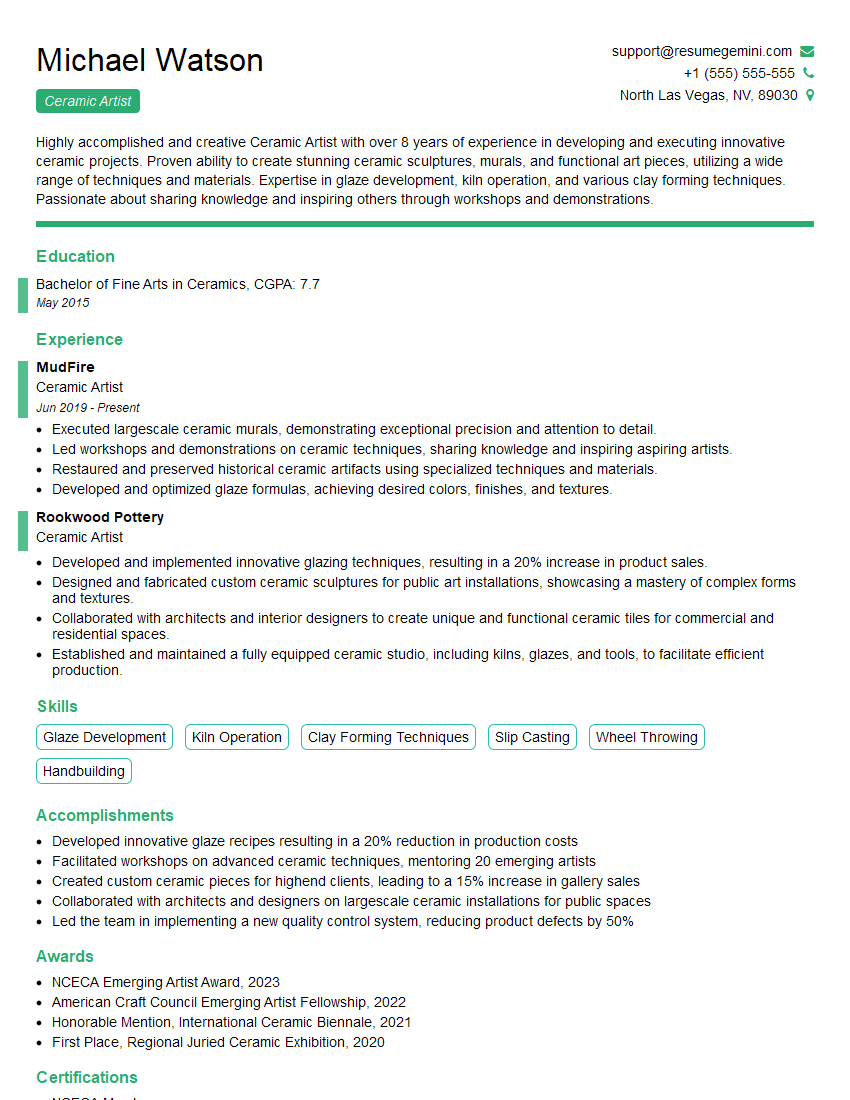
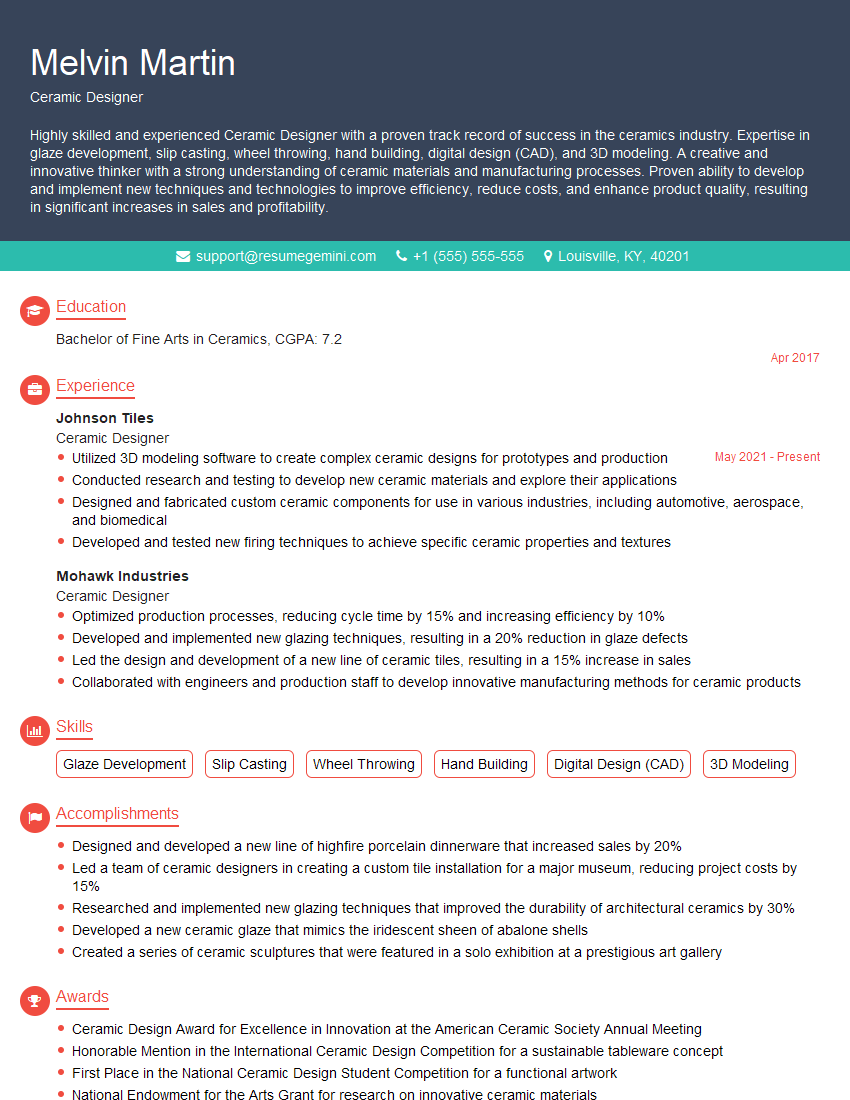
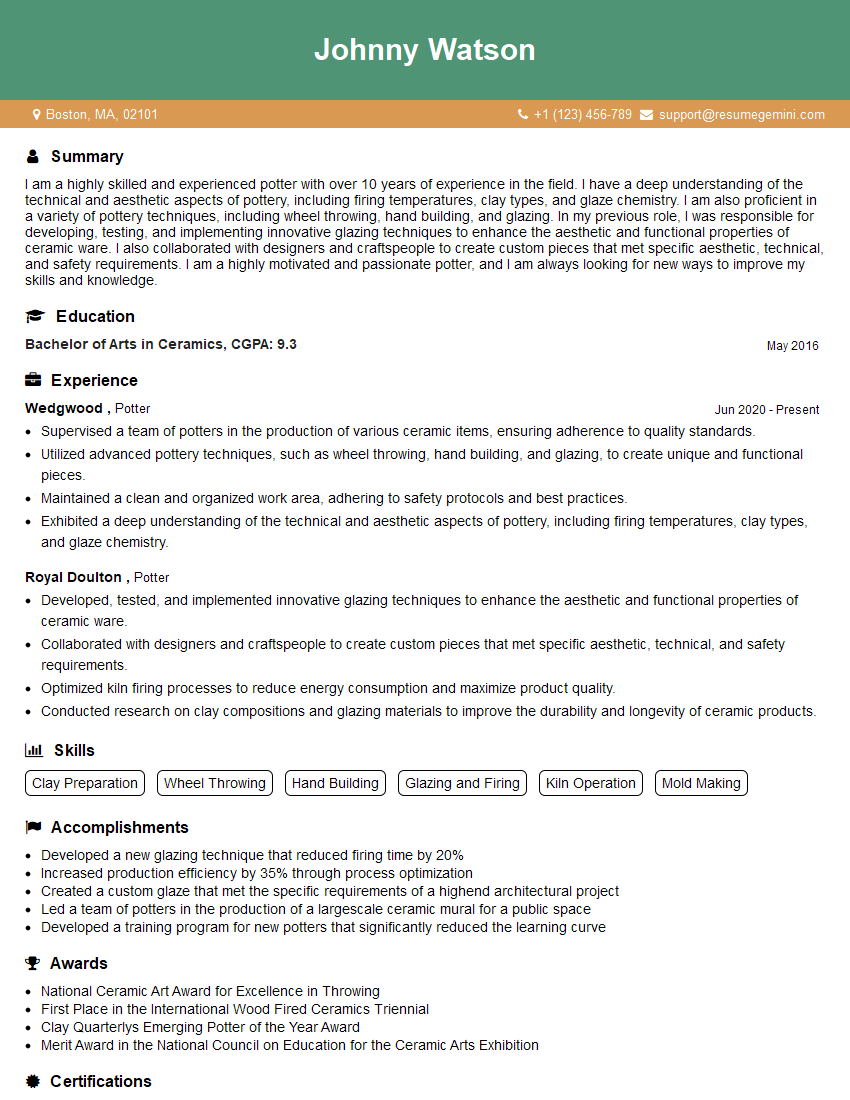
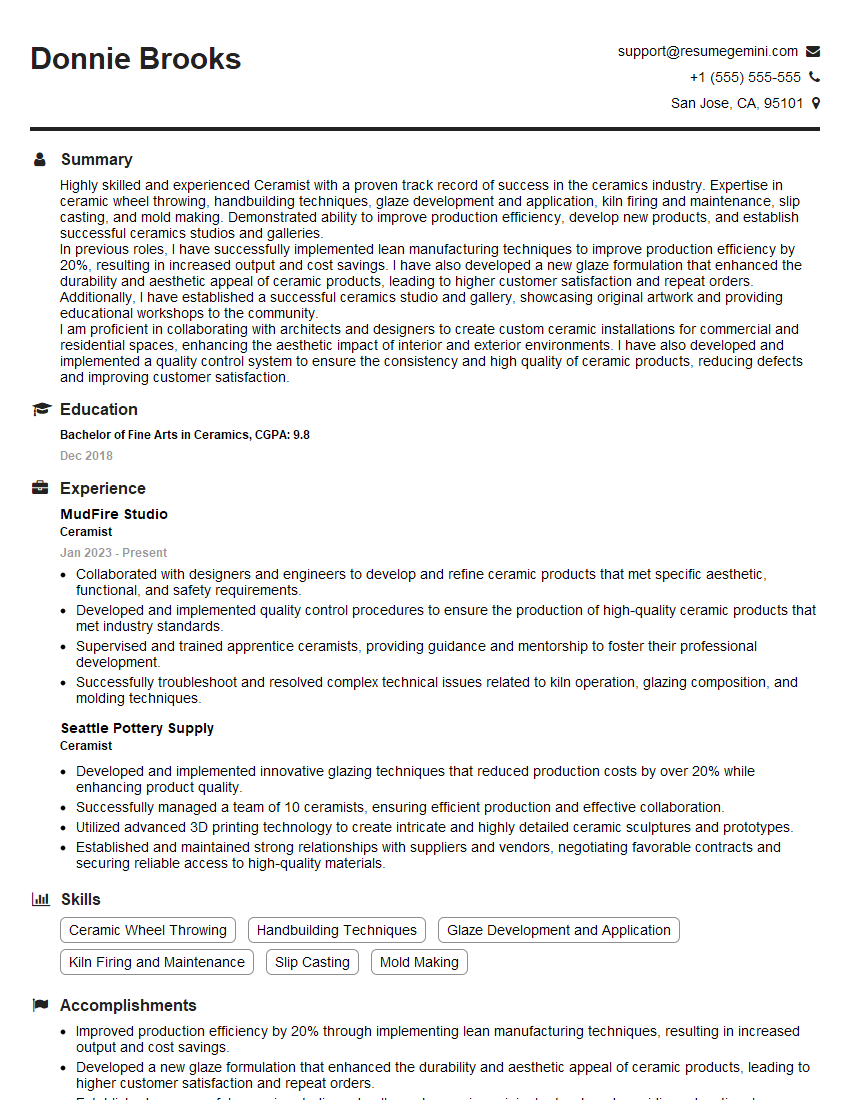
Mastering hand-building techniques is crucial for a successful career in ceramics, opening doors to diverse opportunities in studio art, functional pottery, sculpture, and even industrial design. To maximize your job prospects, focus on creating a strong, ATS-friendly resume that highlights your skills and experience. ResumeGemini is a trusted resource for building professional resumes that stand out. Examples of resumes tailored to Hand Building (Ceramic) are available to help you create a compelling application.
Explore more articles
Users Rating of Our Blogs
Share Your Experience
We value your feedback! Please rate our content and share your thoughts (optional).
What Readers Say About Our Blog
Very informative content, great job.
good