Interviews are more than just a Q&A session—they’re a chance to prove your worth. This blog dives into essential Lost Wax Casting interview questions and expert tips to help you align your answers with what hiring managers are looking for. Start preparing to shine!
Questions Asked in Lost Wax Casting Interview
Q 1. Describe the lost wax casting process step-by-step.
Lost wax casting, also known as investment casting, is an ancient yet highly precise method for creating intricate metal parts. It involves creating a wax model of the desired part, encasing it in a refractory material (investment), melting out the wax, and then pouring molten metal into the resulting cavity. Here’s a step-by-step breakdown:
- Wax Pattern Creation: A wax model of the desired object is created, often using injection molding or hand carving. This is the most crucial step, as the final casting will be an exact replica (minus shrinkage). Sprue and runners, channels for metal flow, are also incorporated at this stage.
- Tree Assembly: Multiple wax patterns are often attached to a central sprue base, forming a “tree”. This simplifies the casting process and improves efficiency, especially for mass production.
- Investment Application: The wax tree is carefully dipped or sprayed with a slurry of refractory material, typically a ceramic-based investment. Multiple layers are applied to ensure sufficient thickness and strength, with each layer allowed to dry before the next.
- Dewaxing: The investment mold containing the wax pattern is heated in a controlled manner to melt and remove the wax. This is a crucial step; too rapid heating can crack the mold, while insufficient heating will leave residual wax that can affect the metal casting.
- Casting: Molten metal, preheated to the correct temperature, is carefully poured into the mold cavity created by the removal of the wax. The metal is held at the correct temperature to completely fill the mold and allow it to solidify.
- Mold Removal: Once the metal has solidified, the investment mold is carefully broken away, revealing the cast metal part. This often involves specialized equipment or techniques to avoid damaging the delicate finished product.
- Finishing: The cast part then undergoes finishing processes, such as cleaning, grinding, polishing, and potentially machining, to achieve the desired surface finish and dimensions.
Think of it like baking a cake – the wax is the cake batter in a specialized mold, the investment is the oven-safe pan, and the molten metal is the final product.
Q 2. What are the different types of waxes used in lost wax casting?
The choice of wax depends on the complexity of the design, the required detail, and the casting process. Common waxes include:
- Paraffin Wax: A relatively inexpensive and widely used wax, offering good flow properties and easy molding. However, it can be brittle and susceptible to distortion.
- Microcrystalline Wax: This wax is harder and more dimensionally stable than paraffin wax, making it suitable for intricate details and larger castings. It’s more expensive, though.
- Polyethylene Wax: Offers excellent dimensional stability and strength, often used in precision casting applications.
- Synthetic Waxes: A range of synthetic waxes with tailored properties are available to meet specific requirements, such as improved strength, detail retention, or ease of dewaxing.
The choice often involves a balance between cost, required precision, and the overall process parameters.
Q 3. Explain the importance of sprue design in lost wax casting.
Sprue design is critical for successful casting. The sprue acts as a pathway for the molten metal to flow into the mold cavity. Poor sprue design can lead to defects such as cold shuts (incomplete filling), porosity, or air entrapment. Key considerations include:
- Size and Shape: The sprue must be large enough to allow for adequate metal flow without excessive turbulence or pressure build-up. The shape and angle are designed to minimize turbulence.
- Runner System: Runners distribute the molten metal evenly among multiple castings in a tree. Proper runner design prevents uneven filling and ensures consistent casting quality.
- Gate Design: Gates are the openings that connect the runners to the individual casting cavities. Their size and location affect metal flow and can influence the final part’s surface finish and soundness.
Imagine a water slide – a poorly designed slide might cause a traffic jam or cause the riders to splash everywhere. Similarly, a poorly designed sprue system leads to defects in the final casting.
Q 4. How do you prevent defects like porosity or shrinkage in the casting?
Porosity and shrinkage are common defects in castings, stemming from factors such as gas entrapment, insufficient metal flow, or the metal’s inherent properties. Prevention strategies include:
- Vacuum Degassing: Removing dissolved gases from the molten metal before casting reduces porosity.
- Optimized Sprue and Runner Design: As mentioned, a properly designed system ensures proper metal flow and minimizes turbulence, reducing the chances of gas entrapment.
- Proper Mold Preparation: Thoroughly drying and preheating the mold before casting helps to prevent moisture-related defects.
- Controlled Cooling Rate: Slow, controlled cooling reduces shrinkage stresses and helps to avoid cracking or warping.
- Metal Selection and Chemistry: The choice of metal and its alloying elements impacts its fluidity, shrinkage rate, and tendency to form porosity.
Think of it like baking bread – you want to ensure proper kneading and rising to prevent holes and imperfections in the final product.
Q 5. What are the different types of investment materials used?
Investment materials are crucial for creating a mold that can withstand the high temperatures and pressures of molten metal. Common types include:
- Phosphate-bonded Investments: These are widely used and offer good strength, dimensional accuracy, and relatively easy removal after casting.
- Ethyl Silicate-bonded Investments: Known for their higher strength and thermal shock resistance, making them suitable for casting high-melting-point metals.
- Ceramic Shell Investments: These molds offer superior dimensional accuracy and are used for high-precision castings, but are more complex and expensive to prepare.
The choice depends on factors such as metal type, casting temperature, desired surface finish, and budget constraints.
Q 6. Describe the burnout process and its critical parameters.
The burnout process involves carefully removing the wax pattern from the investment mold using controlled heating. Critical parameters include:
- Temperature Profile: The heating process should be gradual and controlled to prevent cracking or thermal shock damage to the mold. Specific temperature ramps are usually followed, depending on the investment material and size of the mold.
- Heating Rate: A slow heating rate minimizes thermal stresses and ensures complete wax removal. Too-rapid heating can cause the mold to crack or explode.
- Atmosphere Control: The burnout process is often carried out in a controlled atmosphere oven, which helps to remove wax vapors efficiently and prevent oxidation of the mold.
- Duration: The burnout process takes a specific length of time to ensure that the wax is completely removed and the mold is fully dried before casting.
Improper burnout can lead to mold defects, affecting the quality of the final cast part. It’s a delicate process needing careful monitoring.
Q 7. How do you determine the appropriate casting temperature for different metals?
Determining the appropriate casting temperature is essential for obtaining a high-quality casting. The ideal temperature ensures sufficient fluidity for complete mold filling while avoiding excessive oxidation or gas entrapment. Several factors influence this temperature:
- Metal Type: Different metals have different melting points and optimal casting temperatures. Reference tables and material data sheets provide this information.
- Alloy Composition: Alloying elements can significantly affect the melting point and fluidity of the metal.
- Mold Material: The investment material’s properties and maximum temperature limit influence the casting temperature.
- Casting Size and Complexity: Larger and more intricate castings may require a higher casting temperature to ensure complete filling.
Incorrect temperatures can lead to incomplete filling, porosity, or even mold damage. It’s usually determined through experimentation and reference to established best practices for the specific metal and process parameters. A pyrometer, to measure the molten metal’s temperature precisely, is essential.
Q 8. What are the common quality control checks performed during lost wax casting?
Quality control in lost wax casting is crucial for producing high-quality pieces. It’s a multi-stage process starting even before the wax model is created. We meticulously check every step, ensuring the final product meets the desired specifications.
Wax Model Inspection: We examine the wax model for any flaws – air bubbles, cracks, or inconsistencies in detail. Think of it like proofreading a manuscript before printing; catching errors early saves significant time and resources later.
Investment Inspection: After the wax model is invested (surrounded by the investment material), we carefully check the mold for any voids or weaknesses that could lead to casting defects. This is like checking the foundation of a house before building the walls; a strong foundation is essential for a stable structure.
Casting Inspection: Once the casting is complete, we examine it for porosity (tiny holes), shrinkage, and dimensional accuracy. We use calibrated tools to ensure the final piece matches the original design precisely. This is like measuring a garment against the pattern; the final product must meet the established measurements.
Finishing Inspection: The final step involves a thorough inspection after cleaning and finishing. We look for surface imperfections, ensuring the piece is free from blemishes and has the desired surface finish. This is the final quality check, akin to polishing a gemstone to reveal its brilliance.
Q 9. How do you troubleshoot common casting defects like air bubbles or incomplete fills?
Troubleshooting casting defects requires a systematic approach. Let’s address air bubbles and incomplete fills:
Air Bubbles: These often stem from insufficient venting of the mold or trapped air during pouring. Solutions include: improving the spruing system (the channels that feed the molten metal into the mold) to ensure proper venting; using a degassing agent in the molten metal; or carefully adjusting the pouring technique to minimize turbulence.
Incomplete Fills: This can be caused by insufficient molten metal, cold metal, or a problem with the mold itself. To resolve this, we increase the metal volume in the crucible, preheat the mold, carefully check the mold for any blockages, or ensure the sprue is large enough to facilitate a smooth flow of molten metal. We might also optimize the pouring technique, potentially using centrifugal casting (explained later) for complex shapes.
Often, a combination of factors contributes to these defects. Careful observation and analysis are crucial to identify the root cause and implement the appropriate solution. Think of it like a detective investigating a crime scene; you need to gather all the evidence before reaching a conclusion.
Q 10. Explain the importance of proper flask preparation.
Proper flask preparation is paramount for a successful cast. The flask, which holds the investment material surrounding the wax model, needs to be meticulously prepared. Improper preparation can lead to cracking, mold breakdown, and ultimately, a ruined casting.
Cleanliness: The flask must be clean and free from any debris or residue from previous castings. Contamination can weaken the investment material and hinder the casting process. Imagine baking a cake in a dirty pan; the result won’t be appetizing.
Proper Investment Mixing: The investment material (a refractory mixture) must be carefully mixed according to the manufacturer’s instructions. Inconsistent mixing can lead to varying densities within the mold, creating weak spots. This is comparable to mixing cement; inconsistent mixing leads to a weaker structure.
Careful Pouring: The investment must be poured carefully to avoid air bubbles and ensure complete coverage of the wax model. Air bubbles can weaken the mold, leading to defects in the casting.
Vibration: A gentle vibration is often used to remove trapped air and ensure a dense, even investment. Think of it like settling a cake batter; removing air bubbles creates a smoother texture.
Q 11. What safety precautions are essential during lost wax casting?
Safety is a top priority in lost wax casting. We work with molten metal at high temperatures and hazardous chemicals, so stringent safety protocols are vital.
Personal Protective Equipment (PPE): We always wear safety glasses, gloves, aprons, and respiratory protection, depending on the materials and processes involved. This protects against burns, chemical exposure, and inhalation of harmful fumes.
Ventilation: Adequate ventilation is crucial to remove harmful fumes produced during the burnout process (removing the wax from the investment). Poor ventilation can lead to respiratory problems.
Fire Safety: Proper fire safety procedures must be followed, including the availability of fire extinguishers and a clear evacuation plan. Molten metal presents a significant fire hazard.
Chemical Handling: Investment materials and cleaning agents often contain hazardous chemicals. We strictly adhere to safety data sheets (SDS) and proper handling procedures.
Proper Equipment Usage: All equipment, including furnaces, centrifuges, and casting tools, must be used according to manufacturer instructions.
Q 12. Describe your experience with different casting metals (e.g., gold, silver, bronze).
My experience encompasses a wide range of casting metals, each presenting unique challenges and rewards:
Gold: Casting gold requires precise temperature control due to its low melting point and tendency to oxidize. The purity of the gold also affects its casting properties. I have experience working with various karats of gold, from 10k to 24k, each requiring a tailored approach.
Silver: Similar to gold, silver has a relatively low melting point and is sensitive to oxidation. However, it’s generally less challenging to cast than gold. I’ve worked extensively with sterling silver and fine silver.
Bronze: Bronze is an alloy of copper and tin, offering greater strength and durability than precious metals. Its higher melting point requires greater care and precision during the casting process. I have experience with various bronze alloys, each with its unique characteristics and casting behaviors.
Each metal requires specific techniques, including adjustments to the investment material, burnout schedule, and pouring temperature. Understanding these nuances is key to achieving high-quality castings.
Q 13. How do you handle intricate designs in lost wax casting?
Handling intricate designs in lost wax casting requires meticulous attention to detail and specialized techniques. The key is to create a robust wax model that can withstand the investment process and subsequent burnout without distortion or damage.
Wax Injection Molding: For extremely complex designs, wax injection molding provides the precision needed to create highly detailed wax models. This technique allows for intricate undercuts and delicate features.
Multiple Sprue Systems: Intricate pieces may require multiple sprues to ensure complete filling of the mold. This helps prevent incomplete fills in thinner sections.
Support Structures: Wax supports or sprues are strategically placed to reinforce delicate areas of the wax model, preventing collapse during the investment and burnout stages. Think of scaffolding during building construction.
Careful Burnout: A slower, more controlled burnout is often used to minimize the risk of thermal shock and distortion in delicate areas.
Experience and expertise are essential in selecting the right techniques to handle the challenges presented by intricate designs.
Q 14. What is the role of centrifugal casting in lost wax casting?
Centrifugal casting is a valuable technique within the lost wax process. It involves spinning the investment mold at high speed during pouring. The centrifugal force pushes the molten metal into every corner of the mold, improving fill and reducing porosity, particularly helpful for thin sections and intricate designs. This technique is especially useful for creating detailed pieces with consistent metal density and minimizes the chances of air bubbles or incomplete fills.
Imagine a washing machine spinning clothes; the centrifugal force pushes the water out, similarly, in centrifugal casting, the force pushes the molten metal into all areas of the mold, ensuring a complete and well-defined casting.
Q 15. Explain the difference between vacuum casting and pressure casting.
Both vacuum and pressure casting are methods used in the lost wax casting process to force molten metal into the mold cavity created by the wax pattern. The key difference lies in how this force is applied.
Vacuum casting creates a vacuum inside the investment flask surrounding the wax pattern. This vacuum pulls the molten metal into the mold cavity, ensuring complete filling, especially in intricate designs. Think of it like sucking liquid through a straw – the vacuum creates the pulling force. It’s particularly useful for thinner sections and detailed pieces where pressure casting might cause defects.
Pressure casting utilizes compressed air or gas to force the molten metal into the mold. This provides more powerful filling force than vacuum casting, making it suitable for larger and more complex castings. Imagine squeezing a tube of toothpaste – the pressure forces the contents out. It can handle thicker sections and overcome higher resistance to metal flow.
In practice, the choice between vacuum and pressure casting often depends on the design complexity and size of the piece. For delicate jewelry, vacuum casting is often preferred, while larger sculptures or engine components might benefit from the greater force of pressure casting.
Career Expert Tips:
- Ace those interviews! Prepare effectively by reviewing the Top 50 Most Common Interview Questions on ResumeGemini.
- Navigate your job search with confidence! Explore a wide range of Career Tips on ResumeGemini. Learn about common challenges and recommendations to overcome them.
- Craft the perfect resume! Master the Art of Resume Writing with ResumeGemini’s guide. Showcase your unique qualifications and achievements effectively.
- Don’t miss out on holiday savings! Build your dream resume with ResumeGemini’s ATS optimized templates.
Q 16. How do you maintain consistent quality throughout a large production run?
Maintaining consistent quality throughout a large production run in lost wax casting requires meticulous control over every step of the process. This starts with precise wax pattern creation, using either traditional carving or 3D printing techniques with consistent material properties and printing settings. Furthermore, rigorous quality checks are crucial.
- Batch Consistency: Always use the same batch of wax and investment material to minimize variations. Regularly test the material properties to ensure they meet specifications.
- Temperature Control: Precise temperature control during the melting and casting processes is vital. Variations can lead to inconsistencies in the final product. We use calibrated furnaces and monitoring systems to maintain this consistency.
- Investment Technique: The investment process itself needs to be standardized – using the same vibratory equipment, investment slurries, and curing procedures. This ensures uniform mold strength and permeability.
- Regular Calibration: Regular calibration of all equipment, including furnaces, centrifuges, and vacuum pumps, is essential. A well-maintained toolset is key to ensuring consistent results.
- Statistical Process Control: Implementing statistical process control (SPC) methods, such as measuring key dimensions of the castings, helps track variations and identify potential problems early on. This allows for timely adjustments to prevent deviations from quality standards.
Finally, consistent post-processing such as cleaning and finishing techniques also impact overall quality. A standardized process for these steps is essential to avoid inconsistencies from worker to worker.
Q 17. What software or CAD programs are you familiar with for wax modeling?
My experience with CAD software for wax modeling encompasses a wide range of programs, including industry-standard solutions such as:
- SolidWorks: Excellent for creating complex, highly detailed models with accurate dimensions. It’s especially beneficial for intricate designs requiring precise control.
- Rhino3D: A powerful program renowned for its NURBS (Non-Uniform Rational B-Spline) modeling capabilities, ideal for organic shapes and curves often seen in jewelry or artistic castings.
- Autodesk Maya/3ds Max: These programs are typically used in the animation and VFX industry, but also have excellent tools for creating intricate, freeform models which can then be exported to suitable STL files for 3D printing.
- ZBrush: A digital sculpting program preferred for organic shapes and high levels of detail. It allows for incredibly precise wax model design, particularly beneficial for artistic castings or pieces needing significant texture.
Proficiency in these programs allows me to translate design concepts into precise, manufacturable wax patterns, essential for successful lost wax casting.
Q 18. Describe your experience with 3D printing in wax modeling.
3D printing has revolutionized wax modeling in lost wax casting. I have extensive experience using various 3D printing technologies for wax pattern creation, primarily:
- Stereolithography (SLA): Produces highly accurate and detailed wax models. SLA is ideal for intricate designs and fine details but can be slower and more expensive than other technologies.
- Selective Laser Sintering (SLS): Suitable for larger and more complex designs. SLS offers superior strength compared to SLA, which reduces the risk of wax deformation.
- Fused Deposition Modeling (FDM): A more economical choice, FDM offers less precision than SLA or SLS. It’s better suited for less detailed designs where cost-effectiveness is a priority. However, support structures are often needed, adding post-processing complexity.
My experience includes designing and optimizing 3D print settings, managing support structures (where necessary), and conducting post-processing steps to prepare the printed wax models for investment casting. This includes cleaning, orienting and repairing any imperfections. 3D printing drastically reduces lead times and allows for rapid prototyping, significantly accelerating the production process.
Q 19. How do you manage material costs in lost wax casting?
Managing material costs in lost wax casting requires a multi-pronged approach focused on efficiency and waste reduction.
- Wax Optimization: Using 3D modeling software, I carefully design wax patterns to minimize material waste. This is particularly important with high-value wax materials. Efficient nesting of multiple parts into a single print job further optimizes this.
- Investment Material Selection: Selecting appropriate investment materials based on the casting requirements and the cost-effectiveness of each option is crucial. Different investments have various prices and performance characteristics.
- Recycling: Recycling spent investment material and reclaiming wax from sprues and runners helps reduce raw material costs significantly. This requires a dedicated recycling process and often the use of specialist equipment.
- Waste Reduction: Implementing strategies to reduce waste throughout the process, from wax pattern creation to post-casting cleanup, minimizes costs. Proper training and adherence to standard operating procedures ensure minimal material waste.
- Supplier Relationships: Building strong relationships with reliable suppliers can provide access to better pricing and potentially bulk discounts on materials.
By carefully considering all aspects of material usage, from initial design to final cleanup, significant savings can be realized without compromising the quality of the final product.
Q 20. What are your strategies for optimizing the casting process for efficiency?
Optimizing the lost wax casting process for efficiency involves streamlining each step and leveraging technology to minimize bottlenecks.
- Process Mapping: Creating a detailed process map to identify potential areas for improvement is the first step. This allows us to see where time and resources are being wasted and make targeted improvements.
- Automation: Automating repetitive tasks like flask filling and burnout can significantly increase efficiency. Dedicated automated systems can reduce human error and increase throughput.
- Lean Manufacturing Principles: Applying lean manufacturing principles, such as minimizing inventory and reducing waste, results in a more efficient workflow. This includes optimizing the flow of materials and minimizing the time spent on each step.
- Improved Burnout Techniques: Optimizing burnout schedules and techniques to reduce cycle times while maintaining consistent quality is essential. This might involve testing and implementing different burnout profiles.
- Specialized Equipment: Investing in high-quality, reliable equipment, such as advanced centrifugal casting machines or automated flask preparation systems, enhances efficiency and reduces downtime.
By adopting a holistic approach and continuously evaluating the process, we can identify further opportunities for optimization, leading to faster turnaround times, reduced costs, and improved overall productivity.
Q 21. Explain your experience with different types of investment flasks.
My experience encompasses a range of investment flask types, each offering unique advantages and disadvantages depending on the casting requirements.
- Rubber Flasks: Reusable and cost-effective for smaller castings. They’re easy to use and maintain but limited in size and may be less durable for large-scale productions.
- Ceramic Flasks: Highly durable and suitable for larger castings, providing excellent thermal stability during the burnout process. They are reusable but require more careful handling and cleaning.
- Disposable Flasks: These are convenient for small-scale productions or when dealing with challenging materials or designs. The convenience of disposal comes at the cost of material waste.
- Metal Flasks: Offers robustness and reusability, making them ideal for high-volume production runs. However, their higher initial cost needs to be justified by the volume of castings produced.
The choice of flask type ultimately depends on factors like casting size, quantity, material properties, budget and desired level of reusability. My experience allows me to select the optimal flask type for each specific project, ensuring both efficiency and high-quality results.
Q 22. How do you ensure the accuracy and dimensional stability of castings?
Ensuring accuracy and dimensional stability in lost wax casting is paramount. It hinges on several key factors, starting with the creation of the master model. This model, whether carved, sculpted, or 3D-printed, must be meticulously crafted to the exact specifications. Any imperfections here will be replicated in the final casting.
Next, the investment process is critical. The slurry used to create the mold must be consistent in its viscosity and carefully poured to avoid air bubbles or uneven thickness, both of which can distort the final product. The type of investment material itself—e.g., high-temperature, low-expansion— plays a significant role in controlling dimensional changes during burnout.
Finally, the casting process itself requires careful control of metal temperature and pouring pressure. Pouring too hot can cause metal expansion and distortion, while inadequate pressure can result in incomplete mold filling, leading to porosity and dimensional inaccuracies. Regular calibration of equipment and adherence to established protocols are essential for consistent results. For example, we use a calibrated thermocouple to monitor the molten metal temperature throughout the pouring process.
Q 23. Describe your experience with different finishing techniques for castings.
My experience encompasses a wide array of finishing techniques, chosen based on the specific requirements of the casting and the desired aesthetic.
- Mechanical Finishing: This includes techniques like filing, sanding, and polishing, using progressively finer grits to achieve a smooth surface. For intricate details, I often employ specialized tools such as rotary burrs and polishing wheels.
- Chemical Finishing: Pickling (acid etching) removes surface oxides and other impurities, leaving a cleaner, more uniform surface. I have considerable experience with various pickling solutions, adjusting their concentration and application time depending on the metal and desired finish.
- Electroplating: This technique allows for applying a thin layer of another metal, enhancing durability, aesthetics, or corrosion resistance. I’ve worked extensively with gold, silver, and rhodium plating, always ensuring proper surface preparation to achieve optimal adhesion.
- Patination: This involves applying chemicals to create an aged or antique appearance, commonly used for bronze or copper castings. I’ve developed unique patina recipes to achieve specific colors and textures, carefully managing the reaction time and chemical concentration.
Choosing the right finishing method often involves a combination of techniques to achieve the perfect result. For instance, a large bronze sculpture might require mechanical finishing to remove excess material, followed by pickling to clean the surface, and finally, patination to enhance its visual appeal.
Q 24. How do you assess the integrity of a casting after burnout?
After the burnout process, the integrity of the mold is assessed visually and sometimes through non-destructive testing. Visual inspection reveals any cracks or other damage to the ceramic shell. This is where experience comes in— I can quickly spot any hairline cracks that could affect the casting.
Beyond visual inspection, for particularly critical castings, I might use non-destructive testing such as X-ray imaging. This allows for the detection of internal flaws or imperfections that might not be visible on the surface. For example, I once discovered an internal void in a casting using X-ray, preventing a potentially disastrous failure in the final product. This early detection allowed us to refine our investment process and avoid recurrence.
Q 25. What is your experience with different types of sprues and runners?
My experience includes a range of sprue and runner designs, selected according to the casting’s complexity and size. Simple castings often utilize a single, straight sprue, while more intricate designs may require a more complex system.
- Simple sprues: These are effective for simple shapes where metal flow is straightforward.
- Multiple sprues: These are employed for larger or more complex castings to ensure complete filling.
- Runners and gates: The design and placement of these channels directly impact the flow of molten metal into the mold cavity. Poor design can lead to turbulence, air entrapment, and incomplete filling.
- Vacuum assisted casting: We also utilize vacuum systems to help eliminate air pockets during pouring.
The optimal sprue and runner design is determined through a combination of experience, simulation software (where applicable), and trial and error. I often create prototypes using less expensive materials to test different configurations before committing to a final design for a valuable piece.
Q 26. How would you handle a situation where a casting is severely flawed?
Handling a severely flawed casting requires a methodical approach. First, I would carefully analyze the defect to determine its root cause. This might involve visual inspection, metallographic analysis (microscopic examination of the metal’s structure), or even chemical analysis.
Once the cause is identified, we can determine the best course of action. If the flaw is superficial, it might be possible to repair it through welding or other surface treatments. However, if the flaw is deep-seated or compromises the structural integrity of the piece, recasting might be necessary. In such cases, I would revisit every step of the process—from model preparation to pouring— to identify and correct the error, ensuring a higher quality casting in the next attempt. For instance, if a crack was caused by insufficient venting, I would adjust the mold design to incorporate additional venting pathways in the next iteration.
Q 27. What are your strengths and weaknesses related to lost wax casting?
Strengths: My strengths lie in my detailed understanding of materials science, meticulous attention to detail throughout the entire casting process, and proven ability to troubleshoot and resolve casting defects. I am also adept at selecting appropriate finishing techniques to achieve the desired aesthetic and functional characteristics of a piece. My problem-solving skills allow me to adapt to different challenges and maintain high standards of quality.
Weaknesses: While I’m proficient in various casting techniques, my experience is primarily focused on smaller, more intricate castings. I am less experienced with extremely large-scale projects that may necessitate different equipment and techniques. To address this, I’m actively seeking opportunities to expand my expertise in this area.
Q 28. Where do you see yourself in 5 years in the field of lost wax casting?
In five years, I see myself as a leading expert in lost wax casting, possibly with a supervisory role. I envision myself mentoring junior technicians, further developing my expertise in larger-scale projects, and potentially specializing in a niche area such as the casting of precious metals or highly complex geometries. I also plan on staying current with technological advances in the field, incorporating new materials and techniques to continuously enhance the quality and efficiency of my work.
Key Topics to Learn for Your Lost Wax Casting Interview
- Wax Pattern Creation: Understand different wax injection techniques, hand-carving methods, and the importance of precise pattern making for final casting quality. Consider the impact of different wax types on the final product.
- Investment Process: Master the intricacies of creating the investment mold, including slurry mixing ratios, proper sprue and venting techniques, and the importance of achieving consistent shell thickness for successful casting.
- Casting Techniques: Familiarize yourself with various casting methods (e.g., centrifugal casting, vacuum assisted casting), their applications, and the advantages and disadvantages of each. Be prepared to discuss metal selection and its influence on the process.
- Burnout and Dewaxing: Understand the critical parameters of the burnout process, including temperature control, atmosphere management, and the potential for defects due to improper dewaxing.
- Casting Defects and Troubleshooting: Be ready to discuss common casting defects (e.g., porosity, shrinkage, inclusions) and the practical steps taken to identify and prevent them. Demonstrate problem-solving skills by outlining your approach to diagnosing and resolving issues.
- Finishing and Post-Processing: Discuss the various finishing techniques used in Lost Wax Casting, such as cleaning, tumbling, polishing, and surface treatments. Understand the importance of achieving the desired surface finish for the final product.
- Safety Procedures and Regulations: Highlight your understanding of safety protocols and industry regulations related to handling molten metal, hazardous materials, and equipment operation within a Lost Wax Casting environment.
Next Steps
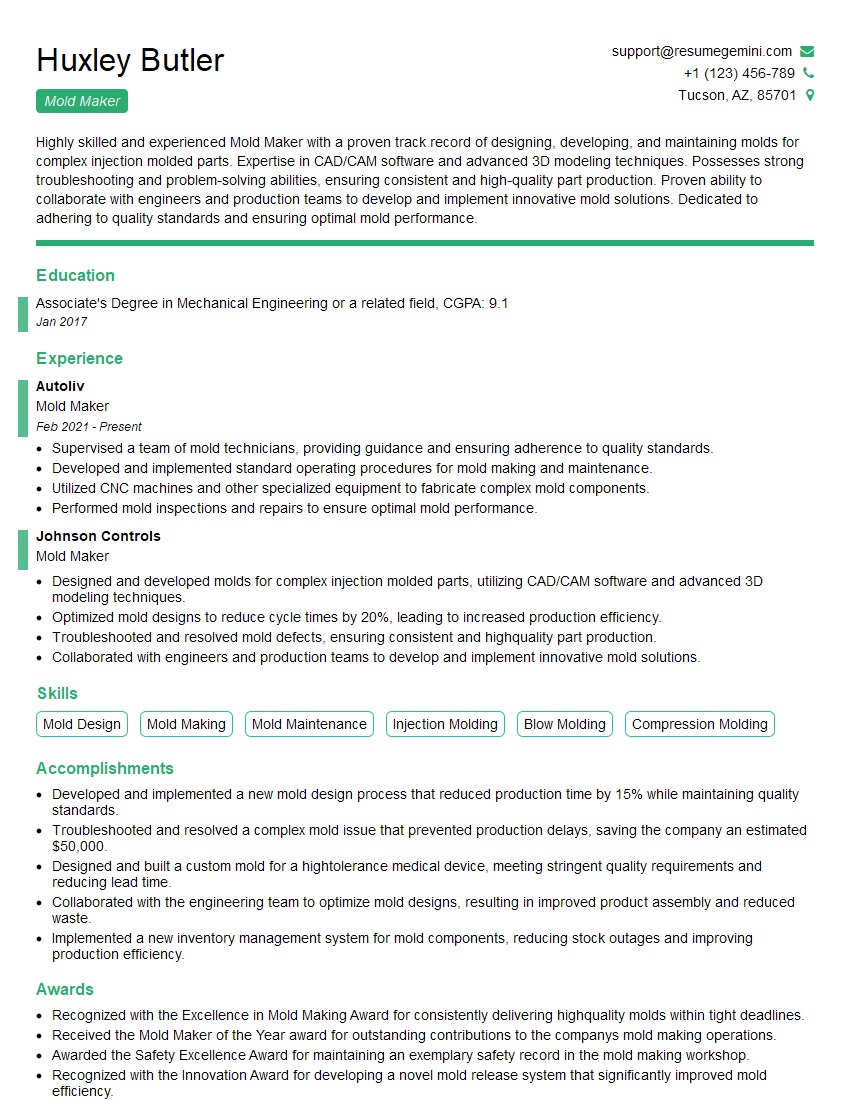
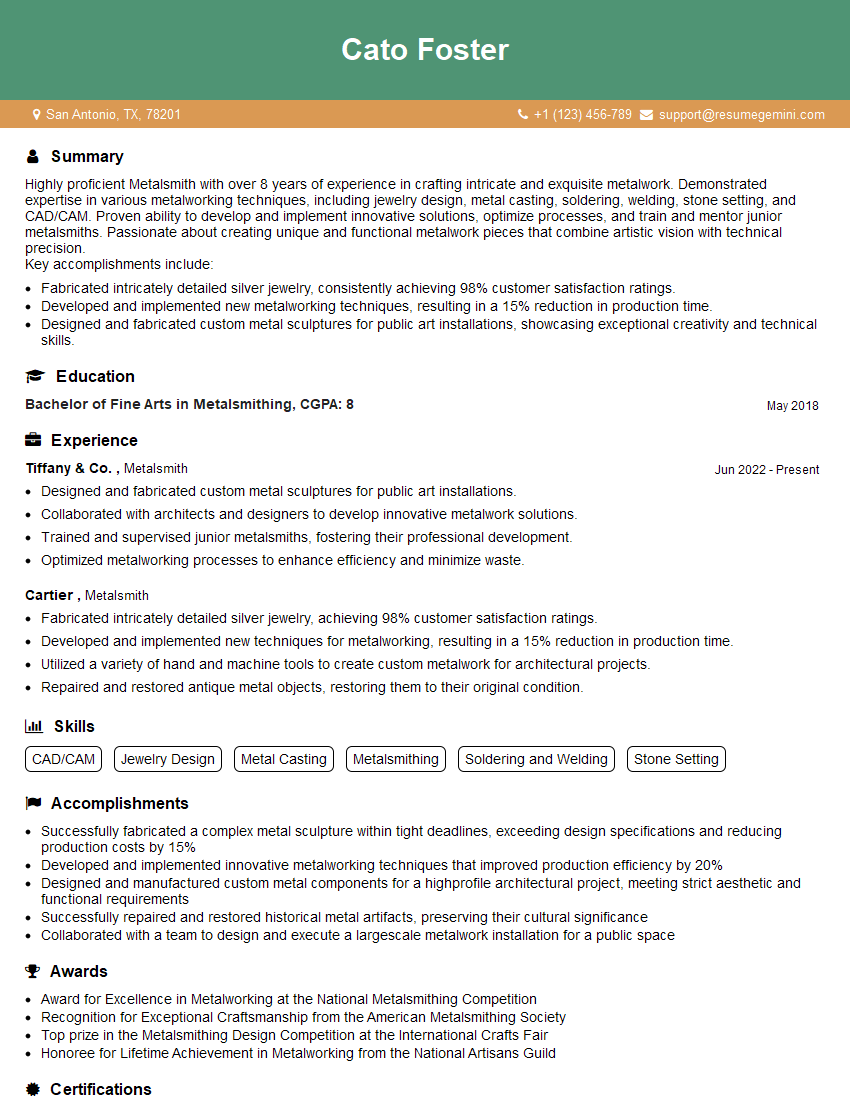
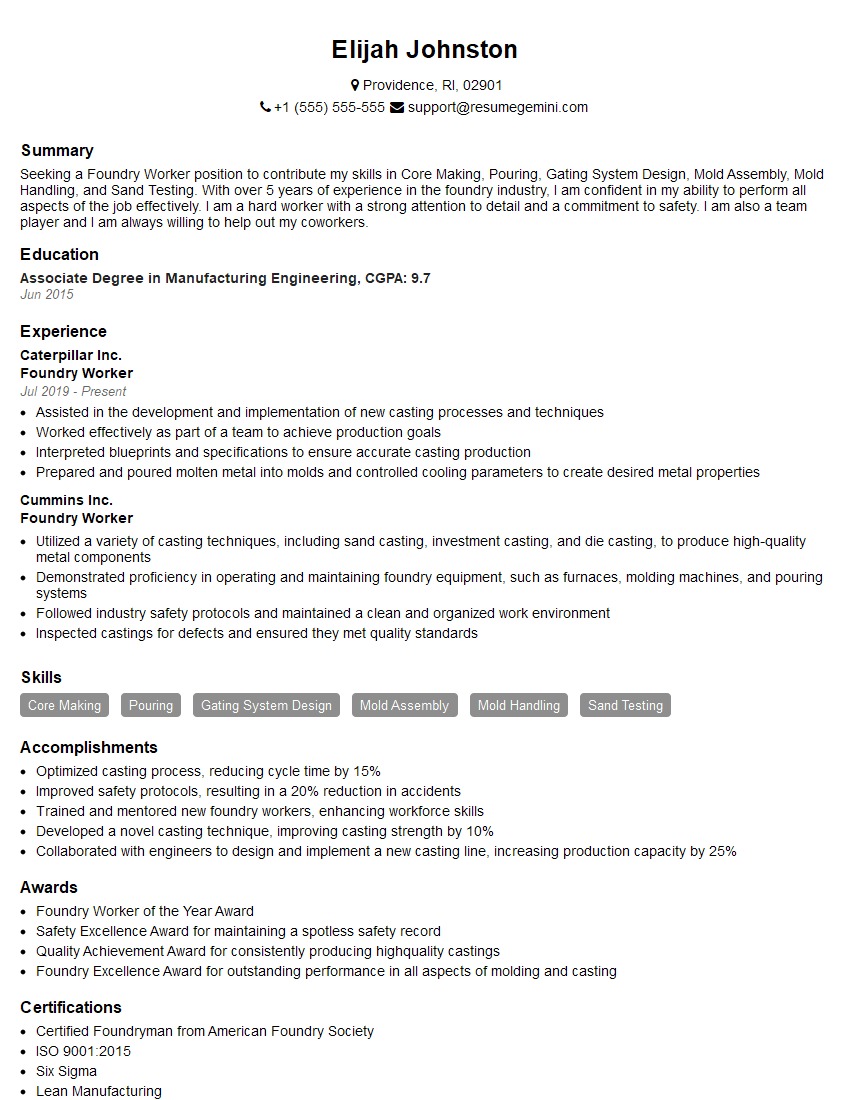
Mastering Lost Wax Casting opens doors to exciting career opportunities in jewelry making, sculpture, dental prosthetics, and more. To maximize your chances of landing your dream job, it’s crucial to present yourself with a strong, ATS-friendly resume. ResumeGemini is a trusted resource to help you build a professional and impactful resume that highlights your skills and experience effectively. We provide examples of resumes tailored to the Lost Wax Casting industry to help guide you.
Explore more articles
Users Rating of Our Blogs
Share Your Experience
We value your feedback! Please rate our content and share your thoughts (optional).
What Readers Say About Our Blog
Very informative content, great job.
good