Feeling uncertain about what to expect in your upcoming interview? We’ve got you covered! This blog highlights the most important Routing and Transportation Analysis interview questions and provides actionable advice to help you stand out as the ideal candidate. Let’s pave the way for your success.
Questions Asked in Routing and Transportation Analysis Interview
Q 1. Explain the difference between single-depot and multi-depot vehicle routing problems.
The core difference between single-depot and multi-depot vehicle routing problems lies in the number of starting points for the vehicles. In a single-depot problem, all vehicles originate from a single location (the depot) and return there after completing their routes. Think of a pizza delivery chain with one central kitchen – all deliveries start and end there. A multi-depot problem, however, involves multiple depots, allowing for more efficient routing by assigning vehicles to the depot closest to their assigned tasks. Imagine a logistics company with distribution centers across a city; deliveries are optimally assigned to the nearest center, reducing overall travel time and fuel consumption. The multi-depot problem is significantly more complex computationally, as it involves assigning vehicles to depots as well as optimizing routes within each depot’s service area.
Q 2. Describe different types of routing algorithms (e.g., Dijkstra’s, A*, Clarke & Wright).
Several algorithms tackle routing problems, each with its strengths and weaknesses:
- Dijkstra’s Algorithm: Finds the shortest path between a single source node and all other nodes in a graph. It’s excellent for finding the shortest route from a depot to a single customer, but it doesn’t scale well for multiple stops or vehicles.
- A* Search Algorithm: An informed search algorithm that uses a heuristic function to estimate the remaining distance to the goal. It’s faster than Dijkstra’s for finding shortest paths, particularly in large graphs, because it prioritizes promising paths. It’s still limited when dealing with multiple vehicles or complex constraints.
- Clarke & Wright Savings Algorithm: A heuristic algorithm specifically designed for the vehicle routing problem (VRP). It iteratively merges routes to reduce the total distance traveled. It’s relatively simple to implement and provides good solutions quickly, though it might not find the absolute optimal solution in all cases. It works particularly well when dealing with many delivery points from a single depot.
Choosing the right algorithm depends on the problem’s complexity and the desired level of optimality. For simple scenarios, Dijkstra’s or A* might suffice. For complex VRPs with multiple depots and constraints, more sophisticated algorithms like Clarke & Wright or metaheuristics (e.g., genetic algorithms, simulated annealing) are needed.
Q 3. How do you handle real-time traffic updates in route optimization?
Handling real-time traffic updates requires integrating real-time data feeds from sources like traffic sensors, GPS data, and mapping APIs into the route optimization process. This typically involves:
- Data Ingestion: Constantly receive and process real-time traffic information, such as speed, congestion levels, and incidents.
- Route Replanning: Use dynamic algorithms that can recalculate routes based on the updated traffic conditions. This might involve using a faster algorithm than initially used for the route calculation, or adjusting the weights used in the algorithms.
- Communication: Provide updated routes to drivers through mobile apps or in-cab navigation systems.
Techniques like incremental route optimization can help manage computational overhead by only recalculating parts of the route affected by traffic changes. This approach is crucial for large-scale operations to avoid slowing down systems.
For example, a delivery company might use a system that continuously monitors traffic and automatically reroutes vehicles when significant delays occur, ensuring on-time deliveries even during rush hour.
Q 4. What are the key performance indicators (KPIs) you would use to evaluate a transportation network?
Key Performance Indicators (KPIs) for evaluating a transportation network include:
- Total Distance/Fuel Consumption: Measures the efficiency of the routes.
- Delivery Time/On-Time Delivery Rate: Reflects the reliability and speed of the network.
- Cost per Delivery/Shipment: Shows the overall economic efficiency.
- Vehicle Utilization: Indicates how effectively vehicles are being used (e.g., miles per gallon, load capacity).
- Customer Satisfaction: Measures the overall experience and addresses things like delivery timeliness and customer responsiveness.
- Driver Productivity: Measures the efficiency of drivers, considering factors such as miles driven, deliveries completed, and breaks taken.
The specific KPIs chosen will depend on the business objectives. A company focused on cost reduction might prioritize cost per delivery, while a company focused on customer satisfaction might emphasize on-time delivery rate.
Q 5. Explain the concept of ‘last mile delivery’ and its challenges.
Last-mile delivery refers to the final leg of a shipment’s journey, from a transportation hub to the end customer’s location. It’s often the most expensive and challenging part of the process. Challenges include:
- High variability in delivery locations: Addresses vary widely in accessibility and congestion.
- Time windows and delivery expectations: Customers often expect narrow delivery windows, increasing pressure on logistics.
- High labor costs: Last-mile delivery often involves manual handling and individual deliveries, increasing costs.
- Traffic congestion and parking limitations: Urban environments pose significant challenges for efficient delivery.
- Increased package volume: The rise of e-commerce leads to a significant increase in last-mile deliveries, straining capacity.
Strategies for addressing these challenges include optimizing delivery routes, using alternative delivery methods (e.g., drones, lockers), employing efficient routing algorithms and creating effective delivery networks, and collaborating with customers to schedule deliveries.
Q 6. Describe your experience with different Transportation Management Systems (TMS).
I have extensive experience with various Transportation Management Systems (TMS), including Oracle Transportation Management, SAP Transportation Management, and Blue Yonder (formerly JDA) TMS. My experience encompasses implementing, configuring, and optimizing these systems for diverse clients across various industries. I’m proficient in using these systems to plan and optimize routes, manage fleets, track shipments, and analyze transportation costs. I’ve also worked with smaller, specialized TMS solutions tailored for specific delivery models like last-mile delivery or refrigerated transportation.
My experience extends beyond simply using these systems; I have a deep understanding of their underlying functionalities and can effectively tailor them to specific business needs. For example, I’ve worked on projects where we integrated a TMS with a warehouse management system (WMS) to streamline the entire logistics process, significantly reducing lead times and improving operational efficiency.
Q 7. How do you incorporate driver availability and constraints into route planning?
Incorporating driver availability and constraints into route planning is crucial for generating feasible and practical routes. This involves:
- Data Collection: Gathering information on driver schedules, breaks, locations, and any other constraints (e.g., specialized licenses or vehicle types).
- Constraint Programming: Formulating mathematical models that represent the constraints and integrate them into the route optimization algorithm. This ensures that only feasible routes are considered.
- Algorithm Selection: Choosing algorithms capable of handling constraints efficiently. Constraint programming techniques are often integrated into metaheuristics or exact algorithms.
- Route Validation: Checking the generated routes against the constraints to ensure feasibility before dispatching vehicles.
For example, a route optimization system might avoid assigning a driver to a route that exceeds their daily driving hours or requires them to work outside their specified geographical area. By considering these constraints, we ensure driver compliance, improve productivity, and maintain regulatory compliance.
Q 8. What are some common challenges in route optimization, and how do you address them?
Route optimization, while aiming for efficiency, faces several hurdles. One major challenge is data accuracy. Inaccurate travel times, distances, or location data directly impact the quality of the optimized route. For instance, relying on outdated map data can lead to significant delays. Another is real-time dynamism. Unexpected events like traffic jams, accidents, or road closures constantly alter the optimal path. Furthermore, constraints such as delivery windows, vehicle capacity, driver availability, and fuel costs add complexity. Finally, the scale of the problem can become computationally intensive, especially with large numbers of stops or vehicles.
Addressing these challenges requires a multi-pronged approach. Real-time data integration from GPS, traffic APIs, and incident reports is crucial for dynamic route adjustments. Robust algorithms, such as those incorporating stochastic programming or metaheuristics, can handle uncertainty and constraints. Regular data validation and updates ensure accuracy. Breaking down large problems into smaller, manageable subproblems (decomposition) can improve computational efficiency. Finally, visualization tools and dashboards provide insights for monitoring and refining the optimization process. For example, imagine a delivery company using real-time traffic data to reroute a truck encountering an unexpected road closure, thus preventing late deliveries.
Q 9. Explain your understanding of vehicle capacity constraints in route planning.
Vehicle capacity constraints are paramount in route planning. They refer to the limitations of a vehicle concerning its physical size and carrying capacity, impacting the number of items or volume that can be transported in a single trip. These constraints ensure that a delivery vehicle doesn’t overload, exceeding weight limits, causing safety hazards or legal violations. Ignoring them leads to inefficient routes and potential legal or safety problems.
Consider a delivery route for a furniture company. A large sofa might occupy significant space, limiting the number of other items that can be transported in the same truck. The route optimization algorithm must explicitly account for these dimensional and weight constraints. It needs to ensure no single route exceeds the truck’s weight or volume capacity. A solution could be to split the deliveries across multiple trucks or create separate delivery routes with the different capacity requirements. Advanced route optimization software handles these constraints, ensuring feasible and legal routes are generated.
Q 10. Describe different types of transportation networks and their characteristics.
Transportation networks vary considerably, each with unique characteristics impacting route planning. We can broadly categorize them:
- Road Networks: These are the most common, consisting of roads, highways, and streets. Their characteristics include varying road types (e.g., highways vs. local roads), speed limits, traffic patterns, and traffic signal timings. Road networks are often represented using graph data structures in route optimization.
- Rail Networks: These networks are characterized by fixed tracks, stations, and schedules. Key aspects include track capacity, train speeds, and switching times between tracks. Optimization often involves scheduling and routing trains to maximize efficiency and minimize delays.
- Air Networks: Air transportation uses airports as nodes and flight paths as edges. Constraints here include airspace regulations, flight times, airport capacity, and aircraft availability. Optimization focuses on minimizing costs, travel time, and aircraft utilization.
- Water Networks: These encompass rivers, canals, and oceans. Characteristics include water depth, currents, and port infrastructure. Optimization considers factors like water flow, vessel capacity, and docking times.
The choice of algorithm and optimization approach depends heavily on the specific type of network and its characteristics. For instance, Dijkstra’s algorithm might be suitable for simple road networks, while more complex algorithms are needed for multi-modal networks or networks with time-dependent factors.
Q 11. How do you handle unexpected events (e.g., accidents, road closures) during route planning?
Handling unexpected events during route planning is critical for robustness and efficiency. A reactive approach, rather than a purely proactive one, is often necessary. This involves incorporating real-time data and dynamic route adjustments.
A multi-stage process is often used: Monitoring: Continuously monitor traffic conditions, weather updates, and incident reports using real-time data feeds (e.g., from traffic APIs or GPS trackers). Detection: When an unexpected event occurs (e.g., road closure), the system detects the disruption through the monitoring system. Replanning: The route optimization algorithm recalculates the optimal route considering the new constraints imposed by the unexpected event. This often involves using algorithms designed for dynamic route planning, such as those based on A* search or other dynamic programming techniques. Communication: Update drivers or other stakeholders with new routes and estimated times of arrival. Evaluation: After the event, the system may analyze the performance of the replanning process to identify areas for improvement in future event handling. This iterative process ensures the route remains efficient and feasible despite unexpected disruptions.
Q 12. Explain your experience with Geographic Information Systems (GIS) for transportation analysis.
Geographic Information Systems (GIS) are indispensable in transportation analysis. I have extensive experience using GIS software (like ArcGIS or QGIS) to visualize, analyze, and manage spatial data related to transportation networks. This involves:
- Network data management: Creating and maintaining accurate representations of road networks, including attributes like speed limits, road types, and capacity.
- Spatial analysis: Conducting spatial queries to identify optimal locations for facilities, assess accessibility, and analyze traffic patterns.
- Route optimization: Integrating GIS data with route optimization algorithms to generate efficient routes considering geographical constraints and real-world factors.
- Visualization and reporting: Creating maps, charts, and reports to communicate findings effectively to stakeholders.
For example, I used ArcGIS to model the impact of a proposed new highway on traffic flow in a city, considering existing road networks, traffic volumes, and land use. The analysis helped determine the optimal location for the highway and its potential effect on congestion.
Q 13. How do you evaluate the cost-effectiveness of different transportation modes?
Evaluating the cost-effectiveness of different transportation modes requires a comprehensive approach, comparing not just direct costs but also indirect costs and benefits. Key factors to consider include:
- Direct Costs: These are readily quantifiable and include fuel costs, vehicle maintenance, driver wages, and tolls.
- Indirect Costs: These are less tangible but still significant. Examples include time costs (lost productivity due to longer travel times), environmental costs (emissions), and accident risks.
- Benefits: Consider factors like speed, reliability, and capacity. Faster delivery times might lead to increased customer satisfaction and reduced inventory costs.
A cost-benefit analysis (CBA) is often used to compare different modes. This involves assigning monetary values to all costs and benefits, calculating a net present value (NPV), and comparing the NPVs of different options. For example, comparing trucking and rail transport for long-distance freight. Trucking might have lower initial costs per unit but higher fuel consumption and potential delays due to traffic. Rail transport might have higher fixed costs but lower variable costs and higher capacity. The CBA would help determine the overall cost-effectiveness of each option based on the specific context and volume of goods.
Q 14. Describe your experience with optimization software (e.g., CPLEX, Gurobi).
I possess extensive experience using optimization software like CPLEX and Gurobi for solving complex transportation problems. These solvers allow me to formulate and solve large-scale mathematical optimization models. My expertise includes:
- Model Formulation: Defining the objective function (e.g., minimizing total distance, cost, or time) and constraints (e.g., vehicle capacity, time windows, precedence constraints) using mathematical programming languages.
- Solver Selection: Choosing the appropriate solver (e.g., linear programming, mixed-integer programming, non-linear programming) based on the problem characteristics.
- Model Implementation: Writing code (e.g., Python with the docplex library for CPLEX or the gurobipy library for Gurobi) to implement the mathematical model and interact with the solver.
- Solution Analysis: Interpreting the solver’s output, analyzing the optimal solution, and identifying potential areas for improvement.
For example, I used CPLEX to optimize a large-scale logistics network for a manufacturing company, resulting in a 15% reduction in transportation costs. The model included constraints on vehicle capacity, delivery deadlines, and driver working hours. The ability to handle integer variables was key to addressing real-world restrictions.
Q 15. Explain your experience with data analysis and visualization techniques for transportation data.
Analyzing transportation data involves more than just crunching numbers; it’s about uncovering actionable insights. My experience encompasses a wide range of techniques, from descriptive statistics to sophisticated predictive modeling. I’m proficient in using tools like SQL, Python (with libraries such as Pandas, NumPy, and Scikit-learn), and R to clean, process, and analyze large datasets. This includes everything from GPS tracking data to trip logs, demographic information, and traffic patterns.
Visualization is crucial for communicating these insights effectively. I use tools like Tableau and Power BI to create interactive dashboards and reports that show trends, identify anomalies, and facilitate data-driven decision-making. For instance, I once used heatmaps to visualize accident hotspots in a city, allowing for targeted safety improvements. Another project involved creating animated visualizations of traffic flow to demonstrate the impact of proposed road closures. The goal is always to present complex data in a clear, concise, and compelling manner to both technical and non-technical audiences.
Career Expert Tips:
- Ace those interviews! Prepare effectively by reviewing the Top 50 Most Common Interview Questions on ResumeGemini.
- Navigate your job search with confidence! Explore a wide range of Career Tips on ResumeGemini. Learn about common challenges and recommendations to overcome them.
- Craft the perfect resume! Master the Art of Resume Writing with ResumeGemini’s guide. Showcase your unique qualifications and achievements effectively.
- Don’t miss out on holiday savings! Build your dream resume with ResumeGemini’s ATS optimized templates.
Q 16. How do you ensure the safety and compliance of your transportation routes?
Ensuring route safety and compliance is paramount. My approach is multifaceted and begins with rigorous route planning, leveraging GIS software and real-time traffic data to identify the safest and most efficient paths. This includes considering factors such as speed limits, road conditions, weather forecasts, and known hazard zones. We incorporate driver safety training programs, regular vehicle maintenance checks, and the implementation of telematics systems for real-time monitoring and driver behavior analysis. Further, we ensure strict adherence to all relevant regulations – including hours-of-service rules, weight restrictions, and hazardous materials transportation regulations.
Proactive risk management is key. We establish robust protocols for incident reporting and investigation, constantly evaluating routes and procedures to identify areas for improvement. This also includes using predictive analytics to anticipate potential risks, such as congestion or adverse weather, enabling preemptive measures.
Q 17. Explain your experience with forecasting transportation demand.
Forecasting transportation demand is crucial for optimizing resource allocation and ensuring efficient service. I’ve employed various time series forecasting methods, including ARIMA, exponential smoothing, and Prophet. The choice of method depends on the data characteristics and the desired level of accuracy. For instance, ARIMA models work well for relatively stable demand patterns, while exponential smoothing is effective when there’s a trend or seasonality. Prophet, developed by Facebook, is particularly useful for handling irregular patterns and external factors.
Beyond these statistical methods, I also incorporate external data sources into my forecasts. This might include economic indicators, population growth projections, or planned construction projects that could impact traffic patterns. A recent project involved forecasting package volume for a major e-commerce company using a combination of historical data, promotional calendars, and economic indicators – resulting in a 15% reduction in transportation costs.
Q 18. Describe your experience with developing and implementing transportation strategies.
Developing and implementing transportation strategies involves a holistic approach, from strategic planning to operational execution. This starts with a thorough understanding of the client’s needs and objectives. I typically begin by conducting a comprehensive assessment of the current transportation system, identifying its strengths and weaknesses. This often involves analyzing data, interviewing stakeholders, and conducting site visits.
Based on this assessment, I develop customized strategies that incorporate route optimization, fleet management, and technology solutions to improve efficiency, reduce costs, and enhance service levels. For example, I helped a logistics company implement a route optimization system that reduced fuel consumption by 10% and delivery times by 15%. This involved using algorithms to design efficient routes, considering factors such as delivery windows, vehicle capacity, and traffic conditions. Successful implementation requires close collaboration with all stakeholders, ongoing monitoring, and continuous improvement.
Q 19. What is your understanding of the traveling salesman problem (TSP)?
The Traveling Salesperson Problem (TSP) is a classic optimization problem where the goal is to find the shortest possible route that visits a set of locations exactly once and returns to the starting point. It’s a computationally complex problem, especially for a large number of locations, and there’s no single perfect solution.
Approaches to solving the TSP range from simple heuristics like nearest neighbor algorithms (which are fast but may not find the optimal solution) to more sophisticated methods such as genetic algorithms and simulated annealing, which can find better solutions but require more computational resources. The choice of algorithm depends on the size of the problem and the acceptable trade-off between solution quality and computational time. In real-world applications, approximation algorithms are often used, aiming to find a ‘good enough’ solution within a reasonable time frame.
Q 20. How do you incorporate customer service level requirements into route optimization?
Incorporating customer service level requirements into route optimization is essential for maintaining customer satisfaction. This typically involves defining specific service level agreements (SLAs), such as delivery windows, maximum travel times, and order accuracy. These SLAs are then integrated into the route optimization model as constraints or objectives.
For example, if a customer requires delivery between 9 am and 11 am, the route optimization algorithm will ensure that the delivery vehicle arrives within this window. This might involve adjusting the route, using faster vehicles, or prioritizing certain deliveries. Often, we use a weighted approach, balancing factors like travel time, cost, and customer service requirements. Trade-off analysis is important to understand the impact of prioritizing one factor over others. For instance, meeting tighter delivery windows might increase travel costs. We use data analysis to determine the optimal balance.
Q 21. Explain your experience with different types of transportation models (e.g., deterministic, stochastic).
Transportation models can be broadly categorized as deterministic or stochastic, reflecting different assumptions about the input data. Deterministic models assume that all input parameters are known with certainty. For instance, a deterministic model might use fixed travel times based on historical averages. These models are simpler to build but might not accurately reflect real-world variability.
Stochastic models, on the other hand, explicitly account for uncertainty in the input data. They often involve probabilistic distributions for travel times, demand, or other variables. Stochastic models are more realistic and can provide a more robust analysis, but they are also more complex to develop and solve. For example, a stochastic model might incorporate the probability of traffic delays or variations in customer demand. I have experience using both types of models, choosing the appropriate approach based on the specific problem and the availability of data. The choice often involves a trade-off between model complexity and accuracy.
Q 22. How do you balance cost optimization with service level requirements in route planning?
Balancing cost optimization and service level requirements in route planning is a delicate act of negotiation. It’s like trying to find the perfect spot on a seesaw – too much focus on one side, and the other will suffer. We achieve this balance through a multi-faceted approach.
Mathematical Modeling: We use algorithms like Vehicle Routing Problem (VRP) solvers, which incorporate both cost functions (fuel, driver wages, vehicle maintenance) and service level constraints (delivery time windows, order priorities). These algorithms find solutions that minimize cost while respecting all specified constraints.
Scenario Analysis: We explore different scenarios by tweaking parameters. For instance, we might run simulations comparing a route prioritizing speed (potentially higher fuel costs) against one prioritizing fuel efficiency (potentially longer travel times). This helps visualize the trade-offs and select the optimal balance.
Data-Driven Decision Making: Historical data on delivery times, traffic patterns, and fuel consumption are crucial. Analyzing this data helps refine our cost estimates and service level predictions, enabling more accurate optimization.
Iterative Improvement: Route optimization is not a one-time process. We continuously monitor actual performance against planned routes, identify deviations, and use that information to improve our models and algorithms over time. This iterative approach leads to continuous improvement in both cost and service levels.
Example: Imagine a delivery company serving a city. We might model the cost of fuel and driver time, while setting constraints like maximum delivery time to each customer (service level) and vehicle capacity. The optimization algorithm would then find the route that minimizes total cost while ensuring all deliveries are made within the specified time windows.
Q 23. Describe your experience with different routing software or platforms.
Throughout my career, I’ve had extensive experience with various routing software and platforms. My proficiency spans from commercial-grade solutions to open-source tools, allowing me to adapt my approach based on the specific project needs and available resources.
Commercial Solutions: I’ve worked extensively with platforms like Oracle Transportation Management (OTM), SAP Transportation Management (TM), and Blue Yonder. These systems offer sophisticated functionalities including VRP optimization, real-time tracking, and advanced analytics dashboards. Their strength lies in their comprehensive feature set and robust scalability, suitable for large-scale operations.
Open-Source Tools: For smaller-scale projects or specific research tasks, I’ve leveraged open-source libraries like Google OR-Tools and Python’s networkx. These tools provide flexibility and allow for customized algorithm implementations, offering a cost-effective alternative when the scale of the problem justifies it. For example, I’ve utilized Google OR-Tools to model and solve a complex VRP with time windows and multiple depots in a rural delivery context.
GIS Integration: My experience also encompasses integrating routing software with Geographic Information Systems (GIS) platforms like ArcGIS and QGIS. This integration is crucial for visualizing routes, analyzing spatial data, and incorporating real-time traffic information for dynamic route adjustments.
My expertise extends to evaluating the suitability of different platforms based on project requirements, including factors like data volume, computational resources, budget constraints, and the specific algorithms required.
Q 24. What are the key considerations for designing a sustainable transportation network?
Designing a sustainable transportation network requires a holistic approach, considering environmental, social, and economic factors. It’s about finding the sweet spot where efficiency and sustainability go hand in hand.
Mode Optimization: Prioritize using more sustainable transportation modes like electric vehicles, bicycles, or public transport whenever feasible. Analyze the carbon footprint of each mode and strive to minimize emissions.
Route Optimization for Efficiency: Efficient routes minimize fuel consumption and vehicle idling, thereby reducing emissions and operational costs. This often involves advanced algorithms that take into account factors like traffic congestion and road gradients.
Infrastructure Improvements: Advocate for investments in infrastructure that supports sustainable modes of transport, such as dedicated bike lanes, electric vehicle charging stations, and improved public transit systems. This often involves collaboration with city planners and policymakers.
Last-Mile Optimization: Focus on efficient and sustainable last-mile delivery solutions. This could involve consolidation of deliveries, using smaller, electric vehicles, or exploring delivery options like cargo bikes or drones in suitable areas.
Data-Driven Monitoring and Reporting: Regularly monitor key performance indicators (KPIs) related to sustainability, such as fuel consumption, emissions, and modal share. This data provides valuable insights for continuous improvement and supports evidence-based decision making.
Example: A city might aim to reduce its carbon footprint by implementing a smart logistics system that optimizes delivery routes for electric vehicles, uses real-time traffic data to avoid congestion, and encourages the use of cargo bikes for last-mile deliveries in the city center.
Q 25. How do you handle the complexities of integrating different data sources for transportation analysis?
Integrating diverse data sources for transportation analysis can be challenging, but crucial for accurate and effective decision making. It’s like assembling a complex puzzle – each piece is essential, and the challenge lies in fitting them together correctly.
Data Standardization: The first critical step is standardizing data formats. Different sources might use varying units, coordinate systems, and data structures. Ensuring consistency is crucial for accurate integration and analysis. This often involves using data transformation and cleaning techniques.
Data Validation and Quality Control: Data quality is paramount. Implement rigorous validation checks to identify and address errors or inconsistencies. This may involve outlier detection, plausibility checks, and comparison against known reliable sources.
Database Management: Utilize a robust database management system (DBMS) to store and manage the integrated data efficiently. Relational databases are particularly well-suited for handling structured data from multiple sources.
Data Integration Tools: Leverage data integration tools and ETL (Extract, Transform, Load) processes to automate the data integration workflow. These tools help streamline the process, minimize manual intervention, and ensure data consistency.
API Integration: Use application programming interfaces (APIs) to access and integrate data from various online sources, such as real-time traffic data providers, weather services, and mapping services. APIs provide a standardized way to access and retrieve data programmatically.
Example: Integrating data from a GPS tracking system, traffic management systems, and a weather API allows for real-time route optimization that dynamically adapts to changing traffic conditions and weather events, leading to more efficient and reliable transportation operations.
Q 26. Explain your understanding of various routing constraints, such as time windows and delivery priorities.
Routing constraints are essential for creating realistic and feasible routes. They represent real-world limitations and priorities that must be respected. Think of them as the rules of the road for our optimization algorithms.
Time Windows: These specify a time range within which a delivery or visit must occur. For example, a delivery might have a time window of 10:00 AM to 12:00 PM, meaning the delivery must be made within this timeframe. Violating time windows would result in penalties (e.g., late delivery fees).
Delivery Priorities: This defines the order in which deliveries should be made. Some deliveries might have higher priority than others, due to factors like product perishability or customer importance. The algorithm should prioritize high-priority deliveries, possibly at the expense of minor increases in overall travel time or cost.
Vehicle Capacity: This constraint limits the total amount of goods or passengers a vehicle can carry. The algorithm must ensure that the total volume or weight of items assigned to any single vehicle does not exceed its capacity.
Vehicle Types: Different vehicles might have different capabilities and limitations. For example, a small delivery van might not be able to access narrow streets, while a larger truck might have restrictions on where it can be driven (e.g. weight limits on bridges). The algorithm needs to ensure route assignments are compatible with vehicle specifications.
Driver Breaks and Rest Periods: Legal and safety regulations often mandate breaks for drivers. These constraints ensure that drivers comply with legal regulations and avoid driver fatigue.
Example: A courier service with time windows for each delivery, priority levels for urgent packages, and vehicle capacity restrictions would require a route optimization algorithm capable of handling all these constraints simultaneously.
Q 27. How would you approach a situation where route optimization software provides an unrealistic solution?
Encountering unrealistic solutions from route optimization software is a common challenge. It often highlights flaws in the input data, model parameters, or the algorithm itself. It’s like following a map with incorrect information – you’ll end up somewhere unexpected.
Data Verification: The first step is to thoroughly check the input data for errors. Are the travel times accurate? Are the locations correctly geocoded? Are the vehicle capacities realistic? Inaccurate data is a common source of unrealistic solutions.
Parameter Tuning: Adjust the parameters of the optimization model. For instance, if the algorithm is generating routes that are excessively long, we might need to adjust the weight assigned to travel time in the cost function. Similarly, we may need to fine-tune time window penalties or capacity limits.
Algorithm Evaluation: Assess the appropriateness of the algorithm used. A specific algorithm might be suitable for one type of problem but not another. For example, a simple nearest-neighbor approach might not handle complex constraints like time windows effectively.
Constraint Relaxation: Consider relaxing some constraints if feasible. For example, if stringent time windows are causing unrealistic results, we might explore slightly widening the windows to find a more practical solution, assessing the trade-offs carefully.
Human-in-the-Loop Optimization: In some cases, it might be beneficial to combine automated optimization with human expertise. A human planner can review the suggested solution and make adjustments based on their knowledge of local conditions, traffic patterns, or unforeseen circumstances.
Example: If the software suggests a route that involves driving through a closed road, it points towards a problem in the input data (road status information). The solution would be to update the data to reflect the road closure and re-run the optimization.
Key Topics to Learn for Routing and Transportation Analysis Interview
- Network Optimization Algorithms: Understand Dijkstra’s algorithm, Floyd-Warshall algorithm, and their applications in finding optimal routes. Consider exploring more advanced algorithms like A* search.
- Vehicle Routing Problem (VRP): Learn about different types of VRP (e.g., Capacitated VRP, VRP with Time Windows) and their practical applications in logistics and delivery optimization. Practice solving sample problems to understand the complexities involved.
- Transportation Modeling: Familiarize yourself with different transportation models (e.g., assignment, transshipment) and their use in supply chain analysis. Be prepared to discuss the assumptions and limitations of these models.
- Geographic Information Systems (GIS): Understand how GIS tools are used in visualizing routes, analyzing spatial data, and optimizing transportation networks. Highlight your experience with relevant GIS software.
- Data Analysis and Visualization: Demonstrate proficiency in analyzing large datasets related to transportation, identifying trends, and visualizing results using appropriate tools (e.g., Excel, Tableau, Python libraries).
- Optimization Software and Tools: Showcase your familiarity with relevant software and tools used for routing and transportation analysis. This could include commercial packages or open-source solutions.
- Supply Chain Management Principles: Understand the broader context of routing and transportation within the supply chain. Be able to discuss inventory management, warehousing, and other related aspects.
- Real-world Case Studies: Prepare to discuss real-world applications of routing and transportation analysis. Consider exploring case studies from different industries to broaden your understanding.
Next Steps
Mastering Routing and Transportation Analysis opens doors to exciting career opportunities in logistics, supply chain management, and transportation planning. These roles offer intellectual stimulation, problem-solving challenges, and the satisfaction of optimizing complex systems. To maximize your job prospects, creating a compelling and ATS-friendly resume is crucial. ResumeGemini is a trusted resource that can help you build a professional resume that highlights your skills and experience effectively. We provide examples of resumes tailored to Routing and Transportation Analysis to help you get started. Invest the time to craft a strong resume – it’s your first impression with potential employers.
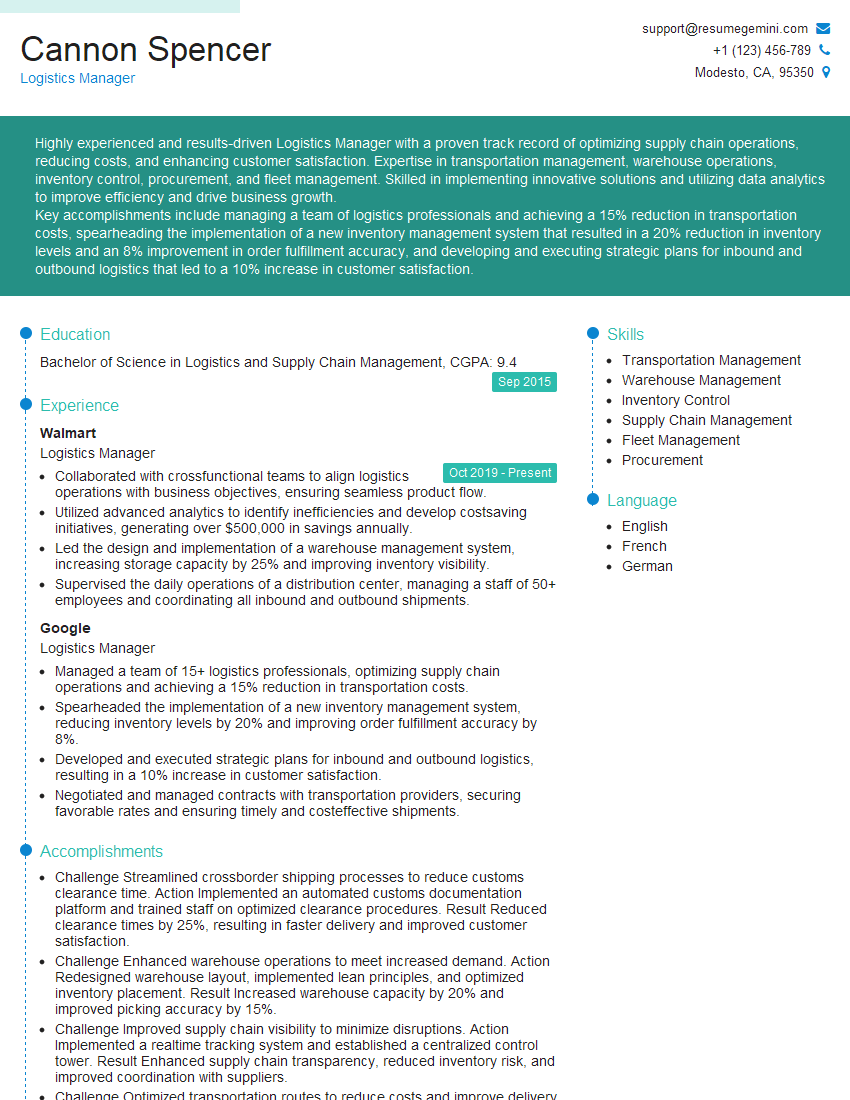
Logistics Manager Resume Sample
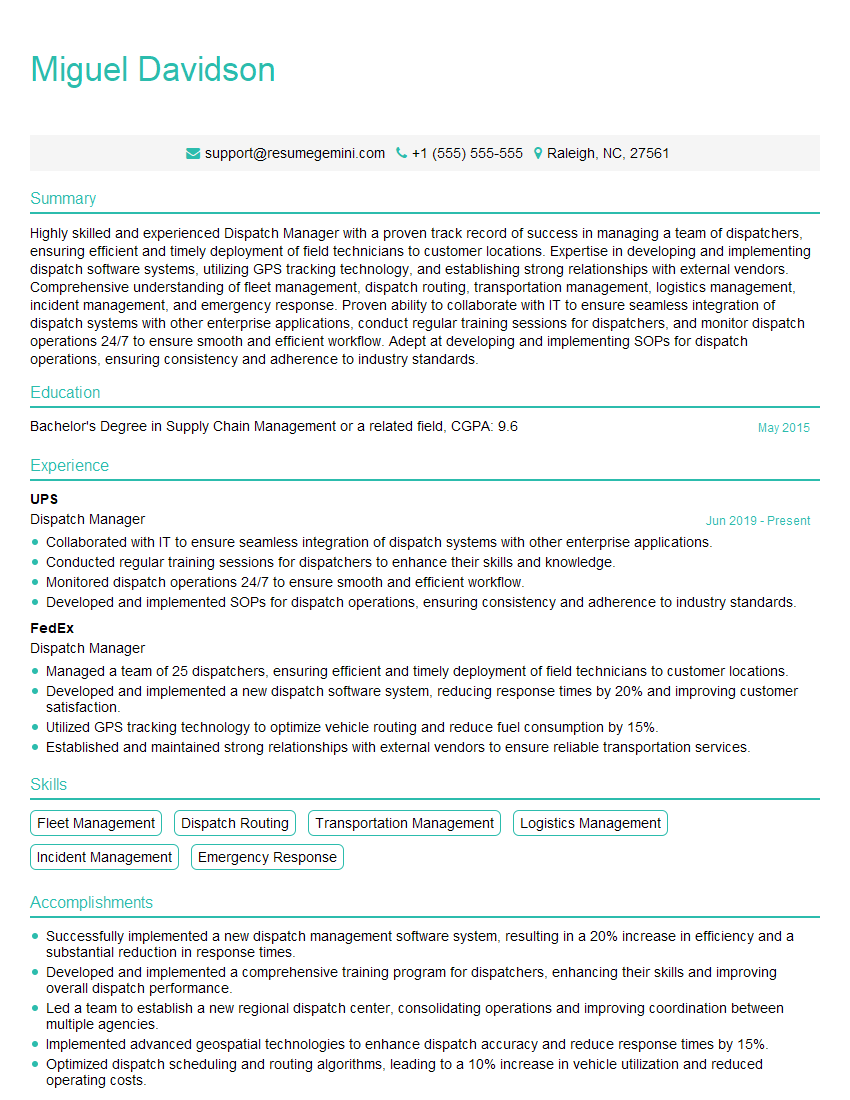
Dispatch Manager Resume Sample
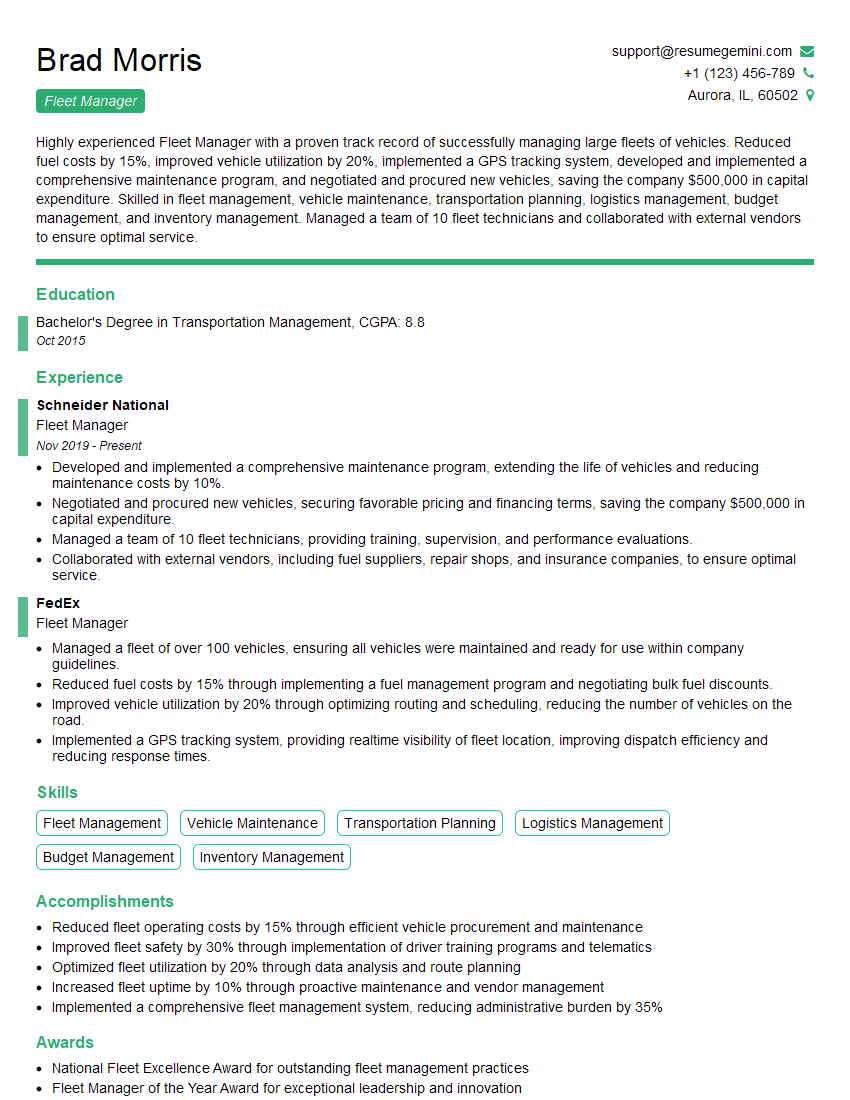
Fleet Manager Resume Sample
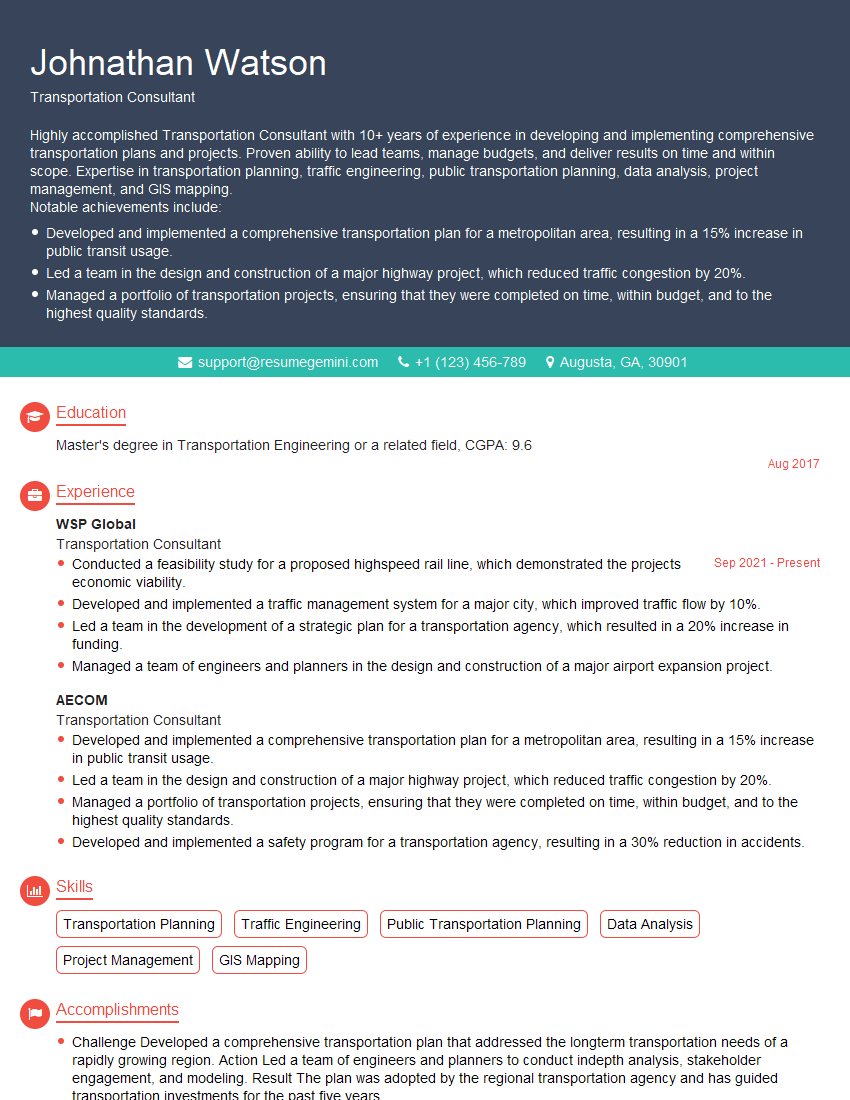
Transportation Consultant Resume Sample
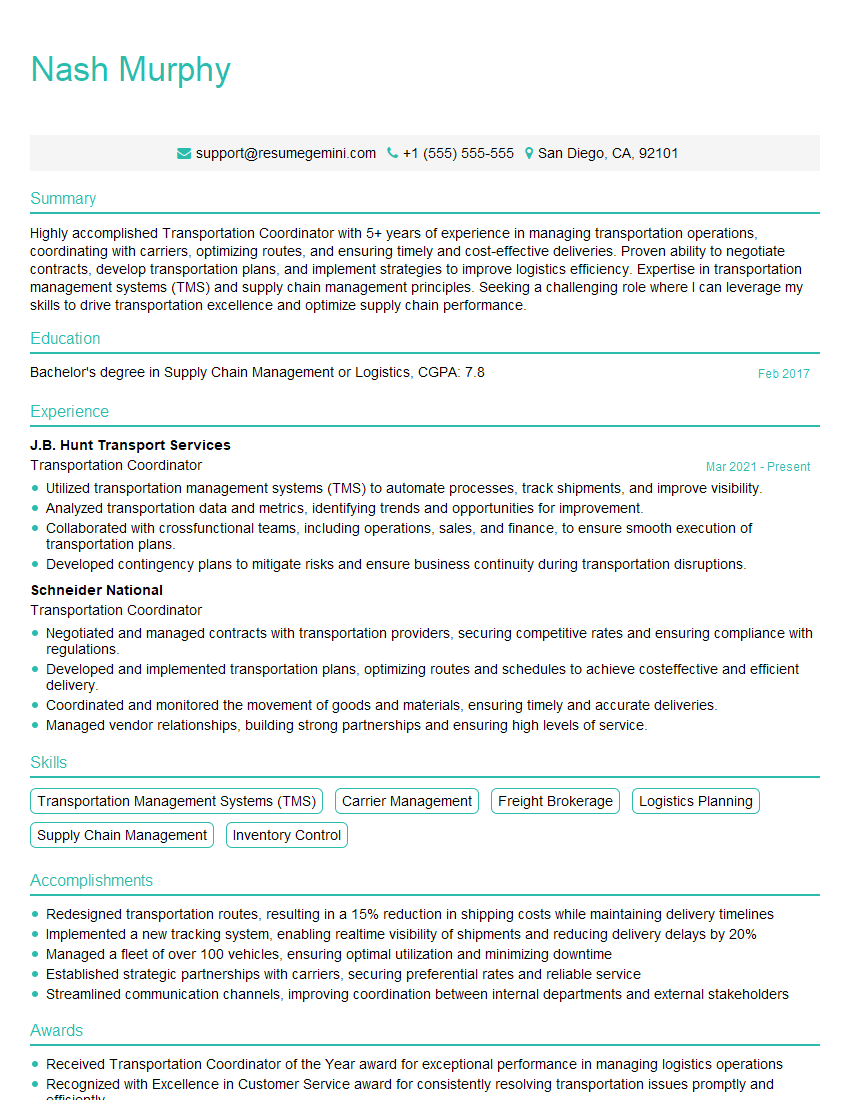
Transportation Coordinator Resume Sample
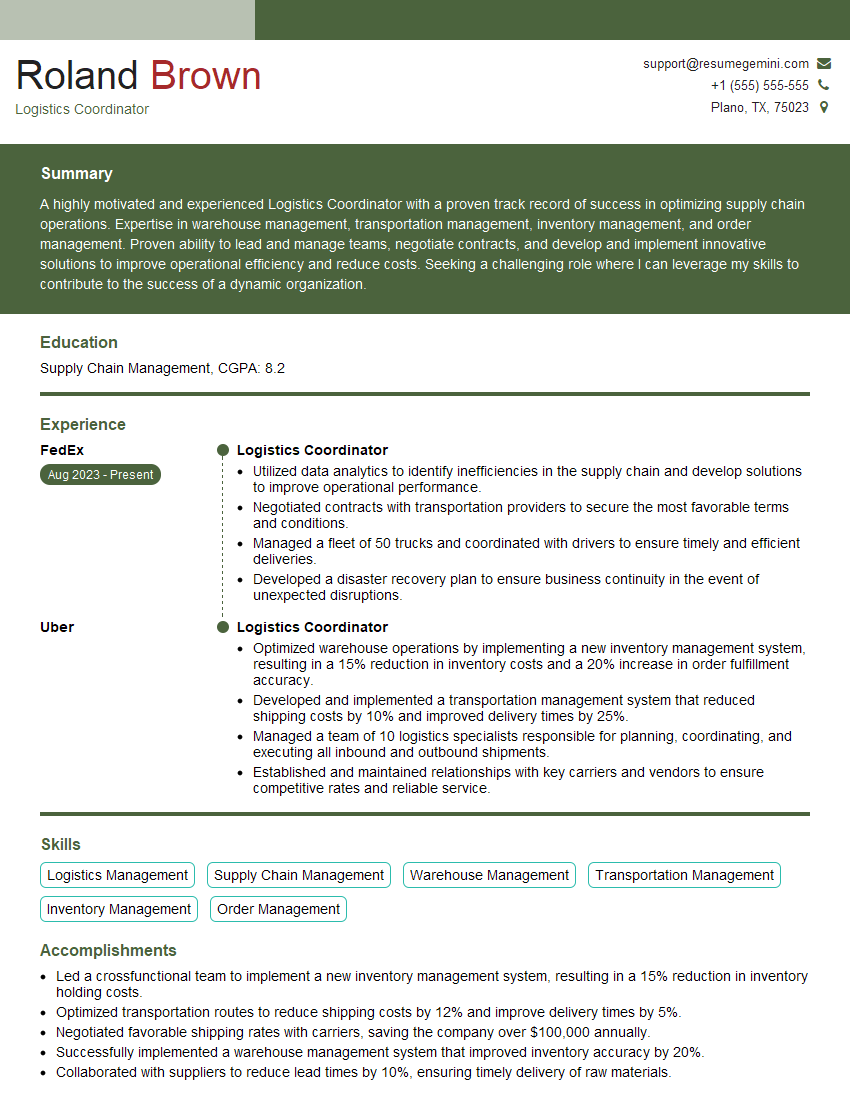
Logistics Coordinator Resume Sample
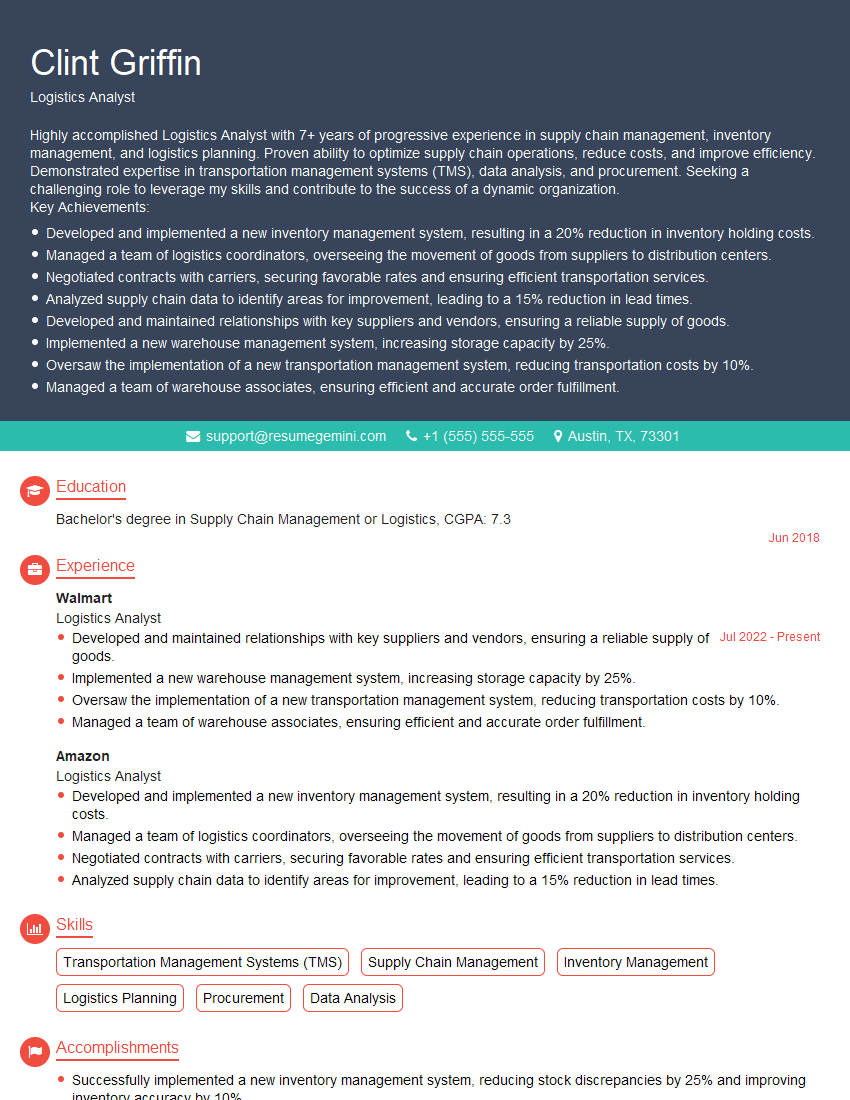
Logistics Analyst Resume Sample
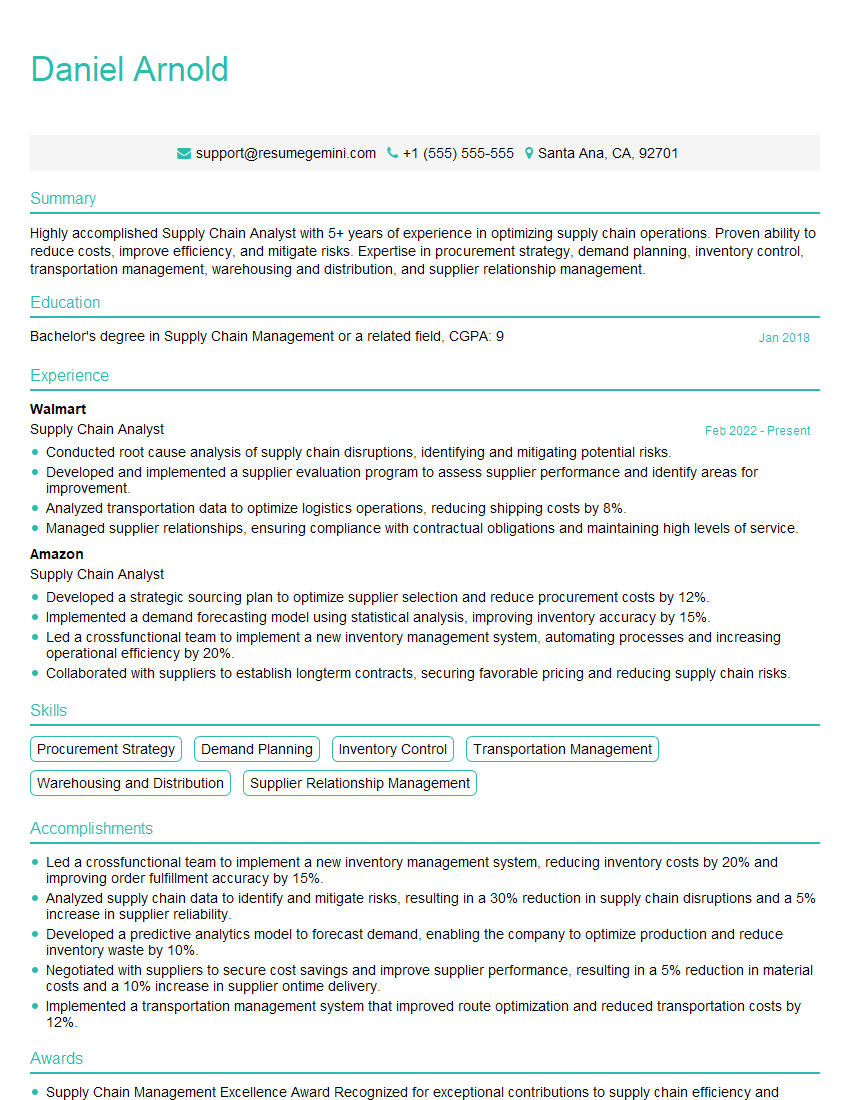
Supply Chain Analyst Resume Sample
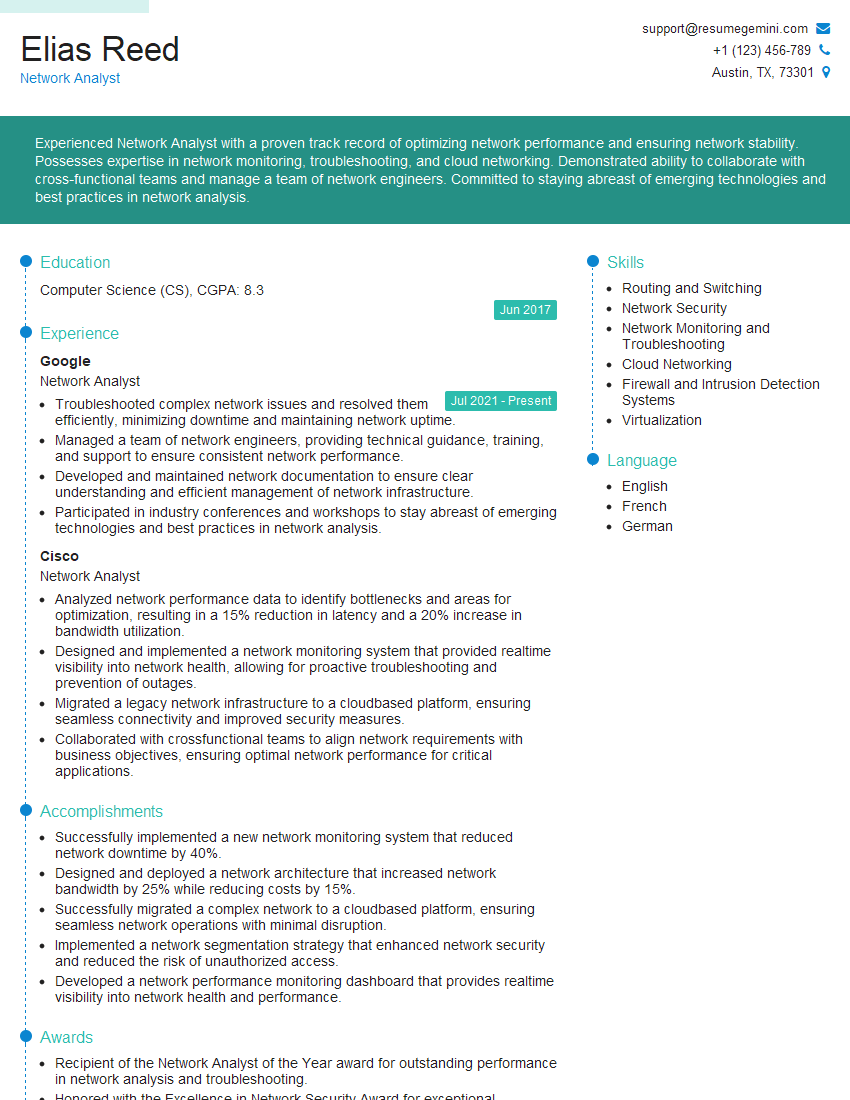
Network Analyst Resume Sample
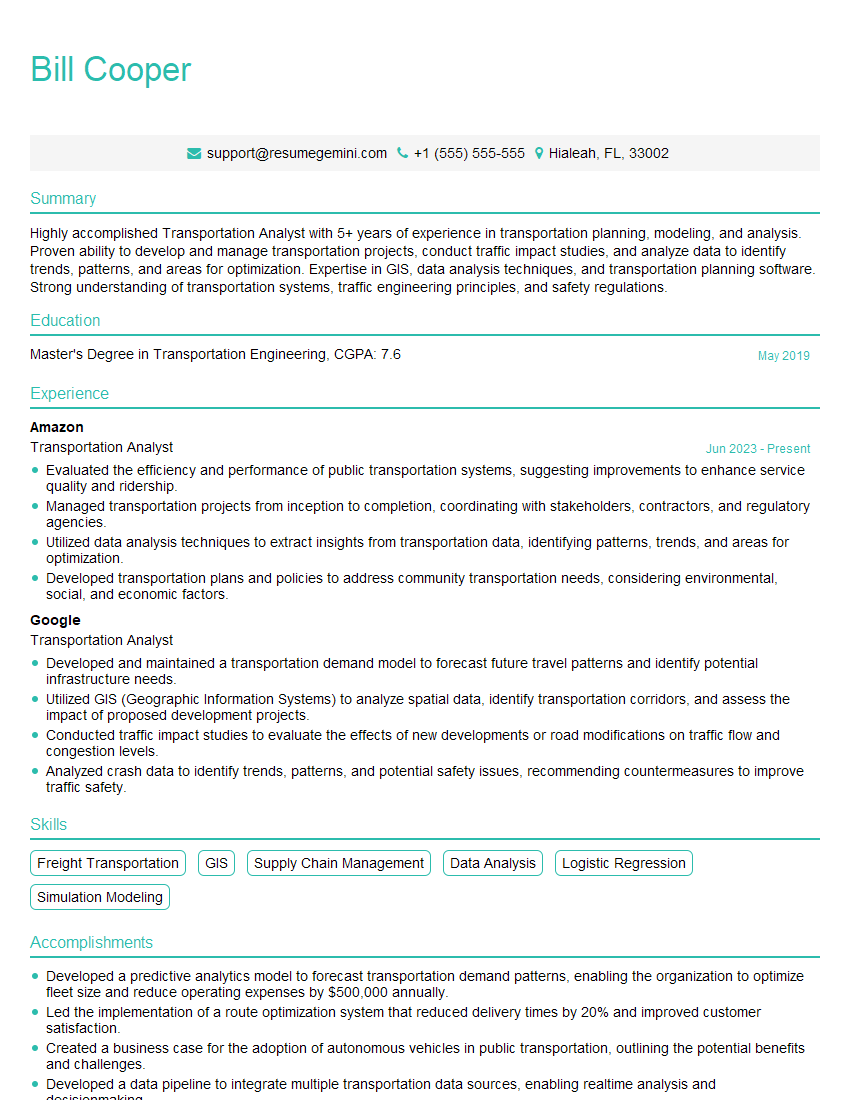
Transportation Analyst Resume Sample
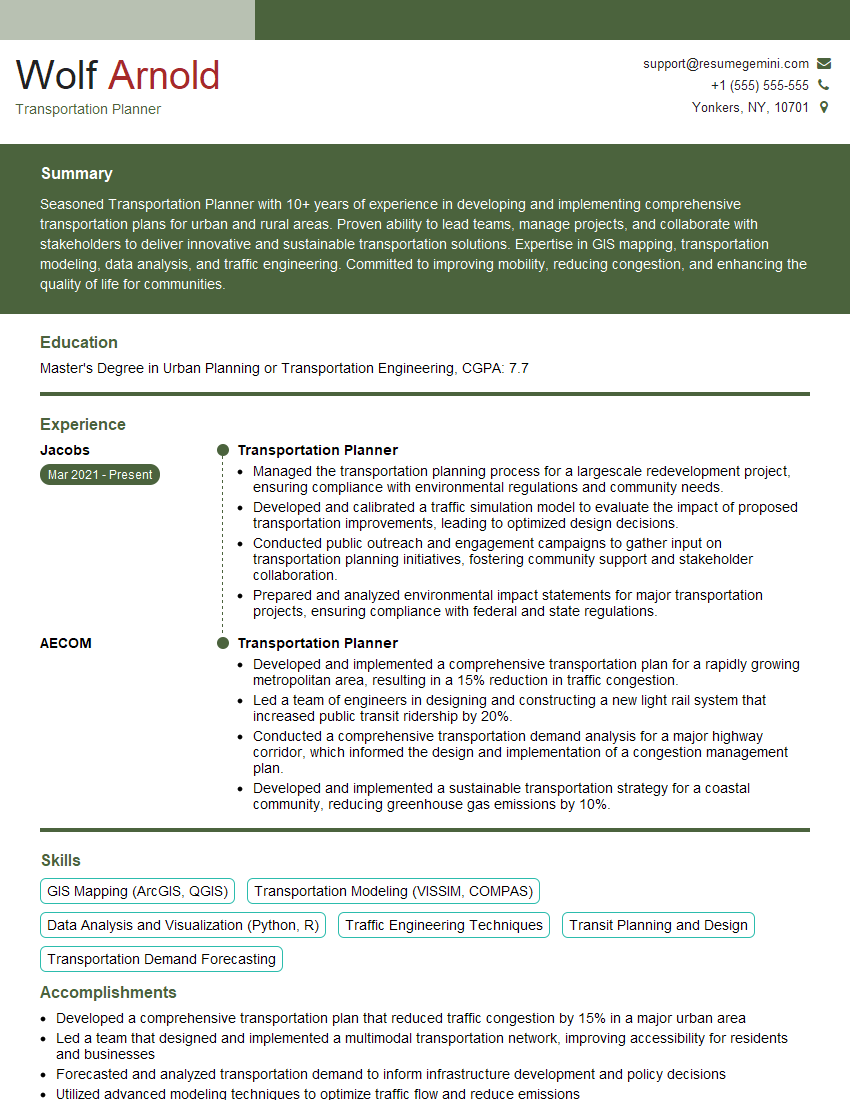
Transportation Planner Resume Sample
Explore more articles
Users Rating of Our Blogs
Share Your Experience
We value your feedback! Please rate our content and share your thoughts (optional).
What Readers Say About Our Blog
Very informative content, great job.
good