Unlock your full potential by mastering the most common Lean Warehouse Management interview questions. This blog offers a deep dive into the critical topics, ensuring you’re not only prepared to answer but to excel. With these insights, you’ll approach your interview with clarity and confidence.
Questions Asked in Lean Warehouse Management Interview
Q 1. Define Lean principles and their application in warehouse management.
Lean principles are a systematic approach to eliminating waste and maximizing value in any process. In warehouse management, this translates to optimizing space, minimizing movement, reducing inventory holding costs, and improving overall efficiency. The core principles include:
- Value: Defining what the customer truly values in the product or service.
- Value Stream: Identifying all steps involved in fulfilling that value, from order to delivery.
- Flow: Creating a smooth, continuous flow of materials and information through the value stream.
- Pull: Responding to customer demand rather than pushing excess inventory.
- Perfection: Continuously striving to improve processes and eliminate all forms of waste (muda).
For example, in a warehouse, applying lean principles might involve optimizing picking routes to reduce travel time, implementing a just-in-time inventory system to minimize storage space, and using visual management tools to ensure clear communication and organization. The goal is always to reduce waste and deliver value to the customer more efficiently.
Q 2. Explain the 5S methodology and how it improves warehouse efficiency.
5S is a workplace organization method that uses five Japanese words starting with ‘S’ to create a more efficient and safer work environment. It’s crucial for Lean warehousing because it lays the foundation for improved processes. The 5S’s are:
- Seiri (Sort): Identifying and removing unnecessary items from the warehouse.
- Seiton (Set in Order): Arranging items for optimal efficiency and ease of access; everything has a designated place.
- Seiso (Shine): Cleaning and maintaining the warehouse to prevent problems and ensure a safe workspace.
- Seiketsu (Standardize): Establishing procedures and guidelines to maintain the first three S’s.
- Shitsuke (Sustain): Continuously reviewing and improving the process to maintain standards.
Imagine a warehouse with cluttered aisles and misplaced items. Implementing 5S would involve decluttering, organizing items logically (perhaps by product category or frequency of use), regularly cleaning the space, and creating a standardized system for putting items away. This significantly improves efficiency by reducing search times, preventing accidents, and making the overall workflow smoother.
Q 3. Describe your experience with Kaizen events and their impact on warehouse processes.
Kaizen events are focused improvement workshops designed to identify and eliminate waste in specific processes. I’ve participated in numerous Kaizen events where cross-functional teams—from warehouse staff to management—collaborate to analyze processes, identify bottlenecks, and implement immediate improvements.
In one project, we tackled the slow picking process in our high-volume warehouse. Through a Kaizen event, we mapped the current state value stream, identified inefficiencies like unnecessary walking distances and poorly organized picking zones. We then brainstormed solutions like reorganizing storage locations and implementing a new pick-list system. The event resulted in a 15% reduction in picking time within a week, demonstrating the power of focused improvement initiatives.
Q 4. How would you implement Value Stream Mapping in a warehouse setting?
Value Stream Mapping (VSM) is a visual representation of the steps involved in fulfilling a customer order. In a warehouse, it maps the flow of goods from receiving to shipping, highlighting all activities and their associated lead times, inventory levels, and transportation methods.
To implement VSM in a warehouse, I’d begin by defining the scope (e.g., the process for a specific product line). Then, I would gather data on each step in the process, including lead times, inventory levels, and any bottlenecks. This data would be visually represented using standardized symbols. The current state map would then be used to identify areas for improvement. We’d brainstorm solutions and create a future state map, outlining the improved process flow, including potential changes to layout, equipment, or procedures. This allows for a clear visualization of potential improvements and the expected impact on lead times and efficiency.
Q 5. Explain your understanding of Kanban and its role in inventory management.
Kanban is a visual system for managing workflow. In inventory management, it helps control inventory levels by signaling when to replenish stock. Instead of relying on forecasts or scheduled replenishments, Kanban uses cards or other visual cues to trigger replenishment based on actual demand. Each card represents a specific item and its quantity. When an item is used, the card is moved, signaling the need for replenishment.
For instance, a Kanban system in a warehouse might involve using cards to manage the supply of packaging materials. When the supply of boxes drops below a certain level, the empty card triggers an order for more boxes. This prevents overstocking and ensures that the required materials are always available when needed while minimizing wasted storage space.
Q 6. Describe your experience with implementing and managing a Warehouse Management System (WMS).
I have extensive experience implementing and managing Warehouse Management Systems (WMS). My experience encompasses all aspects, from initial needs assessment and vendor selection to customization, integration with other systems (like ERP), user training, and ongoing maintenance.
In a previous role, we implemented a new WMS to replace an outdated system. This involved a thorough analysis of existing processes, selecting a WMS solution that met our needs, configuring the system to match our workflows, and providing comprehensive training for warehouse staff. The implementation resulted in significant improvements in inventory accuracy, order fulfillment speed, and overall warehouse efficiency. Post-implementation, ongoing maintenance and optimization were key to sustaining these improvements.
Q 7. How would you measure the effectiveness of Lean initiatives in a warehouse?
Measuring the effectiveness of Lean initiatives requires a multi-faceted approach using both qualitative and quantitative metrics.
- Quantitative Metrics: These include reductions in lead times, inventory levels, storage space, and defect rates. Improved order fulfillment accuracy, increased throughput, and reduced labor costs are also key indicators.
- Qualitative Metrics: These focus on process improvements, such as improved workflow, reduced waste, and increased employee satisfaction. Employee feedback through surveys and observation can provide valuable qualitative data.
Using a balanced scorecard approach that tracks both quantitative and qualitative metrics provides a comprehensive understanding of the impact of Lean initiatives. Regular monitoring and analysis of these metrics is essential for continuous improvement and ensuring the long-term success of Lean transformation.
Q 8. How do you identify and eliminate waste in warehouse operations?
Identifying and eliminating waste in warehouse operations is crucial for Lean implementation. We use the 7 Muda (types of waste) as a framework: Transportation, Inventory, Motion, Waiting, Overproduction, Over-processing, and Defects.
Transportation: Reducing unnecessary movement of goods. For example, optimizing picking routes using software or implementing cross-docking to minimize handling.
Inventory: Minimizing stock holding through Just-in-Time (JIT) inventory management, accurate demand forecasting, and efficient inventory control systems.
Motion: Minimizing unnecessary movement of people. This could involve improving warehouse layout, implementing better storage solutions (e.g., vertical storage), and providing ergonomic tools.
Waiting: Reducing idle time for equipment or personnel. This can be achieved through improved scheduling, optimized processes, and preventative maintenance.
Overproduction: Producing more than needed. This requires accurate demand forecasting and pull systems, ensuring production aligns with actual demand. We could introduce Kanban systems to control production flow.
Over-processing: Doing more work than necessary. Streamlining processes, eliminating unnecessary steps, and using automation are key solutions.
Defects: Minimizing errors in receiving, storage, picking, and shipping. This requires robust quality control procedures, employee training, and efficient error-tracking systems.
In a previous role, we implemented a Kanban system in a distribution center, reducing inventory levels by 20% and improving order fulfillment time by 15% by addressing overproduction and waiting.
Q 9. Explain your experience with root cause analysis in a warehouse context.
Root cause analysis (RCA) is essential for preventing recurring problems. In warehouses, we often use the 5 Whys technique or the Fishbone Diagram (Ishikawa Diagram).
For example, if we experience frequent order picking errors, we’d use the 5 Whys:
- Why are there frequent picking errors? – Insufficient training.
- Why is there insufficient training? – Lack of a structured training program.
- Why is there a lack of a structured training program? – Management prioritizes speed over quality.
- Why does management prioritize speed over quality? – Pressure to meet demanding deadlines.
- Why is there pressure to meet demanding deadlines? – Unrealistic performance targets.
The Fishbone diagram would visually map out potential causes (e.g., employee training, processes, equipment, technology) related to the problem. By systematically investigating the root cause, we can implement targeted solutions that prevent future occurrences. In one instance, applying RCA to a recurring stock discrepancy issue led to the implementation of a new barcode scanning system, eliminating the problem completely.
Q 10. Describe your experience with implementing and managing inventory control systems.
My experience with inventory control systems encompasses various aspects, from implementation to ongoing management. I’ve worked with both WMS (Warehouse Management Systems) and simpler inventory tracking methods like spreadsheets, adapting the approach to the warehouse’s size and complexity.
Implementing a WMS involves several steps: requirements gathering, vendor selection, system configuration, data migration, user training, and ongoing maintenance. Key considerations include accuracy, reporting capabilities, integration with other systems (e.g., ERP), and scalability.
Managing an inventory control system focuses on data integrity, cycle counting procedures, and continuous improvement. Regular analysis of inventory levels, turnover rates, and obsolescence helps in optimizing stock levels and identifying potential problems. For instance, we reduced inventory holding costs by 10% in one project by implementing ABC analysis, prioritizing inventory control efforts on high-value items.
Q 11. How would you handle a significant backlog in a warehouse environment?
Handling a significant backlog requires a structured approach. First, we’d assess the root cause of the backlog (e.g., unexpected surge in demand, equipment failure, staff shortage). Then, we’d implement a prioritized action plan:
Overtime/Additional Staff: Consider temporary staffing to address immediate demands.
Process Optimization: Identify bottlenecks and streamline workflows to increase efficiency.
Prioritization: Focus on fulfilling urgent orders first, using a system like Critical Path Method (CPM).
Communication: Keep stakeholders informed about the situation and the steps taken to resolve it.
Root Cause Analysis: Conduct RCA to identify and address the underlying causes of the backlog to prevent future occurrences.
In a past situation, we used a combination of overtime, process improvements (eliminating redundant steps), and better communication with customers to clear a major backlog within a week. We also implemented a new order routing system to prevent similar issues from arising again.
Q 12. Explain your experience with improving warehouse layout and design for efficiency.
Improving warehouse layout and design involves applying Lean principles to optimize workflow and minimize waste. We use tools like value stream mapping to visualize the flow of materials and identify areas for improvement.
Key considerations include:
Flow Optimization: Designing a layout that promotes a smooth flow of goods, minimizing travel distances.
Product Placement: Strategically locating frequently accessed items for easy retrieval, utilizing principles of zone picking and A, B, C classification.
Ergonomics: Designing workstations to minimize strain and improve worker comfort and safety.
Safety: Incorporating safety features and measures, such as proper aisle widths, clear signage, and adequate lighting.
In one project, we redesigned a warehouse layout, applying 5S methodology (Sort, Set in Order, Shine, Standardize, Sustain) and implementing a U-shaped cell layout, resulting in a 25% reduction in travel time for order pickers.
Q 13. Describe your experience with warehouse safety procedures and improvements.
Warehouse safety is paramount. My experience involves implementing and enforcing safety procedures, conducting regular safety audits, and providing training to warehouse personnel. We utilize various methods:
Regular Safety Audits: Identifying and addressing potential hazards proactively. This often involves checklists and documented findings.
Employee Training: Providing comprehensive training on safe operating procedures, handling equipment, and hazard recognition.
PPE (Personal Protective Equipment): Ensuring employees have appropriate PPE and use it correctly.
Emergency Procedures: Developing and regularly rehearsing emergency procedures, including evacuation plans and first aid protocols.
Incident Reporting: Establishing a robust system for reporting and investigating incidents to identify underlying causes and prevent future occurrences.
In a previous role, we significantly reduced workplace accidents by implementing a comprehensive safety program including improved training, clear signage, and regular safety meetings. We also invested in safety equipment upgrades.
Q 14. How do you manage and motivate a warehouse team to adopt Lean principles?
Motivating a warehouse team to adopt Lean principles requires a combination of education, engagement, and empowerment.
Education: Clearly explain the benefits of Lean principles and how they relate to the team’s work. Use simple language and relatable examples.
Engagement: Involve team members in the improvement process. Encourage suggestions, ideas, and feedback. Utilize Kaizen events (continuous improvement workshops) to foster a collaborative environment.
Empowerment: Give team members the authority to make decisions and implement changes. Provide them with the necessary tools and training. Recognize and reward contributions.
Visual Management: Use visual tools like Kanban boards and performance dashboards to track progress and celebrate successes.
I’ve found that fostering a culture of continuous improvement, where employees feel valued and empowered to contribute, is key to successfully implementing Lean principles in a warehouse setting. In one company, we saw significant productivity gains after implementing team-based problem-solving initiatives and recognizing employees for their contributions to Lean initiatives.
Q 15. Describe your experience with using data analytics to improve warehouse performance.
Data analytics is crucial for optimizing warehouse performance. I’ve extensively used it to identify bottlenecks, predict demand, and improve overall efficiency. For example, in a previous role, we analyzed order picking data to pinpoint slow-moving zones. By visualizing this data on heatmaps, we identified areas with high congestion. This led to a strategic reorganization of storage locations, resulting in a 15% reduction in order fulfillment time. Further, predictive analytics, using historical sales data and forecasting models, allowed us to optimize inventory levels, minimizing storage costs and preventing stockouts. We used regression analysis to correlate external factors like weather patterns and promotional campaigns with demand fluctuations to refine our forecasting accuracy.
Another key application was using data to improve workforce management. Analyzing employee performance data helped us identify training needs and optimize shift scheduling, reducing labor costs and improving employee morale. Specifically, we utilized time-motion studies, coupled with data on error rates, to identify areas where process improvement could drastically impact productivity. All this data-driven decision-making is supported by robust reporting dashboards and key performance indicators (KPIs), providing real-time visibility into warehouse operations.
Career Expert Tips:
- Ace those interviews! Prepare effectively by reviewing the Top 50 Most Common Interview Questions on ResumeGemini.
- Navigate your job search with confidence! Explore a wide range of Career Tips on ResumeGemini. Learn about common challenges and recommendations to overcome them.
- Craft the perfect resume! Master the Art of Resume Writing with ResumeGemini’s guide. Showcase your unique qualifications and achievements effectively.
- Don’t miss out on holiday savings! Build your dream resume with ResumeGemini’s ATS optimized templates.
Q 16. How would you implement a pull system in a warehouse setting?
A pull system, also known as Kanban, is a demand-driven approach where materials are only pulled into the warehouse when needed, eliminating unnecessary inventory buildup. Implementing a pull system involves several steps. First, we’d define the process flow, mapping out each stage from order placement to shipment. This visual representation helps identify bottlenecks and potential areas for improvement. Next, we’d establish Kanban signals, these can be physical cards, electronic signals, or even simple visual cues that trigger the replenishment of materials. For instance, a specific number of items reaching a low threshold in a picking zone triggers a request for more from the storage area.
It’s crucial to determine the appropriate Kanban sizes and lead times based on demand forecasts and supplier lead times. This requires careful analysis and collaboration with suppliers to ensure smooth material flow. Finally, we’d implement a system for tracking and managing Kanban signals, ensuring timely replenishment and preventing disruptions. This might involve using warehouse management software (WMS) with Kanban functionalities. Regularly reviewing the system’s performance and making adjustments based on actual demand is crucial for optimizing its effectiveness. Think of it like a just-in-time system for inventory management – preventing overstocking and ensuring we only have what we need, when we need it.
Q 17. Explain your experience with different warehouse layout strategies (e.g., U-shaped, I-shaped).
Warehouse layout significantly impacts efficiency. I’ve worked with various layouts, including U-shaped and I-shaped configurations. U-shaped layouts are ideal for smaller warehouses or processes with high-volume, repetitive tasks. The U-shape allows for a continuous flow of materials, minimizing travel distance and improving efficiency. I implemented a U-shaped layout in a small parts distribution center, leading to a 20% reduction in order picking time. In contrast, I-shaped layouts are suitable for larger warehouses with diverse product lines and processes. They offer more flexibility and are easier to expand, but may result in longer travel times compared to U-shaped layouts.
Beyond U and I shapes, I have also worked with L-shaped, and more complex layouts tailored to specific needs – considering factors like product volume, frequency of access, and the type of material handling equipment used. The choice of layout heavily depends on the specifics of the operations – a thorough analysis using process flow mapping and capacity planning is crucial before finalizing any design. Furthermore, the layout needs to be flexible to accommodate future growth and changing product demands.
Q 18. How do you handle unexpected disruptions to warehouse operations?
Unexpected disruptions are inevitable in warehouse operations. My approach involves a multi-pronged strategy focusing on preparedness, quick response, and continuous improvement. First, we establish robust contingency plans for common disruptions like equipment malfunctions, supplier delays, or natural disasters. These plans outline clear steps for mitigation, including backup equipment, alternative suppliers, and emergency procedures.
Second, we prioritize clear communication channels to ensure timely information flow during disruptions. This includes real-time updates to stakeholders and employees, allowing for proactive adjustments and problem-solving. Third, I leverage data analytics to identify patterns and trends in disruptions, enabling us to anticipate and prevent future occurrences. For example, if a particular supplier consistently delays shipments, we might explore alternative suppliers or implement buffer stock to mitigate the impact of future delays. Finally, after every disruption, we conduct a thorough post-mortem analysis, identifying the root cause and implementing corrective actions to prevent similar incidents from happening again – promoting continuous improvement through a learning process.
Q 19. Describe your experience with implementing automated warehouse systems.
I have significant experience implementing automated warehouse systems, including automated guided vehicles (AGVs), conveyor systems, and warehouse management systems (WMS). In a previous project, we integrated a WMS with our existing inventory tracking system, drastically improving order accuracy and reducing manual data entry errors. The WMS automated many tasks, such as inventory management, order routing, and shipment tracking, freeing up employees to focus on higher-value activities.
The implementation of AGVs significantly reduced travel time and labor costs for material handling. Careful planning was crucial for AGV deployment, including optimizing warehouse layout, programming AGV routes, and addressing potential safety concerns. Furthermore, we integrated these automated systems with RFID technology for real-time tracking of inventory and assets, giving us superior visibility and control over our operations. Successful automation requires careful planning, proper training, and ongoing monitoring to ensure seamless integration and maximum efficiency. The key is choosing the right level of automation that aligns with the specific needs and resources of the warehouse.
Q 20. How would you calculate warehouse KPIs such as order fulfillment rate and inventory turnover?
Key Performance Indicators (KPIs) are essential for measuring warehouse performance. The order fulfillment rate measures the percentage of orders fulfilled accurately and on time. It’s calculated as:
(Number of orders fulfilled accurately and on time / Total number of orders) * 100
For example, if 950 out of 1000 orders were fulfilled accurately and on time, the order fulfillment rate would be 95%. Inventory turnover measures how many times inventory is sold and replaced over a specific period. It’s calculated as:
Cost of goods sold / Average inventory value
For example, if the cost of goods sold was $500,000 and the average inventory value was $100,000, the inventory turnover rate would be 5. This indicates that the inventory was sold and replaced five times during the period. Regularly tracking and analyzing these KPIs, along with others like storage utilization rate and picking accuracy, provides valuable insights into warehouse efficiency and identifies areas needing improvement.
Q 21. Explain your experience with different types of material handling equipment.
My experience encompasses a wide range of material handling equipment. I’m proficient with conventional equipment such as forklifts, pallet jacks, and conveyor belts, and also have experience with more advanced technologies. Forklifts are essential for moving pallets, while pallet jacks are suitable for shorter distances and smaller loads. Conveyor systems automate the movement of goods, improving efficiency and reducing manual labor. I’ve also worked with automated guided vehicles (AGVs), which offer significant advantages in terms of efficiency and flexibility in large warehouses.
Beyond these, my experience includes working with specialized equipment such as reach trucks for high-bay storage, order picker trucks for efficient picking from multi-level racking, and even robotic systems for automated picking and packing in high-volume operations. The selection of equipment depends on various factors such as warehouse layout, product characteristics, order volume, and budget considerations. The efficient and safe operation of all equipment is paramount, requiring proper training and maintenance programs to minimize downtime and safety hazards.
Q 22. How do you balance cost reduction with service level improvement in a warehouse?
Balancing cost reduction and service level improvement in a warehouse is a delicate act, akin to walking a tightrope. The key is to optimize processes rather than simply cutting corners. Cost reduction shouldn’t come at the expense of efficiency and customer satisfaction.
For example, implementing a more efficient picking strategy, like wave picking or zone picking, can significantly reduce labor costs while simultaneously increasing order fulfillment speed and accuracy. This leads to improved service levels through faster order turnaround times and fewer errors. Similarly, investing in technology like warehouse management systems (WMS) can automate tasks, minimize errors, and provide better inventory visibility, ultimately leading to both cost savings and service improvements. We must analyze all areas for potential optimization, from reducing waste in material handling to streamlining receiving and shipping processes. A well-defined Key Performance Indicator (KPI) dashboard helps monitor progress and measure the trade-offs between these two critical aspects. Continuous monitoring and adjustment are essential to maintain this balance.
Q 23. Describe your experience with supplier relationship management in a lean environment.
In a lean environment, supplier relationship management (SRM) is paramount. It’s not just about procuring materials; it’s about building collaborative partnerships. My experience involves fostering strong relationships based on trust, transparency, and shared goals. This includes establishing clear communication channels, collaborative forecasting, and joint problem-solving. For example, in a previous role, we implemented a Vendor Managed Inventory (VMI) system with our key suppliers. This allowed them to manage inventory levels in our warehouse, reducing our carrying costs while ensuring we had the necessary materials when needed. Furthermore, we regularly conducted joint kaizen events with our suppliers to identify and eliminate waste in the supply chain. This collaborative approach not only improved efficiency and reduced costs but also strengthened the relationships and fostered innovation.
Q 24. How would you implement a 5S audit in a warehouse?
Implementing a 5S audit involves a structured approach to workplace organization. The 5S methodology – Seiri (Sort), Seiton (Set in Order), Seisō (Shine), Seiketsu (Standardize), and Shitsuke (Sustain) – provides a framework for creating a clean, organized, and efficient warehouse. My approach begins with a thorough walkthrough of the warehouse, documenting the current state. This involves taking pictures, noting areas needing improvement, and interviewing warehouse staff to gain their insights.
Next, I create a checklist for each of the 5S elements, outlining specific criteria and assigning responsibilities. For example, ‘Seiri’ might involve removing unnecessary items from the warehouse floor, while ‘Seiton’ focuses on organizing remaining items for efficient retrieval. The audit team then systematically evaluates each area against the checklist. Findings are documented and prioritized. A scorecard system might be used to track progress and identify areas needing further attention. Regular audits, combined with employee training and active participation, ensure the long-term success of the 5S program. The ultimate goal is to create a consistently organized and efficient workspace that minimizes errors, improves safety, and promotes a culture of continuous improvement.
Q 25. Explain your experience with using visual management tools in a warehouse.
Visual management tools are essential for creating a transparent and efficient warehouse. My experience encompasses a variety of tools, including Kanban boards for managing workflow, Andon systems for alerting to problems, shadow boards for organizing tools and equipment, and visual inventory management systems that display real-time stock levels. For example, using color-coded labels to identify high-value or critical items makes them easily identifiable. Similarly, shadow boards ensure that all necessary tools are readily available and in their designated places, minimizing search time. These visual aids empower employees to proactively identify and address problems, promoting continuous improvement and reducing errors. We frequently use Gemba walks, observations done in the actual workplace, to assess the effectiveness of visual management tools and make necessary adjustments.
Q 26. Describe your experience with continuous improvement processes in a warehouse.
Continuous improvement is the lifeblood of a lean warehouse. My experience focuses on implementing and managing various continuous improvement initiatives, including Kaizen events, Value Stream Mapping (VSM), and the Plan-Do-Check-Act (PDCA) cycle. For instance, a recent project involved using VSM to map the entire order fulfillment process, identifying bottlenecks and areas for improvement. This led to the implementation of a new picking strategy, which reduced processing times by 20%. Kaizen events, involving cross-functional teams, frequently address specific areas of concern, generating practical solutions from the shop floor perspective. Using the PDCA cycle, we systematically test solutions, check their effectiveness, and adjust accordingly, creating a feedback loop that drives continuous progress. This iterative approach is critical for ensuring sustainable improvements.
Q 27. How do you ensure compliance with industry regulations in a warehouse setting?
Ensuring compliance with industry regulations is a non-negotiable aspect of warehouse management. My approach involves establishing a robust compliance program that incorporates regular audits, employee training, and a clear understanding of applicable regulations, including OSHA (Occupational Safety and Health Administration) standards, fire codes, and environmental regulations. We maintain detailed documentation of all compliance activities, including training records, inspection reports, and emergency procedures. Regular internal audits are conducted to identify potential gaps in our compliance program, and corrective actions are promptly implemented. We foster a culture of safety and compliance through regular training sessions and open communication, ensuring that all employees are aware of their responsibilities and the importance of adhering to safety standards. Proactive monitoring and continuous improvement are key to maintaining compliance and preventing incidents.
Q 28. Explain your experience with implementing and managing warehouse capacity planning.
Warehouse capacity planning involves strategically determining the warehouse’s ability to handle current and future demands. My experience includes utilizing various forecasting techniques to predict future volume growth, analyzing current warehouse layout and utilization, and determining optimal storage solutions. We use software tools that model different scenarios, considering factors like order volume, product size, storage density, and material handling equipment. This allows us to identify potential bottlenecks and determine the necessary resources, such as additional storage space, equipment, or personnel. For example, implementing a slotting optimization strategy can significantly improve warehouse efficiency and maximize storage capacity. Regular capacity reviews are conducted to ensure our plans align with business goals and account for any changes in demand. A proactive approach to capacity planning prevents inefficiencies and ensures we have the resources to meet customer expectations.
Key Topics to Learn for Lean Warehouse Management Interview
- Value Stream Mapping: Understanding how to visually represent and analyze the flow of materials and information within a warehouse, identifying bottlenecks and areas for improvement. Practical application: Analyzing a current warehouse process to pinpoint inefficiencies and propose solutions using a value stream map.
- 5S Methodology: Implementing the 5S principles (Sort, Set in Order, Shine, Standardize, Sustain) to create a more organized, efficient, and safe warehouse environment. Practical application: Describing how you would implement 5S in a specific warehouse scenario, focusing on measurable improvements.
- Kaizen Events/Continuous Improvement: Participating in and leading Kaizen events to identify and eliminate waste within warehouse operations. Practical application: Explaining your experience with implementing small, incremental improvements to warehouse processes, emphasizing data-driven decision making.
- Inventory Management (Lean Principles): Applying Lean principles such as Kanban and Just-in-Time (JIT) inventory management to optimize stock levels and minimize waste. Practical application: Discussing the benefits and challenges of implementing a Kanban system in a warehouse setting.
- Warehouse Layout and Design (Lean Principles): Optimizing warehouse layout and flow to minimize movement and maximize efficiency. Practical application: Explaining how you would design a warehouse layout to support specific operational requirements, considering factors like product flow and storage capacity.
- Metrics and KPIs: Understanding and using key performance indicators (KPIs) to track warehouse performance and identify areas for improvement. Practical application: Describing which KPIs you would monitor to assess the effectiveness of Lean initiatives and how you’d interpret the data.
- Lean Tools and Techniques: Familiarity with various Lean tools such as Poka-Yoke (error-proofing), Andon (visual signaling), and SMED (single-minute exchange of die). Practical application: Providing examples of how you have used these tools in past warehouse roles.
Next Steps
Mastering Lean Warehouse Management principles is crucial for career advancement in today’s competitive logistics industry. Demonstrating your expertise through a strong resume is the first step to landing your dream job. Crafting an ATS-friendly resume is essential for ensuring your qualifications are recognized by Applicant Tracking Systems. ResumeGemini is a trusted resource that can help you build a professional and effective resume, highlighting your Lean Warehouse Management skills. Examples of resumes tailored to Lean Warehouse Management roles are available to help you get started.
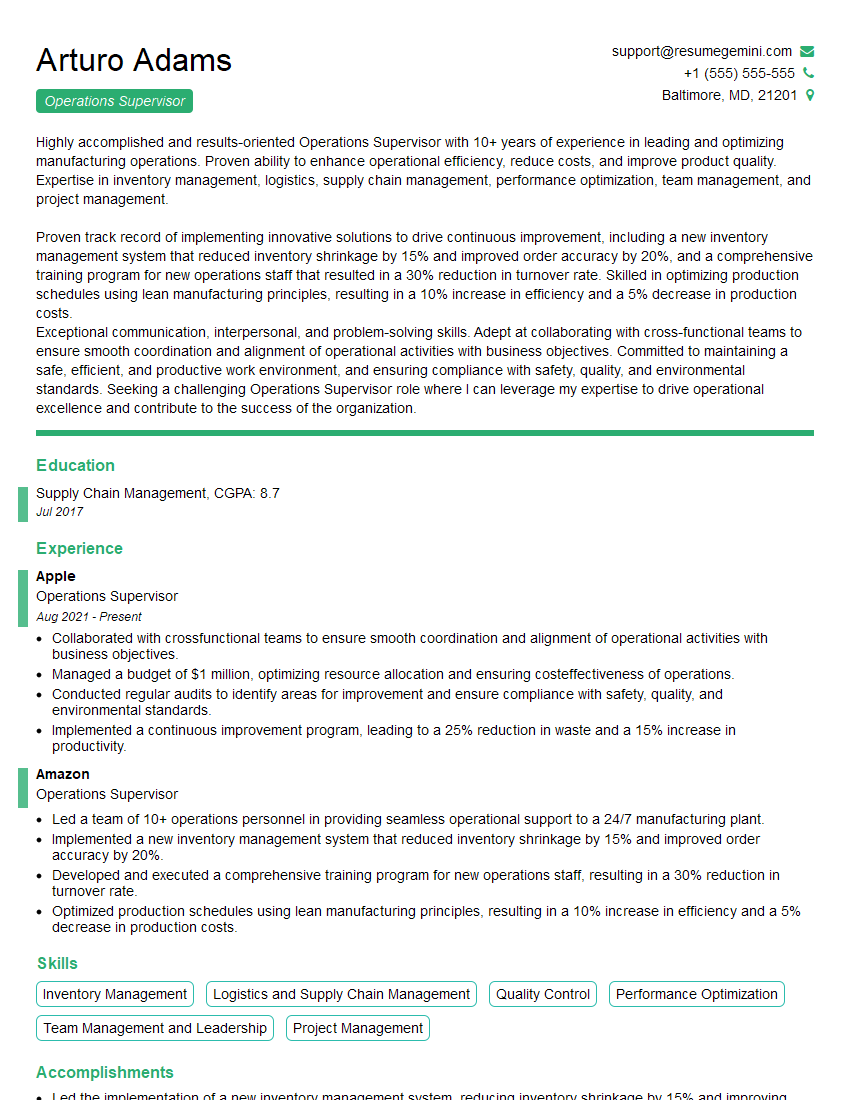
Operations Supervisor Resume Sample
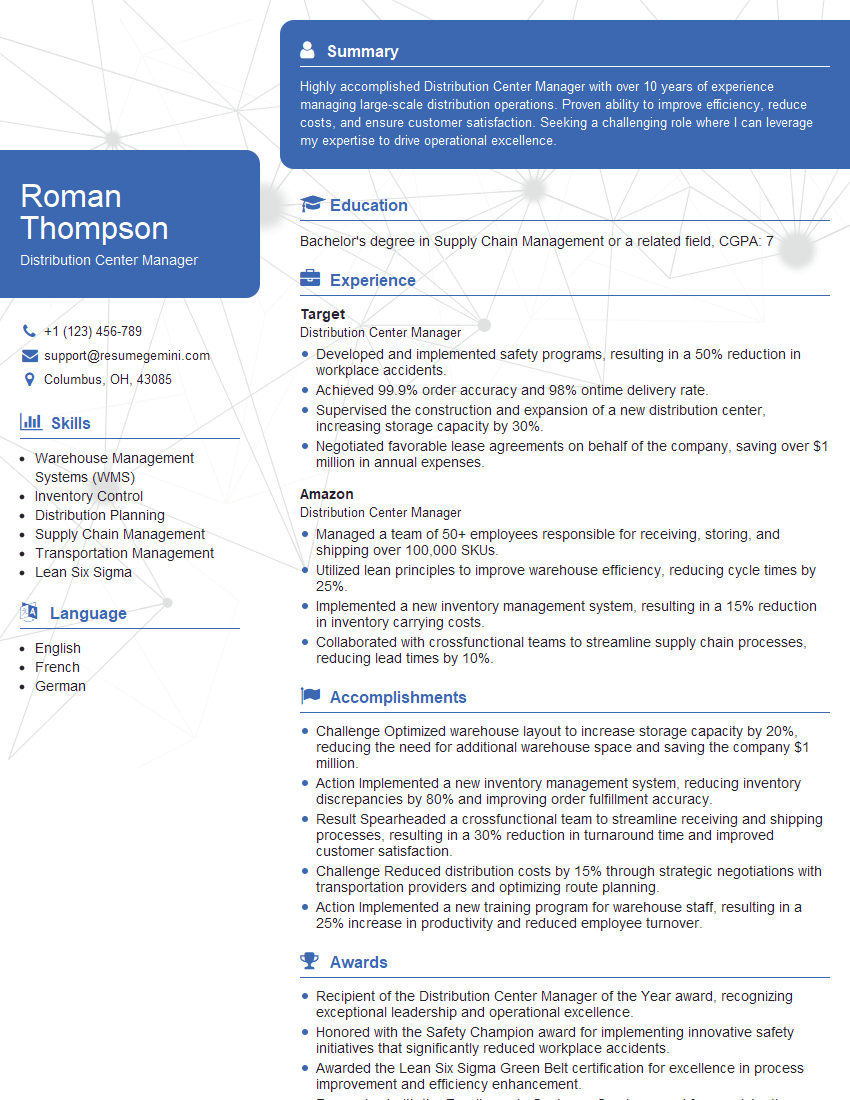
Distribution Center Manager Resume Sample
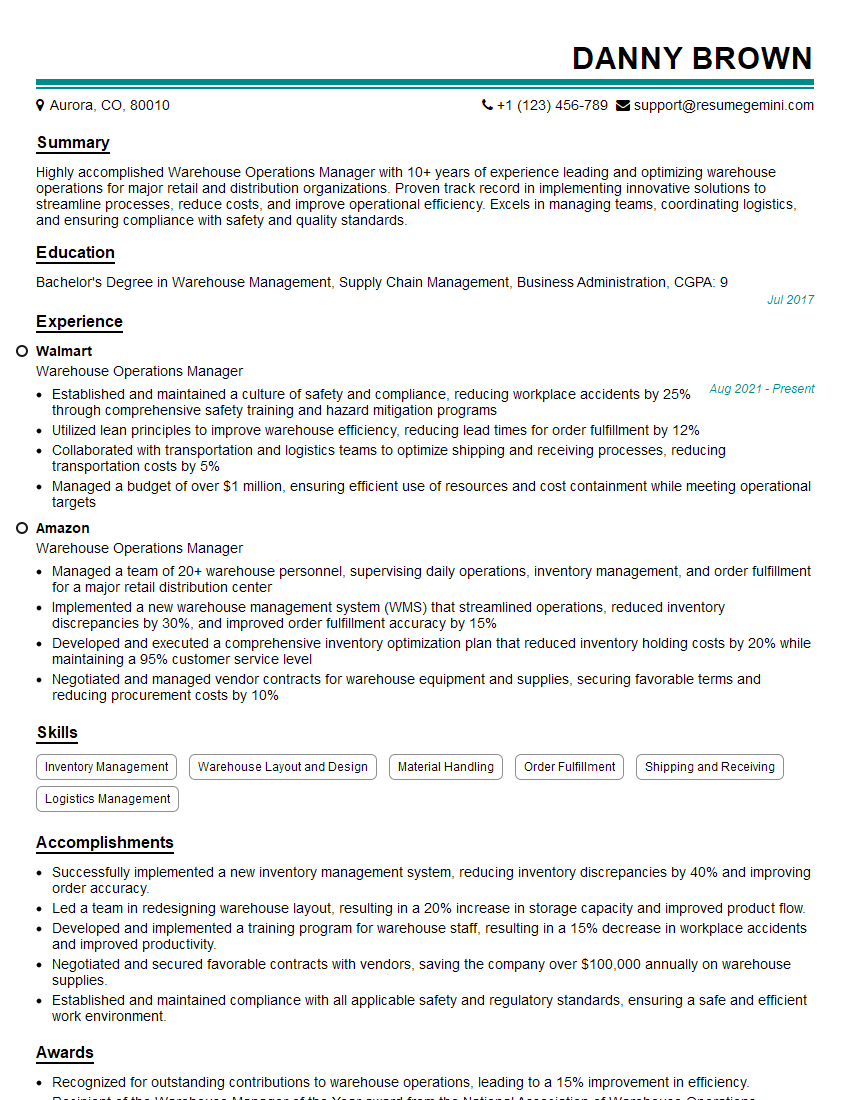
Warehouse Operations Manager Resume Sample
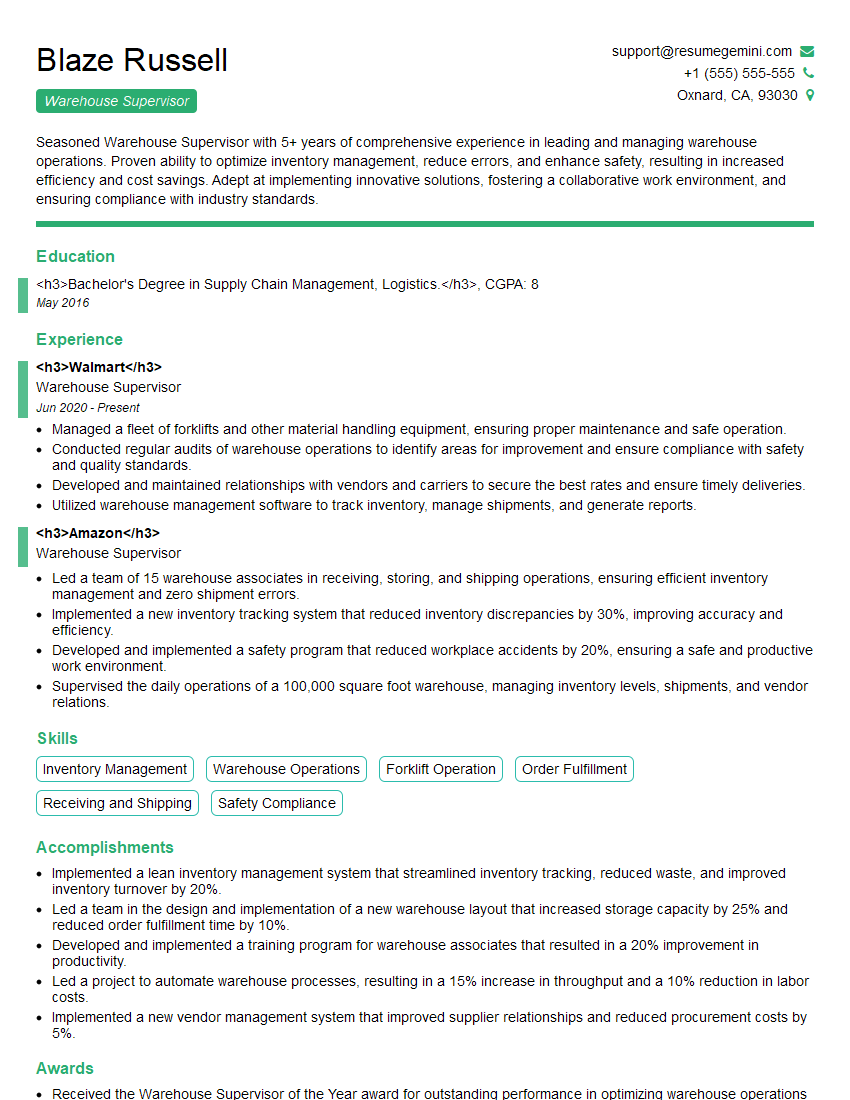
Warehouse Supervisor Resume Sample
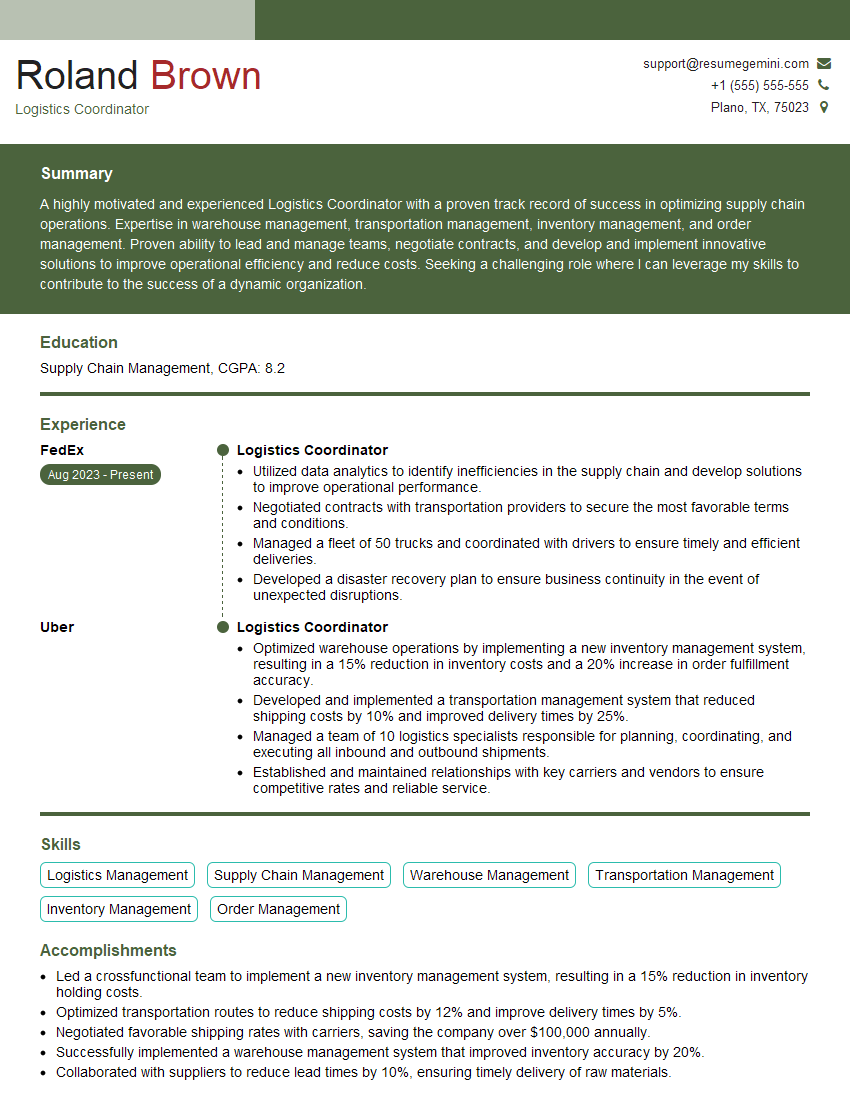
Logistics Coordinator Resume Sample
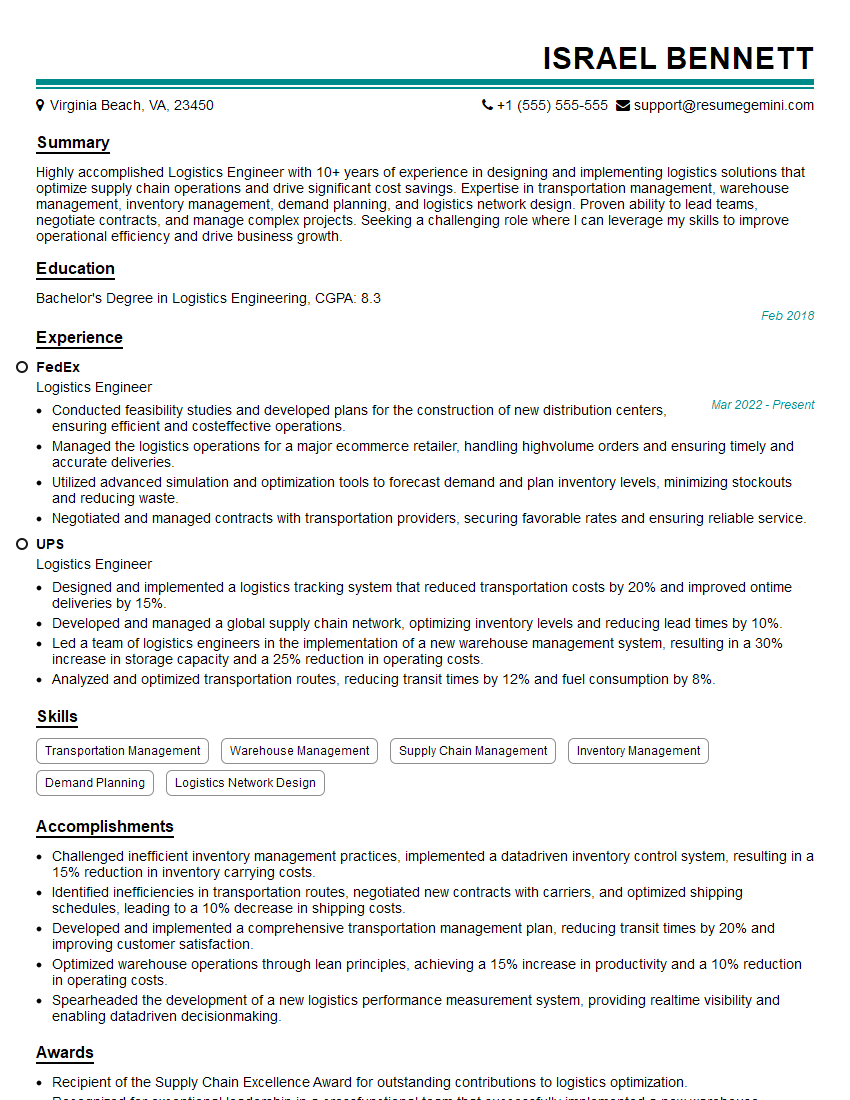
Logistics Engineer Resume Sample
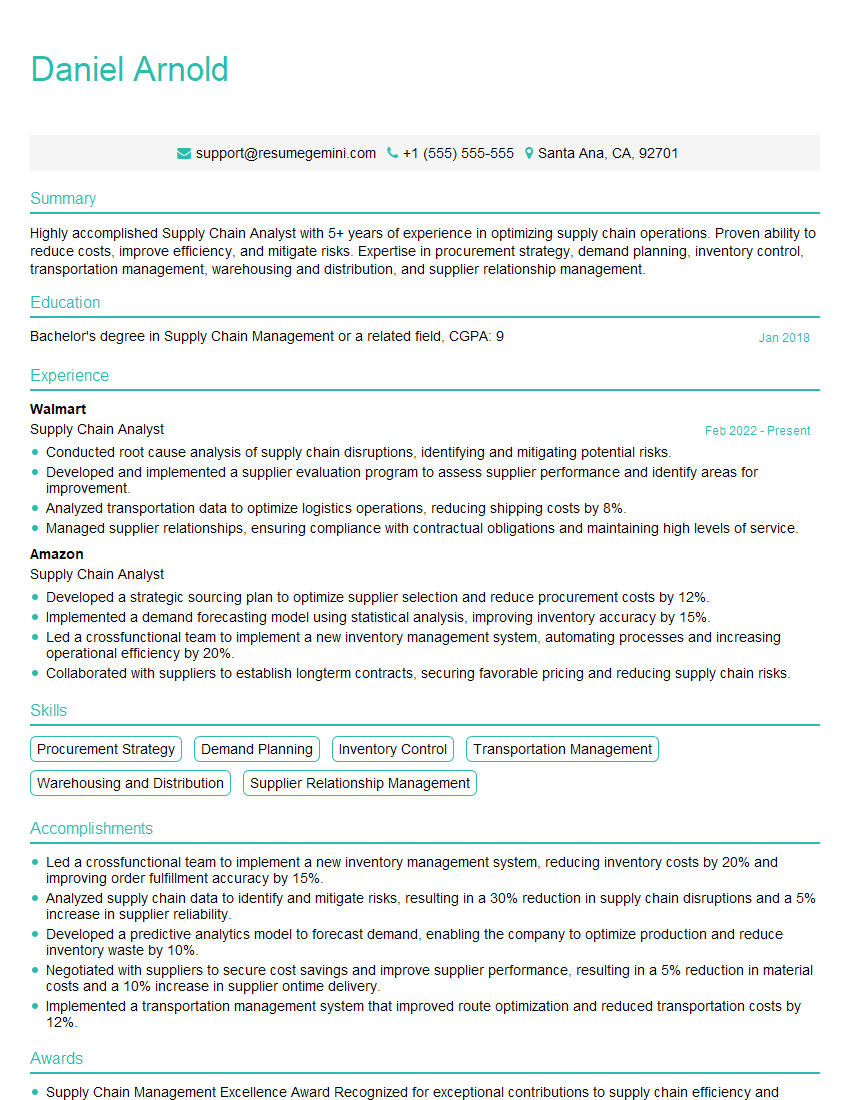
Supply Chain Analyst Resume Sample
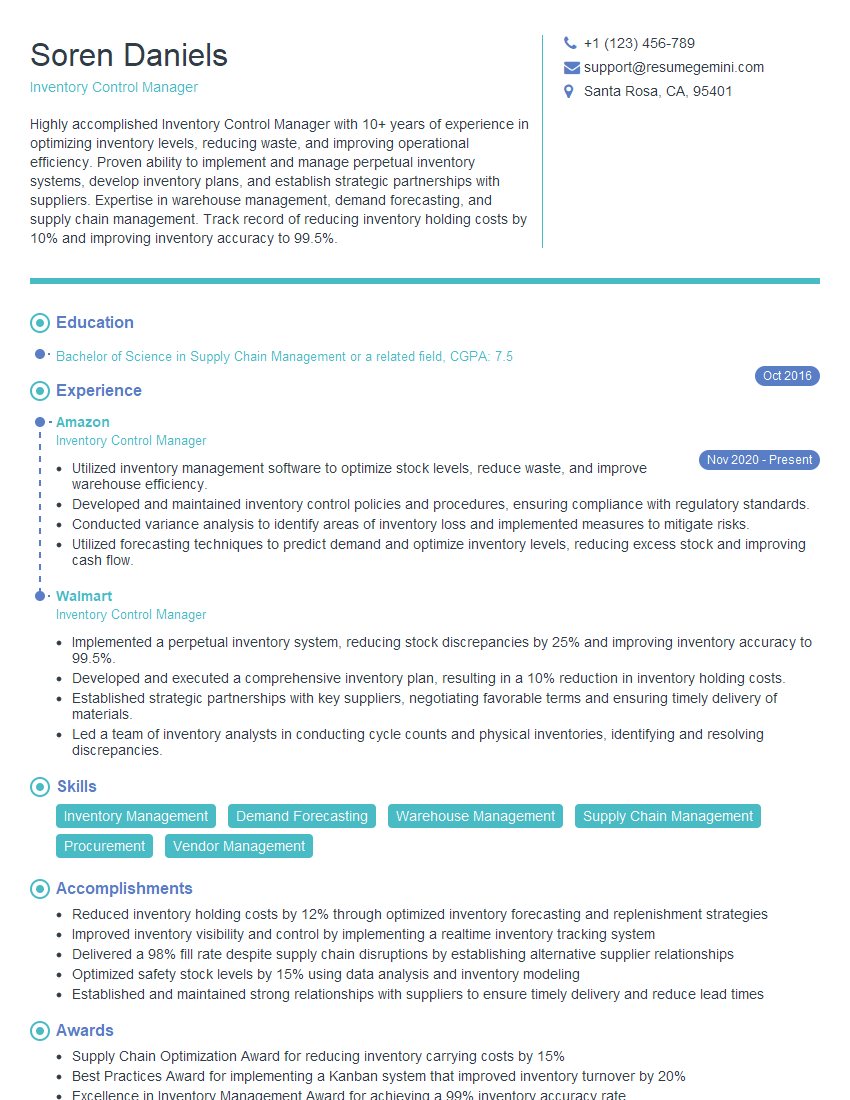
Inventory Control Manager Resume Sample
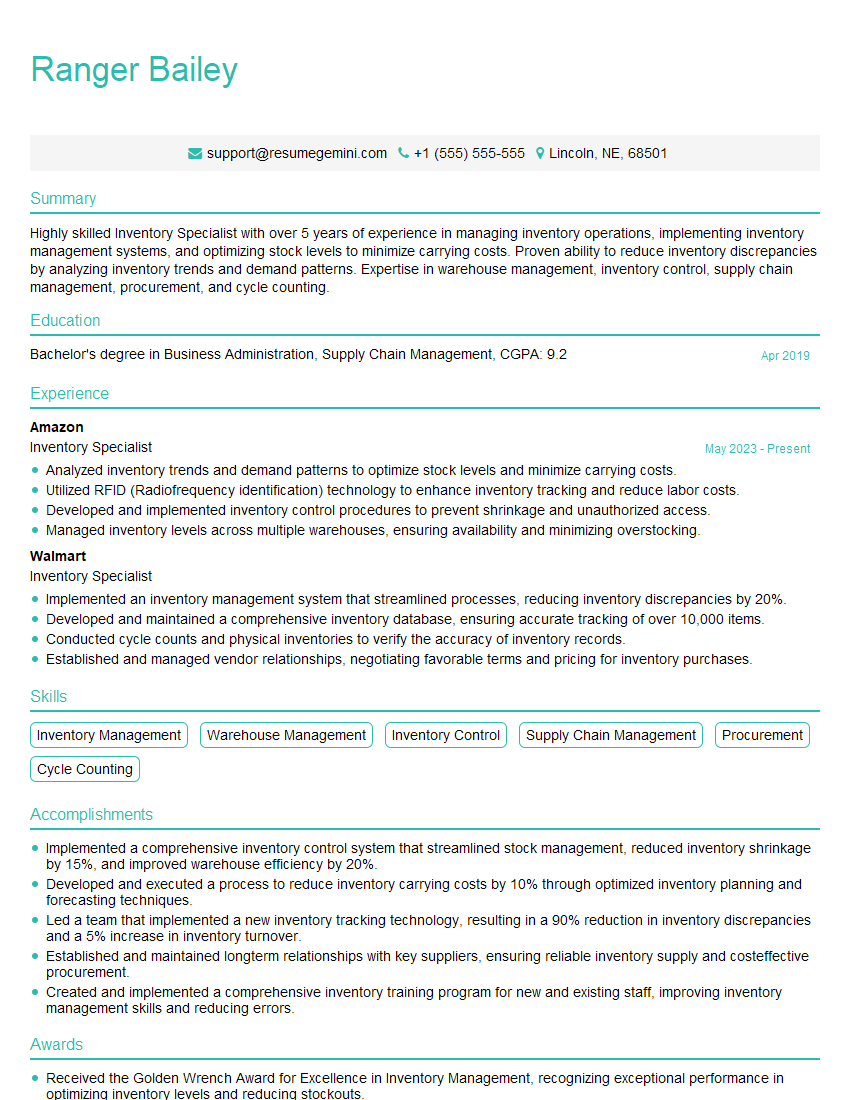
Inventory Specialist Resume Sample
Explore more articles
Users Rating of Our Blogs
Share Your Experience
We value your feedback! Please rate our content and share your thoughts (optional).
What Readers Say About Our Blog
Very informative content, great job.
good