Unlock your full potential by mastering the most common Glass Architectural Glazing interview questions. This blog offers a deep dive into the critical topics, ensuring you’re not only prepared to answer but to excel. With these insights, you’ll approach your interview with clarity and confidence.
Questions Asked in Glass Architectural Glazing Interview
Q 1. Explain the different types of glass used in architectural glazing.
Architectural glazing utilizes a variety of glass types, each chosen for its specific properties. The selection depends on factors like aesthetics, performance requirements (thermal, acoustic, security), and budget.
- Annealed Glass: This is standard float glass, relatively inexpensive and easy to cut, but prone to shattering into sharp shards upon breakage. It’s often used for interior applications where safety isn’t paramount.
- Tempered (Heat-Strengthened) Glass: This glass is heated and rapidly cooled, making it four to five times stronger than annealed glass. When it breaks, it shatters into small, relatively harmless granules. Commonly used in exterior applications, storefronts, and shower enclosures.
- Laminated Glass: Consists of two or more layers of glass bonded together with a PVB (polyvinyl butyral) interlayer. This interlayer holds the glass fragments together in case of breakage, preventing penetration and reducing the risk of injury. Often used in security applications, skylights, and areas requiring sound insulation.
- Insulated Glass Units (IGUs): These are two or more panes of glass separated by a spacer bar filled with a desiccant (to absorb moisture) and inert gas (like argon or krypton) to improve insulation. IGUs offer superior energy efficiency and sound reduction.
- Low-Emissivity (Low-E) Glass: Coated with microscopic metallic oxides, Low-E glass reflects infrared radiation, reducing heat transfer. This improves energy efficiency by minimizing heat loss in winter and heat gain in summer. Commonly found in modern buildings to reduce energy costs.
- Specialty Glass: This category includes various types like patterned glass (for privacy), tinted glass (for solar control), and self-cleaning glass (reducing maintenance).
Choosing the right glass type is crucial for meeting building codes and achieving desired performance levels. For example, a high-rise building might use laminated Low-E IGUs for maximum safety and energy efficiency.
Q 2. Describe the process of installing a curtain wall system.
Curtain wall installation is a complex process requiring meticulous planning and execution. It typically involves these steps:
- Design and Engineering: This phase includes creating detailed shop drawings, specifying materials, and considering structural requirements and building codes.
- Substructure Installation: This involves attaching the support system to the building’s structure. This might include steel framing, concrete columns, or other load-bearing elements. Precise measurements and alignment are critical.
- Module Fabrication (for unitized systems): For unitized systems, pre-fabricated modules (containing the frame and glazing) are assembled off-site for enhanced quality control and faster on-site installation.
- Glazing Installation: Individual glass panels are carefully inserted into the frame, secured with appropriate fasteners, and sealed to create a watertight and air-tight barrier. This often requires specialized tools and techniques.
- Sealant Application: High-quality sealants are applied to prevent water ingress and air leakage around the glass and frame. Different sealants are used depending on the specific needs of the system.
- Inspection and Testing: A thorough inspection is carried out to ensure the system meets specifications and building codes. Air and water leak tests are commonly performed.
The specific process varies depending on the chosen curtain wall system (stick-built or unitized) and the building’s design. For instance, working on a high-rise building demands specialized equipment and safety protocols.
Q 3. What are the common methods for sealing glass units?
Sealing glass units is essential to prevent water leakage, air infiltration, and the ingress of contaminants. Common methods include:
- Silicone Sealants: These are widely used for their flexibility, durability, and resistance to UV degradation. They form a strong, weatherproof bond between glass and frame.
- Polyurethane Sealants: These offer excellent adhesion and expansion properties, making them suitable for applications with significant movement.
- Butyl Sealants: Often used as a primary sealant in IGUs, providing a hermetic seal between the glass panes and the spacer bar.
- Structural Sealants: Designed to carry significant loads and provide both structural and weather-sealing functions.
Proper sealant selection and application are crucial for long-term performance. Incorrect application can lead to leaks, condensation, and premature failure of the glazing system. For example, silicone sealant needs to be properly primed to ensure optimal adhesion to different substrates.
Q 4. How do you ensure the structural integrity of a glazed facade?
Ensuring the structural integrity of a glazed facade involves careful consideration of several factors throughout the design and construction process:
- Proper Engineering Design: This includes accurate load calculations to account for wind loads, seismic activity, and snow loads. The design must ensure the system can withstand these forces without failure.
- Material Selection: High-quality materials like strong glass types (tempered, laminated) and robust framing systems are essential. The choice of materials must align with the structural requirements.
- Accurate Fabrication and Installation: Precise fabrication and meticulous installation are critical. Any deviation from the design specifications can compromise structural integrity. This requires skilled and experienced installers.
- Use of Approved Fasteners and Connections: The glazing system must be securely fastened to the building structure using appropriate fasteners and connectors. The design should specify the type and quantity of these elements.
- Regular Inspection and Maintenance: Routine inspections can detect potential problems early on. Prompt maintenance can prevent minor issues from escalating into major structural problems.
A failure in any of these areas can lead to serious consequences, including glass breakage, structural damage, and even collapse. Thorough quality control and adherence to best practices are paramount.
Q 5. What safety precautions are essential when working at height with glass?
Working at height with glass presents significant safety hazards. Essential precautions include:
- Proper Fall Protection: This is paramount and must comply with all relevant safety regulations. Harnesses, lanyards, and anchor points are crucial. Working platforms, scaffolding, or other fall arrest systems should be used as appropriate.
- Use of Appropriate Personal Protective Equipment (PPE): This includes safety helmets, safety glasses or goggles, gloves, and appropriate footwear. The specific PPE will depend on the task.
- Safe Handling Procedures for Glass: Using suction cups, glass handling tools, and employing proper lifting techniques minimizes the risk of breakage and injury. Glass should be stored and transported carefully to prevent damage.
- Awareness of Environmental Conditions: Wind, rain, and ice can all increase the risk of accidents. Work should be suspended if conditions become unsafe.
- Training and Supervision: All personnel involved must be adequately trained in safe working practices at height and in handling glass. Proper supervision is crucial to ensure compliance with safety protocols.
- Emergency Procedures: A clear emergency plan should be in place and all personnel should be familiar with the procedures.
Neglecting these precautions can have devastating consequences, including serious injuries or fatalities. Safety must be the top priority in any work involving glass at height.
Q 6. Explain the difference between annealed, tempered, and laminated glass.
The differences between annealed, tempered, and laminated glass lie primarily in their manufacturing processes and resulting properties:
- Annealed Glass: This is standard float glass, cooled slowly after manufacturing. It is relatively inexpensive but weaker and breaks into sharp, unpredictable pieces.
- Tempered Glass (Heat-Strengthened Glass): Heated and rapidly cooled, this glass is significantly stronger than annealed glass. When it breaks, it shatters into small, relatively harmless granules, making it safer for many applications.
- Laminated Glass: Two or more layers of glass are bonded together with a PVB interlayer. This interlayer holds the glass fragments together during breakage, preventing penetration and reducing the risk of injury. It also offers improved sound insulation and security.
Imagine a window: Annealed glass might be used for a simple interior window. For exterior windows where safety and strength are paramount, tempered glass is preferable. A storefront window, vulnerable to breakage, would likely use laminated glass to improve security and maintain integrity even if broken.
Q 7. Describe your experience with different types of glazing systems (e.g., stick system, unitized system).
My experience encompasses both stick-built and unitized glazing systems, each with its own advantages and challenges:
- Stick-built Systems: I’ve worked extensively on projects using stick-built systems where the framing members are assembled and glazed on-site. This offers greater design flexibility but requires more on-site labor and can be more susceptible to inconsistencies in quality.
- Unitized Systems: I have considerable experience with unitized systems involving pre-fabricated modules assembled off-site. This approach delivers higher quality control, faster on-site installation, and typically results in a more consistent final product. However, design flexibility is somewhat reduced.
In one project, we used a stick system for a complex curved façade, leveraging its flexibility to achieve the architect’s vision. In another project involving a high-rise building, a unitized system was chosen for its efficiency and improved quality control at height. The choice between these systems is driven by factors like project complexity, budget, time constraints, and overall design requirements.
Q 8. How do you handle glass breakage or damage during installation?
Glass breakage during installation is a serious concern, impacting both project timelines and safety. Our approach involves a multi-layered strategy starting with meticulous planning. This includes careful handling of glass sheets from the moment they arrive on site – using appropriate lifting equipment, protective coverings, and designated storage areas away from potential hazards. During installation, we employ experienced glaziers who are trained in safe handling techniques. This includes using suction cups, specialized lifting frames, and protective gear. We also maintain a strict adherence to manufacturer’s handling instructions for each specific type of glass. If, despite these precautions, breakage occurs, we immediately assess the damage, document it thoroughly with photographs and incident reports, and then contact the glass supplier to initiate a replacement order. Safety is paramount; we ensure the area is secured and any potential hazards are removed before the damaged glass is safely removed and disposed of according to regulations.
For example, on a recent high-rise project, a minor chip occurred during the installation of a large laminated glass panel. Our team immediately documented the damage, replacing the panel without compromising the project schedule or safety.
Q 9. What are the key considerations for selecting the appropriate type of glazing for a specific building project?
Selecting the right glazing is crucial for a successful project. It’s like choosing the right fabric for a garment – the wrong choice can ruin the entire look and feel. Key considerations include the building’s location and climate (considering solar heat gain, thermal insulation, and UV protection), the aesthetic design requirements (considering color, reflectivity, and transparency), the structural demands (considering the size and weight of the glass and the wind loads), and the budget. For instance, a building in a hot, sunny climate may require low-E coated glass to reduce solar heat gain, while a building in a cold climate will need insulated glazing units (IGUs) for better thermal performance. Security is another major factor; high-security locations might necessitate laminated or even bullet-resistant glass.
- Climate: High-performance glass solutions for extreme temperatures.
- Aesthetics: Options range from clear float glass to tinted, patterned, or textured glass.
- Structural Integrity: Calculations to ensure adequate glass thickness and support systems.
- Budget: Balancing performance requirements with cost-effectiveness.
Q 10. Explain the importance of proper sealant selection and application.
Sealants are the unsung heroes of architectural glazing, providing water tightness and preventing air leakage. Improper sealant selection and application can lead to costly repairs, water damage, and even structural issues. We consider several factors when choosing a sealant, including its compatibility with the glass and framing material, its movement capability (to accommodate thermal expansion and contraction), its durability, and its resistance to UV degradation. Application is just as critical; it needs to be done according to the manufacturer’s instructions, ensuring a consistent, even bead with proper tooling to avoid gaps or voids. Using the wrong sealant or applying it incorrectly can lead to leaks, which can cause damage to the building’s interior and compromise its structural integrity. We often use specialized testing methods, such as pressure testing, to verify the seal’s effectiveness after installation.
For example, selecting a silicone sealant for an exterior application might seem sufficient; however, the specific type of silicone, its UV resistance, and the application technique directly impact its longevity and overall performance.
Q 11. How do you ensure compliance with building codes and regulations during the glazing process?
Compliance with building codes and regulations is non-negotiable. We actively engage with relevant authorities throughout the project, from the design phase to final inspection. This includes reviewing all applicable codes and standards, selecting materials that meet the specified requirements, and maintaining comprehensive documentation of all aspects of the glazing process. This ensures the glazing system meets all safety and performance standards. We utilize software to perform accurate calculations for structural integrity and energy efficiency, producing reports that meet regulatory demands. Regular inspections during the project and a final inspection before handover ensure compliance. Any deviations from the approved plans are reported and addressed promptly. Our goal is to exceed expectations and prevent delays or penalties related to non-compliance.
Q 12. Describe your experience with different types of window and door systems.
My experience spans a broad range of window and door systems. This includes working with various materials – aluminum, steel, timber, and uPVC – and different types of glazing systems, from single-glazed to triple-glazed units. I’ve worked on projects incorporating curtain wall systems, storefront systems, and various types of windows – casement, awning, fixed, sliding, and tilt-and-turn. I have extensive experience with different types of doors, including entrance doors, sliding doors, and internal doors, incorporating various types of glass in each application. This includes working with sophisticated automated systems and high-performance glazing solutions for maximizing energy efficiency and security.
For instance, I recently oversaw a project integrating a complex curtain wall system with integrated solar shading devices, demanding a deep understanding of both structural and thermal performance requirements.
Q 13. What are the common causes of glass failure and how can they be prevented?
Glass failure can stem from several sources. Improper installation is a frequent culprit, as are manufacturing defects, material degradation (due to UV exposure or chemical attack), and external impacts. Thermal stress, caused by significant temperature fluctuations, can also lead to cracking or breakage. Wind loads, especially in high-rise buildings, must be carefully considered to avoid failure. Preventing these issues requires meticulous attention to detail throughout the project lifecycle. This begins with careful material selection, ensuring the glass type matches the specific application and environmental conditions. Accurate engineering calculations are vital for assessing structural loads and thermal stresses. Proper installation techniques, including the use of appropriate sealants and fasteners, are crucial. Regular inspection and maintenance programs can identify potential issues early on, preventing catastrophic failures.
Q 14. How do you manage project timelines and budgets for glazing projects?
Managing project timelines and budgets for glazing projects demands a structured approach. We begin with detailed planning, creating a comprehensive schedule that accounts for all phases of the project – from design and procurement to installation and commissioning. We develop realistic budget estimates, considering material costs, labor costs, and potential contingencies. Regular progress monitoring and reporting keep the project on track, allowing us to identify and address potential delays or cost overruns proactively. We use project management software to track progress, resources, and expenses, ensuring transparency and accountability. Effective communication with clients and subcontractors is vital for maintaining a smooth workflow and resolving any issues that may arise. Proactive risk management is also important to minimize the potential for delays or budget overruns.
Q 15. Describe your experience working with different types of substrates (e.g., steel, aluminum, concrete).
My experience spans a wide range of substrates commonly used in architectural glazing. Understanding the properties of each material is crucial for successful project execution. Let’s look at some examples:
Steel: Steel offers exceptional strength and durability, making it ideal for large-scale projects or high-wind areas. However, its susceptibility to corrosion requires careful consideration of surface treatments and coatings. I’ve worked on projects where we used hot-dipped galvanized steel frames for superior corrosion resistance, ensuring the longevity of the glazing system. We carefully selected the steel grade to balance strength with weight and cost-effectiveness.
Aluminum: Aluminum is a popular choice due to its lightweight yet strong nature, excellent corrosion resistance, and ease of fabrication. I’ve extensively used aluminum in curtain wall systems, where its flexibility allows for complex designs and efficient installation. In one project, we used anodized aluminum for its superior aesthetic qualities and enhanced durability.
Concrete: Concrete is a versatile substrate, offering a robust foundation for glazing systems. However, it requires precise detailing and careful consideration of expansion and contraction to prevent cracking or leakage. In one instance, we incorporated expansion joints within the concrete structure to accommodate movement and maintain the integrity of the glazing system. This included selecting the appropriate type of sealant and anchoring system for secure bonding and long-term performance.
My experience ensures I can expertly select the most appropriate substrate and detailing for each specific project, optimizing performance and minimizing potential issues.
Career Expert Tips:
- Ace those interviews! Prepare effectively by reviewing the Top 50 Most Common Interview Questions on ResumeGemini.
- Navigate your job search with confidence! Explore a wide range of Career Tips on ResumeGemini. Learn about common challenges and recommendations to overcome them.
- Craft the perfect resume! Master the Art of Resume Writing with ResumeGemini’s guide. Showcase your unique qualifications and achievements effectively.
- Don’t miss out on holiday savings! Build your dream resume with ResumeGemini’s ATS optimized templates.
Q 16. What software or tools are you proficient in using for designing or estimating glazing projects?
Proficiency in relevant software is essential for efficient and accurate design and estimation in architectural glazing. I am highly skilled in several key programs:
AutoCAD: I use AutoCAD for precise 2D and 3D modeling of glazing systems, creating detailed drawings for fabrication and installation. This includes creating shop drawings, detailing connections, and generating accurate quantities.
Revit: Revit’s BIM (Building Information Modeling) capabilities are invaluable for large and complex projects. I utilize Revit for coordinating the glazing system with other building elements, optimizing design and reducing potential clashes. This also enables better quantity take-offs and cost estimations.
Glass software (e.g., AGi32, Guardian Glass Selector): These specialized software tools help in selecting the appropriate glass type based on performance requirements (e.g., thermal performance, solar control, sound insulation). This crucial step guarantees energy efficiency and client satisfaction.
In addition, I utilize spreadsheet software like Microsoft Excel for detailed cost estimations, material take-offs, and project scheduling.
Q 17. How do you address client concerns or changes during a project?
Addressing client concerns and changes proactively is crucial for successful project delivery. My approach involves:
Open Communication: Maintaining constant and transparent communication is key. I actively encourage clients to express their concerns or requests at any stage of the project.
Impact Assessment: When a change request is received, I carefully assess its impact on the project’s schedule, budget, and technical feasibility. I then present the client with clear and concise options and their implications.
Collaborative Solutions: I work closely with the client to find mutually agreeable solutions that satisfy their needs while adhering to project constraints. I might suggest alternative materials, designs, or methods to achieve the desired outcome efficiently.
Documentation: All changes are meticulously documented, ensuring all parties are informed and accountable. This documentation is also crucial for managing project revisions and preventing misunderstandings.
For example, in one project, a client requested a change in the type of glass after the initial design was finalized. We carefully assessed the implications, including the cost and time implications, and presented them with a comprehensive proposal. We ultimately found a solution that met their aesthetic and performance needs without significantly delaying the project.
Q 18. Explain your experience with different glazing methods (e.g., silicone, structural glazing).
My experience encompasses a wide range of glazing methods, each with its unique advantages and challenges:
Silicone Glazing: This method uses silicone sealant to bond the glass to the frame. It’s versatile and allows for various designs but requires skilled workmanship to ensure a durable and watertight seal. I’ve used this extensively in curtain wall applications, where its flexibility accommodates building movement.
Structural Glazing: This method relies on the glass itself to carry the structural load, creating sleek, minimalist designs. It requires precise engineering and high-quality materials to ensure structural integrity. I’ve been involved in projects using structural glazing for both interior and exterior applications, requiring detailed calculations and careful consideration of stress points.
Other Methods: My experience extends to other methods, including conventional glazing with glazing tape and various types of frame systems, each chosen based on the specific project requirements.
The choice of glazing method significantly impacts the aesthetics, performance, and cost of a project. Selecting the right method based on factors such as building design, environmental conditions, and budget is a key aspect of my expertise.
Q 19. How do you ensure quality control throughout the glazing process?
Quality control is paramount in architectural glazing. My approach involves a multi-layered system:
Material Selection and Inspection: Careful selection of high-quality materials is the first step. This involves inspecting all materials upon delivery to ensure they meet the specified standards and are free from defects.
Fabrication Control: I work closely with fabricators to ensure that the glazing units are produced according to the design specifications and meet the required quality standards. This includes regular inspections during the fabrication process.
Installation Oversight: Rigorous oversight during the installation phase is crucial. This involves ensuring that the installation team follows the proper procedures and uses appropriate tools and techniques. Regular inspections and quality checks are performed at different stages of the installation.
Testing and Commissioning: Once the installation is complete, testing and commissioning are performed to verify that the glazing system meets the required performance standards. This might include air leakage testing, water penetration testing, and structural testing, depending on project requirements.
By implementing these procedures, I ensure that the final product meets the highest standards of quality and performance, leading to client satisfaction and long-term durability.
Q 20. Describe your experience with troubleshooting glazing problems.
Troubleshooting glazing problems requires a systematic and analytical approach. My experience includes addressing various issues, such as:
Leakage: Identifying the source of leakage often involves meticulous investigation, including visual inspection, pressure testing, and moisture detection. Solutions may involve resealing, replacing damaged components, or adjusting the glazing system to address the underlying cause.
Cracking: Cracking can result from various factors, including thermal stress, structural movement, or impact damage. Determining the root cause is essential for selecting the appropriate repair method.
Condensation: Condensation can be a sign of inadequate thermal performance or air leakage. Troubleshooting involves identifying the areas with high condensation, assessing the thermal performance of the glazing, and making necessary improvements to enhance the system’s efficiency.
My experience in identifying the root cause of these problems, along with my knowledge of various repair techniques and materials, ensures efficient and effective resolution, minimizing downtime and costs.
Q 21. What is your understanding of energy efficiency in relation to architectural glazing?
Energy efficiency is a critical consideration in modern architectural glazing. The choice of glazing significantly impacts a building’s energy consumption. Here’s how:
Solar Heat Gain Coefficient (SHGC): This value indicates the amount of solar radiation that passes through the glass. Lower SHGC values mean less solar heat gain, reducing cooling loads during summer. Specifying glass with low SHGC is crucial for energy efficiency in hot climates.
U-Value (Thermal Transmittance): This indicates how well the glazing resists heat transfer. Lower U-values mean better insulation, reducing heating loads in winter. Selecting high-performance glazing with low U-values is vital for energy efficiency in colder climates.
Visible Light Transmittance (VLT): This refers to the amount of visible light that passes through the glass. Optimizing VLT can maximize natural daylighting, reducing the need for artificial lighting. This not only saves energy but also enhances the occupants’ comfort and well-being.
By carefully selecting glazing that balances these factors, I can help create buildings with optimal energy performance, minimizing environmental impact and operational costs. For example, incorporating Low-E coatings significantly reduces heat transfer, leading to considerable energy savings. Furthermore, understanding and optimizing daylighting strategies through glazing design can significantly reduce energy consumption for artificial lighting.
Q 22. How do you handle the logistics of transporting and storing glass?
Handling the logistics of glass transport and storage is critical to prevent damage and ensure project success. It begins with specifying the correct packaging for each glass type and size. Think of it like packing fragile china – each piece needs individual attention and protection.
- Transportation: We use specialized carriers equipped with air-ride suspensions to minimize vibrations. Larger glass panels are often transported on dedicated flatbed trailers, secured with robust straps and padding. Smaller units can be palletized and shipped via standard trucking routes. Careful route planning avoids sharp turns and sudden braking.
- Storage: Glass is stored vertically in climate-controlled warehouses, preventing moisture build-up and temperature fluctuations that can lead to cracking or breakage. Each sheet is carefully separated with protective interleaving material, and the warehouse is kept clean and dry to avoid scratches. Storage locations are optimized for easy retrieval, minimizing handling. For example, we might dedicate specific areas for different glass types, like laminated or tempered, to prevent accidental mixing.
Regular inspections are performed to identify and address any potential issues. Proper documentation of the entire process is crucial for traceability and insurance purposes. Think of it as a detailed chain of custody for each piece of glass.
Q 23. Explain your understanding of different glass coatings and their benefits.
Glass coatings enhance the performance and aesthetics of architectural glazing. They are applied during the manufacturing process and provide a range of benefits. Imagine them as a protective skin providing additional functionality.
- Low-E Coatings: These coatings reflect infrared radiation, reducing heat transfer through the glass. This leads to energy savings by reducing cooling loads in summer and heating loads in winter. Think of them as a reflective sun shield, keeping the interior comfortable.
- Solar Control Coatings: These coatings reduce the amount of solar heat gain entering a building, minimizing glare and fading of interior furnishings. We might use these in locations with intense sunlight, like south-facing windows.
- Self-Cleaning Coatings: These coatings use titanium dioxide to break down organic matter, making the glass easier to clean and maintaining its transparency. This reduces maintenance costs and improves aesthetics over time.
- Anti-Reflective Coatings: These coatings minimize reflections, improving the clarity and visibility through the glass. They’re ideal in situations where unobstructed views are critical, such as in museums or showrooms.
The choice of coating depends on the specific project requirements and climate considerations. We carefully analyze each project’s needs to select the most appropriate coating for optimal performance.
Q 24. What is your experience with insulated glass units (IGUs)?
Insulated Glass Units (IGUs) are crucial for energy efficiency in buildings. These are made of two or more glass panes separated by a hermetically sealed air or gas-filled spacer. Think of them as a high-performance window sandwich.
My experience encompasses the design, specification, and installation of IGUs with various spacer types and gas fills (argon, krypton, xenon). I’ve worked on projects ranging from small residential windows to large curtain wall systems. I’m well-versed in assessing the thermal and acoustic performance requirements for different applications. For example, a high-rise building in a noisy city might require IGUs with enhanced acoustic insulation.
I’m also familiar with potential issues, such as gas leakage or spacer failure, and understand the necessary preventative measures and troubleshooting techniques. Properly designed and installed IGUs are essential for long-term performance and energy savings.
Q 25. Describe your experience with the installation of spandrel panels.
Spandrel panels are opaque or semi-opaque glass panels typically used in curtain wall systems to cover structural elements. They provide a consistent aesthetic appearance and can incorporate various design elements.
My experience includes the complete process: from selecting the appropriate panel type (ceramic frit, painted glass, etc.) to overseeing its installation. This involves careful coordination with the structural engineer and the curtain wall fabricator. Precise measurements and alignment are crucial to ensure a seamless and watertight installation. We use specialized lifting equipment and experienced installers to handle these large and often heavy panels safely. Any irregularities or deviations from the design drawings are meticulously documented and addressed.
I’ve encountered challenges such as misalignment or damage during transport; in such situations, we implemented corrective actions through careful adjustment and replacement, ensuring the final installation met the required quality standards.
Q 26. How do you handle challenging or complex glazing projects?
Challenging glazing projects require a proactive and multidisciplinary approach. This involves careful planning, effective communication, and a willingness to adapt to unforeseen circumstances.
My strategy typically involves:
- Detailed Design Review: Thorough analysis of the design specifications to identify potential challenges early on.
- Material Selection: Careful consideration of the glass type, coatings, and other materials to meet the project’s performance requirements.
- Risk Assessment: Identifying potential risks and developing mitigation strategies. For example, extreme weather conditions might require specialized protection during installation.
- Collaboration: Working closely with architects, engineers, and contractors to ensure a coordinated effort.
- Problem-Solving: A creative and flexible approach to address unexpected issues that arise during construction.
One particular project involved complex curved glass panels. We overcame this challenge through meticulous fabrication planning and the use of advanced robotic cutting techniques. The result was a stunning architectural feature that met the design intent perfectly.
Q 27. Explain your experience with the commissioning process of a glazing system.
Commissioning is the systematic process of verifying that a glazing system performs as intended. It’s crucial to ensure energy efficiency, safety, and durability.
My experience involves conducting thorough inspections at each stage of the project, from the fabrication process to the final installation. We use specialized instruments to measure parameters such as air leakage, thermal performance, and acoustic insulation. For example, we might use an infrared camera to identify any thermal bridging or air infiltration points. Detailed documentation and testing reports are prepared to ensure compliance with relevant building codes and standards.
A key aspect is ensuring that all components of the system, including the glass, frames, seals, and hardware, are functioning correctly and are integrated seamlessly. Any deficiencies are documented, and corrective actions are implemented to achieve satisfactory performance before project handover. This rigorous process is vital for long-term building performance and occupant comfort.
Key Topics to Learn for Glass Architectural Glazing Interview
- Types of Glass: Understanding the properties and applications of various glass types (e.g., annealed, tempered, laminated, insulated glazing units (IGUs)). Consider their performance in different climatic conditions and architectural designs.
- Glazing Systems: Familiarize yourself with different glazing systems, including curtain walls, windows, storefronts, and skylights. Understand their structural components and installation methods.
- Energy Efficiency and Sustainability: Explore the role of glazing in building energy performance. Learn about low-E coatings, solar control, and thermal performance calculations. Understand relevant building codes and green building certifications (e.g., LEED).
- Structural Analysis and Engineering: Gain a basic understanding of the structural considerations in glazing design, including wind loads, seismic loads, and deflection calculations. Know how to interpret engineering drawings and specifications.
- Safety and Regulations: Understand relevant safety regulations and building codes pertaining to glass installation and maintenance. Familiarize yourself with safety practices and potential hazards.
- Installation and Maintenance: Learn about the practical aspects of glass installation, including tools, techniques, and quality control. Understand common maintenance issues and troubleshooting methods.
- Project Management and Cost Estimation: Explore the project management aspects of glass architectural glazing, including scheduling, budgeting, and material procurement. Develop an understanding of cost estimation techniques.
- Problem-Solving and Troubleshooting: Be prepared to discuss how you approach challenges related to glass installation, performance issues, or unexpected site conditions. Develop your ability to think critically and solve problems efficiently.
Next Steps
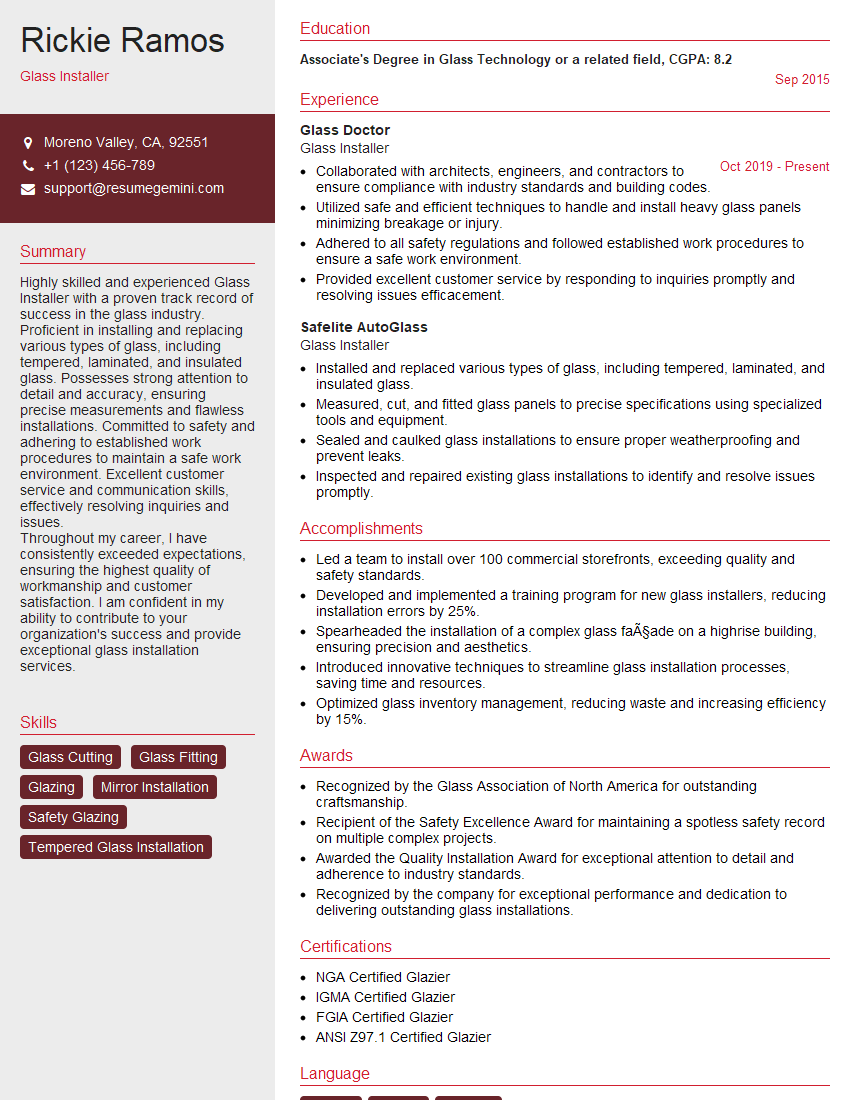
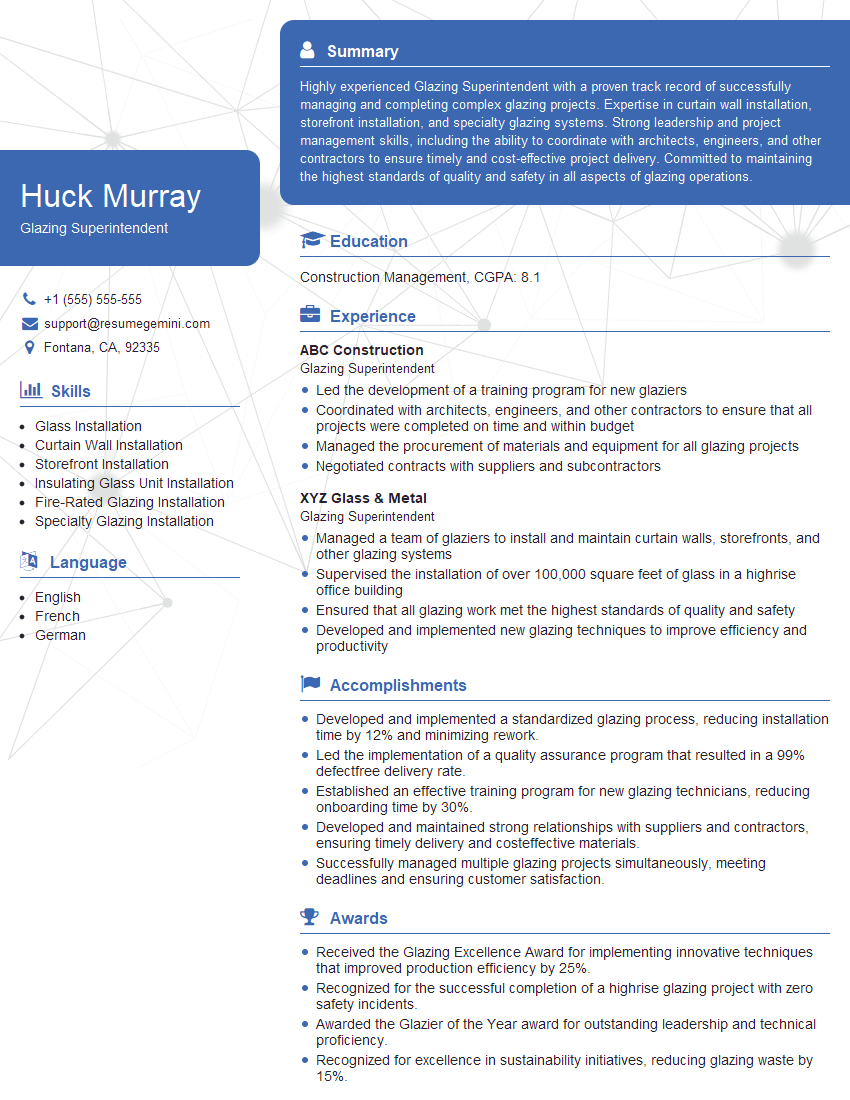
Mastering the principles of Glass Architectural Glazing significantly enhances your career prospects in the construction and architectural industries, opening doors to specialized roles and higher earning potential. A well-crafted, ATS-friendly resume is crucial for getting your application noticed. To create a truly impactful resume that showcases your skills and experience, consider using ResumeGemini. ResumeGemini provides a streamlined process and offers examples of resumes tailored to Glass Architectural Glazing, helping you present your qualifications effectively. Invest time in building a strong resume – it’s your first impression on potential employers.
Explore more articles
Users Rating of Our Blogs
Share Your Experience
We value your feedback! Please rate our content and share your thoughts (optional).
What Readers Say About Our Blog
Very informative content, great job.
good