Are you ready to stand out in your next interview? Understanding and preparing for OSHA 29 CFR 1910.147 The Control of Hazardous Energy (Lockout/Tagout) interview questions is a game-changer. In this blog, we’ve compiled key questions and expert advice to help you showcase your skills with confidence and precision. Let’s get started on your journey to acing the interview.
Questions Asked in OSHA 29 CFR 1910.147 The Control of Hazardous Energy (Lockout/Tagout) Interview
Q 1. Define Lockout/Tagout (LOTO) and its purpose.
Lockout/Tagout (LOTO) is a safety procedure used to control hazardous energy during maintenance or repair work. Its purpose is to prevent the unexpected release of stored energy that could cause injury or death to workers. Think of it as a safety protocol that ensures machinery is completely de-energized before anyone works on it.
Imagine a scenario where someone is working on a machine that unexpectedly starts up. The consequences could be catastrophic. LOTO prevents this by using physical locks and tags to ensure energy sources remain isolated.
Q 2. Explain the five steps of the LOTO process.
The five steps of the LOTO process are:
- Preparation: This involves identifying all energy sources, determining the necessary lockout/tagout devices, and notifying affected personnel.
- Energy Isolation: This crucial step requires shutting down the energy source and physically disconnecting it from the equipment. This might involve turning off breakers, closing valves, or disconnecting power cords.
- Lockout/Tagout Device Application: Once the energy is isolated, appropriate lockout/tagout devices (locks and tags) are applied to the energy isolation devices to prevent accidental re-energization.
- Verification of Isolation: Before starting the work, the authorized employee verifies that the energy source is indeed isolated by testing or other methods appropriate for the equipment. This is extremely important to confirm no energy is present.
- Release and Return to Service: After the work is completed, the authorized employee removes the lockout/tagout devices, verifying that all personnel are clear before restoring power. This step is as critical as the others.
Q 3. What are the different types of hazardous energy sources?
Hazardous energy sources can be many things, and it’s vital to identify all potential sources before starting any work. They include:
- Electrical energy: This includes power from outlets, circuits, and even static electricity in certain situations.
- Mechanical energy: Think of stored energy in springs, compressed air, rotating parts, or hydraulic systems. This can cause serious injury.
- Hydraulic and pneumatic energy: The pressure built up in hydraulic systems or compressed air tanks can pose a serious hazard.
- Thermal energy: This refers to heat energy from boilers, furnaces, or hot liquids.
- Chemical energy: The potential energy released from chemical reactions, including batteries or even flammable materials.
- Gravitational energy: The potential energy of objects suspended at height, like overhead cranes.
It’s critical to conduct a thorough energy survey for any work that may involve hazardous energy.
Q 4. Describe the role of an authorized employee in LOTO procedures.
The authorized employee is the person specifically trained to perform LOTO procedures. They are responsible for every step of the process, from identifying energy sources to verifying isolation and releasing the lockout/tagout devices. This person carries the responsibility for worker safety.
An authorized employee must be knowledgeable about the equipment they’re working on and must understand the potential hazards and control measures. They have the authority to stop work if they encounter any unexpected energy sources or feel unsafe.
Q 5. What is the role of an affected employee in LOTO procedures?
Affected employees are those whose jobs might be affected by LOTO procedures. This means they might not be directly working on the equipment but could be nearby or affected by the shutdown. Their role is crucial to ensuring safety.
Affected employees must be notified of the LOTO procedure before it begins. They need to understand why the equipment is being shut down and what to expect. This prevents confusion and potential safety hazards.
Q 6. Explain the importance of energy isolation in LOTO.
Energy isolation is the cornerstone of effective LOTO. It means completely preventing the flow of energy to the equipment being serviced. Without proper isolation, even a small amount of residual energy can be deadly.
For example, imagine a seemingly switched-off machine still possessing some stored energy, potentially causing the machine to unexpectedly restart when someone is working on it. Proper isolation prevents such scenarios, significantly reducing risk.
Q 7. Describe the proper use of lockout devices.
Lockout devices are designed to physically prevent the re-energization of equipment. They should be durable, uniquely identifiable, and capable of withstanding the environment. Tags, on the other hand, provide supplementary warnings. Both must be properly secured to the energy isolation point.
Improper use, such as using makeshift devices or failing to properly secure the devices, can defeat the purpose of LOTO and create significant risks. Always use devices specifically designed for LOTO and follow the manufacturer’s instructions.
Q 8. Describe the proper use of tagout devices.
Tagout devices, while similar to lockout devices, serve as a warning to others that energy has been isolated but not necessarily physically locked out. They are crucial for providing visual and written notification of the hazard. Proper use emphasizes clear communication and preventing accidental re-energization.
- Clear and Legible Identification: The tag must clearly identify the equipment being controlled, the person performing the lockout/tagout, and the date and time of application. Imagine a situation where multiple workers are performing maintenance on a large piece of machinery – each tag must be distinctly identifiable to avoid confusion.
- Secure Attachment: The tag must be securely attached to the energy isolating device in a manner that prevents its accidental removal. Think of it like a really stubborn sticker that won’t come off easily.
- Standardized Format: The tag should adhere to company and OSHA standards for size, material, and information displayed. Consistency is key here to prevent accidents from miscommunication.
- Appropriate Material: The tag must be durable enough to withstand the conditions it will face, preventing damage or premature removal. If it’s outdoors in harsh weather, it needs to be weatherproof.
- Unique Identification: Each tag should ideally have a unique identification number for traceability and record keeping. This allows for easy identification and auditing in case of accidents.
Improper tagout, such as using a worn-out tag or attaching it loosely, could lead to accidental energy restoration and severe injury or fatality.
Q 9. What are the requirements for LOTO training?
OSHA mandates comprehensive lockout/tagout (LOTO) training for all authorized and affected employees. This training must be hands-on and cover all aspects of the LOTO procedure relevant to the employee’s role.
- Authorized Employees: These individuals are responsible for performing the LOTO procedures, and their training is particularly critical as they are directly involved in controlling the hazardous energy sources. The training must cover identifying energy sources, selecting appropriate LOTO devices, performing the lockout/tagout procedure correctly, verifying isolation, and returning the energy back safely.
- Affected Employees: These are the workers who might be exposed to hazardous energy during the work. Their training focuses on understanding the LOTO process, recognizing the warning devices, and understanding the hazards involved, ensuring they know to stay away during the process.
- Frequency: Retraining is required whenever there are significant changes in the job, equipment, or procedures, and at least annually. This ensures everyone stays up-to-date with the latest safety protocols.
- Documentation: Records of training must be maintained to demonstrate compliance. This ensures the employer can show that their employees have received the appropriate training and understand the LOTO procedures.
Think of LOTO training as a comprehensive driver’s education course for handling hazardous energy. Just like learning to drive safely, neglecting this training can result in serious consequences.
Q 10. When is a periodic inspection of LOTO devices required?
Periodic inspections of LOTO devices are crucial for preventing accidents and ensuring their effectiveness. OSHA requires these inspections at least annually, but more frequent inspections might be needed depending on the frequency of use, harshness of the environment, and the condition of the equipment.
- Visual Inspection: Check for any damage, wear, or deterioration to the lock, tag, or other LOTO devices. A cracked lock or faded tag indicates a potential failure point.
- Functionality Test: Verify that the lock or tag mechanism works as intended. A broken lock wouldn’t offer any protection against accidental re-energization.
- Documentation: Record the findings of the inspection. This documentation should detail any issues found and the corrective actions taken. This acts as a safeguard for your company’s compliance.
Imagine regularly checking your car’s brakes and tires before a long trip. Similarly, regular LOTO device inspections are vital for safety.
Q 11. What are the documentation requirements for LOTO procedures?
Detailed documentation is essential for demonstrating compliance with LOTO regulations. This documentation must include:
- Energy Control Procedure: A comprehensive written procedure describing the steps required to isolate and control hazardous energy for each piece of equipment or system. This acts as a guide and should be readily available.
- Equipment-Specific Procedures: Procedures should be specific to each piece of equipment, detailing unique aspects of its energy isolation. Generic instructions might not account for peculiarities of specific machines.
- Training Records: Records to show that employees have received adequate LOTO training. This serves as proof of compliance during audits.
- Inspection Records: Documentation of periodic inspections of LOTO devices, including findings and corrective actions. This tracks the devices’ condition and verifies their effectiveness.
- Incident Reports: Documentation of any incidents or near misses involving LOTO procedures, along with corrective actions taken. This helps identify patterns and prevent future incidents.
Think of these documents as a detailed manual for operating the safety system for hazardous energy. Proper documentation provides a safety net for compliance and investigation in case of any incident.
Q 12. How are LOTO procedures audited and verified?
Auditing and verification of LOTO procedures involve a systematic evaluation of the effectiveness and adherence to OSHA regulations. This can involve several methods:
- Management Review: Regular review of the LOTO program by management to ensure its adequacy and effectiveness.
- On-site Observation: Direct observation of employees performing LOTO procedures to check for compliance and identify potential areas for improvement.
- Random Audits: Surprise audits to assess whether LOTO procedures are being followed consistently. This promotes better adherence and reduces chances of neglecting safety procedures.
- Incident Investigation: Review of any incidents or near misses involving LOTO procedures to identify root causes and implement corrective actions. This process is essential for identifying and preventing future incidents.
- Record Review: Examination of all LOTO documentation to ensure completeness and accuracy. It helps provide a comprehensive picture of the LOTO program’s effectiveness.
Auditing and verification should not just be a box-checking exercise but an opportunity to improve the safety of the workplace.
Q 13. What are the consequences of non-compliance with LOTO regulations?
Non-compliance with LOTO regulations can lead to serious consequences, including:
- Fines and Penalties: OSHA can levy significant fines for violations of LOTO regulations. These penalties can significantly impact the bottom line and company reputation.
- Legal Action: Injured workers can file lawsuits against employers for failure to provide a safe working environment. These lawsuits can result in substantial financial losses.
- Damage to Reputation: Non-compliance can damage a company’s reputation and make it difficult to attract and retain qualified employees.
- Injury and Fatality: The most devastating consequence is the potential for serious injury or even fatality to workers due to uncontrolled hazardous energy. This is the ultimate price of neglecting safety protocols.
Compliance with LOTO regulations is not just about avoiding penalties but about ensuring the safety and well-being of workers.
Q 14. How do you handle a lockout/tagout situation with multiple energy sources?
Handling multiple energy sources in a LOTO situation requires a systematic approach to ensure complete isolation.
- Identify All Energy Sources: Thoroughly identify all potential energy sources, including electrical, hydraulic, pneumatic, mechanical, thermal, chemical, etc. Overlooking even a single source can be disastrous.
- Isolate Each Source: Each energy source must be isolated using the appropriate energy control device, such as a lock, tag, or other means. A methodical approach to verify each device’s function is vital.
- Verify Isolation: Before commencing work, verify that each energy source is completely isolated. Testing with appropriate equipment is essential and can prevent unexpected releases of energy.
- Document the Process: Clearly document each step of the LOTO procedure, including the identification of energy sources, the methods used for isolation, and verification that each source is controlled.
- Coordinate with Others: When multiple employees are involved, clear communication and coordination are crucial to avoid any accidental re-energization. Proper communication is vital to ensuring everyone understands their roles and responsibilities.
Think of it like defusing a bomb with multiple triggers; each must be addressed methodically and precisely.
Q 15. What is the difference between a lockout and a tagout?
Lockout and tagout are both methods used to control hazardous energy, but they differ in their approach. Lockout involves physically preventing the release of energy through a device that secures the energy source, preventing it from being turned on. Think of it like putting a padlock on a breaker switch. Tagout uses a tag to warn others that the equipment is being worked on and should not be operated. It’s a warning, not a physical barrier. While a tag serves as a visual reminder, it doesn’t prevent accidental activation. Ideally, lockout is the preferred method, as it provides a much higher level of safety.
For example, imagine servicing a machine with a large motor. A lockout would involve turning off the breaker and then placing a lock on it, preventing anyone from turning it back on. A tagout would involve putting a tag on the breaker, indicating that the machine is locked out, but it doesn’t physically prevent the breaker from being switched on. OSHA recommends using lockout whenever possible, and only using tagout in cases where lockout is not feasible.
Career Expert Tips:
- Ace those interviews! Prepare effectively by reviewing the Top 50 Most Common Interview Questions on ResumeGemini.
- Navigate your job search with confidence! Explore a wide range of Career Tips on ResumeGemini. Learn about common challenges and recommendations to overcome them.
- Craft the perfect resume! Master the Art of Resume Writing with ResumeGemini’s guide. Showcase your unique qualifications and achievements effectively.
- Don’t miss out on holiday savings! Build your dream resume with ResumeGemini’s ATS optimized templates.
Q 16. Describe a situation where you had to troubleshoot a LOTO procedure.
During a recent maintenance project on a large industrial press, we discovered an issue with our established LOTO procedure. The procedure stated that isolating the hydraulic power unit by closing the main valve was sufficient to de-energize the press. However, during the lockout procedure, we found that residual pressure within the hydraulic lines could still cause the press to move slightly. This posed a safety risk to the technicians performing the maintenance. We had to troubleshoot this by adding a secondary step: carefully bleeding the hydraulic lines to completely release the residual pressure before locking out the system. This involved identifying all pressure relief valves and ensuring their proper operation, and adding a detailed description of this additional step to the updated LOTO procedure. This highlighted the crucial nature of thorough risk assessment and a continuously updated, well-documented LOTO procedure to effectively mitigate potential hazards.
Q 17. Explain the concept of residual energy.
Residual energy is any energy that remains in a system after the main power source has been turned off. This energy can take many forms, including stored pressure in hydraulic or pneumatic systems, potential energy in springs, or residual charge in capacitors. Even after you’ve seemingly shut off the power, this stored energy can still cause unexpected movement or release of energy. It’s like a wound-up spring; even when you release the mechanism, the spring still holds energy and might uncoil unexpectedly. Residual energy poses a significant risk during lockout/tagout procedures as it can cause serious injury if not properly addressed before maintenance work begins.
For example, a hydraulic press might have residual pressure in its lines even after the main power is off. This pressure could cause a piston to move unexpectedly, injuring a worker. Similarly, a capacitor in an electrical circuit can retain a charge long after the power is disconnected, capable of delivering a dangerous shock. Proper LOTO procedures must account for and control all potential forms of residual energy.
Q 18. How do you handle unexpected energy release during LOTO?
An unexpected energy release during a LOTO procedure is a serious incident requiring immediate action. The first step is to ensure the safety of everyone in the immediate vicinity – evacuate the area if necessary. Then, immediately restore the energy isolation by re-establishing the lockout/tagout devices where possible, and assess the situation to determine the cause of the release. This will likely involve a thorough review of the LOTO procedure and the equipment itself to identify any failures or weaknesses. A complete investigation is crucial to prevent similar incidents in the future. Following this, you would report the incident to your supervisor and initiate a thorough investigation in accordance with your company’s procedures and OSHA guidelines. The investigation should focus on identifying the root cause of the failure, and corrective actions should be implemented to prevent recurrence.
Q 19. What are the limitations of LOTO procedures?
LOTO procedures, while crucial for safety, have limitations. They are not effective against all types of energy sources, particularly those involving unpredictable energy releases, such as sudden surges or unexpected chemical reactions. They also rely heavily on human adherence and vigilance; a failure to properly implement the procedure can render it useless. Additionally, LOTO procedures can be complex, especially in systems with multiple energy sources or intricate designs, and may not be suitable for certain fast-paced manufacturing settings where immediate re-energization is critical for continuous operations.
For example, LOTO might not be fully effective in controlling the release of energy from a spontaneously combusting chemical reaction, or in protecting against a sudden surge of electrical power. Similarly, if a worker bypasses the LOTO procedure due to time pressure, the process becomes ineffective, highlighting the importance of thorough training, effective oversight, and a safety culture that prioritizes LOTO compliance above all else.
Q 20. Describe the employer’s responsibilities regarding LOTO.
Employers have a significant responsibility under OSHA 29 CFR 1910.147 to ensure worker safety regarding LOTO. This includes conducting a thorough energy hazard assessment to identify all potentially hazardous energy sources in the workplace; establishing, implementing, and maintaining a comprehensive LOTO program; providing employees with training and information about the LOTO procedures; regularly inspecting and auditing the LOTO program to ensure its effectiveness; and ensuring that employees follow the established procedures correctly and consistently. Failure to comply with these responsibilities can result in serious penalties and potentially tragic consequences.
Q 21. What are the employee’s responsibilities regarding LOTO?
Employees have a crucial role to play in maintaining safety with LOTO. Their responsibilities include actively participating in the LOTO training program, understanding and following the established procedures meticulously, reporting any deficiencies or unsafe conditions they observe, and using the proper LOTO devices correctly. They also have a responsibility to never bypass or circumvent the LOTO procedures, even under time pressure. Employees must understand that their actions directly affect not only their personal safety but also the safety of their coworkers.
Q 22. Explain the importance of a well-defined energy control program.
A well-defined energy control program, specifically addressing lockout/tagout (LOTO), is paramount for preventing catastrophic injuries and fatalities. It’s not just about following a procedure; it’s about creating a safety culture where everyone understands the inherent risks of uncontrolled energy and takes proactive steps to mitigate them. Think of it as a comprehensive insurance policy against potential accidents. A poorly defined program leaves gaps, leading to unsafe practices and potential violations.
A strong LOTO program ensures that before any maintenance or servicing is performed on equipment, all potential energy sources are isolated, rendered safe, and verified as such. This includes mechanical, electrical, hydraulic, pneumatic, chemical, thermal, and other forms of energy. The program outlines the specific procedures, responsibilities, training, and documentation required to maintain a safe working environment. It’s not just a document; it’s a living, breathing system requiring regular review and updates.
Q 23. What are the common causes of LOTO failures?
LOTO failures stem from various sources, often intertwining. Human error is a significant factor, encompassing inadequate training, rushing through procedures, bypassing steps, or improperly using equipment. Poorly designed procedures, lack of clear communication, and insufficient employee involvement can also contribute. Inadequate equipment, such as damaged locks or tags, or a lack of proper tools can also lead to failure. Finally, organizational factors such as inadequate management commitment, insufficient resources, and lack of consistent enforcement can undermine even the best-intentioned program.
- Human Error: Skipping steps, using improper lockout devices, or not verifying energy isolation.
- Procedural Deficiencies: Ambiguous instructions, incomplete energy sources identified, or lack of testing procedures.
- Equipment Failure: Damaged or faulty lockout devices, insufficient numbers of devices, or lack of appropriate tools.
- Management Oversight: Lack of training, inadequate resources allocated to safety, or inconsistent enforcement of procedures.
Q 24. Describe the process for implementing a new LOTO program.
Implementing a new LOTO program involves a systematic approach. It begins with a thorough energy hazard assessment identifying all equipment and energy sources requiring LOTO. Then, you develop detailed procedures specific to each piece of equipment, taking into account the types of energy involved and the specific steps needed to isolate them safely. Employee involvement is critical in this step; they’re the ones who operate the equipment daily and can offer invaluable insights.
Next, you procure the necessary lockout/tagout devices (locks, tags, and other safety equipment) and ensure adequate supply. Comprehensive training is essential to ensure everyone understands the procedures, their responsibilities, and the consequences of non-compliance. The program must then be documented, covering every aspect from procedures to training records and ensuring regular audits are in place to assess the effectiveness and identify areas for improvement. Think of it as building a house – you wouldn’t start without a blueprint and proper tools.
- Energy Hazard Assessment: Identify all equipment and energy sources requiring LOTO.
- Procedure Development: Create detailed, equipment-specific procedures.
- Equipment Procurement: Obtain necessary LOTO devices.
- Training: Conduct comprehensive training for all affected personnel.
- Documentation: Maintain records of procedures, training, audits, and inspections.
- Implementation and Audits: Regularly assess and improve program effectiveness.
Q 25. How do you ensure the effectiveness of your LOTO program?
Ensuring LOTO program effectiveness requires a multi-pronged approach. Regular inspections of LOTO devices and procedures are critical to detect any damage, wear, or deficiencies. Conducting periodic audits—both announced and unannounced—helps to assess compliance and identify areas needing improvement. Observation of employees performing LOTO procedures, providing feedback, and addressing any concerns is paramount. Regular training refreshers reinforce employee understanding and skills. Employee feedback through surveys, safety meetings, or informal discussions helps identify issues and improve the program. Finally, promptly investigating any near misses or accidents related to LOTO helps prevent future incidents. This combination of proactive and reactive measures creates a robust system.
Q 26. How do you maintain compliance with OSHA’s LOTO standards?
Maintaining compliance with OSHA’s LOTO standards demands consistent effort and vigilance. Regularly review and update the LOTO program to reflect changes in equipment, processes, or personnel. Ensure all employees receive adequate and recurring training. Maintain detailed records of all training sessions, inspections, audits, and any corrective actions taken. Regularly inspect and maintain LOTO devices. Conduct periodic audits to identify potential weaknesses or areas needing improvement. Actively investigate and document any near-miss incidents or accidents to prevent recurrence. Proactive measures and robust documentation are key to demonstrating continuous compliance.
Q 27. What are the potential penalties for non-compliance with LOTO standards?
Penalties for non-compliance with LOTO standards can be severe and far-reaching. OSHA can issue citations and penalties ranging from thousands to hundreds of thousands of dollars, depending on the severity of the violation and the employer’s history. Beyond financial penalties, non-compliance can lead to reputational damage, loss of business, and, most importantly, serious injuries or fatalities. The cost of a serious accident far outweighs the cost of a robust LOTO program. OSHA emphasizes prevention and aims to deter unsafe practices through enforcement and education.
Q 28. Explain how to apply LOTO procedures to specific types of machinery (e.g., hydraulic presses, electrical panels).
Applying LOTO procedures varies depending on the equipment. For a hydraulic press, this involves isolating the hydraulic power unit, ensuring no residual pressure remains, and using lockout devices on the control valves and pumps. For electrical panels, you would lock out the main breaker and potentially individual circuits, verifying the absence of voltage using appropriate testing equipment before proceeding with any work. Remember that the goal is to completely isolate energy sources, eliminating the possibility of accidental energization.
Each piece of equipment necessitates a unique procedure, focusing on its particular energy sources. For example, a rotating machine might involve locking out the motor and using a mechanical lock to prevent restart. A chemical process might require isolating valves and draining lines before entering a vessel. The key is to comprehensively analyze the equipment, identify all potential energy sources, and create a detailed step-by-step procedure for their isolation and verification.
Key Topics to Learn for OSHA 29 CFR 1910.147 The Control of Hazardous Energy (Lockout/Tagout) Interview
- Energy Isolation Procedures: Understand the various methods for isolating different types of energy sources (electrical, mechanical, hydraulic, pneumatic, etc.) and the specific steps involved in each process. Be prepared to discuss practical examples.
- Lockout/Tagout (LOTO) Device Selection and Application: Know the criteria for selecting appropriate LOTO devices and the proper procedures for their application and removal. This includes understanding the limitations of various devices and when they are not suitable.
- Energy Control Program Development and Implementation: Discuss the key components of a comprehensive energy control program, including the roles and responsibilities of authorized employees, affected employees, and management. Be ready to describe the process of creating and maintaining such a program.
- Periodic Inspections and Audits: Explain the importance of regular inspections of LOTO devices and procedures, and be familiar with the documentation requirements for these inspections. Know how to identify deficiencies and propose corrective actions.
- Emergency Procedures: Describe procedures for handling unexpected situations during LOTO procedures, including accidental energy release and how to safely respond.
- Types of Hazardous Energy: Be able to differentiate and explain the control measures necessary for various types of hazardous energy, including electrical, mechanical, hydraulic, pneumatic, thermal, and chemical energy.
- Testing for the Absence of Hazardous Energy: Understand the methods and importance of verifying that energy has been successfully isolated before starting work.
- Understanding the Standard’s Requirements: Demonstrate a thorough comprehension of the key provisions within OSHA 1910.147, including the requirements for training, documentation, and program evaluation.
- Troubleshooting and Problem Solving: Be prepared to discuss common problems encountered during LOTO procedures and how to effectively troubleshoot and resolve them while maintaining safety.
- Relevant Case Studies and Scenarios: Familiarize yourself with real-world examples of LOTO incidents and how they could have been prevented. This will help you demonstrate your problem-solving skills and practical application of knowledge.
Next Steps
Mastering OSHA 29 CFR 1910.147 is crucial for career advancement in many safety-critical industries. A strong understanding of LOTO principles showcases your commitment to workplace safety and risk management, making you a highly desirable candidate. To maximize your job prospects, create an ATS-friendly resume that highlights your skills and experience effectively. ResumeGemini is a trusted resource to help you build a professional and impactful resume. Examples of resumes tailored to OSHA 29 CFR 1910.147 The Control of Hazardous Energy (Lockout/Tagout) are available to help guide you.
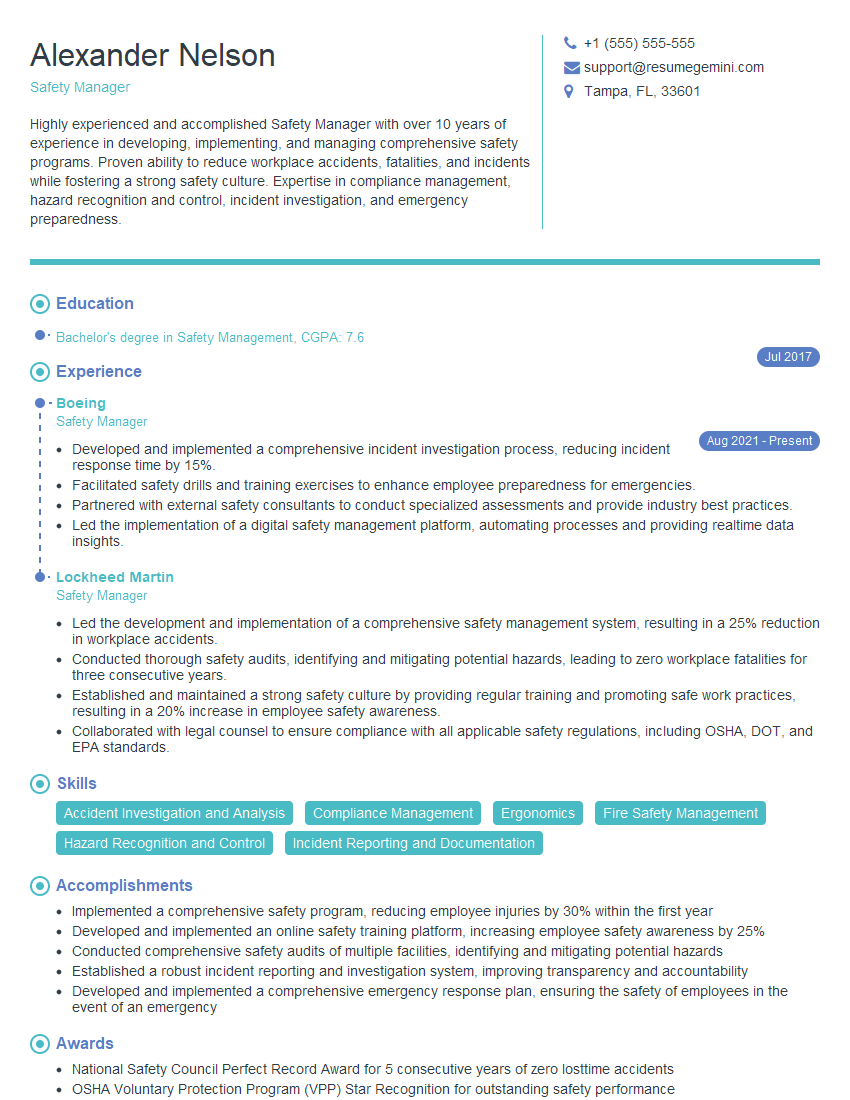
Safety Manager Resume Sample

Facility Manager Resume Sample

Operations Manager Resume Sample
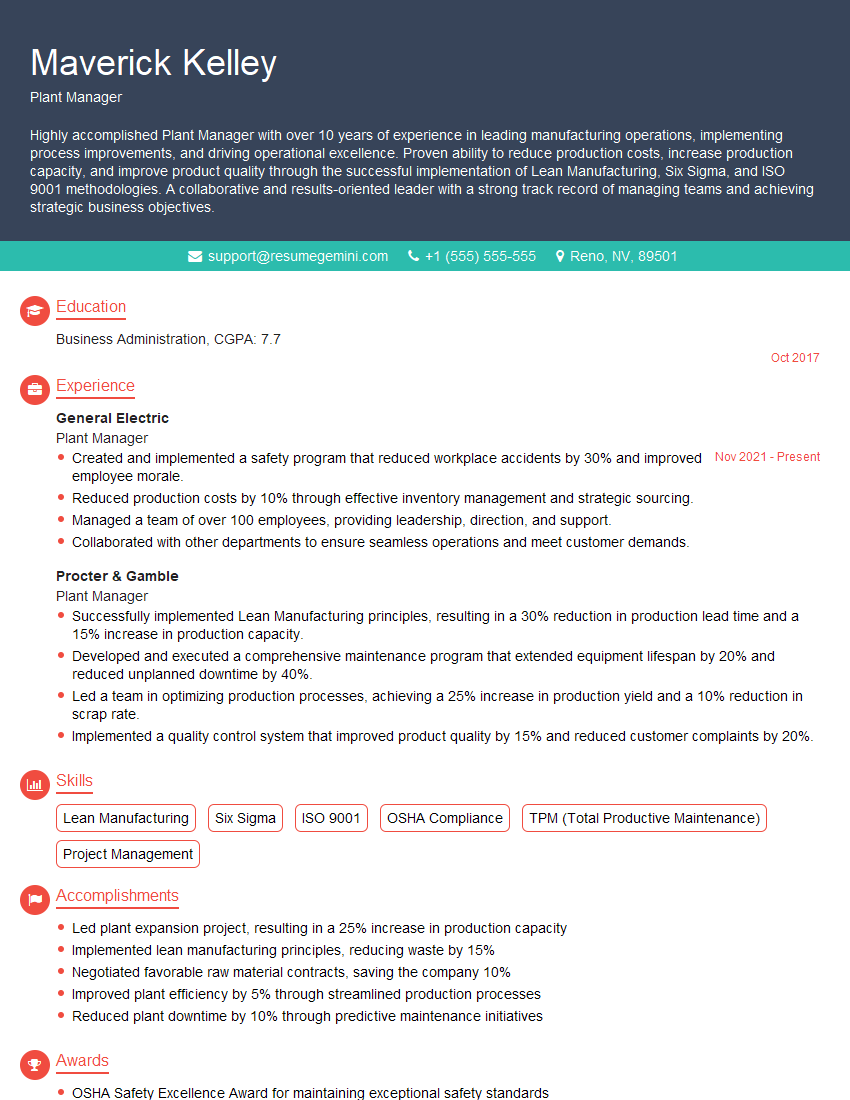
Plant Manager Resume Sample

Maintenance Manager Resume Sample

Quality Control Manager Resume Sample

Maintenance Supervisor Resume Sample

Production Supervisor Resume Sample

Project Manager Resume Sample

Engineering Manager Resume Sample

Safety Director Resume Sample

Compliance Officer Resume Sample

Risk Manager Resume Sample

Reliability Engineer Resume Sample

Training Specialist Resume Sample

Process Engineer Resume Sample
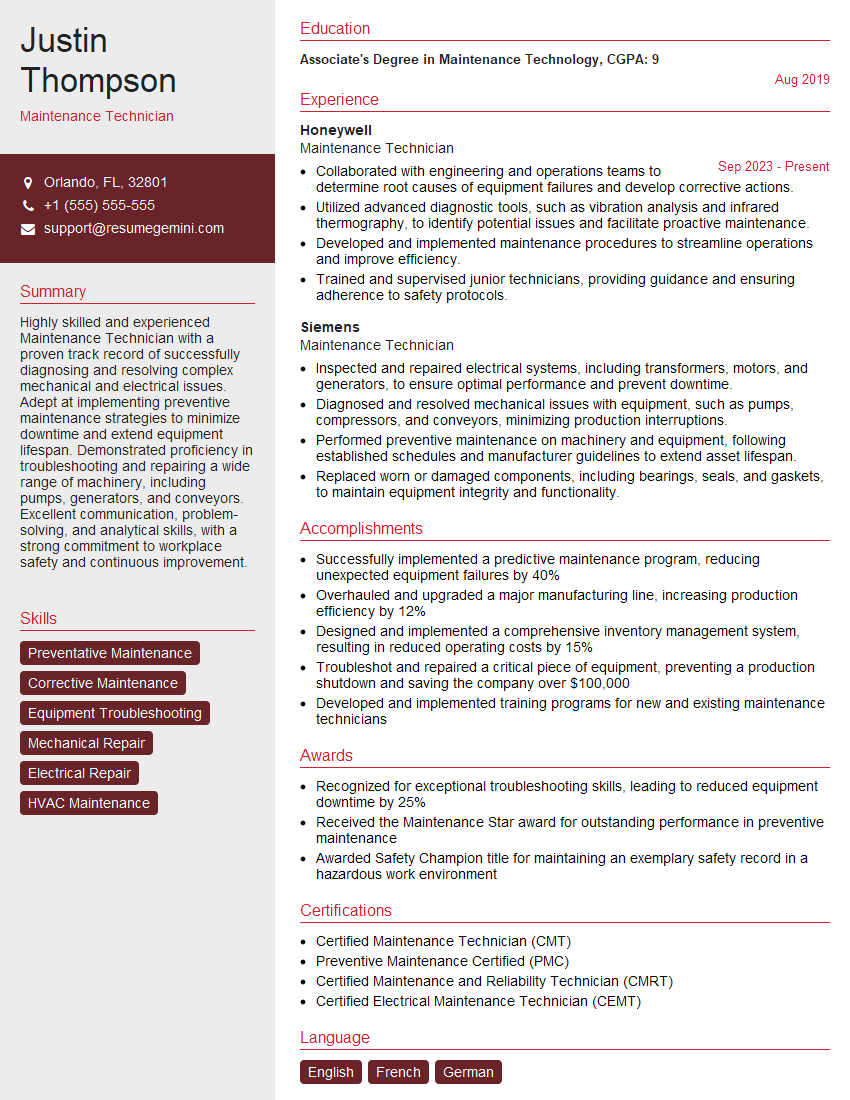
Maintenance Technician Resume Sample

Electrical Engineer Resume Sample

Safety Engineer Resume Sample
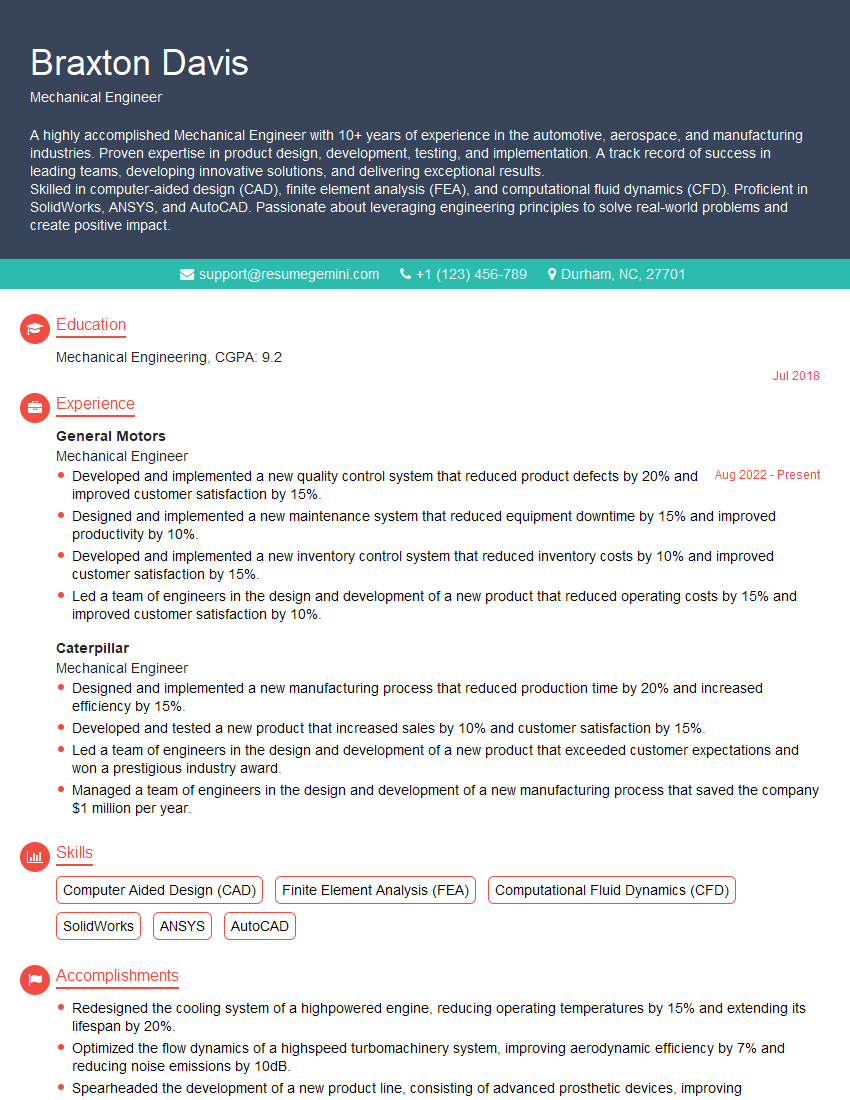
Mechanical Engineer Resume Sample

Industrial Hygienist Resume Sample

Occupational Health and Safety Specialist Resume Sample
- Safety Manager
- Facility Manager
- Operations Manager
- Plant Manager
- Maintenance Manager
- Quality Control Manager
- Maintenance Supervisor
- Production Supervisor
- Project Manager
- Engineering Manager
- Safety Director
- Compliance Officer
- Risk Manager
- Reliability Engineer
- Training Specialist
- Process Engineer
- Maintenance Technician
- Electrical Engineer
- Safety Engineer
- Mechanical Engineer
- Industrial Hygienist
- Occupational Health and Safety Specialist
Explore more articles
Users Rating of Our Blogs
Share Your Experience
We value your feedback! Please rate our content and share your thoughts (optional).
What Readers Say About Our Blog
Very informative content, great job.
good