The right preparation can turn an interview into an opportunity to showcase your expertise. This guide to Tattoo Blackwork interview questions is your ultimate resource, providing key insights and tips to help you ace your responses and stand out as a top candidate.
Questions Asked in Tattoo Blackwork Interview
Q 1. Describe your experience with various blackwork styles (geometric, traditional, etc.).
My experience with blackwork spans a variety of styles, each demanding a unique approach. Geometric blackwork, for instance, relies heavily on precision and mathematical principles. Think intricate mandalas or tessellations – the designs are often built from repeating shapes and lines, requiring meticulous planning and execution. Traditional blackwork, on the other hand, often incorporates bolder lines and simpler shapes, drawing inspiration from folk art and tribal designs. These can be more free-flowing yet still require a solid understanding of negative space and composition. I’ve also worked with styles that blend these elements, incorporating geometric precision within a more traditionally styled piece. The key difference lies in the level of detail and the overall feeling the design aims to evoke – sharp and angular for geometric, slightly more organic and bold in traditional styles.
Q 2. Explain your process for creating a blackwork tattoo design from concept to completion.
Creating a blackwork tattoo is a multi-stage process. It begins with a thorough consultation to understand the client’s vision and preferences. I then translate that vision into a sketch, paying close attention to scale, placement, and the client’s body’s natural contours. This initial sketch might be done digitally or traditionally on paper. Once approved, I refine the design, ensuring the lines are clean and the composition is balanced. Next, I create a stencil using thermal paper which I apply to the client’s skin. Only once I’ve received final approval of the stencil’s placement do I begin the tattooing process itself, focusing on consistent pressure and line weight throughout.
Q 3. How do you ensure precise linework and shading in your blackwork tattoos?
Precision in blackwork is paramount. It’s achieved through a combination of factors. Firstly, I use high-quality tattoo machines with needles appropriate for fine line work. I meticulously plan the design beforehand, considering line weight and density to ensure a cohesive final result. Secondly, my technique emphasizes steady hands and consistent pressure. I work in layers, building up the density of the black gradually rather than trying to achieve complete saturation in one pass. This layered approach allows for greater control and minimizes the risk of blowouts. Finally, regular cleaning of the needles and maintaining a sharp point significantly reduces the chance of imprecise lines.
Q 4. What are your preferred tools and techniques for applying blackwork tattoos?
My preferred tools are high-quality rotary tattoo machines known for their smooth operation and ability to produce fine lines. I typically use liners with a range of needle configurations, choosing the appropriate size depending on the line weight required. I use black ink specifically formulated for tattooing, ensuring consistent pigment distribution and longevity. Beyond the machine and ink, proper hygiene and sterilization protocols are crucial. This includes using disposable needles, gloves, and working in a clean, well-lit environment.
Q 5. How do you handle client consultations and design preferences for blackwork tattoos?
Client consultations are the cornerstone of a successful blackwork tattoo. I begin by discussing the client’s ideas, their style preferences, and their desired placement. I show them examples of my previous work and encourage them to bring reference images of styles they like. This collaborative approach helps us to refine the design, ensuring it aligns perfectly with their vision. I also address any concerns they may have about pain, healing, or aftercare, making sure they are completely informed before proceeding. Open communication is key to creating a piece the client will love.
Q 6. Explain your approach to aftercare instructions for blackwork tattoos.
Aftercare is critical for the proper healing of a blackwork tattoo. I provide clients with detailed, written instructions that cover every aspect of the healing process. This includes keeping the tattoo clean with unscented soap and water, applying a thin layer of approved aftercare ointment, avoiding direct sunlight, and abstaining from swimming, hot tubs, and excessive sweating during the healing period. I also emphasize the importance of hydration and a healthy diet, which can positively impact the healing process. Furthermore, I schedule follow-up appointments to monitor healing progress and address any concerns the client may have.
Q 7. How do you manage challenging skin types or areas when applying blackwork tattoos?
Dealing with challenging skin types or areas requires adaptability and experience. For example, very thin or sensitive skin may require a slight adjustment in technique, possibly using lighter pressure and smaller needles. Areas like the ankles or ribs, which can be prone to stretching or movement, demand careful planning and precise line placement to ensure the design doesn’t distort over time. In such cases, I may adjust the design slightly or choose a style that is less intricate to minimize potential issues. Communication with the client is paramount, ensuring they understand any adjustments needed and are comfortable with the chosen approach. Thorough consultation and careful planning can overcome most challenges.
Q 8. Describe your experience with stenciling and transferring designs for blackwork tattoos.
Stenciling and transferring designs are crucial for achieving precise blackwork tattoos. I primarily use thermal stencil paper for its accuracy and ease of use. The process begins with creating a high-resolution digital design, which is then printed onto the stencil paper using a laser printer. After that, I carefully apply the stencil to the client’s skin, ensuring proper placement and alignment. I use a stencil transfer solution to activate the stencil, allowing the design to be transferred onto the skin, leaving a clear, crisp outline to follow. The quality of the stencil transfer directly impacts the tattoo’s final look, so attention to detail here is paramount. I often use a combination of techniques like using a stencil-fixative spray to prevent smearing or lifting during application to guarantee a sharp and clean transfer.
For example, I recently worked on a large geometric back piece. The detailed design required exceptional accuracy during the stenciling. I used multiple stencil sheets to ensure seamless transitions between complex shapes. Proper placement was especially critical to ensure the final design flowed naturally along the spine.
Q 9. What are the common challenges you face when working with blackwork tattoos, and how do you overcome them?
Blackwork presents unique challenges. One common issue is the risk of blowouts – where ink spreads beyond the intended lines. This is especially true with darker, saturated blacks. To prevent this, I use multiple passes with very fine lines. I also pay close attention to the client’s skin type and tension. I might adjust needle depth and machine settings depending on whether the skin is tight or loose. Another challenge is maintaining consistent saturation across large areas. Achieving solid black without patchy areas requires meticulous work and careful needle depth control. I use a variety of techniques, including shading and layering, to ensure uniform darkness.
For instance, working with thick skin or areas with lots of natural folds, it’s important to stretch the skin taut and make sure the needle is working consistently at the same depth. If the skin isn’t taut, it can cause slight variations in line quality and shading density.
Q 10. How do you maintain hygiene and sterilization standards while working with blackwork tattoos?
Maintaining hygiene and sterilization is paramount. My workstation is meticulously cleaned and disinfected before each client. I use only single-use needles and tubes, discarding them immediately after use. All my equipment, including the tattoo machine, grips, and clippers, are sterilized using an autoclave, ensuring complete eradication of bacteria and viruses. I wear fresh gloves for every client, and practice careful barrier techniques to prevent cross-contamination. I also adhere strictly to all local health and safety regulations regarding tattooing practices.
Every step, from prepping the skin to cleaning up after the session, is carefully planned with hygiene and safety in mind. This is not just about adhering to regulations; it’s about protecting my clients’ health and well-being. It’s also about safeguarding my own health, as well, creating a safe environment for all.
Q 11. Describe your experience with different types of tattoo machines suitable for blackwork.
Different machines have different strengths for blackwork. For fine lines and detailed work, a rotary machine with a short stroke and a liner configuration is ideal, allowing for precision and control. For larger areas needing solid black saturation, a coil machine with a longer stroke can be effective for faster ink deposition. I generally prefer rotary machines for blackwork, as their smooth operation allows for better control and less trauma to the skin, particularly for intricate designs. I’ll also use different needle configurations (e.g., 7RL, 9RL, 11RL) depending on the line width and the density needed. Regular maintenance and calibration are crucial for optimal performance and consistent line work.
For example, I primarily use a Cheyenne HAWK Thunder for most of my blackwork, however, for larger pieces needing saturation, I may switch to a coil machine for greater ink flow. Both machines are sterilized after every session and properly maintained.
Q 12. How do you adapt your technique for different skin tones and types with blackwork?
Adapting to different skin tones and types is crucial for achieving optimal results. Lighter skin usually takes ink more easily, requiring less passes. Darker skin types, however, might need more passes to achieve the desired saturation and may heal differently. I adjust my needle depth, machine settings and the number of passes according to the client’s individual skin characteristics. I might also choose different inks to improve visibility or adjust my aftercare instructions. Consulting the client about their skin sensitivities and past tattoo experiences is also critical for proper procedure. Understanding how the ink will react on each skin type allows me to adapt my technique to ensure even saturation and optimal healing.
For instance, with clients who have naturally darker skin, I may opt for a slightly smaller needle grouping and increase the number of passes to ensure proper saturation. Using a black ink with a high pigment concentration is also vital.
Q 13. What are the key differences between traditional and contemporary blackwork styles?
Traditional blackwork, often seen in folk tattooing traditions around the world, emphasizes bold, solid black forms with limited shading. It often features geometric patterns, repeated motifs, and symbolic imagery. Contemporary blackwork expands on these traditions by incorporating elements of fine line detail, shading, and dot work, creating a wider range of visual effects. While traditional blackwork focuses on strength and simplicity, contemporary blackwork offers greater complexity and artistic expression.
For example, a traditional blackwork piece might be a simple geometric band around the arm, while a contemporary piece might integrate that style with fine-line details creating a more intricate design.
Q 14. How do you price your blackwork tattoo services?
Pricing my blackwork tattoos depends on several factors, including the size, complexity, placement, and detail of the design. The amount of time needed for the tattoo, as well as my level of experience, also significantly influence the cost. I usually provide a detailed estimate after discussing the client’s ideas and creating a sketch or digital design. Hourly rates, or a combination of hourly and flat-rate pricing depending on the project, are often the most fair and transparent way to charge for my services. I always strive to be transparent in my pricing structure, making sure my clients fully understand what they are paying for.
Transparency and clear communication are key; I always discuss pricing upfront to avoid any surprises for my clients.
Q 15. Describe your experience with handling client concerns or complaints related to blackwork tattoos.
Handling client concerns is paramount in tattooing. In blackwork, where the focus is on precision and bold lines, even minor issues can be amplified. My approach involves active listening, empathetic understanding, and a collaborative problem-solving mindset. If a client expresses dissatisfaction with line weight, for example, I’ll assess the situation – was it a result of the healing process, a slight variation in the stencil placement, or an issue with the initial design? I’ll clearly explain the potential causes, offer solutions (like a minor touch-up appointment or a slight adjustment in future sessions), and always prioritize open communication to ensure the client feels heard and valued. I believe in transparency; I never dismiss concerns, even if they seem minor to me. For instance, one client was slightly concerned about the boldness of a geometric pattern I’d done. After carefully listening and examining the piece together, I explained how the initial design intention was to create a strong visual impact and that the slight boldness actually helped achieve that effect. The client appreciated the explanation and felt reassured.
Career Expert Tips:
- Ace those interviews! Prepare effectively by reviewing the Top 50 Most Common Interview Questions on ResumeGemini.
- Navigate your job search with confidence! Explore a wide range of Career Tips on ResumeGemini. Learn about common challenges and recommendations to overcome them.
- Craft the perfect resume! Master the Art of Resume Writing with ResumeGemini’s guide. Showcase your unique qualifications and achievements effectively.
- Don’t miss out on holiday savings! Build your dream resume with ResumeGemini’s ATS optimized templates.
Q 16. How do you balance artistic creativity with client requests in blackwork tattoo design?
Balancing artistic vision with client requests in blackwork requires a delicate dance. I begin by actively listening to the client’s ideas, preferences, and inspiration sources. I then use this as a starting point to collaboratively design a tattoo that reflects both their vision and my artistic expertise. I’ll present various sketch options, incorporating their preferences, but suggesting modifications to optimize the design for blackwork aesthetics, such as line weight, negative space, and geometric balance. For instance, a client might want a detailed portrait in blackwork – which is often challenging. I’d instead propose stylized elements from the portrait, simplified and optimized for blackwork’s strengths, resulting in a bolder, more effective piece. The goal isn’t compromise, but rather synergy—a design that surpasses what either party could achieve alone. Open communication is key. Throughout the process, I keep the client updated with progress, solicit feedback, and make adjustments as needed. This ensures a satisfactory and meaningful result.
Q 17. How do you maintain a high level of consistency in your blackwork tattoo work?
Maintaining consistency in blackwork requires meticulous attention to detail and standardized practices. This begins with my equipment—I use high-quality, precision tattoo machines and needles, ensuring consistent ink flow and line weight. My setup includes a well-lit workspace, proper stencil application techniques, and consistent aftercare advice for clients. Beyond the technical aspects, I strive for consistent line weight and style. I frequently review my previous work to identify and refine my technique. I’ve developed a set of personal guidelines for line thickness and shading gradients, which I constantly refer to as a benchmark. The key isn’t just repetition but a constant striving for improvement. I’m always analyzing the impact of subtle variations – slight changes in needle depth or machine angle—and how they affect the final result. This ongoing self-assessment ensures my work maintains a level of quality and aesthetic unity.
Q 18. Describe your portfolio and highlight some of your most successful blackwork tattoos.
My portfolio showcases a wide range of blackwork styles, from geometric patterns and intricate mandalas to illustrative designs and minimalist pieces. I feature both large-scale back pieces and smaller, more intimate designs. One of my most successful pieces was a large-scale back piece depicting a stylized celestial map, with detailed constellations rendered in varying line weights to create depth and dimension. Another popular piece was a series of geometric floral patterns on a client’s thigh, showcasing the elegant simplicity that blackwork can achieve. Each tattoo is documented with high-quality photos to highlight the details and precision of my work. Success, for me, is measured not only by the visual appeal but also by the client’s satisfaction and the tattoo’s ability to resonate with the wearer’s personality and story.
Q 19. How do you stay updated on the latest trends and techniques in blackwork tattooing?
Staying updated is crucial in the dynamic world of tattooing. I actively engage with the blackwork community through online platforms, attending conventions, and following influential artists on social media. I delve into articles, tutorials, and online forums dedicated to tattooing techniques and equipment. I participate in workshops and masterclasses to learn new techniques and refine existing ones, such as experimenting with different shading styles or exploring the use of newer equipment. I regularly browse tattoo magazines and attend conventions to see the work of fellow artists and get inspiration. This constant exploration keeps my creativity fresh and my techniques sharpened, ensuring I remain at the forefront of blackwork artistry. It’s about continuous learning, not just passive observation.
Q 20. What is your approach to creating custom blackwork designs for clients?
Creating custom blackwork designs involves a collaborative process. I begin with an in-depth consultation to understand the client’s vision, preferences, and any existing imagery they may have. From this, I develop several initial sketches, exploring different interpretations of their ideas. I use this to gauge their reaction and to incorporate feedback. I might start with basic shapes and refine them. Then, I translate these sketches into more refined digital designs, integrating feedback and refining details like line weight and shading. This allows the client to visualize the final piece before committing to the tattoo. Throughout the process, I emphasize clear communication and ensure the client feels actively involved in the design’s evolution. For instance, if a client wants an animal, I’ll show them various stylized approaches, ensuring the final style works well within the context of blackwork’s capabilities.
Q 21. Explain your understanding of color theory as it relates to blackwork and shading.
While blackwork primarily utilizes black ink, understanding color theory is crucial for creating depth and visual interest. The absence of color doesn’t mean an absence of contrast. In blackwork, the contrast is achieved by manipulating the values (lightness and darkness) of black itself. Different line weights, densities of shading, and the strategic use of negative space create a sense of depth and form. Think of it like grayscale photography; the shades of gray, from the deepest black to the lightest, create variations that tell the story. For example, using tightly packed lines creates a dark, dense area, while leaving space between lines creates lighter areas and thus a visual contrast. This contrast is fundamental to building form, conveying texture, and adding dynamism to the design. Even without the use of actual color, careful consideration of values allows for a truly expressive piece of blackwork.
Q 22. Describe your experience using different black tattoo inks.
My experience with black tattoo inks spans over a decade, and I’ve worked with a wide variety of brands and formulations. Early on, I primarily used traditional, carbon-based black inks, known for their deep saturation. However, I’ve since transitioned to incorporating more modern, iron oxide-based blacks, which often offer superior vibrancy and less likelihood of blowouts, especially in fine linework. I meticulously test each ink’s properties – flow, consistency, and pigment density – before applying it to a client. For example, I might compare the shade of two different black inks under various lighting conditions to ensure they meet my standards for depth and richness. I also pay close attention to how each ink heals, as some brands might fade slightly faster than others.
One key consideration is the manufacturer’s reputation and adherence to safety regulations. I only use inks from reputable suppliers, ensuring they meet stringent standards for purity and biocompatibility. The subtle differences in the nuances of these inks directly affect the final result and the longevity of the tattoo. The choice of ink often depends on the specific style and design of the blackwork piece; finer details might benefit from a less dense, smoother-flowing ink, while larger areas might require a more robust formulation.
Q 23. What steps do you take to ensure the longevity and vibrancy of blackwork tattoos?
Ensuring the longevity and vibrancy of blackwork tattoos requires a multi-faceted approach, beginning even before the needle touches the skin. Proper aftercare instructions are paramount. I provide clients with detailed, written instructions, emphasizing gentle cleansing, moisturizing with unscented lotions, and protection from sun exposure. This is crucial as UV radiation is the biggest culprit for fading. I also advise against harsh chemicals and abrasive scrubbing.
During the tattooing process, technique plays a vital role. Consistent depth of needle penetration is crucial to prevent blowouts (where ink spreads unevenly under the skin), which can lead to blurry lines and diminished vibrancy. I meticulously plan out the placement and layering of the ink to ensure maximum saturation and long-term definition. For example, with intricate designs, I might use multiple passes, gradually building up the darkness and richness of the black. Finally, high-quality inks, as mentioned earlier, play a major role in achieving long-lasting, vibrant results.
Q 24. How do you assess a client’s skin suitability for a blackwork tattoo?
Assessing skin suitability for blackwork is a critical first step. I begin by conducting a thorough consultation, reviewing the client’s medical history, particularly focusing on any skin conditions, allergies, or medications that might affect the healing process or ink absorption. I look for factors such as skin type (e.g., oily, dry, sensitive), and overall skin health. Conditions like eczema or psoriasis might make blackwork less suitable or require specific considerations.
A visual assessment of the skin’s condition is crucial. I look for any signs of irritation, inflammation, or existing scars in the intended tattoo area. I also ask about sun exposure history, as sun-damaged skin may not heal as well and might cause increased fading. For clients with darker skin tones, I discuss the nuances of black ink saturation and potential for grey tones to emerge. Sometimes, a patch test might be considered to check for allergic reactions to the chosen ink, although this is less common with professional-grade black inks. Transparency and open communication are essential in this phase to ensure both the client and I are on the same page.
Q 25. Describe your experience with difficult or complex blackwork designs.
I’ve tackled numerous complex blackwork designs throughout my career, ranging from geometric patterns with intricate details to large-scale pieces requiring multiple sessions. The biggest challenges often involve maintaining precision and consistency over vast areas or with intricate, fine linework. Managing the ink flow, depth control, and skin tension are crucial in these situations. For example, a geometric piece with many tightly interwoven lines demands extreme accuracy to prevent blurring or distortion.
One particularly memorable piece was a full back tattoo featuring a detailed, interlocking pattern of intricate Celtic knots. This required precise planning, meticulous execution, and multiple sessions spread over months to allow for proper healing between sessions. Overcoming these challenges often involves breaking down the design into smaller, more manageable sections, careful stencil placement, and constant self-assessment throughout the process. Technological aids, such as specialized tattoo machines and stencils, enhance precision and efficiency in complex pieces. The successful completion of such projects is exceptionally rewarding, both professionally and artistically.
Q 26. How do you manage your time efficiently during a busy tattoo session involving blackwork?
Efficient time management during a busy blackwork session involves meticulous preparation. I pre-draw the design, ensuring the stencil is accurate and cleanly applied. I meticulously organize my workspace, having all necessary equipment within easy reach to minimize downtime. I streamline the process by prepping the client’s skin efficiently and maintaining a steady rhythm while tattooing.
I also utilize time-saving techniques, such as pre-mixing inks to the desired consistency and using appropriate machine settings for different aspects of the design. Knowing when to take short breaks to stretch and prevent fatigue is important. Clear communication with the client is key. Setting realistic expectations about session length and potential breaks helps to maintain a smooth workflow. A well-planned and organized approach to blackwork is vital for maximizing productivity and client satisfaction during busy periods.
Q 27. What are your strategies for maintaining a healthy work-life balance as a blackwork tattoo artist?
Maintaining a healthy work-life balance is crucial for preventing burnout in this demanding profession. I prioritize setting boundaries. This includes scheduling specific work hours and sticking to them, avoiding the temptation to work excessively late or on days off. Regular exercise, a balanced diet, and sufficient sleep are essential for both physical and mental well-being. I actively schedule time for hobbies and activities outside of tattooing to help de-stress and recharge.
Strong social connections are vital; spending quality time with family and friends provides crucial support. Learning to delegate or outsource certain tasks, such as administrative work, helps to free up time for more creative endeavors. Regular breaks during the day are also important, allowing me to step away from the machine and prevent mental fatigue. Professional boundaries also involve managing client expectations and setting clear communication parameters.
Q 28. How do you handle situations where a client wants significant changes during the tattooing process for blackwork?
Handling significant client requests for changes during a blackwork tattoo session requires careful consideration and skillful communication. I always emphasize the importance of having a finalized design before beginning. However, if a client wants significant alterations mid-session, I take the time to fully understand their request, carefully assessing the feasibility of the change.
Some changes might be minor adjustments, easily incorporated with minimal disruption. Others might require a complete redrawing of the stencil or even a postponement of the session to allow for proper replanning. Transparency is paramount. I explain the implications of the changes, including the potential effects on the final result, time constraints, and any additional costs. Collaborative decision-making is key. I work with the client to find a solution that satisfies both artistic integrity and their preferences, ensuring the final tattoo remains visually appealing and coherent.
Key Topics to Learn for Tattoo Blackwork Interview
- Geometric Foundations: Understanding shapes, lines, and their application in blackwork designs. Mastering geometric construction techniques is crucial for creating balanced and impactful pieces.
- Linework & Shading Techniques: Explore various line weights, shading methods (e.g., stippling, hatching), and their effect on depth and texture within blackwork tattoos. Practical application involves creating studies showcasing different line techniques.
- Design Composition & Layout: Learn how to effectively arrange elements within a given space, considering factors like negative space, flow, and visual balance. Practice designing compositions on various body parts and sizes.
- Blackwork Styles & Influences: Develop an understanding of different blackwork styles (e.g., traditional, geometric, dotwork) and their historical and cultural contexts. Analyze the work of influential blackwork artists to refine your own aesthetic.
- Skin & Aftercare Considerations: Demonstrate knowledge of appropriate skin preparation, stencil application, needle depths, and aftercare instructions for blackwork tattoos. Understanding client health and safety is paramount.
- Portfolio Presentation & Client Communication: Learn how to effectively showcase your blackwork portfolio and discuss your design process and artistic vision with clients. This includes understanding client needs and managing expectations.
- Troubleshooting & Problem Solving: Develop strategies for addressing common challenges such as bleeding, blowouts, and uneven linework. This involves practical experience and a willingness to learn from mistakes.
Next Steps
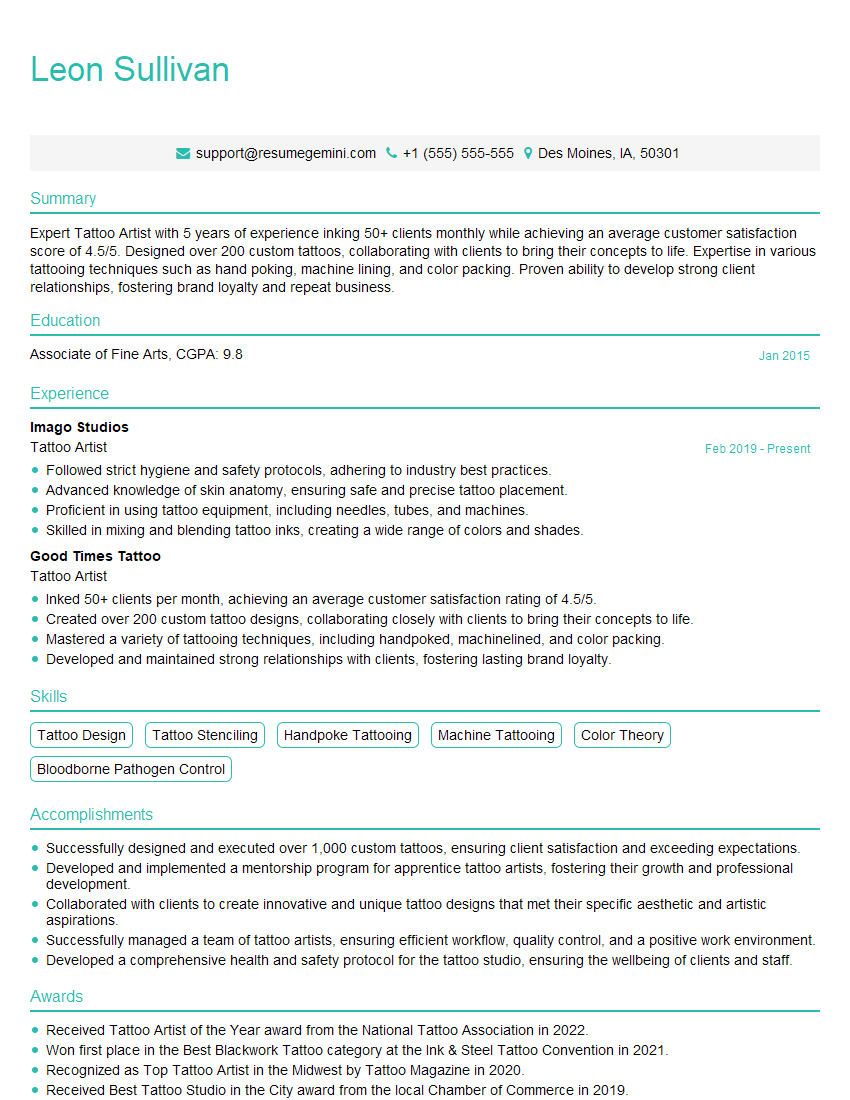
Mastering Tattoo Blackwork opens doors to exciting career opportunities, allowing you to showcase your unique artistic talent and build a successful career in the industry. An ATS-friendly resume is key to getting your application noticed by potential employers. To significantly improve your job prospects, we highly recommend using ResumeGemini to create a professional and effective resume that highlights your skills and experience. ResumeGemini offers examples of resumes tailored to the Tattoo Blackwork field, providing a valuable template to guide you in crafting your own compelling application materials.
Explore more articles
Users Rating of Our Blogs
Share Your Experience
We value your feedback! Please rate our content and share your thoughts (optional).
What Readers Say About Our Blog
Very informative content, great job.
good