Cracking a skill-specific interview, like one for Transportation Demand Modeling, requires understanding the nuances of the role. In this blog, we present the questions you’re most likely to encounter, along with insights into how to answer them effectively. Let’s ensure you’re ready to make a strong impression.
Questions Asked in Transportation Demand Modeling Interview
Q 1. Explain the difference between four-step and activity-based models.
Traditional four-step models and activity-based models are both used to forecast transportation demand, but they differ significantly in their approach. Think of the four-step model as a somewhat rigid assembly line, while an activity-based model is more like a simulation of individual behavior.
The four-step model sequentially predicts trip generation, trip distribution, mode choice, and trip assignment. It’s a relatively simple and computationally efficient method, making it suitable for large-scale analyses. However, it makes strong assumptions about individual travel behavior, which can lead to inaccuracies.
- Trip Generation: Estimates the number of trips originating and terminating in each zone.
- Trip Distribution: Allocates trips between origin and destination zones based on factors like distance and impedance.
- Mode Choice: Determines the mode of transport (car, bus, bike, etc.) for each trip based on travel time, cost, and other attributes.
- Trip Assignment: Assigns trips to specific links in the network.
Activity-based models, on the other hand, simulate individual activities (work, shopping, leisure) and their associated travel patterns. They model the choices people make about where to engage in their activities and how to get there. This approach allows for a more realistic representation of individual behavior, resulting in potentially more accurate forecasts, especially when dealing with complex travel patterns or land-use changes. However, they are computationally more intensive and require more detailed data.
In essence, the four-step model is a macroscopic approach, while the activity-based model is microscopic. The choice depends on the project’s scope, available data, and desired accuracy.
Q 2. Describe your experience with different transportation modeling software (e.g., Cube, Emme, Visum).
I have extensive experience with several leading transportation modeling software packages. My expertise encompasses the use of Cube, Emme, and Visum for various projects, ranging from small-scale urban studies to large-scale regional transportation plans.
Cube is particularly strong in its data management capabilities and its user-friendly interface, making it well-suited for projects needing robust data handling. I’ve utilized Cube for several projects involving complex network analysis and scenario planning. For example, I used Cube to model the impact of a new light rail line on traffic congestion in a major metropolitan area.
Emme, on the other hand, excels in its network optimization algorithms and its capacity for sophisticated equilibrium assignment. I’ve relied on Emme’s strengths for projects demanding detailed traffic flow simulations and network design optimization. For instance, I leveraged Emme to optimize traffic signal timing in a congested urban corridor.
Finally, Visum is known for its comprehensive functionalities, covering all stages of transportation modeling, from data preprocessing to visualization and reporting. Its strengths lie in its ability to integrate various data sources and perform a wide range of analyses. I utilized Visum for a regional transportation plan, incorporating census data, GPS trajectories, and origin-destination survey results to develop a comprehensive transportation model.
My proficiency extends beyond just using these software packages; I understand the underlying algorithms and methodologies, allowing me to select the most appropriate tools and techniques for each specific project and interpret the results accurately.
Q 3. How do you calibrate and validate a transportation demand model?
Calibrating and validating a transportation demand model are critical steps to ensure its accuracy and reliability. Think of it like fine-tuning a machine – calibration adjusts the parameters, while validation confirms the machine performs as intended.
Calibration involves adjusting the model’s parameters to match observed data. This often involves iterative adjustments of parameters, such as the friction factors in a gravity model (used in trip distribution), or parameters in the utility functions of a mode choice model. The goal is to minimize the difference between the model’s predictions and observed data, using statistical measures like root mean squared error (RMSE).
For example, during the calibration of a mode choice model, we might adjust the parameters related to travel time and cost until the model accurately predicts the observed proportions of trips made by car, bus, and rail. This iterative process typically involves using software algorithms and manual adjustments based on professional judgment.
Validation, on the other hand, is the process of verifying the model’s performance on data that was not used during calibration. This helps assess the model’s ability to generalize to unseen data and ensures it’s not simply overfitting the calibration data. This often involves comparing model predictions with independent datasets like observed traffic counts or household travel surveys. If the model performs well on validation data, it indicates greater confidence in its reliability and predictive power.
In summary, calibration is about fine-tuning the model to fit known data, while validation is about assessing the model’s ability to predict future performance and generalize beyond the calibration dataset.
Q 4. What are the common sources of error in transportation demand modeling?
Transportation demand models, while powerful tools, are susceptible to several sources of error. These errors can stem from data limitations, model assumptions, and even the complexities of human behavior.
- Data limitations: Incomplete or inaccurate data are common issues. For instance, origin-destination matrices might have missing data, and household travel surveys may suffer from sampling bias. Data quality directly impacts the accuracy of the model.
- Model structure and assumptions: The simplifying assumptions inherent in most models can introduce errors. For example, the four-step model’s sequential nature ignores the interdependence between trip generation, distribution, mode choice, and assignment, potentially leading to inaccurate predictions.
- External factors: Unforeseen events, like unexpected road closures or changes in fuel prices, can significantly influence travel behavior but are difficult to incorporate into the model.
- Calibration and validation issues: Inadequate calibration can lead to biased model parameters, while poor validation methods may fail to identify shortcomings in the model’s predictions.
- Human behavior: People’s travel choices are influenced by many factors beyond those explicitly considered in most models, leading to unpredictable variations in travel patterns.
Addressing these issues requires careful data collection, model selection appropriate for the specific problem, thorough calibration and validation, and a realistic understanding of the limitations of the modeling approach.
Q 5. Explain the concept of trip generation, distribution, mode choice, and assignment.
The four steps of transportation modeling – trip generation, distribution, mode choice, and assignment – are interconnected processes that build upon each other to estimate travel demand.
- Trip Generation: This step focuses on estimating the number of trips originating and terminating from each traffic analysis zone (TAZ). This prediction considers socio-economic factors like population density, income levels, and employment opportunities within each TAZ. For example, a zone with a large number of jobs will likely generate a high number of inbound trips in the morning and outbound trips in the evening.
- Trip Distribution: Once the total number of trips is known, this step allocates these trips between different origin and destination zones. Various models exist for this, such as the gravity model, which uses factors like distance and travel time to determine the attractiveness of different destinations. For example, a shorter travel time to a shopping mall will likely result in more trips being assigned to that mall.
- Mode Choice: This step determines the mode of transportation for each trip (car, bus, train, etc.). It uses utility functions that consider travel time, cost, comfort, and convenience for each mode to predict modal split. For example, a commuter might choose a train over a car if the train offers significantly faster travel time despite a slightly higher cost.
- Trip Assignment: The final step involves assigning trips to the network’s links (roads, rail lines). This step often uses traffic assignment models to predict traffic flow and congestion. For example, a shortest-path algorithm might assign many trips to a freeway if it’s the fastest route.
These steps are typically iterative, with the outputs of one step influencing the inputs of the next.
Q 6. How do you handle missing data in a transportation demand model?
Missing data is a common challenge in transportation modeling. Effective strategies for handling missing data depend on the nature and extent of the missingness. Ignoring it is rarely a good option.
- Imputation techniques: These methods involve estimating the missing values based on available data. Simple techniques include using the mean or median of the available data. More sophisticated methods include multiple imputation, which creates multiple plausible imputed datasets to account for uncertainty in the imputation process.
- Data augmentation: This involves creating synthetic data points based on patterns observed in the existing data. Machine learning techniques, such as k-nearest neighbors or generative models, can be used for this purpose.
- Model sensitivity analysis: Assess how sensitive the model is to the missing data by running the model with different imputation methods or varying assumptions about the missing values. This helps in understanding the uncertainty introduced by the missing data.
- Data collection efforts: Whenever feasible, it’s always best to supplement existing data through targeted data collection, such as conducting surveys or using alternative data sources (e.g., GPS data).
The best strategy depends on the specific context, the type of data missing, and the resources available. It’s crucial to carefully document the methods used to handle missing data and assess the potential impact on the results.
Q 7. Describe your experience with different data sources used in transportation modeling (e.g., census data, GPS data).
My experience encompasses a wide range of data sources used in transportation modeling. The choice of data sources significantly influences the accuracy and reliability of the model. A diverse set of data often gives a more robust model.
- Census data: Provides valuable information on population demographics, household characteristics, and employment patterns. This data is crucial for trip generation modeling.
- Household travel surveys: Offer detailed information on individual travel patterns, including trip purposes, origins, destinations, modes, and travel times. These are critical for calibrating and validating the model.
- GPS data: Provides rich information on actual travel patterns and speeds. GPS data is especially useful for validating traffic assignment models and identifying congestion hotspots. For example, using GPS trajectories from ride-sharing services can improve the accuracy of traffic speed prediction.
- Traffic counts: Provide valuable data on traffic volumes and speeds on different road segments. They are essential for validating traffic assignment models.
- Public transportation data: Information on schedules, ridership, and service levels are needed for modeling public transport mode choice and assignment.
- Land use data: Describes zoning, building types, and the distribution of activities across the study area, forming the basis for predicting trip generation and distribution.
Combining data from multiple sources improves the robustness and reliability of the model and allows for a more accurate and comprehensive understanding of the transportation system.
Q 8. What are the limitations of traditional four-step models?
Traditional four-step models (trip generation, trip distribution, mode choice, and route assignment) are a cornerstone of transportation planning, but they have significant limitations. Their sequential nature assumes independence between steps, which isn’t realistic. For example, the trip distribution step doesn’t consider the congestion that might influence route choices, calculated later.
- Sequential Bias: The results of each step heavily influence subsequent steps, leading to cumulative errors. A small inaccuracy in trip generation can snowball through the process.
- Assumption of Independence: The model assumes travelers make decisions independently without considering others’ choices, ignoring the interactive nature of transportation systems. This is especially problematic during peak hours.
- Difficulty in Handling Dynamic Conditions: They struggle to accurately represent time-dependent travel patterns and congestion, which vary significantly throughout the day.
- Limited Feedback Mechanisms: There’s little feedback between steps, making it difficult to account for how changes in one aspect of the model might affect other aspects. For instance, a new highway might change trip distribution, but this feedback isn’t explicitly incorporated.
- Data Requirements: These models are data-intensive and require high-quality, consistent data, which might not always be available.
In essence, while valuable for initial assessments, their simplifying assumptions limit their applicability to complex, dynamic systems. Modern methods like activity-based models and simulation approaches better address these shortcomings.
Q 9. How do you incorporate land use data into a transportation demand model?
Land use data is absolutely crucial for accurate transportation demand modeling. It provides the ‘who’, ‘where’, and ‘when’ of travel. We incorporate it in several ways:
- Trip Generation: Land use characteristics such as residential density, employment density, and the mix of land uses (residential, commercial, industrial) directly influence trip generation rates. A high-density residential area will naturally generate more trips than a sparsely populated area.
- Trip Distribution: Land use data helps determine the attractiveness of different zones as origins and destinations. Gravity models, often used in trip distribution, use factors like population and employment in various zones to calculate trip flows between them.
- Mode Choice: Proximity to transit stations, availability of parking, and the presence of walkable neighborhoods impact mode choice decisions. A model can incorporate land use features to predict the likelihood of individuals choosing walking, biking, transit, or driving.
- Activity-Based Modeling: These sophisticated models explicitly consider individual activity patterns and location choices. This approach heavily leverages land use information to simulate the decision-making process of individuals, creating more realistic travel patterns.
For example, in developing a model for a city considering a new light rail line, we’d use land-use data to understand existing employment concentrations and residential areas, predicting changes in transit ridership once the line opens. We might employ GIS software to overlay land use maps with the transportation network to effectively analyze spatial relationships.
Q 10. Explain the concept of network equilibrium.
Network equilibrium, in the context of transportation modeling, describes a state where no individual traveler can improve their travel time by unilaterally changing their route. Think of it like a highway system at rush hour – everyone is trying to get to their destination as quickly as possible, and no one can find a significantly faster alternative route. This doesn’t imply that all routes are equally efficient, but no one has an incentive to switch routes.
There are two main types of equilibrium:
- User Equilibrium (UE): This is the most common type and assumes that each traveler chooses the route that minimizes their individual travel time, given the choices made by others. The system reaches a stable state where no single traveler can reduce their travel time by switching routes.
- System Optimum (SO): This represents the ideal state where the total travel time for all travelers is minimized. In this case, travelers might be assigned to routes that don’t individually minimize their travel time but contribute to the overall system efficiency. This is rarely observed in reality because travelers are self-interested and act independently.
These equilibrium concepts are critical for transportation network modeling as they help us predict traffic flow patterns under different scenarios, such as with new infrastructure or changes in traffic demand. Algorithms like Frank-Wolfe are used to solve these equilibrium problems to find the stable network flow patterns.
Q 11. How do you account for induced demand in your models?
Induced demand refers to the phenomenon where improved transportation infrastructure (e.g., a new highway) can lead to increased travel demand rather than simply shifting existing traffic. People might make trips they wouldn’t have otherwise made, or change their travel patterns (e.g., longer commutes). It’s a significant challenge in transportation planning, as it can render projects less effective than initially predicted.
We account for induced demand in several ways:
- Activity-Based Models: These models can better capture the impact of transportation improvements on individuals’ daily activities and location choices, providing a more nuanced understanding of induced demand.
- Econometric Models: By incorporating variables that capture the effects of transportation improvements on land values, housing, and business development, we can estimate the resulting increase in travel demand.
- Elasticity Analysis: This analyzes how travel demand responds to changes in travel time or cost. Higher elasticity implies more significant induced demand. We can adjust model parameters accordingly to reflect this sensitivity.
- Scenario Planning: Running simulations with different assumptions about induced demand allows us to examine a range of potential outcomes and assess the robustness of project designs.
For instance, when evaluating the impact of a proposed highway expansion, we wouldn’t just model the shift in existing traffic; we’d also use econometric and activity-based modeling techniques to estimate the potential increase in trips generated due to improved accessibility.
Q 12. What are some common metrics used to evaluate the performance of a transportation demand model?
Evaluating the performance of a transportation demand model requires a multifaceted approach using various metrics. The choice of metrics depends on the specific goals of the model. Common metrics include:
- Goodness-of-Fit Statistics: These quantify how well the model’s predictions align with observed data. Examples include R-squared, Mean Absolute Error (MAE), and Root Mean Squared Error (RMSE). Lower errors indicate better fit.
- Network Performance Measures: These assess the efficiency and functionality of the modeled transportation network. Examples include total travel time, average trip length, vehicle-kilometers traveled, and network congestion levels.
- Mode Split Accuracy: This metric examines the model’s ability to accurately predict the proportion of trips made by each transportation mode (car, bus, train, etc.).
- Route Choice Accuracy: This evaluates how well the model predicts the actual routes taken by travelers, especially in complex networks. This might involve comparing the model’s route flows with observed traffic counts.
- Sensitivity Analysis Outcomes: We use sensitivity analysis to identify which input parameters have the greatest influence on the model outputs. These insights help to assess the robustness of our model and inform data collection efforts.
For example, if we’re modeling the impact of a new highway, we’d compare the model’s predictions of total travel time and mode share with historical data before and after similar projects in other locations. This would help assess the model’s reliability and inform policy decisions.
Q 13. Describe your experience with sensitivity analysis in transportation modeling.
Sensitivity analysis is integral to my transportation modeling workflow. It helps to understand the impact of uncertainties in input parameters on model outputs. This is crucial for identifying which data inputs require the most attention and for assessing the robustness of model predictions.
I commonly use several techniques:
- One-at-a-Time (OAT) Sensitivity Analysis: This involves systematically varying one input parameter at a time while holding others constant. It’s simple to implement but can be limited when interactions between parameters exist.
- Global Sensitivity Analysis (GSA): Techniques like variance-based methods (e.g., Sobol indices) quantify the relative importance of different input parameters. GSA is particularly useful in complex models with many uncertain inputs, helping us to focus on the most influential ones.
- Scenario Analysis: This involves running the model under various scenarios that represent different combinations of input parameter values. It’s effective for visualizing the range of potential outcomes.
In a recent project involving a new rapid transit line, we used GSA to evaluate the sensitivity of ridership projections to uncertainty in factors like travel time, fare costs, and land-use development. This informed the decision to allocate more resources to refine estimates of land-use change, as GSA showed this parameter had a significant impact on model output, providing more reliable projections and informed decision making.
Q 14. How do you incorporate transit in your transportation models?
Incorporating transit into transportation models requires considering several aspects beyond simply adding transit lines to the network. We need to represent the specific characteristics of transit systems, including:
- Transit Network: We need detailed data on routes, schedules, stop locations, and service frequencies. This data is often sourced from General Transit Feed Specification (GTFS) files.
- Transit Service Attributes: These include factors like headways (frequency of service), travel times, in-vehicle times, and waiting times at stops. We often use transit assignment models that account for the differences between transit and auto travel.
- Transit Mode Choice: Transit mode choice is influenced by factors such as travel time, cost, comfort, convenience, and transfers. We typically use multinomial logit models, taking these factors into account.
- Transit Network Equilibrium: While challenging to model exactly, we can achieve approximate equilibrium for transit systems by considering the interplay of crowding, waiting times and route choices, often integrating this with the auto network equilibrium modeling.
Often, we employ specialized transit assignment models which account for factors like transfers, service frequencies, and crowding. For example, we might use a transit assignment model to predict the ridership on different routes of a bus network given projected demand, schedule changes, and current conditions. Software like TRANSIMS or MATSim allow for sophisticated transit modeling within larger transportation models.
Q 15. What are the key considerations in modeling non-motorized travel?
Modeling non-motorized travel, like walking and cycling, requires a nuanced approach different from motorized travel. It’s not simply about speed and distance; we need to consider factors that influence people’s choices about walking or cycling instead of driving or using public transit.
- Safety: Perceived safety is paramount. Models need to incorporate data on crime rates, traffic volume on shared roadways, presence of bike lanes and pedestrian infrastructure. A model might use GIS data to assess the proximity of dangerous intersections or areas with high crash rates.
- Accessibility: The model must account for the physical accessibility of routes. This includes considering terrain, gradients, presence of stairs, and the availability of ramps. We often integrate elevation data from sources like DEMs (Digital Elevation Models) to accurately simulate the effort involved.
- Comfort and amenities: Weather conditions (temperature, precipitation), shading, and the presence of amenities along the route (shops, parks, benches) significantly affect mode choice. We might incorporate weather data from meteorological agencies and survey data about amenities to quantify these effects.
- Network connectivity: Unlike cars, non-motorized modes rely on a connected network of sidewalks and bike paths. The model must accurately represent this network and its characteristics, such as path width and surface condition. We often use data collected through field surveys or from open street map data.
- Land use patterns: Proximity of origins and destinations to amenities and public transit hubs will greatly influence the decision to walk or cycle. This requires integration of land-use data to show density, job location and residential patterns.
For example, in a city planning project, we might use a model to predict the change in cycling trips if a new bike lane network is implemented. The model would take into account factors like safety improvements (reducing risk of collisions), increased connectivity, and improvements in comfort and convenience.
Career Expert Tips:
- Ace those interviews! Prepare effectively by reviewing the Top 50 Most Common Interview Questions on ResumeGemini.
- Navigate your job search with confidence! Explore a wide range of Career Tips on ResumeGemini. Learn about common challenges and recommendations to overcome them.
- Craft the perfect resume! Master the Art of Resume Writing with ResumeGemini’s guide. Showcase your unique qualifications and achievements effectively.
- Don’t miss out on holiday savings! Build your dream resume with ResumeGemini’s ATS optimized templates.
Q 16. Explain the concept of stated preference and revealed preference data.
Stated preference (SP) and revealed preference (RP) data are two crucial data sources in transportation modeling. They offer complementary perspectives on travel behavior.
Revealed Preference (RP) data comes from observing actual travel choices. This includes things like trip diaries, GPS tracking data, or automatic vehicle identification (AVI) data. RP data shows what people *actually* do. For example, analyzing smart card data from a public transit system reveals the routes people actually take, their frequency of travel, and the time of day they travel.
Stated Preference (SP) data is collected through surveys or experiments. People are asked hypothetical questions about their travel choices given various scenarios. For instance, we might ask individuals to choose between driving, taking a bus, or cycling, given different travel times, costs, and levels of comfort. SP data shows what people *say* they would do. This can be very useful for understanding preferences for modes or services not currently available or easily measurable.
Often, we use a combined approach, using RP data to calibrate our models and ensure they accurately reflect real-world behavior. SP data provides crucial information on future scenarios where RP data is absent (e.g., new modes of transport) or not easily obtained.
Q 17. How do you handle dynamic traffic assignment in your models?
Dynamic Traffic Assignment (DTA) models account for the time-varying nature of traffic flow. Unlike static assignment, which assumes constant travel times, DTA models simulate how traffic conditions change throughout the day in response to variations in demand. It is computationally more intensive but offers much greater accuracy.
Common approaches to DTA involve iterative algorithms. For instance, we might use a method like the method of successive averages (MSA) or a more sophisticated approach such as a cell transmission model (CTM). These algorithms simulate vehicles moving through the network, updating link travel times based on congestion levels at each time step. The algorithms usually work by repeatedly adjusting travel times and route choices until a stable state is reached (equilibrium).
Implementing DTA requires detailed data on network geometry, capacity, speed limits, and origin-destination (OD) matrices. Furthermore, factors like traffic incidents, road closures, and signal timings should be integrated to accurately reflect real-world complexities. Calibration is crucial, comparing the model’s outputs with real-world traffic data to ensure accuracy.
In practice, we might use DTA to evaluate the impacts of adding a new highway lane or implementing an intelligent transportation system (ITS). By modeling the expected change in traffic patterns and congestion, the planners can quantify the potential benefits and make more informed decisions.
Q 18. Explain your experience with agent-based modeling or other advanced modeling techniques.
I have extensive experience with agent-based modeling (ABM) for transportation applications. Unlike traditional macroscopic models, ABM simulates the behavior of individual agents (drivers, pedestrians, cyclists) and their interactions. This allows us to capture more detailed aspects of travel behavior and emergent phenomena like congestion formation.
In one project, I used ABM to simulate pedestrian movement in a large public space during a major event. The model considered individual pedestrian decisions (route choice, speed, interaction with other pedestrians) and reproduced realistic patterns of congestion, bottlenecks, and crowd dynamics. This helped inform the design of effective pedestrian management strategies.
ABM’s strengths are in its ability to: handle heterogeneous agents, simulate complex interactions, and explore scenarios with uncertain outcomes. However, it is computationally demanding and requires careful calibration and validation. To overcome this, we frequently use parallel computing to speed up computation times.
Beyond ABM, I’m also familiar with other advanced techniques, including:
- Calibration and validation techniques such as Bayesian approaches and Maximum Likelihood Estimation:
- Time series analysis for traffic forecasting and anomaly detection
- Machine learning for travel demand prediction (e.g., neural networks, support vector machines)
Q 19. Describe your experience with scenario planning and forecasting.
Scenario planning and forecasting are critical for long-term transportation planning. It involves developing multiple plausible futures based on different assumptions about population growth, economic development, technological change, and policy decisions.
My process typically involves:
- Identifying key drivers of change: This could include demographic trends, economic projections, technological innovation (e.g., autonomous vehicles), and policy shifts (e.g., carbon emission targets).
- Developing scenario narratives: This involves creating coherent storylines representing different possible futures. For example, we might develop scenarios around high vs. low autonomous vehicle adoption rates or scenarios focused on different levels of investment in public transit.
- Developing quantitative models for each scenario: This usually involves adapting existing transportation models (e.g., four-step model or DTA) to reflect the assumptions of each scenario.
- Analyzing the results and presenting the findings: This includes comparing the outcomes across scenarios, identifying key uncertainties, and highlighting potential risks and opportunities.
For example, in a regional transportation plan, we might develop scenarios reflecting different levels of urban sprawl, each with different transportation implications. The scenarios would help decision-makers understand the trade-offs between different development patterns and the associated infrastructure needs.
Q 20. How do you present your modeling results to non-technical audiences?
Presenting complex modeling results to non-technical audiences requires clear and concise communication. I focus on using visuals and minimizing jargon.
My approach usually involves:
- Focusing on the key findings: Highlight the most important insights in a clear and accessible manner. Avoid overwhelming the audience with technical details.
- Using visuals: Employ charts, graphs, maps, and diagrams to illustrate key trends and patterns. This makes complex information more intuitive and engaging.
- Using analogies and metaphors: Relate technical concepts to everyday experiences to make them easier to understand. For example, I might use the analogy of water flowing through pipes to explain traffic flow.
- Summarizing key policy implications: Frame the results in terms of actionable policy recommendations, making it clear how the findings could be used to inform decision-making.
- Engaging in a dialogue: Be prepared to answer questions and address any concerns in a clear and concise way.
For example, when presenting to city council members, I might focus on the projected impact of a proposed transportation project on traffic congestion, commute times, and air quality, using clear graphs and simple language to convey the key findings.
Q 21. What are the ethical considerations in transportation modeling?
Ethical considerations in transportation modeling are crucial, particularly concerning equity and fairness. Models should not perpetuate or exacerbate existing inequalities.
Key ethical considerations include:
- Data bias: Ensuring the data used in the model accurately reflects the needs and travel patterns of all population groups. Biases in data collection can lead to unfair or discriminatory outcomes.
- Equity and access: Models should assess the impact of transportation projects and policies on different social groups, considering access to jobs, education, and healthcare.
- Environmental justice: The environmental impacts of transportation projects, such as air and noise pollution, should be fairly distributed across communities. We need to avoid disproportionately burdening vulnerable populations.
- Transparency and accountability: The modeling process, assumptions, and limitations should be transparent and accessible to all stakeholders. This ensures the results are trustworthy and can be scrutinized.
- Privacy and security: Data used in the model should be handled responsibly, respecting the privacy of individuals. Data anonymization and security measures are crucial.
For example, when evaluating a proposed highway expansion, we should not only consider its impact on overall travel times but also assess its effects on different socioeconomic groups, ensuring that it doesn’t worsen existing disparities in access to opportunities. This requires careful consideration of the distribution of benefits and costs, and potentially requires the development and use of equity metrics.
Q 22. How do you ensure the accuracy and reliability of your transportation models?
Ensuring the accuracy and reliability of transportation models is paramount. It’s a multifaceted process that begins with data quality and extends to model validation and calibration. We start by meticulously scrutinizing the data sources, checking for completeness, consistency, and potential biases. For example, using only peak-hour data might skew results and underestimate overall demand. We employ various data cleaning techniques to handle missing values and outliers. Then, we choose the appropriate model based on the research question and available data. For instance, a four-step model might suit regional planning, while a microscopic simulation could be ideal for analyzing traffic flow at a specific intersection. Crucially, we conduct extensive model validation using various statistical measures, comparing model outputs against real-world observations. Calibration involves adjusting model parameters to minimize the differences between the simulated and observed data. We might use techniques like maximum likelihood estimation or Bayesian calibration to achieve this. Finally, sensitivity analysis is employed to determine how changes in input parameters affect model outcomes, highlighting areas of uncertainty and informing decision-making.
Q 23. Explain your approach to model building and management.
My approach to model building and management follows a structured, iterative process. It starts with clearly defining the project objectives and scope. Then, we identify data needs and collect the relevant data, which could include traffic counts, origin-destination matrices, land use data, and network information. Next, we choose a suitable modeling framework, which might range from a simple gravity model to a complex agent-based model depending on the project’s goals. After building the model, we rigorously test and calibrate it using real-world data. This iterative process involves refining the model parameters and assumptions until acceptable levels of accuracy and precision are achieved. Once calibrated, the model is documented thoroughly, including assumptions, limitations, and data sources. This documentation is crucial for transparency and reproducibility. Finally, we implement a robust version control system to manage model updates, modifications, and different versions. This ensures that the model remains functional, reliable, and adaptable to future changes and data updates.
Q 24. Describe a time you had to overcome a technical challenge in transportation modeling.
During a project analyzing the impact of a new light rail system, we encountered a significant challenge related to accurately representing pedestrian behavior near transit stations. Existing models oversimplified pedestrian movements, resulting in inaccurate predictions of station usage and surrounding area congestion. To overcome this, we incorporated agent-based modeling techniques, simulating individual pedestrian decisions based on factors like walking speed, path preferences, and perceived risks. We used real-time GPS data from pedestrian tracking systems to calibrate the model parameters related to pedestrian behavior. This innovative approach significantly improved the accuracy of our predictions, highlighting the importance of considering the micro-level interactions of individuals within a larger transportation system. The results helped to inform station design improvements and better predict future land-use patterns around the stations.
Q 25. How do you stay updated on the latest advancements in transportation modeling techniques and software?
Staying current in this rapidly evolving field is crucial. I actively participate in professional organizations like the Transportation Research Board (TRB) and attend conferences and workshops to learn about the latest research and best practices. I subscribe to leading journals such as Transportation Research Part A and Transportation Research Part C. I regularly monitor online resources and utilize software updates and training opportunities offered by vendors like TransCAD and Vissim. Furthermore, I actively engage in online communities and forums dedicated to transportation modeling, allowing me to learn from the experiences of other professionals and gain insights into emerging trends and techniques. This continuous learning ensures that I remain abreast of the latest advancements and can apply the most effective methodologies to my projects.
Q 26. What are the key differences between macroscopic and microscopic simulation models?
Macroscopic and microscopic simulation models differ fundamentally in their approach to representing traffic flow. Macroscopic models treat traffic as a continuous flow, focusing on aggregate measures like density, speed, and flow. Think of it like looking at a river’s current—you see the overall flow but not individual water molecules. They’re computationally efficient and suitable for large-scale network analysis, but they lack the detail to capture individual vehicle behavior. Microscopic models, on the other hand, simulate the movement of individual vehicles, considering their interactions and decisions. This is like looking at individual fish swimming in the river—you see their individual movements and interactions. They are computationally more intensive but offer a higher level of detail, enabling analysis of phenomena like lane-changing behavior and signal timing effects. In short, macroscopic models offer a broader, aggregate perspective, while microscopic models provide a granular, detailed view of traffic flow.
Q 27. Explain how you would address biases in your data related to transportation.
Addressing biases in transportation data is vital for reliable model outputs. One common bias is sampling bias—if data is only collected at certain times or locations, it might not represent the entire population. For instance, using data only from weekdays might not accurately reflect weekend travel patterns. To mitigate this, we employ stratified sampling techniques to ensure representative data collection across different times and locations. Another potential bias is measurement error—inaccuracies in data recording can lead to skewed results. We employ data validation and error correction techniques to identify and address such errors. Furthermore, we use statistical methods such as regression analysis to control for the effects of confounding variables. For example, we might control for income levels when analyzing the relationship between travel mode choice and distance traveled. Finally, we often employ data augmentation techniques to increase the size and diversity of our datasets. The most crucial step is always to carefully document the data collection methods and potential biases, ensuring transparency and enabling critical evaluation of the findings.
Q 28. Describe your understanding of the limitations of existing transportation models and future trends.
Current transportation models have limitations. Many struggle to accurately represent the complexities of human behavior, such as mode choice decisions influenced by factors beyond simple cost and time considerations. They often simplify interactions between different modes of transportation. Also, the increasing prevalence of ride-sharing services and autonomous vehicles poses challenges to current models, requiring adjustments to capture their unique impacts on traffic patterns. Future trends in transportation modeling will focus on incorporating more sophisticated behavioral models, using advanced data sources like GPS and mobile phone data, and leveraging machine learning techniques for improved prediction accuracy. We’ll likely see more integrated models that link transportation with other systems such as land use and energy consumption. The rise of agent-based models will allow for a more realistic simulation of complex, dynamic transportation systems. Ultimately, the goal is to develop models that are more realistic, accurate, and useful for supporting sustainable and efficient transportation planning and management.
Key Topics to Learn for Transportation Demand Modeling Interview
- Trip Generation: Understanding factors influencing trip origins and destinations (e.g., socioeconomic characteristics, land use). Practical application: Predicting future trip generation based on projected land use changes.
- Trip Distribution: Modeling the spatial distribution of trips between origins and destinations (e.g., gravity models, intervening opportunities). Practical application: Evaluating the impact of a new highway on traffic patterns.
- Mode Choice: Analyzing the factors influencing travelers’ choice of transportation mode (e.g., cost, time, comfort). Practical application: Assessing the effectiveness of transit-oriented development initiatives.
- Route Assignment: Determining the paths taken by travelers between origins and destinations (e.g., shortest path algorithms, user equilibrium). Practical application: Optimizing traffic signal timing to minimize congestion.
- Data Analysis and Visualization: Proficiency in handling large datasets, performing statistical analysis, and creating insightful visualizations of modeling results. Practical application: Communicating complex model outputs to stakeholders clearly and concisely.
- Calibration and Validation: Techniques for refining model parameters and assessing the accuracy of model predictions. Practical application: Ensuring the model accurately reflects real-world travel behavior.
- Forecasting and Scenario Planning: Utilizing models to predict future transportation demand under different scenarios (e.g., population growth, infrastructure improvements). Practical application: Informing transportation planning decisions and infrastructure investments.
- Software Proficiency: Familiarity with common transportation modeling software (e.g., TransCAD, VISUM, Cube). Practical application: Demonstrating expertise in using relevant software to build and analyze models efficiently.
Next Steps
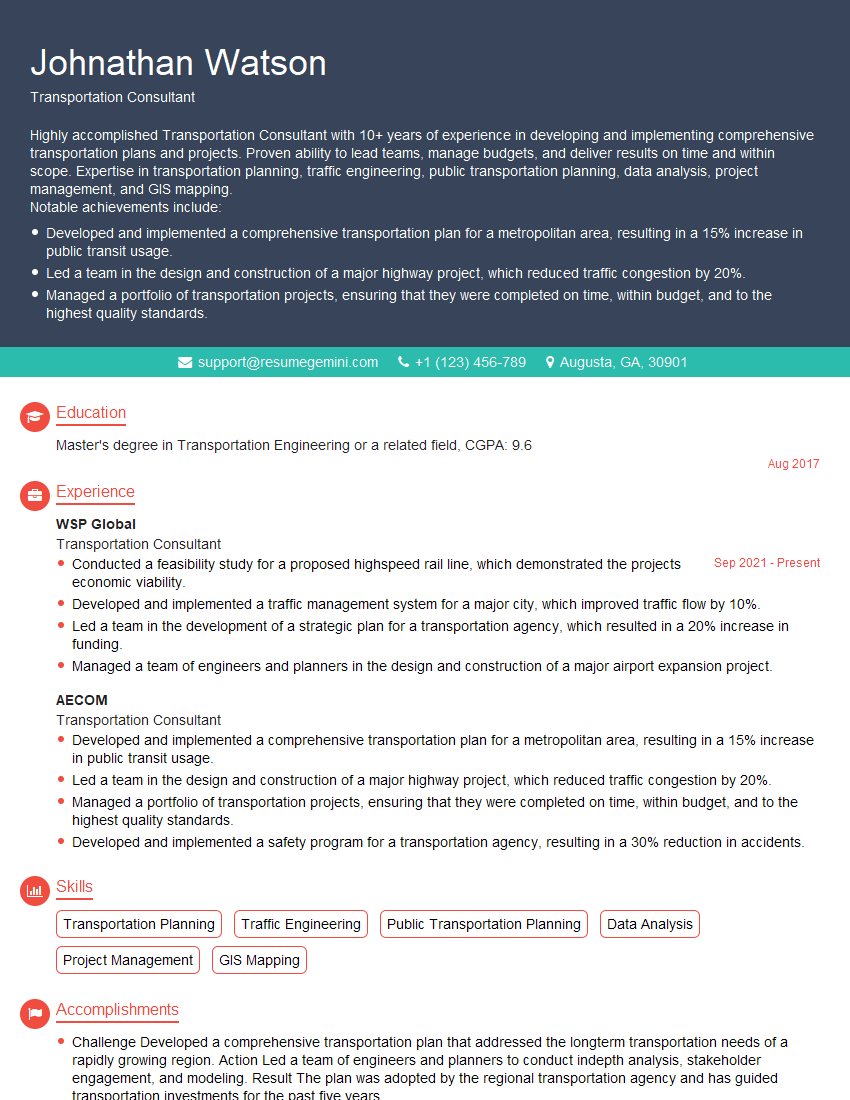
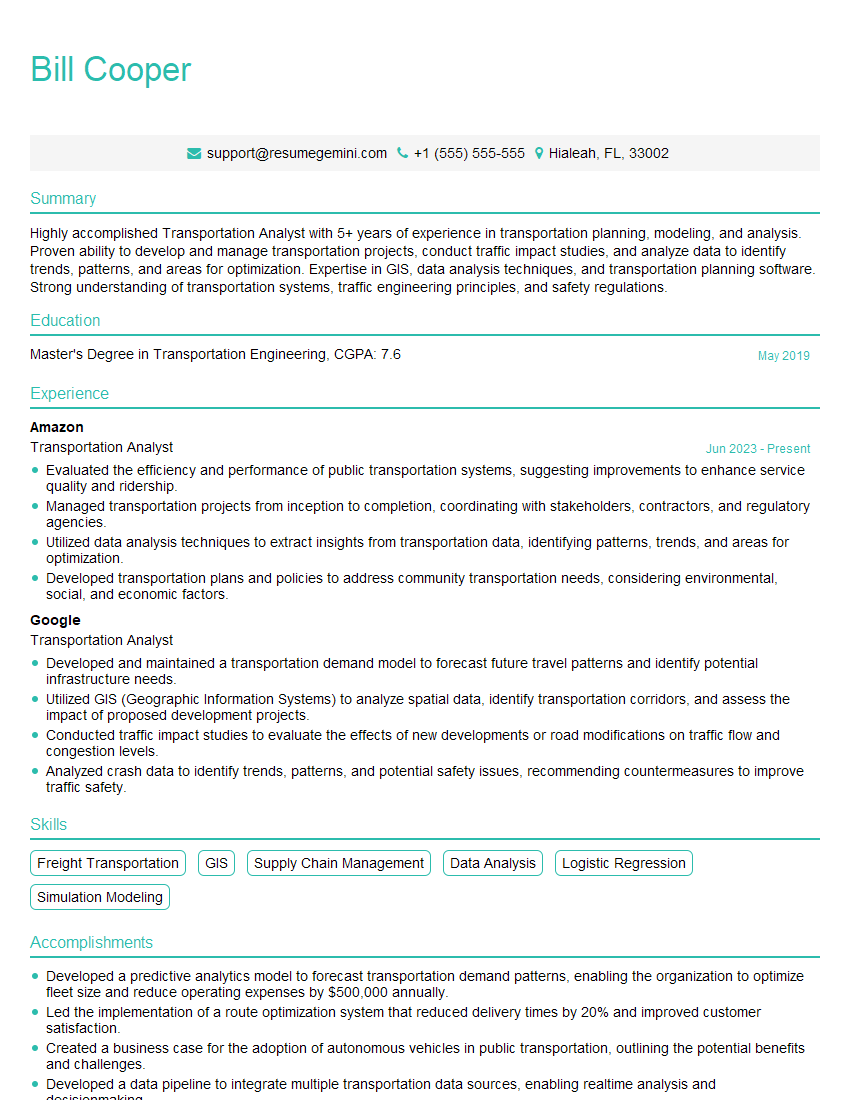
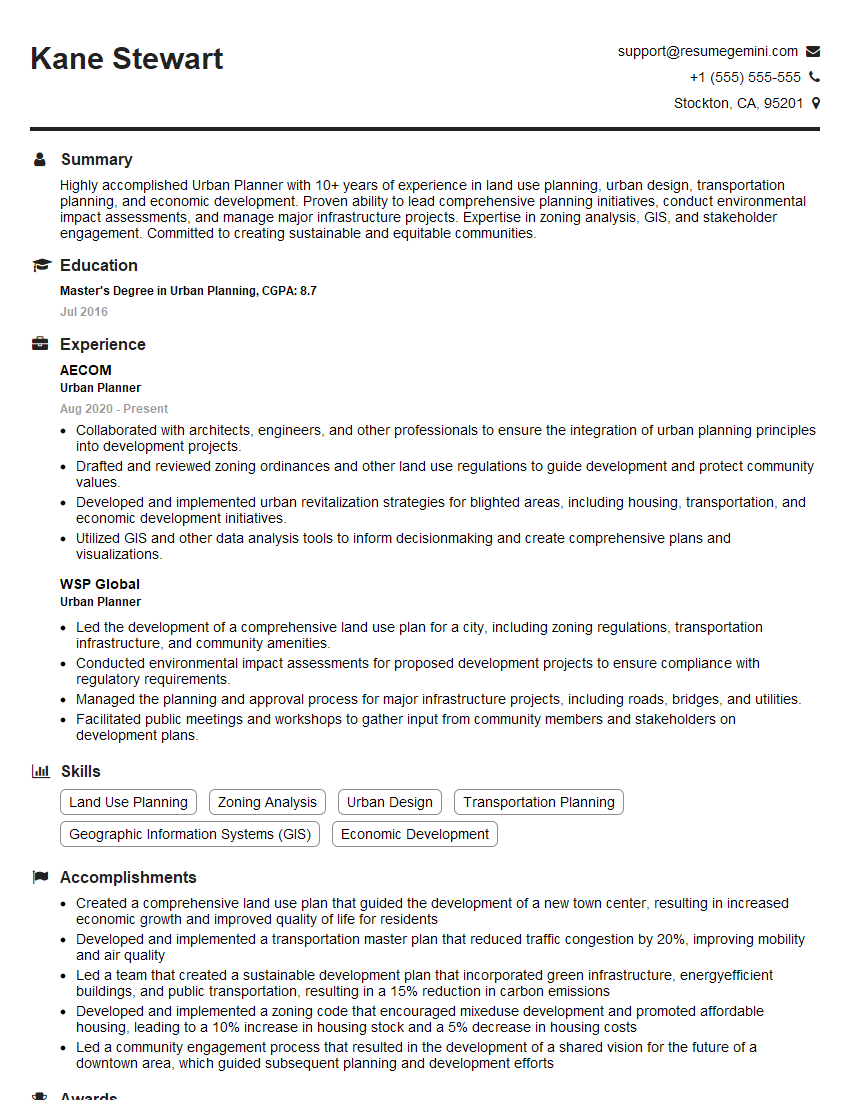
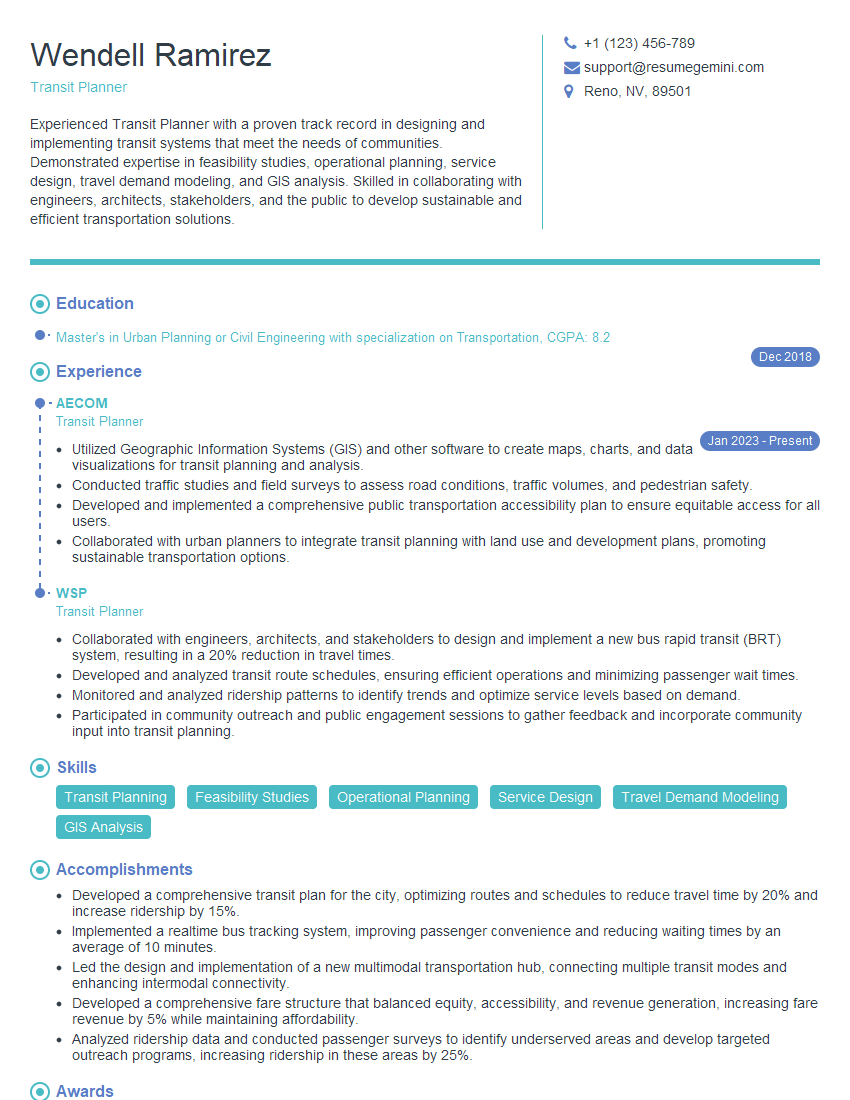
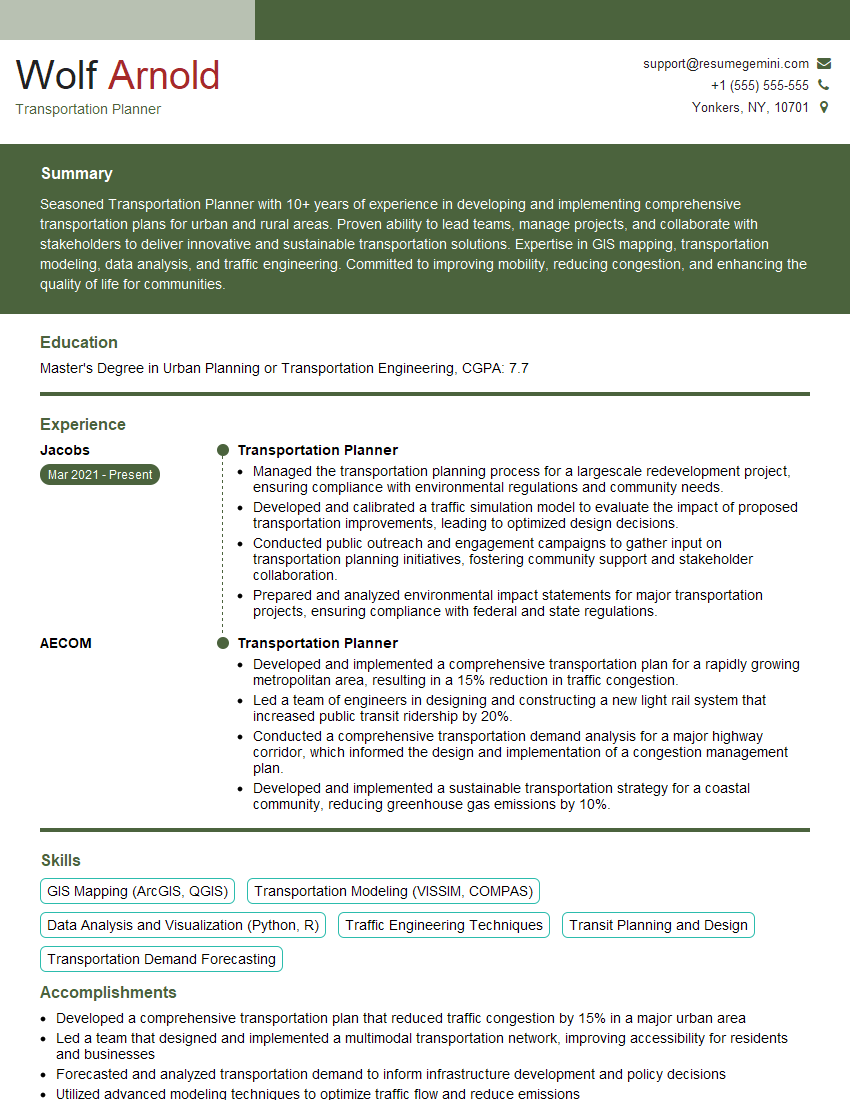
Mastering Transportation Demand Modeling is crucial for a successful career in transportation planning, engineering, and research. It opens doors to challenging and impactful projects, contributing to the design of efficient and sustainable transportation systems. To significantly boost your job prospects, create a resume that’s ATS-friendly and highlights your skills effectively. ResumeGemini is a trusted resource to help you build a professional resume that stands out. We provide examples of resumes tailored to Transportation Demand Modeling to help you get started.


Explore more articles
Users Rating of Our Blogs
Share Your Experience
We value your feedback! Please rate our content and share your thoughts (optional).
What Readers Say About Our Blog
Very informative content, great job.
good