Are you ready to stand out in your next interview? Understanding and preparing for Knowledge of coding and scripting interview questions is a game-changer. In this blog, we’ve compiled key questions and expert advice to help you showcase your skills with confidence and precision. Let’s get started on your journey to acing the interview.
Questions Asked in Knowledge of coding and scripting Interview
Q 1. Explain the difference between == and === in JavaScript.
In JavaScript, both == and === are used for comparison, but they differ significantly in how they perform the check. == is the loose equality operator, while === is the strict equality operator.
The loose equality operator (==) checks for equality after performing type coercion. This means it attempts to convert the operands to the same type before comparing their values. For example, 1 == '1' evaluates to true because the string ‘1’ is coerced to the number 1 before the comparison. This can lead to unexpected results if you’re not careful.
The strict equality operator (===) checks for both value and type equality without performing any type coercion. Therefore, 1 === '1' evaluates to false because, even though the values are the same, their types are different (number vs. string). Using strict equality is generally preferred because it makes your code more predictable and less prone to errors.
Example:
let x = 10;
let y = '10';
console.log(x == y); // true (loose equality)
console.log(x === y); // false (strict equality)
Always favor === for its clarity and reliability unless you have a specific reason to use loose equality.
Q 2. What are the advantages and disadvantages of using interpreted vs. compiled languages?
Compiled and interpreted languages differ fundamentally in how they execute code. Compiled languages, like C++ or Go, translate the entire source code into machine code before execution. Interpreted languages, such as Python or JavaScript, execute the code line by line, without a prior compilation step.
Advantages of Compiled Languages:
- Performance: Compiled code generally runs faster because it’s directly executable by the machine.
- Optimization: Compilers can perform extensive optimizations on the code, further improving performance.
- Security: Compiled code is more difficult to reverse engineer compared to interpreted code.
Disadvantages of Compiled Languages:
- Development Time: The compilation step adds to the development cycle.
- Platform Dependence: Compiled code is often platform-specific, requiring recompilation for different operating systems.
- Debugging: Debugging can be more complex, as you need to work with the compiled output rather than the original source code.
Advantages of Interpreted Languages:
- Faster Development: No compilation step, leading to quicker development cycles.
- Platform Independence: Interpreted code usually runs on any platform with an interpreter.
- Easier Debugging: Easier to debug as you can directly work with the source code.
Disadvantages of Interpreted Languages:
- Performance: Generally slower execution speed compared to compiled languages.
- Security Risks: Interpreted code is often easier to reverse engineer.
The choice between compiled and interpreted languages depends on the project’s requirements. Performance-critical applications often benefit from compiled languages, while rapid prototyping or projects that prioritize cross-platform compatibility may lean towards interpreted languages.
Q 3. Describe the concept of polymorphism and provide an example.
Polymorphism, meaning ‘many forms,’ is a powerful object-oriented programming concept that allows objects of different classes to be treated as objects of a common type. This is particularly useful when dealing with a hierarchy of classes.
Consider a scenario where you have various shapes (circles, squares, triangles). Each shape has a method to calculate its area. Using polymorphism, you could have a single function that calculates the area of any shape, regardless of its specific type. The correct area calculation method is automatically called based on the object’s type – this is called dynamic dispatch.
Example (Python):
class Shape:
    def area(self):
        pass

class Circle(Shape):
    def __init__(self, radius):
        self.radius = radius
    def area(self):
        return 3.14159 * self.radius * self.radius

class Square(Shape):
    def __init__(self, side):
        self.side = side
    def area(self):
        return self.side * self.side

shapes = [Circle(5), Square(4)]
for shape in shapes:
    print(shape.area())  # Polymorphic call to area()
In this example, the area() method is polymorphic. The same function call works for both Circle and Square objects, dynamically selecting the appropriate implementation based on the object type. This avoids the need for separate area calculation functions for each shape, making the code more maintainable and extensible.
Q 4. What is the purpose of version control systems like Git?
Version control systems (VCS), such as Git, are essential tools for software development. They track changes to files over time, allowing developers to collaborate efficiently, manage different versions of their code, and revert to previous states if necessary.
Think of it like having a detailed history of your project’s evolution. Every change you make is recorded, along with who made it and when. This provides a safety net, protecting against accidental data loss and simplifying the process of managing multiple features or bug fixes simultaneously.
Key benefits of using Git (or similar VCS):
- Collaboration: Multiple developers can work on the same project concurrently without overwriting each other’s changes.
- Version History: Track all changes made to the codebase, enabling rollback to previous versions.
- Branching and Merging: Experiment with new features in isolated branches without affecting the main codebase.
- Code Backup: Provides a secure backup of your codebase.
- Conflict Resolution: Tools for resolving merge conflicts when multiple developers modify the same parts of the code.
In professional settings, Git is indispensable. It fosters collaboration, ensures code integrity, and simplifies the management of complex projects.
Q 5. Explain the difference between GET and POST HTTP requests.
GET and POST are two fundamental HTTP request methods used for communication between a client (e.g., web browser) and a server. They differ primarily in how they transmit data and their intended purpose.
GET requests are used to retrieve data from the server. The data is appended to the URL as query parameters, making it visible in the browser’s address bar. GET requests are idempotent, meaning they can be executed multiple times without changing the server’s state. They are typically used for actions that don’t modify data, like fetching a webpage or retrieving information.
POST requests are used to submit data to the server to create or update resources. The data is sent in the request body, hidden from the browser’s address bar. POST requests are not idempotent, and multiple executions can have different effects. They are commonly used for actions that modify data, such as submitting a form, uploading a file, or creating a new user account.
Example:
Imagine an e-commerce website:
- A GET request might be used to retrieve a product listing:
/products?category=electronics - A POST request would be used to add a product to the shopping cart:
/cart(data about the product would be sent in the request body).
Choosing the correct method is crucial for security and proper HTTP semantics. Sensitive data should always be sent using POST to avoid exposing it in the URL.
Q 6. How do you handle errors in your code?
Error handling is crucial for creating robust and reliable code. It involves anticipating potential problems and implementing mechanisms to gracefully handle them, preventing program crashes and providing informative feedback to the user.
My approach involves a multi-layered strategy:
- Prevention: Careful code design and input validation can prevent many errors from occurring in the first place.
- Try-Catch Blocks (or similar mechanisms): Surrounding potentially problematic code within
try-catchblocks (in languages like JavaScript, Java, Python) allows you to catch exceptions and handle them appropriately. This prevents the program from crashing and allows for a graceful recovery. - Logging: Thorough logging helps to track errors, making debugging and identifying issues easier. Logging should include timestamps, error messages, and relevant context information.
- User-Friendly Error Messages: Instead of displaying cryptic error codes, provide clear and informative messages to the user, guiding them on how to resolve the issue.
- Defensive Programming: Write code that anticipates and handles potential issues, even if they’re unlikely. This includes checks for null values, boundary conditions, and invalid inputs.
Example (JavaScript):
try {
    let result = 10 / 0; // Potential error: division by zero
    console.log(result);
} catch (error) {
    console.error("An error occurred:", error.message); // Handle the error gracefully
}
By consistently applying these principles, I aim to build applications that are resilient to errors and provide a positive user experience.
Q 7. What is the difference between synchronous and asynchronous programming?
Synchronous and asynchronous programming are two distinct approaches to managing tasks within a program.
Synchronous programming executes tasks sequentially. One task must complete before the next one begins. Imagine a single-lane road – only one car can pass through at a time. This is simple to understand and manage, but it can become inefficient when dealing with tasks that might take a long time (e.g., network requests). The program will block and wait for the long task to finish before moving on.
Asynchronous programming allows multiple tasks to run concurrently. Instead of waiting for each task to complete, the program can move on to other tasks while waiting for long-running operations to finish. Think of a multi-lane highway, allowing several cars to travel simultaneously. This approach improves efficiency, especially when handling I/O-bound operations like network requests or file operations.
Example Analogy: Imagine ordering food at a restaurant.
- Synchronous: You order your food and wait at your table until it arrives before doing anything else.
- Asynchronous: You order your food and continue to chat with your friends, receiving a notification when your food is ready.
Asynchronous programming is becoming increasingly important in modern applications, especially those dealing with user interfaces, network communication, and data processing, improving responsiveness and overall efficiency.
Q 8. Explain the concept of closures in JavaScript.
In JavaScript, a closure is a function that has access to variables from its surrounding lexical environment, even after that environment has finished executing. Think of it like a function remembering its past. This ‘remembering’ happens because the inner function maintains a reference to the variables in its outer function’s scope.
How it works: When a function is created, it’s not just the function’s code that’s stored; it also ‘closes over’ the variables in its surrounding scope. These variables are preserved, even if the outer function has already finished running.
Example:
function outerFunction() {
  let outerVar = 'Hello';
  function innerFunction() {
    console.log(outerVar); // Accesses outerVar
  }
  return innerFunction;
}
let myClosure = outerFunction();
myClosure(); // Outputs 'Hello' even though outerFunction has finished
In this example, innerFunction is a closure. It ‘closes over’ outerVar, allowing it to access and use outerVar even after outerFunction has completed its execution. This is incredibly useful for creating private variables or maintaining state within functions.
Real-world Application: Closures are fundamental in JavaScript for creating things like modules, encapsulating data, and implementing private methods within objects. They are essential for building complex and well-structured JavaScript applications.
Q 9. What are design patterns and why are they useful?
Design patterns are reusable solutions to commonly occurring problems in software design. They’re not finished code, but rather templates or blueprints that provide a general approach to solving a particular design challenge. They’re like proven recipes in cooking – you adapt them to your specific ingredients (project requirements).
Why are they useful?
- Improved Code Quality: Patterns promote well-structured, maintainable, and readable code.
- Reduced Development Time: By using established patterns, you can avoid reinventing the wheel and focus on the unique aspects of your project.
- Enhanced Communication: Patterns provide a common vocabulary for developers, making it easier to discuss and understand code.
- Flexibility and Extensibility: Well-designed patterns make it easier to modify and extend the codebase in the future.
Examples: Some common patterns include the Singleton (ensuring only one instance of a class), Factory (creating objects without specifying the exact class), Observer (managing dependencies between objects), and MVC (Model-View-Controller for separating concerns in web applications).
Practical Application: I’ve used the MVC pattern extensively in web development projects to separate the data model, user interface, and controller logic, leading to more organized and maintainable code. The Factory pattern proved invaluable when I needed to create objects dynamically based on different configurations.
Q 10. Describe your experience with SQL databases.
I have extensive experience with SQL databases, particularly MySQL and PostgreSQL. My experience ranges from designing database schemas and writing complex queries to optimizing database performance and troubleshooting issues.
Schema Design: I’m proficient in designing normalized database schemas to ensure data integrity and minimize redundancy. I consider factors such as data relationships, indexing strategies, and data types when creating schemas.
Querying: I’m fluent in SQL, capable of writing efficient queries using various clauses (SELECT, FROM, WHERE, JOIN, GROUP BY, HAVING, etc.) to retrieve, update, and manipulate data. I’m familiar with different database joins (inner, left, right, full) and subqueries.
Performance Optimization: I’ve worked on optimizing database performance by creating indexes, writing efficient queries, and analyzing query execution plans. I understand the importance of database normalization and data integrity.
Troubleshooting: I’m adept at identifying and resolving database errors, including issues related to concurrency, data integrity, and performance bottlenecks.
Example: In a recent project, I optimized a slow-running query by adding indexes to the relevant tables and rewriting the query to utilize joins more efficiently. This reduced the query execution time from several minutes to under a second.
Q 11. What are some common data structures and when would you use them?
Data structures are ways of organizing and storing data in a computer so that it can be used efficiently. The choice of data structure depends heavily on the specific task.
Common Data Structures:
- Arrays: Ordered collections of elements, accessed by index. Great for storing and accessing elements sequentially. Example: Storing a list of user names.
- Linked Lists: Elements are linked together, allowing efficient insertion and deletion. Example: Implementing a queue or stack.
- Stacks: LIFO (Last-In, First-Out) data structure. Example: Managing function calls in a program.
- Queues: FIFO (First-In, First-Out) data structure. Example: Handling requests in a web server.
- Trees: Hierarchical data structure. Example: Representing a file system or storing hierarchical data.
- Graphs: Collections of nodes and edges, representing relationships between data. Example: Social networks, maps.
- Hash Tables (Dictionaries): Store data in key-value pairs, allowing for fast lookups. Example: Storing user information where the key is the user ID and the value is the user data.
When to Use Them: The choice depends on the operations you need to perform. Arrays are good for sequential access, linked lists for frequent insertions/deletions, stacks and queues for specific order requirements, trees and graphs for hierarchical or relational data, and hash tables for fast lookups.
Q 12. Explain the concept of object-oriented programming (OOP).
Object-Oriented Programming (OOP) is a programming paradigm based on the concept of ‘objects’, which contain data (attributes) and code (methods) that operate on that data. It’s a way of organizing code around these objects, rather than functions and logic.
Key Principles of OOP:
- Encapsulation: Bundling data and methods that operate on that data within a class, hiding internal details and protecting data integrity. Think of it like a capsule – you interact with it as a whole, without needing to know its internal workings.
- Inheritance: Creating new classes (child classes) based on existing classes (parent classes), inheriting their attributes and methods. This promotes code reusability and reduces redundancy. It’s like building upon a foundation.
- Polymorphism: The ability of objects of different classes to respond to the same method call in their own specific way. Think of it like a universal remote – it can control various devices differently.
- Abstraction: Showing only essential information to the user and hiding unnecessary details. This simplifies interaction with complex systems.
Real-world Application: OOP is widely used in building large-scale software systems, where its principles enable modularity, maintainability, and reusability. In game development, for example, you might have objects representing characters, weapons, and environments, each with their own attributes and behaviors.
Q 13. How would you debug a complex piece of code?
Debugging complex code requires a systematic approach. My strategy involves a combination of techniques:
1. Reproduce the Bug Consistently: The first step is to ensure that I can reliably reproduce the bug. This often involves carefully documenting the steps to reproduce the issue.
2. Use a Debugger: I use a debugger (like Chrome DevTools or VS Code’s debugger) to step through the code line by line, inspecting variables and evaluating expressions. Breakpoints allow me to pause execution at specific points and examine the program’s state.
3. Logging and Print Statements: Strategic placement of console.log statements (or equivalent logging mechanisms) helps to track the values of variables at different points in the code’s execution. This gives visibility into the flow of data.
4. Code Review: A fresh pair of eyes can often spot errors that I might have missed. Reviewing the code with a colleague is invaluable.
5. Testing: Writing unit tests, integration tests, or other forms of testing helps to isolate the bug and verify that fixes work as expected.
6. Rubber Duck Debugging: Explaining the code and the bug to an inanimate object (like a rubber duck) can surprisingly help identify the source of the problem through the act of verbalizing the process.
7. Divide and Conquer: If the codebase is very large, I’ll often divide it into smaller, manageable sections to isolate the bug’s location. This process of elimination narrows down the scope of the search.
8. Utilize Error Messages: Pay close attention to error messages. They provide valuable clues about the nature and location of the bug. Understanding the type of error is critical in pinpointing the issue.
Q 14. What are some common security vulnerabilities in web applications?
Web applications are vulnerable to various security threats. Some common ones include:
- SQL Injection: Malicious SQL code is inserted into user inputs, allowing attackers to manipulate the database.
- Cross-Site Scripting (XSS): Attackers inject malicious scripts into web pages viewed by other users, potentially stealing cookies or other sensitive data.
- Cross-Site Request Forgery (CSRF): Attackers trick users into performing unwanted actions on a website they’re already authenticated to.
- Session Hijacking: Attackers steal a user’s session ID, allowing them to impersonate the user.
- Denial of Service (DoS) attacks: Attackers flood a web server with requests, making it unavailable to legitimate users.
- Insecure Direct Object References (IDOR): Attackers manipulate URLs or parameters to access unauthorized data or functionality.
- Broken Authentication and Session Management: Weak password policies, insecure session handling, or vulnerabilities in authentication mechanisms can compromise user accounts.
- Sensitive Data Exposure: Failure to properly protect sensitive data like passwords, credit card information, and personal data can lead to data breaches.
Mitigation: Preventing these vulnerabilities requires careful coding practices, input validation, secure authentication and authorization mechanisms, and regular security audits and penetration testing.
Q 15. Describe your experience with testing frameworks.
Testing frameworks are essential tools for ensuring the quality and reliability of software. My experience spans various frameworks, including Jest (for JavaScript), pytest (for Python), and JUnit (for Java). I’m proficient in writing unit, integration, and end-to-end tests. For example, in a recent project developing a REST API using Node.js and Express, I used Jest to write unit tests for individual API endpoints, verifying that each function returned the expected data and handled edge cases appropriately. These tests included mocking external dependencies to isolate the tested code. For integration tests, I used Supertest to simulate HTTP requests and validate the complete interaction between different API components. My testing approach always emphasizes test-driven development (TDD) whenever feasible, writing tests *before* writing the code they are designed to verify.
Beyond the technical aspects, I’m also adept at designing comprehensive test strategies, considering factors like code coverage, test maintainability, and execution speed. I understand the importance of creating well-structured tests that are easy to understand, modify, and debug.
Career Expert Tips:
- Ace those interviews! Prepare effectively by reviewing the Top 50 Most Common Interview Questions on ResumeGemini.
- Navigate your job search with confidence! Explore a wide range of Career Tips on ResumeGemini. Learn about common challenges and recommendations to overcome them.
- Craft the perfect resume! Master the Art of Resume Writing with ResumeGemini’s guide. Showcase your unique qualifications and achievements effectively.
- Don’t miss out on holiday savings! Build your dream resume with ResumeGemini’s ATS optimized templates.
Q 16. Explain the difference between a stack and a queue.
Stacks and queues are fundamental data structures used to store and manage collections of elements. The key difference lies in how elements are added and removed.
- Stack: Follows the Last-In, First-Out (LIFO) principle. Think of a stack of plates – you can only add a new plate to the top, and you can only remove the top plate. Operations include
push(add to the top) andpop(remove from the top). - Queue: Follows the First-In, First-Out (FIFO) principle. Imagine a queue at a store – the first person in line is the first person served. Operations include
enqueue(add to the rear) anddequeue(remove from the front).
Example: In a web browser’s history, the pages visited are typically stored as a stack. When you click the ‘back’ button, you go back to the most recently visited page (LIFO). In contrast, a print queue operates as a queue – jobs are added and processed in the order they were submitted (FIFO).
Q 17. How do you optimize code for performance?
Optimizing code for performance is crucial for building efficient and scalable applications. My approach involves a multi-faceted strategy:
- Profiling: I use profiling tools to identify performance bottlenecks. These tools show where the code spends the most time, pinpointing areas for improvement.
- Algorithmic Optimization: Selecting the right algorithm is paramount. Switching from a brute-force approach (e.g., O(n^2)) to a more efficient algorithm (e.g., O(n log n)) can drastically improve performance, especially with large datasets.
- Data Structures: Choosing appropriate data structures can significantly affect performance. For example, using a hash table for fast lookups instead of a linear search improves efficiency.
- Code Optimization: This involves techniques like reducing redundant calculations, minimizing I/O operations, and using appropriate data types.
- Caching: Caching frequently accessed data can reduce the need for repeated computations or database queries. This significantly improves responsiveness.
- Asynchronous Programming: For I/O-bound operations, asynchronous programming allows the application to continue processing other tasks while waiting for I/O to complete, preventing blocking.
For instance, in a recent project dealing with image processing, profiling revealed that a nested loop was the bottleneck. By re-writing the algorithm to use matrix operations and leveraging optimized libraries, I reduced processing time by over 70%.
Q 18. What are some common algorithms and their time complexities?
Many algorithms are used in software development, each with different time complexities, determining how their runtime scales with input size.
- Linear Search: Searches for an element in a list sequentially. Time complexity: O(n).
- Binary Search: Efficiently searches a *sorted* list by repeatedly dividing the search interval in half. Time complexity: O(log n).
- Bubble Sort: A simple sorting algorithm repeatedly steps through the list, compares adjacent elements and swaps them if they are in the wrong order. Time complexity: O(n^2).
- Merge Sort: A divide-and-conquer sorting algorithm that recursively divides the list into smaller sublists until each sublist contains only one element, and then repeatedly merges the sublists to produce new sorted sublists until there is only one sorted list remaining. Time complexity: O(n log n).
- Quick Sort: Another divide-and-conquer algorithm that picks an element as a pivot and partitions the other elements into two sub-arrays, according to whether they are less than or greater than the pivot. Time complexity: O(n log n) on average, O(n^2) in the worst case.
Understanding these complexities is vital for selecting the appropriate algorithm based on the size of the data and the performance requirements of the application.
Q 19. Explain your experience with RESTful APIs.
I have extensive experience designing, developing, and consuming RESTful APIs. I understand the principles of REST architecture, including statelessness, client-server communication, caching, and uniform interface. I’m familiar with various HTTP methods (GET, POST, PUT, DELETE) and how to design APIs using appropriate HTTP status codes to communicate the outcome of requests.
In a past project, I built a RESTful API using Node.js and Express to manage a database of products. The API exposed endpoints for creating, reading, updating, and deleting product records, adhering to RESTful best practices. I used JSON as the data format and implemented appropriate error handling and authentication mechanisms. I also documented the API using Swagger, ensuring its usability and maintainability.
I’m comfortable working with different API technologies like OpenAPI/Swagger and also understand the importance of versioning APIs to handle changes over time gracefully.
Q 20. How do you handle concurrency in your code?
Handling concurrency is crucial in modern software development, especially when dealing with multiple users or tasks. My strategies include:
- Thread Pools/Process Pools: Managing concurrent tasks efficiently by limiting the number of threads or processes to avoid resource exhaustion.
- Synchronization Mechanisms: Using tools like locks, mutexes, semaphores, and condition variables to protect shared resources and prevent race conditions in multi-threaded environments.
- Asynchronous Programming: Employing techniques like callbacks, promises, or async/await to handle I/O-bound tasks concurrently without blocking the main thread, improving responsiveness.
- Message Queues: Decoupling parts of the system by using message queues (like RabbitMQ or Kafka) to handle asynchronous communication and distribute workloads.
For example, in a high-traffic web application, I might use a message queue to process user requests asynchronously, ensuring the application remains responsive even under heavy load. The application would submit requests to the queue and a separate worker process would pick them up and process them one by one. This approach prevents the main web server from being blocked while tasks are being completed.
Q 21. Describe your experience with cloud platforms like AWS, Azure, or GCP.
My cloud platform experience primarily centers around AWS (Amazon Web Services). I’m proficient in using various AWS services, including:
- EC2: For provisioning and managing virtual machines.
- S3: For object storage.
- RDS: For relational database management.
- Lambda: For serverless computing.
- API Gateway: For managing and securing APIs.
- CloudFormation: For infrastructure as code (IaC).
I’ve worked on projects involving deploying and managing applications on AWS, configuring security groups, setting up load balancing, and monitoring application performance. I understand the principles of cloud-native architecture and how to design applications for scalability and resilience in the cloud. For example, in a recent project, I used CloudFormation to automate the deployment of our application’s infrastructure, ensuring consistent and repeatable deployments across different environments.
While my primary experience is with AWS, I’m familiar with the core concepts and services offered by Azure and GCP, and I’m confident in my ability to quickly learn and adapt to any cloud platform.
Q 22. What is your experience with Agile development methodologies?
My experience with Agile methodologies is extensive. I’ve worked in Scrum and Kanban environments for over five years, participating in all stages from sprint planning and daily stand-ups to retrospectives and sprint reviews. I understand the importance of iterative development, frequent feedback loops, and adapting to changing requirements. In a recent project, we used Scrum to develop a complex e-commerce platform. Initially, we underestimated the complexity of integrating with a third-party payment gateway. However, through daily stand-ups and regular sprint reviews, we identified the issue early, adjusted our sprint backlog, and successfully integrated the gateway within the planned timeframe. This highlights Agile’s adaptability and its ability to mitigate risks effectively.
I’m proficient in using Agile tools like Jira and Trello for task management and progress tracking. I believe in the principles of collaboration, transparency, and continuous improvement central to Agile, and I actively participate in retrospectives to identify areas for process enhancement.
Q 23. Explain your understanding of different database normalization forms.
Database normalization is the process of organizing data to reduce redundancy and improve data integrity. It involves dividing larger tables into smaller ones and defining relationships between them. There are several normalization forms, each addressing a specific type of redundancy:
- First Normal Form (1NF): Eliminates repeating groups of data within a table. Each column should contain atomic values (indivisible values).
- Second Normal Form (2NF): Builds upon 1NF by removing redundant data that depends on only part of the primary key (for tables with composite keys). This addresses partial dependency.
- Third Normal Form (3NF): Eliminates transitive dependency. This means that no non-key attribute should depend on another non-key attribute.
- Boyce-Codd Normal Form (BCNF): A stricter version of 3NF, addressing certain anomalies not covered by 3NF. Every determinant must be a candidate key.
For example, consider a table storing customer orders. Without normalization, you might have repeating order details in a single row. Normalization would separate this into a ‘Customers’ table, an ‘Orders’ table, and an ‘OrderItems’ table, linking them through foreign keys. This eliminates redundancy and ensures data consistency. Over-normalization can lead to performance issues, so finding the right balance is crucial. In practice, I aim for 3NF unless specific performance considerations necessitate a less normalized structure.
Q 24. How do you approach problem-solving when faced with a coding challenge?
My approach to problem-solving follows a structured methodology. I begin by thoroughly understanding the problem, breaking it down into smaller, manageable components. I use a combination of techniques:
- Clarification: I ask clarifying questions to ensure I have a complete and accurate understanding of the problem’s constraints and requirements.
- Research: I leverage online resources, documentation, and my past experiences to identify potential solutions and best practices.
- Algorithm Design: I develop a clear algorithm outlining the steps needed to solve the problem. This might involve sketching flowcharts or using pseudocode.
- Implementation: I translate the algorithm into code, paying close attention to code quality, readability, and efficiency.
- Testing and Debugging: I rigorously test my code, using various test cases to identify and resolve bugs.
- Refactoring: Once the code is functional, I review and refine it to improve its efficiency, readability, and maintainability.
For instance, if presented with a challenge involving sorting a large dataset, I’d initially research different sorting algorithms (like merge sort or quicksort) to choose the most suitable based on the dataset’s characteristics. Then, I’d implement and test the chosen algorithm, potentially optimizing it based on the results.
Q 25. Describe your experience with different scripting languages (e.g., Python, Bash).
I have significant experience with both Python and Bash scripting. Python is my go-to language for complex tasks requiring data manipulation, machine learning, or web scraping, due to its extensive libraries and readability. I’ve used Python extensively in automating data analysis, building web applications, and creating custom tools for software testing. One recent project involved using Python’s requests and BeautifulSoup libraries to scrape product information from multiple e-commerce websites and store it in a structured database.
Bash scripting, on the other hand, is my preference for system administration and automating repetitive tasks within the Linux environment. I use it for tasks such as managing files, automating deployments, and creating custom command-line tools. For example, I frequently use Bash to automate the process of backing up databases, deploying web applications to servers, and monitoring system resources. I find the power and efficiency of Bash invaluable for these system-level operations.
Q 26. What are some common scripting tasks you’ve automated?
I’ve automated many scripting tasks across various domains. Some examples include:
- Log file analysis: Using Python, I wrote a script to parse log files, identify errors, and generate reports summarizing system performance. This reduced manual effort and provided actionable insights.
- Database backups and restores: A Bash script automates nightly database backups, storing them in a cloud storage service. It also includes a mechanism for restoring databases from backups in case of failure. This ensures data protection and disaster recovery.
- Web scraping: Using Python and related libraries (
Scrapy,Selenium), I’ve built web scrapers to collect data from various websites, including price comparison sites, news feeds, and social media platforms. - Automated testing: I use Python’s
unittestframework to create automated tests for various software components, improving code quality and reducing the time spent on manual testing. This significantly speeds up the software development process.
These automation efforts significantly improved efficiency and reduced human error in my previous roles.
Q 27. Explain the concept of recursion and give an example.
Recursion is a programming technique where a function calls itself within its own definition. It’s a powerful tool for solving problems that can be broken down into smaller, self-similar subproblems. A crucial element is the base case, which stops the recursive calls to prevent infinite loops. Think of it like a set of Russian nesting dolls: each doll contains a smaller version of itself until you reach the smallest doll (the base case).
Here’s a simple Python example of a recursive function to calculate the factorial of a number:
def factorial(n):
    if n == 0:  # Base case
        return 1
    else:
        return n * factorial(n-1)

print(factorial(5))  # Output: 120
In this example, factorial(5) calls factorial(4), which calls factorial(3), and so on until it reaches the base case (n == 0). The results are then multiplied back up the call stack to produce the final result. Recursion can be elegantly used for tasks like tree traversal, graph algorithms, and handling recursive data structures.
Q 28. What is your experience with NoSQL databases?
I have experience with various NoSQL databases, including MongoDB and Cassandra. NoSQL databases are valuable for handling large volumes of unstructured or semi-structured data, which relational databases often struggle with. My experience includes designing schemas, implementing data models, and optimizing queries for these databases.
For instance, in a project involving user-generated content, we used MongoDB’s flexible schema to handle varied data formats, like images, text, and video uploads. The scalability and flexibility of MongoDB allowed us to easily handle the ever-growing volume of data and rapid changes in data structure. In contrast, when dealing with highly structured, distributed data requiring high availability and fault tolerance, Cassandra’s distributed nature and data replication capabilities were beneficial. I understand the trade-offs involved in choosing between NoSQL and relational databases and can make informed decisions based on project requirements.
Key Topics to Learn for a Coding and Scripting Interview
- Data Structures and Algorithms: Understanding fundamental data structures (arrays, linked lists, trees, graphs) and algorithms (searching, sorting, dynamic programming) is crucial for solving coding challenges efficiently. Practice implementing these in your preferred language.
- Object-Oriented Programming (OOP) Principles: Grasp core OOP concepts like encapsulation, inheritance, polymorphism, and abstraction. Be prepared to discuss how you apply these principles in your coding projects.
- Common Scripting Languages: Demonstrate proficiency in at least one scripting language (Python, JavaScript, Bash, etc.). Focus on your strengths, showcasing your ability to write clean, efficient, and well-documented code.
- Databases: Familiarity with SQL and NoSQL databases is highly valuable. Understand database design principles, querying techniques, and data manipulation.
- Version Control (Git): Showcase your understanding of Git commands and workflows. Being comfortable with branching, merging, and resolving conflicts is essential for collaborative development.
- Problem-Solving and Debugging: Interviewers assess your approach to problem-solving. Practice breaking down complex problems into smaller, manageable steps. Be prepared to discuss your debugging strategies.
- Software Design Patterns: Understanding common design patterns (e.g., Singleton, Factory, Observer) demonstrates your ability to write maintainable and scalable code. Be ready to discuss when and why you’d use specific patterns.
- System Design (for senior roles): For more senior positions, expect questions on system design. Practice designing scalable and reliable systems, considering factors like load balancing, caching, and database choices.
Next Steps
Mastering coding and scripting is paramount for a successful career in technology. It opens doors to diverse and rewarding roles with excellent growth potential. To maximize your job prospects, crafting a strong, ATS-friendly resume is key. ResumeGemini can help you build a professional resume that highlights your skills and experience effectively. We offer examples of resumes tailored to showcase expertise in coding and scripting – use them as inspiration to craft your perfect application.
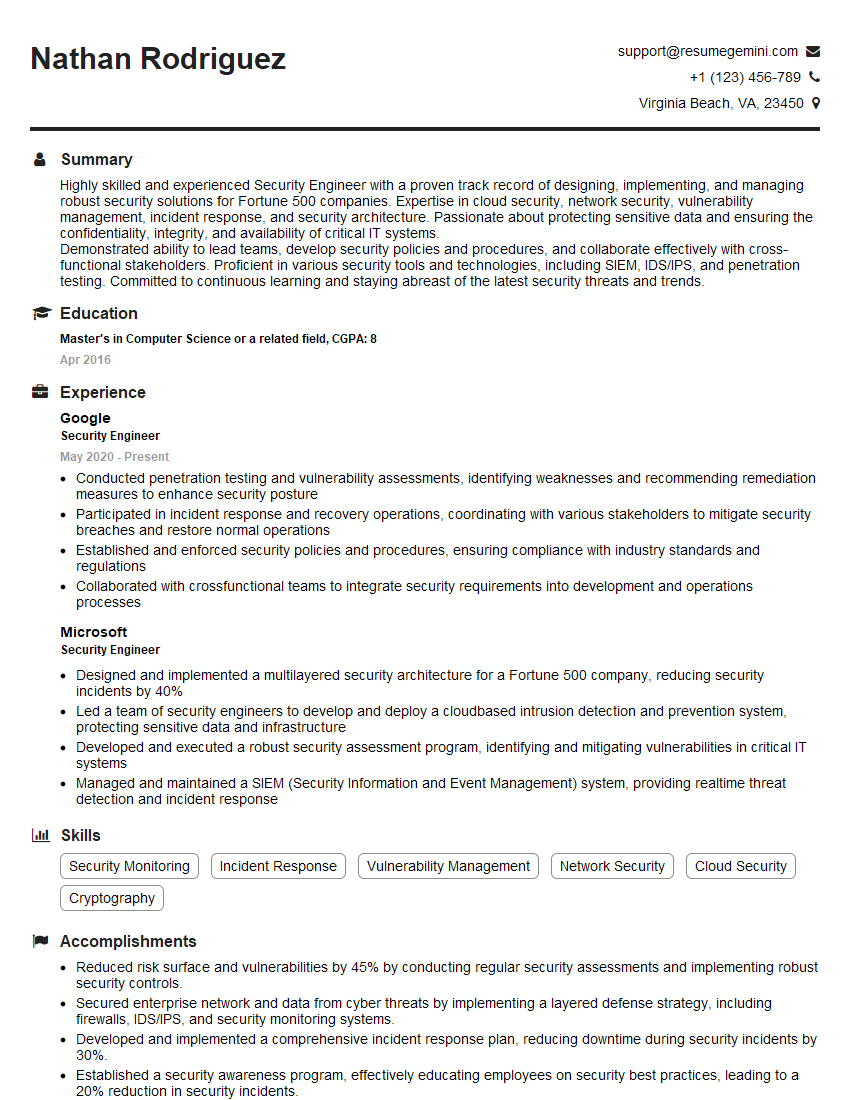
Security Engineer Resume Sample
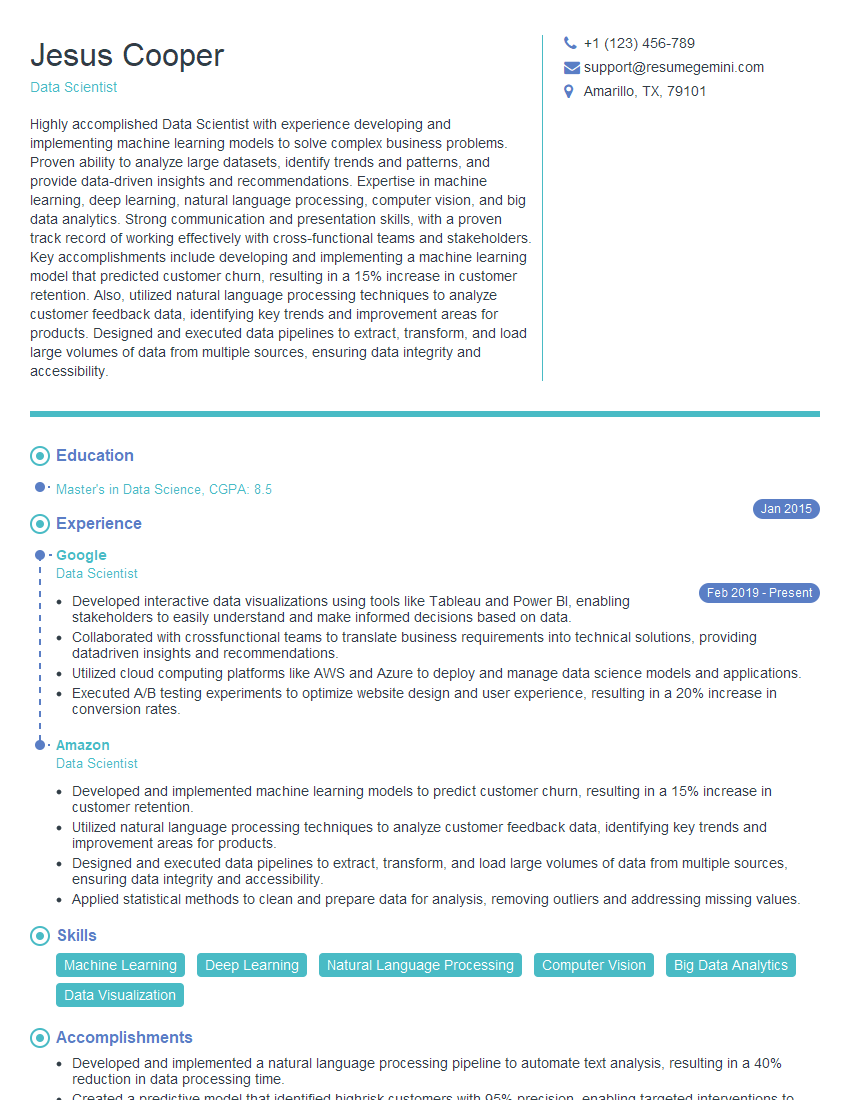
Data Scientist Resume Sample
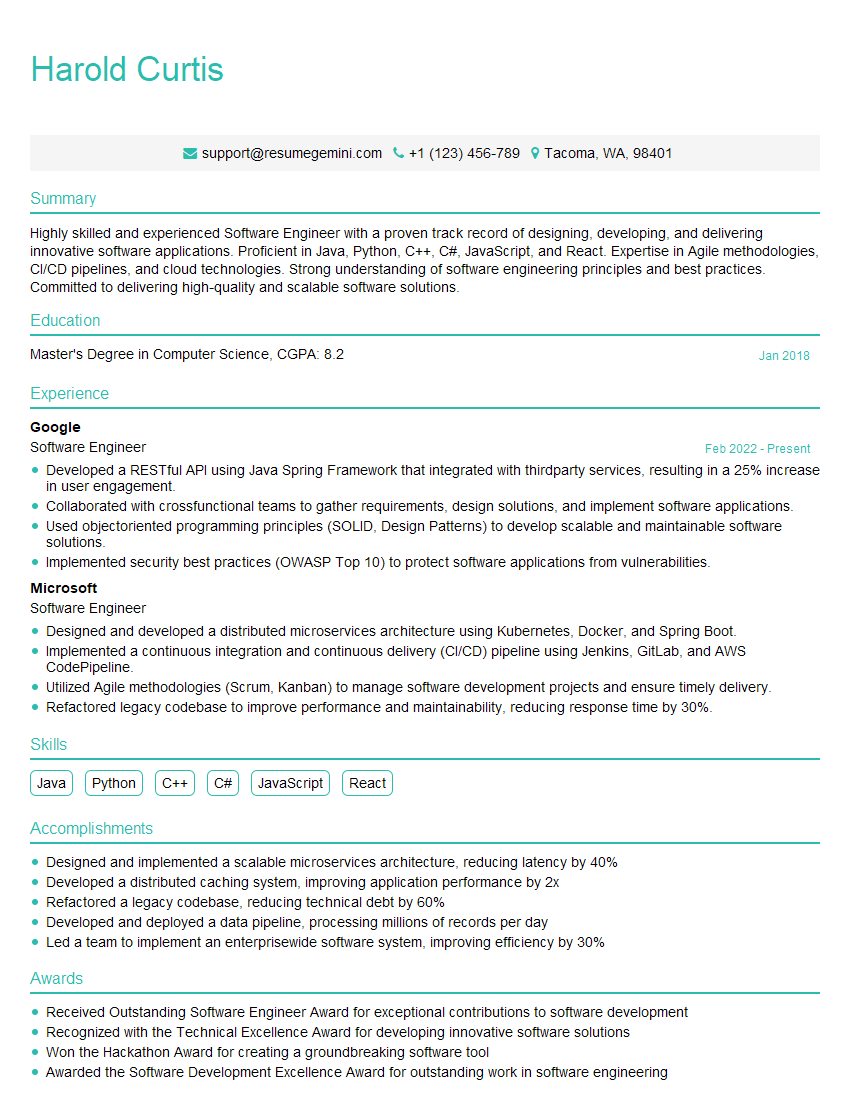
Software Engineer Resume Sample
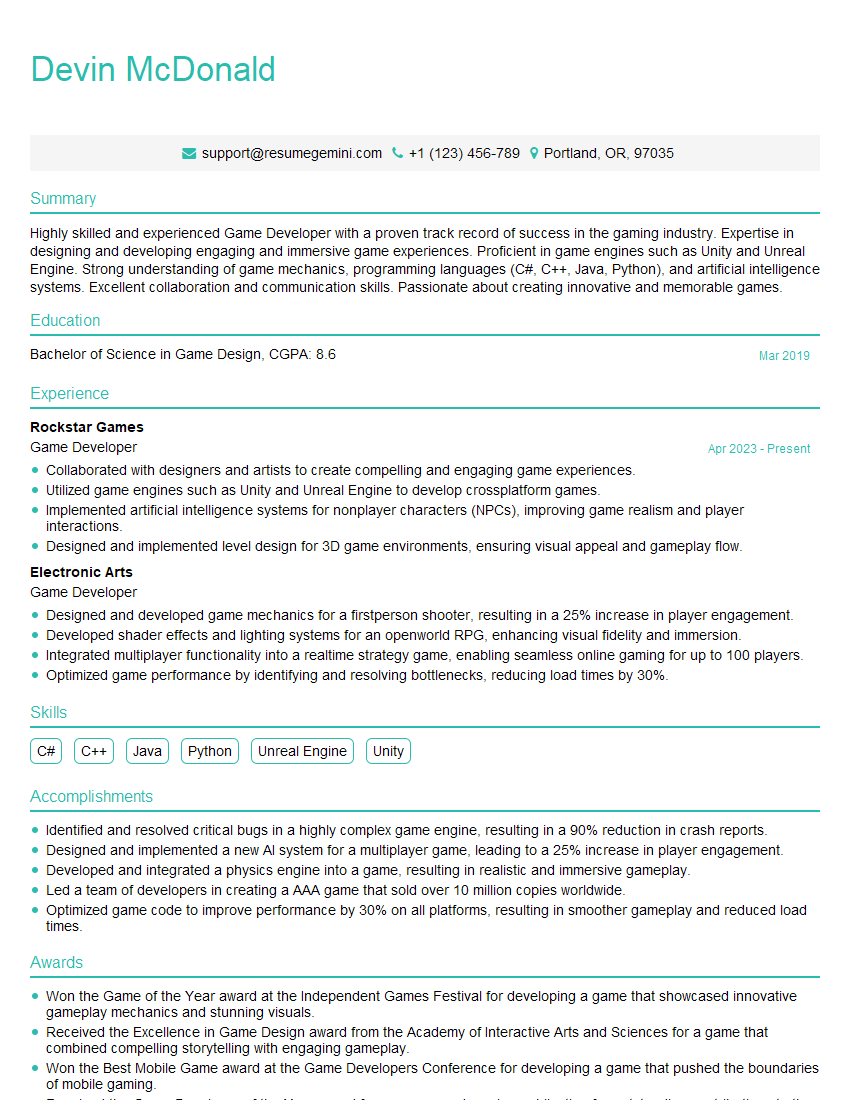
Game Developer Resume Sample
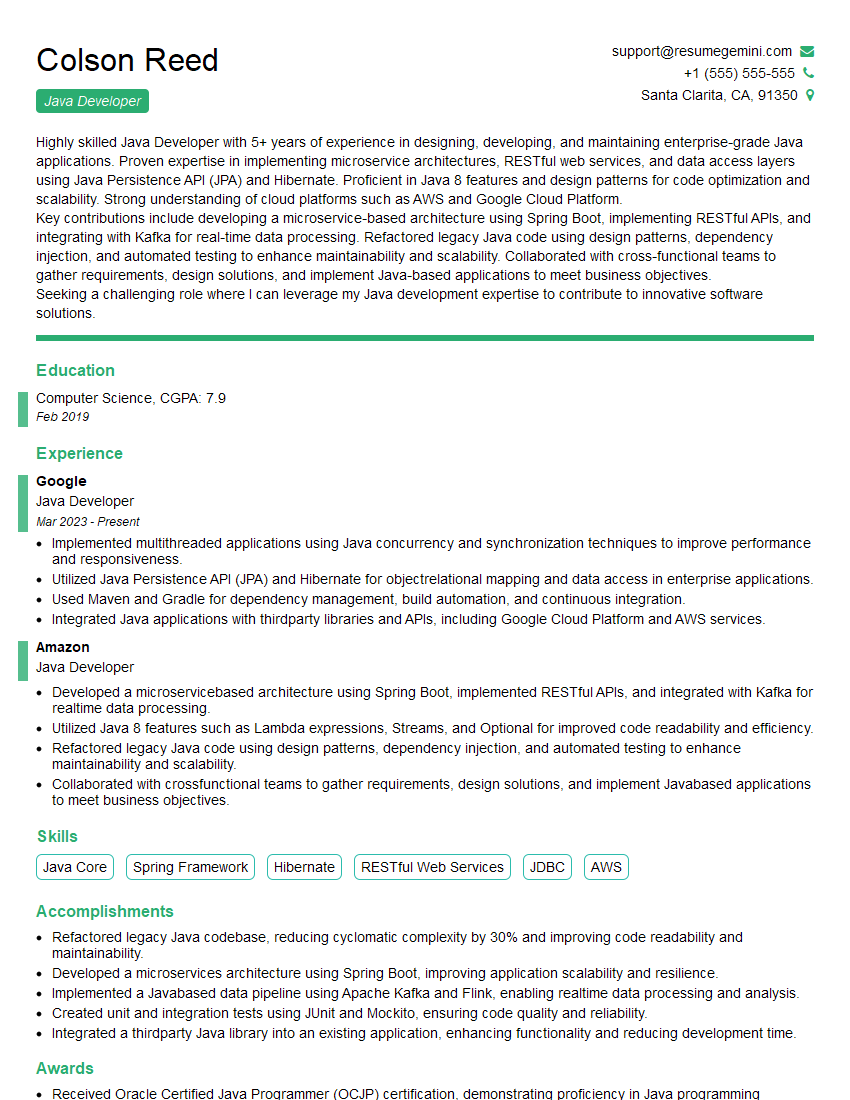
Java Developer Resume Sample
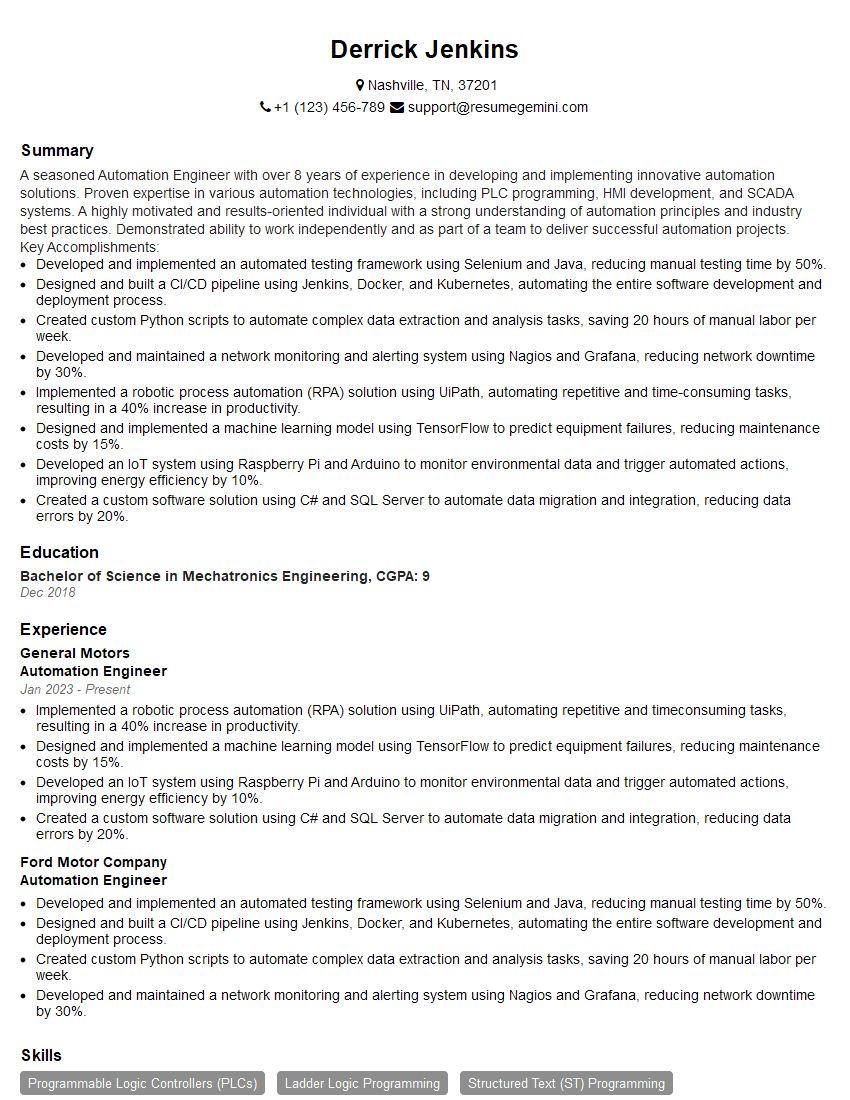
Automation Engineer Resume Sample
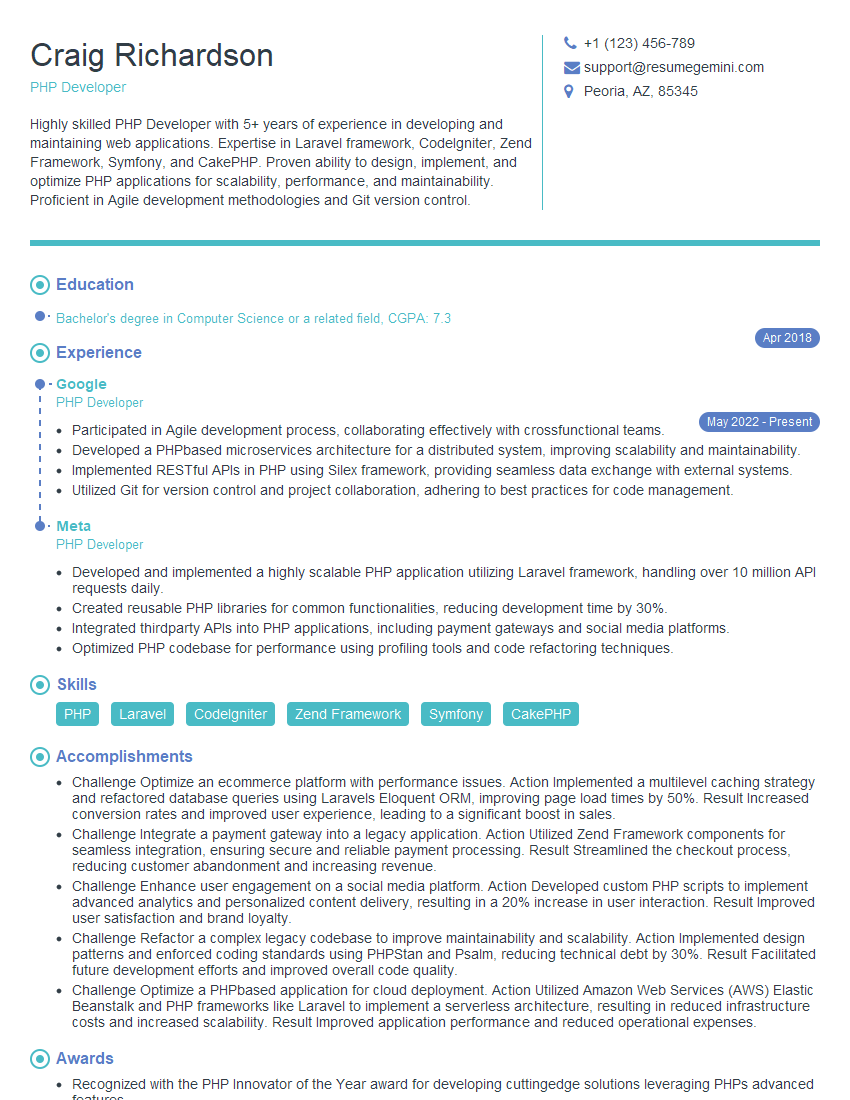
PHP Developer Resume Sample
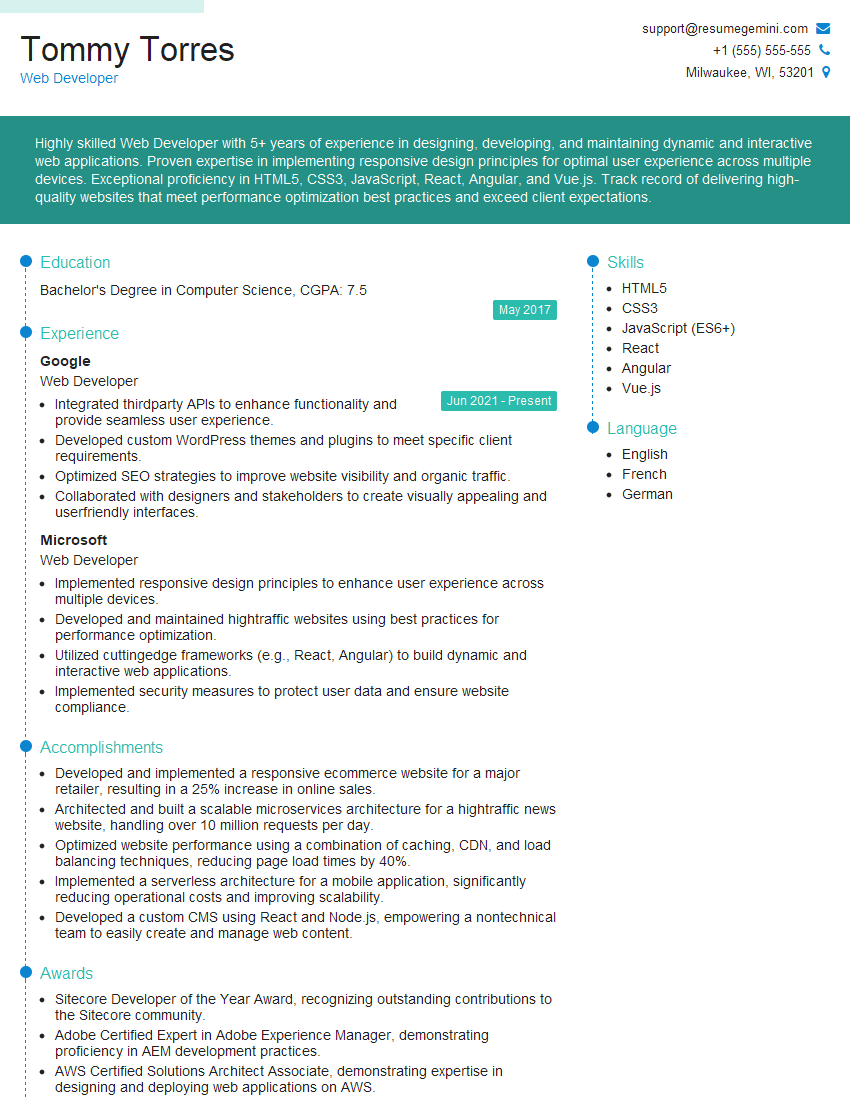
Web Developer Resume Sample
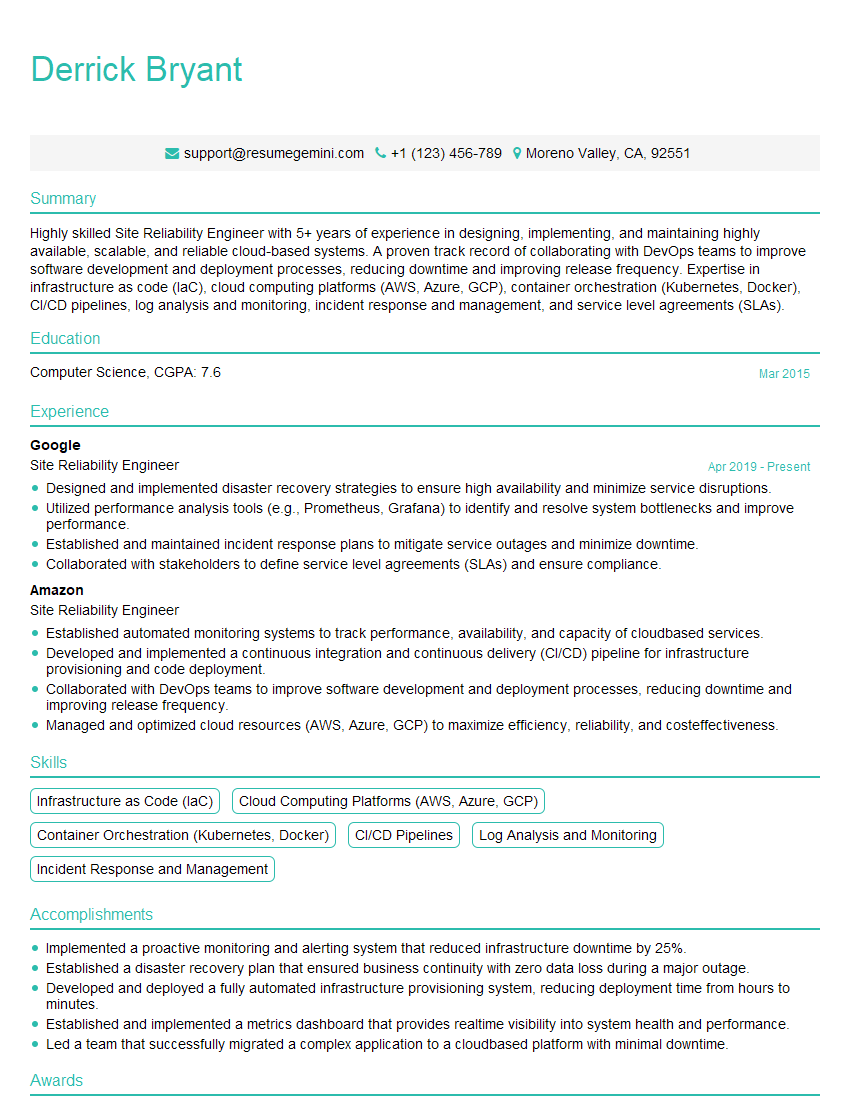
Site Reliability Engineer Resume Sample
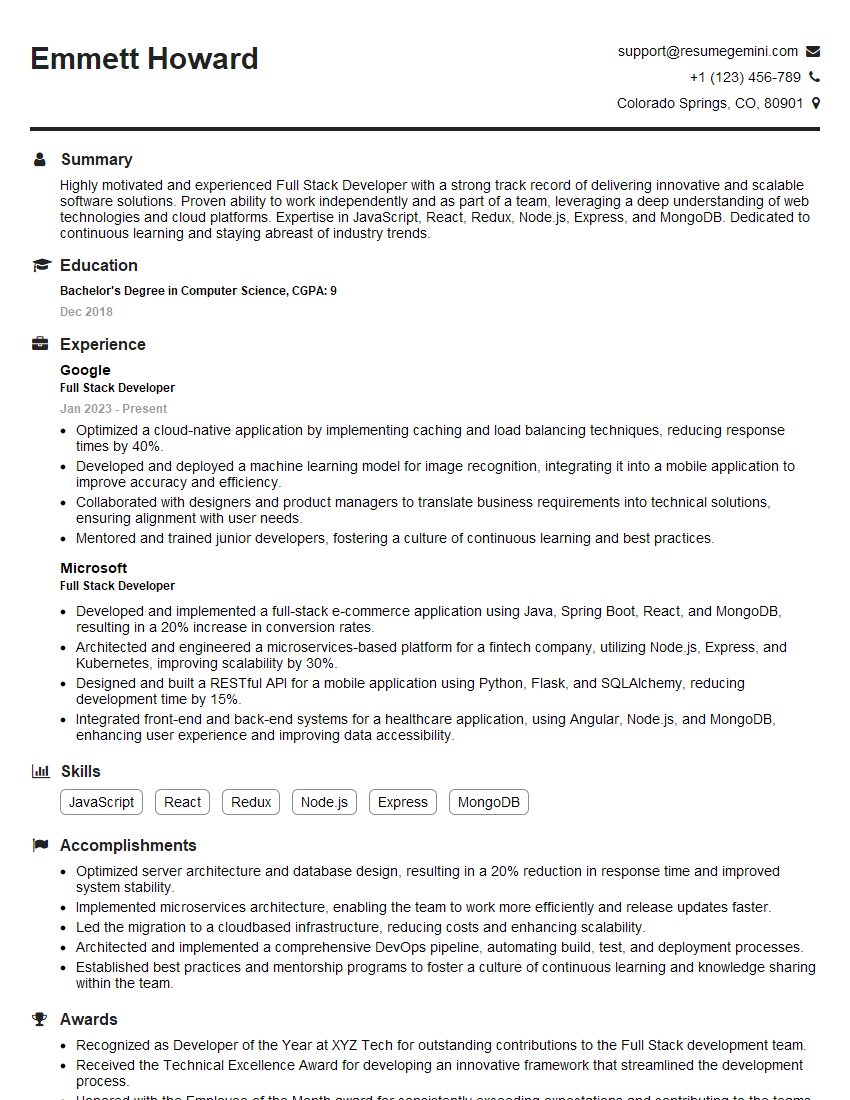
Full Stack Developer Resume Sample
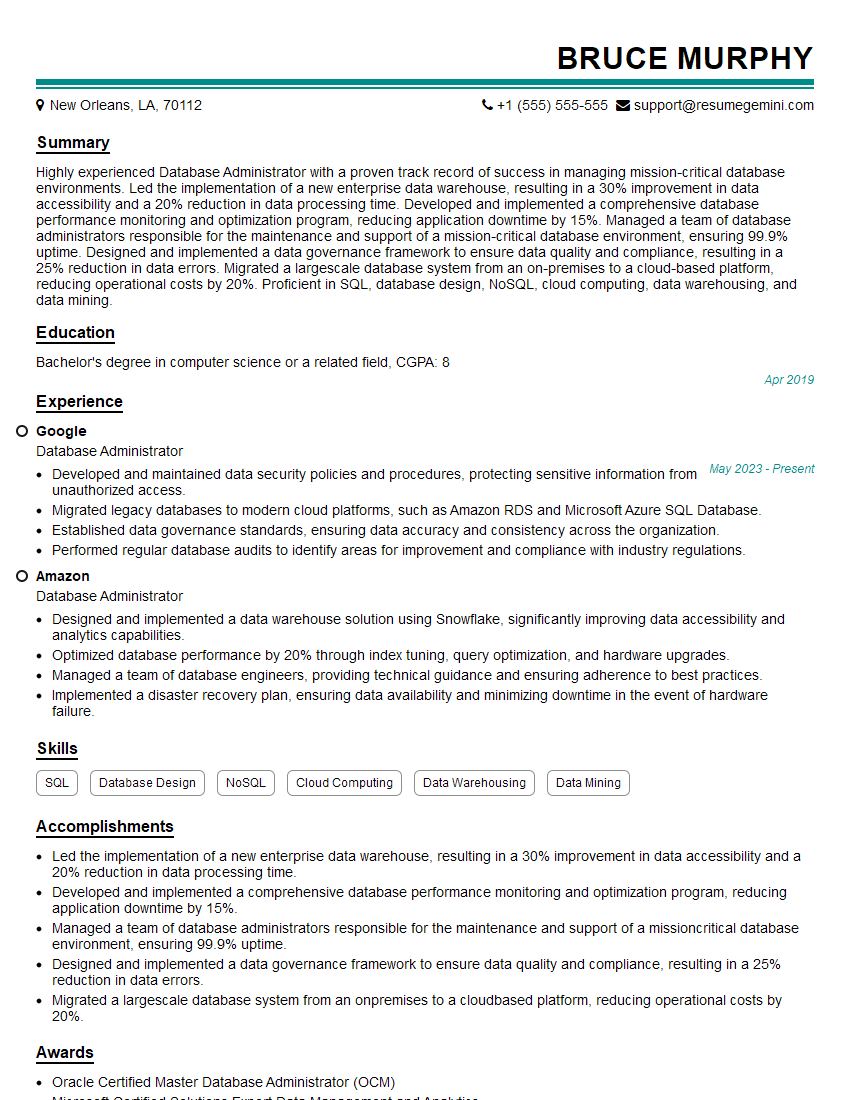
Database Administrator Resume Sample
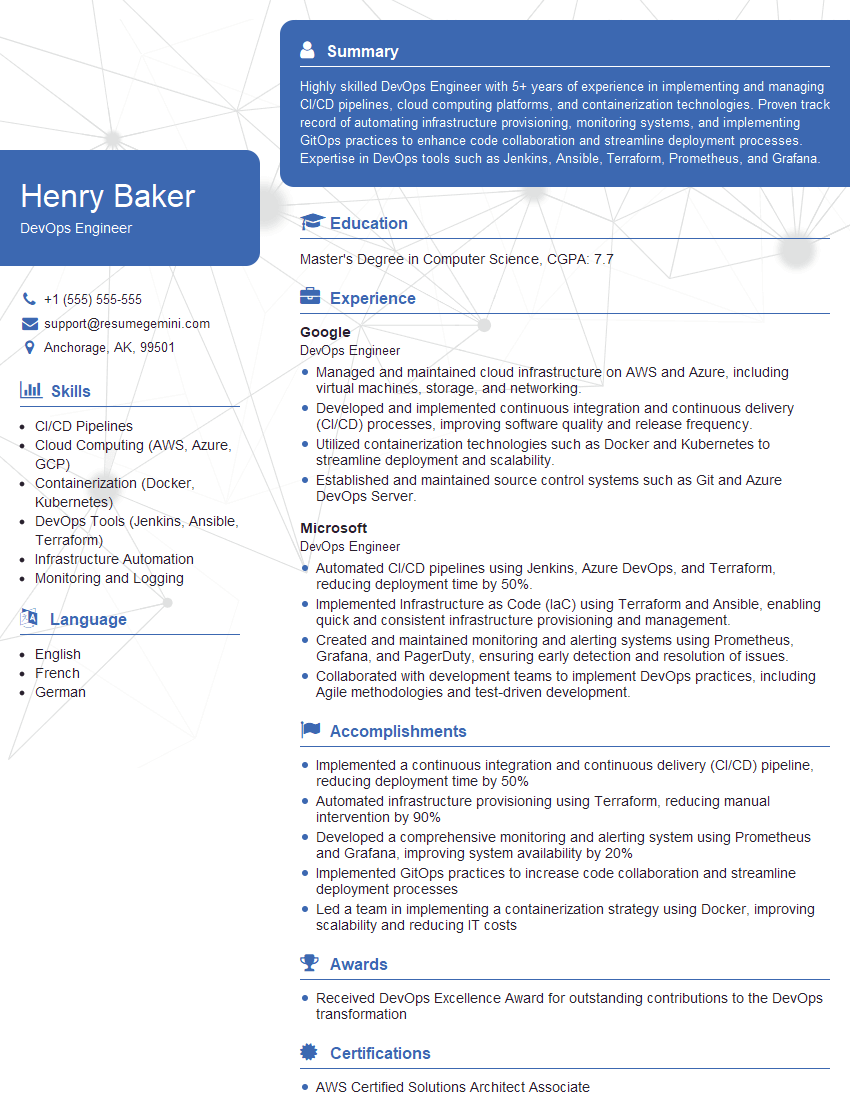
DevOps Engineer Resume Sample
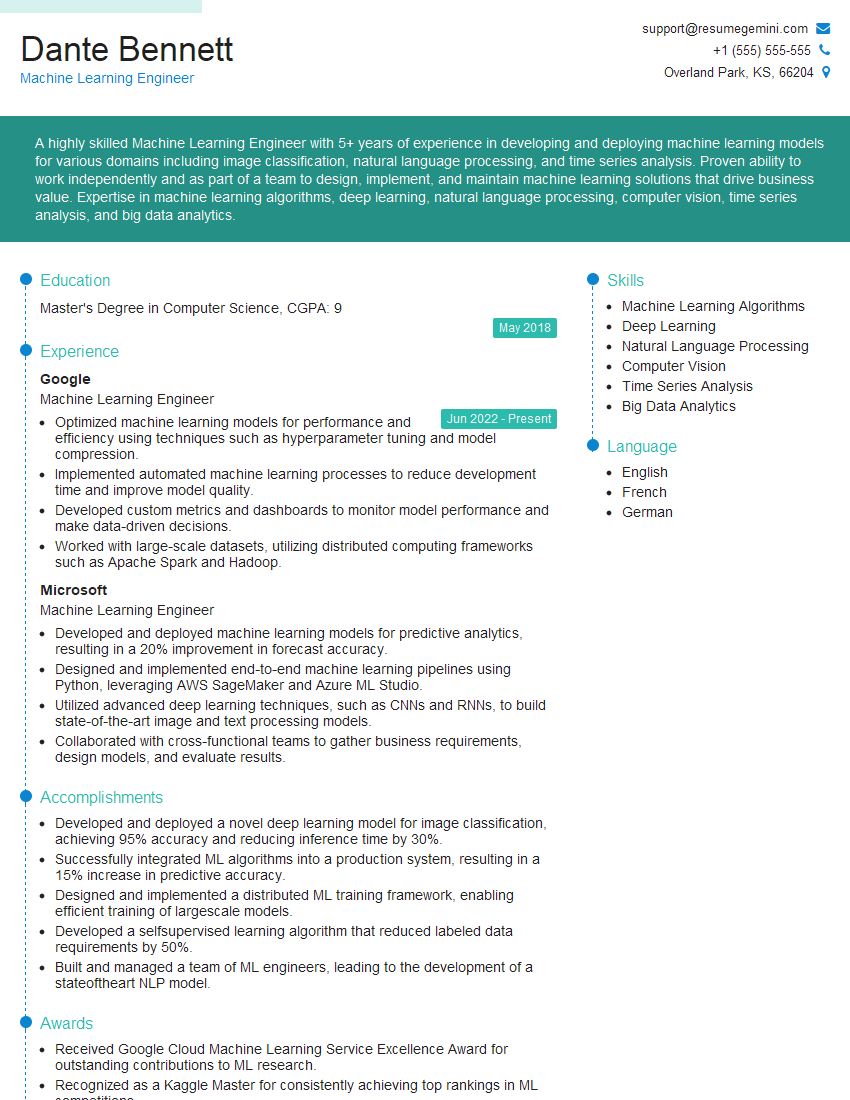
Machine Learning Engineer Resume Sample
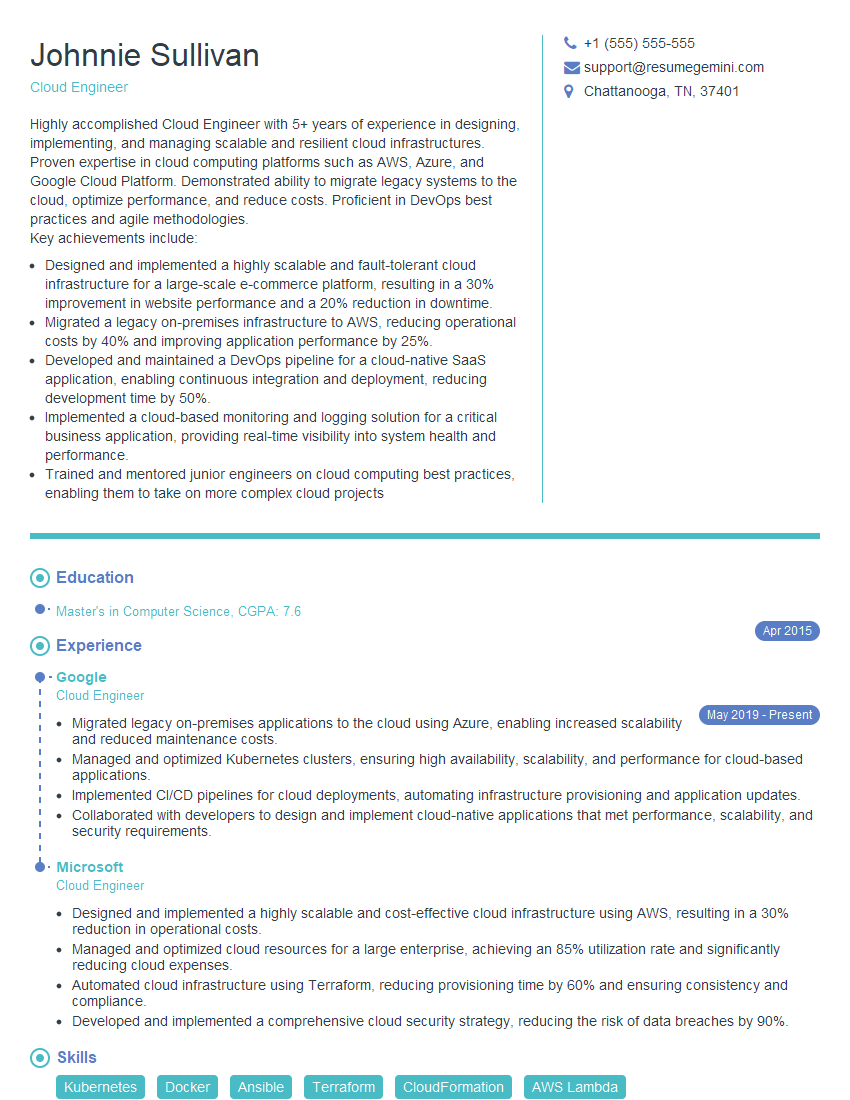
Cloud Engineer Resume Sample
Explore more articles
Users Rating of Our Blogs
Share Your Experience
We value your feedback! Please rate our content and share your thoughts (optional).
What Readers Say About Our Blog
Very informative content, great job.
good