Preparation is the key to success in any interview. In this post, we’ll explore crucial Electrolytic Plating Setup and Operation interview questions and equip you with strategies to craft impactful answers. Whether you’re a beginner or a pro, these tips will elevate your preparation.
Questions Asked in Electrolytic Plating Setup and Operation Interview
Q 1. Describe the different types of electrolytic plating processes.
Electrolytic plating, also known as electroplating, encompasses several processes, all based on the principle of using an electric current to deposit a thin layer of metal onto a conductive surface. The specific process depends on the metal being plated and the desired properties of the final product. Here are some common types:
- Direct Current (DC) Plating: This is the most common method, using a constant direct current to deposit the metal ions from the plating solution onto the cathode (the part being plated). Think of it like a slow, controlled ‘painting’ with metal.
- Pulse Plating: Instead of a constant current, pulse plating uses short bursts of current followed by brief pauses. This can improve the quality of the deposit, especially for harder-to-plate metals or achieving finer grain structures. Imagine it as a more precise ‘dabbing’ technique.
- Alternating Current (AC) Plating: Less common, this method uses alternating current, leading to a less uniform and often rougher deposit. It finds limited applications in specialized processes.
- Barrel Plating: Ideal for plating small parts in bulk, this method involves placing the parts in a rotating barrel immersed in the plating solution. The barrel’s rotation ensures even coating.
- Rack Plating: Parts are individually hung on racks and immersed in the plating bath. This offers more control over the plating process and is suitable for larger or more intricate parts.
The choice of process depends on factors like the desired finish, production volume, part geometry, and the metal being plated.
Q 2. Explain the role of current density in electrolytic plating.
Current density, measured in Amperes per square decimeter (A/dm²), is crucial in electroplating. It determines the rate of metal deposition and significantly impacts the quality of the plated layer. A higher current density generally leads to a faster plating rate but can result in a less uniform, porous, or even burnt deposit (due to hydrogen evolution). Conversely, a lower current density may result in a slower plating process but often produces a smoother, more adherent and higher-quality plating.
Finding the optimal current density is a delicate balance; it’s specific to the metal being plated, the plating solution composition, and the desired thickness and properties. Think of it like baking – too much heat (current density) might burn the cake (plating), while too little will result in an undercooked one.
Q 3. What are the factors affecting the plating thickness?
Plating thickness is determined by several interconnected factors:
- Current Density: As discussed earlier, higher current density increases the rate of deposition.
- Plating Time: The longer the part is immersed in the plating bath, the thicker the plating will be – a direct proportionality.
- Current Efficiency: This represents the percentage of the current used for actual metal deposition. Factors like temperature, solution composition, and agitation can influence this.
- Solution Concentration: Adequate concentration of metal ions in the plating bath is essential for consistent and thick plating. A depleted solution will result in thinner plating.
- Agitation: Stirring the plating solution ensures a uniform concentration of metal ions around the cathode, improving plating uniformity and thickness.
- Temperature: Temperature affects the rate of metal ion diffusion to the cathode, and thus influences the plating thickness.
Precise control over these factors is crucial for achieving the desired plating thickness and maintaining consistent quality.
Q 4. How do you control the plating bath’s temperature and pH?
Controlling temperature and pH is essential for maintaining the stability and effectiveness of the plating bath. These parameters directly affect the rate of deposition, the quality of the plated layer, and the overall efficiency of the process.
- Temperature Control: Temperature is typically controlled using heaters and cooling systems integrated into the plating tank. Maintaining the optimal temperature ensures consistent metal deposition and prevents unwanted side reactions.
- pH Control: pH is controlled through the addition of acids or bases to the plating solution. Consistent pH is crucial to maintain the chemical balance of the solution and prevent the precipitation of metal hydroxides or other undesirable compounds that can affect plating quality. Regular pH monitoring and adjustment are necessary. Specialized additives, called buffers, help stabilize the pH.
Precise control of both temperature and pH requires the use of accurate instrumentation such as thermometers, pH meters, and automated control systems.
Q 5. Describe the purpose and function of anodes and cathodes.
In an electrolytic plating setup, the anode and cathode play distinct but interdependent roles:
- Anode: The anode is the positive electrode. It’s typically made of the metal being plated. During the process, the anode dissolves, releasing metal ions into the plating solution to replenish those being deposited on the cathode. Think of it as the ‘donor’ of metal.
- Cathode: The cathode is the negative electrode. This is the part being plated, where metal ions from the solution are reduced and deposited. It acts as a recipient for the metal ions.
The controlled flow of electrons from the anode to the cathode (driven by the external power source) facilitates the transfer of metal ions and enables the plating process. Imagine it as a carefully managed flow of metal ions from the donor (anode) to the receiver (cathode).
Q 6. What are the common plating solutions used for various metals?
The choice of plating solution depends on the metal to be deposited. Here are some examples:
- Nickel Plating: Watts nickel bath (nickel sulfate, nickel chloride, boric acid) is widely used for its good corrosion resistance and hardness.
- Chrome Plating: Chromic acid-based baths are commonly employed for decorative and functional chrome plating, known for its high hardness and reflectivity.
- Copper Plating: Acid copper sulfate baths are often used for their excellent conductivity and ability to produce smooth, bright deposits.
- Zinc Plating: Acid zinc sulfate or alkaline zinc cyanide baths are used for corrosion protection, especially in galvanizing.
- Gold Plating: Gold plating solutions usually consist of gold cyanide or gold sulfite complexes. Gold is used for its corrosion resistance, conductivity, and decorative appeal.
Each plating solution has a specific composition and operating parameters (temperature, pH, current density) to ensure optimum plating quality. The selection is based on the desired properties, cost, and environmental considerations.
Q 7. Explain the process of pre-treating parts before plating.
Pre-treatment is crucial before plating to ensure a good bond between the substrate and the plating layer. A poorly prepared surface will lead to poor adhesion, peeling, and overall inferior plating quality. The pre-treatment process typically involves the following steps:
- Cleaning: This involves removing any grease, oil, dirt, or other contaminants from the surface using solvents, detergents, or alkaline cleaners. Ultrasonic cleaning is often employed for intricate parts.
- Degreasing: This is a crucial step to remove oily residues that can hinder adhesion. Solvents or alkaline cleaners are used in conjunction with various cleaning methods.
- Pickling: An acid bath (like sulfuric acid for steel or nitric acid for copper alloys) is used to remove oxides or other surface imperfections. This ensures a clean and reactive surface for better adhesion.
- Rinsing: Thorough rinsing with water between each stage is vital to remove residues from previous cleaning stages and prevent contamination.
- Activation: This step might involve a brief immersion in a mild acid solution to activate the surface and improve adhesion. This varies significantly based on the material.
The specific pre-treatment steps depend on the substrate material and the type of plating being done. Proper pre-treatment is the cornerstone of high-quality electroplating.
Q 8. How do you ensure the uniformity of the plating layer?
Uniformity in plating is crucial for both aesthetics and functionality. Think of it like painting a wall – you want an even coat, not patches of thick and thin paint. In electrolytic plating, achieving this depends on several factors. Firstly, solution agitation is key. Gentle but consistent movement of the plating solution ensures even distribution of metal ions across the entire surface of the workpiece. This can be achieved through mechanical stirring, air agitation, or even ultrasonic agitation, depending on the size and complexity of the part and the plating bath.
Secondly, the anode-cathode geometry is important. The anode (positive electrode) needs to be carefully positioned and sized relative to the cathode (negative electrode, the workpiece) to ensure uniform electric field distribution. This often involves using multiple anodes strategically placed around the cathode, especially for complex shapes. Poor anode placement can lead to uneven current density and thus, uneven plating thickness.
Thirdly, the pre-treatment of the workpiece is vital. Any surface imperfections or contaminants will disrupt the uniform deposition of the metal. Proper cleaning, degreasing, and potentially etching steps are crucial in creating a consistently receptive surface. Finally, careful control of the plating parameters such as current density, temperature, and plating time also ensures consistent and uniform plating.
Q 9. What are the different types of plating defects and their causes?
Plating defects are like fingerprints – each one tells a story about what went wrong in the process. Some common defects include:
- Burning: This occurs when the current density is too high, leading to excessive heat generation and uneven, dark deposits. Think of it as overheating the metal during deposition.
- Pitting: Small holes or depressions in the plating layer, often caused by impurities in the plating bath or on the workpiece surface. Like tiny craters on the lunar surface.
- Nodules/Roughness: Irregular, bumpy surface resulting from uncontrolled crystal growth. Imagine a rough, uneven texture.
- Treeing: Needle-like projections, often caused by high current density at sharp edges or corners. They resemble tiny, metallic branches growing out of the surface.
- Peeling/Flaking: The plating layer separates from the substrate, usually caused by poor adhesion due to inadequate surface preparation or improper plating parameters.
- Trenching: A groove in the plating layer, often along the edges of the part due to inconsistent current flow or masking issues.
The causes can be multifaceted, ranging from faulty solution chemistry and inadequate surface preparation to operational issues like incorrect current density or temperature variations.
Q 10. How do you troubleshoot common problems in an electrolytic plating process?
Troubleshooting in electrolytic plating requires a systematic approach. It’s like detective work, piecing together clues to find the root cause. I typically start by visually inspecting the plated parts for the type of defect. Then, I analyze the plating parameters (current density, voltage, temperature, plating time), and check the plating solution’s chemistry. A drop in the concentration of metal ions, for instance, would explain a thin plating layer. Contamination is a major suspect, and I would test for it. For instance, organic contamination in the bath might result in pitting. I’d also examine the pretreatment steps – a poorly cleaned workpiece can lead to poor adhesion and subsequent peeling. Finally, I’d check the power supply and equipment for malfunctions.
Example: If I observe burning on the plated part, I would first check the current density. If it’s too high, I’d reduce it. Then, I would investigate the solution agitation and ensure that it’s adequate. If pitting is present, the bath might need filtering or I might need to investigate the cleaning procedures applied to the part prior to plating.
Q 11. Describe the safety precautions involved in electrolytic plating.
Safety is paramount in electrolytic plating. The process involves handling strong chemicals, high voltages, and potentially hazardous byproducts. Personal protective equipment (PPE) is essential – this includes acid-resistant gloves, eye protection, and lab coats. Good ventilation is crucial to minimize exposure to harmful fumes and gases. Proper handling and disposal of the plating solutions and waste are mandatory, adhering to all relevant environmental regulations. Emergency eyewash stations and safety showers should be readily accessible. Workers should receive comprehensive training on safe operating procedures and emergency response protocols.
Example: When handling chromic acid, a common plating solution, it is crucial to wear appropriate PPE and to work in a well-ventilated area due to the toxic nature of chromium(VI) compounds.
Q 12. What are the environmental considerations in electrolytic plating?
Environmental considerations in electrolytic plating are becoming increasingly important. Many plating solutions contain heavy metals (such as chromium, nickel, cadmium) that are toxic and can contaminate the environment if not managed properly. Wastewater treatment is critical, usually involving chemical precipitation, filtration, and sometimes ion exchange to remove these contaminants before discharge. Proper disposal of spent plating solutions and sludge is crucial to prevent environmental pollution. The use of less hazardous plating chemistries and the implementation of closed-loop systems to minimize waste generation are increasingly important trends in the industry.
Q 13. Explain the importance of quality control in electrolytic plating.
Quality control is the backbone of successful electrolytic plating. It ensures that the plated parts meet the required specifications in terms of thickness, uniformity, adhesion, appearance, and corrosion resistance. Regular checks are vital throughout the process. This includes monitoring the solution chemistry (pH, metal ion concentration, etc.), checking the plating parameters (current density, temperature, time), and inspecting the plated parts for defects. Statistical Process Control (SPC) techniques can be used to monitor process variability and identify potential problems early on. Regular calibration of the instruments used for thickness measurements is essential to maintain accuracy.
Example: Regular thickness measurements ensure that the plating layer meets the specified thickness requirements. If a part is found to have a thickness outside the acceptable range, this signals a potential problem that needs to be investigated and corrected.
Q 14. How do you perform a thickness measurement of a plating layer?
Plating thickness measurement is crucial for quality control. Several methods exist, each with its own advantages and limitations:
- Microscopy: Cross-sectional microscopy involves cutting a sample, polishing it, and then examining the cross-section under a microscope to measure the thickness directly. It’s accurate but destructive.
- Electrochemical methods: These methods, such as stripping voltammetry, measure the amount of metal stripped from the plated layer, allowing the calculation of its thickness. They are relatively accurate and non-destructive (in most implementations).
- Magnetic methods: These methods, suitable for ferromagnetic materials, measure the magnetic flux density which is related to the plating layer’s thickness. They’re fast and non-destructive but less accurate.
- X-ray fluorescence (XRF): This technique measures the intensity of characteristic X-rays emitted from the plating layer to determine its thickness. It’s non-destructive and can be used for various materials.
The choice of method depends on the plating material, substrate material, required accuracy, and whether destructive testing is acceptable.
Q 15. Describe the maintenance procedures for plating equipment.
Maintaining plating equipment is crucial for consistent, high-quality plating and operational safety. It involves a multi-faceted approach focusing on both the plating tank itself and associated equipment. Regular cleaning is paramount. This includes removing sludge and buildup from the tank’s bottom and sides using appropriate cleaning agents, avoiding harsh chemicals that could damage the tank. Anodes require frequent inspection for wear and corrosion; they should be replaced or cleaned as needed to maintain consistent plating current density. Filters must be regularly cleaned or replaced to prevent contamination of the plating bath. Finally, all electrical connections should be checked for proper grounding and tightness to prevent short circuits and ensure consistent current delivery. Think of it like maintaining a car – regular checks and cleaning prevent major issues later.
- Tank Cleaning: Weekly or as needed, depending on usage.
- Anode Inspection: Daily or weekly visual inspection; replacement or cleaning when necessary.
- Filter Maintenance: Cleaning/Replacement based on filter type and usage. Could be daily, weekly, or monthly.
- Electrical System Check: Weekly inspection for loose connections, corrosion, and proper grounding.
- Solution Analysis: Regular analysis of bath chemistry (pH, concentration of metal ions, additive levels) to ensure consistent plating quality. Frequency varies depending on bath type and usage.
Career Expert Tips:
- Ace those interviews! Prepare effectively by reviewing the Top 50 Most Common Interview Questions on ResumeGemini.
- Navigate your job search with confidence! Explore a wide range of Career Tips on ResumeGemini. Learn about common challenges and recommendations to overcome them.
- Craft the perfect resume! Master the Art of Resume Writing with ResumeGemini’s guide. Showcase your unique qualifications and achievements effectively.
- Don’t miss out on holiday savings! Build your dream resume with ResumeGemini’s ATS optimized templates.
Q 16. What is the role of additives in electrolytic plating baths?
Additives in electrolytic plating baths are like secret ingredients in a recipe – they significantly impact the final product’s quality. They aren’t the primary metal being deposited, but they dramatically influence the plating process and the properties of the resulting coating. They can act as brighteners, producing a mirror-like finish; levelers, ensuring uniform thickness across complex geometries; stress reducers, minimizing internal stresses in the coating to prevent cracking; or grain refiners, leading to a finer-grained, more durable deposit. Without additives, you might get a dull, uneven, and brittle coating.
For example, in nickel plating, a common brightener is saccharin, which results in a bright, shiny finish. Levelers, such as certain organic compounds, help achieve a uniform coating thickness even on parts with sharp corners and recesses, preventing ‘throwing power’ issues, which refer to the bath’s ability to deposit uniformly on complex parts.
Q 17. Explain the difference between DC and pulsed DC plating.
Both DC (Direct Current) and pulsed DC plating use electricity to deposit metal, but they differ significantly in the way they deliver the current. DC plating applies a constant current, leading to a more straightforward process. However, it can result in less refined deposits and higher stress levels in the coating. Imagine a steady stream of water—consistent, but possibly forceful. Pulsed DC plating, on the other hand, delivers current in short bursts (pulses) with periods of off-time. This allows for finer control over the plating process, reducing stress in the deposit, leading to improved coating properties, better throwing power, and often a brighter finish. Think of it as a more controlled water flow – pulses, allowing for more even distribution and less force. This on-off cycle allows for better control over the process, leading to improved grain refinement and stress reduction in the deposited metal layer.
Q 18. How do you manage waste generated during electrolytic plating?
Waste management in electrolytic plating is crucial for environmental protection and compliance with regulations. The waste streams include spent plating solutions, rinse waters, and sludge. These often contain heavy metals like chromium, nickel, and cadmium, making proper disposal essential. Waste minimization strategies should be implemented first, like optimizing drag-out (the amount of solution carried away by parts) and using efficient rinsing techniques. Treatment involves processes like chemical precipitation, ion exchange, or electro-winning to remove the heavy metals. The treated effluent is then discharged in accordance with local regulations. Sludge is typically collected and sent to a hazardous waste facility for treatment and disposal. It’s crucial to meticulously document all waste generation, treatment, and disposal procedures for auditing and regulatory compliance. Failing to manage waste effectively can result in significant environmental damage and costly legal penalties.
Q 19. What are the different types of plating racks and their applications?
Plating racks are the unsung heroes of the process, holding parts securely during plating. The choice of rack depends on the part’s geometry, material, and the plating process. Common types include:
- Barrel racks: Used for small, similar-shaped parts like screws or fasteners, tumbling them within a rotating barrel for uniform coating.
- Hook racks: Simple racks with hooks for hanging individual parts, suitable for larger, more irregular shapes.
- Tray racks: Consist of trays holding parts, ideal for flat or layered parts that can’t be easily hooked.
- Jigs: Custom-designed racks for complex parts, ensuring uniform coating in challenging areas.
The material of the rack is also crucial. Non-conductive materials like plastic or insulated metal are used to isolate certain areas, while conductive materials such as copper or stainless steel are needed to conduct current and ensure proper plating of all surfaces.
Q 20. Describe the process of cleaning and rinsing plated parts.
Cleaning and rinsing plated parts is vital for removing any residual plating solution and ensuring a pristine finish. Cleaning often involves multiple stages. First, a thorough rinse with deionized water removes the majority of the plating solution. Then, depending on the plating process and type of contaminants, different cleaning agents can be used. This might include alkaline cleaners to remove oils or acids to dissolve certain residues. Multiple rinse stages using deionized water are employed to remove all traces of cleaning agents. It’s crucial to minimize the volume of rinse water by using counter-current rinse systems or spray rinsing techniques. Proper rinsing not only enhances the appearance of the plated part but also prevents corrosion and ensures the plating’s long-term durability. Think of it as washing your hands; one rinse is often insufficient for complete cleanliness.
Q 21. How do you ensure the adherence of the plating to the substrate?
Good adhesion of the plating to the substrate is paramount for a durable, long-lasting finish. It relies on several factors. Proper surface preparation is key; this typically involves cleaning to remove grease, oils, and oxides, followed by a pre-treatment step like etching or activation to create a roughened surface that provides mechanical bonding. This also enhances the chemical bonding between the substrate and the plating. Selecting the appropriate plating process and parameters for the specific substrate material is also crucial. For instance, certain pre-plating processes might be needed for plastics to ensure good adhesion of the metal coating. Finally, controlling the plating bath’s chemistry and maintaining consistent current density during the plating process significantly impacts adhesion. Poor adhesion can lead to peeling, flaking, or corrosion of the coating, rendering the plating useless.
Q 22. Explain the concept of throwing power in electrolytic plating.
Throwing power in electrolytic plating refers to the ability of a plating solution to produce a uniform coating thickness on an object with complex geometry, even in recessed areas. Think of it like this: imagine spraying paint on a car – a high throwing power solution is like a spray can that coats the inside of the wheel wells just as evenly as the exterior panels. A low throwing power solution would result in a much thicker coating on the easily accessible parts and a very thin, possibly incomplete, coating in the recesses.
Several factors influence throwing power. These include the electrolyte’s conductivity, current density distribution, and the presence of additives. Higher conductivity generally leads to better throwing power because it facilitates more even current distribution. Additives, such as brighteners and levelers, are specifically designed to improve throwing power by altering the deposition rate in different parts of the workpiece.
For example, in a chrome plating bath, the addition of certain organic compounds significantly enhances the throwing power, allowing for uniform chrome deposition even on intricate parts like engine blocks.
Q 23. What is the role of agitation in electrolytic plating?
Agitation is crucial in electrolytic plating because it helps to maintain a uniform concentration of metal ions and other components in the plating bath. Without agitation, the areas closest to the anode would have a higher concentration of metal ions, leading to uneven deposition. Imagine stirring your coffee – without stirring, the cream stays concentrated in one area. Similarly, without agitation, the plating process results in uneven coating thickness.
Agitation methods include air agitation (bubbling air through the bath), mechanical agitation (using paddles or impellers), and even ultrasonic agitation. The choice of method depends on the specific plating bath and the workpiece geometry. For example, in high-speed plating lines, mechanical agitation is often preferred for its efficiency and effectiveness. However, for delicate parts, air agitation might be a gentler alternative.
Insufficient agitation can lead to several problems including pitting, burning, and poor adhesion of the plated layer. Proper agitation ensures a more consistent and high-quality plated surface.
Q 24. Describe your experience with different types of plating baths (e.g., cyanide, acid, alkaline).
My experience encompasses a wide range of plating baths, including cyanide, acid, and alkaline solutions. Each type presents unique challenges and advantages.
- Cyanide baths, while effective for certain metals like gold and silver, require careful handling due to their toxicity. I’ve worked extensively with cyanide-based gold plating, employing strict safety protocols and waste treatment procedures. The high throwing power of cyanide baths is a key advantage, but the health risks demand meticulous control.
- Acid baths are commonly used for metals such as nickel, copper, and zinc. I’ve worked with several variations of acid copper plating, focusing on optimizing bath composition and current density for different applications, such as printed circuit board (PCB) fabrication where uniform coating and high conductivity are essential. Acid baths generally offer good throwing power and relatively fast plating rates.
- Alkaline baths are often used for zinc and some other metals. I have experience optimizing alkaline zinc plating baths for corrosion protection, achieving good uniformity and adhesion on various substrates. Alkaline baths tend to be less corrosive than acid baths but may have lower throwing power depending on the specific solution.
The choice of plating bath depends on several factors including the metal being plated, the desired properties of the coating, and environmental considerations. My experience in handling these diverse baths ensures that I can tailor the plating process to meet specific requirements.
Q 25. How do you handle plating process optimization?
Plating process optimization is an iterative process involving careful experimentation and data analysis. My approach typically involves these steps:
- Defining the goals: This includes identifying the desired plating thickness, surface finish, and mechanical properties.
- Analyzing the current process: This involves assessing the current bath composition, plating parameters (current density, temperature, agitation), and the quality of the plated parts.
- Experimental design: I utilize statistical methods, such as Design of Experiments (DOE), to systematically vary the parameters and analyze their effects on the plating process. This minimizes the number of experiments while maximizing the amount of information obtained.
- Data analysis and interpretation: I use statistical software to analyze the experimental data and identify optimal operating conditions. This often involves regression analysis and ANOVA.
- Implementation and validation: Once optimal parameters are identified, I implement them in the production process and verify that the desired results are achieved.
For example, in optimizing a nickel plating bath, I might use DOE to study the effects of current density, pH, and temperature on the plating rate, coating thickness uniformity, and stress. This allows for efficient determination of the optimal plating parameters, leading to a more consistent and higher quality finish.
Q 26. Describe your experience with automated plating systems.
My experience includes working with both fully automated and semi-automated plating systems. Automated systems are vital for high-volume production, offering increased throughput and improved consistency. I am familiar with programmable logic controllers (PLCs) and supervisory control and data acquisition (SCADA) systems used to control automated plating lines. This includes programming and troubleshooting automated systems, ensuring proper sequence control and precise parameter adjustments.
For example, I’ve worked on systems that automatically control parameters like current density, solution temperature, and agitation rate, providing real-time monitoring and adjustments to maintain optimal plating conditions. This minimizes human error and improves efficiency, leading to higher quality and consistent plating results. Moreover, I’ve been involved in the integration of automated parts handling systems, including robotic loading and unloading of parts, enhancing the overall production process.
In contrast, semi-automated systems offer flexibility for lower-volume production or specialized plating tasks, allowing for more manual intervention when needed. My experience encompasses both types of systems, ensuring I can provide efficient and effective solutions tailored to specific needs.
Q 27. What are the advantages and disadvantages of different plating metals?
Different plating metals offer distinct advantages and disadvantages. Here are a few examples:
- Chromium: Offers excellent corrosion resistance and hardness, ideal for decorative and functional applications. However, it’s brittle and can be challenging to plate uniformly.
- Nickel: Provides good corrosion resistance and is often used as an undercoat for other metals. It’s relatively easy to plate but can be prone to stress cracking.
- Gold: Excellent electrical conductivity and corrosion resistance, making it ideal for electronics and connectors. It’s expensive and can be difficult to plate uniformly on complex geometries.
- Zinc: Cost-effective and provides good corrosion protection, often used for sacrificial coatings. However, it is less resistant to abrasion than some other metals.
- Copper: High electrical conductivity and excellent solderability, extensively used in electronics and PCB manufacturing. Can be susceptible to corrosion without additional protective layers.
The selection of plating metal depends on the desired properties of the final product. For example, a decorative part might require chrome for its bright finish and corrosion resistance, whereas an electronic component might necessitate gold for its conductivity and corrosion resistance. My expertise lies in understanding these trade-offs and choosing the appropriate metal for a given application.
Q 28. How do you monitor and control the plating process parameters?
Monitoring and controlling plating process parameters is crucial for ensuring consistent, high-quality plating. This is typically achieved through a combination of in-line sensors and periodic laboratory tests.
In-line monitoring might include sensors for:
- Current density: Ensures the plating rate is within the desired range.
- Temperature: Maintains the bath at the optimal temperature for efficient plating.
- pH: Monitors the acidity or alkalinity of the bath, which impacts the plating process.
- Solution concentration: Ensures the bath composition remains consistent.
Periodic laboratory tests supplement in-line monitoring and can include:
- Metal analysis: To measure the concentration of metal ions in the bath.
- Additive analysis: To check the levels of additives that influence throwing power and other properties.
- Plating thickness measurement: To verify the coating thickness conforms to specifications.
- Surface finish assessment: To evaluate the surface quality using techniques like microscopy.
Data from both in-line monitoring and laboratory tests are crucial for adjusting the process parameters and preventing deviations from optimal conditions. I utilize statistical process control (SPC) techniques to track process variability and identify potential problems before they impact product quality.
Key Topics to Learn for Electrolytic Plating Setup and Operation Interview
- Electrolyte Chemistry and Selection: Understanding different plating solutions (e.g., nickel, chrome, zinc), their properties, and how to select the appropriate electrolyte for a given application. This includes understanding concentration, pH, and additives.
- Tank Preparation and Cleaning: Mastering the procedures for cleaning and preparing plating tanks, including pre-treatment steps and ensuring optimal conditions for consistent plating. This impacts surface quality and plating efficiency.
- Racking and Masking Techniques: Knowing various racking and masking techniques to ensure only the desired areas are plated. This is crucial for achieving accurate and repeatable results.
- Power Supply and Current Control: Understanding the principles of direct current (DC) power supplies and how to adjust voltage and current to achieve desired plating thickness and quality. This involves troubleshooting issues related to power fluctuations.
- Plating Process Parameters: Knowing the importance of parameters such as current density, plating time, temperature, and agitation. Understanding how to optimize these for specific materials and desired finishes.
- Troubleshooting Common Plating Defects: Identifying and resolving issues such as pitting, burning, nodules, and poor adhesion. This includes understanding root causes and implementing corrective actions.
- Safety Procedures and Regulations: Understanding and adhering to all relevant safety regulations and procedures associated with handling chemicals, electrical equipment, and waste disposal in electrolytic plating. This is critical for a safe working environment.
- Quality Control and Testing: Understanding various methods for quality control, such as thickness measurements, visual inspection, and testing for adhesion and corrosion resistance. This ensures consistent and high-quality plating.
- Maintenance and Preventative Maintenance: Understanding the importance of regular maintenance of the plating equipment to ensure optimal performance and longevity. This includes cleaning, replacing parts and preventative measures.
Next Steps
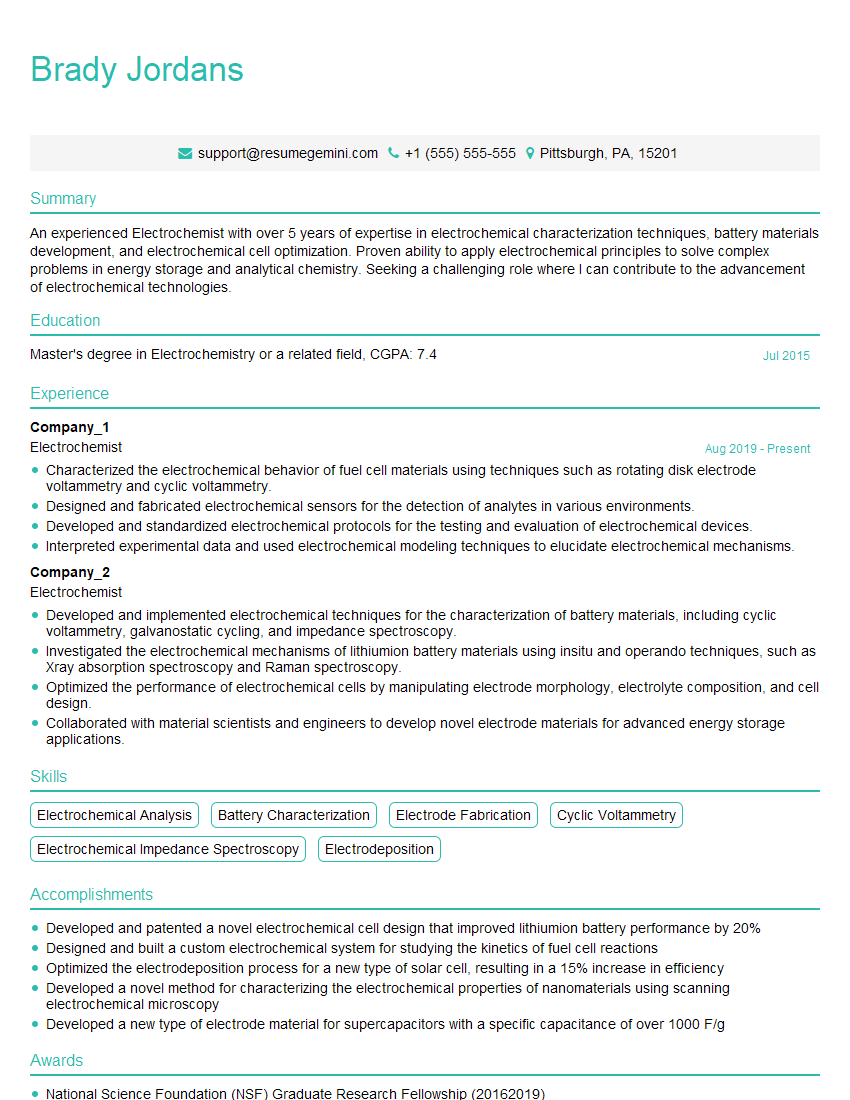
Mastering Electrolytic Plating Setup and Operation opens doors to exciting career opportunities with significant growth potential in manufacturing, electronics, and automotive industries. To maximize your chances of landing your dream job, creating a strong, ATS-friendly resume is crucial. ResumeGemini is a trusted resource to help you build a professional and impactful resume that showcases your skills and experience effectively. Examples of resumes tailored to Electrolytic Plating Setup and Operation are available to guide you. Invest in your career future – build a resume that gets noticed.
Explore more articles
Users Rating of Our Blogs
Share Your Experience
We value your feedback! Please rate our content and share your thoughts (optional).
What Readers Say About Our Blog
Very informative content, great job.
good