Every successful interview starts with knowing what to expect. In this blog, we’ll take you through the top Experience in live event production and management interview questions, breaking them down with expert tips to help you deliver impactful answers. Step into your next interview fully prepared and ready to succeed.
Questions Asked in Experience in live event production and management Interview
Q 1. Describe your experience managing budgets for live events.
Budget management for live events is a crucial aspect, demanding meticulous planning and control. It involves creating a detailed budget, tracking expenses, and ensuring the event remains within allocated funds. This process typically starts with a comprehensive needs assessment, identifying all anticipated costs, from venue rental and talent fees to catering and marketing. I utilize spreadsheet software like Microsoft Excel or Google Sheets to create a dynamic budget that allows for adjustments and provides real-time tracking of spending. For example, when budgeting for a recent music festival, I categorized expenses into distinct areas: artist fees, production (lighting, sound, staging), marketing and promotion, security, permits, and contingency. This breakdown allowed for precise monitoring of each area, preventing overspending and ensuring funds were allocated effectively. Regular budget reviews and comparisons against actual spending are essential to identify potential deviations and make timely corrective actions. Any significant variance necessitates a thorough investigation and adjustment of future spending plans.
Q 2. Explain your process for risk assessment and mitigation in event planning.
Risk assessment and mitigation are fundamental to successful event planning. My process begins with identifying potential risks across all event aspects. This involves brainstorming sessions with the event team, considering factors like weather, equipment failure, security threats, and logistical challenges. Each identified risk is then analyzed using a risk matrix that considers both the likelihood and potential impact of the risk occurring. For example, a power outage at an outdoor concert is a high-likelihood, high-impact risk. This matrix prioritizes risks, guiding mitigation strategies. Mitigation strategies are proactive measures to reduce or eliminate the risk. For the power outage example, mitigation could include backup generators, clearly communicated contingency plans, and a robust communication system to inform attendees. Throughout the event, constant monitoring and communication are key to identifying emerging risks and adapting mitigation strategies accordingly. Documentation of risks, mitigation plans, and any incident reports ensures accountability and learning for future events.
Q 3. How do you handle unexpected technical issues during a live event?
Handling unexpected technical issues requires a calm, proactive approach. My first step involves immediate assessment of the problem’s scope and impact. I then activate a pre-established crisis management plan, including clearly defined roles and communication protocols. This plan outlines communication strategies to keep attendees informed, and designates specific team members responsible for troubleshooting, damage control, and contingency planning. For instance, if the sound system fails during a concert, our protocol would involve switching to backup equipment, informing attendees about the delay with clear announcements, and possibly offering alternative entertainment to minimize disruption. Post-event, a thorough debrief is conducted to analyze the incident, identify the root cause, and implement preventative measures to avoid similar issues in the future. The ability to remain composed under pressure and effectively lead the team through problem-solving is critical in these situations.
Q 4. What software or tools do you use for event scheduling and coordination?
I utilize a variety of software and tools for event scheduling and coordination. Project management software like Asana or Monday.com are essential for task assignment, progress tracking, and collaboration. These platforms allow for creating timelines, setting deadlines, and managing team contributions effectively. For scheduling complex events with multiple vendors and performers, I often rely on collaborative calendars (Google Calendar or Outlook Calendar) to ensure everyone is aligned. Dedicated event planning software, such as Eventbrite or Cvent, are also utilized for registration management, ticketing, and communication with attendees. These tools help streamline processes, improve team coordination, and ensure events run smoothly.
Q 5. Describe your experience with vendor management and negotiation.
Vendor management and negotiation are crucial for successful event production. My approach starts with thorough research and selection of reputable vendors. This includes evaluating their experience, reputation, and pricing. I then develop clear contracts outlining deliverables, payment schedules, and responsibilities. Negotiation is a collaborative process, focused on achieving mutually beneficial agreements. For example, when negotiating with a catering company, I might discuss menu options, quantities, and pricing to ensure it aligns with the budget and event needs. Regular communication and monitoring of vendor performance during the event are vital to ensure the agreed-upon services are delivered to a satisfactory standard. Open communication and a fair approach build strong working relationships with vendors, fostering trust and ensuring a smooth event execution.
Q 6. How do you ensure the safety and security of attendees at a live event?
Ensuring attendee safety and security is paramount. This starts with a comprehensive risk assessment addressing potential hazards and developing strategies to mitigate them. Collaboration with local authorities and security personnel is crucial. For example, securing necessary permits and coordinating security personnel for crowd control, access management, and emergency response. Emergency plans, clearly marked exits, and readily available first-aid stations are essential components. Communication strategies, including clear signage, announcements, and emergency procedures provided to attendees, ensure everyone knows what to do in case of an emergency. Regular safety inspections and training for event staff reinforce protocols. A well-planned security approach significantly contributes to a safe and enjoyable experience for everyone.
Q 7. Explain your process for creating and managing event timelines.
Creating and managing event timelines involves meticulous planning and coordination. I typically start with a reverse chronological approach, working backward from the event date to establish key milestones and deadlines. This includes setting deadlines for vendor bookings, marketing campaigns, site preparation, and other crucial activities. A detailed timeline, often using a Gantt chart or project management software, visually represents these milestones and their dependencies. This allows for clear monitoring of progress and identification of potential scheduling conflicts early on. Regular updates and adjustments to the timeline are necessary to accommodate changing circumstances or unforeseen challenges. Effective communication among the event team ensures everyone remains informed and on track. A well-defined timeline is fundamental for coordinating the myriad activities involved in a successful live event.
Q 8. How do you handle difficult personalities or conflicts within an event team?
Handling difficult personalities and conflicts requires a proactive and diplomatic approach. My strategy focuses on early identification, clear communication, and a commitment to finding mutually beneficial solutions. I begin by establishing clear expectations and roles from the outset, using a well-defined project plan and regular team meetings to ensure everyone is on the same page.
If conflict arises, I facilitate open dialogue, encouraging team members to express their concerns respectfully. I act as a mediator, focusing on the issue at hand rather than personalities. Sometimes, a simple misunderstanding can be resolved with a clear explanation. Other times, a compromise might be necessary, or even a formal mediation process may be warranted. For instance, during a large-scale music festival, I once had a disagreement between the lighting and sound teams regarding stage setup. By facilitating a meeting where each team explained their needs and constraints, we found a creative solution that satisfied both, ultimately ensuring a smoother show.
Ultimately, fostering a respectful and professional work environment is key. This includes actively listening to team members, appreciating diverse perspectives, and addressing concerns fairly and promptly. Building trust and rapport are essential elements in preventing and resolving conflict.
Q 9. Describe your experience with post-event analysis and reporting.
Post-event analysis and reporting are crucial for continuous improvement. My process begins immediately after an event concludes with a debriefing session with key team members. We discuss what went well, what could be improved, and identify any unexpected challenges or successes. This allows for immediate feedback and allows the team to reflect while memories are still fresh.
Following the debrief, I compile a comprehensive report that includes key performance indicators (KPIs) such as attendance figures, revenue generated, customer satisfaction ratings (often gathered through surveys), and operational costs. This report also incorporates qualitative data from the debriefing sessions, highlighting areas for improvement and suggesting actionable strategies for future events. For example, I’ve used post-event analysis to identify bottlenecks in our registration process, leading to the implementation of a new online system that streamlined check-in and reduced wait times. Data visualization tools, such as charts and graphs, are used to make the findings easily understandable for various stakeholders.
Finally, the report is distributed to relevant stakeholders, including clients, sponsors, and internal team members, and used to inform future planning and decision-making. This iterative process of analysis and improvement is vital for enhancing event efficiency and achieving better outcomes over time.
Q 10. What is your experience with different types of event venues and their specific requirements?
My experience encompasses a wide variety of event venues, from intimate theaters and conference centers to large-scale outdoor stadiums and unconventional spaces like museums or art galleries. Each venue presents unique challenges and requirements. For example, a theater might require detailed stage plots and consideration for sightlines, while an outdoor stadium demands meticulous planning for weather contingencies and potentially significant security protocols.
Understanding a venue’s technical capabilities, including its lighting, sound, and rigging systems, is crucial. I always conduct thorough site visits before an event to assess the venue’s suitability and identify any potential limitations. This involves reviewing technical specifications, evaluating load-bearing capacities, and assessing accessibility features. For instance, when organizing a corporate event in a historic building, we had to carefully plan the placement of AV equipment to avoid damaging delicate architectural features.
Furthermore, I am familiar with various permits and regulations associated with different venue types, including fire safety codes, licensing requirements, and noise ordinances. Adaptability and problem-solving are key skills when working across diverse venue types, ensuring every event runs smoothly regardless of the specific location.
Q 11. How do you manage logistics, including transportation, catering, and accommodation for events?
Effective logistics management is critical for a successful event. My approach relies on meticulous planning, leveraging technology, and building strong relationships with reliable vendors. I typically begin by creating a detailed logistics plan that outlines all aspects of transportation, catering, and accommodation. This includes identifying specific needs – such as the number of attendees, their dietary requirements, and transportation needs – and selecting appropriate vendors based on cost, reputation, and reliability.
For transportation, I consider various options depending on the event’s scale and location, from private buses and taxis to public transportation coordination. I work closely with transportation companies to develop efficient routing plans and ensure timely arrivals and departures. Catering requires careful planning, including menu selection, dietary restrictions, and service style. I select caterers based on quality, capacity, and their ability to meet the specific dietary needs of attendees. Accommodation is planned meticulously to secure suitable hotels or other lodging based on budget and proximity to the event venue. I often negotiate group rates to maximize value and ensure all attendees have comfortable accommodation.
Throughout the entire logistics process, I use project management software to track progress, manage vendor communication, and ensure all aspects are handled effectively. Regular communication with the vendors and internal team is crucial to proactively address any potential issues and ensure smooth execution.
Q 12. What strategies do you employ to ensure effective communication within an event team?
Effective communication is the backbone of any successful event. My approach utilizes a multi-faceted strategy combining various tools and techniques. First, a clear communication plan is established at the beginning of the project, outlining communication channels, frequency, and responsible parties. This plan defines how information will be shared amongst team members, clients, and vendors.
Regular team meetings, both in-person and virtual, are essential for keeping everyone informed and aligned. During these meetings, agendas are distributed beforehand, minutes are recorded and distributed afterwards, and open discussion is encouraged. I also utilize project management software, which provides a centralized platform for sharing documents, updates, and schedules. This keeps everyone informed on the progress and enables seamless collaboration.
Clear and concise communication is vital, avoiding jargon and using plain language. I always provide timely updates and proactively address any issues that may arise. Feedback is actively solicited and incorporated, fostering a culture of transparency and collaboration. For example, during a complex international conference, we used a dedicated project management platform along with a daily email update to keep our global team informed.
Q 13. How familiar are you with various audio-visual equipment and technologies?
My familiarity with audio-visual (AV) equipment and technologies is extensive. I am proficient in using and managing a wide range of equipment, including cameras, microphones, lighting consoles, projectors, sound mixers, and video switchers. My expertise extends to understanding various signal flows, audio and video formats, and troubleshooting common technical problems.
Beyond the equipment itself, I understand the technical aspects of AV setup and deployment, including signal routing, power distribution, and cable management. I am also well-versed in various software applications used for controlling AV systems, such as video editing software and audio mixing consoles. I’m comfortable working with both analog and digital systems and understand their respective advantages and limitations.
Furthermore, I stay current on the latest advancements in AV technology, exploring new equipment and techniques to improve the quality and efficiency of our event productions. This ensures we leverage the best available tools to provide a high-quality experience for our attendees.
Q 14. Describe a time you had to troubleshoot a major technical problem during a live event.
During a large-scale outdoor concert, the main power generator failed just minutes before the headliner was scheduled to take the stage. This created a critical situation, potentially jeopardizing the entire event. My immediate response involved activating our backup generator, a process that required careful coordination to avoid a complete power outage while switching over.
Simultaneously, I contacted our electrician and the generator maintenance team to diagnose the problem with the main generator. We communicated effectively with the band’s management and production team to reassure them that we were addressing the issue. While the backup generator powered the essential elements of the show, the reduced power capacity meant certain elements, like some of the lighting effects, had to be scaled back. We used the stage manager to communicate revised lighting requirements to the crew.
The situation highlighted the importance of having multiple contingency plans. After resolving the immediate crisis, we conducted a thorough post-mortem analysis to identify the root cause of the generator failure and implement preventative measures to avoid similar incidents in the future. The show did go on with only minimal disruption and successfully concluded, demonstrating that adaptability and effective problem-solving can overcome even the most challenging technical setbacks. The incident reinforced the criticality of always having contingency plans for live events.
Q 15. How do you ensure compliance with all relevant health and safety regulations?
Ensuring health and safety compliance at live events is paramount. It’s not just about ticking boxes; it’s about creating a culture of safety from the initial planning stages to the event’s conclusion. This involves a multi-faceted approach.
- Risk Assessment: We begin with a thorough risk assessment, identifying potential hazards—from fire risks and crowd surges to slips, trips, and falls, and potential medical emergencies. This assessment informs our safety plan.
- Emergency Planning: A detailed emergency plan is crucial, including designated emergency exits, evacuation procedures, first aid stations with trained personnel, and clear communication strategies with local emergency services. We conduct regular drills to ensure everyone is prepared.
- Compliance with Regulations: We meticulously adhere to all relevant local, regional, and national health and safety regulations. This includes obtaining the necessary permits, licenses, and insurance. We stay updated on any changes in legislation and industry best practices.
- Contractor Management: All contractors working at the event, from security personnel to caterers, must adhere to our safety standards. We provide clear safety briefs and ensure their compliance through regular monitoring.
- Post-Event Review: Following the event, a comprehensive review is conducted to identify areas for improvement and to learn from any incidents, however minor. This ensures continuous improvement in our safety protocols.
For example, at a recent outdoor music festival, our risk assessment identified the potential for heatstroke. Our mitigation strategy included providing ample water stations, shaded areas, and deploying medical personnel to monitor for heat-related illnesses. This proactive approach ensured the safety and well-being of attendees.
Career Expert Tips:
- Ace those interviews! Prepare effectively by reviewing the Top 50 Most Common Interview Questions on ResumeGemini.
- Navigate your job search with confidence! Explore a wide range of Career Tips on ResumeGemini. Learn about common challenges and recommendations to overcome them.
- Craft the perfect resume! Master the Art of Resume Writing with ResumeGemini’s guide. Showcase your unique qualifications and achievements effectively.
- Don’t miss out on holiday savings! Build your dream resume with ResumeGemini’s ATS optimized templates.
Q 16. How do you balance creative vision with practical constraints during event planning?
Balancing creative vision with practical constraints is a constant juggling act in event planning. It’s about finding creative solutions within the boundaries of budget, venue limitations, and logistical realities.
Think of it like sculpting. You have a magnificent vision in mind (the creative vision), but you’re working with a specific block of marble (the constraints). The skill lies in skillfully chiseling away at the unnecessary, revealing the masterpiece within the limitations.
- Prioritization: We identify the core elements of the creative vision that are non-negotiable and prioritize them. Less critical elements might be scaled back or adapted to fit within the constraints.
- Brainstorming Alternative Solutions: When faced with a constraint, we brainstorm alternative solutions. For example, if the desired venue is unavailable, we explore equally compelling alternatives that meet most of our requirements.
- Open Communication: Open communication with the creative team and all stakeholders is key. Transparency ensures everyone understands the limitations and collaboratively explores creative solutions.
- Iterative Planning: The planning process is iterative. We constantly refine the plans, balancing creative aspirations with practical limitations. This often involves making compromises, but the goal is to achieve the best possible outcome within the given constraints.
For instance, at a corporate event, the client envisioned a large-scale projection mapping on a historical building. Due to budget constraints, we explored alternative solutions, using a combination of smaller projections and innovative lighting techniques to achieve a similar impactful visual experience.
Q 17. Describe your experience with developing and executing marketing strategies for live events.
Developing and executing successful marketing strategies for live events requires a multi-channel approach that targets the right audience segments with compelling messaging. My experience encompasses a range of tactics:
- Target Audience Segmentation: We begin by clearly defining our target audience—their demographics, interests, and online behaviour. This allows us to tailor our marketing messages effectively.
- Social Media Marketing: Social media is a powerful tool. We use platforms like Facebook, Instagram, and Twitter to create engaging content, run targeted advertising campaigns, and build excitement leading up to the event. We track key metrics like engagement and reach to optimize our campaigns.
- Email Marketing: Email marketing is vital for communicating directly with potential attendees. We use email campaigns to announce the event, promote ticket sales, and share updates and exclusive content.
- Public Relations (PR): Securing media coverage is crucial. We proactively pitch stories to relevant media outlets, aiming to generate positive publicity and build anticipation for the event.
- Influencer Marketing: Collaborating with relevant influencers can significantly amplify our reach and engage a wider audience. We identify influencers who resonate with our target audience and partner with them to promote the event.
- Website and Landing Pages: A well-designed website with clear information about the event, ticketing details, and logistical information is essential.
For example, in promoting a music festival, we used a combination of targeted social media ads, influencer collaborations, and PR outreach to achieve high ticket sales and strong media coverage. We tracked our marketing efforts meticulously, enabling us to understand which channels were most effective and optimize future campaigns.
Q 18. How do you measure the success of a live event?
Measuring the success of a live event involves analyzing various quantitative and qualitative metrics. There’s no single metric; it’s a holistic assessment.
- Attendance: The number of attendees is a primary indicator of success. We compare the actual attendance to the projected attendance to assess the effectiveness of our marketing and sales efforts.
- Ticket Sales Revenue: Revenue generated from ticket sales is a crucial financial metric. We analyze sales trends to identify peak demand periods and areas for improvement in future events.
- Social Media Engagement: Tracking social media mentions, hashtags, and engagement rates provides insights into audience sentiment and the overall buzz around the event.
- Net Promoter Score (NPS): Collecting feedback through surveys or post-event questionnaires helps assess attendee satisfaction and identify areas for improvement.
- Sponsor Satisfaction: If the event has sponsors, evaluating their satisfaction with the event’s execution and ROI is important.
- Media Coverage: The amount and quality of media coverage provide an indication of the event’s public profile and reach.
For instance, a successful conference might be measured not only by high attendance but also by high post-event survey scores reflecting positive feedback on the speakers, content, and overall experience.
Q 19. What is your experience with different types of live events (concerts, conferences, festivals, etc.)?
My experience encompasses a diverse range of live events, each with its unique challenges and rewards:
- Concerts: I’ve worked on large-scale outdoor concerts, requiring meticulous coordination of stage production, sound and lighting, security, and crowd management. The focus is on creating an unforgettable audience experience.
- Conferences: Conferences demand a strong emphasis on content delivery, technical aspects (audio-visual setup, internet connectivity), and networking opportunities for attendees. A seamless experience for speakers and delegates is critical.
- Festivals: Festivals often involve multiple stages, diverse artists, food vendors, and extensive site management. The logistics are complex, requiring careful planning and execution.
- Corporate Events: These events range from product launches to annual shareholder meetings, requiring a tailored approach to reflect the company’s brand and objectives. A professional and polished image is essential.
- Awards Ceremonies: These events require precise timing, seamless transitions between segments, and a high level of production value to create a memorable and impactful experience.
Each event type requires adapting my approach to meet its unique demands. For example, the risk assessment for an outdoor music festival will differ significantly from that of an indoor corporate event.
Q 20. How do you manage stakeholder expectations?
Managing stakeholder expectations is crucial for a successful event. It involves proactive communication, clear agreements, and a commitment to transparency.
- Define Expectations Upfront: At the outset, we work closely with all stakeholders (clients, sponsors, artists, vendors) to clearly define expectations regarding the event’s scope, timeline, budget, and deliverables. We document these agreements formally.
- Regular Communication: We maintain consistent communication throughout the planning and execution phases. Regular updates, progress reports, and open channels for feedback are essential to keep everyone informed.
- Manage Conflicts Proactively: Inevitably, conflicts arise. We address these promptly and fairly, finding mutually acceptable solutions through negotiation and compromise. Mediation may be necessary in some cases.
- Set Realistic Expectations: We ensure expectations are realistic and achievable within the available resources and time constraints. Over-promising can lead to disappointment and conflict.
- Address Feedback Responsively: We actively seek feedback from stakeholders and respond to concerns promptly and professionally. This demonstrates our commitment to their satisfaction.
For example, working with a high-profile artist, we meticulously documented all aspects of their rider (technical specifications, hospitality requirements, etc.). This ensured a clear understanding and avoided misunderstandings that could have negatively impacted their performance.
Q 21. Explain your experience with event ticketing and registration systems.
My experience with event ticketing and registration systems is extensive. I’m familiar with various platforms and understand the importance of selecting the right system for the specific event.
- Platform Selection: The choice of ticketing platform depends on factors such as the event size, complexity, and budget. We consider factors like scalability, integration with other systems, and customer support capabilities.
- Data Management: We ensure secure and efficient data management, complying with all relevant data protection regulations (e.g., GDPR). This includes collecting attendee information accurately and securely.
- Payment Gateway Integration: Seamless payment gateway integration is vital for ensuring smooth ticket purchases. We select reliable payment processors to minimize transaction failures.
- Ticket Delivery: We utilize different ticket delivery methods, including e-tickets, mobile tickets, and physical tickets, depending on the event’s needs and audience preferences.
- Registration Management: For conferences and similar events, we utilize registration systems to manage attendee data, generate badges, and handle on-site registration efficiently.
- Reporting and Analytics: Ticketing and registration systems provide valuable data on ticket sales, attendee demographics, and other key metrics that inform future event planning.
For instance, at a large-scale conference, we used a sophisticated registration platform that integrated with our CRM system, enabling us to collect detailed attendee data, personalize communication, and track attendance efficiently.
Q 22. How do you handle potential crises or emergencies during a live event?
Handling crises during a live event requires a proactive and multi-layered approach. It’s not about if something goes wrong, but when. My strategy involves preemptive planning, robust communication systems, and a well-trained team.
- Pre-Event Planning: We develop comprehensive risk assessments identifying potential problems (power outages, medical emergencies, security breaches) and create detailed contingency plans for each. This includes designated roles and responsibilities, emergency contact lists, and backup equipment.
- Communication: We use a multi-channel communication system during the event. This might involve radios for quick internal communication, designated public address systems, and social media monitoring to address any immediate concerns. Clear, concise communication is key to calming attendees and directing staff effectively.
- Team Training: My team receives regular training on emergency procedures, from basic first aid to handling security situations. We conduct drills simulating various scenarios to ensure everyone knows their role and can respond quickly and efficiently. For example, we’ve practiced evacuations, dealt with simulated medical emergencies, and managed crowd control issues.
- Post-Event Review: Following every event, we conduct a thorough debrief. We analyze what went well, what could have been improved, and how we can refine our crisis management protocols for future events. This continuous improvement cycle is crucial for minimizing risks in subsequent events.
For instance, during a large outdoor concert, a sudden thunderstorm threatened to disrupt the event. Thanks to our pre-planned evacuation strategy and clear communication with attendees and security, we managed a safe and orderly evacuation with minimal disruption and no injuries.
Q 23. What is your experience with working with sponsors and securing sponsorships?
Securing sponsorships is a crucial aspect of event production, requiring a strong understanding of the sponsor’s goals and aligning them with the event’s offerings. My experience involves developing compelling sponsorship packages tailored to different budget levels and marketing objectives.
- Relationship Building: I prioritize building genuine relationships with potential sponsors. This begins with understanding their brand values and marketing strategies. I aim to demonstrate how partnering with our event will allow them to achieve their goals, whether it’s increased brand awareness, lead generation, or engagement with their target audience.
- Value Proposition: I create detailed sponsorship proposals highlighting the various benefits of partnering with the event. This goes beyond just logo placement, offering options such as dedicated speaking slots, branded activations, social media exposure, and premium seating. We present data showing attendance figures, demographics, and past sponsorship successes.
- Negotiation & Contract Management: I handle negotiations skillfully, balancing the event’s needs with the sponsor’s expectations. The process includes creating clear contracts outlining deliverables, payment schedules, and mutual responsibilities, ensuring both parties are protected.
- Post-Event Reporting: Following the event, I provide sponsors with comprehensive reports demonstrating the value of their investment. This might include metrics like social media engagement, media coverage, and attendance figures related to their specific activation.
For example, I once secured a major sponsorship for a technology conference by showcasing how their participation would connect them with a high-value audience of industry professionals. The resulting partnership not only provided crucial financial support but also elevated the event’s profile and credibility.
Q 24. How do you use data analytics to inform your event planning decisions?
Data analytics plays a critical role in optimizing event planning and maximizing its impact. I leverage data from various sources to inform decisions throughout the entire event lifecycle.
- Pre-Event Analysis: We use past event data to understand attendee demographics, interests, and behavior. This helps tailor marketing campaigns, choose appropriate venues, and create relevant content. We might analyze past ticket sales to predict demand and optimize pricing strategies.
- Real-time Monitoring: During the event, we monitor key metrics such as attendance numbers, social media engagement, and website traffic. This allows us to make real-time adjustments, such as adjusting staffing levels or optimizing content based on attendee preferences.
- Post-Event Evaluation: Post-event data analysis provides valuable insights for future events. We analyze attendee feedback surveys, social media sentiment, and other data points to understand what resonated with attendees and what areas require improvement. This might include analyzing dwell times at different exhibition booths or feedback on session topics.
- Tools and Technologies: We utilize various analytics tools, including CRM systems, social listening platforms, and web analytics dashboards. This enables us to aggregate and analyze data effectively and gain actionable insights.
For instance, by analyzing social media data from a previous event, we discovered a high level of interest in a specific workshop topic. This information allowed us to allocate more resources to that session and better cater to attendee interests in the following year.
Q 25. Describe your experience with creating and managing event websites or online platforms.
Creating and managing event websites and online platforms are essential for promoting the event, managing registration, and facilitating communication with attendees. My experience encompasses various aspects of this process.
- Website Development: I collaborate with web developers to create user-friendly websites and online registration systems. These platforms should be visually appealing, easy to navigate, and mobile-responsive. This includes incorporating features such as online ticketing, attendee profiles, and session schedules.
- Content Management: I ensure the website is regularly updated with relevant information such as event schedules, speaker bios, and logistical details. We use content management systems (CMS) to streamline the process and make updates efficient.
- Marketing and Promotion: The event website serves as a central hub for marketing efforts. We optimize the website for search engines (SEO) to improve visibility, and use it to drive registrations and ticket sales. We incorporate social media integration to enhance engagement.
- Technical Management: I oversee the technical aspects of the website and online platforms, ensuring they remain secure, stable, and perform optimally during high-traffic periods. This includes monitoring website performance and addressing any technical issues promptly.
For example, I managed the development and maintenance of a conference website that utilized a custom registration system integrated with a payment gateway, ensuring seamless ticket purchasing and secure data management for over 1000 attendees.
Q 26. How do you ensure accessibility for attendees with disabilities at live events?
Ensuring accessibility for attendees with disabilities is a fundamental aspect of responsible event planning. It’s not simply a legal requirement but an ethical one that ensures inclusivity and equal participation.
- Venue Selection: We carefully evaluate venues for accessibility features, including wheelchair accessibility, ramps, accessible restrooms, and designated seating areas. We consider the availability of assistive listening devices, sign language interpreters, and other accessibility accommodations.
- Communication: We use clear and accessible communication methods, such as providing information in multiple formats (text, audio, visual). We also ensure that our website and registration processes are compliant with accessibility standards (WCAG).
- Program Accessibility: We make event programs accessible by providing transcripts for presentations, audio descriptions for visual media, and alternative formats for printed materials. We also ensure captions are available for any streamed or recorded content.
- Staff Training: We train event staff on how to effectively assist attendees with disabilities. This might involve understanding different types of disabilities, communicating effectively with assistive devices, and knowing how to respond to various accessibility needs.
For instance, at a recent trade show, we partnered with a local accessibility organization to provide sign language interpreters, accessible registration kiosks, and tactile maps of the venue. We also ensured ample space for wheelchair maneuvering and provided sensory-friendly spaces for attendees who might find large crowds overwhelming.
Q 27. What are your preferred methods for gathering feedback from attendees after an event?
Gathering attendee feedback is crucial for evaluating event success and informing future planning. I use a multi-faceted approach to collect comprehensive and diverse feedback.
- Post-Event Surveys: We send out online surveys to attendees immediately following the event. These surveys include both quantitative (rating scales) and qualitative (open-ended questions) data to gain a well-rounded understanding of the experience. We use survey tools that allow for easy analysis and reporting.
- Social Media Monitoring: We closely monitor social media channels for mentions of the event using relevant hashtags and keywords. This provides real-time feedback and allows us to address any immediate concerns or negative comments.
- Focus Groups: For deeper insights, we occasionally conduct focus groups with a smaller subset of attendees. This allows for more in-depth discussions and provides valuable qualitative data.
- On-Site Feedback Mechanisms: We include feedback boxes or QR codes at the event itself, making it easy for attendees to share their thoughts during or immediately after the event. This provides immediate feedback that can be used to make adjustments during the event itself.
For example, post-event survey data from a recent conference revealed a strong interest in networking opportunities. This feedback helped us improve networking events in subsequent conferences.
Q 28. Describe your experience with sustainable event practices.
Sustainable event practices are essential for minimizing the environmental impact of our events and contributing to a greener future. My approach incorporates various sustainable measures throughout the event lifecycle.
- Venue Selection: We prioritize venues with sustainable certifications or strong environmental policies. We consider the venue’s energy efficiency, waste management practices, and local sourcing capabilities.
- Waste Reduction: We implement comprehensive waste management strategies, including recycling programs, compost bins, and reusable materials. We minimize single-use plastics by using alternatives such as reusable water bottles and catering containers.
- Energy Efficiency: We use energy-efficient lighting, audio-visual equipment, and other technologies to reduce energy consumption. We explore opportunities to use renewable energy sources whenever possible.
- Sourcing and Catering: We prioritize local sourcing for food and beverages to reduce transportation emissions. We collaborate with caterers committed to sustainable practices, such as using organic and locally-sourced ingredients, and reducing food waste.
- Carbon Offsetting: We explore carbon offsetting programs to compensate for unavoidable emissions. We calculate our carbon footprint and invest in projects that reduce greenhouse gas emissions.
For instance, at a recent festival, we partnered with a local composting company to divert food waste from landfills, implemented a comprehensive recycling program, and used reusable signage and banners, significantly reducing waste and our environmental impact.
Key Topics to Learn for Live Event Production & Management Interviews
- Event Conceptualization & Planning: Understanding client briefs, developing creative concepts, and translating them into detailed event plans including budgeting, scheduling, and risk assessment.
- Logistics & Operations: Practical experience in venue selection, vendor management (catering, AV, security), on-site coordination, and troubleshooting unforeseen challenges.
- Team Management & Leadership: Demonstrating experience in leading and motivating teams, delegating tasks effectively, and fostering collaboration among diverse individuals.
- Budget Management & Financial Reporting: Proficiency in creating and managing event budgets, tracking expenses, and providing accurate financial reports to clients or supervisors.
- Marketing & Promotion: Understanding the importance of pre-event marketing and promotion strategies to maximize attendance and engagement. Experience with social media, email marketing, or other promotional channels.
- Risk Management & Contingency Planning: Developing comprehensive risk assessment plans and outlining contingency strategies to handle unexpected situations or emergencies during the event.
- Post-Event Analysis & Reporting: Gathering feedback, analyzing event performance metrics (attendance, ROI, customer satisfaction), and preparing detailed post-event reports.
- Technical Production Knowledge: Understanding of sound, lighting, staging, and audiovisual technologies; ability to collaborate effectively with technical crews.
- Legal & Contractual Aspects: Familiarity with relevant contracts, permits, and legal requirements associated with event production.
Next Steps
Mastering live event production and management is crucial for career advancement in this dynamic industry. It opens doors to diverse roles with increasing responsibility and higher earning potential. To maximize your job prospects, create an ATS-friendly resume that showcases your skills and experience effectively. ResumeGemini is a trusted resource to help you build a professional and impactful resume. We provide examples of resumes tailored to live event production and management experience to guide you in crafting your own compelling application materials.
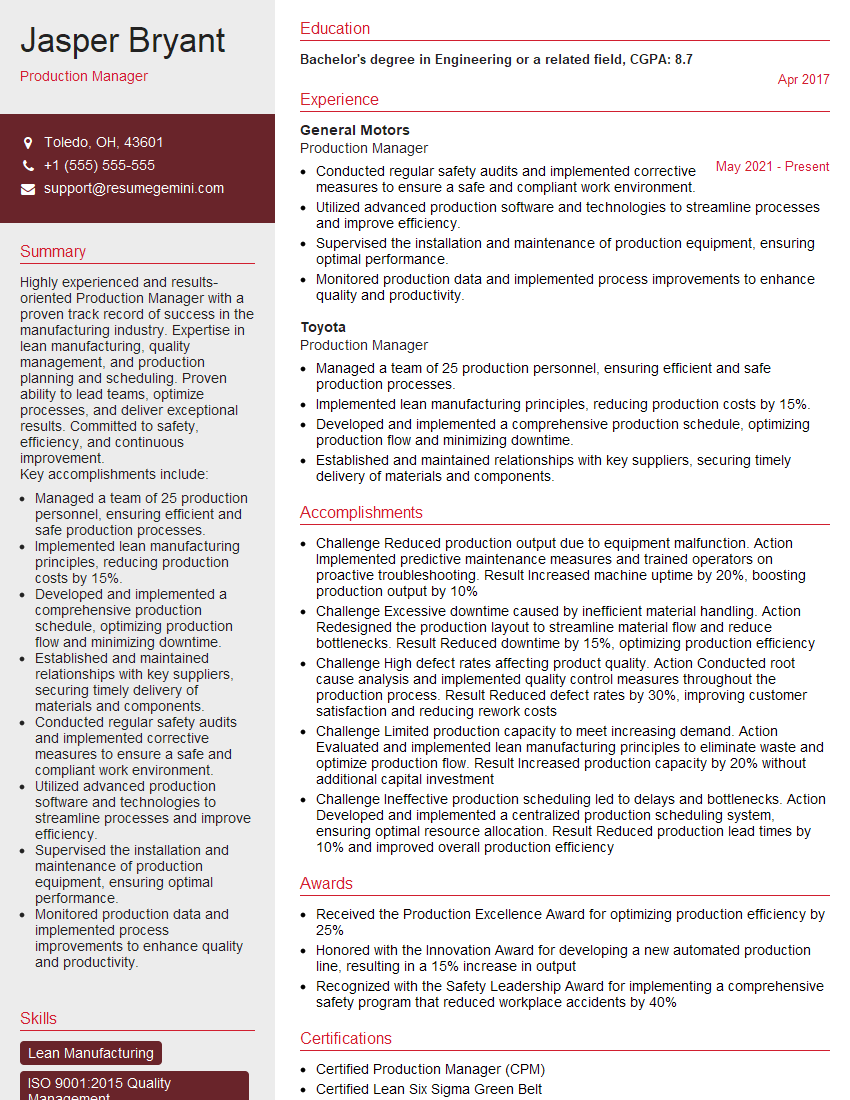
Production Manager Resume Sample
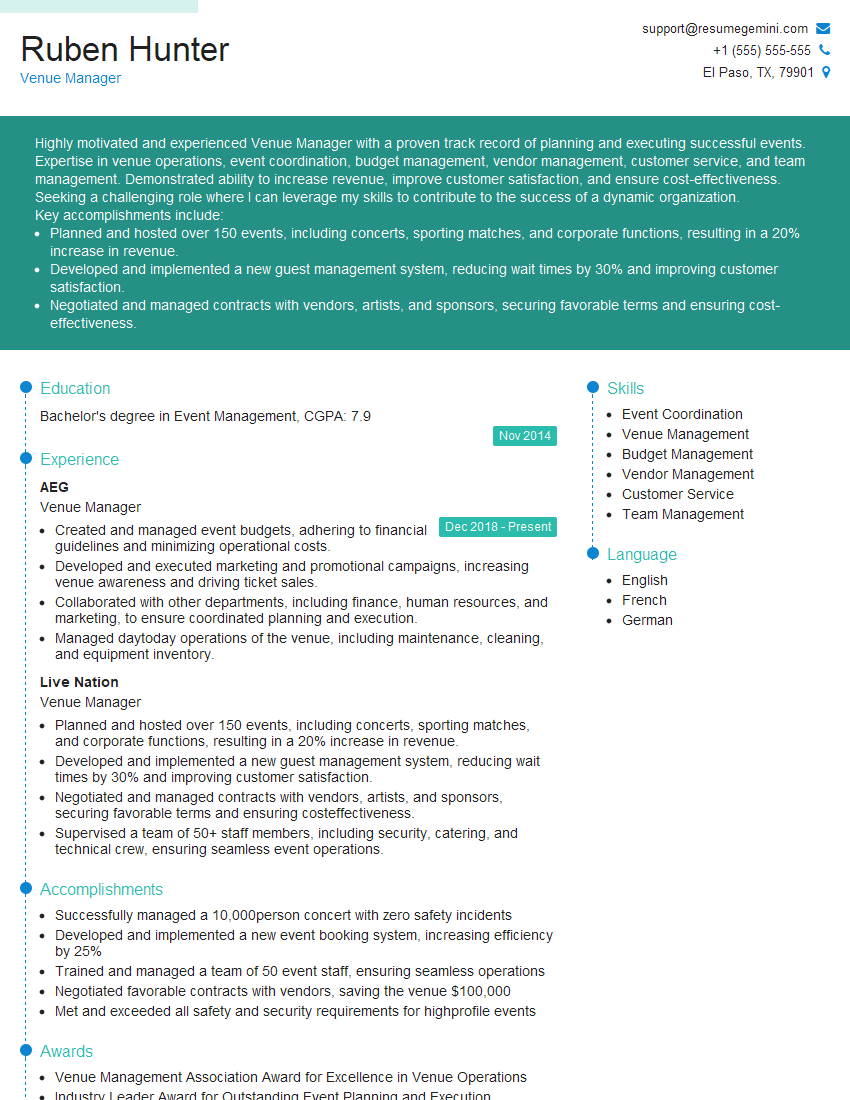
Venue Manager Resume Sample
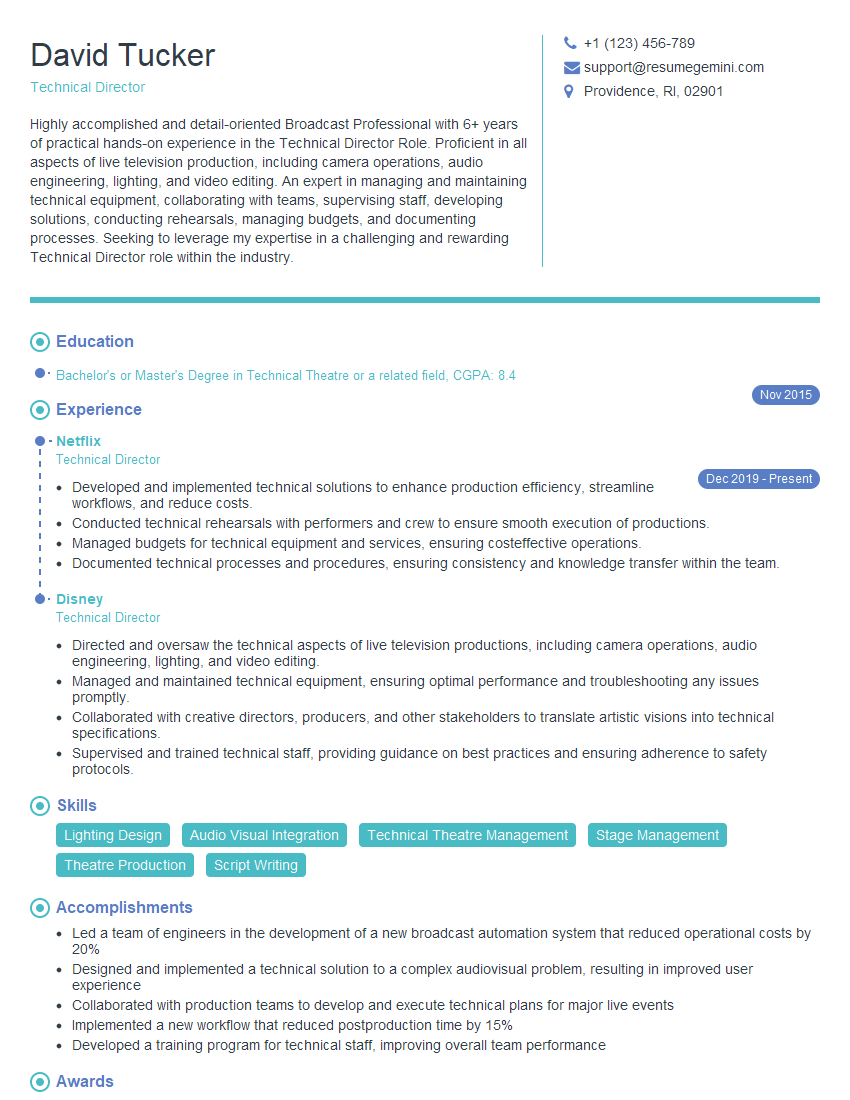
Technical Director Resume Sample
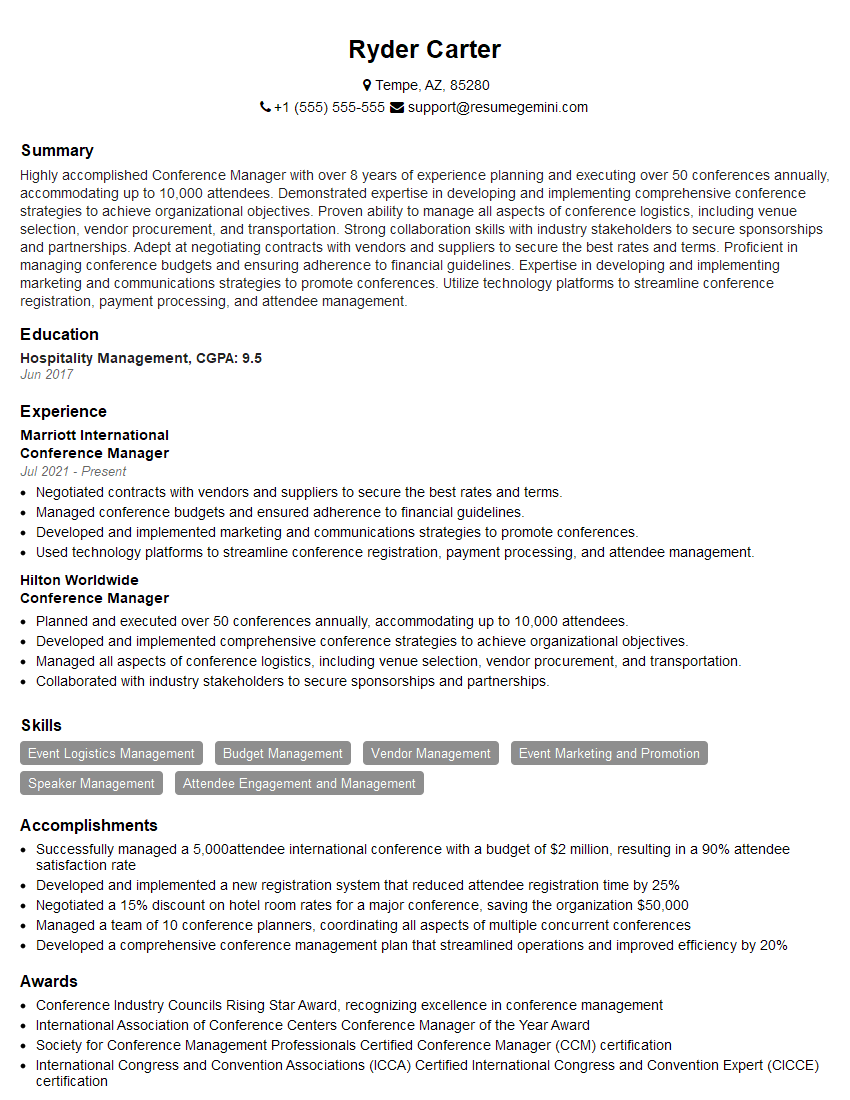
Conference Manager Resume Sample
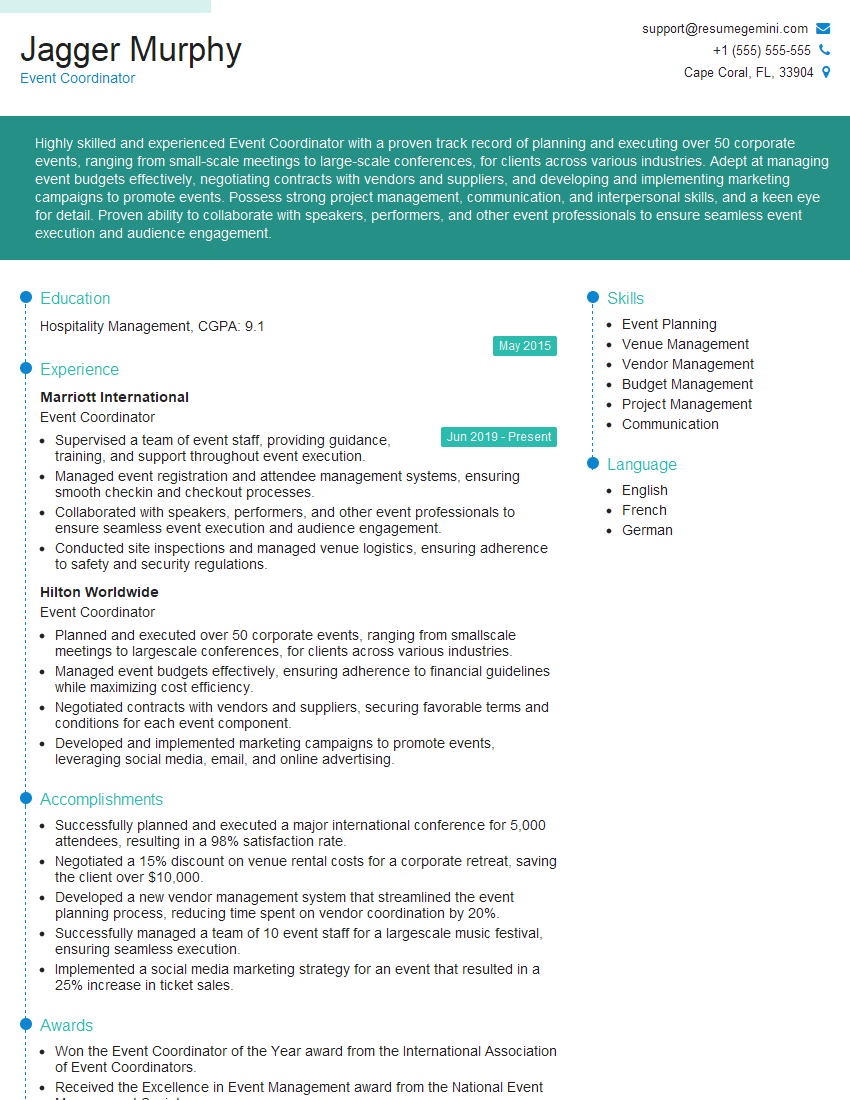
Event Coordinator Resume Sample
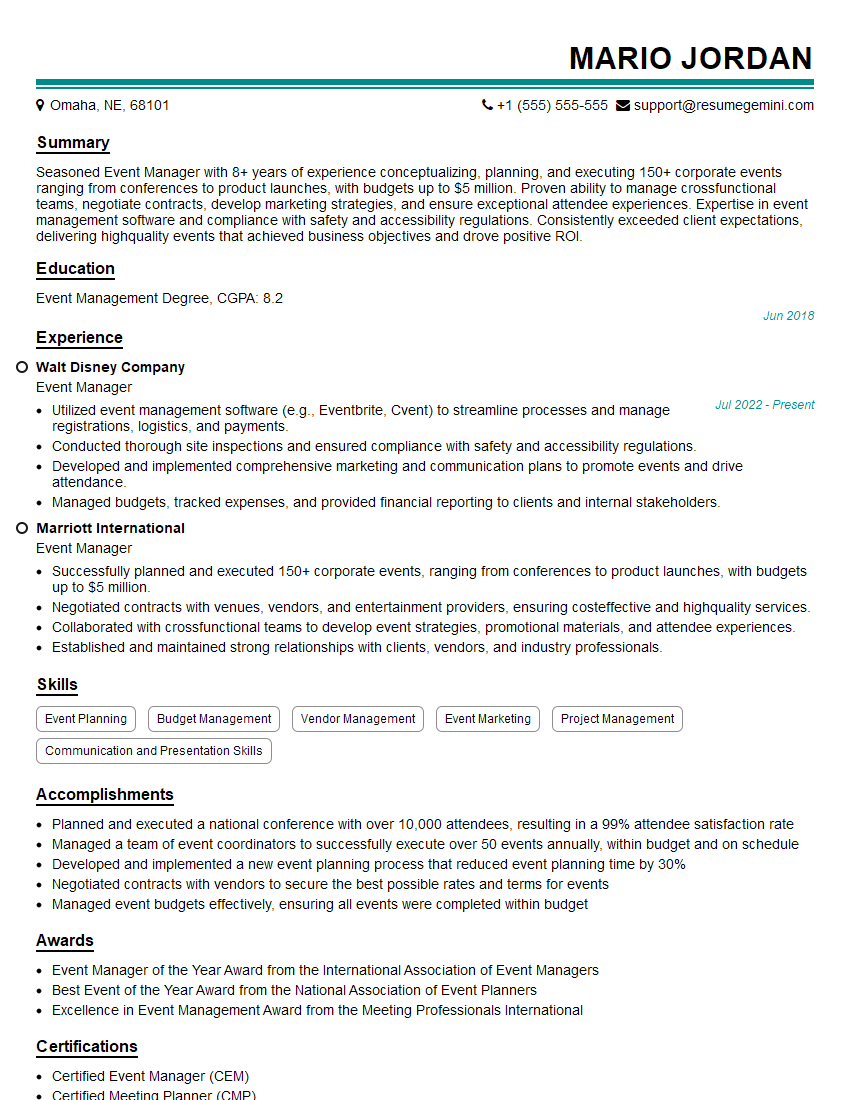
Event Manager Resume Sample
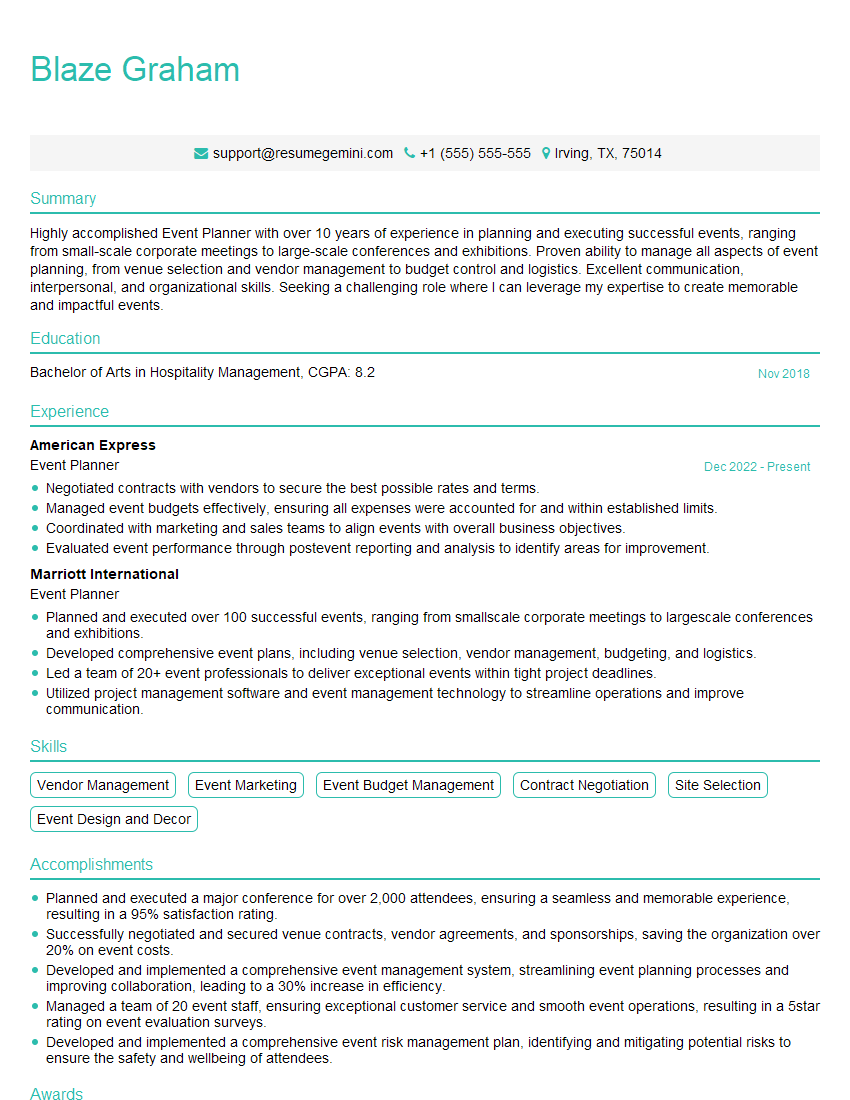
Event Planner Resume Sample
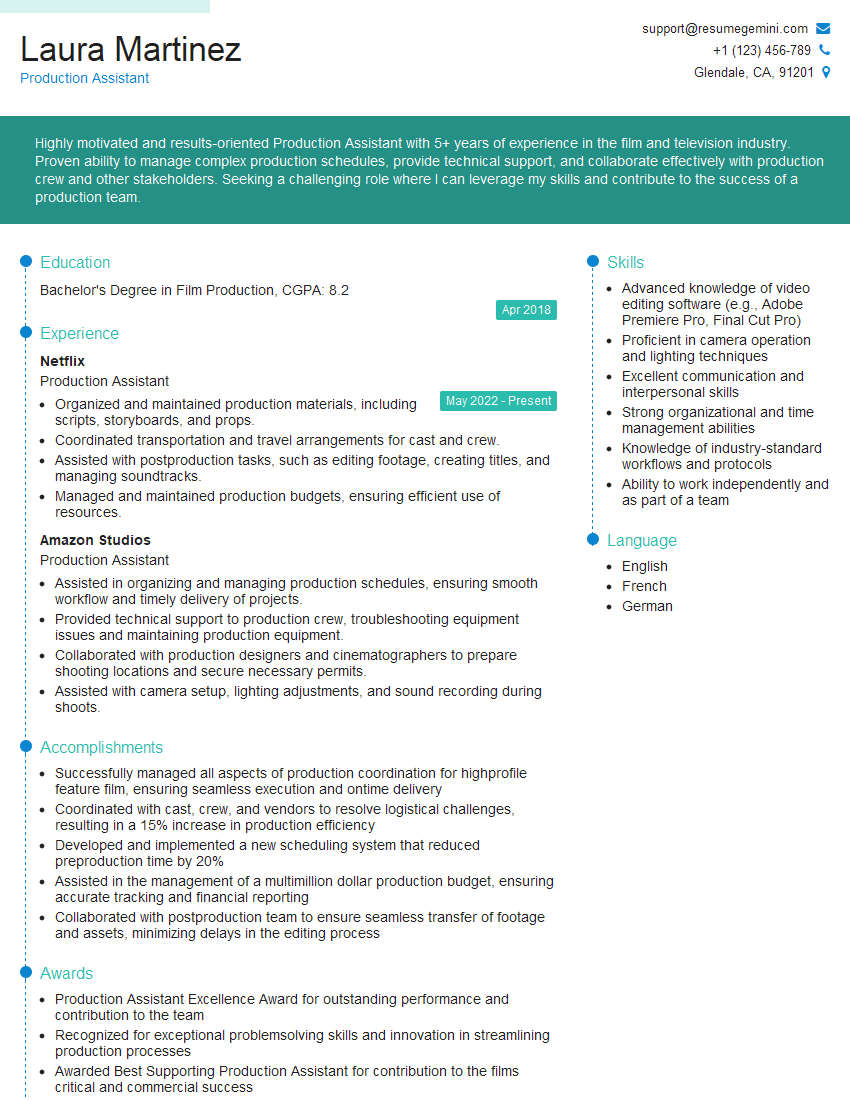
Production Assistant Resume Sample
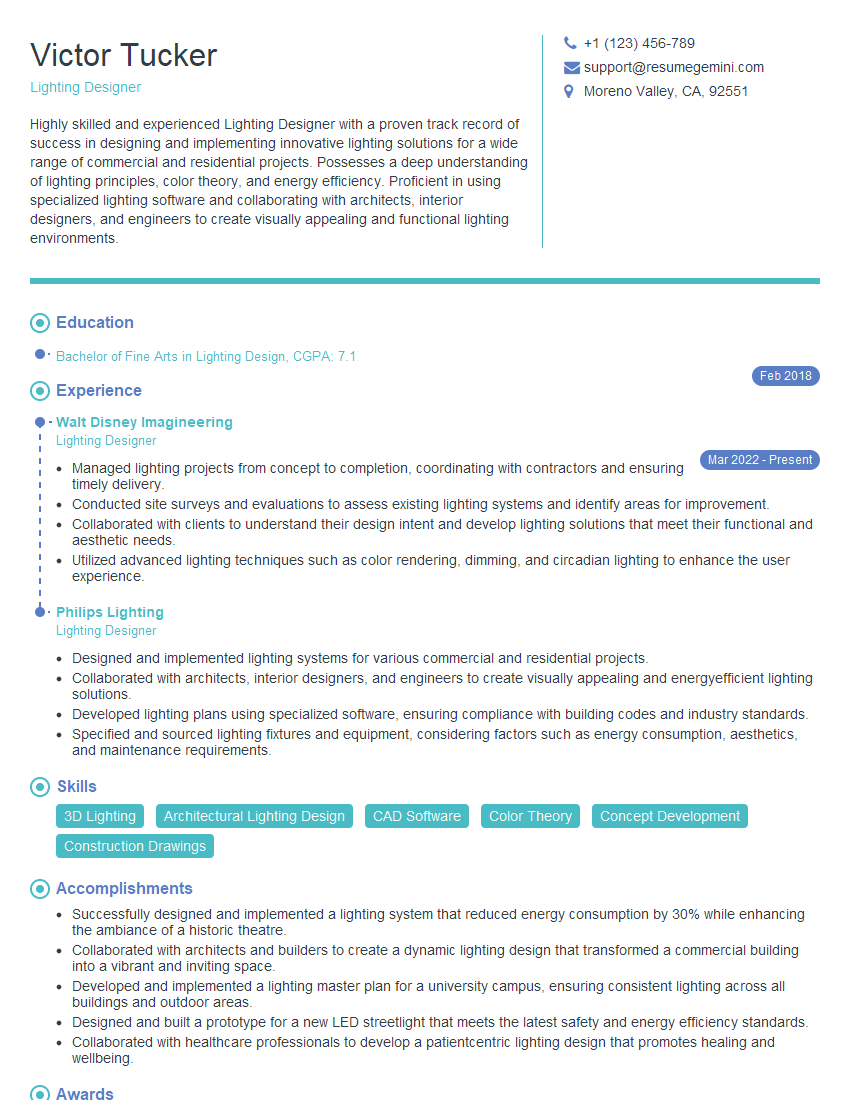
Lighting Designer Resume Sample
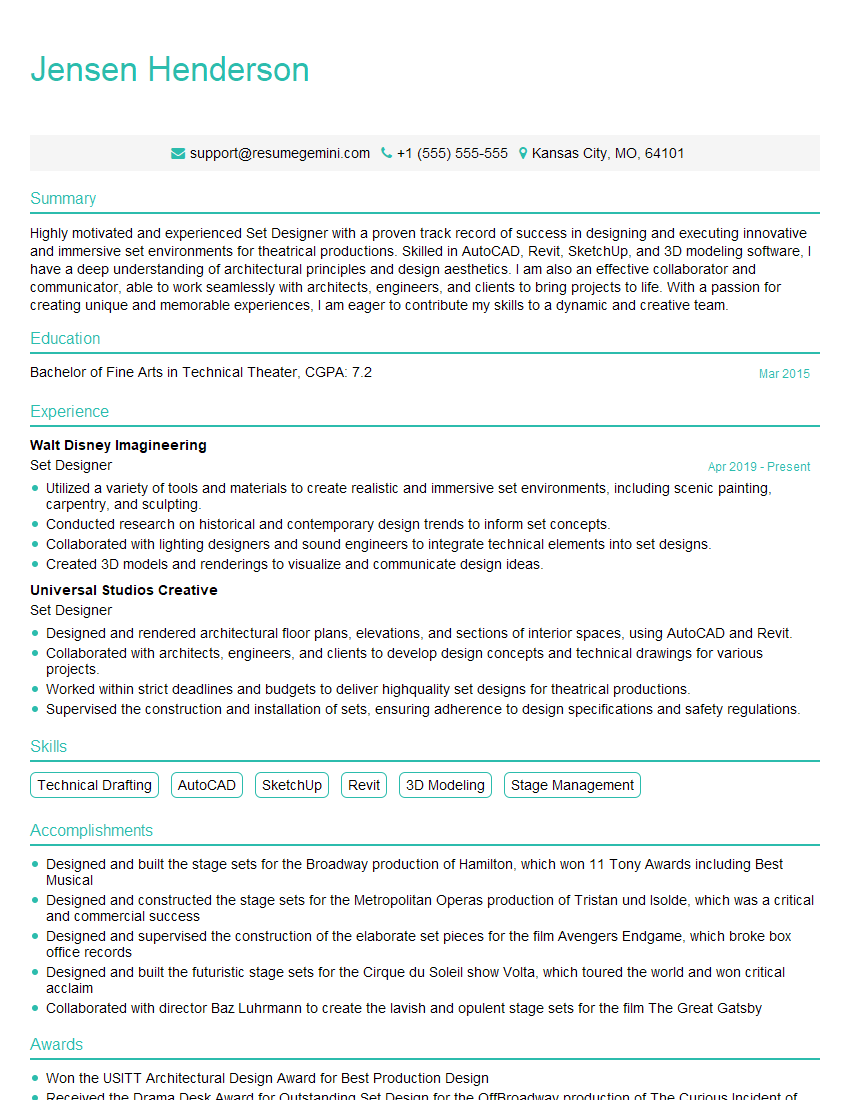
Set Designer Resume Sample
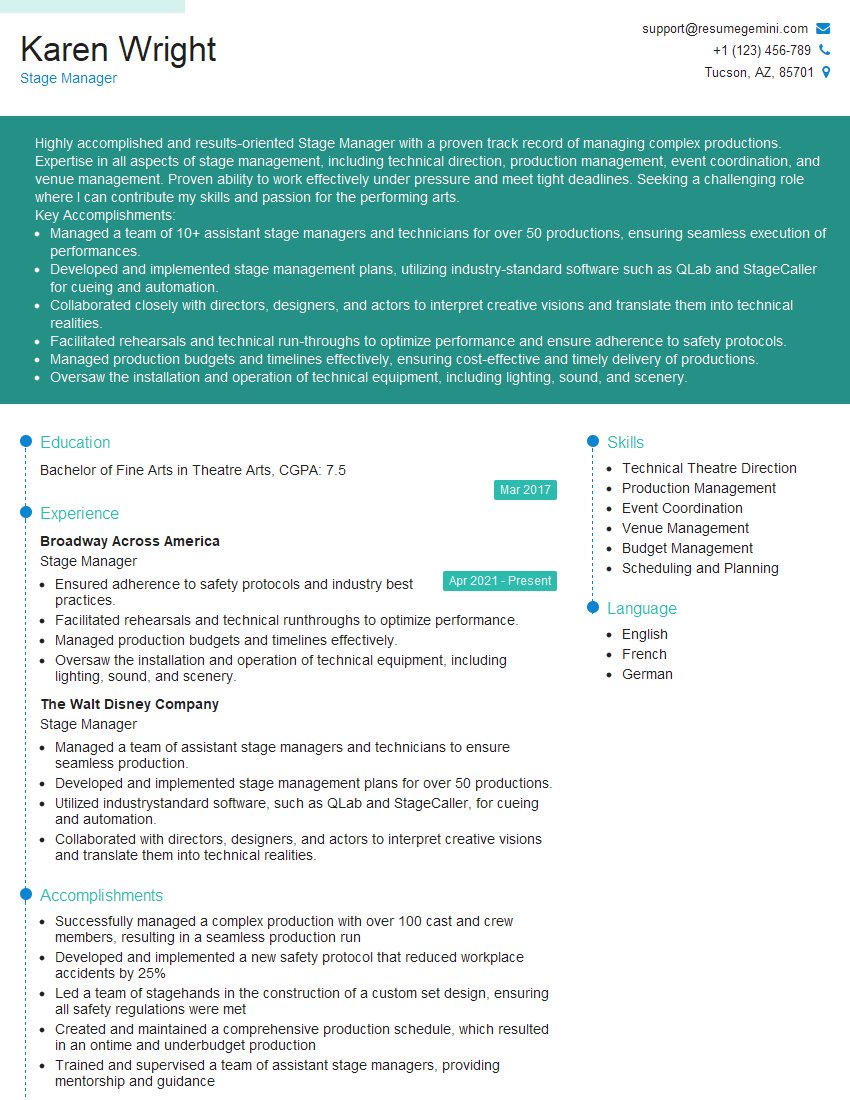
Stage Manager Resume Sample
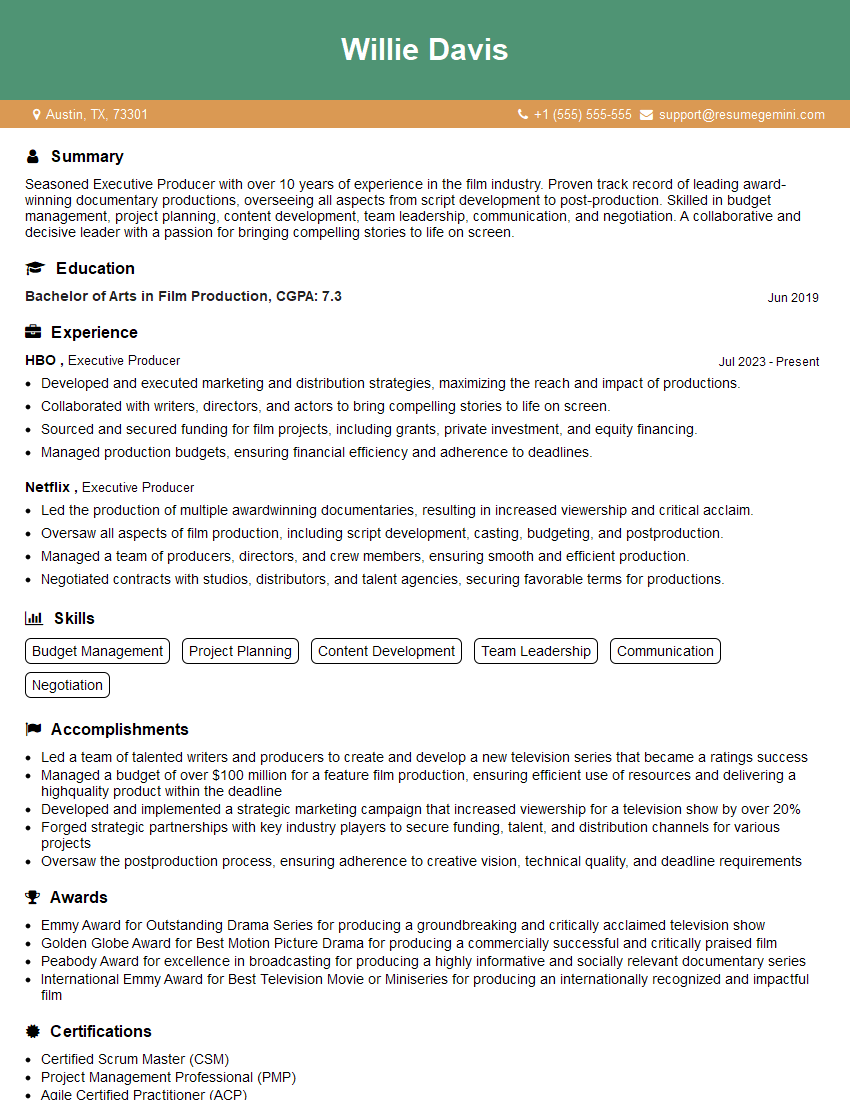
Executive Producer Resume Sample
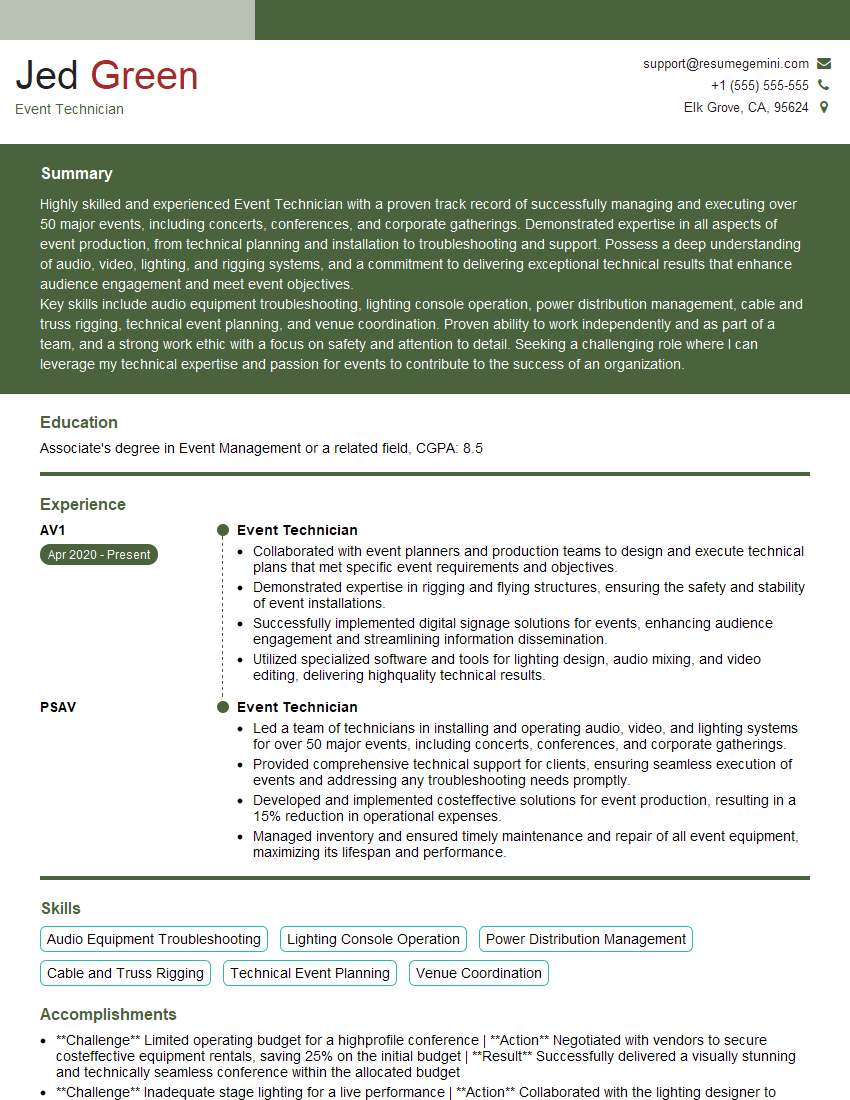
Event Technician Resume Sample
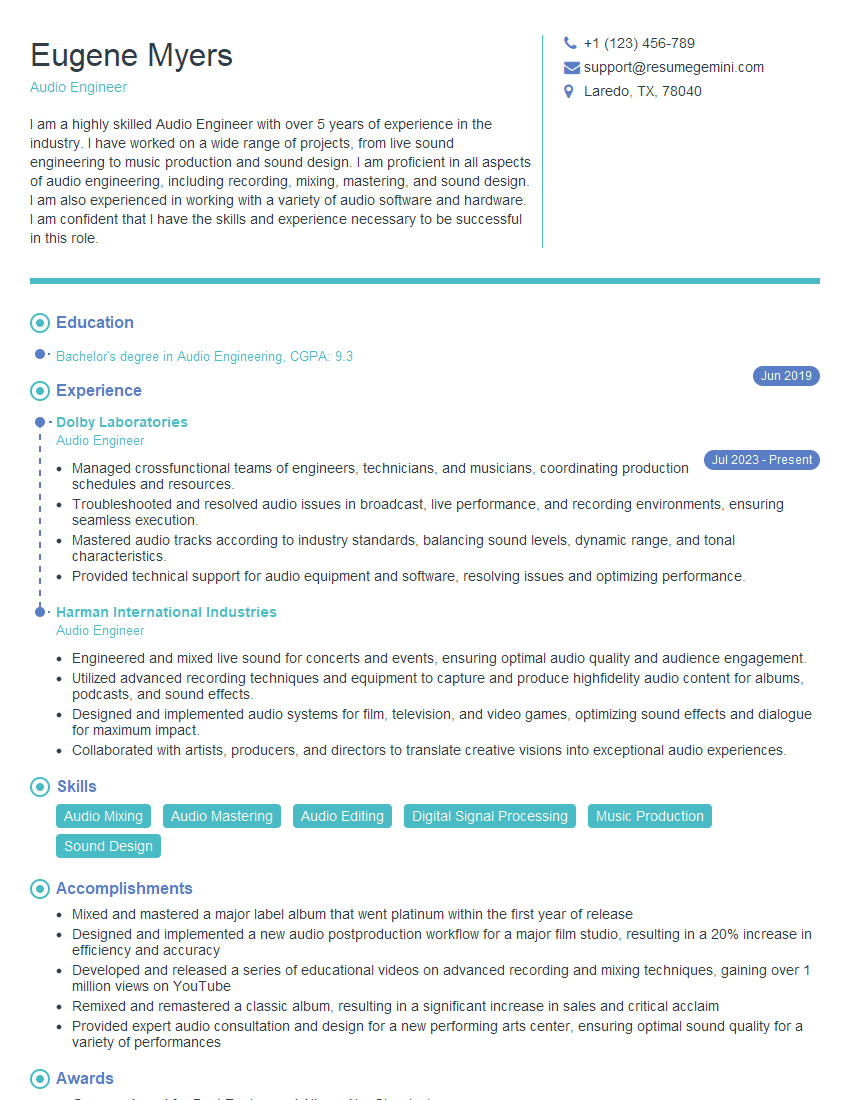
Audio Engineer Resume Sample
Explore more articles
Users Rating of Our Blogs
Share Your Experience
We value your feedback! Please rate our content and share your thoughts (optional).
What Readers Say About Our Blog
Very informative content, great job.
good