The right preparation can turn an interview into an opportunity to showcase your expertise. This guide to Directing and Composition interview questions is your ultimate resource, providing key insights and tips to help you ace your responses and stand out as a top candidate.
Questions Asked in Directing and Composition Interview
Q 1. Explain your approach to shot composition, considering rule of thirds and leading lines.
My approach to shot composition prioritizes visual storytelling. While the rule of thirds is a valuable guideline – placing key elements off-center to create visual interest – I view it as a starting point, not an inflexible rule. Leading lines, on the other hand, are powerful tools for guiding the viewer’s eye through the frame. I use them to create depth, emphasize movement, and direct focus to the subject of interest.
For example, a road winding into the distance can lead the viewer’s eye to a character standing at the horizon, creating a sense of anticipation or loneliness depending on the overall context. Similarly, I might use the architecture of a building— its lines and angles—to frame a character and build tension in a scene. I constantly consider the interplay between the subject, the background, and the negative space to create a balanced and visually compelling composition. I always adjust my approach based on the specific mood and narrative that I’m trying to achieve in each shot.
Ultimately, it’s about understanding how the placement of elements within the frame affects the viewer’s emotional response and contributes to the overall narrative. I often visualize the frame as a stage, meticulously planning the position of actors and elements to maximize their visual impact.
Q 2. Describe your experience with different camera movements and their impact on storytelling.
Camera movement is crucial for storytelling. It can emphasize emotion, reveal narrative information, and build suspense. I’ve extensively used various camera movements, tailoring them to specific scenes and effects. For instance, a slow, deliberate dolly shot can build tension and intimacy, drawing the audience into a scene. A quick pan can convey chaos or urgency. A handheld shot can create a sense of immediacy and realism, while a crane shot can provide a sweeping, epic view.
In one project, a tracking shot following a character through a crowded marketplace was vital in highlighting their isolation amidst the bustling crowd. Conversely, using a steadicam for a chase scene allowed for fluid, dynamic movements that kept the pace high while still maintaining clarity. The choice of camera movement is never arbitrary; it always serves the story.
I believe in utilizing a combination of these movements strategically, combining static shots with dynamic ones to enhance the visual rhythm and keep the audience engaged.
Q 3. How do you manage creative differences with other team members during a production?
Creative differences are inevitable in filmmaking. My approach prioritizes open communication and collaboration. I believe that the best results come from a team that feels comfortable expressing their ideas. I start by actively listening to everyone’s perspective and understanding their reasoning. I encourage everyone to present their ideas, even if they seem unconventional. We then engage in a collaborative discussion, using the strengths of each person’s expertise to find a solution that best serves the story. Sometimes, compromise is necessary, and that’s perfectly fine. It’s about finding the best creative path collectively, not just dictating a vision.
In one instance, the cinematographer and I had differing opinions on the lighting for a particular scene. By sitting down and discussing our individual approaches and the desired mood, we reached a consensus that blended both our ideas, resulting in a stunning shot.
Finally, maintaining a respectful and open atmosphere is critical in fostering creativity and finding mutually agreeable solutions. It’s all about teamwork and shared vision.
Q 4. What software are you proficient in for compositing and visual effects?
My compositing and visual effects skillset encompasses a range of industry-standard software. I’m proficient in Adobe After Effects, which is my primary tool for motion graphics, compositing, and visual effects. I’m also experienced with Nuke, particularly for high-end visual effects, and have working knowledge of Autodesk Maya for 3D modeling and animation. I’ve used these tools extensively in projects ranging from short films to commercials and music videos.
For example, I used After Effects to composite a scene where a character interacts with a digital element, ensuring seamless integration and photorealistic results. My experience with different software allows me to choose the best tool for the specific job, maximizing efficiency and delivering high-quality results.
Q 5. Explain your understanding of color grading and its role in setting mood and tone.
Color grading is far more than just making an image look pretty; it’s a powerful tool for manipulating the audience’s emotional response. The color palette directly influences the mood and tone of a film. Warm colors, for instance, can evoke feelings of comfort, happiness, or nostalgia, whereas cooler colors can create a sense of isolation, sadness, or mystery. Saturation and contrast play crucial roles too. A highly saturated image might feel vibrant and energetic, while a desaturated image can feel muted and melancholic.
I carefully consider the story’s themes and the desired emotional impact when deciding on the color grading. A horror film might utilize dark, desaturated colors to create suspense, while a romantic comedy might use bright, warm colors to emphasize joy and happiness. I typically work closely with the cinematographer and editor to ensure the color grading complements their work and serves the overall story.
Q 6. How do you plan and execute a complex scene with multiple actors and technical elements?
Planning a complex scene requires meticulous organization and clear communication. I start with a detailed breakdown of the scene, identifying all actors, technical elements (lighting, cameras, special effects), and potential challenges. This often involves creating shot lists, blocking diagrams, and a detailed schedule. I then work closely with the various department heads (camera, lighting, sound, special effects) to ensure everyone understands their responsibilities and the overall plan.
Rehearsals are crucial. I conduct several rehearsals to work out the actors’ blocking, camera movements, and technical aspects. This allows for adjustments and ensures everything runs smoothly on the day of filming. Clear communication during the shoot is key to reacting effectively to unexpected situations. Having a clear contingency plan for potential problems is also essential.
For example, in a scene with several actors and complex lighting setups, I’d break down the scene into smaller, manageable shots, ensuring efficient use of time and resources. This detailed pre-planning enables efficient execution, even in scenarios with multiple moving parts.
Q 7. Describe your experience with storyboarding and pre-visualization.
Storyboarding and pre-visualization are integral to my directing process. Storyboarding allows me to visualize the scene visually, mapping out the shot composition, camera movement, and actor blocking before we begin filming. It’s a crucial tool for communication with the crew, enabling everyone to be on the same page regarding the visual narrative. Pre-visualization, on the other hand, goes a step further, often using 3D software to create a more realistic representation of the scene. This allows for detailed planning and identification of potential problems.
In one project, storyboarding a complex action sequence saved significant time and resources during production. By visualizing the choreography and camera angles beforehand, we could anticipate potential issues and plan efficient solutions. Pre-visualization allowed us to make crucial adjustments to the scene before expensive sets and equipment were involved, saving time and money in the process.
The combination of both storyboarding and pre-visualization reduces risks, improves efficiency, and enhances the overall quality of the final product.
Q 8. How do you handle unexpected technical challenges during a shoot?
Unexpected technical challenges are inevitable on set. My approach is multifaceted, prioritizing problem-solving and proactive communication. First, I rely on a strong, experienced crew. Their expertise is invaluable in troubleshooting. If a camera malfunctions, for instance, I trust my DP (Director of Photography) and gaffer to quickly assess and find a solution, potentially using a backup camera or adjusting lighting to compensate.
Second, I emphasize clear communication. I keep the entire team informed of the situation, ensuring everyone understands the problem and its potential impact on the schedule. We brainstorm solutions collaboratively, leveraging the collective knowledge of the crew. This open communication minimizes panic and fosters a sense of shared responsibility.
Third, I prioritize adaptability. Sometimes, the best solution isn’t the ideal one; it’s the most practical given the constraints. I might need to re-evaluate a shot, simplify a complex setup, or even adjust the storyline slightly to work around the technical issue. The key is to remain flexible and find creative workarounds while maintaining the overall artistic vision.
For example, during a shoot for a period drama, our main camera suddenly failed. Instead of panicking, the DP quickly switched to a backup camera and adjusted the lighting to match. The gaffer cleverly used available light to enhance the mood, creating a more intimate setting that actually better served the scene’s emotional tone. We documented the situation, adapted, and ultimately delivered a successful shot, proving that flexibility under pressure is essential.
Q 9. What is your preferred workflow for directing actors?
My preferred workflow for directing actors involves fostering a collaborative and trusting environment. It begins with thorough preparation. Before stepping onto set, I meticulously work with the actors, understanding their interpretations of the character and the scene. This includes rehearsal sessions where we explore different approaches, ensuring everyone is on the same page.
During the shoot itself, I focus on clear, concise direction. I avoid overwhelming actors with technical jargon; instead, I communicate my vision using evocative language and visual cues. I guide them, providing subtle adjustments and feedback, helping them to find the nuances within their performance. I believe in creating a safe space where actors can experiment and take risks without fear of judgment.
Open communication is key. I actively listen to their feedback and insights, and incorporate their ideas whenever possible, fostering a collaborative creative process. This helps them feel valued and invested in the project. I regularly review the footage with the actors to assess the performance and make any necessary adjustments, encouraging self-reflection. The goal is to elicit a compelling, authentic portrayal of the character.
Q 10. Describe your process for reviewing and approving VFX shots.
My VFX review process is thorough and iterative. First, I establish clear expectations early on, including specific technical requirements and artistic goals. This ensures everyone understands the vision for the finished shot. I then receive initial renders and work closely with the VFX supervisor to review them. This typically involves analyzing the shot’s technical aspects – resolution, integration, realism – as well as its artistic coherence with the overall film’s visual style. We discuss any discrepancies or improvements needed.
Feedback is provided in a constructive manner, focusing on specific areas for improvement. I use detailed notes and annotations on storyboards or screen captures to provide precise visual feedback. This iterative review process continues until I am satisfied with both the technical quality and artistic effect. The process culminates in final approvals, ensuring every VFX shot aligns seamlessly with the narrative and visual language of the project. For complex effects, I might even participate in early planning meetings to ensure my artistic vision is integrated into the pipeline from the beginning.
Q 11. How do you maintain consistency in visual style throughout a project?
Maintaining visual consistency requires careful planning and execution throughout the entire production process. This starts with a strong visual style guide, defining key elements such as color palettes, lighting schemes, camera angles, and overall aesthetic. This guide serves as a reference point for all departments throughout the shoot and post-production phases.
Consistent use of tools like LUTs (Look-Up Tables) in post-production help maintain color grading consistency across different scenes. Careful pre-visualization, including detailed storyboards and animatics, helps to ensure that the visual language is consistently applied across the project. Regular reviews and discussions throughout the production ensure that everyone stays aligned with the established visual style. For example, during a shoot, regular color temperature checks are maintained to guarantee a consistent colour palette throughout, even with changing lighting conditions.
Q 12. Explain your understanding of different lighting techniques and their effect on a scene.
Lighting techniques are pivotal in shaping the mood, atmosphere, and emotional impact of a scene. Different techniques evoke distinct feelings and visual styles. High-key lighting, characterized by bright, even illumination, typically creates a cheerful and optimistic mood. It’s commonly used in comedies or romantic scenes. Conversely, low-key lighting, featuring significant shadows and contrasts, creates a more dramatic and suspenseful atmosphere, often employed in thrillers or horror films.
Three-point lighting, a classic technique, uses three light sources: a key light (main light source), a fill light (softening shadows), and a back light (separating the subject from the background). This technique provides balanced illumination and dimensional depth. Rembrandt lighting, a variation, is characterized by a distinct triangle of light on the subject’s cheek, adding a dramatic and expressive quality.
Chiaroscuro lighting, derived from Italian Renaissance painting, uses strong contrasts between light and dark to create a dramatic and often mysterious atmosphere. The strategic placement and manipulation of light sources are integral to shaping the visual narrative, conveying emotion, and creating an overall compelling aesthetic. The choice depends on the specific scene and narrative requirements.
Q 13. How do you balance artistic vision with budgetary constraints?
Balancing artistic vision with budgetary constraints necessitates a creative and practical approach. It requires prioritizing and making informed decisions. The first step is to define the absolute essentials for achieving the artistic vision. This often involves a meticulous breakdown of the script and storyboard, identifying key scenes and moments where the artistic vision is paramount.
Second, I explore alternative solutions. Can we achieve a similar visual effect through simpler techniques or less expensive resources? For example, instead of elaborate set designs, we might use practical locations and clever camera angles to create a desired atmosphere. We might also prioritize VFX in post-production over expensive on-set effects, weighing the costs and benefits of each option.
Third, I collaborate closely with the production team, openly communicating budgetary constraints and exploring various solutions collaboratively. This collaborative approach ensures that everyone is on board with the final decisions. The key is to find creative solutions to maintain the integrity of the artistic vision while remaining mindful of the budget, without compromising the quality.
Q 14. Describe a time you had to make a difficult creative decision under pressure.
During post-production on a feature film, we faced a significant time crunch. The studio wanted to rush the release date, significantly impacting our post-production timeline. A key action sequence, crucial to the film’s climax, was visually underwhelming in its initial render. We had two options: either rush the VFX and compromise the quality or risk delaying the release to achieve the desired visual effect.
This was incredibly stressful, as a delayed release could have significant financial and marketing ramifications. Ultimately, I decided to implement a revised, more streamlined VFX approach in order to meet the deadline, which reduced some of the planned scope and complexity. This allowed us to finish on time while still delivering a visually compelling sequence that didn’t detract too heavily from the film. It involved collaborating closely with the VFX team, making compromises on some aspects to maximize others in order to deliver the best possible result within the shortened timeframe. It was a difficult decision, but in retrospect, it proved to be the most practical approach given the circumstances.
Q 15. What is your experience with motion capture and its integration into visual effects?
Motion capture (mocap) is a crucial tool in filmmaking, particularly for creating realistic character animation and visual effects. My experience spans several projects, from integrating mocap data for creature animation in a fantasy epic to using it for subtle performance enhancements in a realistic drama. The process typically involves capturing actor performances using specialized cameras and sensors, generating a 3D skeletal model, and then retargeting this data to a digital character. Integrating this into visual effects involves close collaboration with the VFX team to ensure seamless blending of the mocap animation with CGI environments and other effects. For example, on a recent project, we used mocap to capture a character’s performance within a complex CGI environment—a bustling futuristic city. The mocap data provided a realistic foundation, which the VFX team built upon, adding clothing simulations, detailed skin shaders, and environmental interactions.
Challenges often arise in cleaning and refining the raw mocap data, dealing with inconsistencies and artefacts, and ensuring that the animated character’s movements feel natural and believable within the virtual world. Successful integration requires careful planning, meticulous attention to detail, and a strong understanding of both the animation and VFX pipelines.
Career Expert Tips:
- Ace those interviews! Prepare effectively by reviewing the Top 50 Most Common Interview Questions on ResumeGemini.
- Navigate your job search with confidence! Explore a wide range of Career Tips on ResumeGemini. Learn about common challenges and recommendations to overcome them.
- Craft the perfect resume! Master the Art of Resume Writing with ResumeGemini’s guide. Showcase your unique qualifications and achievements effectively.
- Don’t miss out on holiday savings! Build your dream resume with ResumeGemini’s ATS optimized templates.
Q 16. Explain your familiarity with different file formats and codecs used in post-production.
My familiarity with post-production file formats and codecs is extensive, encompassing various image sequences, audio files, and project files. I’m proficient with image sequences like .exr (OpenEXR), known for its high dynamic range and lossless compression, and .dpx (Digital Picture Exchange), a widely used format in high-end visual effects. For video, I’m experienced with codecs such as ProRes (Apple ProRes), which offers good balance between quality and file size, and DNxHD (Avid DNxHD), another popular choice in professional workflows. For audio, I work regularly with .wav (Waveform Audio File Format) and .aiff (Audio Interchange File Format) for their uncompressed quality. Understanding these codecs’ qualities – compression levels, color spaces, bit depths – is crucial for maintaining visual fidelity and managing storage space. The choice depends on the project’s requirements and the available resources. For example, .exr is ideal for compositing, offering maximum flexibility in post-production, while ProRes is a common choice for editing due to its balance of quality and performance.
Q 17. How do you ensure the quality and consistency of visual effects across various platforms?
Ensuring consistent quality across platforms is achieved through careful planning, color management, and adherence to industry best practices. We start by defining a clear color pipeline from capture to final delivery. This includes specifying color spaces (e.g., Rec.709 for broadcast, DCI-P3 for cinema) and using color management tools throughout the post-production process. We implement rigorous quality control checks at each stage of VFX production and utilize reference monitors calibrated to industry standards. For example, we might create a detailed technical document that defines all color and resolution settings for the various deliverables (web, streaming, broadcast). Additionally, we meticulously manage version control, ensuring that all stakeholders are working from the same updated files. Addressing the potential for variations in display technologies is crucial; creating multiple masters for different platforms ensures that the intended image and artistic vision is maintained across the viewing experience.
Q 18. How do you collaborate effectively with editors and sound designers?
Effective collaboration with editors and sound designers is vital for a cohesive final product. Open communication and shared understanding of the project’s goals are key. I regularly hold meetings and dailies with the editing team to ensure visual effects are properly timed and integrated with the narrative flow. With sound designers, it’s about coordinating the audio elements – soundscapes, foley, music – to harmonize with the visual effects. Clear and concise communication about the technical and artistic aspects of the VFX ensures everyone is on the same page. For example, I might provide the editor with a detailed breakdown of the timing and duration of each VFX shot, or work closely with the sound designer to match sound effects to specific on-screen actions or events. This iterative process ensures a synergistic creation where visuals and audio complement one another.
Q 19. What is your approach to feedback and revisions?
My approach to feedback and revisions is constructive and collaborative. I view feedback as an opportunity to refine the work and achieve the best possible result. I actively listen to notes, ask clarifying questions, and discuss the feasibility and implications of each suggested change. I always strive to understand the underlying reasons behind the feedback, not just the surface-level comments. My process usually involves presenting work-in-progress at regular intervals to gather feedback. This allows for iterative refinement, minimizing larger and more time-consuming revisions later. I prioritize documenting all revisions, maintaining clear communication regarding timelines and resources needed for implementing the changes. For instance, if a scene’s tone needs adjustment, I would collaboratively explore various approaches, demonstrating the impact of changes in lighting, color grading, and camera movement.
Q 20. Describe your experience with different types of cameras and lenses.
My experience encompasses a broad range of cameras and lenses, from traditional film cameras like Arriflex and Panavision to modern digital cameras like RED and ARRI Alexa. Each camera system offers unique characteristics in terms of sensor size, dynamic range, and image quality. I’m also familiar with various lens types, including primes and zooms, and understand how different focal lengths affect the perspective, depth of field, and overall look of a shot. For instance, I might choose a wide-angle lens for establishing shots that emphasize the environment, while using a telephoto lens to isolate a subject and create a sense of intimacy. Understanding the nuances of different camera and lens combinations is fundamental to realizing the director’s vision and achieving the desired aesthetic.
Q 21. Explain your understanding of depth of field and its impact on storytelling.
Depth of field (DOF) refers to the area of an image that appears acceptably sharp. It’s controlled by aperture, focal length, and distance to the subject. A shallow depth of field, achieved with a wide aperture (low f-stop number) and/or a longer focal length, isolates the subject, drawing the viewer’s attention and creating a cinematic, almost dreamlike effect. Conversely, a deep depth of field, resulting from a narrow aperture (high f-stop number) and/or a shorter focal length, keeps much of the scene in focus, revealing details and context. Consider a romantic scene: a shallow depth of field would focus on the two lovers, blurring the background, creating intimacy and isolating them from the world. In contrast, a wide shot of a bustling city street with a deep DOF would allow the viewer to perceive the entirety of the scene and immerse themselves in the atmosphere.
Mastering DOF is crucial for storytelling because it directly affects the viewer’s focus and emotional engagement. It can emphasize specific elements, create mood, guide the eye, and control the narrative pace. It’s a powerful tool to manipulate viewer attention and emotional response to the scene.
Q 22. How do you use visual effects to enhance storytelling, rather than just add spectacle?
Visual effects shouldn’t just be flashy; they should serve the story. Think of VFX as a powerful storytelling tool, not a separate entity. Instead of focusing solely on the spectacle, I concentrate on how effects can enhance emotion, reveal character, or advance the plot. For example, a subtle digital enhancement of a character’s eyes during a moment of profound sadness can be far more impactful than a massive explosion.
In one project, we used subtle dust and wind effects to illustrate a character’s isolation in a vast desert. The lack of other visual elements, coupled with the realistic environmental effects, emphasized the character’s vulnerability and loneliness more effectively than any overt display of special effects ever could. Another instance involved creating a ghostly apparition; instead of using overly bright, unrealistic effects, we opted for a semi-transparent figure with subtle distortions in the surrounding environment to create a sense of unease and mystery, thereby enhancing the narrative’s suspenseful tone.
Q 23. Describe your experience with creating believable character animations or VFX elements.
Creating believable character animations and VFX requires a deep understanding of both technical aspects and the nuances of human behavior. I prioritize using motion capture technology to capture realistic movement, but always understand that it’s a starting point, not the finish line. Post-production refinement is crucial for making the animations truly believable.
For instance, in one film, we used motion capture for the basic movements of a creature. However, we spent considerable time enhancing facial expressions and subtle movements to reflect the character’s emotional state. This involved meticulous frame-by-frame adjustments and careful attention to detail, ensuring every twitch and blink aligned with the narrative. Similarly, when creating digital environments, I always aim for photorealism where appropriate, paying close attention to lighting, shadows, and textures to ensure that the environment feels organic and believable within the context of the story.
Q 24. What are some common mistakes you see in directing or composition, and how do you avoid them?
A frequent mistake is prioritizing style over substance in composition and directing. Overly stylized visuals can distract from the narrative, losing the audience in the spectacle instead of engaging them emotionally. Another common error is neglecting the rule of thirds and other fundamental composition techniques, leading to visually unbalanced shots.
To avoid these, I always start with a strong storyboard and shot list. This allows me to plan the visual composition meticulously and ensure that each shot serves a specific narrative purpose. I also work closely with the cinematographer and VFX supervisor to create a cohesive visual style that enhances the storytelling without overshadowing it. Regularly reviewing the dailies and making necessary adjustments throughout the production process is crucial to maintaining a consistent high quality of visuals.
Q 25. How do you ensure that your visual storytelling aligns with the overall narrative?
Visual storytelling must always be intrinsically linked to the narrative. I begin by thoroughly understanding the script and developing a strong visual concept that reflects the story’s themes, tone, and emotional arc. Each visual element – from set design to lighting to VFX – should contribute to the overall narrative message.
For example, in a scene depicting a character’s descent into despair, the color palette might shift towards darker, more muted tones, the camera angles could be low and claustrophobic, and subtle visual effects, such as rain or fog, might be used to emphasize the character’s emotional state. This ensures that every visual choice actively enhances the narrative’s impact, strengthening the audience’s connection with the story.
Q 26. Explain your understanding of different visual effects techniques (e.g., rotoscoping, keying, tracking).
My understanding of VFX techniques is extensive. Rotoscoping, for example, involves tracing live-action footage frame by frame to create animations or composites. It’s a painstaking process, but it can achieve incredibly realistic and nuanced results, particularly in integrating animated characters into live-action scenes.
Keying is the process of isolating a subject from its background, using techniques like chroma key (green screen) or luminance key. Accurate keying is critical for seamless compositing and requires precise lighting and camera techniques on set. Tracking involves analyzing footage to identify the movement of objects or cameras, allowing for the accurate placement of CGI elements or stabilization of shots. It’s fundamental for integrating CGI into live-action footage convincingly.
Q 27. What strategies do you use to inspire and motivate your team?
Inspiring a team requires a collaborative and supportive environment. I foster open communication and encourage creative input from everyone. I believe in empowering my team, giving them ownership of their work and trusting their expertise. Regular feedback sessions, both positive and constructive, are essential to maintaining motivation and ensuring everyone feels valued.
Celebrating milestones, both big and small, helps build team morale and a sense of shared accomplishment. I also prioritize creating a positive and inclusive working environment, where everyone feels comfortable expressing their ideas and contributing to the project’s success. Providing opportunities for professional development, such as attending workshops or conferences, demonstrates my commitment to my team’s growth and fosters loyalty.
Q 28. How do you manage the timeline and budget for a visual effects project?
Managing the timeline and budget for a VFX project demands meticulous planning and efficient execution. I start with a detailed breakdown of all VFX tasks, estimating the time and resources required for each. This forms the basis of a comprehensive schedule that takes into account potential delays and contingencies.
Budget management involves close collaboration with the VFX supervisor and production team. Regular tracking of expenses and proactive identification of potential budget overruns are crucial. Utilizing efficient workflow processes, employing appropriate software, and optimizing asset creation can significantly improve efficiency and reduce costs. Clear communication and transparent reporting are also essential for keeping stakeholders informed about the project’s progress and budget status.
Key Topics to Learn for Directing and Composition Interview
- Storytelling and Narrative Structure: Understanding narrative arcs, character development, and how to effectively communicate a compelling story through visuals and sound.
- Visual Composition and Framing: Mastering the rule of thirds, leading lines, depth of field, and other cinematic techniques to create visually engaging and impactful scenes. Practical application: Analyzing existing films and identifying effective compositional choices.
- Directing Actors: Techniques for casting, rehearsing, and guiding actors to deliver believable and nuanced performances. Practical application: Understanding different acting styles and how to adapt your directing approach accordingly.
- Shot Selection and Sequencing: Understanding the impact of different shot types (e.g., close-up, long shot, medium shot) and how to sequence them effectively to create rhythm and pacing. Practical application: Creating shot lists and storyboards.
- Lighting and Cinematography: Knowledge of lighting techniques (e.g., three-point lighting, high-key, low-key) and how they contribute to mood and atmosphere. Practical application: Understanding the collaborative process with a Director of Photography (DP).
- Sound Design and Music: Understanding the role of sound in enhancing the emotional impact of a scene. Practical application: Knowing how to work with sound designers to achieve a desired sonic landscape.
- Pre-Production Planning: Mastering the process of script breakdown, scheduling, budgeting, and location scouting. Practical application: Demonstrating organizational skills and problem-solving abilities in a hypothetical pre-production scenario.
- Post-Production Workflow: Understanding the editing process, visual effects, and color correction. Practical application: Demonstrating familiarity with industry-standard software and collaborative workflows.
Next Steps
Mastering Directing and Composition opens doors to exciting and rewarding careers in film, television, and other visual media. To maximize your job prospects, crafting a compelling and ATS-friendly resume is crucial. ResumeGemini is a trusted resource to help you build a professional resume that showcases your skills and experience effectively. Examples of resumes tailored to Directing and Composition are available, providing you with templates and inspiration to create a standout application.
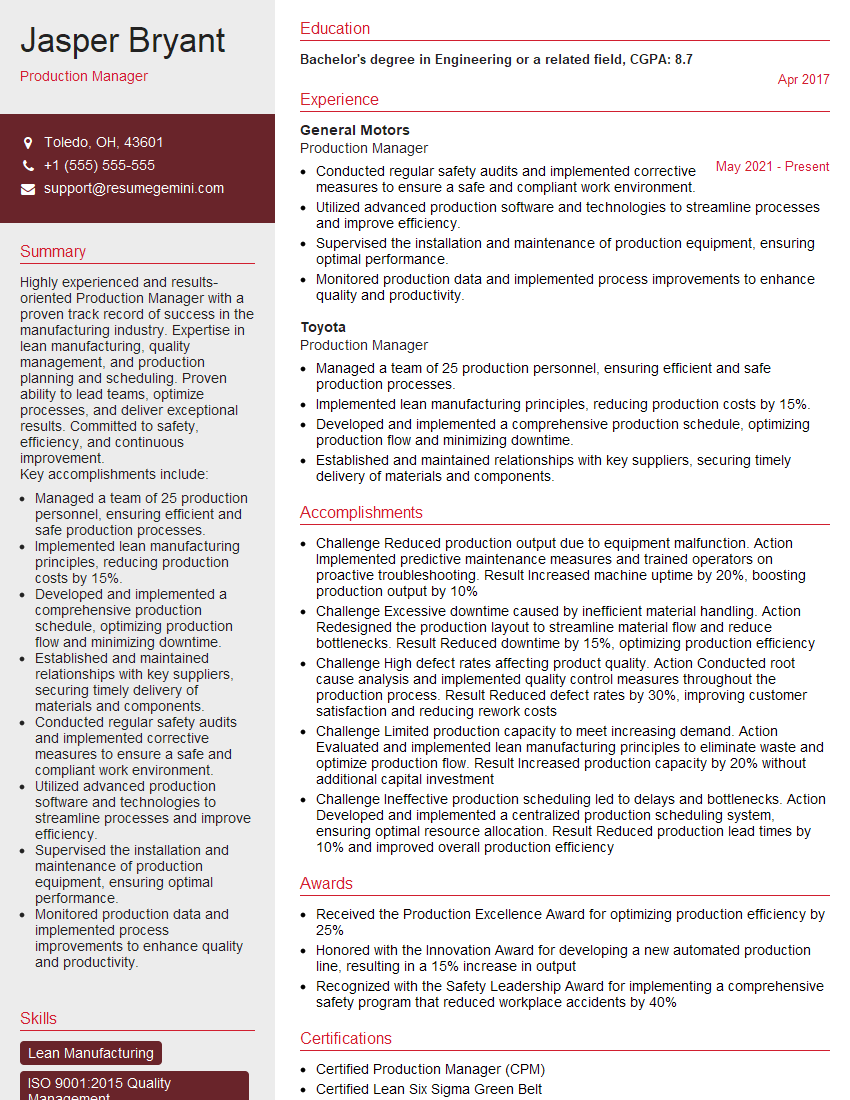
Production Manager Resume Sample
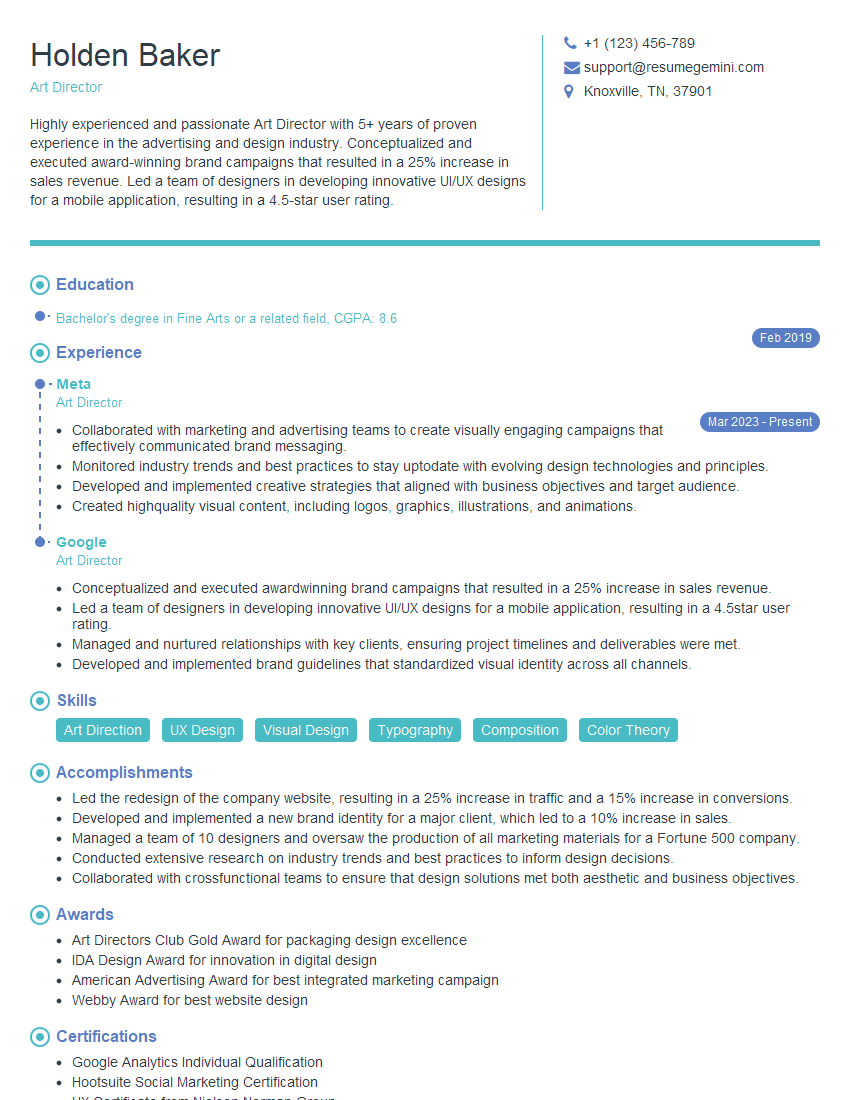
Art Director Resume Sample

Creative Director Resume Sample
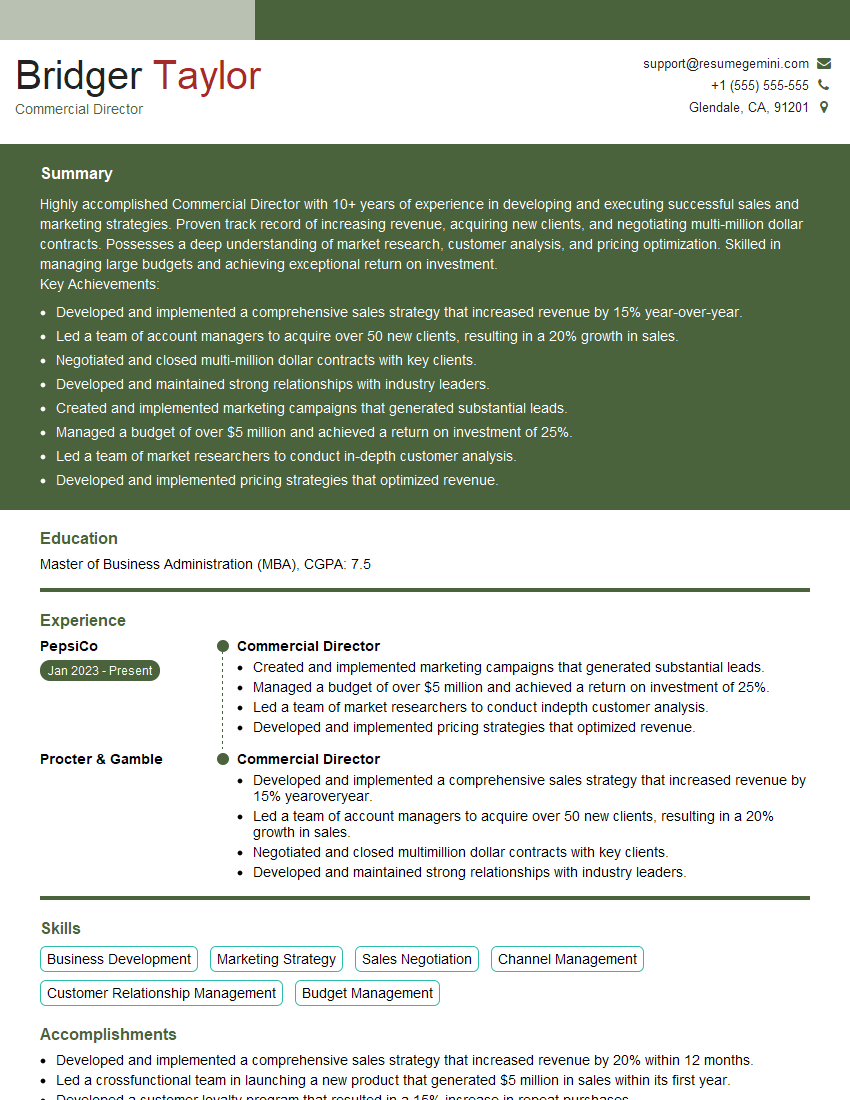
Commercial Director Resume Sample
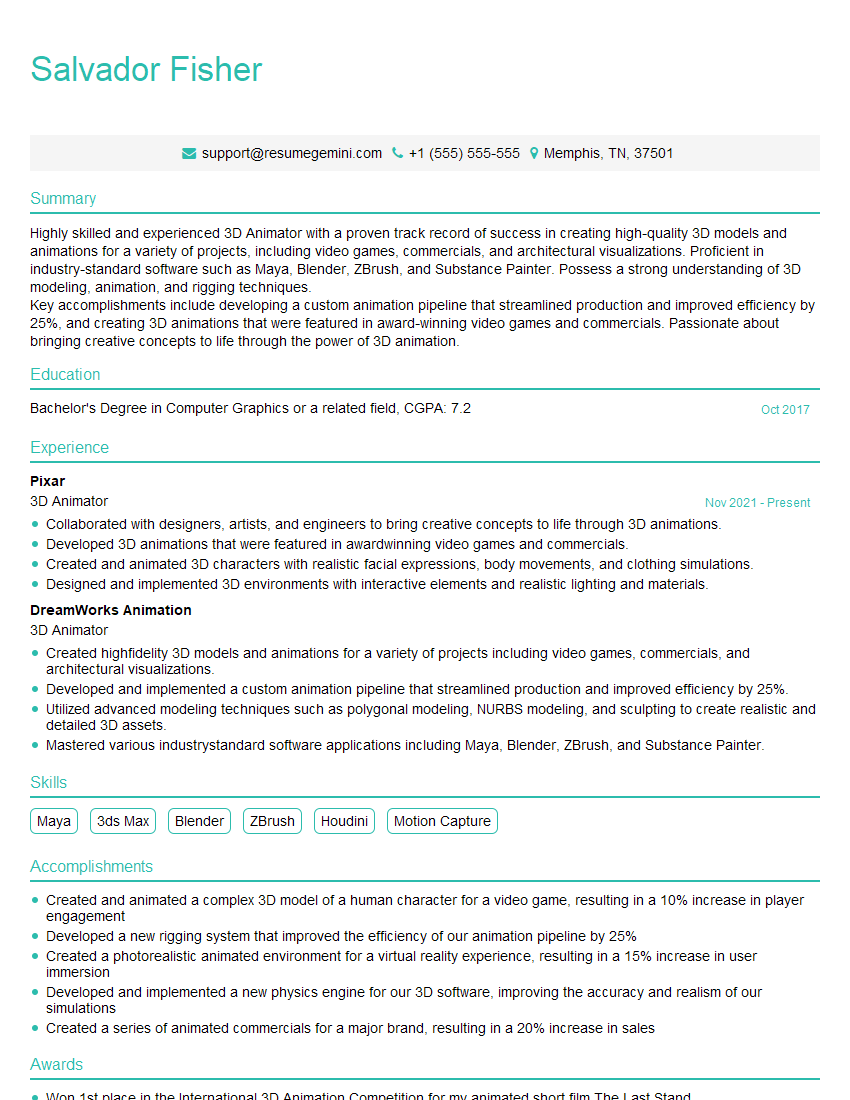
3D Animator Resume Sample
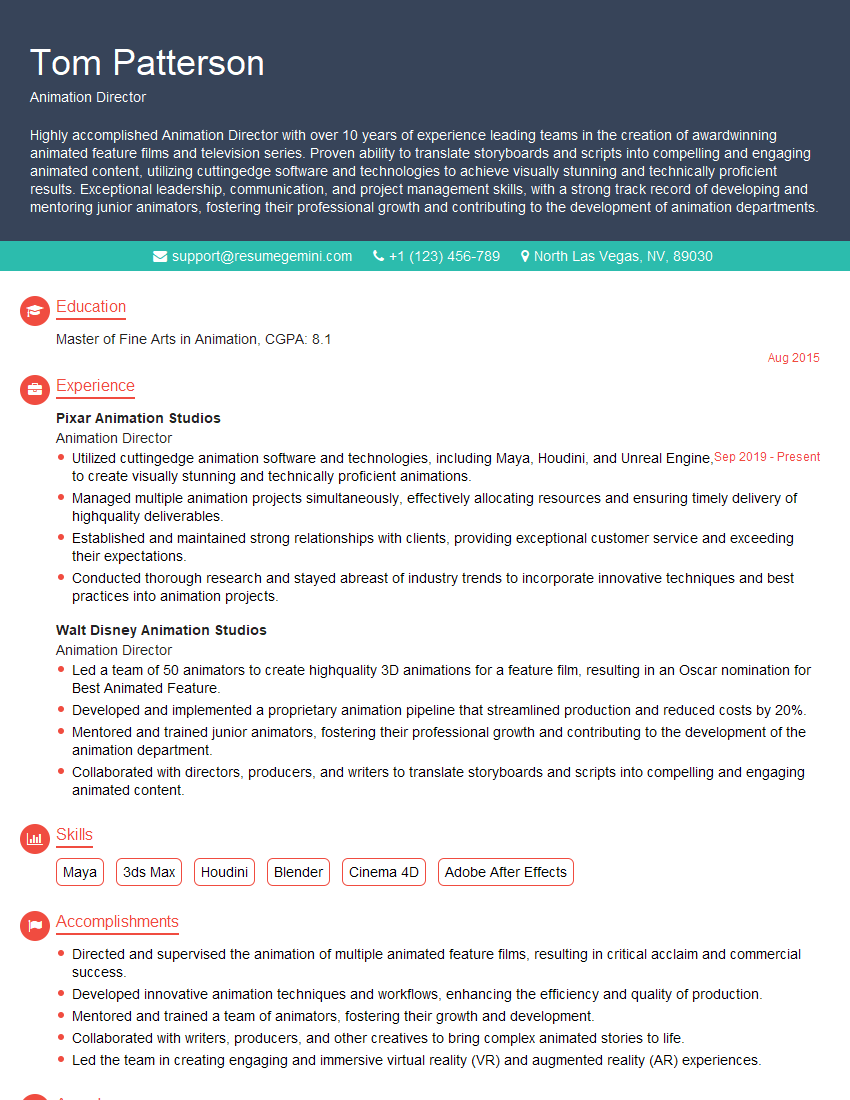
Animation Director Resume Sample
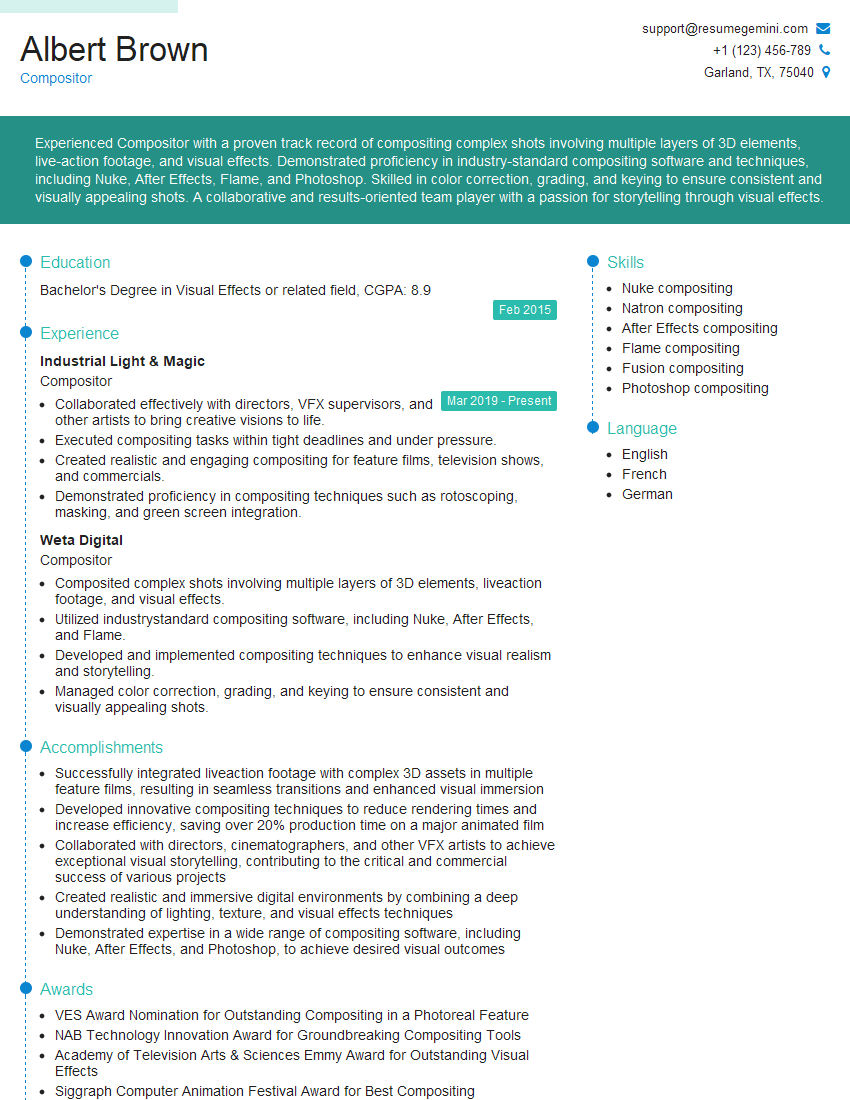
Compositor Resume Sample
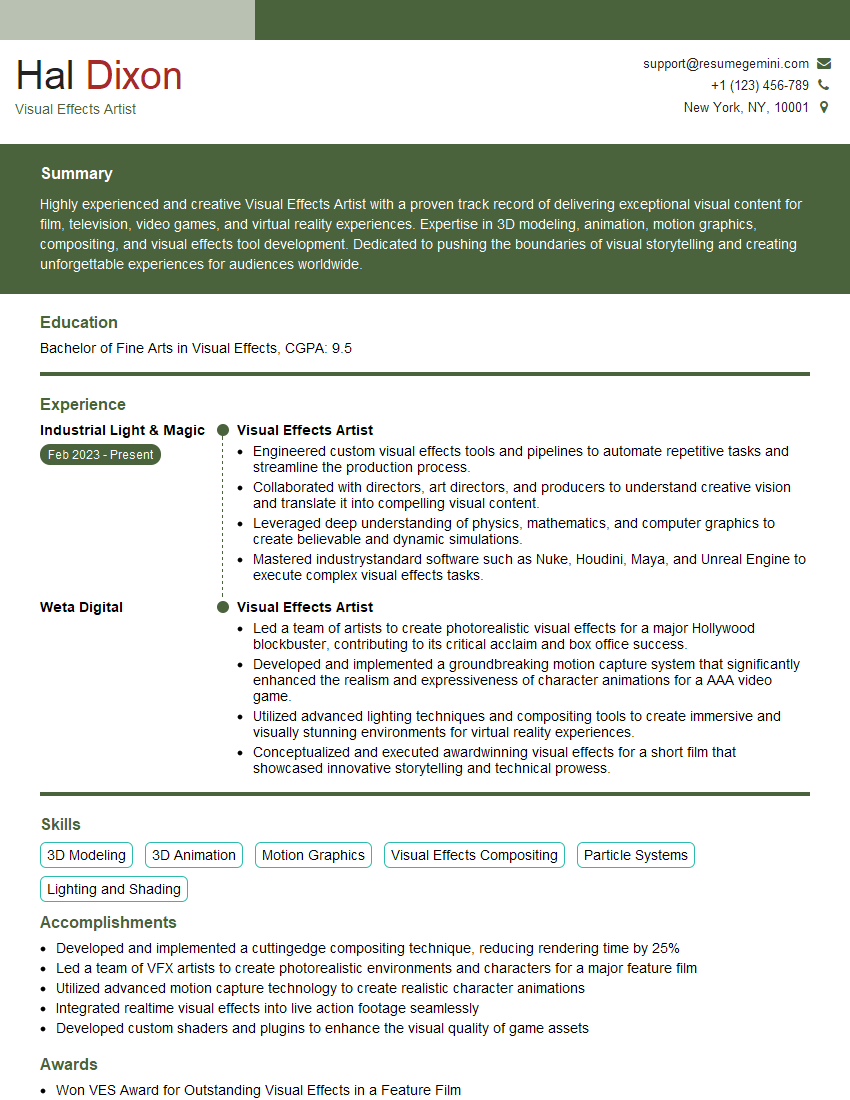
Visual Effects Artist Resume Sample
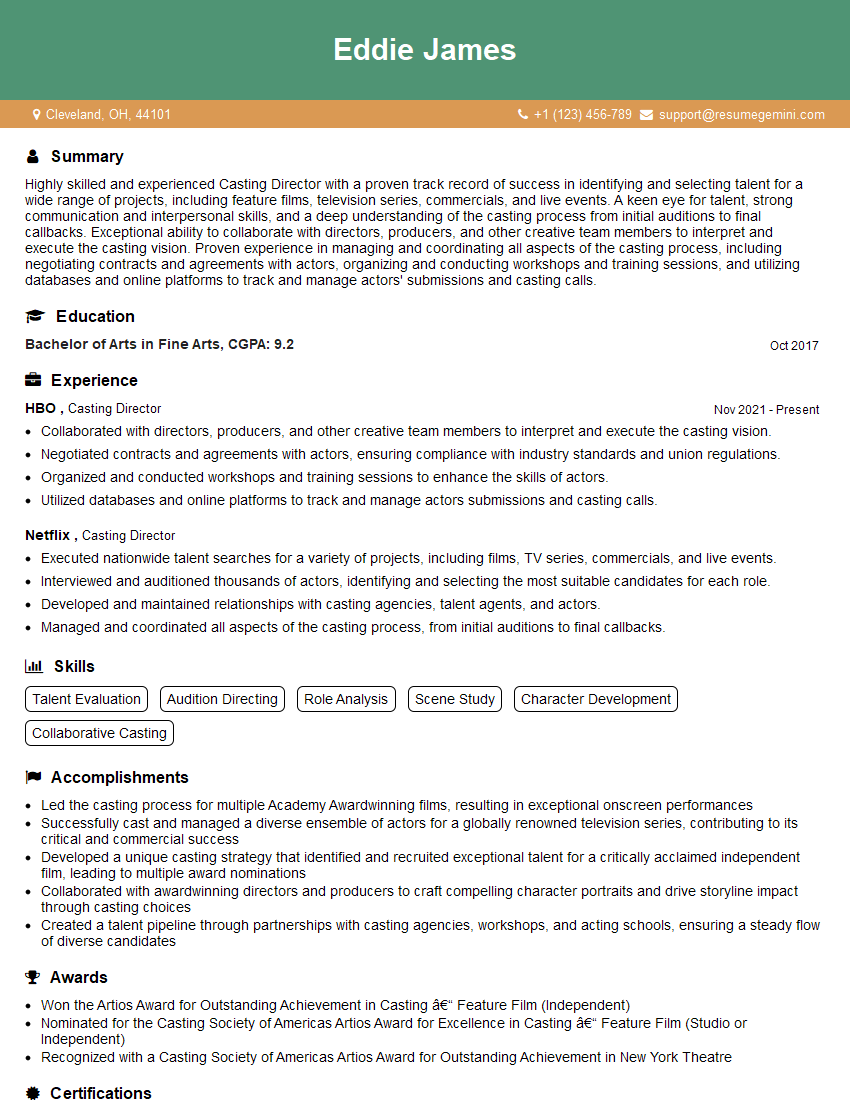
Casting Director Resume Sample
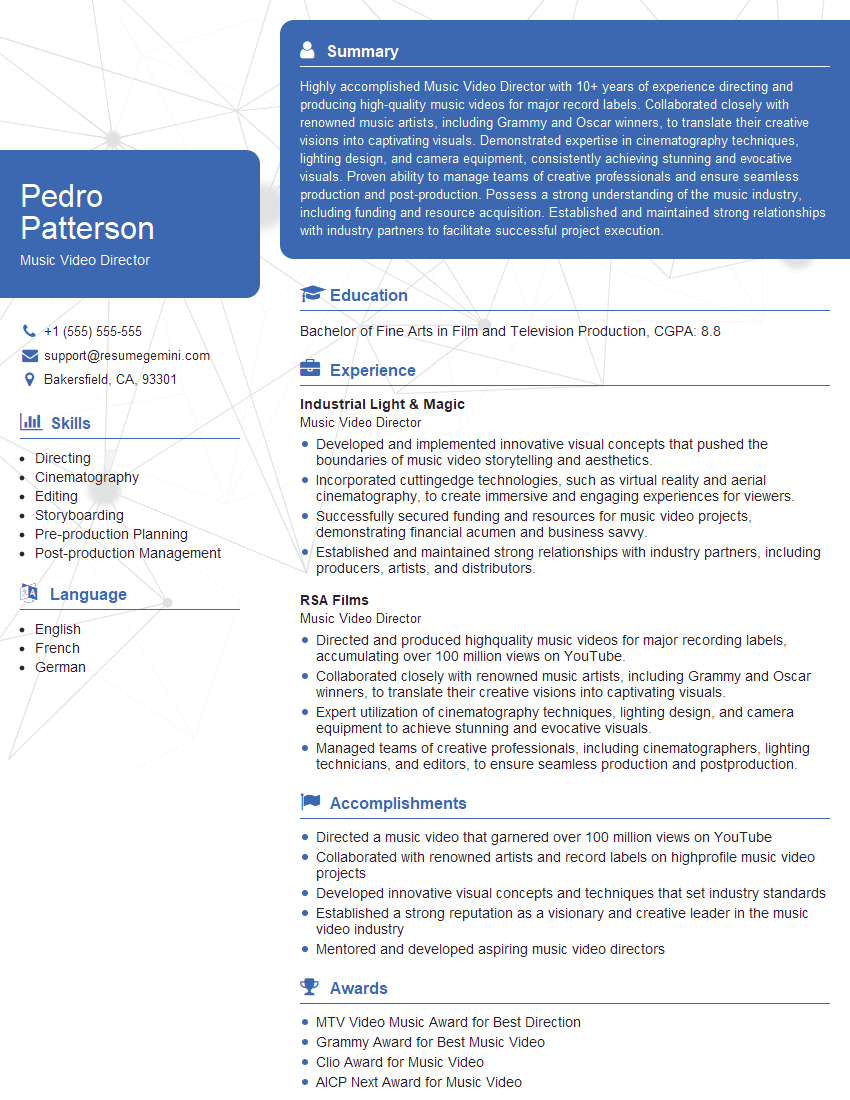
Music Video Director Resume Sample
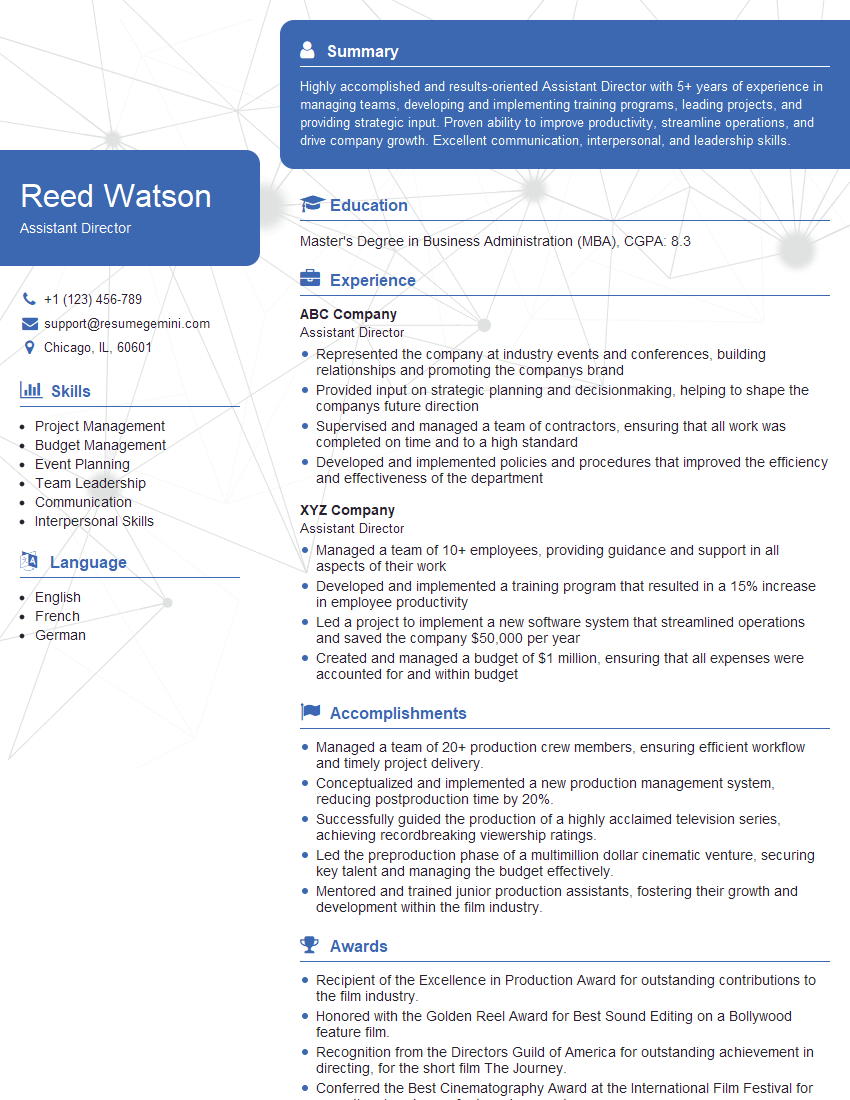
Assistant Director Resume Sample
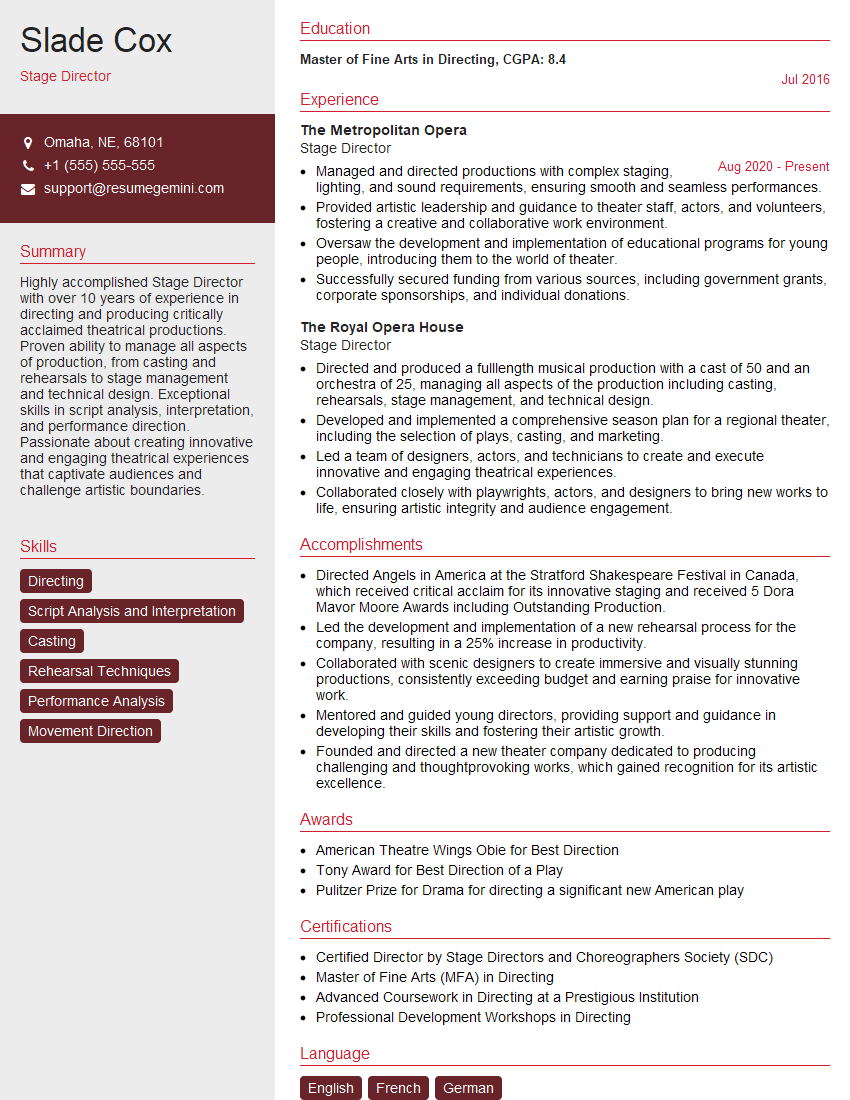
Stage Director Resume Sample
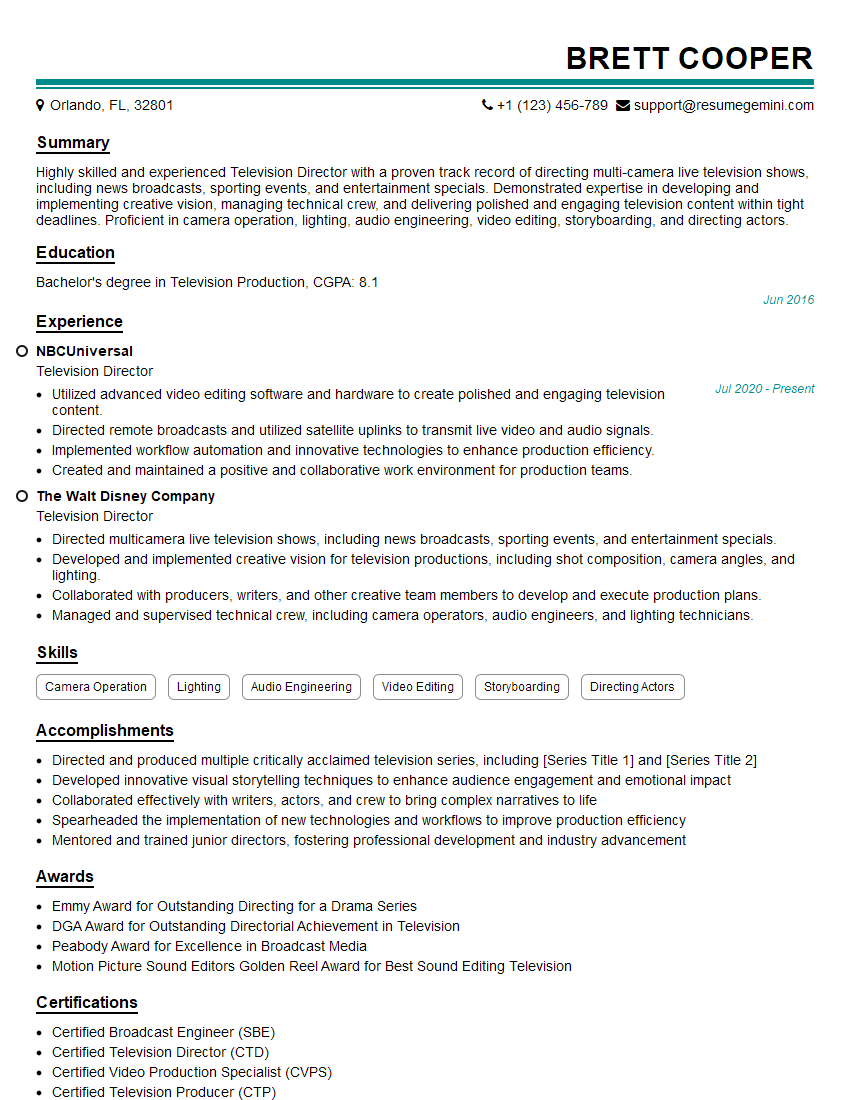
Television Director Resume Sample
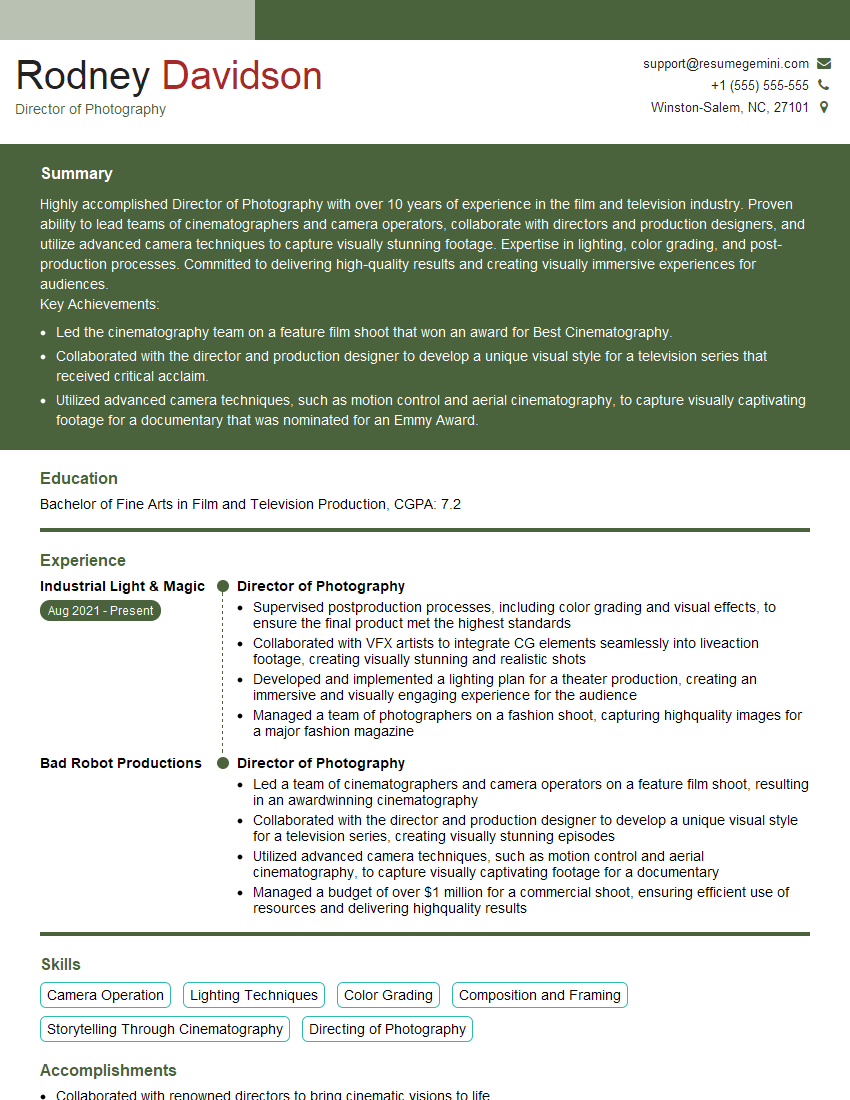
Director of Photography Resume Sample
Explore more articles
Users Rating of Our Blogs
Share Your Experience
We value your feedback! Please rate our content and share your thoughts (optional).
What Readers Say About Our Blog
Very informative content, great job.
good