The thought of an interview can be nerve-wracking, but the right preparation can make all the difference. Explore this comprehensive guide to Fruit Crop Production interview questions and gain the confidence you need to showcase your abilities and secure the role.
Questions Asked in Fruit Crop Production Interview
Q 1. Describe the different methods of fruit tree pruning and their effects on yield and fruit quality.
Fruit tree pruning is a crucial practice influencing yield and fruit quality. It involves selectively removing branches to improve tree structure, light penetration, and fruit production. Different methods exist, each with specific effects:
- Heading Back: Cutting back a branch to a lateral bud, promoting branching and bushier growth. This is excellent for young trees establishing structure, and for rejuvenating older trees. Effect: Increased branching, potentially higher yields in the long term but may temporarily reduce yields in the immediate year.
- Thinning Out: Removing entire branches back to their origin point. This opens up the canopy, improving air circulation and light penetration. Effect: Better light exposure leading to larger, higher-quality fruit, reduced disease risk due to improved air circulation, and potentially higher yields from improved fruit development.
- Renewal Pruning: Removing older, less productive wood to stimulate the growth of new, vigorous shoots. This is crucial for maintaining productivity in mature trees. Effect: Revitalization of older trees, maintaining long-term productivity. However, may result in a temporary reduction in yield as the new growth matures.
- Water Sprout Removal: Removing vigorous, upright shoots that grow from the trunk or main branches. These compete with fruiting wood for resources. Effect: Improved fruit quality and size, less competition for resources.
The choice of pruning method depends on the age of the tree, its variety, the desired shape, and the overall orchard management goals. For example, a young apple tree will need more heading back to establish its structure, while a mature tree might benefit more from thinning and renewal pruning to maintain its productivity and fruit size. Improper pruning can lead to reduced yields, poor fruit quality, and even tree damage, so understanding each technique is key.
Q 2. Explain the importance of soil testing in fruit crop production and how results guide fertilization strategies.
Soil testing is fundamental in fruit crop production because it reveals the nutrient status of the soil. This information directly guides fertilization strategies, ensuring optimal nutrient supply for healthy growth and high yields. A soil test measures the levels of essential macronutrients (nitrogen, phosphorus, potassium) and micronutrients (iron, zinc, boron, etc.).
For example, a soil test might reveal low levels of potassium. This indicates a need for potassium fertilization. Knowing the exact deficiency allows for targeted application, avoiding unnecessary fertilizer use and minimizing environmental impact. Soil pH is also crucial; a soil test reveals its pH level, indicating if it’s too acidic or alkaline. Adjusting pH through liming or other methods ensures nutrients are available for plant uptake. The results of soil testing help to:
- Determine the type and amount of fertilizer needed.
- Correct soil pH imbalances.
- Identify nutrient deficiencies.
- Improve fertilizer use efficiency, reducing costs and environmental concerns.
- Optimize crop yield and quality.
Ignoring soil testing can lead to nutrient deficiencies, reduced yield, and potentially even damage to the trees. Regular soil testing, ideally annually, ensures that nutrient requirements are met, maximizing the return on investment in fruit production.
Q 3. What are the key pest and disease management strategies for [specific fruit, e.g., apple] production?
Apple production faces numerous pest and disease challenges. Effective management requires an integrated approach combining various strategies:
- Cultural Practices: Proper orchard sanitation, including removing fallen leaves and fruit, reduces the overwintering sites of pests and diseases. Selecting resistant apple cultivars also plays a key role.
- Biological Control: Introducing beneficial insects and microorganisms that prey on or compete with pests. For example, ladybugs can control aphids.
- Monitoring and Scouting: Regularly inspecting trees for signs of pests and diseases allows for early detection and timely intervention, preventing widespread infestations.
- Chemical Control: Using pesticides as a last resort when other methods prove insufficient. This requires careful selection of appropriate products, adhering to label instructions, and minimizing environmental impact.
A specific example is apple scab, a fungal disease. Effective management would involve selecting scab-resistant varieties, removing infected leaves, applying fungicides (following label instructions), and monitoring weather conditions to predict scab outbreaks.
Integrated Pest Management (IPM) is the most effective approach. IPM emphasizes a systematic approach, prioritizing preventive measures, monitoring pest and disease populations, and using control methods only when necessary and with careful consideration of the environment and human health.
Q 4. Discuss different irrigation techniques and their suitability for various fruit crops.
Irrigation is critical for fruit production, and various techniques exist, each with its advantages and disadvantages:
- Drip Irrigation: Delivers water directly to the root zone through a network of tubes and emitters. Advantages: High water-use efficiency, minimizes water loss, reduces weed growth, allows for precise water management. Disadvantages: Higher initial investment, potential clogging of emitters, may not be suitable for all soil types.
- Sprinkler Irrigation: Water is sprayed over the orchard through a network of sprinklers. Advantages: Relatively low initial cost, suitable for various soil types, can cool plants during hot weather. Disadvantages: Higher water loss through evaporation and runoff, can lead to increased weed growth, may not be efficient for all types of crops.
- Furrow Irrigation: Water flows in furrows or channels between tree rows. Advantages: Simple and relatively inexpensive. Disadvantages: High water loss through evaporation and runoff, less efficient than drip or sprinkler irrigation, waterlogging can be a concern.
The best irrigation method depends on factors like soil type, climate, crop type, available resources, and economic considerations. For example, drip irrigation might be preferred for water-scarce regions, whereas sprinkler irrigation could be a better choice for areas with consistent rainfall but periods of drought. Careful consideration of these factors ensures optimal water use efficiency and promotes healthy fruit production.
Q 5. How do you determine the optimal planting density for a specific fruit crop?
Determining optimal planting density is crucial for maximizing yield and fruit quality. It depends on several factors:
- Tree Size and Growth Habit: Larger trees require more space than smaller trees. Columnar apple trees, for example, can be planted much closer than standard apple trees.
- Soil Fertility and Water Availability: Rich, well-watered soils support denser planting. Poor soil conditions necessitate wider spacing.
- Climate: Hot, dry climates often require wider spacing to allow for better air circulation and sunlight penetration.
- Crop Management Practices: Intensive pruning and training techniques allow for higher densities.
Finding the sweet spot involves considering the trade-off between yield per tree and the total yield per unit area. Overcrowding can lead to smaller fruit, reduced sunlight penetration, and increased disease risk, while excessively wide spacing reduces overall productivity. Many fruit growers use trial-and-error, experience, or research data from their region to determine the best planting density for their specific conditions. For example, apple orchards might range from 100 to 2000 trees per hectare, depending on these factors.
Q 6. Explain the process of fruit thinning and its impact on fruit size and quality.
Fruit thinning is the process of removing excess fruit from a tree. This practice significantly impacts fruit size and quality. Overcrowding leads to smaller fruit, reduced sugar content, and poorer overall quality. Thinning allows remaining fruit to receive more nutrients and sunlight, resulting in larger, more attractive, and higher-quality fruit.
Thinning can be done manually by hand, removing smaller or poorly positioned fruit. This is labor-intensive but provides precise control. Mechanical thinning, using tools or chemicals, is also possible. Chemical thinning, using growth regulators, can be faster but requires careful application to avoid damage to the tree.
The timing of thinning is important. It is usually done shortly after fruit set, allowing the remaining fruit to develop fully. The level of thinning depends on the initial fruit set and the desired fruit size. For example, thinning apples might involve leaving one fruit per cluster to ensure good quality while removing the others. The result is bigger, more marketable apples that fetch higher prices, making fruit thinning an important practice in maximizing the profitability of fruit production.
Q 7. Describe the various methods of harvesting fruit and their advantages and disadvantages.
Fruit harvesting methods vary depending on the fruit type, size, and the intended market. Methods include:
- Hand Harvesting: Fruit is picked individually by hand. Advantages: Minimizes damage to fruit, allows for selection of high-quality fruit, suitable for delicate fruits. Disadvantages: Labor-intensive, expensive, slow, not suitable for large-scale operations.
- Mechanical Harvesting: Machines are used to harvest fruit, often shaking the tree to dislodge the fruit. Advantages: Fast, efficient, cost-effective for large-scale operations. Disadvantages: Can damage fruit, not suitable for all fruit types or delicate varieties, requires specialized equipment.
- Automated Harvesting: Robotic systems are increasingly being developed to automate fruit harvesting tasks. Advantages: Potential for greater efficiency and precision than traditional mechanical harvesting. Disadvantages: High initial investment cost, technology still under development.
The choice of harvesting method is a crucial economic decision. For example, delicate fruits like blueberries often require hand harvesting, whereas apples destined for processing might be harvested mechanically. Understanding the characteristics of the fruit and market demands are critical when selecting the best approach.
Q 8. What are the critical factors to consider in post-harvest handling and storage of fruit to maintain quality?
Post-harvest handling and storage are crucial for maintaining fruit quality and extending shelf life. Think of it like this: the journey from orchard to consumer is just as important as the growing process itself. Failure at this stage can negate all the hard work invested in cultivation.
- Rapid Cooling: Immediately reducing the fruit’s temperature slows down respiration and enzymatic activity, which are major contributors to spoilage. For example, berries are extremely perishable and require rapid cooling to below 10°C within hours of harvest.
- Proper Cleaning and Sanitization: Removing dirt, debris, and potential pathogens minimizes decay and improves the fruit’s appearance. This often involves washing and sometimes treating with fungicides or other sanitizers.
- Controlled Atmosphere Storage (CAS): Modifying the atmosphere within storage facilities (reducing oxygen and increasing carbon dioxide levels) further slows down respiration and extends shelf life significantly. Apples and pears are commonly stored using CAS.
- Appropriate Packaging: Choosing packaging materials that protect the fruit from physical damage, bruising, and moisture loss is vital. This includes the type of container (e.g., crates, boxes) and any protective liners.
- Temperature and Humidity Control: Maintaining optimal temperature and humidity levels throughout the storage period is essential. Different fruits have different optimal storage conditions, which must be precisely controlled to prevent spoilage or quality deterioration. For example, bananas are sensitive to chilling injury at temperatures below 13°C.
- Regular Monitoring: Continuously monitoring fruit quality parameters like firmness, color, and respiration rate allows for timely interventions and prevents losses.
Q 9. How do you assess the maturity of fruit for optimal harvest timing?
Assessing fruit maturity for optimal harvest is a delicate balance. You want to pick the fruit at the point where it has reached its peak flavor and quality, but before it starts to over-ripen and decline. Several factors influence maturity assessment.
- Visual Indicators: Color changes are often the most obvious sign of maturity. For example, the transition from green to red in apples or the change in skin color of bananas. However, color alone is not always sufficient.
- Size and Weight: Mature fruits generally reach a certain size and weight, although this can vary depending on the cultivar and growing conditions.
- Firmness: A firmness test (using a penetrometer) helps assess the texture of the fruit. Over-ripe fruits will be softer than optimally mature fruits.
- Sugar Content: The amount of sugar in the fruit is a crucial indicator of flavor. Refractometers are used to measure the soluble solids content (Brix), a common measure of sugar.
- Acid Content: The balance between sugar and acid content contributes to the flavor profile. Titratable acidity is measured to assess the acid level.
- Sensory Evaluation: Experienced fruit graders can assess maturity through tasting and tactile evaluation.
The best approach is often to combine multiple assessment methods to get a comprehensive picture of the fruit’s maturity. For example, you could use visual cues to identify ripe fruit and then use a refractometer to verify the sugar level.
Q 10. Explain the importance of integrated pest management (IPM) in fruit production.
Integrated Pest Management (IPM) is a holistic approach to pest control that minimizes reliance on synthetic pesticides. It’s about prevention and sustainable management rather than eradication.
- Monitoring: Regular monitoring of pests and diseases is crucial to identify problems early and prevent outbreaks. This might involve visual inspections, pheromone traps, or other monitoring tools.
- Cultural Practices: Modifying farming practices to make the orchard less hospitable to pests. Examples include proper pruning to improve air circulation and sunlight penetration, crop rotation to disrupt pest life cycles, and selecting pest-resistant cultivars.
- Biological Control: Utilizing natural enemies of pests, such as beneficial insects or microorganisms, to control pest populations. For example, introducing ladybugs to control aphids.
- Physical Control: Employing physical barriers or methods to prevent or reduce pest infestations. This includes using netting to exclude birds or insects, or employing traps.
- Chemical Control (as a last resort): Using pesticides only when other methods fail and only using the most targeted and environmentally friendly options available. This is always guided by strict thresholds and regulations.
IPM aims for a balanced ecosystem where pests are kept below economically damaging levels without causing harm to the environment or human health. It’s a more sustainable and environmentally friendly approach compared to relying solely on chemical pesticides.
Q 11. What are the common nutrient deficiencies in fruit crops and how are they addressed?
Nutrient deficiencies can severely impact fruit quality and yield. Recognizing the symptoms and implementing corrective measures is critical.
- Nitrogen (N): Deficiency shows as stunted growth, pale green leaves, and reduced fruit size. Addressing it involves applying nitrogen-based fertilizers according to soil test recommendations.
- Phosphorus (P): Deficiency results in dark green or purplish leaves, delayed maturity, and reduced root growth. Phosphorus fertilizers are applied to correct this.
- Potassium (K): Deficiency manifests as yellowing or browning of leaf margins, reduced fruit size and quality, and increased susceptibility to diseases. Potassium fertilizers are used to address this.
- Magnesium (Mg): Deficiency often appears as yellowing between leaf veins, particularly on older leaves. Applying magnesium sulfate (Epsom salts) can help correct this deficiency.
- Calcium (Ca): Deficiency leads to blossom-end rot in fruits, and distorted or stunted growth. Applying calcium-based fertilizers or foliar sprays can improve calcium levels.
- Iron (Fe): Iron deficiency causes interveinal chlorosis (yellowing between leaf veins), especially in young leaves. Soil pH correction or application of iron chelates might be necessary.
Soil testing is crucial before applying fertilizers. A soil test will reveal the exact nutrient levels and help you make informed decisions on the type and amount of fertilizer needed. Foliar application of nutrients is a faster way to address deficiencies than relying solely on soil application.
Q 12. Describe the impact of climate change on fruit production and strategies for mitigation.
Climate change poses significant threats to fruit production globally. Changes in temperature, rainfall patterns, and increased frequency of extreme weather events impact various stages of fruit development.
- Increased Temperatures: Higher temperatures can lead to reduced fruit size, altered ripening patterns, and decreased yields. Heat stress can also impact fruit quality.
- Changes in Rainfall Patterns: Erratic rainfall can lead to water stress, reducing yields and affecting fruit quality. Increased frequency of droughts can severely damage fruit crops.
- Extreme Weather Events: Increased frequency and intensity of storms, hail, and frosts can damage orchards and significantly reduce yields.
- Pest and Disease Outbreaks: Climate change can expand the range and intensity of pest and disease outbreaks, making crop management more challenging.
Mitigation strategies include:
- Developing climate-resilient cultivars: Breeding fruit varieties that are more tolerant to heat, drought, and pests is crucial.
- Implementing water-efficient irrigation techniques: Drip irrigation or other water-saving methods reduce water consumption and improve water use efficiency.
- Improving pest and disease management practices: Implementing IPM strategies and using climate-smart pest control methods.
- Using protective measures: Using shade netting to reduce heat stress, or windbreaks to protect from storms.
- Diversifying crops: Planting a wider range of fruit varieties can help to reduce risks associated with climate change.
Q 13. How do you manage labor effectively during peak harvesting seasons?
Effective labor management during peak harvesting is critical for maximizing yield and minimizing losses. This is often the most challenging aspect of fruit production.
- Accurate Yield Forecasting: Predicting the harvest volume helps in planning labor needs accurately.
- Worker Recruitment and Training: Securing a sufficient workforce well in advance, providing proper training on safe harvesting techniques, and employing effective communication strategies.
- Scheduling and Coordination: Developing a detailed harvesting schedule based on the maturity of the fruit and ensuring efficient coordination among workers, supervisors, and transportation.
- Incentive Programs: Implementing bonus schemes or piece-rate systems to motivate workers and enhance productivity.
- Technology Integration: Using technology such as GPS-guided harvesting equipment or mobile apps to track progress and improve efficiency.
- Comfortable Working Conditions: Providing workers with adequate rest breaks, shade, and water, and maintaining comfortable working conditions to improve morale and productivity.
- Health and Safety: Prioritizing worker health and safety through proper training and providing necessary protective equipment.
Effective labor management reduces costs, improves the quality of the harvested produce, and ensures worker satisfaction. It is a critical element in ensuring a successful harvest.
Q 14. Explain the different types of fruit packaging and their suitability for various fruits.
Fruit packaging plays a vital role in protecting the fruit during transport and storage, maintaining freshness, and enhancing its appeal to consumers.
- Rigid Containers: Crates, boxes, and trays made of plastic, wood, or cardboard are commonly used for transporting larger, more robust fruits such as apples, oranges, and melons. They offer excellent protection from damage.
- Flexible Packaging: Bags, pouches, and wraps made of plastic or other materials are suitable for smaller, more delicate fruits like berries and grapes. They often offer modified atmosphere packaging (MAP) capabilities for extended shelf life.
- Modified Atmosphere Packaging (MAP): This technique involves modifying the gas composition inside the package (reducing oxygen and increasing carbon dioxide) to extend shelf life by slowing down respiration.
- Ethylene Absorbers: These materials are incorporated into packaging to absorb ethylene gas, a natural plant hormone that accelerates ripening and senescence. This extends the shelf life of climacteric fruits like bananas and apples.
- Sustainable Packaging: There’s a growing trend toward using eco-friendly packaging materials made from recycled or renewable resources to reduce environmental impact.
The choice of packaging depends on several factors, including the type of fruit, its fragility, its shelf life, the distance it needs to be transported, and consumer preferences. For example, delicate berries might require cushioned trays within a protective box, while more durable fruits can be packed in simpler containers.
Q 15. How do you ensure food safety and quality standards are met throughout the production process?
Ensuring food safety and quality in fruit production is paramount. It’s a multi-step process starting from the orchard and extending through harvesting, processing, and distribution. We adhere to rigorous Good Agricultural Practices (GAPs) and GlobalGAP standards. This involves everything from selecting healthy planting material and using pest control methods that minimize chemical residues to employing strict hygiene practices during harvesting and handling.
- Pre-Harvest: Regular field inspections identify potential issues early on. We meticulously track pesticide and fertilizer applications, ensuring compliance with maximum residue limits (MRLs). Soil testing ensures optimal nutrient levels, promoting healthy plant growth and reducing the need for excessive fertilization.
- Harvesting and Handling: Proper harvesting techniques minimize fruit damage. Workers are trained in hygiene protocols, including hand washing and the use of clean equipment. Post-harvest handling is critical; we utilize appropriate cooling and storage methods to maintain fruit freshness and quality.
- Processing and Packaging: If processing is involved, we maintain sanitary conditions in the processing facility, adhering to HACCP (Hazard Analysis and Critical Control Points) principles to identify and control potential hazards. Packaging is done carefully to prevent contamination and damage during transportation.
- Traceability: We implement robust traceability systems, allowing us to track fruit from the orchard to the consumer. This is vital for rapid response in case of any contamination or quality issue.
For example, in our apple orchards, we implement a strict Integrated Pest Management (IPM) strategy that prioritizes preventative measures and minimizes pesticide use. We regularly monitor pest populations and only apply pesticides when necessary, always adhering to label instructions and safety regulations. This not only ensures food safety but also protects the environment.
Career Expert Tips:
- Ace those interviews! Prepare effectively by reviewing the Top 50 Most Common Interview Questions on ResumeGemini.
- Navigate your job search with confidence! Explore a wide range of Career Tips on ResumeGemini. Learn about common challenges and recommendations to overcome them.
- Craft the perfect resume! Master the Art of Resume Writing with ResumeGemini’s guide. Showcase your unique qualifications and achievements effectively.
- Don’t miss out on holiday savings! Build your dream resume with ResumeGemini’s ATS optimized templates.
Q 16. What are the principles of sustainable fruit production?
Sustainable fruit production focuses on minimizing environmental impact while maximizing economic viability and social equity. It’s about balancing the needs of today with the needs of future generations.
- Soil Health: We prioritize soil health through techniques like cover cropping, crop rotation, and reduced tillage. This improves soil structure, fertility, and water retention, reducing reliance on chemical fertilizers.
- Water Management: Efficient irrigation systems, such as drip irrigation, are implemented to reduce water waste and optimize water use. We also explore rainwater harvesting techniques.
- Pest and Disease Management: Integrated Pest Management (IPM) strategies are crucial. This involves using a combination of biological control, cultural practices, and minimal pesticide use to control pests and diseases.
- Biodiversity: Encouraging biodiversity on farms through hedgerows, buffer strips, and other habitat enhancements supports beneficial insects and pollinators, reducing reliance on chemical interventions.
- Energy Efficiency: We strive to reduce energy consumption through the use of efficient machinery and renewable energy sources where possible.
- Social Equity: Fair labor practices, ensuring worker safety and fair wages, are essential components of sustainable fruit production.
For instance, using cover crops like clover in our citrus groves helps to suppress weeds, improve soil structure, and fix nitrogen, reducing our need for chemical fertilizers. This enhances soil health, minimizes environmental impact, and reduces production costs.
Q 17. Describe your experience with using precision agriculture technologies in fruit farming.
I have extensive experience utilizing precision agriculture technologies to enhance fruit production efficiency and sustainability. This includes GPS-guided machinery, sensor networks, and data analytics.
- GPS-guided machinery: Precision spraying and fertilizing, guided by GPS, ensure targeted application, reducing input waste and minimizing environmental impact. This allows for variable rate application, applying more inputs where needed and less where it’s not, optimizing resource use.
- Sensor networks: We use soil moisture sensors to monitor soil water content, allowing for precise irrigation scheduling and preventing overwatering. Similarly, weather stations provide real-time data on temperature, humidity, and rainfall, enabling proactive adjustments to manage pest and disease pressures.
- Data analytics: We collect data from various sources, including yield monitors, sensors, and field observations. This data is analyzed to identify patterns, optimize production practices, and improve decision-making. For example, analyzing yield data in conjunction with soil nutrient levels and irrigation patterns can pinpoint areas needing targeted interventions.
In one project, we implemented a system of soil moisture sensors and GPS-guided irrigation in our vineyard. This resulted in a 15% reduction in water consumption while maintaining or even improving yields, significantly reducing our water footprint and operational costs.
Q 18. How do you interpret yield data to improve production efficiency?
Yield data is a goldmine of information for improving production efficiency. Analyzing yield data requires a systematic approach, considering various factors that influence fruit production.
- Data Collection: Accurate yield data collection is the first step. This involves precise measurements of yield per unit area, considering factors like fruit size, quality, and number of fruits per tree.
- Data Analysis: Once collected, data is analyzed using statistical software or data visualization tools. We look for patterns and trends, identifying high-yielding and low-yielding areas within the orchard.
- Identifying Factors: We correlate yield data with other factors such as soil properties, irrigation levels, fertilizer application, pest and disease incidence, and weather conditions. This helps identify the key factors influencing yield variations.
- Decision Making: Based on the analysis, we develop targeted strategies to address the identified limitations. This could involve adjusting irrigation practices, optimizing fertilization, implementing pest and disease management strategies, or improving soil health in specific areas.
For example, if our yield analysis reveals a negative correlation between yield and soil nutrient levels in a specific section of the orchard, we would implement a targeted fertilization program to improve soil fertility and boost production in that area.
Q 19. Explain your understanding of different fruit crop propagation techniques.
Fruit crop propagation involves the multiplication of desirable plant varieties. Several techniques exist, each with its advantages and disadvantages.
- Seed Propagation: This is a simple and cost-effective method, but it’s not always reliable as offspring may not inherit the parent plant’s desirable traits. It’s mostly used for breeding programs or when dealing with species that are difficult to propagate vegetatively.
- Vegetative Propagation: This involves propagating plants from vegetative parts like stems, leaves, or roots. This ensures that the offspring are genetically identical to the parent plant, preserving desirable characteristics.
- Cutting Propagation: This involves taking stem cuttings and rooting them under specific conditions. It’s a common technique for many fruit crops, such as grapes and berries.
- Grafting: This involves joining a scion (desired variety) onto a rootstock (provides root system and disease resistance). Grafting is widely used in fruit production to combine the desirable fruiting characteristics of a scion with the rootstock’s desirable traits, such as disease resistance or dwarfing characteristics.
- Layering: This technique involves inducing roots on a stem while it’s still attached to the mother plant. It’s suitable for some fruit crops like raspberries and blackberries.
- Tissue Culture (Micropropagation): This advanced technique involves growing plantlets from small pieces of plant tissue in a sterile environment. It’s useful for producing large numbers of genetically identical plants and for disease elimination.
In our operations, we primarily use grafting for apple and pear production, selecting rootstocks suited to our soil and climate conditions. This ensures that we obtain high-quality fruit while managing tree size and disease resistance.
Q 20. How do you manage water resources efficiently in fruit production?
Efficient water management in fruit production is vital, both economically and environmentally. We employ several strategies to conserve water and optimize its use.
- Drip Irrigation: This delivers water directly to the plant roots, minimizing water loss through evaporation and runoff. It allows for precise control of water application based on the plant’s needs.
- Soil Moisture Monitoring: Using soil moisture sensors, we monitor soil water content and adjust irrigation schedules accordingly. This prevents overwatering and ensures that plants receive the optimal amount of water.
- Water Harvesting: Rainwater harvesting systems collect rainwater, which can be used for irrigation, reducing reliance on groundwater or surface water sources.
- Mulching: Applying organic mulch around plants helps to retain soil moisture, reducing the frequency of irrigation.
- Improved Irrigation Efficiency: We regularly inspect and maintain our irrigation systems to prevent leaks and ensure efficient water delivery.
For example, in our cherry orchard, we’ve implemented a drip irrigation system along with soil moisture sensors. This has reduced our water consumption by 20% while maintaining fruit quality and yield. This also contributes to reduced energy consumption for pumping water.
Q 21. What are your strategies for dealing with extreme weather events that could affect fruit crops?
Extreme weather events, such as droughts, floods, heat waves, and frost, pose significant threats to fruit crops. We employ various strategies to mitigate their impact.
- Drought Management: Drought-tolerant rootstocks and varieties are selected, and efficient irrigation techniques are implemented to conserve water and provide plants with sufficient moisture during dry periods.
- Flood Management: Orchards are located on well-drained sites, and drainage systems are installed to prevent waterlogging. In areas prone to flooding, raised beds or other flood mitigation techniques are considered.
- Heat Stress Management: Windbreaks and shade nets can provide protection from intense sunlight and high temperatures. Appropriate irrigation and soil moisture management are crucial during heat waves.
- Frost Protection: Frost-prone areas may require frost protection measures like wind machines, overhead sprinklers, or heaters to prevent damage to blossoms and young fruits.
- Crop Insurance: We ensure appropriate crop insurance coverage to mitigate potential financial losses due to extreme weather events.
For instance, during a recent severe heatwave, we used shade cloth in our vineyards to protect the grapes from excessive sunlight and heat stress. This mitigated the impact of the extreme temperatures and prevented significant yield losses.
Q 22. How do you ensure the proper use and disposal of pesticides and other agricultural chemicals?
Proper pesticide and agricultural chemical use and disposal are paramount for environmental protection and worker safety. My approach is threefold: prevention, proper application, and safe disposal.
Prevention: This starts with Integrated Pest Management (IPM). IPM prioritizes non-chemical methods like crop rotation, biological control (introducing beneficial insects), and cultural practices (adjusting planting times or spacing) to minimize pesticide use. Only when necessary do we resort to chemical controls, always choosing the least toxic option.
Proper Application: We meticulously follow label instructions, using calibrated application equipment to ensure the correct dosage. This includes Personal Protective Equipment (PPE) like respirators, gloves, and coveralls for all handlers. We also monitor weather conditions, avoiding application during periods of high wind or rain to prevent drift and runoff.
Safe Disposal: Unused pesticides and their containers are disposed of according to regulations. This often involves specialized collection programs or licensed waste disposal facilities. We maintain detailed records of pesticide use and disposal, ensuring traceability and compliance. For example, we’ve successfully implemented a triple-rinse program for pesticide containers, significantly reducing the risk of environmental contamination.
Q 23. Describe your experience with implementing and maintaining Good Agricultural Practices (GAP).
Good Agricultural Practices (GAP) are central to my work. I’ve been instrumental in implementing and maintaining GAP in several orchards, leading to significant improvements in food safety, environmental stewardship, and overall farm efficiency. My experience includes:
Developing and implementing comprehensive GAP protocols: This involves establishing clear procedures for everything from soil health management and pest control to harvesting and post-harvest handling, ensuring consistent quality and safety.
Worker training and education: We conduct regular training sessions for all personnel on GAP principles, emphasizing proper hygiene, sanitation, and safe handling practices. For instance, we’ve developed a comprehensive training manual with pictures and videos to enhance understanding, especially for our seasonal workforce.
Record-keeping and traceability: Maintaining detailed records of all farm operations allows us to trace produce throughout the entire supply chain, ensuring accountability and quick response to any potential issues. This includes accurate documentation of pesticide applications, irrigation, and fertilizer usage.
Third-party audits and certifications: We proactively seek third-party audits to verify our GAP compliance and obtain relevant certifications, demonstrating our commitment to quality and consumer safety. This has improved our marketability and opened up access to premium markets.
Q 24. How do you monitor and control weed growth in fruit orchards?
Weed control in fruit orchards requires an integrated approach, balancing environmental concerns with productivity. My strategy combines several methods:
Mechanical methods: Mowing, cultivation, and mulching are used to physically remove weeds. Mulching, in particular, is effective in suppressing weed growth while conserving soil moisture.
Cultural practices: Proper orchard layout, tree spacing, and ground cover management can minimize weed growth. For instance, using cover crops can out-compete weeds while improving soil health.
Biological control: Introducing beneficial insects or pathogens that target specific weeds is an eco-friendly option. We’ve successfully used certain insects to control problematic weeds without resorting to herbicides.
Herbicide application (selective and minimal): Herbicides are used strategically and only when other methods prove insufficient, focusing on selective herbicides that target specific weeds without harming the fruit trees. We always adhere strictly to label instructions and best practices to minimize environmental impact.
Regular monitoring is key. We inspect the orchard regularly to identify and address weed problems promptly, preventing them from becoming overwhelming.
Q 25. What are the key factors influencing the shelf life of different fruits?
Several factors significantly impact fruit shelf life. These can be broadly categorized as:
Pre-harvest factors: This includes the fruit’s maturity at harvest, the growing conditions (climate, soil nutrients), and the absence of disease or pest damage. Harvesting at the optimal maturity stage is crucial for maximizing shelf life.
Post-harvest handling: Proper handling, including minimizing physical damage during harvesting and transportation, is critical. Rapid cooling after harvest helps slow down respiration and enzymatic activity, extending shelf life. For instance, we use hydrocooling in our operation for rapid temperature reduction.
Storage conditions: Temperature, humidity, and atmosphere (modified atmosphere packaging – MAP) significantly influence shelf life. Maintaining the appropriate temperature and humidity levels slows down ripening and decay. MAP packaging extends shelf life by altering the gas composition around the fruit, reducing respiration and extending its freshness.
Fruit type and variety: Different fruits have inherently different shelf lives. Some are naturally more perishable than others. Even within a species, different varieties may exhibit varying shelf life characteristics.
Understanding these factors allows us to optimize post-harvest handling and storage, maximizing the shelf life and quality of our fruit.
Q 26. Explain your experience with using data analytics to optimize fruit production processes.
Data analytics plays a crucial role in optimizing fruit production. We utilize various technologies and data sources to gain insights into our operations and make data-driven decisions.
Sensor technology: We employ sensors to monitor soil moisture, temperature, and other environmental factors. This data informs irrigation scheduling and helps us adjust other inputs based on real-time conditions.
Yield monitoring: Yield data from different parts of the orchard helps identify areas requiring attention. For example, we can pinpoint sections with lower yield and investigate the causes, such as nutrient deficiencies or pest infestations.
Remote sensing: Drone-based imagery provides a bird’s-eye view of the orchard, allowing us to detect issues like disease outbreaks or uneven growth early on. This enables timely intervention, preventing larger problems.
Data analysis and modeling: We use statistical software to analyze data and develop predictive models. These models allow us to forecast yields, optimize resource allocation, and improve decision-making regarding planting, harvesting, and post-harvest operations.
The insights gained from data analysis have led to significant improvements in our efficiency and profitability, reducing waste, and improving the quality of our final product.
Q 27. How do you address labor shortages in fruit harvesting?
Labor shortages in fruit harvesting are a significant challenge. Our approach focuses on several strategies:
Mechanization: We’re progressively investing in mechanization, such as automated harvesting equipment for certain fruit types, to reduce reliance on manual labor. While full mechanization isn’t always feasible, partial mechanization can significantly reduce the labor demand.
Improved worker compensation and benefits: Attracting and retaining workers involves offering competitive wages, benefits, and a positive work environment. We’ve implemented bonus structures tied to productivity and implemented worker feedback mechanisms.
Recruitment strategies: We actively engage with local communities and employment agencies to recruit workers. This includes advertising job openings in local newspapers, online platforms, and through community partnerships.
Seasonal worker programs: We participate in seasonal worker programs that provide access to reliable temporary labor. These programs often involve government oversight and streamlined visa processes.
Training and development: Providing on-the-job training and developing clear protocols improves worker efficiency and safety, which enhances satisfaction and retention.
A multi-faceted approach is crucial to mitigating the impact of labor shortages and ensuring a consistent harvest.
Q 28. Describe your approach to building positive relationships with stakeholders (e.g., suppliers, customers).
Building strong relationships with stakeholders is essential for long-term success. My approach centers on open communication, mutual respect, and collaborative problem-solving.
Suppliers: We maintain close relationships with our suppliers, ensuring a reliable supply of high-quality inputs. This involves regular communication, clear contracts, and mutual respect for timely payments and delivery.
Customers: We prioritize customer satisfaction by providing high-quality fruit and excellent service. This includes prompt responses to inquiries, personalized attention, and a commitment to meeting customer needs. We actively seek customer feedback through surveys and direct communication.
Community engagement: We actively engage with the local community through outreach programs, participation in local events, and support for local initiatives. This strengthens our ties with the community and fosters goodwill.
Transparency and traceability: We are transparent in our operations and provide detailed traceability information to our customers, building trust and confidence in our products.
By fostering strong relationships built on trust and mutual benefit, we create a sustainable and mutually beneficial ecosystem that supports our long-term success.
Key Topics to Learn for Fruit Crop Production Interview
- Orchard Establishment and Management: Understanding site selection, soil preparation, planting techniques, and tree training systems. Practical application: Analyzing soil reports to determine appropriate nutrient amendments for optimal fruit production.
- Irrigation and Water Management: Efficient irrigation techniques (drip, micro-sprinkler, etc.), water conservation strategies, and the impact of water stress on fruit quality. Practical application: Designing an irrigation system for a specific orchard considering topography and soil type.
- Pest and Disease Management: Identifying common pests and diseases affecting fruit crops, implementing integrated pest management (IPM) strategies, and utilizing sustainable control methods. Practical application: Developing a pest management plan for a specific fruit crop, considering environmental impact.
- Nutrient Management: Understanding plant nutrition, soil fertility testing, fertilizer application techniques, and the impact of nutrient deficiencies on fruit yield and quality. Practical application: Calculating fertilizer requirements based on soil test results and crop needs.
- Fruit Harvesting and Post-Harvest Handling: Optimal harvesting techniques, post-harvest handling practices (sorting, grading, packaging), and storage methods to maintain fruit quality and extend shelf life. Practical application: Developing a post-harvest handling plan to minimize losses and maximize profitability.
- Crop Physiology and Growth: Understanding the physiological processes involved in fruit development, flowering, and fruiting. Practical application: Analyzing growth patterns to adjust cultural practices for improved yield and quality.
- Sustainable Fruit Production Practices: Integrating sustainable agricultural practices, such as cover cropping, reduced tillage, and biodiversity enhancement, into fruit crop production systems. Practical application: Designing a sustainable orchard management plan minimizing environmental impact.
Next Steps
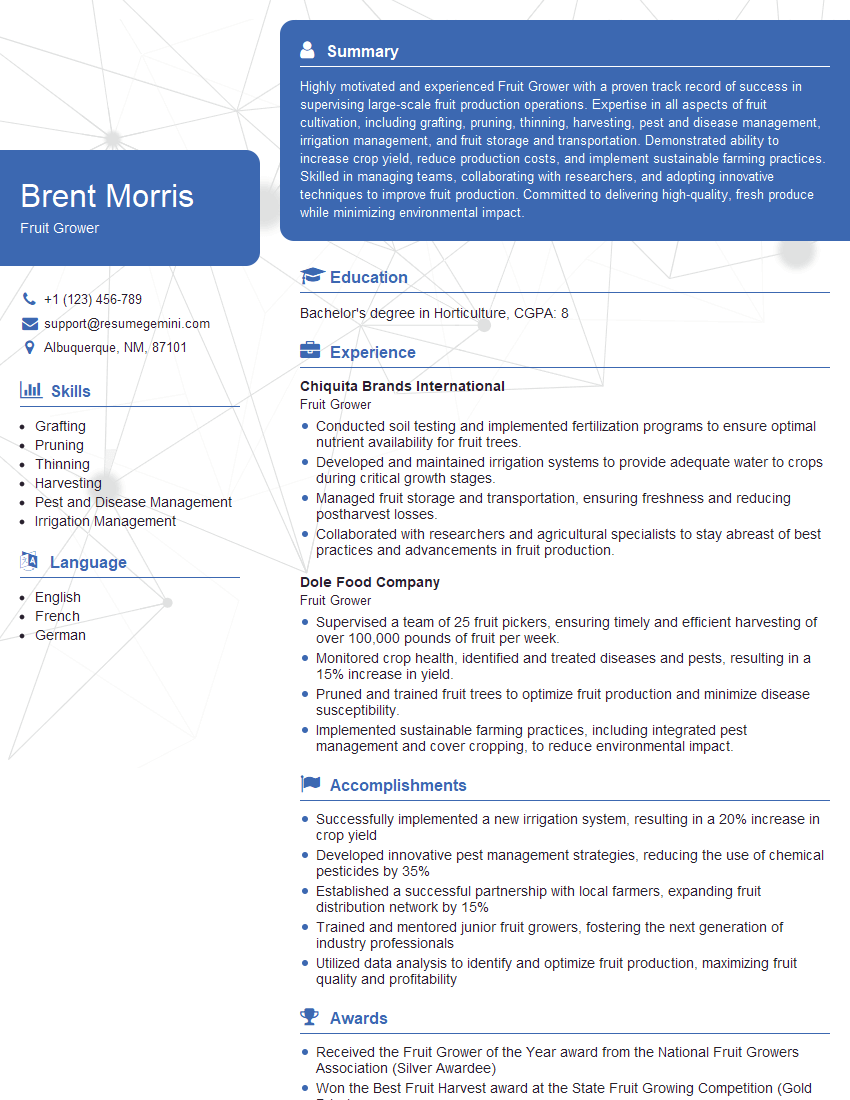
Mastering Fruit Crop Production opens doors to exciting career opportunities in a growing industry. Demonstrating your expertise through a well-crafted resume is crucial. An ATS-friendly resume ensures your application gets noticed by potential employers. To make the most of your application, consider using ResumeGemini, a trusted resource for building professional and effective resumes. ResumeGemini provides examples of resumes tailored to Fruit Crop Production to help guide you in showcasing your skills and experience effectively. Take the next step towards your dream career today!
Explore more articles
Users Rating of Our Blogs
Share Your Experience
We value your feedback! Please rate our content and share your thoughts (optional).
What Readers Say About Our Blog
Very informative content, great job.
good