Feeling uncertain about what to expect in your upcoming interview? We’ve got you covered! This blog highlights the most important Renewable Energy Sources (Solar, Wind, Geothermal) interview questions and provides actionable advice to help you stand out as the ideal candidate. Let’s pave the way for your success.
Questions Asked in Renewable Energy Sources (Solar, Wind, Geothermal) Interview
Q 1. Explain the difference between photovoltaic and concentrated solar power systems.
Photovoltaic (PV) and Concentrated Solar Power (CSP) systems are both ways to harness solar energy, but they differ significantly in their approach. PV systems directly convert sunlight into electricity using photovoltaic cells, while CSP systems use mirrors or lenses to concentrate sunlight onto a receiver, which then heats a fluid to generate electricity.
Think of it like this: PV is like a wide, flat solar panel that captures sunlight across its entire surface. CSP is like a giant magnifying glass focusing the sun’s rays onto a single point, creating intense heat.
Photovoltaic (PV): PV systems are simpler and more widely used, especially for residential and small-scale applications. They are modular, meaning individual panels can be easily combined to create larger systems. Their efficiency is improving constantly, but they are still limited by the amount of sunlight that falls directly on their surface.
Concentrated Solar Power (CSP): CSP systems are typically larger-scale power plants, often located in sunny deserts. They can achieve higher temperatures than PV, making them suitable for generating electricity through steam turbines. However, they require significant land area and are more complex and expensive to build and maintain. They often incorporate energy storage, allowing for electricity generation even after sunset.
Q 2. Describe the different types of wind turbines and their applications.
Wind turbines come in various types, primarily categorized by their axis of rotation: horizontal-axis wind turbines (HAWTs) and vertical-axis wind turbines (VAWTs).
- Horizontal-Axis Wind Turbines (HAWTs): These are the most common type, with blades rotating around a horizontal axis. They are typically more efficient than VAWTs at higher wind speeds, and their design allows for better aerodynamic optimization. HAWTs are further categorized by their size and application, including utility-scale turbines for large power generation farms, and smaller turbines for distributed generation (e.g., on farms or in remote areas).
- Vertical-Axis Wind Turbines (VAWTs): These turbines have blades that rotate around a vertical axis. They are less efficient than HAWTs, especially at higher wind speeds, but they have advantages including the ability to start up and operate even in variable wind directions. VAWTs are often used in smaller applications or urban settings where space is limited.
The choice of turbine type depends on factors such as wind resource characteristics (wind speed and direction), available space, cost, and the desired power output. For instance, large-scale wind farms will almost always use HAWTs due to their higher efficiency, while smaller scale or specialized applications may utilize VAWTs.
Q 3. What are the environmental impacts of geothermal energy extraction?
Geothermal energy extraction, while generally considered environmentally friendly, does have potential impacts. These impacts can vary greatly depending on the type of geothermal system and the local geology.
- Induced Seismicity: The injection of water into geothermal reservoirs can increase pressure within the Earth’s crust, potentially triggering minor earthquakes. The risk can be mitigated through careful site selection and well management.
- Land Subsidence: Extraction of geothermal fluids can lead to ground subsidence (sinking) in some areas, potentially damaging infrastructure. Careful monitoring and management are crucial to minimizing this effect.
- Greenhouse Gas Emissions: Some geothermal systems, particularly those utilizing higher-temperature resources, can release small amounts of greenhouse gases such as carbon dioxide and hydrogen sulfide. The amounts are typically much lower than those from fossil fuels, but reducing emissions is an ongoing area of research and development.
- Water Usage and Disposal: Geothermal power plants require water for operations, and the disposal of wastewater is important. Sustainable water management practices are necessary to avoid environmental harm.
Overall, the environmental impacts of geothermal energy are generally less significant than those from fossil fuels, but responsible development and mitigation strategies are necessary to minimize potential risks.
Q 4. How does the intermittency of solar and wind power affect the grid?
The intermittency of solar and wind power – the fact that their output fluctuates depending on weather conditions – presents a significant challenge for the electrical grid. Solar power generation is highest during the day and drops to zero at night, while wind power output depends on wind speed and direction.
This variability can lead to imbalances between electricity supply and demand, potentially causing frequency fluctuations and voltage instability. Without sufficient balancing measures, these fluctuations can affect the grid’s reliability and lead to power outages.
To address this, grid operators utilize various strategies, including:
- Forecasting: Advanced weather forecasting is crucial to predict the output of renewable energy sources and adjust grid operations accordingly.
- Demand-Side Management: Incentivizing consumers to shift their energy consumption to off-peak times can help balance supply and demand.
- Energy Storage: Battery systems and other forms of energy storage can store excess renewable energy during periods of high generation and release it during periods of low generation.
- Grid Modernization: Upgrading the grid infrastructure to improve its flexibility and responsiveness to variable power sources is essential.
- Integrating other renewable sources: Diversifying the renewable energy mix, for example by combining solar and wind power with hydropower or geothermal, can help to mitigate intermittency issues.
Q 5. Explain the concept of energy storage and its importance in renewable energy systems.
Energy storage is the process of storing energy generated from renewable sources (or other sources) for later use. It plays a critical role in making renewable energy systems reliable and efficient. Intermittency of renewable energy sources, such as solar and wind power, makes energy storage crucial for a stable electricity supply.
Several types of energy storage technologies are available, each with its advantages and disadvantages:
- Pumped Hydro Storage: This involves pumping water uphill to a reservoir during periods of surplus energy and releasing it to generate electricity when demand is high. It is a mature and cost-effective technology but requires suitable geography.
- Batteries: Lithium-ion batteries are widely used for shorter-duration storage applications, such as smoothing out variations in solar and wind power output. They are becoming more cost-competitive, but challenges remain regarding lifespan and recycling.
- Thermal Storage: This technology stores energy as heat, often in molten salt tanks, which can be used to generate electricity later. It is particularly suitable for CSP plants.
- Compressed Air Energy Storage (CAES): CAES stores energy by compressing air, which can later be expanded to drive a turbine. This technology has longer duration potential than batteries but needs large-scale infrastructure.
The importance of energy storage cannot be overstated. It enables the transition to a grid powered predominantly by intermittent renewable sources, ensuring a reliable and stable electricity supply, even when the sun isn’t shining or the wind isn’t blowing. It also improves the grid’s overall efficiency and helps to manage peak demand.
Q 6. What are the key components of a solar photovoltaic system?
A typical solar photovoltaic (PV) system comprises several key components working together to generate and utilize electricity from sunlight.
- Solar Panels (PV Modules): These are the core of the system, converting sunlight into direct current (DC) electricity. They consist of numerous photovoltaic cells interconnected to increase voltage and current output.
- Inverters: Inverters convert the DC electricity from the solar panels into alternating current (AC) electricity, which is compatible with the electrical grid and household appliances.
- Mounting System: This securely attaches the solar panels to the roof or ground, ensuring optimal sunlight exposure and structural integrity.
- Wiring and Connectors: These connect all components of the system, ensuring efficient power transfer and safety. Properly sized and installed wiring is essential for system performance and safety.
- Charge Controller (for battery systems): In systems with batteries, a charge controller regulates the flow of electricity from the solar panels to the batteries, preventing overcharging and damage.
- Batteries (optional): Batteries store excess energy generated by the solar panels for use during periods of low sunlight or high demand. This adds a layer of independence and energy security to the system.
- Monitoring System (optional): This allows users to track the system’s performance, identify potential issues, and optimize energy production.
These components work together as a system, transforming sunlight into usable electricity, contributing to a clean energy future.
Q 7. Describe the different types of wind turbine control systems.
Wind turbine control systems are essential for maximizing energy capture, protecting the turbine from damage, and ensuring grid stability. Different control systems manage various aspects of the turbine’s operation.
- Pitch Control: This system adjusts the angle of the turbine blades. By changing the pitch angle, the turbine can reduce its power output in high winds to prevent damage. It’s like adjusting the sails on a boat to control its speed.
- Yaw Control: This system keeps the turbine blades facing the wind. This ensures optimal power capture by keeping the blades aligned with the wind’s direction. Think of it as steering a boat to catch the most favorable wind.
- Collective Pitch Control: In this system, the pitch of all blades are adjusted in unison. This offers a more rapid response for controlling power output during sudden wind gusts or grid disturbances.
- Individual Pitch Control: Here, each blade is adjusted individually, offering finer control over the power output and allowing for better adaptation to varying wind conditions across the rotor’s swept area. This helps reduce vibrations and improve aerodynamic performance.
- Blade Pitch and Yaw Control Combinations: Many modern turbines utilize combinations of pitch and yaw control, giving them the greatest flexibility for efficient energy generation and protection in variable and potentially extreme weather events.
The choice of control system depends on factors such as turbine size, wind resource characteristics, and grid requirements. Sophisticated control algorithms are employed to optimize the turbine’s performance and ensure safe and efficient operation.
Q 8. Discuss the challenges associated with geothermal resource exploration and development.
Geothermal resource exploration and development present unique challenges compared to other renewable energy sources. The biggest hurdle is the upfront cost and inherent uncertainty in finding viable resources. Unlike solar or wind, where resource availability is relatively easy to assess from surface data, geothermal requires extensive subsurface investigation.
High Exploration Costs: Geophysical surveys (seismic, magnetotelluric), exploratory drilling, and well testing are expensive and time-consuming. A dry well represents a significant financial loss.
Geological Uncertainty: Predicting the temperature, permeability, and flow rate of geothermal reservoirs is difficult. Subsurface geology is complex, and geological models can be inaccurate, leading to underestimation or overestimation of resource potential.
Environmental Concerns: Geothermal development can lead to induced seismicity (small earthquakes), groundwater contamination, and land subsidence, requiring careful environmental impact assessments and mitigation strategies.
Resource Depletion: While geothermal resources are considered renewable in the long term, the rate of extraction needs careful management to prevent premature depletion of the reservoir. This requires sustainable extraction rates and potentially reservoir management techniques such as reinjection of cooled water.
Technological Limitations: Efficiently harnessing geothermal energy from deeper, hotter resources (enhanced geothermal systems or EGS) is still under development and faces technical challenges related to drilling and creating artificial reservoirs.
For example, a project in Iceland might encounter unexpected subsurface faults leading to a change in drilling plans and increased costs. Another example is a project in California facing regulatory hurdles concerning induced seismicity, leading to project delays.
Q 9. What are the economic benefits and drawbacks of investing in renewable energy projects?
Investing in renewable energy projects offers significant economic benefits but also comes with certain drawbacks. The benefits stem from both direct financial returns and broader societal gains.
Economic Benefits:
- Job Creation: Renewable energy projects generate jobs in manufacturing, installation, maintenance, and operation.
- Reduced Energy Costs: Once operational, renewable energy sources can offer lower operating costs compared to fossil fuels, reducing dependence on volatile global energy markets.
- Investment Opportunities: The renewable energy sector attracts significant investment, creating opportunities for returns and economic growth.
- Increased Property Values: Proximity to renewable energy projects can sometimes increase property values.
Economic Drawbacks:
- High Upfront Capital Costs: The initial investment in renewable energy projects is often high, requiring substantial financing.
- Intermittency: Solar and wind energy are intermittent, requiring energy storage solutions or grid management strategies to ensure a reliable supply.
- Technology Dependence: Renewable energy technologies are constantly evolving, requiring ongoing investment in research and development.
- Geographic Limitations: The suitability of a site for a renewable energy project depends on the availability of the resource. Not all locations are ideal for solar, wind, or geothermal.
For instance, a large-scale solar farm in Arizona might experience high returns due to abundant sunshine, but a wind farm in a region with low wind speeds might struggle to achieve profitability. Similarly, upfront costs for a geothermal plant can be very high, but once operational, the long-term cost of electricity is often low.
Q 10. How do you assess the suitability of a site for a solar farm?
Assessing the suitability of a site for a solar farm involves a multifaceted approach, combining technical, environmental, and economic considerations.
Solar Irradiance: This is the most crucial factor. High solar irradiance (amount of sunlight received) translates to higher energy generation. Data from solar resource maps and on-site measurements are used to determine the annual average solar irradiance.
Shading and Obstructions: Trees, buildings, and hills can cast shadows on solar panels, reducing energy production. Detailed site surveys and topographic analysis are essential to identify and minimize shading.
Land Availability and Suitability: The site should have sufficient flat land area and suitable soil conditions for installation. Environmental regulations and land ownership must be considered.
Grid Connection: Proximity to the electricity grid is crucial for efficient energy transmission. The capacity of the existing grid infrastructure and associated connection costs need assessment.
Environmental Impact: The potential impact on local ecosystems, wildlife, and habitats should be evaluated through environmental impact assessments.
Economic Factors: Land acquisition costs, permitting fees, construction expenses, and financing options are crucial economic factors to be considered.
Imagine assessing a site in Nevada: High solar irradiance is a positive, but the presence of a nearby mountain range could cast significant shadows during certain times of the day, needing careful consideration of panel orientation and layout.
Q 11. Explain the process of wind resource assessment.
Wind resource assessment involves measuring and analyzing wind speed, direction, and turbulence at potential wind farm sites. The goal is to determine the energy potential of the wind and to optimize turbine placement for maximum energy capture.
Meteorological Data Analysis: Existing weather stations and datasets provide preliminary information on wind patterns in the region. This data helps identify areas with potentially high wind speeds.
Wind Measurement Towers (Meteorological Masts): These towers are erected at the potential site, with anemometers and wind vanes at various heights to measure wind speed, direction, and turbulence over an extended period (typically a year or more).
LiDAR (Light Detection and Ranging): LiDAR technology uses lasers to remotely scan the atmosphere, providing three-dimensional maps of wind speed and direction over a large area. This is particularly useful for complex terrain.
Statistical Analysis: The collected wind data is statistically analyzed to determine the wind resource characteristics, including the Weibull distribution (a statistical model for wind speeds), average wind speed, and wind shear (the change in wind speed with height).
Wind Turbine Simulation and Modeling: Sophisticated software models are used to simulate the performance of different turbine types and layouts at the site, taking into account the wind resource characteristics and terrain.
For example, a coastal site might have consistently high wind speeds, but the presence of frequent gusts and turbulence might require selection of turbines designed for such conditions. Similarly, hilly terrain requires careful consideration of wind shear effects when selecting turbine locations.
Q 12. What are the different types of geothermal power plants?
Geothermal power plants can be broadly classified into several types, depending on the temperature and pressure of the geothermal resource and the technology used to harness the energy.
Flash Steam Plants: These plants utilize high-pressure, high-temperature geothermal fluids (above 360°F). The fluid flashes to steam upon reaching atmospheric pressure, driving a steam turbine to generate electricity.
Binary Cycle Plants: These plants use lower-temperature geothermal fluids (150°F to 360°F). A secondary working fluid (e.g., isobutane) with a lower boiling point than water is used. The geothermal fluid heats the secondary fluid, causing it to vaporize and drive a turbine.
Dry Steam Plants: These are the oldest and simplest type of geothermal power plant. They use naturally occurring dry steam from the reservoir to directly drive a turbine. They are less common due to the limited availability of suitable resources.
Enhanced Geothermal Systems (EGS): These systems are designed to access deeper, hotter geothermal resources by creating artificial reservoirs through stimulation techniques (such as hydraulic fracturing). These plants can be flash steam or binary cycle plants depending on the resource’s temperature.
Geopressured Systems: These systems exploit the high pressure of geothermal fluids deep within the earth. The pressure is used to drive turbines, and the thermal energy of the fluid is typically also used in a binary cycle.
For example, the Geysers geothermal field in California initially used dry steam plants, but as the resource evolved, binary cycle plants became more prevalent. EGS technology is under development, offering the potential to greatly expand geothermal energy production but also presents challenges related to cost and induced seismicity.
Q 13. Describe the different types of solar inverters and their functions.
Solar inverters are crucial components of photovoltaic (PV) systems, converting the direct current (DC) electricity generated by solar panels into alternating current (AC) electricity used in homes and businesses. Several types exist, each with specific characteristics.
String Inverters: These are the most common type. They connect to strings of solar panels in series, converting the combined DC output of the string to AC. They are relatively inexpensive but offer less flexibility in managing shading and panel performance.
Microinverters: These small inverters are installed individually on each solar panel. They convert the DC output of a single panel to AC, providing superior performance in situations with shading or panel mismatch.
Power Optimizers: These devices are placed between each panel and the inverter, maximizing power output from individual panels by adjusting for shading and other performance losses. They work in conjunction with string or central inverters.
Central Inverters: These large inverters connect to large arrays of solar panels, often used in large-scale solar farms. They are efficient for large systems but require careful design to manage the DC and AC currents.
For example, microinverters are a good choice for rooftops with significant shading issues, offering higher energy production compared to a string inverter. Large-scale solar farms typically utilize central inverters for efficiency, but the failure of a single central inverter can impact a large portion of the solar array.
Q 14. What are the maintenance requirements for wind turbines?
Wind turbine maintenance is crucial for ensuring safe and efficient operation and maximizing energy production. It involves a combination of routine inspections, preventative maintenance, and corrective repairs.
Routine Inspections: Regular visual inspections are crucial, checking for mechanical wear and tear, corrosion, bird strikes, and other potential problems.
Preventative Maintenance: This includes scheduled maintenance tasks such as lubrication of bearings, gearboxes, and other moving parts; cleaning of components; and replacement of worn parts before they fail.
Corrective Maintenance: This addresses unexpected breakdowns or failures that require immediate repairs.
Gearbox Maintenance: Gearboxes are critical components and require regular maintenance, including oil changes, gear inspections, and bearing replacements.
Blade Maintenance: Wind turbine blades are susceptible to damage from lightning strikes, hail, and bird impacts. Regular inspections and repairs are crucial. Leading edge erosion is a common problem, requiring specialized coatings or repairs.
Electrical System Maintenance: This includes checking the integrity of wiring, transformers, and other electrical components; testing the performance of the electrical system; and ensuring efficient energy transmission.
A well-maintained wind turbine has reduced downtime, increased energy output, and a longer lifespan. For instance, neglecting gearbox maintenance could lead to a catastrophic failure, resulting in costly repairs and extended periods of downtime. Regular blade inspections can identify and address minor damage before it escalates into a major problem.
Q 15. How do you mitigate the risks associated with geothermal energy production?
Mitigating risks in geothermal energy production involves a multi-pronged approach focusing on geological, environmental, and operational factors. Geothermal projects inherently carry risks due to the unpredictable nature of subsurface geology. Let’s explore key mitigation strategies:
Pre-development Site Characterization: Thorough geological surveys, including seismic studies and well logging, are crucial to identify potential hazards like subsurface faults, high-pressure zones, or the presence of corrosive fluids. Detailed modeling helps predict reservoir behavior and potential induced seismicity.
Environmental Impact Assessment: A comprehensive EIA assesses the potential impacts on air and water quality, ecosystems, and local communities. This process allows for the identification and mitigation of risks, such as induced seismicity (minor earthquakes) through careful well management and monitoring. For example, limiting injection pressures and rates can significantly reduce the risk of induced seismicity.
Well Design and Construction: Proper well design, incorporating materials resistant to high temperatures and pressures, is essential for operational safety and longevity. Multiple barriers and robust wellheads are designed to prevent leaks and contain any hazardous substances.
Monitoring and Management: Continuous monitoring of well parameters (pressure, temperature, flow rates), ground deformation, and induced seismicity is paramount. Real-time data allows for prompt responses to any anomalies and adjustments to operational strategies. For instance, a sudden increase in induced seismicity might necessitate a reduction in injection rate.
Wastewater Management: Geothermal brines often contain dissolved minerals and gases that require careful handling. Effective wastewater treatment and reinjection schemes minimize environmental impacts and ensure sustainable resource utilization.
By employing these strategies, the risks associated with geothermal energy production can be significantly minimized, making it a safer and more reliable renewable energy source.
Career Expert Tips:
- Ace those interviews! Prepare effectively by reviewing the Top 50 Most Common Interview Questions on ResumeGemini.
- Navigate your job search with confidence! Explore a wide range of Career Tips on ResumeGemini. Learn about common challenges and recommendations to overcome them.
- Craft the perfect resume! Master the Art of Resume Writing with ResumeGemini’s guide. Showcase your unique qualifications and achievements effectively.
- Don’t miss out on holiday savings! Build your dream resume with ResumeGemini’s ATS optimized templates.
Q 16. Discuss the role of smart grids in integrating renewable energy sources.
Smart grids play a pivotal role in integrating renewable energy sources, primarily by addressing their inherent intermittency and variability. Traditional grids were not designed to handle the fluctuating nature of solar and wind power. Smart grids, however, employ advanced technologies to enhance grid stability, efficiency, and integration of renewables.
Real-time Monitoring and Control: Smart grids utilize sensors and communication networks to monitor energy generation and consumption in real-time. This data allows for precise balancing of supply and demand, effectively integrating fluctuating renewable energy sources.
Demand-Side Management (DSM): Smart grids enable dynamic pricing and demand response programs. Consumers can be incentivized to shift their energy usage to times when renewable energy generation is high, reducing reliance on fossil fuel-based backup power. For instance, charging electric vehicles during off-peak hours when solar energy is abundant.
Advanced Forecasting: Accurate weather forecasts combined with sophisticated algorithms help predict renewable energy generation, enabling better grid management and dispatch strategies. This allows grid operators to anticipate and adjust for periods of low renewable output.
Energy Storage Integration: Smart grids facilitate the integration of energy storage technologies such as batteries and pumped hydro. These storage solutions can absorb excess renewable energy during periods of high generation and supply it during periods of low generation, thereby smoothing out the intermittency of renewables.
Microgrids: Smart grids enable the creation of microgrids—localized grids that can operate independently or connect to the main grid. Microgrids enhance resilience and allow communities to utilize local renewable resources even during grid outages. This is particularly important in remote areas where renewable energy might be the primary energy source.
In essence, smart grids act as the central nervous system of a modern power system, effectively managing and integrating the intermittent nature of renewable energy sources, enhancing grid stability, and paving the way for a cleaner energy future.
Q 17. Explain the concept of net metering.
Net metering is a billing mechanism that credits consumers who generate their own renewable energy, typically through solar panels, for the excess energy they feed back into the electricity grid. It allows homeowners and businesses to offset their energy costs by generating their own power.
Here’s how it works:
Energy Generation: A customer with a solar panel system generates electricity exceeding their immediate consumption.
Excess Energy Export: The excess electricity is fed back into the grid, often through a bi-directional meter.
Net Metering Credit: The utility company tracks the energy exported and credits the customer’s bill accordingly. This credit is usually at the same rate as the retail price the customer pays for electricity.
Net Billing: At the end of the billing cycle, the net amount is calculated. If the customer exported more energy than they consumed, they receive a credit; if they consumed more, they pay the difference.
Example: Imagine a homeowner generates 1000 kWh of solar energy in a month but only consumes 700 kWh. Under net metering, they receive a credit for the remaining 300 kWh, significantly reducing their electricity bill. This incentive encourages the adoption of renewable energy systems and reduces the reliance on fossil fuels. However, net metering policies vary greatly by region, with some offering full retail credit while others offer a reduced rate.
Q 18. What are the environmental regulations related to renewable energy development?
Environmental regulations related to renewable energy development vary significantly depending on location and the specific technology. However, several common themes emerge:
Environmental Impact Assessments (EIAs): Before undertaking any significant renewable energy project, developers must conduct a comprehensive EIA. This evaluates the potential environmental consequences, including habitat disruption, visual impact, noise pollution, and greenhouse gas emissions. Mitigation measures are often required to minimize adverse effects.
Water Usage and Management: Regulations related to water usage are particularly relevant for hydropower and geothermal projects. Permits and licenses are necessary to ensure responsible water management and protect aquatic ecosystems.
Air Quality: Regulations exist to limit emissions from renewable energy projects. While renewable technologies generally produce fewer emissions than fossil fuels, they can still contribute to air pollution, especially if poorly maintained.
Waste Management: Regulations address the responsible handling and disposal of waste generated during construction and operation, such as solar panel disposal and turbine blade recycling.
Habitat Protection: Projects impacting sensitive habitats, such as wetlands or protected species, require additional review and mitigation strategies to minimize environmental disturbance. For example, wind farms must avoid locations with significant bird or bat populations.
Permitting and Licensing: Developers must obtain permits and licenses from relevant authorities at the local, state, and federal levels. These permits cover land use, construction, operation, and decommissioning.
Failure to comply with these regulations can lead to significant penalties, project delays, and legal challenges. Therefore, developers must carefully consider and address environmental concerns throughout the entire project lifecycle.
Q 19. How do you calculate the capacity factor of a renewable energy power plant?
The capacity factor of a renewable energy power plant represents the actual output compared to its maximum possible output over a specific period. It indicates the consistency and reliability of the plant. It is expressed as a percentage.
Calculation:
Capacity Factor (%) = (Actual energy produced / (Capacity x Time period)) x 100
Where:
Actual energy produced: The total amount of energy generated by the plant during the specified period (e.g., kWh).
Capacity: The maximum power output of the plant (e.g., kW).
Time period: The duration of the measurement period (e.g., hours, days, or year).
Example: A 1 MW wind turbine (1000 kW capacity) produces 4,380,000 kWh of energy in a year (8760 hours). Its capacity factor would be:
Capacity Factor (%) = (4,380,000 kWh / (1000 kW x 8760 hours)) x 100 = 50%
This indicates the turbine generated 50% of its maximum possible output over the year. Capacity factors vary widely depending on location, resource availability, and technology. For instance, wind turbines in consistent windy areas have higher capacity factors than those in less windy areas, while solar plants in sunny regions will generally have higher capacity factors than those in cloudier regions.
Q 20. What are the different types of solar tracking systems?
Solar tracking systems optimize the amount of sunlight captured by solar panels by adjusting their orientation throughout the day. Different types exist, each with its own advantages and disadvantages.
Single-axis tracking: These systems rotate along a single axis, typically either east-west (to track the sun’s movement across the sky) or north-south (to optimize tilt angle throughout the year). They’re relatively simple and less expensive than dual-axis systems.
Dual-axis tracking: These advanced systems rotate along two axes, allowing them to constantly point directly at the sun throughout the day. This leads to higher energy generation compared to single-axis or fixed systems, but they are more complex and costly.
Passive tracking: These systems use materials with different thermal expansion coefficients to move solar panels based on temperature changes. They’re less common due to their limited tracking accuracy and less efficiency compared to active systems.
Fixed-tilt systems: While not technically a tracking system, it’s important to note that fixed-tilt systems don’t track the sun. Their angle is optimized for a specific location and time of year, providing a balance between cost and energy production.
The choice of tracking system depends on factors such as budget, available land, and the desired level of energy production. For example, large-scale solar farms often use single-axis tracking to strike a balance between cost and efficiency, while smaller residential systems may utilize fixed-tilt mounts for simplicity.
Q 21. Explain the concept of blade pitch control in wind turbines.
Blade pitch control is a crucial mechanism in modern wind turbines that regulates the angle of the turbine blades to optimize energy capture and protect the turbine during high wind speeds. It’s a sophisticated system that allows for efficient operation across a wide range of wind conditions.
Here’s how it works:
Optimal Energy Capture: At optimal wind speeds, the blades are positioned to maximize the capture of kinetic energy from the wind. This angle is adjusted based on the wind speed.
Over-speed Protection: When wind speeds exceed the turbine’s rated capacity, the blade pitch angle is increased. This creates more drag, reducing the amount of energy captured and preventing damage to the turbine. Think of it as a controlled braking system.
Pitch Control System: The blade pitch is controlled by a sophisticated system of actuators, sensors, and control algorithms. Sensors continuously monitor wind speed, turbine rotational speed, and other relevant parameters. The control system then adjusts the blade pitch accordingly, ensuring safe and efficient operation.
Types of Pitch Control: There are generally two types of pitch control systems: individual pitch control (each blade is independently controlled) and collective pitch control (all blades are controlled together). Individual pitch control offers more precise control and can improve energy capture efficiency.
In summary, blade pitch control significantly enhances the reliability, efficiency, and longevity of wind turbines by dynamically adjusting blade angles based on wind conditions, preventing damage and maximizing energy production across a wide range of wind speeds.
Q 22. Describe the different types of geothermal reservoirs.
Geothermal reservoirs are naturally occurring underground zones containing water or steam heated by the Earth’s internal heat. They vary significantly in their characteristics, influencing the type of geothermal energy extraction possible. We categorize them primarily based on temperature and fluid properties.
- Hydrothermal Reservoirs: These are the most common type, containing hot water and/or steam under pressure. They can be further classified by temperature:
- High-Temperature Reservoirs (above 150°C): Suitable for generating electricity using steam turbines, as seen in many geothermal power plants like The Geysers in California.
- Medium-Temperature Reservoirs (90-150°C): Often used for direct-use applications like district heating, space heating, and industrial processes. Examples include spas and greenhouses heated geothermally.
- Low-Temperature Reservoirs (below 90°C): Generally used for heating applications, possibly with the aid of heat pumps to boost efficiency.
- Geopressured Reservoirs: These reservoirs contain hot, highly pressurized water trapped within porous rock formations. The pressure can be harnessed to generate electricity, although technological challenges remain significant.
- Enhanced Geothermal Systems (EGS): EGS involves creating artificial reservoirs by fracturing hot, dry rock formations. Water is then injected to extract heat, expanding the range of geothermal energy production to areas lacking naturally occurring reservoirs. This is still a developing technology.
Understanding the reservoir type is crucial for designing and implementing efficient and safe geothermal energy projects. For instance, the drilling techniques and well design will differ dramatically between a high-temperature hydrothermal reservoir and an EGS project.
Q 23. Discuss the potential of renewable energy to combat climate change.
Renewable energy sources like solar, wind, and geothermal play a critical role in mitigating climate change, primarily by reducing our reliance on fossil fuels – the major contributors to greenhouse gas emissions. The transition to renewable energy presents a multi-pronged approach:
- Reduced Greenhouse Gas Emissions: Unlike fossil fuels, renewable energy sources don’t directly release greenhouse gases during operation. This significantly reduces the carbon footprint of electricity generation, transportation, and industrial processes.
- Improved Air Quality: The combustion of fossil fuels releases pollutants that harm human health and the environment. Renewable energy sources significantly improve air quality, leading to public health benefits.
- Enhanced Energy Security: Renewable energy sources can be domestically produced, reducing reliance on volatile global fossil fuel markets and improving energy independence.
- Economic Growth and Job Creation: The renewable energy sector is a rapidly growing industry, creating new jobs in manufacturing, installation, maintenance, and research.
However, it’s important to acknowledge the lifecycle emissions associated with manufacturing and deploying renewable energy technologies. While significantly lower than fossil fuels, these emissions need continuous improvement through innovation and sustainable material sourcing. The overall impact, however, strongly favors renewable energy as a crucial component of a sustainable future.
Q 24. How do you evaluate the performance of a solar PV system?
Evaluating a solar PV system’s performance involves several key metrics, tracked continuously using monitoring systems and analyzed regularly.
- Energy Production: The total energy generated over a specific period (e.g., daily, monthly, annually) is the most important metric. This is measured in kilowatt-hours (kWh). Comparing this to the expected energy output based on the system’s size and location helps determine performance.
- Performance Ratio (PR): This metric accounts for losses in the system, providing a holistic measure of efficiency. A PR closer to 1 indicates better performance. Losses can stem from various factors, including shading, soiling, temperature, and inverter efficiency.
PR = (Actual energy output) / (Rated power x Peak sun hours) - Capacity Factor: This represents the actual energy produced relative to the system’s maximum potential output over a period. It helps assess the system’s utilization.
Capacity Factor = (Actual energy produced) / (Maximum possible energy output) - Specific Yield: Measured in kWh/kWp/year (kilowatt-hours per kilowatt-peak per year), this metric accounts for the system’s energy production relative to its size and the solar resource available. It provides a standardized performance benchmark for comparing different systems.
Regular maintenance, including cleaning panels and inspecting the inverter, is crucial for optimal performance. Sophisticated monitoring systems can identify and diagnose problems before they significantly impact production. For instance, a sudden drop in energy production could signal a faulty inverter or shading issue, requiring prompt attention.
Q 25. Explain the process of decommissioning a wind turbine.
Decommissioning a wind turbine is a complex process requiring careful planning and execution to ensure worker safety and environmental protection. It involves several stages:
- Planning and Assessment: This involves assessing the turbine’s condition, identifying hazardous materials (like lubricating oils and transformer fluids), and developing a detailed decommissioning plan.
- Disconnection and Preparation: The turbine is disconnected from the grid, and safety measures are implemented. The nacelle (housing the main components) is prepared for dismantling.
- Dismantling: The turbine is systematically dismantled, starting with the removal of blades, nacelle components, and the tower sections. Heavy-lift equipment is often necessary for this stage.
- Component Recycling and Disposal: Materials are sorted for recycling, reuse, or safe disposal according to environmental regulations. This minimizes waste and reduces environmental impact.
- Site Restoration: The site is cleaned, the foundation is removed or capped, and the land is restored to its original state or repurposed.
Each stage needs to adhere to strict safety protocols, including lockout/tagout procedures to prevent accidental energy release. Specialized training is crucial for workers involved in the decommissioning process. Proper documentation throughout the entire process is also essential.
Q 26. What are the safety precautions associated with geothermal energy operations?
Geothermal energy operations present unique safety challenges due to the high temperatures, pressures, and corrosive fluids involved. Effective safety management is crucial. Key precautions include:
- Hazard Identification and Risk Assessment: A comprehensive risk assessment is necessary before commencing any operations to identify potential hazards like scalding from hot fluids, hydrogen sulfide (H2S) gas exposure, and ground instability.
- Well Control: Strict well control procedures are essential to prevent blowouts or uncontrolled release of geothermal fluids. This involves using specialized equipment and wellhead designs.
- Hydrogen Sulfide (H2S) Management: H2S is a toxic gas often present in geothermal reservoirs. Monitoring systems, appropriate ventilation, and personal protective equipment (PPE) are crucial to mitigate risks.
- Personal Protective Equipment (PPE): Workers must use appropriate PPE, including protective clothing, respirators, and safety eyewear, based on the identified hazards.
- Emergency Response Planning: A detailed emergency response plan must be in place to address potential incidents effectively and minimize their impact.
- Environmental Monitoring: Regular environmental monitoring is essential to ensure compliance with environmental regulations and to detect any potential impact of the geothermal operations on surrounding ecosystems.
Regular safety training and adherence to established safety protocols are fundamental to ensuring the safety of workers and the protection of the environment during all phases of geothermal operations. For example, regular testing and maintenance of H2S detection equipment in the vicinity of geothermal wells is critical.
Q 27. Discuss the role of government policies in promoting renewable energy adoption.
Government policies play a pivotal role in driving the adoption of renewable energy by creating a favorable environment for investment, technology development, and public acceptance.
- Feed-in Tariffs (FITs): These provide guaranteed prices for renewable energy fed into the electricity grid, incentivizing investment in renewable energy projects.
- Renewable Portfolio Standards (RPS): These mandate a certain percentage of electricity generation from renewable sources, driving demand and investment.
- Tax Credits and Incentives: Tax credits, rebates, and other financial incentives reduce the cost of renewable energy technologies, making them more attractive to consumers and businesses.
- Research and Development Funding: Government funding supports research and development of advanced renewable energy technologies, helping to improve efficiency and reduce costs.
- Streamlined Permitting Processes: Simplified permitting procedures expedite the development and deployment of renewable energy projects.
- Grid Modernization: Investments in upgrading the electricity grid are vital for integrating renewable energy sources effectively and efficiently.
- Carbon Pricing: Implementing carbon taxes or cap-and-trade systems makes fossil fuels more expensive, indirectly making renewables more competitive.
Effective government policies create a long-term, stable regulatory framework encouraging the private sector’s participation. For example, a consistent FIT program provides investors with the confidence to commit to long-term renewable energy projects. The absence of such policies can create uncertainty, hindering investments and slowing the transition to a sustainable energy future.
Q 28. Describe the different types of energy storage technologies suitable for renewable energy systems.
Energy storage is crucial for addressing the intermittency of renewable energy sources like solar and wind. Several technologies are being deployed or developed:
- Pumped Hydro Storage: This mature technology uses excess electricity to pump water uphill, storing potential energy. The water is then released to generate electricity when demand is high. It’s suitable for large-scale applications, but geographically limited.
- Battery Storage: Lithium-ion batteries are currently the dominant technology for various applications, from residential to grid-scale storage. They offer relatively high efficiency and fast response times, but their cost and lifespan remain considerations.
- Compressed Air Energy Storage (CAES): Excess electricity compresses air, which is then stored in underground caverns or depleted gas fields. The compressed air is used to drive turbines to generate electricity.
- Thermal Energy Storage: This involves storing heat or cold in various materials like molten salts or ice. This is particularly suitable for concentrating solar power (CSP) plants to provide power even during periods of low solar irradiance.
- Flywheel Energy Storage: This technology stores kinetic energy by spinning a large flywheel at high speed. It offers fast response times but is typically limited to smaller-scale applications.
- Hydrogen Storage: Excess electricity is used to produce hydrogen through electrolysis, which can be stored and used to generate electricity through fuel cells. This is an emerging technology with potential for long-duration storage but also faces challenges in terms of efficiency and cost.
The choice of technology depends on factors like scale, cost, duration of storage, and application. For example, battery storage is ideal for short-duration grid stabilization, while pumped hydro is better for longer-duration storage and large-scale applications.
Key Topics to Learn for Renewable Energy Sources (Solar, Wind, Geothermal) Interview
- Solar Energy:
- Photovoltaic (PV) technology: Understanding different cell types, efficiency ratings, and limitations.
- Concentrated Solar Power (CSP): Familiarize yourself with parabolic troughs, power towers, and dish Stirling systems.
- Solar energy resource assessment: Learn about solar irradiance, insolation, and the factors affecting solar energy potential.
- Grid integration of solar power: Understand the challenges and solutions related to intermittency and stability.
- Wind Energy:
- Wind turbine technology: Different turbine designs (horizontal-axis, vertical-axis), components, and operation principles.
- Wind resource assessment: Understanding wind speed, wind shear, and the impact of terrain on wind energy potential.
- Wind farm design and layout: Factors influencing optimal placement, energy yield, and environmental impact.
- Grid integration of wind power: Addressing issues related to intermittency, voltage fluctuations, and power quality.
- Geothermal Energy:
- Geothermal resources: Understanding different types of geothermal systems (hydrothermal, enhanced geothermal systems).
- Geothermal power plant technologies: Familiarize yourself with different power generation methods (flash steam, binary cycle).
- Environmental considerations: Understand the potential impacts and mitigation strategies for geothermal energy development.
- Geothermal energy applications beyond electricity generation: Explore direct use applications like heating and cooling.
- Common to all three:
- Life cycle assessment and environmental impact of renewable energy technologies.
- Economic aspects of renewable energy projects: Cost analysis, financing, and policy implications.
- Energy storage solutions for renewable energy systems: Understand the role of batteries, pumped hydro, and other storage technologies.
- Problem-solving approaches to overcome technical challenges and optimize performance.
Next Steps
Mastering Renewable Energy Sources is crucial for a thriving career in a rapidly growing sector. Demonstrate your expertise with a strong, ATS-friendly resume that highlights your skills and experience. ResumeGemini can help you craft a compelling resume that showcases your qualifications effectively. They offer examples of resumes tailored to the Renewable Energy Sources (Solar, Wind, Geothermal) sector, helping you present yourself as the ideal candidate. Invest in your future – build a resume that opens doors to exciting opportunities.
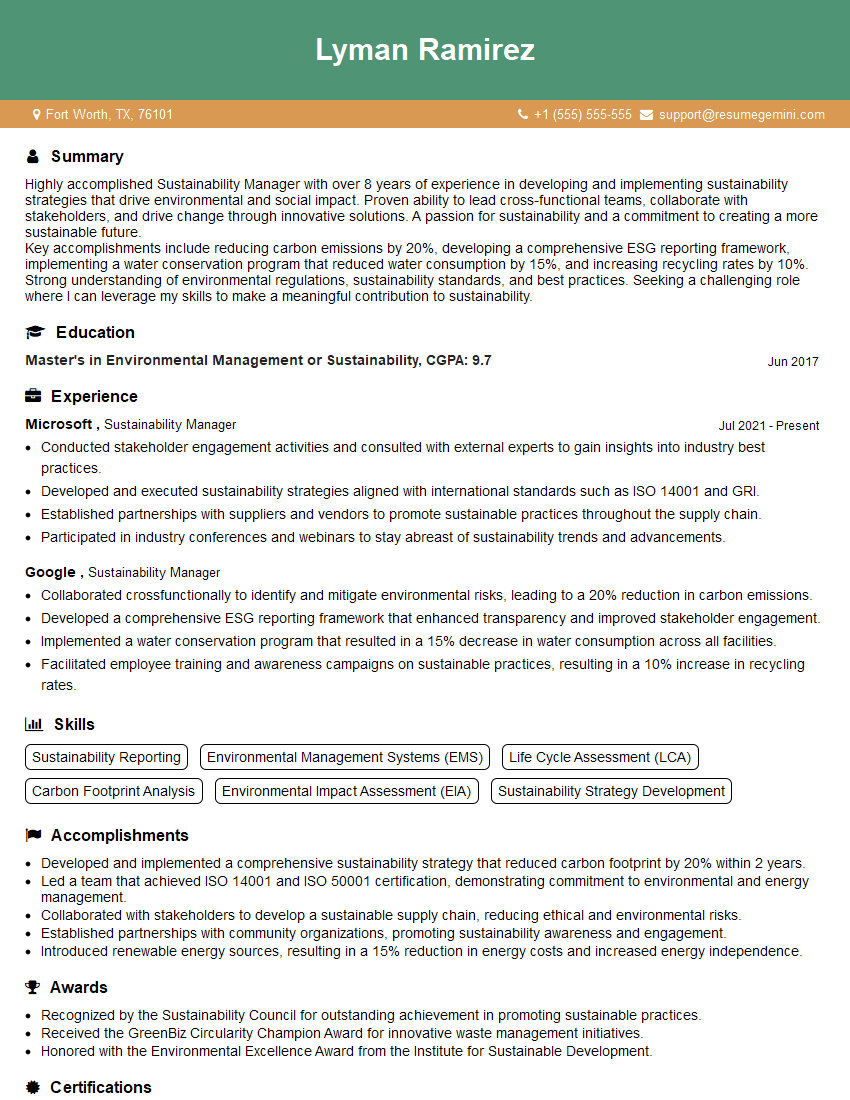
Sustainability Manager Resume Sample
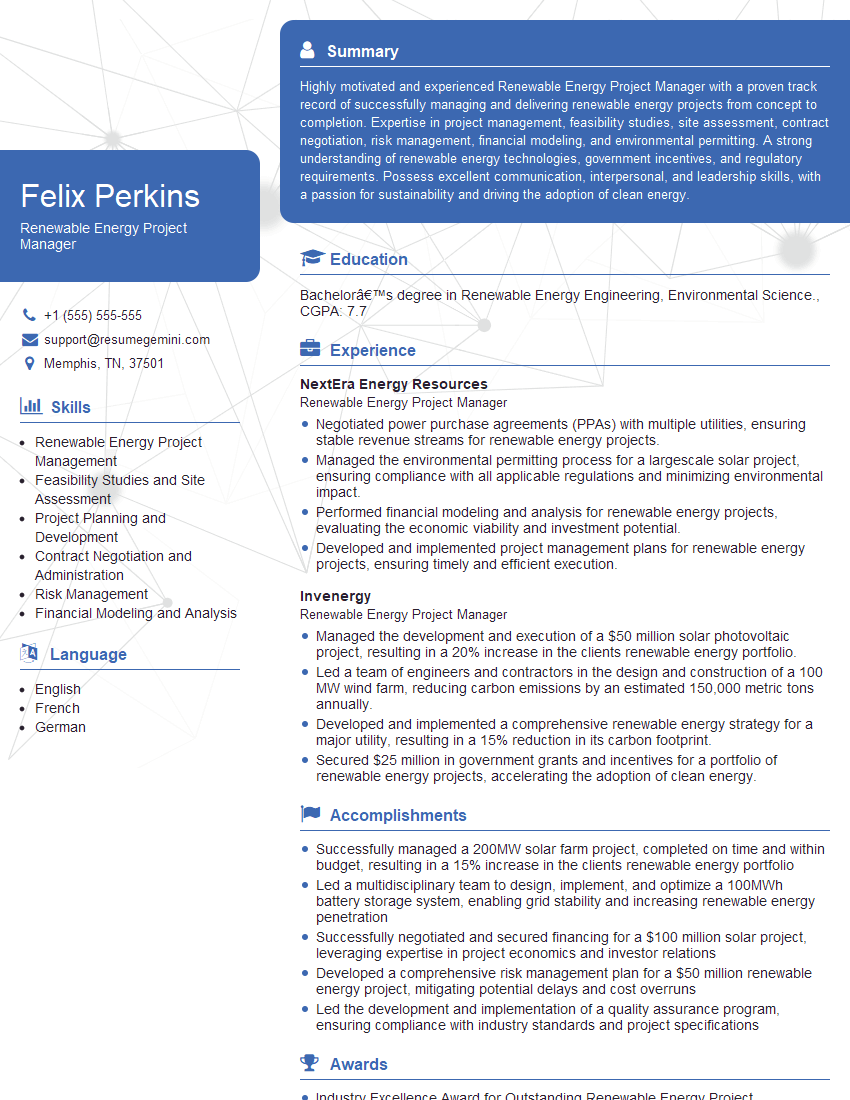
Renewable Energy Project Manager Resume Sample
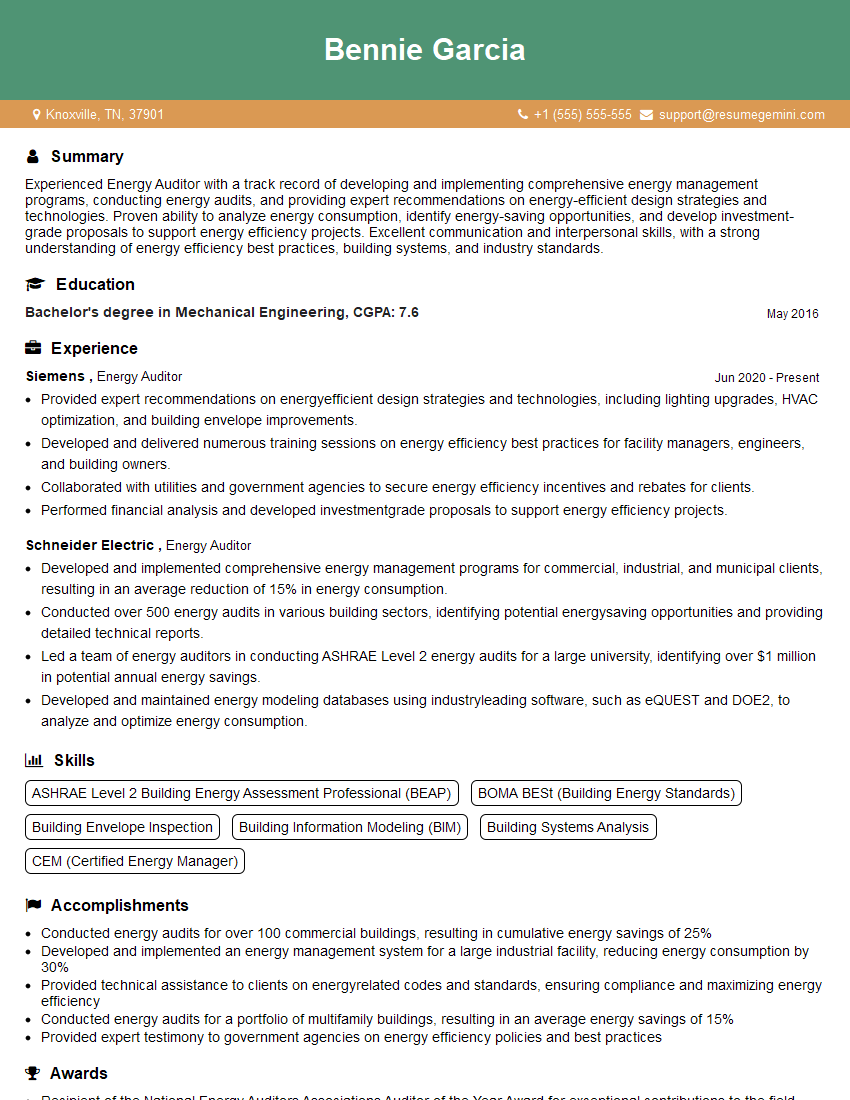
Energy Auditor Resume Sample
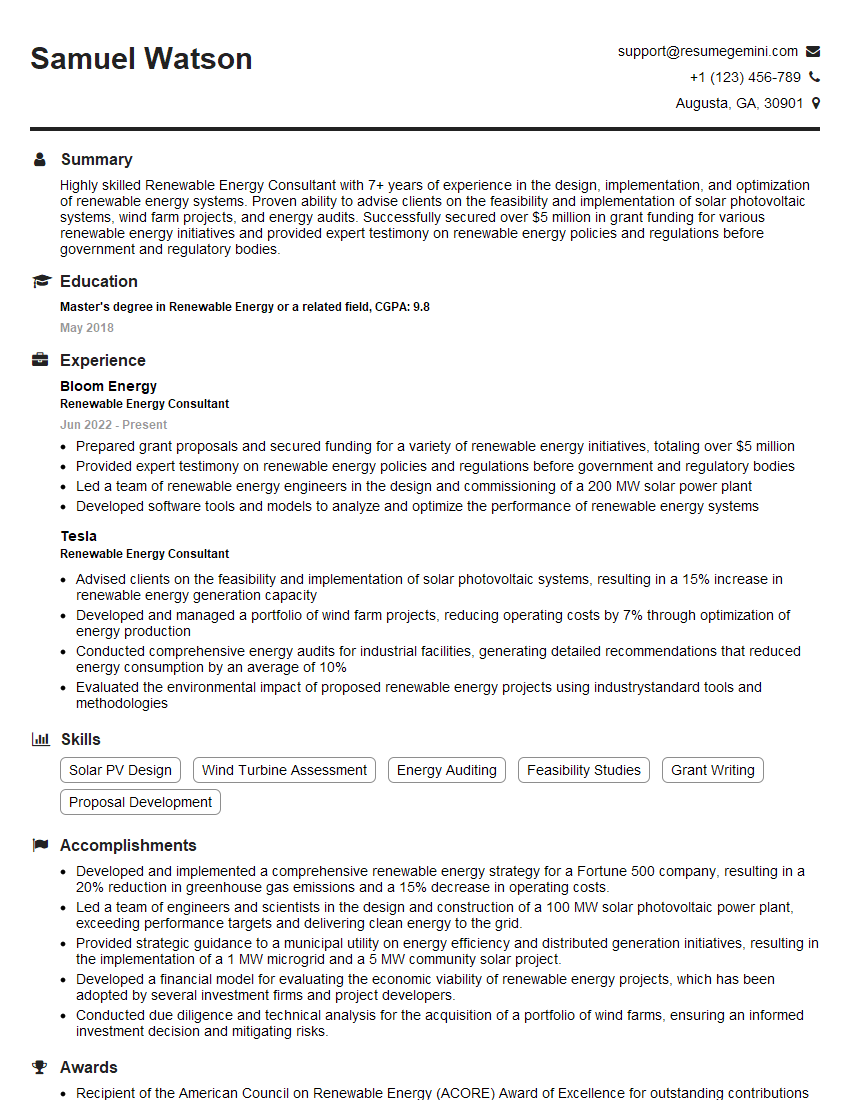
Renewable Energy Consultant Resume Sample
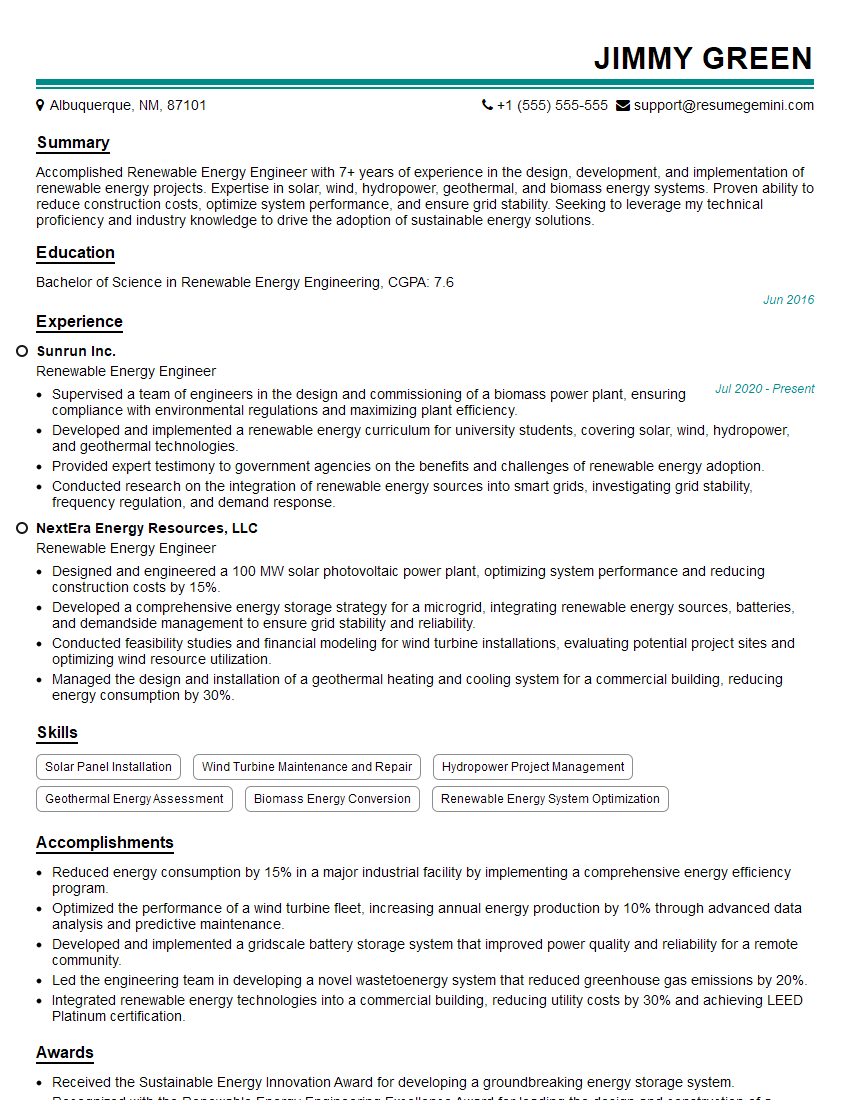
Renewable Energy Engineer Resume Sample
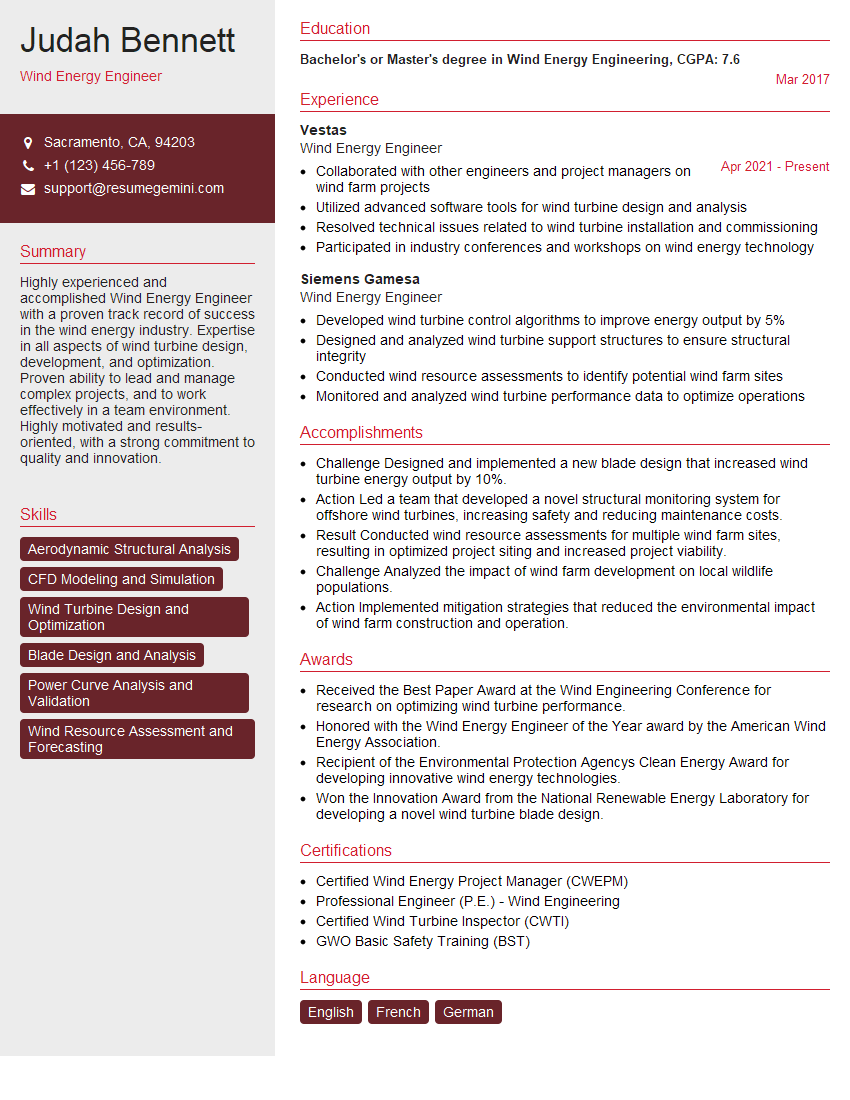
Wind Energy Engineer Resume Sample
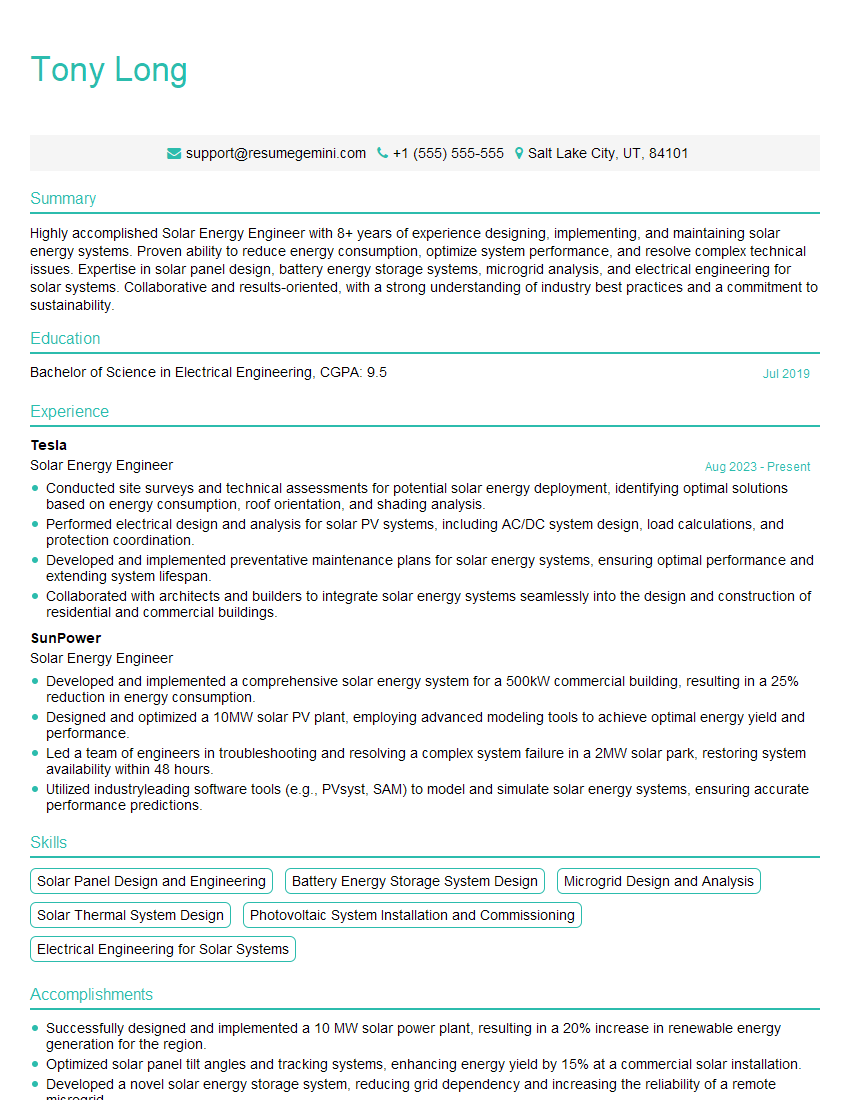
Solar Energy Engineer Resume Sample

Solar Panel Installer Resume Sample
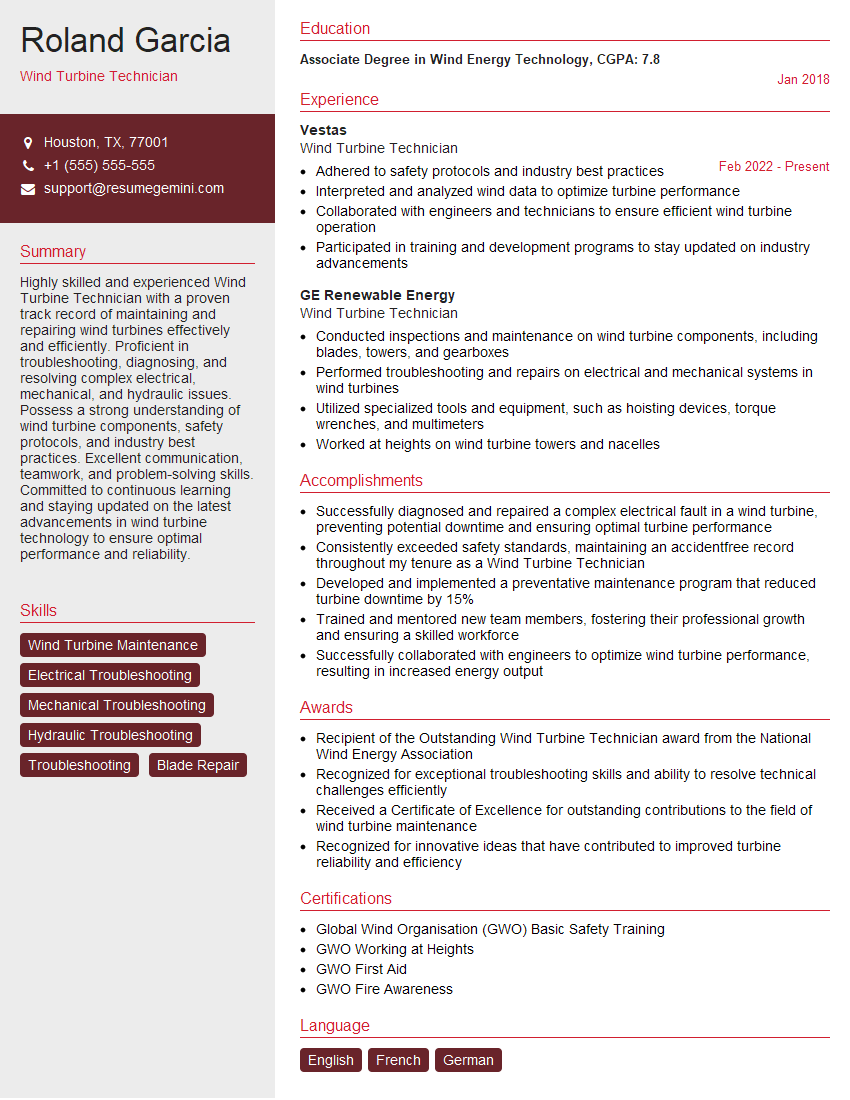
Wind Turbine Technician Resume Sample
Explore more articles
Users Rating of Our Blogs
Share Your Experience
We value your feedback! Please rate our content and share your thoughts (optional).
What Readers Say About Our Blog
Very informative content, great job.
good