Preparation is the key to success in any interview. In this post, we’ll explore crucial Grave Excavation interview questions and equip you with strategies to craft impactful answers. Whether you’re a beginner or a pro, these tips will elevate your preparation.
Questions Asked in Grave Excavation Interview
Q 1. What safety regulations must be followed during grave excavation?
Grave excavation demands stringent safety protocols to protect both the workers and the sanctity of the burial site. These regulations vary slightly by jurisdiction but generally encompass several key areas:
- Personal Protective Equipment (PPE): This is paramount and includes hard hats, safety glasses, gloves, steel-toed boots, and high-visibility clothing. For example, I always ensure my team wears appropriate PPE, even in seemingly benign conditions. One never knows when a hidden rock or unstable soil might pose a risk.
- Site Security: The excavation site must be clearly marked and secured to prevent unauthorized access. This includes barriers, warning signs, and potentially even security personnel depending on the location and circumstances. I’ve personally overseen projects where we coordinated with local authorities to manage pedestrian and vehicular traffic near the excavation.
- Excavation Practices: Safe excavation techniques are crucial. This involves shoring or sloping of trenches to prevent cave-ins, especially in unstable soil conditions. We use appropriate machinery and methods to avoid damaging surrounding graves or structures. I always perform thorough site assessments before beginning any excavation to identify potential hazards.
- Utility Location: Before any digging begins, we meticulously locate and mark underground utilities (power lines, water pipes, gas lines) to prevent accidental damage. One instance where this was critical involved using ground-penetrating radar to locate a buried water main before excavating a particularly deep grave. It saved us from a potentially disastrous situation.
- Emergency Procedures: A clear emergency plan must be in place, including communication protocols, access for emergency services, and procedures for handling accidents or injuries. Regular safety training is essential for every member of the team.
Q 2. Describe your experience with various types of excavation equipment.
My experience with excavation equipment spans various types, each suited to different needs and soil conditions. I’m proficient in operating and overseeing the use of:
- Backhoes: These are versatile machines ideal for most grave excavations, offering precise control for digging and backfilling. I’ve used backhoes extensively, particularly in situations requiring efficient removal of large volumes of earth.
- Mini-excavators (Compact Excavators): Perfect for confined spaces and tight cemeteries, these offer maneuverability crucial in densely populated areas. Their smaller size minimizes the risk of damage to surrounding areas.
- Hand tools: In situations requiring delicate work or where machinery access is limited, hand tools (shovels, picks, tampers) are indispensable. I often use these in the final stages of excavation to ensure precision and prevent damage to the casket.
Understanding the capabilities and limitations of each type is key to choosing the right equipment for each project. For instance, a backhoe’s powerful digging capabilities are perfect for removing large quantities of soil, but its size might be unsuitable for a small, crowded graveyard where a mini-excavator would be more appropriate.
Q 3. How do you ensure accurate grave dimensions and depth?
Precise grave dimensions and depth are non-negotiable for respectful burial. We use a combination of techniques to ensure accuracy:
- Pre-excavation Planning: We meticulously review cemetery records, plans, and specifications to determine the required dimensions and depth. I always verify the information against onsite markers and any existing documentation.
- Layout and Marking: Precise measurements are taken and marked on the ground using stakes and string lines. This ensures the grave is correctly positioned and aligned before digging begins. We use laser levels and measuring tapes for optimal accuracy, allowing for minimal margin of error.
- Depth Measurement: Depth is monitored continuously during excavation using measuring tapes and sometimes laser levels to maintain the exact depth required. The final depth is always double-checked before the casket is lowered. I’ve found that consistent monitoring is vital to avoid either digging too shallow or too deep.
- Verification: Before backfilling begins, the grave’s dimensions and depth are re-verified to ensure compliance with specifications and regulations.
Q 4. What is your experience with different soil types and their impact on excavation?
Soil type significantly impacts excavation. My experience includes working with various soil types, each presenting unique challenges:
- Clay: Can be very difficult to excavate, often requiring specialized equipment and techniques to prevent sticking and compaction. We utilize appropriate machinery and sometimes add moisture to make it easier to work with.
- Sandy Soil: Easier to excavate, but can be prone to collapse, necessitating shoring or sloping of trenches for safety. We usually take extra precautions when working with sandy soil.
- Rocky Soil: Requires specialized tools and possibly blasting (with appropriate permits and safety measures) to remove large rocks. This type of soil often necessitates the use of heavier equipment.
- Other: We also encounter combinations of these types, adding more complexity. A thorough site assessment before work begins is crucial to adapt our methods accordingly.
Knowing how to adapt techniques to different soil conditions is a critical skill. For example, using a ripper attachment on the backhoe can help break up hard clay or rocky soil, while careful sloping is essential in sandy areas to prevent cave-ins.
Q 5. How do you handle unexpected obstacles during excavation (e.g., utilities, rocks)?
Unexpected obstacles are a reality of grave excavation. My approach is systematic and prioritizes safety:
- Immediate Stoppage: Upon encountering any unexpected obstacle (utilities, rocks, previously unknown graves), all work immediately ceases in the affected area. Safety is the top priority.
- Assessment and Identification: The obstacle is carefully assessed and identified. This might involve contacting utility companies, using ground-penetrating radar, or consulting with archaeologists if potentially historical artifacts are discovered.
- Appropriate Action: Based on the assessment, we take the appropriate action. This might involve rerouting the excavation, modifying the grave dimensions slightly, or calling in specialized contractors to handle utilities or historical finds. In one instance, we discovered a previously undocumented water pipe; we immediately contacted the utility company and worked with them to safely reroute the excavation.
- Documentation: All unexpected obstacles and the actions taken are meticulously documented. This is crucial for record-keeping, insurance purposes, and potential future reference.
Q 6. Explain your process for backfilling a grave.
Backfilling a grave is as important as the excavation itself. It must be done carefully and methodically to ensure the grave is stable and the surface is restored to its original condition. The process typically involves these steps:
- Careful Placement: The excavated soil is carefully placed back into the grave in layers, compacting each layer to prevent settling. I emphasize using smaller amounts of soil per layer to ensure uniform compaction.
- Compaction: Proper compaction is vital for stability and prevents sinking. We use specialized compacting equipment such as plate compactors, but hand tamping is used in areas where machinery isn’t feasible. Proper compaction reduces the likelihood of the grave settling unevenly after burial.
- Leveling: The grave is carefully leveled to match the surrounding ground level, ensuring a smooth and aesthetically pleasing finish. I always strive for a seamless integration of the grave into the existing landscape.
- Seeding/Sodding: The area is then seeded or sodded to restore vegetation to its original condition. The choice between seed and sod depends on the existing vegetation and the time of year. We always use native species appropriate to the environment.
Q 7. What are the proper procedures for handling and disposing of excavated materials?
Proper handling and disposal of excavated materials are crucial for environmental protection and compliance with regulations. The process involves:
- Segregation: If any contaminated soil is found (e.g., from previous burials or other sources), it’s segregated from clean soil and handled according to specific regulations, potentially requiring special disposal methods. This is a key aspect that prevents potential cross-contamination.
- Disposal: Clean soil is typically disposed of according to local regulations. This could involve its reuse on site, transfer to an approved landfill, or use in other approved projects. We always ensure the disposal method complies with all environmental regulations.
- Documentation: All material handling and disposal activities are meticulously documented. This includes the amount of material removed, its location, disposal methods, and the relevant permits or approvals. Precise documentation is critical for accountability and auditing.
Environmental responsibility is key. We always strive to minimize environmental impact and comply with all regulations regarding material disposal. This often involves selecting disposal methods that minimize transportation distances and energy usage.
Q 8. Describe your experience with grave liners and vaults.
Grave liners and vaults are crucial for protecting the casket and remains. Liners are typically made of concrete or polyethylene, providing a barrier against soil collapse and groundwater. Vaults, on the other hand, are larger, usually made of concrete or reinforced materials, offering a more robust form of protection. My experience encompasses the installation of both, ranging from simple liner placements in easily accessible graves to more complex installations involving vaults in challenging soil conditions. For instance, I’ve worked on sites with high water tables, requiring specialized techniques to ensure proper vault placement and prevent settling. I’m familiar with various liner and vault designs and their respective advantages and disadvantages, allowing me to select the most appropriate option based on the specific site conditions and customer requirements. We frequently encounter situations where a specific liner or vault is requested by the family, and I must ensure that it’s installed correctly to meet their wishes.
Q 9. How do you ensure the structural integrity of the grave after excavation?
Structural integrity after excavation is paramount. This begins with careful planning and assessment of the soil type before excavation even commences. We use various techniques to determine soil stability, and then select the right excavation method to minimize disturbance. Once the grave is excavated, we ensure the dimensions are precise and the sides are stable, often using shoring or bracing if necessary, particularly in loose or unstable soil. The backfilling process is critical. We use a layered approach, compacting the soil in stages to prevent settling. This process involves using appropriate machinery and monitoring for any signs of instability. We always leave a slight mound of soil above the grave liner or vault to account for settling over time. In challenging situations like areas prone to landslides, we may consult with a geotechnical engineer to ensure the long-term stability of the grave.
Q 10. What is your experience with operating heavy machinery in a cemetery setting?
Operating heavy machinery in a cemetery setting requires precision and care. My experience includes operating excavators, backhoes, and small bulldozers, all while navigating tight spaces and avoiding damage to surrounding graves and landscaping. Safety is, of course, the top priority. This includes pre-operation checks of the machinery, ensuring the work area is clear of obstructions and bystanders, and using appropriate speed and caution while maneuvering. I have experience using GPS guided machinery to improve accuracy in grave locations, reducing the risk of accidental damage to neighboring plots. I am proficient in various attachment types, allowing for efficient and controlled excavation, backfilling, and grading. In one particular instance, we had to use a mini-excavator with a specialized narrow bucket to reach a grave situated close to a large, established tree, successfully preventing damage to the tree’s roots.
Q 11. How do you maintain a respectful and dignified approach to your work?
Respect and dignity are fundamental to our work. We treat each grave with the utmost care and solemnity, understanding the emotional significance for the families involved. This involves maintaining a quiet and respectful atmosphere during excavation, avoiding unnecessary noise or disruptive actions. We carefully handle any remains or personal items encountered during the process, ensuring their proper treatment and return to the family. Furthermore, we always dress appropriately, adhering to professional standards of conduct. We also take care to restore the site to its original condition after the burial, minimizing any disruption to the surrounding area. One example of this involved a family wanting to plant a specific type of flower on the grave; we helped them carefully prepare the soil ensuring the new planting wouldn’t interfere with the grave’s structural integrity.
Q 12. What is your experience with working in varied weather conditions?
Grave excavation is conducted in all weather conditions. My experience encompasses working in extreme heat, cold, rain, and even snow. We adjust our procedures accordingly, prioritizing safety in challenging conditions. This includes using appropriate clothing and equipment, taking more frequent breaks in extreme temperatures, and being mindful of slippery or unstable ground during inclement weather. In heavy rain, for instance, we might need to temporarily suspend operations to avoid damage to the grave or risk to workers. Winter conditions often require the use of de-icing agents to prevent equipment malfunctions and maintain safety. Regardless of the weather, we always maintain the utmost respect for the process and the deceased.
Q 13. Describe your knowledge of local regulations concerning grave excavation.
Knowledge of local regulations is essential for compliance. This includes understanding depth requirements, permissible soil types, the handling of remains, and the proper procedures for grave opening and closing. We must obtain necessary permits before commencing any work, and ensure adherence to all local codes and ordinances throughout the process. This knowledge extends to various aspects, including environmental regulations concerning waste disposal and the protection of local flora and fauna during excavation. Staying informed about these regulations requires ongoing professional development and a proactive approach to monitoring changes in local legislation. We often consult with relevant authorities to clarify any ambiguities or seek guidance on challenging situations.
Q 14. How do you prioritize safety while working under pressure or time constraints?
Safety is non-negotiable, especially when working under pressure or time constraints. This requires careful planning, efficient teamwork, and a systematic approach to our tasks. We utilize risk assessments to identify potential hazards and implement appropriate safety measures. This might involve using extra personnel to help with certain aspects of the work, ensuring that machinery operates at a safe pace, or having someone dedicated to monitoring the progress and conditions of the grave site throughout the excavation process. Clear communication among the team is vital, ensuring that everyone is aware of potential risks and procedures. We always put safety first, even if it means adjusting timelines to maintain a safe and efficient workflow.
Q 15. What is your experience working independently or as part of a team?
Throughout my ten-year career in grave excavation, I’ve consistently worked both independently and as part of a team. Working independently requires meticulous planning and execution, crucial for tasks like site preparation and initial excavation. For example, I once single-handedly prepared a challenging hillside burial site, ensuring proper drainage and stability before the team arrived. Teamwork is essential for larger projects and exhumations. My role often involves coordinating with other team members – foremen, equipment operators, and pathologists – ensuring smooth, safe, and respectful operations. A recent exhumation required precise coordination to prevent damage to the remains and the surrounding area, a task successfully completed through clear communication and collaborative effort.
Career Expert Tips:
- Ace those interviews! Prepare effectively by reviewing the Top 50 Most Common Interview Questions on ResumeGemini.
- Navigate your job search with confidence! Explore a wide range of Career Tips on ResumeGemini. Learn about common challenges and recommendations to overcome them.
- Craft the perfect resume! Master the Art of Resume Writing with ResumeGemini’s guide. Showcase your unique qualifications and achievements effectively.
- Don’t miss out on holiday savings! Build your dream resume with ResumeGemini’s ATS optimized templates.
Q 16. How do you handle difficult situations or challenging requests?
Difficult situations in grave excavation often involve unexpected findings (e.g., unstable soil, unforeseen utilities, or deeper than expected graves). My approach is systematic: First, I assess the situation calmly, identifying the specific challenge. Then, I develop a solution, considering safety as the paramount concern. For instance, encountering unexpectedly unstable soil necessitates a revised excavation method, potentially involving shoring techniques or a different excavation tool. I always prioritize communication with my team and any relevant authorities (e.g., utility companies) before proceeding. Challenging requests, like a short-notice exhumation, are addressed by prioritizing efficient scheduling and resource allocation to meet deadlines without compromising safety or quality of work.
Q 17. Describe your experience troubleshooting equipment malfunctions.
Troubleshooting equipment malfunctions is a crucial part of the job. My experience covers a wide range of equipment, from excavators and backhoes to smaller hand tools. I begin by identifying the problem, often through a combination of visual inspection and listening for unusual sounds. For instance, a persistent clicking sound in a backhoe might indicate a worn-out hydraulic component. I’m proficient in basic maintenance and repair, enabling me to address minor issues on the spot, minimizing downtime. However, for more significant problems, I know when to call for professional repair, ensuring minimal disruption to the work process. I meticulously document all repairs and maintenance, ensuring equipment remains in optimal working condition.
Q 18. What measures do you take to protect yourself and others from potential hazards?
Safety is paramount in grave excavation. We adhere strictly to OSHA regulations and utilize all necessary Personal Protective Equipment (PPE), including hard hats, safety glasses, gloves, and high-visibility clothing. Before commencing any excavation, a thorough site assessment is conducted to identify potential hazards like underground utilities, unstable soil, or the presence of hazardous materials. We utilize appropriate safety measures – such as shoring techniques for unstable soil and calling utility companies to mark underground lines – to mitigate risks. We also conduct regular safety briefings and training to ensure everyone understands and follows safety protocols. A recent incident involving unexpectedly wet ground prompted an immediate halt to excavation, allowing us to implement reinforced shoring before continuing the work safely.
Q 19. How do you maintain the cleanliness and organization of your work area?
Maintaining a clean and organized work area is crucial for safety and efficiency. We follow a structured process of cleaning and organizing our tools and equipment after each task. Debris is promptly removed, and the area is levelled and stabilized before leaving the site. A designated area is used for storing materials and tools in an organized manner. This practice helps prevent accidents and makes subsequent tasks easier and more efficient. This systematic approach has been instrumental in maintaining a smooth and productive workflow in even the most challenging conditions, particularly in tight spaces or busy cemeteries.
Q 20. Describe your experience with maintaining accurate records of your work.
Accurate record-keeping is a non-negotiable aspect of grave excavation. We maintain detailed records of every excavation, including GPS coordinates, depth, soil conditions, any findings, and the condition of any remains encountered. These records are meticulously documented and filed for future reference, complying with legal and regulatory requirements. We utilize both paper and digital records, ensuring data is secure and easily accessible. This systematic recording enables us to provide accurate reports to relevant authorities and facilitates efficient tracking of projects. Having complete and accurate records is crucial for legal and regulatory compliance, as well as for facilitating future reference or potential investigations.
Q 21. What is your knowledge of different burial methods and their implications?
My knowledge encompasses various burial methods, each with unique implications for excavation. Traditional in-ground burial varies significantly based on factors like soil type and coffin material. Casket placement and decomposition rates vary dramatically, necessitating careful excavation to avoid damage. Cremation burials require a different approach, involving careful handling of urns. Above-ground burials (mausoleums, crypts) present different challenges, requiring specialized techniques and considerations for structural integrity. Understanding these variations is crucial for employing appropriate methods and minimizing risks to both the remains and the surrounding environment. For example, the presence of a vault influences both excavation techniques and the safety precautions taken, necessitating specialized tools and protocols.
Q 22. Explain your experience with working with grieving families or funeral directors.
Working with grieving families and funeral directors requires immense sensitivity and professionalism. My approach centers around clear, compassionate communication. I understand this is a deeply emotional time, and I strive to be respectful and empathetic throughout the entire process. I’ve found that proactively explaining each step of the excavation, answering any questions patiently, and offering reassurance goes a long way in building trust. For example, I once worked with a family who had specific requests regarding the placement of a loved one’s remains. I took the time to explain the logistical challenges involved and collaboratively found a solution that honored their wishes. Similarly, I regularly collaborate with funeral directors to ensure a smooth and efficient process, coordinating schedules and addressing any immediate needs or concerns they may have. This includes communicating any unexpected findings during excavation that might affect the funeral arrangements.
Q 23. How do you handle the emotional aspects of this work?
The emotional toll of this work is undeniable. I manage it through a combination of professional boundaries and self-care practices. Maintaining professionalism doesn’t mean being unfeeling; rather, it means focusing on the task at hand with precision and care while understanding that my emotions are separate from the family’s grief. I’ve learned to channel my feelings into meticulous attention to detail during the excavation, ensuring everything is done respectfully and accurately. After a particularly difficult job, I prioritize debriefing with colleagues—if available— to process emotions constructively. Outside of work, I rely on healthy habits such as exercise and spending time with loved ones to maintain emotional balance. This kind of work necessitates that we have coping mechanisms in place to avoid burnout.
Q 24. What is your approach to problem-solving during excavation projects?
My approach to problem-solving during excavation involves a methodical, multi-step process. Firstly, I carefully assess the situation: what is the problem? What are the constraints (e.g., soil type, weather conditions, existing infrastructure)? Then, I gather relevant information. This may involve consulting maps, site surveys, or even contacting local historical societies if there are concerns about potential unmarked graves or unusual geological formations. Next, I develop possible solutions, weighing their feasibility and potential risks. I always prioritize safety, both for my team and the surrounding environment. For example, if I encounter unexpected bedrock during an excavation, I would adjust my equipment and techniques accordingly, possibly seeking specialized support if needed. After implementing a solution, I thoroughly document the process and outcome for future reference and to inform any adjustments to our procedures.
Q 25. How do you manage workload and priorities to meet deadlines?
Managing workload and meeting deadlines involves meticulous planning and effective prioritization. I use project management techniques, such as creating detailed schedules, allocating tasks, and setting realistic timelines. I regularly communicate with clients and colleagues to keep everyone informed of progress and address any potential roadblocks. This proactive approach is crucial because unexpected delays (like unexpected ground conditions) can easily disrupt the schedule. For instance, if one project runs over, I will use contingency planning and reassess priorities to minimize impact on other projects. The use of digital tools for task management and scheduling is paramount to staying organized and on schedule.
Q 26. What are your strengths and weaknesses regarding this type of work?
My strengths lie in my meticulous attention to detail, my ability to work calmly under pressure, and my strong communication skills. My experience ensures precision, even in difficult situations, and this is vital for respectful handling of human remains. A weakness, one I am actively working to improve, is delegating tasks. I often want to oversee everything myself to ensure the highest standards, but recognizing the value of a skilled team and their contributions is something I am consciously fostering. This ensures team efficiency and prevents burnout.
Q 27. What are your salary expectations?
My salary expectations are commensurate with my experience and skills in this specialized field. I am open to discussing a competitive compensation package based on the specifics of the role and the company’s compensation structure. I would be happy to provide further detail once I understand the full scope of the responsibilities and benefits offered.
Q 28. Why are you interested in this position?
I am interested in this position because it offers the opportunity to combine my skills and experience with a company that values meticulous work, respects ethical considerations, and prioritizes sensitivity towards grieving families. I am drawn to the blend of technical expertise required for the excavation process and the human element involved in supporting families during a difficult time. The opportunity to contribute to a respectful and efficient process is extremely motivating to me.
Key Topics to Learn for Grave Excavation Interview
- Safety Regulations and Procedures: Understanding and adhering to all relevant health and safety regulations, including OSHA guidelines for excavation and trenching.
- Excavation Techniques: Mastering various excavation methods, such as hand excavation, machine excavation, and the use of specialized equipment. Practical application includes choosing the appropriate method based on soil conditions and project requirements.
- Soil Analysis and Identification: Knowing how to identify different soil types and their properties (e.g., stability, drainage) to determine the appropriate excavation techniques and support systems.
- Shoring and Sloping Techniques: Understanding and applying various shoring and sloping methods to prevent cave-ins and ensure worker safety in trenches and excavations.
- Ground Penetrating Radar (GPR) and other Detection Methods: Familiarity with using GPR and other technologies to locate underground utilities and avoid damage to existing infrastructure.
- Environmental Considerations: Understanding environmental regulations and best practices related to excavation, including minimizing soil erosion and protecting groundwater.
- Blueprint Reading and Site Interpretation: Ability to interpret engineering plans and accurately locate excavation areas on the site.
- Problem-Solving and Decision-Making: Demonstrate ability to assess on-site challenges, make informed decisions quickly and efficiently, and implement solutions while maintaining safety.
- Equipment Operation and Maintenance: Knowledge of operating and maintaining various excavation equipment (e.g., backhoes, excavators). This includes understanding preventative maintenance schedules and troubleshooting minor equipment issues.
- Teamwork and Communication: Highlighting experience in collaborative settings, efficient communication with supervisors and crew members, and maintaining a safe and productive work environment.
Next Steps
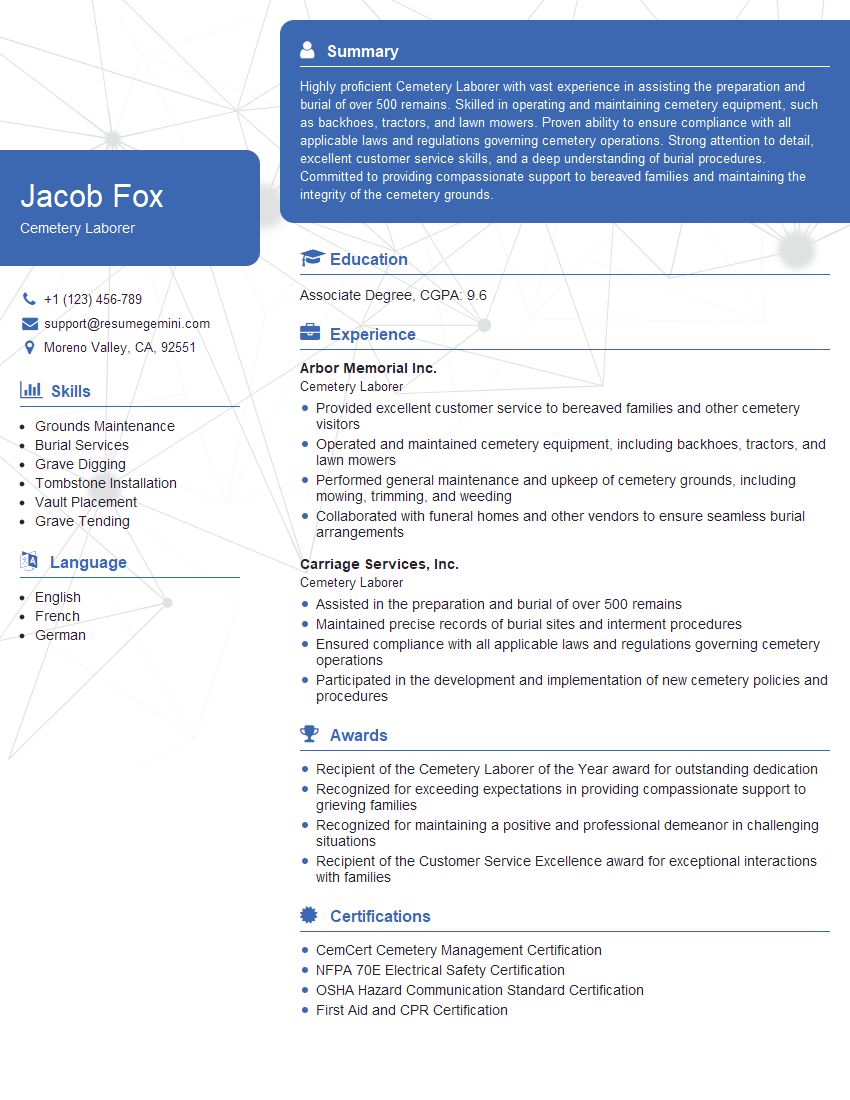
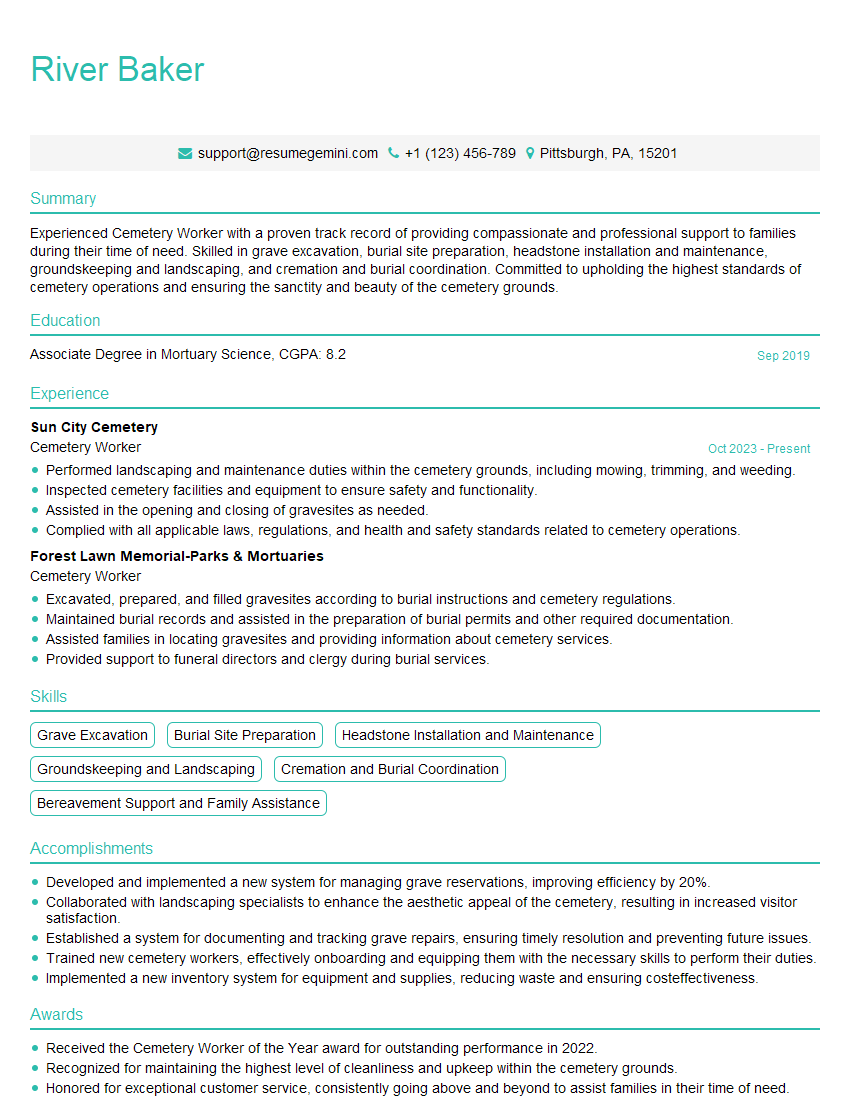
Mastering grave excavation techniques opens doors to a rewarding career with opportunities for advancement and specialization. To maximize your job prospects, creating a strong, ATS-friendly resume is crucial. ResumeGemini is a trusted resource that can help you build a professional and impactful resume tailored to highlight your skills and experience. Examples of resumes tailored to the Grave Excavation field are available to guide you through the process. Investing time in crafting a compelling resume significantly increases your chances of landing your dream job.
Explore more articles
Users Rating of Our Blogs
Share Your Experience
We value your feedback! Please rate our content and share your thoughts (optional).
What Readers Say About Our Blog
Very informative content, great job.
good