Unlock your full potential by mastering the most common Bump Keying interview questions. This blog offers a deep dive into the critical topics, ensuring you’re not only prepared to answer but to excel. With these insights, you’ll approach your interview with clarity and confidence.
Questions Asked in Bump Keying Interview
Q 1. Explain the mechanics of bump keying.
Bump keying is a lock-picking technique that uses a specially modified key, known as a bump key, to manipulate the pins within a pin tumbler lock. Unlike traditional lock picking, which requires precise manipulation of individual pins, bump keying utilizes a forceful impact to lift all the pins simultaneously to the shear line, allowing the lock to open. Imagine it like this: Instead of carefully placing each pin in its correct position, you’re giving them all a simultaneous, controlled shove.
The bump key is designed with slightly oversized cuts that correspond to the general shape of a typical pin tumbler key. When the bump key is inserted and struck sharply (usually with a small hammer or other suitable tool), the impact forces the pins upward. The oversized cuts on the key ensure that at least one part of each pin is lifted sufficiently to clear the shear line, allowing the cylinder to rotate and unlock the mechanism. The success of this technique relies on the momentum generated by the strike, not on precise manipulation of individual pins.
Q 2. Describe the tools required for bump keying.
The tools required for bump keying are relatively simple but specific. The most crucial element is the bump key itself. These are often commercially available, but skilled locksmiths can create them. In addition, you’ll need a striking tool – a small hammer or even a firm tap from another tool will work, depending on the lock and the bump key. While not always necessary, some practitioners use a tension wrench. This tool applies a small amount of torque to the lock cylinder, holding it in place and facilitating a smoother bump. It helps ensure consistent pressure while striking the bump key. Finally, a good understanding of pin tumbler lock mechanics and the ability to recognize the characteristics of suitable locks is crucial.
Q 3. What are the limitations of bump keying?
Bump keying, while effective against some locks, isn’t a universal solution. Its limitations stem from the inherent design variations of pin tumbler locks and the precision required for success. One major limitation is that it’s less reliable on higher-security locks with features like anti-bump pins, which are designed to resist this type of attack. The success rate also depends heavily on the skill of the person performing the bump. A poorly executed bump might damage the lock cylinder or fail to open it entirely. Furthermore, many locks have defense mechanisms that hinder the impact transfer required for a successful bump, preventing the pins from lifting simultaneously.
Another critical limitation is that it can potentially damage the lock mechanism, rendering it unusable or requiring expensive repairs. This damage can range from minor keyway damage to more serious internal damage.
Q 4. How does the design of a pin tumbler lock affect bump keying success?
The design of a pin tumbler lock significantly influences the success of bump keying. Locks with standard pins are more susceptible. However, manufacturers have developed various countermeasures. Anti-bump pins, for instance, possess a unique shape or internal structure that prevents them from being easily lifted simultaneously. These pins might have a mushroom-shaped head or an offset that impedes the simple upward force of a bump key. Other security features like serrated pins or spooled pins also make bump keying significantly harder or impossible. The spacing and tolerances between pins can also affect success; tighter tolerances make it harder to force the pins.
Essentially, the more complex the pin stack within the cylinder and the more sophisticated the pin design, the less vulnerable the lock is to bump keying. The depth and spacing of the keyway can also impact the effectiveness.
Q 5. What are the ethical considerations surrounding bump keying?
The ethical considerations surrounding bump keying are significant. Its use for unauthorized entry is illegal and carries severe legal repercussions. While locksmiths use bump keying techniques for legitimate purposes like gaining access to locked properties for emergency situations, or for training and demonstration purposes, its use for illicit activities raises serious ethical questions. It is considered a violation of privacy and a form of property crime. Even knowing how to perform bump keying doesn’t justify its misuse. Responsible professionals emphasize the importance of legal and ethical use, emphasizing the importance of obtaining proper authorization before attempting to open any lock.
Q 6. How can you identify a lock susceptible to bump keying?
Identifying a lock susceptible to bump keying requires an understanding of its characteristics. Locks with standard pin configurations are more vulnerable. You should look for older locks, often found in older buildings or on less secure entry points. Look for lack of visible security features such as anti-bump pins. A slightly loose feel or play in the cylinder might indicate vulnerability, although this isn’t a definite sign. However, it’s critical to understand that even with the knowledge of these indicators, visual inspection alone isn’t a reliable method for determining susceptibility. The only way to definitively know if a lock is susceptible is to try to bump it (provided you have the legal right to do so). It should be stressed that attempting to bump a lock without proper authorization is illegal.
Q 7. Compare and contrast bump keying with other lock picking methods.
Bump keying differs significantly from other lock-picking methods. Unlike raking or single-pin picking, which involve meticulously manipulating individual pins, bump keying relies on a forceful impact to lift all pins simultaneously. Raking involves sweeping the pins with a key, hoping that some will set correctly, while single-pin picking focuses on one pin at a time. These methods require more skill and patience and are more time-consuming than bump keying. While all methods open pin tumbler locks, the mechanics, tools, and required skill sets are notably distinct. The success rate of these various methods is also variable, with bump keying typically showing high success rates only on certain vulnerable locks. In contrast, picking methods, when used by skilled individuals, have higher chances of success across a broader range of locks.
Q 8. Describe different types of bump keys.
Bump keys aren’t a single type; they’re a category of keys designed to manipulate pin tumblers in a specific way. The key design varies based on the lock type and the number of pins. However, there are two primary styles commonly encountered:
Universal Bump Keys: These are designed to work on a wider range of pin tumbler locks. They are often made with several cuts that broadly approximate the configuration of different lock brands, making them a “one-size-fits-many” approach. They require more skill and force for successful use.
Specific Bump Keys: These are designed to target a particular lock manufacturer or even a specific lock model. They have cuts that precisely align with the likely pin stack configuration in the target lock. They are easier to use and offer higher success rates but necessitate precise knowledge of the target lock.
Essentially, the design of the bump key varies to match and manipulate the pin stacks within different lock mechanisms, and this impacts effectiveness and success rates.
Q 9. What are the countermeasures against bump keying?
Countermeasures against bump keying focus on preventing the manipulation of the pins during the bumping process. These include:
High-Security Pinning: Using pins with specialized shapes or materials that resist manipulation is a vital step. These pins can include spool pins, mushroom pins, or serrated pins.
Anti-Bump Pins: These pins are specifically designed to prevent the upward movement that a bump key relies upon. They may have a specific shape or a small obstruction.
Increased Pin Tumbler Complexity: More pin tumblers in a lock increase the difficulty for bump key attacks.
Improved Lock Construction: Locks with stronger internal mechanisms and tighter tolerances are less susceptible to force.
Using Different Lock Types: Completely avoiding pin tumbler locks altogether (e.g., utilizing lever locks or electronic locks) represents a significant improvement in security.
A layered security approach combining multiple countermeasures is generally far more effective than relying on any single strategy.
Q 10. How do you choose the right bump key for a specific lock?
Choosing the right bump key isn’t about selecting one from a rack. It requires knowledge of the lock’s manufacturer and model. While universal bump keys exist, they’re less reliable. For a specific lock, you’d ideally need a bump key cut to match the pin stack profile.
This involves either:
Obtaining the Lock’s Specifications: If possible, identify the lock’s exact model and manufacturer to gain information about its pin configuration (though this information is often proprietary). This can guide the creation of a specific bump key.
Profiling the Lock: If specifications aren’t available, the lock needs to be carefully profiled. This requires tools to determine the depth and position of each pin tumbler in the lock. This process is complex, time-consuming, and requires expertise.
Essentially, it’s a process of matching the key’s configuration to the lock’s internal mechanism. A poorly chosen key, even if a bump key, won’t work effectively.
Q 11. Explain the concept of ‘torque’ in relation to bump keying.
Torque is the rotational force applied to the bump key. In bump keying, the key is not just inserted and turned; it requires a precise application of force to simultaneously lift all the pins to the shear line. Insufficient torque will result in failure. Too much torque can damage the lock mechanism or the key itself.
The goal is to find the ‘sweet spot’ – enough torque to overcome the pins’ resistance without causing excessive damage or breakage. This requires a feel for the lock’s resistance and the ability to apply a controlled amount of torque. This ‘feel’ comes from experience and practice.
Q 12. How does the material of a bump key affect its performance?
The material of a bump key significantly impacts its performance and longevity. Harder materials, like hardened steel, are preferable for several reasons:
Durability: Harder materials can withstand the forces involved in bump keying without breaking or bending. Softer materials would deform easily, making the key unusable.
Precision: Harder materials allow for sharper cuts, which are critical for precise alignment with the pins in the lock.
Resistance to Wear: A durable key will maintain its shape and sharpness over repeated use.
While softer metals might be easier to initially manufacture, their inferior performance quickly offsets this advantage. The overall success and repeatability of the bump keying operation depends heavily on the choice of material.
Q 13. Describe the process of making a bump key.
Making a bump key typically involves a blank key and a process that modifies the blank to mimic the pin heights. The most common methods include:
Filing and Shaping: This is a very meticulous process involving manual filing to create the appropriate height for each pin. Precise measurements and considerable skill are needed to achieve proper pin alignment.
Milling: More advanced methods utilize precision milling machines to accurately shape the key. This allows for greater precision and repeatability compared to manual filing, significantly reducing chances of errors.
Regardless of the method, a thorough understanding of pin tumbler mechanics and the specific lock’s profile are crucial to create a functioning bump key. This process is not for amateurs as it requires specialized tools and skills.
Q 14. What are the potential legal ramifications of using bump keying?
The legal ramifications of using bump keys depend heavily on the context. Legally using bump keys might involve locksmiths employed for legitimate purposes (e.g., gaining access to a locked property during an emergency or as part of a lock-out service with the owner’s consent). However, using bump keys to gain unauthorized entry to a building or vehicle is illegal and can lead to serious consequences. These include:
Criminal Charges: Depending on the local jurisdiction, the charges could range from trespassing to burglary, both of which carry significant penalties including fines and imprisonment.
Civil Liability: Even if criminal charges are not pressed, the individual could face civil lawsuits for property damage or other losses incurred due to their actions.
Intent plays a significant role. Accidental use is different from deliberate and malicious intent. It’s vital to stress that the possession or use of bump keys is illegal unless authorized in a specific context.
Q 15. How can you improve your success rate with bump keying?
Improving your bump keying success rate hinges on practice, precision, and understanding the nuances of different lock mechanisms. Think of it like learning a musical instrument – the more you practice, the better you become.
- Practice on various lock types: Start with simpler pin tumbler locks and gradually progress to more complex ones. Each lock has subtle variations in its pin configuration.
- Develop a feel for the correct tension: Too much tension will bind the pins, while too little won’t provide enough force for the pins to set. It’s about finding that ‘sweet spot’ through repeated attempts.
- Master the bump technique: A smooth, controlled strike is crucial. Avoid jarring movements which can damage the key or lock.
- Use high-quality bump keys: A poorly made bump key will hamper your success. The key needs precisely machined shoulders and a consistent profile.
- Understand pin stacking: Knowing how the pins interact and the order in which they must be set will greatly increase your chances of success.
Consistent practice and attention to detail are key – pun intended! – to becoming proficient in bump keying. Don’t get discouraged by initial failures; it’s a skill that requires patience and persistence.
Career Expert Tips:
- Ace those interviews! Prepare effectively by reviewing the Top 50 Most Common Interview Questions on ResumeGemini.
- Navigate your job search with confidence! Explore a wide range of Career Tips on ResumeGemini. Learn about common challenges and recommendations to overcome them.
- Craft the perfect resume! Master the Art of Resume Writing with ResumeGemini’s guide. Showcase your unique qualifications and achievements effectively.
- Don’t miss out on holiday savings! Build your dream resume with ResumeGemini’s ATS optimized templates.
Q 16. What are some common mistakes made during bump keying?
Common mistakes in bump keying often stem from improper technique or inadequate preparation. These errors can lead to damage to the lock, the key, or simply failure to open the lock.
- Applying too much or too little tension: This is the most frequent mistake. Incorrect tension prevents the pins from setting properly.
- Improper striking technique: A forceful, uncontrolled strike can damage the lock or the key. A light, controlled tap is needed.
- Using a poorly-made bump key: A substandard bump key will not fit or function correctly, leading to repeated failures.
- Ignoring the feedback from the lock: Experienced bump keyers learn to ‘feel’ the lock and understand what it’s telling them about the pin positions.
- Not paying attention to detail: Small variations in lock design or manufacture can significantly affect the bump keying process.
Remember, bump keying requires finesse and patience. Careful observation and a methodical approach are crucial to avoid these common pitfalls.
Q 17. How do you adapt your bump keying technique for different lock brands?
Adapting your bump keying technique to different lock brands requires understanding the variations in their internal mechanisms. While the basic principles remain the same, the specific pin configurations and tolerances differ between manufacturers.
- Keyway variations: Different brands have unique keyways, so you’ll need bump keys specifically designed for those keyways.
- Pin configurations: The number, size, and arrangement of pins vary. This dictates the bump key’s design and the applied force.
- Pin material and tolerances: Different materials and manufacturing tolerances affect pin movement and resistance to the bump key.
- Security pins: Some locks use security pins that are more difficult to manipulate with a bump key.
Researching specific lock brands and their unique characteristics is vital. It’s not a ‘one-size-fits-all’ technique. Having a variety of bump keys designed for different brands is essential for success.
Q 18. How can you tell if a lock has been bumped?
Telling if a lock has been bumped can be challenging as there isn’t always a visible sign of tampering. However, some indicators can raise suspicion.
- Slight scratches on the keyway: Repeated attempts can leave minor scratches on the inside of the keyway.
- Unusual wear on pins or springs: Close inspection might reveal unusual wear or damage on the internal components.
- Pin binding: The lock might feel stiffer or harder to turn than usual.
- Lock behaving erratically: The lock might not always engage properly or might require more force than normal to operate.
It’s crucial to remember that the absence of these signs doesn’t necessarily mean a lock hasn’t been bumped. Subtle damage can be difficult to detect without specialized tools and expertise.
Q 19. What are some innovative countermeasures against bump key attacks?
Modern lock manufacturers have responded to bump key attacks by incorporating several countermeasures. These aim to make the process significantly more difficult or impossible.
- High-security pins: These pins are designed with features that prevent manipulation by bump keys, including mushroom pins or serrated pins.
- Anti-bump pins: These pins have a special profile that prevents the shoulders of a bump key from setting the pin properly.
- Keyway design: Modified keyway designs make it challenging for a bump key to contact and set the pins effectively. These often involve complex shapes or restricted access points.
- Improved lock casing: Robust designs reduce the effectiveness of applying pressure and impact on the cylinder.
Many modern locks employ a combination of these countermeasures to offer robust protection against bump key attacks. However, as technology advances, so do techniques to bypass security measures. Constant innovation in lock design is crucial in this ongoing security arms race.
Q 20. Discuss the importance of precision in bump keying.
Precision in bump keying is paramount for success. It’s analogous to surgery – a slight miscalculation can lead to failure.
- Accurate key fit: The bump key must precisely fit the keyway to properly interact with the pins.
- Controlled tension: Maintaining the correct tension is crucial for setting the pins without binding the lock.
- Gentle striking: The impact must be light but firm enough to set the pins. A heavy impact will damage the lock or key.
- Pin manipulation sensitivity: The bump key user must understand and feel the subtle movements and responses of the pins.
Without precision, the chances of successful bump keying dramatically decrease. It requires a delicate touch and a keen understanding of the lock’s mechanics. This is why practice and experience are so important.
Q 21. Explain the role of tension wrench in bump keying.
The tension wrench plays a vital role in bump keying. It provides the necessary force to hold the plug cylinder in place while the bump key manipulates the pins. Think of it as creating a controlled environment for the pins to work within.
- Controlled rotation: The tension wrench gently turns the plug cylinder, creating just the right amount of resistance for pin manipulation.
- Pin setting: By applying consistent tension, it helps to set the pins in their correct positions. Without it, the pins wouldn’t be correctly aligned.
- Preventing lock damage: By controlling the plug’s rotation, it helps prevent unnecessary damage to the cylinder.
- Feedback mechanism: An experienced user can ‘feel’ the response of the lock through the tension wrench, providing crucial information about the progress of the bump keying process.
The tension wrench is not just a tool; it’s an integral part of the process, providing crucial support and control during the bump keying operation. Choosing the right wrench type and applying the right tension is key to successful lock opening.
Q 22. Describe the process of feeling the pins while bump keying.
Feeling the pins during bump keying is crucial. It’s not about feeling individual pins like with traditional lock picking, but rather sensing the overall resistance and ‘feel’ of the lock cylinder. You’re essentially using the bump key to push all the pins simultaneously towards their shear lines. Think of it like gently tapping a stack of slightly wobbly blocks; you want a consistent, uniform pressure.
The bump key’s oversized shoulders hit all the pins at once. As you apply slight pressure and give a sharp tap, you’ll feel a slight ‘give’ or change in resistance as the pins begin to set. This ‘give’ indicates some pins are correctly aligning. You then need to subtly adjust the pressure and possibly angle to encourage the remaining pins to set.
The key is to feel this subtle shift—a kind of yielding. It’s a delicate dance between pressure and feel, and it takes practice. You might feel a slight ‘click’ as pins settle into position, but this isn’t always the case, especially with more resistant locks. The absence of resistance is usually a better indicator of success.
Q 23. What are the signs of a successfully picked lock?
A successfully picked lock using the bump key method presents several clear signs:
- Smooth turning: The cylinder turns freely and smoothly without any significant resistance. This is the most definitive sign.
- Lack of resistance: There shouldn’t be any noticeable tension or binding as the key is turned. If you feel any significant resistance, it means some pins are not fully set.
- No unusual sounds: You shouldn’t hear any grinding or scraping sounds, indicating pins are correctly aligned. This is in contrast to the clicking sounds associated with picking locks with single pins.
- Cylinder rotation: The lock cylinder will rotate completely to the open position.
It’s important to note that even a successful bump key attack might not always produce a perfectly silent or effortless turn. The smoothness of the operation depends on the lock’s quality, and some locks might exhibit slight resistance even when open.
Q 24. How can you maintain and care for your bump keys?
Proper bump key maintenance is crucial for their longevity and effectiveness. These keys are subjected to some stress during use. Here are some key aspects of care:
- Avoid excessive force: Never use excessive force while bumping a lock. This can damage the key or the lock itself.
- Regular cleaning: After each use, gently clean the key with a soft cloth to remove any debris or residue. You can use a mild solvent if necessary. Dirt can impede its functionality.
- Storage: Keep the keys stored in a protective case to prevent damage or accidental bending. Avoid storing them in harsh environments.
- Inspection: Regularly inspect the key for any signs of wear, damage, or bending. Slight wear is normal, but severe damage necessitates replacement.
Keeping your bump key in good condition will greatly improve its effectiveness and increase its lifespan. A damaged key is more likely to fail, thus potentially damaging the lock cylinder.
Q 25. Explain the difference between a standard key and a bump key.
The key difference lies in the pin manipulation technique. A standard key has precisely cut notches or grooves designed to lift individual pins to their shear lines, allowing the cylinder to turn. This requires accurate cutting that matches the specific lock’s pin configuration.
A bump key, on the other hand, is a modified key with oversized shoulders or protrusions that apply pressure to all the pins simultaneously. It works by using a sharp impact to force pins into the shear line. The profile of a bump key isn’t as precise as a standard key; its effectiveness depends on the force applied and the responsiveness of the pins.
Essentially, a standard key is precise and specific to a lock; a bump key is a more generalized approach that relies on overcoming the pins’ resistance through impact, rather than precise lifting.
Q 26. How do you assess the security of a lock against bump keying?
Assessing a lock’s vulnerability to bump keying involves several factors:
- Lock type: Pin tumbler locks are more susceptible than other lock types. Older or less expensive locks are generally more vulnerable.
- Pin material and construction: Weaker pin materials and less robust construction make the lock more susceptible. The tightness and tolerances between the pins and the cylinder also matter.
- Keyway design: Certain keyway designs are known to be more vulnerable to bump key attacks than others.
- Resistance to manipulation: The overall mechanical resistance of the lock’s internal components to force.
A good locksmith can often determine a lock’s vulnerability by physically inspecting it and assessing its make, model and construction. Locks specifically designed to resist bump keying incorporate features such as anti-bump pins or other countermeasures.
Q 27. What are the future trends and advancements in lock security related to bump keying?
Future trends in lock security aim to address vulnerabilities like bump keying through advancements in lock design and materials:
- Anti-bump pins: Locks are increasingly incorporating anti-bump pins, which are designed to resist the simultaneous lifting action of a bump key.
- Improved pin materials: Using stronger, harder pin materials makes it harder to manipulate the pins with force.
- Enhanced keyway designs: New keyway designs are being developed to minimize the effectiveness of bump keys.
- Smart locks: Electronic locks and smart locks with advanced security measures offer far greater protection against physical attacks like bump keying.
The trend is moving toward a multi-layered approach combining enhanced mechanical designs with electronic security. This makes lock picking techniques, including bump keying, significantly less effective.
Q 28. Describe any experience you have in dealing with bump keying related incidents.
In my experience, bump keying incidents often occur with older, less secure locks found in residential or commercial settings. I’ve encountered situations where a client reported suspicious entry, and after investigating, I found signs of a bump key attack. This typically involved slight scuff marks or unusual wear patterns on the lock cylinder. The successful use of bump keys usually doesn’t cause visible damage to the lock itself, making their detection challenging.
One notable case involved a series of burglaries in an apartment complex. Examination of the affected locks revealed consistent signs of a bump key attack. This highlighted the importance of upgrading locks to more modern, bump-resistant models, emphasizing the importance of security awareness and preventative measures.
These experiences underscored the need for regular security assessments and the importance of using high-quality, bump-resistant locks to deter this type of attack.
Key Topics to Learn for Bump Keying Interview
- Understanding Key Pinning and its Variations: Grasp the fundamental principles of how pins interact within a lock cylinder and how different keyways influence bump key techniques. Explore variations like warding and shear lines.
- Practical Application of Bumping Techniques: Learn to identify suitable locks for bumping, understand the proper manipulation of a bump key, and practice different bumping methods for various lock types. Practice on various lock mechanisms to understand variations in feel and response.
- Tool Selection and Maintenance: Understand the importance of selecting the right bump keys and tools for different lock types. Learn about tool care and maintenance to ensure longevity and effectiveness.
- Security Implications and Ethical Considerations: Discuss the legal and ethical ramifications of bump keying, focusing on responsible use and application within a professional locksmithing context. Understand the vulnerabilities of different lock mechanisms to bumping.
- Troubleshooting and Problem-Solving: Develop the ability to diagnose and resolve common issues encountered during the bumping process, such as binding pins or improper key alignment. Understand how to adapt techniques based on lock response.
- Lock Anatomy and Mechanics: Develop a deep understanding of how different lock mechanisms work, including the interaction of springs, pins, and tumblers. This knowledge is critical for effective bump keying.
Next Steps
Mastering bump keying techniques opens doors to exciting career opportunities in locksmithing and security-related fields. A strong understanding of this skill demonstrates a high level of technical proficiency and problem-solving ability, making you a highly desirable candidate. To maximize your job prospects, creating an ATS-friendly resume is crucial. ResumeGemini is a trusted resource to help you build a professional and impactful resume that highlights your skills and experience effectively. Examples of resumes tailored to Bump Keying expertise are available within ResumeGemini, providing valuable templates and guidance for crafting a winning application.
Physical Security Manager Resume Sample
Security Specialist Resume Sample
Loss Prevention Officer Resume Sample
Security Consultant Resume Sample
Security Engineer Resume Sample

Crime Scene Investigator Resume Sample
Intelligence Officer Resume Sample
Private Investigator Resume Sample
Security Systems Installer Resume Sample
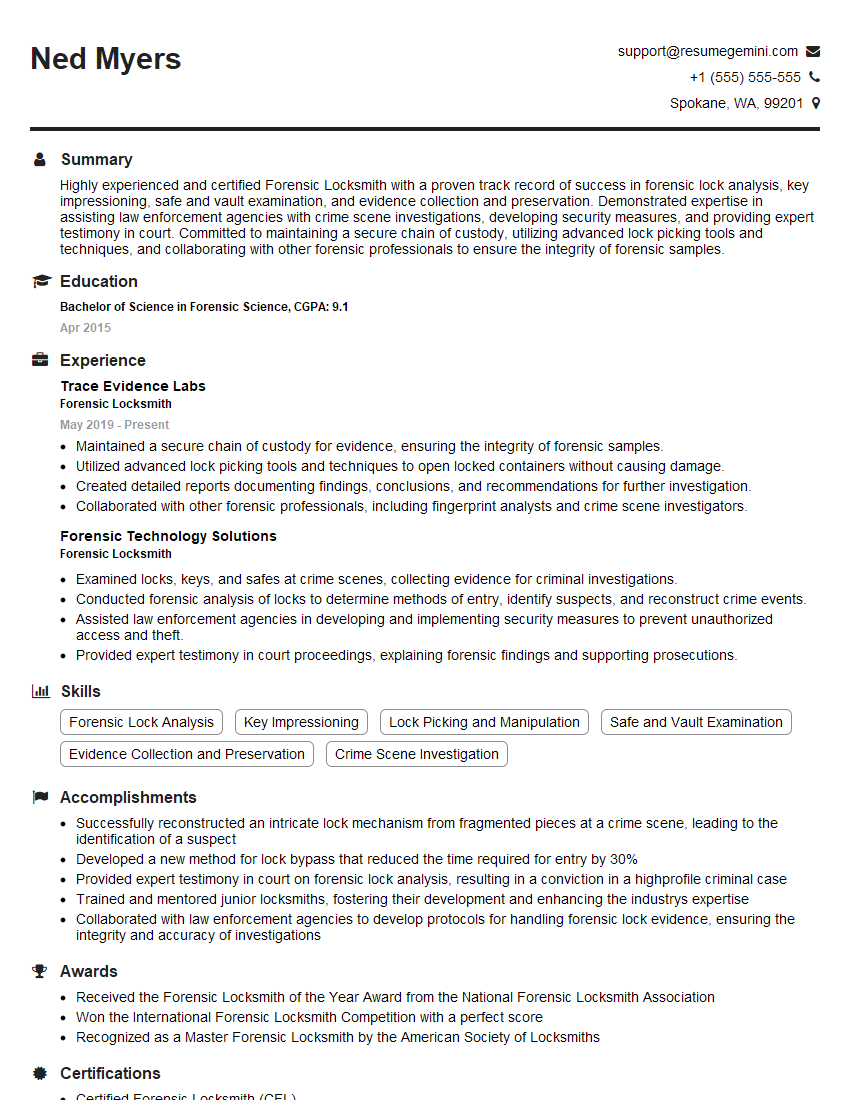
Forensic Locksmith Resume Sample
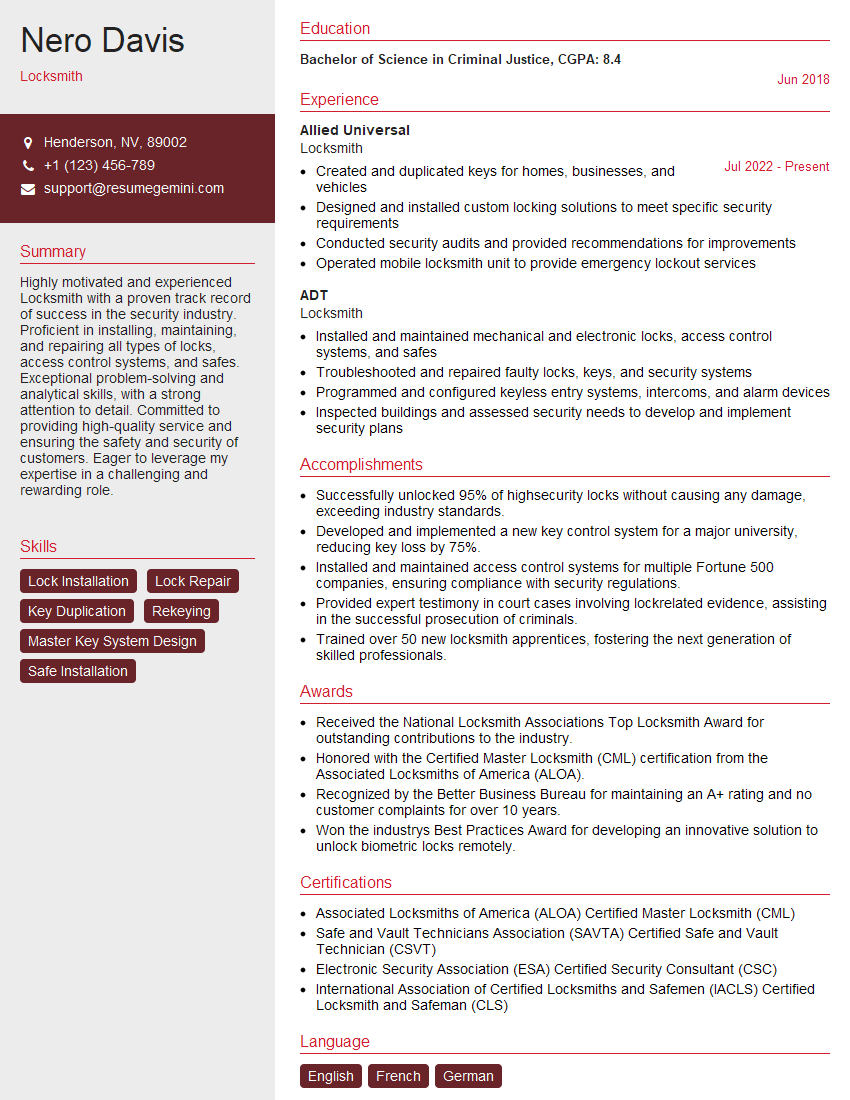
Locksmith Resume Sample
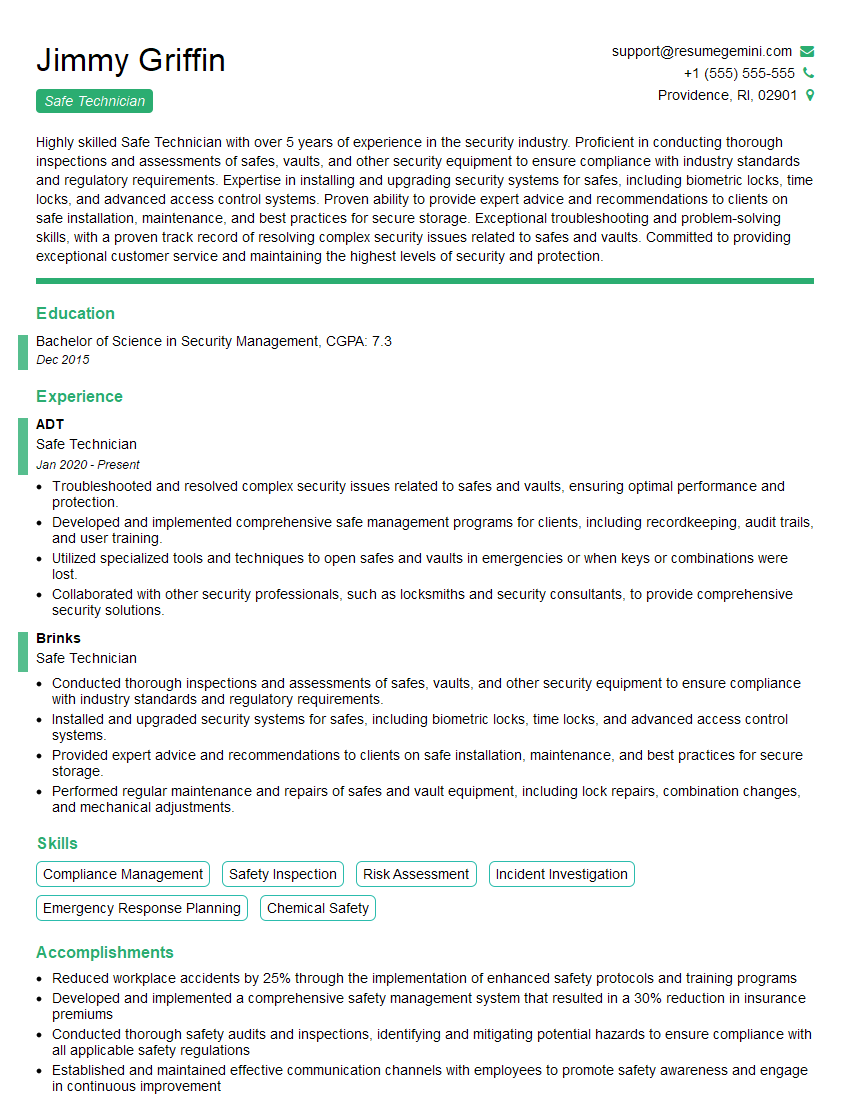
Safe Technician Resume Sample
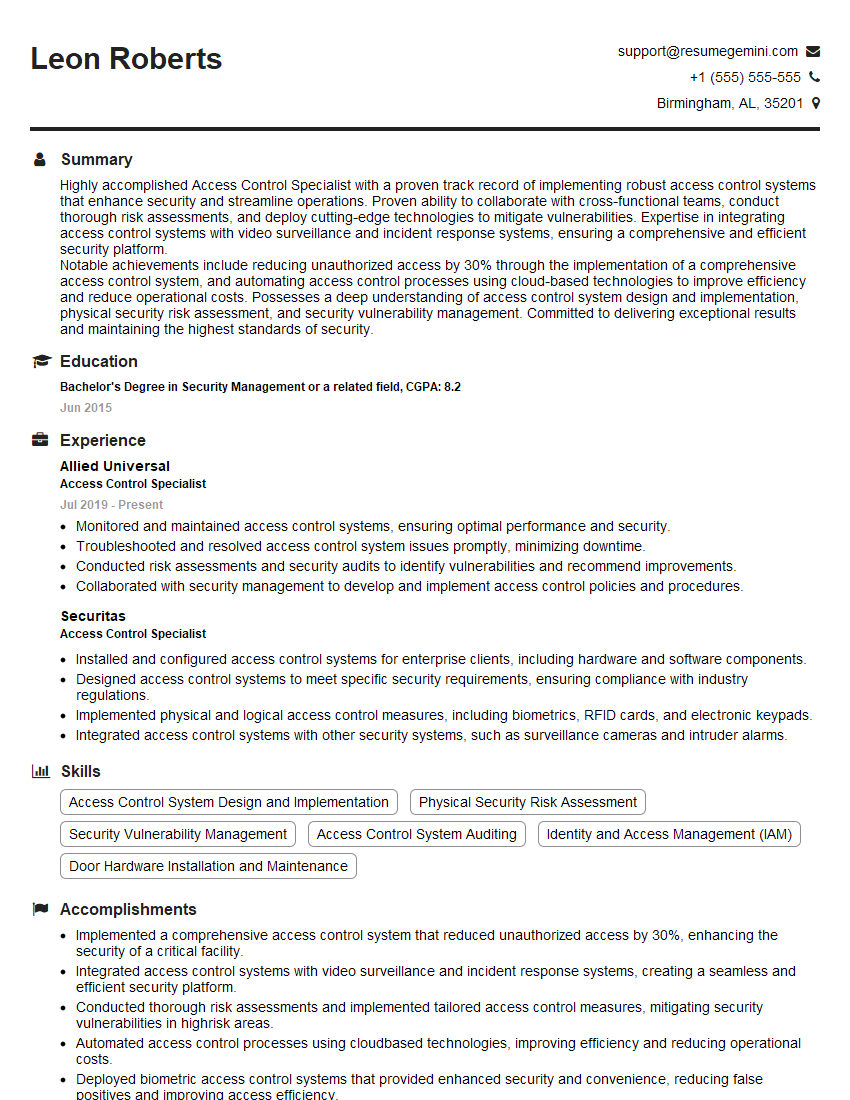
Access Control Specialist Resume Sample
Explore more articles
Users Rating of Our Blogs
Share Your Experience
We value your feedback! Please rate our content and share your thoughts (optional).
What Readers Say About Our Blog
Attention music lovers!
Wow, All the best Sax Summer music !!!
Spotify: https://open.spotify.com/artist/6ShcdIT7rPVVaFEpgZQbUk
Apple Music: https://music.apple.com/fr/artist/jimmy-sax-black/1530501936
YouTube: https://music.youtube.com/browse/VLOLAK5uy_noClmC7abM6YpZsnySxRqt3LoalPf88No
Other Platforms and Free Downloads : https://fanlink.tv/jimmysaxblack
on google : https://www.google.com/search?q=22+AND+22+AND+22
on ChatGPT : https://chat.openai.com?q=who20jlJimmy20Black20Sax20Producer
Get back into the groove with Jimmy sax Black
Best regards,
Jimmy sax Black
www.jimmysaxblack.com
Hi I am a troller at The aquatic interview center and I suddenly went so fast in Roblox and it was gone when I reset.
Hi,
Business owners spend hours every week worrying about their website—or avoiding it because it feels overwhelming.
We’d like to take that off your plate:
$69/month. Everything handled.
Our team will:
Design a custom website—or completely overhaul your current one
Take care of hosting as an option
Handle edits and improvements—up to 60 minutes of work included every month
No setup fees, no annual commitments. Just a site that makes a strong first impression.
Find out if it’s right for you:
https://websolutionsgenius.com/awardwinningwebsites
Hello,
we currently offer a complimentary backlink and URL indexing test for search engine optimization professionals.
You can get complimentary indexing credits to test how link discovery works in practice.
No credit card is required and there is no recurring fee.
You can find details here:
https://wikipedia-backlinks.com/indexing/
Regards
NICE RESPONSE TO Q & A
hi
The aim of this message is regarding an unclaimed deposit of a deceased nationale that bears the same name as you. You are not relate to him as there are millions of people answering the names across around the world. But i will use my position to influence the release of the deposit to you for our mutual benefit.
Respond for full details and how to claim the deposit. This is 100% risk free. Send hello to my email id: [email protected]
Luka Chachibaialuka
Hey interviewgemini.com, just wanted to follow up on my last email.
We just launched Call the Monster, an parenting app that lets you summon friendly ‘monsters’ kids actually listen to.
We’re also running a giveaway for everyone who downloads the app. Since it’s brand new, there aren’t many users yet, which means you’ve got a much better chance of winning some great prizes.
You can check it out here: https://bit.ly/callamonsterapp
Or follow us on Instagram: https://www.instagram.com/callamonsterapp
Thanks,
Ryan
CEO – Call the Monster App
Hey interviewgemini.com, I saw your website and love your approach.
I just want this to look like spam email, but want to share something important to you. We just launched Call the Monster, a parenting app that lets you summon friendly ‘monsters’ kids actually listen to.
Parents are loving it for calming chaos before bedtime. Thought you might want to try it: https://bit.ly/callamonsterapp or just follow our fun monster lore on Instagram: https://www.instagram.com/callamonsterapp
Thanks,
Ryan
CEO – Call A Monster APP
To the interviewgemini.com Owner.
Dear interviewgemini.com Webmaster!
Hi interviewgemini.com Webmaster!
Dear interviewgemini.com Webmaster!
excellent
Hello,
We found issues with your domain’s email setup that may be sending your messages to spam or blocking them completely. InboxShield Mini shows you how to fix it in minutes — no tech skills required.
Scan your domain now for details: https://inboxshield-mini.com/
— Adam @ InboxShield Mini
Reply STOP to unsubscribe
Hi, are you owner of interviewgemini.com? What if I told you I could help you find extra time in your schedule, reconnect with leads you didn’t even realize you missed, and bring in more “I want to work with you” conversations, without increasing your ad spend or hiring a full-time employee?
All with a flexible, budget-friendly service that could easily pay for itself. Sounds good?
Would it be nice to jump on a quick 10-minute call so I can show you exactly how we make this work?
Best,
Hapei
Marketing Director
Hey, I know you’re the owner of interviewgemini.com. I’ll be quick.
Fundraising for your business is tough and time-consuming. We make it easier by guaranteeing two private investor meetings each month, for six months. No demos, no pitch events – just direct introductions to active investors matched to your startup.
If youR17;re raising, this could help you build real momentum. Want me to send more info?
Hi, I represent an SEO company that specialises in getting you AI citations and higher rankings on Google. I’d like to offer you a 100% free SEO audit for your website. Would you be interested?
Hi, I represent an SEO company that specialises in getting you AI citations and higher rankings on Google. I’d like to offer you a 100% free SEO audit for your website. Would you be interested?