Interviews are opportunities to demonstrate your expertise, and this guide is here to help you shine. Explore the essential Sampling and Inspection Methods interview questions that employers frequently ask, paired with strategies for crafting responses that set you apart from the competition.
Questions Asked in Sampling and Inspection Methods Interview
Q 1. Explain the difference between acceptance sampling and inspection sampling.
While both acceptance sampling and inspection sampling involve examining a portion of a batch to make inferences about the whole, their goals differ significantly. Acceptance sampling focuses on deciding whether to accept or reject an entire batch of items based on the quality of a sample. It’s a decision-making process, often used for incoming materials or finished goods. Think of it like a quality gate. Inspection sampling, on the other hand, aims to estimate the proportion of defective units within a population, providing a more detailed understanding of the quality level. This is more about understanding the extent of defects. It might involve further corrective actions.
For example, a clothing manufacturer might use acceptance sampling to decide whether to accept a shipment of buttons from a supplier. If a sample of buttons meets pre-defined quality standards, the entire shipment is accepted; otherwise, it’s rejected. In contrast, they might use inspection sampling to assess the overall quality of their own manufactured shirts, identifying the percentage with stitching errors to pinpoint areas for process improvement.
Q 2. Describe various sampling techniques (e.g., random, stratified, systematic).
Several sampling techniques exist, each with its strengths and weaknesses:
- Random Sampling: Each item in the population has an equal chance of being selected. This is the gold standard for unbiased estimation, ensuring every item has a fair representation. Imagine drawing names from a hat—each name has an equal opportunity.
- Stratified Sampling: The population is divided into subgroups (strata) based on relevant characteristics (e.g., size, color, location), and samples are randomly drawn from each stratum. This is useful when you suspect variations within subgroups. For instance, in inspecting electronics from multiple manufacturing lines, stratified sampling ensures each line is adequately represented.
- Systematic Sampling: Items are selected at a fixed interval (e.g., every 10th item). It’s simple to implement but can be problematic if there’s a pattern in the population that aligns with the sampling interval. Think of checking every tenth car on an assembly line; if defects occur in a cyclical pattern, this method could be misleading.
- Cluster Sampling: The population is divided into clusters, and a random sample of clusters is selected. All items within the selected clusters are then inspected. This is cost-effective for geographically dispersed populations but may be less precise than other methods. For example, if inspecting customer satisfaction in different regions, you might randomly choose several regions (clusters) and survey all customers within those regions.
Q 3. What are the key principles of statistical process control (SPC)?
Statistical Process Control (SPC) relies on several key principles:
- Variation is inherent in any process: No process is perfect; understanding the sources and nature of variation is crucial for control.
- Data-driven decision making: Decisions about process performance and improvement should be based on objective data rather than intuition.
- Control charts are essential tools: These visual tools track process performance over time, highlighting shifts in the mean or increases in variability.
- Process capability analysis: This determines if the process is capable of meeting pre-defined specifications.
- Continuous improvement: SPC is not a one-time fix but a continuous cycle of monitoring, analysis, and improvement.
SPC helps identify assignable causes (special causes) of variation that require immediate corrective action, distinguishing them from common causes (random causes) which are inherent to the process and require process improvement.
Q 4. How do you determine the appropriate sample size for a given inspection?
Determining the appropriate sample size involves considering several factors:
- Acceptable Quality Level (AQL): The maximum percentage of defective items acceptable in a batch.
- Acceptable Risk (Producer’s Risk, alpha): The probability of rejecting a good batch (Type I error).
- Rejectable Quality Level (RQL): The percentage of defective items that necessitates batch rejection.
- Consumer’s Risk (beta): The probability of accepting a bad batch (Type II error).
- Lot size (population size): The total number of items in the batch being inspected.
Sample size calculations typically utilize statistical tables or software (like Minitab or R) that incorporate these parameters. Larger sample sizes provide more precise estimates but increase the cost and time of inspection. There’s always a balance to be struck.
Q 5. Explain the concept of Acceptable Quality Limit (AQL).
The Acceptable Quality Limit (AQL) represents the maximum percentage of defective units in a batch that is still considered acceptable. It’s a pre-determined standard set by the consumer or manufacturer. AQL isn’t a guarantee of perfect quality but rather a compromise between the cost of inspection and the risk of accepting defective items. For example, an AQL of 2% means that a batch with up to 2% defective items would be considered acceptable.
Choosing an appropriate AQL requires carefully weighing risks. A lower AQL means higher quality but increased inspection costs. A higher AQL might lead to more defective items but reduces inspection expenses. This decision often depends on factors such as the cost of defects, regulatory requirements, and customer expectations.
Q 6. What are some common inspection methods used in manufacturing?
Numerous inspection methods exist, including:
- Visual Inspection: A basic method that involves visually examining products for defects. It’s often the first step in any inspection process and can reveal obvious flaws.
- Dimensional Inspection: Using tools like calipers, micrometers, and coordinate measuring machines (CMMs) to verify dimensions are within specified tolerances.
- Functional Testing: Evaluating if a product performs its intended function correctly. This could involve running tests, simulations, or operating the product under realistic conditions.
- Destructive Testing: Examining product integrity by causing failure to determine material properties or structural weakness. This is used for critical components or when failure would have catastrophic consequences.
- Non-destructive Testing (NDT): Methods like X-ray, ultrasonic, or magnetic particle inspection that detect internal flaws without damaging the product.
The selection of the most appropriate method depends heavily on the nature of the product and the types of defects that need to be identified.
Q 7. Describe your experience with different types of inspection equipment.
Throughout my career, I’ve had extensive experience with a range of inspection equipment. This includes:
- Optical Comparators: For precise measurements and detailed analysis of surface features.
- Coordinate Measuring Machines (CMMs): For high-precision dimensional measurements of complex parts.
- Vision Systems: Automated systems using cameras and image processing to detect defects quickly and consistently.
- Micrometers and Calipers: Basic but essential tools for dimensional inspection.
- Hardness Testers: To evaluate the hardness and durability of materials.
- Ultrasonic Testing Equipment: For detecting internal flaws in components.
My experience extends beyond simply operating this equipment; I’m proficient in selecting the appropriate equipment for a given task, setting up and calibrating equipment, interpreting results, and ensuring that all measurements adhere to relevant standards and specifications. I understand the limitations of each piece of equipment and how to mitigate potential sources of error.
Q 8. How do you handle discrepancies found during inspection?
Discrepancies found during inspection are addressed systematically. First, I verify the discrepancy. Is it a true deviation from the specification, or is it a result of measurement error, misinterpretation of standards, or inadequate inspection procedures? Once confirmed, its severity is assessed based on the impact on product functionality, safety, or regulatory compliance. Minor discrepancies might require rework or sorting, documented and tracked via a non-conformance report. Significant discrepancies might trigger a root cause analysis (RCA) to identify underlying issues in the manufacturing process. For instance, if a significant percentage of batches fail a specific test, the RCA would involve examining raw materials, equipment calibration, operator training, and process parameters. The corrective actions are then documented, implemented, and verified to prevent recurrence. A follow-up inspection is performed to confirm effectiveness.
Q 9. Explain the importance of documentation in sampling and inspection.
Thorough documentation is the cornerstone of effective sampling and inspection. It provides a verifiable audit trail, ensuring traceability and accountability throughout the process. This includes the sampling plan (method, sample size, acceptance criteria), inspection procedures, raw data from measurements and tests, photographs of non-conforming items, and records of all actions taken (corrective actions, rework, etc.). Detailed documentation facilitates effective communication among team members, management, and clients. It also ensures consistency over time, supports continuous improvement initiatives by enabling trend analysis, and provides critical evidence during audits or legal disputes. Imagine a situation where a product recall is necessary – robust documentation quickly identifies the affected batches, helping to contain the crisis efficiently.
Q 10. What are some common quality standards (e.g., ISO 9001)?
Several widely adopted quality standards guide sampling and inspection practices. ISO 9001 is a comprehensive standard focusing on quality management systems, providing a framework for consistent quality output. It doesn’t prescribe specific sampling methods, but it dictates the need for documented procedures and effective control of processes. Other relevant standards include ISO 13485 (for medical devices), IATF 16949 (for automotive industry), and various sector-specific standards that often include detailed guidelines on sampling and acceptance criteria. These standards provide a common language and framework, promoting consistency and trust among manufacturers, suppliers, and clients. They also help organizations demonstrate their commitment to quality and improve overall efficiency.
Q 11. How do you ensure the integrity of your sampling process?
Maintaining the integrity of the sampling process is paramount. This begins with a carefully defined sampling plan, which outlines the method (random, stratified, systematic, etc.), sample size, and acceptance criteria. Random sampling is preferred to mitigate bias, but stratified sampling can be more effective when dealing with heterogeneous populations. Sample selection must be unbiased and representative of the whole population. Clear instructions, proper training of inspectors, and the use of calibrated equipment are essential. Chain-of-custody procedures meticulously track the samples from collection to testing, ensuring no tampering or misidentification occurs. Regular audits of the sampling process help identify weaknesses and maintain consistency. A good analogy is a scientific experiment: the credibility of the results hinges on the rigor of the experimental design and execution.
Q 12. Describe your experience with different types of inspection reports.
My experience encompasses various inspection reports, from simple check sheets for basic attribute inspections to detailed, multi-page reports for complex products with multiple quality characteristics. I’ve worked with reports showing individual item inspection results, batch summaries highlighting pass/fail rates, and statistical process control (SPC) charts for ongoing monitoring. These reports may include photographic evidence, detailed descriptions of defects, and proposed corrective actions. The format and content always adhere to specific client requirements or relevant standards. For instance, a report for a medical device would be far more rigorous and comprehensive compared to a simple report on the visual inspection of consumer goods. The key is to provide clear, concise, and readily understandable information.
Q 13. How do you manage and resolve inspection discrepancies?
Managing and resolving inspection discrepancies starts with a thorough investigation. We determine the root cause of the discrepancy using tools like Pareto charts (identifying the most frequent defects) and fishbone diagrams (exploring potential causes). Corrective actions are then implemented to address the root causes, not just the symptoms. This might involve adjustments to the manufacturing process, equipment recalibration, or operator retraining. The effectiveness of corrective actions is always verified through follow-up inspections. A robust non-conformance reporting system allows for tracking and analysis of recurring discrepancies, aiding in continuous improvement efforts. For example, if a specific machine consistently produces defective parts, it might require maintenance or replacement. The whole process is meticulously documented, providing a record of the issue, the investigation, corrective actions, and verification results.
Q 14. How do you use data analysis to improve the effectiveness of sampling and inspection?
Data analysis is crucial for improving the effectiveness of sampling and inspection. We use statistical methods like control charts (e.g., X-bar and R charts) to monitor process capability and identify trends. Analyzing inspection data can reveal patterns in defects, enabling proactive identification of potential problems before they escalate. Data mining techniques can help us predict future quality issues based on historical data, optimizing sampling strategies, and minimizing inspection costs. For example, analyzing historical data on defect rates can help us determine the optimal sample size for future inspections. Moreover, advanced analytics can identify correlations between different process parameters and quality outcomes, allowing for more informed decision-making and targeted improvements in the production process. This continuous feedback loop using data enables a data-driven approach to enhance quality and efficiency.
Q 15. What is your experience with auditing sampling and inspection processes?
My experience in auditing sampling and inspection processes spans over a decade, encompassing various industries like manufacturing, pharmaceuticals, and aerospace. I’ve conducted numerous audits, focusing on compliance with relevant standards (ISO 9001, ISO 13485, etc.), evaluating the effectiveness of sampling plans, and identifying areas for improvement. This includes reviewing procedures, verifying calibration records, assessing inspector competence, and analyzing inspection data to identify trends and potential systemic issues. For instance, during an audit of a medical device manufacturer, I identified a weakness in their incoming inspection process where critical dimensions weren’t being checked consistently, leading to a potential risk of substandard components being used. This resulted in a corrective action plan to strengthen their inspection procedure and enhance training.
My auditing approach always incorporates a risk-based methodology, prioritizing the inspection of high-risk items and processes. I use a combination of observation, documentation review, and interviews to gather evidence and assess the effectiveness of the implemented quality management system in ensuring the accuracy and reliability of inspection processes.
Career Expert Tips:
- Ace those interviews! Prepare effectively by reviewing the Top 50 Most Common Interview Questions on ResumeGemini.
- Navigate your job search with confidence! Explore a wide range of Career Tips on ResumeGemini. Learn about common challenges and recommendations to overcome them.
- Craft the perfect resume! Master the Art of Resume Writing with ResumeGemini’s guide. Showcase your unique qualifications and achievements effectively.
- Don’t miss out on holiday savings! Build your dream resume with ResumeGemini’s ATS optimized templates.
Q 16. Describe your experience with different types of measurement tools and techniques.
My experience with measurement tools and techniques is extensive, ranging from basic hand tools like calipers and micrometers to sophisticated equipment such as coordinate measuring machines (CMMs) and optical comparators. I’m proficient in using various measurement techniques, including dimensional metrology, surface roughness measurement, and material testing. I understand the principles of uncertainty analysis and how to select the appropriate measurement tool and technique based on the specific requirements of the application. For example, while calipers are suitable for basic linear measurements, CMMs offer high precision for complex three-dimensional measurements. Similarly, I’ve used profilometers to assess surface roughness, a critical factor in many applications. I’ve also used non-destructive techniques like ultrasonic testing and X-ray inspection for evaluating material integrity.
I also possess hands-on experience with advanced statistical techniques for data analysis, including ANOVA and regression analysis, which help to evaluate measurement systems and interpret the resulting data. I am also familiar with various software packages used for data acquisition and analysis.
Q 17. How familiar are you with different types of gauges and their applications?
My familiarity with gauges extends to a wide range, including dial indicators, plug gauges, ring gauges, snap gauges, and air gauges. I understand the principles of gauge design and selection, and how to determine the appropriate tolerance for different gauge types. For example, plug and ring gauges are used for go/no-go inspection of hole diameters, ensuring that parts meet specific tolerance limits. Air gauges provide high precision measurement of dimensions based on the pressure of compressed air, allowing for quick and sensitive checks. I also have experience with specialized gauges specific to certain industries, such as specialized thread gauges in the aerospace industry.
I also understand the importance of gauge calibration and the proper use of master gauges for ensuring the accuracy of measurements. The selection of a gauge is always dictated by the tolerance and precision requirements of the part being inspected. I’m aware that incorrect selection or use of gauges can lead to inaccurate measurements, and I emphasize the importance of proper training and adherence to calibration schedules.
Q 18. Explain the concept of measurement error and its impact on inspection results.
Measurement error represents the difference between a measured value and the true value. It significantly impacts inspection results, potentially leading to incorrect acceptance or rejection of parts or products. Errors can stem from various sources, including systematic errors (biases that consistently affect measurements) and random errors (unpredictable variations). Systematic errors might be caused by improperly calibrated instruments or environmental factors. Random errors are inherent in the measurement process and can be reduced, but not eliminated. For example, using a micrometer with a worn-out anvil could introduce a systematic error consistently underestimating dimensions.
The impact of measurement error on inspection results is that it introduces uncertainty. A small error might be acceptable for some applications, whereas even a tiny error could be catastrophic in others (medical devices). Effective quality control requires a thorough understanding of potential sources of error and implementing strategies to minimize their impact through calibration, proper measurement techniques, and statistical analysis. Using control charts helps monitor the stability of the measurement process over time and to detect shifts in the mean or increased variability.
Q 19. How do you ensure the accuracy and traceability of measurements?
Ensuring the accuracy and traceability of measurements is crucial. This involves a multi-pronged approach. First, all measuring equipment must be calibrated regularly against traceable standards. Traceability establishes a clear chain of custody for the instrument’s calibration, linking back to national or international standards. Calibration certificates must be maintained, verifying that instruments are within acceptable tolerances. Second, inspectors must receive proper training in the correct use of the measurement equipment and measurement techniques to avoid introducing human error.
Third, a robust measurement system analysis (MSA) should be conducted to determine the stability and accuracy of the measurement process. This involves evaluating gauge repeatability and reproducibility (GR&R), identifying potential sources of variation and quantifying the uncertainty associated with the measurements. Finally, standardized operating procedures (SOPs) for measurement should be developed and followed consistently. This will help maintain consistency and minimize the likelihood of errors.
Q 20. Explain how to calculate process capability indices (e.g., Cp, Cpk).
Process capability indices (Cp and Cpk) are statistical measures that assess the ability of a process to meet predefined specifications. Cp indicates the potential capability of a process, assuming the process is centered on the target value. Cpk, on the other hand, considers both the process capability and its centering, providing a more realistic assessment of the actual capability of the process. They’re usually calculated using data from a stable process and compared to a target specification.
The formulas for Cp and Cpk are:
Cp = (USL - LSL) / 6σCpk = min[(USL - μ) / 3σ, (μ - LSL) / 3σ]
Where:
- USL = Upper Specification Limit
- LSL = Lower Specification Limit
- μ = Process Mean
- σ = Process Standard Deviation
A Cp or Cpk value of 1 indicates that the process is capable of meeting specifications with a small number of defects. Values greater than 1 indicate a capable process, while values less than 1 suggest that the process is not meeting specifications and needs improvement.
Example: Let’s say we are measuring the diameter of a shaft. The USL is 10.1 mm, LSL is 9.9 mm, the measured mean is 10 mm, and the standard deviation is 0.05 mm. In this case, Cp = (10.1 – 9.9) / (6 * 0.05) = 0.67 and Cpk = min[(10.1 – 10) / (3 * 0.05), (10 – 9.9) / (3 * 0.05)] = 0.33. The low values indicate the process needs improvement.
Q 21. Describe your experience with control charts (e.g., X-bar and R charts).
Control charts, like X-bar and R charts, are graphical tools used to monitor process variation and identify potential sources of instability. X-bar charts track the average of a sample of measurements over time, showing the central tendency of the process, while R charts track the range of measurements within each sample, indicating the variability of the process. Both charts are based on statistical principles and help identify trends, shifts, or other patterns that suggest the process might be out of control.
X-bar charts monitor the average of subgroups, while R charts (or s charts which use standard deviation instead of range) monitor the variability within those subgroups. Points plotting outside control limits indicate potential problems that need investigation. Patterns such as trends, cycles, or runs also suggest underlying issues. These control charts are essential for maintaining a stable process and identifying deviations that may lead to defects. They are fundamental to continuous improvement initiatives and provide valuable data for process optimization.
For example, in a manufacturing process producing bolts, X-bar charts could monitor the average bolt length across several samples throughout a production run, while R charts would track the range of lengths within each sample, highlighting whether the lengths are consistently close to the average or if there is excessive variation.
Q 22. How do you investigate and resolve out-of-control points on a control chart?
Investigating out-of-control points on a control chart is crucial for maintaining process stability and product quality. When a point falls outside the control limits, it signals a potential problem requiring immediate attention. The investigation should be systematic and follow a defined procedure.
Step 1: Verification: First, verify the data point. Was there a data entry error? Was the equipment malfunctioning during that specific measurement? A simple mistake can be easily rectified.
Step 2: Investigation: If the data point is valid, we need to understand the why. This involves exploring potential sources of variation. I use tools like 5 Whys, Ishikawa diagrams (fishbone diagrams), and checklists to identify root causes. For example, if we’re monitoring the weight of a product and see an out-of-control point, the 5 Whys might lead us to discover a faulty filling machine, worn-out components, or inconsistent raw material quality.
Step 3: Corrective Actions: Based on the root cause analysis, implement appropriate corrective actions. This could involve repairing or replacing equipment, retraining personnel, adjusting process parameters, or improving raw material specifications.
Step 4: Verification of Corrective Action: After implementing the corrective action, closely monitor the control chart to verify its effectiveness. The out-of-control points should cease to occur, and the process should return to a state of statistical control.
Example: In a previous role, we monitored the diameter of machined parts using a control chart. An out-of-control point led us to investigate the machine’s tooling. We discovered that the cutting tool was worn, leading to inconsistent diameters. Replacing the tool immediately resolved the issue.
Q 23. What is your experience with root cause analysis techniques?
Root cause analysis (RCA) is fundamental to my approach to quality improvement. I’m proficient in several techniques, each with its strengths and weaknesses. My go-to methods include:
- 5 Whys: A simple yet effective technique for drilling down to the root cause by repeatedly asking “Why?” until the fundamental issue is identified.
- Ishikawa Diagrams (Fishbone Diagrams): These visually represent potential causes categorized by factors like people, materials, methods, machines, environment, and measurement. This is excellent for brainstorming and identifying potential causes in a group setting.
- Pareto Analysis: This helps to prioritize the most significant causes contributing to a problem by focusing on the vital few rather than the trivial many. This is particularly useful when dealing with multiple potential causes.
- Fault Tree Analysis (FTA): A deductive technique that works backward from an undesired event (e.g., a defect) to identify potential contributing factors. This is more complex but powerful for systemic issues.
I select the most appropriate technique based on the complexity of the problem and the information available. Frequently, I combine several methods to gain a comprehensive understanding of the root cause.
Q 24. How familiar are you with different types of non-destructive testing (NDT)?
My experience with non-destructive testing (NDT) encompasses various methods, including:
- Visual Inspection: The most basic method, but essential for detecting surface defects. I’m experienced in performing and interpreting visual inspections across a variety of applications, always ensuring proper lighting and documentation.
- Ultrasonic Testing (UT): Used to detect internal flaws in materials using high-frequency sound waves. I’m familiar with interpreting UT results and choosing the appropriate probes and techniques for specific materials and applications.
- Radiographic Testing (RT): Employs X-rays or gamma rays to create images of internal structures. My understanding includes film interpretation and digital radiography techniques.
- Magnetic Particle Inspection (MPI): Used to detect surface and near-surface cracks in ferromagnetic materials. I’m experienced in applying magnetic fields, using fluorescent or visible particles, and interpreting the resulting patterns.
- Liquid Penetrant Inspection (LPI): A method for detecting surface-breaking defects in various materials. I understand different penetrant types and application techniques, including the importance of proper cleaning and development.
I always emphasize safety protocols in NDT procedures, ensuring the safety of personnel and the integrity of the testing process. Selection of the appropriate NDT method depends heavily on material type, suspected defect type, and accessibility.
Q 25. Describe your experience in implementing and maintaining a quality management system.
I have extensive experience in implementing and maintaining Quality Management Systems (QMS), primarily based on ISO 9001. My experience spans all phases, from initial gap analysis and documentation to ongoing audits and improvement initiatives.
Implementation: I’ve led teams in developing and documenting QMS procedures, work instructions, and forms. This includes defining roles and responsibilities, establishing internal audit processes, and creating a management review system. I focus on creating a system that is practical, user-friendly, and aligned with the organization’s specific needs and context.
Maintenance: My approach to QMS maintenance includes regular internal audits, corrective and preventative action (CAPA) processes, management reviews, and continuous improvement projects. I actively participate in continuous improvement activities to ensure the QMS remains effective and efficient. Data analysis plays a critical role in identifying areas for improvement and tracking the effectiveness of implemented changes. I’m adept at using quality metrics and reporting to track performance and drive improvement.
Example: In a prior role, I led a complete overhaul of the QMS, resulting in a 20% reduction in non-conformances and a significant improvement in customer satisfaction scores.
Q 26. How do you balance the cost of inspection with the risk of accepting defective products?
Balancing the cost of inspection with the risk of accepting defective products is a crucial aspect of quality management. It’s a delicate act that involves considering several factors. A cost-benefit analysis is key.
Cost of Inspection: This includes the direct costs of inspection personnel, equipment, and materials, as well as indirect costs such as downtime and lost productivity.
Risk of Accepting Defective Products: This encompasses the potential costs of recalls, warranty claims, damage to reputation, and potential safety hazards.
Strategies for Balancing Costs and Risks:
- Risk Assessment: Conduct a thorough risk assessment to identify the potential consequences of accepting defective products. Prioritize the inspection of high-risk items.
- Sampling Plans: Implement statistically sound sampling plans to optimize inspection efforts. Different sampling plans (e.g., AQL, AOQL) offer different levels of protection against accepting defective batches, which must be selected carefully based on the risks involved.
- Process Capability Analysis: Assess the capability of the production process. A capable process will generate fewer defects, reducing the need for extensive inspection.
- Automation: Automate inspection processes where possible to reduce labor costs and improve consistency.
- Continuous Improvement: Implement continuous improvement initiatives to reduce defects at the source and minimize the need for extensive inspection.
The goal is to find the optimal balance—reducing inspection costs without increasing the risk of shipping unacceptable products.
Q 27. Explain how you would develop a sampling plan for a new product.
Developing a sampling plan for a new product requires careful consideration of several factors:
- Define Acceptance Criteria: Determine the acceptable quality level (AQL) for the product. This is the maximum percentage of defective units that is considered acceptable in a batch. This depends heavily on the product’s criticality and application.
- Identify Inspection Characteristics: Define the critical characteristics of the product that need to be inspected. These are typically the characteristics most likely to affect product function or safety.
- Select a Sampling Plan: Choose an appropriate sampling plan from standard tables (e.g., MIL-STD-105E, ANSI/ASQ Z1.4) or using statistical software. The sampling plan specifies the sample size and acceptance/rejection criteria based on the AQL and the lot size.
- Determine Sample Size: The sample size will depend on the AQL, the desired level of confidence, and the lot size. Larger sample sizes provide greater precision but increase inspection costs.
- Develop Inspection Procedures: Establish clear and detailed procedures for conducting the inspection. This includes the methods and tools to be used, the criteria for classifying units as defective or acceptable, and the recording of inspection results.
- Pilot Run: Conduct a pilot run of the sampling plan to test its feasibility and effectiveness. This helps in identifying any issues or areas for improvement before full-scale implementation.
Throughout this process, careful consideration must be given to the balance between cost and risk, as discussed previously. Using statistical software can be extremely beneficial in this process.
Q 28. Describe a situation where you had to make a difficult decision regarding product quality.
In a previous role, we discovered a significant defect in a nearly-completed batch of a critical component. The defect, a subtle flaw in the material’s microstructure, was only detected during a final inspection. The cost of scrapping the entire batch was substantial, but releasing the components posed a considerable safety risk.
The decision was difficult. On one hand, scrapping the batch would represent a huge financial loss. On the other hand, releasing the components, even with a potential fix, could have disastrous consequences and put the company’s reputation at serious risk.
My Approach: I convened a team meeting with engineering, production, and quality assurance. We reviewed all available data, assessed the level of risk, and evaluated the cost of different solutions. This included contacting our suppliers to discuss the root cause of the defect. We performed a thorough failure mode and effects analysis (FMEA) to comprehensively identify and assess all possible failure modes and their impacts.
Outcome: Ultimately, we decided to scrap the batch and redesign the component’s manufacturing process to prevent future issues. While costly in the short term, this decision was vital in maintaining safety standards and safeguarding the company’s reputation. This experience taught the importance of robust quality control measures throughout the product lifecycle and emphasized the criticality of prioritizing safety over short-term gains.
Key Topics to Learn for Sampling and Inspection Methods Interview
- Sampling Techniques: Understand various sampling methods (random, stratified, systematic, cluster) and their appropriate applications. Consider the impact of sample size on accuracy and precision.
- Acceptance Sampling Plans: Learn about different acceptance sampling plans (e.g., single, double, multiple sampling) and how to choose the appropriate plan based on risk tolerance and cost considerations. Practice calculating acceptance and rejection criteria.
- Statistical Process Control (SPC): Familiarize yourself with control charts (e.g., X-bar and R charts, p-charts, c-charts) and their use in monitoring and improving processes. Be prepared to interpret control chart data and identify potential sources of variation.
- Inspection Methods: Explore various inspection methods, including visual inspection, dimensional inspection, and destructive/non-destructive testing. Understand the advantages and limitations of each method.
- Data Analysis and Interpretation: Develop your skills in analyzing sample data to draw meaningful conclusions. This includes understanding descriptive statistics, hypothesis testing, and confidence intervals. Practice interpreting statistical outputs and making informed decisions.
- Quality Control and Assurance: Understand the relationship between sampling and inspection methods and overall quality control and assurance practices. Be prepared to discuss quality management systems (e.g., ISO 9001) and their relevance.
- Practical Application: Think about how these concepts apply in real-world scenarios within various industries (manufacturing, healthcare, etc.). Consider specific examples of how sampling and inspection methods have been used to improve quality and efficiency.
Next Steps
Mastering Sampling and Inspection Methods is crucial for career advancement in quality control, manufacturing, and many other fields. A strong understanding of these techniques demonstrates your ability to ensure product quality, optimize processes, and reduce costs. To significantly boost your job prospects, create an ATS-friendly resume that highlights your skills and experience effectively. ResumeGemini is a trusted resource for building professional resumes, and we provide examples of resumes tailored to Sampling and Inspection Methods to help you showcase your expertise. Take the next step towards your dream career – craft a compelling resume that gets noticed!

Quality Assurance Manager Resume Sample

Quality Control Manager Resume Sample
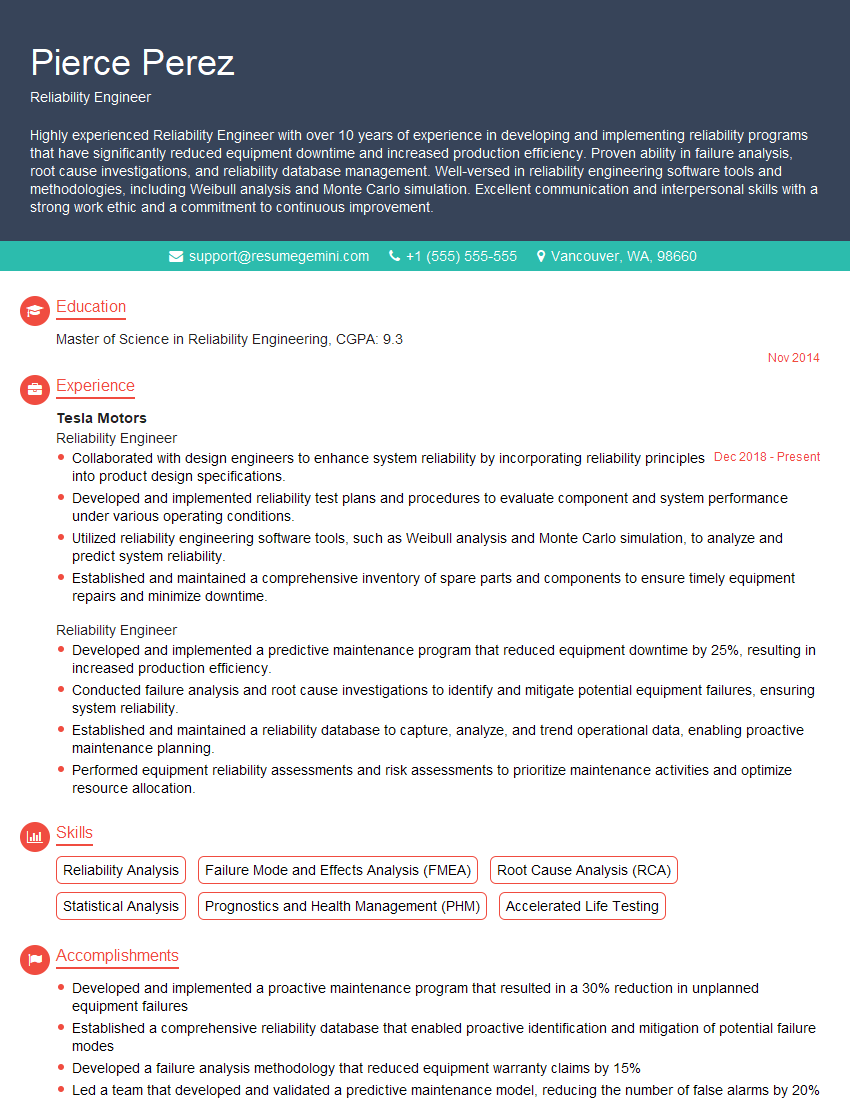
Reliability Engineer Resume Sample

Quality Control Analyst Resume Sample
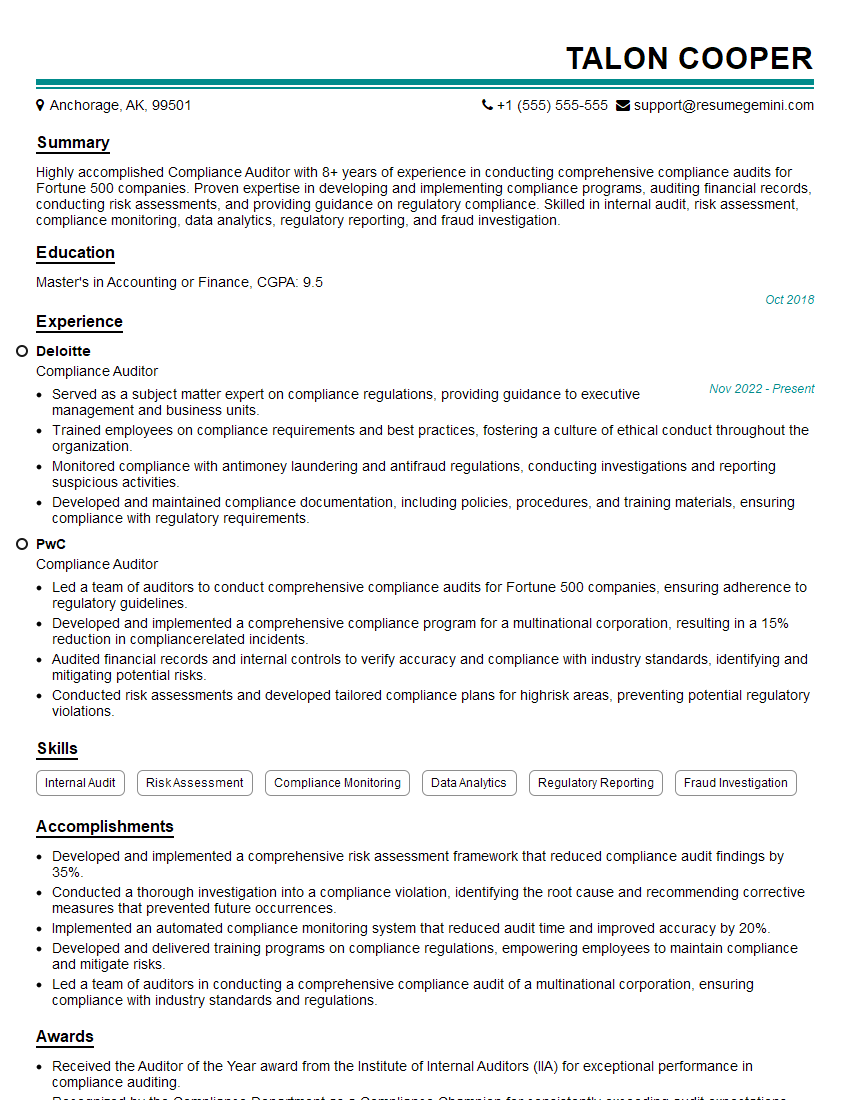
Compliance Auditor Resume Sample

Test Engineer Resume Sample

Quality Systems Manager Resume Sample

Metrologist Resume Sample

Quality Control Specialist Resume Sample

Quality Assurance Engineer Resume Sample
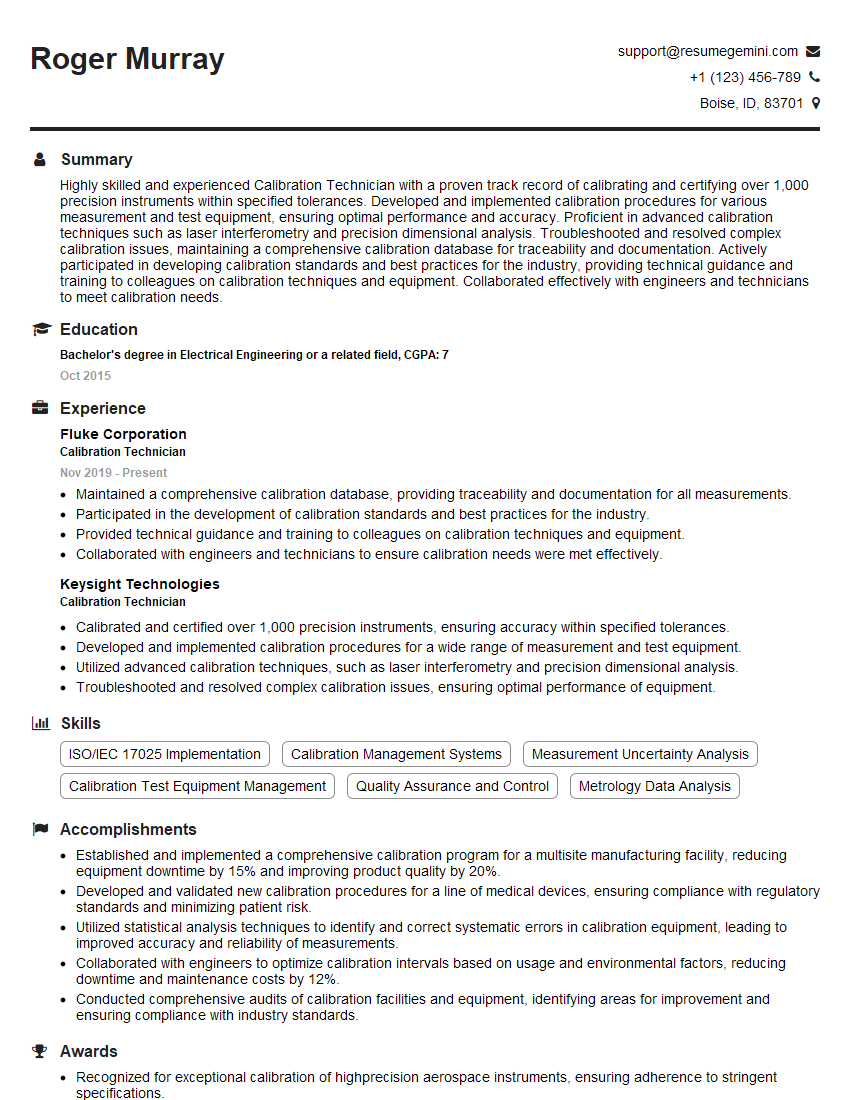
Calibration Technician Resume Sample
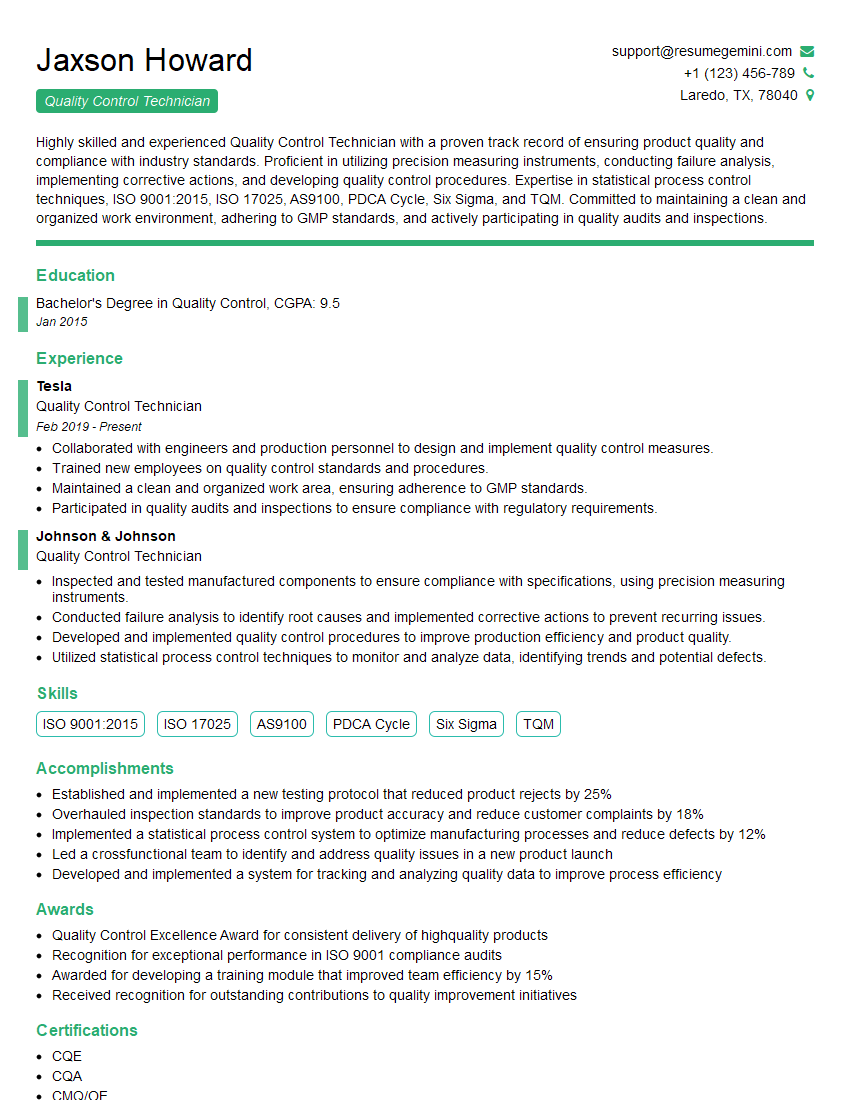
Quality Control Technician Resume Sample

Inspection Supervisor Resume Sample
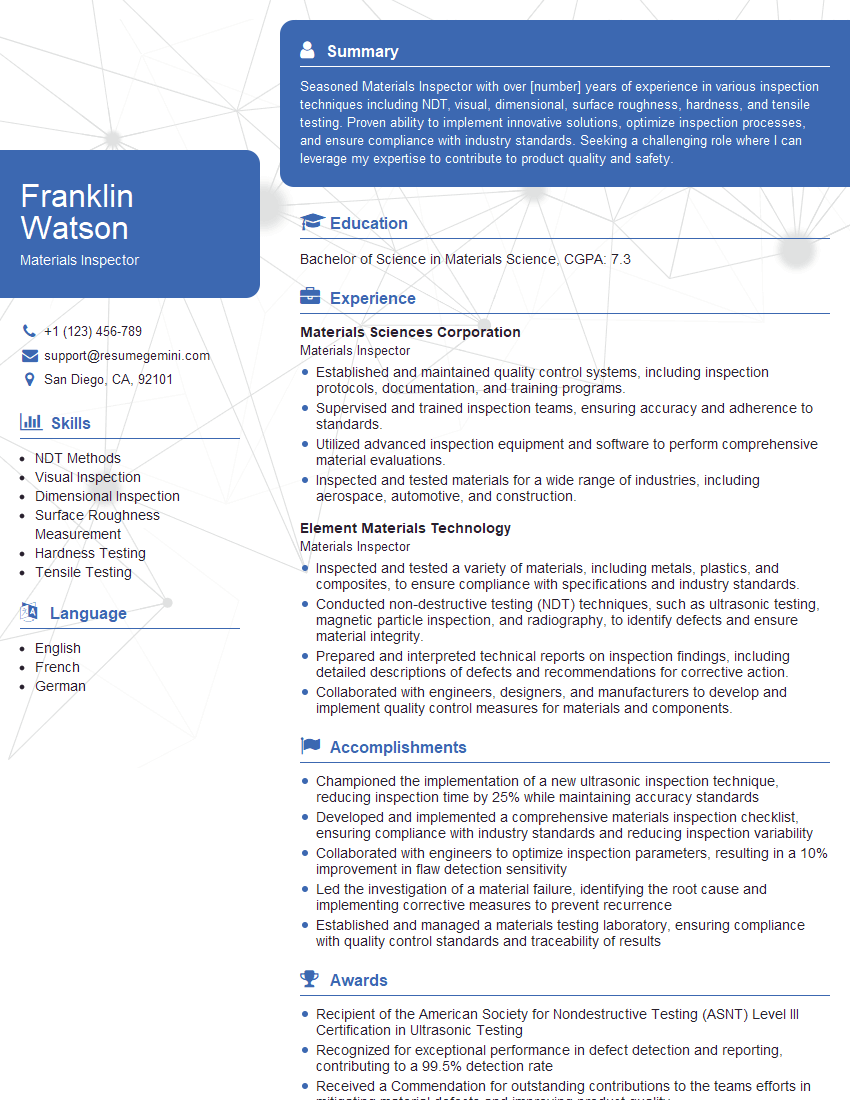
Materials Inspector Resume Sample

Quality Control Inspector Resume Sample
- Quality Assurance Manager
- Quality Control Manager
- Reliability Engineer
- Quality Control Analyst
- Compliance Auditor
- Test Engineer
- Quality Systems Manager
- Metrologist
- Quality Control Specialist
- Quality Assurance Engineer
- Calibration Technician
- Quality Control Technician
- Inspection Supervisor
- Materials Inspector
- Quality Control Inspector
Explore more articles
Users Rating of Our Blogs
Share Your Experience
We value your feedback! Please rate our content and share your thoughts (optional).
What Readers Say About Our Blog
Very informative content, great job.
good