The right preparation can turn an interview into an opportunity to showcase your expertise. This guide to Component Level Analysis interview questions is your ultimate resource, providing key insights and tips to help you ace your responses and stand out as a top candidate.
Questions Asked in Component Level Analysis Interview
Q 1. Explain the process of component level analysis.
Component Level Analysis (CLA) is a systematic process used to identify the root cause of a failure in an electronic component. It involves a meticulous examination of the failed component, often under magnification, to determine the physical or chemical mechanisms that led to its malfunction. The process typically follows a structured approach, beginning with a visual inspection and progressing to more sophisticated techniques as needed. Think of it like a detective investigating a crime scene – we gather evidence, analyze the clues, and build a case to determine what happened.
The process generally includes:
- Initial Assessment: Gathering information about the failure, such as the operating conditions, symptoms, and any preceding events.
- Visual Inspection: Carefully examining the component for any obvious signs of damage, such as cracks, burns, or discoloration.
- Microscopic Analysis: Using optical microscopy, scanning electron microscopy (SEM), or other techniques to examine the component at higher magnification, revealing minute details of the failure.
- Material Analysis: Employing techniques like energy-dispersive X-ray spectroscopy (EDX) or X-ray diffraction (XRD) to identify the chemical composition of materials and detect any anomalies.
- Electrical Testing: Using specialized equipment to measure the electrical characteristics of the component and identify any deviations from specifications.
- Documentation and Reporting: Thoroughly documenting the findings, including images, measurements, and conclusions, to support the root cause determination.
Q 2. Describe different types of failure mechanisms in electronic components.
Electronic components can fail due to a wide range of mechanisms, often interconnected and complex. These mechanisms can be broadly categorized as:
- Thermal Failures: Overheating due to excessive current or poor heat dissipation can cause melting, cracking, or degradation of materials (e.g., solder joints melting, capacitor dielectric breakdown).
- Electrical Overstress (EOS): Excessive voltage or current can lead to dielectric breakdown in capacitors, short circuits in integrated circuits (ICs), or open circuits in resistors. Think of a lightning strike damaging a sensitive electronic device.
- Mechanical Failures: Physical stress, such as vibration or impact, can cause cracks, fractures, or delamination in components (e.g., a cracked capacitor ceramic body).
- Electrochemical Migration (ECM): The movement of ions through conductive paths on a printed circuit board (PCB) can lead to shorts or opens (e.g., tiny metallic whiskers shorting traces).
- Corrosion: Exposure to moisture or corrosive environments can degrade materials and lead to failures (e.g., rust on connectors).
- Manufacturing Defects: Flaws introduced during the manufacturing process, such as insufficient solder, damaged components, or internal defects within the components themselves.
Understanding these failure mechanisms is crucial for effective root cause analysis.
Q 3. What are some common tools and techniques used in component level analysis?
A wide array of tools and techniques are employed in component level analysis, ranging from simple visual inspection to sophisticated microscopy and spectroscopy. Common tools include:
- Optical Microscopes: Provide magnified images for visual inspection of surface features and potential defects. These are routinely used for initial visual examination.
- Scanning Electron Microscopes (SEM): Offer much higher magnification and resolution than optical microscopes, revealing fine details of surface morphology and internal structures. SEM coupled with EDX (Energy Dispersive X-ray Spectroscopy) provides elemental analysis.
- X-ray Fluorescence (XRF) Spectroscopy: Used for non-destructive elemental analysis of materials, particularly helpful for identifying material composition without sample preparation.
- Focused Ion Beam (FIB): Allows for precise milling and cross-sectioning of samples for detailed internal analysis.
- Multimeters and Oscilloscopes: Used to perform electrical measurements and check the integrity of components.
- Microprobes and probes stations: For accessing internal nodes of an IC and measuring signals.
- Decap and cross sectioning tools: For preparing samples for microscopic analysis, this often involves careful removal of packaging.
The choice of tools depends on the specific component and nature of the failure.
Q 4. How do you identify the root cause of a component failure?
Identifying the root cause of a component failure requires a systematic and logical approach. It’s not simply about observing the immediate damage; it’s about understanding the underlying cause that led to that damage. The process typically involves:
- Detailed Visual Inspection: Start with a thorough visual examination to identify any obvious signs of failure (e.g., burn marks, cracks, discoloration).
- Microscopic Analysis: Use optical and/or SEM microscopy to examine the component at higher magnifications. This may reveal subtle defects that are invisible to the naked eye.
- Material Analysis: Employ techniques like EDX or XRF to determine the chemical composition of materials and look for anomalies.
- Electrical Testing: Perform electrical measurements to confirm the failure mode and rule out other potential causes.
- Process of Elimination: Systematically eliminate possible causes based on the evidence gathered. Consider manufacturing defects, environmental factors, electrical overstress, and other potential failure mechanisms.
- Failure Mode and Effects Analysis (FMEA): Using a structured approach to identify potential failure modes and their root causes. FMEA is extremely useful for preventative measures as well.
Often, the root cause is not immediately apparent and requires a combination of techniques and careful deduction. Think of it like solving a puzzle – each piece of evidence helps to build a clearer picture of what happened.
Q 5. Explain the difference between visual inspection and microscopic analysis.
Visual inspection and microscopic analysis are both crucial steps in CLA, but they differ significantly in their capabilities. Visual inspection is a preliminary examination using the naked eye or a low-magnification hand lens. It allows for the identification of gross defects like cracks, burns, or physical damage to the component’s packaging. Think of finding a large crack in a ceramic capacitor body – easily spotted with the naked eye.
Microscopic analysis, on the other hand, involves the use of optical or electron microscopes to observe the component at much higher magnifications. This reveals fine details of surface morphology, internal structures, and subtle defects that are invisible to the naked eye. For example, SEM might reveal microscopic cracks within a solder joint or metallic whisker growth that led to a short circuit. Microscopic analysis is essential for determining the precise mechanism of failure.
Q 6. Describe your experience with different types of microscopy (e.g., SEM, optical microscopy).
I have extensive experience with both optical and scanning electron microscopy (SEM) in CLA. Optical microscopy is my go-to tool for initial assessment, allowing for rapid evaluation of surface features and gross defects. I’m proficient in using various objectives to achieve different magnifications, adjusting lighting, and capturing high-quality images for documentation. For example, using polarized light microscopy can sometimes reveal internal stresses or defects within transparent components.
SEM is indispensable when higher resolution and magnification are required to investigate fine details of failure mechanisms. I’m experienced in preparing samples for SEM analysis, including mounting, coating, and cross-sectioning. The ability to conduct energy dispersive X-ray spectroscopy (EDX) in conjunction with SEM allows for a comprehensive analysis of the elemental composition of the failed component, identifying potential corrosion, contamination, or other material anomalies. For example, in analyzing a failed integrated circuit, SEM could reveal minute cracks in the metallization layers while EDX could reveal the presence of unexpected elements.
Q 7. How do you interpret cross-sectional images of failed components?
Interpreting cross-sectional images of failed components is a critical step in CLA, providing valuable insights into the internal structure and failure mechanisms. The cross-section reveals the internal layers and interfaces of the component, allowing for the observation of delamination, cracking, corrosion, or other internal defects. It’s like cutting a cake to examine its layers – the cross-section shows what’s happening inside, revealing information that a surface view alone couldn’t provide.
When interpreting cross-sectional images, I pay close attention to:
- Delamination: Separation between layers of the component.
- Cracking: Fractures within the material.
- Void formation: Presence of empty spaces or bubbles within the material.
- Corrosion: Deterioration of materials due to chemical reactions.
- Material Composition: Changes in the composition of materials across different layers (using EDX).
By carefully examining these features and correlating them with the component’s operational history and other evidence, a clear understanding of the failure mechanism can be obtained.
Q 8. What are some common causes of solder joint failures?
Solder joint failures are a prevalent issue in electronics, often leading to component malfunction or complete system failure. Several factors contribute to these failures. Think of a solder joint as a tiny weld; if it’s not strong enough, it’ll break. Common causes include:
- Thermal cycling: Repeated heating and cooling cycles, such as those experienced in a car’s engine compartment, cause expansion and contraction of the solder joint and the components it connects, leading to fatigue and cracking. Imagine repeatedly bending a paperclip – eventually it will break.
- Mechanical stress: Vibration, shock, or pressure can weaken or fracture solder joints. This is common in portable devices that are frequently dropped or subjected to impacts.
- Corrosion: Exposure to moisture or corrosive chemicals can degrade the solder’s properties, making the joint brittle and prone to failure. This is especially relevant in harsh environments like near the coast.
- Poor solderability: If the surfaces to be soldered are not properly cleaned, the solder joint won’t form a strong bond. This is a common manufacturing defect.
- Insufficient solder volume: A solder joint that is too small or thin lacks sufficient mechanical strength. It’s like trying to build a strong bridge using only thin threads.
- Improper reflow profile: During surface mount assembly, an incorrect temperature profile during reflow soldering can lead to voids or weak joints. This is a manufacturing process issue.
Identifying the root cause of a solder joint failure requires careful analysis using techniques like visual inspection, X-ray, and cross-sectioning.
Q 9. Explain the concept of electromigration and its impact on component reliability.
Electromigration is the gradual movement of metal ions within a conductor due to the flow of current. Imagine a river slowly eroding its banks; similarly, high current densities can cause metal atoms to migrate and eventually create voids or hillocks in the conductor path. This is particularly critical in microelectronics, where the conductor lines are extremely thin.
Its impact on component reliability is significant because it can lead to:
- Open circuits: Void formation interrupts the current path, causing a complete failure.
- Short circuits: Hillock formation can bridge adjacent conductors, leading to short circuits and malfunction.
- Increased resistance: The migration of atoms can alter the conductor’s geometry, increasing its resistance and potentially generating heat.
The effect is exacerbated by higher current densities, higher temperatures, and smaller conductor dimensions. Proper design, material selection, and process control are crucial to mitigating electromigration effects and ensuring long-term reliability.
Q 10. How do you analyze delamination in integrated circuits?
Delamination in integrated circuits refers to the separation of different layers within the chip’s structure. This can occur between the die and the package, between different layers of the die itself, or between the substrate and other materials. Analyzing delamination requires a multi-faceted approach:
- Visual inspection: Using a microscope, often with advanced illumination techniques, to look for cracks, gaps, or lifting of layers. Sometimes delamination can be visible to the naked eye, as bulging or discoloration.
- Acoustic microscopy: This technique uses sound waves to detect internal defects, including delamination. Different materials reflect sound differently, allowing identification of the separation plane.
- X-ray inspection: Similar to medical X-rays, but higher resolution is often used in component-level analysis to visualize the internal structure and detect voids or separation. This is a crucial non-destructive technique for early delamination detection.
- Cross-sectioning and microscopy: A sample of the IC is physically sliced and examined under a scanning electron microscope (SEM) or optical microscope to confirm the extent and nature of the delamination. This is often done in combination with other analysis techniques, like EDX for material identification.
By combining these techniques, we can precisely locate the delamination, determine its extent, and understand its potential cause.
Q 11. What are the limitations of component level analysis?
While component-level analysis (CLA) is invaluable in identifying failure mechanisms, it does have limitations:
- Destructive testing: Many CLA techniques, like cross-sectioning and some microscopy methods, require physical destruction of the component. This can be a problem if the component is rare or expensive.
- Limited accessibility: Analyzing internal structures of complex ICs can be challenging, even with advanced techniques. Accessing specific layers within a multi-layered structure may be difficult without destructive methods.
- Cost and time: Specialized equipment and highly skilled personnel are required for CLA, leading to potentially high costs and long turnaround times.
- Interpretation challenges: Interpreting the results of CLA can be complex and requires expertise in materials science, physics, and electronics. The findings must be carefully examined to establish root cause and not just failure symptoms.
- Root cause isolation: While CLA can help identify the failure mechanism, it might not always pinpoint the root cause. For example, CLA might show a crack in a solder joint, but additional investigations are needed to determine whether this was due to manufacturing defects or operational stresses.
Therefore, CLA is often used in conjunction with other analysis methods, such as board-level analysis and system-level testing, to obtain a complete understanding of the failure.
Q 12. Describe your experience with X-ray inspection and its applications in failure analysis.
I have extensive experience with X-ray inspection, a crucial non-destructive technique in failure analysis. I’ve used both traditional X-ray and advanced techniques like micro-computed tomography (micro-CT) for various applications. X-ray allows us to visualize the internal structures of components without physically damaging them.
In failure analysis, X-ray is particularly useful for:
- Detecting internal voids or cracks: In solder joints, underfill materials, or within the die itself, these defects are often easily visible using X-ray imaging.
- Analyzing package integrity: We can assess the presence of delamination between die and package, cracks in the package substrate, or foreign objects within the package.
- Locating hidden components: In cases of assembly issues, X-ray can help identify misplaced or missing components.
- Mapping material distribution: Advanced techniques, like micro-CT, provide high-resolution 3D images, allowing detailed analysis of material distribution and density variations.
For example, I once used X-ray to identify a minute crack inside the ceramic package of a power amplifier, which led to the discovery of a faulty manufacturing process where insufficient curing of the underfill material was observed.
Q 13. How do you document your findings in a component level analysis report?
Documentation in a component-level analysis report is crucial for clarity, traceability, and reproducibility. My reports typically follow a structured format:
- Executive Summary: A concise overview of the analysis, including the failure mode, root cause (if identified), and recommendations.
- Background: Information on the failed component, system, and the observed failure symptoms.
- Methodology: Detailed description of the analysis techniques used (e.g., visual inspection, X-ray, cross-sectioning, SEM, etc.), including equipment and parameters.
- Results: Presentation of the findings, including images, graphs, and tables, carefully labeled and referenced. This section should show raw data obtained as well as interpreted results.
- Discussion: Interpretation of the results, correlation of findings with failure symptoms, and potential failure mechanisms.
- Root Cause Analysis: Clear articulation of the determined root cause, ideally supported by evidence and logical reasoning. If the root cause is not definitively identified, this section should explicitly state the limitations.
- Conclusion: Summary of the key findings and recommendations for corrective actions, such as design modifications, process improvements, or material substitutions.
- Appendices (Optional): Supporting documentation, such as detailed test data, raw images, or additional technical information.
The report is written in a clear, concise style, avoiding unnecessary jargon. The use of high-quality images and figures is essential to enhance understanding.
Q 14. How do you determine if a failure is manufacturing-related or field-related?
Distinguishing between manufacturing-related and field-related failures requires a thorough investigation combining information from multiple sources.
Clues suggesting a manufacturing defect:
- Multiple failures of the same component in the same batch: This strongly points to a manufacturing issue.
- Consistent failure mode across multiple units: Similar failure mechanisms suggest a common cause in the manufacturing process.
- Failure related to the component’s design or material: Analysis revealing inherent weaknesses in the design or material points to manufacturing defects.
- Presence of manufacturing debris or defects visible during CLA: This suggests that the failure was introduced during the assembly or manufacturing process.
Clues suggesting a field-related failure:
- Failures occurring after a period of normal operation: Failures appearing after a period of operation suggests wear-out, environmental effects, or misuse.
- Failure mode varies across different units: Different failure mechanisms may point to factors related to use and environment.
- Evidence of external damage or contamination: Signs of physical damage, corrosion, or environmental contamination strongly indicates a field-related failure.
- Failure correlation with specific operating conditions: If the failure only occurs under specific operating conditions, this may point to a field issue like overheating or voltage spikes.
Often a combination of techniques, such as statistical analysis of failure data, detailed component-level analysis, and environmental assessment, is needed to establish the root cause definitively.
Q 15. What are some statistical methods used in component level analysis?
Component-level analysis often employs various statistical methods to understand failure rates and distributions. We use these methods to move beyond simply identifying failures and delve into why they occur and how frequently.
Weibull Analysis: This is a cornerstone technique for modeling time-to-failure data, especially for components with wear-out failure modes. It helps determine the shape and scale parameters of the distribution, providing insights into the failure mechanism (e.g., early failures, constant failure rate, wear-out). For example, a Weibull plot can reveal if a batch of capacitors exhibits early infant mortality or a consistent failure rate over time.
Reliability Growth Modeling: This is crucial during the design and development phases. Techniques like Duane plots allow us to track the improvement in reliability as design flaws are identified and rectified. This provides valuable data for predicting future reliability.
Statistical Process Control (SPC): SPC charts (like control charts) are used to monitor the manufacturing process and identify shifts in component characteristics that might indicate impending failures. For instance, monitoring the resistance values of resistors during production can highlight drifts that signal potential issues.
Binomial and Poisson Distributions: These distributions are used to model the probability of failures in a sample size. Binomial is suitable for a fixed number of trials (e.g., testing 100 components), while Poisson is applicable when the number of events (failures) is relatively small compared to the observation period.
The choice of statistical method depends on the type of data collected and the goals of the analysis. It’s often an iterative process, starting with exploratory data analysis to identify the most suitable technique.
Career Expert Tips:
- Ace those interviews! Prepare effectively by reviewing the Top 50 Most Common Interview Questions on ResumeGemini.
- Navigate your job search with confidence! Explore a wide range of Career Tips on ResumeGemini. Learn about common challenges and recommendations to overcome them.
- Craft the perfect resume! Master the Art of Resume Writing with ResumeGemini’s guide. Showcase your unique qualifications and achievements effectively.
- Don’t miss out on holiday savings! Build your dream resume with ResumeGemini’s ATS optimized templates.
Q 16. Describe your experience using software for analyzing failure data.
I have extensive experience using various software packages for failure data analysis. My proficiency includes:
Reliasoft Weibull++: A powerful tool for performing Weibull analysis, reliability modeling, and life data analysis. I’ve used it extensively to fit Weibull distributions to failure data, generate reliability predictions, and perform accelerated life testing (ALT) analysis.
Minitab: I utilize Minitab’s capabilities for statistical process control (SPC), creating control charts to monitor process stability and identify potential sources of variation contributing to component failures. It’s also helpful for basic descriptive statistics and hypothesis testing.
JMP: This software’s strength lies in its robust data visualization capabilities, allowing for thorough exploration of failure data and identification of patterns. This is particularly useful for identifying failure modes that might not be readily apparent through statistical analysis alone.
Beyond specific software, I’m proficient in using scripting languages like Python (with libraries like Pandas and SciPy) for data manipulation, analysis, and custom model development. This allows flexibility and scalability in handling large datasets and developing tailored analytical solutions.
Q 17. How do you handle situations where multiple failures are present?
Handling multiple failures requires a systematic approach that goes beyond simply counting them. The key is to understand the relationships between failures, if any. This usually involves:
Failure Mode and Effects Analysis (FMEA): FMEA helps identify potential failure modes, their causes, and their effects. This systematic approach can highlight common causes among multiple failures. For instance, a shared component or manufacturing process might be the root cause of multiple failures in seemingly unrelated components.
Pareto Analysis: This technique allows you to identify the ‘vital few’ failure modes that account for the majority of failures. It helps prioritize efforts towards addressing the most significant issues, rather than focusing on less frequent occurrences.
Root Cause Analysis (RCA): Various RCA techniques (e.g., 5 Whys, Fishbone diagrams) can be used to systematically investigate the root causes behind each failure mode. Identifying common root causes among multiple failures is crucial for effective corrective actions.
Data Visualization: Creating visualizations such as scatter plots or heatmaps can reveal correlations between different failures, providing clues about underlying mechanisms.
By combining these techniques, we can accurately identify and address multiple failures effectively, leading to improved product reliability.
Q 18. How do you prioritize different failure modes?
Prioritizing failure modes requires a structured approach that considers both the frequency and severity of the failures. A common method is to use a risk priority number (RPN) based on the severity, occurrence, and detection of each failure mode.
Severity: How serious is the consequence of the failure? (e.g., catastrophic, critical, minor)
Occurrence: How often does this failure occur? (e.g., frequent, occasional, rare)
Detection: How easily is the failure detected? (e.g., easily, difficult, impossible)
The RPN is calculated by multiplying these three factors. Higher RPN values indicate higher priority failure modes. This approach allows for a data-driven prioritization rather than relying on subjective opinions.
For instance, a failure mode with high severity (catastrophic), low occurrence (rare), and difficult detection (difficult) might have a higher RPN than a frequent, minor failure that’s easily detected. This helps focus resources on the failures that pose the greatest risk to system reliability.
Q 19. What is your experience with thermal analysis techniques?
Thermal analysis is critical in component-level failure analysis, particularly in identifying failures caused by overheating or excessive temperature cycling. My experience encompasses several techniques:
Infrared (IR) Thermography: IR imaging allows for non-destructive visualization of temperature distributions on the component. This can identify localized hot spots indicating potential failure mechanisms, such as poor solder joints or internal shorts.
Finite Element Analysis (FEA): FEA is used to simulate the temperature distribution within the component under various operating conditions. This helps predict potential thermal hotspots and assess the effectiveness of thermal management strategies.
Thermal Cycling Tests: Subjecting components to repeated cycles of temperature extremes can reveal weaknesses in their thermal performance and identify potential failure modes related to thermal stress.
Understanding the thermal profile of a component is crucial for identifying failure mechanisms related to temperature, enabling proactive design improvements and robust product reliability. I often use thermal analysis in conjunction with other methods (like electrical testing) to build a comprehensive understanding of the failure mechanism.
Q 20. How do you determine the failure mechanism of a capacitor?
Determining the failure mechanism of a capacitor requires a multi-faceted approach combining visual inspection, electrical testing, and potentially destructive analysis.
Visual Inspection: Examine the capacitor for physical damage such as bulging, cracks, or discoloration. These visual cues can indicate specific failure mechanisms.
Electrical Testing: Measure the capacitor’s capacitance, ESR (equivalent series resistance), and leakage current. Deviations from the specified values can point to internal failures such as dielectric breakdown or shorted plates.
Destructive Physical Analysis (DPA): If necessary, DPA techniques such as cross-sectioning and microscopic examination can reveal internal damage, like delamination of the dielectric layer or cracked electrodes. This provides definitive evidence of the failure mechanism.
X-ray inspection: This non-destructive technique helps in identifying internal defects or cracks that might not be visible through surface inspection.
A systematic approach, combining these techniques, enables accurate determination of the root cause of capacitor failure, contributing to more effective preventive measures and improved component selection.
Q 21. How do you determine the failure mechanism of a resistor?
Determining the failure mechanism of a resistor involves a similar approach to capacitor analysis.
Visual Inspection: Look for obvious signs of damage such as cracking, discoloration (carbonization), or open leads.
Electrical Testing: Measure the resistor’s resistance value. A significant deviation from the nominal value indicates a failure. Open circuits and shorts are common resistor failures easily detected with an ohmmeter.
Thermal analysis (if applicable): In cases of suspected thermal overloading, IR thermography or FEA might reveal excessive heating and pinpoint the area of failure.
DPA (if needed): For more complex cases, microscopic examination can reveal internal damage such as cracking of the resistive material or delamination from the substrate.
Combining visual inspection with accurate electrical measurements is generally sufficient to determine the failure mechanism of a resistor. However, advanced techniques like DPA may be required for sophisticated cases or when identifying subtle degradation processes.
Q 22. How do you determine the failure mechanism of an integrated circuit?
Determining the failure mechanism of an integrated circuit (IC) requires a systematic approach combining visual inspection, electrical testing, and potentially destructive physical analysis. We start with non-destructive techniques. First, we carefully examine the IC under a microscope, looking for obvious physical defects like cracks, delamination, or foreign material. This visual inspection often provides crucial clues. Next, we perform a series of electrical tests, applying various stimuli and measuring the responses. Anomalies in these measurements – such as shorts, opens, or unexpected voltage levels – pinpoint the location and type of failure. For example, an unexpected high resistance between two nodes might indicate a crack in the metal interconnect. If non-destructive methods are inconclusive, we may proceed to more advanced techniques such as cross-sectioning, scanning electron microscopy (SEM), or energy-dispersive X-ray spectroscopy (EDS), allowing us to visualize internal structures and identify the root cause of the failure at a microscopic level. For example, EDS can help identify metallic migration or contamination which could be causing the failure.
Q 23. Explain your experience with different types of packaging technologies.
My experience encompasses a wide range of packaging technologies, from the simpler through-hole technology (THT) to the more complex surface mount technology (SMT) packages. I’ve worked extensively with various SMT packages, including quad flat no-lead (QFN), ball grid array (BGA), chip scale package (CSP), and plastic leaded chip carrier (PLCC) packages. My expertise extends to understanding the intricacies of each package type, such as the thermal characteristics, mechanical stress points, and potential failure modes associated with each. For instance, with BGAs, a common challenge is dealing with solder joint failures due to thermal cycling or mechanical stress. Understanding the intricacies of each package’s design and manufacturing process is crucial for accurate failure analysis. I’ve also worked with advanced packaging techniques like system-in-package (SiP) and 3D packaging, which present unique challenges and require specialized analytical techniques.
Q 24. How do you interpret data from electrical tests on failed components?
Interpreting data from electrical tests on failed components involves a combination of analytical skills and engineering judgment. The data, typically collected using sophisticated test equipment, provides a detailed electrical fingerprint of the component’s behavior. We compare the results to expected values (either from datasheets or from known good components). Deviations from the expected values provide clear indications of failure. For example, if a transistor exhibits an abnormally high collector-emitter saturation voltage (Vce(sat)), it could indicate a degradation of the transistor’s characteristics or a short circuit within the device. A systematic approach involves documenting the test conditions, analyzing the waveforms and data sheets, and meticulously documenting observations. We often use specialized software to automate data analysis and visualization, enabling efficient identification of anomalies and trends.
Q 25. Describe your experience with different types of probing techniques.
My experience includes a variety of probing techniques, ranging from simple needle probes for accessible components to advanced techniques like microprobing for very small surface mount devices. I’m proficient in using different probe types, including spring probes, wedge probes, and capillary probes, each suited to specific applications. Microprobing, for example, requires specialized equipment and extreme precision to make contact with individual pads or bond wires on an IC. The selection of the appropriate probing technique is critical for accurate and reliable results. Poor technique can damage the component under test or produce erroneous measurements. Furthermore, I understand the importance of proper grounding and shielding to minimize noise and ensure the integrity of the measurement. The proper grounding and shielding helps reduce noise which might affect the result of measurements.
Q 26. How do you ensure the accuracy and reliability of your analysis?
Ensuring accuracy and reliability in component level analysis requires meticulous attention to detail throughout the entire process. This starts with proper handling and storage of components to avoid contamination or damage. Each step is carefully documented, including equipment calibration procedures, test parameters, and observed results. We regularly cross-check results using multiple methods and techniques. When possible, we compare our findings with similar case studies and published literature to validate our conclusions. Blind testing and independent verification are sometimes used to further assess the accuracy and objectivity of our analysis. Moreover, we continuously monitor and improve our processes through internal audits and proficiency checks to ensure that our methods remain up to the industry’s standards. This rigorous approach is fundamental to maintaining the highest level of confidence in our analysis.
Q 27. Describe a challenging component level analysis project you worked on.
One particularly challenging project involved analyzing the failure of a high-density BGA in a complex medical device. The device malfunctioned intermittently, making it difficult to reproduce the failure consistently. Initially, electrical tests yielded inconclusive results. The small size of the BGA and the density of the solder balls made visual inspection and probing extremely difficult. The solution involved using advanced X-ray techniques to identify cracks within the solder balls, which were causing intermittent opens. Furthermore, we used focused ion beam (FIB) milling for precise cross-sectioning of specific solder joints to confirm the findings and reveal the underlying failure mechanism. This project highlights the importance of employing a range of analytical techniques in a collaborative manner to overcome the complexities of failure analysis in modern electronics. The experience greatly enhanced my proficiency in advanced imaging techniques and meticulous investigation processes.
Q 28. How do you stay up-to-date with the latest advancements in component level analysis?
Keeping abreast of the latest advancements in component level analysis requires a multi-faceted approach. I regularly attend industry conferences and workshops, such as those organized by IEEE and other relevant professional bodies. I actively participate in online communities and forums dedicated to failure analysis, and I subscribe to specialized journals and publications. This keeps me up to date on new techniques, technologies, and standards relevant to failure analysis. Additionally, I regularly engage in continuing education programs that focus on new tools and methodologies such as advanced microscopy techniques or software updates for data analysis. Staying current ensures that I am equipped to handle the increasingly complex challenges of modern electronics, from microelectronics to advanced packaging technologies.
Key Topics to Learn for Component Level Analysis Interview
- Fundamentals of Component Level Analysis: Understand the core principles and methodologies behind breaking down complex systems into individual components for analysis.
- Component Identification and Decomposition: Master techniques for identifying relevant components and effectively decomposing a system into manageable parts, considering factors like functionality, interfaces, and dependencies.
- Component Modeling and Representation: Learn to use various diagrams and models (e.g., UML, data flow diagrams) to represent components and their interactions, effectively communicating your analysis.
- Component Interaction and Communication: Analyze how components interact and communicate with each other, identifying potential bottlenecks and areas for improvement. Understanding different communication patterns is crucial.
- Component-Level Testing and Verification: Explore strategies for testing individual components to ensure they meet specifications and function correctly within the larger system. This includes unit testing methodologies.
- Practical Application in Software Development: Apply Component Level Analysis to real-world software development scenarios, demonstrating your understanding through examples of component design, integration, and testing.
- Troubleshooting and Problem Solving: Develop your ability to identify and resolve issues related to component design, integration, and performance, using debugging techniques and systematic analysis.
- Advanced Concepts (depending on experience level): Explore more advanced topics such as component reuse, component-based software engineering, and architectural patterns relevant to component design.
Next Steps
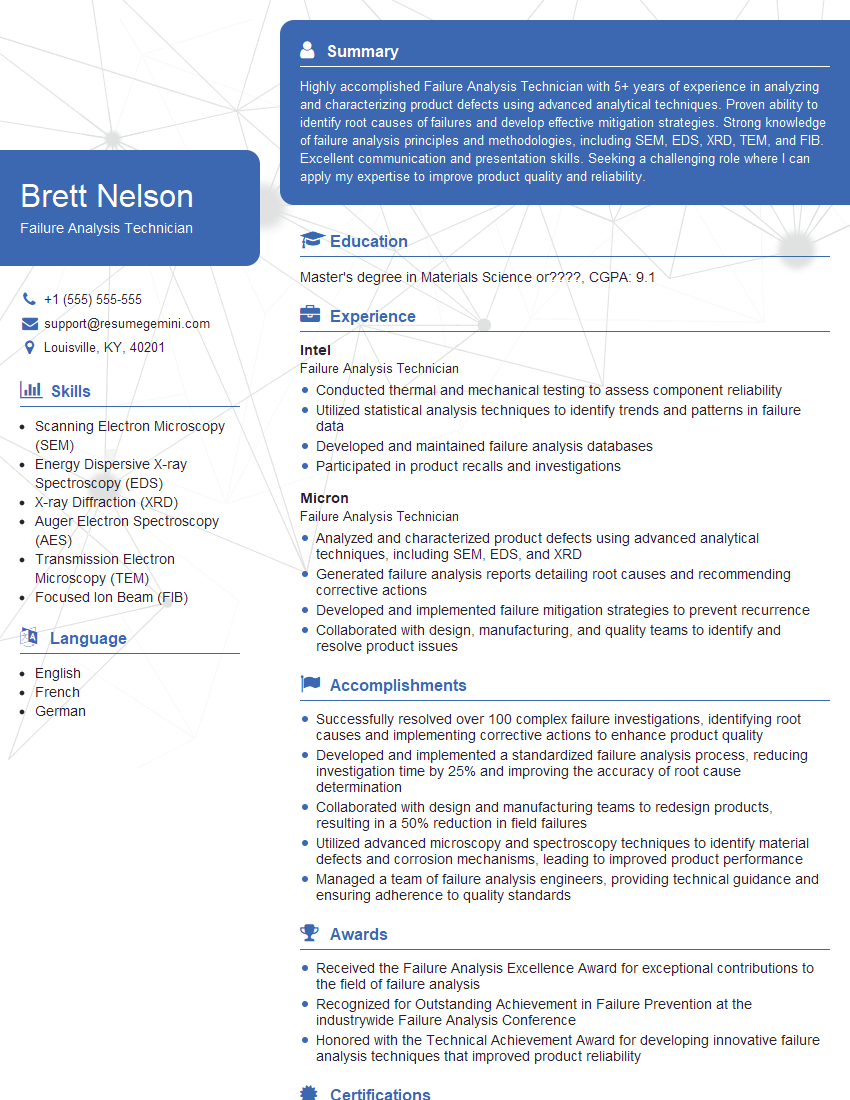
Mastering Component Level Analysis is vital for career advancement in many technical fields. A strong understanding of these concepts demonstrates crucial problem-solving skills and a systematic approach to complex systems, making you a highly valuable asset to any team. To significantly boost your job prospects, create an ATS-friendly resume that showcases your expertise. ResumeGemini is a trusted resource that can help you build a professional and impactful resume, highlighting your skills in Component Level Analysis. Examples of resumes tailored to this area of expertise are available to help you get started.
Explore more articles
Users Rating of Our Blogs
Share Your Experience
We value your feedback! Please rate our content and share your thoughts (optional).
What Readers Say About Our Blog
Very informative content, great job.
good