Feeling uncertain about what to expect in your upcoming interview? We’ve got you covered! This blog highlights the most important Passion for the oyster industry interview questions and provides actionable advice to help you stand out as the ideal candidate. Let’s pave the way for your success.
Questions Asked in Passion for the oyster industry Interview
Q 1. Describe the different oyster cultivation methods.
Oyster cultivation, or aquaculture, employs several methods, each tailored to the species, environment, and desired scale of production. The most common methods include:
- Bottom Culture: This traditional method involves placing oyster spat (young oysters) directly onto the seabed, allowing them to grow naturally. It’s often used in areas with suitable substrate and low environmental impact. Think of it like letting them grow wild, but in a designated area. Success relies heavily on natural conditions.
- Off-bottom Culture: This method suspends oysters off the seabed using various techniques. Oysters are grown in cages, bags, or on racks, reducing their contact with the seafloor and predators. This offers greater control over environmental conditions, such as water depth and exposure to sunlight, resulting in faster growth and reduced predation.
- Floating Rafts: Rafts of various designs support long lines or trays of oysters, allowing for easy access during harvesting and facilitating growth in deeper waters. They maximize water flow and space utilization.
- Hanging Culture: This is similar to off-bottom but often uses strings or ropes suspended from floating structures, where spat attach and grow. This method is ideal for high-density cultivation and minimizes space on the seabed.
The choice of method depends on factors like water depth, current strength, oyster species, and available resources. For instance, deep waters might necessitate floating raft systems, while calmer waters might allow for bottom culture.
Q 2. Explain the life cycle of an oyster.
The oyster life cycle begins with spawning – the release of eggs and sperm into the water. Fertilized eggs develop into microscopic larvae, which swim freely for a short period before settling on a hard substrate. This settling process is crucial for their survival. Once settled, they become spat and begin to grow, gradually developing their shell. Growth rate is influenced by factors like water temperature and food availability. Oysters reach maturity within a year or two, depending on the species and environmental conditions. Adult oysters then release eggs and sperm, continuing the cycle. Think of it as a delicate dance between the environment and the oyster itself, requiring ideal conditions at every stage.
Q 3. What are the common diseases affecting oysters?
Oysters, like any living organism, are susceptible to various diseases. Some common ones include:
- Dermo (Perkinsus marinus): A parasitic disease causing significant mortality, particularly in warmer waters. It weakens the oyster and makes it more susceptible to other problems.
- MSX (Haplosporidium nelsoni): Another parasite impacting oyster populations, leading to mortality. Similar to Dermo, it compromises oyster health.
- Oyster herpes virus (OsHV-1): This virus can cause mass mortalities, particularly in juvenile oysters. It’s a particularly devastating disease, difficult to control.
- Bacterial infections: Various bacteria can lead to shell disease or other infections, causing mortality or affecting oyster quality.
Disease outbreaks can be devastating to oyster farms and wild populations. Monitoring water quality, implementing biosecurity measures, and selective breeding for disease resistance are crucial strategies in managing these risks. This is where careful observation and proactive measures become critical for sustainability.
Q 4. How do you ensure oyster sustainability?
Ensuring oyster sustainability is paramount for the industry’s long-term health. Key strategies include:
- Sustainable Harvesting Practices: Implementing responsible harvesting techniques that minimize damage to the environment and oyster populations, such as selective harvesting and size limits.
- Habitat Restoration: Restoring and protecting oyster reefs, which provide crucial habitat for various marine species. This is fundamental for a healthy ecosystem.
- Disease Management: Implementing effective strategies to control oyster diseases, such as monitoring, biosecurity, and selective breeding.
- Water Quality Monitoring: Regularly monitoring water quality to identify and address pollution and other environmental stressors.
- Responsible Aquaculture: Employing sustainable aquaculture practices that minimize environmental impact and ensure the long-term health of oyster populations.
- Stock Enhancement: Introducing oysters to depleted areas to support population recovery and enhance biodiversity. This helps ensure a healthy and replenished stock.
These integrated approaches ensure the future of this valuable resource.
Q 5. What are the environmental factors affecting oyster growth?
Several environmental factors significantly influence oyster growth and survival:
- Water Temperature: Oysters thrive within specific temperature ranges. Extreme temperatures can cause stress, slow growth, and even mortality.
- Salinity: The level of salt in the water is critical. Oysters need a specific salinity range to survive and grow optimally. Fluctuations in salinity can significantly affect their health.
- Water Quality: Clean water is essential. Pollution, nutrient runoff, and low oxygen levels can negatively impact oyster growth and survival.
- Food Availability: Oysters are filter feeders, relying on phytoplankton and other microscopic organisms for food. Abundant food sources lead to faster growth.
- Currents and Water Flow: Adequate water flow is essential for delivering food and oxygen, while strong currents can cause stress or dislodge oysters from their growing locations.
- Substrate: The type of surface oysters settle on influences their survival and growth.
Understanding and managing these factors are crucial for successful oyster farming and conservation.
Q 6. Discuss different oyster species and their characteristics.
Many oyster species exist worldwide, each with unique characteristics. Some examples include:
- Eastern Oyster (Crassostrea virginica): A common species in North America, known for its robust growth and excellent flavor. It is a workhorse of the industry.
- Pacific Oyster (Magallana gigas): Originating from the Pacific, this species is widely cultivated globally due to its fast growth rate and large size. It’s known for its popularity.
- European Flat Oyster (Ostrea edulis): This species is prized for its delicate flavor and is cultivated in Europe and other regions. It tends to be smaller than other species.
- Olympia Oyster (Ostrea lurida): A native North American species, it’s smaller than the Eastern oyster but has a distinct flavor. It’s experiencing a comeback after near extinction.
Each species has specific requirements for water temperature, salinity, and other environmental factors, influencing its suitability for different cultivation areas. For example, the Pacific Oyster tolerates a broader range of salinities than the Olympia Oyster.
Q 7. Explain the process of oyster harvesting and processing.
Oyster harvesting and processing methods vary depending on the cultivation method and the species. For off-bottom cultures, oysters are typically harvested using tongs, rakes, or diving. Bottom-cultured oysters might require dredging, though this can be environmentally damaging if not carefully managed. After harvesting, oysters undergo processing to ensure food safety and quality. This process usually involves:
- Cleaning: Removing debris and any attached organisms from the oyster shells.
- Culling: Sorting oysters by size and quality, removing damaged or diseased ones.
- Depuration: A process of placing oysters in clean, controlled conditions to purge them of bacteria and other contaminants. This is crucial for food safety.
- Shucking (optional): Removing the oyster meat from its shell, usually done for ready-to-eat products.
- Packaging: Packing oysters for distribution, either in shell or shucked.
The entire process must adhere to strict hygiene and quality standards to ensure safe and high-quality products reach the consumer. For instance, depuration is a crucial step to minimize risks of foodborne illness.
Q 8. How do you maintain water quality in an oyster farm?
Maintaining optimal water quality is paramount in oyster farming. Think of it like this: oysters are incredibly sensitive filter feeders; their health directly reflects the health of their environment. We employ several strategies to ensure pristine water conditions.
- Regular Water Testing: We conduct frequent water quality tests, analyzing parameters like salinity, temperature, dissolved oxygen, and the presence of harmful bacteria and phytoplankton. This allows us to proactively address any imbalances.
- Site Selection: Choosing the right location is crucial. We select sites with strong tidal flow to ensure efficient water exchange and minimize the accumulation of waste products. Areas with good water clarity are also preferred to maximize sunlight penetration for phytoplankton growth, which is the base of the oyster’s food chain.
- Monitoring and Management: We closely monitor nutrient levels (nitrogen and phosphorus) to prevent algal blooms that can suffocate oysters. This often involves implementing strategies to reduce nutrient runoff from land-based sources.
- Water Depth and Bottom Conditions: We manage the depth of the oyster beds and the bottom substrate to promote ideal conditions for oyster growth. A stable and clean bottom prevents the build-up of sediments that can smother oysters.
For instance, during a particularly hot summer, we may need to increase water circulation around our oyster beds using pumps to ensure adequate oxygen levels. Consistent monitoring and proactive management are key to preventing issues before they negatively impact oyster health and yield.
Q 9. What are the regulations governing oyster farming in your area?
Oyster farming is highly regulated in our area, and rightfully so. These regulations exist to protect both the environment and the public’s health.
- Water Quality Standards: Stringent water quality standards are enforced, dictating acceptable levels of bacteria and other contaminants. We are required to regularly submit water samples for testing and adhere to strict guidelines.
- Harvesting Regulations: Regulations govern the size and minimum age of oysters that can be harvested, ensuring they have reached maturity and sufficient meat yield. There are also size limits to prevent overharvesting.
- Disease Prevention and Control: We are mandated to follow strict protocols to prevent the spread of oyster diseases. This includes measures like proper cleaning and disinfection of equipment and reporting any signs of disease to the regulatory authorities.
- Environmental Impact Assessment: Before establishing an oyster farm, we had to undergo a thorough environmental impact assessment to minimize our footprint on the surrounding ecosystem. This involved detailed surveys of the area’s flora and fauna.
- Licensing and Permits: Operating an oyster farm requires various licenses and permits, issued and renewed based on compliance with the above regulations.
Non-compliance can result in significant penalties, including fines and even closure of the farm. Adherence to these regulations not only safeguards the environment but also ensures consumer confidence in the safety and quality of our oysters.
Q 10. How do you manage oyster pests and predators?
Oyster pests and predators are a constant challenge. Think of it as a natural battle for survival in the marine world. We use various methods to manage this.
- Predator Exclusion: We use different methods of predator exclusion depending on the specific predator. This might involve using mesh cages or other protective structures to shield the oysters from crabs, starfish, and other predators.
- Selective Breeding: Investing in oyster varieties that show natural resistance to diseases and pests is vital for long-term success. Resilient oysters require less intervention.
- Regular Monitoring: We regularly inspect our oyster beds to detect infestations early. Early detection allows for more targeted and less intensive control measures.
- Biological Control: In some instances, we might utilize natural predators of certain pests, promoting a balanced ecosystem.
- Culling: Sometimes, we need to cull infested or unhealthy oysters to prevent further spread of diseases or pests. This is a last resort, always aiming to minimize the impact on the overall population.
For instance, we’ve had to deal with starfish infestations in the past. By combining predator exclusion with diligent monitoring and timely intervention, we managed to mitigate the impact on our oyster crop. It’s a continuous process of adaptation and refinement based on the specific challenges encountered.
Q 11. Describe your experience with oyster grading and sizing.
Oyster grading and sizing are crucial steps in ensuring consistent product quality and meeting market demands. It’s a bit like sorting out different sized fruit at a farmer’s market.
We use a combination of methods for grading and sizing:
- Visual Inspection: We manually inspect each oyster, assessing its size, shape, and shell condition. This helps us identify any abnormalities or defects.
- Sizing Tools: We use specialized tools like grading rings or sieves to accurately measure oyster size and separate them into different categories based on market preferences. Sizes are usually expressed in inches, for example, 3-inch oysters, 4-inch oysters, etc.
- Weight Sorting: Sometimes, oysters of similar size can have different weights. We might employ weight-based sorting to achieve greater uniformity in the product.
- Shell Quality Assessment: The quality of the shell also plays a role in grading. Oysters with damaged or excessively rough shells are generally down-graded.
Proper grading ensures our customers receive a uniform product. This is essential to maintain brand consistency and customer satisfaction. Having a range of sizes and quality levels also allows us to satisfy the various needs of different markets.
Q 12. How do you assess the market demand for oysters?
Assessing market demand for oysters is an ongoing process requiring a multi-faceted approach. We need to understand current trends and anticipate future needs.
- Market Research: We stay updated on current market trends through industry publications, market reports, and direct communication with our customers and distributors.
- Restaurant and Wholesale Interactions: Direct engagement with restaurants and wholesalers is crucial. We frequently speak to chefs and buyers to understand their demand in terms of oyster size, type, and volume.
- Seasonal Demand Analysis: Oyster consumption tends to follow seasonal trends. We consider this when forecasting our harvest schedule and marketing efforts.
- Pricing Analysis: We monitor prices of oysters and competing seafood items to make informed decisions about our pricing strategy.
- Sales Data Analysis: Analyzing our past sales data provides insights into customer preferences and sales patterns, helping us to refine our strategies.
For example, during the summer months, demand for smaller, sweeter oysters often increases, while larger oysters may be preferred during the colder months. Adapting our farming practices and sales strategy to these trends is crucial to our success.
Q 13. Explain your experience with oyster sales and distribution.
Sales and distribution are vital for bringing our oysters to consumers. We employ a multi-channel approach.
- Direct Sales to Restaurants: We maintain strong relationships with high-end restaurants and seafood establishments, delivering fresh oysters directly.
- Wholesale Distribution Networks: We work with several established wholesale distributors to reach a broader range of markets and retailers.
- Farmers’ Markets and Local Events: Participating in farmers’ markets and local seafood events allows us to connect directly with consumers, build brand awareness, and create a sense of community.
- Online Sales (Emerging): We are exploring online sales channels to reach a wider customer base, focusing on delivering fresh oysters in a timely manner.
- Logistics and Packaging: Ensuring proper handling and transportation of oysters is crucial. We use temperature-controlled transport and specialized packaging to maintain oyster freshness and quality.
Building strong relationships with our distributors and customers is key to successful sales. We prioritize clear communication, consistent product quality, and timely delivery.
Q 14. What are the key quality indicators for a good oyster?
The quality of an oyster is judged by a combination of factors. Think of it like a wine tasting – you’re looking for a holistic experience.
- Shell Appearance: A healthy oyster has a clean, tightly closed shell with a smooth, unblemished surface. A gaping shell usually indicates a dead or dying oyster.
- Smell and Aroma: A fresh oyster will have a clean, slightly briny aroma. Any off-putting smells (e.g., ammonia) are a sign of spoilage.
- Liquor (Oyster Juice): The oyster liquor should be clear and slightly milky. A cloudy or discolored liquor can indicate problems.
- Taste and Texture: The ideal oyster will have a balance of sweetness, saltiness, and brininess, with a firm, plump texture. The taste depends largely on the growing conditions.
- Overall Condition: The oyster should feel heavy for its size, indicating it’s plump and full of meat. Any unusual discoloration or damage to the oyster itself points to poor quality.
We rigorously assess these aspects to ensure our oysters meet the highest quality standards. Consistently delivering high-quality oysters is essential for building a strong reputation and maintaining customer loyalty.
Q 15. How do you ensure food safety in oyster handling?
Ensuring food safety in oyster handling is paramount. It’s a multi-step process starting long before the oyster reaches the consumer. We begin with selecting oysters from reputable sources that adhere to strict harvesting and handling protocols. This includes verifying their compliance with relevant health regulations and certifications. These often involve testing for harmful bacteria like Vibrio.
Once received, oysters are immediately refrigerated at temperatures between 33°F and 40°F (0.5°C and 4.4°C) to slow bacterial growth. We meticulously inspect each oyster for any signs of damage or spoilage, discarding any that appear compromised. Furthermore, our shucking station maintains strict hygiene protocols. Employees wear gloves, and all surfaces are thoroughly sanitized between uses. Finally, the shucked oysters are immediately placed back on ice to maintain their temperature until service.
For example, a batch of oysters that arrives showing signs of elevated temperatures or damage is immediately rejected, even if it means a temporary shortage. Food safety is non-negotiable.
Career Expert Tips:
- Ace those interviews! Prepare effectively by reviewing the Top 50 Most Common Interview Questions on ResumeGemini.
- Navigate your job search with confidence! Explore a wide range of Career Tips on ResumeGemini. Learn about common challenges and recommendations to overcome them.
- Craft the perfect resume! Master the Art of Resume Writing with ResumeGemini’s guide. Showcase your unique qualifications and achievements effectively.
- Don’t miss out on holiday savings! Build your dream resume with ResumeGemini’s ATS optimized templates.
Q 16. Describe your experience with oyster shucking techniques.
My oyster shucking technique is honed over years of practice. It’s a delicate balance of speed and precision. I start by firmly gripping the oyster, ensuring a secure hold without crushing the shell. Then, I insert the oyster knife at the hinge, carefully twisting and prying the shell open. The goal is to minimize breakage and to keep the oyster liquor intact – that luscious liquid is crucial to the oyster’s flavor and texture.
I’ve developed a rapid yet controlled shucking style that minimizes waste and maximizes yield. This is crucial for efficiency, especially during busy service periods. I’ve even trained several others in this technique, always emphasizing the importance of safety and precision to avoid cuts. Think of it like a surgical procedure – precise movements are vital to achieving the best result.
Q 17. What are the different ways to prepare and serve oysters?
Oysters are incredibly versatile. The simplest preparation is often the best – serving them fresh on the half shell with a squeeze of lemon or a mignonette sauce (a classic vinegar-based sauce). This allows the natural briny flavor of the oyster to shine.
Beyond that, oysters can be incorporated into a wide variety of dishes. They can be baked, fried, grilled, or even added to stews and chowders. In more refined settings, they might be incorporated into dishes like oyster Rockefeller (baked with spinach and herbs) or oyster stew (a creamy, comforting broth).
Presentation is key. Whether it’s on the half shell with simple garnishes or as a sophisticated element within a larger dish, the goal is to highlight the oyster’s elegance and appeal to the diner’s senses.
Q 18. How do you manage oyster inventory and storage?
Managing oyster inventory and storage involves a precise system that prioritizes freshness and quality. We use a FIFO (First-In, First-Out) system to ensure that older oysters are used before newer ones. Detailed records are kept, tracking each oyster batch’s arrival date, source, and quantity. This helps us monitor shelf life and prevent spoilage.
Oysters are stored in specialized refrigeration units at the optimal temperature. We constantly monitor the temperature to ensure consistency. Regular checks for signs of spoilage are critical. Any oysters showing signs of deterioration are immediately removed. This meticulous approach minimizes losses and ensures only the freshest oysters are offered.
We often use inventory management software to track stock levels, predict demand, and place timely orders with suppliers, preventing both shortages and overstocking.
Q 19. What are the challenges in oyster aquaculture?
Oyster aquaculture faces a multitude of challenges. One major issue is water quality. Oysters are highly sensitive to pollution, changes in salinity, and water temperature fluctuations. Disease outbreaks can decimate entire stocks, requiring careful monitoring and proactive measures to prevent and manage them. Harmful algal blooms (HABs) can also contaminate oysters and render them unsafe for consumption.
Another significant challenge is the impact of climate change. Rising sea levels, ocean acidification, and increasingly frequent and intense storms can disrupt oyster habitats and severely affect their growth and survival. Competition for resources with other shellfish and invasive species also poses a threat.
Finally, finding sustainable solutions and meeting growing consumer demand without over-harvesting or damaging the ecosystem is a constant balancing act.
Q 20. How do you address consumer concerns about oyster safety?
Addressing consumer concerns about oyster safety is crucial for building trust and ensuring continued market viability. We proactively communicate our food safety protocols to customers, emphasizing our commitment to transparency and best practices. This includes information about our sourcing, handling, and storage methods.
We often provide educational materials explaining the importance of proper oyster handling and consumption, including the need for refrigeration and the risks associated with consuming raw seafood. We also make sure our staff is well-trained to answer customer questions about oyster safety and can address concerns about specific health risks.
Building a relationship based on openness and trust is key. It allows us to dispel myths, answer questions, and build confidence in our products’ safety and quality.
Q 21. Describe your experience with oyster farm maintenance.
Maintaining an oyster farm is a demanding, hands-on job. Regular inspections of the oyster beds are essential to monitor the oysters’ growth and identify any issues such as disease, predation, or environmental stress. This involves diving or using specialized equipment to assess the oyster’s condition and density. We also regularly assess water quality parameters such as salinity, temperature, and dissolved oxygen levels to ensure optimal growing conditions.
The farm infrastructure also requires constant upkeep. This includes maintaining the structures holding the oysters, repairing any damage caused by weather or marine life, and ensuring efficient water flow through the system. We also frequently monitor for and manage invasive species that may compete with or harm the oysters.
It’s a dynamic process that requires constant vigilance and adaptation to ever-changing environmental conditions. Think of it as tending a delicate garden, but beneath the waves.
Q 22. How do you monitor oyster growth and health?
Monitoring oyster growth and health is crucial for successful aquaculture. It’s like being a doctor for your shellfish; you need regular check-ups to ensure they’re thriving. We use a multi-pronged approach.
Regular Sampling: We periodically collect oysters from different parts of the farm to measure their size (shell length and height), weight, and condition. This provides a snapshot of overall growth and reveals any inconsistencies across the farm.
Shell Condition Assessment: We examine the shells for any signs of disease, parasites (like Perkinsus marinus or Haplosporidium nelsoni), or damage from predators. A healthy shell is smooth, strong, and free from lesions.
Water Quality Monitoring: The health of the oysters is directly tied to the water quality. We regularly test parameters such as salinity, temperature, dissolved oxygen, and pH. Significant deviations from optimal levels can indicate potential problems.
Tissue Analysis (if necessary): In cases of suspected disease or poor growth, we might send samples to a laboratory for histological analysis. This involves microscopic examination of oyster tissues to identify pathogens or other issues.
By combining these methods, we get a comprehensive picture of oyster health and can promptly address any problems that arise. For example, if we notice unusually high mortality rates, we’ll investigate the water quality, check for disease, and potentially adjust farming practices.
Q 23. What are the different types of oyster equipment you’re familiar with?
Oyster farming utilizes a variety of specialized equipment. Think of it as a toolbox for raising these delicious bivalves.
Oyster Baskets/Cages: These are containers used to hold oysters during different growth stages, protecting them from predators and facilitating easier harvesting. Different designs are used depending on the oyster species and farming method.
Boats & Dredges: These are essential for transporting oysters, deploying gear, and harvesting. Larger farms utilize specialized boats equipped with dredging equipment for efficient harvesting.
Water Quality Monitoring Equipment: This includes probes and sensors to measure parameters like temperature, salinity, dissolved oxygen, and pH. Real-time monitoring systems are increasingly used to ensure optimal water conditions.
Sorting and Cleaning Equipment: This can range from simple hand tools to automated systems for sorting oysters by size and cleaning them of debris.
Seed Conveyors and Handling Systems: In hatcheries and nurseries, these systems are used to move and handle the delicate oyster spat (juveniles) efficiently and without damage.
The specific equipment used will vary depending on the scale of the operation and the farming techniques employed. Smaller-scale operations may rely heavily on manual labor, while larger commercial farms utilize automated systems.
Q 24. Explain your experience with oyster hatchery operations.
My experience with oyster hatchery operations spans several years, encompassing all aspects from broodstock management to spat production. Think of it as a nursery for oysters.
Broodstock Selection & Conditioning: We carefully select mature oysters based on their size, health, and genetic characteristics. Conditioning involves providing optimal environmental conditions to induce spawning.
Spawning & Fertilization: We induce spawning through thermal or chemical stimulation and then carefully combine eggs and sperm for fertilization. This is a delicate process requiring precise control of water quality.
Larval Rearing: After fertilization, we meticulously rear the oyster larvae in controlled tanks, providing them with the right diet (microalgae) and maintaining optimal water quality. This stage is critical for survival and growth.
Spat Settlement & Nursery: Once the larvae develop shells, they are induced to settle on various substrates (e.g., shells, tiles) in nursery systems. These nurseries provide a protected environment for the young oysters until they reach a suitable size for transfer to the grow-out areas.
Throughout the process, stringent quality control measures are implemented to ensure high spat quality and minimize losses. For example, regular microscopic examination of larvae is crucial for early detection of disease or other problems.
Q 25. How do you develop and implement an oyster farm management plan?
Developing and implementing an oyster farm management plan is akin to creating a detailed blueprint for a successful harvest. It involves a comprehensive strategy encompassing various aspects.
Site Selection & Assessment: We thoroughly assess the potential site considering factors like water quality, depth, currents, salinity, temperature, and bottom type. Suitable locations are crucial for oyster growth and survival.
Species Selection: The choice of oyster species depends on the environmental conditions of the site and market demands. Some species are better adapted to warmer or colder waters.
Farming System Design: We decide on the best farming system (e.g., bottom culture, off-bottom culture using trays or longlines) considering factors like water depth, bottom type, and species-specific requirements.
Biosecurity Plan: A crucial aspect involves implementing robust biosecurity measures to prevent the introduction and spread of diseases and pests. This includes regular monitoring, quarantine procedures, and cleaning practices.
Production Targets & Monitoring: Setting realistic production targets and implementing a monitoring program to track growth, mortality, and overall farm performance is essential. Regular data collection and analysis help optimize practices and identify areas for improvement.
Harvesting & Post-Harvest Handling: A well-defined harvesting strategy, including appropriate equipment and handling techniques to minimize damage and maintain product quality, is crucial.
The plan is a dynamic document that’s regularly reviewed and updated based on performance data and changes in environmental conditions. This ensures adaptation and sustainability.
Q 26. Describe your experience with oyster marketing and branding.
Oyster marketing and branding go beyond simply selling a product; it’s about building a story and connecting with consumers.
Value Proposition: Highlighting unique aspects of our oysters, whether it’s their flavor profile, origin, or sustainable farming practices, is crucial. For example, we might emphasize the exceptional taste resulting from specific water conditions or the eco-friendly nature of our farming methods.
Branding & Packaging: A strong brand identity with compelling visuals and messaging is essential. Attractive packaging that reflects the product’s quality and story is key to standing out on the shelves.
Target Market Identification: Understanding our target consumer groups (e.g., fine dining establishments, restaurants, direct-to-consumer sales) allows for tailored marketing efforts.
Distribution Channels: Establishing relationships with distributors, restaurants, and retailers to ensure effective product distribution is vital.
Storytelling: We emphasize the human element behind our oyster farm, sharing the passion and dedication that goes into producing high-quality oysters. This creates a personal connection with consumers.
Effective marketing leverages various channels, including social media, website, public relations, and participation in seafood events to reach potential customers.
Q 27. What is your understanding of sustainable oyster aquaculture practices?
Sustainable oyster aquaculture is crucial for ensuring the long-term health of the industry and the environment. It’s about striking a balance between economic viability and ecological responsibility.
Minimizing Environmental Impact: We strive to minimize the impact of our operations on surrounding ecosystems through careful site selection, responsible waste management, and avoiding the use of harmful chemicals.
Protecting Biodiversity: We take steps to preserve habitat and biodiversity in the surrounding area. This might involve creating artificial reefs or using farming methods that are less disruptive to the environment.
Water Quality Management: Maintaining good water quality is paramount. We monitor key parameters and take corrective actions to mitigate pollution or prevent nutrient runoff.
Disease Management: Implementing effective biosecurity measures and disease surveillance to reduce the need for antibiotics or other treatments is crucial.
Energy Efficiency: We explore ways to improve the energy efficiency of our operations, reducing our carbon footprint.
Sustainability certifications and best practices serve as guidelines, helping us demonstrate our commitment to responsible farming. This approach ensures that the industry can thrive while preserving valuable marine resources for future generations.
Q 28. How do you handle oyster mortality events?
Oyster mortality events can be devastating. Imagine a sudden illness sweeping through your oyster beds. A rapid response is crucial.
Rapid Assessment: We immediately assess the extent of the mortality event, identifying affected areas and determining the potential cause.
Disease Diagnostics: Samples are sent to a diagnostic laboratory to identify the causative agent, whether it’s a disease, parasite, or environmental stressor.
Water Quality Analysis: We thoroughly analyze water quality parameters to identify potential stressors, such as low dissolved oxygen, high temperatures, or harmful algal blooms.
Mitigation Strategies: Depending on the cause, various mitigation strategies may be implemented. This could involve improving water circulation, treating the affected oysters, or removing them from the farm to prevent further spread.
Prevention Measures: After a mortality event, we carefully analyze the situation to identify contributing factors and implement measures to prevent future occurrences. This may include improving biosecurity protocols, adjusting stocking densities, or modifying farming practices.
Documentation is crucial. We meticulously record all aspects of the event, including mortality rates, water quality data, and mitigation actions taken. This information is vital for future planning and helps to identify trends and patterns.
Key Topics to Learn for Passion for the Oyster Industry Interview
- Oyster Biology and Cultivation: Understanding oyster life cycles, growth conditions (salinity, temperature, water quality), and sustainable aquaculture practices.
- Oyster Harvesting and Processing: Familiarize yourself with different harvesting methods, post-harvest handling, processing techniques (e.g., shucking, cleaning), and quality control measures.
- Market Trends and Consumer Preferences: Research current market demands, pricing strategies, consumer trends (e.g., preferences for specific oyster types, sizes, and origin), and the impact of seasonal variations.
- Sustainability and Environmental Impact: Learn about the environmental considerations of oyster farming, including water quality management, habitat restoration, and minimizing the industry’s carbon footprint. Understanding relevant certifications (e.g., Aquaculture Stewardship Council) is beneficial.
- Food Safety and Regulations: Become familiar with food safety regulations, handling procedures, and best practices to ensure product safety and compliance with relevant standards.
- Business Operations and Management: Explore aspects of oyster farm management, including cost analysis, resource allocation, inventory management, and marketing strategies.
- Problem-Solving in Oyster Farming: Consider common challenges faced in oyster farming (e.g., disease outbreaks, environmental changes, market fluctuations) and how to develop effective solutions using data analysis and adaptive management techniques.
Next Steps
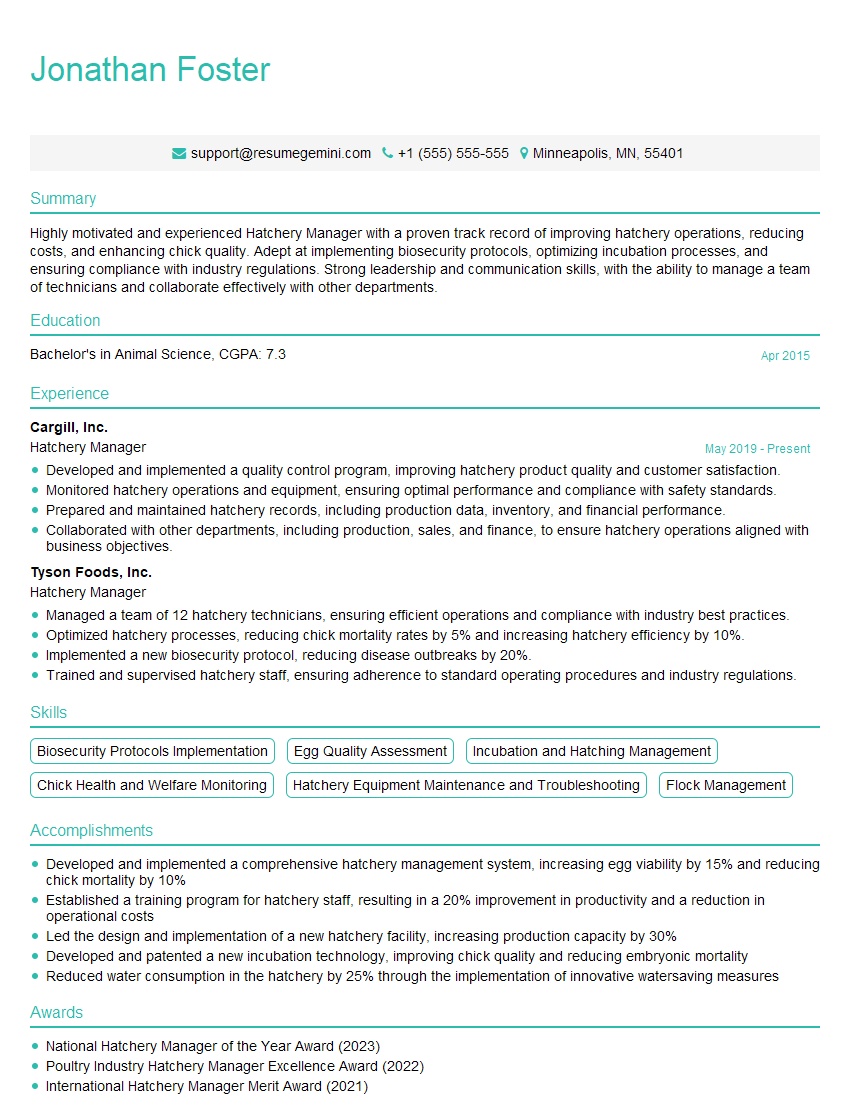
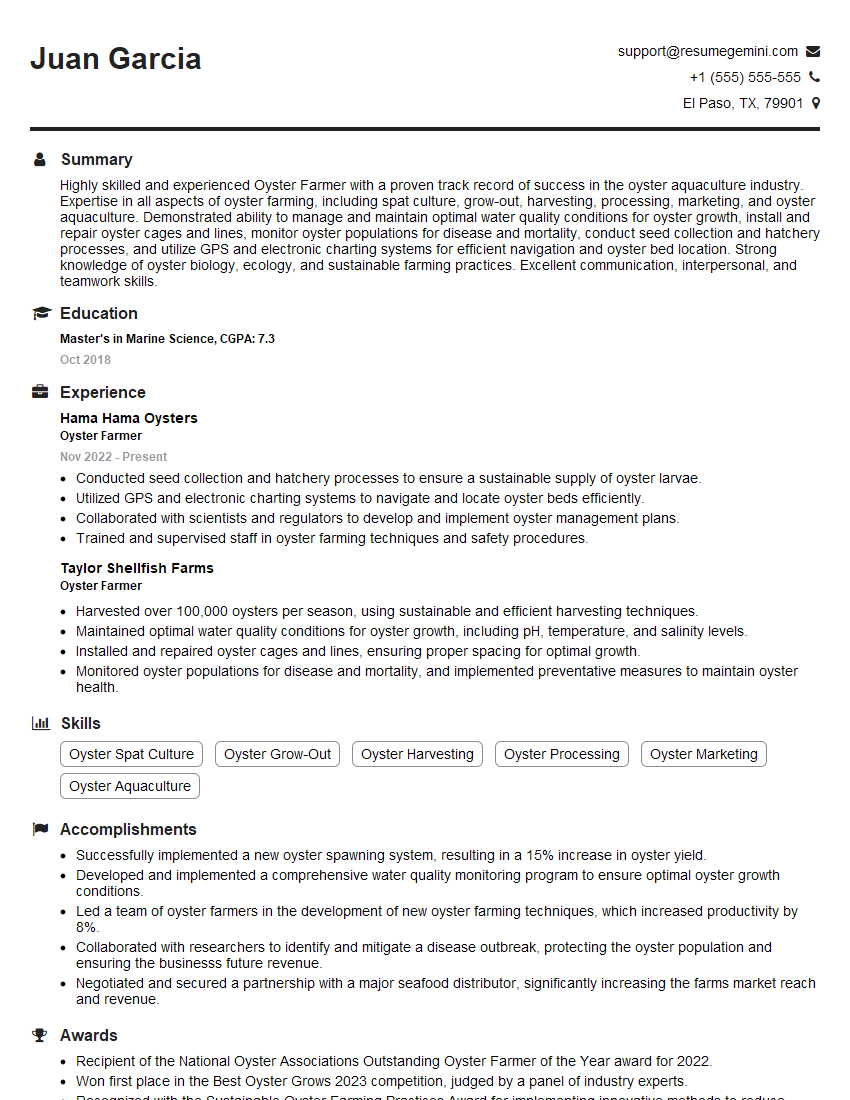
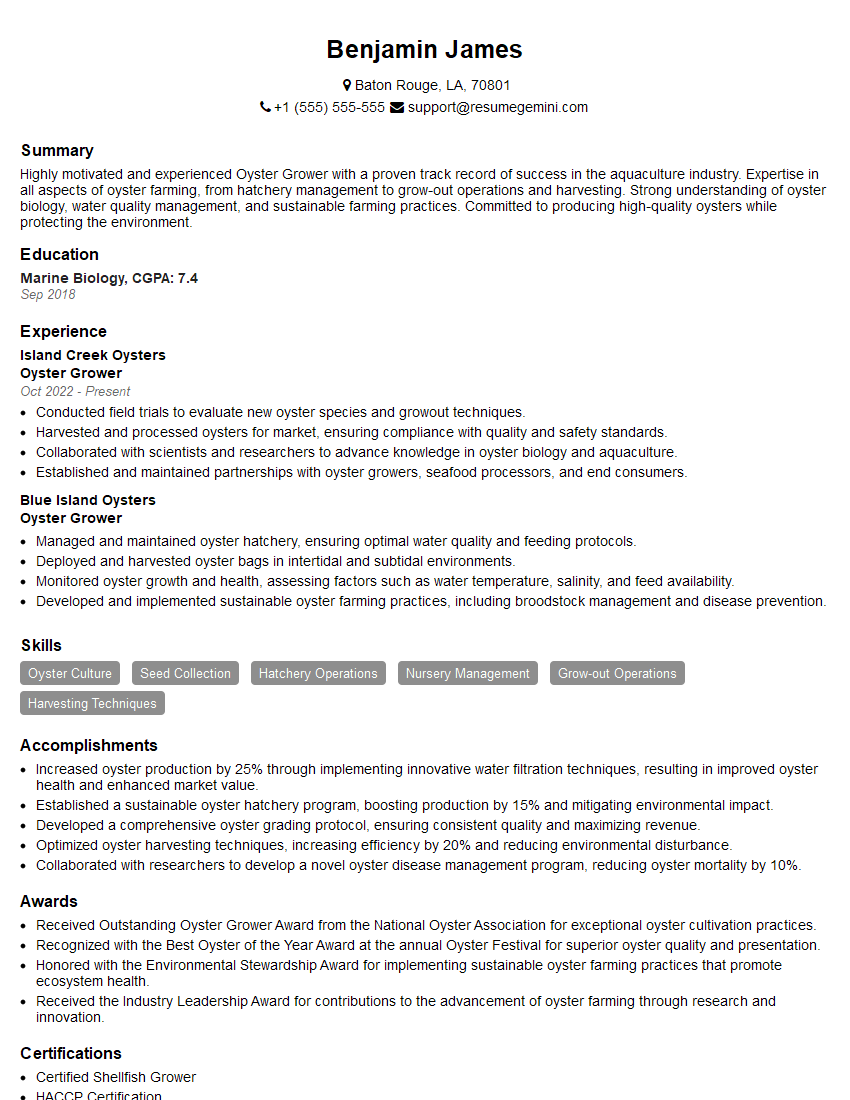
Mastering the intricacies of the oyster industry is crucial for career advancement, opening doors to diverse and rewarding roles within aquaculture, processing, sales, marketing, and management. To significantly increase your job prospects, creating a compelling and ATS-friendly resume is essential. ResumeGemini is a trusted resource that can help you build a professional and impactful resume tailored to the specific requirements of this industry. Examples of resumes tailored to the Passion for the oyster industry are available to further guide your preparation. Take the next step and craft a resume that showcases your skills and experience effectively.
Explore more articles
Users Rating of Our Blogs
Share Your Experience
We value your feedback! Please rate our content and share your thoughts (optional).
What Readers Say About Our Blog
Very informative content, great job.
good