The right preparation can turn an interview into an opportunity to showcase your expertise. This guide to Performing Minor Maintenance interview questions is your ultimate resource, providing key insights and tips to help you ace your responses and stand out as a top candidate.
Questions Asked in Performing Minor Maintenance Interview
Q 1. Describe your experience with preventative maintenance procedures.
Preventative maintenance is all about avoiding problems before they happen. Think of it like regular check-ups for your car – much cheaper and easier than dealing with a major breakdown later. My experience encompasses a wide range of procedures, from regularly inspecting and lubricating moving parts of machinery to checking electrical connections for wear and tear. For example, in a previous role, I implemented a weekly checklist for inspecting the HVAC system, which included checking filter cleanliness, refrigerant levels, and belt tension. This proactive approach significantly reduced unexpected downtime and repair costs. Another example involves scheduling routine lubrication of conveyor belts in a warehouse setting; this simple task extended the lifespan of the belts by several months. These preventative measures, meticulously documented and followed, ultimately contribute to a smoother, more efficient operation and a reduction in overall maintenance expenditures.
Q 2. How do you prioritize maintenance tasks in a busy environment?
Prioritizing maintenance tasks in a busy environment requires a structured approach. I typically use a combination of methods, starting with a risk assessment. Tasks with the highest potential for downtime or safety hazards get top priority. For instance, a malfunctioning fire alarm system would take precedence over repainting a wall. I then employ a system that incorporates urgency and impact. I use a matrix categorizing tasks by their urgency (high, medium, low) and their impact on operations (high, medium, low). High-urgency, high-impact tasks get immediate attention, while low-urgency, low-impact tasks can be scheduled later. Software tools can also be invaluable; some allow for scheduling, tracking, and prioritizing, offering insights into potential bottlenecks and resource allocation needs. Think of it like triage in a hospital – the most critical cases are addressed first. This system ensures that essential maintenance is consistently performed while mitigating risks and keeping operations running smoothly.
Q 3. Explain your troubleshooting process for common equipment malfunctions.
My troubleshooting process follows a systematic approach. I begin by gathering information: What is the malfunction? When did it start? What were the preceding events? This often involves visually inspecting the equipment for obvious problems. Then, I’ll consult any available manuals or documentation for the equipment. Following this, I systematically test components, often using multimeters or other diagnostic tools to pinpoint the source of the issue. Once I’ve identified the problem, I develop a solution, considering the cost-effectiveness and safety implications. This might involve replacing a faulty part, adjusting settings, or cleaning a clogged component. For example, if a light fixture isn’t working, I’d first check the bulb, then the switch, then the wiring and finally the circuit breaker. Documenting each step, including the diagnosis and solution, is critical for future reference and improving efficiency. This detailed approach ensures that problems are resolved quickly and effectively, minimizing downtime and potential risks.
Q 4. What safety precautions do you always follow during maintenance?
Safety is paramount. I always begin by assessing the work area and identifying potential hazards. This includes checking for electrical hazards, using lockout/tagout procedures to de-energize equipment before working on it, and ensuring proper ventilation if dealing with chemicals or fumes. I utilize appropriate personal protective equipment (PPE) such as safety glasses, gloves, and hearing protection, depending on the specific task. Furthermore, I regularly review safety regulations and training materials to stay updated on best practices. I consider safety not just a procedure but an intrinsic part of my work ethic. For example, before working on any electrical system, I always ensure the power is completely off and use a non-contact voltage tester to double-check. This cautious approach prevents accidents and protects both myself and others.
Q 5. What are your skills in basic plumbing repairs?
My plumbing repair skills cover a range of minor repairs. I am proficient in fixing leaky faucets (replacing O-rings, cartridges, or washers), unclogging drains (using plungers, augers, or chemical drain cleaners), and repairing minor leaks in pipes (using pipe sealant or replacing short sections of pipe). I’ve successfully repaired several leaky faucets, saving the cost of calling a plumber. I understand the basic principles of water pressure and drainage systems, enabling me to troubleshoot common issues efficiently. I also understand the importance of water conservation and strive to select repair methods that minimize water waste. For instance, when dealing with a running toilet, I understand how to diagnose the issue, whether it’s a faulty flapper, fill valve, or chain, and implement the appropriate fix.
Q 6. How experienced are you with electrical repairs (within code)?
While I’m not a licensed electrician, I possess a strong understanding of basic electrical repairs, always working strictly within code. I’m comfortable with tasks such as replacing light fixtures, switches, and outlets. I can troubleshoot simple wiring problems, but for anything beyond basic repairs, I always defer to a qualified electrician. I am highly familiar with using multimeters to test voltage and amperage and understand the importance of color-coding wires. Safety is my utmost priority, and I never undertake a task if I am unsure of my ability to perform it safely and correctly. I always ensure power is switched off and use appropriate lockout/tagout procedures before working on any electrical system. My experience is based on years of practice and consistently following safety protocols.
Q 7. Describe your experience with carpentry and minor woodworking repairs.
My carpentry and minor woodworking skills include basic repairs like fixing loose handles on cabinets, patching small holes in walls using spackle and sanding, and installing simple shelving units. I’m proficient with using hand tools like saws, hammers, screwdrivers, and drills. I have experience working with different types of wood and have successfully completed several small-scale projects, such as building a simple bookshelf and repairing damaged furniture. My understanding of wood types and their properties allows me to select appropriate tools and techniques for specific repair jobs. For instance, I know the difference between repairing softwoods and hardwoods and adjust my approach accordingly. I always prioritize accurate measurements and attention to detail to ensure quality workmanship.
Q 8. How proficient are you with painting and drywall repair?
My proficiency in painting and drywall repair is extensive. I’m comfortable handling everything from minor touch-ups to more substantial repairs. For painting, I’m skilled in surface preparation – that’s crucial for a long-lasting finish. This includes cleaning, sanding, and priming the surface appropriately depending on the material (wood, drywall, metal). I’m adept at various painting techniques, including using rollers, brushes, and sprayers, achieving both smooth, even coats and specialized effects like stippling or sponging. I can work with different paint types – latex, oil-based, etc. – selecting the best option for each job and surface. For drywall, I can repair cracks, holes, and damaged sections using appropriate patching compounds and techniques. This includes applying the compound smoothly, sanding to a flawless finish, and priming before painting. I’ve even tackled larger projects involving replacing damaged sections of drywall completely. For example, I once repaired a significant hole in a wall caused by a plumbing leak, carefully patching the area to ensure structural integrity and a seamless finish.
Q 9. What types of HVAC systems are you familiar with?
My experience encompasses a variety of HVAC systems, including both forced-air systems (using furnaces, air handlers, and ductwork) and heat pumps. I’m familiar with different types of furnaces, such as gas, electric, and oil-fired units. I understand the importance of proper airflow and regularly inspect and clean air filters, ensuring optimal system efficiency. I can also troubleshoot common issues like clogged filters, malfunctioning blowers, and refrigerant leaks in heat pumps. I’m also well-versed in zoning systems, allowing for customized climate control in different areas of a building. Understanding the components of a heat pump, like the compressor, expansion valve, and evaporator coil, allows me to diagnose and address problems effectively. For instance, I recently diagnosed a refrigerant leak in a heat pump by using a specialized leak detection tool, and successfully repaired the system preventing significant energy loss and discomfort for the homeowner.
Q 10. How do you handle unexpected maintenance emergencies?
My approach to unexpected maintenance emergencies is methodical and prioritizes safety. First, I assess the situation to determine the severity and immediate risks. For instance, a burst pipe requires immediate action to prevent water damage, while a flickering light fixture might be addressed later. Then, I’ll implement the necessary temporary fixes to mitigate the immediate problem, such as turning off the water main in a plumbing emergency or switching off a faulty electrical circuit. Finally, I’ll document the issue, arrange for any needed specialized assistance if I’m not equipped to handle the repair myself (e.g., calling an electrician for a complex electrical problem), and arrange a time to perform a more thorough repair. Transparency and prompt communication with stakeholders are key, keeping them informed every step of the way. For example, I once encountered a sudden power outage during a maintenance visit. I swiftly identified the likely cause, a tripped circuit breaker, and promptly restored power while documenting the issue for the building manager.
Q 11. What tools and equipment are you most proficient with?
I’m proficient with a wide range of tools and equipment relevant to minor maintenance. This includes basic hand tools like screwdrivers (Phillips and flathead), wrenches, pliers, hammers, and levels. I’m also skilled in using power tools, such as drills, saws (circular and reciprocating), sanders, and impact drivers. For more specialized tasks, I’m familiar with using equipment like pressure washers for cleaning, HVAC testing instruments for refrigerant checks, and plumbing snakes for unclogging drains. Safety is paramount, so I’m always meticulous about using appropriate safety gear, including safety glasses, gloves, and dust masks. I frequently maintain and calibrate my tools to ensure accurate and efficient work.
Q 12. Explain your understanding of building codes and safety regulations.
Understanding and adhering to building codes and safety regulations is a cornerstone of responsible maintenance. I’m familiar with local and national codes relevant to electrical work, plumbing, and general construction. This includes understanding requirements for electrical grounding, plumbing fixture installations, and fire safety measures. I always prioritize safety, ensuring proper use of personal protective equipment (PPE) and following established safety procedures. I’m aware of regulations concerning working at heights, handling hazardous materials (like paints and solvents), and proper disposal of waste. For instance, I recently installed a new smoke detector, ensuring it met the requirements of the local building code regarding placement and testing. I always ensure my work complies with these codes to protect both myself and building occupants.
Q 13. Describe your experience with maintaining various types of equipment (e.g., HVAC, plumbing).
My experience maintaining various types of equipment is extensive. In addition to HVAC systems (as previously discussed), I have experience maintaining basic plumbing systems, including repairing leaky faucets, unclogging drains, and replacing toilet components. I have experience with minor electrical repairs, such as replacing light fixtures, switches, and outlets. I’m also comfortable with preventative maintenance tasks, like lubricating hinges, cleaning gutters, and inspecting exterior surfaces for damage. I once successfully repaired a leaky faucet by replacing the worn-out O-rings and cartridge, saving the homeowner significant expense. Thorough inspections are crucial to identifying and addressing issues proactively before they escalate into costly repairs.
Q 14. How do you document completed maintenance tasks?
I meticulously document all completed maintenance tasks. This includes creating detailed records noting the date, time, location of the work, a description of the task performed, materials used, and any relevant observations. I use a combination of digital and physical methods. Digital methods include using mobile apps or software to create and maintain electronic work orders. This provides easy access to records and allows for efficient reporting. I also maintain a physical logbook to provide a backup of the digital records. Photographs are included to showcase ‘before’ and ‘after’ views of the repair, facilitating verification and troubleshooting. Clear documentation is essential for tracking maintenance history, managing warranties, and ensuring accountability.
Q 15. Explain your process for ordering and managing spare parts.
Managing spare parts effectively is crucial for minimizing downtime. My process begins with a thorough understanding of the equipment I maintain, identifying its critical components and their typical failure rates. This informs my spare parts inventory. I utilize a computerized maintenance management system (CMMS) to track parts, their location, and usage. When a part needs replacing, I first check the CMMS for stock. If unavailable, I generate a purchase requisition, specifying the part number, manufacturer, and quantity. This requisition goes through an approval process, then I track the order through to delivery. Upon arrival, parts are inspected, logged into the CMMS, and stored appropriately. Regular inventory audits ensure accuracy and prevent stockouts. For example, in my previous role maintaining industrial ovens, I implemented a system that flagged low-stock items two weeks before the projected depletion, preventing any unexpected production halts.
- Step 1: Identify critical parts and failure rates.
- Step 2: Use CMMS to track inventory.
- Step 3: Generate purchase requisition for missing parts.
- Step 4: Track order and receive parts.
- Step 5: Inspect, log, and store new parts.
- Step 6: Regular inventory audits.
Career Expert Tips:
- Ace those interviews! Prepare effectively by reviewing the Top 50 Most Common Interview Questions on ResumeGemini.
- Navigate your job search with confidence! Explore a wide range of Career Tips on ResumeGemini. Learn about common challenges and recommendations to overcome them.
- Craft the perfect resume! Master the Art of Resume Writing with ResumeGemini’s guide. Showcase your unique qualifications and achievements effectively.
- Don’t miss out on holiday savings! Build your dream resume with ResumeGemini’s ATS optimized templates.
Q 16. How do you identify and report major maintenance issues?
Identifying major maintenance issues requires a keen eye for detail and a good understanding of the equipment’s normal operating parameters. I look for anything unusual, including unusual noises, vibrations, leaks, unusual temperatures, or performance degradation. I also rely on system monitoring alerts and regular inspections. When a major issue is identified, I document the problem thoroughly, including photos and video if possible. This documentation helps in assessing the severity and identifying the root cause. The report then follows a pre-defined escalation procedure, going to my supervisor or the relevant maintenance team. For instance, discovering a significant oil leak in a machine’s hydraulic system would immediately trigger an alert. My report would detail the leak’s location, severity (e.g., dripping vs. gushing), and potential impact on operations, leading to immediate shut-down and a prioritised repair.
Q 17. Describe a time you had to fix a problem outside of your usual skillset.
In my previous role, we had a sudden failure in the facility’s air compressor system. While my expertise is primarily in mechanical maintenance, the compressor’s control system was primarily electrical. I initially consulted the system schematics and troubleshooting guides, systematically checking each component. I also contacted a colleague with electrical expertise for guidance, explaining the situation and what I had already investigated. Working together, we isolated the faulty component – a damaged relay within the control panel. While I didn’t directly replace the relay, my systematic approach and willingness to collaborate ensured the prompt diagnosis and facilitated the swift repair by the electrician. This experience highlighted the importance of teamwork and leveraging the expertise of others when faced with unfamiliar challenges.
Q 18. How do you ensure the safety of others while performing maintenance?
Safety is paramount. Before any maintenance task, I follow a strict lockout/tagout (LOTO) procedure to ensure that the equipment is completely de-energized and cannot be accidentally restarted. I also use appropriate personal protective equipment (PPE), such as safety glasses, gloves, and hearing protection, tailored to the specific task. I maintain a clean and organized work area to prevent trips and falls. I communicate clearly with my colleagues and anyone nearby about the maintenance work, establishing clear zones and boundaries to prevent accidents. Finally, I always adhere to company safety regulations and procedures. Think of it like preparing for a surgical procedure – meticulous preparation and attention to detail are essential to prevent mistakes.
Q 19. What is your experience with cleaning and sanitizing equipment?
Cleaning and sanitizing equipment is a regular part of my maintenance routine, particularly important in food processing or healthcare environments. My approach depends on the type of equipment. I use appropriate cleaning agents and follow manufacturer instructions carefully. For instance, cleaning a stainless steel work surface may involve a simple detergent solution, while sanitizing food processing equipment might require a stronger, approved disinfectant. I always ensure that the cleaning agents are properly rinsed off, and that surfaces are completely dry to prevent corrosion or bacterial growth. Thorough documentation of cleaning and sanitizing procedures is maintained to comply with hygiene and safety standards.
Q 20. How do you stay up-to-date on new maintenance techniques and technologies?
Staying up-to-date is crucial in this field. I actively participate in professional development opportunities, including workshops, seminars, and online courses focusing on new maintenance techniques and technologies. I subscribe to relevant industry journals and publications, and I frequently consult online resources and manufacturer’s websites for updates on equipment maintenance. Participating in professional associations also provides networking opportunities and access to the latest information. Continuous learning allows me to adapt to new technologies and improve my efficiency and effectiveness.
Q 21. Describe your experience with working from blueprints or schematics.
I have extensive experience working from blueprints and schematics. My approach begins with careful review of the documentation to fully understand the equipment’s layout and components. I use the schematics to trace the flow of fluids, power, or signals. This allows me to identify the location of specific components and understand their interconnections. I often annotate the blueprints during the maintenance process to document modifications or discoveries. For instance, when repairing a hydraulic system, the schematics help me track the fluid path to identify a blockage or leak. This meticulous approach reduces troubleshooting time and prevents costly mistakes.
Q 22. What software or systems have you used for maintenance management?
Throughout my career, I’ve utilized several software and systems for maintenance management, each tailored to the specific needs of the organization. For instance, in my previous role at Acme Corporation, we used a Computerized Maintenance Management System (CMMS) called UpKeep. This software allowed us to track work orders, schedule preventative maintenance, manage inventory, and generate reports on equipment performance. The system’s user-friendly interface made it easy to log maintenance activities, assign tasks to technicians, and monitor progress. Before that, I worked with a simpler spreadsheet-based system at a smaller company, which involved manually tracking maintenance tasks and scheduling – a much less efficient process. My experience with both sophisticated CMMS and more basic systems gives me a well-rounded understanding of maintenance management software and its ability to streamline operations.
Another example is my proficiency with scheduling software like Google Calendar which allowed for efficient task allocation and real time updates to the maintenance schedule. Efficient scheduling software minimizes downtime and allows for proactive issue resolution.
Q 23. How do you handle conflicting priorities or urgent requests?
Handling conflicting priorities and urgent requests requires a systematic approach. I use a prioritization matrix, often based on urgency and impact. Urgent and high-impact tasks take precedence, while less urgent tasks are scheduled accordingly. For example, if a critical piece of equipment malfunctions (high urgency, high impact), I’ll immediately address it, even if it means temporarily postponing a lower-priority task like routine cleaning. Transparency is key; I communicate the prioritization and any potential delays to relevant stakeholders. This keeps everyone informed and avoids misunderstandings. Effective communication also helps to prevent future conflicts by ensuring all requests are properly understood and documented within the CMMS.
Q 24. Describe your experience working independently and as part of a team.
I’m comfortable working both independently and collaboratively. When working independently, I thrive on the autonomy to manage my time effectively and focus on completing tasks meticulously. For example, during a recent project involving preventative maintenance on a complex machinery system, I was able to efficiently schedule and perform all tasks solo. My methodical approach and detailed checklists ensured the work was completed to the highest standard. However, I also value teamwork. Collaborative projects often involve brainstorming solutions, leveraging diverse skillsets, and sharing the workload, leading to greater efficiency and a higher quality of work. In a recent team project, our combined expertise allowed us to diagnose and resolve a complex electrical fault much faster than any of us could have individually.
Q 25. What is your approach to problem-solving when faced with a complex maintenance issue?
My approach to problem-solving follows a structured process. First, I thoroughly analyze the issue, gathering information through observation, testing, and consultation with colleagues if necessary. For example, if a machine malfunctions, I begin by checking the obvious – power supply, loose connections, etc. – before proceeding to more complex diagnostic steps. Second, I develop hypotheses about potential causes. Third, I test each hypothesis systematically, eliminating possibilities until the root cause is identified. Fourth, once the root cause is found, I implement a solution, ensuring all safety procedures are followed. Finally, I document the entire process, including the problem, the solution, and any preventative measures to avoid similar issues in the future. This documentation is essential for continuous improvement and efficient knowledge sharing within the team.
Q 26. How do you ensure the quality of your maintenance work?
Ensuring the quality of my maintenance work involves several key steps. First, I meticulously follow established procedures and safety regulations. Second, I conduct thorough inspections before, during, and after completing any task to identify and correct any potential flaws. Third, I utilize appropriate tools and equipment, regularly checking their calibration and condition. Fourth, I maintain detailed records of all maintenance activities, including any parts replaced, adjustments made, and observations. This documentation allows for easy tracking of maintenance history and helps to identify recurring problems. Lastly, I regularly seek feedback from supervisors and colleagues to identify areas for improvement and ensure consistently high-quality work.
Q 27. How do you maintain a clean and organized workspace?
Maintaining a clean and organized workspace is crucial for safety and efficiency. I follow a 5S methodology – Sort, Set in Order, Shine, Standardize, Sustain. This involves regularly sorting through tools and materials, discarding unnecessary items, organizing remaining items logically, cleaning the work area thoroughly, standardizing procedures to maintain cleanliness, and sustaining these practices through consistent effort. A clean and organized space prevents accidents, reduces downtime spent searching for tools, and fosters a more professional and productive environment. Think of it like a chef’s kitchen – a clean and organized space allows for smoother and more efficient work.
Q 28. Describe your experience with using hand and power tools safely.
I have extensive experience using a wide range of hand and power tools safely. My training includes OSHA-compliant safety procedures. Before using any tool, I inspect it for damage and ensure it’s in good working order. I always wear appropriate personal protective equipment (PPE), such as safety glasses, gloves, and hearing protection, depending on the task. When using power tools, I maintain a firm grip, use the correct guards and safety features, and follow the manufacturer’s instructions carefully. I regularly participate in safety training sessions to stay up-to-date on best practices and to refresh my knowledge on safe tool handling techniques. Safety is paramount; a minor mistake with a power tool can lead to serious injury, so I always prioritize safe practices.
Key Topics to Learn for Performing Minor Maintenance Interview
- Safety Procedures and Regulations: Understanding and adhering to all relevant safety protocols, including the proper use of personal protective equipment (PPE) and hazard identification.
- Basic Hand Tools and Equipment: Demonstrating proficiency in using common hand tools such as screwdrivers, wrenches, pliers, and measuring instruments. Practical application includes describing experiences with troubleshooting simple equipment malfunctions.
- Preventive Maintenance Tasks: Knowing how to perform routine checks and minor repairs to prevent equipment failures. This includes lubrication, cleaning, and minor adjustments.
- Troubleshooting and Problem Solving: Explaining your approach to identifying and resolving basic mechanical or electrical issues. Highlighting problem-solving skills and decision-making processes is key.
- Record Keeping and Reporting: Understanding the importance of accurately documenting maintenance activities, including repairs, parts used, and time spent. This includes familiarity with various reporting methods.
- Specific Equipment Knowledge (if applicable): Depending on the job, you may need to demonstrate knowledge of specific equipment relevant to the role. Be prepared to discuss your experience with any relevant machinery or systems.
- Working Efficiently and Independently: Highlighting your ability to manage your time effectively, prioritize tasks, and work independently or as part of a team.
Next Steps
Mastering Performing Minor Maintenance opens doors to a wide range of opportunities and demonstrates your commitment to reliability and efficiency. This skill is highly valued across many industries, leading to career advancement and increased earning potential. To significantly boost your job prospects, it’s crucial to have an ATS-friendly resume that showcases your abilities effectively. ResumeGemini can help you craft a compelling resume that highlights your skills and experience in Performing Minor Maintenance, maximizing your chances of landing your dream job. Examples of resumes tailored to Performing Minor Maintenance are provided to help guide you.
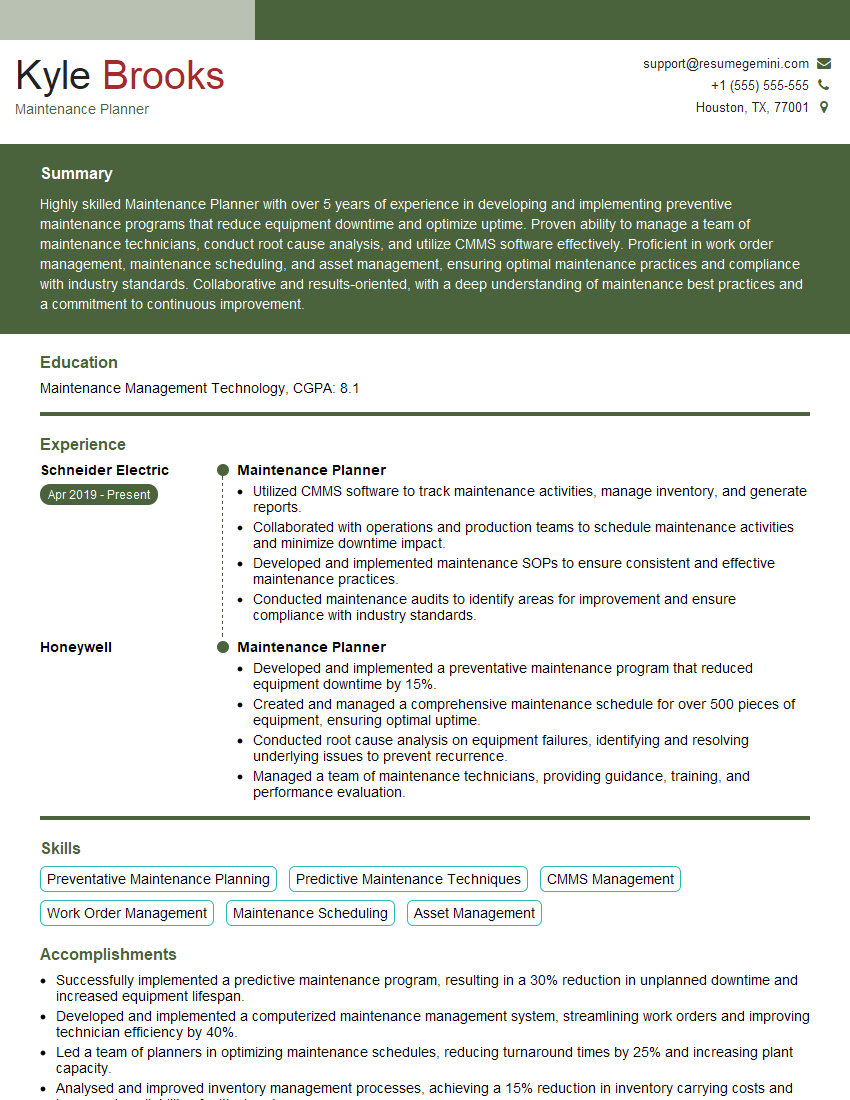
Maintenance Planner Resume Sample
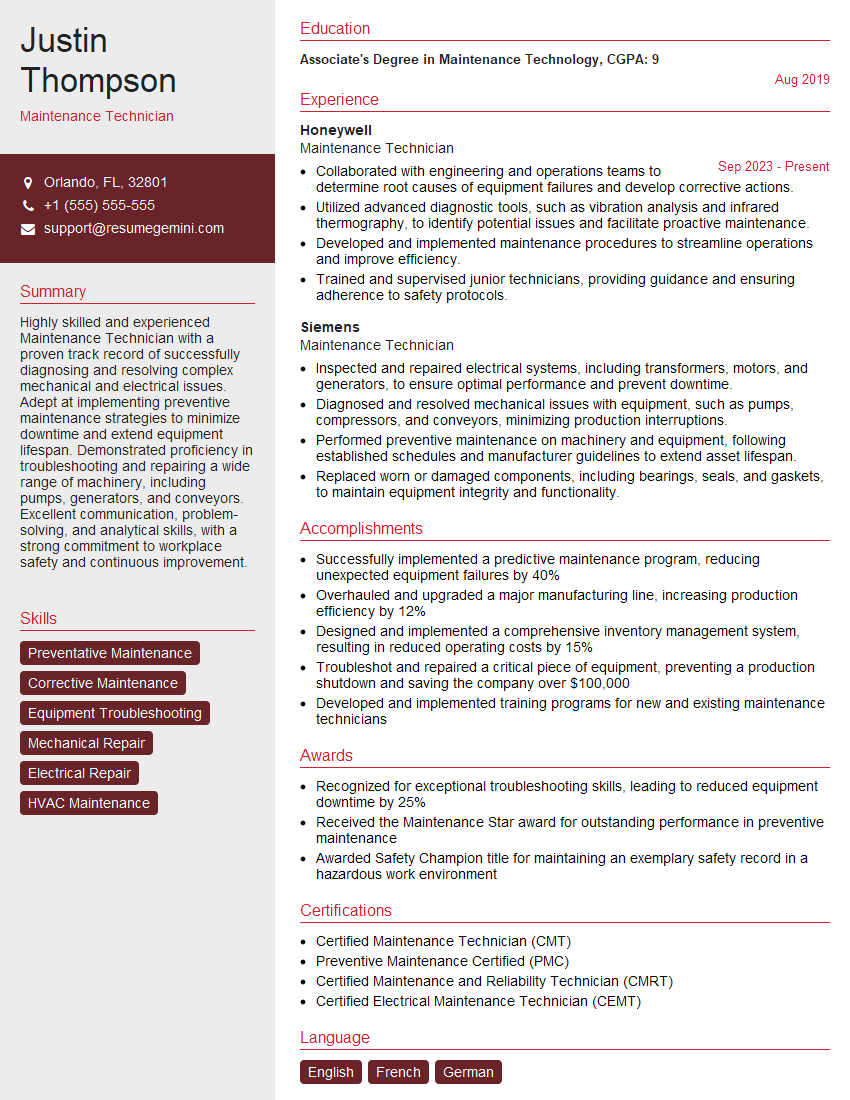
Maintenance Technician Resume Sample
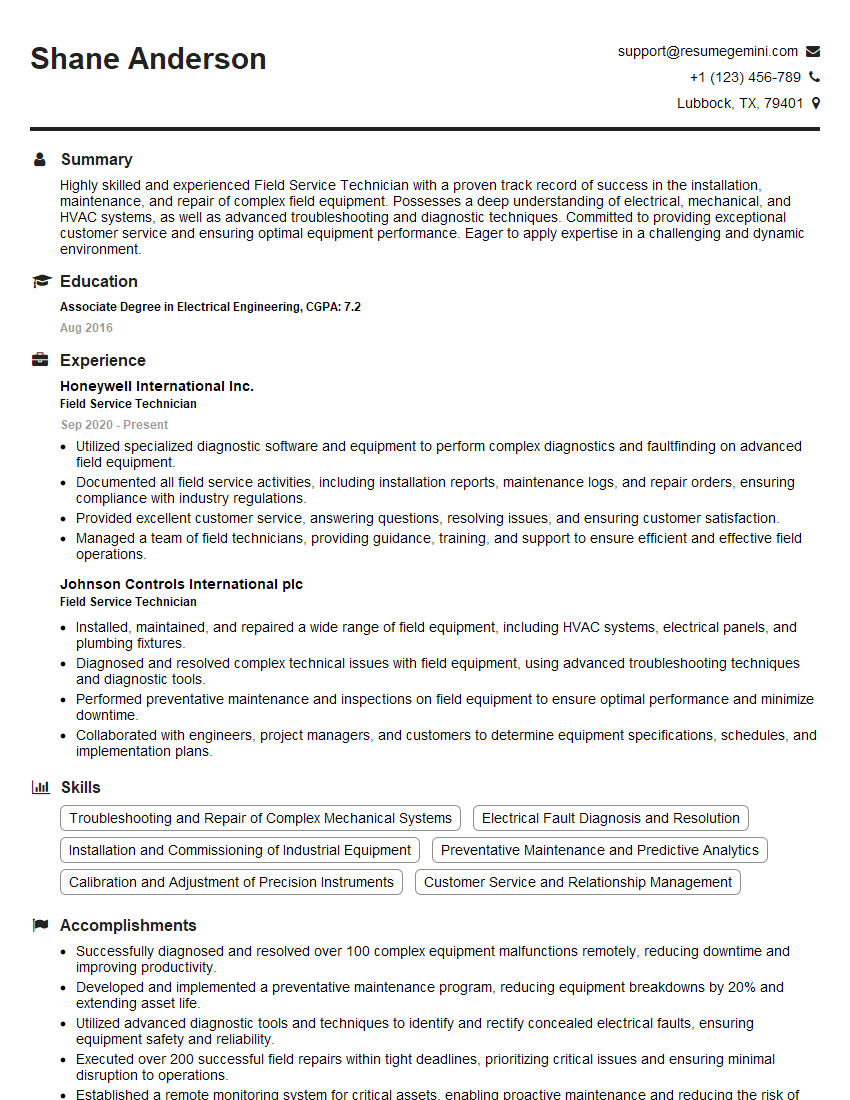
Field Service Technician Resume Sample
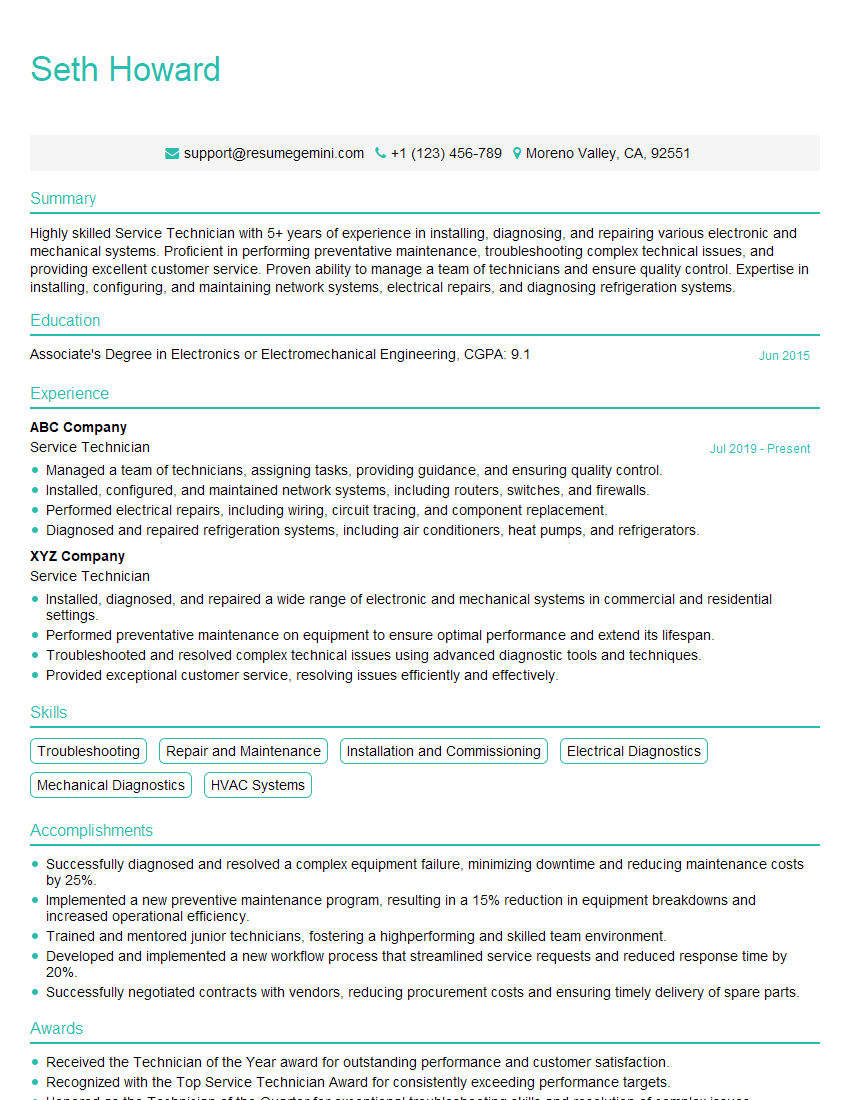
Service Technician Resume Sample
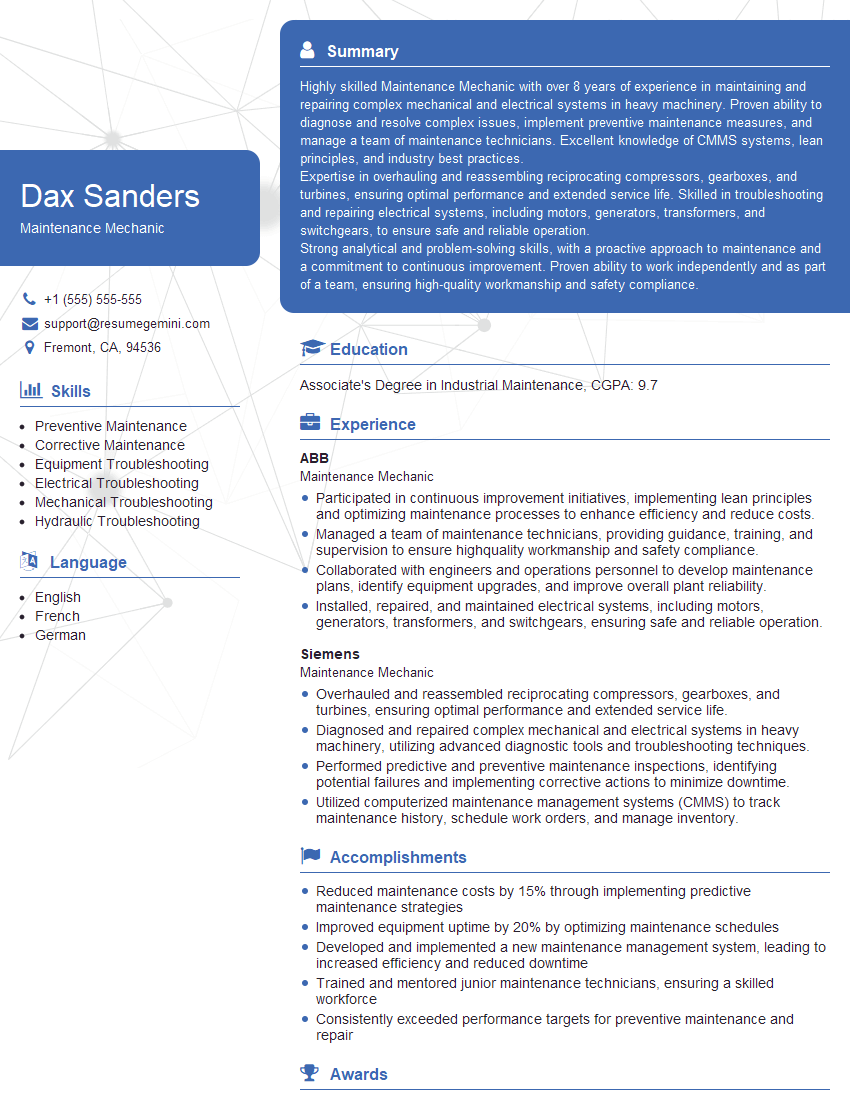
Maintenance Mechanic Resume Sample
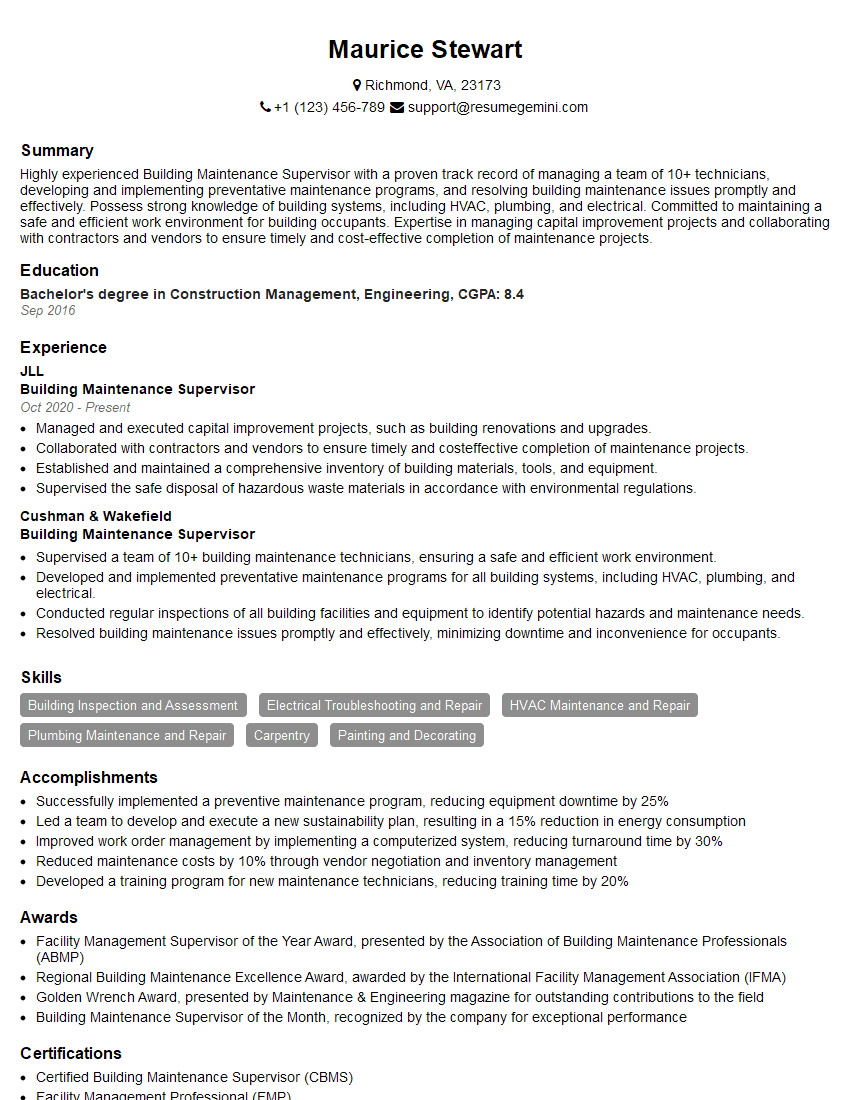
Building Maintenance Supervisor Resume Sample
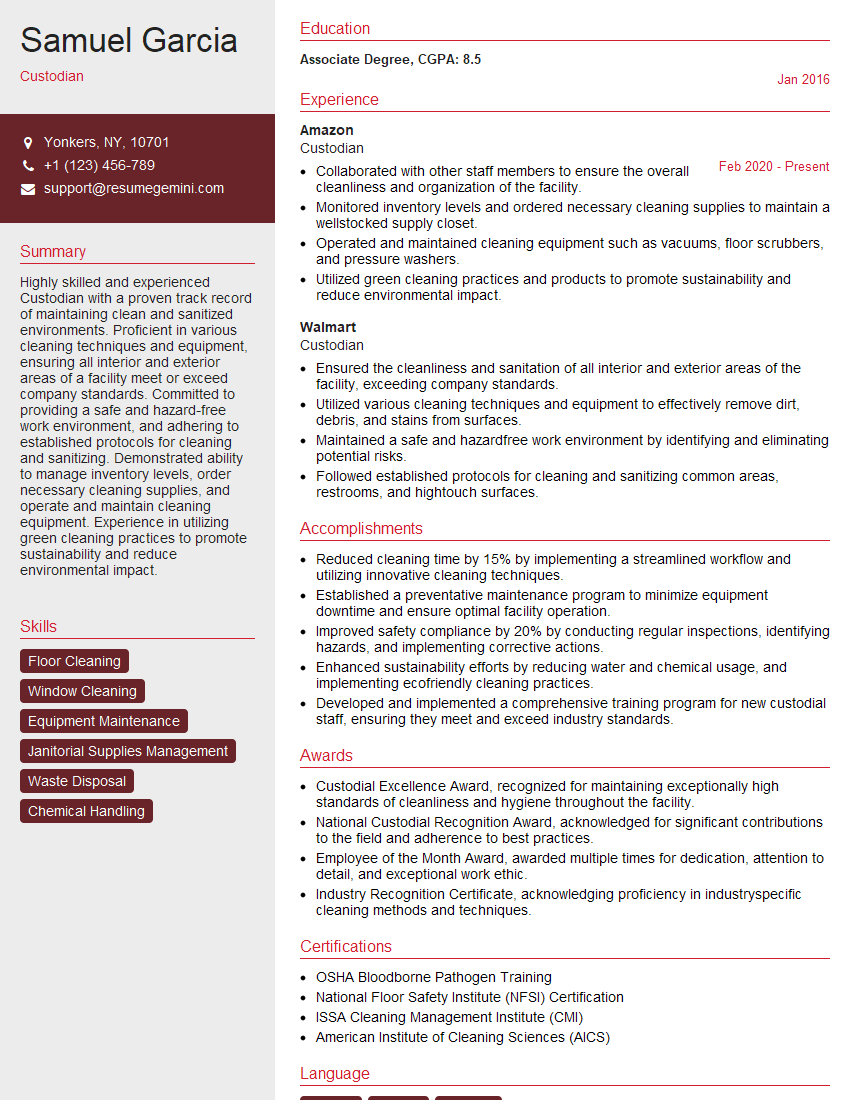
Custodian Resume Sample
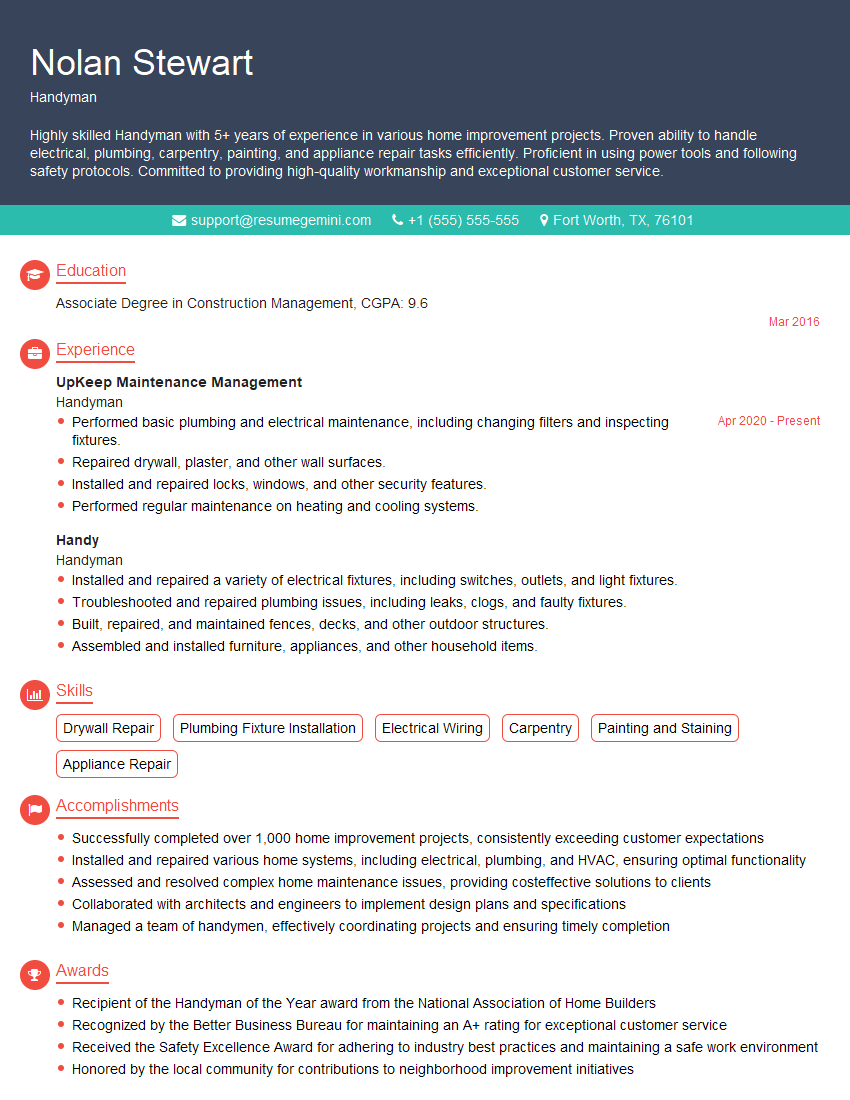
Handyman Resume Sample
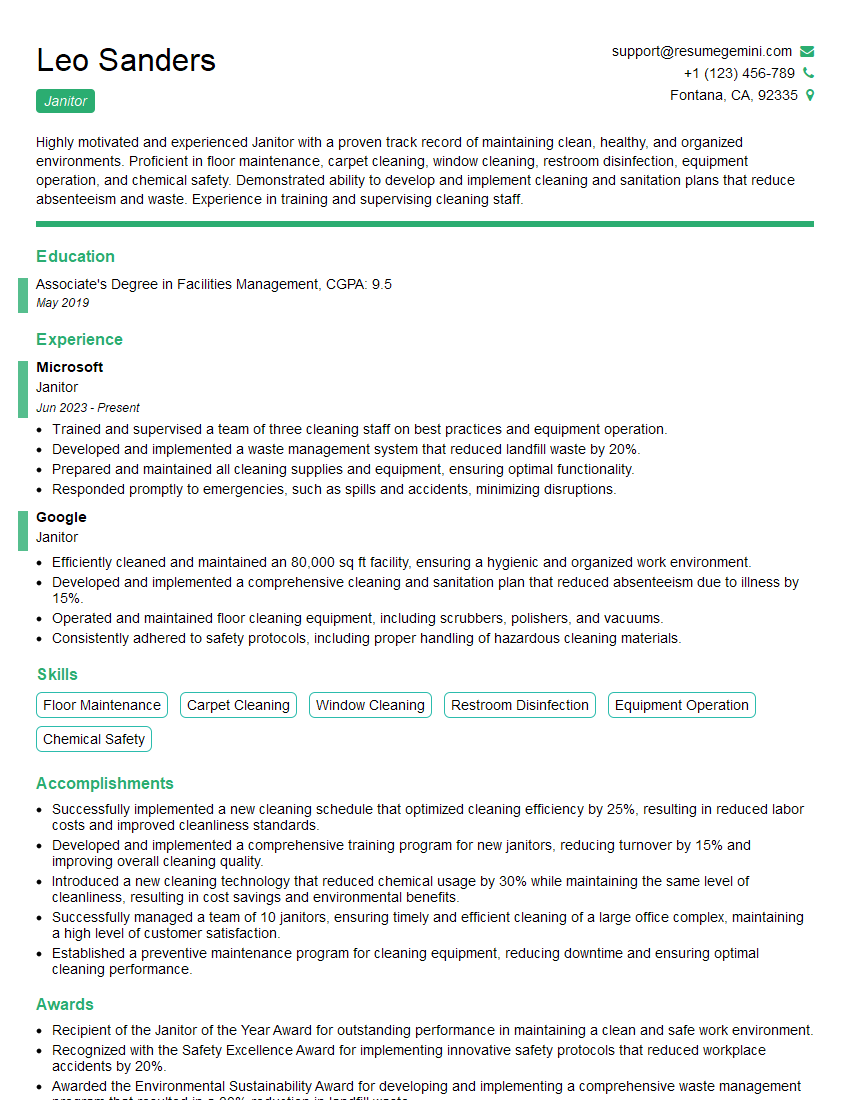
Janitor Resume Sample
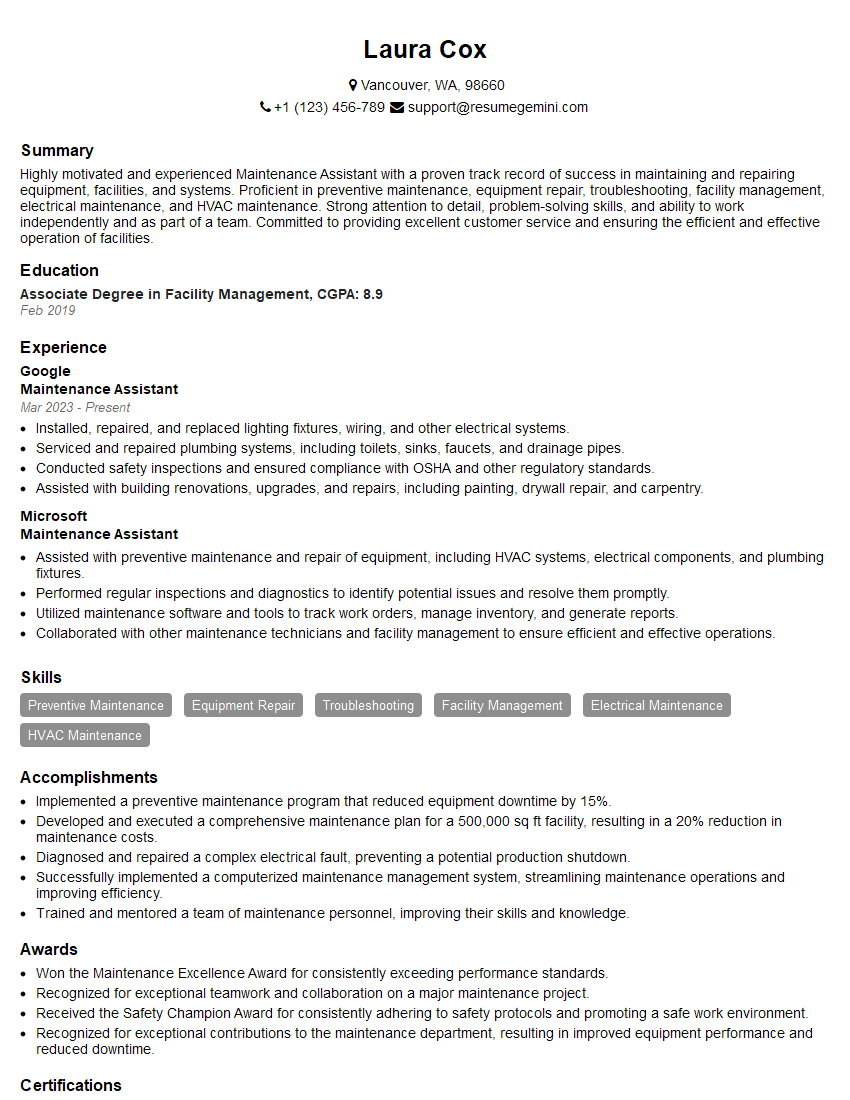
Maintenance Assistant Resume Sample
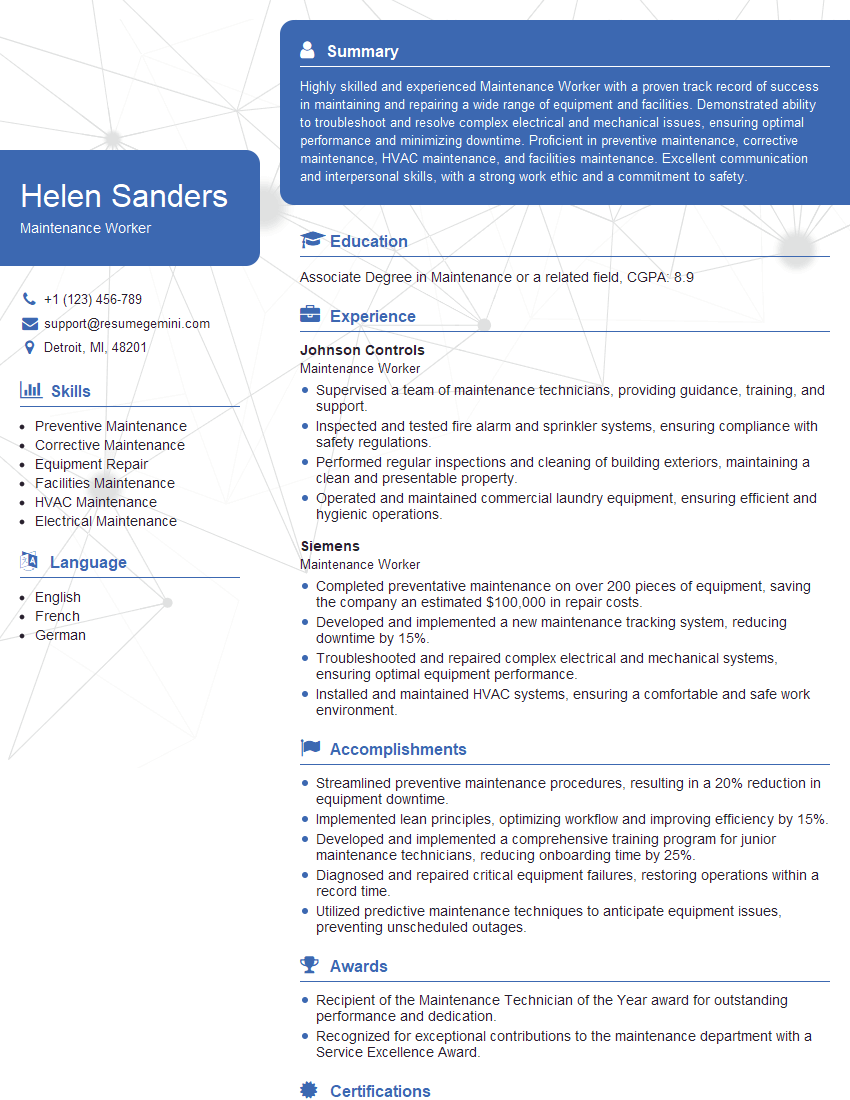
Maintenance Worker Resume Sample
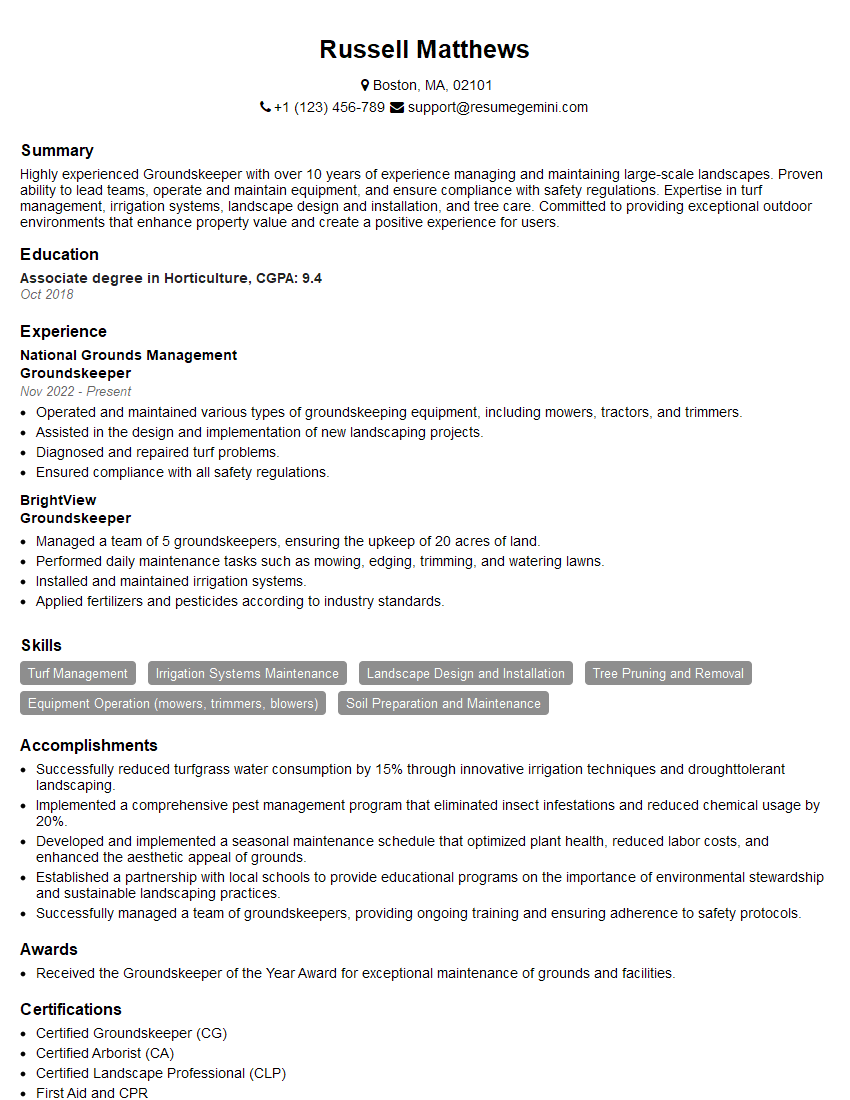
Groundskeeper Resume Sample
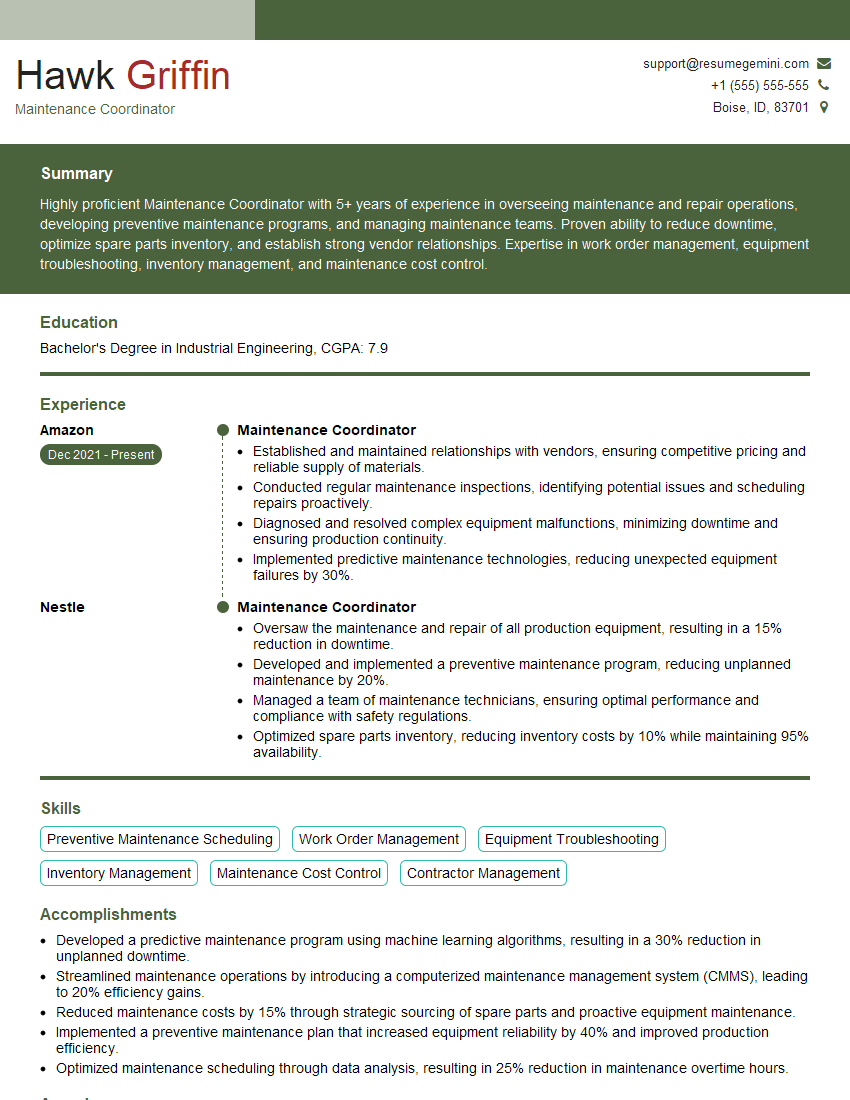
Maintenance Coordinator Resume Sample
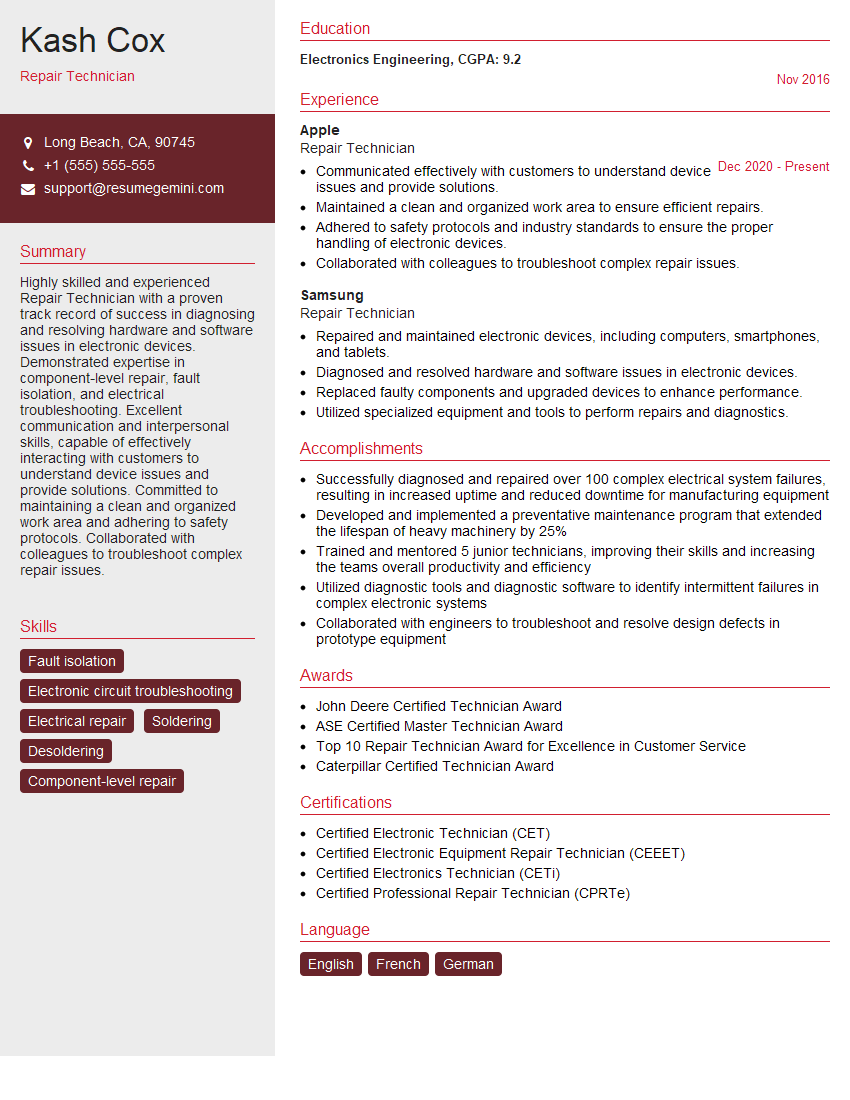
Repair Technician Resume Sample

Electrical Maintenance Technician Resume Sample
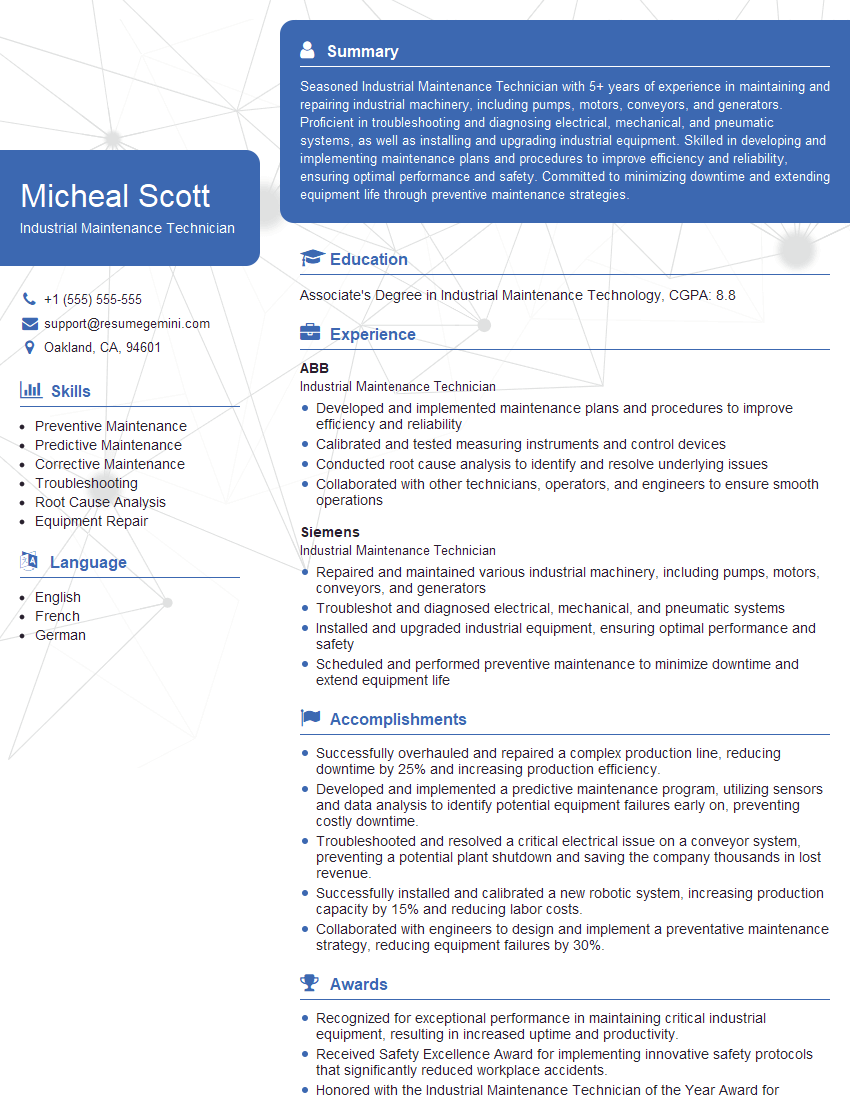
Industrial Maintenance Technician Resume Sample
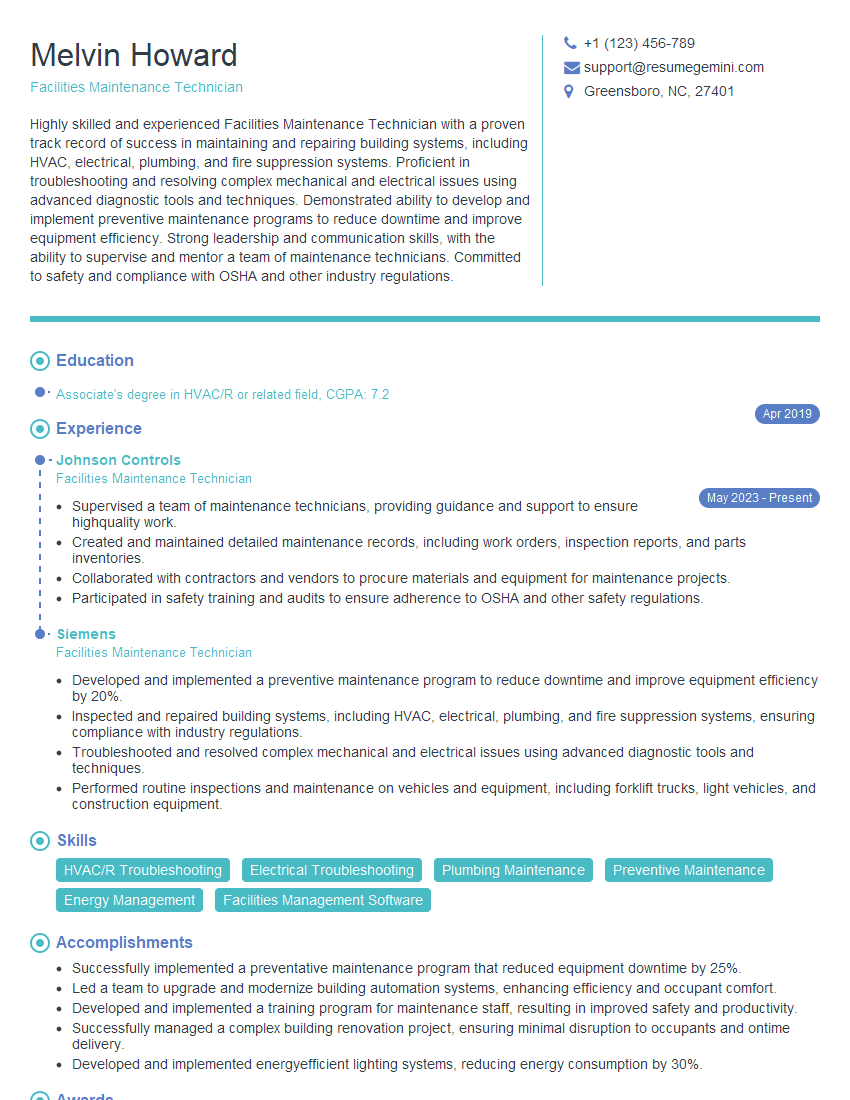
Facilities Maintenance Technician Resume Sample
- Maintenance Planner
- Maintenance Technician
- Field Service Technician
- Service Technician
- Maintenance Mechanic
- Building Maintenance Supervisor
- Custodian
- Handyman
- Janitor
- Maintenance Assistant
- Maintenance Worker
- Groundskeeper
- Maintenance Coordinator
- Repair Technician
- Electrical Maintenance Technician
- Industrial Maintenance Technician
- Facilities Maintenance Technician
Explore more articles
Users Rating of Our Blogs
Share Your Experience
We value your feedback! Please rate our content and share your thoughts (optional).
What Readers Say About Our Blog
Very informative content, great job.
good