Preparation is the key to success in any interview. In this post, we’ll explore crucial Knowledge of Hazardous Materials Handling and Safety interview questions and equip you with strategies to craft impactful answers. Whether you’re a beginner or a pro, these tips will elevate your preparation.
Questions Asked in Knowledge of Hazardous Materials Handling and Safety Interview
Q 1. Describe the different hazard classes of hazardous materials.
Hazardous materials are classified into different hazard classes based on their inherent dangers. This classification system helps in understanding the potential risks and implementing appropriate safety measures. Different jurisdictions may have slight variations, but the core principles remain consistent. Here are some common hazard classes:
- Class 1: Explosives: Substances or articles that can undergo a rapid chemical reaction resulting in a sudden, often violent, release of energy in the form of heat, light, sound, and pressure. Examples include dynamite and fireworks.
- Class 2: Gases: Materials that exist in a gaseous state at standard temperature and pressure. Subcategories include flammable gases (propane), non-flammable, non-toxic gases (nitrogen), and toxic gases (chlorine).
- Class 3: Flammable Liquids: Liquids that readily ignite and burn. The flash point – the lowest temperature at which a liquid can form an ignitable mixture in air – is a crucial factor in this classification. Gasoline and ethanol are examples.
- Class 4: Flammable Solids; Self-reactive substances and substances that emit flammable gases: This class encompasses materials that can easily ignite or undergo spontaneous combustion. Examples include magnesium, phosphorus, and certain types of plastics.
- Class 5: Oxidizing substances and organic peroxides: Oxidizers readily provide oxygen to fuel a fire, intensifying its severity. Organic peroxides are unstable and may decompose explosively. Bleach and hydrogen peroxide are examples.
- Class 6: Toxic and infectious substances: These materials can cause death, injury, or illness through inhalation, ingestion, or skin absorption. This class is further divided into toxic substances (e.g., cyanide) and infectious substances (e.g., certain bacteria or viruses).
- Class 7: Radioactive materials: Substances that emit ionizing radiation, posing a risk to human health and the environment. Uranium and plutonium are examples.
- Class 8: Corrosive substances: Materials that can chemically attack and destroy living tissue or other materials. Strong acids (sulfuric acid) and strong bases (sodium hydroxide) fall into this category.
- Class 9: Miscellaneous dangerous goods: Substances or articles that do not fit into other classes but still present a significant hazard. This can include lithium batteries, asbestos, and dry ice.
Understanding these classes is fundamental to safe handling, storage, and transportation of hazardous materials.
Q 2. Explain the Globally Harmonized System of Classification and Labelling of Chemicals (GHS).
The Globally Harmonized System of Classification and Labelling of Chemicals (GHS) is an internationally agreed-upon system created by the United Nations to standardize the classification and communication of chemical hazards. Its goal is to ensure consistent hazard communication across borders, preventing confusion and improving safety worldwide. Key elements of the GHS include:
- Classification: Chemicals are categorized based on their health, environmental, and physical hazards, using criteria defined by the GHS.
- Labelling: Standardized labels with pictograms, signal words (Danger or Warning), hazard statements, and precautionary statements clearly communicate the hazards to users.
- Safety Data Sheets (SDS): Comprehensive documents containing detailed information about the chemical, its hazards, safe handling procedures, and emergency response measures. These replace the older Material Safety Data Sheets (MSDS).
For example, a GHS label might show a flame pictogram indicating flammability, a skull and crossbones for toxicity, and specific precautionary statements like ‘Keep away from heat and sparks’. The SDS would elaborate on these hazards, providing specific information about safe handling, personal protective equipment (PPE) requirements, and first aid procedures.
Adoption of the GHS has significantly improved international safety by providing a unified language for hazard communication, making it easier to protect workers and the environment globally.
Q 3. What are the key components of a comprehensive hazardous materials management plan?
A comprehensive hazardous materials management plan is crucial for ensuring workplace safety and environmental protection. Key components include:
- Inventory: A detailed list of all hazardous materials used, stored, or transported on-site, including their location, quantity, and hazard classification.
- Hazard Assessment: A systematic process to identify potential hazards associated with each material, considering factors like toxicity, flammability, and reactivity.
- Standard Operating Procedures (SOPs): Detailed written instructions for the safe handling, storage, use, and disposal of each hazardous material. This includes PPE requirements, spill response procedures, and emergency contact information.
- Training Program: Regular training for all employees handling hazardous materials, covering hazard identification, safe handling practices, emergency procedures, and use of PPE.
- Personal Protective Equipment (PPE): Provision and proper use of appropriate PPE, such as gloves, respirators, eye protection, and protective clothing.
- Spill Response Plan: A detailed plan outlining procedures for handling spills and leaks of hazardous materials, including containment, cleanup, and disposal methods.
- Emergency Response Plan: Procedures to follow in case of a major accident or emergency involving hazardous materials, including emergency contacts, evacuation plans, and communication protocols.
- Waste Management Plan: A plan for the proper disposal and recycling of hazardous waste, in compliance with all applicable regulations.
- Record Keeping: Maintaining accurate records of all hazardous materials handled, training conducted, incidents reported, and waste disposal activities.
A well-defined hazardous materials management plan is not just a document; it’s a dynamic system requiring regular review and updating to reflect changes in operations, materials used, and regulatory requirements.
Q 4. How do you identify and assess risks associated with hazardous materials?
Risk assessment involves identifying hazards and evaluating their potential to cause harm. For hazardous materials, this involves a multi-step process:
- Hazard Identification: Determine the specific hazards associated with each material (e.g., flammability, toxicity, corrosivity) based on its Safety Data Sheet (SDS) and hazard class.
- Exposure Assessment: Determine the likelihood and extent of exposure to the hazardous material by workers and the environment. This considers factors like the amount handled, frequency of handling, and effectiveness of control measures.
- Risk Evaluation: Combine the hazard identification and exposure assessment to determine the overall level of risk. This often involves a qualitative (high, medium, low) or quantitative (numerical) approach. For instance, a highly toxic material handled frequently represents a high risk.
- Risk Control: Implement control measures to reduce or eliminate the risk. This could involve engineering controls (ventilation, containment), administrative controls (work practices, training), or PPE.
- Monitoring and Review: Regularly monitor the effectiveness of risk control measures and review the risk assessment periodically to ensure it remains relevant and up-to-date.
Imagine a scenario involving the handling of a highly corrosive acid. The risk assessment would identify the corrosive nature of the acid (hazard), consider the amount of acid used, the frequency of handling, and the adequacy of the ventilation (exposure), and then determine if the risk is acceptable (evaluation). If not, control measures like installing a fume hood and providing appropriate gloves and eye protection would be implemented (control). Regular monitoring ensures continued effectiveness.
Q 5. What are the procedures for handling a hazardous materials spill?
Responding to a hazardous materials spill requires a well-defined, stepwise approach. Remember, safety is paramount. Never attempt to handle a spill without proper training and equipment.
- Isolate the Area: Evacuate the immediate area and establish a safety perimeter to prevent further exposure. Use warning signs and barriers to control access.
- Assess the Situation: Identify the spilled material, its quantity, and the potential hazards it poses. Consult the SDS for specific guidance.
- Call for Help: Notify emergency services and your company’s emergency response team. Provide them with all relevant information about the spill.
- Contain the Spill: If possible and safe to do so, contain the spill using absorbent materials, such as spill pads or booms, to prevent its spread. Avoid contaminating water sources.
- Control the Spill: Use appropriate methods to control the spill, such as diverting the flow or using specialized equipment.
- Clean Up: Following established procedures, carefully clean up the spill using appropriate cleaning agents and disposal methods. Dispose of contaminated materials properly in accordance with regulations.
- Decontamination: Decontaminate any affected equipment, personnel, or surfaces. This might involve washing with water, using specialized decontamination solutions, or other procedures.
- Documentation: Thoroughly document the incident, including the type and amount of spilled material, the cleanup methods used, and any injuries or environmental impacts.
Each spill is unique, and the specific procedures will vary depending on the nature of the hazardous material. The key is preparation, training, and adherence to established protocols.
Q 6. Explain the importance of proper personal protective equipment (PPE) when handling hazardous materials.
Proper personal protective equipment (PPE) is non-negotiable when handling hazardous materials. It forms the last line of defense between the worker and the hazardous material. The selection of PPE depends entirely on the specific hazards involved, as indicated in the SDS. Failure to wear appropriate PPE can lead to serious injuries or fatalities.
- Respiratory Protection: Respirators are essential when handling materials that release airborne hazards. The type of respirator (e.g., N95, half-mask, full-face) depends on the specific hazard.
- Eye Protection: Safety glasses or goggles protect the eyes from splashes or fumes.
- Hand Protection: Gloves provide a barrier against skin contact. The type of glove (e.g., nitrile, neoprene, PVC) will depend on the chemical compatibility of the material being handled. Always check chemical resistance charts.
- Body Protection: Protective clothing, such as coveralls, aprons, and boots, protects the skin from contact with hazardous materials.
Imagine working with concentrated sulfuric acid. Without proper PPE, including chemical-resistant gloves, goggles, and an apron, a single splash could cause severe burns. The correct PPE prevents this and safeguards the worker’s health. Regular inspection and maintenance of PPE are also crucial for effectiveness.
Q 7. What are the regulations governing the transportation of hazardous materials?
The transportation of hazardous materials is strictly regulated to minimize risks to the public, the environment, and transportation workers. Regulations vary by country and region, but they share common principles. Key aspects include:
- Classification and Labelling: Hazardous materials must be properly classified according to the relevant hazard class and labelled with appropriate markings, as per GHS standards. This ensures that everyone handling the material understands the hazards.
- Packaging and Containment: Materials must be packaged and contained in a manner that prevents leakage or spills during transportation. Specific packaging requirements vary depending on the hazard class.
- Documentation: Shippers must provide detailed documentation, such as shipping papers and manifests, detailing the nature and quantity of hazardous materials being transported. This helps emergency responders in case of accidents.
- Vehicle Requirements: Vehicles used to transport hazardous materials must meet specific safety standards, including placarding (displaying warning signs), and equipment for handling spills.
- Driver Training: Drivers transporting hazardous materials require specialized training on safe driving practices, emergency procedures, and handling hazardous materials incidents.
- Emergency Response Plans: Transportation companies must have emergency response plans in place to deal with incidents involving hazardous materials during transit.
Examples of regulatory bodies include the Department of Transportation (DOT) in the United States and similar agencies in other countries. Non-compliance with these regulations can lead to severe penalties and potentially catastrophic consequences.
Q 8. Describe your experience with Safety Data Sheets (SDS).
Safety Data Sheets (SDSs) are crucial documents providing comprehensive information about hazardous chemicals. My experience encompasses not only reading and understanding SDSs but also utilizing them to implement appropriate safety measures. I’ve worked extensively with SDSs across various industries, from manufacturing to laboratories, ensuring that all personnel are aware of the hazards associated with the materials they handle. This includes interpreting sections detailing physical and chemical properties, health hazards, first aid measures, handling and storage, exposure controls, and emergency procedures. For example, I once identified a previously overlooked incompatibility between two chemicals based on information found within their respective SDSs, preventing a potential hazardous reaction during a production process.
I’m proficient in identifying key sections relevant to risk assessment, including the Globally Harmonized System (GHS) pictograms and hazard statements, allowing for informed decision-making regarding personal protective equipment (PPE) selection, engineering controls implementation, and safe work procedures. My experience extends to maintaining SDS libraries, ensuring they’re readily accessible and up-to-date according to regulations. I regularly verify SDS accuracy and ensure proper labeling aligns with the provided data.
Q 9. How do you ensure compliance with OSHA regulations regarding hazardous materials?
Ensuring OSHA compliance regarding hazardous materials requires a multi-faceted approach. It starts with a thorough understanding of relevant OSHA standards, like 29 CFR 1910.1200 (Hazard Communication) and 1910.119 (Process Safety Management). My experience includes developing and implementing comprehensive hazard communication programs, including the creation and distribution of SDSs and employee training programs. This involves not only educating employees about chemical hazards but also ensuring they’re proficient in using PPE, following established safety procedures, and reporting any incidents immediately. Regular inspections and audits are crucial to identify and rectify any non-compliance issues proactively.
I’ve actively participated in developing and implementing safety protocols, emergency response plans, and employee training modules related to hazardous materials. I also ensure proper labeling, storage, and handling of all hazardous chemicals. This often involves working closely with safety committees and management to create a culture of safety and continuous improvement. For example, I once identified a gap in our chemical inventory management system, leading to the implementation of a new software solution that improved tracking and reporting, minimizing the risks of accidental exposure or improper disposal.
Q 10. Explain the process of emergency response to a hazardous materials incident.
Responding to a hazardous materials incident requires a rapid and coordinated effort, emphasizing safety and minimizing further harm. My experience includes participating in and leading emergency response drills and real-life incidents. The process begins with immediate evacuation and isolation of the affected area. This is followed by contacting emergency services (e.g., fire department, HAZMAT team) and providing them with critical information, including the type and quantity of the hazardous material involved. A detailed incident report should also be compiled, documenting every step of the response, including the actions taken, the resources utilized, and the results.
The next steps involve containment and cleanup, which are highly dependent on the nature of the spilled or released substance. This might involve using specialized equipment, neutralizing agents, or absorption materials. Post-incident activities include assessing the extent of damage, conducting a thorough investigation to identify the root cause, and implementing corrective actions to prevent similar incidents in the future. Effective communication with all stakeholders – employees, emergency responders, and regulatory agencies – is paramount throughout the entire process. I’ve personally managed several incidents, from minor spills to more serious leaks, utilizing my knowledge of containment, decontamination, and safe handling practices to minimize environmental damage and ensure worker safety.
Q 11. What is your experience with different types of hazardous waste disposal?
My experience with hazardous waste disposal encompasses a wide range of waste types and disposal methods, adhering strictly to all relevant environmental regulations (e.g., RCRA). This includes understanding different waste classifications, such as corrosive, reactive, flammable, and toxic wastes. I’ve worked with various disposal methods, including incineration, landfilling (in accordance with stringent regulations), chemical treatment, and recycling where feasible. Proper labeling, packaging, and transportation of hazardous waste are crucial steps. I’ve managed the entire process from waste generation to its final disposal, ensuring accurate documentation and compliance with all permits and regulations.
For instance, I once spearheaded a project to optimize our hazardous waste management program, resulting in a significant reduction in waste generation and disposal costs through improved waste segregation and increased recycling. This involved close collaboration with waste disposal contractors to ensure the selection of environmentally sound and cost-effective solutions. I’m also experienced in dealing with different regulatory requirements, both at the state and federal level, adapting our waste management practices to comply with evolving standards.
Q 12. How do you conduct a risk assessment for a specific hazardous material?
Conducting a risk assessment for a specific hazardous material involves a systematic approach. It starts with identifying the hazards associated with the material by thoroughly reviewing the SDS. This includes understanding the material’s physical and chemical properties, potential health effects (acute and chronic), and potential environmental impacts. The next step involves identifying who might be exposed to the material and the likelihood of exposure, considering factors like the work environment, handling procedures, and the quantity of the material handled.
The assessment then evaluates the severity of the potential consequences if exposure occurs. This might include minor skin irritation or a life-threatening condition, depending on the material’s toxicity and exposure level. Finally, the assessment combines the likelihood and severity of potential consequences to determine the overall level of risk. This risk level informs the selection of appropriate control measures, ranging from simple administrative controls (e.g., training programs) to more complex engineering controls (e.g., ventilation systems) and PPE. I have routinely conducted such assessments, using established methodologies to quantitatively or qualitatively assess risks and justify the selected control measures. These assessments are critical for prioritizing safety improvements and resource allocation.
Q 13. Describe your experience with using respiratory protection equipment.
My experience with respiratory protection extends to the selection, fit-testing, use, and maintenance of various respirators, including half-mask, full-face, and supplied-air respirators. I understand the importance of proper respirator selection based on the specific hazards present, ensuring the respirator provides adequate protection against airborne contaminants. I am proficient in performing fit-testing, which is crucial to ensure a proper seal and prevent leakage. This involves utilizing both qualitative and quantitative fit-testing methods as appropriate.
Training personnel on the proper use, cleaning, and storage of respirators is an integral part of my responsibilities. This includes emphasizing the importance of regular inspection, maintenance, and replacement of cartridges or filters. I also ensure that all respirator users receive proper training and medical evaluations, if required. For example, I once identified a gap in our respirator program, leading to the implementation of a comprehensive training program that included hands-on practice and annual fit-testing for all respirator users, significantly improving the effectiveness and safety of our respiratory protection program.
Q 14. What are the different methods for controlling hazardous materials exposure?
Controlling hazardous materials exposure involves a hierarchy of controls, with the most effective methods prioritized. This hierarchy typically starts with elimination, removing the hazard completely. If elimination isn’t feasible, substitution involves replacing the hazardous material with a less hazardous alternative. Engineering controls, such as ventilation systems, process enclosures, or local exhaust ventilation (LEV), physically isolate the hazard or reduce exposure levels. These often provide the most effective and long-term protection. Administrative controls include procedures and practices like standard operating procedures (SOPs), training, and work permits that reduce exposure.
Finally, personal protective equipment (PPE) provides the last line of defense, protecting individuals from exposure to hazardous materials. PPE includes items like gloves, eye protection, respirators, and protective clothing. The selection of PPE should always align with the specific hazard and should be used in conjunction with other controls. For instance, during a project involving a highly toxic chemical, we utilized a combination of engineering controls (LEV), administrative controls (strict SOPs, limited personnel access), and PPE (respirators, specialized suits) to minimize worker exposure. Each control measure played a critical role in creating a safe working environment.
Q 15. How do you train employees on safe handling procedures for hazardous materials?
Training employees on safe hazardous material handling is paramount. It’s not a one-size-fits-all approach; it needs to be tailored to the specific materials handled and the employees’ roles. My training program follows a multi-faceted approach:
Initial Training: This includes comprehensive classroom instruction covering hazard identification, risk assessment, personal protective equipment (PPE) selection and use, emergency procedures, and relevant regulations (like OSHA’s HAZWOPER). We use interactive sessions, videos, and real-world case studies to reinforce learning.
Hands-on Training: Practical demonstrations and supervised practice sessions are crucial. Employees learn to properly handle, transfer, and clean up spills of different hazardous materials. This also includes training on using specialized equipment like spill kits and decontamination showers.
Refresher Training: Regular refresher training, at least annually, ensures knowledge remains current. This also incorporates updates on new regulations, best practices, and lessons learned from incidents (both internal and external).
Ongoing Monitoring and Evaluation: We employ regular assessments, including written tests, practical exercises, and observations during actual work to ensure competency. This ensures everyone is up to speed and capable of safe practices.
For example, when training employees handling corrosive chemicals, we not only cover theoretical aspects of corrosivity but also conduct a hands-on session demonstrating proper neutralization techniques and the use of specific PPE like acid-resistant gloves and eye protection.
Career Expert Tips:
- Ace those interviews! Prepare effectively by reviewing the Top 50 Most Common Interview Questions on ResumeGemini.
- Navigate your job search with confidence! Explore a wide range of Career Tips on ResumeGemini. Learn about common challenges and recommendations to overcome them.
- Craft the perfect resume! Master the Art of Resume Writing with ResumeGemini’s guide. Showcase your unique qualifications and achievements effectively.
- Don’t miss out on holiday savings! Build your dream resume with ResumeGemini’s ATS optimized templates.
Q 16. Explain the importance of proper storage and labeling of hazardous materials.
Proper storage and labeling are fundamental for hazardous material safety. Improper storage can lead to leaks, spills, fires, or even explosions, while incorrect labeling can cause accidental exposure due to misidentification.
Storage: Materials should be stored according to their compatibility (segregating incompatible materials to prevent reactions), in designated areas away from ignition sources (heat, sparks, flames) and incompatible materials, and in appropriate containers. Storage areas should be well-ventilated and protected from weather elements.
Labeling: Every container must be clearly and accurately labeled with the material’s identity (chemical name and CAS number), hazard warnings (using Globally Harmonized System of Classification and Labelling of Chemicals – GHS pictograms and signal words), and precautionary statements. Labels must be legible, durable, and affixed securely to the container.
Imagine a scenario where flammable and oxidizing materials are stored together. A seemingly minor spark could trigger a catastrophic fire. Proper segregation, as dictated by appropriate storage practices and clearly labeled containers, could prevent such disasters.
Q 17. Describe your experience with incident investigation and reporting.
Incident investigation and reporting are critical for preventing future incidents. My approach is methodical and data-driven:
Immediate Response: Securing the scene, providing first aid if needed, and preventing further harm are the first priorities.
Investigation: A thorough investigation identifies the root cause, contributing factors, and near misses. This involves interviewing witnesses, reviewing records, analyzing physical evidence, and employing appropriate analytical tools.
Reporting: Detailed reports are created, documenting the incident, investigation findings, corrective actions, and preventative measures. These reports are shared with relevant personnel, regulatory agencies (as required), and are used for continuous improvement.
For example, during an investigation into a chemical spill, we’d not only examine the immediate cause (e.g., equipment failure) but also investigate factors like training deficiencies, inadequate safety procedures, or poor housekeeping that might have contributed to the incident. This multi-faceted approach helps identify systemic issues that need to be addressed.
Q 18. What are your strategies for improving workplace safety related to hazardous materials?
Improving workplace safety requires a proactive and multi-pronged strategy:
Hazard Identification and Risk Assessment: Regularly identifying potential hazards and assessing associated risks through Job Safety Analysis (JSA) and other methods. This helps prioritize risk mitigation efforts.
Engineering Controls: Implementing engineering solutions like ventilation systems, enclosed equipment, and automated handling processes to minimize exposure to hazardous materials.
Administrative Controls: Developing and enforcing standard operating procedures (SOPs), work permits, and safe work practices. Regular safety audits and inspections are crucial.
Personal Protective Equipment (PPE): Ensuring the availability and proper use of appropriate PPE, including training on its selection, fitting, and limitations.
Employee Involvement: Encouraging open communication, establishing safety committees, and providing safety training and education to foster a strong safety culture.
For instance, instead of relying solely on PPE, we might implement a closed system for transferring chemicals to minimize spills and airborne exposure. This engineering control reduces reliance on PPE and enhances overall safety.
Q 19. Explain the concept of Material Safety Data Sheets (MSDS) and their importance.
Material Safety Data Sheets (MSDS), now often called Safety Data Sheets (SDS), are documents that provide comprehensive information about the hazards of a chemical and how to work safely with it. They are crucial for anyone handling hazardous materials.
Content: SDSs contain information on the chemical’s identity, hazardous properties (physical, health, and environmental), safe handling procedures, emergency response measures, and regulatory information.
Importance: They are essential for risk assessment, proper training, selecting appropriate PPE, managing spills, and ensuring compliance with regulations. They are the primary source of information for understanding and mitigating the risks associated with a specific chemical.
Think of an SDS as the instruction manual for a hazardous chemical. It tells you everything you need to know to handle it safely and responsibly, from recognizing its hazards to cleaning up a spill.
Q 20. What is your understanding of confined space entry procedures related to hazardous materials?
Confined space entry involving hazardous materials requires stringent procedures to protect workers. It’s inherently dangerous due to potential hazards like oxygen deficiency, toxic gases, and engulfment.
Permit-Required Confined Space Program: This program defines procedures for entering, working in, and exiting confined spaces. It includes pre-entry assessments, atmospheric testing, ventilation, rescue plans, and trained personnel.
Atmospheric Monitoring: Before entry, the atmosphere must be thoroughly tested for oxygen levels, flammable gases, and toxic substances. Continuous monitoring during the entry is often required.
Ventilation: Adequate ventilation must be established to remove hazardous gases and ensure sufficient oxygen.
Rescue Plan: A detailed rescue plan must be developed and practiced to ensure a prompt and safe rescue in case of an emergency.
Personal Protective Equipment (PPE): Workers must use appropriate PPE, based on the identified hazards, such as respirators, harnesses, and fall protection equipment.
Failing to follow confined space entry procedures in a situation with hazardous materials could have fatal consequences. The systematic approach outlined ensures worker safety.
Q 21. How do you manage hazardous waste according to environmental regulations?
Managing hazardous waste according to environmental regulations is crucial for protecting human health and the environment. This involves a multifaceted approach:
Waste Characterization: Accurately identifying and classifying waste materials according to their hazardous properties (flammability, corrosivity, reactivity, toxicity).
Segregation and Storage: Properly segregating and storing hazardous waste to prevent cross-contamination and environmental release. Storage areas must meet regulatory standards.
Treatment and Disposal: Selecting appropriate treatment methods (neutralization, incineration, etc.) and licensed disposal facilities for the safe and compliant disposal of the hazardous waste.
Record Keeping and Reporting: Maintaining detailed records of waste generation, treatment, and disposal. Submitting required reports to environmental agencies.
Compliance: Adhering to all applicable federal, state, and local environmental regulations, including the Resource Conservation and Recovery Act (RCRA).
Improper hazardous waste management can lead to severe environmental contamination and legal penalties. Following regulations diligently is non-negotiable.
Q 22. Describe your experience with using various detection and monitoring equipment for hazardous materials.
My experience with hazardous material detection and monitoring equipment is extensive. I’ve worked with a wide range of technologies, from simple, direct-reading instruments like gas detectors (measuring gases like H2S, CO, and O2) and photoionization detectors (PIDs) for volatile organic compounds (VOCs), to more sophisticated equipment such as infrared (IR) spectrometers for identifying unknown substances and real-time air monitoring systems for continuous analysis of workplace atmospheres. I’m proficient in using and maintaining these instruments, understanding their limitations, and interpreting the data they provide. For example, during a recent spill response at a chemical plant, we used a PID to quickly identify the presence of benzene and then employed an IR spectrometer to confirm its concentration and to detect other potential contaminants in the area. Regular calibration and proper maintenance procedures are critical for the accuracy and reliability of these devices; I always ensure these are meticulously followed.
Furthermore, I’m familiar with various sampling techniques, such as collecting air samples using sorbent tubes for laboratory analysis and using impingers for collecting liquid samples. This broader skillset allows me to accurately assess and manage hazardous material incidents effectively.
Q 23. How do you ensure the proper segregation and storage of incompatible materials?
Proper segregation and storage of incompatible materials is paramount to prevent dangerous reactions, such as fires or explosions. This involves understanding the chemical properties of each material and consulting resources such as Safety Data Sheets (SDS) to determine potential hazards. Incompatible materials, like oxidizing agents and reducing agents, or acids and bases, should never be stored in close proximity.
My approach involves a structured system. First, I conduct a thorough inventory, categorizing materials according to their hazard class and compatibility group. Then, I utilize dedicated storage areas, often with clearly marked and separated zones for different hazard classes. This might include separate rooms, cabinets, or even designated shelving units within a warehouse. Furthermore, I enforce strict procedures for labeling, ensuring every container is correctly identified with its contents, hazard warnings, and appropriate handling instructions. Regular inspections are crucial to ensure proper segregation is maintained and to identify and address any potential issues promptly. For instance, a recent project involved redesigning a warehouse storage layout to better segregate flammable liquids and oxidizers, significantly enhancing safety.
Q 24. What is your experience with emergency response planning and drills?
Emergency response planning and drills are essential components of any hazardous materials handling program. My experience includes developing and implementing comprehensive emergency response plans, incorporating elements like spill response procedures, evacuation plans, and emergency communication protocols. I have conducted numerous drills, ranging from small-scale table-top exercises to full-scale simulations involving multiple agencies and personnel. These drills are vital for identifying weaknesses in the plan and improving response times and coordination.
For instance, I developed a plan for a chemical manufacturing facility that included pre-determined assembly points for employees, procedures for containing and neutralizing spills, and methods for communicating with local emergency services. The subsequent drills allowed us to fine-tune the plan, identifying gaps in communication and improving the efficiency of our response to simulated leaks. Regular review and updates, based on drill feedback and regulatory changes, are critical to maintain the effectiveness of the emergency response plan.
Q 25. How do you handle situations where employees violate safety protocols related to hazardous materials?
Addressing safety protocol violations related to hazardous materials requires a structured approach, prioritizing both safety and employee well-being. The first step is always to address the issue with the individual privately. I’ll explain the violation’s consequences and the importance of adhering to safety procedures. The discussion will be focused on understanding the root cause of the violation—was it lack of training, oversight, or a deliberate action? This helps me decide on appropriate corrective actions.
Depending on the severity of the violation, disciplinary action may range from retraining and additional supervision to formal warnings and, in serious cases, termination. Documentation of all instances of violations and the steps taken to address them is critical. Open communication and a culture of safety are key to preventing future occurrences. This includes regularly reinforcing safety protocols through training, regular toolbox talks, and providing employees with the necessary personal protective equipment (PPE) and tools.
Q 26. Describe your experience with conducting safety audits related to hazardous materials.
My experience in conducting safety audits related to hazardous materials is extensive. I use a systematic approach, employing a checklist based on relevant regulations and industry best practices. These audits encompass various aspects, including: proper labeling and storage of materials, verification of safety data sheets, employee training records, and the condition of PPE and safety equipment. The audits also include a review of emergency procedures and the overall effectiveness of the safety management system.
For instance, I recently conducted a safety audit of a pharmaceutical manufacturing plant that revealed inadequacies in the handling of certain solvents. This led to implementing new storage procedures, additional training for employees, and modifications to the spill response plan, all resulting in significantly improved safety practices. The audit findings are documented in a comprehensive report, which includes recommendations for improvement and corrective actions. Follow-up audits are then conducted to verify the implementation of these recommendations.
Q 27. What is your understanding of the different types of respiratory protection and their limitations?
Respiratory protection is critical when handling hazardous materials. There’s a variety of respirators, each with specific applications and limitations. Air-purifying respirators (APRs), like half-mask and full-face respirators with filters, remove contaminants from the air before it reaches the lungs. However, they’re only effective in environments with sufficient oxygen and where the concentration of contaminants is below the respirator’s protection factor. Supplied-air respirators (SARs) provide a continuous supply of clean air from a separate source, offering superior protection even in oxygen-deficient or heavily contaminated environments. Self-contained breathing apparatus (SCBA) provides its own air supply, allowing for use in extremely hazardous situations where other respirators are insufficient.
Selecting the right respirator requires a thorough hazard assessment to determine the type and concentration of airborne contaminants. Fit testing is also critical to ensure a proper seal for effective protection. Regular inspection and maintenance of respirators are paramount to maintain their effectiveness and prevent malfunctions. Moreover, training for proper donning, doffing, and maintenance of respirators are essential for worker safety. For example, choosing an APR for a low-concentration solvent spill is appropriate, but for confined space entry with unknown hazardous gases, a SCBA is necessary.
Q 28. Explain your approach to identifying and mitigating potential hazards during material handling operations.
My approach to identifying and mitigating potential hazards during material handling operations is proactive and systematic. It begins with a thorough hazard assessment, which involves identifying all potential hazards associated with the specific materials being handled, the handling process itself, and the environment. This assessment considers factors such as physical hazards (e.g., slips, trips, falls), chemical hazards (e.g., exposure to toxic substances), and ergonomic hazards (e.g., repetitive strain injuries).
Once hazards are identified, I develop and implement control measures following the hierarchy of controls: elimination, substitution, engineering controls, administrative controls, and personal protective equipment (PPE). This may involve redesigning the workflow to minimize manual handling, implementing engineering controls like ventilation systems or automated transfer systems, developing safe work procedures, or providing appropriate PPE. For instance, replacing a highly toxic solvent with a less hazardous alternative is an example of substitution. Implementing automated transfer mechanisms for heavy materials is an engineering control. Regular review and updating of the hazard assessment and control measures are crucial to ensure effectiveness and keep abreast of new regulations and best practices. Thorough documentation and training are key to successful implementation and maintenance of these procedures.
Key Topics to Learn for Your Hazardous Materials Handling and Safety Interview
Ace your interview by mastering these crucial areas. Remember, practical application and problem-solving skills are key!
- Hazard Identification and Classification: Understand different hazard classes (flammable, corrosive, toxic, etc.), SDS interpretation, and proper labeling procedures. Be prepared to discuss real-world examples of how you’ve identified and classified hazardous materials.
- Safe Handling Procedures: This includes proper storage, transportation, and use of hazardous materials. Think about personal protective equipment (PPE) selection, spill response procedures, and emergency protocols. Be ready to discuss practical scenarios and your decision-making process in handling potential incidents.
- Regulatory Compliance: Familiarize yourself with relevant OSHA regulations, transportation regulations (DOT), and other industry-specific standards. Be prepared to discuss your understanding of these regulations and how you ensure compliance in a workplace setting.
- Emergency Response Planning: Understand the importance of emergency plans, including evacuation procedures, containment strategies, and communication protocols in hazardous material incidents. Practice explaining your role and responsibilities within such a plan.
- Risk Assessment and Mitigation: Know how to conduct a thorough risk assessment, identify potential hazards, and implement effective control measures to minimize risks associated with hazardous materials handling. Be prepared to give examples of risk assessments you’ve conducted or participated in.
- Waste Management: Understand proper disposal methods for hazardous waste, including segregation, labeling, and documentation requirements. Be prepared to discuss the environmental impact of improper waste handling.
Next Steps: Unlock Your Career Potential
Mastering hazardous materials handling and safety is crucial for career advancement in many industries. A strong understanding of these concepts showcases your commitment to safety and compliance, making you a highly valuable asset to any team. To make sure you stand out, a well-crafted resume is essential.
Create an ATS-friendly resume that highlights your skills and experience effectively. ResumeGemini is a trusted resource to help you build a professional and impactful resume that gets noticed. They offer examples of resumes tailored to the hazardous materials handling and safety field, providing you with a head-start in your job search.

Compliance Officer Resume Sample
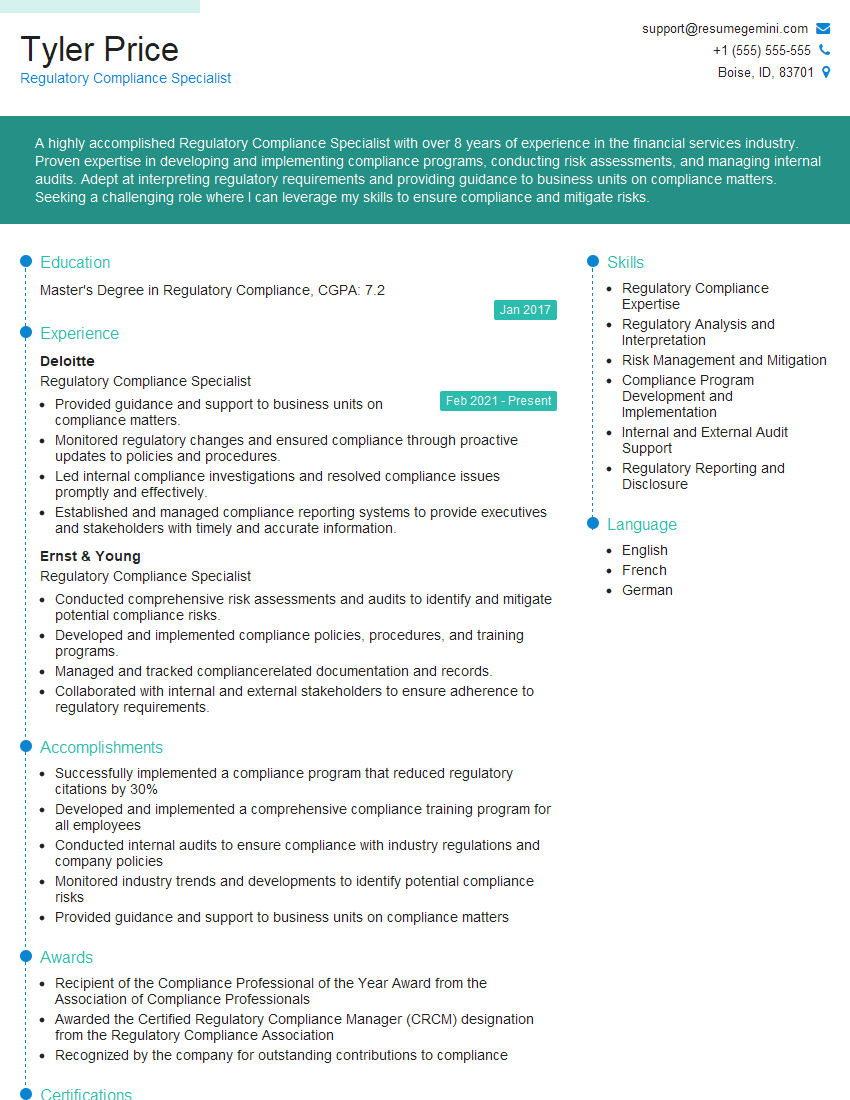
Regulatory Compliance Specialist Resume Sample
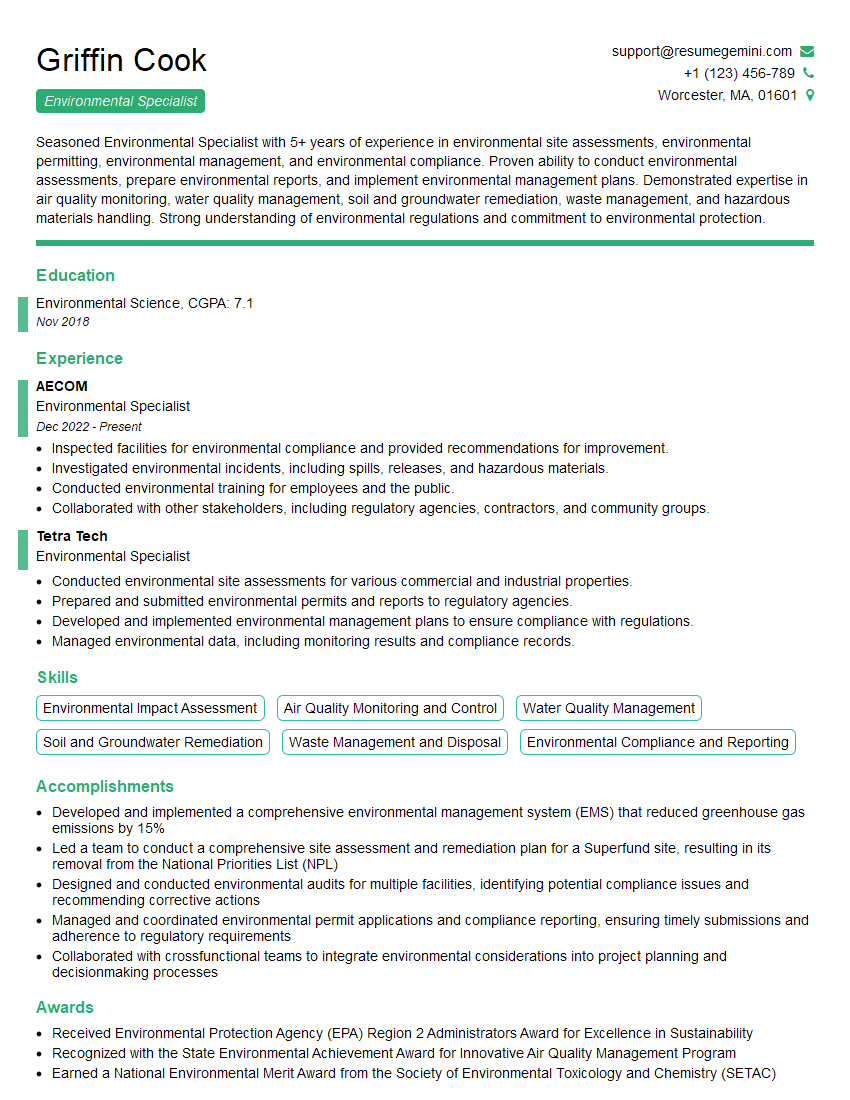
Environmental Specialist Resume Sample
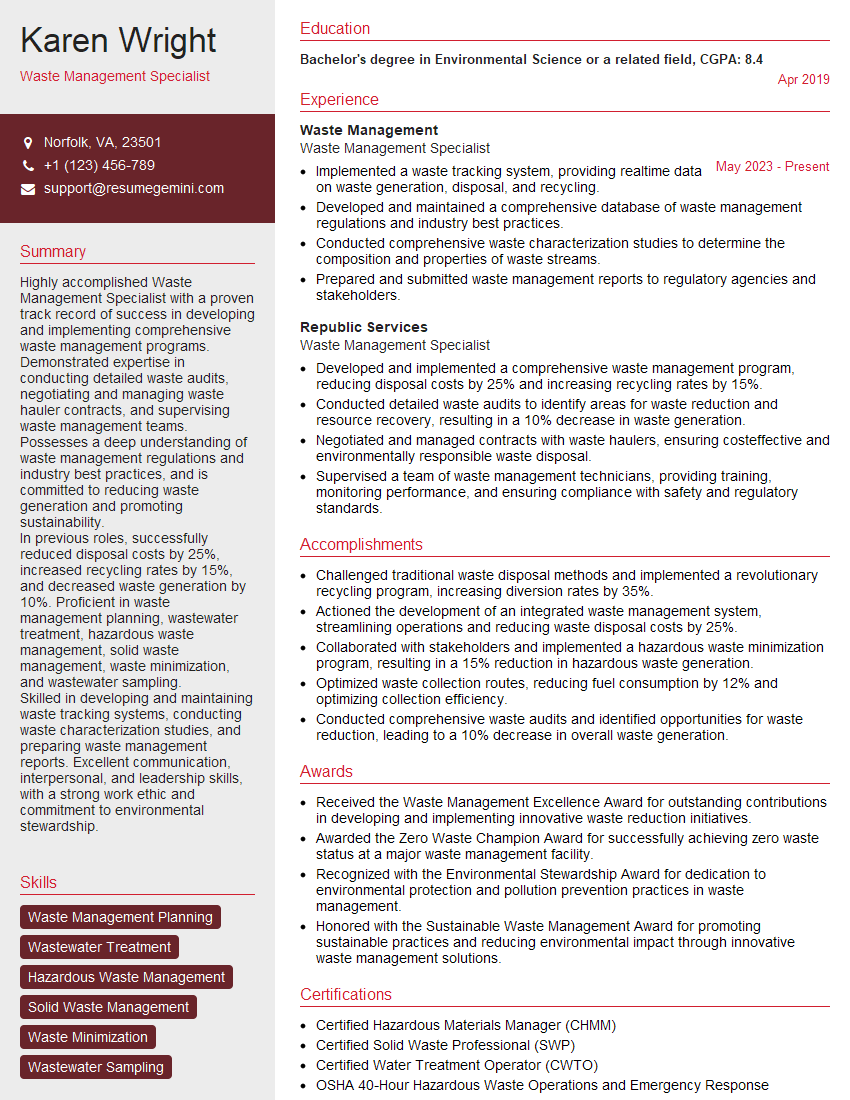
Waste Management Specialist Resume Sample
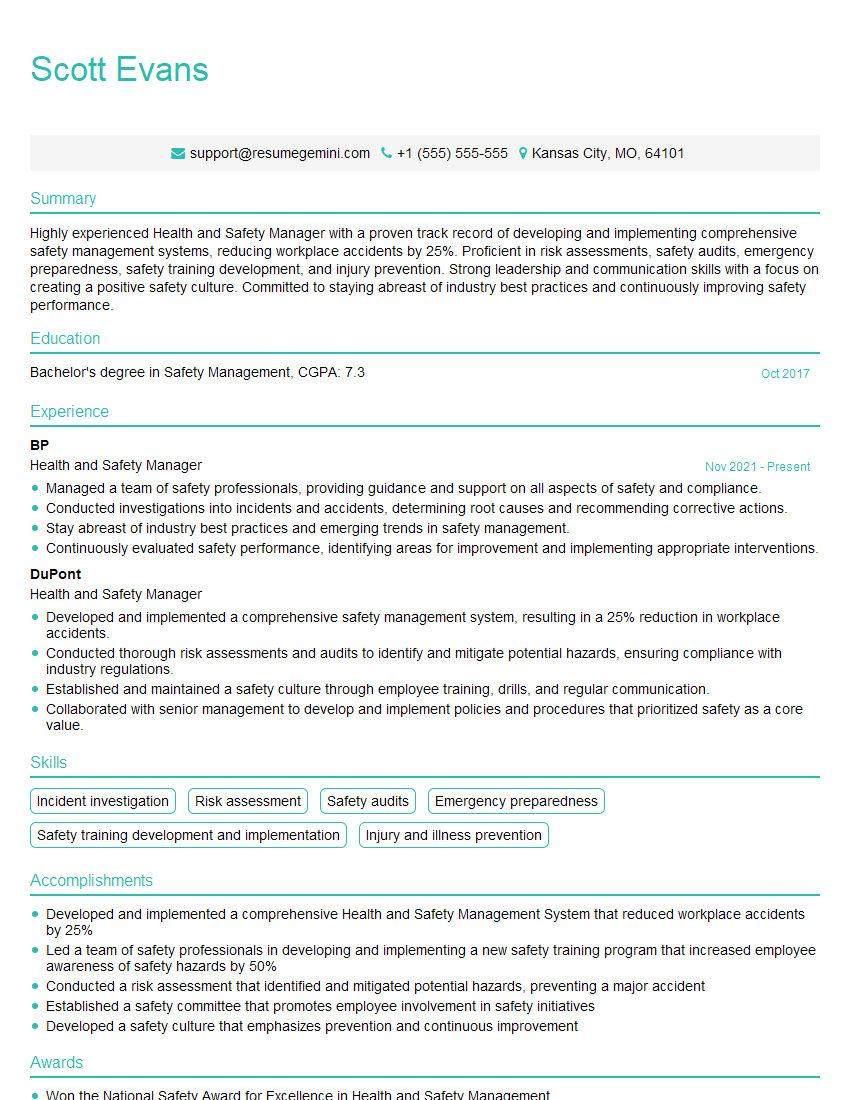
Health and Safety Manager Resume Sample
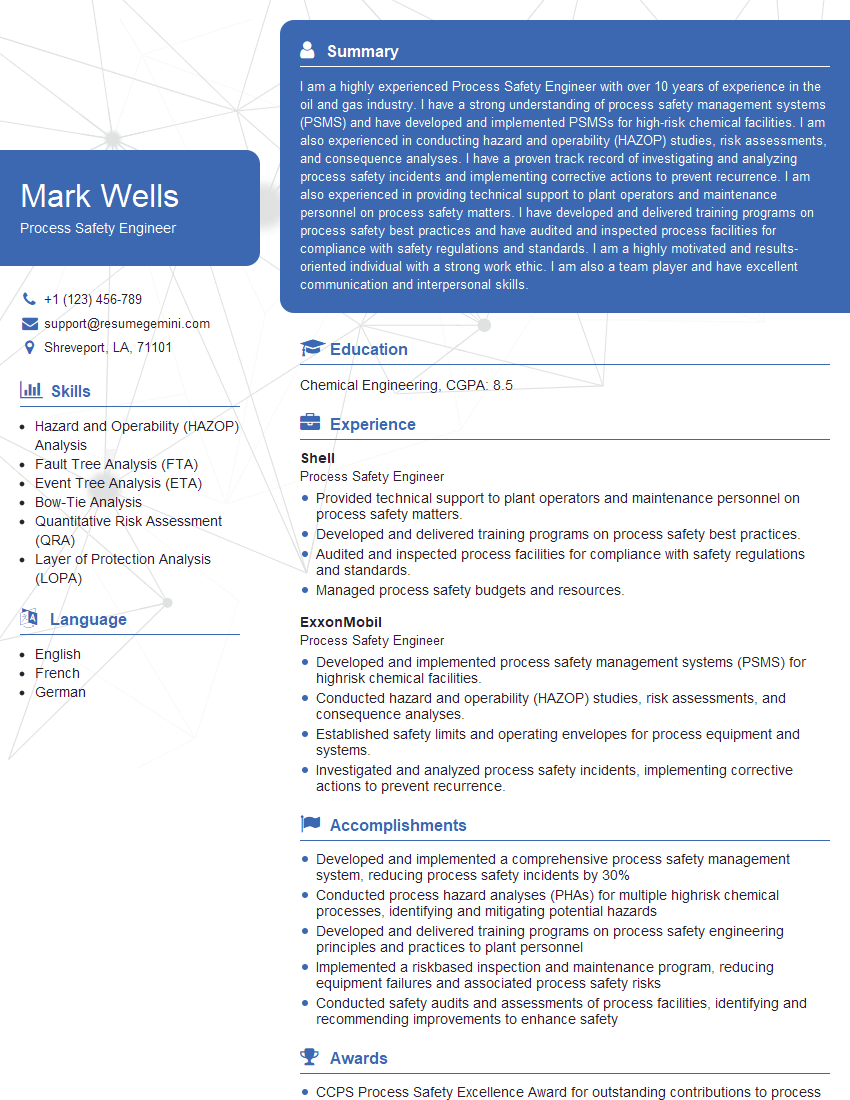
Process Safety Engineer Resume Sample
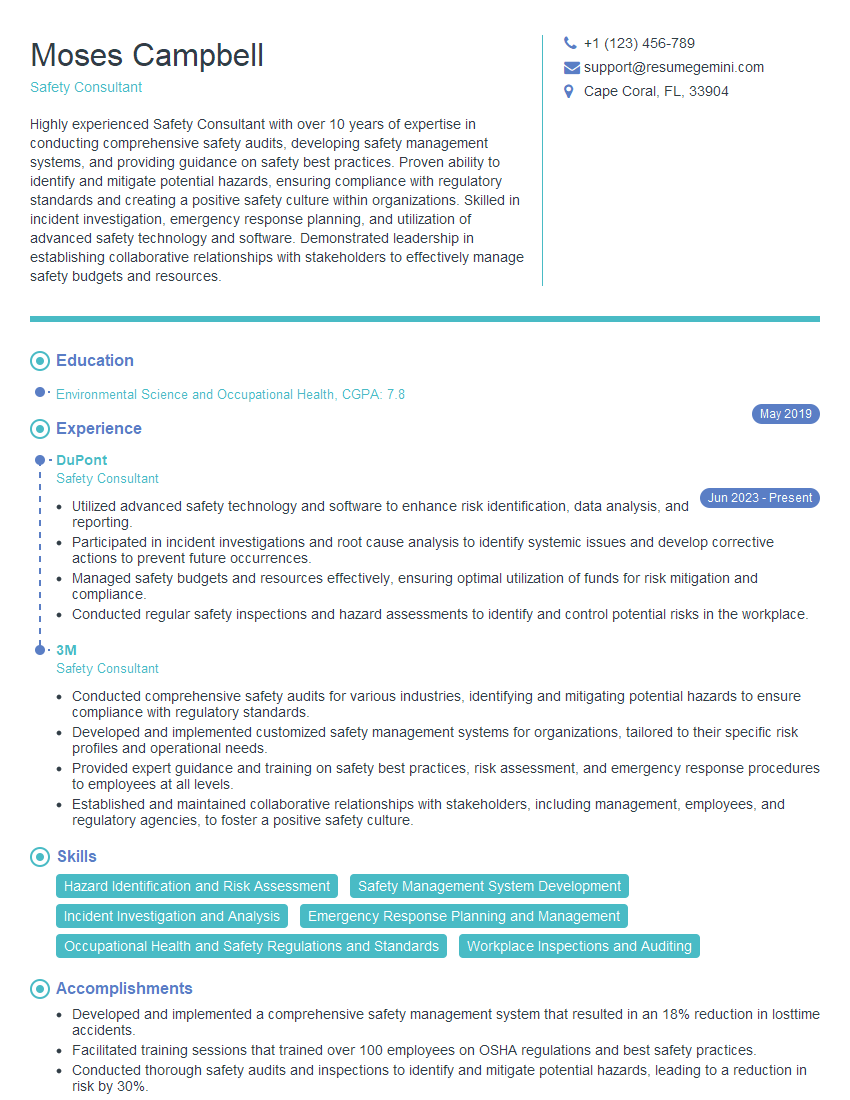
Safety Consultant Resume Sample

Safety Engineer Resume Sample
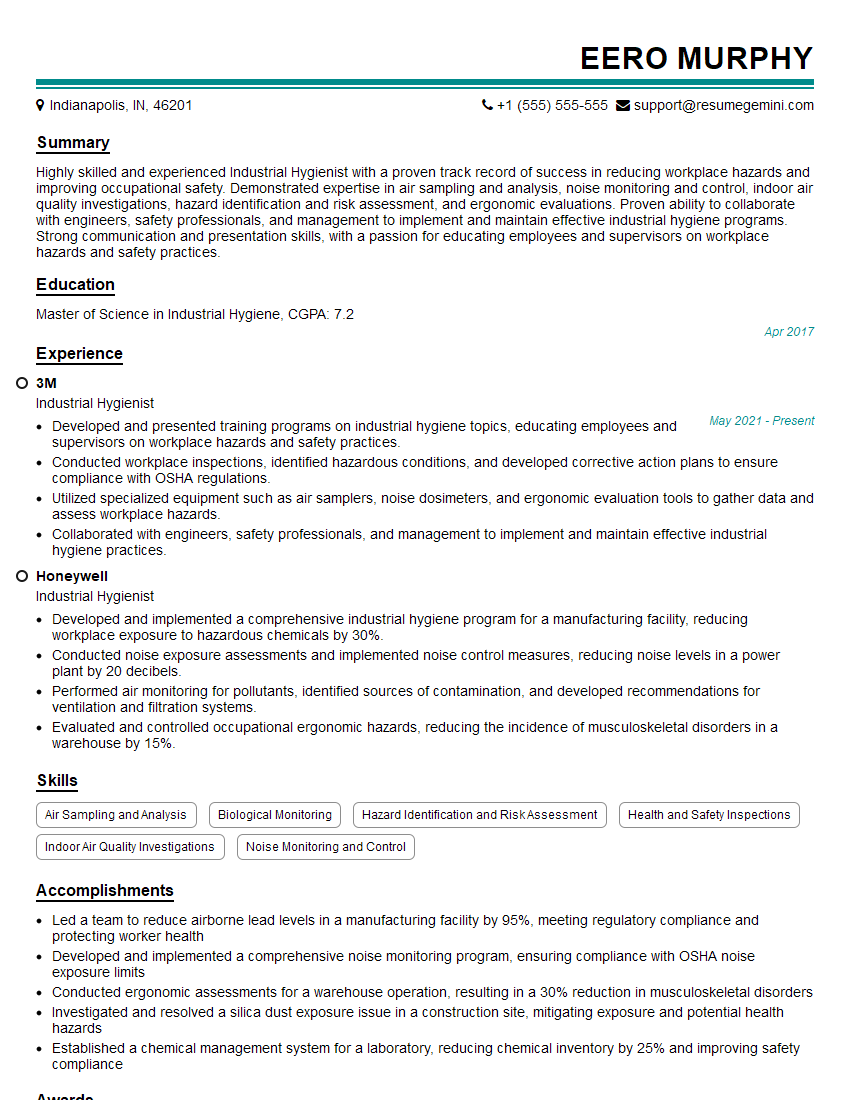
Industrial Hygienist Resume Sample
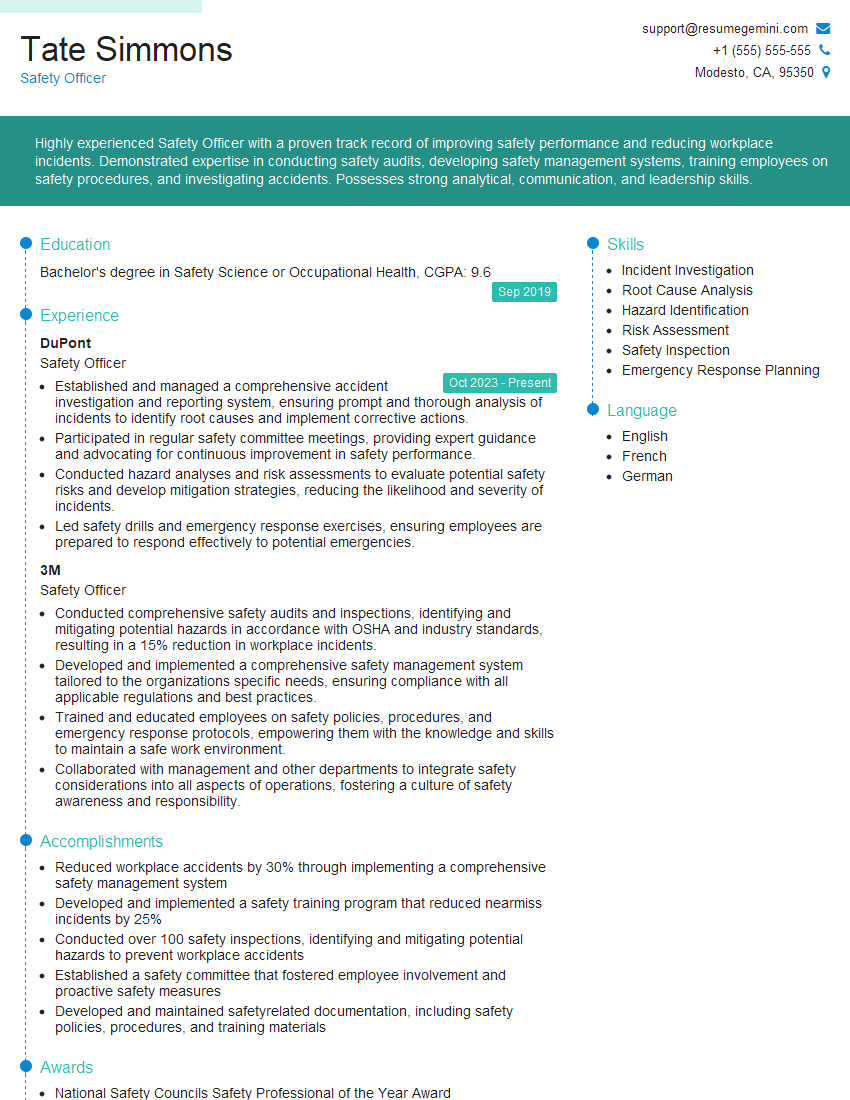
Safety Officer Resume Sample
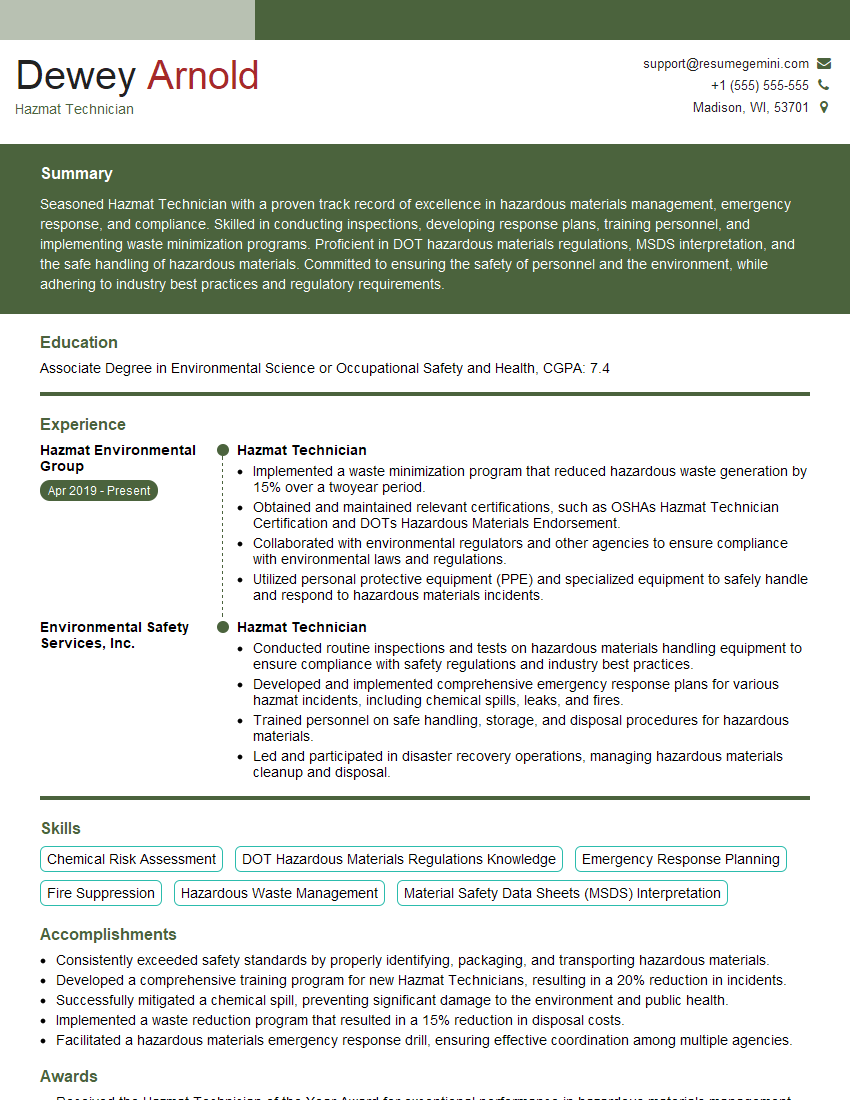
Hazmat Technician Resume Sample
Explore more articles
Users Rating of Our Blogs
Share Your Experience
We value your feedback! Please rate our content and share your thoughts (optional).
What Readers Say About Our Blog
Very informative content, great job.
good