Are you ready to stand out in your next interview? Understanding and preparing for Experience with Radioactive Materials interview questions is a game-changer. In this blog, we’ve compiled key questions and expert advice to help you showcase your skills with confidence and precision. Let’s get started on your journey to acing the interview.
Questions Asked in Experience with Radioactive Materials Interview
Q 1. Describe the different types of ionizing radiation and their potential health effects.
Ionizing radiation is energy that can remove electrons from atoms, creating ions. This can damage DNA and other biological molecules, leading to health problems. There are several types:
- Alpha particles: Relatively large and heavy, easily stopped by a sheet of paper or skin. However, if ingested or inhaled, they can be highly damaging to internal organs.
- Beta particles: Smaller and lighter than alpha particles, can penetrate skin but are stopped by a thin sheet of metal. Like alpha particles, internal exposure is more dangerous.
- Gamma rays and X-rays: High-energy electromagnetic radiation, highly penetrating and requiring thick shielding (e.g., lead, concrete) for protection. They can cause damage throughout the body.
- Neutrons: Uncharged particles that are highly penetrating and require specialized shielding (e.g., water, polyethylene).
Health effects range from minor skin irritation (e.g., sunburn-like effects from overexposure to UV radiation, a form of non-ionizing radiation, though not discussed in the question) to severe illness like radiation sickness (nausea, vomiting, fatigue, hair loss), cancer, and even death, depending on the type and amount of radiation, and duration of exposure. The severity also depends on the part of the body exposed. For instance, exposure to the bone marrow, which produces blood cells, can have far-reaching and more severe consequences than exposure to the skin.
Q 2. Explain the principles of ALARA (As Low As Reasonably Achievable) in radiation protection.
ALARA, or As Low As Reasonably Achievable, is a fundamental principle in radiation protection. It emphasizes minimizing radiation exposure to individuals and the population as a whole. It’s not about eliminating radiation exposure entirely – that’s often impractical – but about reducing it to the lowest level achievable through reasonable measures, taking into account the cost and feasibility of implementing those measures. Think of it as a cost-benefit analysis.
This involves a multi-pronged approach:
- Time: Minimizing the time spent in radiation areas. The shorter the time of exposure, the lower the dose.
- Distance: Increasing the distance from the source. Radiation intensity decreases rapidly with increasing distance (following the inverse square law).
- Shielding: Using appropriate shielding materials to absorb or attenuate radiation. The right material will depend on the type of radiation.
For example, in a nuclear power plant, ALARA might involve optimizing the plant design to minimize worker exposure during maintenance, using robotic systems to handle highly radioactive materials, and implementing strict radiation monitoring programs.
Q 3. What are the primary methods for monitoring radiation exposure?
Radiation exposure is monitored using various methods, depending on the situation and the type of radiation.
- Personal dosimeters: These small devices worn by radiation workers measure the accumulated dose received over a period of time. Thermoluminescent dosimeters (TLDs) and optically stimulated luminescence (OSL) dosimeters are common examples. They are passive detectors that do not require a power source.
- Area monitoring instruments: These devices measure radiation levels in a specific area. Geiger-Müller counters detect and measure the rate of ionizing radiation events, providing a real-time reading of radiation levels. Survey meters offer various detection capabilities, and are used for environmental monitoring and contamination assessment.
- Passive monitoring techniques: These methods use materials that interact with radiation to create a record. Film badges used to be common and these could be analyzed to assess exposure levels.
- Bioassays: These are laboratory tests performed on biological samples (e.g., urine, blood) to measure the amount of radioactive material in the body. This helps assess internal contamination.
The choice of monitoring method depends on factors such as the type and energy of radiation, the expected dose rates, and the need for real-time monitoring versus accumulated dose measurement.
Q 4. How do you calculate radiation dose and what units are used?
Radiation dose calculation depends on the type of radiation and the tissue exposed. The fundamental unit of absorbed dose is the Gray (Gy), which represents the energy absorbed per unit mass of tissue (1 Gy = 1 Joule/kilogram). However, different types of radiation have different biological effectiveness, meaning they cause varying levels of damage at the same absorbed dose. To account for this, the Sievert (Sv) is used. The Sievert is a unit of equivalent dose which incorporates a radiation weighting factor (WR) reflecting the biological effectiveness of different radiation types. The calculation for equivalent dose is:
Equivalent Dose (Sv) = Absorbed Dose (Gy) x Radiation Weighting Factor (WR)For example, alpha particles have a higher WR (20) than gamma rays (1), meaning the same absorbed dose of alpha particles will result in a higher equivalent dose and therefore greater potential biological damage. Further, to account for the fact that different organs and tissues have varying sensitivities to radiation, an effective dose is calculated, which weights the equivalent dose in each organ by a tissue weighting factor (WT).
Q 5. What are the regulatory requirements for handling radioactive materials in your country/region?
(Note: This answer will vary depending on the country/region. The following is a general example and should not be considered legal advice. Always consult the specific regulations in your jurisdiction.)
Regulatory requirements for handling radioactive materials are stringent and vary by country and often by region. Generally, they cover:
- Licensing and registration: Obtaining licenses or permits to possess, use, and dispose of radioactive materials. These are based on the type and quantity of material being handled.
- Safety procedures: Implementing strict safety protocols to protect workers and the public from radiation exposure. This includes radiation protection training for workers, emergency plans, and record-keeping.
- Security: Measures to prevent theft or unauthorized access to radioactive materials.
- Waste management: Safe storage, handling and disposal of radioactive waste according to strict regulations. This often involves specialized facilities and techniques.
- Monitoring and reporting: Regular monitoring of radiation levels and reporting of any incidents or accidents to the regulatory authority.
Failure to comply with these regulations can result in significant penalties, including fines and legal action.
Q 6. Describe the different shielding materials used to protect against radiation.
The choice of shielding material depends on the type and energy of the radiation.
- Lead: Effective against gamma rays and X-rays. It’s dense and readily absorbs these high-energy photons.
- Concrete: Also effective against gamma rays and X-rays, often used in the construction of radiation shielding walls. Its thickness needs to be carefully calculated according to the radiation’s intensity and energy.
- Water: Effective against neutrons, particularly when used in large quantities. The hydrogen atoms in water are good at slowing down (moderating) neutrons.
- Polyethylene: Also good for neutron shielding, often used in combination with other materials.
- Paper/Clothing: Offer minimal protection, mostly against alpha particles.
The thickness of the shielding material is crucial, with thicker materials offering greater protection. Shielding design needs to be tailored to the specific radiation source and the required level of protection. This is often done through complex calculations and simulations.
Q 7. Explain the concept of half-life and its importance in radioactive material management.
Half-life is the time it takes for half of the radioactive atoms in a sample to decay. It’s a characteristic property of each radioactive isotope and is expressed in units of time (e.g., seconds, minutes, years). The decay is a random process, meaning we cannot predict when a specific atom will decay, but we can predict the behavior of a large number of atoms based on the half-life.
Importance in radioactive material management:
- Waste disposal: Half-life determines how long radioactive waste remains hazardous. Materials with short half-lives decay quickly, while those with long half-lives require long-term storage and management.
- Medical applications: Radioisotopes with appropriate half-lives are selected for specific medical procedures. For example, isotopes with short half-lives are chosen for diagnostic imaging to minimize patient exposure.
- Industrial applications: The half-life dictates the lifespan and safe handling of radioactive materials used in industrial processes like gauging or tracers.
- Safety calculations: Half-life is a crucial parameter in radiation safety calculations, allowing us to predict the decay rate and thus the potential exposure over time.
For instance, Iodine-131, commonly used in thyroid treatments, has a half-life of about 8 days, meaning the radiation intensity is halved every 8 days, allowing for effective treatment with limited long-term exposure.
Q 8. What are the safety procedures for handling radioactive spills?
Responding to a radioactive spill requires immediate and decisive action to minimize exposure and environmental contamination. The first step is always to evacuate the area, establishing a perimeter to prevent further exposure. This is followed by a thorough assessment of the spill, identifying the radioactive material involved and the extent of the contamination. Specialized equipment like radiation detectors (survey meters) are crucial at this stage.
Next, we implement containment measures. This might involve absorbing the spill with absorbent materials designed for radioactive substances, or using specialized barriers to prevent spread. The cleanup process itself is conducted by trained personnel wearing appropriate personal protective equipment (PPE), including respirators, protective suits, and radiation dosimeters to monitor individual exposure.
The contaminated materials are carefully collected and packaged according to regulations for transport and disposal. Decontamination of personnel and equipment is a critical final step, ensuring that no residual radioactivity remains. Throughout the entire process, meticulous record-keeping is essential, documenting actions taken, radiation levels measured, and personnel exposure data. For instance, a spill of Cobalt-60 would require a different approach compared to a Tritium spill, considering their differing half-lives and radiation types.
Q 9. How do you manage radioactive waste, including disposal and storage?
Managing radioactive waste is a complex process demanding strict adherence to regulatory guidelines. It begins with segregation: categorizing waste based on its radioactivity level (low-level, intermediate-level, high-level). Low-level waste, like contaminated clothing or tools, might be disposed of in specially lined landfills, while high-level waste (spent nuclear fuel) requires long-term geological disposal in repositories designed to prevent leakage for thousands of years.
Storage of radioactive waste is crucial before final disposal. Intermediate-level waste might be stored in shielded containers, while high-level waste often requires cooling pools and eventually, dry cask storage to manage the heat generated by radioactive decay. Proper record-keeping and inventory management are essential to track waste location, radioactivity levels, and ultimate disposal plans. The process is regulated at both national and international levels to ensure safe and responsible management, minimizing the environmental impact and risk to human health. For example, spent nuclear fuel from power plants is stored in heavily shielded pools for decades before being considered for geological disposal.
Q 10. Describe the different types of radiation detectors and their applications.
Various radiation detectors exist, each suited to specific applications. Geiger-Müller counters are widely used for detecting beta and gamma radiation; they are relatively simple, portable, and provide an audible indication of radiation presence. Scintillation detectors are more sensitive and can differentiate between various radiation types, often used in labs for precise measurements. Ionization chambers are useful for measuring high radiation levels, offering a wider range of measurement than Geiger counters.
Proportional counters offer higher sensitivity and energy resolution than Geiger counters, allowing for better identification of radiation sources. Neutron detectors, using specialized materials like Boron trifluoride or Helium-3, are used to detect neutron radiation, crucial in nuclear reactors and research facilities. The choice of detector depends on the type of radiation being measured, the required sensitivity, and the specific application. For example, a Geiger counter might be used for routine radiation surveys, while a scintillation detector would be preferred for precise measurements in a research environment.
Q 11. Explain the principles of contamination control and decontamination.
Contamination control and decontamination are paramount in handling radioactive materials. Contamination control focuses on preventing the spread of radioactive material. This involves using appropriate barriers (e.g., containment boxes, protective clothing), adhering to strict protocols, and implementing regular monitoring programs. Decontamination, on the other hand, involves the removal of radioactive material from surfaces, equipment, or personnel. This can involve a range of techniques depending on the nature of the contamination and the material involved.
Methods might include washing with detergents, using specialized chemical solutions, or employing mechanical removal techniques. The effectiveness of decontamination is verified using radiation detectors to ensure residual contamination is below regulatory limits. For instance, a contaminated workbench would be decontaminated using appropriate cleaning agents, then thoroughly surveyed to verify the absence of residual radioactivity. Training is essential to equip personnel with the necessary skills and understanding of best practices for contamination control and decontamination procedures.
Q 12. What are the emergency procedures for radiation accidents?
Emergency procedures for radiation accidents are designed to protect personnel and the environment. The first priority is to evacuate and establish a safe perimeter, preventing further exposure. Then, emergency response teams, specially trained in handling radiation incidents, are deployed. They assess the situation, identify the source of radiation, and implement containment measures.
Medical attention is provided to those potentially exposed, with monitoring and treatment based on the levels of radiation received. Depending on the nature of the accident, a larger-scale evacuation might be necessary. Decontamination of affected areas and personnel is a critical step, with continuous monitoring to assess the effectiveness of the interventions. Thorough reporting and investigation are essential after the incident to identify causes, learn lessons, and implement improvements to prevent future occurrences. A robust emergency plan, regularly practiced through drills and simulations, is fundamental in managing such events effectively.
Q 13. Describe your experience with radiation safety training programs.
Throughout my career, I’ve been involved in and delivered numerous radiation safety training programs. These programs range from basic awareness training for personnel working in areas with potential radiation exposure to advanced training for radiation protection officers and emergency response teams. I’ve designed and delivered training that covers topics including radiation physics, radiation protection principles, safe handling procedures, emergency response protocols, and regulatory compliance.
These programs utilize a variety of methods, including lectures, hands-on exercises, simulations, and case studies. For example, I’ve developed and delivered simulations of radiation spills to train emergency response teams on their response procedures. The effectiveness of training is evaluated through assessments and performance evaluations, ensuring that participants understand and can apply the knowledge and skills learned in their work. My goal is to cultivate a strong safety culture through comprehensive and engaging training programs, focusing not only on theoretical knowledge but also on practical application and real-world scenarios.
Q 14. How do you ensure compliance with radiation safety regulations?
Ensuring compliance with radiation safety regulations involves a multi-faceted approach. We start with a comprehensive radiation safety program that outlines procedures for handling radioactive materials, managing waste, monitoring radiation levels, and responding to emergencies. This program is meticulously documented and reviewed regularly to ensure it remains current and aligns with changes in regulations.
We implement a robust system of radiation monitoring, using various detectors and dosimeters to track radiation levels and personnel exposure. Regular inspections and audits are conducted to identify potential non-compliance issues and implement corrective actions. Records are maintained to document all activities and ensure traceability. Continuous training for personnel is crucial, reinforcing safe practices and keeping them updated on the latest regulations. We actively participate in industry best-practice sharing and collaboration to stay ahead of evolving safety standards and regulations. Maintaining a culture of safety is paramount in ensuring continuous compliance and minimizing risk.
Q 15. What are the health effects of prolonged exposure to low levels of radiation?
Prolonged exposure to low levels of ionizing radiation, while generally not causing immediate acute effects, can increase the risk of long-term health problems. Think of it like this: small, repeated doses of a toxin, over time, can accumulate and cause damage. The effects aren’t always immediately noticeable, but the cumulative damage can lead to serious health consequences.
These long-term effects can include an increased risk of cancer (various types depending on the organ exposed), cataracts (clouding of the eye lens), and other genetic or hereditary diseases. The severity depends on several factors, including the total dose received, the duration of exposure, the type of radiation, and the individual’s susceptibility. For example, someone who worked near a nuclear power plant for many years at low exposure levels might have a statistically increased cancer risk compared to the general population, even if they never experienced acute radiation sickness.
It’s important to note that the stochastic effects of low-level radiation exposure are probabilistic, meaning they increase the *probability* of developing certain diseases rather than guaranteeing their occurrence. Precisely quantifying the risk from low-level radiation remains a complex area of research due to the difficulty in separating radiation-induced effects from other potential causes.
Career Expert Tips:
- Ace those interviews! Prepare effectively by reviewing the Top 50 Most Common Interview Questions on ResumeGemini.
- Navigate your job search with confidence! Explore a wide range of Career Tips on ResumeGemini. Learn about common challenges and recommendations to overcome them.
- Craft the perfect resume! Master the Art of Resume Writing with ResumeGemini’s guide. Showcase your unique qualifications and achievements effectively.
- Don’t miss out on holiday savings! Build your dream resume with ResumeGemini’s ATS optimized templates.
Q 16. Explain the concept of internal and external radiation exposure.
Internal and external radiation exposure refer to how radioactive material interacts with your body. External exposure happens when a radioactive source is outside your body and emits radiation that penetrates your skin and tissues. Think of standing near an X-ray machine – the radiation passes through you.
Internal exposure occurs when radioactive material enters your body through inhalation (breathing), ingestion (eating or drinking), or absorption through the skin (a wound). This is much more serious because the radioactive material is in direct contact with your cells, delivering a high dose of radiation from within. For instance, ingesting contaminated food or water can result in internal exposure. The body’s metabolism can further distribute these materials, leading to radiation damage in various organs.
The type of radiation involved also impacts how dangerous each exposure type is. Alpha particles, for instance, are easily stopped by skin, posing a greater internal exposure risk than an external one. Gamma radiation, being highly penetrating, poses a risk via both external and internal exposure routes, depending on the location and amount of the radioactive source.
Q 17. What are the different types of personal protective equipment (PPE) used in handling radioactive materials?
Personal Protective Equipment (PPE) for handling radioactive materials varies based on the type and level of radiation involved. However, some common PPE includes:
- Lead aprons and gloves: These provide shielding against gamma and X-rays, reducing external exposure.
- Protective clothing: This could range from lab coats and coveralls to more specialized suits designed to prevent contamination. These often have sealed seams and are made of materials that minimize the spread of radioactive particles.
- Respirators: Used to prevent inhalation of airborne radioactive particles. The type of respirator depends on the specific hazard, with HEPA filters often used to remove particulates.
- Radiation monitors: These aren’t PPE themselves, but crucial tools. Personal dosimeters (like film badges or electronic dosimeters) measure the radiation dose received by the individual, providing crucial data for exposure assessment and safety.
The selection and use of PPE are governed by stringent safety protocols, risk assessments, and regulatory guidelines. Improper use can lead to ineffective protection and potential radiation injury.
Q 18. Describe your experience with radiation surveys and monitoring.
My experience with radiation surveys and monitoring encompasses a wide range of techniques and instruments. I have conducted numerous surveys using various instruments such as Geiger-Müller counters, scintillation detectors, and survey meters, each sensitive to different types of radiation. This included performing both fixed and mobile surveys to identify areas of elevated radiation levels and locate radioactive sources.
I’ve worked in various environments, from nuclear power plants to research laboratories, hospitals using radioactive isotopes, and decommissioning sites. Each setting requires a tailored approach to monitoring. For example, a nuclear plant might require detailed area monitoring and continuous radiation surveillance, while a research laboratory might require more frequent spot checks and meticulous contamination control procedures.
A critical aspect of this work is data recording and interpretation. Accurate record-keeping is crucial for complying with regulations and performing detailed radiation dose assessments. I am proficient in analyzing survey data to identify potential risks, assess the effectiveness of radiation shielding and control measures, and develop recommendations for mitigation.
Q 19. How do you assess and mitigate radiation risks in the workplace?
Assessing and mitigating radiation risks in the workplace involves a multi-faceted approach centered on the ALARA principle – As Low As Reasonably Achievable. This means minimizing radiation exposure to the lowest practical level.
Assessment involves identifying potential radiation sources, estimating the level of radiation exposure to workers, and analyzing potential pathways of exposure. This includes considering factors like the type of radiation, the activity of the source, duration of exposure, shielding, and distance.
Mitigation employs a hierarchy of controls:
- Elimination: If feasible, the radioactive source is removed completely.
- Substitution: Replacing a high-activity source with a lower-activity alternative.
- Engineering controls: Implementing physical barriers (shielding), ventilation systems, and remote handling techniques.
- Administrative controls: Implementing work procedures, limiting exposure time, and providing adequate training to personnel.
- Personal Protective Equipment (PPE): As discussed previously, using appropriate PPE to further minimize radiation exposure.
Regular monitoring and training are essential for maintaining safety. These measures ensure the workplace adheres to regulatory standards and minimizes potential health hazards for personnel. Any incident involving potential radiation exposure requires a thorough investigation and report to the appropriate regulatory bodies.
Q 20. What are the key differences between alpha, beta, and gamma radiation?
Alpha, beta, and gamma radiation are three types of ionizing radiation, differing in their penetrating power, mass, charge, and resulting health effects.
- Alpha radiation: Consists of two protons and two neutrons (a helium nucleus). It has a high mass and charge, meaning it has low penetrating power. A sheet of paper or even the outer layer of skin can stop alpha particles. However, if inhaled or ingested, alpha particles can cause significant damage to internal tissues because of their high ionizing capability.
- Beta radiation: Consists of high-energy electrons or positrons. It has a moderate penetrating power; a thin sheet of aluminum can usually stop beta particles. They can penetrate the skin to a certain depth and cause damage, posing both external and internal hazards.
- Gamma radiation: Is a form of electromagnetic radiation (like X-rays but with higher energy). It has high penetrating power, requiring thick lead or concrete shielding. It is the most dangerous type of radiation for external exposure because it can easily penetrate the body. Gamma radiation can also cause internal damage if ingested or inhaled.
The health effects vary depending on the type and amount of radiation absorbed, the type of tissue exposed, and the duration of exposure.
Q 21. Explain the concept of criticality and its safety implications.
Criticality refers to the state where a nuclear chain reaction becomes self-sustaining. This occurs when enough fissile material (like uranium-235 or plutonium-239) is brought together in a specific configuration to create a critical mass. Once criticality is achieved, the number of neutrons produced in fission exceeds the number lost from the system. This results in an exponentially increasing chain reaction which releases a tremendous amount of energy and radiation.
The safety implications are immense. An uncontrolled criticality event can lead to a nuclear excursion, releasing a potentially lethal dose of radiation to anyone nearby. Severe consequences can include acute radiation syndrome (ARS), long-term health problems (like cancer), and fatalities. To prevent criticality accidents, strict safety procedures and designs are implemented. These include:
- Careful control of fissile material: Using subcritical quantities, employing criticality safety analysis, and following strict handling procedures.
- Neutron absorbers: Incorporating materials like cadmium or boron to absorb excess neutrons and prevent a chain reaction.
- Geometric controls: Ensuring the fissile material is configured in a geometry that makes a criticality accident impossible.
- Administrative controls: Implementing rigorous work procedures, safety reviews, and training programs.
Criticality safety is paramount in nuclear facilities and requires constant vigilance to prevent catastrophic events.
Q 22. Describe your experience with radiation shielding calculations.
Radiation shielding calculations are crucial for ensuring the safety of personnel and the environment when working with radioactive materials. The process involves determining the amount and type of shielding needed to reduce radiation exposure to acceptable levels. This depends on several factors, including the type and energy of the radiation source, the distance from the source, and the desired level of protection.
My experience involves using specialized software and established methodologies to perform these calculations. For example, I’ve used MCNP (Monte Carlo N-Particle Transport Code) to model complex geometries and radiation transport, providing detailed predictions of dose rates at various locations. I’ve also utilized simpler methods, such as the point-kernel method, for quick estimations in less complex scenarios. A critical aspect is verifying the accuracy of the calculations through independent checks and comparison with experimental data whenever possible. In one project involving a gamma irradiator, I used MCNP to optimize the shielding design, minimizing both material cost and radiation leakage, ultimately resulting in a 30% reduction in shielding material compared to the initial design.
Q 23. How do you document and record radiation exposures?
Accurate documentation and recording of radiation exposures are paramount for worker safety and regulatory compliance. This involves meticulous record-keeping, using both personal and area monitoring devices. Personal monitoring, typically using thermoluminescent dosimeters (TLDs) or optically stimulated luminescence (OSL) dosimeters, tracks individual exposure. Area monitoring, often involving Geiger-Müller counters or ionization chambers, measures radiation levels in specific locations.
The data collected are meticulously recorded in a designated radiation protection database. This database includes details such as the individual’s identity, date and time of exposure, radiation type and energy, and the measured dose. Regular audits and reviews of these records are conducted to identify any potential overexposures or safety concerns. All records are maintained according to strict regulatory guidelines, and in case of an incident, this documentation is vital for investigation and reporting purposes.
Q 24. What are the legal and ethical considerations in handling radioactive materials?
Handling radioactive materials necessitates strict adherence to both legal and ethical considerations. Legally, operations must comply with national and international regulations, such as those established by the Nuclear Regulatory Commission (NRC) in the US or the IAEA internationally. These regulations cover various aspects, from licensing and transportation to waste disposal and emergency preparedness. Failure to comply can result in severe penalties, including fines and legal action.
Ethically, the principle of ALARA (As Low As Reasonably Achievable) guides all operations. This means minimizing radiation exposure to all personnel and the public to the lowest level possible, taking into account economic and social factors. Transparency and open communication with stakeholders are also crucial, ensuring that potential risks and mitigation strategies are clearly understood. For instance, any potential release of radioactive material, no matter how small, necessitates prompt reporting and investigation. Protecting the environment and future generations from the effects of radiation is an overarching ethical responsibility.
Q 25. Describe your experience with radiation safety audits.
Radiation safety audits are critical for ensuring ongoing compliance with regulations and maintaining a safe working environment. My experience encompasses conducting and participating in both internal and external audits. Internal audits are performed regularly to identify potential weaknesses in our safety programs and practices. These involve reviewing procedures, inspecting equipment, and evaluating personnel training. External audits are conducted by regulatory bodies to verify compliance with all applicable regulations.
The audit process involves a systematic review of documentation, interviews with personnel, and on-site inspections of facilities and equipment. Observations and findings are documented, and corrective actions are developed and implemented to address any identified deficiencies. A successful audit demonstrates a strong commitment to safety and helps to prevent incidents and ensure the protection of workers and the environment. I have been involved in audits that led to improved safety protocols, better training programs, and upgrades to safety equipment resulting in a demonstrably safer work environment.
Q 26. What are the common types of radioactive isotopes used in industrial applications?
Various radioactive isotopes find applications in diverse industrial settings. Some common examples include:
- Cobalt-60 (60Co): Widely used in sterilization of medical equipment and food irradiation.
- Iridium-192 (192Ir): Employed in industrial radiography for detecting flaws in welds and castings.
- Cesium-137 (137Cs): Used in industrial gauges for measuring thickness, density, and liquid levels.
- Americium-241 (241Am): Found in smoke detectors due to its alpha particle emission.
The choice of isotope depends on the specific application, considering factors such as the type and energy of radiation emitted, half-life, and availability. Safety procedures for handling these isotopes vary based on their specific properties.
Q 27. Explain the principles of nuclear fission and fusion.
Nuclear fission and fusion are two fundamental nuclear processes that release enormous amounts of energy.
Nuclear fission involves the splitting of a heavy atomic nucleus (such as uranium or plutonium) into two lighter nuclei, releasing a significant amount of energy and neutrons. This chain reaction is harnessed in nuclear power plants to generate electricity. The process is initiated by bombarding the heavy nucleus with neutrons, causing it to become unstable and split.
Nuclear fusion, on the other hand, is the process of combining two light atomic nuclei (such as isotopes of hydrogen) to form a heavier nucleus (such as helium), also releasing a large amount of energy. This process powers the sun and other stars. Fusion requires extremely high temperatures and pressures to overcome the electrostatic repulsion between the positively charged nuclei. Controlled fusion is a research area with potential for virtually limitless clean energy.
Q 28. Describe your experience with working with different types of radioactive sources.
My experience encompasses working with various radioactive sources, including sealed sources and unsealed sources. Sealed sources, such as those used in industrial gauges and medical devices, contain the radioactive material within a protective enclosure, minimizing the risk of contamination. Handling these involves following strict procedures for transport, storage, and use, ensuring the integrity of the seal is maintained.
Unsealed sources, on the other hand, involve handling radioactive materials in liquid or powder form. Working with these necessitates specialized laboratory facilities with appropriate safety measures, including fume hoods, glove boxes, and personal protective equipment. Stringent protocols are followed to prevent contamination and exposure, including regular monitoring of work surfaces and personnel. For instance, in one project involving the use of tritium-labeled compounds, we used specialized equipment and techniques to minimize contamination and ensure the safe handling of the materials.
Key Topics to Learn for Experience with Radioactive Materials Interview
- Radiation Safety and Protection: Understanding principles of ALARA (As Low As Reasonably Achievable), radiation shielding, and personal protective equipment (PPE) selection and use. Practical application: Describing your experience with radiation monitoring instruments and procedures.
- Radioactive Material Handling and Transportation: Safe handling techniques, regulatory compliance (e.g., DOT regulations), and procedures for spills and emergencies. Practical application: Explaining your experience with specific radioactive isotopes and the associated safety protocols.
- Radiation Detection and Measurement: Familiarity with various detection instruments (e.g., Geiger counters, scintillation detectors), calibration procedures, and data analysis techniques. Practical application: Illustrating your experience with interpreting radiation measurement data and identifying potential sources of contamination.
- Radioactive Waste Management: Understanding waste classification, storage, and disposal methods according to regulatory requirements. Practical application: Describing your experience with handling and managing radioactive waste in a safe and compliant manner.
- Regulatory Compliance and Documentation: Knowledge of relevant regulations and licensing requirements, as well as accurate record-keeping and reporting procedures. Practical application: Explaining your understanding of the documentation necessary for compliance and the consequences of non-compliance.
- Emergency Response Procedures: Familiarity with emergency protocols in the event of a radiation accident or spill, including containment, evacuation, and decontamination procedures. Practical application: Describing your experience with emergency drills and response plans.
Next Steps
Mastering experience with radioactive materials opens doors to rewarding careers in various sectors, including research, medicine, and nuclear power. A strong understanding of these principles is crucial for demonstrating your competence and securing your desired role. To increase your job prospects, create an ATS-friendly resume that highlights your skills and experience effectively. ResumeGemini is a trusted resource to help you build a professional and impactful resume tailored to your experience. Examples of resumes tailored to Experience with Radioactive Materials are available to guide you. Invest the time to craft a compelling resume – it’s your first impression on potential employers!

Nuclear Engineer Resume Sample

Health Physicist Resume Sample

Nuclear Physicist Resume Sample
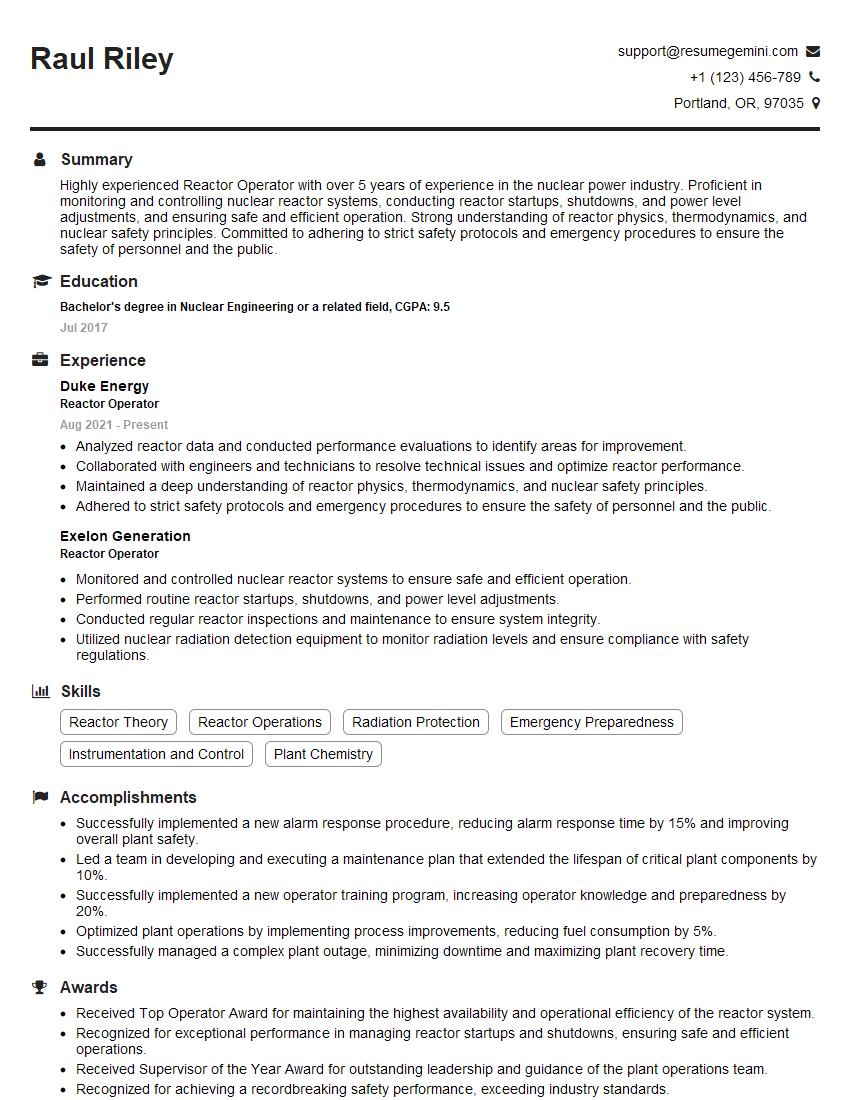
Reactor Operator Resume Sample

Nuclear Technician Resume Sample

Radiologist Resume Sample
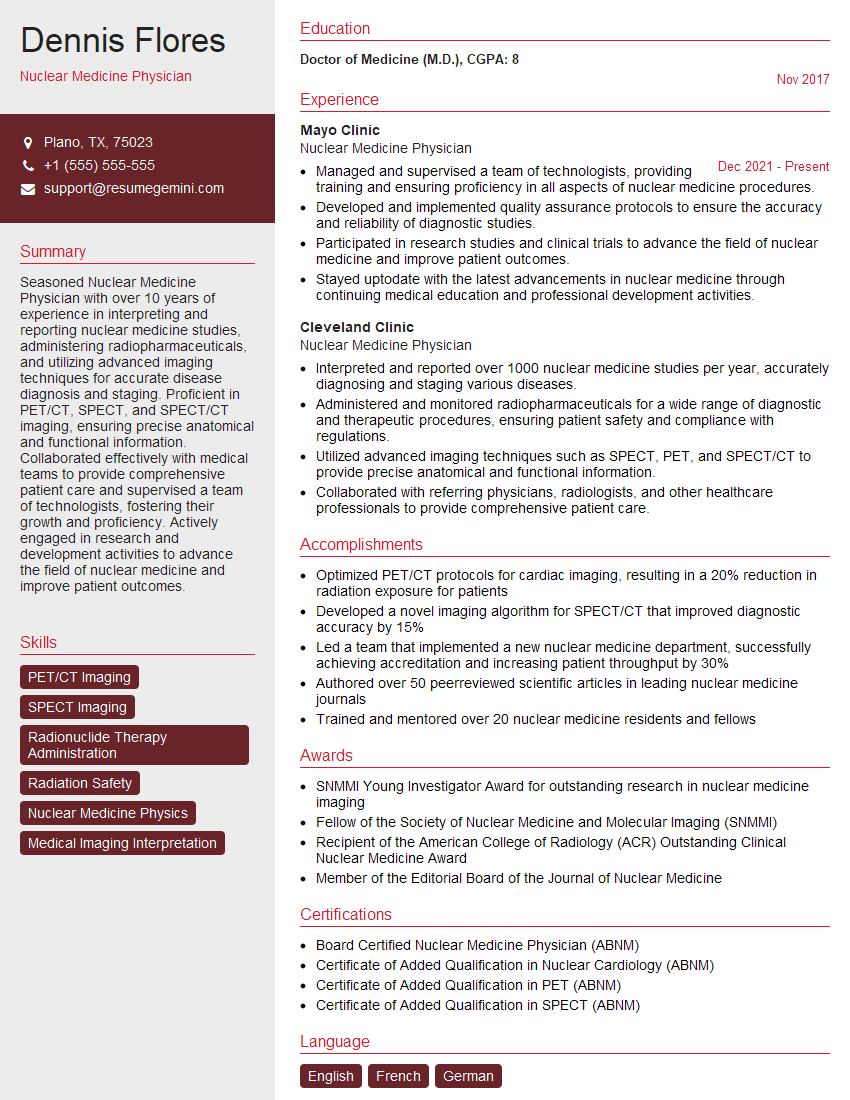
Nuclear Medicine Physician Resume Sample

Dosimetrist Resume Sample

Radiation Therapist Resume Sample
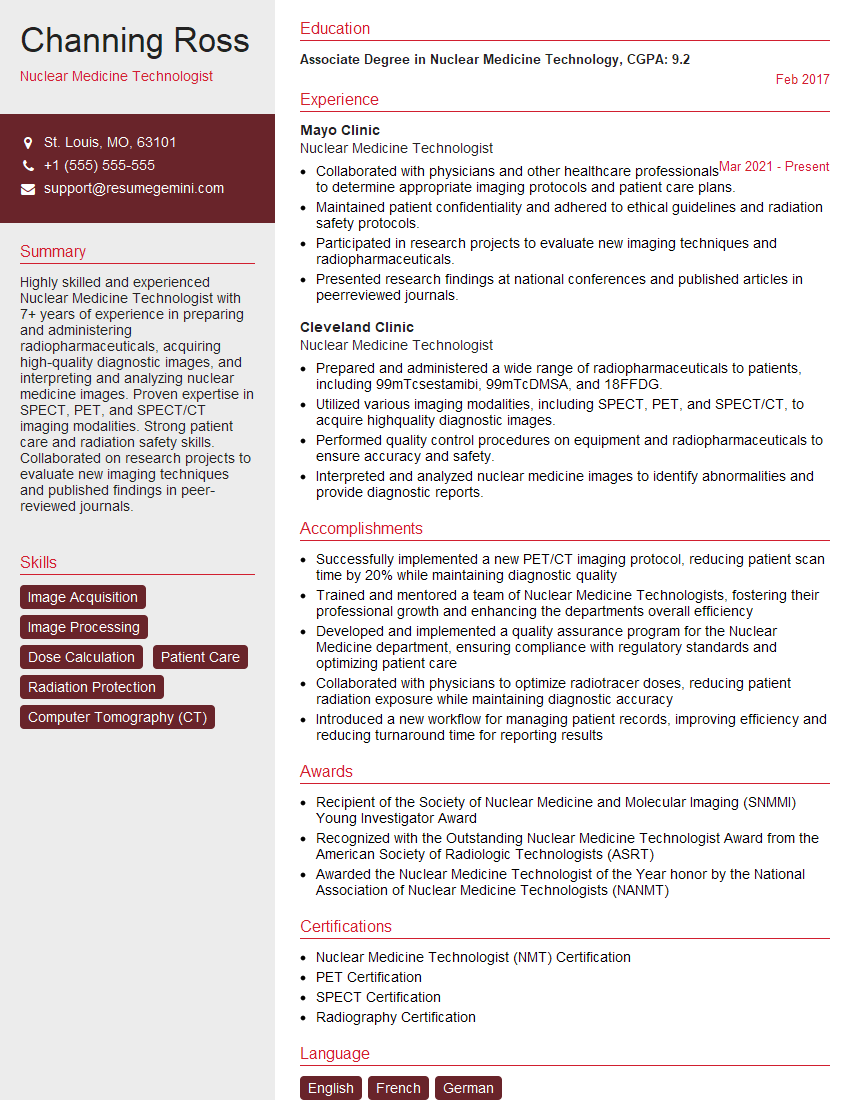
Nuclear Medicine Technologist Resume Sample

Radiation Safety Officer Resume Sample

Radioisotope Technician Resume Sample

Radiological Technologist Resume Sample
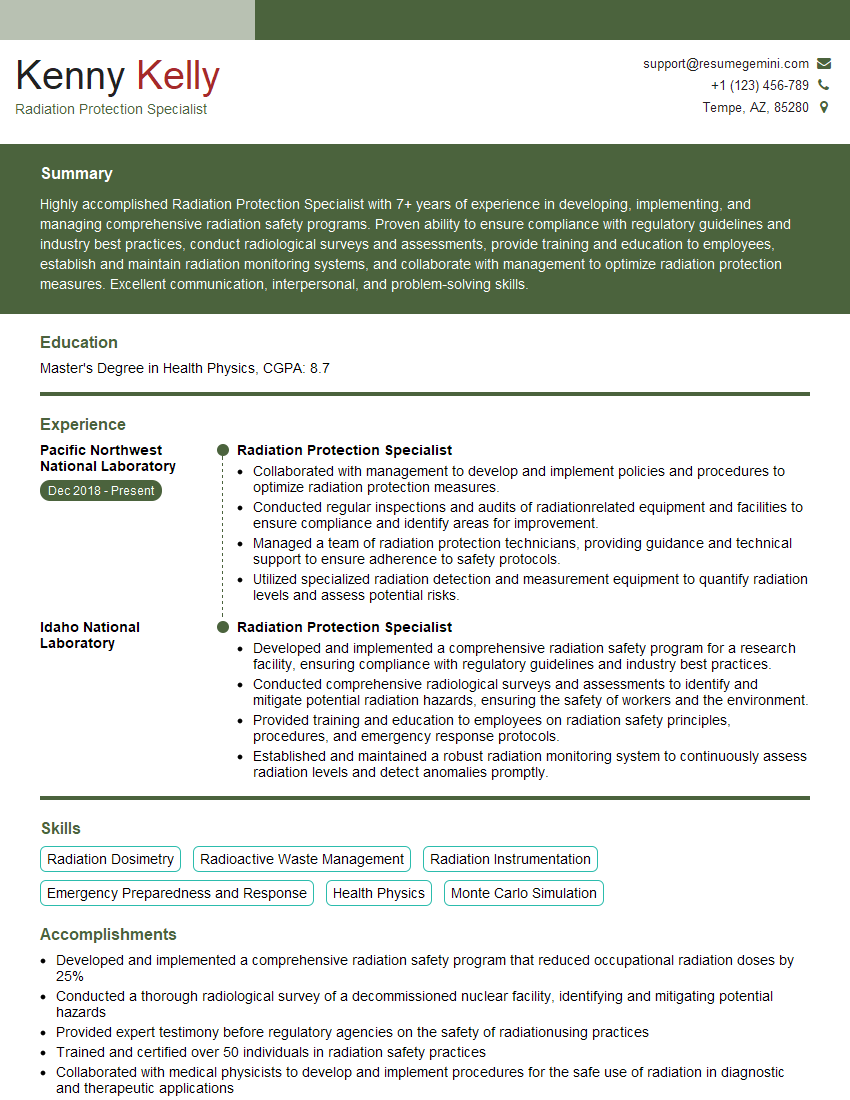
Radiation Protection Specialist Resume Sample
Explore more articles
Users Rating of Our Blogs
Share Your Experience
We value your feedback! Please rate our content and share your thoughts (optional).
What Readers Say About Our Blog
Very informative content, great job.
good