Cracking a skill-specific interview, like one for Research and Idea Generation, requires understanding the nuances of the role. In this blog, we present the questions you’re most likely to encounter, along with insights into how to answer them effectively. Let’s ensure you’re ready to make a strong impression.
Questions Asked in Research and Idea Generation Interview
Q 1. Describe your process for conducting thorough literature reviews.
A thorough literature review is the cornerstone of any robust research project. My process involves a systematic approach, moving from broad to specific. It begins with identifying relevant keywords and databases like Scopus, Web of Science, and PubMed. I then use Boolean operators (AND, OR, NOT) to refine my searches, ensuring I capture the most relevant studies. For example, researching the impact of social media on teenagers’ mental health, I might use a search string like: ("social media" OR "social networking sites") AND ("adolescents" OR "teenagers") AND ("mental health" OR "well-being").
Next, I meticulously screen the results, focusing on the abstracts to eliminate irrelevant papers. The selected papers are then critically appraised for their methodology, sample size, and overall quality. I pay close attention to the limitations of each study to avoid overgeneralizing findings. Finally, I synthesize the findings from the selected studies, identifying trends, gaps, and areas for future research. This synthesis often involves creating a thematic map or a detailed summary table to organize the information effectively.
This structured approach ensures I don’t miss crucial information and helps me build a strong foundation for my own research, allowing me to contextualize my work within the existing body of knowledge.
Q 2. How do you identify and prioritize research questions?
Identifying and prioritizing research questions is a crucial step. I typically start by brainstorming potential questions based on existing literature, observations, and personal experiences. For example, if I observe a discrepancy between theoretical predictions and real-world observations, that might spark a research question. I then evaluate these questions based on several criteria:
- Feasibility: Can the question be answered given available resources and time constraints?
- Relevance: Does the question address a significant problem or gap in knowledge?
- Originality: Does the question offer a novel perspective or contribute to the field?
- Clarity: Is the question clearly stated and easily understood?
After initial screening, I use a prioritization matrix, often weighing factors like impact, feasibility, and urgency. This matrix allows me to visually compare different questions and make a data-driven decision about which ones to pursue first. This ensures that my research efforts are focused on the most impactful and achievable questions.
Q 3. Explain your approach to qualitative data analysis.
My approach to qualitative data analysis is iterative and interpretive. It’s not simply about summarizing data; it’s about uncovering underlying meanings and patterns. I begin with meticulous transcription and coding of the data—this might be interview transcripts, field notes, or open-ended survey responses. I use thematic analysis, a common approach, which involves identifying recurring themes and patterns within the data. This often involves a process of open coding (initial labeling of data segments), axial coding (linking codes to categories), and selective coding (developing a core narrative based on the emergent themes).
For example, in a study examining employee satisfaction, I might identify recurring themes such as ‘work-life balance,’ ‘management support,’ and ‘career development.’ I would then delve deeper into each theme, exploring its nuances and variations. Throughout this process, I maintain a detailed audit trail, documenting my coding decisions and justifications to ensure transparency and rigor. This detailed approach allows me to develop rich interpretations that go beyond superficial observations and provide insightful understanding of the underlying phenomena.
Q 4. How do you ensure the reliability and validity of your research findings?
Ensuring the reliability and validity of research findings is paramount. Reliability refers to the consistency of the results, while validity refers to the accuracy of the findings. I employ several strategies to enhance both:
- Triangulation: Using multiple methods (e.g., surveys, interviews, observations) to gather data on the same phenomenon, cross-checking for consistency.
- Inter-rater reliability: Having multiple coders independently analyze qualitative data and comparing their results to check for agreement.
- Member checking: Returning findings to participants to ensure they resonate with their experiences and perspectives. This is especially crucial in qualitative research.
- Rigorous methodology: Employing well-established research designs and data analysis techniques that minimize bias and enhance the accuracy of findings.
- Detailed documentation: Maintaining comprehensive records of data collection, analysis, and interpretation to allow for replication and scrutiny.
By employing these methods, I aim to build confidence in the robustness and generalizability of the research findings.
Q 5. What are some common biases in research, and how do you mitigate them?
Researchers are susceptible to various biases, and recognizing them is essential. Some common biases include:
- Confirmation bias: The tendency to seek out and interpret information that confirms pre-existing beliefs.
- Sampling bias: When the sample selected is not representative of the population of interest, leading to skewed results.
- Observer bias: Researchers’ expectations influencing their observations and interpretations.
- Publication bias: The tendency for studies with positive results to be published more frequently than those with negative results.
To mitigate these biases, I use several techniques. For confirmation bias, I actively seek out counterarguments and alternative perspectives. I employ rigorous sampling methods to minimize sampling bias. In qualitative research, I use reflexivity—regularly reflecting on my own biases and how they might influence my interpretations. Finally, I critically evaluate the literature, acknowledging limitations and potential biases in existing studies. A multifaceted approach to addressing bias ensures more objective and robust results.
Q 6. Describe your experience with different research methodologies (e.g., ethnographic, experimental).
I have experience with a variety of research methodologies. For example:
- Ethnographic research: This involves immersing oneself in a particular culture or social group to understand their behaviors, beliefs, and practices. I conducted an ethnographic study on the workplace culture of a tech startup, spending several weeks observing meetings, interacting with employees, and conducting interviews.
- Experimental research: This involves manipulating one or more variables to determine their effect on an outcome variable. In a past project, I designed an experiment to test the effectiveness of a new training program on employee productivity, randomly assigning participants to different groups.
- Survey research: Using questionnaires to collect data from a large sample. I frequently use surveys to understand attitudes, beliefs, and behaviors. This allows for broad reach and quantitative analysis.
- Case study research: An in-depth investigation of a single case or a small number of cases. This allows for rich detailed understanding of complex phenomena.
My experience with different methodologies allows me to select the most appropriate approach for each research question, ensuring the most effective and rigorous study design.
Q 7. How do you translate research findings into actionable insights?
Translating research findings into actionable insights requires careful consideration and communication. It’s about moving beyond simply reporting results to providing practical recommendations. This involves:
- Clear and concise communication: Presenting the findings in a way that is easily understood by the intended audience, avoiding jargon and technical language where possible.
- Identifying key implications: Highlighting the most important findings and their practical implications for decision-making.
- Developing specific recommendations: Offering concrete and actionable suggestions based on the findings. For example, if research shows a need for improved employee training, I would recommend specific training programs and implementation strategies.
- Visual aids: Using graphs, charts, and other visual aids to enhance understanding and engagement.
- Collaboration and feedback: Working collaboratively with stakeholders to ensure the insights are relevant and practical for their context.
By focusing on clarity, relevance, and collaboration, I aim to ensure research findings are not just academic exercises but catalysts for positive change and informed decision-making.
Q 8. How familiar are you with various data visualization techniques?
Data visualization is crucial for effective communication of research findings. I’m proficient in a wide range of techniques, selecting the most appropriate method depends heavily on the data type and the message I want to convey.
- For showing trends over time: Line charts are excellent. For example, I recently used a line chart to illustrate the growth of a particular market segment over five years.
- For comparing categories: Bar charts or pie charts are highly effective. A bar chart might be used to compare the performance of different marketing campaigns, while a pie chart could represent market share distribution.
- For showing correlations between variables: Scatter plots are indispensable. I used a scatter plot to show the relationship between advertising spend and sales revenue in a recent project.
- For displaying geographical data: Maps are essential. For example, I visualized customer distribution across different regions using a choropleth map (showing data using different colors on a map).
- For exploring complex datasets: Heatmaps and network graphs are powerful tools for identifying patterns and relationships. I used a heatmap to illustrate the correlation matrix between many different variables.
Beyond these common types, I’m also familiar with advanced techniques like treemaps, parallel coordinates plots, and interactive dashboards, which allow for deeper exploration of data.
Q 9. Explain your experience using statistical software packages (e.g., SPSS, R, Python).
My experience with statistical software is extensive. I’m highly proficient in R and Python, and possess working knowledge of SPSS. Each package offers distinct advantages depending on the task.
- R: I leverage R’s comprehensive statistical capabilities and extensive package ecosystem (like
ggplot2for visualization anddplyrfor data manipulation) for complex statistical modeling, data analysis, and creating publication-quality visualizations. For instance, I recently used R to perform a hierarchical clustering analysis to segment customers. - Python: Python, with libraries like
pandas(for data manipulation) andscikit-learn(for machine learning), is my go-to for data cleaning, preprocessing, and machine learning tasks. I recently utilized Python’s capabilities for building a predictive model for customer churn. - SPSS: While less frequently used, I utilize SPSS for simpler statistical analyses, particularly when collaborating with colleagues more comfortable with its interface. Its strength lies in user-friendliness for less technical users.
I’m adept at choosing the appropriate tool based on project needs, and my expertise extends to data cleaning, transformation, analysis, and reporting across all three platforms.
Q 10. How do you generate creative ideas in a structured manner?
Generating creative ideas systematically is crucial for avoiding aimless brainstorming. I employ a structured approach combining various techniques:
- SCAMPER: This checklist prompts me to consider Substitute, Combine, Adapt, Modify, Put to other uses, Eliminate, and Reverse aspects of existing products or processes to generate new ideas.
- Mind Mapping: I use mind mapping to visually brainstorm, starting with a central idea and branching out to related concepts. This helps explore connections and uncover unexpected solutions.
- TRIZ (Theory of Inventive Problem Solving): This methodology provides a systematic framework for analyzing problems and identifying innovative solutions by focusing on contradictions and identifying inventive principles.
- Lateral Thinking:** I consciously challenge assumptions and explore unconventional approaches. For example, instead of focusing on improving existing features, I might think about completely changing the product’s function.
I often combine these techniques, iteratively refining ideas and testing their feasibility. This structured process ensures that I consistently generate high-quality and innovative ideas.
Q 11. Describe your experience with brainstorming techniques.
Brainstorming is a cornerstone of my idea generation process, but I go beyond simple free-for-alls. I’ve employed various techniques to optimize the brainstorming sessions:
- Nominal Group Technique (NGT): This structured approach ensures everyone gets a chance to contribute and avoids domination by a few individuals. Ideas are recorded, discussed, and then ranked.
- Brainwriting:** This method involves writing down ideas individually before sharing, encouraging quieter participants and generating a broader range of perspectives.
- Reverse Brainstorming:** Instead of focusing on solutions, we start by identifying potential problems to overcome, often revealing innovative solutions.
- SCAMPER (as mentioned above): Using SCAMPER as a structured framework guides the brainstorming session and keeps it focused.
My experience shows that a well-facilitated brainstorming session, using a combination of these techniques, yields significantly better and more diverse results compared to unstructured sessions.
Q 12. How do you evaluate the feasibility and potential impact of new ideas?
Evaluating the feasibility and impact of new ideas requires a multi-faceted approach.
- Market Analysis: I assess market size, demand, competition, and potential revenue streams.
- Technical Feasibility: I evaluate the availability of resources, technology, and expertise needed to implement the idea. This often involves consultations with engineers or technical specialists.
- Financial Analysis: I develop cost-benefit analysis, considering development costs, marketing expenses, and projected revenue.
- SWOT Analysis: I systematically analyze the Strengths, Weaknesses, Opportunities, and Threats associated with the idea.
- Prototyping and Pilot Testing: I build prototypes or conduct small-scale pilot tests to validate assumptions and gather feedback before committing significant resources.
The combination of these assessments provides a comprehensive evaluation of both the feasibility and the potential impact of the new idea, helping to make well-informed decisions about resource allocation and implementation.
Q 13. How do you manage competing priorities when conducting research?
Managing competing priorities in research is a constant challenge. My approach relies on:
- Prioritization Matrices: I use matrices (e.g., Eisenhower Matrix) to categorize tasks based on urgency and importance, allowing me to focus on high-impact activities first.
- Project Management Tools: I utilize project management software (like Trello or Asana) to track tasks, deadlines, and progress, ensuring efficient time allocation.
- Time Blocking: I allocate specific time blocks for focused work on particular tasks, minimizing distractions and maximizing productivity. This often includes breaks to avoid burnout.
- Regular Evaluation: I schedule regular reviews to assess progress, identify bottlenecks, and adjust priorities as needed. This allows for flexibility when unexpected issues arise.
- Delegation (where appropriate): If possible, I delegate tasks to others to free up time for high-priority activities.
This structured approach ensures that I effectively manage competing demands and make progress on all essential aspects of the research project.
Q 14. How do you communicate research findings to different audiences?
Communicating research findings effectively requires tailoring the message to the specific audience.
- For academic audiences: I use formal written reports, presentations at conferences, and publications in peer-reviewed journals. The language is technical and precise, emphasizing methodology and statistical significance.
- For business audiences: I create concise executive summaries, visually appealing presentations with key findings highlighted, and reports that focus on practical implications and recommendations. The language is clear, concise, and avoids unnecessary jargon.
- For public audiences: I use simpler language, infographics, and easily digestible visuals, focusing on the key takeaways and implications for society. This might involve press releases, blog posts, or public presentations.
In all cases, I ensure clarity, accuracy, and ethical presentation of the research findings. Adapting the communication style to the audience is key to ensuring that the message is understood and appreciated.
Q 15. Describe a time you had to overcome a challenge in your research.
One significant challenge I faced was during research on developing a novel drug delivery system. Initial in vitro testing showed promising results, but in vivo experiments yielded inconsistent data. The challenge wasn’t simply the inconsistent results, but pinpointing the source of the discrepancy. It was like searching for a needle in a haystack. We meticulously reviewed every step of the process, from material sourcing and preparation to experimental design and data analysis. We systematically eliminated variables: We controlled for environmental factors, reevaluated our methodology, and explored alternative analytical techniques. Ultimately, we discovered that a specific batch of a crucial reagent contained an unexpected impurity that significantly altered the drug’s behaviour in vivo. This experience taught me the importance of rigorous experimental design, meticulous data analysis, and the relentless pursuit of understanding even seemingly minor inconsistencies. The solution involved thorough investigation, careful documentation, and multiple validation steps. It also highlighted the critical role of collaboration—we benefited immensely from discussions with experts in analytical chemistry and pharmacology.
Career Expert Tips:
- Ace those interviews! Prepare effectively by reviewing the Top 50 Most Common Interview Questions on ResumeGemini.
- Navigate your job search with confidence! Explore a wide range of Career Tips on ResumeGemini. Learn about common challenges and recommendations to overcome them.
- Craft the perfect resume! Master the Art of Resume Writing with ResumeGemini’s guide. Showcase your unique qualifications and achievements effectively.
- Don’t miss out on holiday savings! Build your dream resume with ResumeGemini’s ATS optimized templates.
Q 16. How do you stay current with the latest research and trends in your field?
Staying current in research requires a multi-faceted approach. I actively participate in professional organizations like the IEEE and attend conferences, both national and international, to engage directly with leading researchers and learn about the latest breakthroughs. I subscribe to key journals and regularly browse databases such as PubMed, Web of Science, and Google Scholar for relevant publications. Furthermore, I utilize various online platforms like ResearchGate and LinkedIn to follow experts in my field and participate in relevant discussions. I also make a conscious effort to attend webinars and online courses to ensure my skill set remains updated with the latest tools and techniques. Think of it as constantly refining a finely honed instrument – the process of research requires constant sharpening and recalibration.
Q 17. Explain your experience with intellectual property and patent searching.
My experience with intellectual property involves both patent searching and the understanding of how to protect novel ideas. I’m proficient in using patent databases such as Google Patents and USPTO’s website to conduct comprehensive searches. These searches aren’t just keyword searches; I employ advanced search strategies using classifications, inventors, and assignee information to ensure a thorough investigation for prior art. Understanding patent classifications (CPC, IPC) is critical for effective searching. For instance, when evaluating the patentability of a new biomaterial, I wouldn’t just search for ‘biomaterial’ but delve into specific subclasses relevant to the material’s composition and application. In terms of protecting ideas, I understand the importance of early documentation and clear articulation of the novelty and inventive steps involved in an innovation. This includes maintaining detailed lab notebooks and preparing clear and concise patent applications outlining the claims, specifications, and drawings.
Q 18. How do you use data to identify unmet customer needs?
Data plays a crucial role in identifying unmet customer needs. We use a combination of quantitative and qualitative data sources. Quantitative data, such as sales figures, market share analysis, and customer surveys with multiple-choice questions, provides a broad overview of customer preferences and market trends. However, to delve deeper, we also use qualitative data. This includes things like customer interviews, focus groups, and social media monitoring which offer richer insights into underlying needs and frustrations. For example, analyzing customer reviews of a product might reveal that while the product functions as designed, users experience inconvenience due to a specific design element. This wouldn’t be readily apparent from sales data alone. By combining both, we create a comprehensive picture and can pinpoint areas for innovation that truly address customers’ pain points.
Q 19. How do you incorporate user feedback into the idea generation process?
User feedback is integrated at multiple stages of the idea generation process. Early on, we conduct user research to understand the target audience’s needs and pain points, informing our initial brainstorming sessions. During prototyping, we gather feedback through usability testing—observing users interacting with our prototypes to identify areas for improvement. This could be anything from a simple paper prototype to a functional software beta. This feedback is iteratively incorporated into the design and further testing is done to assess impact. For example, during the development of a new mobile app, user feedback revealed an intuitive user interface was crucial. As a result, we redesigned the navigational structure based on direct suggestions and observed usage patterns, leading to an app that is both functional and user-friendly.
Q 20. Describe your experience with A/B testing or similar experimentation methods.
A/B testing is an essential tool for evaluating different design choices and optimizing features. It involves presenting two versions (A and B) of a product, feature, or webpage to separate groups of users and comparing their responses. This allows for the objective measurement of which version performs better in terms of conversion rates, user engagement, or other relevant metrics. For example, during the development of a marketing campaign landing page, we A/B tested different headline options, call-to-action buttons, and image choices. By analyzing the click-through rates and conversion rates for each variation, we determined which design elements were most effective. These tests are typically run using tools that provide statistical analysis of the results, ensuring that observed differences are statistically significant, and not simply due to random chance. The key to effective A/B testing is careful selection of variables to test, a large enough sample size, and a well-defined success metric.
Q 21. How do you measure the success of an innovation or new idea?
Measuring the success of an innovation is a multi-faceted endeavor and depends heavily on the nature of the innovation itself. We use a combination of metrics depending on the goals. For a new product, we’d measure market penetration, customer satisfaction (through surveys and reviews), revenue generated, and return on investment (ROI). For a process improvement, we might focus on efficiency gains (e.g., reduced production time, lower defect rates), cost savings, and improved employee satisfaction. For software, key metrics could include user engagement (e.g., time spent on the platform, frequency of use), adoption rates, and customer lifetime value (CLTV). Ultimately, the success of an innovation is measured against its defined objectives. It’s not enough to simply have a novel idea; it must demonstrate a measurable positive impact, whether it’s financial, operational, or societal. A balanced scorecard approach, combining quantitative and qualitative indicators, provides a more complete picture of the innovation’s true success.
Q 22. Describe your experience with market research and competitive analysis.
Market research and competitive analysis are crucial for understanding the landscape before developing new ideas. Market research involves systematically gathering and analyzing data about consumers, competitors, and the overall market to identify opportunities and risks. Competitive analysis focuses specifically on identifying key competitors, analyzing their strengths and weaknesses, and understanding their strategies.
In my experience, I’ve conducted extensive market research using both primary and secondary data sources. Primary research involved surveys, focus groups, and interviews to gather direct insights from target audiences. Secondary research leveraged publicly available data such as market reports, competitor websites, and industry publications. For example, in a recent project for a sustainable packaging company, we used surveys to understand consumer preferences regarding eco-friendly packaging and then analyzed competitor packaging materials and pricing strategies to determine a competitive advantage.
This combined approach allows for a comprehensive understanding of the market, helping to identify unmet needs, potential market segments, and areas where a new product or service could thrive. Competitive analysis also highlights potential pitfalls and allows for proactive strategy adjustments. For instance, if a competitor holds a significant market share due to a strong brand reputation, the research might suggest focusing on a niche market or developing a unique value proposition rather than direct competition.
Q 23. How do you identify and mitigate risks associated with new ideas?
Identifying and mitigating risks is paramount in idea generation. It’s a continuous process starting from the initial concept phase and extending throughout the development cycle. I employ a structured approach, leveraging tools such as SWOT analysis (Strengths, Weaknesses, Opportunities, Threats) and risk assessment matrices.
For example, a SWOT analysis helps to systematically identify potential internal weaknesses (e.g., lack of expertise in a specific area) and external threats (e.g., changes in government regulations) that could hinder a new idea’s success. Risk assessment matrices help quantify and prioritize those risks, assigning probabilities and impact levels to each. This allows for focused mitigation efforts, concentrating resources on the most critical threats. A high-impact, high-probability risk might necessitate significant investment in research or development to reduce its probability, whereas a low-impact, low-probability risk might require only minimal monitoring.
Mitigation strategies vary widely depending on the nature of the risk. For example, if the risk involves technological feasibility, investing in a prototype or proof-of-concept can significantly reduce the uncertainty. If the risk is associated with market acceptance, conducting extensive market research and testing prototypes with target customers is crucial. Throughout the process, regular review and adjustment are essential, as new information or changing circumstances may require recalibrating risk assessments and mitigation strategies.
Q 24. How do you manage and prioritize multiple research projects simultaneously?
Managing multiple research projects effectively requires strong organizational skills and strategic prioritization. I utilize project management methodologies like Agile, employing Kanban boards or similar tools to visualize the workflow of each project. This visual representation allows for easy tracking of progress, identification of bottlenecks, and efficient resource allocation.
Prioritization is based on several factors, including strategic alignment with overall business goals, resource availability, and deadlines. I employ techniques like MoSCoW analysis (Must have, Should have, Could have, Won’t have) to categorize project requirements and focus on the essentials first. This ensures that the most critical projects receive the necessary attention and resources, while less urgent tasks are handled effectively without compromising the overall timeline.
Regular project status meetings and progress reports are key. These facilitate transparent communication, identify potential roadblocks early on, and allow for timely adjustments. Furthermore, breaking down large projects into smaller, more manageable tasks improves focus and allows for iterative progress, enabling flexibility and adaptability in response to changing priorities or unexpected issues.
Q 25. How do you foster collaboration and teamwork in a research setting?
Fostering collaboration is critical for successful research. I believe in creating a supportive and inclusive environment where diverse perspectives are valued and open communication is encouraged. This involves establishing clear roles and responsibilities, ensuring that everyone understands their contribution to the overall research goals.
Regular team meetings, brainstorming sessions, and knowledge-sharing platforms are essential for effective communication and collaboration. I encourage active listening, constructive feedback, and a culture of mutual respect. Tools like shared online documents and project management software facilitate seamless collaboration, regardless of geographical location.
Building trust and rapport among team members is crucial for successful collaboration. I prioritize celebrating achievements, acknowledging individual contributions, and fostering a sense of collective ownership. Addressing conflicts promptly and fairly, focusing on finding solutions rather than assigning blame, maintains a positive and productive work environment. An example of this was a recent project where we held weekly “knowledge sharing” sessions where team members presented their work and received feedback from peers. This not only facilitated idea exchange but also strengthened team bonds and increased collaboration.
Q 26. Describe your experience with using design thinking to solve problems.
Design thinking is a human-centered problem-solving approach that I frequently apply in my research. It involves empathizing with users, defining problems clearly, ideating potential solutions, prototyping those solutions, and testing them iteratively. This iterative process allows for continuous improvement and refinement of the solution.
For example, while working on a project to improve user experience for a mobile app, we utilized design thinking’s five stages: Empathize (conducting user interviews to understand user needs and frustrations), Define (articulating the core problem based on user insights), Ideate (brainstorming various solutions through sketching and discussions), Prototype (creating low-fidelity prototypes to test different design elements), and Test (conducting usability testing to evaluate prototype effectiveness and gather feedback).
This process proved invaluable, leading to several significant UI/UX improvements that resulted in enhanced user satisfaction and increased app engagement. Design thinking’s iterative nature allowed us to quickly address usability issues and refine the design based on user feedback, ultimately leading to a more user-friendly and effective application.
Q 27. What is your experience with developing a research proposal?
Developing a compelling research proposal is crucial for securing funding or approval. A strong proposal clearly outlines the research problem, its significance, the proposed methodology, anticipated outcomes, and the budget required. It requires a thorough understanding of the research area, a clear articulation of the research question, and a well-defined plan for conducting the research.
My approach involves starting with a concise and compelling statement of the research problem, highlighting its relevance and potential impact. Then I detail the proposed methodology, including the research design, data collection methods, and data analysis techniques. I ensure that the methodology is appropriate for addressing the research question and that it’s feasible within the available resources and timeframe.
A realistic budget is essential. I meticulously estimate the costs associated with various aspects of the research, such as personnel, materials, equipment, and data analysis software. Finally, a clear timeline outlining key milestones and deliverables is included, ensuring transparency and accountability. The proposal also includes a comprehensive literature review, demonstrating familiarity with existing research in the field and positioning the proposed research within the broader context.
Q 28. Explain your understanding of hypothesis testing and its importance in research.
Hypothesis testing is a crucial element of scientific research. It involves formulating a testable hypothesis – a statement predicting a relationship between variables – and then collecting data to determine whether the hypothesis is supported or refuted. The process typically involves establishing a null hypothesis (a statement of no effect or no relationship) and an alternative hypothesis (a statement that contradicts the null hypothesis).
Statistical tests are then used to analyze the collected data and determine the probability of observing the results if the null hypothesis were true. If this probability is below a predetermined significance level (typically 0.05), the null hypothesis is rejected, providing evidence in support of the alternative hypothesis. Conversely, if the probability is above the significance level, the null hypothesis is not rejected, meaning there’s insufficient evidence to support the alternative hypothesis.
The importance of hypothesis testing lies in its ability to provide objective evidence to support or refute research claims. It’s a fundamental component of the scientific method, ensuring that research findings are not based on speculation or anecdotal evidence. For instance, in a clinical trial testing a new drug’s effectiveness, hypothesis testing allows researchers to determine whether the drug has a statistically significant impact on the disease compared to a placebo, avoiding drawing inaccurate conclusions based solely on subjective observations.
Key Topics to Learn for Research and Idea Generation Interview
- Understanding Research Methodologies: Explore various research approaches (qualitative, quantitative, mixed methods), their strengths and weaknesses, and when to apply each. Consider practical scenarios where you’d choose one over another.
- Idea Generation Techniques: Master brainstorming, mind mapping, SCAMPER, lateral thinking, and other creative problem-solving methods. Practice applying these techniques to real-world case studies or hypothetical challenges.
- Data Analysis and Interpretation: Develop your skills in interpreting data from various sources (surveys, experiments, market research). Focus on drawing meaningful conclusions and identifying actionable insights.
- Critical Thinking and Problem Solving: Practice identifying the root cause of problems, evaluating potential solutions, and making data-driven decisions. Be prepared to discuss your approach to problem-solving in detail.
- Communication and Presentation Skills: Refine your ability to clearly and concisely communicate your research findings and innovative ideas, both verbally and in written form. Practice presenting your work in a compelling and engaging manner.
- Intellectual Property and Ethical Considerations: Understand the importance of protecting intellectual property and the ethical implications of research and idea generation. Be prepared to discuss relevant scenarios.
- Industry-Specific Knowledge: Research the specific industry you’re targeting and familiarize yourself with current trends, challenges, and opportunities. Tailor your knowledge and examples to the specific requirements of the role.
Next Steps
Mastering research and idea generation is crucial for career advancement in today’s competitive landscape. It demonstrates critical thinking, problem-solving skills, and innovative thinking – highly sought-after qualities in many fields. To stand out from the competition, creating a strong, ATS-friendly resume is essential. ResumeGemini is a trusted resource that can help you craft a professional and impactful resume tailored to your skills and experience. Examples of resumes tailored to Research and Idea Generation roles are available, providing you with a strong foundation to build upon. Invest time in creating a compelling resume; it’s your first impression and a key to unlocking your career potential.
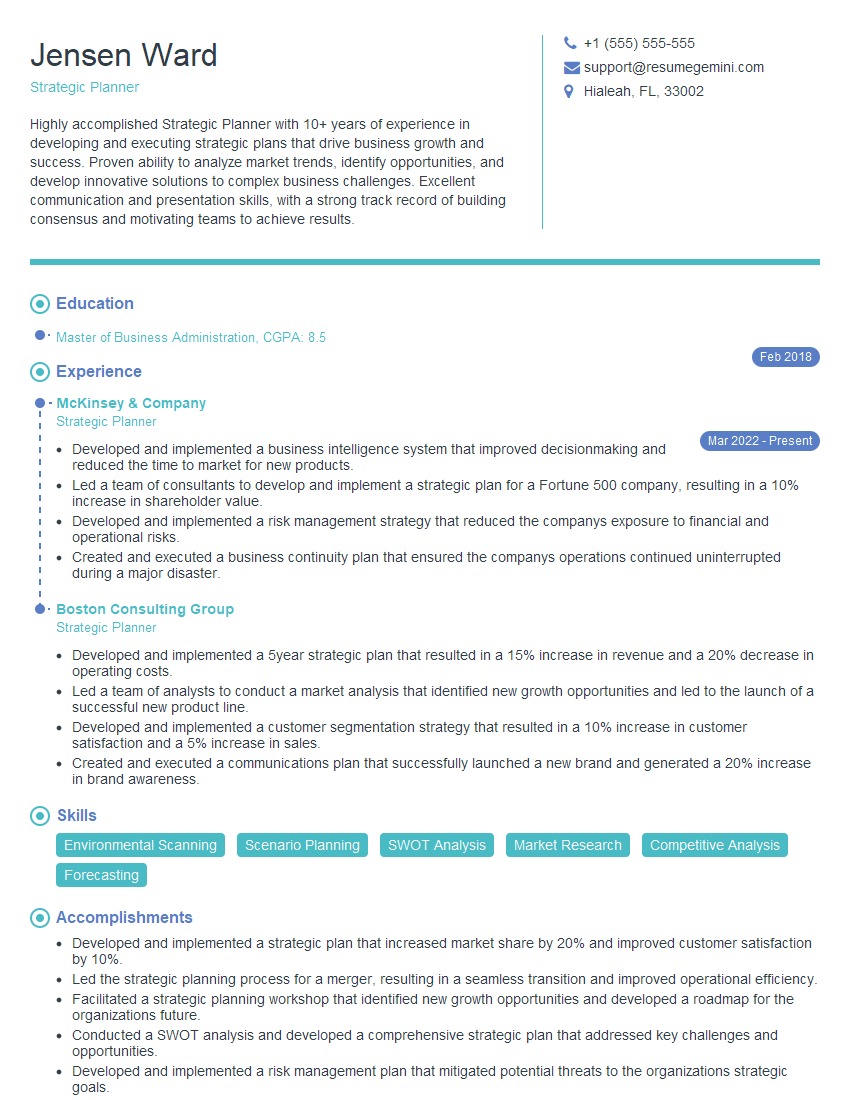
Strategic Planner Resume Sample
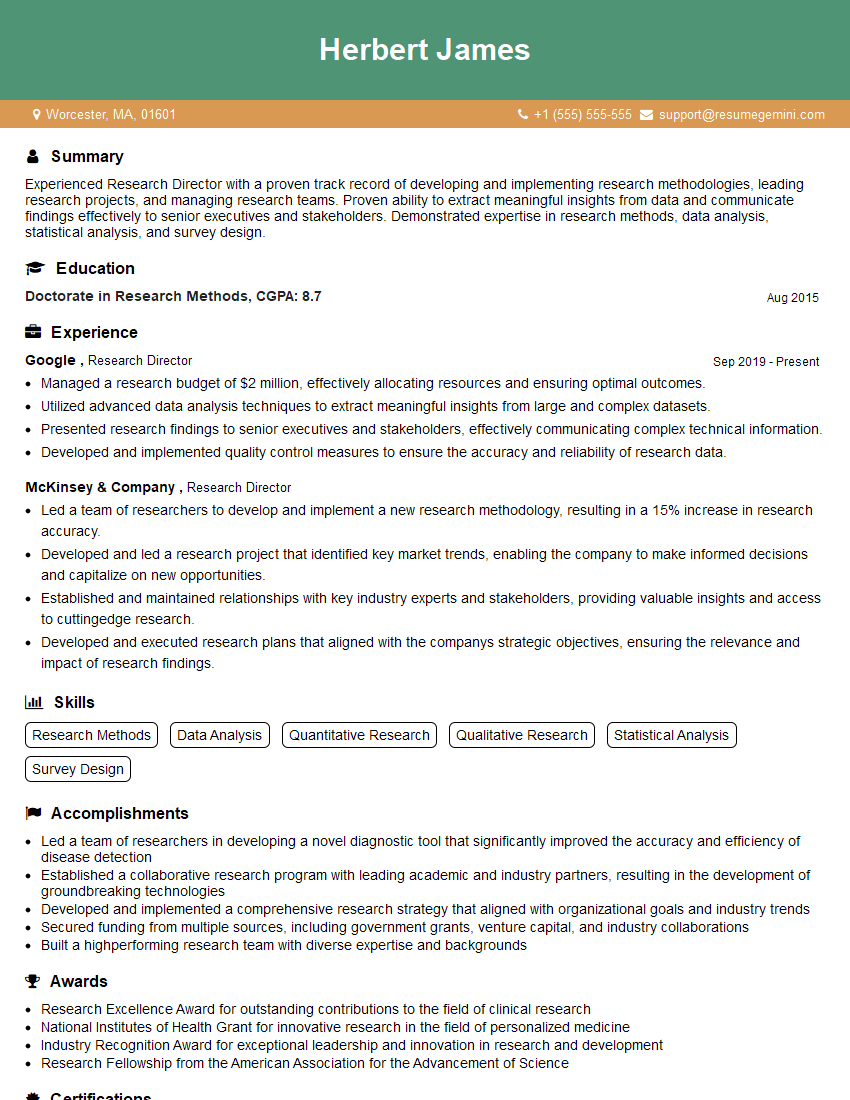
Research Director Resume Sample
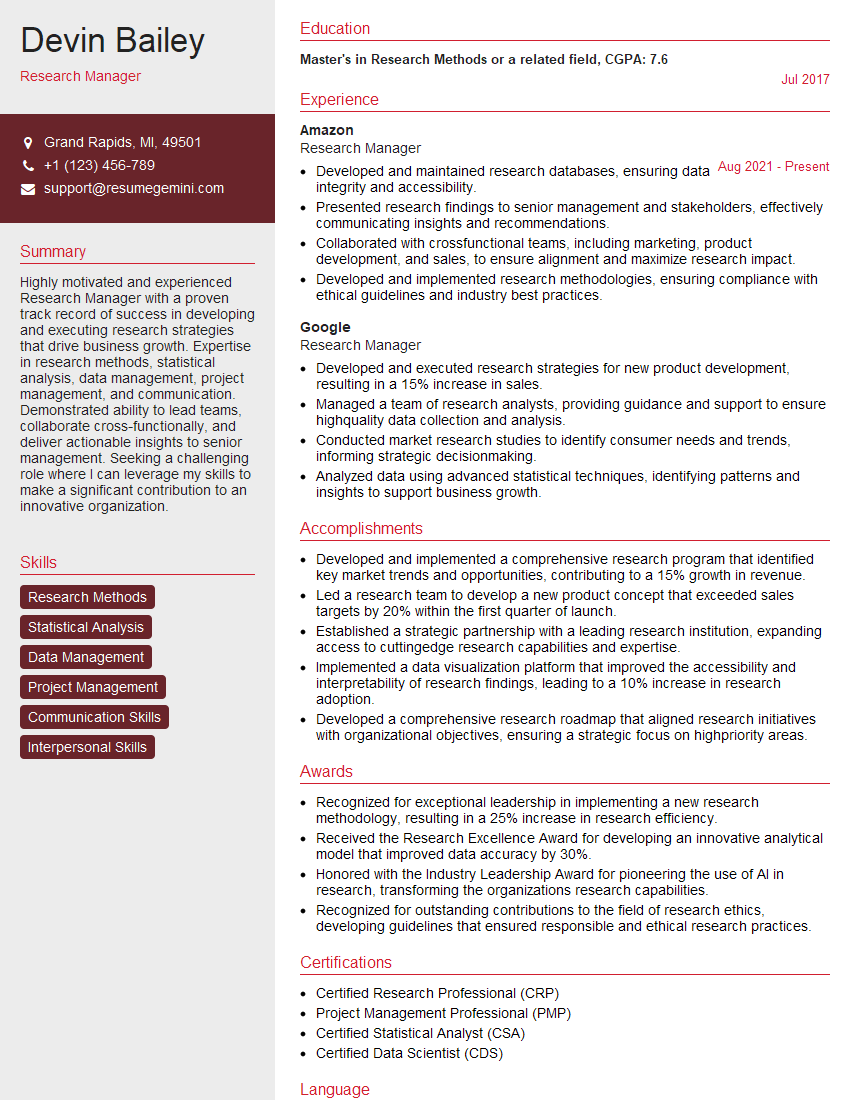
Research Manager Resume Sample
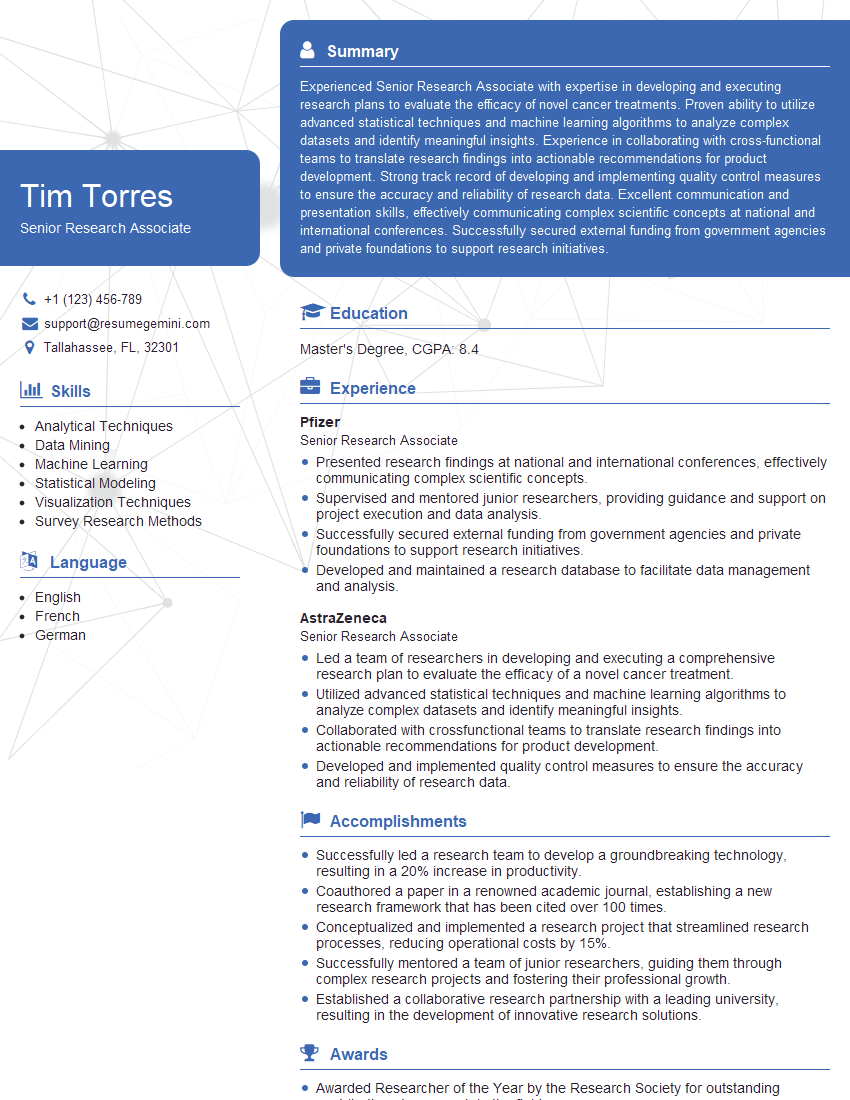
Senior Research Associate Resume Sample
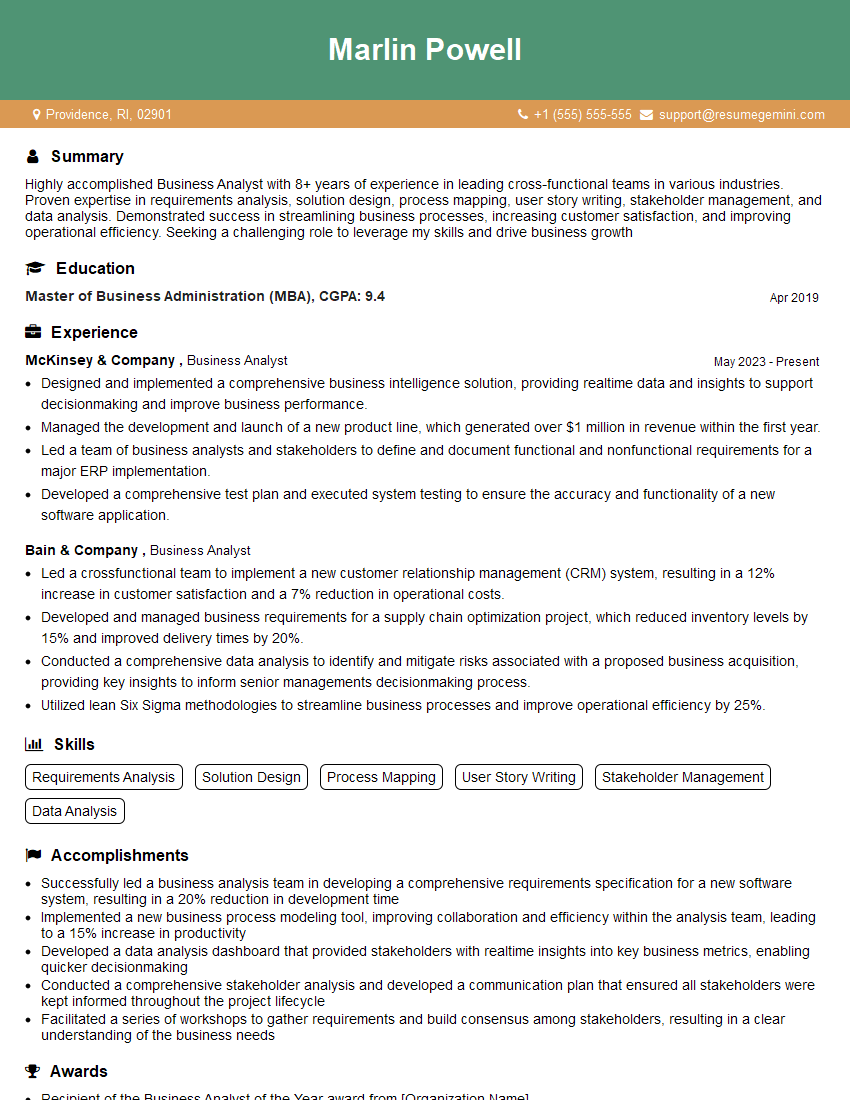
Business Analyst Resume Sample
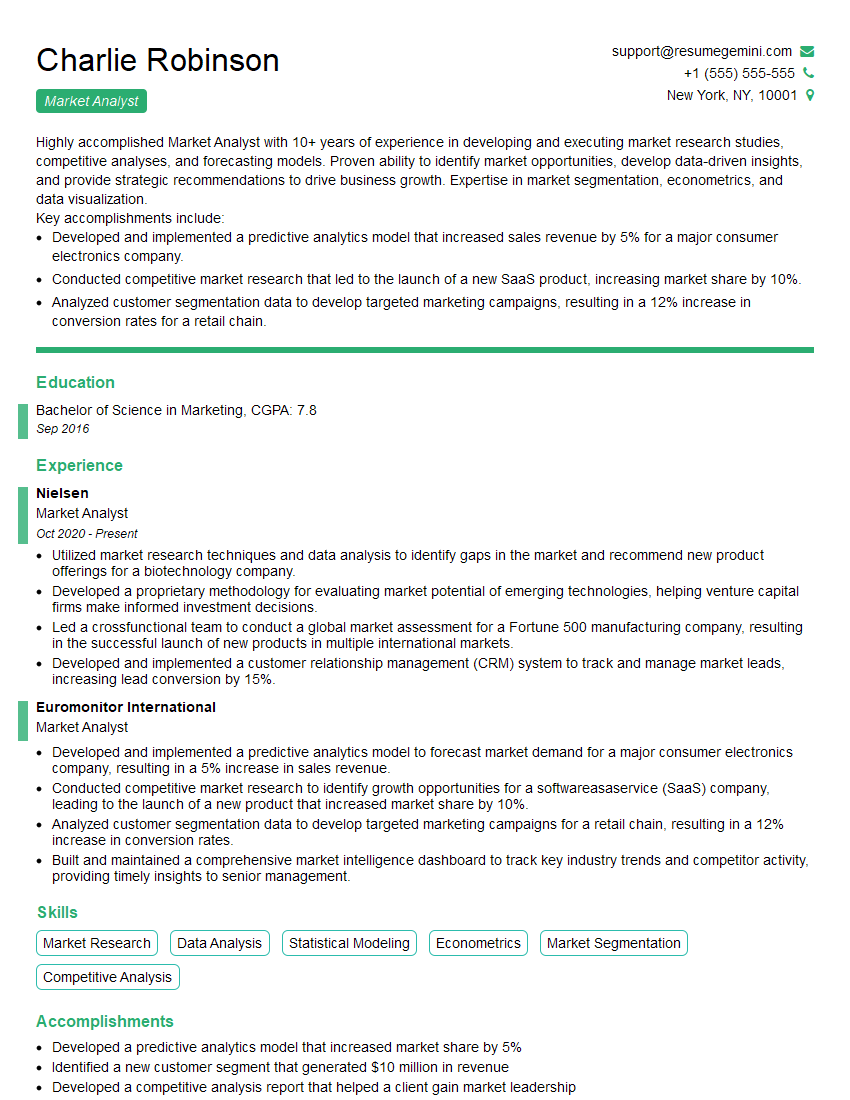
Market Analyst Resume Sample
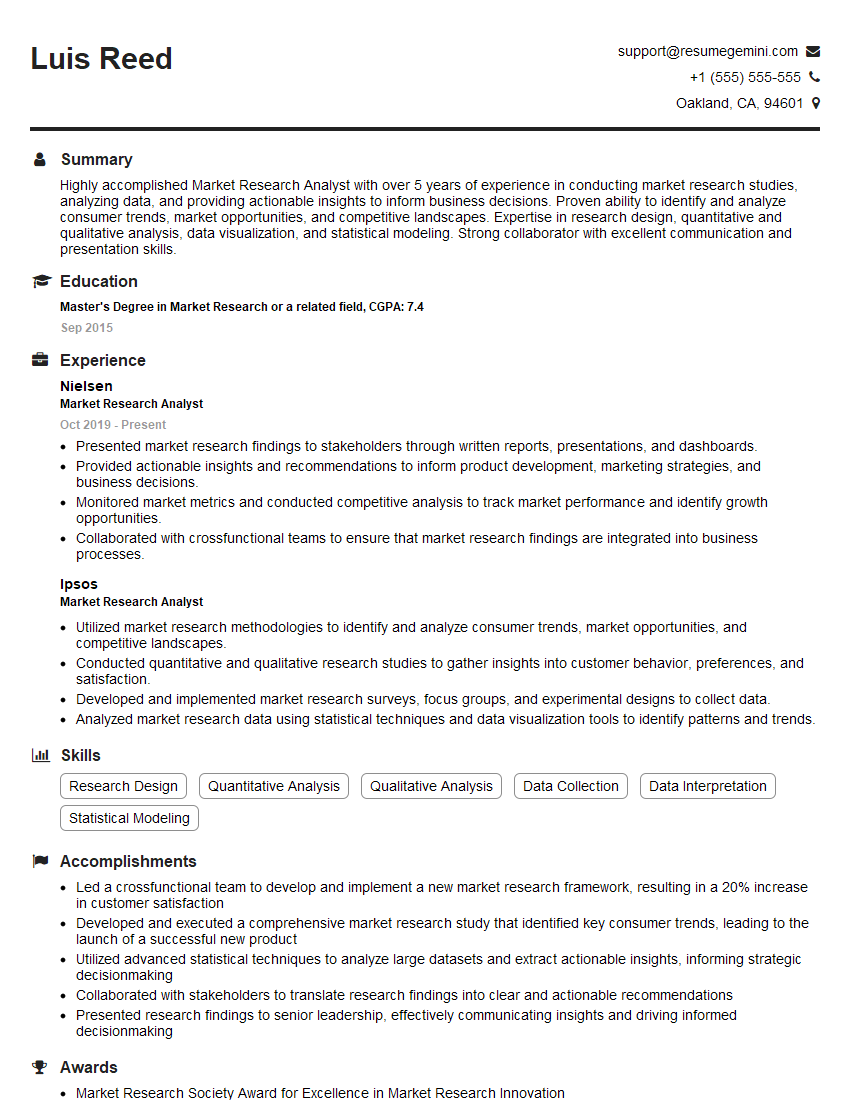
Market Research Analyst Resume Sample
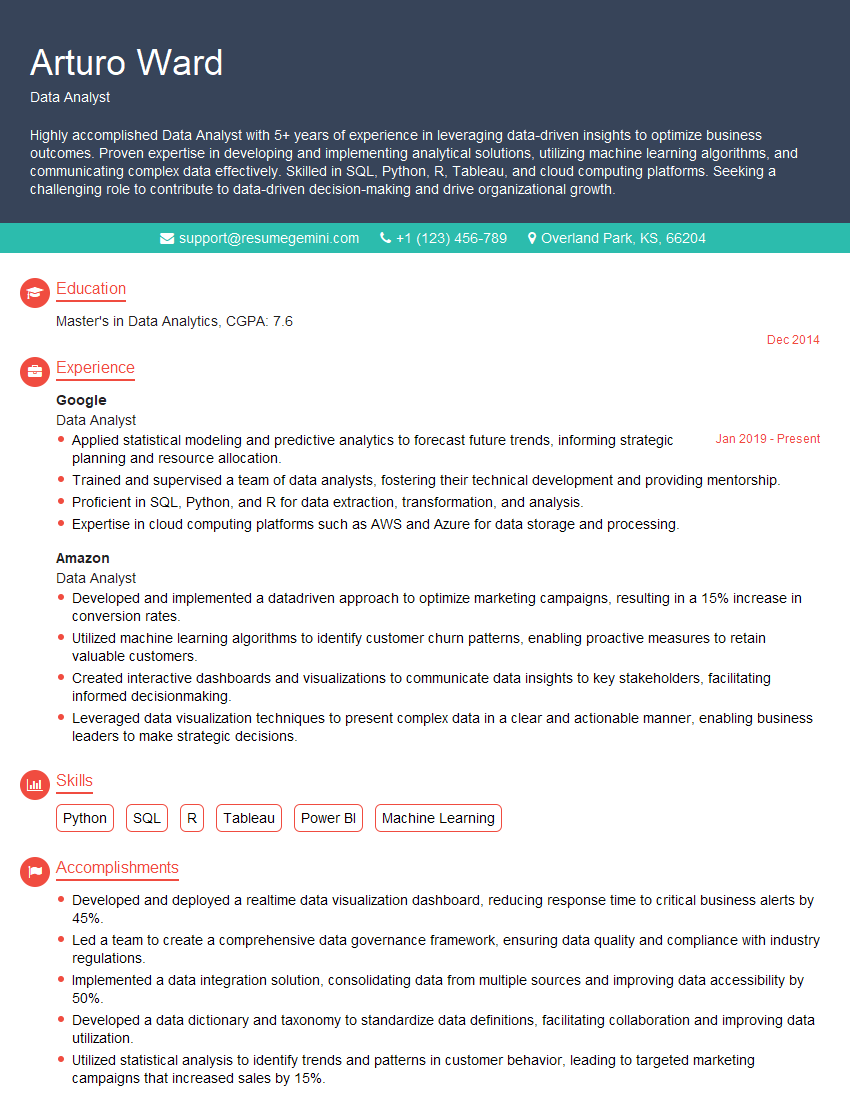
Data Analyst Resume Sample
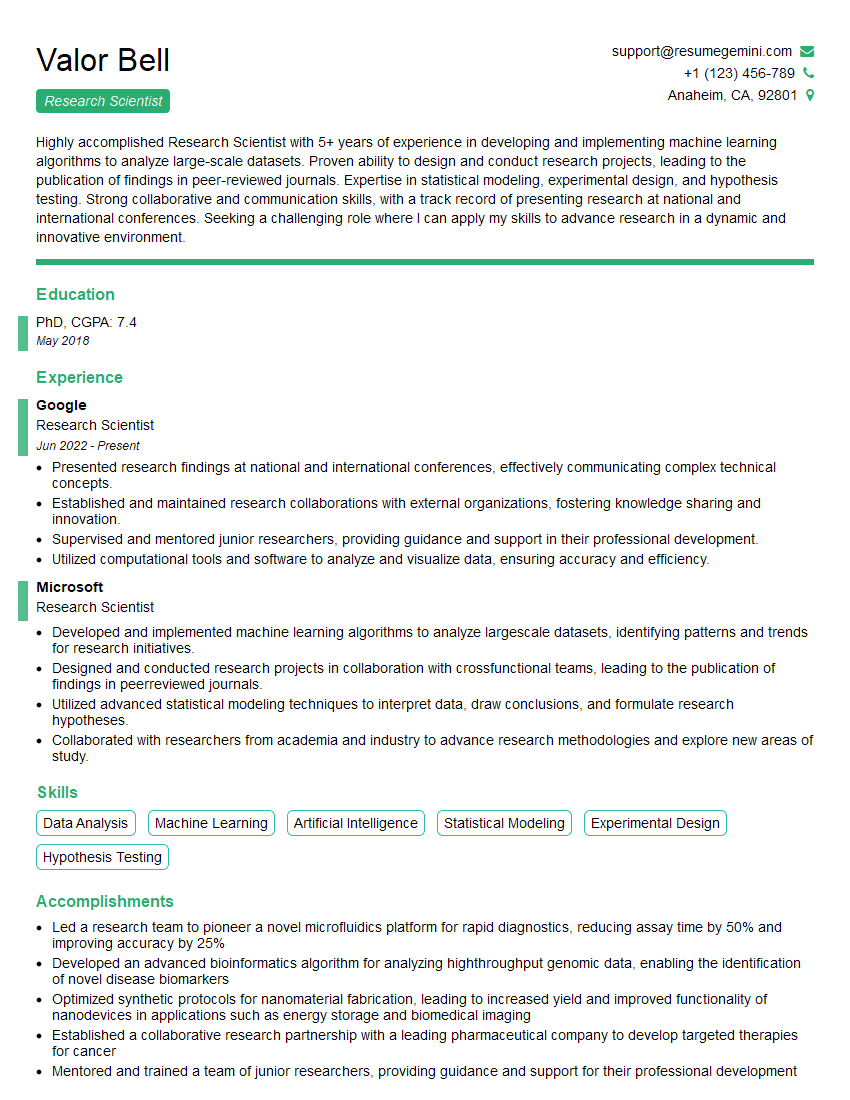
Research Scientist Resume Sample

Information Architect Resume Sample
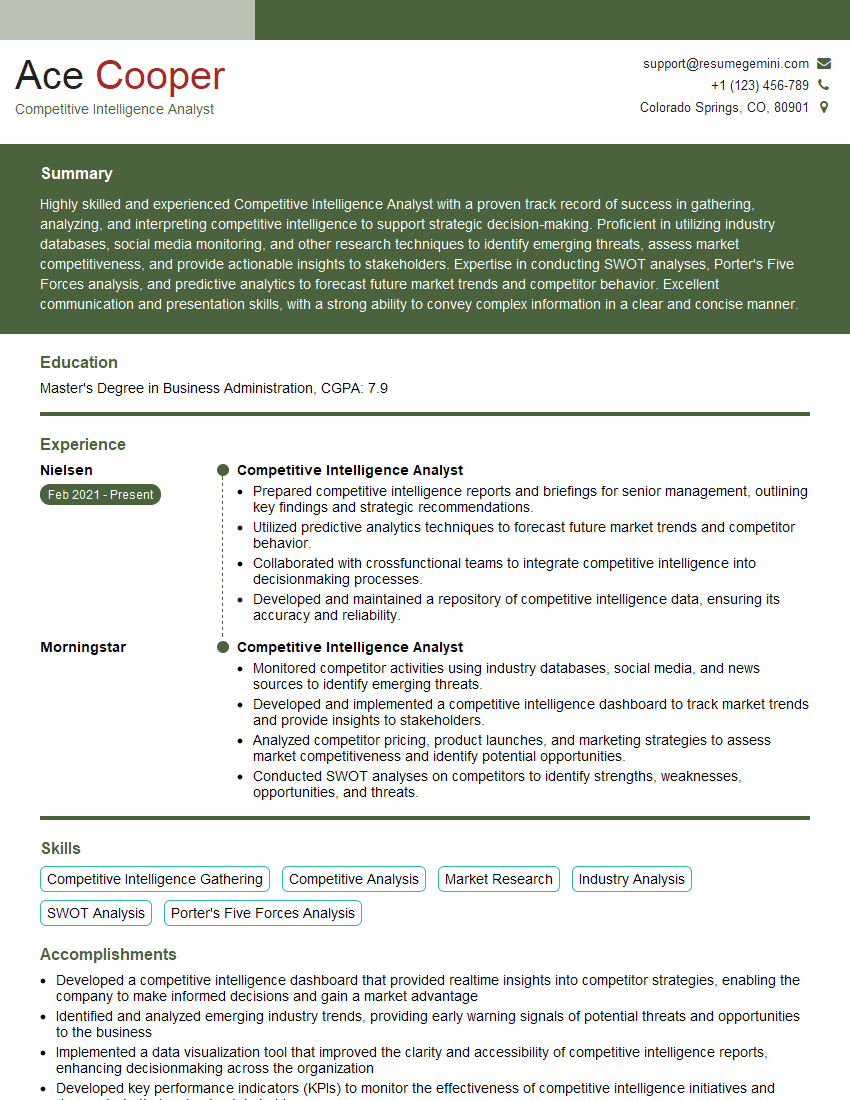
Competitive Intelligence Analyst Resume Sample

Content Strategist Resume Sample
Explore more articles
Users Rating of Our Blogs
Share Your Experience
We value your feedback! Please rate our content and share your thoughts (optional).
What Readers Say About Our Blog
Very informative content, great job.
good