Interviews are opportunities to demonstrate your expertise, and this guide is here to help you shine. Explore the essential Printed Circuit Board Fabrication interview questions that employers frequently ask, paired with strategies for crafting responses that set you apart from the competition.
Questions Asked in Printed Circuit Board Fabrication Interview
Q 1. Explain the difference between surface mount technology (SMT) and through-hole technology (THT).
Surface Mount Technology (SMT) and Through-Hole Technology (THT) are two fundamental methods for mounting electronic components onto a Printed Circuit Board (PCB). The key difference lies in how the components are attached.
SMT components, such as resistors, capacitors, and integrated circuits (ICs), have leads that are small and surface-mounted directly onto the PCB’s copper pads. Think of it like sticking tiny stickers onto a surface. This method allows for higher component density, smaller board sizes, and faster assembly processes, as robotic placement machines can handle them efficiently. Modern smartphones are prime examples of devices heavily reliant on SMT.
THT components, on the other hand, have leads that pass through holes drilled in the PCB. These leads are then soldered on the underside of the board. Imagine threading wires through holes and securing them from below – it’s more robust and mechanically stronger. This technique is often preferred for larger, power-handling components or those requiring more mechanical stability. Older appliances, and certain high-power electronics, may use more THT components.
In summary, SMT is favoured for miniaturization and high-speed assembly, while THT offers better mechanical strength and is often more suitable for high-power applications.
Q 2. Describe the process of PCB etching.
PCB etching is a crucial step in PCB manufacturing where unwanted copper is removed from the copper-clad laminate, leaving behind the desired circuit pattern. It’s like sculpting a copper artwork on a board.
The process typically involves:
- Creating a Photoresist Mask: A photosensitive material (photoresist) is applied evenly to the copper-clad board. Then, a laser or UV light source exposes the photoresist through a mask containing the circuit design. The exposed photoresist is then chemically removed, leaving protected areas that correspond to the desired circuitry.
- Etching: The exposed copper is removed using an etchant solution, typically ferric chloride or cupric chloride. This chemical reaction dissolves the unprotected copper, leaving behind the patterned copper that forms the circuitry.
- Photoresist Removal: After etching, the remaining photoresist is removed using a solvent, revealing the complete circuit pattern on the PCB.
Consider this process akin to creating a stencil, applying paint (copper), then using a solvent to remove excess paint according to the stencil. The result? A precise copper pattern that forms the PCB’s functional pathways.
Q 3. What are the common materials used in PCB fabrication?
Several materials are crucial in PCB fabrication. The choice depends heavily on the application’s requirements for thermal conductivity, mechanical strength, and cost.
- Substrate: The most common substrate material is FR-4 (fiberglass-reinforced epoxy resin). It offers a good balance of mechanical strength, thermal stability, and cost-effectiveness. Other materials include CEM-1 (cellulose-filled epoxy resin), for simpler, lower-cost boards, and high-Tg FR-4 (higher glass transition temperature), providing improved thermal resistance for high-temperature applications.
- Copper Foil: Used for conducting electricity, typically ranging in thickness from 1 ounce to 10 ounces per square foot (oz/sq ft), with thicker copper providing better current-carrying capacity and thermal management.
- Solder Mask: A protective layer (often made from epoxy or acrylic resin) applied over the copper to prevent shorts and improve handling. It’s usually green, but can be other colors.
- Silkscreen: A printed layer that provides component identification and board markings. This helps with assembly and troubleshooting.
The selection of materials is a critical decision impacting the performance, reliability, and cost of the final PCB. For example, a high-speed board might require a material with low dielectric loss for signal integrity, potentially opting for a more expensive material than FR-4.
Q 4. What is the significance of solder mask and silkscreen in PCB manufacturing?
Solder mask and silkscreen are essential for PCB functionality and manufacturability. They’re like the protective layer and the labeling on a well-packaged product.
Solder Mask: This protective layer prevents solder bridges (unwanted connections between traces) during the soldering process. It also protects the copper traces from oxidation and corrosion, improving long-term reliability. It makes the PCB more robust and easier to handle. Think of it as insulation protecting the sensitive electrical pathways.
Silkscreen: The silkscreen layer is a non-conductive ink printed on top of the solder mask. It provides visual markings for component placement (reference designators) and board orientation. This significantly simplifies the assembly process and aids in troubleshooting during the board’s life cycle. It’s like an instruction manual printed directly on the board.
Both layers contribute significantly to the PCB’s overall quality, reliability, and ease of manufacture and repair.
Q 5. Explain the role of impedance matching in high-speed PCB design.
Impedance matching is crucial in high-speed PCB design to ensure signal integrity and minimize signal reflections. In simple terms, it’s about ensuring that signals ‘flow smoothly’ without encountering resistance or bouncing back.
High-speed signals, such as those used in data transmission, can suffer from reflections if the impedance of the transmission lines (traces) doesn’t match the impedance of the connected components or devices. These reflections can lead to signal distortion, data loss, and even system instability. Imagine sending water through a pipe: if the pipe’s diameter changes abruptly, the water flow will be disrupted, creating turbulence and loss.
Impedance matching is achieved by carefully controlling the dimensions of the PCB traces (width, thickness, and spacing) and choosing appropriate materials. Specialized PCB design software and simulations are frequently used to calculate and optimize trace impedance to match the desired characteristic impedance (typically 50 ohms for many high-speed applications).
Failure to implement proper impedance matching can lead to significant performance issues in high-speed systems, potentially requiring costly redesigns.
Q 6. How do you identify and troubleshoot common PCB manufacturing defects?
Identifying and troubleshooting PCB manufacturing defects requires a systematic approach involving visual inspection, testing, and analysis.
Common defects include open circuits, short circuits, solder bridges, delamination (separation of layers), and incorrect component placement. These are easily spotted with a magnifying glass and multimeter.
Troubleshooting steps:
- Visual Inspection: A careful visual inspection under magnification helps identify obvious defects like open circuits, solder bridges, or component misalignment.
- Electrical Testing: Multimeters, continuity testers, and specialized PCB testers help identify short circuits, open circuits, and verify component connections.
- X-Ray Inspection: For complex multi-layer boards, X-ray inspection helps detect internal defects like delamination or solder joint issues that are not visible on the surface.
- Microscopic Analysis: For intricate detail analysis, a microscope can help pinpoint the exact cause of a defect, such as a crack in a trace.
Root cause analysis is key. Understanding why a defect occurred helps prevent future occurrences. It could be due to faulty materials, incorrect process parameters, or operator error. Detailed documentation and adherence to industry standards are fundamental to minimizing defects.
Q 7. What are the different types of PCB layers and their functions?
PCBs can have multiple layers, each serving a specific purpose. The number of layers depends on the complexity of the circuit.
- Signal Layers: These layers carry the electrical signals between components. They are typically copper traces etched onto the dielectric layers.
- Ground Plane: A solid copper layer used to provide a common ground reference for all components. It helps reduce noise and improve signal integrity. It’s essential for high-speed designs.
- Power Plane: Similar to a ground plane but carries the power supply voltage to the components. It also helps distribute power evenly and reduce voltage drops.
- Inner Layers: In multilayer PCBs, inner layers may serve as additional signal, ground, or power planes, adding routing flexibility and reducing crosstalk between signal traces.
- Vias: These are small holes that connect different layers, providing vertical electrical connections between traces on different layers.
A simple two-layer board might have a signal layer and a ground plane. Complex boards can have many layers with various functions to accommodate a higher component density and improve circuit performance.
Q 8. What is the significance of Gerber files in PCB manufacturing?
Gerber files are the industry-standard vector format for communicating PCB design data to manufacturers. Think of them as the blueprints for your PCB. They contain all the necessary information to create the physical board, including the locations of components, traces, drill holes, and layers. Without them, manufacturers wouldn’t know how to build your circuit board.
A complete Gerber set usually includes files for each layer of the PCB (top copper, bottom copper, silkscreen, solder mask, etc.), as well as drill and routing information. Each file is a precise representation of that layer, specifying the coordinates of every feature. This allows for incredibly accurate fabrication. Imagine trying to build a complex circuit board by hand – Gerber files provide the automated precision needed for efficient and reliable manufacturing.
- Top Copper Layer: Defines the traces and pads on the top surface.
- Bottom Copper Layer: Defines the traces and pads on the bottom surface.
- Silkscreen Layer: Specifies the component designations and board outlines for human readability.
- Solder Mask Layer: Defines areas where solder is not allowed (protects traces from short circuits).
- Drill File: Specifies the location and size of all the holes.
Q 9. Explain the process of PCB testing and inspection.
PCB testing and inspection is crucial for ensuring product quality and reliability. It’s a multi-stage process that starts even before the board is manufactured. Design rule checking (DRC) is performed early on to catch potential errors in the design. Once the board is fabricated, several testing methods are used:
- Visual Inspection: A manual check for obvious defects like open circuits, shorts, or missing components. Think of it like a quality control check performed by a trained eye.
- Automated Optical Inspection (AOI): Uses cameras and advanced software to automatically detect defects, drastically improving speed and efficiency compared to manual inspections. This is particularly useful for high-volume production.
- Functional Testing: Tests the functionality of the PCB by applying signals and measuring responses. This verifies that the circuit operates as designed. For example, a simple test might be checking the output voltage of a regulator.
- In-Circuit Testing (ICT): Tests the connections between components on the board to ensure they are correctly soldered and connected. It’s like individually checking each wire in a complex system.
- Fly Testing: Testing the PCB in its final assembly, often done by applying simulated loads and measuring real-world performance.
These methods are often combined for comprehensive quality assurance, guaranteeing that the PCBs meet the required specifications and function correctly.
Q 10. Describe your experience with different soldering techniques.
My experience encompasses a wide range of soldering techniques, both manual and automated. I’m proficient in various soldering irons (including those with temperature control), and I’m experienced with techniques like wave soldering, reflow soldering, and selective soldering.
- Wave soldering: This is an automated process ideal for high-volume production. The PCB is passed over a wave of molten solder, which flows over the component leads, creating solder joints. It’s efficient but can be challenging for more delicate components.
- Reflow soldering: This is another automated method used predominantly for surface mount technology (SMT) components. Solder paste is applied to the PCB, components are placed, and then the board is heated in an oven to melt the solder and create connections. This is very precise and well-suited for fine-pitch components.
- Selective soldering: This is a more targeted approach where only specific areas of the PCB are soldered, often used for through-hole components that are difficult to wave solder. This method reduces solder waste and is very effective for specific, targeted connections.
- Manual soldering: This requires skill and precision. It’s frequently employed for small-batch production, repairs, and prototyping, allowing for highly customized solutions.
Choosing the right technique depends heavily on factors like production volume, component type, and board complexity. For instance, reflow soldering is ideal for densely packed PCBs with surface-mount components, while wave soldering is often better suited for through-hole components in higher volumes. I select the technique based on the project’s specific requirements to optimize both quality and efficiency.
Q 11. What are the key considerations for selecting PCB materials for a specific application?
Selecting appropriate PCB materials is critical for the reliability and performance of the final product. The choice depends heavily on factors like the operating environment, required performance characteristics, cost constraints, and regulatory compliance.
- FR-4 (Flame Retardant 4): This is the most common substrate material because of its balance of cost, mechanical strength, and thermal properties. It’s a good all-around choice for many applications.
- High-Tg FR-4: Features a higher glass transition temperature (Tg), which means it can withstand higher operating temperatures. Suitable for applications with high thermal stress.
- Polyimide (PI): Offers excellent thermal stability, high-frequency performance, and flexibility. Ideal for applications requiring high-speed signal transmission or operation in extreme environments.
- Rogers materials (e.g., RO4000): Known for their low dielectric constant and low dissipation factor. Excellent for high-frequency applications like microwave circuits.
- Aluminum-backed PCBs: Provide excellent heat dissipation, crucial for high-power applications. Often used in power supply designs.
For example, a high-frequency communication system would likely benefit from a low-loss material like Rogers, while a high-power application might require an aluminum-backed PCB for effective heat management. The decision is always a careful balancing act between performance, cost, and environmental conditions.
Q 12. How do you ensure the quality and reliability of the PCBs you produce?
Ensuring quality and reliability is paramount in PCB fabrication. My approach is multi-faceted and involves rigorous processes at each stage:
- Design review: Thoroughly examining the design files for potential issues like insufficient clearances or incorrect component placement before manufacturing begins.
- Material selection: Choosing appropriate materials based on the application’s requirements, ensuring compatibility and reliability.
- Process control: Strictly adhering to industry standards and best practices during fabrication, including meticulous cleaning and quality checks at every stage of the process.
- Testing and inspection: Employing a range of testing methods as described previously to verify the board’s functionality and integrity.
- Documentation: Maintaining comprehensive records of every step in the manufacturing process, including material specifications, test results, and any deviations from the plan. This allows for traceability and helps identify potential problems.
- Continuous improvement: Regularly analyzing production data to identify areas for improvement, proactively addressing issues to maintain consistent high quality. This includes implementing new technologies and refining existing processes.
Ultimately, it’s about a commitment to excellence and attention to detail. It’s not just about producing boards; it’s about building trust and ensuring the reliability of the final product. We even conduct regular internal audits to check our processes’ effectiveness. This ongoing commitment differentiates superior work from average results.
Q 13. Describe your experience with automated PCB assembly equipment.
I have extensive experience operating and maintaining a variety of automated PCB assembly equipment, including:
- Pick-and-place machines: These machines automatically pick and place surface-mount components onto the PCB with exceptional accuracy and speed. I’m familiar with programming and troubleshooting these machines.
- Wave soldering machines: I understand the parameters that affect the quality of the solder joints, such as solder temperature, wave height, and conveyor speed. I know how to adjust these parameters for optimal results.
- Reflow ovens: I’m experienced in profiling the reflow oven to ensure the solder paste melts correctly and components are properly soldered without damage.
- Automated optical inspection (AOI) systems: I’m proficient in using and interpreting the data from AOI systems, identifying and addressing defects efficiently.
Automation is essential for high-volume production, significantly reducing lead times and improving consistency. The ability to program and troubleshoot these machines is crucial to maintaining high efficiency and quality in manufacturing. I have also been involved in evaluating the performance and maintenance of the equipment to keep it running optimally.
Q 14. Explain the importance of maintaining a clean and organized work environment in PCB fabrication.
Maintaining a clean and organized work environment is paramount in PCB fabrication. It’s not just about aesthetics; it’s a critical factor in preventing defects and ensuring product quality. Contamination, even microscopic particles, can cause shorts, opens, and other failures, significantly impacting the reliability of the final product. A cluttered workspace can also lead to accidents and reduce efficiency.
Our process involves several key strategies:
- Regular cleaning: Workstations, equipment, and floors are cleaned regularly to remove dust, solder, flux residue, and other contaminants. Specialized cleaning agents and equipment are used as needed.
- Organized storage: Components, materials, and tools are stored in a designated and organized manner to prevent cross-contamination and minimize the risk of damage.
- ESD (Electrostatic Discharge) protection: Implementing proper ESD precautions through the use of grounding straps, anti-static mats, and ionization equipment, protects sensitive components from electrostatic damage.
- Proper waste disposal: Implementing a responsible waste disposal plan to ensure hazardous materials like solvents and solder are handled and disposed of correctly.
Think of it like a surgeon’s operating room – maintaining a clean and sterile environment is crucial for optimal performance and preventing potentially costly errors. In PCB fabrication, a clean workspace is equally important for ensuring consistent, high-quality results.
Q 15. What are the common challenges faced in PCB fabrication, and how do you address them?
PCB fabrication faces numerous challenges, often interlinked and requiring multifaceted solutions. One major hurdle is maintaining tight tolerances. The intricate nature of modern PCBs demands precise component placement and trace widths; even minor deviations can lead to malfunction. We address this through meticulous process control, employing high-precision equipment like automated optical inspection (AOI) systems and laser measurement tools. Another challenge is managing material variations. Slight differences in the dielectric constant or copper thickness of the substrate can affect signal integrity. Careful material selection, thorough supplier qualification, and rigorous incoming inspection protocols mitigate this risk.
Yield is another critical factor. Defects during fabrication, such as shorts, opens, or solder bridging, reduce yield. We continuously optimize our processes using statistical process control (SPC) to identify and eliminate root causes of defects. This involves analyzing data from various stages of manufacturing, identifying trends, and implementing corrective actions. Finally, cost optimization is crucial. Balancing quality with cost-effectiveness is a constant challenge, requiring efficient resource allocation, process optimization, and strategic supplier relationships. We achieve this through lean manufacturing principles, reducing waste, and negotiating favorable terms with vendors.
Career Expert Tips:
- Ace those interviews! Prepare effectively by reviewing the Top 50 Most Common Interview Questions on ResumeGemini.
- Navigate your job search with confidence! Explore a wide range of Career Tips on ResumeGemini. Learn about common challenges and recommendations to overcome them.
- Craft the perfect resume! Master the Art of Resume Writing with ResumeGemini’s guide. Showcase your unique qualifications and achievements effectively.
- Don’t miss out on holiday savings! Build your dream resume with ResumeGemini’s ATS optimized templates.
Q 16. What software and tools are you familiar with for PCB design and manufacturing?
My experience encompasses a wide range of PCB design and manufacturing software and tools. For design, I’m proficient in Altium Designer, Eagle, and KiCad, using them for schematic capture, PCB layout, and design rule checking (DRC). I’m also familiar with specialized tools like Allegro PCB Designer for high-speed designs. On the manufacturing side, I’ve extensively used Gerber viewers and editors to ensure accurate data transfer between design and fabrication. Additionally, I’m comfortable with CAM software like CAM350 for generating manufacturing files. I’m adept at using various testing equipment, including automated optical inspection (AOI) systems, flying probe testers, and in-circuit testers (ICT) to verify PCB functionality and quality. In managing the production process, we utilize Manufacturing Execution Systems (MES) to track progress and inventory.
Q 17. Describe your experience with different PCB manufacturing processes.
I’ve worked with a variety of PCB manufacturing processes, including subtractive, additive, and hybrid methods. Subtractive manufacturing, the most common, involves etching away unwanted copper from a copper-clad laminate. This is widely used for double-sided and multilayer PCBs. I have experience with different etching techniques, including chemical etching and electroplating. Additive manufacturing, on the other hand, builds up the circuitry layer by layer, offering greater design flexibility. I’ve worked with inkjet printing and electroless plating for additive processes. Hybrid methods combine both subtractive and additive techniques to achieve specific design goals, often seen in high-density interconnect (HDI) PCBs. My experience encompasses different substrate materials, including FR-4, high-Tg materials, and flexible substrates, each requiring specialized processing techniques. Furthermore, I’m familiar with surface-mount technology (SMT) and through-hole technology (THT) assembly processes, understanding the nuances of each for optimal component placement and soldering.
Q 18. What safety precautions do you follow when working with PCB manufacturing equipment?
Safety is paramount in PCB fabrication. When working with chemicals like etchants and solvents, I always wear appropriate personal protective equipment (PPE), including gloves, safety glasses, and lab coats. Proper ventilation is essential to minimize exposure to fumes. I meticulously follow the safety data sheets (SDS) for all chemicals used. Working with machinery like pick-and-place machines and reflow ovens requires adherence to strict safety procedures. Lockout/tagout procedures are followed for maintenance and repairs to prevent accidental injury. Regular equipment inspections and maintenance are crucial to avoid malfunctions. I’m also trained in emergency response protocols, including handling chemical spills and providing first aid. Regular safety training is a key part of our work culture to ensure everyone is aware of potential hazards and how to mitigate them.
Q 19. How do you manage and track PCB inventory?
PCB inventory management is crucial for efficient operations and cost control. We employ a combination of methods. First, a robust inventory management system (IMS) tracks all incoming and outgoing PCBs, providing real-time visibility into stock levels. This system is integrated with our MES to provide an accurate overview of the production process and identify potential bottlenecks. We use barcodes and RFID tags for efficient tracking of individual PCBs throughout the manufacturing process. Regular cycle counts and physical inventory checks verify the accuracy of our IMS. We employ a first-in, first-out (FIFO) system for managing materials to ensure that older components are used first. Furthermore, we regularly analyze inventory levels to optimize ordering quantities and minimize storage costs. This also helps predict and avoid potential shortages.
Q 20. Explain the importance of documentation in PCB fabrication.
Documentation is the backbone of effective PCB fabrication. It ensures traceability, reproducibility, and compliance with industry standards. Detailed design files, including Gerber files and fabrication specifications, are crucial for accurate manufacturing. Process documentation outlines all steps in the manufacturing process, including parameters for each machine. This enables consistent production and facilitates troubleshooting. Quality control documentation records inspection results, identifying defects and enabling corrective actions. Maintaining detailed records is essential for auditing, certification (like ISO 9001), and regulatory compliance. All documentation is version-controlled, ensuring that everyone is working with the latest revisions. This is crucial in managing changes and revisions, avoiding confusion and errors.
Q 21. How do you handle PCB revisions and changes in the manufacturing process?
Handling PCB revisions and process changes requires a systematic approach. Any changes to the design are carefully reviewed and documented. A formal change request process ensures that all stakeholders are informed and approve modifications. Updated Gerber files and fabrication specifications are generated and disseminated. Process changes are also documented, with thorough testing conducted to verify the impact on quality and yield. These changes are recorded in our process documentation, ensuring that all manufacturing personnel are aware of the modifications. This systematic approach ensures that changes are implemented efficiently and accurately, minimizing disruptions to production and maintaining consistent quality.
Q 22. Describe your experience with different types of PCB connectors.
My experience encompasses a wide range of PCB connectors, from the ubiquitous through-hole and surface-mount types to more specialized options like high-speed connectors and power connectors. Through-hole connectors, like those using pins that solder directly into the PCB, are reliable but require more space and are less suitable for high-density designs. Surface-mount connectors, on the other hand, are compact and ideal for miniaturized devices, employing solder pads for connection. I’ve worked extensively with various connector types, including:
- Board-to-Board Connectors: These connect two PCBs together, often used in stacking configurations for increased functionality or space saving. I’ve used both right-angle and straight configurations, choosing based on the mechanical constraints and signal integrity requirements.
- Edge Connectors: These connectors use contacts along the edge of the PCB, commonly seen in cards that slide into slots. I’ve handled different contact types within this category, like card-edge and mezzanine connectors, ensuring proper contact pressure and alignment for reliable performance.
- Backplane Connectors: Used in systems requiring multiple PCBs to communicate, backplane connectors are more sophisticated, requiring precise alignment and often incorporating signal shielding for high-speed data transfer. I’ve gained experience in selecting and integrating them for large-scale systems.
- High-Speed Connectors: Critical in high-speed applications, these connectors minimize signal loss and impedance mismatch. My experience includes working with specialized connectors designed for high-frequency applications, involving careful consideration of impedance matching and signal integrity techniques.
Selecting the appropriate connector is crucial. I always evaluate factors like signal speed, current carrying capacity, environmental conditions, and mechanical robustness to guarantee a reliable connection.
Q 23. What are the environmental considerations in PCB fabrication?
Environmental considerations are paramount in PCB fabrication, influencing material selection, manufacturing processes, and the final product’s lifespan. Key factors include:
- Temperature Extremes: PCBs might operate in extreme temperatures, requiring materials with high thermal stability and appropriate temperature ratings. For example, using materials like polyimide for high-temperature applications or specialized solder alloys for reliable connections in harsh environments.
- Humidity and Moisture: High humidity can lead to corrosion and degradation. Conformal coatings or specific board materials with high resistance to moisture are used to mitigate these risks. I’ve used various coating techniques and selected appropriate materials during the design phase to address moisture concerns.
- Chemicals and Solvents: PCBs can be exposed to various chemicals and solvents in different applications. Selecting materials resistant to the specific chemicals involved and ensuring proper cleaning procedures is vital to prevent degradation or damage.
- Vibration and Shock: In applications involving vibrations or shocks, robust mechanical design and material selection are important. I’ve used techniques like reinforcing the PCB structure or using vibration-dampening materials to ensure mechanical stability.
- Electromagnetic Interference (EMI): Proper shielding techniques and materials selection help reduce electromagnetic interference, critical for sensitive applications. This could involve using specialized ground planes or conductive coatings.
Careful consideration of these factors throughout the design and manufacturing stages is crucial for ensuring the PCB’s reliability and longevity in its intended operating environment.
Q 24. How do you ensure compliance with industry standards in PCB fabrication?
Compliance with industry standards is a cornerstone of my work. I ensure compliance through several methods:
- IPC Standards: I diligently follow IPC standards (IPC-6012 for PCB acceptance, IPC-A-610 for assembled boards, etc.), which provide detailed guidelines for manufacturing processes and quality control. These standards cover everything from material specifications to testing procedures.
- Material Certifications: I always use materials with relevant certifications, ensuring they meet the required specifications for flammability (UL ratings), environmental compliance (RoHS), and other necessary parameters.
- Regular Audits: I’m familiar with the importance of regular audits and inspections of the manufacturing process to identify and correct any deviations from the standards. This includes both internal audits and third-party assessments.
- Testing and Validation: Rigorous testing at various stages – from prototype testing to final production testing – ensures that the PCBs meet their specifications and comply with relevant industry standards. This includes testing for electrical performance, environmental robustness, and mechanical integrity.
- Documentation: Maintaining thorough documentation, including material certifications, process parameters, and test results, is essential for demonstrating compliance and traceability throughout the entire production cycle.
By adhering to these practices, we not only meet regulatory requirements but also build trust with our clients and ensure the reliability of the products.
Q 25. Explain your experience with PCB design rule checking (DRC).
PCB design rule checking (DRC) is an indispensable part of the PCB design process. It’s an automated process that checks the design for potential manufacturing errors and violations of design rules, preventing costly and time-consuming revisions later. My experience includes using various DRC software packages to analyze designs for issues like:
- Clearances: Ensuring sufficient spacing between traces, vias, and components to avoid shorts and ensure manufacturability. The software automatically flags any violations of minimum clearance requirements based on the specified design rules.
- Trace Widths and Spacing: Checking that trace widths and spacing meet the requirements for the intended current carrying capacity and signal integrity. Different trace widths are needed for different signal types and current requirements. DRC helps avoid issues with signal attenuation and excessive heat.
- Via Sizes and Placement: Ensuring that vias are correctly sized and positioned to prevent shorts and ensure proper electrical connections. Incorrect via placement can lead to manufacturing defects.
- Component Placement and Overlaps: Verifying that components are correctly positioned and do not overlap, creating problems during assembly. The software highlights any components that are too close or overlap, preventing assembly errors.
- Manufacturing Constraints: Considering the limitations of the fabrication process, such as minimum drill sizes or trace widths for the chosen manufacturing process. The DRC ensures the design is manufacturable with the selected technology.
Running a DRC before sending designs to manufacturing is an essential step to save time, costs, and rework, resulting in a much more efficient design process.
Q 26. What are the advantages and disadvantages of different PCB substrate materials?
Different PCB substrate materials offer varying advantages and disadvantages, and the choice depends heavily on the application’s requirements. Some of the most common substrate materials are:
- FR-4 (Flame Retardant 4): This is the most common and cost-effective material. It offers good mechanical strength and is relatively easy to process, but its dielectric constant and loss tangent limit its use in high-frequency applications.
- High-Frequency Materials (e.g., Rogers, Taconic): These materials have low dielectric constants and loss tangents, making them ideal for high-speed and high-frequency applications where signal integrity is critical. However, they are more expensive than FR-4 and can be more challenging to process.
- Ceramic Substrates (e.g., Alumina, Aluminum Nitride): Ceramic substrates offer excellent thermal conductivity, making them ideal for high-power applications. However, they are brittle and expensive, and the manufacturing process is more complex.
- Flexible Substrates (e.g., Polyimide): Flexible substrates are used in applications requiring bendable or foldable PCBs, such as wearables or flexible displays. They are less mechanically rigid and have different electrical properties compared to FR-4.
The selection process usually involves considering the application’s required electrical performance (high-speed signal transmission, impedance control), thermal management requirements (heat dissipation), mechanical properties (flexibility, rigidity), cost, and environmental factors. I’ve had extensive experience in material selection based on these trade-offs, often collaborating with the design engineers to choose the optimum substrate for the given constraints.
Q 27. Describe your experience with PCB assembly process optimization.
PCB assembly process optimization is a crucial aspect of efficient and cost-effective manufacturing. My experience involves optimizing various aspects of the assembly process to improve speed, quality, and reduce defects. This includes:
- Component Placement Optimization: Strategically placing components to minimize assembly time and improve throughput. This involves using software tools to simulate the placement process and identify optimal configurations.
- Soldering Process Optimization: Fine-tuning the soldering parameters (temperature profiles, solder paste application) to ensure high-quality solder joints and minimize defects like bridging, tombstoning, or insufficient solder. I’ve used techniques like automated optical inspection (AOI) to monitor the soldering process and identify defects early.
- Automated Assembly Techniques: Using automated pick-and-place machines and reflow ovens for higher throughput and consistency. This involves programming and optimizing the machines to ensure proper component placement and soldering.
- Process Monitoring and Control: Implementing statistical process control (SPC) methods to monitor key process parameters and identify potential problems before they impact the quality of the assemblies. This proactive approach allows for adjustments to keep the process within acceptable limits.
- Material Handling Optimization: Efficiently managing component storage and handling to avoid delays and damage. This includes using appropriate storage systems and handling practices to maintain component quality.
These optimization efforts can lead to significant improvements in assembly yield, reduce manufacturing costs, and shorten lead times. Continuous improvement is key, so regular reviews and analysis of the assembly process are crucial to ensure efficiency and quality.
Q 28. How do you stay up-to-date with the latest advancements in PCB fabrication technology?
Staying current in the rapidly evolving field of PCB fabrication requires a multi-pronged approach:
- Industry Publications and Conferences: I regularly read industry publications like Printed Circuit Design & Fab and attend conferences such as IPC APEX EXPO to learn about the latest materials, technologies, and manufacturing processes.
- Professional Organizations: My involvement in professional organizations like the IPC keeps me updated on industry best practices, standards, and technological advancements. These groups offer networking opportunities and access to industry experts.
- Vendor Collaboration: Maintaining close relationships with component suppliers and manufacturing houses provides valuable insights into new technologies and trends. This collaboration also helps address specific challenges and optimize the design and manufacturing process.
- Online Resources and Webinars: Utilizing online resources, webinars, and online courses allows me to access information from various experts and stay abreast of the latest research and developments.
- Hands-on Experience: Continuously working on new and challenging projects with diverse technologies and materials provides invaluable hands-on experience and deepens my understanding of the latest advancements.
This holistic approach ensures that I am constantly expanding my knowledge and skillset, allowing me to adopt the most effective and efficient techniques in my work.
Key Topics to Learn for Your Printed Circuit Board Fabrication Interview
- Substrate Selection and Preparation: Understanding the properties of various substrate materials (FR-4, Rogers, etc.) and their impact on PCB performance. This includes surface finishing techniques and their implications for solderability and reliability.
- Design for Manufacturing (DFM): Applying DFM principles to ensure manufacturability, including considerations for trace width, spacing, via size, and overall board layout. Practical application involves analyzing PCB designs for potential manufacturing challenges.
- Photolithography and Etching: Understanding the processes involved in transferring the circuit pattern onto the substrate, including exposure, development, and etching techniques. Consider the impact of different etching methods on circuit resolution and edge quality.
- Drilling and Plating: Knowing the various drilling methods (laser, mechanical) and their applications. Understanding the process of plating through-holes and vias for electrical connectivity is crucial. Analyze different plating techniques and their effects on reliability.
- Soldering and Assembly: Familiarize yourself with different soldering techniques (wave soldering, reflow soldering, hand soldering) and their suitability for various PCB types and components. Consider automated assembly processes and their impact on efficiency and yield.
- Testing and Quality Control: Understanding various PCB testing methods (visual inspection, automated optical inspection (AOI), electrical testing) and their role in ensuring product quality. Be prepared to discuss quality control metrics and approaches to improve yield.
- Troubleshooting and Problem-Solving: Develop your ability to diagnose and troubleshoot common PCB fabrication issues. This involves understanding the root causes of defects and implementing corrective actions. Practical experience in this area is highly valuable.
- Industry Standards and Regulations: Familiarity with relevant industry standards and regulations (IPC standards, RoHS compliance) demonstrates a commitment to quality and compliance.
Next Steps
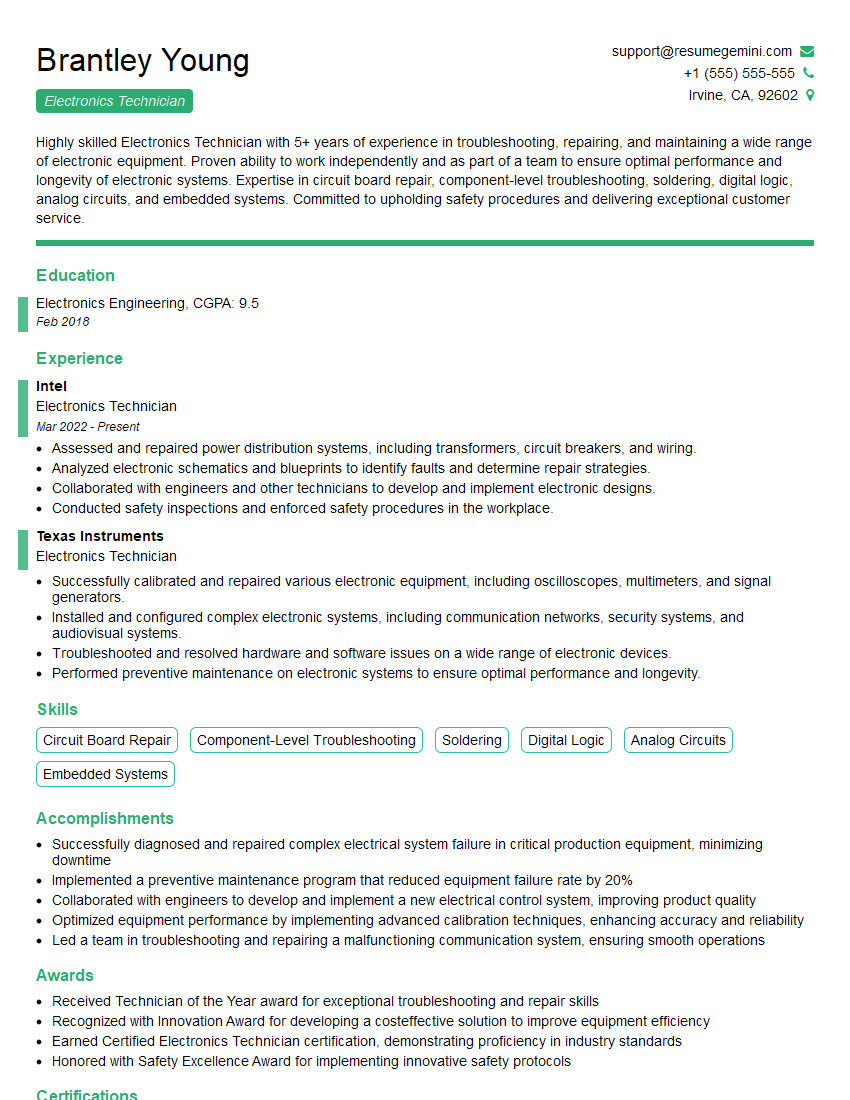
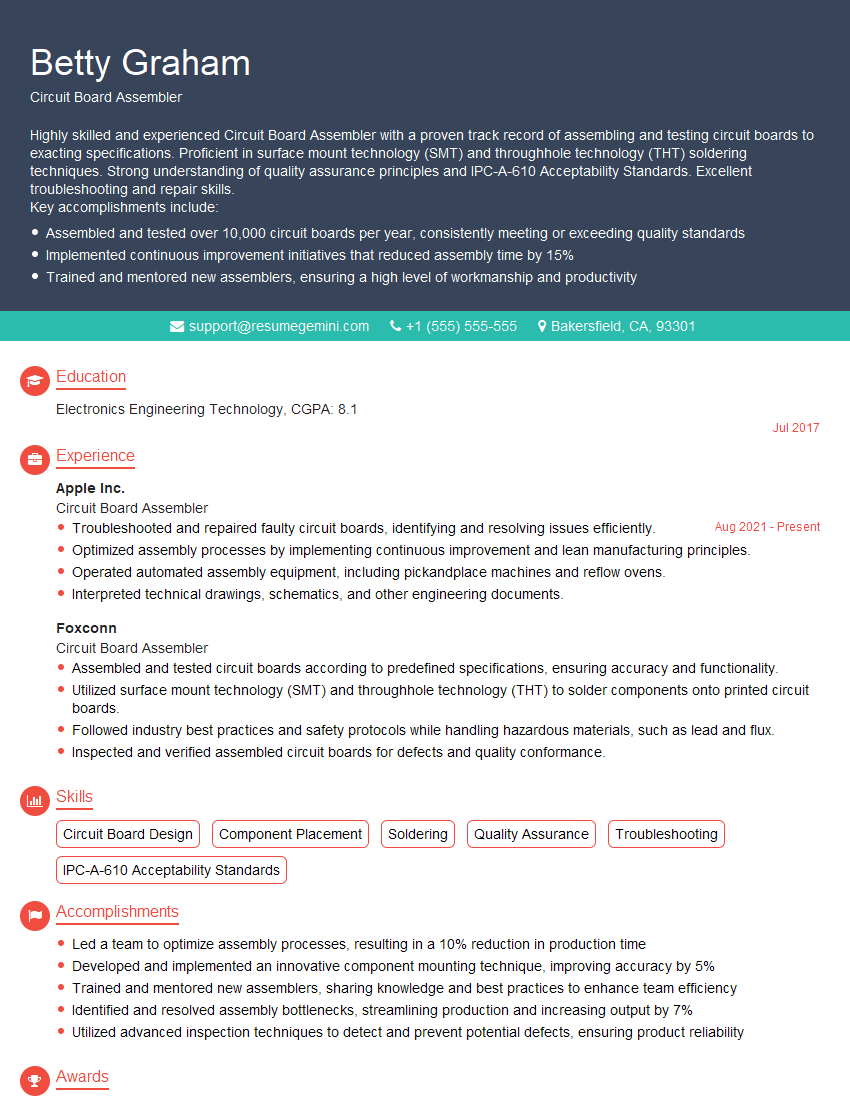
Mastering Printed Circuit Board Fabrication opens doors to exciting career opportunities in a rapidly growing industry. To maximize your job prospects, creating a strong, ATS-friendly resume is essential. ResumeGemini can help you build a professional and impactful resume that highlights your skills and experience effectively. We offer examples of resumes tailored specifically to the Printed Circuit Board Fabrication field to guide you through the process. Invest time in crafting a compelling resume – it’s your first impression on potential employers.
Explore more articles
Users Rating of Our Blogs
Share Your Experience
We value your feedback! Please rate our content and share your thoughts (optional).
What Readers Say About Our Blog
Very informative content, great job.
good