Unlock your full potential by mastering the most common Electrical and Building Codes Compliance interview questions. This blog offers a deep dive into the critical topics, ensuring you’re not only prepared to answer but to excel. With these insights, you’ll approach your interview with clarity and confidence.
Questions Asked in Electrical and Building Codes Compliance Interview
Q 1. Explain the difference between the National Electrical Code (NEC) and the International Building Code (IBC).
The National Electrical Code (NEC) and the International Building Code (IBC) are both crucial for safe and compliant construction, but they focus on different aspects. Think of it like this: the IBC is the overall blueprint for the building, covering everything from structural integrity to fire safety, while the NEC is a specialized section focusing solely on electrical systems’ safety and functionality within that blueprint.
The NEC provides detailed requirements for the design, installation, and inspection of electrical systems. It dictates things like wiring methods, circuit protection, grounding, and equipment installation. It’s a highly technical document aimed at electricians and electrical engineers.
The IBC, on the other hand, is a broader code encompassing various disciplines. It sets minimum standards for structural design, fire protection, plumbing, and electrical systems (among others). While it references the NEC for electrical requirements, the IBC primarily deals with overall building safety and habitability. It’s used by architects, contractors, and building inspectors.
In essence, the IBC sets the overall stage, and the NEC provides the detailed script for the electrical portion of the production. A building needs to comply with both to be legally sound and safe.
Q 2. Describe your experience with NEC Article 210 (Branch Circuits).
NEC Article 210, Branch Circuits, is the heart of residential and commercial electrical systems. My experience with this article is extensive, encompassing design, inspection, and troubleshooting. It covers the crucial aspects of providing power to individual outlets, lighting fixtures, and appliances.
I’ve worked extensively with the requirements for different types of branch circuits, including 15-amp, 20-amp, and 30-amp circuits, understanding their appropriate applications based on load calculations. For instance, a kitchen would typically require 20-amp circuits for appliances like refrigerators and garbage disposals, while lighting circuits might use 15-amp circuits. I’ve encountered numerous scenarios where improper sizing or overloading led to potential hazards, such as overheating and fire.
I’m proficient in calculating load demands according to NEC standards, ensuring each circuit is appropriately protected by the correct circuit breaker or fuse. I have also handled several cases of circuit modifications, ensuring they comply with the latest NEC revisions and maintain the integrity of the entire system. Understanding the nuances of this article is essential for preventing electrical hazards and ensuring safe operation.
Q 3. How do you interpret and apply building codes to construction plans?
Interpreting and applying building codes to construction plans is a systematic process. It begins with a thorough review of the plans, identifying all relevant aspects covered by the codes.
- Identify Applicable Codes: I first determine which codes apply—this might include the IBC, NEC, local amendments, and any specific jurisdiction requirements.
- Cross-Referencing: I cross-reference the plans with the code sections, verifying that each element adheres to the standards. For instance, I’d check if the electrical plan complies with the NEC, or if the structural design meets IBC requirements for load-bearing capacity.
- Calculations and Analysis: For quantitative aspects, like electrical load calculations or structural analysis, I perform the necessary computations to ensure compliance. For example, I would verify that the size of the electrical service and branch circuits is sufficient for the calculated load.
- Flagging Discrepancies: Any discrepancies or non-compliances are carefully documented and communicated to the design team for necessary revisions. I provide detailed explanations and suggested corrections, ensuring a clear path toward code compliance.
- Regular Updates: It’s critical to stay abreast of code changes and updates. New editions of the IBC and NEC are released periodically, and these updates must be integrated into the compliance process.
Essentially, it’s a detailed comparison and analysis process, ensuring the constructed building aligns with all safety and performance standards.
Q 4. What are the common violations you encounter during electrical inspections?
During electrical inspections, I commonly encounter several violations. These often stem from a lack of understanding or shortcuts during installation.
- Improper Grounding and Bonding: This is a significant hazard, potentially leading to electric shock. I frequently find improperly sized grounding wires or missing bonding connections.
- Overloaded Circuits: Circuits overloaded with too many appliances or high-wattage devices create overheating and fire risks. This often involves incorrect calculations or inadequate circuit breakers.
- Improper Wiring Methods: Using incorrect wire types (e.g., using Romex in conduit without proper support) or improper wire terminations can create hazards. Poor workmanship is also a common culprit.
- Lack of GFCI Protection: Missing Ground Fault Circuit Interrupters (GFCIs) in bathrooms, kitchens, and exterior outlets are frequent violations. GFCIs protect against electric shock in wet locations.
- Missing or Inadequate Labeling: Proper labeling of circuits and equipment is essential for maintenance and safety. Lack of clear identification is a common issue.
Addressing these violations ensures the safety and compliance of the electrical system. My approach involves clear documentation, explanation of the hazards, and guidance on appropriate corrective actions.
Q 5. Explain the requirements for grounding and bonding in electrical systems.
Grounding and bonding are crucial for electrical safety. They work together to create a path for fault currents, preventing dangerous voltage buildup and protecting against electric shock. Think of it like this: grounding is the main safety net, while bonding ensures a continuous path for current to flow safely to ground.
Grounding connects non-current-carrying metal parts of an electrical system to the earth. This provides a low-resistance path for fault currents to flow to the ground, preventing dangerous voltages from appearing on exposed metal surfaces. It typically uses a grounding electrode conductor, such as a ground rod driven into the earth.
Bonding connects non-current-carrying metal parts of an electrical system to each other. This ensures that all the metal parts are at the same electrical potential, preventing voltage differences that could cause a shock hazard. It involves connecting metal enclosures, conduits, and other metal components.
The requirements for grounding and bonding are detailed in the NEC. They vary depending on the type of installation and the potential hazards involved. For example, grounding requirements for a service panel are different from those for a lighting fixture. The proper implementation of grounding and bonding is non-negotiable for a safe and compliant electrical installation.
Q 6. Describe your experience with arc flash hazard analysis.
Arc flash hazard analysis is critical for ensuring the safety of electricians and other personnel working near energized electrical equipment. An arc flash is a sudden, high-energy release of electrical energy that can cause severe burns, blindness, and even death.
My experience includes performing arc flash studies using specialized software to calculate the potential arc flash hazards at various locations in an electrical system. These studies involve analyzing the system’s short-circuit currents, available fault current, and other factors to determine the incident energy levels. The results are then used to create arc flash labels that indicate the appropriate personal protective equipment (PPE) required for working on specific equipment.
Beyond the calculations, I’m also involved in reviewing existing electrical systems and recommending improvements to mitigate arc flash hazards. This might include implementing arc flash reduction measures such as improved grounding, better circuit protection, and the use of arc flash-resistant equipment. A thorough arc flash hazard analysis and implementation of preventative measures are essential for protecting workers and maintaining a safe working environment.
Q 7. How do you ensure compliance with OSHA regulations during inspections?
Ensuring compliance with OSHA regulations during inspections is paramount. OSHA sets standards for workplace safety, including electrical safety. My inspections always incorporate an OSHA compliance review.
This involves assessing several key areas:
- Lockout/Tagout Procedures: I verify that proper lockout/tagout procedures are in place and followed to prevent accidental energization of equipment during maintenance or repairs. This is crucial for preventing injuries.
- Personal Protective Equipment (PPE): I check that appropriate PPE, such as insulated gloves, arc flash suits (as determined by arc flash analysis), and safety glasses, is being used and is in good condition.
- Safe Work Practices: I assess the overall safety of work practices, ensuring that workers are following proper procedures and are aware of the potential hazards involved. This includes proper use of ladders, tools, and equipment.
- Emergency Response Plan: I review the facility’s emergency response plan, ensuring there are clear procedures in place for dealing with electrical emergencies and accidents.
- Training and Documentation: I verify that workers have received adequate training on electrical safety and that proper documentation of training is maintained.
By integrating OSHA compliance into my electrical inspections, I can identify and address potential hazards, ultimately contributing to a safer and more compliant work environment.
Q 8. What are the key differences between a 120/240V system and a 277/480V system?
The primary difference between a 120/240V system and a 277/480V system lies in their voltage levels and intended applications. A 120/240V system is the standard for residential and smaller commercial buildings in North America. It provides 120V for lighting and smaller appliances and 240V for larger appliances like ovens and air conditioners. This is a single-phase system, meaning it uses only one phase of the power supply.
Conversely, a 277/480V system is typically used in larger commercial and industrial buildings. It offers 277V for lighting and 480V for power equipment. This is a three-phase system, providing more power and greater efficiency for higher-load applications. Think of it like this: a 120/240V system is like a single lane road suitable for everyday traffic, whereas a 277/480V system is a multi-lane highway designed for heavy-duty transportation. The higher voltage in the 277/480V system allows for smaller wire gauges to carry the same amount of power, reducing material costs and improving efficiency. However, the higher voltage also presents increased safety concerns, requiring specialized training and equipment for work on this system.
Q 9. How do you handle disagreements with contractors regarding code compliance?
Disagreements with contractors regarding code compliance are handled professionally and systematically. My first step is always to calmly review the relevant code sections with the contractor, pointing out specific violations and explaining the potential safety hazards. I utilize clear and concise communication, referring to the specific code sections (e.g., NEC 210.12 for branch circuit calculations, IBC 903 for fire protection) to support my assertions. If a collaborative solution can’t be reached, I document everything: the discrepancies, the attempted resolutions, and the contractor’s responses. This documentation is crucial. I may then escalate the matter to the project’s supervisor or the authority having jurisdiction (AHJ), such as a building inspector, providing them with the comprehensive documentation. If the situation remains unresolved, mediation or legal action might be necessary, but this is always a last resort.
Q 10. Explain your understanding of electrical load calculations.
Electrical load calculations are crucial for ensuring a building’s electrical system is adequately sized to handle the anticipated demand. It’s a systematic process involving identifying all electrical loads (lighting, appliances, HVAC equipment, etc.), determining their individual power requirements (in watts or kilowatts), and calculating the total demand. I use established methods, such as the NEC Article 220, which provides detailed procedures for calculating the service load, feeder load, and branch circuit load. This includes considering demand factors to account for the fact that not all loads operate simultaneously. For example, not every light in a building will be on at the same time. These demand factors reduce the calculated load, making the system more cost-effective. The calculations involve understanding different load types (continuous, non-continuous, etc.), voltage levels, and power factors. A properly conducted load calculation ensures that the electrical system is appropriately sized, avoiding overloads and potential hazards, as well as preventing the need for costly upgrades down the line. I always document my load calculations meticulously, including the assumptions made and references to the applicable codes.
Q 11. Describe your experience with fire alarm system inspections.
My fire alarm system inspection experience encompasses both new installations and existing systems. I perform thorough inspections, verifying the system’s compliance with NFPA 72 (National Fire Alarm Code). This involves checking the system’s components—smoke detectors, heat detectors, manual pull stations, control panels, and annunciators—to confirm their proper installation and functionality. I test the system’s operation by activating various detectors and observing the response at the control panel. Documentation is paramount: I produce detailed reports noting any deficiencies, including missing or malfunctioning devices, wiring issues, or inadequate signage. I always strive for a collaborative approach, working with installers or building managers to address the noted deficiencies and ensure the system is fully compliant and provides the necessary level of safety. I’ve handled inspections in various building types, from high-rise buildings to smaller commercial spaces, adapting my approach to the specific requirements and complexities of each setting. The goal is always the same: a fully functional and code-compliant fire alarm system that protects lives and property.
Q 12. What are the requirements for installing electrical equipment in hazardous locations?
Installing electrical equipment in hazardous locations requires strict adherence to NEC Article 500 and its sub-articles. These articles specify the types of equipment and installation methods permissible in various hazardous locations, classified by the presence of flammable gases, dusts, or fibers. The classifications (Class I, II, III, Divisions 1 and 2) indicate the severity of the hazard. For example, Class I, Division 1 locations are areas where flammable gases or vapors are continuously present, necessitating explosion-proof equipment with special seals and features to prevent ignition. Class II, Division 2 locations might have dusts present but with less frequency, permitting less stringent requirements. The installation methods also differ, including special wiring techniques, sealing methods, and the use of intrinsically safe equipment which limits energy levels to prevent ignition. Each hazardous location requires careful assessment to determine the appropriate classification and then selection of equipment and installation methods compliant with the NEC to ensure a safe working environment.
Q 13. How familiar are you with the latest updates to the NEC and IBC?
I actively maintain awareness of the latest updates to both the National Electrical Code (NEC) and the International Building Code (IBC). I regularly review the latest editions, focusing on changes in relevant sections. This includes attending industry seminars and workshops, subscribing to industry publications, and utilizing online resources. I’m particularly familiar with recent amendments concerning arc flash hazard mitigation, updated requirements for renewable energy integration, and changes in energy efficiency standards. Staying updated on these code changes is not just a matter of compliance but also a way to enhance the safety and efficiency of electrical systems, while ensuring projects meet both current and future standards. I always ensure that my work reflects the most current codes and best practices.
Q 14. Describe your experience with permit review and issuance processes.
My experience with permit review and issuance processes involves a thorough review of submitted plans to ensure compliance with all applicable building and electrical codes. This includes checking load calculations, equipment specifications, wiring diagrams, and overall system design. I identify any discrepancies or code violations and communicate these to the applicant, working collaboratively to resolve them. I’m proficient in using electronic plan review software and understand the necessary documentation requirements. Once all compliance issues are addressed, I issue the necessary permits, ensuring a smooth and efficient process. I’ve handled a significant volume of permit applications, ranging from small residential renovations to large-scale commercial projects. The process always emphasizes safety, code compliance, and a transparent workflow to foster a positive relationship with contractors and developers. My focus is always on expediting the process while ensuring that all projects meet the necessary safety and compliance standards.
Q 15. Explain the importance of proper documentation during inspections.
Proper documentation during inspections is paramount for several reasons. It serves as a verifiable record of the inspection process, ensuring accountability and transparency. This documentation protects both the inspector and the client. Think of it like a detailed map of the electrical and building systems.
- Legal Protection: Detailed reports prevent disputes and provide evidence in case of legal challenges regarding code compliance. If a problem arises later, the documentation serves as proof of the condition at the time of inspection.
- Historical Record: Comprehensive records offer a valuable history of the building’s electrical and structural integrity, aiding in future maintenance and renovations. It’s like keeping a maintenance log for your car, but for a building.
- Quality Assurance: Thorough documentation allows for better tracking of identified issues and their resolution. It ensures that necessary repairs are completed correctly and to code.
- Improved Communication: Clear and concise documentation facilitates seamless communication between the inspector, contractor, and building owner. Everyone is on the same page regarding the state of the building.
For example, clear photographs of wiring configurations, along with detailed notes on observed defects, are essential components of a well-maintained inspection record.
Career Expert Tips:
- Ace those interviews! Prepare effectively by reviewing the Top 50 Most Common Interview Questions on ResumeGemini.
- Navigate your job search with confidence! Explore a wide range of Career Tips on ResumeGemini. Learn about common challenges and recommendations to overcome them.
- Craft the perfect resume! Master the Art of Resume Writing with ResumeGemini’s guide. Showcase your unique qualifications and achievements effectively.
- Don’t miss out on holiday savings! Build your dream resume with ResumeGemini’s ATS optimized templates.
Q 16. How do you prioritize inspection tasks when faced with multiple projects?
Prioritizing inspection tasks involves a strategic approach that balances urgency, risk, and project size. I typically employ a system that prioritizes inspections based on several factors:
- Imminent Hazards: Inspections addressing immediate safety concerns, such as faulty wiring causing fire risks, take precedence. These are the most urgent matters, requiring immediate attention.
- Project Deadlines: Inspections with approaching deadlines, especially those impacting project completion, are given high priority to avoid delays and potential penalties.
- Project Complexity: More complex projects that require extensive testing and documentation might demand more time, influencing their position in the queue.
- Client Urgency: While all clients are important, some projects might involve clients with stricter timeframes or higher levels of urgency, warranting adjustments in the schedule.
I utilize project management software to help me track deadlines, assign priorities, and allocate resources efficiently. This ensures that inspections are conducted systematically and effectively, without sacrificing the quality of the work.
Q 17. Describe your experience with using electrical testing equipment.
I have extensive experience with various electrical testing equipment, including multimeters, clamp meters, insulation resistance testers (meggers), ground resistance testers, and circuit testers. I’m proficient in using these tools to perform a wide range of tests, such as:
- Voltage and Current Measurements: Using multimeters and clamp meters to verify voltage levels and current draw in circuits.
- Grounding System Testing: Employing ground resistance testers to assess the effectiveness of grounding systems and ensure proper safety.
- Insulation Resistance Testing: Using meggers to check for insulation breakdown in wiring and equipment, identifying potential short circuits and safety hazards.
- Circuit Continuity Testing: Utilizing circuit testers to verify the continuity of circuits and identify any breaks or interruptions.
I understand the importance of proper calibration and maintenance of testing equipment to ensure accurate and reliable results. For example, I regularly check the calibration of my megger to ensure its readings are within acceptable tolerances. Incorrect readings could lead to serious safety issues.
Q 18. How do you stay current with changes in electrical and building codes?
Staying current with changes in electrical and building codes is a continuous process that demands dedication and proactive measures. I employ several strategies to ensure my knowledge remains up-to-date:
- Professional Development Courses: I regularly participate in continuing education courses and workshops focused on the latest code updates and best practices.
- Code Subscription Services: I subscribe to online resources and publications that provide timely updates on code changes and interpretations. This gives me easy access to the latest information.
- Industry Associations: Active participation in relevant industry associations and professional organizations keeps me informed about current trends and code revisions. Networking with other professionals helps me expand my knowledge base.
- Online Resources and Publications: I regularly monitor relevant websites, journals, and online forums to keep abreast of the latest developments in electrical and building codes.
Keeping up-to-date ensures compliance, safety, and a high-quality inspection process.
Q 19. Explain your understanding of accessibility requirements for electrical systems.
Accessibility requirements for electrical systems are crucial for ensuring that buildings are usable by people with disabilities. These requirements primarily focus on providing safe and convenient access to electrical controls and avoiding hazards that might impede accessibility. Key aspects include:
- Accessible Receptacle Locations: Receptacles must be located at accessible heights and readily available for wheelchair users. This often necessitates additional outlets in accessible spaces.
- Accessible Switch Locations: Light switches and other electrical controls should be placed within easy reach for individuals with disabilities, often at lower heights than standard locations.
- Clearance Around Electrical Equipment: Adequate clearance must be maintained around electrical panels, equipment, and wiring to provide sufficient maneuvering space for wheelchairs and other assistive devices.
- Visual and Tactile Identification: Electrical controls should be easily identifiable through visual cues (clear labeling) and tactile cues (raised markings) for people with visual impairments.
- Accessible Alarms and Signaling Systems: Visual and audible alarms should be provided to ensure that people with various disabilities receive timely warnings of potential hazards.
Understanding and applying these requirements is vital for creating inclusive and safe environments for everyone.
Q 20. Describe a time you had to resolve a complex code compliance issue.
I once encountered a complex code compliance issue involving a historical building undergoing renovation. The original wiring was outdated and did not meet current code requirements. However, replacing the entire system would have been extremely costly and potentially damaging to the building’s historical integrity.
My solution involved a phased approach: I worked with the contractor and the building owner to identify the most critical safety hazards, prioritizing those needing immediate attention. We then devised a plan that incorporated upgrades where necessary while preserving the historical aspects of the building’s electrical system. This required careful negotiation and collaboration, but we successfully achieved compliance without compromising the building’s heritage.
This experience highlighted the importance of understanding not only codes but also the practical constraints and potential alternatives for achieving compliance in unique situations. Flexibility and communication are key in such cases.
Q 21. How would you handle a situation where a contractor refuses to comply with code requirements?
Handling a situation where a contractor refuses to comply with code requirements involves a multi-step approach emphasizing clear communication and escalation.
- Documentation: First, meticulously document the non-compliance, including photographic evidence, specific code violations, and attempts at communication with the contractor. This detailed record serves as evidence in subsequent steps.
- Formal Communication: Send a formal written notification to the contractor, clearly stating the code violations and requesting immediate corrective action. Maintain a copy of this notification for your records.
- Escalation: If the contractor remains unresponsive, escalate the issue to the building owner or the relevant regulatory authority. Depending on the jurisdiction and the severity of the violation, this could involve reporting the contractor to the licensing board or other appropriate agencies.
- Legal Action (If Necessary): In serious cases of non-compliance that pose significant safety risks, legal action might be necessary to compel the contractor to comply. This would be a last resort.
It is essential to maintain professionalism throughout the process while firmly upholding code requirements. The safety of the building occupants is paramount.
Q 22. What is your experience with energy code compliance?
My experience with energy code compliance spans over 10 years, encompassing various roles from field inspections to code development review. I’ve worked extensively with codes like ASHRAE 90.1 and IECC, ensuring projects meet energy efficiency targets. This includes verifying insulation levels, HVAC system efficiency, lighting power densities, and the proper implementation of renewable energy technologies. For example, I recently oversaw a project where we identified a significant energy savings opportunity by recommending a more efficient heat pump system, resulting in a 30% reduction in projected energy consumption compared to the original design.
I’m proficient in using energy modeling software to analyze building performance and identify areas for improvement. I also have experience in commissioning projects to verify that energy-efficient systems are functioning as designed. This ensures that not only are codes met, but also that the buildings are performing optimally and delivering the intended energy savings.
Q 23. Explain the importance of life safety systems in building codes.
Life safety systems are paramount in building codes because they protect human life and property in case of emergencies. These systems, mandated by codes like NFPA and IBC, are crucial for early detection and response to fires, evacuations, and other hazards. Think of them as the building’s emergency response team.
The importance is multi-faceted:
- Fire Protection: Sprinkler systems, fire alarms, smoke detectors, and fire-rated construction materials all work together to contain and mitigate fires, allowing occupants to safely evacuate.
- Emergency Egress: Properly designed exits, illuminated pathways, and clear signage ensure efficient and safe evacuation routes. This includes considering things like the number of exits needed based on occupancy, their accessibility to people with disabilities, and ensuring they’re free from obstruction.
- Other Life Safety Systems: This encompasses things like emergency lighting, security systems, and even accessibility features which can greatly assist in emergencies.
Failure to comply with life safety codes can result in significant penalties, project delays, and, most critically, loss of life. Regular inspections and maintenance are crucial to ensure these systems remain effective.
Q 24. How do you balance efficiency and thoroughness during inspections?
Balancing efficiency and thoroughness during inspections requires a strategic approach. While speed is important, cutting corners compromises safety and code compliance. I utilize a risk-based inspection methodology. This means prioritizing critical areas posing higher safety risks first, and then allocating time accordingly to less critical aspects.
For example, I’ll begin by verifying the integrity of life safety systems (fire alarms, emergency exits) before moving on to aspects like electrical wiring or plumbing. I use checklists and inspection forms to systematically document my findings, ensuring nothing is missed. Furthermore, using technology like thermal imaging cameras allows for faster identification of potential electrical issues or insulation deficiencies, improving efficiency without sacrificing accuracy.
Detailed photographic documentation of findings supports my assessment and provides evidence for any identified code violations. This also aids in clear communication with contractors and building owners.
Q 25. What is your understanding of the process for appealing a code violation?
The process for appealing a code violation typically involves a formal appeal to the relevant authority, usually a building department. This generally begins with a written appeal outlining the reasons for disagreement with the violation notice. The appeal should provide supporting documentation, evidence, and arguments that justify the challenge.
The process might involve multiple steps:
- Submit a formal appeal: This is usually done within a specified timeframe after receiving the violation notice.
- Provide evidence: Support your claims with documentation like engineering calculations, manufacturer’s specifications, or alternative code interpretations.
- Attend a hearing: You might be required to present your case before a review board or appeals committee.
- Negotiation or mediation: In some cases, negotiation or mediation between the involved parties can lead to a resolution.
Understanding the specific regulations and procedures of the governing jurisdiction is crucial. Each jurisdiction has its own unique appeal process, making it essential to review relevant local ordinances and guidelines.
Q 26. Describe your experience with working with different types of building materials and their impact on electrical systems.
My experience encompasses working with diverse building materials, from traditional wood framing to modern steel structures, and understanding their impact on electrical systems is crucial. For instance, the presence of moisture-laden materials like concrete can significantly impact the performance and lifespan of electrical components. Steel framing, while strong, requires careful consideration for grounding and bonding practices to prevent stray currents and electromagnetic interference.
Specific examples:
- Wood Framing: Requires appropriate cable routing and protection to prevent damage and potential fire hazards.
- Metal Framing: necessitates careful grounding and bonding to prevent stray current and electromagnetic interference.
- Concrete: Presents challenges due to its moisture content, demanding careful selection of conduit and other electrical components to prevent corrosion.
Material compatibility is a major concern. Incorrect material selection can lead to premature failure of electrical systems, increased maintenance costs, and even safety hazards. Understanding thermal expansion and contraction of different materials is also critical when designing and installing electrical systems to prevent damage.
Q 27. How would you explain complex code requirements to a non-technical person?
Explaining complex code requirements to a non-technical person requires clear, concise communication, avoiding jargon. I use analogies and real-world examples to illustrate the concepts.
For example, instead of saying “The building must meet Section R311.1 of the IRC regarding fire resistance,” I might explain: “Imagine your house is a fortress protecting you from fire. This code sets the minimum strength of the walls (fire-resistant materials) to ensure the fortress can withstand a fire for a certain amount of time, allowing you to safely escape.”
Visual aids like diagrams or simplified flowcharts can also be incredibly helpful in conveying complex information. I make sure to listen actively to ensure understanding, answering questions clearly and patiently. The goal is to enable informed decision-making, not just compliance.
Q 28. What is your approach to continuous improvement in code compliance enforcement?
Continuous improvement in code compliance enforcement is an ongoing process. My approach involves several key aspects:
- Staying updated: I regularly review updated code editions and participate in continuing education programs to stay abreast of the latest changes in codes and best practices.
- Technology adoption: Employing advanced technologies like thermal imaging cameras, drone inspections, and software for code analysis improves efficiency and accuracy of inspections.
- Data analysis: Analyzing inspection data to identify trends in code violations helps to proactively address recurring issues and focus resources where they are most needed.
- Collaboration: Working closely with contractors, building officials, and other stakeholders facilitates better communication and fosters a culture of compliance.
- Feedback mechanisms: Implementing systems for feedback from inspectors and stakeholders helps identify areas for improvement in the enforcement process itself.
Ultimately, continuous improvement is about striving for a safer and more efficient built environment through a data-driven, collaborative, and forward-thinking approach.
Key Topics to Learn for Electrical and Building Codes Compliance Interview
- National Electrical Code (NEC) Understanding: Thorough knowledge of NEC articles relevant to residential, commercial, and industrial applications. This includes understanding the code’s structure, referencing methods, and interpreting requirements.
- Building Codes Integration: How electrical codes interact with broader building codes (e.g., IBC, IFC). Understanding requirements for fire safety, accessibility, and energy efficiency as they relate to electrical systems.
- Plan Review and Inspection Procedures: Familiarity with the process of reviewing electrical plans for compliance, conducting on-site inspections, and identifying code violations. This includes understanding the documentation process and reporting requirements.
- Electrical Calculations and Design: Ability to perform basic electrical calculations (e.g., voltage drop, load calculations) and understand the design considerations for safe and efficient electrical systems. This includes understanding different grounding and bonding techniques.
- Safety Regulations and Practices: Deep understanding of relevant safety regulations and best practices for working with electrical systems. This includes lockout/tagout procedures, personal protective equipment (PPE) requirements, and hazard recognition.
- Emerging Technologies and Trends: Awareness of new technologies and trends in electrical systems and building codes, such as renewable energy integration, smart building technologies, and evolving code requirements.
- Problem-Solving and Critical Thinking: Ability to analyze complex situations, identify potential code violations, and propose practical solutions that ensure compliance and safety.
Next Steps
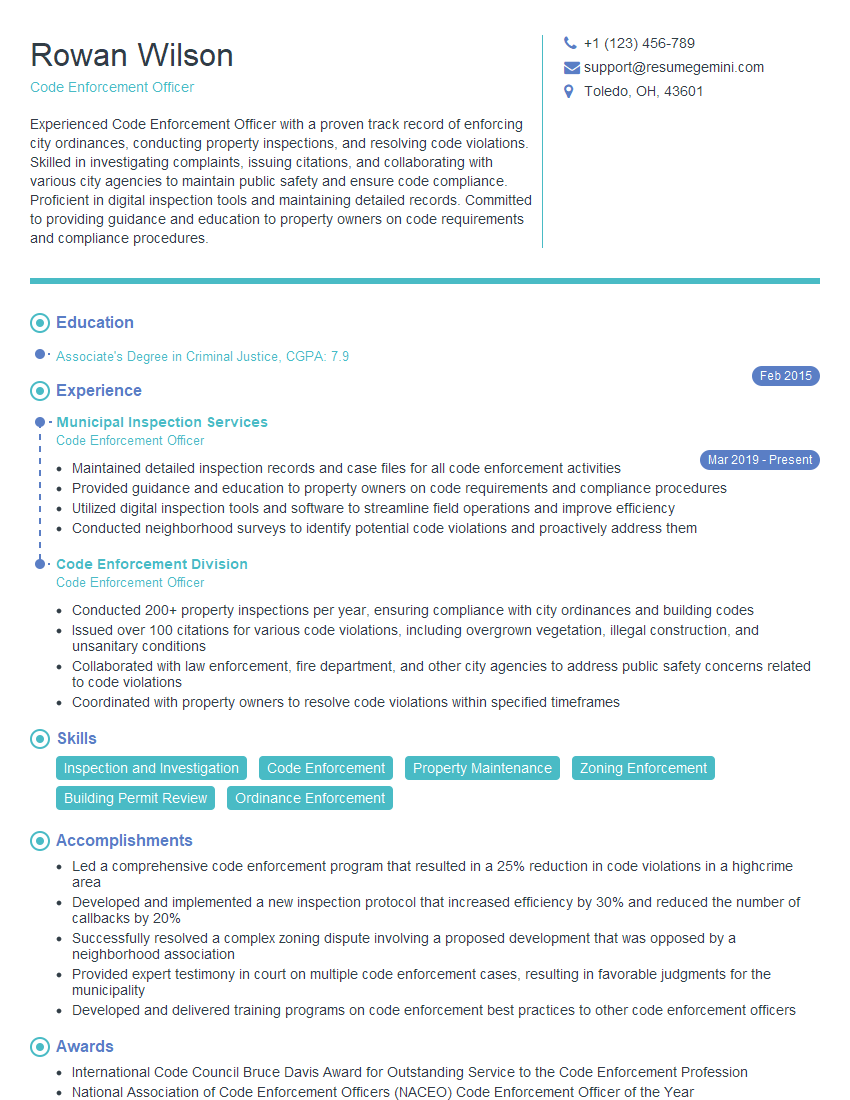
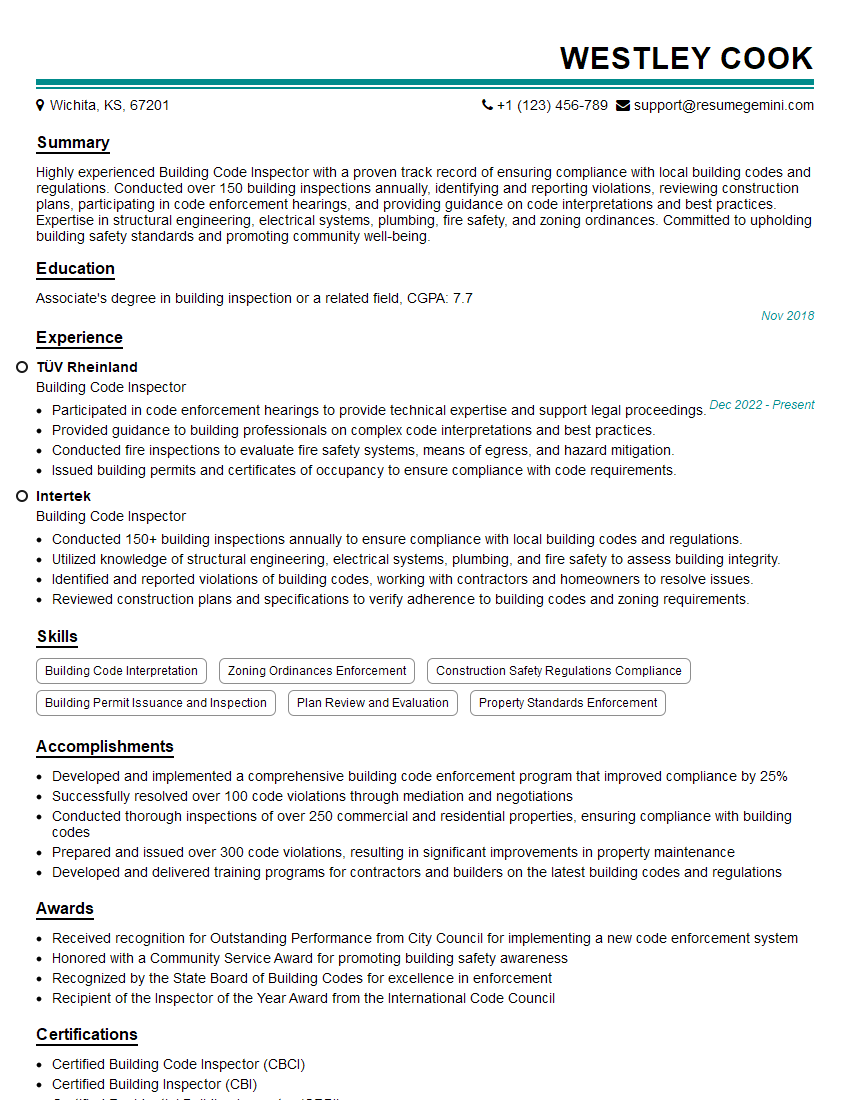
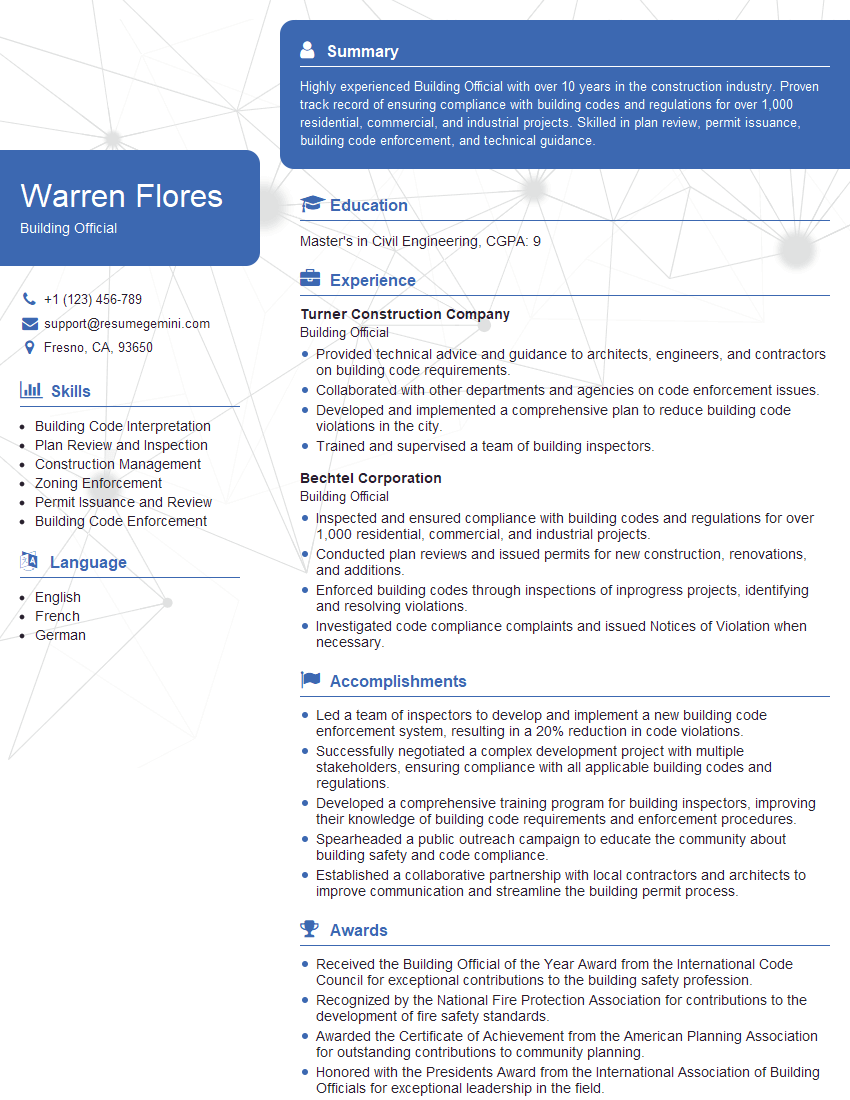
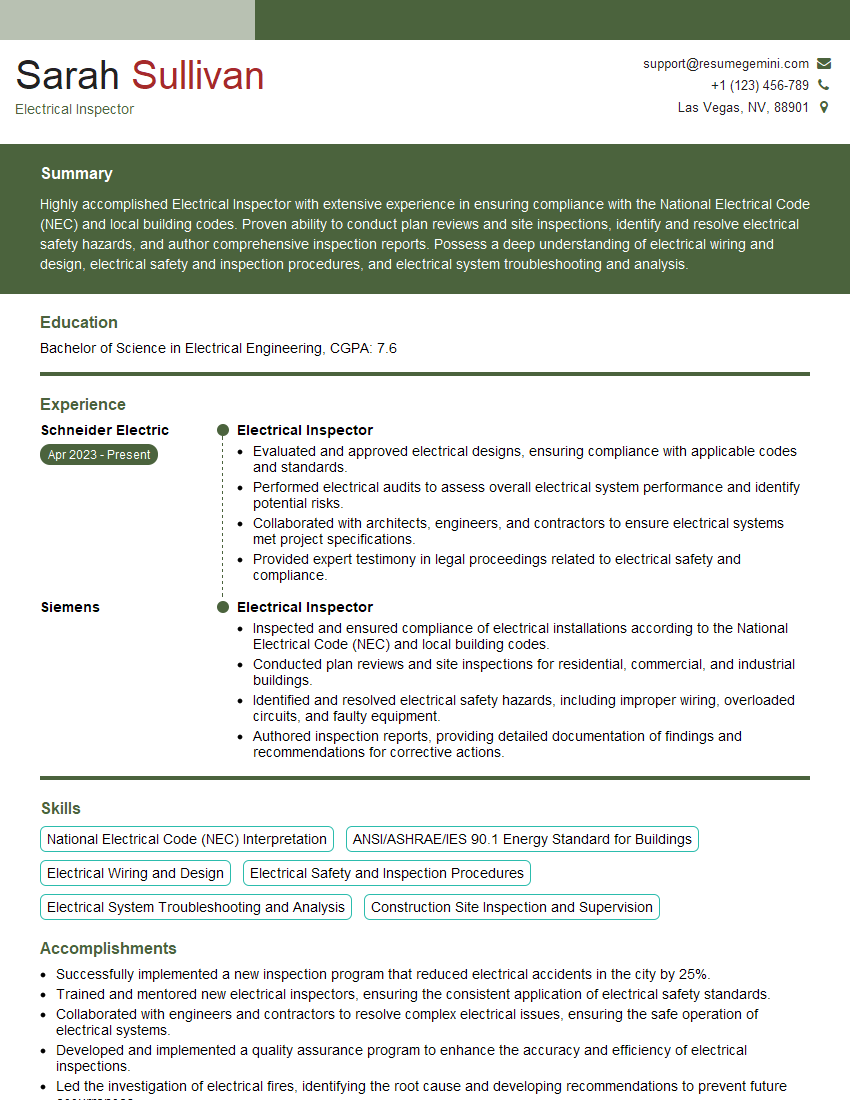
Mastering Electrical and Building Codes Compliance is crucial for career advancement in this vital field. It opens doors to specialized roles, higher salaries, and increased responsibility. To maximize your job prospects, creating an ATS-friendly resume is essential. This ensures your application gets noticed by recruiters and hiring managers. We highly recommend using ResumeGemini to build a powerful, professional resume that highlights your skills and experience effectively. ResumeGemini provides examples of resumes tailored to Electrical and Building Codes Compliance, giving you a head start in crafting your application materials. Invest in presenting yourself professionally – your success depends on it.
Explore more articles
Users Rating of Our Blogs
Share Your Experience
We value your feedback! Please rate our content and share your thoughts (optional).
What Readers Say About Our Blog
Very informative content, great job.
good