Interviews are opportunities to demonstrate your expertise, and this guide is here to help you shine. Explore the essential LastIn, FirstOut (LIFO) Management interview questions that employers frequently ask, paired with strategies for crafting responses that set you apart from the competition.
Questions Asked in LastIn, FirstOut (LIFO) Management Interview
Q 1. Explain the Last-In, First-Out (LIFO) inventory method.
Last-In, First-Out (LIFO) is an inventory accounting method where the most recently acquired items are assumed to be the first ones sold. Imagine a stack of pancakes; the last pancake you put on the stack is the first one you eat. This method directly impacts how the cost of goods sold (COGS) is calculated, as the cost of the most recent purchases is used first.
For example, if you purchased 10 units at $10 each and later 5 units at $12 each, under LIFO, if you sell 8 units, the cost of goods sold would be calculated using the cost of the 5 units at $12 and 3 units at $10, resulting in a COGS of ($12*5) + ($10*3) = $90.
Q 2. How does LIFO differ from FIFO (First-In, First-Out)?
The key difference between LIFO and FIFO lies in the order of cost assignment. LIFO assumes the last items purchased are the first items sold, while FIFO assumes the first items purchased are the first items sold. This seemingly small difference has significant implications for financial reporting, particularly concerning COGS and net income, as demonstrated in the previous example. Think of a queue at a coffee shop. FIFO is like a regular line where the first person in line gets served first. LIFO is like serving the last person in line first, which is unusual for a coffee shop but makes sense in some inventory contexts.
Q 3. What are the advantages of using LIFO for inventory management?
One major advantage of LIFO is that it can help reduce tax liability during periods of inflation. Because it uses the most recent, often higher, costs for COGS calculation, it leads to a higher COGS expense. This, in turn, reduces reported net income and therefore, the amount of taxes owed. This is a significant benefit in times of rising prices. Another advantage is its alignment with the actual flow of goods in certain industries like perishable goods, where the oldest items are indeed often sold first. However, this is less common than other scenarios.
Q 4. What are the disadvantages of using LIFO for inventory management?
LIFO has several disadvantages. Firstly, it can lead to a mismatch between the reported COGS and the actual physical flow of goods, especially if there isn’t a high turnover rate. Secondly, the inventory value reported on the balance sheet might be significantly understated, particularly during inflation, as older, lower-cost items are shown while the current market value is often higher. Finally, LIFO isn’t permitted under International Financial Reporting Standards (IFRS) and is only allowed in certain jurisdictions, which limits its broader application globally.
Q 5. When is LIFO most appropriate to use?
LIFO is most appropriate in situations where: 1) The company operates in an inflationary environment and wants to minimize its tax burden. 2) The physical flow of goods aligns with the LIFO assumption. This is particularly applicable to industries with highly perishable goods or fast-moving consumables. 3) The company prioritizes matching COGS to the current market prices.
However, it’s crucial to carefully weigh the advantages and disadvantages before implementing LIFO and consider its impact on the company’s financial statements and tax obligations.
Q 6. Describe a situation where you had to implement or manage a LIFO system.
In my previous role at a food manufacturing company, we utilized a modified LIFO system for managing our raw ingredients. Since many of our ingredients had short shelf lives, we needed a system that reflected the actual flow of goods, ensuring that older items were used first to minimize waste. We implemented a computerized inventory management system that tracked each batch of ingredients, assigned cost based on the purchase order, and automatically calculated COGS using a weighted-average LIFO method. This hybrid approach allowed us to maintain accurate cost accounting while adhering to the core principles of LIFO.
Q 7. How does LIFO impact the cost of goods sold?
LIFO significantly impacts the cost of goods sold (COGS). By assigning the cost of the most recently purchased items to COGS, it directly affects the reported net income. During periods of inflation, LIFO results in a higher COGS, leading to lower reported profits and a reduced tax liability. Conversely, in deflationary periods, LIFO would result in a lower COGS and consequently, higher reported profits. This fluctuation makes LIFO less predictable than FIFO for financial planning.
Q 8. How does LIFO impact net income?
LIFO, or Last-In, First-Out, assumes that the most recently acquired inventory items are the first ones sold. This directly impacts net income because during periods of inflation (rising prices), the cost of goods sold (COGS) will reflect the higher, more recent prices. This leads to a lower net income compared to other inventory costing methods like FIFO (First-In, First-Out) because higher COGS reduces revenue. Conversely, during deflation (falling prices), LIFO results in a higher net income. Imagine a bakery: under LIFO, the cost of the most recently baked loaves is used to calculate the cost of goods sold for those loaves sold first. If flour prices went up, your COGS will be higher under LIFO, resulting in lower profits that period.
Example: Let’s say a company buys 10 units at $10 each and then 10 units at $12 each. If they sell 15 units, under LIFO, COGS would be (10 units * $12) + (5 units * $10) = $170. If using FIFO, COGS would be (10 units * $10) + (5 units * $12) = $160. This $10 difference directly impacts net income.
Q 9. How does LIFO affect the balance sheet?
LIFO’s impact on the balance sheet primarily affects the inventory and cost of goods sold accounts. Because LIFO uses the most recent costs for COGS, the value of the ending inventory reported on the balance sheet represents the older, potentially lower-cost inventory. This can result in a lower inventory valuation on the balance sheet than under FIFO, especially during inflationary periods. This lower inventory value can also impact the calculation of working capital (current assets minus current liabilities).
Example: Using the previous example, under LIFO, the ending inventory would be valued at 5 units * $10 = $50. Under FIFO, the ending inventory would be valued at 5 units * $12 = $60. This difference is directly reflected on the balance sheet.
Q 10. How does LIFO affect tax liability?
LIFO significantly impacts tax liability, particularly in inflationary environments. Since LIFO leads to higher COGS, it results in lower reported net income. Because a lower net income means lower taxable income, this translates into a lower tax liability. This is a major advantage of using LIFO during inflationary periods, although its use is restricted or less common in some countries.
Example: If a company’s taxable income is $100,000 under FIFO and $80,000 under LIFO, and the tax rate is 25%, the tax liability would be $25,000 under FIFO and $20,000 under LIFO, resulting in a $5,000 tax savings under LIFO.
Q 11. Explain how LIFO reserve is calculated.
The LIFO reserve is the difference between the value of inventory under LIFO and the value of inventory under FIFO. It represents the cumulative effect of using LIFO instead of FIFO. It’s calculated by comparing the ending inventory value under LIFO to what that same inventory’s value would be under FIFO. Essentially, it quantifies how much lower the inventory value is under LIFO compared to FIFO.
Calculation: LIFO Reserve = FIFO Inventory Value – LIFO Inventory Value
Example: If the ending inventory value under FIFO is $10,000 and under LIFO is $8,000, the LIFO reserve is $2,000. This $2000 represents the cumulative difference in the inventory valuation due to using LIFO over the years.
Q 12. How do you handle inventory obsolescence under LIFO?
Handling inventory obsolescence under LIFO requires careful consideration. Since LIFO assumes the most recently purchased items are sold first, obsolete inventory tends to be reflected in the ending inventory valuation, not the COGS. Companies need to write down obsolete inventory to its net realizable value (NRV), which is the estimated selling price less any disposal costs. This write-down directly reduces the value of inventory on the balance sheet and impacts net income. Proper identification and valuation of obsolete items is crucial for accurate financial reporting under LIFO.
Example: If a company has obsolete inventory valued at $5,000 under LIFO, but its NRV is only $3,000, a $2,000 write-down would be necessary. This write-down would be reflected as a loss on the income statement.
Q 13. How do you reconcile physical inventory counts with LIFO records?
Reconciling physical inventory counts with LIFO records requires a systematic approach. First, perform a physical inventory count to determine the actual quantity of each item on hand. Then, this count needs to be valued using the LIFO method. This involves identifying the cost of the oldest items to match with the physical count of inventory, as LIFO assumes these are the ones remaining. Any discrepancies between the physical count and the LIFO records should be investigated to identify the causes (e.g., theft, errors in recording inventory, damage). A detailed reconciliation report should be created, documenting any adjustments made. This ensures that the financial statements accurately represent the inventory position.
Example: If a physical count shows 100 units, but LIFO records show 110, an investigation is needed to determine the missing 10 units.
Q 14. How does LIFO affect inventory valuation?
Under LIFO, inventory is valued using the cost of the most recently acquired items. This means that the inventory valuation on the balance sheet reflects the cost of the oldest inventory items remaining. In periods of inflation, this valuation can be significantly lower than the replacement cost of those items, while in deflation, it could be higher than replacement cost. It’s important to remember that the LIFO valuation doesn’t necessarily reflect the current market value of the inventory.
Example: If a company has older inventory purchased at $5 per unit and newer inventory at $10 per unit and uses LIFO, the ending inventory value will reflect the older, $5 cost even though the current replacement cost is $10.
Q 15. What are some challenges associated with implementing LIFO?
Implementing LIFO (Last-In, First-Out) inventory management presents several challenges. One major hurdle is the complexity of tracking inventory costs. Unlike FIFO (First-In, First-Out), where the oldest items are sold first, LIFO requires meticulous record-keeping to identify the cost of the most recently acquired goods. This can be particularly taxing for businesses with a large and diverse inventory.
Another challenge arises from the potential for discrepancies between the LIFO cost flow assumption and the physical movement of goods. In reality, inventory might not always be sold in the exact LIFO order, leading to differences between book inventory and actual physical inventory. This requires careful reconciliation processes. Finally, LIFO can be affected by fluctuating prices. In times of inflation, LIFO can result in lower net income and higher tax liabilities because the cost of goods sold is higher – as the most recently purchased (and expensive) items are expensed first. This is a key point to remember, and something to account for during financial planning and reporting.
- Complexity of cost tracking: Requires detailed records of each item’s purchase cost and date.
- Discrepancy between LIFO assumption and physical flow: Needs robust reconciliation procedures to ensure accuracy.
- Impact of price fluctuations: Inflation can lead to lower reported profits and higher taxes.
Career Expert Tips:
- Ace those interviews! Prepare effectively by reviewing the Top 50 Most Common Interview Questions on ResumeGemini.
- Navigate your job search with confidence! Explore a wide range of Career Tips on ResumeGemini. Learn about common challenges and recommendations to overcome them.
- Craft the perfect resume! Master the Art of Resume Writing with ResumeGemini’s guide. Showcase your unique qualifications and achievements effectively.
- Don’t miss out on holiday savings! Build your dream resume with ResumeGemini’s ATS optimized templates.
Q 16. How do you manage inventory shrinkage under LIFO?
Managing inventory shrinkage under LIFO requires a multi-faceted approach combining robust physical inventory controls with accurate accounting practices. Regular cycle counting – spot checks of inventory throughout the year – helps detect discrepancies early. This allows us to identify and investigate losses promptly, pinpointing causes such as theft, damage, or obsolescence. We’d also employ robust security measures, such as access control and surveillance, to minimize theft.
Consistently reconciling physical inventory counts with LIFO-based book inventory is crucial. Any discrepancies would require thorough investigation to determine the cause and make appropriate adjustments. This process includes adjusting the inventory records to reflect the actual count, and analyzing the causes of shrinkage to implement preventative measures. The cost of this shrinkage is factored into the Cost of Goods Sold.
Example: If physical count reveals 10 fewer units than LIFO records, we'd adjust inventory downward and investigate the cause (e.g., theft, damage). The cost of those 10 missing units would be added to the cost of goods sold.Q 17. Explain how you’d address discrepancies between LIFO and actual inventory.
Discrepancies between LIFO and actual inventory are inevitable to some degree, given that LIFO is a cost flow assumption, not a physical flow assumption. Addressing these requires a systematic approach. First, conduct a thorough physical inventory count, comparing this to the inventory balances recorded under LIFO. Any variance needs investigation. This investigation might involve reviewing purchase and sales records, checking for damaged or obsolete goods, and assessing the possibility of theft or other losses.
Once the cause of the discrepancy is understood, adjustments need to be made. The physical count is usually considered the most accurate, so adjustments to the book inventory using LIFO accounting are necessary. A detailed report should document the discrepancy, the investigation’s findings, and the corrective actions taken. This ensures traceability and compliance with auditing standards. This kind of detailed documentation helps us avoid future discrepancies and facilitates better inventory control practices.
Q 18. What software or systems have you used to manage LIFO inventory?
Throughout my career, I’ve utilized various software and systems for managing LIFO inventory. These have ranged from enterprise resource planning (ERP) systems like SAP and Oracle to specialized inventory management software such as NetSuite and Fishbowl Inventory. These systems offer robust capabilities for tracking inventory costs, managing purchase orders, generating reports (including COGS calculations under LIFO), and maintaining accurate inventory balances. I’m also familiar with using spreadsheets for smaller businesses, though these lack the scalability and functionality of dedicated inventory management systems.
My preference depends on the scale and complexity of the business. For large enterprises, an integrated ERP system is essential. For smaller businesses, specialized inventory software can be a cost-effective solution offering significant improvement over simple spreadsheets.
Q 19. How do you ensure accuracy in LIFO inventory tracking?
Accuracy in LIFO inventory tracking hinges on several key elements. First, maintaining detailed and accurate records of every item’s purchase cost and date is paramount. This requires a well-defined system for receiving and recording inventory. Secondly, regular cycle counting is crucial to identify discrepancies between physical inventory and the book inventory early, allowing for prompt investigation and corrective actions.
Regular reconciliation between physical counts and LIFO book inventory is also important. This not only identifies errors but also highlights areas needing process improvements. Finally, employee training in proper inventory handling procedures, including receiving, storing, and issuing inventory, is essential. A well-defined system, paired with employee training and regular audits, greatly enhances accuracy.
Q 20. How do you handle returns and adjustments under LIFO?
Handling returns and adjustments under LIFO requires careful attention to detail. When a customer returns an item, we must identify the cost of that item based on the LIFO assumption—the cost of the most recently purchased item of that type. This cost is then used to adjust the cost of goods sold and inventory value.
Similarly, inventory adjustments, such as those resulting from damage or obsolescence, require a careful recalculation of the LIFO cost layer. This necessitates documenting each adjustment meticulously, showing the original LIFO cost layer, the adjusted cost, and the reason for the adjustment. This thorough documentation is essential for maintaining accurate inventory records and ensuring compliance with auditing requirements. A key point is maintaining detailed records that demonstrate every step of the process.
Q 21. Describe your experience with LIFO reporting and auditing.
My experience with LIFO reporting and auditing is extensive. I’ve been involved in preparing financial statements that use LIFO, including the calculation of the cost of goods sold and the valuation of ending inventory. I am familiar with the specific disclosures required by accounting standards (like GAAP or IFRS) regarding the use of LIFO. These standards require detailed explanation of LIFO methodology and potential impacts on financial results.
During audits, I’ve collaborated with external auditors to provide them with the necessary documentation supporting the LIFO calculations and inventory valuations. This involves providing detailed inventory records, purchase orders, and sales invoices. A strong understanding of LIFO methodology, coupled with meticulous record-keeping, is vital for a smooth audit process. In my experience, proactive documentation and clear explanations of processes are key to satisfying auditor inquiries.
Q 22. How would you explain LIFO to a non-technical audience?
Imagine a stack of pancakes. LIFO, or Last-In, First-Out, is like taking the pancake you just added to the top of the stack, first. In inventory management, it means the most recently purchased items are the ones sold first. This contrasts with FIFO (First-In, First-Out), where the oldest items are sold first. For example, if a bakery receives a fresh batch of flour, under LIFO, that newest batch will be used first for baking, regardless of when older batches were received.
This seemingly simple concept has significant implications for how a business values its inventory and reports its profits. Think of it like a queue at a concert; the last people to arrive are the first to leave the venue (LIFO).
Q 23. What are the key performance indicators (KPIs) you track related to LIFO?
The key performance indicators (KPIs) I track related to LIFO are designed to ensure its effective implementation and to monitor its impact on the business’s financial health. These include:
- Inventory Turnover Ratio: This measures how efficiently we’re selling our inventory. Under LIFO, this can be particularly important because the cost of goods sold reflects the most recent prices, providing a more up-to-date picture of profitability.
- Cost of Goods Sold (COGS): Crucial under LIFO, as it directly impacts reported profits. We rigorously monitor the accuracy of COGS calculations to ensure compliance with accounting standards.
- Gross Profit Margin: This shows the relationship between revenue and COGS. Changes in this margin under LIFO might reflect changes in pricing or the cost of recently acquired inventory. We track these margins carefully to identify trends and potential problems.
- Inventory Value Accuracy: Regular audits are conducted to ensure the inventory is accurately valued using LIFO and that no discrepancies exist. This is especially important when dealing with potentially perishable items or goods with a limited shelf life.
Q 24. How does LIFO impact your forecasting and planning?
LIFO significantly influences forecasting and planning, primarily because the cost of goods sold is based on the most recent purchase prices. This means our predictions must account for fluctuating market conditions and potential price changes. For instance, if the prices of our raw materials are expected to rise, our forecasted COGS will also increase, which will affect projected profits and inventory levels.
We use sophisticated forecasting models that incorporate historical data, market trends, and expected price fluctuations. These models adjust for the impact of LIFO, helping us make informed decisions regarding purchasing, pricing, and production planning. Ignoring the effects of LIFO on cost of goods sold in forecasting can lead to inaccurate predictions.
Q 25. How does inflation affect the use of LIFO?
Inflation significantly affects the use of LIFO. During inflationary periods, LIFO results in a higher cost of goods sold because the most recently purchased items, which are typically more expensive, are used to calculate COGS. This leads to lower reported profits than under FIFO. This is because the older, cheaper inventory remains in the inventory valuation, meaning the business is reporting a lower profit.
Conversely, during deflationary periods, LIFO results in a lower cost of goods sold, leading to higher reported profits. Therefore, the choice of LIFO during times of inflation and deflation needs careful consideration. Businesses using LIFO during inflationary periods must carefully analyze their cost structure and ensure that pricing strategies account for potential impacts on profitability.
Q 26. What are the potential accounting implications of switching from FIFO to LIFO?
Switching from FIFO to LIFO has significant accounting implications. The primary effect is a change in the cost of goods sold and, consequently, the reported net income. Under LIFO, during inflationary periods, net income will be lower due to higher COGS. This means the tax liability might also decrease.
A change requires a retrospective adjustment to the financial statements. This means re-calculating past financial statements as if LIFO had always been in use. The process can be complex and requires careful consideration of all the financial statements, including the balance sheet and statement of cash flows. It is essential to consult with accountants and tax advisors for compliance and to understand the full financial ramifications of this change.
Q 27. Have you ever had to adjust LIFO methods due to changes in business conditions?
Yes, we have adjusted our LIFO methods due to changes in business conditions. For example, when we expanded our product line to include a new item with significantly different purchasing patterns, we needed to implement a more granular LIFO system. This was necessary to accurately reflect the cost of goods sold and maintain compliance with accounting standards. Instead of using a single LIFO pool for all inventory, we created a separate pool for the new product.
Another example occurred during a period of rapid inflation, where we needed to reassess the impact of LIFO on our financial reporting and adjusted our forecasting accordingly to mitigate potential shortfalls.
Q 28. How do you ensure compliance with accounting standards regarding LIFO?
We ensure compliance with accounting standards regarding LIFO through a multi-pronged approach:
- Regular Internal Audits: We conduct regular internal audits to verify the accuracy of our inventory valuation and COGS calculations under LIFO.
- External Audits: We engage independent external auditors to review our LIFO methodology and financial statements. This provides an independent verification of our compliance.
- Strict Documentation: We maintain detailed documentation of our LIFO methods, including the specific pools used, the cost flow assumptions, and any adjustments made. This is crucial for demonstrating compliance and transparency.
- Professional Development: Our accounting team undergoes regular professional development to stay up-to-date on the latest accounting standards and best practices related to LIFO.
- Compliance Software: We utilize specialized software to aid in inventory management and calculation of LIFO values. This minimizes the risk of human error and increases the accuracy and efficiency of our reporting.
Key Topics to Learn for LastIn, FirstOut (LIFO) Management Interview
- Understanding LIFO Accounting: Grasp the core principles of LIFO (Last-In, First-Out) inventory costing and its impact on financial statements. Understand the differences between LIFO and FIFO (First-In, First-Out).
- LIFO Reserve Calculation: Learn how to calculate the LIFO reserve and its implications for financial analysis. Understand its impact on reported profits and taxes.
- Impact on Financial Ratios: Analyze how LIFO affects key financial ratios like gross profit margin, inventory turnover, and current ratio. Be prepared to discuss the distortions LIFO can cause.
- LIFO and Inflation: Understand how LIFO performs during inflationary and deflationary periods and its effect on reported income. Discuss the advantages and disadvantages in different economic climates.
- Practical Application in Inventory Management: Explore real-world scenarios where LIFO is used and how it affects inventory valuation, cost of goods sold, and purchasing decisions. Be ready to discuss its suitability for different industries.
- Tax Implications of LIFO: Discuss the tax advantages and disadvantages of using LIFO. Understand the impact on tax liability and its implications for long-term financial planning.
- Comparison with FIFO: Be able to articulate the key differences between LIFO and FIFO and when one method might be preferable over the other. Understand the circumstances where each is most appropriate.
- Potential Interview Challenges: Prepare to analyze complex scenarios involving LIFO, including those involving multiple inventory items and fluctuating prices. Practice problem-solving approaches related to inventory costing under LIFO.
Next Steps
Mastering LastIn, FirstOut (LIFO) Management demonstrates a strong understanding of accounting principles and financial analysis, significantly enhancing your marketability in finance and accounting roles. To maximize your job prospects, building a strong, ATS-friendly resume is crucial. ResumeGemini is a trusted resource that can help you craft a compelling resume tailored to highlight your LIFO expertise. Examples of resumes optimized for LastIn, First-Out (LIFO) Management positions are available to guide your resume creation process. Invest the time to create a resume that showcases your skills effectively – it’s your first impression on potential employers.

Operations Manager Resume Sample
Production Manager Resume Sample
Demand Planner Resume Sample

Quality Control Manager Resume Sample
Materials Manager Resume Sample

Procurement Manager Resume Sample
Purchasing Manager Resume Sample
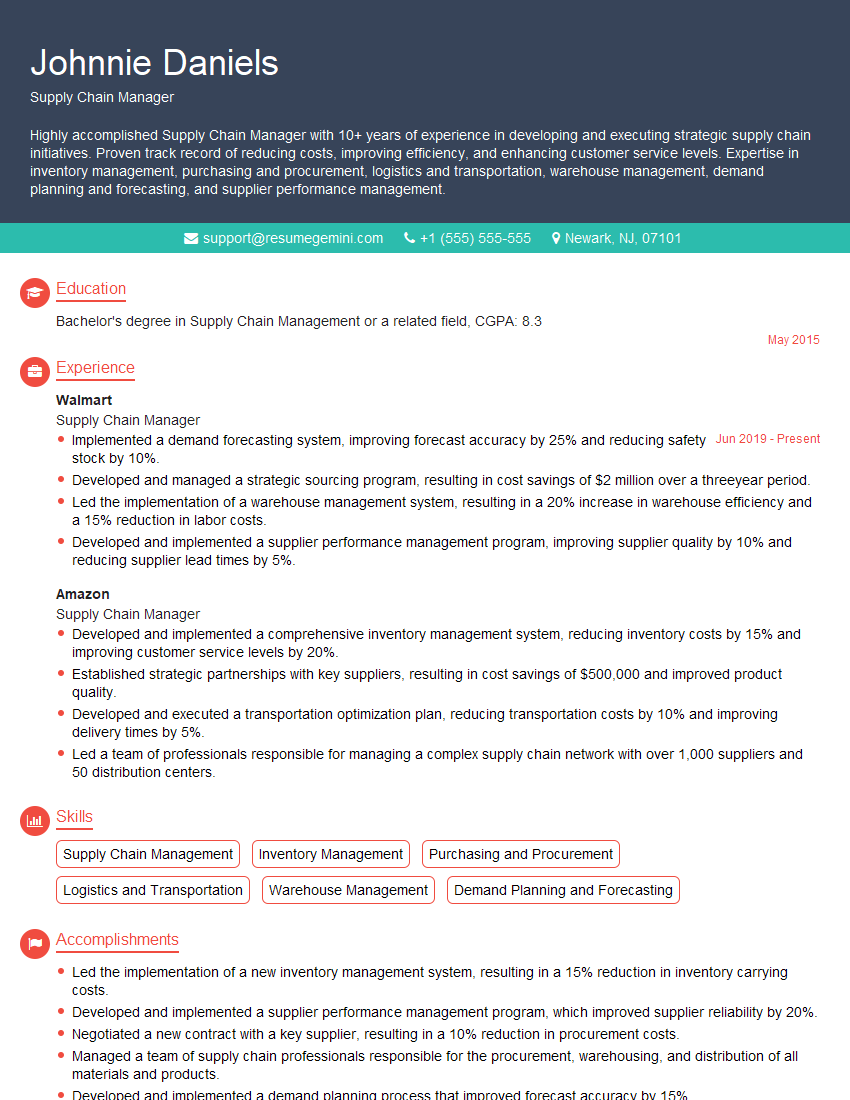
Supply Chain Manager Resume Sample
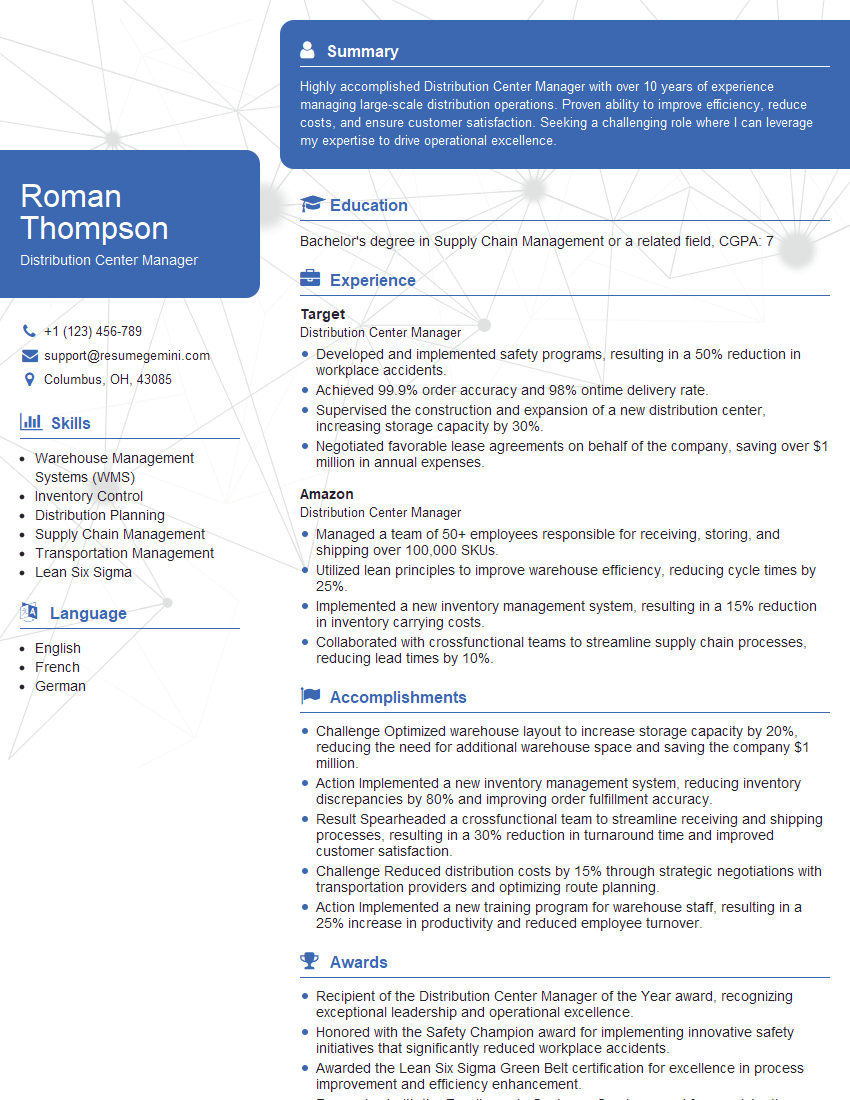
Distribution Center Manager Resume Sample

Logistics Manager Resume Sample
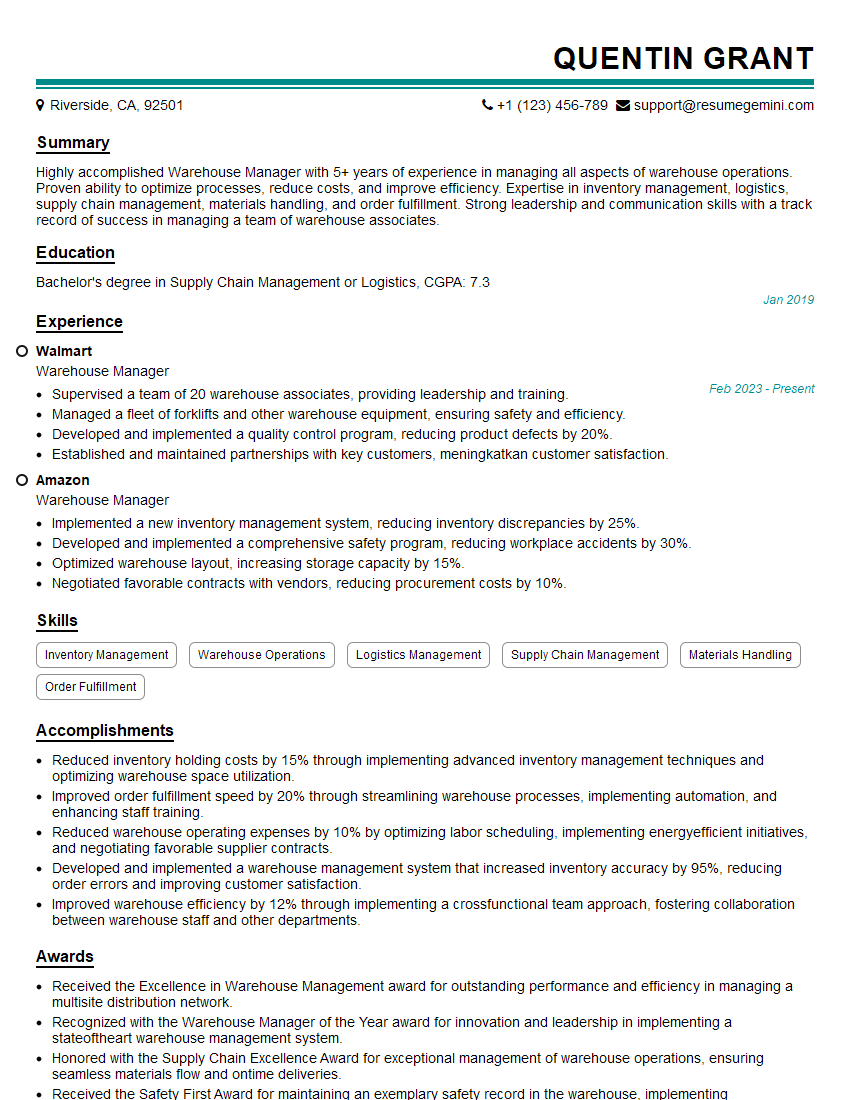
Warehouse Manager Resume Sample
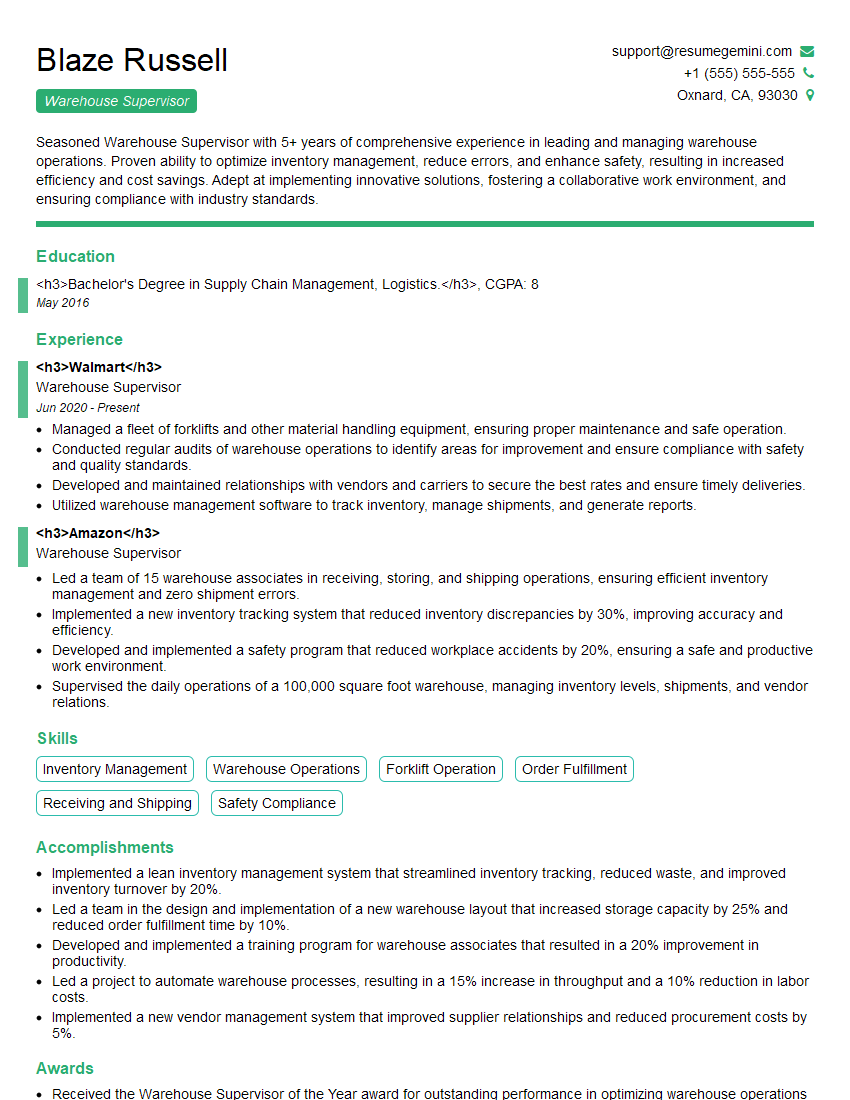
Warehouse Supervisor Resume Sample
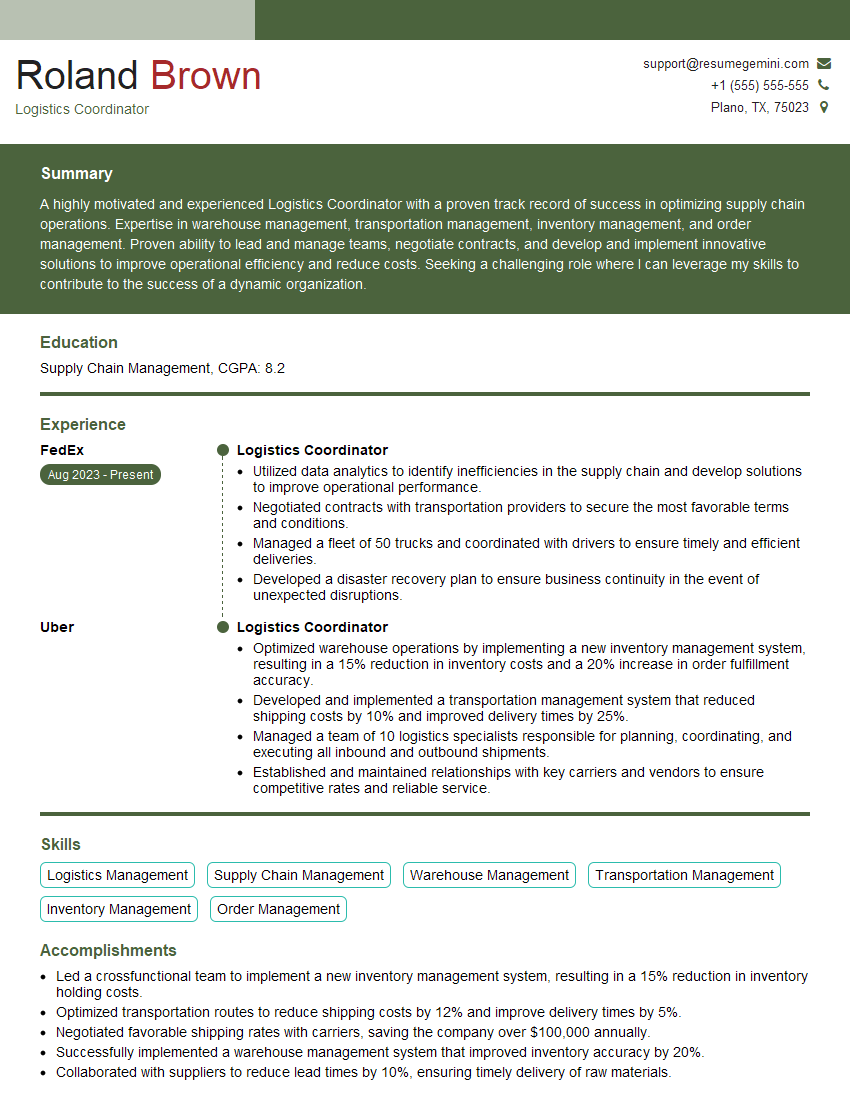
Logistics Coordinator Resume Sample

Inventory Manager Resume Sample
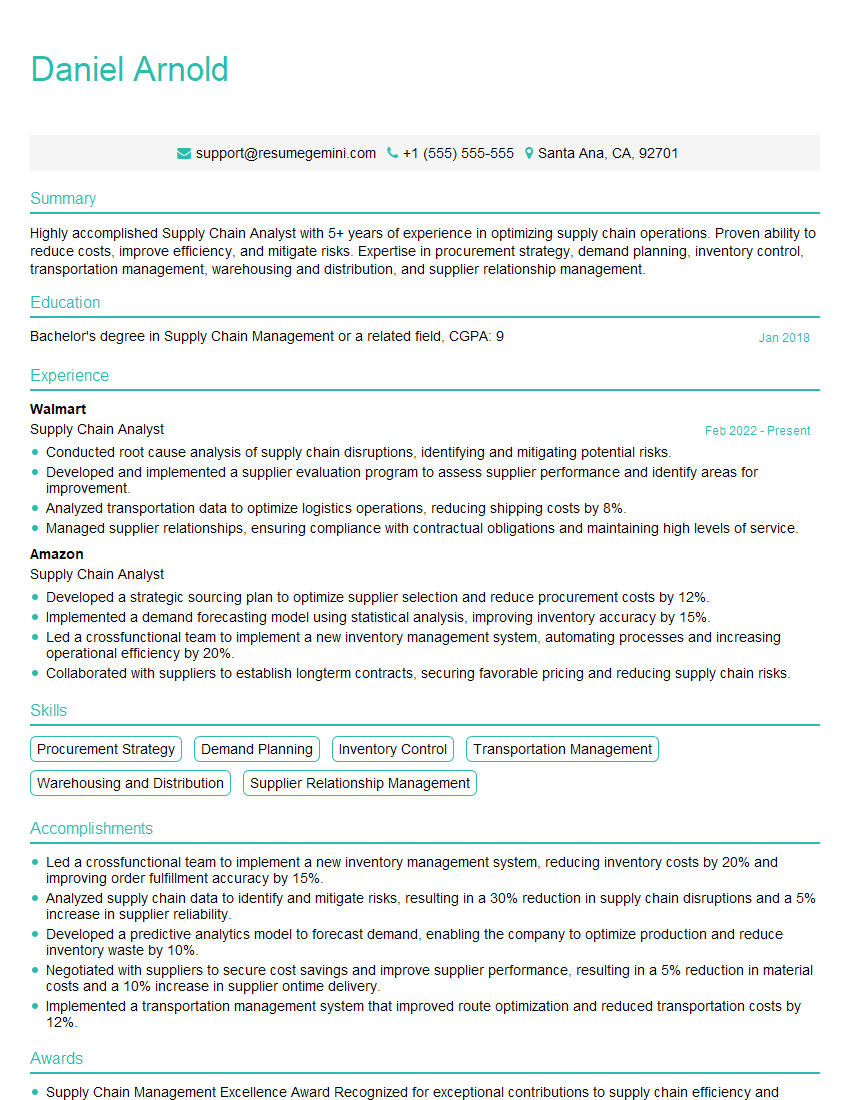
Supply Chain Analyst Resume Sample

Inventory Control Specialist Resume Sample
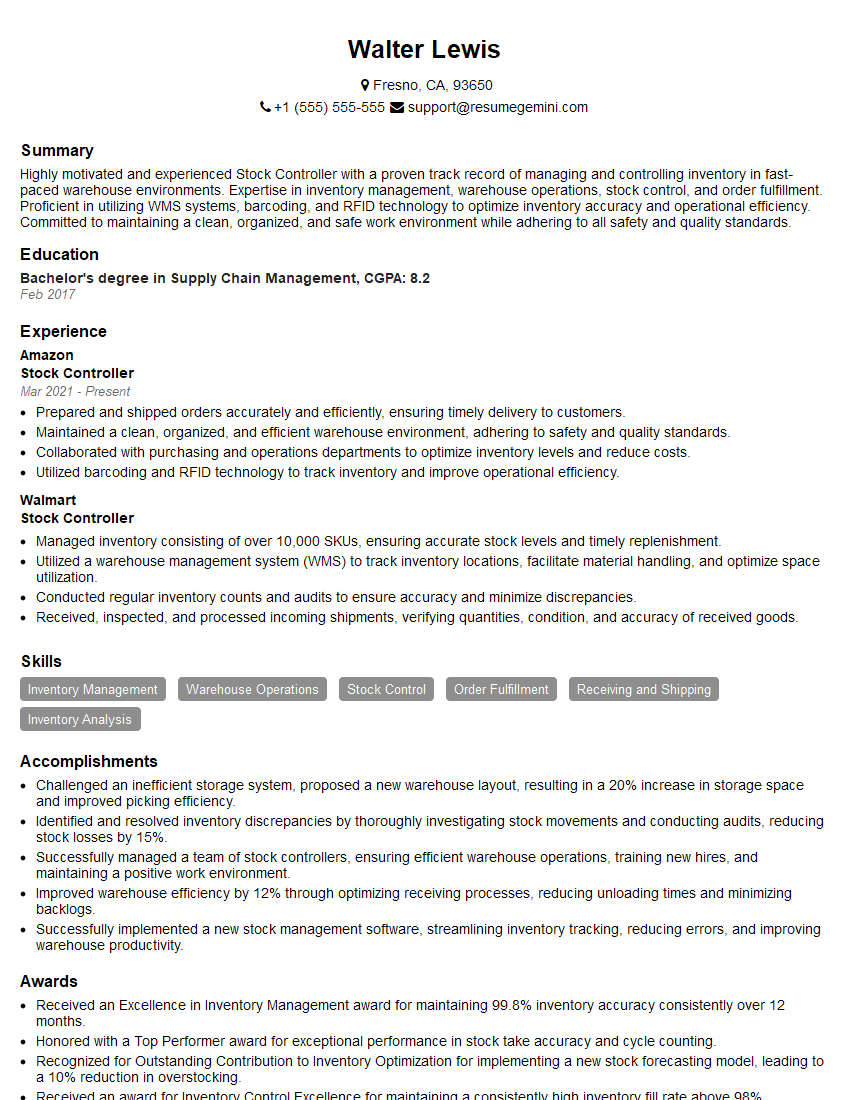
Stock Controller Resume Sample
- Operations Manager
- Production Manager
- Demand Planner
- Quality Control Manager
- Materials Manager
- Procurement Manager
- Purchasing Manager
- Supply Chain Manager
- Distribution Center Manager
- Logistics Manager
- Warehouse Manager
- Warehouse Supervisor
- Logistics Coordinator
- Inventory Manager
- Supply Chain Analyst
- Inventory Control Specialist
- Stock Controller
Explore more articles
Users Rating of Our Blogs
Share Your Experience
We value your feedback! Please rate our content and share your thoughts (optional).
What Readers Say About Our Blog
Very informative content, great job.
good