Interviews are opportunities to demonstrate your expertise, and this guide is here to help you shine. Explore the essential Microwave System Maintenance interview questions that employers frequently ask, paired with strategies for crafting responses that set you apart from the competition.
Questions Asked in Microwave System Maintenance Interview
Q 1. Explain the different types of microwave transmission systems.
Microwave transmission systems use radio waves in the microwave frequency range (typically 1 GHz to 40 GHz) to transmit data. Different types exist, primarily categorized by their modulation techniques and the topology of the network.
- Line-of-Sight (LOS) Systems: These are the most common type, requiring a clear path between transmitting and receiving antennas. Think of them like shining a laser pointer – any obstruction will interrupt the signal. They are typically used for long-haul communication and backhaul networks for cellular systems.
- Multi-Hop Systems: When the distance is too great for a single LOS link, multiple microwave links are chained together. Each link acts as a repeater, passing the signal along until it reaches its final destination. This is like a relay race for data.
- Frequency-Modulated (FM) Systems: These systems use frequency modulation to encode the data onto the microwave carrier wave. They are relatively simple and robust but have lower bandwidth compared to other types.
- Digital Microwave Systems: These systems use digital modulation schemes like QAM (Quadrature Amplitude Modulation) or QPSK (Quadrature Phase-Shift Keying) allowing for much higher bandwidth and data rates. They are more complex but offer superior performance for high-capacity applications.
- Point-to-Multipoint Systems: A single transmitting antenna sends data to multiple receiving antennas, commonly used for distributing signals to a wide area. Think of it as a single radio station broadcasting to many listeners.
The choice of system depends heavily on factors like distance, required bandwidth, terrain, and budget.
Q 2. Describe the process of troubleshooting a faulty microwave link.
Troubleshooting a faulty microwave link is a systematic process. It starts with identifying the symptoms – is there complete signal loss, intermittent outages, or degraded performance (high bit error rate)?
- Initial Checks: Check the power supply to the equipment, verify antenna alignment and physical condition, inspect cabling for damage or loose connections. This is often where the simplest problems hide.
- Signal Level Measurements: Using a spectrum analyzer and power meter, measure the received signal strength and quality at both the transmitting and receiving ends. Compare these readings to known good values (specifications or baseline measurements). This is like checking the voltage at different points in an electrical circuit.
- Bit Error Rate (BER) Testing: Measure the BER to quantify the quality of the data transmission. A high BER indicates errors in the data stream. This helps pinpoint the severity of the problem.
- Microwave Equipment Monitoring: Check the status of the microwave equipment itself, examining the alarms and logs for any error messages or abnormal events. Modern microwave radios provide a wealth of diagnostic data.
- Environmental Factors: Consider weather conditions, especially heavy rain, fog, or snow, which can severely attenuate microwave signals (particularly at higher frequencies). Atmospheric effects can also play a part.
- Troubleshooting Tools: Use specialized tools like a TDR (Time Domain Reflectometer) to locate faults in the coaxial cable connecting the equipment, or an optical time-domain reflectometer (OTDR) if optical fiber is used.
- Troubleshooting methodology: Follow a structured approach like starting from the simplest and most common causes, systematically eliminating each possibility until the root cause is found. Often this involves a combination of measurements and logical deduction.
Remember to always record your measurements and observations carefully, as this detailed logging will be invaluable in troubleshooting future issues.
Q 3. What are the common causes of microwave system outages?
Microwave system outages can be caused by a variety of factors, ranging from equipment malfunction to environmental interference. Some common causes include:
- Equipment Failure: This could be anything from a failed power supply or transmitter to a faulty receiver or antenna. Regular preventative maintenance is crucial to minimize these issues.
- Environmental Conditions: Heavy rain, fog, snow, or even strong winds can attenuate or completely block microwave signals. This is why proper site selection, including consideration of fade margins, is paramount.
- Interference: Other microwave systems operating on the same or nearby frequencies can cause interference, leading to signal degradation or outages. This requires careful frequency planning and coordination.
- Power Outage: A simple power failure at either the transmitter or receiver site will cause a complete outage.
- Cable Damage or Degradation: Physical damage to coaxial cables or fiber optic cables can disrupt the signal path.
- Antenna Misalignment: Even a slight misalignment can significantly reduce signal strength.
- Software Glitches: Software bugs within the microwave radio equipment can sometimes cause unexpected outages. Regular software updates can mitigate these issues.
Understanding the root cause is key to implementing effective preventative measures and ensuring system reliability.
Q 4. How do you perform preventative maintenance on microwave equipment?
Preventative maintenance is crucial for maximizing the lifespan and reliability of microwave equipment. A well-defined schedule is essential, combining both visual inspections and more in-depth checks.
- Visual Inspection: Regularly inspect the equipment for any signs of physical damage, corrosion, or loose connections. This includes checking antennas for alignment and cleanliness.
- Cleaning: Clean the antennas regularly to remove dust, debris, and bird droppings. This is particularly important in harsh environments.
- Tightening Connections: Periodically check and tighten all cable connections to ensure good electrical contact. Loose connectors are a common source of problems.
- Environmental Monitoring: Monitor environmental factors such as temperature and humidity. Extreme conditions can impact the equipment’s performance.
- Testing and Measurement: Perform regular signal level measurements, BER testing, and other performance checks to identify any degradation in system performance. Early detection is key to avoiding major outages.
- Firmware Updates: Keep the microwave equipment’s firmware up to date to benefit from bug fixes and performance improvements.
- Log Analysis: Regularly review system logs for any warnings or errors to proactively address potential issues.
- Calibration: Periodically calibrate testing equipment to maintain accuracy in measurements.
A well-documented maintenance plan, tailored to the specific system and its environment, is essential for effective preventative maintenance.
Q 5. What safety precautions are necessary when working with microwave systems?
Working with microwave systems requires strict adherence to safety precautions due to the high-power radio frequency (RF) emissions. These precautions can prevent serious injury or equipment damage.
- RF Exposure Limits: Never exceed permissible RF exposure limits. Understand the specific limits for the frequencies and power levels of your system and use appropriate personal protective equipment (PPE), such as RF protective clothing or safety glasses.
- Lockout/Tagout Procedures: Always follow proper lockout/tagout procedures before performing any maintenance or repairs on the equipment. This prevents accidental energization of the system.
- Grounding and Bonding: Ensure proper grounding and bonding of all equipment and cabling to prevent electrical shocks and RF interference.
- Antenna Safety: Exercise caution when working near antennas, especially high-power antennas. Never touch an antenna while the system is powered on.
- High Voltage Safety: Microwave equipment often operates at high voltages, so be aware of and follow all high-voltage safety precautions.
- Proper Training: Ensure that all personnel working with microwave systems receive adequate training on safety procedures and RF hazard awareness.
- Emergency Procedures: Establish and regularly practice emergency procedures in case of an accident or equipment malfunction.
Safety should be the top priority when working with microwave systems. A lack of proper safety measures can have severe consequences.
Q 6. Explain the concept of frequency reuse in microwave systems.
Frequency reuse in microwave systems is a technique that allows multiple microwave links to operate in the same geographical area using the same frequency band, but without interfering with each other.
This is achieved through careful spatial separation of the links. The key is to ensure that the signals from different links don’t overlap significantly. This usually requires physically separating the antennas by a sufficient distance, based on the Fresnel zone calculations (which accounts for signal diffraction). Think of it as having several radio stations broadcasting on the same frequency but in different locations, far enough apart that their signals don’t interfere with each other in the areas where they are received.
Effective frequency reuse maximizes the utilization of the available frequency spectrum, allowing for greater network capacity and efficiency. However, careful planning and coordination are crucial to avoid interference and maintain signal quality. Factors such as terrain, antenna gain, and propagation conditions influence the minimum distance needed for safe frequency reuse.
Q 7. Describe your experience with microwave system testing and measurement equipment.
Throughout my career, I have extensively used various microwave system testing and measurement equipment. My experience encompasses both traditional test instruments and modern automated test systems.
- Spectrum Analyzers: I regularly use spectrum analyzers to analyze the frequency spectrum, identify interference sources, and measure signal levels and bandwidth. I’m proficient in using them to analyze both amplitude and phase characteristics of microwave signals.
- Power Meters: These are essential for measuring the power levels of both transmitted and received signals to ensure they are within the acceptable range and to identify potential power losses.
- Network Analyzers: I have significant experience using vector network analyzers (VNAs) to characterize the performance of microwave components such as antennas, waveguides, and filters. VNAs allow for detailed measurements of S-parameters, providing a comprehensive understanding of component performance.
- Signal Generators: These are used to generate controlled microwave signals for testing and calibrating microwave equipment. My experience includes using various signal generators with different modulation schemes.
- Oscilloscope: I’m also well-versed in using oscilloscopes for time-domain analysis of microwave signals, helping in identifying signal distortions or anomalies.
- BER Test Sets: Bit error rate test sets are crucial for quantifying the quality of data transmission in digital microwave systems, enabling the identification of potential errors in the data stream.
- OTDR/TDR: I utilize Optical Time-Domain Reflectometers (OTDRs) and Time-Domain Reflectometers (TDRs) to locate faults in optical fiber and coaxial cables, respectively.
My experience extends beyond individual instruments; I’m also familiar with integrated testing and monitoring systems that provide real-time insights into microwave network performance, including automated alarm systems and remote diagnostics capabilities.
Q 8. How do you interpret microwave system performance data?
Interpreting microwave system performance data involves a multi-step process that combines technical understanding with analytical skills. First, I gather data from various sources, including network management systems (NMS), remote monitoring tools, and on-site equipment readings. This data typically includes signal levels (received signal strength indicator or RSSI), bit error rates (BER), and availability metrics.
Next, I analyze the data, looking for trends and anomalies. For example, a gradual decline in RSSI might indicate fading or equipment degradation, while a sudden spike in BER suggests a connectivity issue. I use statistical analysis and historical data to establish baselines and identify deviations that require attention. I also correlate data from multiple sources to pinpoint the exact location and cause of any problems. For instance, a low RSSI combined with high temperature readings at a particular site might point to a failing power supply. Finally, I use this analysis to generate reports and recommendations for maintenance or upgrades.
For example, I once noticed a consistent drop in RSSI on a specific frequency during late afternoons. By analyzing weather data, I discovered this correlated with increased atmospheric attenuation due to humidity. This led to a recommendation to adjust system settings for improved performance during those times.
Q 9. What are the key performance indicators (KPIs) for microwave systems?
Key Performance Indicators (KPIs) for microwave systems are crucial for ensuring reliable communication. They are typically categorized into availability, quality, and performance metrics.
- Availability: This measures the percentage of time the system is operational. Key metrics include uptime, downtime, and mean time between failures (MTBF). High availability is crucial for mission-critical applications.
- Quality: This focuses on the integrity of the transmitted data. Important metrics include bit error rate (BER), packet loss, and error correction overhead. Lower BER indicates higher data quality.
- Performance: This assesses the speed and efficiency of data transmission. Metrics include throughput, latency, and jitter. High throughput is essential for carrying large amounts of data.
In practice, we monitor these KPIs through NMS and regularly analyze reports. For instance, consistently high BER values might prompt an investigation into the quality of the radio link, potentially requiring antenna alignment or equipment replacement.
Q 10. How do you manage microwave system documentation and records?
Efficient microwave system documentation and record-keeping are essential for smooth operation and maintenance. I utilize a combination of digital and physical methods for managing this information. All documentation is meticulously organized and easily accessible. This includes technical drawings, equipment specifications, maintenance logs, performance reports, and test results.
We employ a Computerized Maintenance Management System (CMMS) to track maintenance activities, schedule preventative maintenance, and store digital copies of all relevant documents. This system ensures data integrity and facilitates easy retrieval of information when needed. For example, we can quickly find the history of a particular piece of equipment, including past repairs and maintenance schedules. Physical records, such as original equipment manuals, are stored securely in a designated area. A well-defined archiving system ensures that all records are retained according to regulatory requirements and company policy. This methodical approach ensures smooth handovers and efficient troubleshooting.
Q 11. Explain your experience with different types of microwave antennas.
My experience encompasses a wide range of microwave antennas, including parabolic reflectors, horn antennas, and phased arrays. Parabolic reflectors are common for point-to-point links, offering high gain and directivity. I’m proficient in aligning and adjusting these antennas to optimize signal strength and minimize interference. Horn antennas provide good performance with simpler construction, often used in indoor settings or for specific frequency bands. Phased array antennas are more complex, offering beam steering capabilities for improved flexibility and coverage.
I’ve worked on projects involving different antenna sizes, frequencies, and polarization techniques. For example, I once had to troubleshoot a parabolic reflector experiencing reduced gain. Through careful analysis of the antenna surface, I discovered a slight misalignment that was corrected, significantly improving the link performance.
Q 12. Describe your experience with microwave system upgrades and modernization.
I have extensive experience with microwave system upgrades and modernization projects. These projects often involve replacing outdated equipment with newer, more efficient technologies to improve capacity, reliability, and security. This can include upgrading radio units, implementing new modulation schemes, and installing fiber optic backhaul systems. A recent project involved migrating a system from analog to digital modulation, significantly increasing bandwidth and resilience to interference.
Modernization also entails incorporating advanced features like network management capabilities, automated fault detection, and remote diagnostics. These upgrades typically involve careful planning, phased implementation, and rigorous testing to ensure minimal downtime and seamless transition. Thorough risk assessment and mitigation strategies are crucial to avoid any service disruption during the upgrade process. We also conduct extensive training to ensure that the maintenance team is proficient with the new technologies.
Q 13. What are the environmental factors that can affect microwave system performance?
Several environmental factors can significantly impact microwave system performance. These include:
- Atmospheric conditions: Rain, fog, snow, and humidity can attenuate the microwave signal, reducing its strength and increasing error rates. Temperature variations can also affect the performance of electronic components.
- Terrain and obstacles: Hills, buildings, and vegetation can obstruct the line of sight between antennas, causing signal blockage and fading. This requires careful site planning and antenna placement.
- Electromagnetic interference (EMI): Sources of EMI, such as other radio transmitters, power lines, and industrial equipment, can interfere with the microwave signal, leading to noise and data corruption. Proper frequency coordination and shielding are essential to mitigate EMI.
Understanding these factors is crucial for proper system design and maintenance. For instance, we might implement diversity reception to mitigate fading caused by rain, or use site-specific modeling to predict signal propagation and avoid obstructions.
Q 14. How do you handle emergency repairs to a critical microwave system?
Handling emergency repairs to a critical microwave system requires a swift and organized approach. My first step is to accurately assess the situation – identifying the nature and extent of the problem, understanding its impact on services, and prioritizing the repair based on criticality. This usually involves checking the NMS for fault reports, consulting remote monitoring data, and communicating directly with the affected users.
A prioritized checklist guides the immediate response. This involves isolating the fault to prevent further damage, implementing temporary workarounds if feasible, dispatching a qualified technician equipped with the necessary tools and spares, and documenting all actions thoroughly. In critical situations, we may utilize backup systems or alternative communication paths to maintain minimal service levels while the main system is repaired. Once the repair is complete, a thorough system check ensures full functionality and stability. A post-incident review analyzes the event to identify root causes and implement preventative measures to avoid future occurrences.
For example, I once had to handle a system outage due to lightning strike damage. My team quickly isolated the affected segment, activated a backup path, and repaired the damaged equipment within a few hours, minimizing service disruption.
Q 15. Describe your experience with different types of microwave transmission media.
Microwave transmission relies on various media to carry signals. My experience encompasses several key types:
Waveguides: These are hollow metal tubes that guide electromagnetic waves. I’ve worked extensively with rectangular and circular waveguides, understanding their different modes of propagation and the importance of proper impedance matching for efficient signal transfer. For example, in one project, we diagnosed a significant signal loss in a long-haul link that turned out to be caused by a poorly connected waveguide flange. Replacing it immediately improved the signal quality.
Coaxial Cables: While less common for long-distance microwave links due to attenuation, coaxial cables are crucial for shorter connections within a microwave system, such as connecting antennas to receivers or transmitters. I have experience troubleshooting signal integrity issues in coaxial cables, including impedance mismatches and connector problems.
Optical Fiber: While not directly microwave, optical fiber is increasingly used in conjunction with microwave systems, particularly for backhaul links. My experience involves integrating fiber-optic systems to transport microwave signals over longer distances more efficiently and with less susceptibility to interference. One recent project involved upgrading a microwave network’s backhaul with a fiber-optic link, significantly increasing bandwidth and reliability.
Free Space: This is the most common transmission medium for microwave systems, relying on the direct line-of-sight propagation of radio waves. My expertise here covers antenna alignment, path clearance, and atmospheric effects that can significantly impact signal quality. For instance, I’ve used specialized software to model the impact of rain fade on signal strength in order to choose appropriate equipment and redundancy measures.
Career Expert Tips:
- Ace those interviews! Prepare effectively by reviewing the Top 50 Most Common Interview Questions on ResumeGemini.
- Navigate your job search with confidence! Explore a wide range of Career Tips on ResumeGemini. Learn about common challenges and recommendations to overcome them.
- Craft the perfect resume! Master the Art of Resume Writing with ResumeGemini’s guide. Showcase your unique qualifications and achievements effectively.
- Don’t miss out on holiday savings! Build your dream resume with ResumeGemini’s ATS optimized templates.
Q 16. Explain the concept of microwave system redundancy.
Microwave system redundancy is crucial for ensuring high availability and reliability. It involves implementing backup systems or components to take over if a primary system fails. Think of it like having a spare tire in your car; you hope you never need it, but it’s essential to prevent being stranded. Common redundancy techniques include:
1+1 Protection Switching: This involves having two identical systems running simultaneously. If one fails, the other instantly takes over. This offers the highest availability but is also the most expensive option.
N+1 Protection Switching: Similar to 1+1, but with multiple standby systems (N) to handle the failure of one primary system.
Path Diversity: Using separate, geographically diverse microwave paths to transmit the same signal. This protects against localized outages due to weather or other environmental factors. For example, in a mountainous region, we might have one path going over a ridge, while the second path might curve around it.
Frequency Diversity: Employing multiple carrier frequencies to transmit the same signal. A problem on one frequency could leave others operational. This is useful in protecting against interference on a single frequency.
The choice of redundancy strategy depends on factors such as cost, required availability, and the specific threats to the system.
Q 17. How do you ensure the security of a microwave system?
Securing a microwave system is paramount to prevent unauthorized access and data breaches. This involves several layers of security:
Physical Security: Protecting the physical equipment from theft or vandalism through measures like fences, security cameras, and access control. In one instance, I worked on a project where we added biometric access control to a remote microwave tower to prevent unauthorized entry.
Network Security: Implementing firewalls, intrusion detection systems (IDS), and intrusion prevention systems (IPS) to prevent unauthorized access to the network. This includes regularly updating firmware and software patches.
Data Encryption: Encrypting the microwave signal itself using robust encryption algorithms to protect the transmitted data from eavesdropping. This is critical for applications involving sensitive information.
Access Control: Implementing strict access control protocols for configuring and managing the microwave system. Only authorized personnel should have access to system settings, and roles should be clearly defined.
Regular Audits and Penetration Testing: Regularly auditing the system’s security posture and conducting penetration testing to identify vulnerabilities before malicious actors can exploit them.
Q 18. Describe your experience with microwave system monitoring and alarm systems.
My experience with microwave system monitoring and alarm systems is extensive. I’ve worked with various systems, from basic analog systems to sophisticated network management systems (NMS). Effective monitoring is essential for proactive maintenance and quick response to problems. Typically, this involves:
Real-time Monitoring of Key Parameters: This includes signal strength, bit error rate (BER), carrier-to-noise ratio (C/N), and other critical parameters. Deviations from acceptable thresholds trigger alarms.
Alarm Systems: These provide alerts for various events, such as equipment failures, power outages, or signal degradation. These alarms can be sent via email, SMS, or directly to a network management system.
Remote Monitoring Capabilities: Many modern systems offer remote monitoring and control, allowing technicians to diagnose and troubleshoot issues remotely, minimizing downtime. I’ve used such systems to troubleshoot problems in microwave links located in remote and inaccessible areas.
Data Logging and Reporting: Sophisticated systems log extensive data for later analysis, which helps identify trends, predict potential issues, and improve system performance. For instance, by analyzing historical data, we can predict the likely impact of weather conditions on signal quality and plan preventative maintenance.
Q 19. What are the different types of microwave impairments?
Microwave signals are susceptible to various impairments that degrade signal quality. These include:
Multipath Propagation: Signals arriving at the receiver via multiple paths, causing destructive interference and fading.
Atmospheric Attenuation: Absorption and scattering of the signal by atmospheric gases and precipitation (rain, snow, fog).
Rain Fade: A significant attenuation of the signal caused by heavy rainfall, especially at higher frequencies.
Fading: Fluctuations in signal strength due to various factors like multipath and atmospheric conditions.
Interference: Signals from other microwave systems or sources causing unwanted noise.
Thermal Noise: Random noise generated by thermal agitation within the system’s components.
Q 20. How do you mitigate the effects of multipath propagation on a microwave link?
Multipath propagation is a significant challenge in microwave systems, leading to signal fading and performance degradation. Mitigation strategies include:
Space Diversity: Using two antennas spaced apart at the receiving end. This reduces the probability that both antennas will experience deep fades simultaneously.
Frequency Diversity: Using multiple frequencies for the same signal. This reduces the likelihood that fading will severely impact all frequencies at the same time. If one frequency is affected, others may not be.
Adaptive Equalization: Employing advanced signal processing techniques to compensate for the effects of multipath by adjusting the receiver’s response accordingly. These techniques adapt to the changing channel conditions.
Careful Site Selection and Path Planning: Choosing locations and antenna placement that minimize the likelihood of multipath. This often involves conducting a thorough site survey to analyze potential reflection paths.
In practice, a combination of these techniques is often employed to achieve optimal performance.
Q 21. What is your experience with microwave path profiling and survey?
Microwave path profiling and surveying are critical steps in designing and deploying reliable microwave links. My experience involves:
Site Surveys: Conducting on-site inspections to assess the terrain, identify potential obstructions, and determine the best antenna locations. This often includes using surveying equipment and software to model the radio path.
Path Loss Calculations: Using propagation models and specialized software to estimate the signal attenuation along the microwave path, accounting for factors like terrain, atmospheric conditions, and obstructions.
Obstacle Clearance Analysis: Determining the required antenna height and clearance to ensure that obstructions (buildings, trees, etc.) do not significantly impact signal quality.
Fresnel Zone Clearance: Ensuring sufficient clearance within the Fresnel zone (the area around the direct path where the majority of the signal travels) to minimize diffraction effects.
Software and Tools: I’m proficient in using specialized software tools for path profiling, such as Pathloss and other industry-standard programs. These tools allow us to accurately model and predict the performance of a microwave link before it is deployed.
Accurate path profiling and surveying are essential for preventing costly installation mistakes and ensuring a reliable, high-performance microwave link.
Q 22. Explain the role of equalizers in microwave systems.
Equalizers in microwave systems are crucial for compensating for amplitude and phase distortions introduced by the transmission medium. Think of it like a sound equalizer for your music – it adjusts the different frequencies to create a balanced and clear output. In microwave systems, these distortions can lead to signal degradation, reduced bandwidth, and increased bit error rates. Equalizers counteract these effects by shaping the frequency response of the system, ensuring a consistent and high-quality signal throughout the transmission path.
Different types of equalizers exist, such as fixed equalizers (designed for specific transmission characteristics) and adaptive equalizers (dynamically adjusting to changing channel conditions). Adaptive equalizers are particularly useful in wireless applications where environmental factors can significantly affect signal propagation. For example, in a long-haul microwave link affected by multipath fading, an adaptive equalizer would constantly adjust itself to minimize the distortion caused by signal reflections.
Without proper equalization, you might experience data loss, reduced throughput, and even complete communication failure. Therefore, regular maintenance and calibration of equalizers are essential to maintain the integrity of a microwave system.
Q 23. Describe your experience working with different microwave vendors’ equipment.
Throughout my career, I’ve worked extensively with equipment from leading microwave vendors such as Ericsson, Huawei, and Nokia. Each vendor has its own unique approach to system design and implementation. For instance, Ericsson’s equipment often emphasizes modularity and flexibility, making it well-suited for complex network architectures. Huawei’s systems, on the other hand, are frequently recognized for their cost-effectiveness, while Nokia prioritizes robustness and reliability.
My experience extends beyond simply operating their equipment. I’ve been involved in troubleshooting, maintenance, and performance optimization across different vendor platforms. This includes diagnosing hardware failures, configuring system parameters (such as power levels and modulation schemes), and implementing software upgrades. Working with multiple vendors has provided me with a broad understanding of industry best practices and the nuances of different system architectures. One memorable instance involved troubleshooting a significant outage on a Huawei system, where thorough analysis and knowledge of their specific protocols were key to isolating and fixing a critical configuration error quickly.
Q 24. What is your familiarity with microwave system simulation software?
I am proficient in several microwave system simulation software packages, including AWR Microwave Office, Keysight ADS, and CST Microwave Studio. These tools are invaluable for system design, performance prediction, and troubleshooting. For example, I’ve used AWR Microwave Office to model and optimize the performance of a point-to-point microwave link in a challenging propagation environment, allowing for accurate prediction of signal attenuation and distortion before actual deployment. This significantly reduces the risk of deployment failures and minimizes costly on-site adjustments.
My expertise extends to using simulation results to inform real-world decisions. I can accurately interpret simulation data to guide troubleshooting, identify potential problems, and design effective mitigation strategies. In one project, we used CST Microwave Studio to simulate the impact of a nearby structure on the radiation pattern of a microwave antenna. The simulations confirmed our concerns and led to a revised antenna placement, avoiding significant signal interference.
Q 25. How do you troubleshoot noise and interference in a microwave system?
Troubleshooting noise and interference in microwave systems requires a systematic and methodical approach. I typically start by isolating the source of the problem using a combination of techniques. This might involve using spectrum analyzers to identify the frequency of the interfering signal, analyzing bit error rates (BER) to pinpoint the affected frequency bands, and inspecting system logs for anomalies.
The troubleshooting process often follows these steps:
- Identify the Symptoms: Determine the nature and extent of the noise or interference (e.g., increased BER, signal fades).
- Isolate the Source: Use spectrum analyzers and other test equipment to identify the frequency and characteristics of the interfering signal. This often involves checking for co-channel interference, intermodulation products, or atmospheric effects.
- Analyze the System: Review system configurations, examine network diagrams, and investigate any recent changes that might have contributed to the problem.
- Implement Solutions: This might involve adjusting antenna alignment, implementing filters to reject interfering frequencies, changing modulation schemes, or implementing more robust error correction codes.
- Verify the Solution: Monitor system performance to ensure that the implemented solution effectively addresses the problem and doesn’t create new ones.
For example, I once resolved a case of significant interference by identifying a faulty amplifier that was generating spurious emissions. Replacing the amplifier completely resolved the problem.
Q 26. Describe your experience with the installation and commissioning of microwave equipment.
I have extensive experience in the installation and commissioning of microwave equipment, from initial site surveys to final system testing. This involves coordinating with civil works teams, antenna mounting, cabling, equipment rack installation, and system integration. A typical installation process includes careful site planning, ensuring proper grounding and lightning protection, performing RF alignment, and comprehensive testing to verify system performance.
My experience encompasses various microwave system types, including point-to-point links, point-to-multipoint systems, and even integration with satellite communication networks. One notable project involved the installation of a high-capacity microwave link across a challenging terrain. This required precise antenna alignment, meticulous cable routing to minimize signal loss, and rigorous testing to ensure reliable operation in adverse weather conditions.
Commissioning involves verifying all aspects of the system functionality, including transmitter and receiver performance, link budget analysis, and monitoring BER to ensure reliable and consistent data transmission. I use sophisticated test equipment such as network analyzers, spectrum analyzers, and BER testers to perform these crucial steps.
Q 27. What is your understanding of regulatory compliance for microwave systems?
Regulatory compliance is paramount in microwave systems. This involves adhering to strict guidelines set by organizations like the Federal Communications Commission (FCC) in the US, Ofcom in the UK, and similar regulatory bodies in other countries. These regulations cover aspects such as frequency allocation, emission limits, power levels, and antenna placement.
My understanding of regulatory compliance extends beyond simply knowing the rules; it includes ensuring that our systems are designed, installed, and operated in full compliance with these rules. This means carefully selecting frequencies and power levels to minimize interference with other services, ensuring proper antenna radiation patterns to avoid unintended emissions, and meticulously documenting our system configurations for regulatory audits. Failure to comply with regulations can lead to significant fines, operational disruptions, and legal ramifications.
As part of my role, I regularly review and update my knowledge of relevant regulations to ensure our operations remain compliant with the constantly evolving regulatory landscape. I also participate in coordinating with regulatory authorities to obtain necessary licenses and approvals for our microwave systems.
Q 28. Explain your experience with microwave system capacity planning.
Microwave system capacity planning is a critical aspect of network design and involves predicting future bandwidth needs and ensuring the network can adequately support them. This involves carefully considering factors such as current and projected traffic growth, modulation schemes, and available frequencies.
My experience includes developing capacity plans using various tools and techniques, including network simulation software, traffic analysis, and historical performance data. The goal is to anticipate future needs and design a network that can scale efficiently while maintaining optimal performance. This often involves strategic decisions about upgrading equipment, adding new links, or implementing more efficient modulation techniques.
For example, I worked on a project where we anticipated significant growth in data traffic over the next five years. We used network simulation software to model various scenarios, considering different modulation techniques and equipment upgrades. This careful planning allowed us to design a scalable network capable of meeting anticipated demands without compromising performance or requiring costly emergency upgrades later.
Key Topics to Learn for Microwave System Maintenance Interview
- Microwave Transmission Principles: Understanding signal propagation, frequency bands, and the effects of atmospheric conditions on signal quality. Practical application includes troubleshooting signal loss or distortion.
- RF Equipment Operation and Maintenance: Familiarity with various components like antennas, waveguide systems, transmitters, receivers, and power amplifiers. Practical application includes performing preventative maintenance, identifying faulty components, and executing repairs.
- Troubleshooting and Diagnostics: Mastering techniques for isolating faults, using test equipment (spectrum analyzers, oscilloscopes), and interpreting diagnostic data. Practical application includes efficiently resolving system outages and minimizing downtime.
- System Monitoring and Alarm Management: Understanding remote monitoring systems, alarm thresholds, and interpreting performance data to proactively address potential issues. Practical application includes preventative maintenance scheduling based on system performance data.
- Safety Procedures and Regulations: Adherence to safety protocols when working with high-power RF equipment and understanding relevant industry regulations. Practical application includes safe working practices and reporting procedures.
- Documentation and Reporting: Maintaining accurate records of maintenance activities, repairs, and system performance. Practical application includes clear and concise reporting for management and compliance purposes.
- Network Protocols and Configurations: Understanding the networking aspects of microwave systems, including IP addressing, routing, and network management tools. Practical application includes configuring and troubleshooting network connectivity issues.
Next Steps
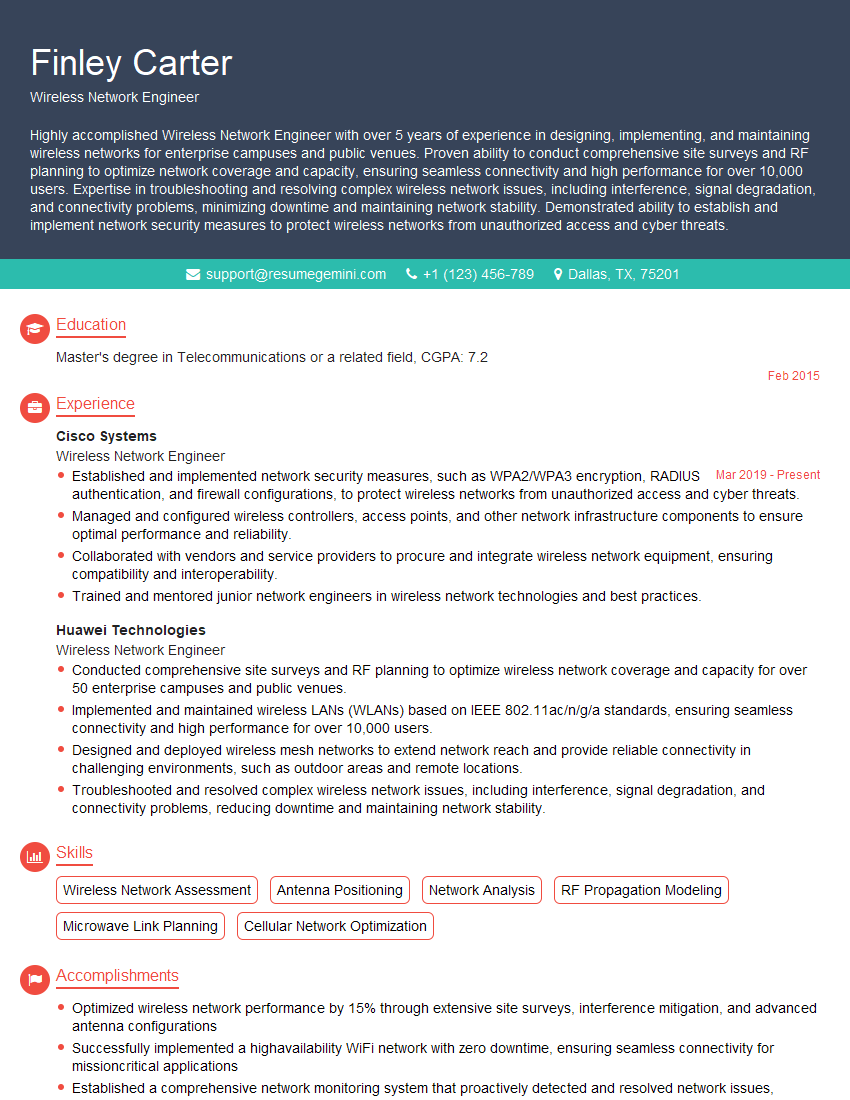
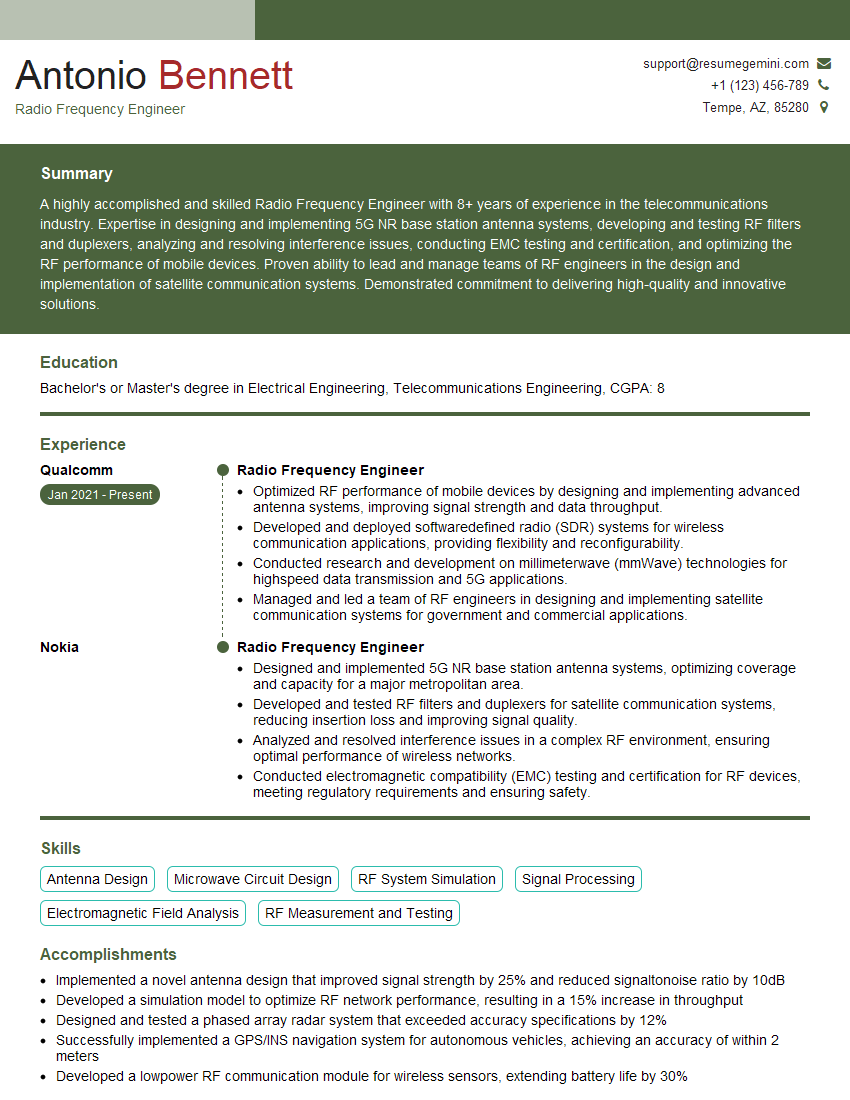
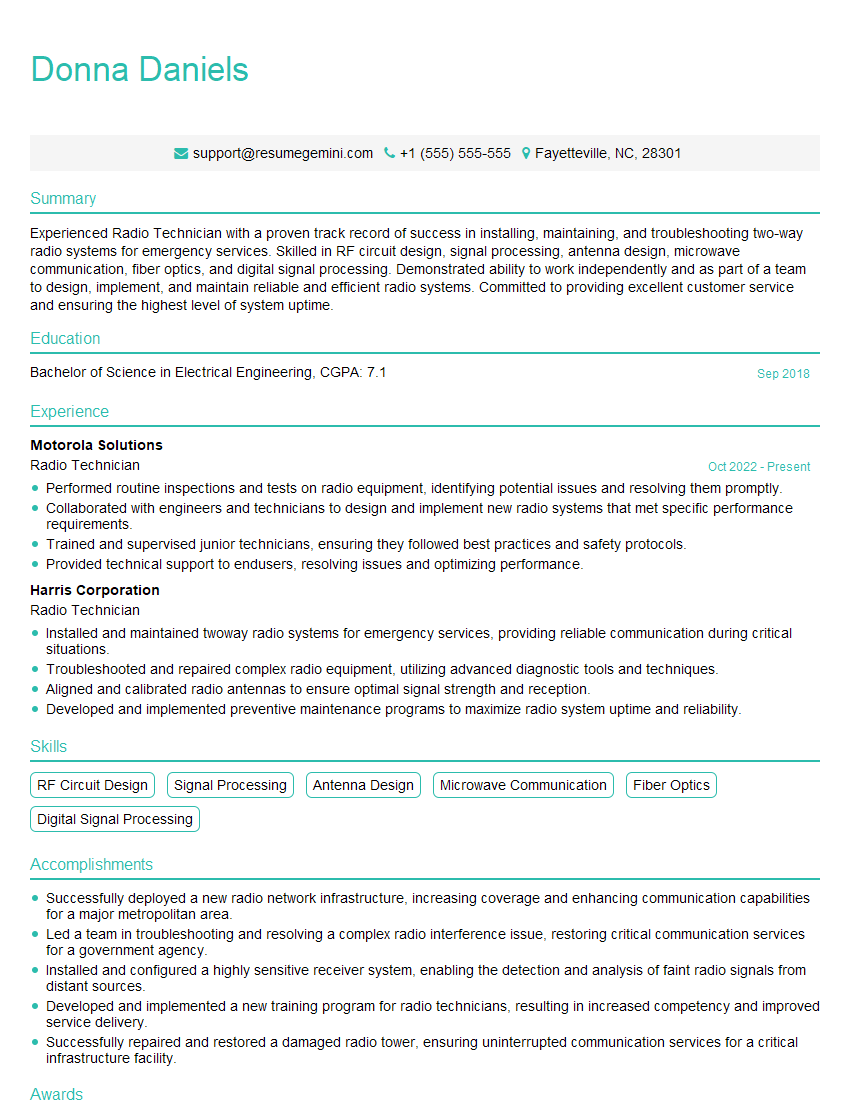
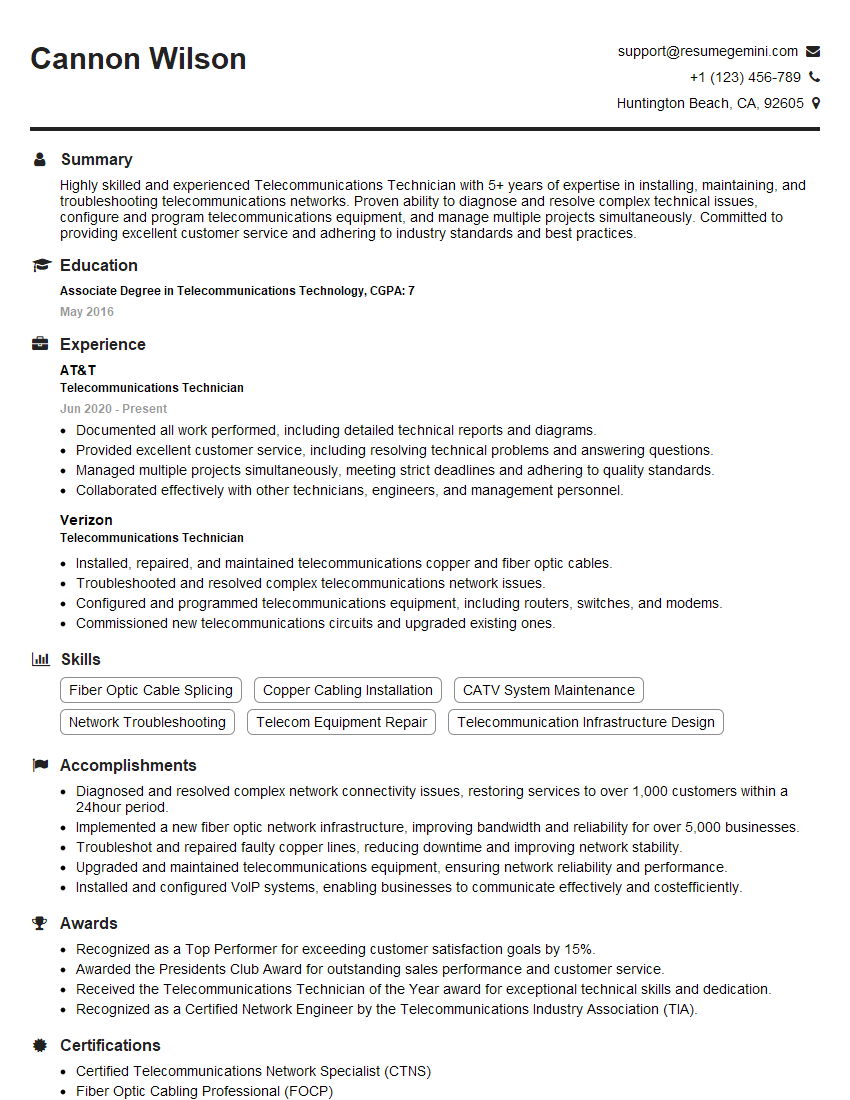
Mastering Microwave System Maintenance opens doors to rewarding and high-demand careers in telecommunications, broadcasting, and other critical infrastructure sectors. A strong foundation in these skills positions you for advancement and higher earning potential. To maximize your job prospects, creating a well-structured, ATS-friendly resume is essential. ResumeGemini is a trusted resource to help you build a professional resume that highlights your skills and experience effectively. Examples of resumes tailored to Microwave System Maintenance are available within ResumeGemini to help guide you.

Explore more articles
Users Rating of Our Blogs
Share Your Experience
We value your feedback! Please rate our content and share your thoughts (optional).
What Readers Say About Our Blog
Very informative content, great job.
good