Are you ready to stand out in your next interview? Understanding and preparing for Mixing and applying pesticides and other chemical solutions according to label instructions and safety protocols interview questions is a game-changer. In this blog, we’ve compiled key questions and expert advice to help you showcase your skills with confidence and precision. Let’s get started on your journey to acing the interview.
Questions Asked in Mixing and applying pesticides and other chemical solutions according to label instructions and safety protocols Interview
Q 1. Explain the importance of reading and understanding pesticide labels before mixing and application.
The pesticide label is your bible. It’s not just a piece of paper; it’s a legally binding document containing crucial information about the product’s composition, safe handling procedures, application methods, and environmental impact. Ignoring it is not only dangerous but also illegal.
- Understanding the active ingredient: The label clearly identifies the active ingredient(s) responsible for the pesticide’s efficacy, allowing you to select the right product for the target pest.
- Application rates and methods: This information dictates how much pesticide to use per unit area and the best way to apply it to maximize effectiveness while minimizing environmental harm. For example, a label might specify a specific amount per gallon of water for spraying or the dosage needed for soil treatment.
- Safety precautions: This section highlights potential hazards, including toxicity levels, required personal protective equipment (PPE), and first-aid measures. This is vital for protecting yourself and the environment.
- Environmental precautions: The label will indicate potential risks to non-target organisms (like bees or fish), and provide guidelines for minimizing these risks, such as avoiding application near water sources or during bloom periods.
For example, imagine you’re dealing with an aphid infestation on your roses. The label will not only tell you the correct amount of insecticide to use but also whether to apply it during the day or night to avoid harming pollinators. Misunderstanding the label could lead to ineffective pest control or environmental damage.
Q 2. Describe the correct procedure for mixing pesticides, including safety precautions.
Mixing pesticides requires meticulous attention to detail and strict adherence to safety procedures. Think of it like a precise recipe – the wrong proportions can ruin the dish, and in this case, it can be disastrous.
- Preparation: Always select a clean, well-ventilated area away from water sources and food preparation areas. Wear appropriate PPE, as discussed later.
- Measurement: Use calibrated measuring devices (never guess!), such as graduated cylinders or measuring spoons, to ensure the correct amount of pesticide concentrate and diluent (usually water) is used. Follow the label’s instructions exactly.
- Mixing: Add the pesticide concentrate to the water, never the other way around, to avoid splashing and uncontrolled mixing. Stir gently but thoroughly using a clean mixing stick or paddle.
- Labeling: Clearly label the mixed solution with the pesticide name, date of mixing, and concentration. This is critical for traceability and safety.
- Storage: Store the mixed solution in a secure, clearly labeled container in a designated area, away from children and pets.
For instance, if the label states a mix ratio of 1 oz of pesticide per gallon of water, using less than 1 oz might not be enough to control the pest, while exceeding 1 oz could cause damage to the plant or the environment.
Q 3. What are the different methods of pesticide application, and what are their advantages and disadvantages?
Pesticide application methods vary depending on the target pest, the environment, and the pesticide formulation. Each method has its pros and cons.
- Spraying: This is a common method for applying liquid pesticides. It can be done using hand-held sprayers, backpack sprayers, or larger equipment.
- Advantages: Relatively easy to apply, covers a large area quickly.
- Disadvantages: Potential for drift (pesticide being carried by wind), requires careful calibration to avoid over-application.
- Dusting: This involves applying a fine powder pesticide.
- Advantages: Easy to apply, less drift than spraying.
- Disadvantages: Less effective than spraying for some pests, can be messy.
- Granular application: Pesticide granules are spread over the soil surface or incorporated into it.
- Advantages: Relatively easy to apply, less drift, reduces risk of direct exposure.
- Disadvantages: Less precise than spraying, slower action.
- Soil injection: This method delivers pesticide directly into the soil.
- Advantages: Precise application, reduces environmental impact.
- Disadvantages: Requires specialized equipment.
Choosing the right method depends on the situation. For example, spraying is suitable for foliar pests like aphids, while granular application is better suited for soil-borne diseases.
Q 4. How do you determine the appropriate dosage of pesticide for a specific application?
Determining the appropriate pesticide dosage is paramount to effective pest control and minimizing environmental impact. Never deviate from the label’s recommendations.
The label typically provides dosage instructions based on the area to be treated (e.g., square feet, acres). It might specify the amount of pesticide per unit area or the concentration of the pesticide solution needed. This information is usually found in a table or instructions section. Some labels offer calculations based on plant size, which might involve calculating the total area of leaves to determine dosage.
For example, a label might state ‘Apply 2 oz of product per 1000 square feet.’ If you have 5000 square feet to treat, you would need to calculate and apply 10 oz of the pesticide product.
Always use calibrated measuring tools and follow the mixing instructions precisely to ensure the correct dosage is applied.
Q 5. What personal protective equipment (PPE) is necessary when handling and applying pesticides?
Personal Protective Equipment (PPE) is your shield against pesticide exposure. The specific PPE required varies depending on the pesticide’s toxicity and the application method, but it should always be dictated by the label instructions. Ignoring this is risking your health and safety.
- Coveralls: Long-sleeved, durable coveralls made from a material that prevents pesticide penetration.
- Gloves: Chemical-resistant gloves specifically designed for pesticide handling; Nitrile or neoprene gloves are good choices.
- Eye protection: Chemical splash goggles or a face shield are crucial to protect your eyes from accidental splashes or spray.
- Respiratory protection: This might range from a dust mask for less toxic pesticides to a respirator with appropriate cartridges for highly toxic ones. The label will specify the required level of respiratory protection.
- Footwear: Sturdy, closed-toe shoes or boots that are impervious to pesticide penetration.
For instance, handling a highly toxic pesticide might require a respirator, whereas handling a less toxic pesticide might only necessitate gloves and eye protection. Always refer to the pesticide label for specific PPE requirements.
Q 6. How do you properly dispose of leftover pesticides and empty containers?
Improper disposal of pesticides and containers poses a severe environmental and health hazard. You must follow all local, state, and federal regulations regarding pesticide disposal.
Leftover Pesticides: The safest option is usually to follow the label’s instructions for disposal of unused product. This might involve returning it to a designated pesticide collection point or following specific procedures for neutralization. Never pour pesticides down the drain or into the garbage.
Empty Containers: Rinse the empty container thoroughly several times, adding the rinse water to the pesticide mix you are using to prevent waste. Then, puncture or crush the container to prevent reuse. Check your local regulations for specific disposal instructions. Many areas have designated drop-off locations for pesticide containers.
For example, some communities host household hazardous waste collection days where you can safely dispose of pesticides and containers. Always call your local waste management authority for specific instructions in your area.
Q 7. Explain the concept of pesticide resistance and how to mitigate it.
Pesticide resistance is a major concern in pest management. It occurs when pests develop resistance to a specific pesticide over time, rendering it ineffective. This is a result of the natural selection process, where resistant pests survive and reproduce, passing on their resistance genes to their offspring.
Mitigating Pesticide Resistance: The goal is to prevent or slow down the development of resistance. Key strategies include:
- Integrated Pest Management (IPM): This approach involves using a combination of methods, such as cultural controls (crop rotation, sanitation), biological controls (introducing natural predators), and pesticides as a last resort. This reduces the reliance on any single pesticide, decreasing the chance of resistance developing.
- Rotation of pesticides: Using different classes of pesticides with different modes of action prevents the selection of pests with resistance to one specific pesticide.
- Following label instructions carefully: This ensures that the correct dosage and application method are used, maximizing the pesticide’s effectiveness and minimizing the chance for resistance development.
- Resistance monitoring: Regularly testing pest populations for resistance to pesticides allows for timely intervention and a change in management strategies.
For example, a farmer might rotate between different insecticides to prevent the development of resistance to a specific insecticide in his corn crop. Using IPM approaches reduces reliance on pesticides entirely.
Q 8. What are the environmental concerns associated with pesticide use, and how can they be minimized?
Pesticide use, while crucial for agriculture and pest control, carries significant environmental risks. These include water contamination from runoff, soil degradation due to repeated applications, harm to non-target organisms like beneficial insects and pollinators, and potential air pollution from drift. Minimizing these risks requires a multifaceted approach.
- Integrated Pest Management (IPM): IPM prioritizes prevention and uses pesticides only as a last resort. This involves monitoring pest populations, employing cultural controls (e.g., crop rotation), biological controls (e.g., introducing natural predators), and physical controls (e.g., traps) before resorting to chemical intervention.
- Targeted Application: Precise application techniques, such as using nozzle types appropriate for the target and terrain, reduces pesticide drift and ensures the product reaches only the intended area. This minimizes exposure to non-target organisms and the environment.
- Reduced Pesticide Use: Employing the lowest effective dose of pesticide is crucial. This can be achieved by careful calibration of application equipment and adherence to label instructions regarding concentration and application rate.
- Buffer Zones: Establishing buffer zones around sensitive areas like water bodies helps prevent pesticide runoff and drift.
- Proper Disposal: Empty pesticide containers must be disposed of according to label instructions and local regulations, preventing contamination of soil and water.
For example, in a recent project managing pests in a vineyard, we implemented IPM by first using pheromone traps to monitor the moth population. This allowed us to target pesticide application only when necessary, significantly reducing the overall amount used and protecting beneficial insects crucial for pollination.
Q 9. Describe your experience with calibrating pesticide application equipment.
Calibrating pesticide application equipment is crucial for ensuring accurate and uniform application. Inaccurate calibration leads to either over-application (wasting product and risking environmental damage) or under-application (ineffective pest control). My experience spans various equipment types, from backpack sprayers to boom sprayers used in large-scale agricultural operations.
The process generally involves several steps:
- Measure the area: Accurately determine the area to be treated using surveying techniques or GPS.
- Measure output: Collect the spray output from the equipment over a set time period, often measured in gallons per minute (GPM) or liters per minute (LPM).
- Calculate application rate: Use the measured output and the desired application rate (specified on the pesticide label) to determine the travel speed required for even coverage.
- Adjust equipment: Modify settings such as nozzle pressure, flow rate, and boom height to achieve the desired application rate.
- Test and refine: Conduct test runs to validate calibration and make necessary adjustments until the desired output is consistently achieved.
For instance, when calibrating a boom sprayer for herbicide application in a cornfield, I used a graduated container and a stopwatch to measure the output of each nozzle. Adjustments to the pressure regulator were made to ensure consistent output across all nozzles. Following this meticulous process ensures even coverage and avoids pesticide waste.
Q 10. How do you ensure the accuracy and uniformity of pesticide application?
Ensuring accuracy and uniformity in pesticide application involves several key practices:
- Proper Calibration: As discussed earlier, accurate calibration is fundamental. Regular calibration checks are necessary, especially after equipment maintenance or changes in application conditions.
- Suitable Nozzle Selection: Using the correct nozzle type for the application is critical. Different nozzles provide different spray patterns, droplet sizes, and coverage. For example, flat fan nozzles are ideal for broadleaf weed control, while hollow cone nozzles are suitable for tall crops.
- Optimal Spray Pressure: Maintaining the recommended spray pressure ensures consistent droplet size and reduces drift. Too low pressure might result in uneven coverage, while too high pressure can lead to increased drift.
- Uniform Travel Speed: Maintaining a consistent speed during application is crucial for even distribution of the pesticide. GPS-guided sprayers are increasingly used to enhance speed consistency.
- Weather Conditions: Applying pesticides in calm, windless conditions minimizes drift and ensures the pesticide reaches its target. High winds or rain can significantly reduce the effectiveness of the treatment and lead to environmental contamination.
In my experience, using GPS-guided sprayers and employing overlapping spray patterns significantly improves the uniformity of application, leading to better pest control and reduced pesticide waste.
Q 11. What are the signs and symptoms of pesticide poisoning, and what is the first aid response?
Pesticide poisoning symptoms vary depending on the specific pesticide and the route of exposure (inhalation, skin contact, ingestion). Common signs include nausea, vomiting, diarrhea, headaches, dizziness, skin irritation, and difficulty breathing. Severe cases can lead to seizures, respiratory failure, and even death.
Immediate first aid response is crucial and includes:
- Remove the victim from the source of exposure: Move the person to fresh air if inhalation is suspected. Remove contaminated clothing if there is skin contact.
- Call emergency services immediately: Provide the emergency services with details about the pesticide involved, the route of exposure, and the symptoms displayed.
- Follow first aid instructions on the pesticide label: Many pesticide labels include specific first aid instructions.
- Do not induce vomiting unless instructed by medical professionals: In some cases, inducing vomiting can worsen the situation.
- Keep the victim warm and comfortable: Monitor vital signs and provide reassurance until emergency medical help arrives.
It’s vital to remember that different pesticides have different antidotes and treatment protocols. Precise identification of the pesticide is paramount for effective medical intervention.
Q 12. Explain the importance of maintaining accurate records of pesticide applications.
Maintaining accurate records of pesticide applications is legally mandated in most jurisdictions and is also crucial for effective pest management and environmental stewardship. These records provide a valuable history of pest control activities, allowing for data-driven decision-making.
Key information to include in the records:
- Date and time of application: Precise timing helps correlate pest control efforts with observed effects.
- Location and area treated: Detailed mapping allows for identifying specific areas requiring attention.
- Pesticide product name and formulation: This information is critical for future reference and potential incident investigation.
- Application rate and method: Records of the application parameters are crucial for evaluating efficacy and making adjustments.
- Weather conditions during application: Weather influences both the effectiveness of the treatment and the potential for drift.
- Applicator’s name and certification information: Maintaining a clear chain of accountability is essential.
Accurate records are useful for tracking pest infestations, analyzing the effectiveness of different pesticides, and complying with regulatory requirements. They are also beneficial for demonstrating responsible environmental stewardship practices, which is increasingly crucial for sustainability.
Q 13. How do you handle spills or accidents involving pesticides?
Handling pesticide spills and accidents requires immediate and decisive action to minimize environmental impact and protect human health. The response protocol depends on the severity and nature of the spill.
General procedures include:
- Ensure personal safety: Wear appropriate personal protective equipment (PPE), including gloves, goggles, and respirators, before approaching the spill area.
- Contain the spill: Use absorbent materials like sand, clay, or spill pads to absorb the spilled pesticide. Prevent further spread into drains or water bodies.
- Clean up the spill: Carefully remove the contaminated material and dispose of it according to local regulations and the pesticide label instructions.
- Decontaminate the affected area: Thoroughly clean and decontaminate the area using appropriate methods to prevent future exposure.
- Report the incident: Notify relevant authorities such as environmental protection agencies and emergency services as soon as possible.
In a recent incident involving a minor spill of glyphosate herbicide, we quickly contained the spill using absorbent pads, cleaned the area with water, and then reported the incident to the relevant authorities. Proper documentation and adherence to procedures are crucial.
Q 14. What are the legal and regulatory requirements for pesticide application in your area?
Legal and regulatory requirements for pesticide application vary significantly by location, but generally involve licensing, certification, and adherence to label instructions and safe handling practices. In my area, these requirements include:
- Licensing and Certification: Applicators often need to obtain a license or certification demonstrating competency in pesticide handling and application. This generally involves completing training courses and passing examinations.
- Label Compliance: Strictly adhering to pesticide label instructions regarding application rates, PPE, and safety precautions is mandatory. Label directions are legally binding.
- Restricted Use Pesticides (RUP): Certain pesticides are designated as RUPs, requiring additional training, certifications, and specific application techniques.
- Record Keeping: Detailed records of pesticide applications, as discussed earlier, are required by law.
- Environmental Protection Measures: Measures to minimize environmental impact, such as buffer zones and proper disposal of containers, are often mandated.
- Notification Requirements: In some cases, notification of neighboring properties or authorities before large-scale applications might be required.
Staying current with all local, state, and federal regulations is critical to ensure compliance. I regularly attend workshops and training sessions to remain up-to-date on changes in regulations and best practices.
Q 15. Describe your experience with different types of pesticide formulations (e.g., liquids, granules, dusts).
My experience encompasses a wide range of pesticide formulations. Liquid formulations are the most common, often used in sprayers. These can range from emulsifiable concentrates (ECs), which need to be mixed with water, to ready-to-use (RTU) solutions. Granules offer a convenient, less messy application, particularly for soil treatments or broadcast applications. I’ve worked extensively with granular insecticides and herbicides, appreciating their ease of handling and even distribution. Dusts, while less common due to environmental concerns and potential drift, are still used in specific situations, particularly for difficult-to-reach areas or where precise placement isn’t critical. Understanding the unique characteristics of each type – solubility, persistence, and application method – is crucial for effective and safe use.
For example, I’ve used EC formulations of pyrethroids for controlling flying insects in orchards, granules of nematodes for soil pest control in vegetable gardens, and dust formulations of sulfur for controlling fungal diseases on roses. Each required a different approach to mixing, application, and safety precautions.
Career Expert Tips:
- Ace those interviews! Prepare effectively by reviewing the Top 50 Most Common Interview Questions on ResumeGemini.
- Navigate your job search with confidence! Explore a wide range of Career Tips on ResumeGemini. Learn about common challenges and recommendations to overcome them.
- Craft the perfect resume! Master the Art of Resume Writing with ResumeGemini’s guide. Showcase your unique qualifications and achievements effectively.
- Don’t miss out on holiday savings! Build your dream resume with ResumeGemini’s ATS optimized templates.
Q 16. How do you choose the appropriate pesticide for a given pest problem?
Selecting the right pesticide involves a thorough process. First, accurate pest identification is paramount. This might involve visual inspection, trapping, or even lab analysis. Once the pest is identified, I consult the label of various pesticides registered for that specific pest and crop. Important factors to consider include the pesticide’s efficacy, its mode of action (how it kills or controls the pest), its toxicity to humans and other non-target organisms (including beneficial insects and pollinators), and its environmental impact. I also assess the application method, cost-effectiveness, and potential for resistance development. Sometimes, a combination of pesticides or integrated pest management (IPM) strategies is the best approach.
For instance, if I’m dealing with aphids on roses, I might first consider a less toxic insecticidal soap or neem oil. If these are ineffective, I might then move to a pyrethroid insecticide, always following label instructions meticulously.
Q 17. What is your understanding of integrated pest management (IPM)?
Integrated Pest Management (IPM) is a holistic approach that prioritizes preventing pest problems and minimizing pesticide use. It emphasizes a multi-pronged strategy involving monitoring, cultural practices, biological control, and only using pesticides as a last resort. Monitoring involves regularly scouting for pests and diseases to detect infestations early. Cultural control includes practices like crop rotation, proper sanitation, and maintaining optimal growing conditions. Biological control involves utilizing natural enemies of the pest, such as predatory insects or beneficial nematodes. Only when these methods fail to adequately control the pest, are pesticides used, and even then, the least toxic and most selective pesticide is chosen.
For example, instead of automatically spraying for pests in a vegetable garden, an IPM approach would start by checking plants regularly for pests and identifying them. Cultural control might involve removing weeds that provide shelter for pests, using row covers to prevent pest access, and ensuring proper watering and fertilization. Biological control could be introducing ladybugs to control aphids. Chemical control would only be used if the pest population remains uncontrollable after these preventative and biological measures.
Q 18. How do you identify different pests and diseases affecting crops or landscapes?
Identifying pests and diseases requires careful observation and sometimes specialized tools. Visual inspection is the first step, noting any unusual symptoms like discoloration, wilting, holes in leaves, or the presence of insects or other organisms. I use hand lenses for closer examination and often refer to field guides, online resources, or consult with other experts if necessary. For diseases, symptoms can be more subtle, requiring more detailed analysis. Samples might be sent to a diagnostic lab for confirmation. Knowing the plant’s history and surrounding environmental conditions also helps in accurate diagnosis.
For instance, if I observe small, sucking insects on a plant and see curling leaves, I’d suspect aphids. If I see powdery white coating on leaves, I’d suspect powdery mildew. Detailed observation and familiarity with common pests and diseases are crucial for accurate identification.
Q 19. Explain the concept of selective versus non-selective herbicides.
Herbicides are classified as selective or non-selective based on their target plants. Selective herbicides target specific weed species while leaving the desired plants relatively unharmed. Their effectiveness depends on the herbicide’s mode of action and the weed’s susceptibility. Non-selective herbicides kill all plant life they come into contact with. They’re often used for total vegetation control, such as in preparing land for construction or managing undesirable vegetation in industrial settings.
For example, 2,4-D is a selective herbicide used to control broadleaf weeds in turfgrass, leaving the grass largely unaffected. Glyphosate (Roundup) is a non-selective herbicide that will kill nearly any plant it contacts.
Q 20. Describe your experience with using different types of application equipment (e.g., sprayers, dusters).
My experience includes using various application equipment, each suited to different tasks and pesticide formulations. Sprayers, ranging from hand-held backpack sprayers to larger motorized units, are commonly used for liquid formulations. The choice of sprayer depends on the area to be treated, the type of crop, and the required application volume. Dusts are applied using dusters, which can range from simple hand-crank devices to larger power-driven units. Granular applicators are used for broadcasting granules evenly over larger areas. Proper calibration of all equipment is critical to ensure accurate and efficient application and to avoid over- or under-application of the pesticide.
I’ve used backpack sprayers for spot treating weeds in gardens, boom sprayers for large-scale applications in fields, and granular spreaders for applying fertilizer and herbicides. Understanding the intricacies of each type of equipment is essential for safe and efficient pesticide application.
Q 21. How do you ensure the safety of yourself and others during pesticide application?
Ensuring safety during pesticide application is my top priority. This involves following all label instructions meticulously, wearing appropriate personal protective equipment (PPE), and adhering to strict safety protocols. PPE includes gloves, eye protection, respirators (as required by the label), and protective clothing. I always mix pesticides in designated areas, away from water sources and food preparation areas. I avoid spraying during windy conditions to prevent drift and apply pesticides at times when pollinators are least active. Proper disposal of empty containers is crucial to prevent environmental contamination. I always post warning signs and inform others who might be in the area. Regular training and understanding of emergency procedures are essential.
For example, before starting any application, I check the wind speed and direction. I’ll always wear appropriate PPE, including a respirator when mixing and applying concentrated pesticides, and wash my clothes thoroughly after each application. Following these safety procedures consistently minimizes potential risks.
Q 22. What are the potential risks associated with pesticide drift?
Pesticide drift is the unintentional movement of pesticide spray from the target area to non-target areas. This can happen through wind, air currents, or even water. The risks are significant and multifaceted. Firstly, it can harm beneficial insects like bees, which are crucial for pollination. Secondly, it can contaminate water sources, impacting aquatic life and potentially human health if the water is used for drinking or irrigation. Thirdly, it can damage non-target plants and crops, leading to economic losses for farmers. Finally, drift can pose health risks to humans and animals living near treated areas, through direct exposure or consumption of contaminated food or water. For example, drift onto a neighboring residential area could expose children or pets to harmful chemicals.
Q 23. How do you mitigate the risks of pesticide drift?
Mitigating pesticide drift requires a multi-pronged approach. Firstly, proper timing is crucial. Applying pesticides when wind speeds are low and the direction is favorable is essential. Secondly, choosing the right equipment is vital. Nozzle type, droplet size, and application method all impact drift potential. Smaller droplets are more prone to drift, so larger droplets are generally preferred. Thirdly, using appropriate techniques, like following label instructions meticulously and calibrating application equipment regularly, greatly reduces the risk. Using buffer zones around sensitive areas – like waterways or residential areas – is also a critical step. Finally, employing techniques like low-drift nozzles, air-assisted sprayers, or even applying pesticides during the evening when the air is typically calmer further decreases drift. Think of it like carefully aiming a water pistol – you wouldn’t want to spray wildly, you need precision and consideration of your surroundings.
Q 24. Describe your experience with pesticide application in different environmental conditions.
My experience spans a variety of environmental conditions. I’ve applied pesticides in scorching heat, where evaporation rates are high and drift potential increases; I’ve also worked in heavy rain, where runoff and efficacy are compromised. In high humidity, the pesticide might not evaporate as quickly, leading to longer-lasting effects, both positive and negative. Working in windy conditions requires extra vigilance; I’ve had to postpone applications or adjust techniques to minimize drift, sometimes opting for alternative methods altogether, such as granular applications. In colder temperatures, the efficacy of some pesticides might be reduced. Understanding these variations and adapting my approach – using different nozzles, timing, or even pesticide choices – is essential to ensure both efficacy and safety. It’s like cooking – you wouldn’t use the same recipe in a high-altitude environment as you would at sea level.
Q 25. How do you monitor the effectiveness of pesticide applications?
Monitoring the effectiveness of pesticide application involves a combination of methods. Visual inspections are often a first step, looking for signs of pest reduction or plant health improvements. However, more quantitative approaches are also necessary. This includes taking samples of pests before and after application to assess population changes and using specialized equipment to measure pesticide residue levels on plants or in the environment. For example, in a field trial with aphids, we would count the number of aphids in specific areas before treatment and then at various intervals after application to quantify the reduction in aphid population. This data helps us determine the efficacy of the chosen pesticide and adjust strategies for future applications if needed.
Q 26. What are the common safety hazards associated with pesticide storage?
Improper pesticide storage poses several significant safety hazards. The most immediate risk is accidental poisoning from ingestion or dermal contact. Children are particularly vulnerable, so secure storage is paramount. Another hazard is the potential for spills or leaks, which could contaminate soil or water sources. Pesticides can also degrade over time, releasing toxic fumes or volatile compounds that pose an inhalation risk. Finally, inappropriate storage could lead to degradation of the pesticide itself, making it less effective or even creating dangerous byproducts. For instance, a leaking container could expose soil and groundwater to harmful chemicals, endangering the ecosystem and potentially human health.
Q 27. How do you ensure the secure storage of pesticides?
Secure pesticide storage involves several key measures. Pesticides must be kept in their original containers, clearly labeled, in a locked and designated storage area, away from food and water sources and out of the reach of children and pets. The area should be well-ventilated to prevent the buildup of harmful fumes. Regular inspections should be carried out to check for leaks, damage, or deterioration of containers. Spill kits and appropriate personal protective equipment (PPE) must be readily available. Proper disposal methods should be followed for expired or unusable pesticides. Think of it as securing valuables in a safe – multiple layers of protection minimize risks.
Q 28. Describe a time you had to troubleshoot a problem during pesticide application.
During an application of a fungicide on a large vineyard, we encountered unexpectedly high winds. The label specified a maximum wind speed, and this was clearly exceeded. Following safety protocols, we immediately halted the application. We assessed the situation and decided to reschedule the application for a later date when weather conditions were more favorable. We also reviewed the application plan, considering alternative strategies for future applications in potentially windy conditions, such as using a different application method or choosing a pesticide formulation less susceptible to drift. This experience highlighted the importance of constant monitoring of weather conditions and the need for flexibility in application plans to ensure both safety and efficacy.
Key Topics to Learn for Mixing and Applying Pesticides and Other Chemical Solutions Interview
- Understanding Pesticide Labels: Deciphering label instructions, including concentration, application rates, safety precautions, and PPE requirements. This includes understanding different types of pesticide formulations (e.g., liquid, powder, granules).
- Calibration of Application Equipment: Mastering the accurate calibration of sprayers, dusters, and other application equipment to ensure consistent and effective pesticide application while minimizing waste and environmental impact. This includes understanding different application methods (e.g., broadcast, band spraying).
- Safety Procedures and Personal Protective Equipment (PPE): Identifying and correctly using appropriate PPE (gloves, respirators, eyewear, etc.) to minimize exposure risks. Understanding emergency procedures in case of spills or accidental exposure.
- Mixing Techniques: Proper techniques for mixing pesticides and other chemical solutions according to label instructions, including the importance of using appropriate containers and measuring tools to prevent contamination and ensure accurate dilutions.
- Environmental Considerations: Understanding the environmental impact of pesticides and best practices for minimizing runoff, drift, and other potential hazards. This includes understanding integrated pest management (IPM) principles.
- Legal and Regulatory Compliance: Familiarity with relevant regulations and laws regarding pesticide use, storage, and disposal. Understanding reporting requirements and record-keeping practices.
- Problem-Solving and Troubleshooting: Identifying and addressing common issues during mixing and application, such as clogged nozzles, inaccurate application rates, or equipment malfunctions.
- Pest Identification and Management Strategies: Understanding common pests and diseases, and selecting appropriate pesticides and application strategies for effective control.
Next Steps
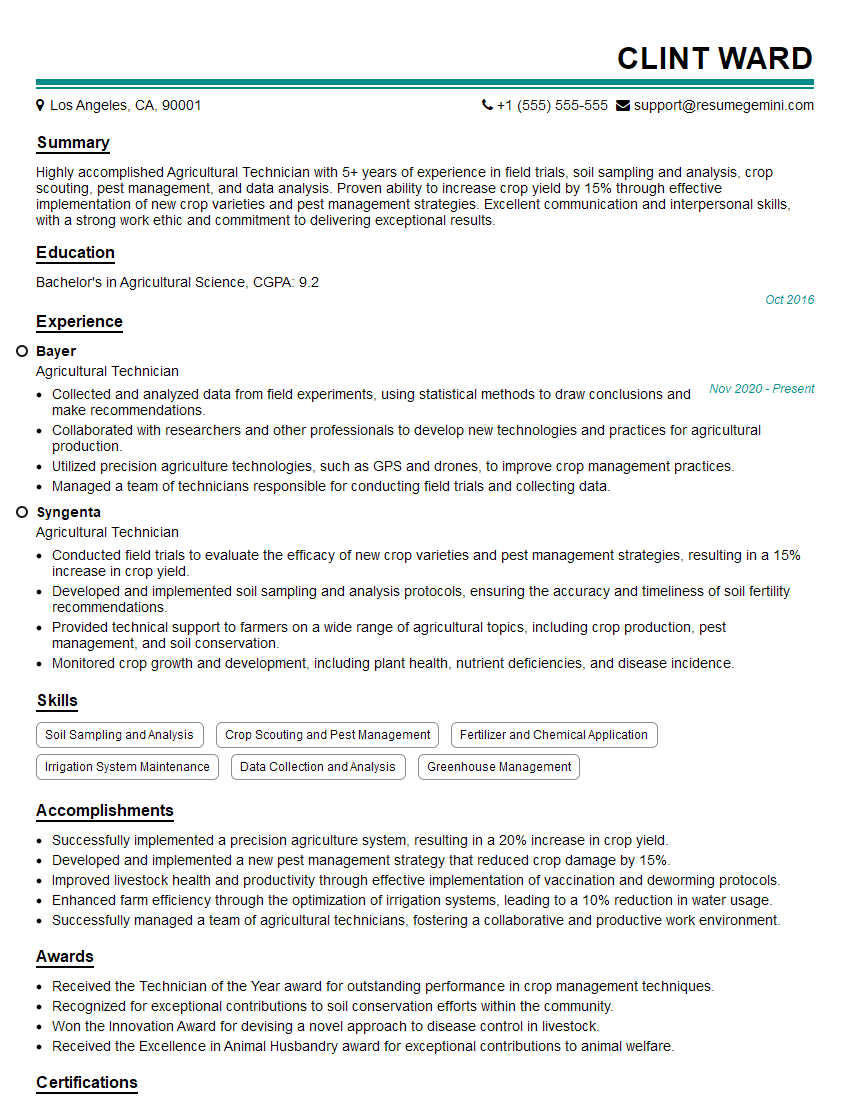
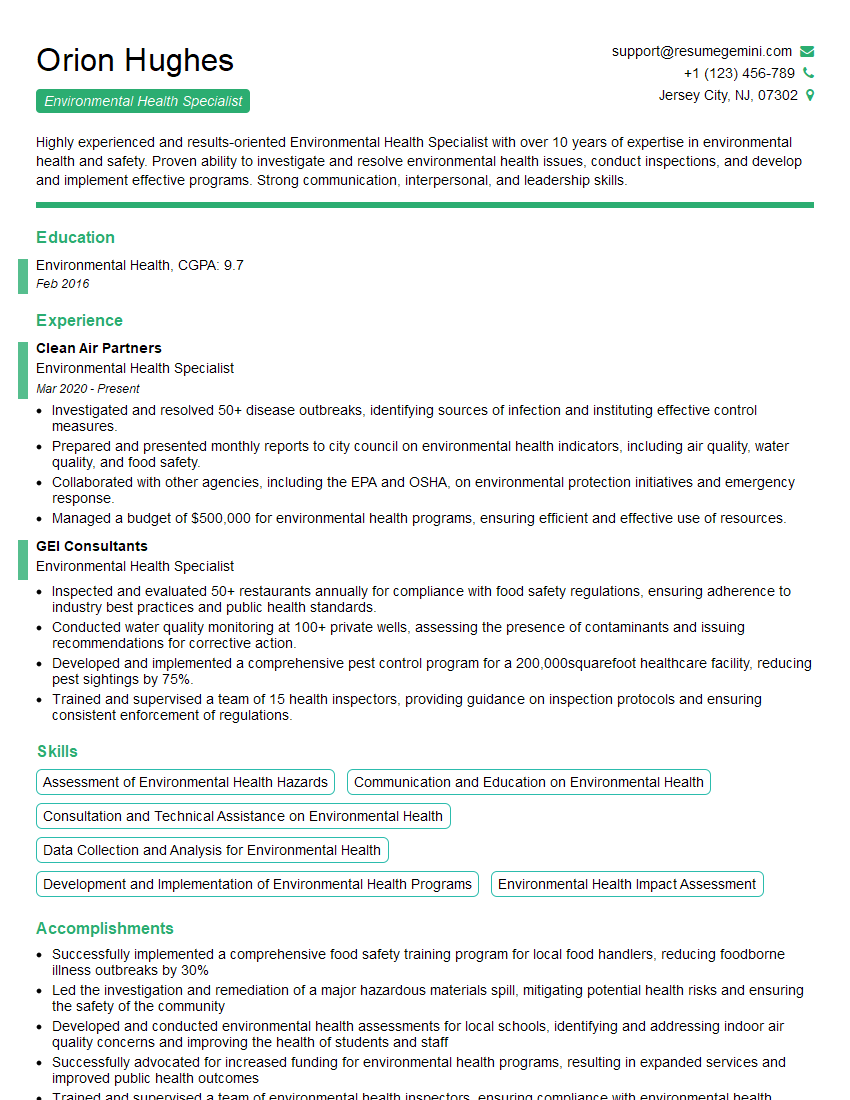
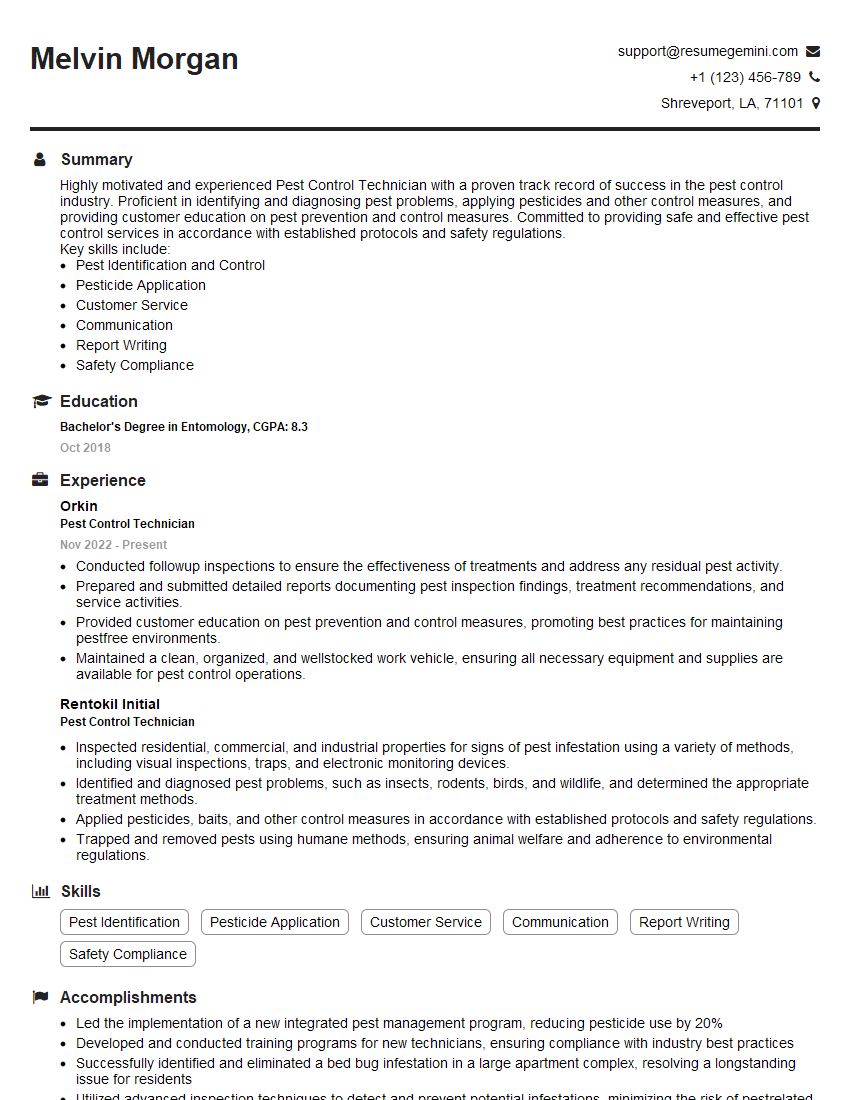
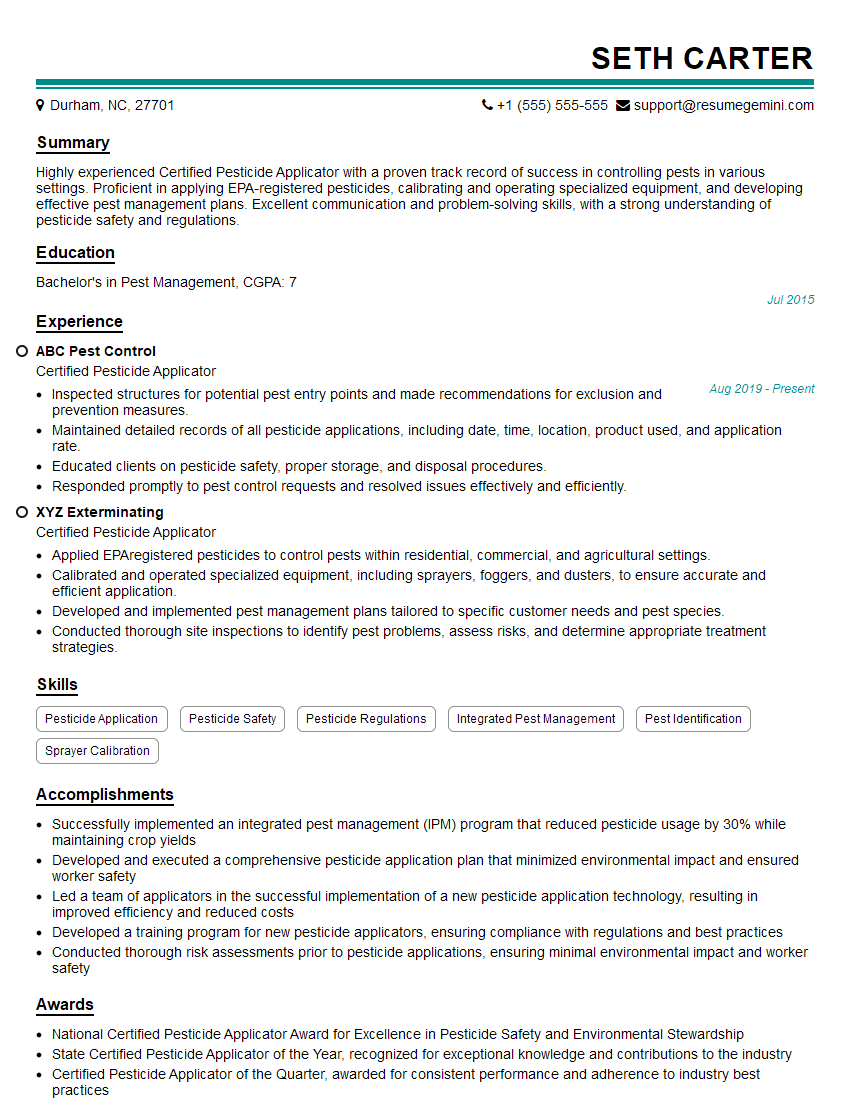
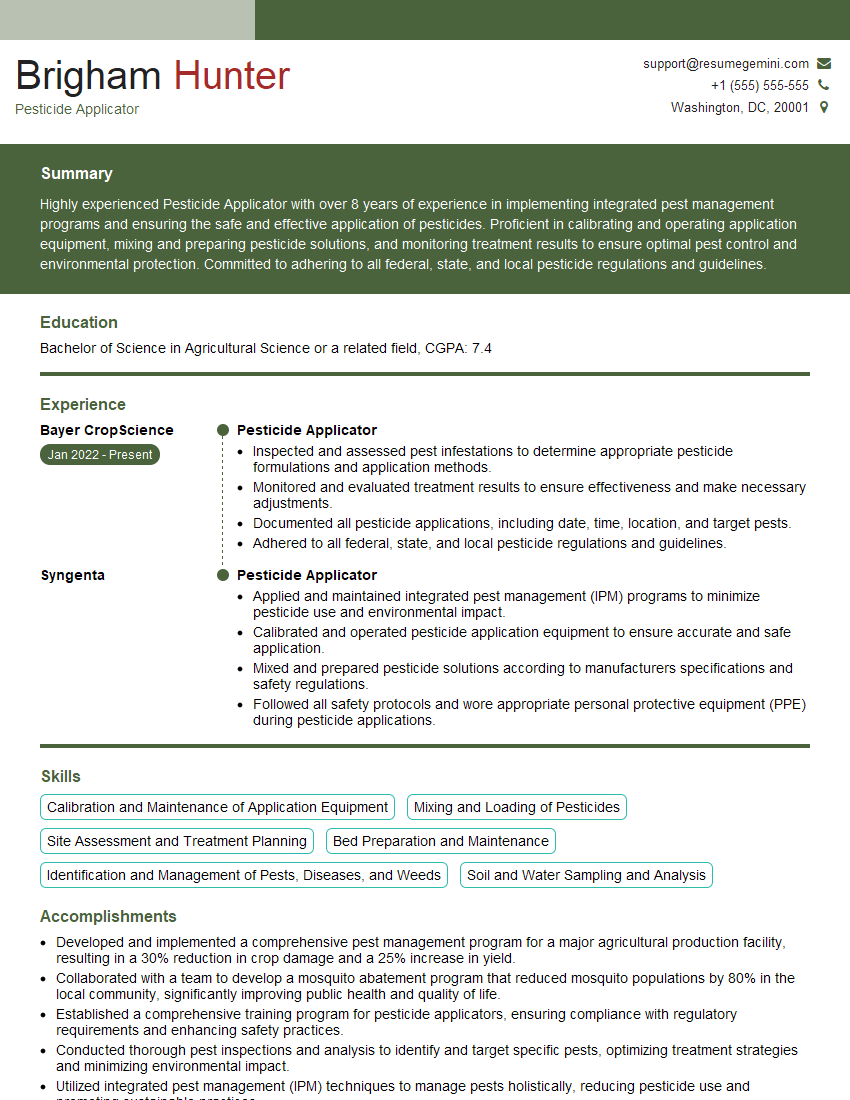
Mastering the safe and effective mixing and application of pesticides and other chemical solutions is crucial for career advancement in agriculture, landscaping, and other related fields. Demonstrating this expertise through a well-crafted resume is key to securing your dream job. An ATS-friendly resume is essential for getting your application noticed by employers. ResumeGemini is a trusted resource to help you build a professional and effective resume that highlights your skills and experience. Examples of resumes tailored to this specific field are available to help guide you through the process. Invest the time to build a strong resume – it’s your first impression on potential employers.

Explore more articles
Users Rating of Our Blogs
Share Your Experience
We value your feedback! Please rate our content and share your thoughts (optional).
What Readers Say About Our Blog
Very informative content, great job.
good