The thought of an interview can be nerve-wracking, but the right preparation can make all the difference. Explore this comprehensive guide to PV System Design interview questions and gain the confidence you need to showcase your abilities and secure the role.
Questions Asked in PV System Design Interview
Q 1. Explain the difference between monocrystalline, polycrystalline, and thin-film solar cells.
The main difference between monocrystalline, polycrystalline, and thin-film solar cells lies in their silicon structure and manufacturing process, which directly impacts their efficiency and cost.
- Monocrystalline silicon: These cells are made from a single, continuous crystal of silicon, resulting in a uniform structure. This uniformity allows for higher efficiency (typically 18-22%), as electrons can flow more easily. They are also characterized by their distinctive black color and are generally the most expensive option.
- Polycrystalline silicon: These cells are made from multiple silicon crystals fused together. This results in a less uniform structure with grain boundaries that impede electron flow slightly, leading to slightly lower efficiency (typically 15-17%) compared to monocrystalline cells. They are generally cheaper than monocrystalline cells and have a characteristic blueish color.
- Thin-film solar cells: These cells are made by depositing a thin layer of photovoltaic material onto a substrate like glass or metal. This results in a flexible, lightweight, and cost-effective option. However, their efficiency is generally lower (typically 8-13%), although advancements are being made to improve this.
Think of it like this: monocrystalline is like a perfectly smooth highway for electrons, polycrystalline is like a highway with some potholes, and thin-film is like a winding country road. The smoother the path, the more efficient the energy transfer.
Q 2. What are the key components of a PV system?
A typical PV system comprises several key components working in concert to generate and utilize electricity from sunlight.
- Solar Panels (PV Modules): These are the heart of the system, converting sunlight into direct current (DC) electricity.
- Charge Controller: This regulates the voltage and current from the solar panels, preventing overcharging of the battery bank (in off-grid systems).
- Battery Bank (Off-grid Systems): Stores energy generated during the day for use at night. Grid-tied systems typically do not include a battery bank.
- Inverter: Converts the DC electricity from the solar panels (or battery) into alternating current (AC) electricity compatible with household appliances.
- Mounting Structure: Provides structural support for the solar panels, ensuring optimal angle and orientation for maximum sunlight exposure.
- Wiring and Connectors: Connect all components of the system, ensuring safe and efficient power flow.
- Metering System: Measures the energy produced by the system and consumed by the household.
Imagine a water system: solar panels are the collection basin, the charge controller is the regulator ensuring a constant water flow, the battery is the reservoir, the inverter is the pump adapting the water pressure, and the wiring are the pipes.
Q 3. How do you calculate the array size for a given power output requirement?
Calculating the array size involves determining the number and type of solar panels needed to meet a specific power output requirement. This requires a methodical approach.
- Determine total power requirement: Calculate the total wattage needed based on the energy consumption.
- Account for system losses: Consider losses due to wiring, temperature, shading, and other factors (typically 10-15%).
- Select panel wattage: Choose the solar panel model based on factors like efficiency, cost, and availability.
- Calculate number of panels: Divide the total required wattage (after considering losses) by the wattage of each panel. Round up to the nearest whole number, as you can’t use a fraction of a panel.
- Determine array configuration: Arrange panels in strings and series/parallel configurations to optimize voltage and current for the inverter.
Example: Let’s say you need 5kW of power, with a 15% loss factor, and using 300W panels. First, adjust for losses: 5000W / (1-0.15) = 5882W. Then, divide by panel wattage: 5882W / 300W ≈ 19.6 panels. You would need 20 panels to meet the requirement.
Q 4. Describe different PV system configurations (e.g., grid-tied, off-grid, hybrid).
PV systems are configured based on their interaction with the electrical grid and energy storage capabilities.
- Grid-tied systems: These systems are directly connected to the utility grid. Excess energy is fed back into the grid, and during outages, the system shuts down for safety. They are simpler and often cheaper than other systems, benefiting from net metering programs.
- Off-grid systems: These systems are independent of the grid, relying on batteries for energy storage. Ideal for remote locations without grid access, they provide power during outages but require more complex design and component selection, including appropriate battery sizing and charge controllers.
- Hybrid systems: These combine the benefits of both grid-tied and off-grid systems. They connect to the grid but also include a battery bank for backup power and to store excess energy. They offer the most reliability and flexibility but are generally more expensive.
Think of it like transportation: grid-tied is like using public transport, off-grid is owning a car and having to maintain it yourself, while hybrid is having a car with access to public transport as well.
Q 5. Explain the concept of Maximum Power Point Tracking (MPPT).
Maximum Power Point Tracking (MPPT) is a technique used to maximize the power extracted from solar panels under varying conditions such as sunlight intensity and temperature. Solar panels don’t produce constant power; they have a maximum power point (MPP) that changes.
MPPT algorithms continuously monitor the voltage and current of the solar panel array and adjust the operating point to keep it as close as possible to the MPP, thereby maximizing energy harvest. This is crucial because at different light levels, the optimal voltage and current that maximize power output will vary. MPPT controllers ensure you’re always “getting the most juice” out of your panels.
Imagine squeezing a lemon: you need to apply just the right amount of pressure to get the most juice. MPPT works similarly, finding the ‘sweet spot’ to maximize energy generation.
Q 6. How do you size inverters for a PV system?
Sizing inverters is crucial for efficient and safe system operation. The inverter’s capacity should match the solar array’s maximum power output.
- Calculate the total DC power output: Determine the maximum power that the solar array can produce, accounting for any panel derating factors.
- Choose an inverter with appropriate AC power rating: Select an inverter whose AC power rating is slightly larger than the total DC power output of the array (typically 10-20% larger to account for inefficiencies and future expansion).
- Consider voltage and current ratings: Ensure the inverter’s input voltage and current ratings are compatible with the output of the solar array.
- Check other specifications: Consider factors such as efficiency, safety certifications, and warranty before selecting an inverter.
Example: If your PV array’s maximum DC power output is 6 kW, you should choose an inverter with a 6.6 kW to 7.2 kW AC rating.
Q 7. What are the safety considerations for designing and installing PV systems?
Safety is paramount in PV system design and installation. Several crucial aspects must be considered.
- Electrical Safety: Proper grounding, use of appropriate protective devices (circuit breakers, fuses, surge protectors), and adherence to relevant electrical codes are essential. Work should only be performed by qualified electricians.
- Fire Safety: Solar panels and inverters must be installed in accordance with fire codes to minimize the risk of fire. Proper ventilation is critical, especially for inverters.
- Structural Integrity: The mounting structure must be robust enough to withstand high winds, snow loads, and other environmental stresses.
- Personal Safety: Always use appropriate personal protective equipment (PPE), such as safety glasses, gloves, and insulated tools. Never work on a live system.
- Arc Flash Hazards: Recognize and mitigate the risks associated with high voltage DC arcs.
Regular inspections and maintenance are also essential to ensure continued safe and efficient operation of the system.
Q 8. Explain the importance of ground fault protection in PV systems.
Ground fault protection in PV systems is crucial for ensuring the safety of personnel and equipment. A ground fault occurs when a live wire comes into contact with the earth, creating a path for current to flow to ground. This can lead to electric shock, fire, and equipment damage. In PV systems, this risk is amplified by the high voltages involved and the often exposed outdoor location.
Effective ground fault protection typically involves the use of Ground Fault Circuit Interrupters (GFCIs) or Residual Current Devices (RCDs). These devices constantly monitor the current flowing in the live and neutral wires. If there’s a discrepancy – indicating current leaking to ground – they quickly trip and disconnect the circuit, preventing harm. It’s essential to have GFCIs at the inverter level and potentially at other points in the system, depending on the design and local regulations. Proper grounding of the entire system, including the array and mounting structure, is also paramount for effective ground fault protection.
For instance, imagine a situation where a branch falls on a PV array, damaging insulation and creating a path to ground. A properly installed GFCI would immediately shut down the system, preventing electrocution or a fire. Without it, the consequences could be devastating.
Q 9. How do you perform a PV system performance analysis?
PV system performance analysis involves a multifaceted approach to assess the efficiency and output of a solar energy system. It begins with data collection, usually from system monitoring equipment that records parameters such as voltage, current, power, and energy production over time. This data is then analyzed to identify performance trends and pinpoint potential issues.
The analysis typically includes:
- Performance Ratio (PR) Calculation: This key metric compares the actual energy output to the system’s theoretical maximum output, revealing overall system efficiency. A lower PR indicates losses somewhere in the system.
- Energy Yield Assessment: This evaluates the total energy produced over a specified period (daily, monthly, annually), comparing it to expected values based on site-specific solar irradiance data.
- Loss Analysis: Identifying specific causes of performance degradation. This involves looking at factors such as shading, soiling, temperature effects, inverter efficiency, and module degradation.
- Visual Inspection: A physical examination of the system components – modules, wiring, racking, inverters – to identify visible defects like damaged cells, loose connections, or shading.
Software tools can greatly facilitate this analysis, allowing for data visualization, statistical analysis, and modeling. For example, using software to compare the actual performance against a simulated model can accurately pinpoint losses. Finally, the results of the analysis should guide maintenance or repairs to optimize system performance.
Q 10. What are the common causes of PV system performance degradation?
PV system performance degradation is a gradual decrease in energy output over time, often due to several factors. Understanding these causes is crucial for effective system maintenance and longevity.
- Module Degradation: PV modules naturally degrade due to factors like ultraviolet (UV) radiation, temperature fluctuations, and PID (Potential Induced Degradation). This degradation typically follows a predictable pattern, but its rate can vary depending on module quality and environmental conditions.
- Soiling: Dust, dirt, bird droppings, and other debris accumulate on module surfaces, reducing their ability to absorb sunlight. This can be significant in dusty or polluted environments.
- Shading: Partial shading of modules can significantly reduce the overall array output due to the current mismatch between shaded and unshaded cells within a module or string.
- Inverter Degradation: Inverters also degrade over time, leading to reduced efficiency and potential failures. This can be due to thermal stress, component wear, or other factors.
- Wiring and Connector Issues: Corrosion, loose connections, or damaged wiring can lead to energy losses and system failures.
- Environmental Factors: Extreme temperatures, hailstorms, or other environmental events can directly damage modules or other components.
Regular maintenance, such as cleaning modules and monitoring system performance, helps to mitigate these issues and prolong system lifespan.
Q 11. Describe your experience with PV system modeling software.
I have extensive experience using several PV system modeling software packages, including PVsyst, Helioscope, and SAM (System Advisor Model). My proficiency extends beyond basic simulations to encompass advanced modeling techniques.
In PVsyst, for instance, I’ve created detailed models incorporating site-specific data (solar irradiance, temperature, shading profiles) to accurately predict energy yield and assess the impact of various design parameters. I’ve also used Helioscope to optimize system layouts considering shading, land constraints, and aesthetic considerations. In SAM, I’ve explored different financing scenarios to evaluate the financial viability of projects. I regularly use these tools to perform detailed energy yield assessments, optimize array designs, and conduct sensitivity analyses to inform critical design decisions. Moreover, my experience covers validating model outputs with real-world performance data, ensuring model accuracy and reliability.
For example, in a recent project, I used PVsyst to compare the performance of various string configurations for a large-scale PV plant, ultimately identifying a design that maximized energy yield while minimizing cost.
Q 12. Explain the concept of shading losses in PV systems and how to mitigate them.
Shading losses occur when objects like trees, buildings, or even other modules partially or completely block sunlight from reaching a portion of the PV array. This has a disproportionately negative impact on energy production because even a small amount of shading can drastically reduce the current output of an entire string of modules connected in series. This is due to the ‘bypass diodes’ in the modules designed to protect them from hot spots, but they shunt some energy.
Mitigation strategies include:
- Careful Site Selection and System Layout: Thorough site analysis to minimize potential shading sources. Optimizing the array orientation and tilt angle to maximize sunlight exposure throughout the year.
- Optimized String Design: Using bypass diodes in modules or using microinverters which can overcome shading issues on individual panels. In case of shading, some systems use partial shading optimizers to minimize the effect of shading.
- Shading Analysis Software: Using specialized software to predict and quantify shading losses, assisting in optimal system design.
- Tree Trimming or Removal: Where feasible, removing or trimming trees or other vegetation that cause shading.
Imagine a scenario where a single tree casts a shadow over a portion of a PV array. This could significantly reduce the overall system output, even if only a small percentage of the modules are affected. Proper planning and analysis are essential to minimize such losses.
Q 13. What are the different types of solar trackers and their applications?
Solar trackers are mechanisms that adjust the orientation of PV modules throughout the day to maximize their exposure to sunlight. This leads to increased energy production compared to fixed-tilt systems.
There are various types:
- Single-Axis Trackers: These rotate around a single axis, either east-west (azimuth tracking) or north-south (altitude tracking). East-west tracking is more common and generally offers better energy gain.
- Dual-Axis Trackers: These rotate around two axes, allowing them to follow the sun’s path across the sky with greater precision. This results in the highest energy yield but comes with increased costs and complexity.
- Fixed-Tilt Systems: While not trackers, it’s important to contrast them. They offer simplicity and lower cost, but their energy generation is less compared to trackers. They’re optimized for a specific location and time of year.
The choice of tracker type depends on factors like cost, energy yield requirements, site characteristics (e.g., available land, terrain), and maintenance considerations. Dual-axis trackers are often chosen for large-scale utility projects where maximizing energy output is paramount, while single-axis trackers are a cost-effective choice for many smaller installations.
Q 14. How do you design for different environmental conditions (e.g., snow load, wind load)?
Designing PV systems for various environmental conditions is crucial to ensure structural integrity, safety, and optimal performance. This involves considering factors like snow load, wind load, seismic activity, and extreme temperatures. These considerations are crucial aspects of the structural and electrical design of the PV system.
Snow Load: In areas with significant snowfall, the design must account for the weight of accumulated snow on the array. This involves determining the appropriate snow load based on local building codes and using structural components (e.g., mounting structures, racking systems) capable of withstanding this load. Calculations are done based on the expected peak snow depth and density.
Wind Load: Wind can exert significant force on PV arrays, especially in exposed locations. The design must ensure the system can withstand high winds without damage or failure. This involves engineering calculations based on wind speed data and using structurally sound components designed to resist wind loads. The use of properly engineered ground mounting systems and suitable anchoring methods is particularly important to meet wind load requirements.
Other Conditions: Seismic design considerations are essential in earthquake-prone areas. Extreme temperatures influence material selection, ensuring components can tolerate temperature extremes without degradation. This all contributes to ensuring the PV system can operate safely and reliably in a variety of environmental conditions over its lifespan.
Q 15. Explain your understanding of NEC codes related to PV systems.
The National Electrical Code (NEC) provides crucial safety guidelines for designing and installing photovoltaic (PV) systems. Understanding these codes is paramount for ensuring a system’s safety and compliance. Key articles relevant to PV systems include Article 690, specifically addressing PV systems, and related articles like Article 705 (interconnected electric power production sources) which covers interconnection with the utility grid. Article 690 covers various aspects, from grounding and bonding requirements to overcurrent protection and system grounding. For example, NEC 690.8 requires specific grounding techniques to minimize the risk of electrical shock, and NEC 690.12 deals with overcurrent protection devices, like fuses and circuit breakers, preventing damage to the system and ensuring safety. Violating these codes can lead to system failure, fire hazards, and legal repercussions. In my experience, I regularly consult the NEC during all stages of PV system design, from initial concept to final inspection, to ensure complete adherence and client safety.
Career Expert Tips:
- Ace those interviews! Prepare effectively by reviewing the Top 50 Most Common Interview Questions on ResumeGemini.
- Navigate your job search with confidence! Explore a wide range of Career Tips on ResumeGemini. Learn about common challenges and recommendations to overcome them.
- Craft the perfect resume! Master the Art of Resume Writing with ResumeGemini’s guide. Showcase your unique qualifications and achievements effectively.
- Don’t miss out on holiday savings! Build your dream resume with ResumeGemini’s ATS optimized templates.
Q 16. How do you calculate the energy yield of a PV system?
Calculating the energy yield of a PV system involves several steps. First, you need to determine the system’s rated power, usually expressed in kilowatts (kWp), representing peak power output under standard test conditions (STC). Next, you need reliable solar irradiance data for the specific location. This data, often obtained from meteorological databases or online tools, provides information on solar radiation levels (kWh/m²/day or similar). Crucially, you also need to consider the performance ratio (PR), which accounts for system losses such as inverter efficiency, shading, soiling, and temperature effects. The basic formula is:
Annual Energy Yield (kWh/year) = System Power (kWp) * Solar Irradiance (kWh/m²/year) * Panel Area (m²) * Performance RatioLet’s say we have a 5 kWp system, an average annual solar irradiance of 1500 kWh/m²/year, a panel area of 15 m², and a performance ratio of 0.75. The calculation would be: 5 kWp * 1500 kWh/m²/year * 15 m² * 0.75 ≈ 84375 kWh/year. Note that this is an estimation; sophisticated software tools provide more accurate predictions by accounting for various factors such as system tilt, azimuth, and seasonal variations in solar radiation.
Q 17. What are the different types of batteries used in off-grid PV systems?
Off-grid PV systems rely on batteries for storing energy generated during the day for use at night or during periods of low solar irradiance. Several battery chemistries are commonly used:
- Lead-acid batteries: These are the most cost-effective but have a shorter lifespan and lower energy density compared to other options. They are further categorized into flooded, gel, and AGM (absorbed glass mat) types, each with its own characteristics and maintenance requirements.
- Lithium-ion batteries: These offer higher energy density, longer lifespan, and faster charging capabilities, making them increasingly popular despite their higher initial cost. Different lithium-ion chemistries (e.g., LiFePO4, NMC) exist, each with specific performance and safety profiles.
- Flow batteries: These are suitable for large-scale energy storage due to their scalability and long lifespan. However, they are typically more expensive and require more space than other battery types.
The choice of battery type depends on factors like budget, available space, desired lifespan, and required discharge rate. For example, a remote cabin application might utilize a cost-effective lead-acid system, whereas a larger off-grid home might benefit from the longer lifespan of a lithium-ion battery bank.
Q 18. Explain the concept of battery sizing for off-grid PV systems.
Battery sizing in off-grid PV systems is crucial to ensure adequate energy storage for the load demand. It involves determining the required battery capacity (in amp-hours, Ah) and the appropriate voltage. The process starts with calculating the total daily energy consumption of all loads, considering their power rating and usage time. This energy demand (in kWh) needs to be covered by the battery bank, considering several factors:
- Days of autonomy (DoA): The number of days the system must operate on battery storage alone, usually 3-5 days, depending on the application.
- Depth of discharge (DoD): The percentage of the battery’s capacity that is discharged daily, typically between 50% and 80%, to maximize lifespan and avoid over-discharge.
- Battery voltage: This is chosen based on the inverter and other system components’ voltage requirements.
The formula for battery sizing is roughly:
Required Battery Capacity (Ah) = (Daily Energy Consumption (kWh) * 1000) / (Battery Voltage (V) * DoD * Voltage Efficiency)Voltage efficiency typically accounts for losses in the charging and discharging process. Careful consideration of DoA and DoD is critical. A higher DoA requires a larger battery bank, providing greater resilience to prolonged periods of low sunlight. Similarly, a lower DoD extends battery lifespan but needs a larger capacity for the same daily energy consumption.
Q 19. How do you select appropriate cables and connectors for a PV system?
Selecting appropriate cables and connectors for a PV system is vital for safety and performance. The choice depends on factors like current carrying capacity, voltage rating, and environmental conditions. NEC Article 690 provides detailed guidance on wiring requirements. We must consider:
- Current rating: Cables must have a current rating sufficient to handle the maximum current flow without overheating. Oversized cables are preferred to minimize voltage drop and ensure safety.
- Voltage rating: Cables must have a voltage rating exceeding the system’s operating voltage to prevent insulation breakdown.
- Cable type: PV cables are usually made of materials suitable for outdoor use and UV resistance, often using materials like cross-linked polyethylene (XLPE).
- Connector type: PV connectors must be specifically designed for outdoor use and must be appropriately rated for the current and voltage of the system. MC4 connectors are a common example.
- Wiring methods: Wiring methods like conduit protection are used to shield cables from physical damage and environmental exposure.
Incorrect cable sizing can lead to significant voltage drop, reduced system efficiency, and potential fire hazards. In my experience, proper cable selection is done based on detailed load calculations and adherence to NEC guidelines to guarantee system safety and efficiency.
Q 20. What are the key factors to consider when designing a PV system for a specific location?
Designing a PV system for a specific location requires careful consideration of many site-specific factors:
- Solar irradiance: The amount of solar radiation received at the location, which can vary significantly based on latitude, altitude, climate, and shading. This information is crucial for system sizing.
- Shading: Trees, buildings, or other structures can significantly reduce energy production. Detailed shading analysis, often using specialized software, is essential to identify and minimize shading effects.
- Climate conditions: Temperature, humidity, wind speed, and precipitation can affect system performance and component lifespan. This informs the selection of appropriate equipment, especially panels and inverters.
- Roof/ground conditions: The suitability of the installation location (rooftop, ground-mounted) regarding structural integrity, shading, and access for maintenance.
- Grid connection: Whether the system is grid-tied, off-grid, or hybrid affects the overall design, requiring different components and safety considerations. Utility interconnection requirements must be met.
- Local regulations and permits: Local building codes, fire codes, and utility interconnection requirements must be checked and adhered to.
For instance, a system in a sunny desert location would require different design considerations than a system in a cloudy, northern climate. Similarly, a grid-tied system will have a different design than an off-grid system. Careful analysis of all these factors ensures that the PV system is optimized for the specific location and meets all applicable regulations.
Q 21. Describe your experience with PV system commissioning and testing.
PV system commissioning and testing are crucial steps to ensure proper functionality and safety. My experience involves a systematic process, starting with a thorough visual inspection of all components, checking for physical damage or installation errors. Next, I perform electrical tests, including voltage and current measurements at various points in the system, checking for correct wiring and ground connections. Testing includes ensuring proper operation of the inverter, checking its efficiency, and verifying that the system’s protection devices (such as fuses and circuit breakers) are functioning correctly. Performance testing then verifies the system’s energy production, often using data loggers to monitor output over a period of time. Finally, thorough documentation of the testing procedures and results is essential. In one project, I identified a faulty string of solar panels during commissioning; timely detection prevented significant energy loss and safety hazards. I use specialized equipment such as multimeters, clamp meters, and data loggers to ensure accurate and reliable testing results.
Q 22. Explain the importance of system monitoring and data logging in PV systems.
System monitoring and data logging are crucial for optimizing PV system performance, identifying potential issues early, and ensuring long-term reliability. Think of it like a check-up for your system – it allows you to see how well it’s functioning and catch problems before they become major headaches.
Performance Optimization: Real-time data on energy production, inverter efficiency, and module performance allows for adjustments to maximize energy yield. For instance, if one string of modules is consistently underperforming, we can investigate and address the issue (shading, faulty module, etc.).
Fault Detection and Prevention: Monitoring identifies anomalies like drops in voltage, temperature spikes, or unusual current flows, enabling timely intervention. Imagine a sudden drop in power; data logging can pinpoint the source, perhaps a malfunctioning inverter, preventing a larger system failure.
Predictive Maintenance: Analyzing trends over time can predict future issues. For example, observing a gradual decrease in module efficiency can indicate degradation and allow for proactive replacement before significant power loss.
Warranty and Insurance Claims: Detailed performance data is essential for validating warranty claims and insurance payouts in case of unexpected events. This data provides objective evidence to support any claims.
Q 23. How do you handle potential issues during the design and installation phase of a PV project?
Handling potential issues requires a proactive approach throughout the design and installation phases. This involves careful planning, rigorous quality control, and a contingency plan for unexpected challenges.
Design Phase: Thorough site assessments are essential. This includes evaluating shading, roof structural integrity, and grid connection capabilities. We use software simulations to predict system performance under various conditions and identify potential bottlenecks.
Risk Assessment: Identifying potential issues – such as weather delays, material shortages, or permit complications – helps establish a realistic timeline and mitigation strategies. A detailed risk assessment matrix helps to prioritize and address these issues.
Quality Control: Stringent checks at every stage are critical. This includes inspecting modules, inverters, and wiring for defects before installation and testing the entire system after completion to ensure proper functioning. We use specialized testing equipment to validate the electrical and safety aspects of the system.
Communication: Clear and consistent communication with clients, contractors, and utility companies is vital throughout the project. This facilitates timely resolution of any issues that arise.
Contingency Planning: Unexpected events are inevitable. Having a backup plan for material delays, weather interruptions, or other unforeseen circumstances is essential for keeping the project on schedule and within budget.
Q 24. What are your preferred software tools for PV system design?
My preferred software tools depend on the project’s specifics but generally include a combination of specialized PV design software and general-purpose tools.
PVsyst: This is a powerful software for detailed simulations, encompassing various aspects from module selection to energy yield estimation, taking into account shading and various weather conditions.
Helioscope: Excellent for shading analysis and quick system layouts, providing detailed visual representations and performance projections.
Autodesk AutoCAD/Revit: For creating precise drawings and schematics, especially important for integrating the PV system into the building’s design.
Spreadsheet Software (Excel, Google Sheets): For data management, calculations, and financial analysis, allowing me to create detailed project proposals and cost breakdowns.
Choosing the right toolset ensures accuracy, efficiency, and comprehensive analysis throughout the design process. The combination allows for detailed simulations, effective visualizations, and streamlined data management.
Q 25. Describe your experience working with different types of PV modules.
My experience encompasses a wide range of PV modules, including monocrystalline, polycrystalline, and thin-film technologies. Each type presents unique characteristics affecting design choices.
Monocrystalline: These modules offer higher efficiency and better performance in low-light conditions. They are typically more expensive but justify the cost in situations requiring maximum energy output from limited space.
Polycrystalline: A more cost-effective option with slightly lower efficiency than monocrystalline. They are a suitable choice for projects where budget is a primary concern without sacrificing too much energy production.
Thin-Film: These modules are flexible and lightweight, ideal for integrating into unconventional surfaces. However, they generally exhibit lower efficiency and require larger surface areas for equivalent power generation.
The selection depends on factors such as budget, available space, aesthetic considerations, and the client’s energy needs. I carefully assess each project’s requirements before selecting the optimal module type.
Q 26. Explain the concept of PV system performance guarantees.
PV system performance guarantees are crucial for ensuring the system meets the expected energy production and safeguarding the client’s investment. These guarantees usually cover a specific period (e.g., 25 years) and often include two key components:
Power Output Guarantee: This guarantees a minimum level of power output over the warranty period. A typical guarantee might state that the system will produce at least 90% of its rated power after 10 years and 80% after 25 years. This accounts for the natural degradation of PV modules over time.
Materials and Workmanship Guarantee: This covers defects in the materials and workmanship during installation. It typically includes repairs or replacements of faulty components.
It’s important to specify clear metrics and measurement procedures in the guarantee to avoid ambiguity. Independent testing and verification might be necessary to validate the performance claims.
Q 27. How do you address potential grid intermittency issues with PV systems?
Grid intermittency, the unpredictable nature of grid power supply, poses a challenge for PV systems. Solutions involve various strategies to mitigate its impact:
Energy Storage: Battery systems can store excess energy generated during peak production and release it during periods of grid instability or low solar irradiance. This enhances grid resilience and ensures a continuous power supply.
Grid-Tied Inverters with Anti-Islanding Protection: These inverters automatically disconnect from the grid when power outages occur, preventing dangerous situations for utility workers. They also help to maintain grid stability.
Frequency Regulation Services: Advanced inverters can participate in frequency regulation, supporting the stability of the overall grid. They can adjust their power output in response to grid frequency fluctuations, helping to balance supply and demand.
Load Management: Intelligent load management systems can optimize energy consumption, reducing reliance on the grid during periods of intermittency. This might involve prioritizing essential loads or shifting non-critical loads to off-peak hours.
The best solution depends on factors such as the specific grid’s characteristics, the client’s energy needs, and the overall budget.
Q 28. What are the future trends and challenges in PV system design?
The future of PV system design is marked by several exciting trends and challenges:
Higher Efficiency Modules: Continued advancements in module technology are pushing efficiency levels higher, leading to smaller footprints and reduced land requirements.
Smart Grid Integration: Greater integration with smart grids enables better energy management, demand-side response, and grid stability.
Energy Storage Solutions: More efficient and affordable battery technologies are facilitating wider adoption of energy storage, enhancing grid resilience and enabling greater reliance on renewable energy sources.
Artificial Intelligence (AI) and Machine Learning (ML): AI and ML are being used for predictive maintenance, performance optimization, and improved fault detection in PV systems.
Building-Integrated Photovoltaics (BIPV): Integrating PV modules directly into building materials is gaining popularity, combining energy generation with architectural design.
Challenges: Scaling up renewable energy infrastructure requires addressing challenges like efficient grid management, lifecycle management of PV systems, and addressing the environmental impact of PV module manufacturing and disposal.
The future of PV design necessitates a holistic approach encompassing technological advancements, economic viability, and environmental sustainability.
Key Topics to Learn for PV System Design Interview
- System Sizing and Performance Calculations: Understanding the factors influencing PV system output, including solar irradiance, panel efficiency, and system losses. Learn to accurately size systems to meet specific energy demands.
- Component Selection and Specifications: Gain expertise in choosing appropriate PV modules, inverters, racking systems, and other critical components based on project requirements, budget, and environmental considerations. Understand datasheets and performance curves.
- Design Software and Tools: Familiarize yourself with industry-standard PV system design software and simulation tools. Practice using these tools to model and analyze different system configurations.
- Electrical Design and Safety: Master the principles of electrical design, including wiring diagrams, grounding, overcurrent protection, and safety regulations. Understand NEC codes and other relevant safety standards.
- Economic Analysis and Financial Modeling: Develop skills in performing cost estimations, calculating ROI, and evaluating the financial viability of different PV system designs. Understand net metering and other economic incentives.
- Site Assessment and Site Surveys: Understand how to evaluate a potential PV system installation site, considering factors such as shading, roof orientation, and structural integrity. Learn to interpret site data and generate suitable design proposals.
- Grid Integration and Interconnection: Learn the procedures and requirements for connecting PV systems to the electrical grid. Understand the different interconnection schemes and their implications.
- Troubleshooting and Maintenance: Develop your problem-solving skills related to PV system performance issues. Understand common maintenance procedures and troubleshooting techniques.
Next Steps
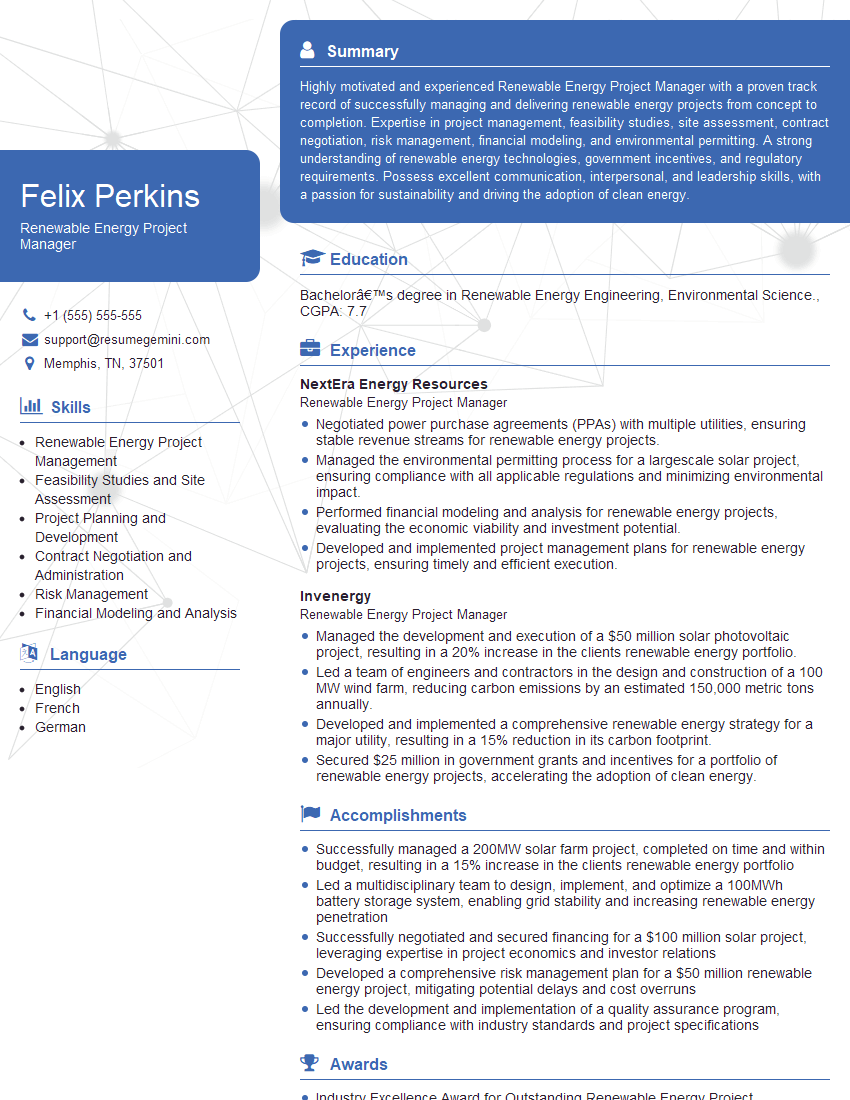
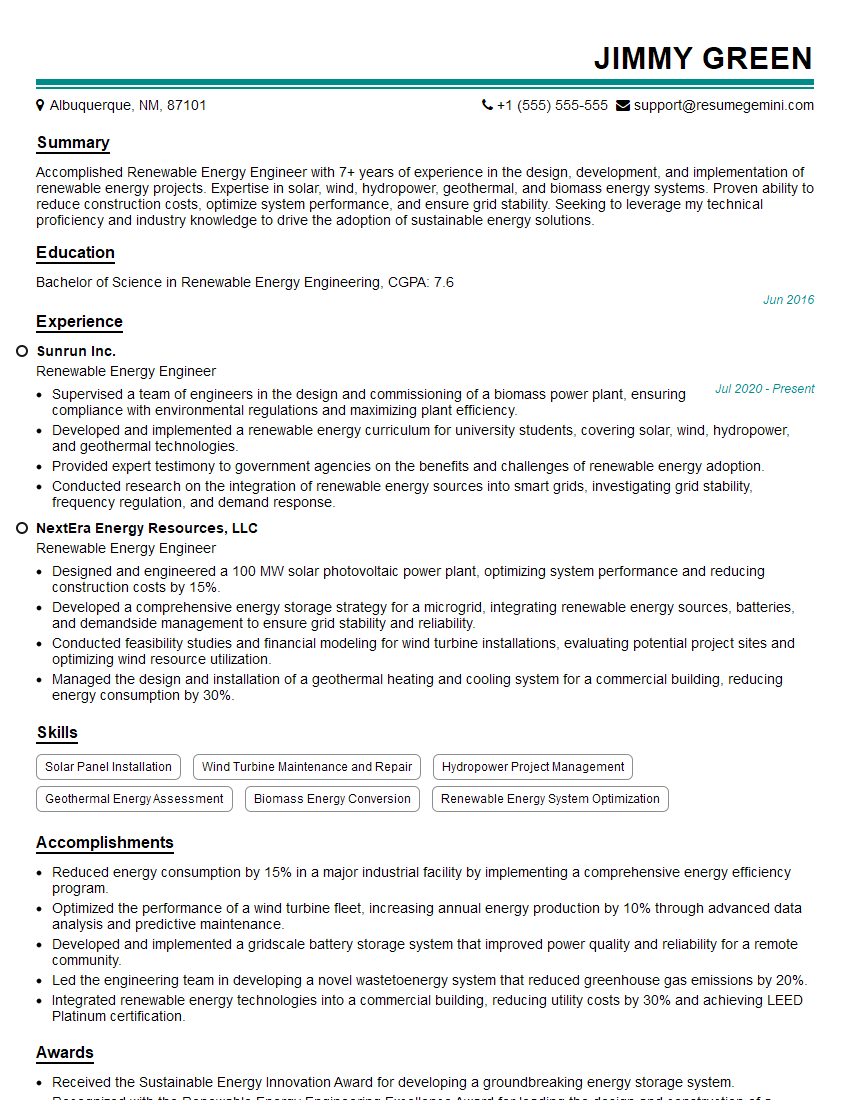
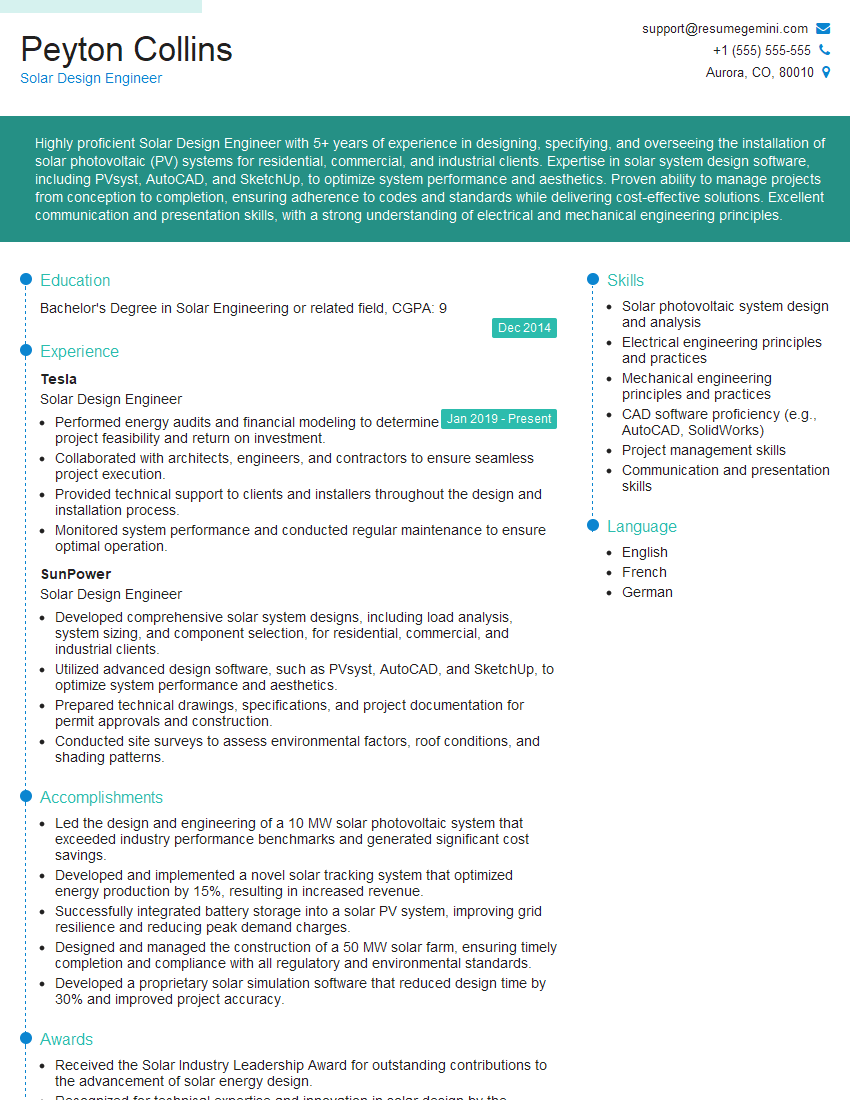
Mastering PV system design is crucial for career advancement in the rapidly growing renewable energy sector. It opens doors to exciting opportunities and higher earning potential. To maximize your job prospects, creating a strong, ATS-friendly resume is essential. ResumeGemini can help you build a professional and impactful resume that highlights your skills and experience effectively. ResumeGemini offers examples of resumes tailored to PV System Design, providing you with templates and guidance to create a compelling application.
Explore more articles
Users Rating of Our Blogs
Share Your Experience
We value your feedback! Please rate our content and share your thoughts (optional).
What Readers Say About Our Blog
Very informative content, great job.
good