Feeling uncertain about what to expect in your upcoming interview? We’ve got you covered! This blog highlights the most important Marketing and advertising knowledge interview questions and provides actionable advice to help you stand out as the ideal candidate. Let’s pave the way for your success.
Questions Asked in Marketing and advertising knowledge Interview
Q 1. Explain the difference between inbound and outbound marketing.
Inbound and outbound marketing represent two fundamentally different approaches to reaching potential customers. Inbound marketing focuses on attracting customers through valuable content and experiences that are relevant to them. Think of it as setting up a welcoming ‘magnet’ for your ideal customer. Outbound marketing, on the other hand, is more proactive, pushing your message out to potential customers through various channels, regardless of whether they’ve actively expressed interest. It’s like shouting your message from a megaphone.
- Inbound Marketing: Examples include blogging, SEO optimization, social media engagement, creating helpful videos, and email marketing (only to those who have opted in). The goal is to earn their attention, not buy it.
- Outbound Marketing: Examples include cold calling, print advertising, direct mail, television commercials, and unsolicited emails. The focus is on reaching a wide audience, hoping to capture interest.
Consider a business selling organic dog food. Inbound marketing might involve creating a blog post about the benefits of organic dog food, sharing recipes, and engaging with pet owners on social media. Outbound marketing would be placing ads in pet magazines or running television commercials.
Q 2. Describe your experience with SEO best practices.
My SEO experience encompasses a wide range of best practices, from keyword research and on-page optimization to off-page strategies and technical SEO. I’m proficient in using tools like SEMrush and Google Search Console to analyze website performance, identify areas for improvement, and track rankings. I understand the importance of creating high-quality, relevant content that satisfies user search intent.
For instance, in a recent project for a client in the e-commerce space, I implemented a comprehensive SEO strategy that included:
- Keyword Research: Identifying high-volume, low-competition keywords relevant to their products using tools like Ahrefs and Google Keyword Planner.
- On-Page Optimization: Optimizing title tags, meta descriptions, header tags, and image alt text with relevant keywords. Ensuring the website’s content is well-structured, easy to navigate and engaging.
- Off-Page Optimization: Building high-quality backlinks from reputable websites through guest blogging, outreach, and content promotion.
- Technical SEO: Improving website speed and performance, ensuring mobile-friendliness, and fixing crawl errors.
The results were a significant increase in organic traffic, leading to a substantial boost in sales.
Q 3. How would you measure the success of a social media campaign?
Measuring the success of a social media campaign requires a multifaceted approach. It’s not just about vanity metrics like likes and follows; we need to focus on key performance indicators (KPIs) that align with the campaign’s overall goals.
Here are some key metrics I’d track:
- Reach and Impressions: How many unique users saw the campaign’s content?
- Engagement: Likes, comments, shares, and clicks – indicating audience interest and interaction.
- Website Traffic: Did the campaign drive traffic to the website?
- Conversions: Did the campaign lead to sales, sign-ups, or other desired actions? (e.g., form submissions, downloads)
- Brand Sentiment: What is the overall tone of the comments and mentions related to the campaign? Is it positive, negative, or neutral?
- Return on Investment (ROI): This measures the profitability of the campaign by comparing the cost of the campaign against the revenue generated.
The specific metrics chosen depend heavily on the campaign’s objectives. For example, a campaign focused on brand awareness might prioritize reach and impressions, while a campaign aiming to drive sales would focus more on conversions and ROI. I would also utilize A/B testing to optimize ad creatives and targeting for better results.
Q 4. What is your experience with A/B testing and its applications?
A/B testing, also known as split testing, is a crucial method for optimizing marketing campaigns and website elements. It involves creating two or more versions of a webpage, ad, or email and comparing their performance to determine which version performs better. This allows for data-driven decision making and continuous improvement.
My experience with A/B testing includes:
- Landing Page Optimization: Testing different headlines, calls to action (CTAs), and images to maximize conversion rates.
- Email Marketing: Comparing subject lines, email copy, and send times to improve open rates and click-through rates.
- Ad Creative Testing: Experimenting with different visuals, copy, and targeting options to improve click-through rates and conversions.
For example, I once A/B tested two different email subject lines for a client’s newsletter. One subject line was more direct and benefit-driven, while the other was more playful and intriguing. The data revealed that the direct subject line significantly outperformed the playful one in terms of open rates, leading to a noticeable increase in engagement and conversions.
Q 5. Explain the concept of a marketing funnel and its stages.
The marketing funnel is a visual representation of the customer journey, illustrating the stages a prospect goes through before becoming a customer and potentially a loyal advocate. Each stage requires a different marketing approach.
- Awareness: The customer becomes aware of your brand or product, perhaps through a social media post or a search engine result. Marketing efforts at this stage focus on generating leads and building brand awareness.
- Interest: The customer shows interest in your product or service, perhaps by visiting your website or downloading a piece of content. Content marketing, targeted advertising, and SEO are crucial here.
- Decision: The customer evaluates your offering against competitors and decides whether or not to make a purchase. Product demos, comparisons, and testimonials are effective at this stage.
- Action: The customer makes a purchase or takes the desired action. This is where a clear and streamlined checkout process, along with relevant calls-to-action, is essential.
- Loyalty: The customer becomes a repeat buyer and advocates for your brand. This stage involves building strong relationships, providing excellent customer service, and encouraging reviews and referrals.
Understanding the marketing funnel allows you to tailor your marketing efforts at each stage, increasing the likelihood of converting prospects into customers.
Q 6. How do you stay updated on the latest marketing trends?
Staying updated on the latest marketing trends is crucial for remaining competitive. I utilize a multi-pronged approach:
- Industry Publications and Blogs: I regularly read leading marketing publications and blogs, such as MarketingProfs, HubSpot, and Neil Patel’s blog, to stay abreast of the latest news and insights.
- Conferences and Webinars: Attending industry conferences and webinars provides valuable opportunities to network with other professionals and learn about cutting-edge trends and best practices.
- Social Media: I follow influential marketers and industry leaders on social media platforms like Twitter and LinkedIn to stay informed on current topics and discussions.
- Online Courses and Certifications: I consistently invest in online courses and certifications to enhance my knowledge and expertise in new areas of marketing, such as AI-driven marketing.
This multifaceted approach ensures that I am continuously learning and adapting to the ever-evolving landscape of digital marketing.
Q 7. What are some key metrics you would track for a successful marketing campaign?
The key metrics I’d track for a successful marketing campaign depend on the specific campaign goals, but some universally relevant ones include:
- Website Traffic: Measuring the volume and source of website traffic to understand campaign effectiveness.
- Conversion Rate: Tracking the percentage of visitors who complete a desired action (e.g., purchase, sign-up).
- Customer Acquisition Cost (CAC): Determining the cost of acquiring a new customer to assess campaign ROI.
- Customer Lifetime Value (CLTV): Estimating the total revenue generated by a customer throughout their relationship with the business.
- Return on Investment (ROI): Measuring the profitability of the campaign by comparing the cost of the campaign against the revenue generated.
- Brand Awareness: Tracking brand mentions, social media engagement, and website traffic to gauge brand visibility.
By closely monitoring these metrics, I can identify areas of strength and weakness, optimize campaigns for better performance, and demonstrate the clear impact of marketing efforts on the business’s bottom line.
Q 8. Describe your experience with Google Analytics.
Google Analytics (GA) is my bread and butter. It’s the cornerstone of any effective digital marketing strategy, providing invaluable insights into website traffic, user behavior, and campaign performance. My experience encompasses setting up and configuring GA accounts, defining custom dashboards and reports, and leveraging its features for data-driven decision-making. For instance, I once used GA to identify a significant drop-off in conversion rates on a specific landing page. By analyzing the bounce rate, average session duration, and heatmaps, we determined the page’s confusing layout was the culprit. We redesigned the page, resulting in a 30% increase in conversions.
I’m proficient in using various GA reports, including Acquisition, Behavior, and Conversions. I understand the importance of segmenting data to drill down into specific user groups and understand their unique journeys. Beyond standard reporting, I’m also comfortable with more advanced features like custom dimensions and metrics, allowing for greater granularity and detailed analysis tailored to specific business objectives.
Furthermore, I’m experienced in integrating GA with other marketing platforms like Google Ads, allowing for comprehensive campaign tracking and performance optimization. I can utilize the data to not only monitor performance but also to proactively adjust strategies and improve ROI.
Q 9. What is your experience with paid advertising (PPC)?
Paid advertising, particularly Pay-Per-Click (PPC), is another area where I have extensive experience. My expertise spans various platforms, primarily Google Ads and Bing Ads. I’m adept at keyword research, ad copywriting, campaign structuring, and budget management. My approach is always data-driven, constantly monitoring key metrics like click-through rate (CTR), conversion rate, cost-per-acquisition (CPA), and return on ad spend (ROAS) to optimize campaigns for maximum impact.
For example, in a recent campaign for an e-commerce client, we utilized Google Ads’ smart bidding strategies coupled with detailed audience targeting. By focusing on high-intent keywords and leveraging remarketing, we were able to significantly reduce CPA while increasing conversions. We achieved this by A/B testing various ad creatives and landing pages, and continuously refining our targeting parameters based on performance data.
I understand the nuances of different bidding strategies, from manual bidding to automated strategies like Maximize Conversions and Target CPA. I also have experience with various ad formats, including search, display, and shopping campaigns, tailoring my approach to each platform’s strengths and the specific goals of the campaign.
Q 10. How would you develop a marketing strategy for a new product launch?
Launching a new product requires a comprehensive marketing strategy encompassing multiple channels and tactics. My approach starts with a thorough understanding of the product, target audience, and competitive landscape. This involves conducting market research, identifying key customer segments, and analyzing competitor offerings.
The strategy would then be built around a clear value proposition, highlighting the unique benefits of the product and addressing the needs of the target audience. This value proposition would serve as the foundation for all marketing communications. A multi-channel approach would be crucial, integrating elements like:
- Pre-launch Buzz Generation: This could involve creating anticipation through teaser campaigns on social media, influencer marketing, and email marketing to build a strong lead list.
- Launch Day Promotion: A coordinated effort across all channels including press releases, social media blitzes, paid advertising campaigns (PPC, social media ads), and email blasts to announce the product and drive initial sales.
- Post-Launch Engagement: Sustained marketing efforts such as content marketing, SEO, email nurturing campaigns, and community building to maintain engagement and drive repeat purchases.
- Data-Driven Optimization: Continuous monitoring of campaign performance across all channels, using analytics to track key metrics and make data-driven adjustments to maximize ROI.
Throughout the entire process, consistent messaging and brand identity are crucial. Success depends on a well-defined strategy and consistent execution, tracking progress meticulously and adapting as needed.
Q 11. What are your strengths and weaknesses in digital marketing?
My strengths lie in my analytical abilities, data-driven decision-making, and strategic thinking. I’m adept at interpreting complex data sets and using them to inform marketing strategies. I excel at identifying opportunities for improvement and implementing data-driven solutions. I also possess excellent communication and collaboration skills, allowing me to effectively work with cross-functional teams.
One area where I am constantly striving to improve is my proficiency in video marketing. While I understand its importance and have worked on various video campaigns, I believe further development in this field will significantly enhance my overall digital marketing capabilities. I’m actively seeking opportunities to expand my skills in video production, editing, and distribution strategies.
Q 12. Explain your understanding of content marketing and its importance.
Content marketing is the creation and distribution of valuable, relevant, and consistent content to attract and retain a clearly defined audience — and, ultimately, to drive profitable customer action. It’s not just about pushing sales; it’s about building relationships and establishing trust with your target market.
Its importance lies in its ability to attract organic traffic, enhance brand authority, and nurture leads. Think of it as a magnet for potential customers. By providing valuable content—blog posts, articles, infographics, videos, podcasts—you attract people actively seeking information related to your industry. This establishes you as a thought leader and builds trust, making customers more likely to engage with your brand and eventually purchase your products or services. A strong content strategy, aligned with SEO best practices, can significantly improve your website’s organic search ranking, driving more traffic and sales.
For example, a B2B software company could create case studies showcasing successful implementations of their software, or a food blogger could share delicious recipes that feature a specific brand’s products. In both cases, the content is valuable to the audience while subtly promoting the brand. Consistency is key; a regular stream of high-quality content keeps your audience engaged and coming back for more.
Q 13. How would you handle a crisis communication situation?
Handling a crisis communication situation requires swift, decisive action and transparent communication. My approach would involve a multi-stage process:
- Assessment and Damage Control: First, I’d assess the situation’s severity and potential impact on the brand. This includes understanding the cause of the crisis, the audience affected, and the potential negative consequences.
- Crisis Team Formation: Assemble a dedicated crisis communication team composed of relevant stakeholders, including legal counsel, public relations specialists, and senior management.
- Develop a Communication Plan: Create a clear and concise communication plan outlining key messages, target audiences, and communication channels (press releases, social media, website updates, etc.). The goal is to provide accurate and consistent information.
- Transparent and Timely Communication: Address the crisis publicly in a timely manner. Transparency is crucial; acknowledge any mistakes, express empathy, and take responsibility. Avoid speculation and stick to the facts.
- Monitor and Respond: Continuously monitor all channels for feedback and respond to inquiries promptly and professionally. Actively address misinformation and maintain a consistent message.
- Post-Crisis Evaluation: Once the crisis is resolved, conduct a thorough evaluation of the situation, identifying areas for improvement in crisis preparedness and response.
The key throughout the process is to maintain control of the narrative, demonstrate empathy, and rebuild trust with the affected audiences. A proactive and well-managed response can mitigate the negative impact of a crisis and even strengthen the brand’s reputation.
Q 14. What is your experience with email marketing automation?
Email marketing automation is a powerful tool for streamlining marketing efforts and improving efficiency. My experience includes using platforms like Mailchimp, Constant Contact, and Marketo to create automated email sequences for various purposes, including lead nurturing, welcome series, post-purchase follow-ups, and abandoned cart recovery.
I’m proficient in segmenting email lists based on demographics, behavior, and engagement to deliver personalized messages. For instance, I’ve created automated email flows that send targeted product recommendations based on past purchases or browsing history. This personalized approach significantly improves open and click-through rates, resulting in higher conversion rates.
Beyond simple automated sequences, I understand the importance of A/B testing different email subject lines, content, and calls to action to optimize campaign performance. I also leverage analytics to track email metrics like open rates, click-through rates, conversion rates, and unsubscribes to continuously refine email strategies and improve ROI. Automation helps free up time to focus on strategic initiatives, while simultaneously increasing efficiency and effectiveness of email marketing.
Q 15. Describe your experience working with marketing analytics tools.
My experience with marketing analytics tools spans several years and numerous platforms. I’m proficient in using tools like Google Analytics, Adobe Analytics, and various social media analytics dashboards. I’m not just a user; I understand the underlying methodologies and can interpret data to extract actionable insights. For instance, I used Google Analytics to identify a significant drop in website traffic from a specific referral source. By digging deeper, I discovered a broken link on a partner’s website, which was promptly fixed, resulting in a substantial recovery in traffic. Beyond standard reporting, I’m comfortable with advanced analytics, including cohort analysis, attribution modeling, and A/B testing analysis, to optimize campaigns and understand customer behavior deeply.
I also have experience with data visualization tools like Tableau and Power BI, allowing me to effectively communicate complex data findings to stakeholders through compelling dashboards and reports. This combination of technical skills and analytical thinking allows me to translate raw data into strategic recommendations that drive business growth.
Career Expert Tips:
- Ace those interviews! Prepare effectively by reviewing the Top 50 Most Common Interview Questions on ResumeGemini.
- Navigate your job search with confidence! Explore a wide range of Career Tips on ResumeGemini. Learn about common challenges and recommendations to overcome them.
- Craft the perfect resume! Master the Art of Resume Writing with ResumeGemini’s guide. Showcase your unique qualifications and achievements effectively.
- Don’t miss out on holiday savings! Build your dream resume with ResumeGemini’s ATS optimized templates.
Q 16. How would you determine the target audience for a marketing campaign?
Determining the target audience is crucial for a successful marketing campaign. It’s not a guess; it’s a process involving research and analysis. I typically begin with market research, studying demographics, psychographics, behaviors, and needs. This involves analyzing existing customer data, conducting surveys, and utilizing market research reports. For example, if we’re launching a new organic skincare line, I would research demographics like age, location, and income, along with psychographics such as values, lifestyle, and interests. I’d also look at purchase behavior, such as frequency and brand loyalty.
Next, I employ segmentation techniques to divide the broad market into more manageable and specific groups. This might involve segmenting based on age (e.g., millennials, Gen Z), lifestyle (e.g., health-conscious, eco-conscious), or purchasing behavior (e.g., high spenders, value-seekers). Once segmented, I would develop detailed personas for each segment, creating fictional representations of ideal customers. These personas become the foundation for tailored messaging and channel selection.
Q 17. What are your thoughts on the use of influencer marketing?
Influencer marketing is a powerful tool when used strategically. However, it’s not a one-size-fits-all solution. My approach involves careful selection of influencers who genuinely align with the brand’s values and target audience. It’s about authenticity; choosing influencers with a dedicated and engaged following who are known for their credibility and trustworthiness rather than simply focusing on follower count. I look beyond just the numbers to assess engagement rates, comments, and the overall quality of their audience.
For example, a luxury watch brand shouldn’t collaborate with an influencer known for promoting fast fashion. The key is to choose influencers whose audience aligns with the product’s perceived value and desirability. I always track key performance indicators (KPIs) such as website traffic, sales conversions, brand mentions, and social media engagement to assess the ROI of influencer campaigns. Ultimately, the success of influencer marketing lies in building genuine relationships and creating authentic, engaging content.
Q 18. Explain your understanding of different marketing channels (e.g., social media, email, content marketing).
Marketing channels are diverse, and each has its own strengths and weaknesses. I understand the nuances of each and how they can be integrated for optimal results.
- Social Media Marketing: This involves creating and sharing engaging content across various platforms (Facebook, Instagram, Twitter, etc.) to reach target audiences. The key is understanding the platform-specific nuances, tailoring content to each audience, and using data-driven insights to optimize campaigns. For example, using Instagram for visually appealing product demonstrations and Twitter for quick updates and real-time engagement.
- Email Marketing: This allows for direct communication with customers and prospects. Effective email marketing involves segmentation, personalized messaging, compelling subject lines, and clear calls to action. A/B testing is essential to optimize email campaigns for higher open and click-through rates.
- Content Marketing: This focuses on creating and distributing valuable, relevant, and consistent content to attract and retain a clearly defined audience — and, ultimately, to drive profitable customer action. This includes blog posts, articles, videos, infographics, and other forms of content designed to educate, entertain, or engage the target audience. It’s about building trust and establishing the brand as a thought leader in its industry.
A successful marketing strategy usually involves a well-integrated approach, leveraging the strengths of each channel to maximize impact.
Q 19. How do you measure the ROI of a marketing campaign?
Measuring ROI (Return on Investment) is critical to demonstrating the effectiveness of a marketing campaign. It’s not just about vanity metrics; it’s about tying marketing efforts to tangible business outcomes. The approach varies depending on the campaign’s goals. For example, a campaign focused on brand awareness might measure changes in brand sentiment and reach, while a campaign focused on sales would measure conversion rates and revenue generated.
I typically use a combination of methods including:
- Tracking website traffic and conversions: Using analytics tools like Google Analytics to monitor website traffic, bounce rates, time on site, and conversion rates (e.g., purchases, sign-ups).
- Analyzing sales data: Correlating marketing campaigns with increases in sales and revenue.
- Measuring social media engagement: Tracking metrics like likes, shares, comments, and mentions.
- Calculating customer lifetime value (CLTV): Assessing the long-term value of customers acquired through marketing campaigns.
By carefully tracking these metrics and attributing them to specific marketing initiatives, I can accurately assess the ROI and make data-driven adjustments to future campaigns.
Q 20. What is your experience with creating marketing budgets and managing them effectively?
Creating and managing marketing budgets requires a strategic approach. I begin by clearly defining marketing objectives and aligning them with overall business goals. Then I develop a detailed budget that allocates resources across different channels and activities. This process involves forecasting expenses, analyzing historical data, and researching industry benchmarks.
For example, I might allocate a larger portion of the budget to paid social media advertising during peak seasons or invest in content creation to build organic reach. I utilize budgeting tools and spreadsheets to track expenses, ensuring we stay within allocated budgets and provide regular reports to stakeholders on budget performance. I also prioritize cost-effective strategies, using data to identify the most efficient channels and tactics.
Throughout the campaign, I continuously monitor spending and performance, making adjustments as needed to maximize the return on investment. Regular budget reviews and performance reports ensure transparency and accountability.
Q 21. Describe a time you failed in a marketing project. What did you learn?
In a previous role, we launched a new product with a significant social media campaign focused heavily on influencer marketing. While we initially saw a surge in engagement, we neglected to properly track conversions and attribute sales to the specific campaign. The campaign appeared successful based on social media metrics alone, but we couldn’t definitively prove its impact on sales. This lack of concrete ROI data led to difficulties justifying the budget for future similar campaigns.
The key learning from this experience was the critical importance of setting clear, measurable objectives from the start, establishing a robust tracking system, and developing comprehensive attribution modeling to link marketing efforts directly to business outcomes. We now prioritize setting specific, measurable, achievable, relevant, and time-bound (SMART) goals for each campaign and use advanced analytics to understand the full impact of our marketing investments.
Q 22. How would you adapt your marketing strategy for different platforms?
Adapting a marketing strategy across different platforms hinges on understanding each platform’s unique audience, content format, and engagement style. It’s not a one-size-fits-all approach.
- Facebook: Focus on visual content, community engagement, and targeted advertising based on demographics and interests. Think short-form videos, engaging questions, and running A/B tests on ad creatives.
- Instagram: Prioritize high-quality visuals, storytelling through images and Reels, and influencer marketing. Hashtags and engaging captions are key. Consider using Instagram Shopping features if applicable.
- Twitter: Emphasize concise messaging, real-time engagement, and quick-response customer service. Utilize relevant hashtags and participate in trending conversations. Consider using Twitter Ads for targeted reach.
- LinkedIn: Focus on professional networking, thought leadership, and B2B marketing. Share insightful articles, participate in industry discussions, and utilize LinkedIn Ads to reach specific professional audiences.
- TikTok: Leverage trending sounds, creative video formats, and challenges to engage a younger, trend-conscious audience. Authenticity and entertainment value are paramount.
The core message remains consistent, but the delivery must adapt to the platform. For example, a lengthy blog post might be summarized for Twitter, while a short video might be expanded upon in a blog post on your website. Consistent brand voice and messaging are crucial across all platforms.
Q 23. What is your experience with market research and its implications for strategy?
Market research is the cornerstone of any effective marketing strategy. It provides the data-driven insights needed to understand your target audience, competitors, and market trends. My experience encompasses both quantitative (surveys, data analysis) and qualitative (focus groups, interviews) research methods.
For example, I once worked with a client launching a new health food product. We conducted surveys to gauge consumer preferences regarding taste and ingredients, and focus groups to explore their perceptions of healthy eating habits. This research revealed a strong preference for natural ingredients and a desire for convenient meal solutions, directly informing our product development and marketing messaging.
The implications for strategy are significant: research helps define the target market, identify unmet needs, optimize product features, craft persuasive messaging, and measure campaign effectiveness. Without robust research, marketing becomes a shot in the dark – potentially wasting resources and failing to connect with the intended audience.
Q 24. Explain your understanding of branding and its importance in marketing.
Branding is more than just a logo; it’s the overall perception and feeling customers associate with your company. It encompasses your mission, values, visual identity, and customer experience. A strong brand builds trust, loyalty, and differentiation in a competitive market.
Think of Apple: Their branding evokes a sense of innovation, design excellence, and premium quality. This is communicated not just through their sleek products and minimalist aesthetic but also through their messaging, customer service, and overall brand experience. This strong brand allows them to command premium prices and maintain high customer loyalty.
The importance of branding in marketing cannot be overstated. It provides a framework for all marketing activities, ensuring consistency and resonance with the target audience. It guides messaging, design, and overall customer interactions, creating a cohesive and memorable experience that sets your brand apart from competitors.
Q 25. How would you approach the development of a marketing persona?
Developing a marketing persona involves creating a detailed, semi-fictional representation of your ideal customer. It goes beyond demographics; it dives deep into their psychographics – their motivations, values, fears, and aspirations. This allows for highly targeted and resonant marketing.
The process typically involves:
- Data Collection: Gather data through market research, customer surveys, and website analytics.
- Segmentation: Identify key customer segments based on shared characteristics.
- Persona Development: Create a detailed profile for each persona, including:
- Name and demographic information (age, location, income)
- Professional background and education
- Goals and aspirations
- Pain points and challenges
- Online behavior and media consumption
- Values and beliefs
- Validation: Test and refine the personas with real customer data and feedback.
For instance, creating a persona for a new fitness app might reveal ‘Sarah,’ a 35-year-old working mother who values convenience and prioritizes health but struggles to find time for exercise. This allows us to tailor marketing messaging around convenience features, time-saving workout options, and the benefits of improved health and stress reduction.
Q 26. What is your experience with marketing analytics dashboards and reporting?
I have extensive experience using marketing analytics dashboards and reporting to track campaign performance and make data-driven decisions. I’m proficient in tools like Google Analytics, Google Data Studio, and other similar platforms.
My approach involves setting clear KPIs (Key Performance Indicators) before launching any campaign. Then, I use dashboards to monitor these metrics in real-time, allowing for timely adjustments and optimizations. For example, if click-through rates on a particular ad are low, I can analyze the data to understand why and make changes to the ad copy, targeting, or creative assets.
Regular reporting is crucial for demonstrating ROI (Return on Investment) to stakeholders. I typically create visually compelling reports summarizing key findings, highlighting successes, and identifying areas for improvement. This data-driven approach ensures marketing efforts are aligned with business objectives and consistently refined for optimal results.
Q 27. Explain your understanding of different marketing campaign objectives and metrics.
Marketing campaign objectives define the desired outcomes, while metrics measure progress towards those objectives. They work hand-in-hand to ensure a successful campaign.
Common Objectives:
- Brand Awareness: Increasing brand recognition and recall (Metrics: Website traffic, social media mentions, reach)
- Lead Generation: Capturing potential customer information (Metrics: Number of leads, lead conversion rates)
- Sales Increase: Driving revenue growth (Metrics: Revenue, conversion rates, average order value)
- Customer Acquisition: Attracting new customers (Metrics: Customer acquisition cost (CAC), customer lifetime value (CLTV))
- Customer Engagement: Building relationships and fostering loyalty (Metrics: Website engagement, social media interactions, customer satisfaction scores)
Choosing the right metrics depends entirely on the objective. For example, a brand awareness campaign might focus on reach and impressions, while a sales-driven campaign would track conversions and revenue. The key is to define clear, measurable, achievable, relevant, and time-bound (SMART) objectives and select the appropriate metrics to track progress.
Q 28. How would you approach a project with limited resources?
Working with limited resources requires a strategic and resourceful approach. The focus shifts from broad campaigns to highly targeted and efficient initiatives.
My strategy would involve:
- Prioritization: Focus on the most impactful activities that deliver the highest ROI. This may involve prioritizing one or two key channels over a broader, less effective spread of efforts.
- Lean Marketing: Employ cost-effective techniques such as content marketing, email marketing, and social media engagement. Leverage free or low-cost tools and platforms.
- Strategic Partnerships: Collaborate with complementary businesses or influencers to expand reach and share resources.
- Data-Driven Decisions: Rigorous tracking and analysis of campaign performance to optimize spending and ensure maximum impact with limited resources.
- Creative Problem Solving: Find innovative ways to achieve marketing goals without significant budget. For example, instead of paid advertising, focus on creating high-quality content that attracts organic traffic.
For example, I once helped a small non-profit organization with limited funds by developing a comprehensive content marketing strategy focused on creating valuable and shareable content that attracted organic traffic to their website and boosted their social media presence. This resulted in a significant increase in awareness and donations without substantial advertising costs.
Key Topics to Learn for Marketing & Advertising Knowledge Interview
- Marketing Fundamentals: Understanding the marketing mix (4 Ps – Product, Price, Place, Promotion), target audience segmentation, and the customer journey.
- Digital Marketing Strategies: Practical application of SEO, SEM, social media marketing, email marketing, and content marketing, including campaign planning and performance analysis.
- Brand Management: Developing and maintaining a strong brand identity, brand voice, and brand messaging across various platforms.
- Market Research & Analysis: Utilizing data analytics to understand market trends, consumer behavior, and campaign effectiveness. Problem-solving using data-driven insights.
- Advertising Principles: Understanding different advertising channels (print, digital, broadcast), creative development processes, and media planning strategies.
- Campaign Measurement & ROI: Tracking key performance indicators (KPIs), analyzing campaign results, and demonstrating a return on investment (ROI).
- Emerging Trends: Staying updated on the latest trends in marketing and advertising technologies, such as AI and influencer marketing.
- Legal & Ethical Considerations: Understanding data privacy regulations and ethical practices in marketing and advertising.
Next Steps
Mastering marketing and advertising knowledge is crucial for career advancement in this dynamic field. A strong understanding of these concepts will significantly enhance your interview performance and open doors to exciting opportunities. To maximize your job prospects, it’s essential to create an ATS-friendly resume that highlights your skills and experience effectively. ResumeGemini is a trusted resource to help you build a professional and impactful resume. We provide examples of resumes tailored to marketing and advertising roles to help guide you. Take the next step towards your dream career – build your best resume with ResumeGemini today!
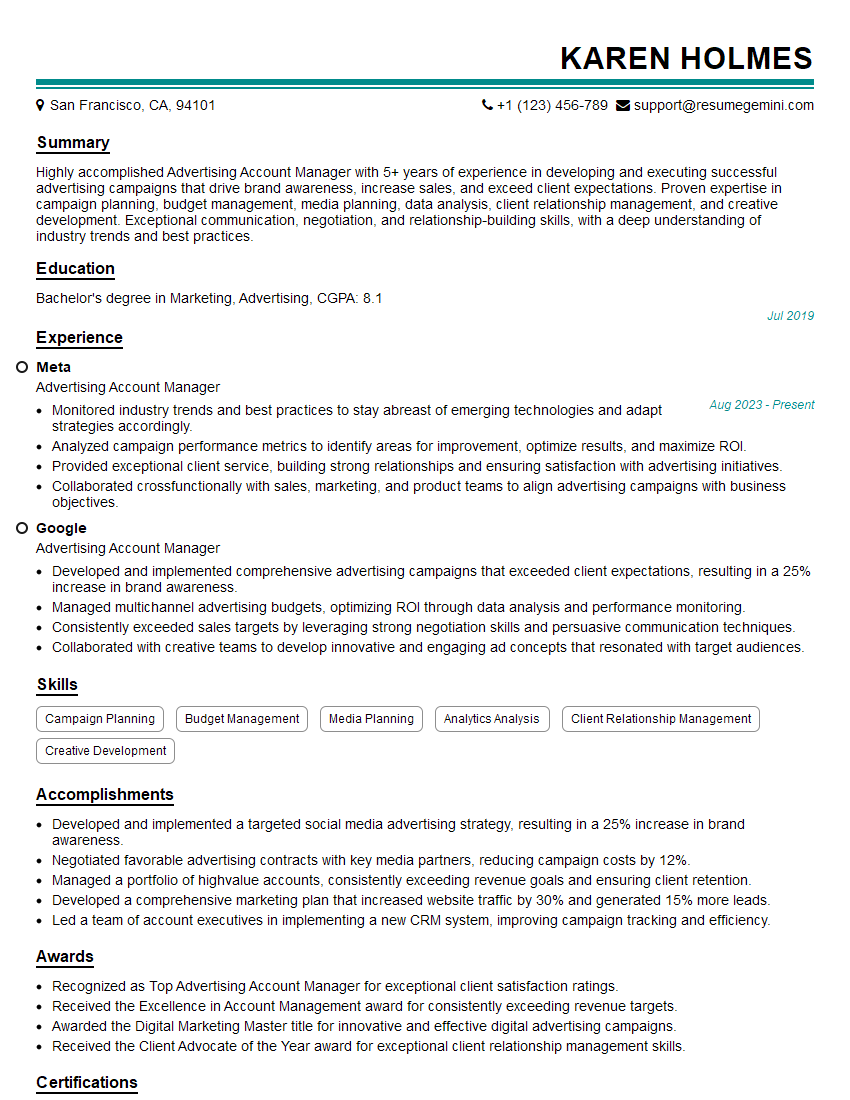
Advertising Account Manager Resume Sample
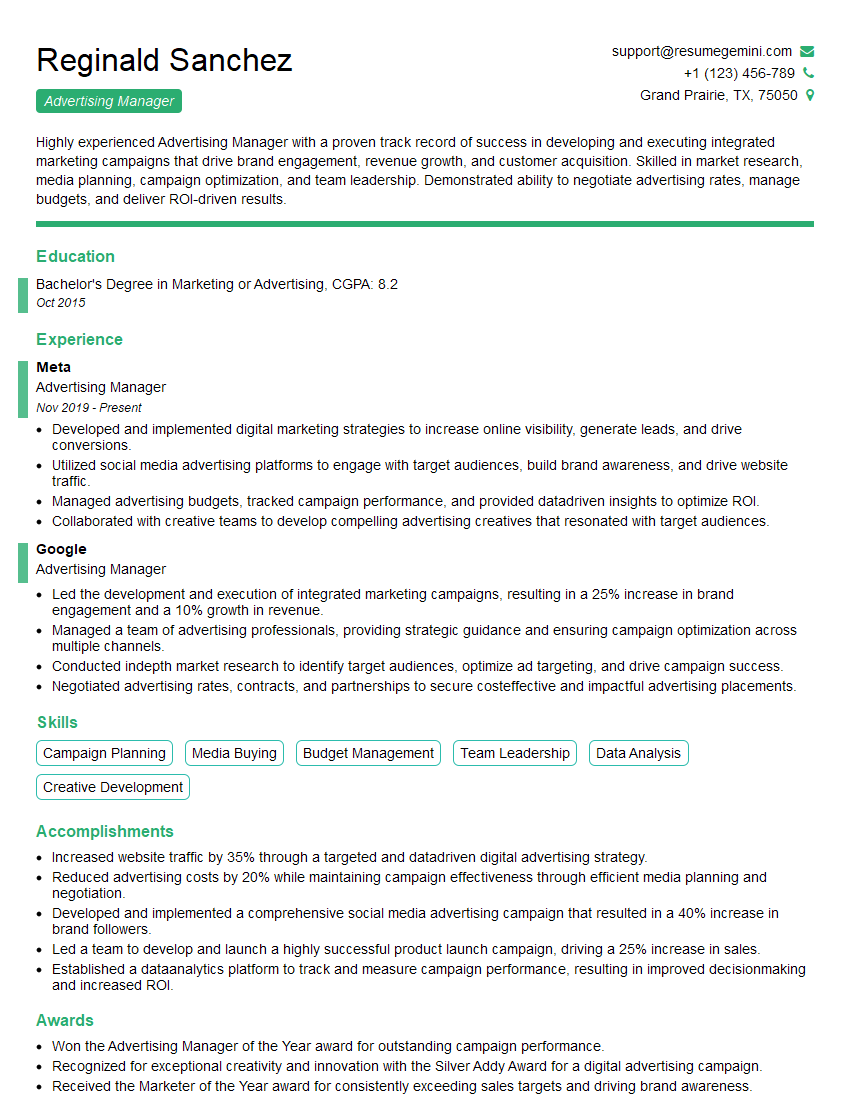
Advertising Manager Resume Sample
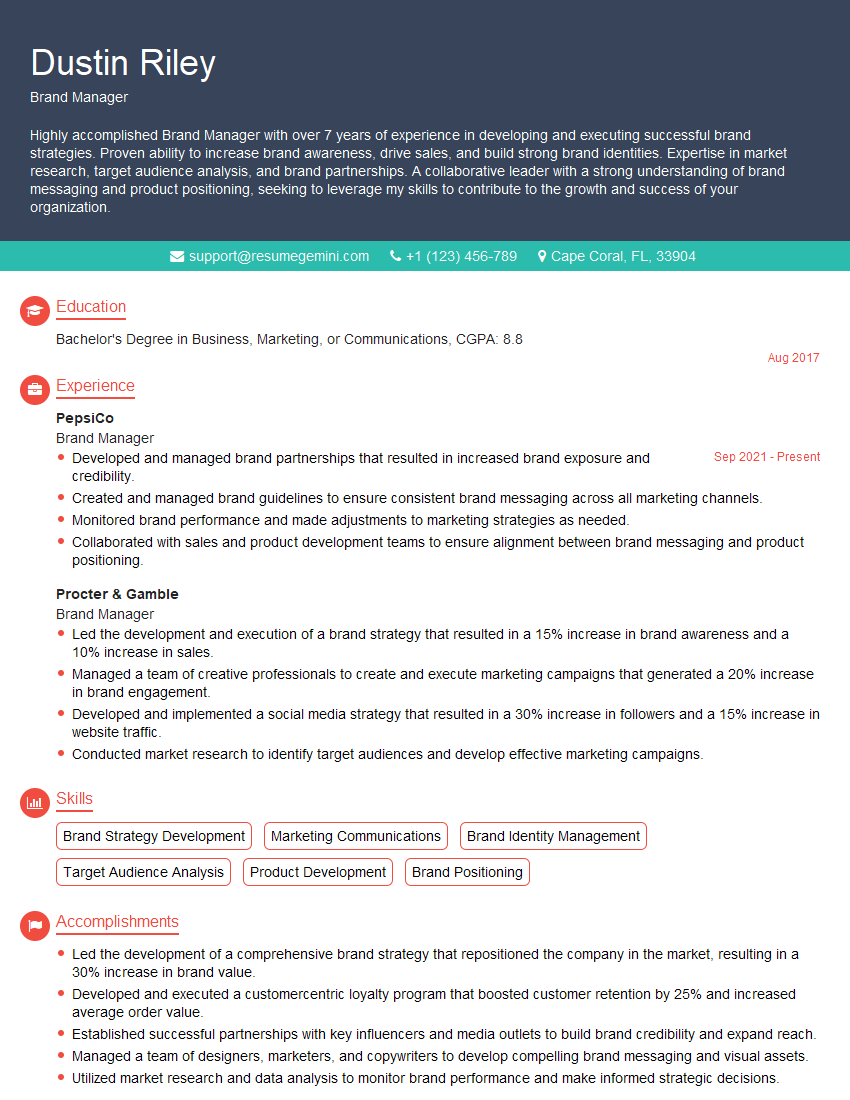
Brand Manager Resume Sample
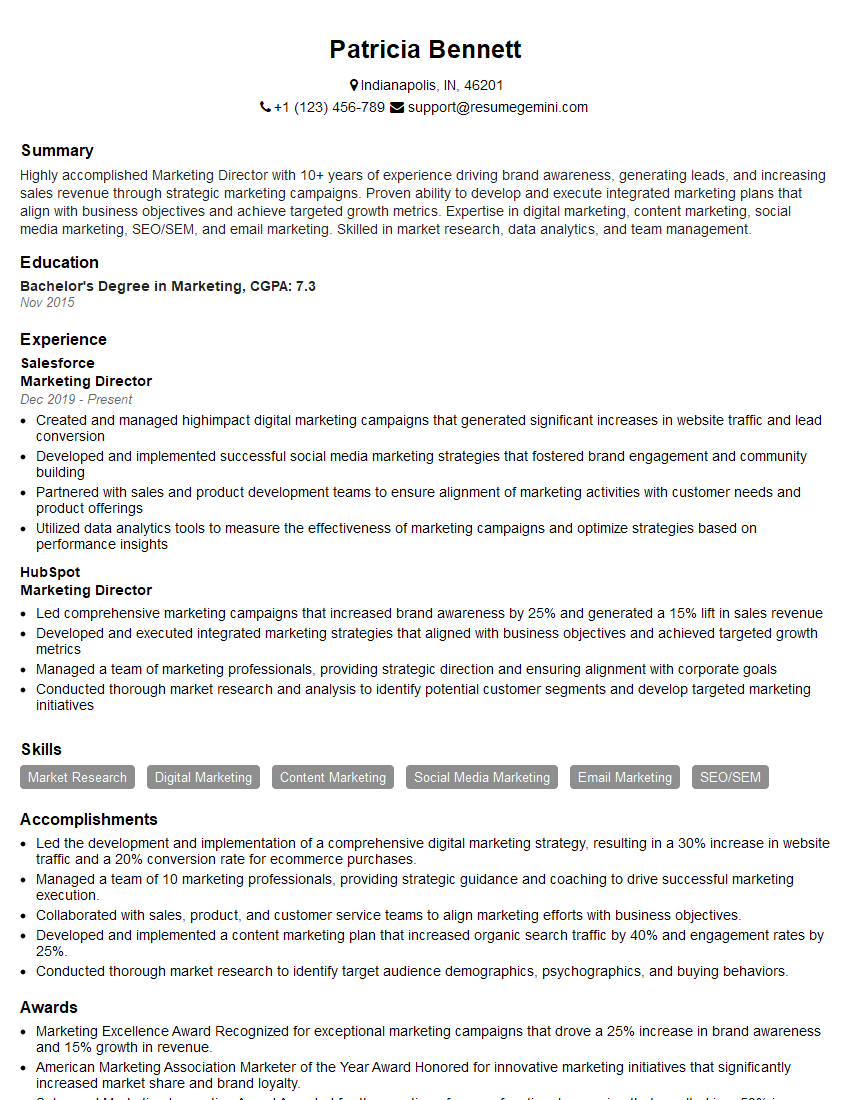
Marketing Director Resume Sample
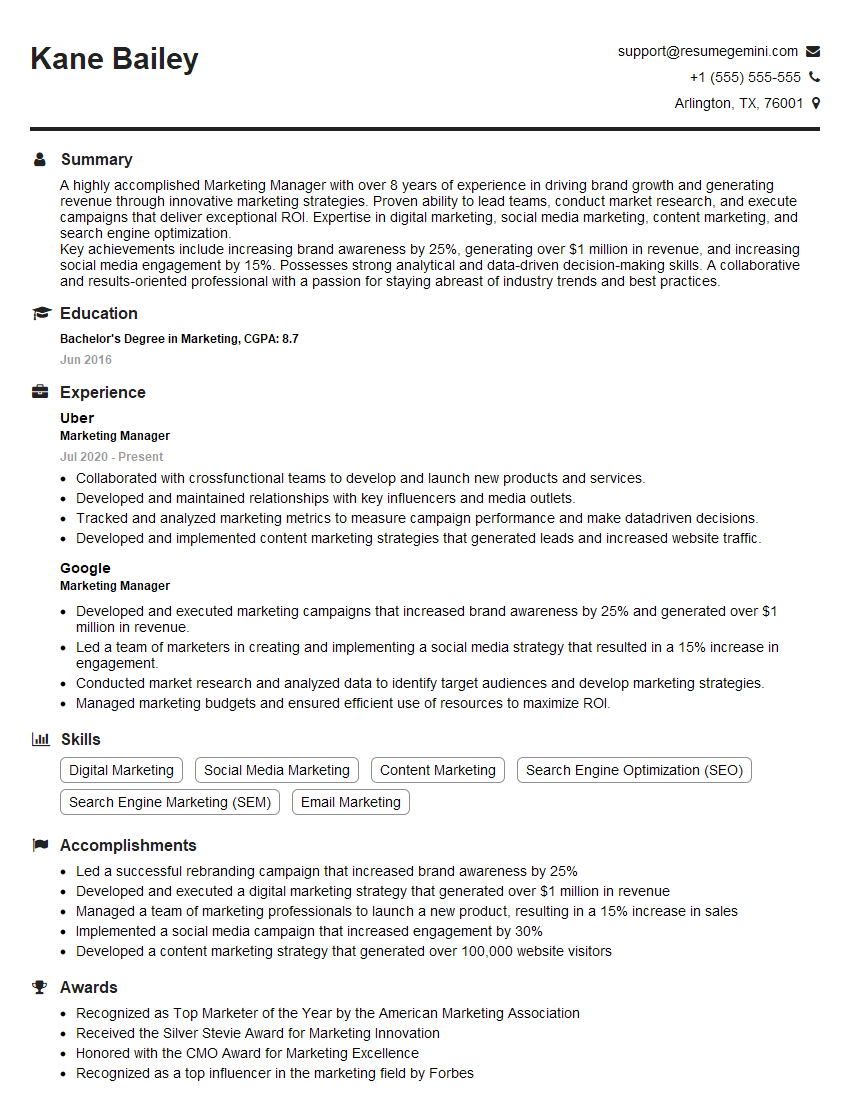
Marketing Manager Resume Sample
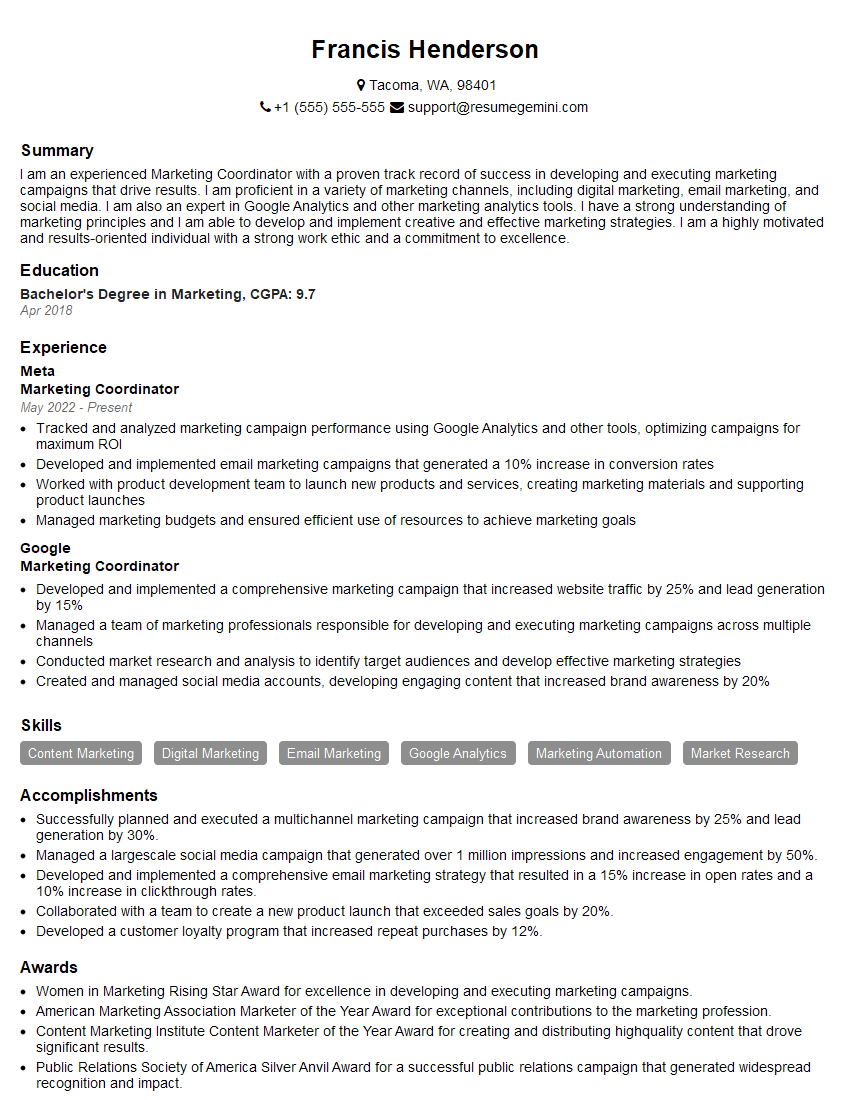
Marketing Coordinator Resume Sample

Marketing Communications Manager Resume Sample
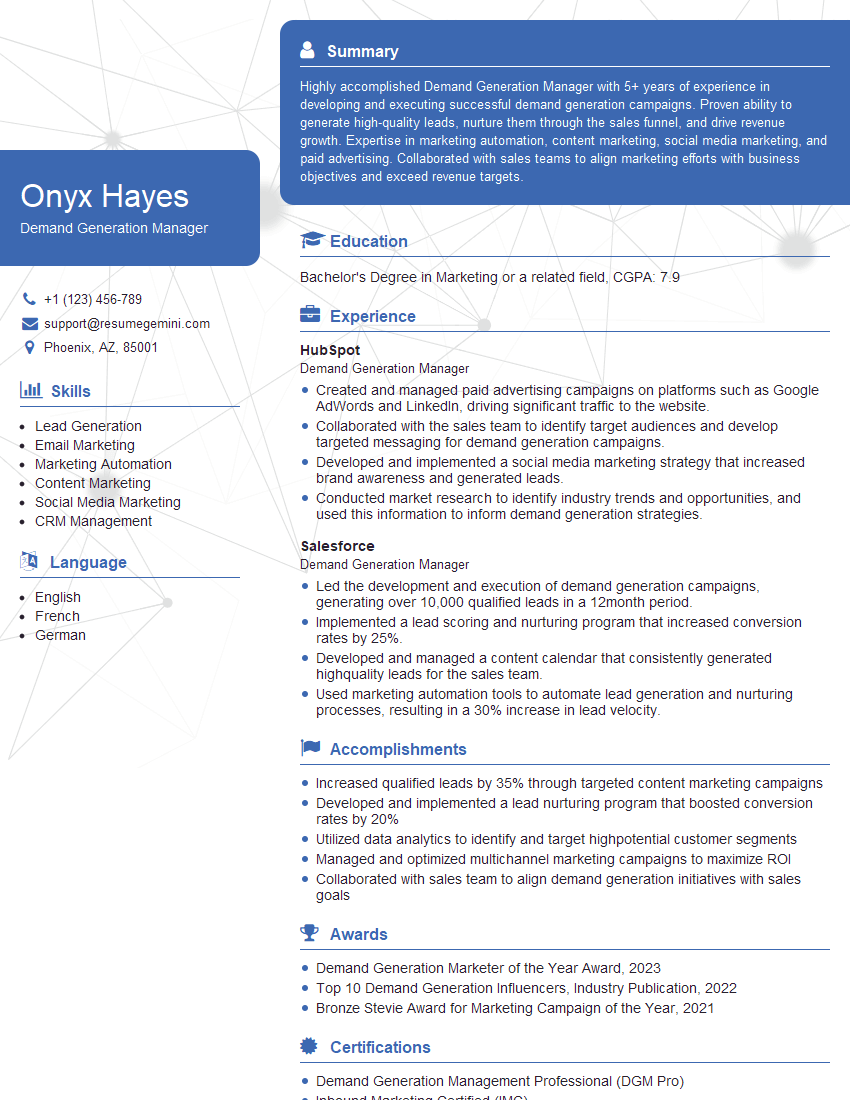
Demand Generation Manager Resume Sample
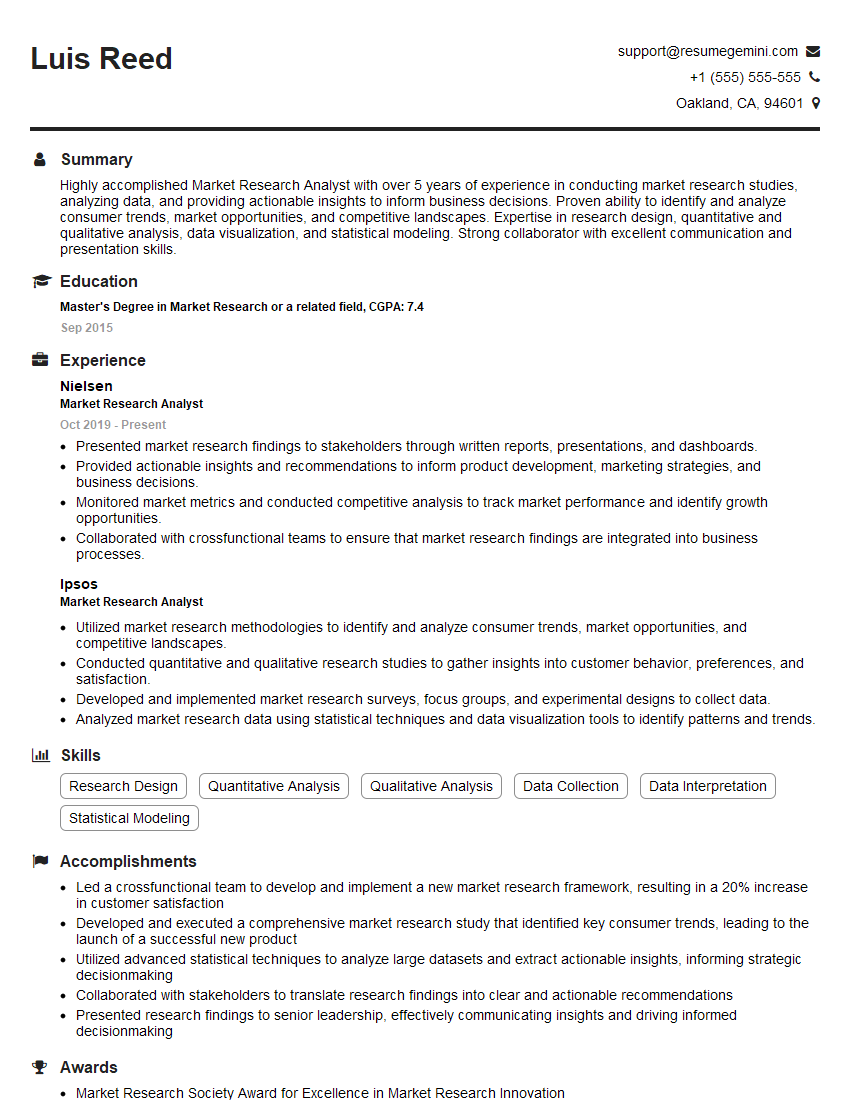
Market Research Analyst Resume Sample
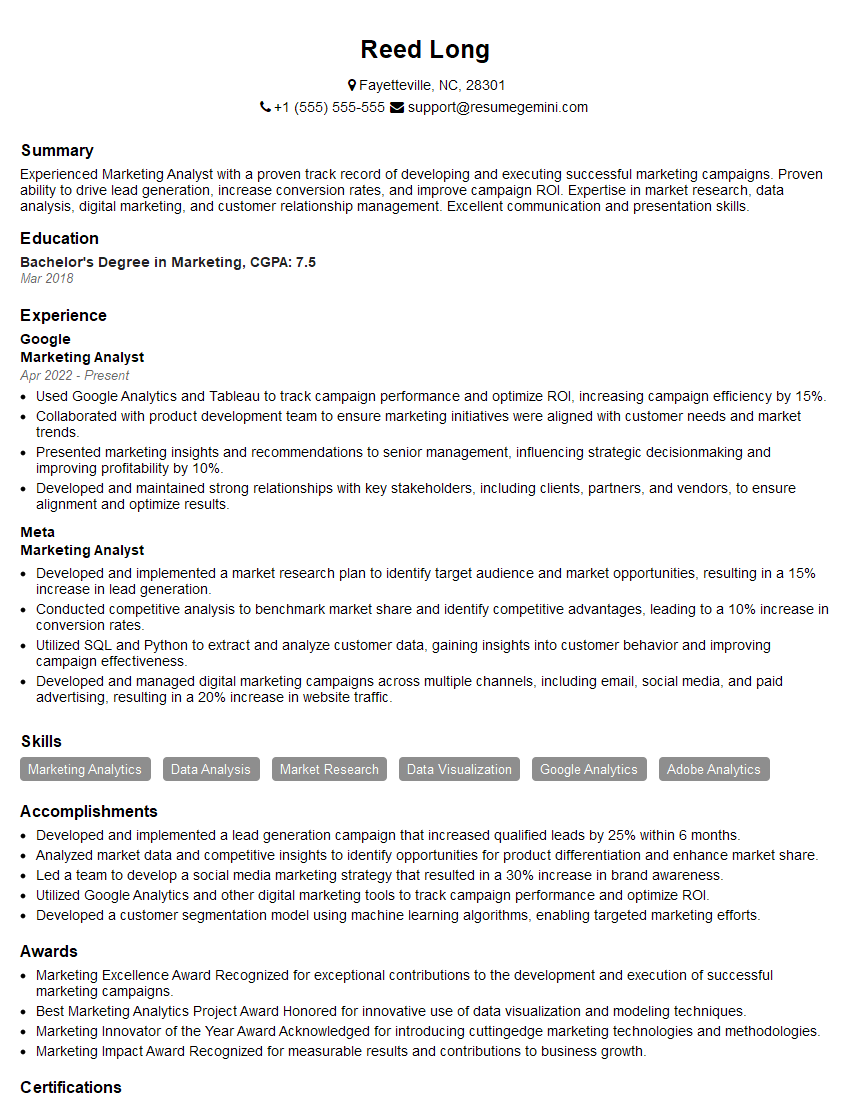
Marketing Analyst Resume Sample
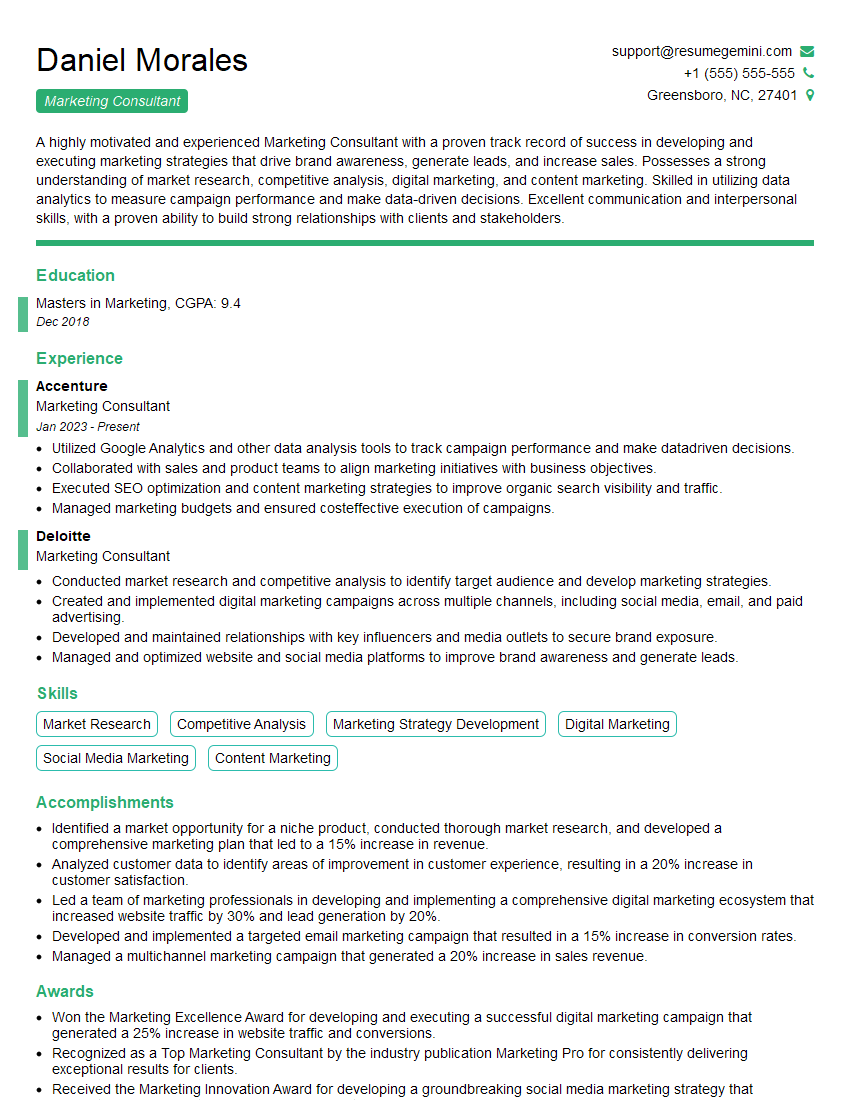
Marketing Consultant Resume Sample
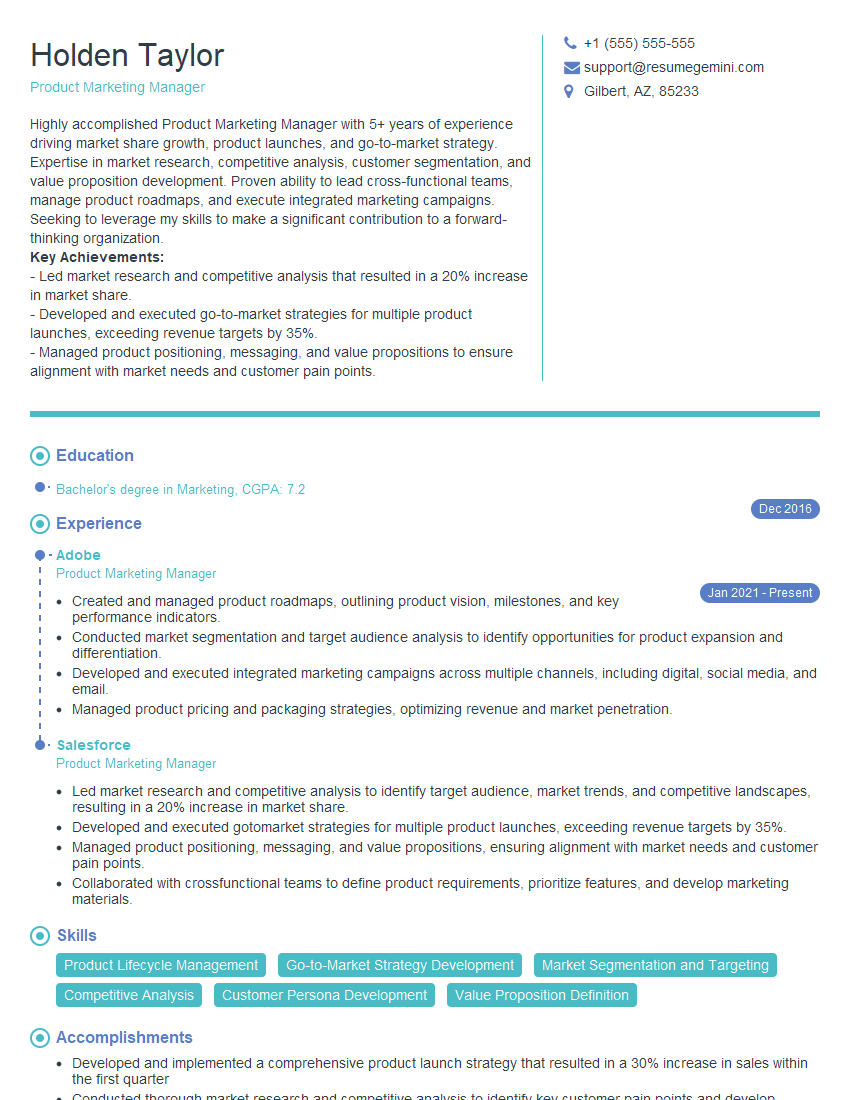
Product Marketing Manager Resume Sample

Social Media Manager Resume Sample
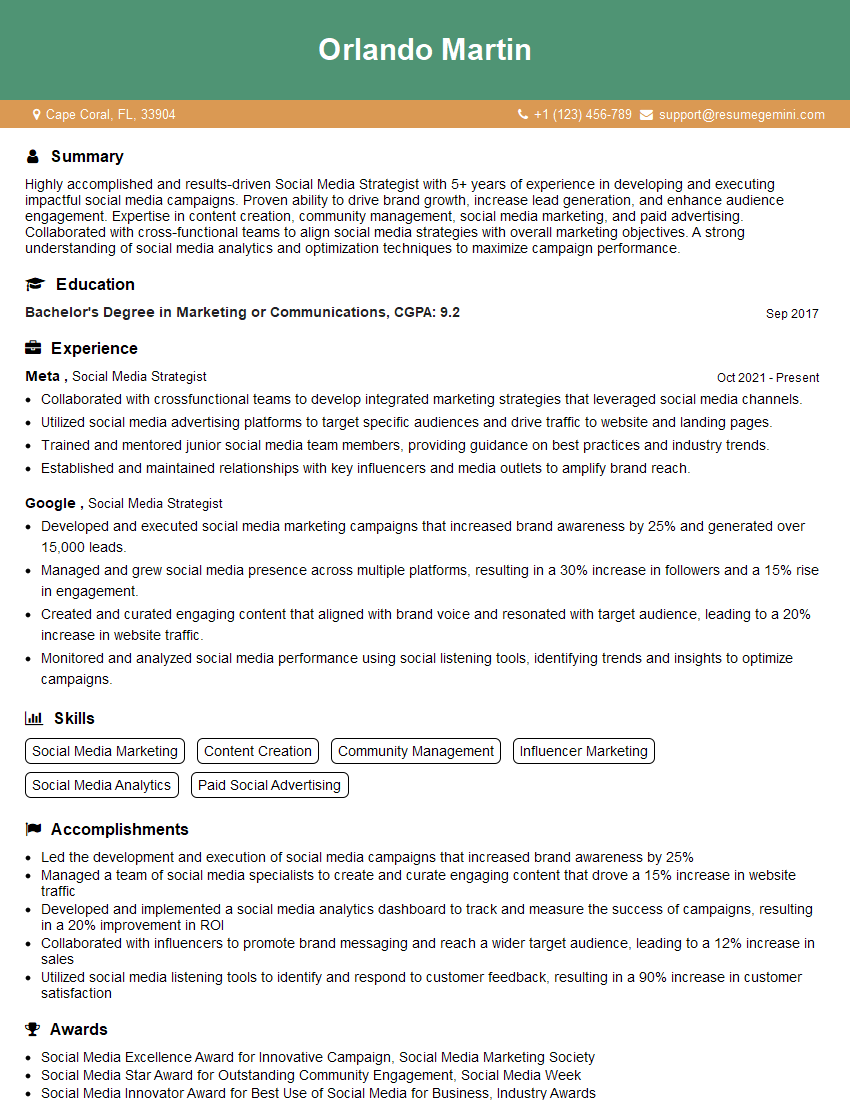
Social Media Strategist Resume Sample
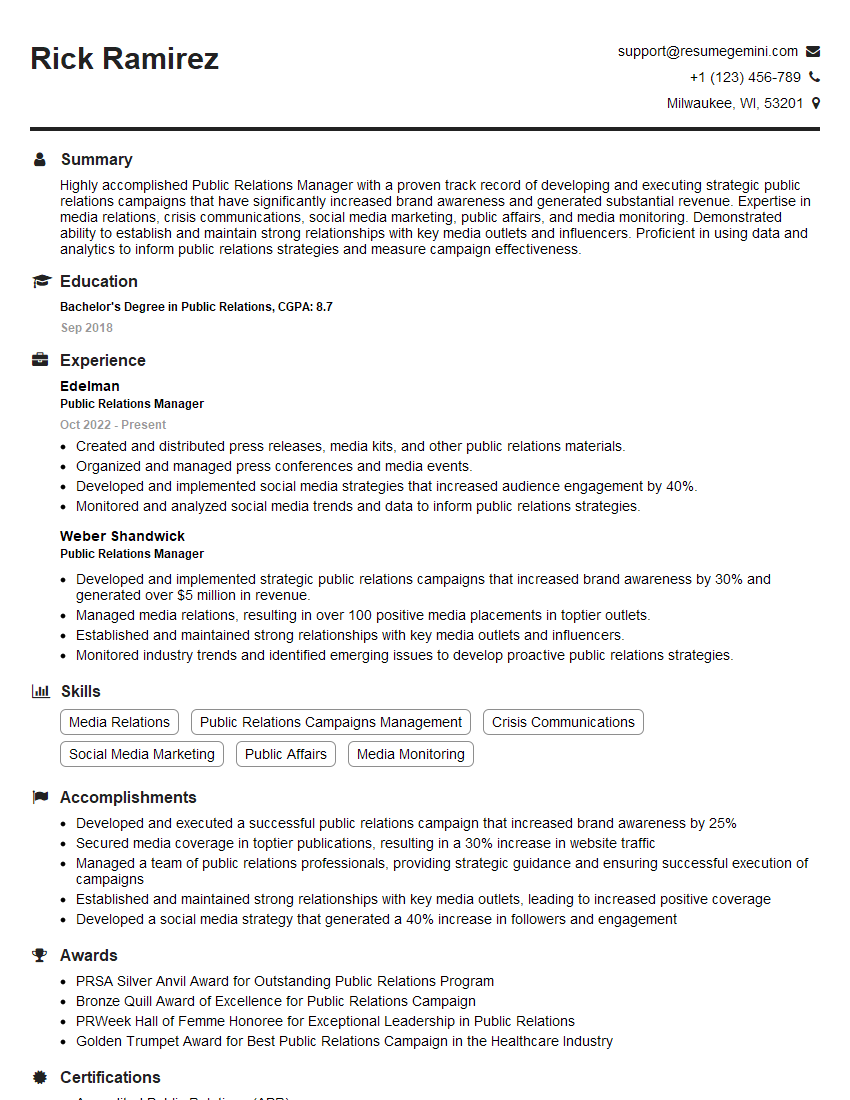
Public Relations Manager Resume Sample

Growth Hacker Resume Sample
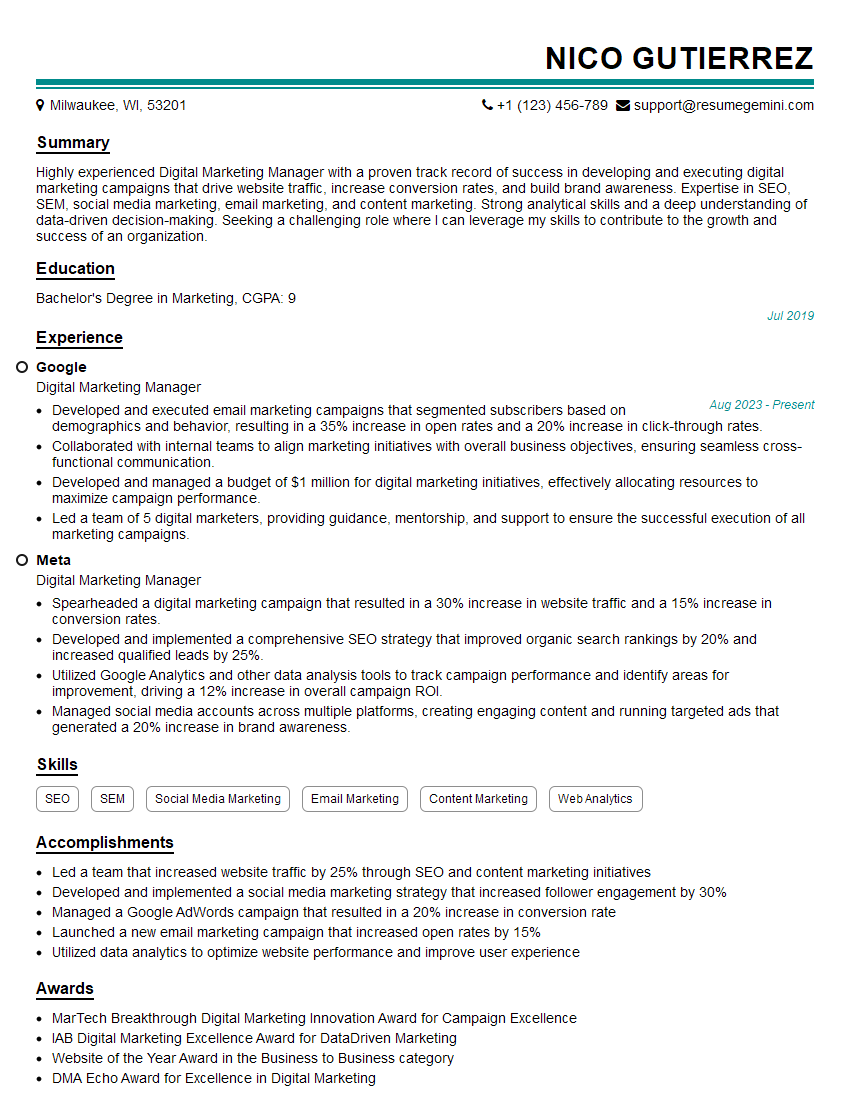
Digital Marketing Manager Resume Sample
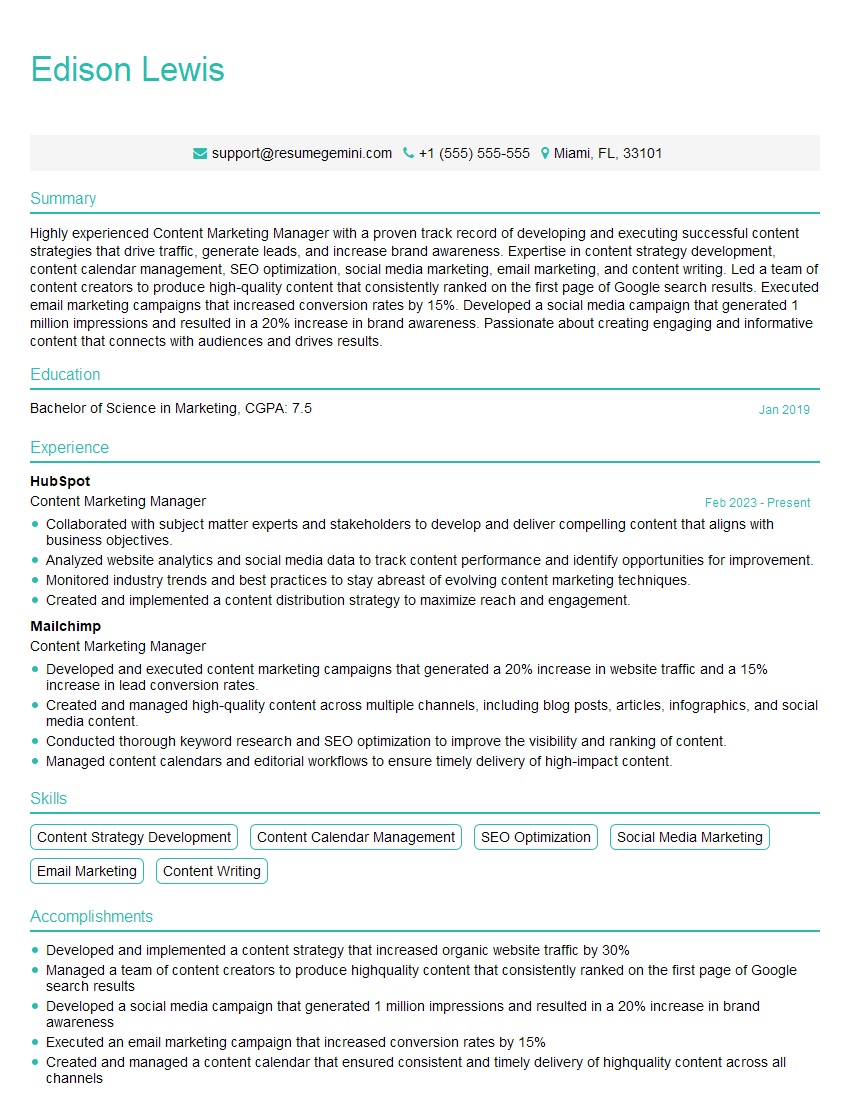
Content Marketing Manager Resume Sample
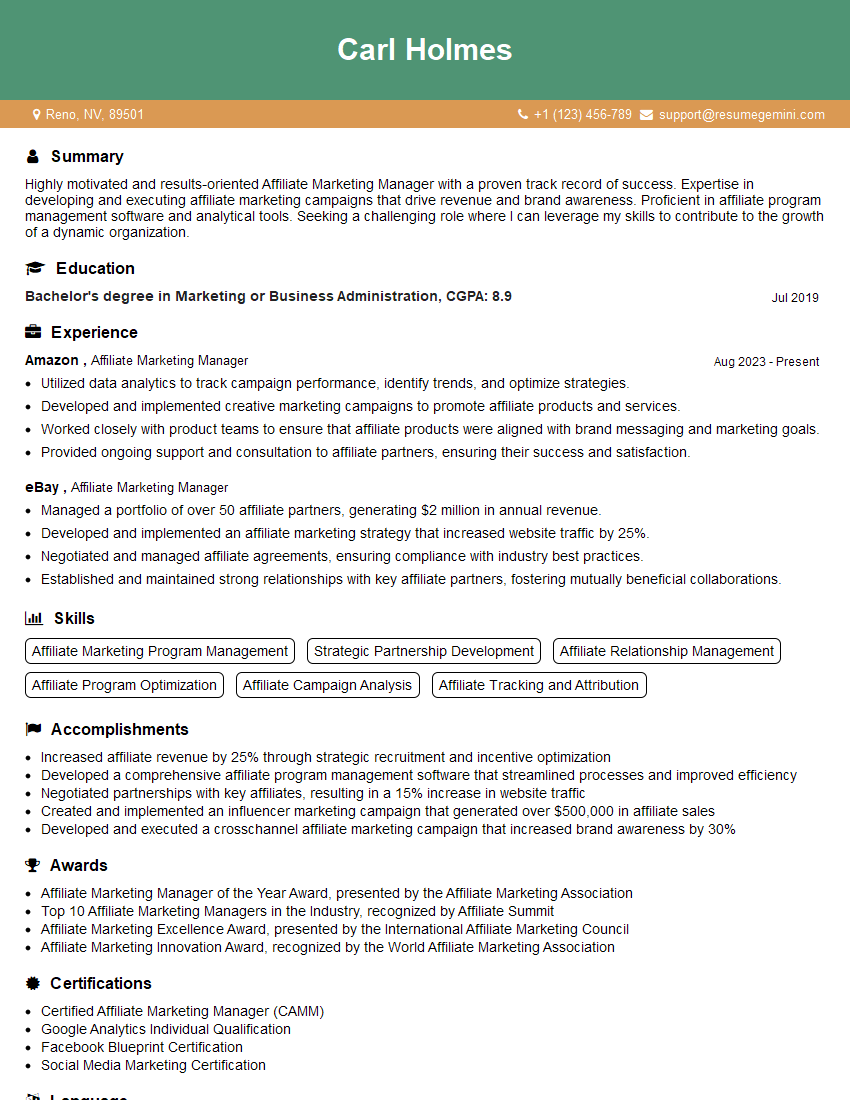
Affiliate Marketing Manager Resume Sample
- Advertising Account Manager
- Advertising Manager
- Brand Manager
- Marketing Director
- Marketing Manager
- Marketing Coordinator
- Marketing Communications Manager
- Demand Generation Manager
- Market Research Analyst
- Marketing Analyst
- Marketing Consultant
- Product Marketing Manager
- Social Media Manager
- Social Media Strategist
- Public Relations Manager
- Growth Hacker
- Digital Marketing Manager
- Content Marketing Manager
- Affiliate Marketing Manager
Explore more articles
Users Rating of Our Blogs
Share Your Experience
We value your feedback! Please rate our content and share your thoughts (optional).
What Readers Say About Our Blog
Very informative content, great job.
good