The right preparation can turn an interview into an opportunity to showcase your expertise. This guide to Stone Surface Preparation interview questions is your ultimate resource, providing key insights and tips to help you ace your responses and stand out as a top candidate.
Questions Asked in Stone Surface Preparation Interview
Q 1. Describe the different types of stone surfaces you have experience preparing.
My experience encompasses a wide range of stone surfaces, including natural stones like granite, marble, limestone, travertine, and slate, as well as engineered stones such as quartz and porcelain. Each stone type presents unique challenges and requires a tailored approach to preparation. For instance, granite’s hardness demands more aggressive grinding, while marble’s softer nature necessitates gentler techniques to avoid scratching. Engineered stones, while often more consistent, can still vary in their composition and require careful consideration of the manufacturer’s recommendations.
- Granite: Known for its hardness and durability, requiring robust grinding and polishing techniques.
- Marble: A softer stone, susceptible to scratching and etching, requiring delicate handling and finer abrasives.
- Limestone: A porous stone that requires careful cleaning and sealing to prevent staining.
- Quartz (Engineered): A durable, consistent material, but still requires proper preparation to achieve a flawless finish.
Q 2. What are the common methods used for cleaning stone surfaces before preparation?
Cleaning before preparation is crucial to remove dirt, grime, old sealers, and other contaminants that could interfere with the grinding and polishing process. Common methods include:
- Dry sweeping or vacuuming: Removes loose debris.
- Wet cleaning with neutral pH cleaners: Removes ingrained dirt and stains. Avoid acidic or alkaline cleaners, which can etch the stone.
- Steam cleaning: Effective for removing stubborn dirt and grease, especially in porous stones. Use caution to avoid overheating the stone.
- Specialized stone cleaners: Many commercially available cleaners are formulated for specific stone types and are effective at removing surface contaminants without damaging the stone.
The choice of cleaning method depends on the type of stone, the level of soiling, and the desired outcome. Always test any cleaning solution in an inconspicuous area first to ensure compatibility.
Q 3. Explain the process of grinding and polishing stone surfaces.
Grinding and polishing is a multi-step process that progressively refines the stone surface. Grinding removes scratches, imperfections, and old coatings using progressively finer diamond abrasives. Polishing then enhances the shine and luster using polishing compounds. It’s iterative; each step prepares the surface for the next.
- Initial Grinding: Coarse diamond pads remove deep scratches and level the surface.
- Intermediate Grinding: Medium grit pads smooth the surface further, reducing visible scratches from the initial grinding stage.
- Fine Grinding: Fine grit pads further refine the surface, preparing it for polishing.
- Polishing: Polishing compounds (often in cream, liquid, or powder form) are applied with polishing pads to achieve a high gloss.
The exact number of steps and the specific abrasives used depend on the stone type, the condition of the surface, and the desired final finish. For instance, highly textured surfaces may require more aggressive grinding than those with a relatively smooth initial state.
Q 4. What types of abrasives are used in stone surface preparation, and how do you select the appropriate grit?
Diamond abrasives are primarily used in stone surface preparation due to their hardness and cutting efficiency. They come in various grits, ranging from coarse (low numbers like #50) to fine (high numbers like #3000). Grit selection is crucial; using too coarse a grit can damage the stone, while using too fine a grit may not be effective.
The grit selection depends on the:
- Stone Type: Harder stones like granite can handle coarser grits initially.
- Surface Condition: Deep scratches require coarser grits, while minor imperfections require finer grits.
- Desired Finish: A matte finish may require less polishing than a high-gloss finish.
A typical sequence might start with a #50 grit, progress through #100, #200, #400, #800, and then to polishing compounds. However, this is a guideline; adjustments are made based on the specific needs of each project.
Q 5. How do you identify and address common stone surface defects before preparation?
Identifying and addressing defects before preparation is essential for achieving the best possible result. Common defects include cracks, chips, stains, and etch marks.
- Cracks: Need to be assessed for stability; significant cracks may require specialized repair techniques before preparation.
- Chips: Small chips might be filled using epoxy resins matched to the stone color.
- Stains: Need to be identified and treated appropriately before cleaning; some stains require specialized stain removal products.
- Etch Marks: Caused by acidic substances; they often require honing or polishing to remove.
Proper diagnosis is key. Sometimes, a defect might not be removable; managing client expectations is critical in such cases. I always thoroughly document the initial condition before and after repairs and treatments.
Q 6. Describe your experience with different types of polishing compounds and their applications.
Various polishing compounds are available, each with different properties. They are typically categorized by their abrasive particle size and polishing characteristics.
- Diamond Polishing Compounds: Offer aggressive cutting and polishing capabilities, often used in early stages to achieve a high shine.
- Cerium Oxide: A common polishing compound for creating a mirror-like finish on many stone types.
- Aluminum Oxide: Provides a good balance between cutting and polishing, often used for intermediate steps.
- Iron Oxide: Used for more delicate stones and can create a subtle sheen.
The application method also affects the outcome. Some compounds are applied with polishing pads and specialized machines, while others are applied by hand. The choice depends on the desired finish and the size/accessibility of the surface area.
Q 7. How do you ensure the safety of yourself and others during stone surface preparation?
Safety is paramount. Stone surface preparation involves heavy machinery and potentially hazardous materials. My safety protocols include:
- Personal Protective Equipment (PPE): Always wearing safety glasses, dust masks (especially when dry grinding), hearing protection, and gloves.
- Machine Safety: Regularly inspecting and maintaining machinery, ensuring proper operation and safety features are functioning correctly.
- Work Area Safety: Maintaining a clean and organized workspace, ensuring proper ventilation, and using caution when working at heights.
- Material Safety Data Sheets (MSDS): Reviewing and following the instructions on MSDS sheets for all chemicals and abrasives used.
- Proper Training: Ensuring myself and my team are adequately trained on the safe operation of all equipment and procedures.
I always prioritize a risk assessment before commencing any project, adapting my safety measures as needed. It’s a continuous process that ensures both my well-being and that of those around me.
Q 8. What are the safety precautions you take when working with specific stone types (e.g., granite, marble)?
Safety is paramount when working with stone. Different stones present unique hazards. For instance, granite, while incredibly strong, can be prone to chipping if mishandled, requiring the use of safety glasses and gloves at minimum. Marble, though softer than granite, can release fine dust during cutting and polishing, potentially leading to respiratory issues. Therefore, I always use a respirator with a P100 filter for marble work, along with eye protection and hearing protection (especially when using power tools). Furthermore, I ensure proper ventilation is in place, ideally working outdoors or in a well-ventilated space. For both granite and marble, I always use appropriate personal protective equipment (PPE) and follow the manufacturer’s safety guidelines for any specific tools or chemicals employed. For example, when using diamond-tipped blades, I always check their integrity before use and replace them when necessary to prevent breakage and potential injury.
Beyond the stone itself, I’m always mindful of the work environment. Proper lighting is essential for visibility, preventing accidents caused by unseen obstacles or uneven surfaces. I maintain a clean and organized workspace to avoid tripping hazards. Finally, I always secure my work area and warn anyone nearby of potential hazards.
Q 9. What are the differences between honing and polishing stone surfaces?
Honing and polishing are distinct processes that achieve different surface finishes. Honing uses progressively finer abrasive grits to create a smoother, flatter surface, removing scratches and leveling irregularities. Think of it as preparing the canvas for the final artwork. The end result is usually a matte or satin finish. Polishing, on the other hand, uses very fine abrasives and polishing compounds to achieve a high gloss, reflective shine. It’s the step that brings the ‘wow’ factor. The process involves progressively finer polishing compounds, often culminating in a high-luster finish that brings out the stone’s natural color and veining.
Imagine sharpening a knife. Honing would be similar to using a steel to remove burrs and align the blade’s edge. Polishing would be like meticulously buffing the blade to a mirror-like shine. The key difference lies in the level of smoothness and reflectivity desired.
Q 10. How do you maintain the quality and consistency of the prepared surface?
Maintaining quality and consistency is crucial for a professional finish. This involves several steps. First, meticulous preparation is vital. This includes carefully inspecting the stone for any imperfections, ensuring a clean surface free from debris, and selecting the appropriate tools and abrasives for the stone type and desired finish. During the preparation process, I regularly check the surface for evenness, using tools like a straight edge to identify any high or low spots. Consistent pressure and speed are essential while honing and polishing to prevent uneven abrasion. I maintain a consistent flow of water or polishing compound to ensure optimal lubrication and prevent the abrasive from overheating and damaging the stone. Finally, regular calibration of my equipment is crucial. This keeps my tools performing to specification and delivering a consistently high-quality finish.
Think of it like baking a cake – you need the right ingredients (tools and materials), careful measurement (consistent pressure and speed), and a steady hand (technique) to ensure a perfect result every time.
Q 11. Explain your experience with different types of stone cutting equipment.
My experience encompasses a wide range of stone cutting equipment, including various types of saws (wet saws, dry saws, bridge saws), grinders, and polishers. I’m proficient with both hand-held and stationary power tools. I’ve worked with diamond-tipped blades of varying grit sizes, understanding the relationship between the grit size and the resulting surface finish. For example, coarser grits are suitable for rough cutting, while finer grits are used for honing and polishing. I’m also experienced in using specialized equipment like edge profiling machines and CNC routers for intricate designs and precise cuts. I understand the importance of proper maintenance and safety procedures for all equipment to ensure optimal performance and prevent accidents.
I’m comfortable troubleshooting common issues with equipment like blade alignment, water flow, and motor performance. My ability to adapt to various equipment allows me to complete a variety of projects efficiently and effectively. For example, I may use a bridge saw for cutting large slabs and a hand-held grinder for smaller, more intricate details.
Q 12. How do you determine the appropriate level of surface finish for a specific project?
Determining the appropriate surface finish depends on several factors, including the type of stone, the project’s intended use, and the client’s preferences. A high-gloss polish might be perfect for a luxurious bathroom countertop, whereas a honed finish might be more suitable for a kitchen floor where a less slippery surface is preferred. The architectural style of the project also plays a role; a more rustic setting might call for a textured or antique finish. I always discuss these factors with the client to arrive at a finish that meets both their aesthetic expectations and the practical needs of the space.
I often show clients samples of different finishes so they can compare and contrast the visual effects. This allows for an informed decision based on both the appearance and functionality of the final product.
Q 13. What are the common problems encountered during stone surface preparation, and how do you resolve them?
Common problems during stone surface preparation include etching (damage from acidic substances), scratching, and inconsistent finishes. Etching is often caused by acidic substances like lemon juice or cleaning products. I typically resolve this through careful honing and polishing, using progressively finer abrasives to remove the etched areas. Scratches, particularly from improper tool use or handling, can be corrected with honing and polishing, similar to etching repair. Inconsistent finishes usually stem from uneven application of pressure, speed, or abrasive, leading to patches of varying sheen. This requires careful re-working of the affected areas, ensuring consistent pressure and speed, and perhaps adjusting the abrasive. Proper planning and technique significantly mitigate these issues.
Careful planning and the use of protective coatings are crucial preventative measures.
Q 14. Describe your experience with sealers and impregnators for stone surfaces.
I have extensive experience with various sealers and impregnators. Sealers create a protective barrier on the surface of the stone, preventing staining and weathering. Impregnators, on the other hand, penetrate the stone, protecting it from within. The choice between a sealer and an impregnator depends on the type of stone and the desired level of protection. Porous stones like limestone benefit greatly from impregnators, while denser stones like granite may only need a sealer. I always consider factors like the stone’s porosity, the level of protection required (e.g., high-traffic area vs. low-traffic area), and the durability of the sealer or impregnator. I carefully follow the manufacturer’s instructions for application to ensure optimal results.
A good analogy is comparing a raincoat (sealer) to a waterproof jacket (impregnator). The raincoat protects the outer layer, while the waterproof jacket protects the entire body. Selecting the appropriate product is critical to achieving optimal protection and maintaining the stone’s longevity.
Q 15. How do you select the appropriate sealer for a given stone type and application?
Selecting the right sealer is crucial for protecting stone and maintaining its beauty. It depends heavily on the stone type’s porosity and the intended application. Porous stones like limestone or travertine require sealers with higher penetration to protect against staining. Less porous stones like granite might only need a topical sealer for enhanced shine and protection. The application environment also matters; a sealer designed for exterior use must withstand UV rays and weathering, unlike an interior sealer.
- Porous stones (limestone, travertine): Penetrating sealers are best. These soak into the stone, protecting from within. Look for sealers specifying suitability for porous surfaces.
- Semi-porous stones (marble, slate): A combination of penetrating and topical sealers might be ideal. The penetrating sealer protects from staining, while the topical adds a layer of protection and enhances sheen.
- Non-porous stones (granite, quartzite): Topical sealers usually suffice. These create a protective film on the surface, enhancing shine and offering basic protection.
- Application Considerations: For high-traffic areas, a durable, high-performance sealer is essential. For kitchen countertops, consider sealers resistant to acids and oils.
For example, I recently worked on a project with antique limestone flooring. We chose a high-quality penetrating sealer with a low-VOC (volatile organic compound) formula to maintain the stone’s natural beauty while ensuring environmental safety.
Career Expert Tips:
- Ace those interviews! Prepare effectively by reviewing the Top 50 Most Common Interview Questions on ResumeGemini.
- Navigate your job search with confidence! Explore a wide range of Career Tips on ResumeGemini. Learn about common challenges and recommendations to overcome them.
- Craft the perfect resume! Master the Art of Resume Writing with ResumeGemini’s guide. Showcase your unique qualifications and achievements effectively.
- Don’t miss out on holiday savings! Build your dream resume with ResumeGemini’s ATS optimized templates.
Q 16. How do you assess the need for repair or restoration before surface preparation?
Assessing the need for repair or restoration before surface preparation is critical. A thorough inspection is necessary, focusing on identifying cracks, chips, stains, and any other damage. This helps avoid exacerbating pre-existing problems during preparation. The severity of the damage dictates the next steps. Minor issues might be addressed during cleaning, while more significant damage needs dedicated repair before sealing.
- Visual Inspection: This involves a careful examination of the entire stone surface, looking for cracks, chips, efflorescence (salt deposits), and stains.
- Testing for Soundness: I often tap the stone gently with a hammer to detect any hollow sounds indicating structural issues needing repair.
- Stain Analysis: Determining the type of stain (organic, inorganic) is crucial for choosing the right cleaning agent and repair methods.
In one project, a client had marble countertops with significant etching from acidic spills. Before surface preparation, we addressed the etching using a specialized poultice to draw out the stains. This preemptive repair prevented these issues from worsening during subsequent cleaning and sealing.
Q 17. Describe your experience with color matching and repairs of damaged stone surfaces.
Color matching and repair are specialized skills requiring precision and artistic ability. I have extensive experience using epoxy resins, pigments, and stone dust to blend and match the exact color and texture of the original stone. This allows for seamless repair of chips, cracks, and other damages. The process includes careful preparation of the damaged area, mixing the repair compound, applying it, and then finishing it to ensure a smooth transition.
- Color Matching: I often create small sample batches to fine-tune the pigment blend to perfectly match the existing stone.
- Texture Matching: Techniques like lightly scratching or texturizing the repaired area ensure a seamless blend with the original stone.
- Repair Materials: The choice of epoxy resin and pigments varies depending on the stone type and the severity of the damage.
For example, I once repaired a substantial chip in a rare Italian marble fireplace surround. The color matching process was incredibly meticulous, and the finished repair was practically invisible.
Q 18. What are the industry standards and best practices for stone surface preparation?
Industry standards and best practices for stone surface preparation emphasize safety, quality, and longevity. This includes using appropriate personal protective equipment (PPE), employing safe cleaning methods, and following manufacturer instructions for sealers and other products. Prioritizing proper surface cleaning is fundamental, removing dirt, grime, and old sealers before applying new ones. Using the correct tools and techniques prevents damage during the process.
- Safety First: Always wear appropriate PPE, including gloves, eye protection, and respirators.
- Thorough Cleaning: Begin with a deep clean using appropriate cleaning agents to remove dirt and old sealers.
- Proper Sealer Application: Follow manufacturer instructions carefully, applying the sealer evenly and in thin coats to avoid streaking or build-up.
- Environmental Considerations: Use low-VOC products whenever possible to minimize environmental impact.
Adherence to these standards not only ensures a high-quality finish but also protects both the workers and the environment.
Q 19. How do you manage your time effectively to meet project deadlines?
Effective time management is critical in meeting project deadlines. My approach involves detailed project planning, prioritization, and consistent monitoring. I break down large projects into smaller, manageable tasks with clear timelines. This allows for better tracking of progress and efficient resource allocation.
- Detailed Planning: Creating a comprehensive project schedule with specific timelines for each phase is essential.
- Prioritization: Focusing on critical tasks first and delegating where possible helps streamline the workflow.
- Regular Monitoring: Consistent monitoring of progress allows for adjustments and mitigation of potential delays.
- Communication: Maintaining open communication with clients and team members ensures everyone is aligned and informed.
For instance, on a recent large-scale renovation project, we used project management software to track every task, allowing us to efficiently allocate resources and stay ahead of the schedule, completing the project two weeks ahead of time.
Q 20. Describe your experience working with different types of adhesives and grouts.
My experience with various adhesives and grouts spans numerous projects, from tile installations to stone repairs. Understanding their properties and limitations is vital for successful application. Different types of adhesives are best suited for different substrates and stone types. Similarly, grouts come in various colors and formulations, each having different characteristics in terms of porosity, durability, and water resistance.
- Thin-set Mortars: These are commonly used for tile installations and require a precise mixing ratio for optimal performance.
- Epoxy Adhesives: Stronger and more water-resistant than thin-set mortars; ideal for wet areas or for attaching stones with irregular surfaces.
- Cement-based grouts: Cost-effective and widely available, but require proper sealing to protect against staining.
- Epoxy grouts: Highly durable and water-resistant, but can be more challenging to work with.
For a recent project involving a mosaic backsplash, we chose an epoxy grout to ensure long-term durability and water resistance. The meticulous application required careful attention to detail to achieve a smooth and even finish.
Q 21. How do you ensure the proper adhesion of stone surfaces to substrates?
Ensuring proper adhesion of stone surfaces relies heavily on proper substrate preparation and the choice of the right adhesive. The substrate must be clean, dry, and free from dust, grease, or any other contaminants that could impede adhesion. Selecting an adhesive appropriate for both the substrate and the stone is crucial. The application method also plays a vital role, ensuring proper coverage and pressure to secure the bond.
- Substrate Preparation: Thorough cleaning, leveling, and priming of the substrate are critical for a strong bond.
- Adhesive Selection: The choice of adhesive depends on the stone type, the substrate material (concrete, plywood, etc.), and the application environment.
- Application Method: Applying the adhesive evenly according to the manufacturer’s instructions ensures complete coverage and a strong bond.
- Proper Curing: Allowing adequate curing time after installation is crucial for the adhesive to reach its full strength.
During a recent project involving installing large format porcelain slabs, we meticulously prepared the concrete substrate ensuring it was clean, level, and primed. We then used a high-performance modified thin-set mortar, ensuring adequate coverage and pressure for a lasting bond, preventing any issues later.
Q 22. How do you maintain the cleanliness of your workspace and equipment?
Maintaining a clean workspace and equipment is paramount in stone surface preparation, not only for safety but also for ensuring the quality of the final product. Think of it like a surgeon preparing for an operation – cleanliness is crucial.
- Before starting: I always begin by clearing the work area of any debris, ensuring sufficient space to move around freely and preventing accidents. I cover areas not involved in the project to prevent dust and damage.
- During work: I regularly clean my tools – angle grinders, diamond saws, polishing pads – to remove dust and debris, preventing cross-contamination and ensuring optimal performance. This usually involves using compressed air and appropriate cleaning solvents specific to the tool and the type of stone. For example, marble requires different cleaning agents than granite.
- After completion: A thorough clean-up is essential. This includes vacuuming up all dust, using a wet mop to remove any remaining residue, and properly storing tools and equipment. Proper disposal of waste materials, following all safety and environmental regulations, is crucial.
This systematic approach not only keeps the workspace tidy but also ensures the longevity and efficiency of my equipment, leading to higher-quality work and fewer potential problems.
Q 23. Describe your experience using specialized tools and equipment for stone preparation.
My experience with specialized stone preparation tools is extensive. I’m proficient with a wide array of equipment, from basic hand tools to sophisticated machinery. Think of it like an artist with their palette – each tool serves a specific purpose.
- Hand Tools: I’m adept at using chisels, hammers, and various types of scrapers for delicate work or initial shaping and removal of loose material. Knowing the correct techniques to avoid damaging the stone is essential.
- Power Tools: I regularly operate angle grinders with diamond blades for cutting, grinding, and shaping stone surfaces. I’m also experienced with various types of polishing machines, from small hand-held polishers to larger floor polishers, each requiring precise technique and pressure control to achieve the desired finish.
- Specialized Equipment: I’m familiar with and have used water-fed diamond polishing systems, which are invaluable for achieving highly polished and mirror-like finishes on delicate stone types. These systems require careful management of water pressure and diamond pad selection to avoid damage.
The safety and effective operation of all these tools requires ongoing training and a deep understanding of their capabilities and limitations. For instance, understanding the grit sizes of diamond polishing pads is key to achieving a smooth, even finish.
Q 24. What are the environmental considerations related to stone surface preparation?
Environmental considerations are a major part of responsible stone surface preparation. It’s not just about the aesthetics; it’s about minimizing our impact on the planet. This includes aspects like dust control, waste management, and water usage.
- Dust Control: Stone cutting and grinding produces significant amounts of fine dust, which can be harmful to both workers and the environment. I use dust extraction systems whenever possible, ensuring the dust is collected and safely disposed of, preventing airborne particulate matter.
- Waste Management: Stone waste must be handled responsibly. This includes separating different types of waste (e.g., stone dust, packaging materials) for appropriate recycling or disposal, minimizing landfill contributions. I always adhere to local regulations for waste disposal.
- Water Usage: Water-fed diamond polishing systems use considerable water, so responsible water usage is important. Using water recycling systems and limiting the amount of water used is part of responsible practice.
- Chemical Usage: The use of cleaning and polishing agents should be mindful of environmental impact. I prefer eco-friendly and biodegradable products whenever possible, minimizing the risk of water contamination.
By incorporating these practices, we can minimize the environmental impact of stone surface preparation, protecting both workers and the surrounding ecosystem.
Q 25. How do you handle different types of customer requests or project specifications?
Handling diverse customer requests and project specifications is a core aspect of my work. Each project presents unique challenges and requires a tailored approach.
- Clear Communication: I start by having a thorough discussion with the client to understand their vision, needs, and budget. This includes carefully reviewing plans, drawings, and any specific requirements or preferences.
- Material Selection: Different stones require different preparation techniques. I advise clients on suitable stone types based on their project needs, durability, and budget considerations. For example, a high-traffic area would require a more durable stone than a bathroom counter.
- Budget Management: I work collaboratively with clients to create a budget that aligns with their financial constraints and the scope of the work. This includes providing transparent and detailed cost estimates, incorporating contingency plans for unforeseen issues.
- Problem-Solving: I’m adept at addressing unforeseen complications and offering creative solutions. For instance, I may need to adjust my approach if I discover hidden damage beneath the surface or encounter unexpected material properties.
A successful project relies on clear communication, collaboration, and a flexible approach. My goal is to meet and exceed client expectations while delivering a high-quality result.
Q 26. What are your experience and skills in using digital measuring tools and other technologies?
Digital measuring tools and technologies have revolutionized stone surface preparation, enhancing precision and efficiency. I’m proficient in using various technologies to ensure accuracy and consistency.
- Laser Measuring Tools: I use laser distance meters for precise measurements of large areas, ensuring accurate cutting and fitting. These tools minimize errors and save time compared to traditional measuring methods.
- Digital Leveling Tools: To ensure perfectly level surfaces, particularly for large projects, I rely on digital leveling tools. They offer greater precision than traditional spirit levels, ensuring consistent results.
- CAD Software: I have experience with CAD software for creating and reviewing project plans, ensuring the accurate representation of stone dimensions and layout before starting the preparation process.
Integrating these technologies has significantly improved my work’s quality, precision, and speed, ultimately benefiting both myself and the client.
Q 27. Describe a time you had to troubleshoot a problem during stone surface preparation.
One time, I encountered a significant problem during the polishing phase of a large marble floor. After several passes with the polishing pads, I noticed some noticeable discoloration and etching on sections of the floor.
Initially, I suspected the issue stemmed from using an inappropriate polishing compound. However, upon closer inspection, I discovered that the underlying marble had inconsistent porosity and some areas were more absorbent than others. The polishing compound was reacting differently in these areas.
My troubleshooting steps included:
- Careful Analysis: I conducted a thorough examination of the affected areas, comparing them to unaffected sections to identify the cause.
- Testing Different Compounds: I tested different polishing compounds on small, inconspicuous sections of the marble to see how they reacted with the different porous areas.
- Adjusting Technique: I adjusted my polishing technique, reducing pressure and using different polishing pads with finer grits on the more absorbent areas. I also focused on maintaining uniform moisture levels.
- Consultation: I consulted with a stone specialist to discuss the specific properties of the marble and best practices for polishing.
By systematically investigating the cause and adjusting my techniques, I was able to successfully resolve the problem, preserving the beauty of the marble floor. This experience reinforced the importance of thorough material analysis and adaptable problem-solving skills in stone surface preparation.
Key Topics to Learn for Stone Surface Preparation Interview
- Stone Types & Properties: Understanding the characteristics of various stone types (granite, marble, limestone, etc.) and their impact on preparation methods.
- Surface Assessment & Diagnosis: Identifying existing damage, stains, and imperfections to determine the appropriate preparation strategy.
- Cleaning & Debris Removal: Mastering techniques for effective cleaning, including the selection and application of appropriate cleaning agents and tools.
- Grinding & Polishing Techniques: Understanding the principles of grinding and polishing, including the use of different grits and polishing compounds to achieve desired finishes.
- Crack Repair & Restoration: Learning methods for repairing cracks and other imperfections, ensuring structural integrity and aesthetic appeal.
- Sealing & Protection: Knowing how to select and apply appropriate sealants to protect the stone surface from future damage and staining.
- Health & Safety Regulations: Familiarity with relevant safety protocols and the proper use of personal protective equipment (PPE).
- Equipment & Tool Maintenance: Understanding the proper maintenance and care of grinding, polishing, and cleaning equipment.
- Problem-Solving & Troubleshooting: Developing the ability to identify and resolve common issues encountered during stone surface preparation.
- Sustainability & Environmental Considerations: Understanding environmentally friendly practices and the responsible disposal of waste materials.
Next Steps
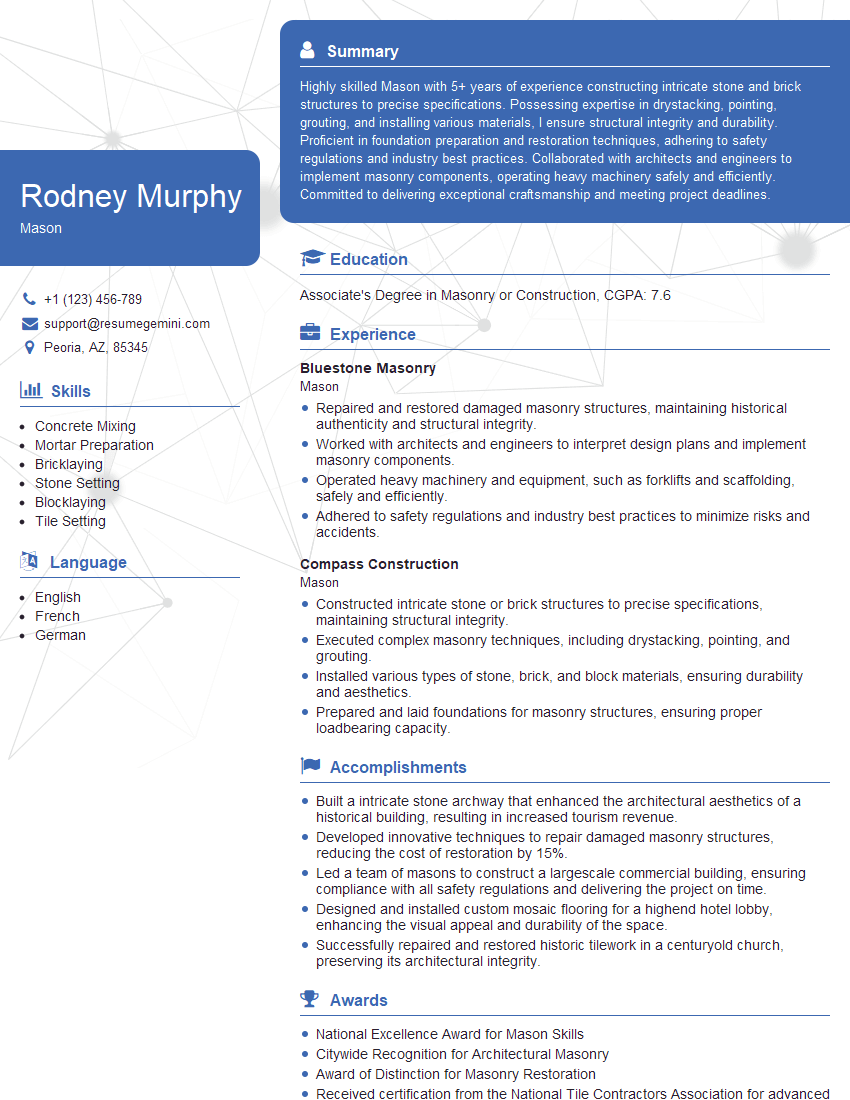
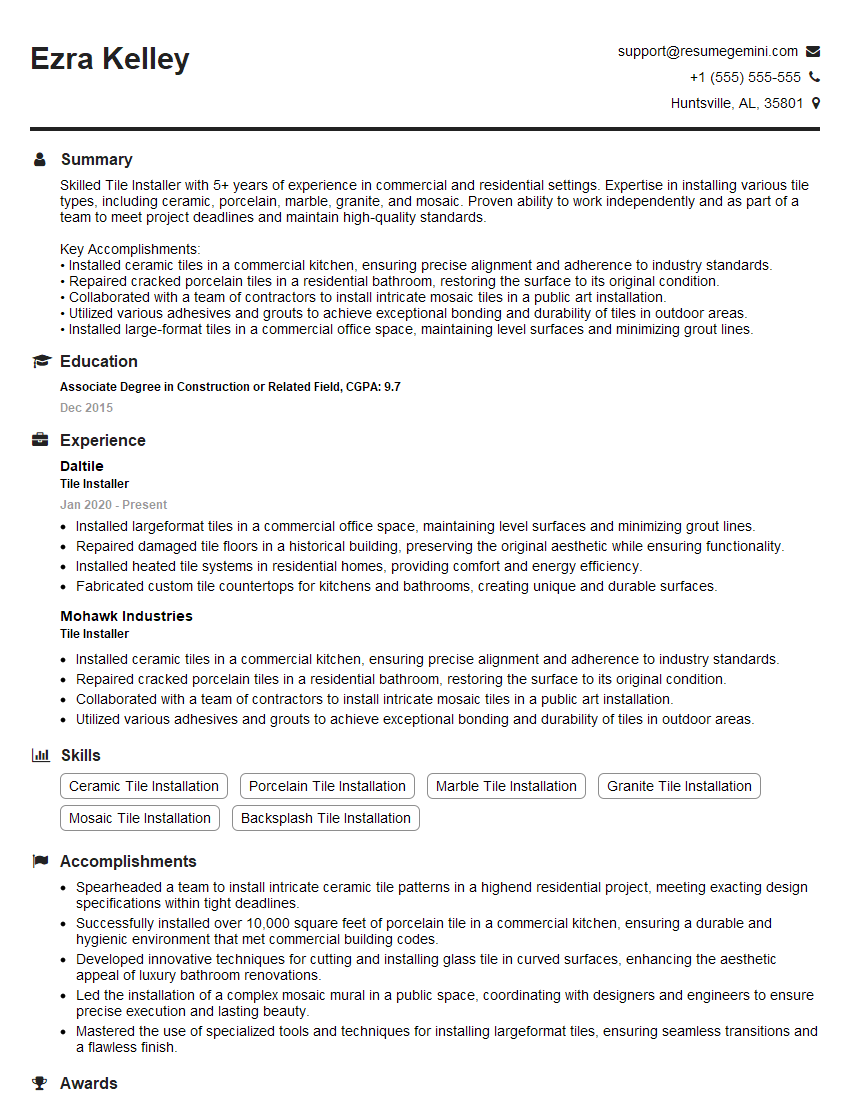
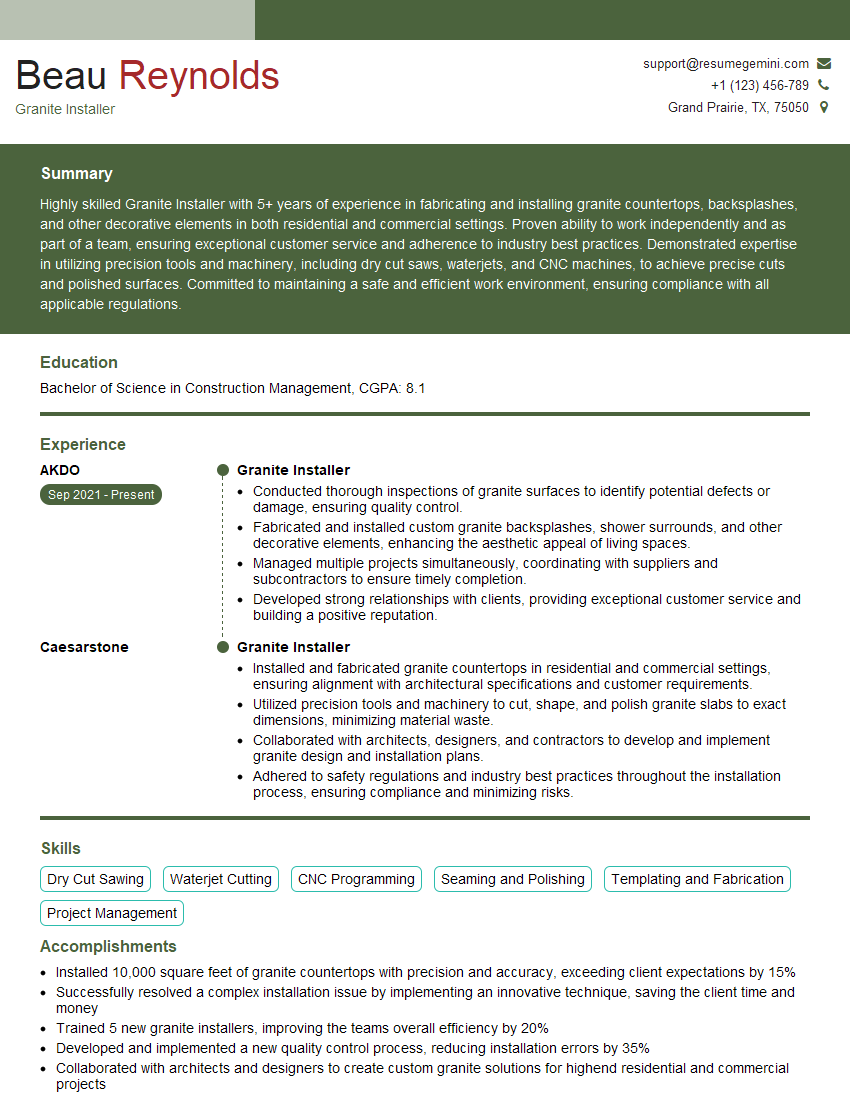
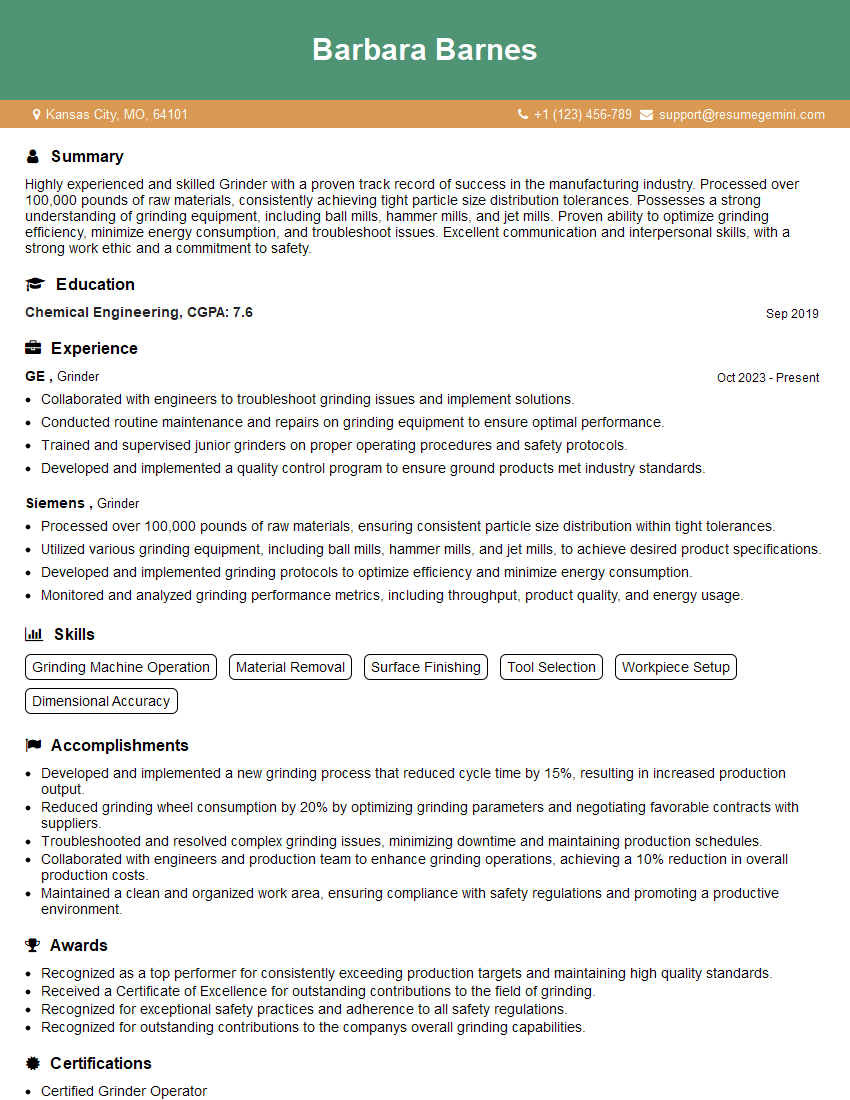
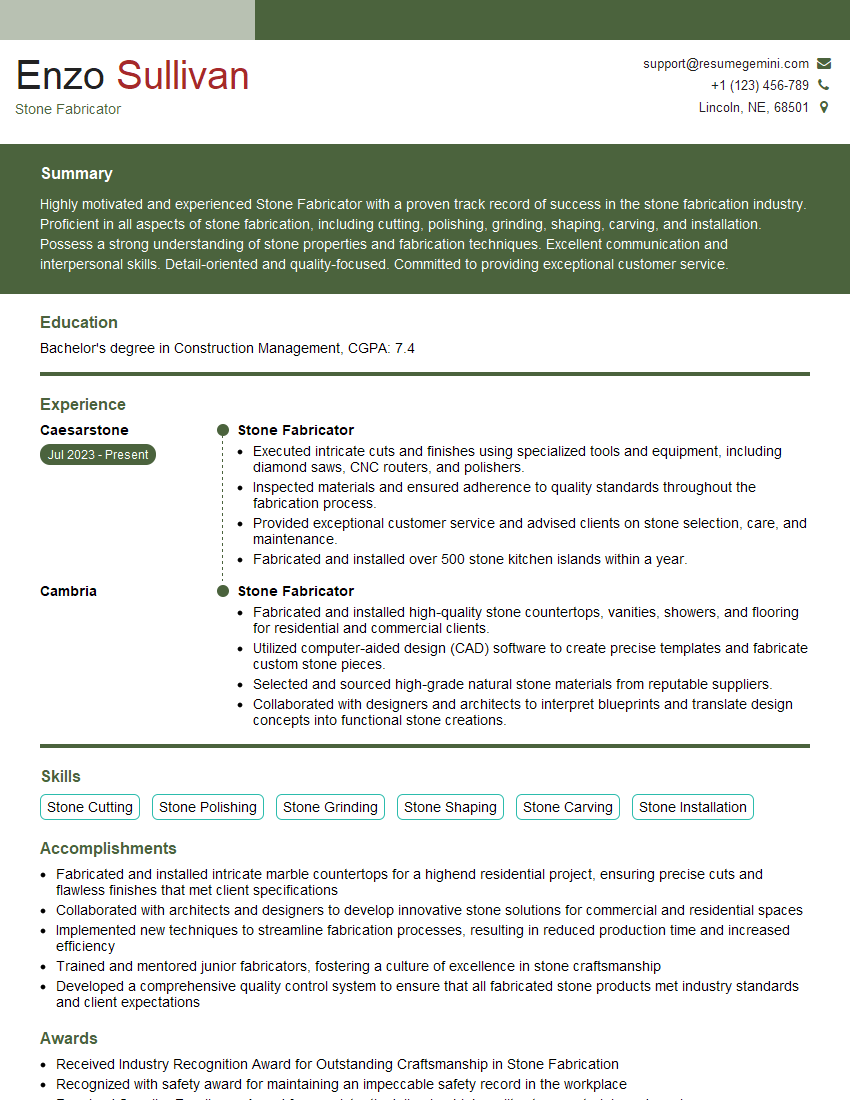
Mastering stone surface preparation opens doors to exciting career opportunities in a specialized and in-demand field. A strong understanding of these techniques will significantly enhance your interview performance and ultimately your career prospects. To increase your chances of landing your dream job, crafting an ATS-friendly resume is crucial. This ensures your application gets noticed by recruiters and hiring managers. We highly recommend using ResumeGemini to build a professional and impactful resume that highlights your skills and experience effectively. ResumeGemini offers examples of resumes tailored to Stone Surface Preparation to guide you through the process.



Explore more articles
Users Rating of Our Blogs
Share Your Experience
We value your feedback! Please rate our content and share your thoughts (optional).
What Readers Say About Our Blog
Very informative content, great job.
good