Every successful interview starts with knowing what to expect. In this blog, we’ll take you through the top Vegetable Inspection interview questions, breaking them down with expert tips to help you deliver impactful answers. Step into your next interview fully prepared and ready to succeed.
Questions Asked in Vegetable Inspection Interview
Q 1. Describe the different types of defects you might find in vegetables.
Vegetable defects can be broadly categorized into cosmetic, physiological, and pathological issues. Cosmetic defects affect the appearance but not necessarily the edibility, such as minor bruises, blemishes, or misshapen forms. Physiological defects arise from improper growing conditions, leading to problems like cracking, sunscald (sunburn), or internal browning. Pathological defects stem from diseases or pest infestations, resulting in rotting, discoloration, or the presence of insects or their damage. For example, a tomato with a small crack is a cosmetic defect; one with blossom-end rot (a physiological disorder caused by calcium deficiency) is a physiological defect; and one with grey mold (a fungal disease) is a pathological defect.
- Cosmetic: Bruises, cuts, scarring, misshapen fruit
- Physiological: Cracking, sunscald, internal browning, blossom-end rot
- Pathological: Rot (bacterial or fungal), mold, insect damage, viral diseases
Q 2. Explain the process of visually inspecting vegetables for quality.
Visual inspection is the cornerstone of vegetable quality assessment. It involves a systematic examination of each vegetable, considering its size, shape, color, and texture. I typically start with a general overview, looking for obvious defects like significant bruising or rotting. Then, I carefully examine each item, checking for subtle imperfections. For instance, with lettuce, I look for discoloration, wilting, or pest damage. With tomatoes, I check for firmness, color uniformity, and the absence of cracks or blemishes. The process often involves handling the vegetables gently to assess their texture and firmness.
Experienced inspectors often develop a keen eye, able to quickly identify subtle indicators of poor quality. This ability develops with practice and a deep understanding of each vegetable type and its common defects.
Q 3. What are the key indicators of vegetable freshness?
Several key indicators point to vegetable freshness. Color is crucial; vibrant, characteristic colors indicate freshness. Firmness is another vital factor; vegetables should feel crisp and not soft or mushy. Texture is also important – smooth, unblemished skin is a good sign. The absence of wilting, discoloration, or unusual odors strongly suggests freshness. For example, fresh green beans will be bright green and snap easily, while limp, dull green beans indicate age. Fresh lettuce will be crisp and have no brown edges or wilting.
Furthermore, the absence of signs of decay or pest infestation is paramount. These visual cues, when taken together, give a holistic picture of the vegetable’s freshness.
Q 4. How do you identify signs of pest infestation in vegetables?
Identifying pest infestation often involves carefully examining the vegetable for direct or indirect evidence. Direct evidence includes the presence of live insects, larvae, or eggs. Indirect evidence includes holes, tunnels, or droppings on or inside the vegetable. For example, small holes in leaves might indicate flea beetle damage, while tunnels within a stem or root could suggest the presence of rootworms or other boring insects. Some pests leave characteristic frass (insect droppings) that is easily identifiable. Discoloration or wilting can also be caused by pest infestations, even without visible insects. Therefore, a holistic approach, combining visual inspection with knowledge of common pests in the region, is vital.
Q 5. What are the common diseases affecting vegetables, and how do you identify them?
Common vegetable diseases vary greatly depending on the crop and the growing environment. Fungal diseases like late blight on tomatoes (characterized by brown, rotting spots), downy mildew on lettuce (showing fuzzy grey growth), and grey mold (a fuzzy grey mold growth on various vegetables) are frequent issues. Bacterial diseases such as bacterial wilt can cause wilting and discoloration. Viral diseases can manifest as mosaic patterns on leaves or stunted growth. Identifying these diseases requires a combination of visual inspection and potentially laboratory testing. Visual symptoms such as spots, lesions, discoloration, or unusual growths are crucial clues. Often, environmental conditions and the crop’s history can provide additional insights. Accurate identification sometimes needs microscopic examination or laboratory testing to confirm the specific pathogen.
Q 6. Explain the grading standards for different types of vegetables.
Grading standards for vegetables are typically based on factors like size, shape, color, and the absence of defects. These standards vary by country and even by region within a country. For example, US Department of Agriculture (USDA) grades for potatoes consider factors such as size, shape, skin texture, and freedom from defects. Higher grades demand fewer defects and more uniform size and shape. Many grading systems use a numerical or alphabetical scale, with ‘extra fancy’, ‘fancy’, ‘No. 1’, and ‘No. 2’ being common designations, indicating decreasing quality. These standards are crucial for market classification, pricing, and consumer protection. Specific grading requirements are often defined by industry standards or contracts between producers and buyers.
Q 7. Describe the procedures for sampling vegetables for inspection.
Sampling for vegetable inspection is crucial to ensure a representative assessment of the entire lot. The sampling method depends on the size and nature of the shipment. For large shipments, systematic sampling (e.g., taking samples from different locations and depths within the shipment) is commonly employed. A random sample is often selected from multiple containers or pallets to ensure randomness. The sample size varies depending on the variability within the lot; larger, more heterogeneous lots require larger sample sizes. Each sampled unit is inspected, and findings are extrapolated to estimate the quality of the entire lot. Statistical methods are used to calculate acceptance or rejection criteria based on the sample results. This ensures that the inspection process is efficient and reliable.
Q 8. How do you handle discrepancies found during vegetable inspection?
Handling discrepancies during vegetable inspection involves a systematic approach. First, I meticulously document the discrepancy, noting the type, location, and severity of the issue. For example, if I find excessive bruising on a batch of lettuce, I’d record the number of affected heads, the percentage of the total batch affected, and the likely cause (e.g., rough handling during transport). Then, I would immediately notify the relevant personnel, such as the grower or the processing plant manager. We would then collaboratively determine the appropriate action – this could range from rejecting the entire batch if the issue is significant and impacts food safety, to isolating the affected portion and allowing the rest to proceed after thorough cleaning, or implementing corrective actions to prevent similar occurrences in the future. Communication and collaboration are key to resolving discrepancies efficiently and ensuring food safety.
For instance, I once discovered high levels of pesticide residue on a shipment of spinach. Following protocol, I immediately documented the finding, took samples for laboratory analysis, and notified the supplier. This resulted in the entire shipment being recalled, and a thorough investigation was launched to identify the source of contamination and prevent future incidents. This involved examining the supplier’s pesticide application records, reviewing their Good Agricultural Practices (GAP) compliance, and working with them to implement corrective measures.
Q 9. What are the relevant food safety regulations pertaining to vegetable inspection?
Food safety regulations governing vegetable inspection are comprehensive and vary depending on the country and region. Generally, they aim to ensure that vegetables are safe for human consumption and free from harmful contaminants. Key regulations often address issues like pesticide residue limits (like those set by the EPA in the US), microbiological limits (e.g., E. coli counts), and the presence of harmful substances such as heavy metals. There are often guidelines on proper handling, storage, and transportation to prevent contamination. International standards such as those developed by the Codex Alimentarius Commission also play a significant role. In the US, for example, the FDA (Food and Drug Administration) and USDA (United States Department of Agriculture) play crucial roles in setting and enforcing these regulations, with specific regulations tailored for different vegetables. Compliance with these regulations is essential to prevent foodborne illnesses and protect public health.
Imagine a scenario where a shipment of tomatoes fails to meet the established microbial limits. This could lead to a rejection of the shipment, fines for the producer, and, in extreme cases, a product recall to prevent consumers from consuming potentially harmful produce. The regulations are thus in place to ensure consistent quality and safety.
Q 10. How do you document your findings during a vegetable inspection?
Documentation is crucial for accurate and verifiable vegetable inspection. I typically utilize standardized forms and checklists that include detailed information about the inspection date, time, location, the type of vegetable inspected, the quantity inspected, and specific observations. I meticulously record any defects or discrepancies, including their type, severity, and location within the batch. Photographs and videos are frequently used to supplement written observations, providing visual evidence of the findings. All data is carefully entered into a database system, often linked to traceability information, ensuring accurate record-keeping and facilitating future analyses and trend identification. This comprehensive documentation serves as a crucial audit trail, enabling traceability and helping us identify potential issues within the supply chain.
For instance, a digital inspection checklist might incorporate fields for recording the presence of pests (e.g., aphids, thrips), physical damage (bruises, cuts), and foreign materials. The system will automatically calculate the percentage of affected produce, providing quantitative data essential for assessment.
Q 11. Describe your experience with different vegetable inspection tools and equipment.
My experience encompasses a range of inspection tools and equipment, from simple visual aids like magnifying glasses to sophisticated technology. Basic tools include scales for weighing produce, rulers for measuring size and dimensions, and refractometers to check the soluble solids content of fruits and vegetables. Advanced equipment includes spectrometers for rapid detection of pesticide residues and imaging systems for non-destructive quality assessment (e.g., detecting internal defects). I’m also proficient in using handheld devices to scan barcodes and RFID tags for accurate traceability. Furthermore, I’m familiar with various types of sampling equipment, ensuring representative samples are taken from larger batches. Choosing the right tools depends heavily on the type of vegetable being inspected, the specific quality attributes of interest, and the scale of the inspection.
For example, a refractometer is vital for assessing the maturity and sweetness of tomatoes, while a spectrometer is invaluable for detecting pesticide residue. The use of advanced technology significantly enhances the efficiency and accuracy of the inspection process compared to solely relying on manual visual assessment.
Q 12. How do you ensure the accuracy and consistency of your vegetable inspections?
Ensuring accuracy and consistency in vegetable inspections is paramount. This is achieved through a combination of thorough training, standardized procedures, regular calibration of equipment, and internal quality control checks. Inspectors undergo rigorous training to learn the correct identification of defects and the accurate use of inspection tools. Standardized checklists and protocols ensure consistency across different inspections, and regular proficiency testing helps maintain a consistently high level of accuracy. Equipment calibration is carried out frequently using certified standards to ensure accurate measurements. Regular internal audits assess compliance with established procedures and identify areas for improvement. The use of technology, like digital checklists and automated data entry, also greatly reduces human error and improves consistency.
Think of it like a recipe – using the same recipe each time, and accurate measuring tools, will lead to consistent results in baking a cake. Similarly, standardized procedures and calibrated tools in vegetable inspection lead to reliable results.
Q 13. What is your experience with traceability systems in vegetable production?
Traceability systems are critical in the vegetable production chain, allowing us to track the origin, handling, and distribution of produce. My experience involves working with various traceability systems, from simple lot-numbering systems to sophisticated blockchain-based technologies. I’m familiar with using barcode scanners and RFID readers to track produce throughout the supply chain. This information is crucial for rapid identification of the source of contamination in case of a food safety incident and for facilitating effective recalls if necessary. Furthermore, traceability systems enhance transparency and accountability within the supply chain, building consumer confidence.
For instance, if a batch of contaminated lettuce is identified, the traceability system allows us to quickly pinpoint the specific farm, the growing season, and the processing plant involved, enabling rapid and focused interventions to contain the contamination.
Q 14. How do you maintain compliance with relevant standards and regulations?
Maintaining compliance involves staying up-to-date on the latest regulations, regularly reviewing and updating inspection procedures to reflect these changes, and participating in relevant training programs. We also conduct periodic internal audits to assess our compliance with standards and identify any gaps. Regular calibration of equipment is vital, as is maintaining accurate records of inspections and corrective actions. Collaboration with regulatory bodies and industry organizations ensures that we are aware of emerging trends and best practices. Proactive measures, such as regular staff training and open communication, are crucial for maintaining a culture of compliance.
For example, if a new regulation related to pesticide residue limits is introduced, we would update our inspection checklists, train our staff on the new limits, and recalibrate our equipment accordingly. This proactive approach helps ensure that we consistently meet the highest standards of food safety and maintain regulatory compliance.
Q 15. How would you handle a situation where you found contaminated vegetables?
Discovering contaminated vegetables is a serious issue requiring immediate action. My response would follow a strict protocol to ensure food safety and prevent further contamination. First, I’d immediately isolate the affected vegetables to prevent cross-contamination. This involves physically separating them from other produce and clearly marking them as contaminated. Second, I’d meticulously document the findings, including the type of contamination (e.g., bacterial, pesticide residue, physical contaminant), the quantity affected, and the location where it was found. This documentation is crucial for tracing the source of contamination and implementing corrective measures. Third, I would initiate a thorough investigation to pinpoint the source of the contamination. This might involve reviewing records, inspecting equipment, and interviewing personnel involved in handling the vegetables. Finally, depending on the severity and nature of the contamination, I would initiate a recall procedure if necessary, following established guidelines. The affected batch would be disposed of according to regulations, and I’d collaborate with regulatory agencies to ensure transparency and compliance. For example, if E.coli contamination was discovered, the entire batch would be immediately destroyed, and a thorough sanitization of the processing area would be implemented.
Career Expert Tips:
- Ace those interviews! Prepare effectively by reviewing the Top 50 Most Common Interview Questions on ResumeGemini.
- Navigate your job search with confidence! Explore a wide range of Career Tips on ResumeGemini. Learn about common challenges and recommendations to overcome them.
- Craft the perfect resume! Master the Art of Resume Writing with ResumeGemini’s guide. Showcase your unique qualifications and achievements effectively.
- Don’t miss out on holiday savings! Build your dream resume with ResumeGemini’s ATS optimized templates.
Q 16. Explain your understanding of Good Agricultural Practices (GAPs).
Good Agricultural Practices (GAPs) are a set of minimum standards for agricultural production that focus on minimizing risks associated with food safety. They encompass a wide range of practices aimed at preventing contamination of produce at every stage, from planting to harvest. Think of it as a comprehensive checklist for growing safe and healthy vegetables. Key aspects of GAPs include proper soil management, water quality control, pest and disease management, and the responsible use of fertilizers and pesticides. They also involve worker hygiene practices, proper handling and storage of produce, and record-keeping to ensure traceability. For instance, GAPs might specify the required distance between fields and potential sources of contamination, such as livestock or industrial areas. Following GAPs is not just about preventing foodborne illness; it’s about maintaining the overall quality and integrity of the produce. It’s a proactive approach to food safety rather than a reactive one.
Q 17. Describe your knowledge of Hazard Analysis and Critical Control Points (HACCP).
Hazard Analysis and Critical Control Points (HACCP) is a systematic, preventative approach to food safety. Unlike reactive methods that only address problems after they occur, HACCP identifies potential hazards throughout the food production process and establishes critical control points (CCPs) where control measures are essential to prevent or eliminate those hazards. Think of it as a proactive risk management strategy. For vegetables, this might involve CCPs such as washing and sanitizing, temperature control during storage and transportation, and metal detection. At each CCP, specific limits (critical limits) are defined, which, if not met, indicate a failure of the control system. Regular monitoring and corrective actions are key components of the HACCP plan. For example, if the temperature in a refrigerated storage area exceeds the critical limit, corrective actions, such as cooling the area or discarding the produce, are immediately implemented. A well-defined HACCP plan ensures a high level of food safety and facilitates compliance with food safety regulations.
Q 18. What are your strategies for efficient and effective vegetable inspection?
Efficient and effective vegetable inspection requires a systematic approach. I begin by visually inspecting the vegetables for signs of damage, discoloration, or pests. This is often the first line of defense. I then use appropriate tools, such as a refractometer to check for proper sugar content, and probes for detecting internal temperatures. Sampling is crucial; I would take representative samples from different parts of the lot. Documentation is essential throughout the process. I record all findings accurately, including date, time, location, and any issues identified. I use a combination of visual inspection, physical tests, and when necessary, laboratory tests to gain a comprehensive understanding of the vegetables’ quality and safety. Using checklists and standardized procedures ensures consistency and minimizes errors. Finally, a clear understanding of the intended use of the vegetables guides my inspection approach. Produce destined for direct consumption will require a higher level of scrutiny compared to that used for processing.
Q 19. How do you prioritize inspections based on risk factors?
Prioritizing inspections based on risk factors involves a risk-based approach. High-risk factors would include produce known to be easily contaminated (e.g., leafy greens), those originating from regions with a history of contamination, or those exhibiting visible signs of spoilage. I would prioritize inspections of these high-risk items to minimize potential hazards. Conversely, low-risk items would be subject to less rigorous inspections. This approach is resource-efficient and ensures that the most vulnerable items are given the most attention. I might use a risk assessment matrix that assigns scores based on different factors, such as the likelihood and severity of potential hazards, to guide my prioritization. This helps ensure that resources are allocated effectively, focusing on the items posing the greatest risk.
Q 20. Describe your experience using vegetable inspection software or databases.
I have extensive experience using vegetable inspection software and databases. These tools significantly improve efficiency and traceability. I’m proficient in using software that allows for digital record-keeping, including details of inspections, results of tests, and images of defects. This eliminates the need for manual record-keeping, reduces errors, and enhances traceability throughout the supply chain. Databases allow me to access and analyze historical data, identify trends, and improve future inspections. For example, if a particular supplier repeatedly has issues with pesticide residue, the database allows for targeted inspections of their future shipments. Software with integrated image analysis can automate some inspection tasks, providing faster and more objective results. This makes the inspection process more reliable and less prone to subjective bias.
Q 21. What is your understanding of different vegetable post-harvest handling practices?
Post-harvest handling significantly impacts the quality and safety of vegetables. Proper practices are crucial to maintain freshness, minimize losses, and prevent contamination. These practices begin immediately after harvest and continue through processing, storage, and transportation. Key aspects include careful harvesting to avoid damage, rapid cooling to slow down enzymatic activity and microbial growth, and appropriate cleaning and sanitizing methods. Different vegetables have specific requirements, for example, leafy greens require careful washing and sanitization, while root vegetables often need proper curing. Proper storage conditions, including temperature and humidity control, are critical in maintaining quality. Efficient packaging and transportation methods are also essential to prevent damage and contamination during transit. Understanding the specific requirements for different vegetables helps ensure optimal quality and safety throughout the supply chain. For instance, improper cooling of spinach after harvest can lead to rapid spoilage and increased risk of bacterial contamination.
Q 22. How do you communicate your inspection findings to relevant stakeholders?
Communicating inspection findings effectively is crucial for ensuring food safety and maintaining stakeholder trust. My approach involves a multi-faceted strategy, tailored to the specific audience and the severity of the findings. For minor issues, a simple email or phone call summarizing the findings and recommending corrective actions is sufficient. For more significant issues, like widespread contamination or serious non-compliance, I prepare a detailed written report.
- Formal Reports: These include photographic evidence, precise location details within the facility, specific regulations violated, and recommended corrective actions. They are distributed to the grower, the processing facility, and relevant regulatory bodies. I always ensure the report is clear, concise, and objective.
- Verbal Briefings: I often conduct face-to-face briefings with stakeholders to explain findings, answer questions, and collaboratively devise solutions. This direct communication fosters better understanding and collaboration. For example, I might explain the implications of high levels of pesticide residue in a batch of lettuce and discuss mitigation strategies.
- Follow-up Communication: I always follow up to ensure corrective actions have been implemented effectively. This might involve a return visit, review of updated documentation, or a further verbal or written communication.
Clear, concise, and timely communication builds trust and ensures prompt remedial action. My aim is always to be collaborative and supportive, focusing on improving practices rather than merely pointing out errors.
Q 23. What steps do you take to ensure the integrity of your inspection process?
Maintaining the integrity of the inspection process is paramount. It’s about ensuring consistency, accuracy, and impartiality in every step. I employ several key strategies:
- Standardized Procedures: I strictly adhere to established protocols and checklists for each inspection type, from pre-harvest field inspections to post-harvest assessments in packing houses. This ensures consistency across different inspections and inspectors.
- Calibration and Maintenance: All equipment, such as scales for weighing produce and tools for assessing ripeness, are meticulously calibrated and maintained according to manufacturer recommendations. This guarantees accurate measurements and reduces errors.
- Random Sampling: I use statistically valid random sampling techniques to ensure that my inspection reflects the entire lot. This prevents bias and provides a representative assessment of the quality and safety of the produce.
- Chain of Custody: When handling samples for laboratory analysis, maintaining a strict chain of custody is crucial. This ensures that the samples remain untampered with, maintaining the integrity of the testing process.
- Documentation: Detailed records are kept for every inspection, including dates, locations, sample sizes, test results, and observations. These records are essential for traceability, auditing, and continuous improvement.
- Internal Audits: Regular internal audits of our inspection procedures help identify weaknesses and implement improvements. They ensure we meet the highest standards of quality and accuracy.
By implementing these steps, I ensure that my inspections are objective, reliable, and consistent, thereby upholding the integrity of the entire process and promoting confidence in the safety and quality of the produce.
Q 24. How do you stay updated on the latest regulations and best practices in vegetable inspection?
Staying current with regulations and best practices is critical in this constantly evolving field. I utilize several methods to maintain my expertise:
- Subscription to Professional Journals and Publications: I regularly read peer-reviewed journals and industry publications focusing on food safety, produce quality, and relevant regulations. This keeps me informed of the latest research and advancements.
- Attendance at Industry Conferences and Workshops: Participating in conferences and workshops provides opportunities to learn from experts, network with colleagues, and gain hands-on experience with new techniques and technologies. These events often feature updates on regulations and best practices.
- Membership in Professional Organizations: Being a member of professional organizations like the [insert relevant professional organization] provides access to resources, training, and networking opportunities, keeping me up-to-date with industry trends.
- Online Resources and Government Websites: I regularly consult government websites and online resources for updates on food safety regulations, guidelines, and best practices. This includes keeping abreast of changes in pesticide tolerances, food safety standards, and emerging threats.
- Continuous Learning Programs: I actively seek out and participate in relevant continuing education programs and webinars to enhance my skills and knowledge.
This multi-pronged approach allows me to stay ahead of the curve, ensuring that my inspection practices are aligned with the latest standards and regulations, ultimately safeguarding consumer health and protecting the integrity of the vegetable industry.
Q 25. Describe your problem-solving skills in handling unexpected challenges during inspections.
Problem-solving is an integral part of my daily work. Unexpected challenges, such as equipment malfunctions or unforeseen contamination, are handled systematically. My approach involves:
- Assessment of the Situation: First, I carefully assess the situation, identifying the nature and scope of the problem. This includes determining the potential impact on the inspection process and the overall safety of the product.
- Development of Solutions: Based on my assessment, I develop a plan to address the problem. This might involve temporarily suspending the inspection, utilizing alternative methods, or seeking assistance from colleagues or supervisors.
- Implementation of the Solution: I carefully implement the chosen solution, ensuring it is effective and doesn’t compromise the integrity of the inspection. For instance, if equipment malfunctions, I might use backup equipment or adjust the inspection process accordingly.
- Documentation and Reporting: I thoroughly document the problem, the solution implemented, and its impact on the inspection results. This documentation is crucial for learning from the experience and preventing similar issues in the future.
- Communication: I maintain transparent communication with all relevant stakeholders throughout the problem-solving process, ensuring everyone is informed and aware of the situation.
For example, if I discover unexpected microbial contamination during an inspection, I’ll immediately halt further processing, inform the grower and regulatory agencies, and work collaboratively to implement a thorough sanitation plan. This systematic approach ensures that effective solutions are found swiftly and safely.
Q 26. What is your experience with different types of vegetable packaging and their impact on quality?
My experience encompasses various vegetable packaging types, each with its unique impact on produce quality. Different packaging materials and designs affect shelf life, respiration rates, and overall freshness.
- Modified Atmosphere Packaging (MAP): MAP extends shelf life by altering the gas composition within the package to slow down respiration and reduce spoilage. This is commonly used for leafy greens and other highly perishable vegetables.
- Vacuum Packaging: This removes air from the package, inhibiting microbial growth and reducing oxidation, thus extending the shelf life of many vegetables.
- Rigid Containers: Plastic containers and crates provide protection against physical damage but can limit gas exchange and may not be suitable for all vegetable types.
- Flexible Packaging: Films and bags are cost-effective but may offer less protection against bruising and physical damage. Their permeability to gases needs careful consideration.
Poor packaging can lead to bruising, wilting, increased susceptibility to microbial contamination, and accelerated ripening. I assess the adequacy of packaging during my inspections, considering factors such as material suitability, design, and sealing integrity. For example, inadequate sealing in MAP packaging can lead to rapid spoilage due to atmospheric intrusion.
Q 27. How do you adapt your inspection techniques to different vegetable varieties?
Vegetable varieties have vastly different characteristics that influence my inspection techniques. My approach is customized based on the specific vegetable’s properties.
- Maturity and Ripeness: Assessing maturity and ripeness varies greatly. For example, determining optimal harvest time for tomatoes involves evaluating color, firmness, and sugar content, while assessing the readiness of leafy greens involves examining their color, texture, and absence of blemishes.
- Susceptibility to Damage: Some vegetables, such as lettuce, are more susceptible to bruising than others like carrots. This influences how I handle the produce during the inspection, avoiding unnecessary rough handling to prevent damage.
- Pest and Disease Susceptibility: Different vegetables have different pest and disease profiles. My inspections involve checking for specific pests and diseases known to affect each type of vegetable. For example, I would scrutinize broccoli florets for signs of aphids differently than I’d inspect potatoes for signs of blight.
- Visual Appearance Standards: Grading standards for color, size, and shape vary significantly between vegetable types. I adhere to these established standards, ensuring consistent quality control.
Adapting my techniques is vital for accurate assessments and ensures the consistent application of quality control across diverse vegetable types. I use appropriate reference materials, including industry guidelines and visual aids, to ensure consistency and precision in my evaluations.
Q 28. Describe your experience with pesticide residue testing or other laboratory analyses related to vegetable safety.
I have extensive experience working with pesticide residue testing and other laboratory analyses vital for vegetable safety. My role involves not only conducting field inspections but also coordinating with accredited laboratories.
- Sample Collection and Handling: I’m proficient in collecting representative samples for various analyses, ensuring proper labeling, packaging, and chain of custody to preserve sample integrity. This includes adhering to specific protocols for different types of tests (e.g., pesticide residue, microbial analysis).
- Laboratory Accreditation: I work only with accredited laboratories to ensure the reliability and validity of the test results. Accreditation confirms that they adhere to rigorous quality control standards.
- Interpretation of Results: I have a strong understanding of laboratory reports and can effectively interpret the results, comparing them against established regulatory limits and industry standards. I understand the implications of exceeding maximum residue limits (MRLs).
- Follow-up Actions: Based on the laboratory results, I can recommend and monitor necessary actions, including re-testing, product recall, or implementation of corrective measures to ensure compliance with safety regulations.
For example, if pesticide residue levels exceed MRLs, I work with the grower to identify the source of contamination and implement corrective actions, potentially involving changes in pesticide application practices or improved cleaning and sanitation protocols. This collaborative approach emphasizes problem-solving and continuous improvement.
Key Topics to Learn for Vegetable Inspection Interview
- Quality Standards and Grades: Understanding various grading systems for different vegetables, including visual and physical characteristics that define quality (e.g., size, color, shape, blemishes).
- Pest and Disease Identification: Recognizing common pests and diseases affecting vegetables, their symptoms, and potential impact on quality and safety. Practical application involves identifying these issues during inspection.
- Post-Harvest Handling and Storage: Knowledge of proper handling and storage techniques to maintain vegetable quality and prevent spoilage. This includes temperature control, humidity, and appropriate packaging.
- Food Safety Regulations and Compliance: Familiarity with relevant food safety regulations and standards (e.g., FDA, USDA) and their practical application in vegetable inspection. Understanding traceability and documentation requirements.
- Inspection Techniques and Procedures: Mastering efficient and effective inspection methods, including sampling techniques, data recording, and reporting procedures. This includes understanding different inspection environments (field, processing plant).
- Equipment and Technology: Knowledge of common tools and technologies used in vegetable inspection, such as scales, colorimeters, and sorting equipment. Understanding how technology improves efficiency and accuracy.
- Problem-Solving and Decision-Making: Ability to identify and address quality issues effectively, including making informed decisions based on observation and knowledge of regulations. Developing solutions for addressing non-compliant produce.
Next Steps
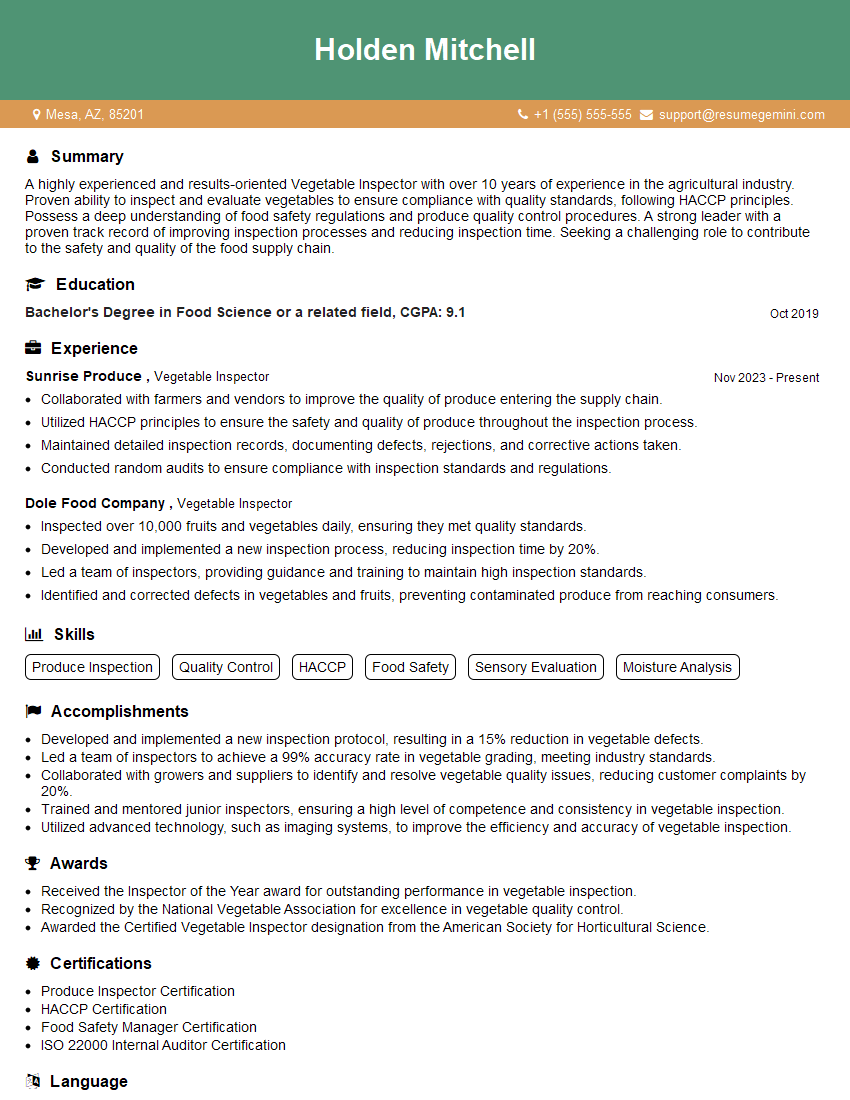
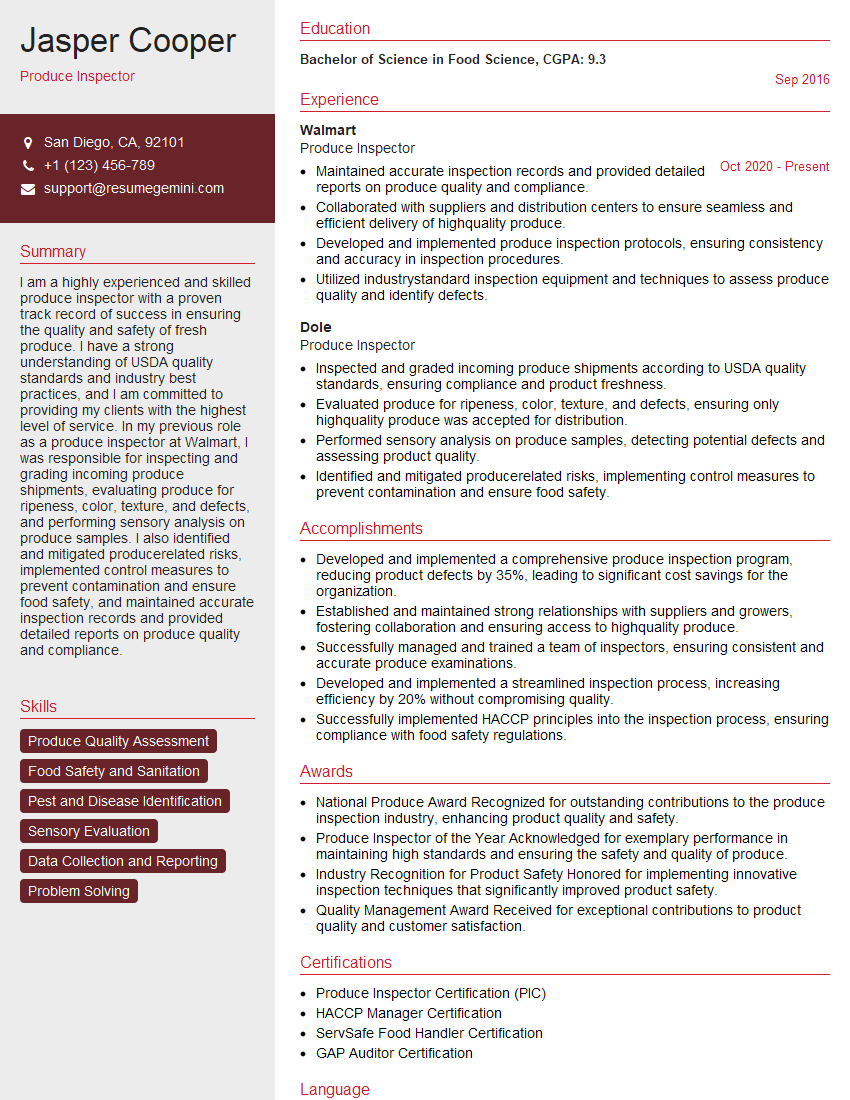
Mastering vegetable inspection opens doors to rewarding careers in the food industry, offering opportunities for growth and specialization. A strong, ATS-friendly resume is crucial for showcasing your skills and experience to potential employers. To significantly enhance your job prospects, we highly recommend using ResumeGemini to build a professional and impactful resume. ResumeGemini provides you with the tools and resources to create a standout document, and we offer examples of resumes tailored to Vegetable Inspection to guide you.
Explore more articles
Users Rating of Our Blogs
Share Your Experience
We value your feedback! Please rate our content and share your thoughts (optional).
What Readers Say About Our Blog
Very informative content, great job.
good