The right preparation can turn an interview into an opportunity to showcase your expertise. This guide to Customer Support and Engagement interview questions is your ultimate resource, providing key insights and tips to help you ace your responses and stand out as a top candidate.
Questions Asked in Customer Support and Engagement Interview
Q 1. Describe your experience handling difficult customer interactions.
Handling difficult customer interactions requires a calm, empathetic, and solution-oriented approach. My strategy centers around active listening, understanding the customer’s perspective, and de-escalating the situation before focusing on a resolution. For example, I once dealt with a customer who was extremely frustrated because a software update had deleted their important data. Instead of getting defensive, I acknowledged their frustration, apologized for the inconvenience, and immediately shifted to problem-solving mode. I walked them through the data recovery process step-by-step, offering reassurance and support throughout. Even though the process took time, my focus on empathy and clear communication helped transform a very angry customer into a satisfied one. I also utilize techniques like paraphrasing their concerns to ensure understanding and validating their feelings. This demonstrates that I’m truly listening and helps build rapport.
Another instance involved a customer who was verbally abusive. I remained professional and calm, setting clear boundaries about acceptable behavior. I reiterated company policies while actively listening to their concerns, showing respect even in the face of disrespect. By focusing on the underlying issue, I was eventually able to defuse the situation and find a solution. Ultimately, successful handling of difficult interactions hinges on patience, strong communication, and a genuine desire to help.
Q 2. How do you prioritize multiple customer requests simultaneously?
Prioritizing multiple customer requests requires a structured approach. I use a combination of urgency, impact, and customer importance to determine the order of tasks. I employ a ticketing system, often color-coded, to visually represent priority levels. Urgent requests, like a critical system outage affecting many users, take immediate precedence. Requests with high impact, such as a major bug impacting a key client, are prioritized next. Finally, I balance these with customer importance; some clients might require a faster response due to their account status or contract agreement. I also utilize time management techniques like the Eisenhower Matrix (urgent/important) to categorize tasks effectively. This ensures that I’m addressing the most critical issues promptly without neglecting others. Regularly reviewing and updating the priority list is crucial, especially as new requests arise.
Q 3. Explain your process for troubleshooting technical issues.
My troubleshooting process is systematic and follows a structured approach. It starts with gathering information—asking clear, concise questions to fully understand the problem. I then replicate the issue if possible. Once I have a clear picture, I move to basic troubleshooting steps, like restarting the system or checking connections. If the problem persists, I delve into more advanced diagnostics, potentially involving log files, network analysis, or specific software configurations. I document each step and the results meticulously. This detailed record helps in tracking progress and aids in identifying recurring issues. If I can’t solve the problem independently, I escalate it to the appropriate team, providing them with all the necessary information to resolve the issue efficiently. A strong understanding of the system architecture and access to relevant tools are crucial for effective troubleshooting.
Q 4. What metrics do you use to measure customer satisfaction?
Measuring customer satisfaction (CSAT) involves utilizing a range of metrics. Key metrics include Customer Satisfaction Scores (CSAT), Net Promoter Score (NPS), and Customer Effort Score (CES). CSAT is usually measured through post-interaction surveys, directly asking customers to rate their satisfaction. NPS gauges customer loyalty by asking how likely they are to recommend the product or service. CES measures the ease of interaction, focusing on the effort required from the customer to resolve their issue. Besides these, we also track metrics such as resolution time, first contact resolution rate, and customer churn rate. Analyzing these metrics provides a holistic view of customer satisfaction, helping identify areas for improvement and track the effectiveness of changes implemented.
Q 5. How do you handle escalated customer complaints?
Handling escalated customer complaints requires a calm, professional, and empathetic approach. My first step is to acknowledge the customer’s frustration and apologize for the negative experience. Then, I carefully review the issue’s history, gathering all relevant information from the previous interactions. I actively listen to the customer, validating their concerns and assuring them that I’m taking their complaint seriously. Once I fully understand the situation, I outline possible solutions, explaining the process and expected timelines. Throughout this process, I keep the customer informed about the progress. If immediate resolution isn’t possible, I set clear expectations and follow up regularly. For highly escalated issues, I may involve management or other specialized teams to ensure prompt and effective resolution. The goal is to find a mutually acceptable solution, leaving the customer feeling heard, understood, and valued.
Q 6. Describe your experience with CRM software.
I have extensive experience with various CRM (Customer Relationship Management) software, including Salesforce, Zendesk, and HubSpot. My proficiency extends to using these tools for managing customer interactions, tracking support tickets, and analyzing customer data. I’m comfortable with functionalities like creating and managing customer profiles, assigning tasks, tracking ticket statuses, and generating reports. In my previous role, I utilized Salesforce to maintain a comprehensive customer database, track sales leads, and ensure seamless communication across different departments. My experience encompasses data entry, report generation, and leveraging CRM functionalities to improve customer service efficiency. Furthermore, I’m adept at using CRM features to personalize customer interactions and improve overall customer experience. For example, I can utilize CRM to see previous interaction history before contacting a customer which allows for a more customized and efficient approach.
Q 7. What is your approach to resolving customer issues efficiently?
My approach to resolving customer issues efficiently revolves around a combination of proactive and reactive strategies. Proactively, I focus on preventing issues by providing clear and accessible documentation, creating helpful FAQs, and offering proactive support. Reactively, when an issue arises, I employ a structured approach, starting with thorough information gathering and problem definition. I prioritize clear and concise communication throughout the resolution process. I leverage available resources such as knowledge bases, internal documentation, and collaboration with colleagues to find the fastest and most effective solution. Finally, I emphasize clear follow-up, ensuring that the customer is satisfied and that the issue is truly resolved. I believe that a combination of efficient processes, excellent communication, and leveraging available resources is critical for quick and effective issue resolution. This means actively listening to the customer, understanding the core problem, and finding the best solution in the most efficient manner.
Q 8. How do you stay updated on product knowledge and industry trends?
Staying current in the dynamic world of customer support requires a multi-pronged approach. It’s not enough to simply rely on initial training; continuous learning is key.
Internal Resources: I actively participate in product training sessions, internal knowledge-sharing meetings, and access internal wikis and documentation regularly. This ensures I’m up-to-date on features, updates, and best practices specific to our products.
Industry Publications and Events: I subscribe to industry newsletters, read relevant blogs and articles (e.g., those from Support Driven, Helpscout, etc.), and attend webinars and conferences to stay informed about emerging trends and best practices in customer support and engagement. For example, I recently attended a webinar on AI-powered chatbots and their impact on customer service efficiency.
Competitor Analysis: Analyzing competitors’ support strategies and offerings helps identify opportunities for improvement and innovation. Observing how others handle customer interactions, both effectively and ineffectively, provides valuable learning insights.
Direct Customer Feedback: This is perhaps the most valuable source. The day-to-day interactions with customers often reveal areas needing improvement or new aspects of the product that require learning. Paying close attention to feedback, both positive and negative, is crucial.
Q 9. How do you build rapport with customers?
Building rapport with customers is fundamental to providing excellent support. It’s about creating a connection and showing empathy, not just solving a technical issue. I achieve this through several techniques:
Active Listening: I listen attentively to understand not just the problem but also the customer’s feelings and frustrations. This includes clarifying their concerns and repeating key points to ensure understanding.
Empathy and Understanding: I acknowledge their frustration and validate their feelings, showing I understand their perspective. Phrases like “I understand how frustrating this must be” go a long way.
Professionalism and Respect: Maintaining a professional demeanor, using respectful language, and avoiding jargon ensure a positive interaction. I treat each customer with the same level of care and courtesy, regardless of the situation.
Personalization (where appropriate): Remembering details from previous interactions (if any) shows I value their business and builds a more personal connection. However, I always maintain professional boundaries.
Clear and Concise Communication: Providing clear explanations, avoiding technical jargon unless necessary, and using simple language helps customers understand the solution. I also make sure to follow up as promised.
Q 10. What is your experience with ticketing systems?
I have extensive experience with various ticketing systems, including Zendesk, Freshdesk, and Jira Service Desk. My experience encompasses all aspects of ticket management: creation, assignment, prioritization, resolution, and reporting.
Ticket Prioritization and Routing: I’m adept at prioritizing tickets based on urgency and impact, ensuring critical issues are addressed promptly. Understanding SLAs (Service Level Agreements) and adhering to them is crucial. I also understand the importance of proper routing to ensure tickets reach the most appropriate team members.
Ticket Management Best Practices: I am proficient in using all features to enhance efficiency, including custom fields, tags, and automation rules, to streamline workflows.
Reporting and Analytics: I can generate reports and analyze data to identify trends, track performance, and improve overall support efficiency. Understanding key metrics such as first response time, resolution time, and customer satisfaction (CSAT) is essential.
Q 11. Describe your experience with different communication channels (email, phone, chat).
I’m proficient in utilizing various communication channels to effectively address customer inquiries. Each channel requires a slightly different approach:
Email: Email allows for detailed, documented communication. I aim for clear, concise responses, using proper grammar and spelling, and including relevant attachments or links where necessary. I always confirm receipt and follow up as needed.
Phone: Phone calls allow for immediate interaction and a more personal connection. I ensure a welcoming and professional tone, active listening, and clear articulation. I make notes of the conversation to ensure consistent follow-through.
Chat: Live chat requires quick thinking and efficient typing skills. I aim for immediate responses, concise language, and the use of helpful emojis or visuals to enhance understanding. I ensure to resolve the issue quickly or set appropriate expectations for resolution time.
My experience spans various communication platforms and I adapt my style to the specific channel and customer preferences.
Q 12. How do you handle situations where a customer is unreasonable or abusive?
Handling unreasonable or abusive customers requires a calm and professional approach. The goal is to de-escalate the situation while still providing support. My approach includes:
Active Listening and Empathy: Even when a customer is abusive, understanding the root cause of their frustration is important. I listen carefully, acknowledging their feelings without condoning abusive behavior.
Setting Boundaries: I clearly communicate that abusive behavior is unacceptable. This can be as simple as saying, “I understand you’re frustrated, but I won’t tolerate abusive language.”
Remaining Calm and Professional: Maintaining a calm and neutral tone helps de-escalate the situation. I avoid engaging in arguments or personal attacks.
Seeking Supervisor Assistance: If the situation escalates beyond my ability to manage it, I immediately escalate it to a supervisor for assistance.
Documentation: I meticulously document the entire interaction, including the customer’s behavior and my responses. This is crucial for future reference and potential follow-up.
Q 13. How do you identify and address recurring customer issues?
Identifying and addressing recurring customer issues is crucial for improving product quality and enhancing customer satisfaction. My approach involves:
Analyzing Ticket Data: I regularly analyze ticket data to identify patterns and recurring issues. Tools like Zendesk or Freshdesk provide reporting features that highlight frequently reported problems.
Using Ticketing System Features: I utilize tagging and categorization features within the ticketing system to group similar issues. This makes it easier to identify trends.
Feedback Loops: I proactively share findings with product and engineering teams. This feedback is essential for identifying bugs, improving product design, or updating documentation.
Knowledge Base Updates: Recurring issues often indicate gaps in the knowledge base. I make sure to update the knowledge base with clear solutions and FAQs to prevent future occurrences of the same problem.
Proactive Communication: In cases of widespread issues, I assist in coordinating proactive communication to affected customers, such as announcing scheduled maintenance or providing updates on a fix.
Q 14. Explain your experience with knowledge base management.
My experience with knowledge base management includes content creation, editing, organization, and maintenance. A well-maintained knowledge base is a crucial resource for both customers and support agents.
Content Creation and Curation: I’m proficient in creating clear, concise, and accurate articles and FAQs. I can create various content formats (video, text, screenshots) to cater to different learning styles.
Organization and Structure: I understand the importance of a well-structured knowledge base with effective search functionality. Categorizing articles logically and using consistent terminology is key to ease of use.
Maintenance and Updates: Regular updates to the knowledge base are essential to reflect product changes and address new issues. I actively participate in updating existing articles and creating new ones as needed.
User Feedback Incorporation: I use customer feedback to identify areas where the knowledge base can be improved. This could involve revising existing articles, adding new content, or restructuring the knowledge base for better navigation.
Metrics Tracking: I monitor key metrics (such as article views, search queries, and customer satisfaction with the knowledge base) to measure effectiveness and identify areas for improvement.
Q 15. Describe your approach to training new customer support staff.
My approach to training new customer support staff is multifaceted and focuses on building both hard and soft skills. It’s not just about knowing the product; it’s about understanding the customer.
- Onboarding and Product Knowledge: We begin with comprehensive product training, using a combination of online modules, hands-on exercises, and shadowing experienced agents. This ensures everyone understands our offerings and their functionalities.
- Customer Interaction Skills: We dedicate significant time to developing communication and empathy skills. Role-playing scenarios covering difficult conversations, handling irate customers, and active listening techniques are crucial. We emphasize the importance of clear and concise communication, tailoring responses to individual customer needs.
- Technology Proficiency: Training includes mastering our CRM (Customer Relationship Management) system, ticketing systems, and any other relevant software or tools. This ensures efficiency and accuracy in managing customer interactions.
- Continuous Learning and Development: Training isn’t a one-time event. We offer ongoing support through mentorship programs, regular training sessions on new product features, and access to online resources. This allows agents to stay updated and develop their expertise over time.
For example, a recent training session focused on handling returns. We role-played scenarios where customers were frustrated with the return process, teaching agents how to empathize, offer solutions, and ultimately retain customer loyalty. We also use gamification, incorporating quizzes and challenges to make the learning process engaging and memorable.
Career Expert Tips:
- Ace those interviews! Prepare effectively by reviewing the Top 50 Most Common Interview Questions on ResumeGemini.
- Navigate your job search with confidence! Explore a wide range of Career Tips on ResumeGemini. Learn about common challenges and recommendations to overcome them.
- Craft the perfect resume! Master the Art of Resume Writing with ResumeGemini’s guide. Showcase your unique qualifications and achievements effectively.
- Don’t miss out on holiday savings! Build your dream resume with ResumeGemini’s ATS optimized templates.
Q 16. What is your experience with customer feedback analysis?
Customer feedback analysis is critical for identifying areas of improvement and enhancing customer satisfaction. My experience involves utilizing various techniques to gather, analyze, and act upon customer feedback.
- Data Collection: I’ve worked with diverse data sources including customer surveys, feedback forms, social media monitoring, and reviews on platforms like Yelp and Google. This provides a holistic view of customer sentiment.
- Qualitative Analysis: I’m proficient in analyzing qualitative data like customer comments and reviews to understand the underlying reasons behind customer satisfaction or dissatisfaction. This often involves identifying recurring themes and patterns.
- Quantitative Analysis: I’m adept at using quantitative data like Net Promoter Scores (NPS), Customer Satisfaction (CSAT) scores, and other key performance indicators (KPIs) to measure the effectiveness of our support efforts and identify areas for improvement.
- Reporting and Action Planning: Once the analysis is complete, I create reports summarizing key findings and develop action plans to address identified issues. This may include process improvements, product enhancements, or changes to our support strategies.
For instance, in a previous role, a recurring negative theme in customer reviews was related to the complexity of our online help center. By analyzing this feedback, we redesigned the help center, simplifying navigation and creating more user-friendly content, which directly resulted in a significant improvement in customer satisfaction scores.
Q 17. How do you proactively improve customer experience?
Proactive customer experience improvement involves anticipating customer needs and addressing potential issues before they arise. It’s about being proactive rather than reactive.
- Personalized Communication: Using customer data to segment customers and tailor communication to their specific needs and preferences. This can include personalized email campaigns offering relevant support or product information.
- Knowledge Base Enhancement: Regularly updating and improving our knowledge base with FAQs, tutorials, and troubleshooting guides. Making sure the information is easily accessible and user-friendly is crucial.
- Proactive Outreach: Contacting customers who might be experiencing issues or are at risk of churning. This allows us to address potential problems before they escalate.
- System Monitoring and Preventative Measures: Closely monitoring system performance and proactively addressing potential outages or technical glitches to avoid disruptions in service.
- Customer Feedback Solicitation: Actively seeking feedback through surveys, feedback forms, and direct outreach. This provides valuable insights into areas for improvement.
For example, we implemented a system that automatically sends out emails to customers who haven’t logged in for a certain period, offering assistance or reminding them of our services. This proactive approach helps to retain customers and improve their overall experience.
Q 18. How do you handle situations where you can’t immediately solve a customer’s problem?
When I can’t immediately solve a customer’s problem, my approach is centered around transparency, empathy, and efficient escalation.
- Acknowledge and Validate: I begin by acknowledging the customer’s frustration and validating their concerns. This builds rapport and helps to de-escalate the situation.
- Explain the Process: I clearly explain the steps I’ll be taking to resolve the issue, including the estimated timeframe. Transparency builds trust.
- Escalate Appropriately: If the problem requires expertise beyond my capabilities, I efficiently escalate the issue to the relevant team or individual, keeping the customer informed every step of the way.
- Set Expectations and Follow Up: I set realistic expectations regarding resolution time and provide regular updates to the customer until the problem is solved. This keeps the customer informed and prevents frustration.
- Documentation: Meticulous documentation of the issue, steps taken, and communications with the customer ensures a smooth handoff and aids in future problem-solving.
For example, if a customer is experiencing a technical issue with our software, and I’m not a software engineer, I would escalate the issue to the engineering team, providing them with all the necessary information from my initial interaction with the customer. I would then follow up with the customer, providing updates and keeping them informed of the progress.
Q 19. What is your approach to conflict resolution with customers?
Conflict resolution with customers requires a calm, empathetic, and structured approach. My goal is to find a mutually agreeable solution that preserves the customer relationship.
- Active Listening: I start by actively listening to the customer’s concerns without interruption, ensuring I fully understand their perspective.
- Empathy and Validation: I express empathy and validate their feelings, even if I don’t agree with their assessment of the situation. This helps to de-escalate tension.
- Finding Common Ground: I work towards finding common ground by focusing on shared goals, such as resolving the issue and restoring satisfaction.
- Offering Solutions: I propose concrete solutions, considering the customer’s needs and preferences. This demonstrates proactiveness and commitment to resolution.
- Following Up: Once a solution is agreed upon, I follow up with the customer to ensure their satisfaction and address any lingering concerns.
For instance, if a customer is upset about a delayed order, I would first acknowledge their frustration and apologize for the inconvenience. Then, I would investigate the cause of the delay and offer a solution, such as expedited shipping or a partial refund. Finally, I would follow up to ensure the issue is fully resolved and the customer is satisfied.
Q 20. How do you use data to inform your customer support strategies?
Data is fundamental to informing effective customer support strategies. I use data to identify trends, measure performance, and make data-driven decisions that enhance customer experience and operational efficiency.
- Identifying Support Bottlenecks: Analyzing data such as ticket resolution times, customer wait times, and agent handle times helps pinpoint areas where improvements are needed.
- Measuring Customer Satisfaction: Using metrics like CSAT, NPS, and other KPIs to track customer satisfaction and identify areas for improvement.
- Understanding Customer Behavior: Analyzing customer interactions and feedback to understand customer preferences, pain points, and common issues.
- Optimizing Support Processes: Using data to refine workflows, improve efficiency, and streamline support processes. This might involve adjusting staffing levels, implementing new tools, or refining training materials.
- Predictive Analytics: Leveraging data to predict potential issues and proactively address them, preventing escalation and improving customer experience.
For example, by analyzing ticket data, we discovered a high volume of tickets related to a specific feature of our software. This insight allowed us to prioritize the development of improved documentation and training materials for that feature, ultimately reducing the number of support tickets related to it.
Q 21. Describe your experience with remote customer support.
My experience with remote customer support spans several years and involves working with various technologies and strategies to deliver seamless and effective support to customers remotely.
- Communication Tools: I’m proficient in using various communication tools including email, live chat, phone, and video conferencing to effectively interact with customers remotely.
- Remote Support Software: I have experience utilizing remote desktop software to assist customers with technical issues, providing real-time support and troubleshooting.
- Ticketing Systems: I am adept at using ticketing systems to track and manage customer inquiries, ensuring efficient and timely resolution of issues.
- Collaboration and Communication: In a remote environment, clear communication and collaboration with colleagues are vital. I have experience working effectively in virtual teams, leveraging communication tools to coordinate support efforts.
- Customer Relationship Management (CRM): I utilize CRM systems to manage customer interactions, track support history, and provide personalized assistance.
In a previous role, we transitioned to a fully remote support model during a pandemic. We leveraged our existing ticketing system, implemented robust communication protocols using instant messaging and video conferencing, and provided extensive training to our agents on effective remote support techniques. This allowed us to maintain a high level of customer satisfaction despite the change in working conditions.
Q 22. How do you measure the effectiveness of your customer support efforts?
Measuring the effectiveness of customer support isn’t just about happy customers; it’s about quantifiable results. We use a multi-faceted approach, combining quantitative and qualitative data. Quantitative metrics include:
- First Contact Resolution (FCR): This measures the percentage of issues resolved on the first contact. A higher FCR indicates efficiency and customer satisfaction. For example, an FCR of 80% suggests that 8 out of 10 customer issues are resolved immediately, minimizing frustration and repeat contacts.
- Average Handling Time (AHT): This tracks the average time spent resolving a customer issue. Reducing AHT demonstrates improved efficiency and agent effectiveness. Tracking AHT helps identify bottlenecks and areas for training improvements.
- Customer Satisfaction (CSAT) scores: These are typically collected through surveys after an interaction. High CSAT scores reflect positive experiences and successful issue resolution. We use a combination of automated and manual surveys to gather this data.
- Customer Effort Score (CES): This measures how much effort the customer had to expend to resolve their issue. Lower CES scores indicate a smoother, more efficient customer experience.
- Net Promoter Score (NPS): This measures customer loyalty and willingness to recommend the company. A higher NPS indicates strong customer relationships and brand advocacy.
Qualitative data comes from customer feedback surveys, call recordings (with appropriate privacy considerations), and agent feedback. Analyzing this qualitative data provides context and insights into the why behind the quantitative data. For instance, low CSAT scores might reveal a systemic issue with a specific product or a lack of agent training on a particular process. By combining both quantitative and qualitative data, we gain a comprehensive understanding of our customer support performance and identify areas for improvement.
Q 23. What are your strengths and weaknesses in a customer support role?
My strengths lie in my ability to empathize with customers, quickly grasp complex issues, and find creative solutions. I’m a strong communicator, both written and verbal, and I excel at de-escalating tense situations. I thrive in fast-paced environments and am comfortable multi-tasking while maintaining a high level of accuracy. I’m also a proactive learner, constantly seeking opportunities to improve my skills and knowledge.
My weakness, if I had to identify one, is sometimes getting too involved in helping customers. I am very passionate about finding solutions and sometimes I spend a little longer than necessary to ensure complete customer satisfaction. However, I’m actively working on managing this by prioritizing tasks and utilizing time management techniques to ensure efficiency without compromising the quality of service.
Q 24. Explain your experience with different customer support methodologies.
I have experience with various customer support methodologies, including:
- Ticket-based systems: I’m proficient in using ticketing systems like Zendesk and Salesforce Service Cloud to manage and track customer inquiries. This allows for efficient organization and prioritization of support requests.
Example: Assigning priority levels (high, medium, low) to tickets based on urgency and impact. - Knowledge Base Management: I’ve been involved in creating and maintaining comprehensive knowledge bases, empowering customers to self-serve and find solutions quickly. This reduces the load on support agents and enhances customer independence.
- Live Chat Support: I have significant experience providing real-time support through live chat, allowing for immediate interaction and quick resolution of simple issues. The key is to be concise and efficient in communicating solutions.
- Phone Support: I’m skilled in handling phone calls, actively listening to customer concerns, and effectively communicating solutions. This requires excellent active listening skills and empathy.
- Email Support: I am experienced in writing clear, concise, and helpful email responses to customer inquiries. This requires attention to detail and the ability to effectively convey information in writing.
My experience across these methodologies has helped me understand the strengths and limitations of each and adapt my approach to best suit the customer’s needs and the situation.
Q 25. Describe a time you had to make a difficult decision in a customer support situation.
I once had to handle a situation where a customer was extremely upset about a significant delay in their order, which was due to an unforeseen logistical issue beyond our control. They were demanding a full refund and threatening legal action. I listened empathetically to their frustrations, acknowledging their anger and validating their feelings. I then explained the situation clearly and transparently, offering a sincere apology for the inconvenience. Instead of a full refund, I offered a substantial discount on their next order, expedited shipping, and a free gift. This approach exceeded their expectations and turned a potentially negative experience into a positive one. They appreciated the effort and understanding, ultimately withdrawing their threat of legal action.
Q 26. How do you manage your time effectively in a fast-paced customer support environment?
In a fast-paced environment, effective time management is critical. I utilize several strategies:
- Prioritization: I use techniques such as the Eisenhower Matrix (urgent/important) to prioritize tasks based on their urgency and impact. This ensures that critical issues are addressed first.
- Time Blocking: I allocate specific time slots for different tasks, such as handling phone calls, responding to emails, and working on internal projects. This helps maintain focus and prevent multitasking overwhelm.
- Multitasking Strategically: While excessive multitasking is inefficient, I strategically multitask by, for example, listening to a voicemail while reviewing emails. However, I ensure that I give full attention to each task when necessary.
- Utilizing Technology: I utilize tools like CRM systems and automation to streamline repetitive tasks, freeing up time for more complex issues.
- Regular Breaks: Short, regular breaks help maintain focus and prevent burnout. Taking these breaks helps to increase productivity throughout the day.
By consistently employing these techniques, I can efficiently manage my workload and provide timely and effective support to customers, even under pressure.
Q 27. What are some of the most challenging customer support situations you’ve faced, and how did you handle them?
One of the most challenging situations involved a complex technical issue that required expertise beyond my immediate knowledge base. The customer was a high-value client, and the problem was severely impacting their business. My initial approach involved actively listening and acknowledging the severity of their issue. Then, I collaborated with our engineering team to diagnose the root cause. We worked closely together, providing updates to the customer regularly to keep them informed and manage their expectations. Finally, we successfully resolved the issue collaboratively, exceeding the customer’s expectations by also providing proactive preventative measures. This experience highlighted the importance of teamwork, clear communication, and maintaining transparency with customers during complex problem-solving.
Q 28. How would you improve the customer support process in a specific scenario?
Let’s say our customer support process is experiencing long wait times due to a high volume of incoming requests during peak hours. To improve this, I would propose a multi-pronged approach:
- Improved Self-Service Options: Enhance our knowledge base with more comprehensive FAQs, videos, and troubleshooting guides. This empowers customers to resolve issues independently, reducing the volume of support requests.
- Optimized Chatbot Implementation: Implement or improve our chatbot to handle frequently asked questions and basic troubleshooting. This acts as a first line of defense, filtering out simple requests and directing complex issues to human agents.
- Strategic Staffing: Analyze call volume patterns and adjust staffing levels during peak hours to ensure adequate agent availability. This might involve hiring additional agents or using a flexible scheduling system.
- Proactive Communication: Implement proactive communication strategies such as sending automated messages acknowledging receipt of inquiries and providing estimated wait times. This manages customer expectations.
- Agent Training and Empowerment: Provide agents with enhanced training on efficient problem-solving techniques and empower them to make decisions without requiring constant supervisor approval. This empowers agents to handle requests more efficiently.
By implementing these strategies, we can significantly reduce wait times, improve customer satisfaction, and enhance overall support efficiency. Regular monitoring and analysis of key metrics will further allow for continuous optimization of the process.
Key Topics to Learn for Customer Support and Engagement Interview
- Understanding Customer Needs: Learn to actively listen and identify the root cause of customer issues, not just the symptoms. Practice empathy and build rapport.
- Effective Communication Techniques: Master clear, concise, and professional communication—both written and verbal. Practice adapting your communication style to different customer personalities and situations.
- Problem-Solving and Troubleshooting: Develop a structured approach to problem-solving, using a logical process of identifying, analyzing, and resolving issues. Practice common troubleshooting techniques relevant to the industry.
- Technical Proficiency (if applicable): Familiarize yourself with any relevant software, CRM systems, ticketing systems, or help desk platforms. Understand their functionality and best practices.
- Escalation Procedures: Understand when and how to escalate complex or unresolved issues to senior team members or specialists. Know your company’s escalation protocol.
- Customer Relationship Management (CRM): Understand the importance of using CRM systems effectively to track customer interactions, manage cases, and provide consistent service.
- Metrics and KPIs: Familiarize yourself with key performance indicators (KPIs) used in customer support, such as resolution time, customer satisfaction (CSAT), and first-call resolution (FCR). Understand how these metrics are used to measure performance.
- Conflict Resolution: Develop skills in de-escalating tense situations and resolving customer conflicts professionally and effectively. Practice maintaining composure under pressure.
Next Steps
Mastering Customer Support and Engagement skills is crucial for career growth, opening doors to leadership roles and increased earning potential. A strong resume is your first impression—make it count! Create an ATS-friendly resume that highlights your achievements and showcases your abilities effectively. ResumeGemini is a trusted resource to help you build a professional and impactful resume. We provide examples of resumes tailored to Customer Support and Engagement roles to guide you. Invest the time to craft a compelling document that accurately reflects your capabilities and helps you land your dream job.
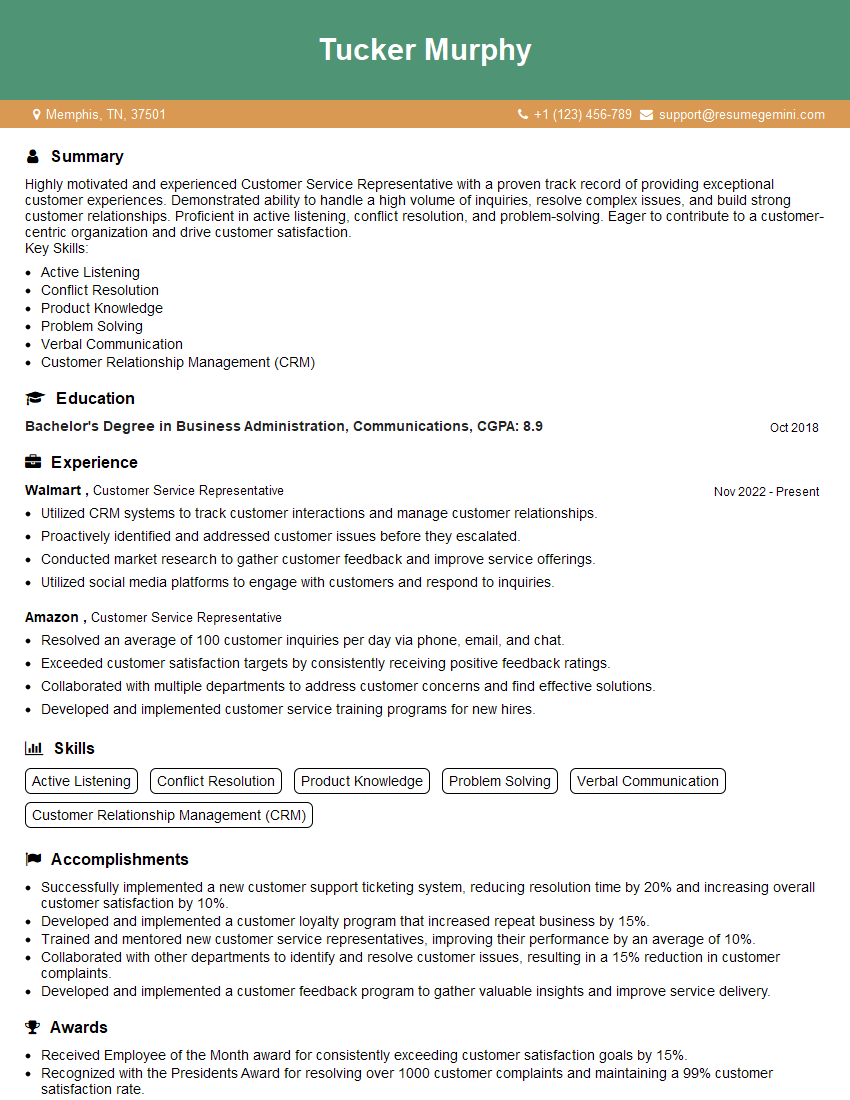
Customer Service Representative Resume Sample
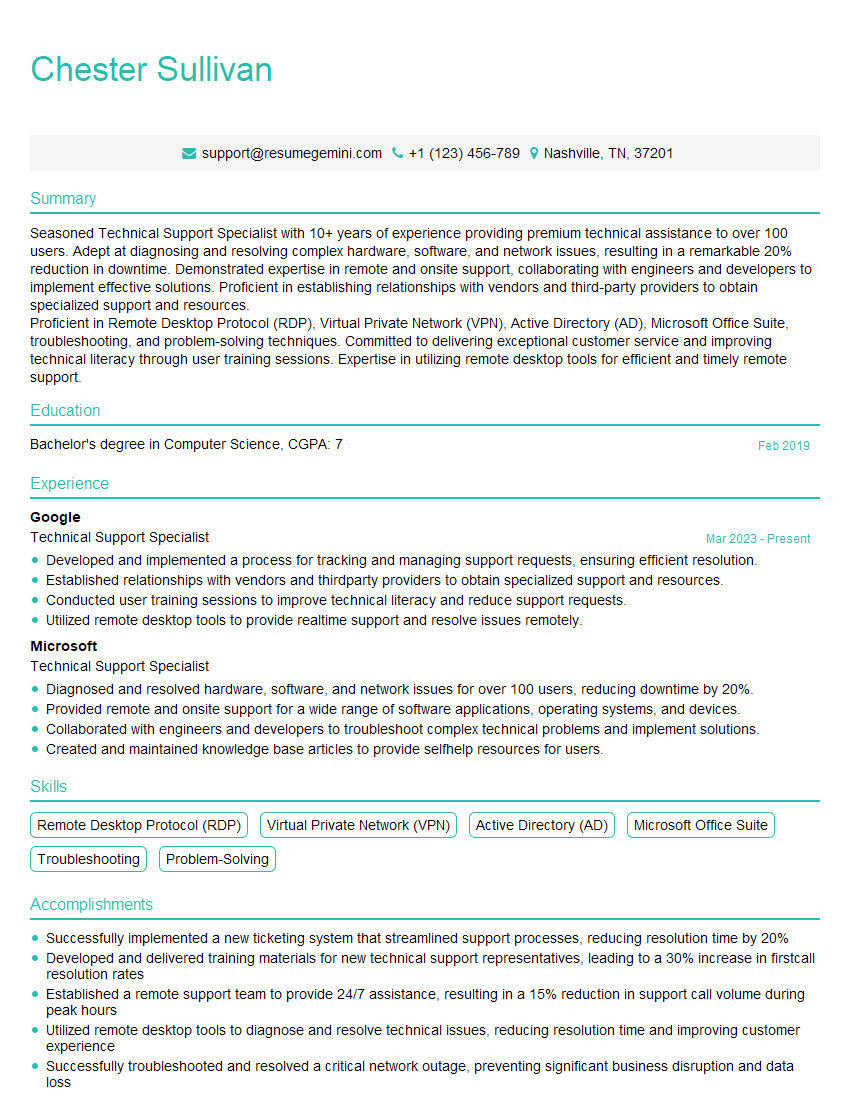
Technical Support Specialist Resume Sample

Customer Support Analyst Resume Sample
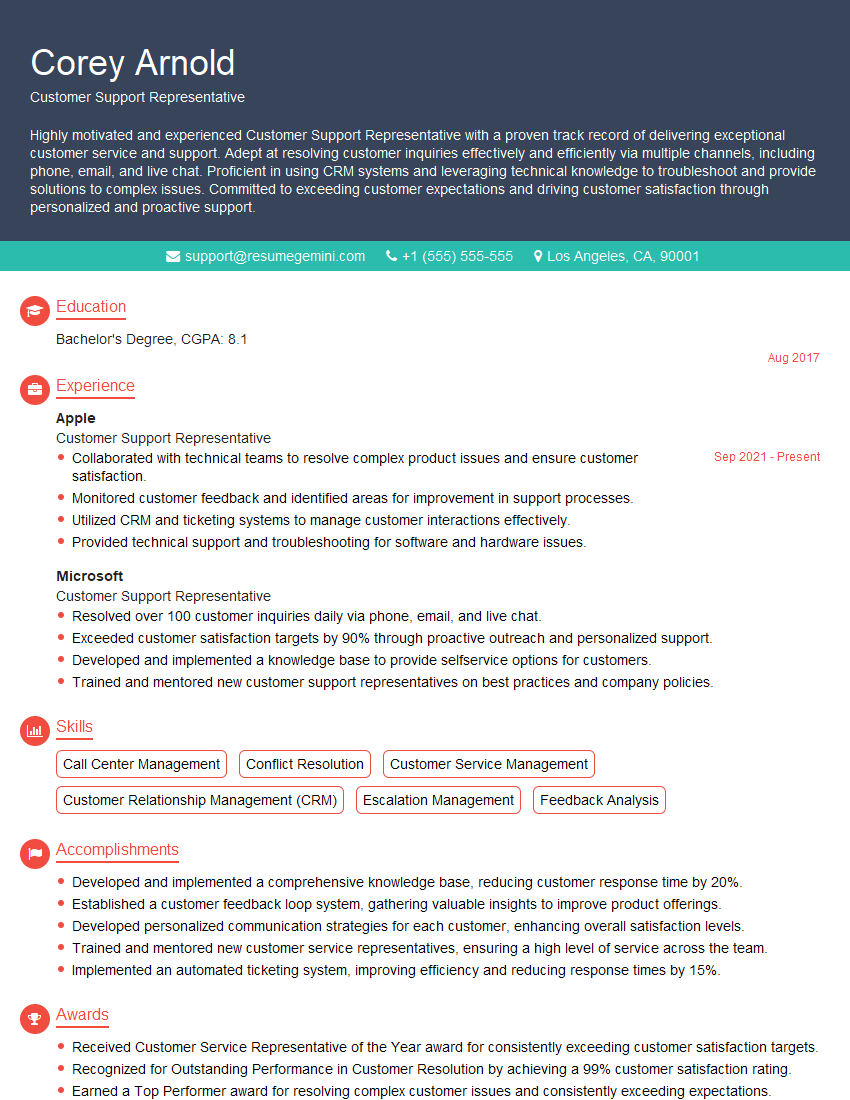
Customer Support Representative Resume Sample
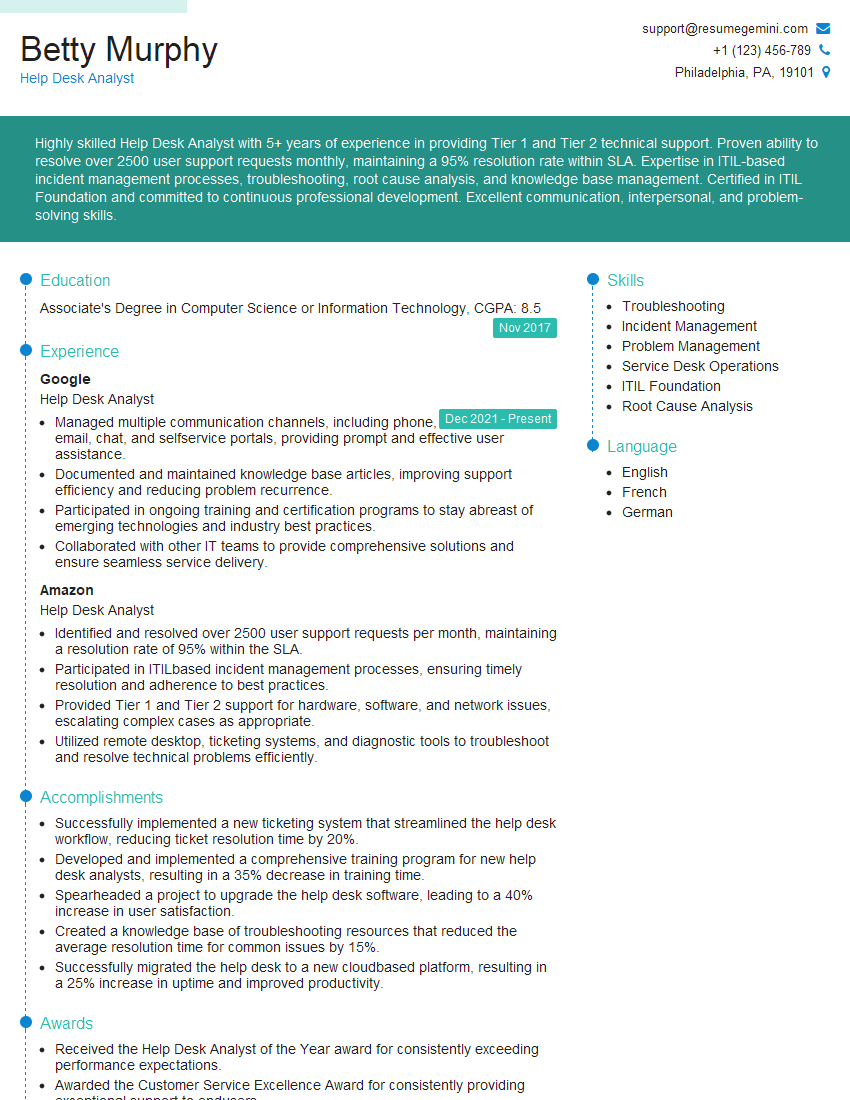
Help Desk Analyst Resume Sample
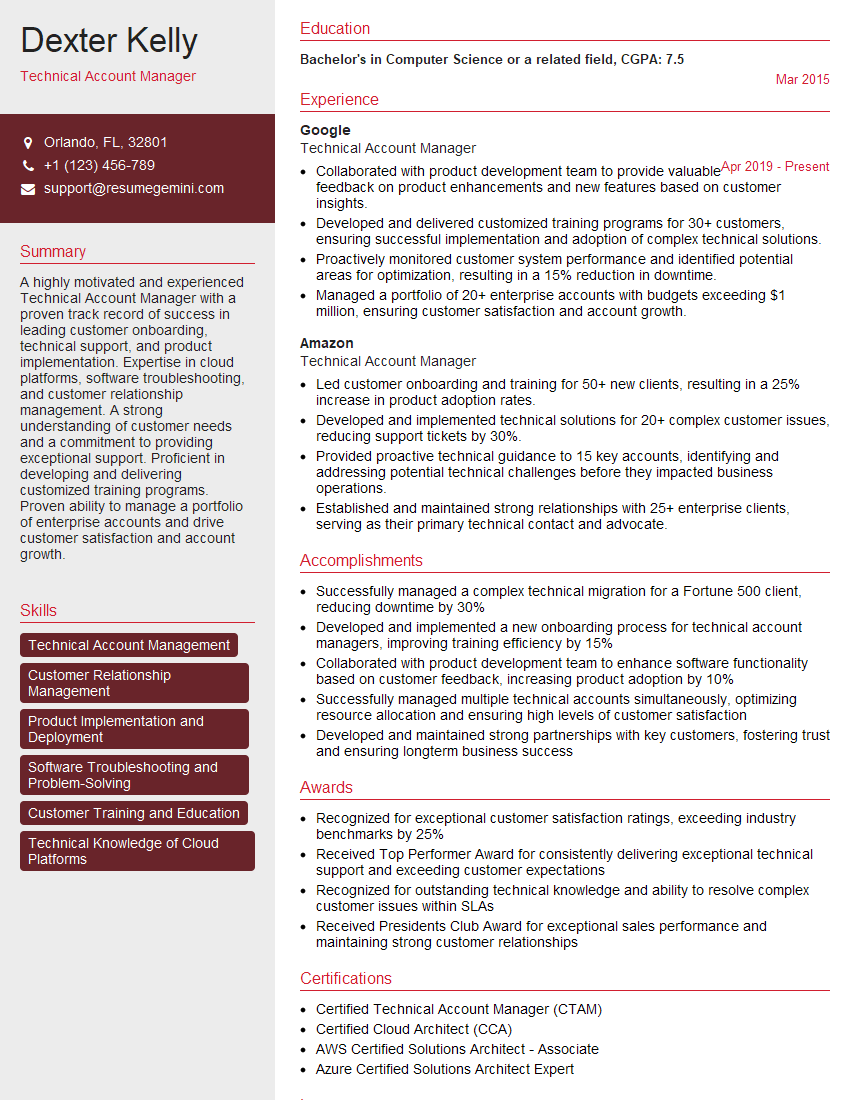
Technical Account Manager Resume Sample
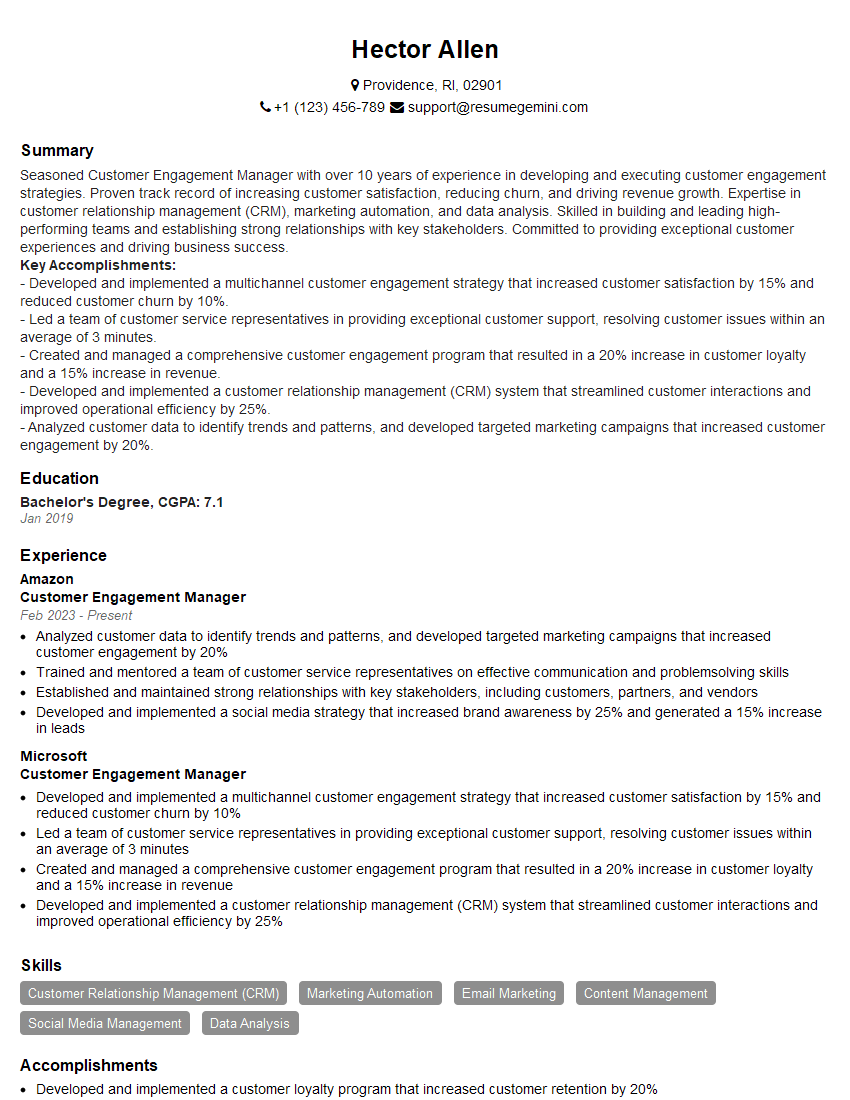
Customer Engagement Manager Resume Sample
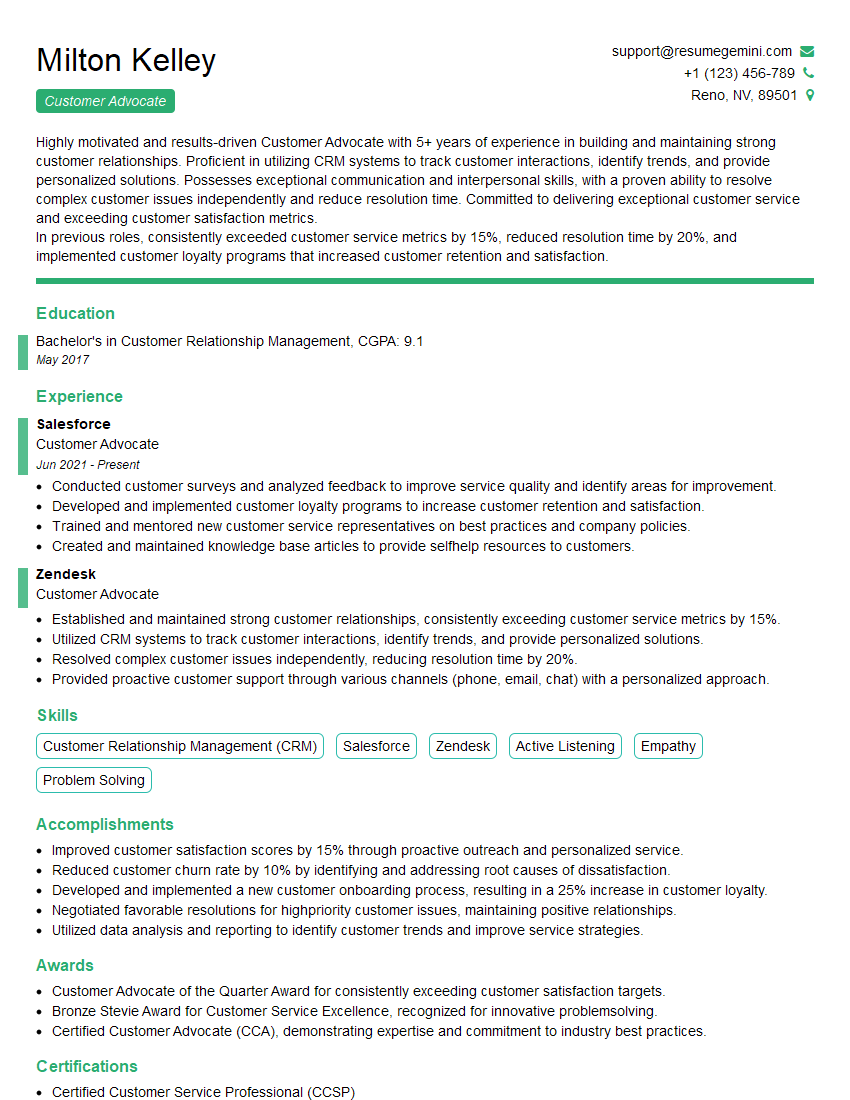
Customer Advocate Resume Sample
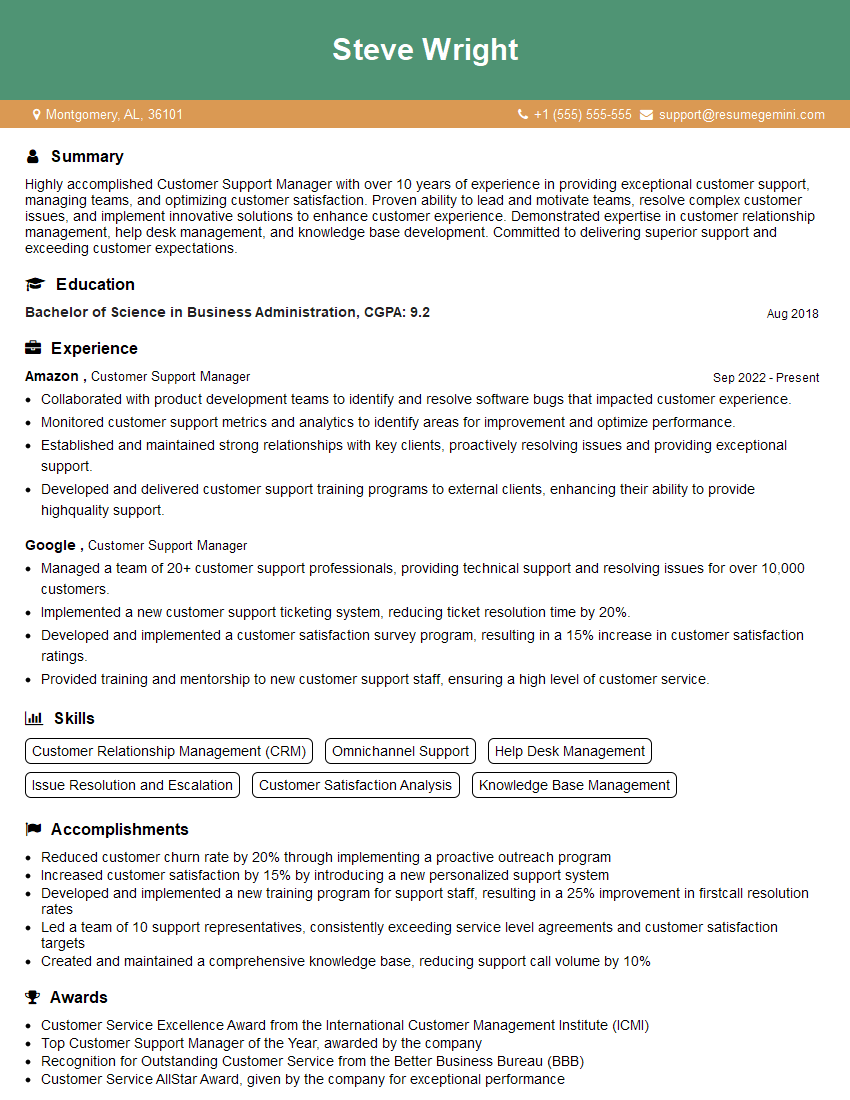
Customer Support Manager Resume Sample
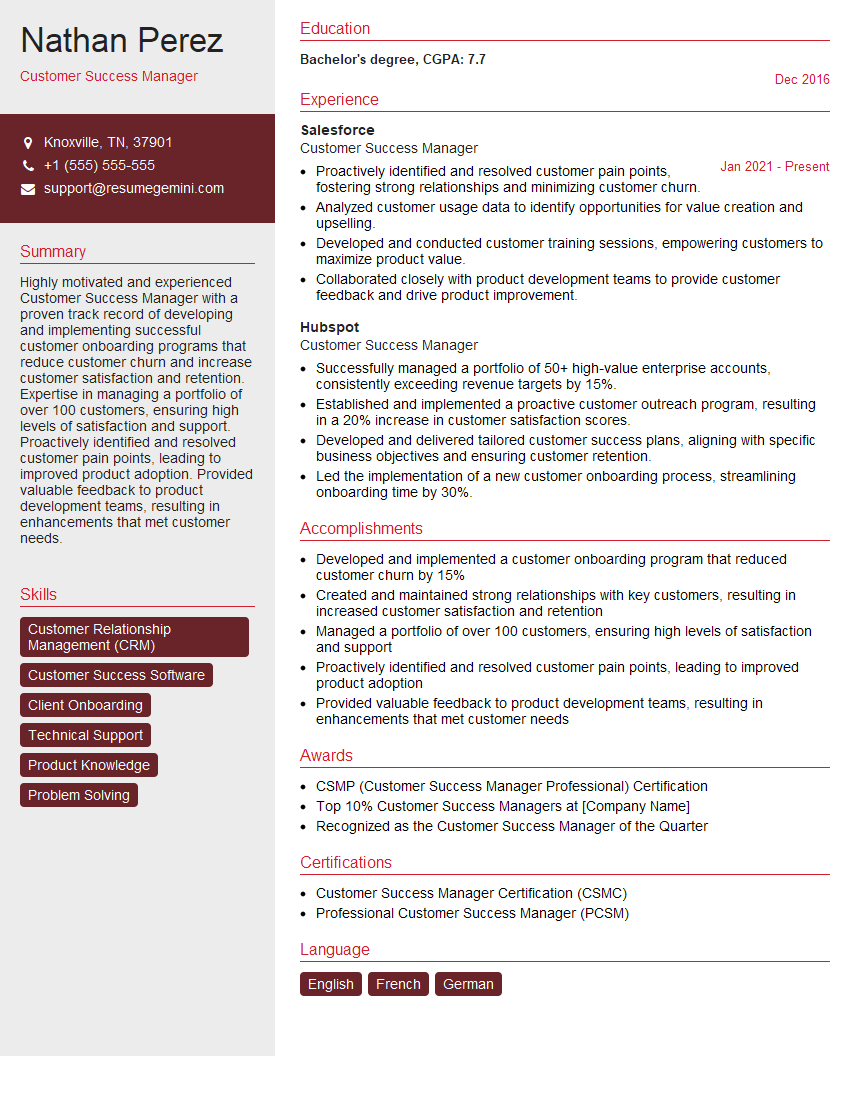
Customer Success Manager Resume Sample
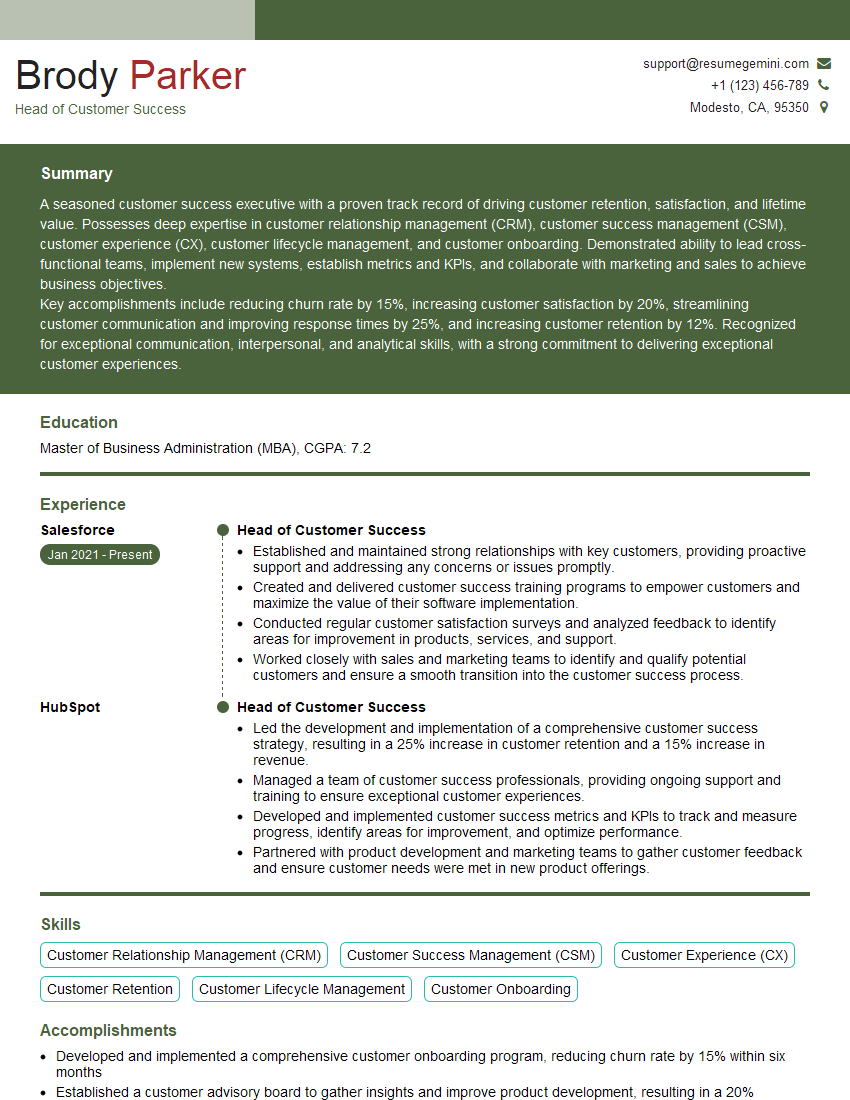
Head of Customer Success Resume Sample
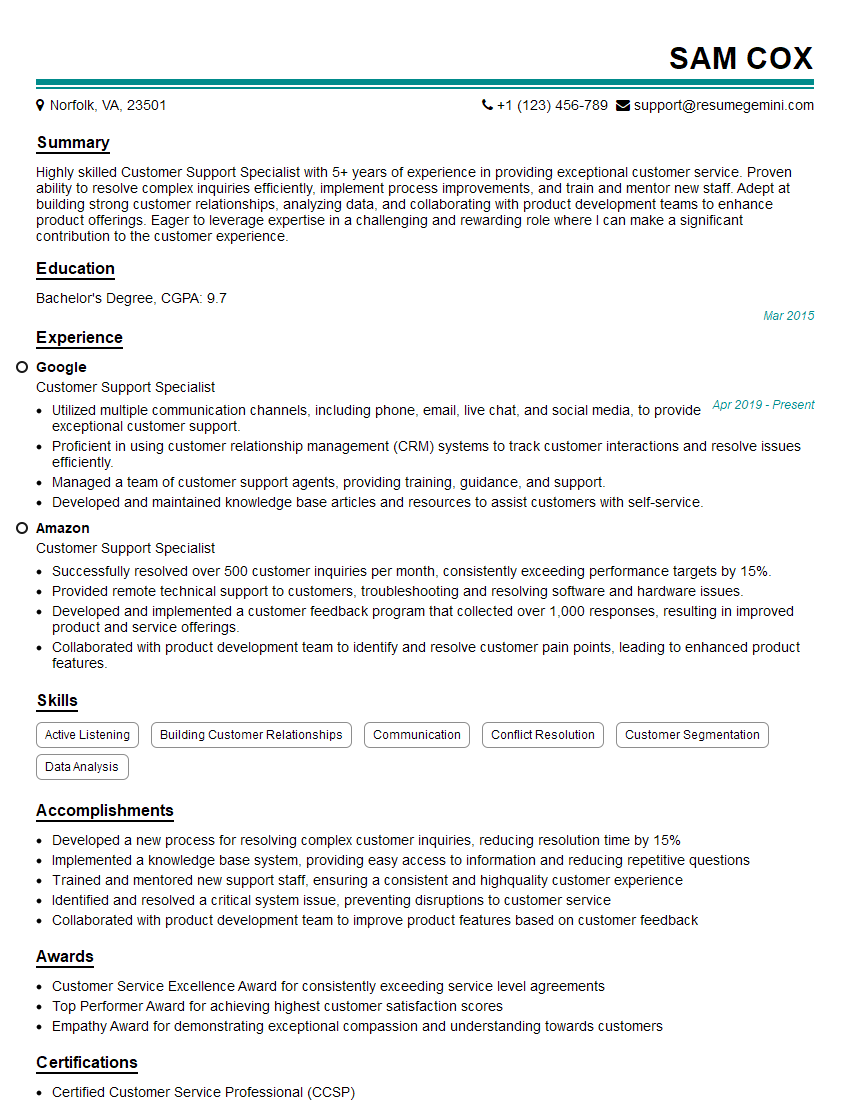
Customer Support Specialist Resume Sample
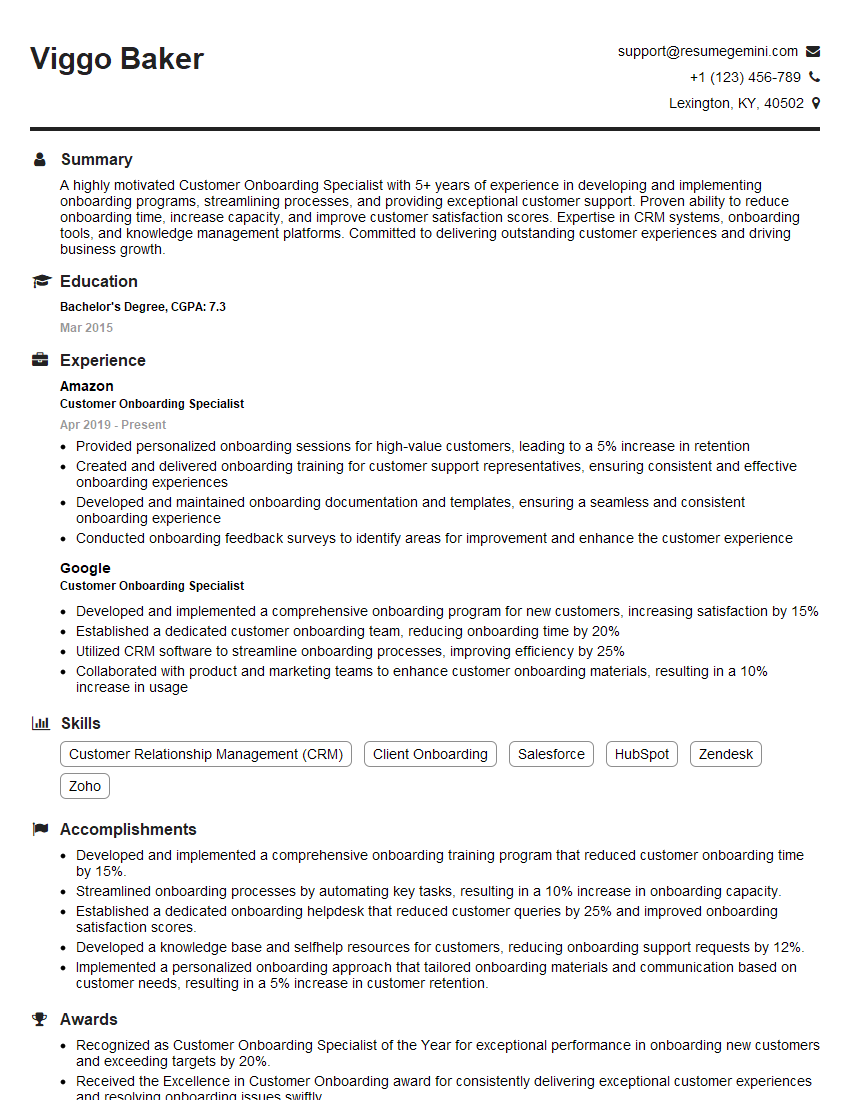
Customer Onboarding Specialist Resume Sample
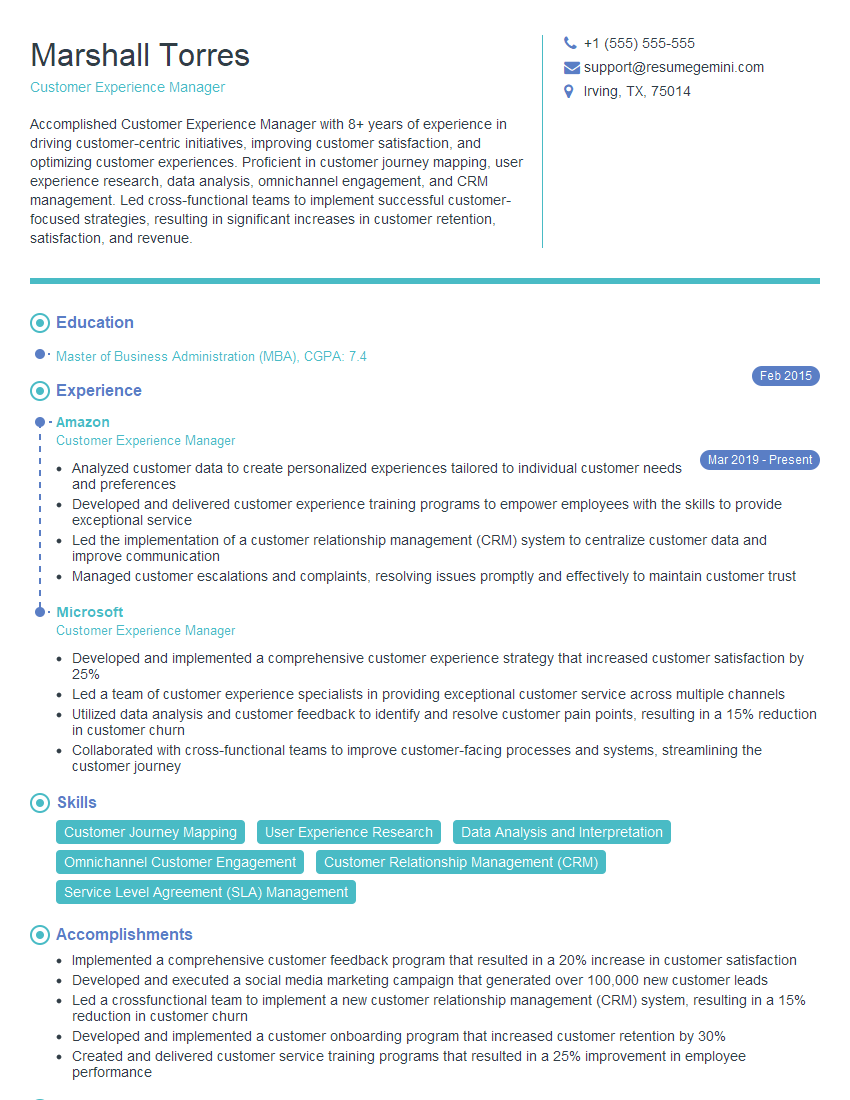
Customer Experience Manager Resume Sample
- Customer Service Representative
- Technical Support Specialist
- Customer Support Analyst
- Customer Support Representative
- Help Desk Analyst
- Technical Account Manager
- Customer Engagement Manager
- Customer Advocate
- Customer Support Manager
- Customer Success Manager
- Head of Customer Success
- Customer Support Specialist
- Customer Onboarding Specialist
- Customer Experience Manager
Explore more articles
Users Rating of Our Blogs
Share Your Experience
We value your feedback! Please rate our content and share your thoughts (optional).
What Readers Say About Our Blog
Very informative content, great job.
good