The right preparation can turn an interview into an opportunity to showcase your expertise. This guide to Fashion Photography and Styling interview questions is your ultimate resource, providing key insights and tips to help you ace your responses and stand out as a top candidate.
Questions Asked in Fashion Photography and Styling Interview
Q 1. Describe your experience with different lighting techniques in fashion photography.
Lighting is the cornerstone of fashion photography. My experience spans a wide range of techniques, from the classic beauty lighting setup emphasizing soft, even illumination for highlighting skin texture and creating a polished look, to more dramatic techniques like chiaroscuro (strong contrasts of light and shadow) for high-fashion editorials.
- Hard Lighting: Using a single, powerful light source creates strong shadows, perfect for edgy or dramatic looks. Think of a harsh midday sun or a single strobe creating strong contrasts on a model’s face. This is great for showcasing texture in leather jackets or creating a moody atmosphere.
- Soft Lighting: Achieved using diffusers, softboxes, or reflectors, soft lighting minimizes harsh shadows, ideal for showcasing delicate fabrics like silk or lace. Think of the soft light of an overcast day or a large softbox diffusing a strobe’s output.
- Rembrandt Lighting: A classic portrait lighting technique, Rembrandt uses a single light source to create a small triangle of light on the shadowed side of the face, adding depth and drama. This works exceptionally well for emphasizing a model’s features.
- Butterfly Lighting: This technique places the light source directly above and in front of the subject, creating a butterfly-shaped shadow under the nose. It’s often used in beauty photography to create a glamorous, classic look.
I also have extensive experience with natural light photography, understanding how to harness the quality and direction of sunlight throughout the day to best effect. I constantly adapt my lighting choices based on the client’s brief, the clothing, and the overall mood we’re aiming for.
Q 2. How do you manage a photoshoot timeline and budget effectively?
Efficient timeline and budget management are crucial for a successful photoshoot. I always begin with a detailed shot list, outlining each shot, location, clothing changes, and necessary equipment. This forms the basis of my schedule. I’ll then work closely with the client to agree on a realistic timeline, considering factors like model availability, location permits (if any), and the complexity of the styling.
Budget management involves meticulous planning from the start. I meticulously create a detailed breakdown of costs: model fees, studio rental (if applicable), location permits, equipment rental, stylist fees, hair and makeup, post-production costs, and any other miscellaneous expenses. I then work with the client to create a budget that aligns with their expectations and ensures all essential aspects are covered. Negotiating competitive rates with vendors and exploring cost-effective alternatives, like using natural light locations instead of renting a studio when possible, are key to managing within the budget. To avoid going over budget, I always build in a contingency buffer for unforeseen costs.
Q 3. Explain your process for selecting clothing and accessories for a fashion shoot.
Selecting clothing and accessories begins with a thorough understanding of the client’s brand and the photoshoot’s concept. I’ll start by reviewing mood boards, style guides, and the overall creative brief. This allows me to identify the key elements and desired aesthetic. Then, I research garments that align with that vision.
My process involves sourcing clothing from various avenues: borrow directly from designers, rent from styling agencies, source from vintage shops or directly from high street stores. For accessories, I follow a similar method, considering the overall look and selecting pieces that complement the outfits without overpowering them. I carefully consider factors such as fabric, texture, color palette, and how the clothes move and drape on the model. Before the shoot, I’ll conduct thorough fittings with the model to ensure a perfect fit and flow of clothing. This includes ensuring any adjustments are made to enhance the model’s figure and contribute to a flattering look. The final selection is always carefully reviewed with the client for approval to guarantee that we are all on the same page.
Q 4. What software are you proficient in for post-processing fashion images?
Proficiency in post-processing software is essential for achieving the desired final look of a fashion image. My expertise lies in Adobe Photoshop and Lightroom. Photoshop is my primary tool for detailed retouching, including skin smoothing (while maintaining natural texture), color correction, adding textures, creating composites, and manipulating the overall image composition. Lightroom is invaluable for initial adjustments, such as white balance, exposure, contrast, and sharpening, also handling batch processing to streamline workflows significantly.
I’m also familiar with Capture One, another powerful post-processing software known for its tethered shooting capabilities and superior color management. While I generally use Photoshop and Lightroom, my choice of software is always dictated by the project requirements and client specifications.
Q 5. How do you adapt your styling approach to different fashion aesthetics?
Adaptability is crucial in fashion styling. My approach varies significantly depending on the desired aesthetic. For example:
- Minimalist Style: This requires clean lines, neutral colors, and a focus on high-quality fabrics and tailoring. The styling is understated and allows the quality of the garments to speak for themselves.
- Bohemian Style: This involves layered textures, flowing fabrics, earthy tones, and accessories like jewelry and hats. The focus here is on creating a relaxed, free-spirited look.
- High-fashion Avant-Garde: This demands creative risks, unconventional silhouettes, and dramatic accessories. The goal is to make a bold statement and push boundaries.
- Streetwear Style: A more casual style with a focus on comfortable yet trendy pieces, often incorporating streetwear staples like hoodies, sneakers, and accessories like caps or backpacks.
I thoroughly research the specific aesthetic before each shoot, drawing inspiration from relevant sources like runway shows, magazines, and street style photography. I adapt my approach accordingly, ensuring the chosen clothing and accessories perfectly capture the desired style.
Q 6. Describe your experience working with models and building rapport.
Building a positive rapport with models is essential for a successful shoot. I begin by creating a comfortable and welcoming atmosphere on set. Clear communication is paramount – I discuss the concept, the desired poses, and the overall mood with the model before we begin.
I prioritize their comfort and well-being. I make sure they feel confident, providing guidance and encouragement throughout the shoot. I’ll offer constructive feedback in a supportive manner, fostering a collaborative environment rather than a demanding one. I treat each model with respect and value their input and suggestions. Building trust and creating a friendly atmosphere enhances their performance and leads to more engaging and natural-looking photographs. My goal is to create a positive and professional experience for each model, so they leave feeling valued and confident.
Q 7. How do you handle challenging clients or unexpected situations on set?
Challenging clients or unexpected situations are inevitable in the fast-paced world of fashion photography. I approach such challenges with a calm and professional demeanor. My strategies include:
- Clear Communication: I proactively address concerns and expectations with clients, ensuring a shared understanding of the vision and approach.
- Problem-Solving: Should unexpected issues arise (e.g., damaged clothing, equipment malfunction, or model unavailability), I quickly assess the situation and implement contingency plans. I often have backup options to mitigate the impact of such problems, for example, having a backup outfit or location.
- Adaptability: I’m always ready to adapt my plans to unforeseen circumstances. This might involve adjusting the shot list, using alternative locations or equipment, or creatively overcoming limitations.
- Maintaining Professionalism: I ensure that I always maintain a professional and positive attitude, regardless of the circumstances. This helps defuse tense situations and maintain a productive workflow.
Experience has taught me that remaining calm, organized, and communicative is crucial for navigating unexpected situations and delivering a successful outcome despite any challenges.
Q 8. How familiar are you with various photography equipment?
My familiarity with photography equipment extends beyond basic understanding; it’s integral to my work. I’m proficient with various DSLR and mirrorless cameras, understanding their capabilities in different shooting scenarios. For example, I know when a high-resolution camera like a Canon EOS R5 is crucial for detailed product shots, versus a lighter, more mobile camera like a Fujifilm X-T4 for on-location shoots.
Beyond cameras, I’m well-versed in lighting equipment, including strobes, continuous lighting, and modifiers like softboxes, umbrellas, and reflectors. I understand the nuances of lighting ratios, color temperatures, and the impact of different light sources on mood and image quality. I also have extensive experience with various lenses, from macro lenses for detailed texture capture to wide-angle lenses for establishing shots. Finally, I’m adept at utilizing post-production software such as Adobe Lightroom and Photoshop to enhance and refine images.
My understanding allows me to make informed decisions on equipment choices based on the specific needs of each photoshoot, ensuring optimal results.
Q 9. What are some key trends in current fashion photography?
Current fashion photography trends are incredibly dynamic, reflecting evolving societal influences and technological advancements. Several key trends stand out:
- Authenticity and Inclusivity: There’s a strong movement toward representing diverse body types, ethnicities, and ages. This means moving away from overly stylized and unrealistic portrayals.
- Sustainable and Ethical Practices: Photographers are increasingly conscious of environmental and social impact, opting for sustainable locations, ethical sourcing of clothing, and responsible post-production techniques.
- Movement and Storytelling: Static poses are giving way to dynamic shots that capture movement and emotion, creating compelling narratives through imagery.
- Bold Colors and Textures: Vibrant color palettes and unusual textures are being embraced, adding a playful and experimental element to fashion photography. Think strong saturated hues or unexpected pairings of materials.
- Digital Manipulation and Artistic Effects: While authenticity is important, creative digital manipulation is also prevalent, blurring the lines between photography and digital art.
- Focus on Lifestyle and Context: Instead of just showcasing clothing, many shoots place the garments within a lifestyle context – showing how the pieces fit into a person’s daily life or a specific mood.
These trends aren’t mutually exclusive; they often intersect to create a unique and nuanced aesthetic.
Q 10. How do you maintain a cohesive style throughout a photoshoot?
Maintaining a cohesive style throughout a photoshoot requires meticulous planning and execution. It begins with a strong mood board that visually defines the overall aesthetic – including color palettes, styling elements, and the overall atmosphere.
This board serves as the guiding document for the entire team. Before the shoot, I carefully select garments, accessories, and props that align with this vision. I work closely with the makeup artist and hair stylist to ensure their work complements the styling and photography concepts. During the shoot, I consistently monitor the overall look, making subtle adjustments as needed to ensure everything flows seamlessly. For example, if we’re shooting a minimalist collection, I’d avoid overly ornate backgrounds or accessories.
Effective communication is crucial. Open communication with the photographer, model, and the entire team ensures everyone is on the same page and working towards a unified vision. Finally, consistency in post-production editing – ensuring a uniform color grading and image style – is vital for maintaining a unified final look.
Q 11. Explain your understanding of color theory and its application in styling.
Color theory is the foundation of effective styling. Understanding color harmonies, such as complementary colors (colors opposite each other on the color wheel, like blue and orange), analogous colors (colors next to each other on the color wheel, like blue, blue-green, and green), and triadic colors (three colors equally spaced on the color wheel, like red, yellow, and blue), allows me to create visually appealing and balanced looks.
For example, using complementary colors can create high contrast and visual interest, while analogous colors create a more harmonious and soothing effect. I consider the context of the shoot; a vibrant, energetic collection might utilize complementary colors, while a more sophisticated collection might rely on analogous or triadic harmonies. I also consider the impact of color on mood and perception; warm colors like reds and oranges can evoke energy and excitement, while cool colors like blues and greens can create a sense of calm and serenity.
Furthermore, I consider skin tones and how colors interact with them. Certain colors complement and enhance various skin tones better than others, which informs my styling choices.
Q 12. How do you source props and locations for fashion shoots?
Sourcing props and locations is a crucial aspect of fashion photography. My approach involves a multi-pronged strategy. For locations, I often begin with inspiration boards and mood boards, then research locations through online resources such as location libraries and scouting platforms. I also leverage my personal network of contacts to discover unique and suitable locations.
For props, my process involves a combination of approaches. I frequently collaborate with prop stylists who have vast networks and access to unique pieces. I also utilize online marketplaces like Etsy and vintage shops to find one-of-a-kind items. For more specific needs, I may work directly with prop makers or rent from specialized prop houses. Often, I incorporate elements from the surroundings of the chosen location to create a more organic and authentic feel.
Throughout the entire process, I prioritize originality and selecting props and locations that resonate with the overall theme and style of the shoot, enhancing the narrative and creating a strong visual impact.
Q 13. Describe your experience with e-commerce photography and styling.
My experience in e-commerce photography and styling is extensive. I understand the unique demands of this field, which emphasizes clear product presentation, accurate color representation, and efficient workflow. In e-commerce, the goal is to drive sales through visually compelling images that accurately reflect the product. I prioritize clean backgrounds, consistent lighting, and precise styling that showcases the product’s details and features without distractions.
I’m adept at working with various product types, from clothing and accessories to home goods and beauty products. I understand the importance of shooting multiple angles and views to give potential customers a comprehensive perspective. My understanding of post-processing techniques ensures consistent color accuracy across all images, crucial for online sales.
My experience also encompasses creating lifestyle imagery for e-commerce, showing the product in use or context to make it more relatable and appealing to customers. Ultimately, my aim is to create images that not only showcase the product but also inspire purchase.
Q 14. What is your approach to building a strong visual narrative through styling?
Building a strong visual narrative through styling is about more than just making the model look good; it’s about telling a story. I begin by understanding the overall concept and theme of the shoot. This often involves collaboration with the photographer and creative director to establish a clear narrative arc.
My approach involves carefully selecting garments, accessories, and props that work together to convey a specific message or evoke a particular emotion. For example, if the story is about a rebellious spirit, I might choose edgy clothing, bold accessories, and a gritty location. I use color palettes to enhance the mood and use texture and fabric choices to reinforce the message. The styling choices aren’t random; each decision contributes to the overall narrative. I might use contrasting textures to emphasize a dynamic personality or use repeated colors to emphasize a sense of unity.
The model’s pose, expression, and interaction with the environment are also integral to storytelling; the model isn’t just wearing the clothes; they embody the narrative. This requires close collaboration with the photographer and model to ensure that the visuals accurately reflect the intended story.
Q 15. How do you incorporate client feedback effectively into your work?
Incorporating client feedback is crucial for a successful collaboration. I treat every feedback session as a collaborative brainstorming opportunity, not a critique. I begin by actively listening, clarifying any ambiguities, and asking clarifying questions to ensure I fully understand their vision. Then, I present my perspective, explaining my creative choices and demonstrating how their feedback can be integrated without compromising the overall aesthetic integrity of the project.
For example, if a client wants a more vibrant color palette but I’ve styled the shoot for a muted, sophisticated look, I might suggest incorporating pops of color in accessories or strategically placed elements within the composition rather than completely changing the overall mood. I might also show mood boards and examples of similar projects demonstrating how the feedback could be implemented successfully.
Finally, I document all agreed-upon changes and maintain open communication throughout the process, ensuring that the client remains informed and satisfied at every stage.
Career Expert Tips:
- Ace those interviews! Prepare effectively by reviewing the Top 50 Most Common Interview Questions on ResumeGemini.
- Navigate your job search with confidence! Explore a wide range of Career Tips on ResumeGemini. Learn about common challenges and recommendations to overcome them.
- Craft the perfect resume! Master the Art of Resume Writing with ResumeGemini’s guide. Showcase your unique qualifications and achievements effectively.
- Don’t miss out on holiday savings! Build your dream resume with ResumeGemini’s ATS optimized templates.
Q 16. How do you manage your workflow and maintain organization in a fast-paced environment?
Managing workflow in fashion photography demands meticulous organization. I use a project management system (like Asana or Trello) to create detailed shot lists, assign tasks to team members, and track deadlines. This ensures everyone is on the same page and reduces the chances of overlooking crucial details. Pre-production is key—I meticulously plan every aspect, from location scouting and casting to styling and equipment selection.
During the shoot, I employ a clear communication system, using walkie-talkies or a designated assistant to relay instructions efficiently. Post-production is equally organized. I implement a strict naming convention for files and folders, making it easy to locate and retrieve images. Using DAM (Digital Asset Management) software further streamlines this process, enabling efficient search and sharing of assets with the client.
Think of it like orchestrating a symphony – each instrument (team member, task, equipment) has a specific role and timing to ensure a harmonious outcome. Careful planning and precise execution are essential for successful project delivery.
Q 17. Describe your experience with digital asset management in fashion photography.
Digital Asset Management (DAM) is indispensable in fashion photography. I utilize cloud-based DAM systems to store, organize, and share high-resolution images and related files (e.g., mood boards, contact sheets). This centralized system offers several advantages:
- Efficient Search & Retrieval: Keyword tagging and metadata allow for quick location of specific images, regardless of file size or project.
- Version Control: Tracking edits and revisions is crucial. DAM systems keep record of changes, avoiding confusion and potential loss of previous versions.
- Client Collaboration: Secure sharing with clients facilitates approval processes and feedback loops, improving efficiency and communication.
- Backup & Security: Cloud-based DAM offers redundancy and protects against data loss.
Examples of DAM software I’ve used successfully include Adobe Creative Cloud Libraries, Bynder, and Widen. The choice depends on specific needs and project scale.
Q 18. How do you ensure consistency in the quality of your images across various projects?
Maintaining consistent image quality across diverse projects requires a multi-faceted approach. It begins with establishing a consistent shooting style and post-processing workflow. I create detailed style guides for each project outlining the desired aesthetic, including lighting, color grading, and image retouching guidelines. This ensures uniformity in the final product.
Furthermore, I use calibrated monitors and color profiles to guarantee accurate color representation across all stages of production. I employ consistent camera settings (ISO, aperture, shutter speed) wherever feasible, maintaining consistency in depth of field and image sharpness. In post-processing, I use standardized editing techniques and utilize action sets or presets in software like Adobe Lightroom and Photoshop to achieve consistent results while still allowing for creative adjustments.
Regularly reviewing and analyzing my work helps identify areas for improvement and reinforces consistent quality control. Think of it as a chef maintaining consistency in their recipes – attention to detail, adherence to standards, and continuous refinement are crucial.
Q 19. What are your strengths and weaknesses as a fashion stylist/photographer?
My strengths lie in my ability to conceptualize compelling visuals, manage complex projects, and collaborate effectively with teams. I possess a keen eye for detail, ensuring every aspect of the photoshoot, from styling to lighting, contributes to a cohesive and impactful narrative. I thrive under pressure and have a knack for problem-solving, adapting quickly to unexpected challenges during shoots.
However, like any creative professional, I am continually working on refining my skills. While I’m highly proficient with various photography and styling techniques, I’m always striving to expand my knowledge of emerging trends and innovative techniques. Time management can sometimes be a challenge when juggling multiple projects with tight deadlines, a continuous area of improvement for me.
Q 20. How do you stay updated on current fashion trends and industry developments?
Staying current in fashion demands constant vigilance. I subscribe to industry publications (print and digital), follow key influencers and designers on social media, and regularly attend industry events and fashion weeks. This provides a holistic overview of emerging trends, new technologies, and evolving aesthetics.
Furthermore, I actively engage with online communities, participate in webinars and workshops, and network with other professionals. This allows me to gain diverse perspectives and insights into best practices. I also regularly review runway shows, analyze trend reports published by fashion forecasting agencies, and explore emerging platforms used by fashion brands. This proactive approach allows me to stay ahead of the curve and deliver innovative and relevant work.
Q 21. How do you deal with difficult fabrics or garments during a photoshoot?
Dealing with difficult fabrics or garments during a photoshoot is a common challenge. My approach is systematic:
- Pre-Shoot Planning: Thorough garment inspection before the shoot is essential. I identify potential issues (e.g., wrinkles, delicate fabrics) and devise strategies for addressing them. I plan for additional time for steaming and prepping clothes.
- Appropriate Tools & Techniques: I have a range of tools at my disposal, including steamers, garment bags, pins, and clips to help manage challenging fabrics. Using assistants for holding, adjusting and manipulating complicated garments is key.
- Problem-Solving During the Shoot: If unforeseen issues arise, I remain calm and adapt. This might involve repositioning the garment, using strategically placed lighting to minimize wrinkles, or retouching in post-production if necessary.
- Collaboration: Working closely with the stylist and model ensures that we address issues proactively and collaboratively, finding solutions that minimize disruptions to the shooting schedule.
The key is preparedness and adaptability. Having a contingency plan for dealing with challenging fabrics ensures that the photoshoot remains smooth and efficient, even when unexpected challenges arise.
Q 22. Describe your experience working within a team setting.
Teamwork is fundamental in fashion photography and styling. I thrive in collaborative environments, believing that diverse perspectives lead to the most innovative and successful outcomes. My experience includes working with photographers, models, makeup artists, hair stylists, and production assistants, often under tight deadlines and demanding conditions. I’m adept at clearly communicating my vision, actively listening to others’ input, and contributing effectively to a shared goal. For instance, during a recent shoot for a high-end sportswear line, I collaborated closely with the photographer to ensure the styling complemented his lighting choices, resulting in a cohesive and visually stunning campaign. My role extended to problem-solving; I quickly adapted the styling when a last-minute model change required adjustments to the wardrobe. Effective communication and proactive problem-solving are my strengths in a team setting.
Q 23. How would you troubleshoot technical issues during a fashion shoot?
Troubleshooting technical issues on set requires a calm, methodical approach and a solid understanding of photography and equipment. My strategy involves a systematic process: First, I identify the problem—is it lighting, camera malfunction, or wardrobe issue? Then, I assess the severity. A minor adjustment to lighting might be a quick fix, while a broken camera requires a backup plan. I always have a backup plan in place before the shoot begins: extra batteries, memory cards, and a basic lighting kit. If it’s a lighting issue, I might adjust the reflectors, diffusers, or even the light source itself. If it’s a camera problem, I work with the photographer to utilize a backup camera or resolve the issue with available resources. In a situation where a garment malfunctioned mid-shoot, I quickly improvised by using safety pins and other tools to repair the garment or selecting an alternative outfit from the styling kit. I ensure that even during a technical challenge, the creative vision is maintained and the shoot stays on track.
Q 24. Explain your knowledge of different types of fabric and how they photograph.
Understanding how different fabrics photograph is crucial for a successful shoot. Lightweight fabrics like silk and chiffon can be challenging, often appearing sheer or wrinkled under studio lighting. To counter this, I use techniques like careful draping and strategic lighting to minimize wrinkles and enhance the fabric’s flow. Conversely, heavier fabrics such as wool or velvet can photograph beautifully, showcasing rich texture and depth. Knowing when to use diffusion and when to use more direct light for specific textures is important. Linen and cotton have their own distinct challenges, often creating texture and wrinkles. My approach is to either highlight the texture through styling and lighting or to minimize the wrinkles through steaming and careful placement on the model. Understanding these nuances allows me to choose fabrics that align with the overall aesthetic and anticipate potential issues beforehand, ensuring a smooth and efficient shoot.
Q 25. How do you maintain the integrity of a garment while styling it for a photoshoot?
Maintaining garment integrity is paramount. Before the shoot, I meticulously inspect each garment for flaws and pre-treat them as needed (e.g., steaming, spot cleaning). During the shoot, I handle garments with care, ensuring they are not stretched, snagged, or stained. I use garment bags, padding, and hangers for storage and transport. I utilize tools like tailor’s shears, pins, and fabric tape for minor adjustments but only with the client’s express permission. I also work closely with the photographer to ensure poses do not put undue stress on delicate fabrics. For instance, if a garment has delicate beading, we plan poses that avoid contact with surfaces that may damage the embellishment. For expensive or vintage items, I often require a client’s approval for all styling decisions and consider procuring insurance coverage.
Q 26. Describe a time you had to overcome a creative challenge in fashion photography or styling.
One memorable challenge involved a shoot for a sustainable fashion brand that emphasized upcycled materials. We needed to showcase the beauty of repurposed denim, which presented a unique styling challenge due to the varied textures and washes in the garments. Initially, we struggled to achieve a cohesive look. I decided to embrace the variation in texture, using different lighting techniques to highlight the unique character of each piece. Instead of trying to make everything look uniform, I created a style that celebrated the individuality of the pieces. We also introduced unconventional styling elements—like layering mismatched denim jackets and pairing them with raw, organic accessories—to reinforce the brand’s message of sustainability and unique style. The resulting imagery was striking, highlighting both the craftsmanship and the brand’s sustainability message. This experience reinforced the importance of adaptability and creativity in overcoming unforeseen obstacles.
Q 27. What are your salary expectations for this position?
My salary expectations for this position are in the range of [Insert Salary Range] annually. This is based on my extensive experience, demonstrated skills, and the specific responsibilities outlined in the job description. I am open to discussing this further based on the specifics of the role and benefits package.
Q 28. Do you have a portfolio you can share?
Yes, I have a comprehensive portfolio showcasing my work in fashion photography and styling, available upon request. It includes both print and digital campaigns, editorial work, and lookbooks for various clients, spanning different styles and aesthetics. I’m confident that my portfolio will effectively demonstrate my skills and creative vision.
Key Topics to Learn for Fashion Photography and Styling Interview
- Understanding Light and Composition: Mastering the technical aspects of photography, including lighting techniques (natural and artificial), composition rules (rule of thirds, leading lines), and camera settings to create visually stunning images.
- Styling Techniques and Trends: Demonstrate knowledge of current fashion trends, styling principles (color theory, silhouette, proportion), and the ability to create cohesive and impactful looks for various styles and brands.
- Collaboration and Communication: Highlight your ability to effectively communicate your vision, collaborate with photographers, models, and other team members, and adapt to different creative styles and preferences.
- Post-Production and Image Editing: Showcase your proficiency in image editing software (e.g., Photoshop, Lightroom) and your understanding of retouching techniques to enhance and refine your images while maintaining a natural aesthetic.
- Portfolio Development and Presentation: Explain your approach to curating a strong and representative portfolio that showcases your skills and style, and discuss your strategy for presenting it effectively to potential clients or employers.
- Fashion Photography Genres: Discuss your familiarity with different types of fashion photography, such as editorial, commercial, street style, and e-commerce photography, and the unique considerations each requires.
- Problem-Solving and Adaptability: Describe your approach to creative challenges, unexpected setbacks, and how you adjust to changing circumstances during a photoshoot.
- Branding and Marketing: Discuss understanding of personal branding and how to market oneself as a Fashion Photographer or Stylist.
Next Steps
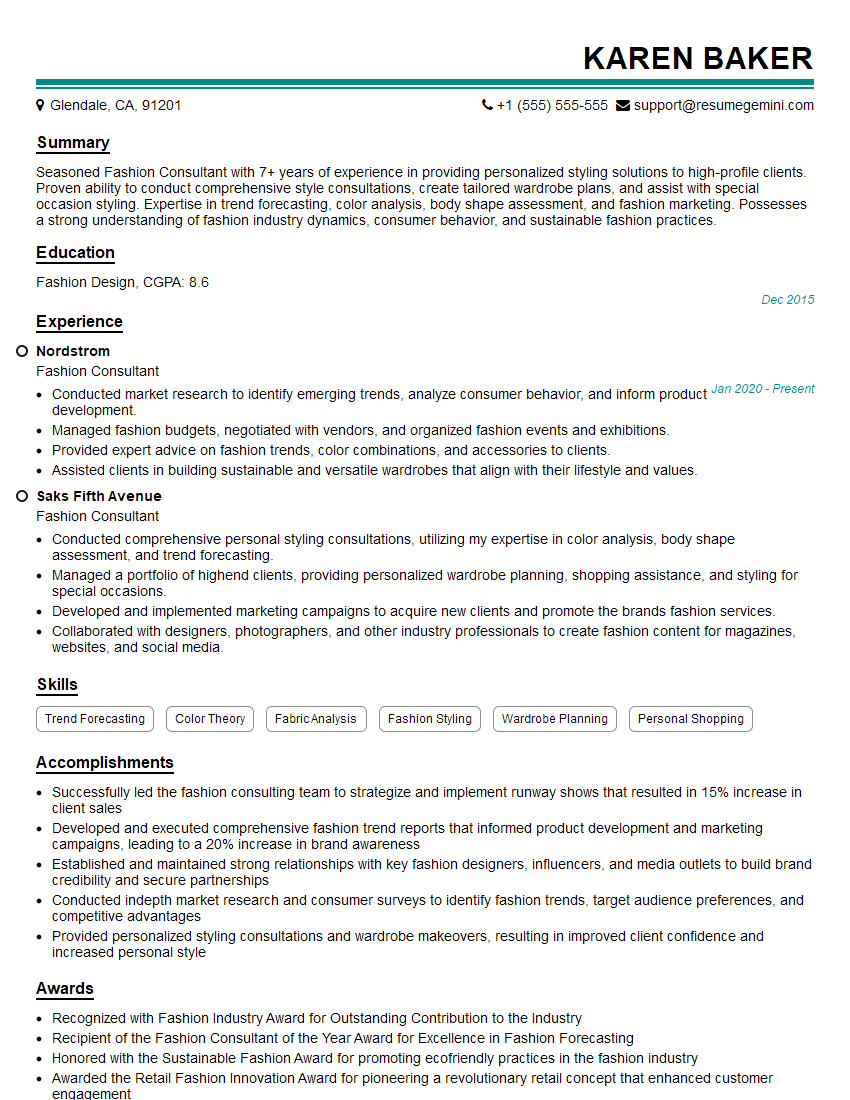
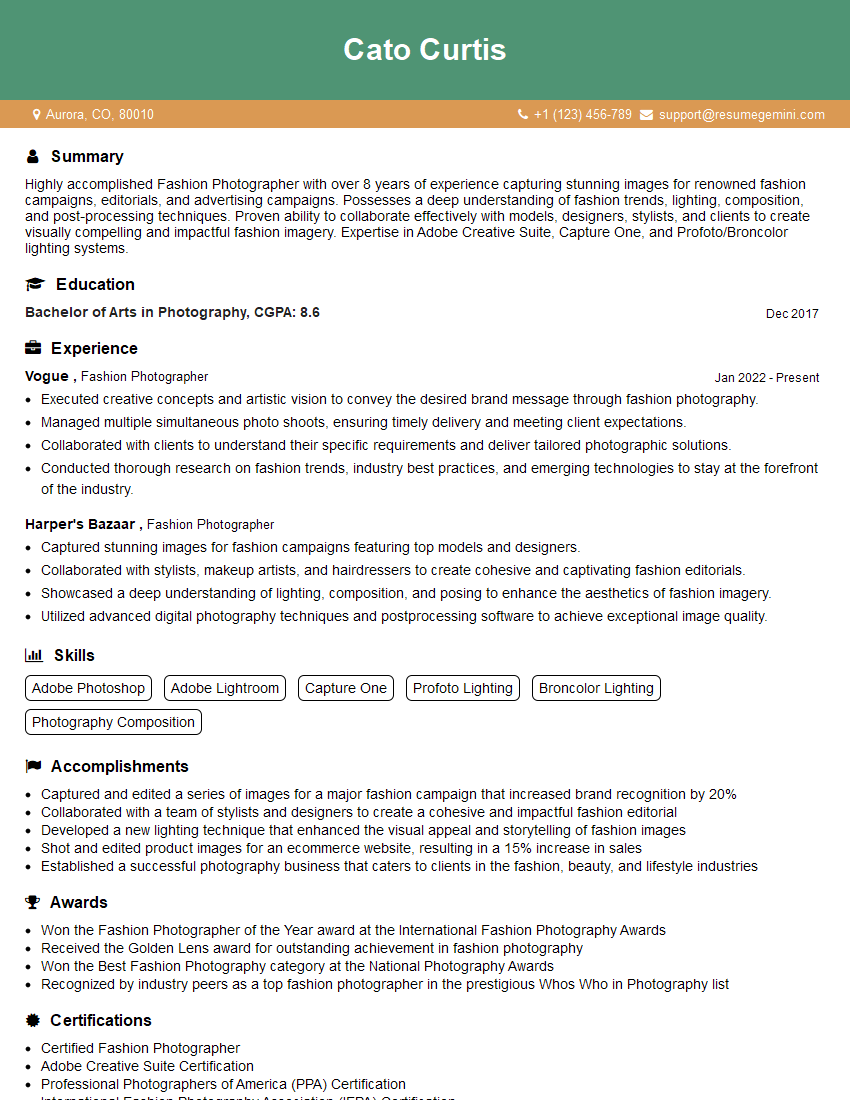
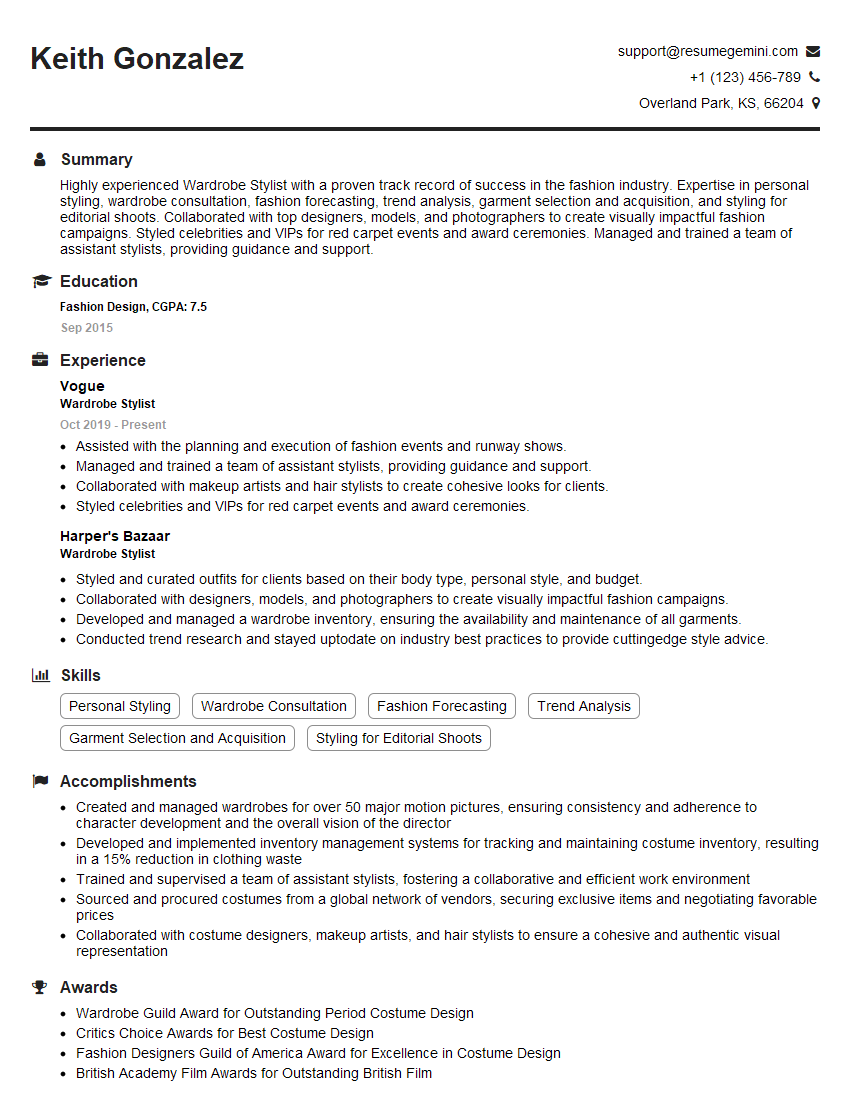
Mastering Fashion Photography and Styling opens doors to a dynamic and creative career, offering diverse opportunities for growth and collaboration. A strong, ATS-friendly resume is crucial for making a lasting impression on potential employers. To elevate your job prospects and create a resume that truly showcases your skills and experience, consider using ResumeGemini. ResumeGemini provides a streamlined process for building professional resumes, and we offer examples of resumes tailored specifically to Fashion Photography and Styling to help you get started. Invest in a resume that reflects your unique talent and ambition!
Explore more articles
Users Rating of Our Blogs
Share Your Experience
We value your feedback! Please rate our content and share your thoughts (optional).
What Readers Say About Our Blog
Very informative content, great job.
good