Are you ready to stand out in your next interview? Understanding and preparing for Automated Machinery Control interview questions is a game-changer. In this blog, we’ve compiled key questions and expert advice to help you showcase your skills with confidence and precision. Let’s get started on your journey to acing the interview.
Questions Asked in Automated Machinery Control Interview
Q 1. Explain the difference between a PLC and a PAC.
Both PLCs (Programmable Logic Controllers) and PACs (Programmable Automation Controllers) are industrial computers used to automate machinery, but they differ significantly in their capabilities and applications. Think of a PLC as a specialized muscle car – powerful for its intended task but limited in versatility. A PAC, on the other hand, is more like a sophisticated SUV – powerful, versatile, and capable of handling a wider range of tasks.
PLCs excel at controlling discrete logic operations like switching valves, motors, and lights. They are optimized for high-speed input/output (I/O) and typically use simple programming languages like Ladder Logic. They’re the workhorses of factory automation, perfectly suited for repetitive tasks.
PACs, however, integrate advanced capabilities such as motion control, data acquisition, and sophisticated networking. They often employ more complex programming languages like Structured Text or C. PACs are used in more demanding applications requiring complex control algorithms, data analysis, and integrated communication across a wider network. They are common in systems requiring high-level process control and information management.
In essence, a PLC focuses on precise, timed control of discrete devices, while a PAC manages complex processes, integrates diverse systems, and often includes extensive data analysis capabilities. The choice depends entirely on the application’s complexity and requirements.
Q 2. Describe your experience with different PLC programming languages (e.g., Ladder Logic, Structured Text).
My experience spans several PLC programming languages, with Ladder Logic being my primary language due to its widespread use and intuitive visual representation. I’ve extensively used it in projects ranging from simple conveyor systems to complex robotic cell control. Ladder Logic’s graphical representation makes it easy to understand the logic flow and troubleshoot issues visually. I can easily identify potential problems by tracing signals through the rungs.
I also possess proficiency in Structured Text, a high-level language offering more structured programming capabilities. It’s particularly useful for complex algorithms or applications requiring extensive mathematical calculations which wouldn’t be efficiently expressed in Ladder Logic. For example, I’ve utilized Structured Text to implement advanced PID (Proportional-Integral-Derivative) control loops for precise temperature regulation in a chemical processing application.
Furthermore, I’m familiar with Function Block Diagram (FBD) and Sequential Function Chart (SFC), although I’ve used them less frequently. My programming skills extend to various PLC platforms from Siemens, Allen-Bradley, and Mitsubishi, allowing me to adapt to different industrial environments seamlessly.
Q 3. How do you troubleshoot a PLC program?
Troubleshooting a PLC program is a systematic process. My approach involves several key steps:
- Understanding the Problem: Clearly define the issue. Is a specific function not working? Are there error codes? What are the symptoms?
- Reviewing the Program Logic: Start by examining the relevant sections of the PLC program. I use the PLC’s built-in debugging tools to trace the execution flow, monitor variables, and identify points of failure.
- Checking I/O Signals: I verify that the input signals (from sensors, switches, etc.) are reaching the PLC correctly and that the output signals (to actuators, motors, etc.) are responding as expected. I often use multimeters and logic analyzers to verify these signals.
- Testing Individual Components: Isolating the problem requires systematically testing individual components like sensors, actuators, and wiring to pinpoint the source of the malfunction.
- Using Simulation Tools: Many PLC programming environments offer simulation capabilities, allowing me to test the program offline before deploying it to the actual hardware. This helps in catching errors early on.
- Analyzing PLC Logs and Error Messages: The PLC’s internal logs provide valuable clues. Analyzing error messages, timestamps, and other data can lead to rapid identification of the root cause.
For instance, during a recent project, a conveyor belt stopped unexpectedly. By carefully tracing the signals, I found that a proximity sensor was failing to detect the presence of parts, causing the PLC to halt the conveyor. Replacing the faulty sensor immediately resolved the issue.
Q 4. What are the common types of sensors used in automated machinery control?
Automated machinery relies heavily on a variety of sensors to gather information about its environment and status. These sensors translate physical parameters into electrical signals that the PLC can process.
- Proximity Sensors: Detect the presence or absence of an object without physical contact, often using inductive, capacitive, or photoelectric principles. They are ubiquitous in applications like detecting parts on a conveyor belt or monitoring machine position.
- Limit Switches: Mechanical switches that activate when an object makes contact. They provide simple on/off signals and are used for position detection and safety interlocks.
- Photoelectric Sensors: Use light beams to detect the presence, absence, or characteristics of an object. They offer precise detection and are commonly used in counting applications, object recognition, and material level sensing.
- Temperature Sensors: Measure temperature using various methods such as thermocouples, RTDs (Resistance Temperature Detectors), or thermistors. They are crucial for process control and safety monitoring.
- Pressure Sensors: Detect pressure changes in pneumatic or hydraulic systems. They are essential in applications requiring precise control of fluid pressure.
- Flow Sensors: Measure fluid flow rate, essential in chemical processing or liquid handling systems.
- Encoders (Rotary and Linear): Provide precise position feedback for motors and actuators. They are crucial for accurate motion control.
The selection of sensors depends heavily on the specific application’s requirements. For example, a high-speed assembly line might use photoelectric sensors for part detection, while a robotic arm would need encoders for precise positioning.
Q 5. Explain the function of a HMI (Human Machine Interface).
A Human Machine Interface (HMI) is the user interface that allows operators to interact with automated machinery. Think of it as the dashboard of a car, providing a visual representation of the system’s status and allowing operators to control its functions. It’s the bridge connecting the human operator to the complex world of the PLC and the automated processes it governs.
Functions of an HMI:
- Monitoring: Displaying real-time data such as process variables, machine status, and error messages. This gives operators a clear overview of the system’s performance.
- Control: Allowing operators to manually start, stop, or adjust machine parameters. This offers flexibility and override capabilities in case of unexpected events.
- Data Logging: Recording operational data for analysis, trend identification, and performance improvement. This is important for optimization and maintenance.
- Alarming: Generating alerts to warn operators of critical events or deviations from normal operating conditions. This ensures rapid response to potential problems.
- Recipe Management: Storing and retrieving pre-programmed settings for different products or processes. This streamlines production changes.
HMIs significantly enhance ease of use and operator efficiency, reducing downtime and improving overall productivity. A well-designed HMI is intuitive, user-friendly, and visually clear, minimizing errors and improving overall system safety.
Q 6. Describe your experience with SCADA systems.
My experience with SCADA (Supervisory Control and Data Acquisition) systems is extensive. SCADA systems provide centralized control and monitoring of geographically dispersed industrial processes. I’ve worked on projects involving SCADA systems for water treatment plants, oil pipelines, and large-scale manufacturing facilities. These systems often integrate data from multiple PLCs and other field devices across a large network, presenting a comprehensive overview of the entire operation.
My experience encompasses various aspects of SCADA, including:
- System Design and Implementation: I’ve participated in the design, configuration, and implementation of SCADA systems using various platforms. This includes selecting appropriate hardware and software, configuring communication protocols, and developing custom applications.
- Data Acquisition and Processing: I’m adept at collecting and processing data from a multitude of sources. This involves configuring communication drivers, developing data parsing routines, and implementing data normalization and validation techniques.
- HMI Development: I’ve created custom HMIs using various SCADA software packages, designing intuitive interfaces for efficient monitoring and control.
- Alarm Management: I’ve designed and implemented robust alarm systems to ensure timely notification of critical events. This includes configuring alarm thresholds, defining alarm priorities, and integrating alarm acknowledgement systems.
- Data Reporting and Analysis: I have extensive experience generating customized reports and performing data analysis to identify trends, optimize operations, and support preventative maintenance.
In one project, I integrated several PLC systems across a large manufacturing plant using a SCADA system, significantly improving production efficiency and reducing operational costs by centralizing monitoring and control.
Q 7. How do you ensure the safety of automated machinery?
Ensuring the safety of automated machinery is paramount. My approach is multi-layered and encompasses several key strategies:
- Safety Standards Compliance: Strict adherence to relevant safety standards (e.g., ANSI, IEC, OSHA) is critical. This involves understanding and implementing the required safety measures throughout the design and implementation phases.
- Risk Assessment: A thorough risk assessment identifies potential hazards associated with the machinery. This helps in prioritizing safety measures and selecting appropriate protective devices.
- Emergency Stop Systems: Implementing robust emergency stop systems with multiple points of access is fundamental. These systems must be easily accessible and immediately halt all hazardous operations.
- Safety Interlocks: Using mechanical and electrical interlocks to prevent access to hazardous areas during operation. This could involve light curtains, pressure mats, or safety door switches.
- Protective Guards and Barriers: Employing physical guards and barriers to isolate hazardous moving parts. These measures prevent accidental contact with dangerous machinery components.
- Safety PLCs and Relays: Utilizing dedicated safety PLCs or safety relays to control safety-critical functions. These systems are independently monitored to ensure reliability.
- Regular Maintenance and Inspections: Performing routine inspections and maintenance on all safety components is essential to maintain their effectiveness. This involves testing emergency stop systems, safety interlocks, and protective devices.
- Operator Training: Providing comprehensive training to operators on safe operating procedures, emergency protocols, and the use of safety devices is vital.
A well-designed safety system is proactive, not reactive. It anticipates potential hazards and minimizes the risk of accidents through multiple layers of protection.
Q 8. What are the different types of industrial communication protocols (e.g., Ethernet/IP, Profibus)?
Industrial communication protocols are the backbone of automated machinery, enabling seamless data exchange between various devices and systems. They dictate how information like sensor readings, control commands, and production data are transmitted. Different protocols offer varying levels of speed, reliability, and complexity, catering to different needs.
- Ethernet/IP (Industrial Ethernet): A widely adopted protocol based on Ethernet, providing high speed and bandwidth for complex applications. It’s often used in large, interconnected systems requiring real-time data transfer. Think of a large automotive assembly line where hundreds of robots and PLCs need to communicate efficiently.
- Profibus (Process Fieldbus): Designed for industrial automation, Profibus offers robust communication in harsh environments. It’s commonly used in process industries like chemical manufacturing where reliability and fault tolerance are critical. Imagine a chemical plant where precise control of valves and pumps is essential for safety and consistent product quality.
- Profinet: Another Ethernet-based protocol, Profinet is often preferred for its ability to handle both real-time and non-real-time communication simultaneously. It’s scalable and well suited for demanding applications.
- Modbus: A simpler, serial communication protocol, known for its ease of implementation and wide compatibility. It’s frequently used in smaller systems or as a gateway for legacy equipment. Think of smaller manufacturing cells needing to integrate older machinery.
- CANopen: A protocol based on the Controller Area Network (CAN) bus, often used in embedded systems and robotics due to its robustness, deterministic timing, and suitability for distributed control.
Choosing the right protocol depends on factors such as the size of the network, required speed, data volume, budget, and the existing infrastructure.
Q 9. Explain the concept of PID control.
PID control, or Proportional-Integral-Derivative control, is a widely used feedback control loop mechanism. Imagine you’re trying to maintain a specific water temperature in a tank. PID control helps you achieve that by continuously adjusting the heater’s power based on the difference between the desired temperature (setpoint) and the actual temperature.
- Proportional (P): The controller responds proportionally to the error (difference between setpoint and actual value). A larger error leads to a larger corrective action. Think of it as a quick initial adjustment.
- Integral (I): This component addresses persistent errors. It sums up the past errors and adds a corrective action to eliminate any offset or drift from the setpoint. It ensures the system reaches the setpoint eventually, even if the proportional term alone is insufficient.
- Derivative (D): The derivative component anticipates future errors by looking at the rate of change of the error. It helps dampen oscillations and prevent overshooting. It’s like a brake that slows down the adjustment when the system is approaching the setpoint quickly.
The PID controller continuously calculates these three components, combining them to adjust the control output. The tuning of the P, I, and D gains (parameters that determine the strength of each component) is crucial for optimal performance. Incorrect tuning can lead to oscillations, slow response, or instability. In our water tank example, poor tuning could result in significant temperature swings or the tank never reaching the desired temperature.
Q 10. Describe your experience with motion control systems.
My experience with motion control systems spans over ten years, encompassing various applications in industrial automation. I’ve worked extensively with servo and stepper motor control systems, implementing precise motion profiles for robotic arms, conveyor systems, and high-speed pick-and-place machines.
I’m proficient in using various motion control technologies, including PLC programming (specifically Rockwell Automation and Siemens), and have experience with motion control libraries and software packages. I’ve designed and implemented systems for trajectory planning, point-to-point control, and coordinated motion control, ensuring accurate positioning, speed, and acceleration for various applications. One project involved optimizing the motion control of a robotic arm in a packaging line, reducing cycle time by 15% through careful trajectory planning and fine-tuning of the PID control parameters.
Furthermore, I have hands-on experience troubleshooting and diagnosing motion control issues, ranging from software glitches to hardware malfunctions. This includes identifying and resolving problems with encoder feedback, motor drives, and mechanical components. My experience also extends to the integration of safety systems within motion control applications, ensuring compliance with safety regulations.
Q 11. How do you handle process alarms and exceptions?
Handling process alarms and exceptions is crucial for maintaining safe and efficient operation. My approach involves a multi-layered strategy.
- Alarm Prioritization and Classification: I prioritize alarms based on severity and potential impact. Critical alarms, such as those indicating safety hazards, trigger immediate action, while less critical alarms might allow for a more delayed response.
- Root Cause Analysis: Upon receiving an alarm, I systematically investigate the root cause using diagnostic tools and data analysis. This involves reviewing historical data, sensor readings, and event logs to pinpoint the source of the problem.
- Automated Responses: Where possible, I implement automated responses to mitigate the impact of alarms. This might involve shutting down specific equipment, activating emergency shutdown systems, or implementing fallback procedures.
- Operator Notifications: I design alarm notification systems that provide clear and concise information to operators. This includes visual and auditory alerts, along with detailed descriptions of the alarm and recommended actions.
- Logging and Reporting: All alarm events are meticulously logged, providing a comprehensive record for analysis and improvement. Regular reports are generated to identify recurring issues and opportunities for process optimization.
For example, in a manufacturing process, an alarm indicating low pressure in a hydraulic system might trigger an automated shutdown of the affected machinery, followed by an alert to maintenance personnel. The system would log the event and generate a report to identify the cause of the low pressure (e.g., leak, filter blockage).
Q 12. What is your experience with robotic systems (e.g., industrial robots, collaborative robots)?
I have substantial experience with both industrial robots and collaborative robots (cobots). My work with industrial robots has involved programming and integrating them into automated manufacturing lines for tasks like welding, painting, assembly, and palletizing. This has included using various robot programming languages such as RAPID (ABB), KRL (KUKA), and others.
With cobots, I’ve focused on applications requiring human-robot collaboration in shared workspaces. This includes programming collaborative tasks and implementing safety features to ensure operator safety. For instance, I worked on a project involving a cobot assisting human workers with assembly tasks, requiring careful consideration of safety protocols like speed and force limiting. My experience extends to selecting the appropriate robot type and configuration based on the task requirements, workspace limitations, and safety considerations.
Q 13. Explain the different types of robot programming methods.
Robot programming methods vary depending on the robot’s complexity and the task’s requirements. The most common methods include:
- Teach Pendant Programming: This involves manually guiding the robot through the desired movements using a teach pendant, a handheld control device. The robot’s movements are recorded and stored as a program. This method is suitable for relatively simple tasks.
- Lead-Through Programming: Similar to teach pendant programming but involves physically guiding the robot arm through the desired motions. This method is less precise than teach pendant programming.
- Offline Programming (Off-line Programming Software): This approach involves creating robot programs using software simulations without directly interacting with the robot. This is often preferred for complex tasks and allows for efficient program development and testing.
- Text-Based Programming: This method utilizes a programming language specific to the robot manufacturer (e.g., RAPID for ABB robots). It offers more flexibility and control over robot actions but requires programming expertise.
- Simulation-Based Programming: This advanced method utilizes simulations to test and optimize robot programs before deployment on the physical robot. It enables identifying and resolving potential issues before they occur on the production floor.
The choice of programming method depends on the complexity of the task, the programmer’s skills, and the available resources. For intricate tasks or high-speed applications, offline programming and simulation are usually preferred for accuracy and efficiency.
Q 14. How do you ensure the accuracy and precision of automated machinery?
Ensuring accuracy and precision in automated machinery requires a multi-faceted approach, starting from the design phase and continuing throughout operation.
- Precise Mechanical Design: The machinery needs to be designed with precision components, minimizing tolerances and potential sources of error. This includes selecting high-quality bearings, gears, and other mechanical parts.
- Calibration and Alignment: Regular calibration and alignment of the machinery are crucial to maintain accuracy. This involves using precision measurement instruments and procedures to adjust the system’s components.
- Sensor Accuracy: Using high-accuracy sensors is critical for providing reliable feedback to the control system. Regular sensor calibration and verification are also important.
- Control System Tuning: Proper tuning of the control system (e.g., PID controller) is crucial for achieving the desired accuracy and minimizing errors. This often involves using advanced control techniques and optimization algorithms.
- Regular Maintenance: Preventative maintenance is vital to ensure the machinery’s continued accuracy and precision. This includes regular lubrication, cleaning, and component replacement.
- Quality Control Procedures: Implementing quality control procedures at various stages of the production process is necessary to identify and address potential errors.
For example, in a CNC machining center, regular calibration of the machine’s axes and tool length compensation ensures precise machining operations. Furthermore, monitoring the machine’s performance through sensors and quality control checks guarantees that the produced parts meet the desired specifications.
Q 15. What is your experience with industrial networking?
Industrial networking is the backbone of any modern automated machinery system, enabling communication and data exchange between various components. My experience spans a wide range of protocols, including Ethernet/IP, PROFINET, Modbus TCP, and others. I’ve worked extensively with both deterministic and non-deterministic networks, understanding the trade-offs between speed, reliability, and cost. For example, in one project involving a high-speed packaging line, we used Ethernet/IP for its deterministic nature to ensure precise synchronization between robots and conveyor systems. In another project, we leveraged Modbus TCP for its simplicity and cost-effectiveness in connecting a series of smaller, less time-critical devices.
I understand the importance of network security and have implemented measures to protect against cyber threats, such as firewalls and intrusion detection systems. My experience also includes network troubleshooting, utilizing tools like network analyzers to pinpoint bottlenecks and communication failures. This expertise extends to designing robust and scalable network architectures that can accommodate future expansion and technological advancements.
Career Expert Tips:
- Ace those interviews! Prepare effectively by reviewing the Top 50 Most Common Interview Questions on ResumeGemini.
- Navigate your job search with confidence! Explore a wide range of Career Tips on ResumeGemini. Learn about common challenges and recommendations to overcome them.
- Craft the perfect resume! Master the Art of Resume Writing with ResumeGemini’s guide. Showcase your unique qualifications and achievements effectively.
- Don’t miss out on holiday savings! Build your dream resume with ResumeGemini’s ATS optimized templates.
Q 16. Describe your experience with data acquisition and analysis in an automated system.
Data acquisition and analysis is crucial for optimizing performance, detecting anomalies, and ensuring the smooth operation of automated systems. My experience involves using various hardware and software tools to collect data from sensors, PLCs, and other field devices. This data includes process parameters, machine states, and environmental factors. I’ve used SCADA systems (Supervisory Control and Data Acquisition) to visualize and monitor this data in real-time, enabling quick identification of potential issues.
For analysis, I utilize statistical methods and data visualization techniques to identify trends, patterns, and outliers. This often involves using tools like MATLAB or Python with libraries such as Pandas and Scikit-learn. For instance, in one project we used historical data to predict equipment failures, allowing for preventative maintenance scheduling and minimizing downtime. The ability to translate raw data into actionable insights is critical for improving efficiency and reducing operational costs.
Q 17. How do you perform preventative maintenance on automated machinery?
Preventative maintenance is key to maximizing the lifespan and reliability of automated machinery. My approach involves a combination of scheduled maintenance tasks and condition-based monitoring. Scheduled maintenance includes regular inspections, lubrication, and cleaning of critical components, following the manufacturer’s recommendations and established best practices. We use computerized maintenance management systems (CMMS) to track and schedule these tasks efficiently.
Condition-based monitoring leverages sensor data to detect anomalies indicative of potential problems. This might include vibration analysis to identify bearing wear, temperature monitoring to detect overheating, or current monitoring to detect motor issues. For example, by tracking motor current, we detected a gradual increase in current draw in a specific pump, allowing us to replace it before it caused a larger problem and costly downtime. This proactive approach significantly reduces the risk of unexpected failures and associated costs.
Q 18. What is your experience with different types of actuators (e.g., pneumatic, hydraulic, electric)?
I have extensive experience working with pneumatic, hydraulic, and electric actuators, each having its strengths and weaknesses depending on the application. Pneumatic actuators offer simplicity and low cost, ideal for applications requiring rapid on/off control with relatively low force requirements, such as clamping mechanisms in a pick-and-place system.
Hydraulic actuators excel where high force and precision are needed, but are more complex and require specialized maintenance. They are often found in heavy machinery like presses or robotic arms handling heavy loads. Electric actuators offer precise control, high efficiency, and clean operation, making them suitable for applications requiring precise positioning or fine control, such as robotic joints.
My experience includes selecting the appropriate actuator type based on factors like required force, speed, precision, environment, and cost. I also have experience troubleshooting issues in each actuator type, which involves identifying issues such as leaks, low pressure, faulty wiring, or motor problems.
Q 19. How do you debug a faulty automated system?
Debugging a faulty automated system requires a systematic and methodical approach. I typically start by reviewing the system’s logs and alarms for clues. Then, I use a combination of diagnostic tools, such as oscilloscopes, multimeters, and logic analyzers, to pinpoint the source of the problem. Understanding the system architecture and control logic is vital for effective troubleshooting.
My approach includes isolating the faulty component through a process of elimination. This might involve checking sensor readings, verifying signal integrity, inspecting wiring connections, and testing individual components. I also utilize simulation tools to reproduce the issue and test potential solutions in a safe environment before implementing them in the actual system. Effective communication and collaboration with other technicians are essential to resolve complex issues quickly and effectively.
Q 20. Describe your experience with vision systems in automated machinery.
Vision systems are increasingly crucial in automated machinery for tasks like part identification, quality inspection, and robotic guidance. My experience includes integrating and programming vision systems using various software packages and hardware platforms. This includes selecting appropriate cameras, lenses, and lighting based on the specific application requirements, such as resolution, field of view, and lighting conditions.
I have hands-on experience with image processing algorithms, such as edge detection, object recognition, and pattern matching, to extract relevant information from images. In one project, we implemented a vision system to inspect printed circuit boards for defects, significantly improving quality control and reducing manual labor. My experience also includes setting up and configuring vision systems with PLC interfaces to integrate them seamlessly into the overall control system.
Q 21. What are your preferred methods for documenting automated systems?
Proper documentation is vital for maintainability, troubleshooting, and future expansion of automated systems. My preferred methods include a multi-layered approach combining various techniques. This includes creating detailed system architecture diagrams illustrating the interconnection of different components.
I use version-controlled software for all programming and configuration files to track changes and facilitate collaboration. I also create comprehensive operator manuals and maintenance procedures that are easily accessible and understandable. Finally, I leverage digital twin technology where applicable, creating virtual representations of the physical system for simulation and training purposes. A well-documented system is not only easier to maintain, but also significantly reduces the downtime and costs associated with troubleshooting and upgrades.
Q 22. Explain your understanding of safety standards related to automated machinery (e.g., IEC 61131-3, ISO 13849).
Safety is paramount in automated machinery control. Standards like IEC 61131-3 and ISO 13849 are crucial for ensuring safe operation. IEC 61131-3 focuses on programmable logic controllers (PLCs), defining programming languages and methods to enhance code readability and maintainability, thus reducing errors that could lead to safety hazards. It doesn’t directly address safety levels but ensures consistency in PLC programming, making safety implementations easier to audit and verify.
ISO 13849, on the other hand, directly addresses functional safety of machinery. It defines safety integrity levels (SILs) – a measure of the probability of a safety-related system failing to perform its required function. The higher the SIL level (SIL 1 to SIL 4), the more stringent the safety requirements. Achieving a higher SIL often involves redundancy, diverse technologies, and rigorous testing. For example, an emergency stop system on a robotic arm might require SIL 3, meaning its failure probability is extremely low. This could involve multiple independent circuits, sensors, and monitoring systems.
In practice, I’ve used these standards extensively. For instance, while designing a high-speed packaging machine, we followed ISO 13849 to determine the necessary SIL for each safety function (e.g., light curtains for hand protection, emergency stops). This led to a design that used dual-channel safety PLCs and redundant sensors, ensuring that even if one component failed, the safety system remained functional.
Q 23. How do you handle project deadlines and unexpected issues?
Meeting deadlines and handling unexpected issues requires a proactive and organized approach. I begin with a thorough project plan, breaking down tasks into smaller, manageable chunks with clear milestones and assigned responsibilities. This allows for better tracking of progress and identification of potential bottlenecks early on.
When unexpected issues arise—and they inevitably do—my strategy involves a structured problem-solving process. First, I assess the situation, identifying the root cause and its impact on the project timeline. Then, I explore potential solutions, considering their risks and benefits. This often involves collaboration with the team to brainstorm and leverage diverse expertise. Prioritization is key; we focus on critical issues that directly impact the deadline, while less urgent tasks might be adjusted or deferred. Open and honest communication with stakeholders is crucial to manage expectations and keep everyone informed.
For instance, during the commissioning of a large automated assembly line, we encountered a software bug that prevented the robots from coordinating correctly. Instead of panicking, we immediately documented the issue, isolated the affected section of the code, and prioritized its resolution. We implemented a temporary workaround to minimize downtime while the software team worked on a permanent fix, which mitigated the impact on the deadline.
Q 24. Describe a time you had to solve a complex problem in automated machinery control.
One challenging project involved integrating a new vision system into an existing automated paint line. The vision system was meant to detect defects on car parts before they reached the painting stage, but the initial integration caused frequent crashes and inaccurate defect detection. The problem was multifaceted.
The initial approach was to directly integrate the vision system’s output into the existing PLC program, causing communication bottlenecks and timing conflicts. The vision system’s image processing algorithm also struggled with variable lighting conditions in the factory. Step-by-step, we tackled these challenges.
First, we introduced a separate control system (a smaller PLC) specifically for handling the vision system’s output, isolating it from the main line’s PLC. This resolved the communication issues. Secondly, we refined the vision algorithm, incorporating advanced image filtering techniques and adjusting thresholds to compensate for varying light levels. Finally, we implemented a robust error-handling mechanism in the software to manage unexpected situations and prevent system crashes. The solution involved collaborating with both the vision system vendor and the PLC programming team. The successful resolution was a testament to a collaborative approach, methodical troubleshooting, and a deep understanding of both software and hardware systems.
Q 25. What is your experience with simulation software for automated systems?
I have extensive experience using various simulation software packages for automated systems, including Rockwell Automation’s FactoryTalk Simulation, Siemens PLCSIM, and MATLAB/Simulink. These tools are invaluable for designing, testing, and optimizing control systems before deployment. Simulation allows for virtual commissioning, identifying and resolving potential problems early in the development process, which reduces costs and minimizes downtime during actual implementation.
For example, in a recent project involving a complex material handling system, we used FactoryTalk Simulation to model the entire system, including conveyors, robots, and PLCs. This allowed us to test different control strategies, optimize the system’s throughput, and identify potential bottlenecks before investing in physical hardware. This significantly reduced the time and effort required during the physical commissioning phase.
Beyond basic functionality testing, simulation enables exploring scenarios that might be difficult or impossible to replicate in a real-world setting. For example, we can simulate rare events such as sensor failures or power outages to ensure the system behaves safely and predictably under extreme conditions.
Q 26. Explain your understanding of cybersecurity in industrial automation.
Cybersecurity in industrial automation is critical, as vulnerabilities can lead to significant disruptions, financial losses, and even safety hazards. My understanding encompasses several key aspects. First, industrial control systems (ICS) are often less secure than IT systems, making them vulnerable to attacks. This requires implementing robust security measures throughout the entire system lifecycle.
This includes network segmentation to isolate ICS networks from the corporate network, using firewalls and intrusion detection systems, employing strong passwords and authentication mechanisms, regularly updating firmware and software, and implementing access control policies. Furthermore, understanding and implementing security protocols like IEC 62443 is crucial.
In practice, I’ve been involved in projects where we implemented network segmentation, implemented secure remote access solutions (using VPNs and secure shell), and conducted regular vulnerability assessments to identify and mitigate potential risks. Educating personnel about cybersecurity best practices is equally crucial to prevent insider threats and social engineering attacks. We also prioritize using secure industrial hardware and software components from trusted vendors.
Q 27. What are your career goals in the field of automated machinery control?
My career goals center on leveraging my expertise in automated machinery control to contribute to innovative and sustainable solutions in industrial automation. I aim to specialize in the design and implementation of increasingly complex and autonomous systems, particularly in areas like robotics and Industry 4.0 technologies.
I’m particularly interested in exploring the application of artificial intelligence (AI) and machine learning (ML) to improve the efficiency, flexibility, and safety of automated systems. My long-term goal is to lead teams in developing cutting-edge solutions that address the challenges facing modern manufacturing and drive advancements in industrial automation.
Key Topics to Learn for Automated Machinery Control Interview
- PLC Programming (Programmable Logic Controllers): Understanding different PLC programming languages (e.g., Ladder Logic, Function Block Diagram), troubleshooting techniques, and best practices for efficient and reliable code.
- SCADA Systems (Supervisory Control and Data Acquisition): Familiarize yourself with SCADA architecture, HMI (Human-Machine Interface) design, data logging, and alarm management. Consider practical applications like monitoring production parameters and generating reports.
- Industrial Networking: Learn about common industrial communication protocols (e.g., Ethernet/IP, Profibus, Modbus) and their applications in automated systems. Understanding network troubleshooting is crucial.
- Robotics and Automation: Grasp the fundamentals of robotic systems, including kinematics, dynamics, and programming. Explore applications in material handling, assembly, and welding.
- Sensor Technology: Become familiar with various sensor types (e.g., proximity sensors, photoelectric sensors, pressure sensors) and their integration into automated systems. Understand how to interpret sensor data and use it for control.
- Safety and Regulatory Compliance: Understand safety standards and regulations related to automated machinery, including lockout/tagout procedures and risk assessment methodologies.
- Troubleshooting and Maintenance: Develop your skills in diagnosing and resolving issues in automated systems. This includes understanding preventative maintenance schedules and techniques.
- Process Control and Optimization: Explore concepts like PID control, feedback loops, and process optimization strategies to improve efficiency and reduce waste.
Next Steps
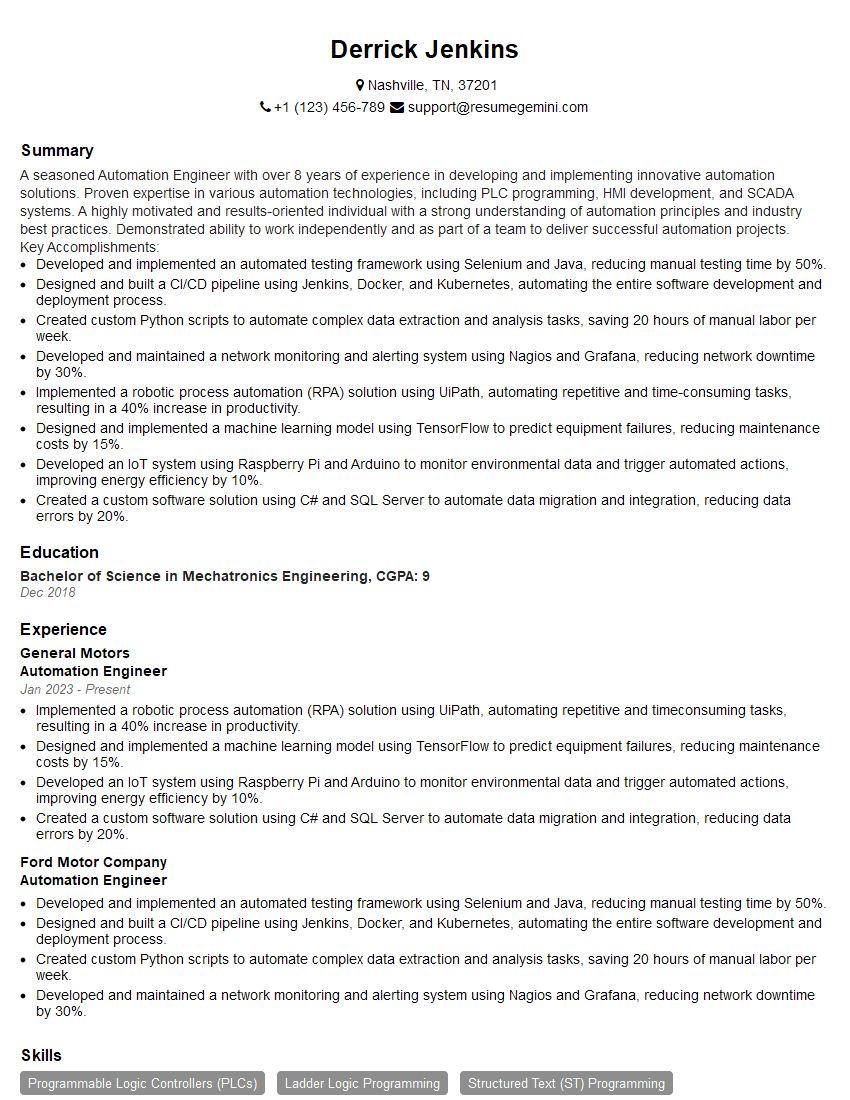
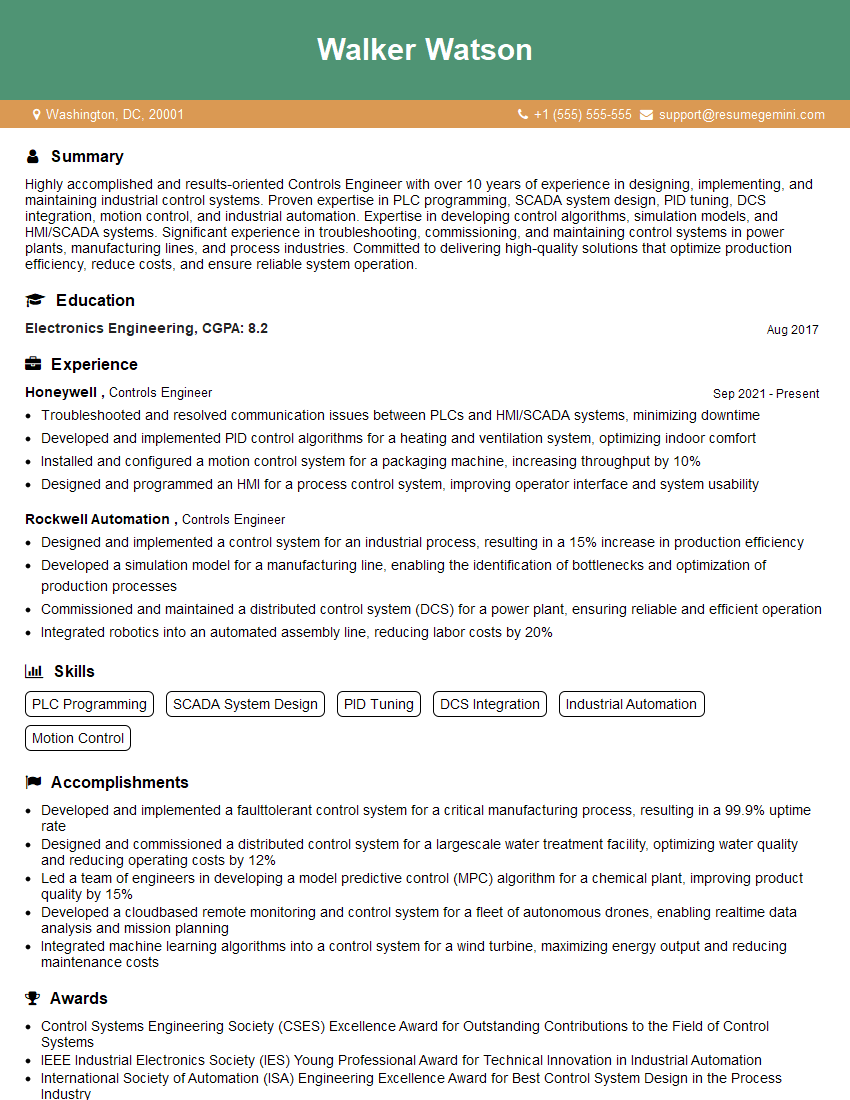
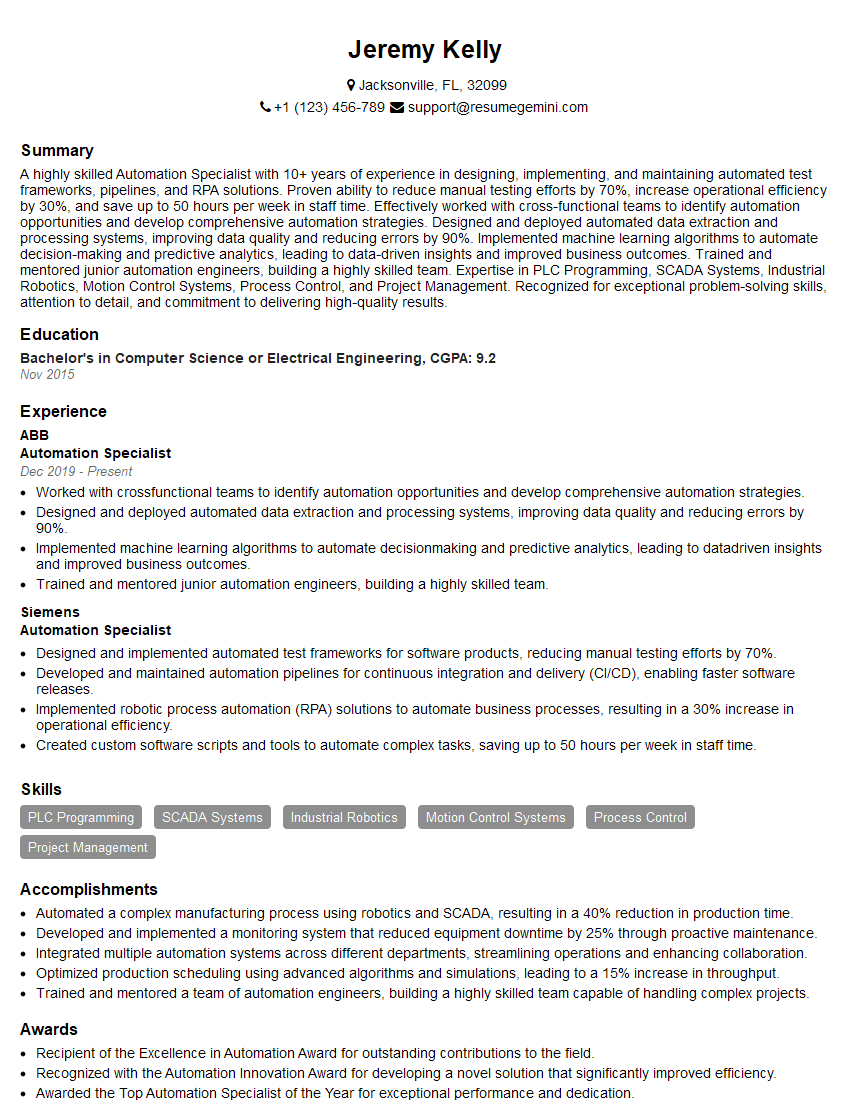
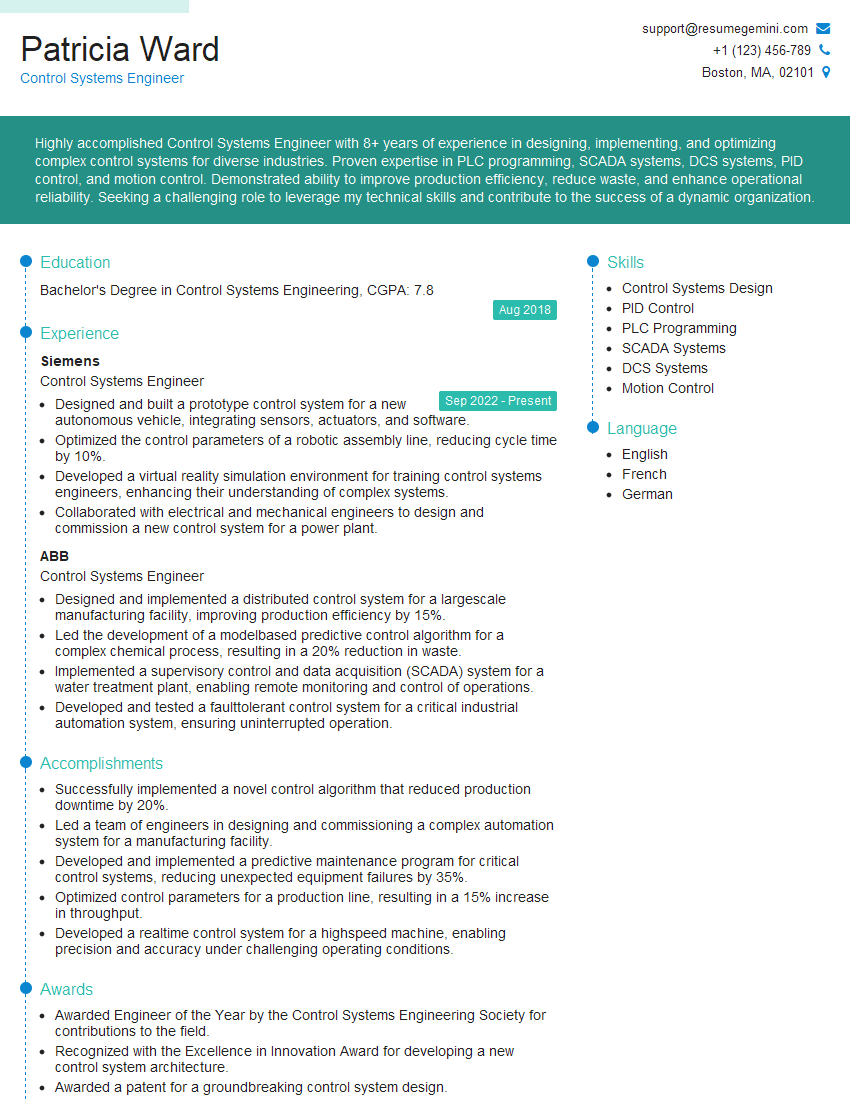
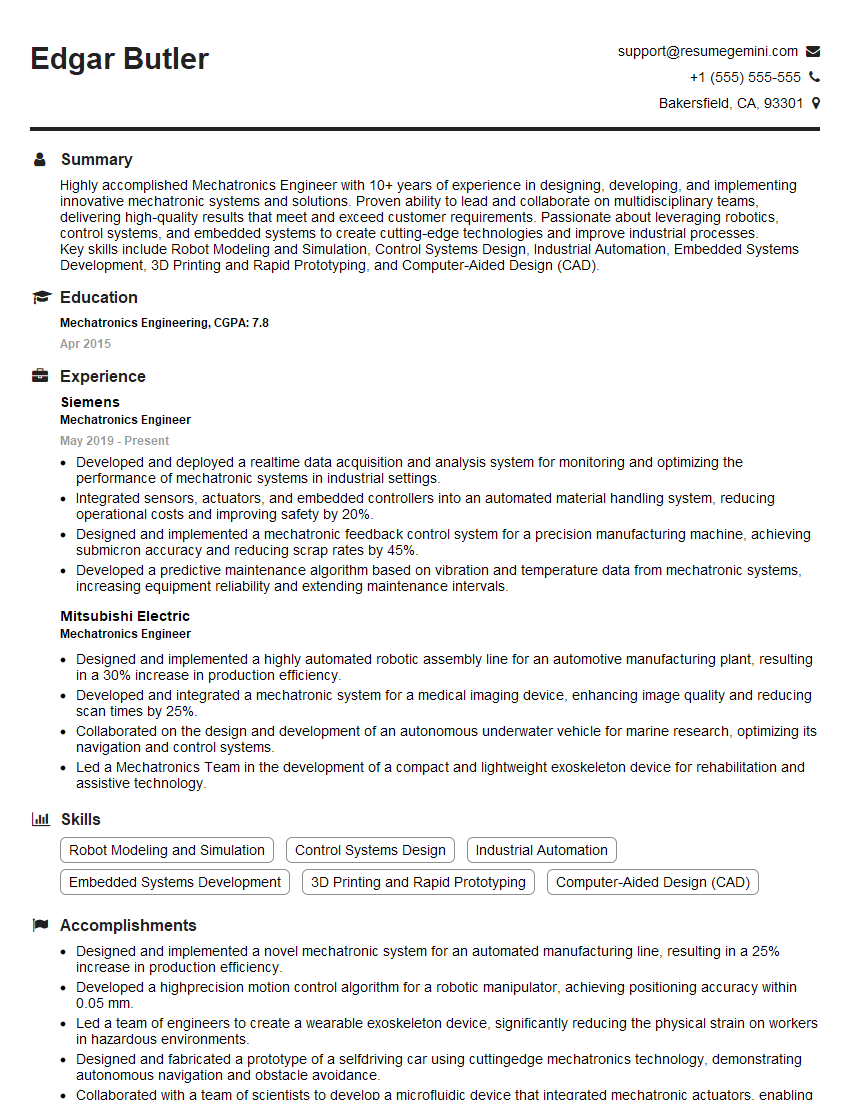
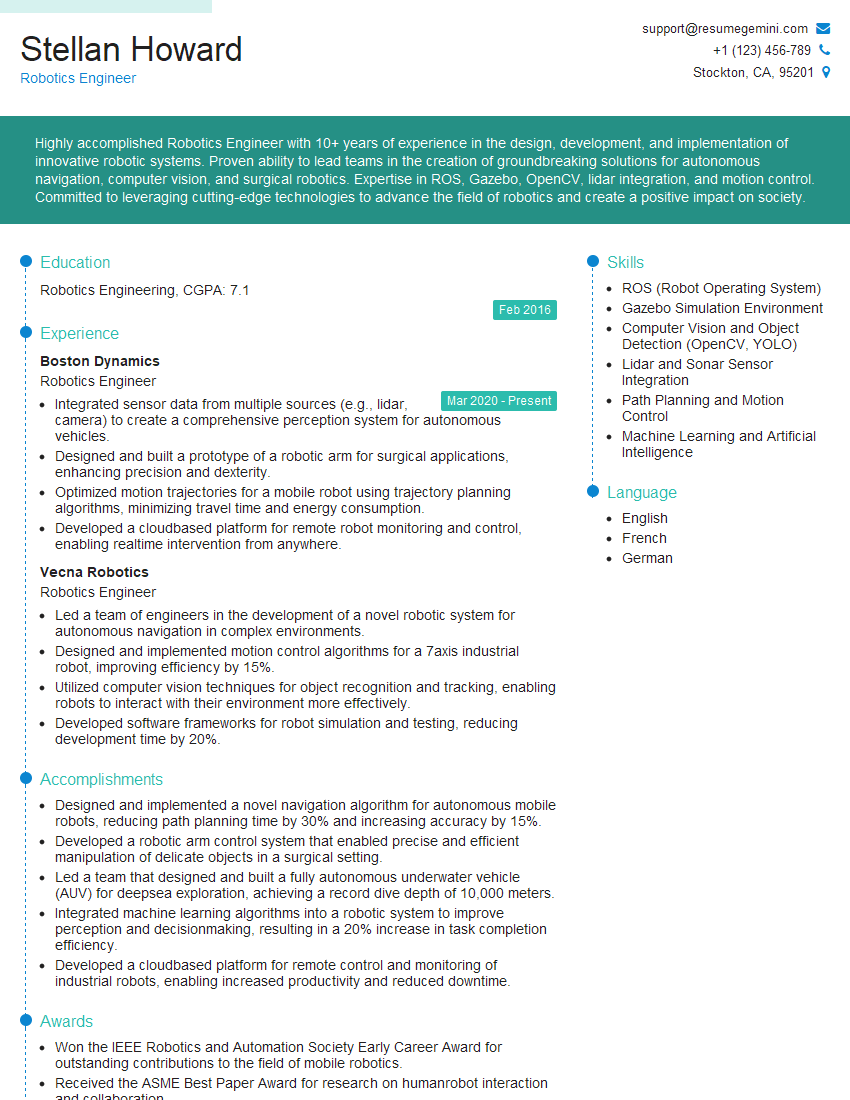
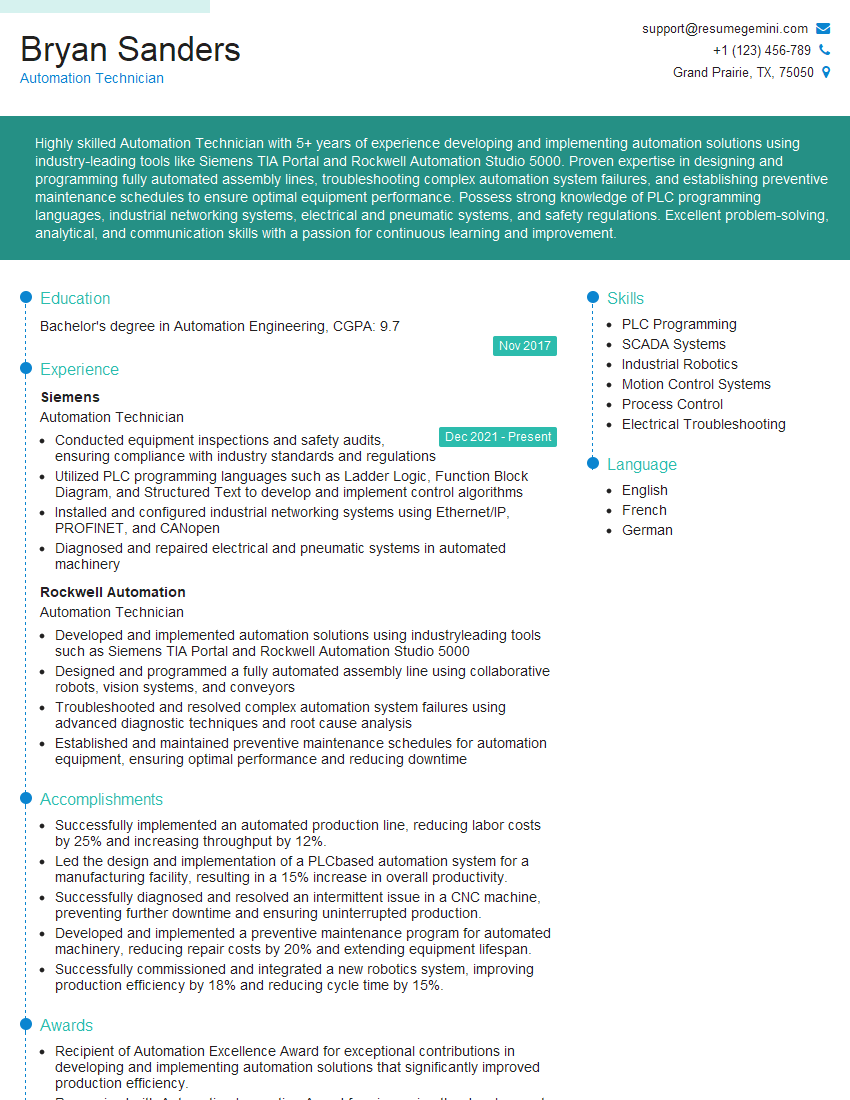
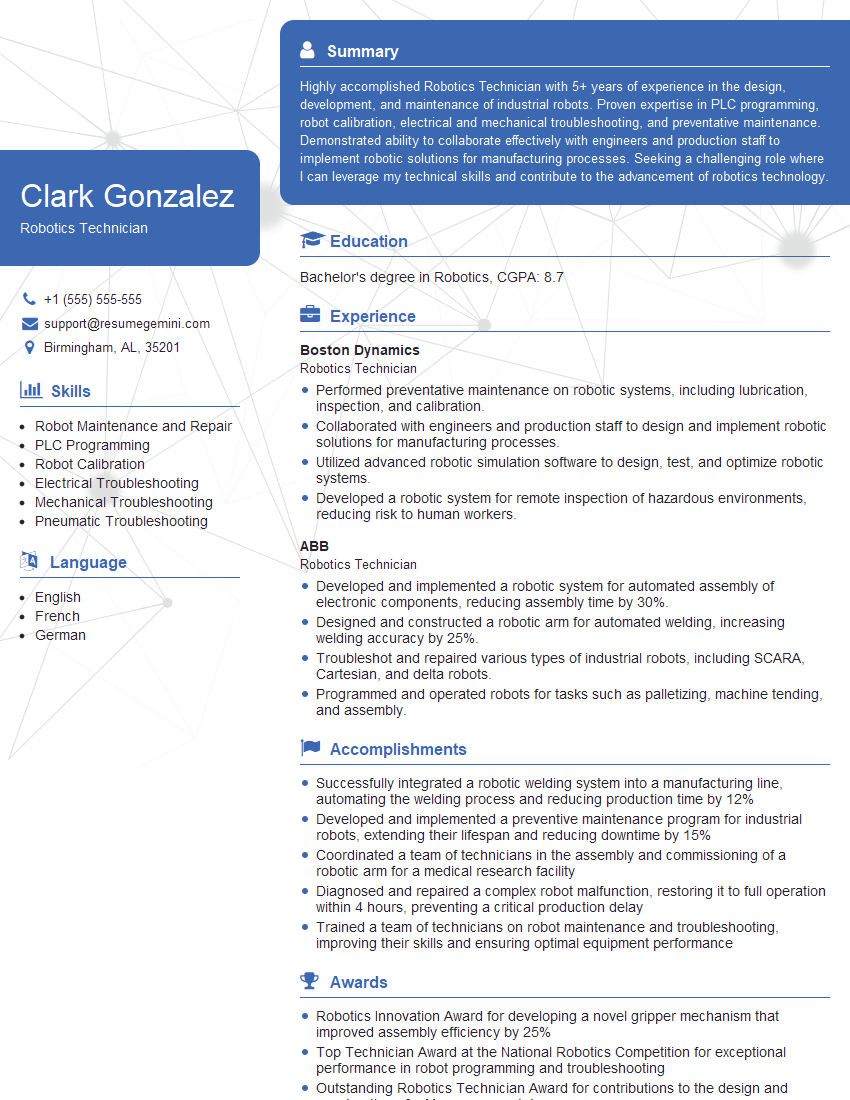
Mastering Automated Machinery Control opens doors to exciting and rewarding careers in a rapidly growing field. To maximize your job prospects, invest time in crafting a compelling and ATS-friendly resume that showcases your skills and experience effectively. ResumeGemini is a trusted resource that can help you build a professional and impactful resume, tailored to highlight your expertise in Automated Machinery Control. Examples of resumes specifically designed for this field are available to guide you. Take the next step toward your dream career today!
Explore more articles
Users Rating of Our Blogs
Share Your Experience
We value your feedback! Please rate our content and share your thoughts (optional).
What Readers Say About Our Blog
Very informative content, great job.
good