Cracking a skill-specific interview, like one for Energy Efficient Lighting, requires understanding the nuances of the role. In this blog, we present the questions you’re most likely to encounter, along with insights into how to answer them effectively. Let’s ensure you’re ready to make a strong impression.
Questions Asked in Energy Efficient Lighting Interview
Q 1. Explain the differences between incandescent, fluorescent, and LED lighting.
Incandescent, fluorescent, and LED lighting represent distinct generations of lighting technology, each with its own strengths and weaknesses. Incandescent lights produce light by heating a filament until it glows. Think of a traditional lightbulb. They are simple and inexpensive but incredibly inefficient, converting only a small percentage of electricity into light, the rest being wasted as heat. Fluorescent lights, on the other hand, use electricity to excite mercury vapor, producing ultraviolet (UV) light that then causes a phosphor coating on the inside of the tube to glow. They’re more energy-efficient than incandescents, but contain mercury, require a ballast (an electronic component that controls the flow of electricity), and can take time to reach full brightness.
LEDs (Light Emitting Diodes) are the newest technology. They produce light by passing an electric current through a semiconductor material. They are significantly more energy-efficient than both incandescent and fluorescent lights, last much longer, and can be easily dimmed and controlled. They also don’t contain mercury and are available in a wide range of colors and styles. Imagine comparing a candle (incandescent), a neon sign (fluorescent), and a modern smartphone screen (LED) – each serves a purpose but with drastically different energy efficiency and longevity.
Q 2. What are the key factors to consider when designing an energy-efficient lighting system?
Designing an energy-efficient lighting system requires a holistic approach. Key factors include:
- Lighting Level Requirements: Determine the appropriate illuminance levels (measured in lux) needed for each space based on its function. A factory needs much brighter lighting than a bedroom.
- Fixture Selection: Choose high-efficacy fixtures with appropriate light distribution (e.g., direct, indirect, diffused) to maximize light output and minimize glare. Consider the color rendering index (CRI) which indicates how accurately colors appear under the light source. A high CRI is important in spaces where accurate color perception is crucial, such as art galleries.
- Lighting Controls: Implement occupancy sensors, daylight harvesting, and dimming controls to reduce energy consumption when lighting isn’t needed. This could involve simple switches, timers, or sophisticated automated systems.
- Lamp Selection: Opt for high-efficacy lamps like LEDs, considering their lifespan and color temperature (measured in Kelvin). Cooler temperatures (higher Kelvin) appear bluer, while warmer temperatures (lower Kelvin) appear more yellowish.
- Energy-Efficient Ballasts (for Fluorescent): If using fluorescent lighting, select energy-efficient ballasts (the devices that power fluorescent lamps). Electronic ballasts are more efficient than magnetic ballasts.
- Space Planning and Design: Optimize building design to maximize natural light penetration. Consider window placement, reflectivity of surfaces, and the overall spatial arrangement to reduce reliance on artificial lighting.
For example, a well-designed office might use occupancy sensors to switch off lights in unoccupied rooms, daylight harvesting to supplement artificial lighting during the day, and dimming controls to adjust light levels based on ambient conditions.
Q 3. Describe different types of lighting controls and their energy-saving benefits.
Lighting controls are crucial for energy savings. Several types exist:
- Occupancy Sensors: These automatically turn lights on when someone enters a room and off when it’s empty. This prevents lights from being left on unnecessarily.
- Dimming Controls: Allow adjusting the light intensity, reducing energy consumption when full brightness isn’t required. This can be manual (via a dimmer switch) or automatic (based on daylight levels or occupancy).
- Time Clocks/Timers: Schedule lights to turn on and off at specific times, optimizing energy use during unoccupied periods.
- Daylight Harvesting Systems: Integrate sensors that monitor natural light levels and adjust artificial lighting accordingly, reducing reliance on electricity during the day. This can involve sophisticated control systems that automatically dim or switch off lights based on the amount of daylight available.
- Integrated Control Systems: Combine multiple control strategies (e.g., occupancy, dimming, daylight harvesting) into a single system for comprehensive management of lighting energy usage. These systems can provide detailed energy usage data and allow for remote monitoring and control.
The energy-saving benefits are substantial. For example, occupancy sensors can reduce energy consumption by up to 70% in spaces where occupancy is intermittent. Dimming controls can reduce energy use by up to 50% compared to fixed-output lighting systems. Daylight harvesting, when implemented effectively, can achieve even greater savings.
Q 4. How do you calculate the energy savings of a lighting retrofit project?
Calculating energy savings from a lighting retrofit project involves a multi-step process. First, determine the baseline energy consumption of the existing lighting system. This usually involves measuring the wattage of each fixture and the number of operating hours per year. Then calculate the total annual energy consumption using the formula:
Annual Energy Consumption (kWh) = (Total Wattage) x (Operating Hours/Year) / 1000Next, determine the energy consumption of the new, more efficient lighting system using the same formula with the new wattage values. Finally, subtract the new energy consumption from the old energy consumption to find the annual energy savings:
Annual Energy Savings (kWh) = (Old Energy Consumption) - (New Energy Consumption)You can then convert this energy saving into monetary terms by multiplying it by the cost per kilowatt-hour (kWh) from your electricity bill. For example, if the annual energy savings are 10,000 kWh and the cost per kWh is $0.15, the annual cost savings would be $1500. Remember to factor in the initial investment cost of the retrofit to calculate the return on investment (ROI) over the lifespan of the new lighting system.
Q 5. What are the benefits and drawbacks of using daylight harvesting in buildings?
Daylight harvesting, the practice of using natural light to reduce the need for artificial lighting, offers many benefits but also has some drawbacks.
Benefits:
- Energy Savings: Significant reductions in electricity consumption for lighting, leading to lower energy bills and a smaller carbon footprint.
- Improved Occupant Comfort and Productivity: Natural light is generally preferred over artificial light, contributing to a more pleasant and productive work environment. Studies have shown links between daylight access and improved mood, health and reduced absenteeism.
- Reduced HVAC Loads: Natural light can help reduce heating and cooling loads, as it can passively warm or illuminate a space, reducing the work of mechanical systems.
Drawbacks:
- Glare and Heat Gain: Excessive direct sunlight can cause glare, discomfort, and overheating. Careful design and the use of appropriate shading devices (blinds, curtains) are necessary to mitigate these issues.
- Control Complexity: Implementing effective daylight harvesting systems requires sophisticated lighting controls to seamlessly integrate natural and artificial light sources. This can increase initial project costs.
- Variable Daylight Levels: The amount of daylight available varies throughout the day and year. Systems need to be designed to accommodate these variations.
- Initial Investment Costs: The initial cost of installing daylight harvesting systems can be higher than traditional lighting systems, though the long-term savings often outweigh this initial investment.
In summary, daylight harvesting is a powerful tool for improving energy efficiency, but successful implementation requires careful planning and consideration of both the benefits and potential drawbacks.
Q 6. Explain the concept of luminous efficacy and its importance in lighting design.
Luminous efficacy is a measure of how well a light source converts electrical energy into visible light. It’s expressed in lumens per watt (lm/W). A higher luminous efficacy indicates that more light is produced for each watt of electricity consumed, meaning better energy efficiency. Think of it as the ‘miles per gallon’ of lighting – you want to get as many lumens (light output) for as few watts (energy input) as possible.
Its importance in lighting design is paramount because it directly impacts energy consumption and operating costs. When designing a lighting system, selecting light sources with high luminous efficacy is critical for minimizing energy use and environmental impact. For instance, LEDs generally boast much higher luminous efficacy than incandescent bulbs, making them a more sustainable choice.
Q 7. What are some common lighting design metrics (e.g., illuminance, luminance)?
Several key metrics are used in lighting design to ensure adequate and comfortable illumination:
- Illuminance (lux or footcandles): Measures the amount of light falling on a surface. It’s a crucial factor in determining the brightness of a space and ensuring adequate visibility for tasks. A higher illuminance value means a brighter space.
- Luminance (candela per square meter or cd/m² or nit): Measures the brightness of a light source as perceived by the eye. It’s important for assessing glare and visual comfort. A higher luminance value indicates a brighter source.
- Color Rendering Index (CRI): A measure of how accurately a light source renders the colors of objects compared to natural daylight (CRI of 100). A higher CRI (typically above 80) is essential in spaces where accurate color perception is important.
- Color Temperature (Kelvin): Describes the color appearance of a light source, ranging from warm white (2700K) to cool white (6500K). This choice depends on the application and desired ambiance.
- Light Distribution: Describes how light is spread from a fixture (e.g., direct, indirect, diffused). Proper light distribution is essential for minimizing glare and ensuring uniform illumination.
Understanding these metrics is essential for creating energy-efficient and visually comfortable lighting environments. For example, an office might aim for a specific illuminance level (e.g., 500 lux) with a high CRI light source to ensure good visibility and accurate color reproduction. The luminance from the light fixtures needs to be managed to avoid glare.
Q 8. How do you determine the appropriate lighting level for a specific space?
Determining the appropriate lighting level for a space involves a multifaceted approach, balancing visual comfort, energy efficiency, and task requirements. We don’t just throw lumens at a problem! Instead, we consider the space’s function and the visual needs of its occupants. For instance, a surgical suite requires much higher illuminance levels than a residential living room.
The process typically starts with identifying the space’s purpose. Is it an office, a retail store, a classroom, or a warehouse? Each has recommended illuminance levels specified in codes and standards like the IES (Illuminating Engineering Society) Handbook. These recommendations are often expressed in lux (lx) or foot-candles (fc).
Next, we consider the task being performed. Fine detail work, like jewelry making, demands significantly higher illuminance than general ambient lighting. We also evaluate factors like room size, ceiling height, and the reflectance of surfaces (walls, floors, and ceilings). Darker surfaces absorb more light, requiring higher illuminance levels to achieve the desired brightness.
Finally, we utilize lighting design software to model the space and simulate different lighting scenarios, ensuring uniform illumination and minimizing glare. This allows for optimization and refinement before implementation, leading to a well-lit, energy-efficient space that meets the needs of its users.
Q 9. What are the key considerations for selecting appropriate LED drivers?
Selecting the right LED driver is crucial for both the longevity and performance of your LED lighting system. Think of the driver as the power supply – it converts the mains voltage to a lower voltage suitable for the LEDs. Choosing the wrong one can lead to premature LED failure, flickering, or even fire hazards.
Key considerations include:
- Output Current (mA): This must match the current requirements of the LEDs being used. Using a driver with too much current will damage the LEDs; too little will result in dim or underperforming lights.
- Output Voltage (V): This should also match the LED specifications. Incorrect voltage can lead to malfunction or failure.
- Power Factor (PF): A high power factor (ideally >0.9) indicates efficient power usage and reduces harmonic distortion on the electrical grid.
- Dimming Capabilities: If dimming is required, the driver must be compatible with the chosen dimming technology (0-10V, DALI, PWM, etc.).
- Protection Features: Look for drivers with features like short circuit, overload, and over-temperature protection to ensure safety and reliability.
- Efficiency: Choose a high-efficiency driver to minimize energy loss.
For example, a driver with a specified output of 350mA and 36V would be suitable for a string of LEDs with a combined forward current of 350mA and forward voltage of 36V. Always consult the LED manufacturer’s specifications before selecting a driver.
Q 10. Describe the process of conducting a lighting audit.
A lighting audit systematically assesses a building’s lighting system to identify areas for improvement in efficiency, performance, and occupant comfort. It’s like a health check-up for your lighting!
The process typically involves:
- Data Collection: This includes documenting the existing lighting system – types of fixtures, wattage, lamp types, hours of operation, and control systems. We might use photographic documentation and energy consumption data from utility bills.
- Site Assessment: A physical inspection of the space to evaluate illuminance levels, identify any issues like glare or poor light distribution, and assess the condition of the existing fixtures.
- Energy Consumption Analysis: This involves calculating the energy consumption of the existing lighting system and identifying areas of high energy use.
- Occupancy Analysis: We study occupancy patterns to optimize lighting schedules and reduce energy waste during unoccupied periods.
- Code Compliance Review: We check the system against relevant lighting codes and standards.
- Recommendations: Based on the findings, we develop recommendations for energy-efficient upgrades, including fixture replacements, controls upgrades, or lighting system redesigns. This might involve integrating daylight harvesting strategies or using occupancy sensors.
- Financial Analysis: We assess the costs and potential savings associated with the proposed upgrades, helping clients make informed decisions.
The audit culminates in a comprehensive report outlining the findings, recommendations, and projected return on investment (ROI) for the proposed improvements.
Q 11. Explain different types of dimming technologies and their applications.
Dimming technologies offer flexible control over lighting levels, reducing energy consumption and enhancing ambiance. Several technologies exist, each with its own advantages and applications.
- Leading-Edge Dimming (LE): This method chops the leading edge of the AC waveform to reduce voltage. It’s simple and inexpensive but can be incompatible with some electronic ballasts and may cause noise or flicker.
- Trailing-Edge Dimming (TE): Similar to LE but chops the trailing edge of the waveform. Generally more compatible than LE dimming.
- Pulse Width Modulation (PWM): This technology rapidly switches the power on and off, controlling brightness by adjusting the on/off ratio (duty cycle). PWM is widely used with LEDs and offers smooth, flicker-free dimming.
- 0-10V Dimming: This analog dimming method uses a control signal between 0 and 10 volts to regulate the light output. It is often used with constant current LED drivers.
- DALI (Digital Addressable Lighting Interface): DALI is a digital communication protocol enabling individual control of lights within a network. It provides superior control and monitoring capabilities.
For instance, PWM dimming is ideal for LED strip lighting in residential settings due to its smooth dimming capability. DALI is preferred for large commercial spaces requiring complex lighting control schemes, such as zone-based dimming and scheduling.
Q 12. What are some common challenges encountered during lighting retrofit projects?
Lighting retrofit projects, while beneficial, often present challenges. These include:
- Compatibility Issues: Existing wiring and electrical systems might not be compatible with new LED fixtures or control systems. This could require rewiring, which adds to the project cost and complexity.
- Fixture Compatibility: Finding LED replacements that fit existing mounting locations and maintain the desired aesthetic can be difficult.
- Unexpected Site Conditions: Discovering unforeseen issues like damaged wiring or inadequate electrical capacity during the installation phase can cause delays and increase costs.
- Ballast Compatibility: If using existing luminaires, care must be taken to ensure LED retrofit kits are compatible with existing ballasts. This is often overlooked!
- Return on Investment (ROI) Justification: Demonstrating the financial benefits of a retrofit to stakeholders can be challenging, especially if energy prices are low.
- Maintenance and Support: Lack of proper maintenance and adequate post-installation support can affect the long-term performance and lifespan of the new lighting system.
For example, a retrofit project in an older building might uncover outdated wiring that necessitates extensive rewiring before new LED fixtures can be installed, significantly impacting the project timeline and budget.
Q 13. How do you ensure compliance with lighting codes and standards?
Ensuring compliance with lighting codes and standards is paramount for safety, energy efficiency, and legal compliance. This process involves a multi-step approach:
- Identify Applicable Codes: Determine which codes and standards apply to the project, considering location, building type, and occupancy.
- Review Requirements: Thoroughly review the relevant requirements related to illuminance levels, glare control, emergency lighting, and energy efficiency.
- Select Compliant Fixtures and Equipment: Choose lighting products that meet or exceed the requirements of the applicable codes and standards. Look for certifications like ETL or UL.
- Design for Compliance: The lighting design should adhere to all relevant code provisions.
- Testing and Verification: After installation, testing should be conducted to verify that the installed lighting system meets the requirements of the applicable codes and standards. This might involve measuring illuminance levels and ensuring emergency lighting functions correctly.
- Documentation: Maintain comprehensive documentation of the lighting system, including specifications, test results, and compliance certifications.
Failure to comply with codes can result in fines, legal action, and safety hazards. Regular audits and maintenance help ensure ongoing compliance.
Q 14. What are some strategies for reducing light pollution?
Light pollution, the excessive or inappropriate intrusion of artificial light, has significant negative impacts on the environment and human health. Mitigation strategies focus on reducing unnecessary light trespass, glare, and sky glow.
- Shielding: Using properly shielded fixtures prevents light from spilling beyond the intended area. Think of it like putting a shade on a lamp to direct the light downwards.
- Aiming and Positioning: Carefully aim and position fixtures to direct light only where needed. This minimizes light trespass into neighboring properties or the sky.
- Motion Sensors and Dimming: Utilizing occupancy sensors and dimming controls reduces light output when not needed, conserving energy and reducing light pollution.
- Color Temperature: Using lower color temperature (warmer) light sources reduces the amount of blue light emitted, which has a greater impact on the night sky.
- Time-Based Controls: Installing timers or astronomical timers to automatically turn lights off or dim them at night minimizes unnecessary illumination.
- Choosing Appropriate Fixtures: Selecting fixtures with low upward light emission is crucial to reduce sky glow.
For example, replacing unshielded security lights with shielded, downward-facing fixtures reduces light trespass onto neighboring properties and minimizes disruption to nocturnal wildlife.
Q 15. Explain the role of Building Management Systems (BMS) in energy-efficient lighting.
Building Management Systems (BMS) are crucial for optimizing energy-efficient lighting. Think of a BMS as the central nervous system of a building, monitoring and controlling various aspects, including lighting. A BMS allows for centralized control of lighting fixtures, enabling automated adjustments based on occupancy, daylight harvesting, and time-of-day scheduling.
For example, a BMS can dim or switch off lights in unoccupied rooms or areas with sufficient natural light. This prevents energy waste from lights burning unnecessarily. Furthermore, BMS can integrate with other building systems, such as HVAC, to further enhance energy efficiency. Imagine a scenario where the BMS detects low occupancy and dims the lights while simultaneously reducing the HVAC output in that zone, resulting in significant energy savings.
Many modern BMS platforms offer sophisticated analytics and reporting functionalities, allowing building managers to track energy consumption, identify areas for improvement, and measure the effectiveness of implemented strategies. This data-driven approach facilitates continuous optimization and refinement of lighting strategies, leading to even greater energy savings over time.
Career Expert Tips:
- Ace those interviews! Prepare effectively by reviewing the Top 50 Most Common Interview Questions on ResumeGemini.
- Navigate your job search with confidence! Explore a wide range of Career Tips on ResumeGemini. Learn about common challenges and recommendations to overcome them.
- Craft the perfect resume! Master the Art of Resume Writing with ResumeGemini’s guide. Showcase your unique qualifications and achievements effectively.
- Don’t miss out on holiday savings! Build your dream resume with ResumeGemini’s ATS optimized templates.
Q 16. What is the difference between color temperature and color rendering index (CRI)?
Color temperature and color rendering index (CRI) are two distinct but equally important aspects of light quality. Color temperature describes the appearance of light, ranging from warm (yellowish) to cool (bluish). It’s measured in Kelvin (K). Lower Kelvin values represent warmer light (e.g., 2700K for incandescent-like warmth), while higher values indicate cooler light (e.g., 6500K for daylight-like coolness).
CRI, on the other hand, indicates how accurately a light source renders the colors of objects compared to natural daylight. It’s measured on a scale of 0 to 100, with 100 being the best, representing perfect color rendition. A high CRI is crucial for applications where accurate color perception is vital, such as art galleries, retail spaces, and hospitals.
For instance, a warm white light (2700K) with a high CRI (e.g., 90) would be ideal for a restaurant to create a cozy ambiance while accurately displaying food colors. Conversely, a cool white light (e.g., 4000K) with a high CRI might be preferred in an office environment for better visual clarity and task performance.
Q 17. How do you calculate the return on investment (ROI) for a lighting upgrade?
Calculating the ROI for a lighting upgrade involves a thorough cost-benefit analysis. The process typically involves these steps:
- Determine initial investment costs: This includes the cost of new fixtures, installation labor, disposal of old fixtures, and any associated design fees.
- Estimate energy savings: This requires calculating the difference in energy consumption between the old and new lighting systems, considering factors like wattage, operating hours, and energy prices. Lighting simulation software can be helpful here.
- Calculate annual savings: Multiply the energy savings per year by the energy cost per unit.
- Factor in maintenance savings: Consider any reduction in maintenance costs due to the longer lifespan and lower maintenance requirements of the new lighting system.
- Calculate payback period: Divide the initial investment cost by the annual savings to determine the number of years it will take to recoup the investment.
- Determine ROI: This can be expressed as a percentage by dividing the annual savings by the initial investment cost and multiplying by 100.
For example, if the initial investment is $10,000 and the annual savings are $2,000, the payback period is 5 years, and the ROI is 20% per year.
Q 18. What are some emerging trends in energy-efficient lighting technology?
The field of energy-efficient lighting is constantly evolving. Some emerging trends include:
- Smart lighting and IoT integration: Smart lighting systems leverage sensors, networks, and data analytics to optimize lighting based on real-time conditions, maximizing energy efficiency and enhancing user experience.
- Human-centric lighting: This focuses on tailoring lighting to improve human well-being, productivity, and circadian rhythm through adjustable color temperature and intensity.
- Li-Fi technology: Using light waves to transmit data, offering a high-speed, secure, and energy-efficient alternative to Wi-Fi.
- Advanced LED technology: Improvements in LED technology are leading to higher efficacy, better color rendering, and more versatile form factors.
- Integration with renewable energy sources: Lighting systems are increasingly being integrated with renewable energy sources, such as solar panels, to further reduce reliance on the grid.
Q 19. Explain the concept of power factor correction in lighting systems.
Power factor correction (PFC) addresses the inefficiency of certain lighting systems, particularly those using inductive loads like older fluorescent ballasts. These loads draw reactive power, which doesn’t contribute to useful work but increases current demand and energy losses. PFC aims to improve the power factor, which is the ratio of real power (used for work) to apparent power (total power drawn).
A low power factor means more current is drawn than necessary, leading to higher energy bills and increased stress on the electrical system. PFC involves adding devices like capacitors to compensate for the reactive power, bringing the power factor closer to unity (1.0). This reduces current demand, minimizes energy losses, and enhances overall system efficiency. In essence, you’re getting more useful work out of the same amount of electricity.
Implementing PFC can result in significant cost savings in the long run, particularly in large installations where energy consumption is high. It also improves the stability and reliability of the electrical system.
Q 20. What are the environmental impacts of different lighting technologies?
Different lighting technologies have varying environmental impacts across their lifecycle, from manufacturing to disposal. Let’s compare a few:
- Incandescent lamps: These have very low energy efficiency and a short lifespan, leading to higher energy consumption and more frequent replacements, thus increasing waste.
- Fluorescent lamps: More energy-efficient than incandescent but contain mercury, a hazardous substance that requires careful disposal.
- LEDs: Considerably more energy-efficient and have a longer lifespan than incandescent or fluorescent, resulting in reduced energy consumption and waste. However, the manufacturing process of LEDs can have environmental impacts, depending on the materials and processes used.
Choosing energy-efficient lighting technologies like LEDs minimizes environmental impact through reduced energy consumption and waste generation. It’s also important to consider the end-of-life management of lighting products through proper recycling programs to mitigate the environmental impact of hazardous materials.
Q 21. Describe your experience with lighting simulation software.
I have extensive experience with several lighting simulation software packages, including DIALux evo and Relux. These tools are invaluable for designing and optimizing lighting schemes. I’ve used them to model various lighting scenarios, considering factors like room geometry, light fixture specifications, and occupancy patterns.
For example, in a recent project for a large office building, I utilized DIALux evo to model different lighting layouts and compare their energy performance and illuminance levels. This allowed us to select the most energy-efficient and visually comfortable solution while meeting specific lighting standards. The software’s capabilities for daylight analysis were particularly helpful in optimizing daylight harvesting strategies, minimizing reliance on artificial lighting during daytime hours.
My experience with these tools enables me to create detailed lighting designs, accurately predict energy consumption, and identify opportunities for improvement, leading to cost-effective and sustainable lighting solutions.
Q 22. How do you address issues related to glare and discomfort in lighting design?
Glare and discomfort are significant issues in lighting design that impact both visual comfort and energy efficiency. Addressing them involves a multifaceted approach focusing on light source selection, luminaire design, and overall lighting layout.
Firstly, we need to consider the luminance (brightness) of light sources. High luminance can cause direct glare, a distracting and potentially harmful experience. To mitigate this, we utilize luminaires with diffusing elements, such as lenses or diffusers, to soften the light output and reduce its intensity. We also select light sources with lower luminance values, such as LED sources with optimized light distribution patterns. Examples include using recessed downlights with baffles or using indirect lighting systems which reflect the light off the ceiling to reduce direct glare from the fixtures themselves.
Secondly, uniformity of light distribution is crucial. Harsh shadows and stark contrasts can lead to discomfort and visual strain. Careful planning of luminaire spacing and orientation helps ensure even illumination, reducing glare. For instance, when designing office lighting, we would avoid directly illuminating computer screens by carefully positioning luminaires and using indirect or semi-indirect lighting techniques.
Thirdly, veiling reflections, where light reflects off surfaces like computer screens, causing reduced contrast and readability, is an important factor. This can be reduced by proper lighting levels, using appropriate light source color temperatures, and selecting matte finishes for surfaces. For example, using low-glare luminaires with a higher color rendering index (CRI) improves the visibility of colors and reduces eye strain.
Finally, utilizing lighting simulation software allows us to predict and visually analyze glare and discomfort before implementation, enabling informed design choices and reducing costly revisions later. These tools help us optimize luminaire placement and intensity to meet the recommended illuminance levels while maintaining comfortable visual conditions.
Q 23. Explain different methods for evaluating the energy performance of lighting systems.
Evaluating the energy performance of lighting systems requires a comprehensive approach, combining theoretical calculations and on-site measurements. Key methods include:
- Energy Modeling: Software like EnergyPlus or DIALux simulates lighting energy consumption based on building geometry, lighting equipment specifications, and occupancy patterns. This allows us to compare different lighting scenarios and optimize energy performance during the design phase. This is crucial for new construction and retrofit projects.
- Lighting Power Density (LPD): This metric expresses the total lighting power installed per unit area (e.g., watts per square foot). A lower LPD indicates better energy efficiency. It’s a simple, effective benchmark for comparing lighting systems across different projects, however it doesn’t fully account for efficiency differences.
- On-Site Energy Monitoring: Using energy meters and data loggers provides real-time data on the energy consumption of lighting systems. This information reveals operational patterns and potential inefficiencies not captured in modeling. This allows us to identify areas for improvement and measure the impact of energy efficiency measures.
- Annual Energy Consumption Analysis: Combining modeled and measured data, we can calculate the total annual energy consumption for lighting. This analysis is crucial for assessing the long-term energy savings of a lighting system, considering factors such as operating hours and seasonal variations.
- Return on Investment (ROI) Calculations: This is done by comparing the initial investment cost of energy-efficient lighting with the long-term savings in energy bills, maintenance, and reduced carbon footprint. This method guides decisions on implementing cost-effective upgrades.
By combining these methods, a robust assessment of energy performance can be achieved, leading to informed decisions about lighting system selection, design, and optimization.
Q 24. What are some strategies for optimizing lighting energy consumption in different building types?
Optimizing lighting energy consumption varies significantly based on building type, but some universal strategies apply:
- Daylighting Optimization: Maximizing the use of natural light reduces the reliance on artificial lighting. This involves strategic window placement, light shelves, and light tubes. In office buildings, designing workspaces around perimeter windows can drastically reduce lighting energy loads.
- High-Efficiency Lighting Technologies: LED lighting offers significantly higher efficacy (lumens per watt) compared to traditional technologies like fluorescent or incandescent lighting. Using high-quality, energy-efficient LED fixtures is crucial. We need to ensure the proper selection based on color temperature and color rendering index (CRI) to meet the needs of the specific space.
- Lighting Controls: Implementing intelligent lighting control systems allows for precise adjustment of lighting levels based on occupancy, daylight availability, and time of day. Examples include occupancy sensors, daylight sensors, and dimmable ballasts. These systems allow for significant energy savings by dimming lights during daylight hours or turning lights off in unoccupied spaces.
- Targeted Illumination: Focusing lighting only where it’s needed reduces wasted energy. For example, using task lighting in offices instead of general ambient lighting can greatly improve efficiency. This is particularly relevant in areas with specific functions like workstations or display areas.
- Regular Maintenance: Cleaning luminaires and replacing lamps regularly maximizes the performance of the lighting system. Dirty luminaires decrease light output, requiring more energy to achieve the desired illumination levels. This often gets overlooked but is extremely important.
Specific strategies may vary. For example, in retail spaces, accent lighting can highlight products while minimizing overall energy consumption. In industrial settings, high-bay LED fixtures with motion sensors can optimize lighting in large warehouses. The key is to tailor the strategy to the specific needs and characteristics of each building type.
Q 25. How familiar are you with different types of occupancy sensors and their applications?
Occupancy sensors are integral to energy-efficient lighting systems. They automatically turn lights on when people enter a space and off when they leave, significantly reducing energy waste.
- Passive Infrared (PIR) Sensors: These sensors detect changes in infrared radiation emitted by moving bodies. They are commonly used in corridors, restrooms, and storage areas. They are cost-effective but can be sensitive to temperature changes or obstructions.
- Ultrasonic Sensors: These sensors detect changes in sound waves reflected by moving objects. They are less sensitive to temperature variations than PIR sensors but may be less accurate in detecting small movements or slow-moving objects. Suitable for spaces with constant low-level movement.
- Acoustic Sensors: These detect sounds associated with human presence like conversations and footsteps. Suitable for quiet spaces where it is not desirable to have PIR-based motion detection.
- Image Sensors (Camera-based): This advanced type uses cameras to detect occupancy and can even differentiate between people and objects. These are more expensive but offer more sophisticated control and integration with other building management systems. They provide the most accurate detection and can provide data analytics for improved building performance.
The choice of sensor depends on the specific application. For instance, PIR sensors are suitable for high-traffic areas, while ultrasonic sensors may be better suited for spaces with low levels of movement. Camera-based systems are often integrated into larger smart building systems, offering enhanced features like personalized lighting control. Proper sensor placement and configuration are crucial for optimal performance and to avoid false triggering.
Q 26. What are your strategies for managing lighting projects within budget and timelines?
Managing lighting projects within budget and timelines necessitates a proactive and organized approach.
- Detailed Project Planning: This involves a thorough assessment of the project scope, including space requirements, lighting needs, and energy efficiency goals. A detailed budget and timeline should be established in the initial planning phase, outlining milestones and deliverables.
- Value Engineering: Exploring different lighting solutions and comparing their costs and energy savings helps identify cost-effective options without compromising on quality or performance. We compare different luminaire models, control systems, and installation methods to achieve optimal value.
- Effective Communication: Maintaining open communication with clients, contractors, and suppliers ensures everyone is on the same page regarding project goals, timelines, and potential challenges. Regular meetings and progress reports are crucial.
- Risk Management: Identifying and mitigating potential risks, such as material delays, unforeseen site conditions, or technical challenges, helps keep the project on track. Contingency plans should be developed to address potential disruptions.
- Project Monitoring and Control: Regularly monitoring progress against the budget and timeline helps identify any deviations early on, enabling timely corrective actions. This involves tracking expenses, monitoring material deliveries, and overseeing the installation process. Effective use of project management software is essential.
By adhering to these strategies, we can successfully manage lighting projects while staying within budget and meeting deadlines. Successful projects require meticulous attention to detail, proactive problem-solving, and clear communication throughout the entire process.
Q 27. What is your experience with commissioning and testing energy-efficient lighting systems?
Commissioning and testing are crucial steps in ensuring energy-efficient lighting systems perform as designed. My experience involves a systematic process:
- Pre-Commissioning: Reviewing design documents, equipment specifications, and installation plans to identify potential issues before installation begins. This step helps avoid costly rework later.
- Functional Testing: Verifying that all components of the lighting system, including fixtures, controls, and sensors, are functioning correctly. This involves testing light levels, dimming capabilities, and sensor response times.
- Performance Testing: Measuring the actual energy consumption of the lighting system and comparing it to the predicted values from energy modeling. This helps verify the energy savings achieved.
- Documentation: Creating comprehensive documentation of the commissioning process, including test results, adjustments made, and any outstanding issues. This provides a record of the system’s performance and facilitates future maintenance.
- Training: Providing training to building staff on the operation and maintenance of the lighting system ensures its long-term performance and prevents premature failures.
I have extensive experience in commissioning various types of energy-efficient lighting systems, from simple LED replacements to complex integrated systems with advanced controls. This experience ensures that the systems are fully functional, energy-efficient, and meet the client’s requirements.
Q 28. Describe your experience with troubleshooting and resolving lighting system issues.
Troubleshooting lighting system issues requires a systematic and methodical approach. My experience includes:
- Visual Inspection: A thorough visual inspection of the lighting system to identify any obvious problems, such as faulty lamps, damaged wiring, or loose connections. This is the first step in diagnosing most problems.
- Testing with Multimeters and Other Instruments: Using specialized equipment to test voltage, current, and continuity to pinpoint electrical faults within the system. This includes testing ballasts, drivers, and wiring connections.
- Analysis of Control Systems: Checking the operation of lighting control systems, including sensors, dimmers, and timers, to ensure proper functioning. This often involves programming and configuration checks.
- Review of Building Management System (BMS) Data: Analyzing data from the BMS to identify patterns or anomalies in energy consumption that may indicate problems with the lighting system. This provides valuable insights into system performance.
- Collaboration with Experts: Consulting with lighting manufacturers or specialized technicians when required to address complex or unusual problems. This may be necessary for advanced control systems or specific luminaire issues.
My experience allows me to effectively diagnose and resolve a wide range of lighting system issues, ensuring minimal downtime and maintaining optimal performance. I emphasize a preventative approach, anticipating potential problems and taking proactive steps to avoid them.
Key Topics to Learn for Energy Efficient Lighting Interview
- Fundamentals of Lighting Technology: Understand the principles of light emission, color temperature, color rendering index (CRI), and luminous efficacy. Explore different light sources like LEDs, CFLs, and incandescent bulbs, comparing their energy efficiency and lifespan.
- Energy Efficiency Calculations and Metrics: Master the calculation of lighting power density (LPD), energy savings, and return on investment (ROI) for various lighting projects. Familiarize yourself with relevant industry standards and regulations.
- Lighting Design and Control Systems: Learn about different lighting design approaches for maximizing energy efficiency, such as daylight harvesting, occupancy sensing, and dimming controls. Understand the integration of smart lighting systems and their benefits.
- Practical Applications: Be prepared to discuss real-world examples of energy-efficient lighting implementations in various settings, such as commercial buildings, residential homes, and industrial facilities. Consider case studies showcasing successful projects and quantifiable results.
- Troubleshooting and Maintenance: Demonstrate your understanding of common lighting system problems, troubleshooting techniques, and preventative maintenance strategies to ensure optimal performance and longevity of the lighting infrastructure.
- Emerging Technologies: Stay updated on the latest advancements in energy-efficient lighting, including advancements in LED technology, smart lighting controls, and innovative lighting design strategies. This shows your passion and commitment to the field.
- Sustainability and Environmental Impact: Understand the environmental benefits of energy-efficient lighting, including reduced carbon footprint and energy consumption. Be prepared to discuss the role of lighting in achieving sustainability goals.
Next Steps
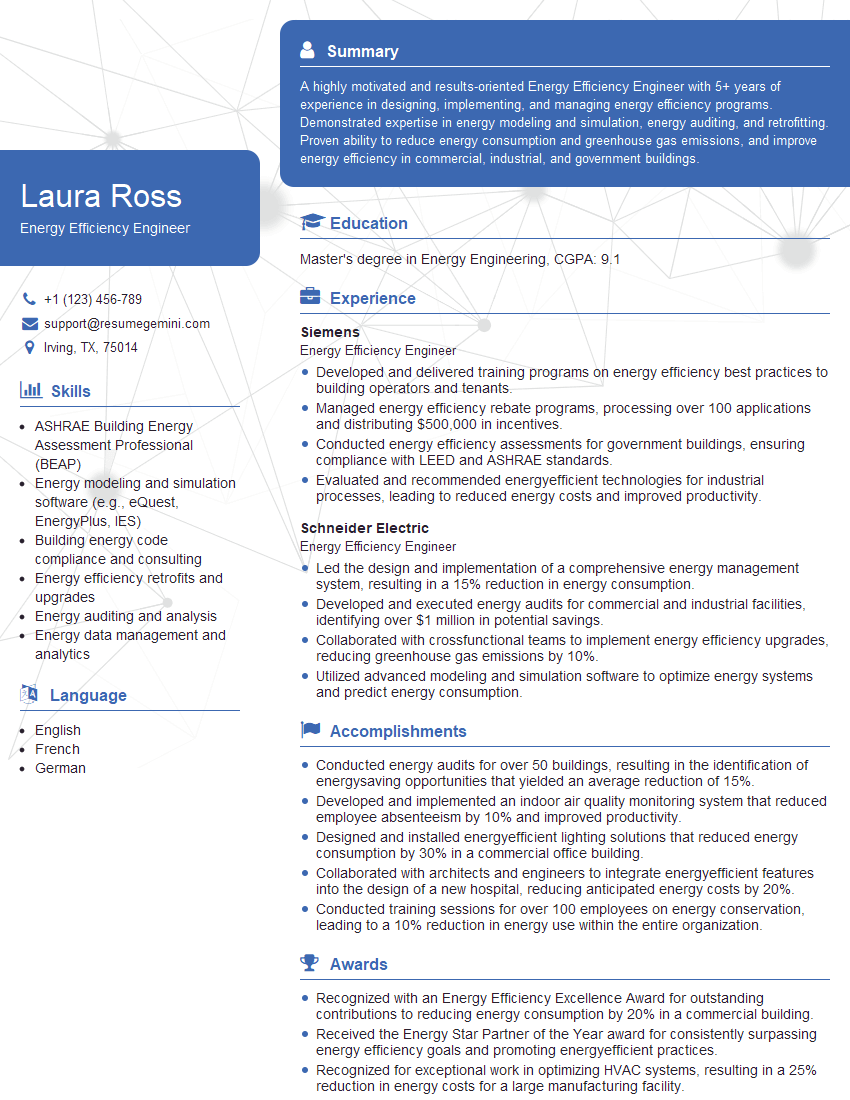
Mastering energy-efficient lighting is crucial for a successful and rewarding career in a rapidly growing sector. The demand for skilled professionals in this field is high, offering excellent opportunities for advancement and impact. To maximize your job prospects, it’s essential to create a compelling and ATS-friendly resume that highlights your skills and experience effectively. ResumeGemini is a trusted resource that can help you build a professional resume tailored to the specific requirements of energy-efficient lighting jobs. Examples of resumes specifically designed for this industry are available to help you showcase your qualifications in the best possible light. Invest time in crafting a strong resume – it’s your first impression on potential employers.
Explore more articles
Users Rating of Our Blogs
Share Your Experience
We value your feedback! Please rate our content and share your thoughts (optional).
What Readers Say About Our Blog
Very informative content, great job.
good