Interviews are more than just a Q&A session—they’re a chance to prove your worth. This blog dives into essential Safety Regulation interview questions and expert tips to help you align your answers with what hiring managers are looking for. Start preparing to shine!
Questions Asked in Safety Regulation Interview
Q 1. Describe your experience with OSHA regulations.
My experience with OSHA regulations spans over ten years, encompassing various roles from safety officer to senior safety consultant. I’ve worked extensively with OSHA’s General Industry standards (29 CFR 1910), Construction standards (29 CFR 1926), and Maritime standards (29 CFR 1915-1918), ensuring compliance across diverse industrial settings. This includes developing and implementing safety programs, conducting regular inspections and audits, and investigating workplace accidents. For example, in my previous role at a manufacturing plant, I spearheaded a complete overhaul of their lockout/tagout procedures, aligning them perfectly with OSHA 1910.147, resulting in a significant reduction in near-miss incidents. I’m also proficient in navigating OSHA’s recordkeeping requirements (OSHA 300 logs), ensuring accurate and timely reporting of workplace injuries and illnesses.
I’m familiar with OSHA’s emphasis on proactive hazard prevention and the importance of employee training. My approach always centers on collaboration, working closely with employees at all levels to foster a strong safety culture. This proactive approach has proven effective in minimizing workplace hazards and reducing the risk of accidents.
Q 2. Explain the hierarchy of hazard controls.
The hierarchy of hazard controls is a prioritized approach to managing workplace risks, aiming to eliminate hazards entirely or minimize their impact. It follows a sequential order, starting with the most effective controls and progressing to less effective ones if the preceding steps aren’t feasible. Think of it as a pyramid, with the most effective strategies at the top.
- Elimination: This involves removing the hazard altogether. For example, replacing a manually operated machine with an automated one that eliminates the need for manual handling, thus eliminating the risk of repetitive strain injuries.
- Substitution: Replacing a hazardous substance or process with a less hazardous alternative. For instance, using water-based paints instead of solvent-based paints to reduce exposure to volatile organic compounds.
- Engineering Controls: Implementing physical changes to the workplace to control hazards. Examples include installing machine guards to prevent contact injuries, providing local exhaust ventilation to control airborne contaminants, or using improved lighting to reduce eye strain.
- Administrative Controls: Implementing changes to work practices or procedures. This could involve rotating employees through different tasks to avoid repetitive movements, providing regular safety training, or establishing clear work procedures to minimize risk.
- Personal Protective Equipment (PPE): The final line of defense, PPE includes items like safety glasses, gloves, respirators, and hard hats. It is crucial to remember that PPE should only be used as a last resort, after all other controls have been implemented. This is because PPE protects the worker but doesn’t eliminate the hazard.
Q 3. How do you conduct a risk assessment?
A risk assessment is a systematic process of identifying hazards, analyzing the risks associated with those hazards, and determining appropriate control measures. It’s not just a one-time activity but an ongoing process that needs to be reviewed and updated regularly.
My approach to conducting a risk assessment involves these steps:
- Identify Hazards: This involves a thorough walkthrough of the workplace, interviewing employees, reviewing accident history, and examining safety data sheets (SDS).
- Identify Who Might Be Harmed and How: Determine which employees or groups are most at risk and the potential consequences of exposure to the identified hazards.
- Evaluate the Risks: Assess the likelihood of the hazard occurring and the severity of the potential harm. This often involves using a risk matrix that considers both likelihood and severity to classify risks as low, medium, or high.
- Record Your Findings: Document the identified hazards, risk levels, and control measures in a risk assessment report.
- Review and Update: Regularly review the risk assessment to ensure it remains current and accurate. This is particularly important when there are changes to the workplace, processes, or equipment.
For example, in a construction site risk assessment, I would identify hazards like falls from height, electrocution, and struck-by hazards. I’d then evaluate the likelihood of each event and the severity of potential injuries, leading to prioritized control measures such as implementing fall protection systems, using insulated tools, and establishing safe work procedures.
Q 4. What are your methods for investigating accidents?
Investigating accidents is critical for preventing future incidents. My method follows a structured approach to ensure thoroughness and objectivity:
- Secure the Scene: Preserve the accident scene as much as possible to prevent further injury or damage to evidence.
- Gather Information: This involves interviewing witnesses, reviewing relevant documents (e.g., safety procedures, training records), collecting physical evidence, and examining the damaged equipment.
- Analyze the Evidence: This step involves reconstructing the accident sequence, identifying contributing factors, and determining root causes. I use various techniques like fault tree analysis and 5 Whys to identify the root causes.
- Develop Corrective Actions: Based on the findings, develop specific, measurable, achievable, relevant, and time-bound (SMART) corrective actions to prevent similar accidents in the future.
- Implement and Monitor Corrective Actions: Implement the corrective actions and monitor their effectiveness. Follow up to ensure the actions are adequately addressing the root causes.
- Document Findings: Create a detailed accident investigation report documenting the findings, corrective actions, and follow-up measures.
For example, during an investigation into a forklift accident, I would interview the operator and witnesses, examine the forklift for mechanical defects, and review the site’s traffic management procedures. This would help identify whether the cause was operator error, equipment malfunction, or inadequate safety procedures.
Q 5. How do you develop and implement a safety program?
Developing and implementing a safety program requires a holistic approach encompassing several key elements:
- Management Commitment: Top management must demonstrate a strong commitment to safety, setting the tone for the entire organization.
- Hazard Identification and Risk Assessment: Regularly identify and assess workplace hazards, implementing appropriate control measures.
- Safety Training: Provide comprehensive safety training to all employees, tailored to their specific roles and responsibilities. This includes emergency response training.
- Emergency Response Plan: Develop and regularly practice emergency response procedures to ensure effective handling of accidents and emergencies.
- Communication and Consultation: Establish open communication channels to foster a culture of safety and encourage employee participation in safety initiatives.
- Incident Reporting and Investigation: Establish clear procedures for reporting and investigating workplace incidents to identify root causes and prevent recurrence.
- Monitoring and Review: Regularly monitor the effectiveness of the safety program and make adjustments as necessary. This includes conducting regular safety audits and inspections.
For instance, in developing a safety program for a construction company, I would incorporate specific training on fall protection, scaffolding safety, and the safe operation of heavy machinery, alongside comprehensive emergency procedures and robust reporting systems.
Q 6. Describe your experience with safety audits and inspections.
I possess extensive experience conducting safety audits and inspections, using both proactive and reactive methods. Proactive audits focus on identifying potential hazards before incidents occur, while reactive audits follow a significant incident. My approach involves a thorough review of all aspects of the safety program, including policies, procedures, training records, equipment maintenance logs, and emergency response plans.
During an audit, I use checklists and observation techniques to assess compliance with relevant safety regulations and standards. I document findings, highlighting areas of compliance and non-compliance, and make recommendations for improvement. I’ve led audits across diverse industries, including manufacturing, construction, and healthcare, and am familiar with industry best practices and regulatory requirements. For example, a recent audit of a manufacturing facility revealed gaps in their machine guarding procedures, leading to immediate corrective actions to prevent potential injuries.
Following a reactive audit after an incident, my focus is on identifying the root causes of the incident and implementing effective corrective actions to prevent recurrence. This includes a detailed review of the accident investigation report and an on-site observation of the relevant work area.
Q 7. Explain your understanding of incident reporting and record-keeping.
Incident reporting and record-keeping are vital components of any effective safety program. Accurate and timely reporting allows organizations to identify trends, assess the effectiveness of their safety programs, and take corrective actions to prevent future incidents.
My understanding of incident reporting encompasses several key aspects:
- Immediate Reporting: Establishing a system for immediate reporting of all incidents, regardless of severity.
- Thorough Investigation: Conducting thorough investigations of all incidents to identify root causes and contributing factors.
- Record Keeping: Maintaining accurate records of all incidents, investigations, and corrective actions. This often involves utilizing OSHA 300 logs and other relevant documentation.
- Data Analysis: Analyzing incident data to identify trends and patterns, allowing for proactive interventions.
- Communication: Communicating findings and corrective actions to all relevant stakeholders.
I’m proficient in using various record-keeping systems, both digital and paper-based, to ensure compliance with regulatory requirements. I understand the importance of confidentiality and data protection when handling sensitive information related to workplace incidents.
Q 8. How do you ensure compliance with safety regulations?
Ensuring compliance with safety regulations is a multifaceted process that begins with a thorough understanding of the applicable laws, standards, and best practices relevant to the specific industry and work environment. It’s not just about ticking boxes; it’s about creating a safety-conscious culture.
- Regular Audits and Inspections: We conduct regular safety audits and inspections to identify potential hazards and ensure adherence to established procedures. This involves both planned inspections and impromptu spot checks.
- Documentation and Record-Keeping: Meticulous documentation is paramount. This includes maintaining records of safety training, incident reports, inspection findings, and corrective actions. This data allows for trend analysis and proactive improvements.
- Proactive Hazard Identification and Mitigation: We employ various methods, including Job Safety Analysis (JSA) and hazard identification checklists, to proactively identify and mitigate potential risks before they lead to incidents. This often involves brainstorming sessions with employees to gain their insights.
- Employee Training and Empowerment: Providing comprehensive safety training and empowering employees to identify and report hazards are crucial. Employees are the eyes and ears on the ground, and their participation is vital.
- Continuous Improvement: Safety is a continuous journey, not a destination. We regularly review our safety programs, analyze incident data, and implement improvements based on lessons learned. This iterative process ensures that our safety systems remain effective and adapt to changing circumstances.
For example, in a previous role, we implemented a new system for tracking near-miss incidents, which led to the identification of a recurring hazard that was subsequently mitigated, preventing a potential serious accident.
Q 9. What is your experience with safety training and education?
My experience in safety training and education spans over [Number] years, encompassing both the development and delivery of safety programs. I’ve worked with diverse groups, from entry-level employees to senior management, tailoring training to their specific needs and roles. My approach is interactive and engaging, emphasizing practical application over rote memorization.
- Curriculum Development: I’ve been involved in developing comprehensive safety training curricula, incorporating relevant legislation, industry best practices, and interactive elements like simulations and case studies. We recently developed a virtual reality training module on lockout/tagout procedures, drastically increasing engagement and knowledge retention.
- Training Delivery: I am proficient in delivering various training formats, including classroom instruction, online modules, and on-the-job training. I adapt my style to suit different learning styles and ensure that all participants actively participate.
- Assessment and Evaluation: I utilize various methods to assess training effectiveness, including written exams, practical demonstrations, and observation of on-the-job performance. This ensures that trainees understand and can apply the learned safety concepts.
- Compliance Focus: All training programs align directly with relevant safety regulations and standards, ensuring that employees are well-equipped to meet their compliance obligations.
I believe effective safety training isn’t a one-time event, but a continuous process of reinforcement and updates to reflect changing regulations and best practices.
Q 10. How do you manage safety within a budget?
Managing safety within a budget requires a strategic and prioritized approach. It’s about maximizing the impact of safety investments while remaining fiscally responsible. We prioritize investments based on risk assessment and the potential return on investment (ROI) of safety measures.
- Risk-Based Prioritization: We conduct thorough risk assessments to identify the highest-risk areas and allocate resources accordingly. This ensures that we address the most critical hazards first.
- Cost-Effective Solutions: We explore cost-effective solutions without compromising safety. This often involves creative problem-solving and leveraging readily available resources.
- Preventive Maintenance: Investing in regular preventive maintenance of equipment and facilities can significantly reduce the likelihood of accidents and costly repairs down the line.
- Data-Driven Decision Making: We utilize data from incident reports, inspections, and safety audits to inform our budget allocation and demonstrate the ROI of safety investments to stakeholders.
- Collaboration and Partnerships: We collaborate with vendors and suppliers to explore cost-effective safety solutions and explore opportunities for shared resources.
For example, instead of purchasing expensive new safety equipment, we might opt for refurbishment of existing equipment or explore alternative, equally effective, but more budget-friendly solutions.
Q 11. Describe a time you identified a safety hazard and implemented a solution.
During a routine inspection, I noticed a significant accumulation of oil near a high-voltage electrical panel in a manufacturing plant. This posed a serious fire hazard. My immediate action was to secure the area and prevent any further access.
- Hazard Identification: The oil spill presented a clear and present danger of fire or electric shock.
- Risk Assessment: I assessed the potential consequences of an incident, including equipment damage, injury to personnel, and potential business interruption.
- Immediate Action: I immediately cordoned off the area, prohibiting access until the hazard was mitigated.
- Root Cause Analysis: I investigated the root cause of the spill, which turned out to be a leaking hydraulic line.
- Corrective Action: I coordinated the repair of the leaking line and the thorough cleaning of the spilled oil, ensuring the area was fully safe before resuming operations.
- Preventive Measures: I implemented a preventative maintenance schedule for hydraulic lines to prevent future occurrences and proposed improved spill containment measures.
This incident highlighted the importance of proactive inspections and the need for prompt and effective action when a safety hazard is identified.
Q 12. How do you handle conflicts regarding safety procedures?
Conflicts regarding safety procedures are inevitable in any workplace. Addressing these conflicts requires a tactful and collaborative approach, emphasizing a shared commitment to safety.
- Open Communication: I encourage open dialogue and active listening to understand all perspectives. This often involves facilitating conversations between the conflicting parties.
- Facilitation and Mediation: I act as a facilitator or mediator, guiding the parties towards a mutually agreeable solution. This requires remaining neutral and focusing on finding common ground.
- Reference to Standards and Procedures: Decisions are based on established safety standards, procedures, and regulatory requirements. This ensures fairness and consistency.
- Documentation: All discussions and resolutions are carefully documented to avoid future misunderstandings and to track progress.
- Follow-Up and Monitoring: Following the resolution, I monitor the situation to ensure that the agreed-upon actions are implemented and that the conflict does not reoccur.
For instance, if a worker disagreed with a new safety protocol, I would actively listen to their concerns, address them with factual information and demonstrate how the protocol enhances safety. Often, a collaborative adjustment can be made to improve the practicality of the procedure without compromising safety.
Q 13. How familiar are you with different safety standards (e.g., ISO 45001)?
I am very familiar with a wide range of safety standards, including ISO 45001, OSHA regulations (depending on location), and industry-specific standards relevant to [mention specific industries]. Understanding these standards is crucial for ensuring legal compliance and implementing best practices.
- ISO 45001: I have extensive experience in implementing and maintaining an Occupational Health and Safety Management System (OHSMS) compliant with ISO 45001. This includes the development of safety policies, procedures, risk assessments, and internal audits.
- OSHA (or equivalent): I am proficient in interpreting and applying the relevant OSHA (or country-specific equivalent) regulations to ensure compliance. This includes understanding hazard communication, personal protective equipment (PPE) requirements, and emergency response procedures.
- Industry-Specific Standards: My knowledge encompasses industry-specific standards applicable to [mention specific industries], ensuring that our safety programs are tailored to the specific risks and hazards present in those settings.
- Staying Updated: I continuously monitor changes and updates to safety standards to ensure that our safety management system remains current and effective.
Understanding these standards allows me to develop and implement comprehensive safety programs that go beyond mere compliance; they actively promote a culture of safety and risk mitigation.
Q 14. Describe your experience with lockout/tagout procedures.
Lockout/Tagout (LOTO) procedures are fundamental to ensuring the safety of workers who perform maintenance or repair tasks on equipment. My experience with LOTO procedures includes the development, implementation, and auditing of LOTO programs across various industries.
- Program Development: I have been involved in developing comprehensive LOTO programs, ensuring compliance with relevant standards and regulations. This involves creating detailed procedures, training materials, and checklists.
- Training and Competency: I have trained numerous employees on proper LOTO procedures, emphasizing the importance of following established protocols to prevent serious accidents.
- Auditing and Inspections: I have conducted regular audits and inspections of LOTO procedures to ensure compliance and identify areas for improvement. This often involves observing employees performing LOTO procedures and providing feedback.
- Incident Investigation: In the event of an incident involving LOTO, I have participated in investigations to determine the root cause and to implement corrective actions to prevent recurrence.
A critical aspect of LOTO is not just understanding the procedures, but also fostering a strong safety culture where employees feel empowered to halt work if they have concerns about energy control measures. The goal is to create a zero-tolerance environment for shortcuts or deviations from established LOTO procedures.
Q 15. How do you ensure effective communication of safety information?
Effective communication of safety information is crucial for preventing accidents and ensuring a safe work environment. It’s not just about providing information; it’s about ensuring that information is understood, remembered, and acted upon. My approach involves a multi-faceted strategy:
- Multi-modal Communication: I use a variety of methods, including safety meetings, training videos, posters, email updates, toolbox talks (short, informal safety discussions at the start of work), and even gamification for better engagement. This caters to different learning styles and ensures wider reach.
- Clear and Concise Messaging: I avoid jargon and technical terms whenever possible. Safety information should be easily understood by everyone, regardless of their background or language proficiency. Using visuals like diagrams and infographics alongside text improves comprehension.
- Feedback Mechanisms: I actively solicit feedback from employees to ensure the information is clear and relevant. This can be done through surveys, informal discussions, or even suggestion boxes. This allows for continuous improvement of communication strategies.
- Regular Reinforcement: Safety isn’t a one-time training event. I ensure safety information is regularly reinforced through refresher courses, regular safety audits, and reminders. This helps to maintain top-of-mind awareness.
- Language and Cultural Sensitivity: If working in a multicultural environment, it is crucial to tailor the message and delivery method appropriately. This may involve translating materials into multiple languages or employing culturally sensitive imagery.
For example, in a previous role, we implemented a system of short, engaging safety videos that employees could watch on their mobile phones during breaks. This significantly increased engagement and knowledge retention compared to traditional methods.
Career Expert Tips:
- Ace those interviews! Prepare effectively by reviewing the Top 50 Most Common Interview Questions on ResumeGemini.
- Navigate your job search with confidence! Explore a wide range of Career Tips on ResumeGemini. Learn about common challenges and recommendations to overcome them.
- Craft the perfect resume! Master the Art of Resume Writing with ResumeGemini’s guide. Showcase your unique qualifications and achievements effectively.
- Don’t miss out on holiday savings! Build your dream resume with ResumeGemini’s ATS optimized templates.
Q 16. What are your methods for promoting a safety-conscious culture?
Promoting a safety-conscious culture is an ongoing process that requires consistent effort and commitment from all levels of an organization. My approach focuses on:
- Leadership Commitment: Visible commitment from senior management is paramount. Leaders should actively participate in safety initiatives, demonstrate safe behaviors, and hold others accountable for safety compliance.
- Employee Empowerment: Employees should be empowered to identify and report hazards without fear of retribution. This involves establishing clear reporting procedures and a culture of open communication.
- Recognition and Rewards: Recognizing and rewarding safe behaviors is vital for reinforcing positive actions. This can involve safety awards, public acknowledgment, or other forms of appreciation.
- Training and Education: Comprehensive safety training should be provided to all employees, covering relevant hazards and safety procedures. Training should be tailored to specific roles and updated regularly.
- Incident Investigation: Thorough investigation of all incidents, including near misses, is crucial for identifying root causes and preventing future occurrences. The focus should be on learning from mistakes, not blaming individuals.
- Regular Safety Audits: Regular safety audits are essential to identify potential hazards and ensure compliance with safety regulations. The findings should be used to implement corrective actions.
In one project, I implemented a peer-to-peer safety observation program where employees could recognize and reward their colleagues for safe work practices. This significantly boosted employee morale and improved safety performance.
Q 17. How do you stay updated on changes in safety regulations?
Staying updated on changes in safety regulations is a continuous process. My methods include:
- Subscription to Regulatory Updates: I subscribe to newsletters and alerts from relevant regulatory bodies, such as OSHA (Occupational Safety and Health Administration) or equivalent agencies in other countries.
- Professional Networks: I actively participate in professional organizations and attend conferences to network with other safety professionals and learn about the latest developments.
- Industry Publications and Journals: I read industry publications and journals to stay informed about new safety standards and best practices.
- Online Resources: I utilize reputable online resources, such as government websites and professional association websites, to access the latest safety information.
- Training Courses: I regularly participate in continuing education and training courses to update my knowledge of safety regulations and best practices.
For example, I use an online regulatory database that sends me alerts whenever there are significant updates to relevant standards. This allows for proactive adaptation to changing regulations.
Q 18. Describe your experience with personal protective equipment (PPE).
My experience with Personal Protective Equipment (PPE) encompasses selection, training, and enforcement of its proper use. It’s not just about providing PPE; it’s about ensuring it’s the right equipment, used correctly, and maintained properly.
- Hazard Assessment: The first step is conducting a thorough hazard assessment to determine the necessary PPE for specific tasks. This includes considering the type and level of risk involved.
- Selection of Appropriate PPE: Choosing the right PPE is crucial. Factors include comfort, fit, compatibility with other equipment, and durability.
- Training and Fitting: Employees need proper training on how to use, wear, and maintain their PPE. Proper fitting is also essential for effectiveness.
- Inspection and Maintenance: Regular inspection and maintenance of PPE is crucial to ensure its effectiveness and prolong its lifespan. Damaged or worn PPE should be replaced immediately.
- Enforcement: Enforcement of PPE use is crucial. This might involve regular inspections, disciplinary actions for non-compliance, and a focus on creating a culture where PPE use is seen as a normal and accepted practice.
In a past role, I implemented a PPE management system that tracked the issuance, inspection, and replacement of PPE for each employee. This improved compliance and ensured that everyone had the correct equipment in good working condition.
Q 19. How do you investigate near misses?
Near misses, while not resulting in injuries or damage, provide invaluable opportunities to identify and rectify potential hazards before they cause serious incidents. My approach to near-miss investigations includes:
- Prompt Reporting: Establishing a system for prompt and accurate reporting of near misses is crucial. This should be a blame-free process to encourage reporting.
- Thorough Investigation: A thorough investigation should be conducted to identify the root cause of the near miss. This may involve interviewing witnesses, reviewing documentation, and examining the work area.
- Root Cause Analysis: Employing root cause analysis techniques, such as the “5 Whys” method, helps to uncover the underlying reasons for the near miss. This goes beyond surface-level explanations.
- Corrective Actions: Based on the investigation findings, appropriate corrective actions should be implemented to prevent similar incidents from occurring in the future. This may include process improvements, equipment modifications, or additional training.
- Follow-up and Monitoring: After implementing corrective actions, it’s essential to monitor their effectiveness and make any necessary adjustments.
For example, a near miss involving a dropped tool could lead to an investigation revealing inadequate tool storage, resulting in revised procedures and improved storage solutions.
Q 20. What is your approach to emergency preparedness and response?
Emergency preparedness and response are critical for minimizing the impact of unexpected events. My approach is based on a comprehensive plan encompassing prevention, preparation, response, and recovery:
- Hazard Identification and Risk Assessment: Identify potential hazards and assess their likelihood and potential consequences. This informs the development of emergency plans.
- Emergency Plan Development: Create a detailed emergency plan covering procedures for various scenarios, including evacuation, first aid, and communication. This plan should be regularly reviewed and updated.
- Training and Drills: Regular training and drills are essential for ensuring employees know what to do in an emergency. This includes familiarization with evacuation routes, emergency equipment, and communication procedures.
- Emergency Equipment and Supplies: Ensure adequate emergency equipment and supplies are readily available, properly maintained, and regularly inspected.
- Communication Systems: Establish clear communication systems for emergency notifications and coordination. This may include alarms, two-way radios, or a mass notification system.
- Post-Incident Review: After an emergency, conduct a thorough review to identify areas for improvement in the emergency response plan.
For example, we developed a color-coded emergency response system, along with clear maps and designated assembly points, which improved evacuation efficiency during fire drills. This also helps in real-life scenarios.
Q 21. How do you measure the effectiveness of a safety program?
Measuring the effectiveness of a safety program requires a multifaceted approach focusing on both leading and lagging indicators.
- Lagging Indicators: These measure the outcomes of safety performance, often after an incident. Examples include:
- Incident Rates: Track the frequency and severity of injuries, illnesses, and property damage.
- Lost Time Injury Rates (LTIR): Measures the number of lost workdays due to workplace injuries.
- Number of Accidents: Counts the total number of incidents, including near misses.
- Leading Indicators: These predict future safety performance by measuring proactive safety efforts. Examples include:
- Safety Training Completion Rates: Monitors participation and completion of safety training programs.
- Number of Safety Observations: Measures the frequency of safety observations and inspections.
- Employee Safety Participation: Tracks employee involvement in safety committees and initiatives.
- Near Miss Reporting Rates: Indicates the effectiveness of the near miss reporting system and employee engagement.
- Data Analysis: Regularly analyze safety data to identify trends, pinpoint areas for improvement, and track the effectiveness of implemented safety initiatives.
A combination of lagging and leading indicators provides a comprehensive view of safety program effectiveness. For instance, a decrease in near misses (leading indicator) should correlate with a decrease in accidents (lagging indicator). Regularly analyzing this data will help create a more proactive and effective safety program.
Q 22. Describe your experience with safety data sheets (SDS).
Safety Data Sheets (SDSs) are crucial documents providing comprehensive information about hazardous chemicals. My experience encompasses not only interpreting SDSs but also ensuring their accessibility and proper use within organizations. I’ve been involved in developing and updating SDS libraries, training employees on their interpretation, and ensuring compliance with relevant regulations such as OSHA’s Hazard Communication Standard (HCS).
For instance, in a previous role, we transitioned to a new SDS management system. This involved migrating hundreds of SDSs, verifying their accuracy and completeness, and training all employees on the new software’s features. This ensured consistent access to vital safety information and improved our overall chemical management capabilities. I also have experience in identifying discrepancies between SDS information and actual workplace conditions, leading to corrective actions and improved safety protocols.
Beyond just accessing information, I understand the importance of using SDSs to develop appropriate controls to mitigate hazards. This includes things like selecting the right Personal Protective Equipment (PPE), implementing engineering controls (like ventilation systems), and establishing safe work practices.
Q 23. Explain your understanding of hazard communication.
Hazard communication is the process of conveying information about chemical hazards to employees. It’s a cornerstone of workplace safety, aiming to prevent accidents and illnesses caused by exposure to hazardous materials. My understanding extends to all aspects, from the initial identification of hazards to the implementation of control measures and employee training.
This includes familiarity with the Globally Harmonized System of Classification and Labelling of Chemicals (GHS), which standardizes the communication of hazard information worldwide. I have practical experience in developing and implementing hazard communication programs, ensuring compliance with OSHA’s HCS, which mandates the use of SDSs and labels, and provides guidelines for employee training.
In one specific instance, I helped a manufacturing facility update their hazard communication program to comply with the new GHS standards. This involved a complete review and revision of all labels, SDSs, and employee training materials. We used a multi-faceted approach, including training sessions, visual aids, and regular reinforcement to ensure effective hazard communication across the facility.
Q 24. How do you handle workplace violence prevention?
Workplace violence prevention requires a proactive, multi-layered approach. My experience includes developing and implementing comprehensive violence prevention programs that encompass risk assessment, policy development, training, and response protocols. It’s not just about reacting to incidents; it’s about creating a culture of safety and respect.
I’ve worked with organizations to conduct thorough risk assessments to identify potential vulnerabilities, such as late-night shifts in isolated areas or interactions with agitated customers. Based on these assessments, we developed tailored policies and procedures, including training employees on de-escalation techniques, reporting procedures, and emergency response protocols. We also focused on improving the physical security of the workplace, such as improving lighting, installing security cameras, and providing adequate security personnel.
Furthermore, a crucial aspect is fostering a culture of respect and open communication. This often involves employee training on recognizing warning signs, conflict resolution, and reporting mechanisms. Regular reviews and updates to the program ensure its continued effectiveness and adaptation to changing workplace dynamics.
Q 25. What is your experience with ergonomics and workplace design?
Ergonomics and workplace design are intrinsically linked to employee health and productivity. My experience covers designing workspaces to minimize physical strain and promote comfort. This includes assessing workstations, recommending adjustments to furniture, equipment, and processes to reduce musculoskeletal disorders (MSDs).
I’ve been involved in projects ranging from the design of new facilities to the modification of existing ones. This involved working with architects, engineers, and employees to create ergonomic workspaces. For example, I collaborated on a project where we redesigned a manufacturing line to incorporate adjustable height workstations, improved tool placement, and implemented job rotation strategies to reduce repetitive strain injuries. We also used data from observational studies and employee feedback to inform design decisions.
Beyond physical design, I’m well-versed in the importance of training employees on proper body mechanics and posture to prevent injury. A key aspect is involving employees in the design process as their input is vital for creating a workspace that is both efficient and comfortable.
Q 26. How do you deal with employee resistance to safety procedures?
Employee resistance to safety procedures is a common challenge. Addressing this requires a combination of understanding, communication, and engagement. It’s rarely about outright defiance; it’s often rooted in concerns about efficiency, inconvenience, or a lack of understanding.
My approach is to start with open communication and active listening. I aim to understand the reasons behind the resistance, addressing any concerns or misconceptions. This might involve demonstrating the value of the safety procedure through data, showing how it prevents injuries, or explaining how it improves efficiency in the long run. It might involve discussing concerns and proposing modifications that reduce burden.
For example, if employees resist wearing PPE because it’s uncomfortable, we might explore different options to find a comfortable and effective alternative. If the procedure slows down production, we might look at ways to streamline the process. Collaboration and building trust are essential to overcoming resistance and fostering a positive safety culture.
Q 27. Describe your experience with safety software or databases.
I have extensive experience utilizing safety software and databases for various tasks, from tracking incident reports and near misses to managing training records and SDSs. This includes experience with both commercial software packages and custom-built databases. I understand the importance of data integrity and the ability to generate meaningful reports to identify trends, track performance, and demonstrate the effectiveness of safety programs.
In a previous role, I implemented a new safety management system that integrated several previously disparate databases. This improved data accuracy and accessibility, enabling better tracking of safety performance indicators and facilitating proactive risk management. The system also automated report generation, providing valuable insights for management decision-making. I’m proficient in using databases to analyze safety data, identify high-risk areas, and inform improvements to safety procedures.
The software I’m familiar with facilitates efficient management of safety documentation, incident reporting and investigation, and employee training records, all of which are vital for a robust safety management system.
Q 28. Explain your understanding of regulatory enforcement and penalties.
Regulatory enforcement and penalties vary greatly depending on the specific regulations and jurisdiction. My understanding encompasses the legal framework surrounding workplace safety, including the potential consequences of non-compliance. I’m familiar with the processes involved in inspections, citations, and penalties, as well as the appeals process.
For example, in the United States, OSHA (Occupational Safety and Health Administration) is the primary regulatory body for workplace safety. Non-compliance can result in citations, fines, and even criminal charges in severe cases. Similar regulatory bodies exist in other countries, each with its own specific requirements and enforcement mechanisms. I understand the different types of violations, ranging from minor infractions to serious violations that can lead to significant penalties.
Beyond the legal ramifications, I know that non-compliance can lead to workplace accidents, injuries, and fatalities, resulting in significant human and financial costs. A strong understanding of regulations is essential for proactive risk management and minimizing the risks associated with non-compliance.
Key Topics to Learn for Safety Regulation Interview
- Occupational Health and Safety Legislation: Understanding relevant national and international regulations, including their historical context and evolution.
- Hazard Identification and Risk Assessment: Practical application of methodologies like HAZOP, What-If analysis, and fault tree analysis to identify and mitigate workplace hazards.
- Safety Management Systems (SMS): Knowledge of ISO 45001 or similar standards, including implementation, auditing, and continuous improvement processes.
- Incident Investigation and Reporting: Understanding root cause analysis techniques and best practices for documenting and reporting safety incidents to prevent recurrence.
- Emergency Response Planning and Procedures: Developing and implementing effective emergency plans, including evacuation procedures, communication protocols, and first aid response.
- Personal Protective Equipment (PPE): Selecting, fitting, and maintaining appropriate PPE for various workplace hazards, understanding relevant standards and regulations.
- Ergonomics and Workplace Design: Applying ergonomic principles to minimize workplace injuries and improve worker well-being through workstation design and task analysis.
- Safety Training and Communication: Developing and delivering effective safety training programs, understanding different learning styles and communication methods to ensure comprehension.
- Safety Audits and Inspections: Conducting thorough safety audits and inspections, identifying non-conformances, and recommending corrective actions.
- Legal and Ethical Considerations in Safety Regulation: Understanding the legal responsibilities of employers and employees concerning safety and health, as well as ethical considerations in decision-making.
Next Steps
Mastering Safety Regulation is crucial for career advancement in this vital field. A strong understanding of these principles demonstrates your commitment to workplace safety and opens doors to leadership roles and higher earning potential. To significantly enhance your job prospects, it’s essential to create an ATS-friendly resume that effectively highlights your skills and experience. ResumeGemini is a trusted resource that can help you build a professional and impactful resume. We provide examples of resumes tailored to Safety Regulation to guide you in crafting your own compelling application. Take the next step towards your dream career – build a resume that stands out.
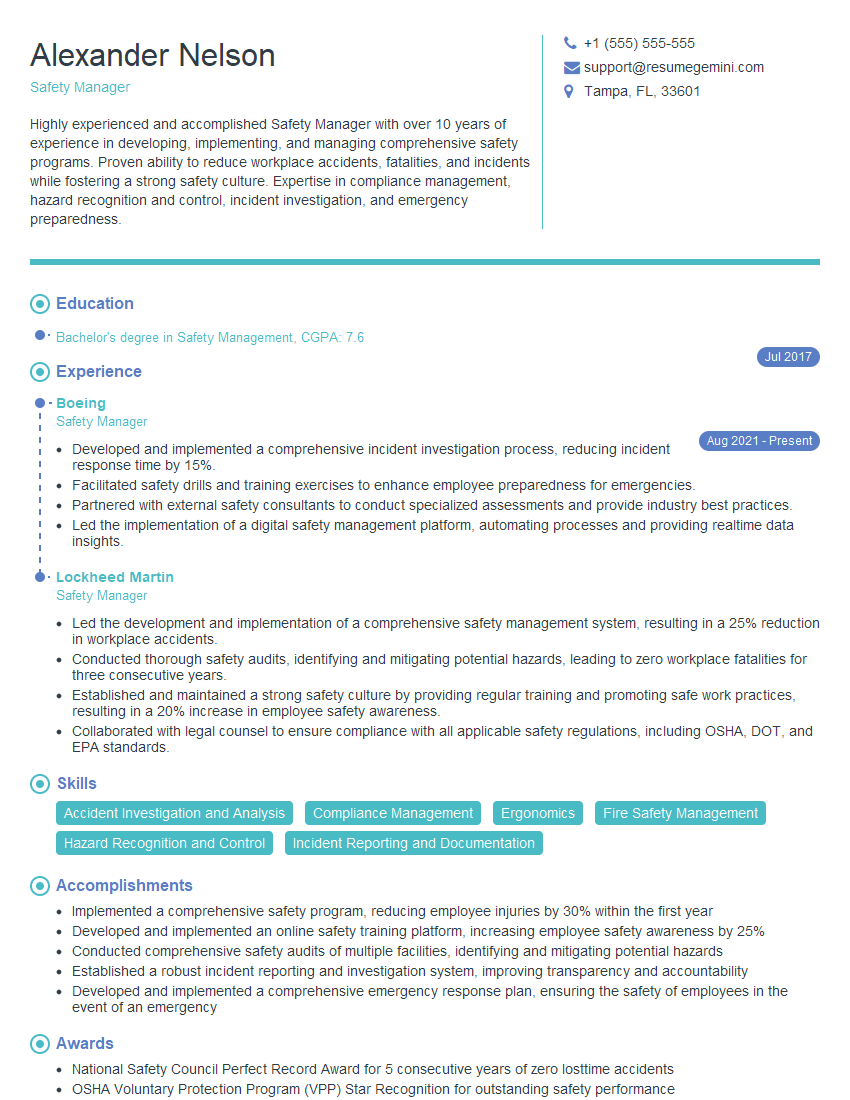
Safety Manager Resume Sample
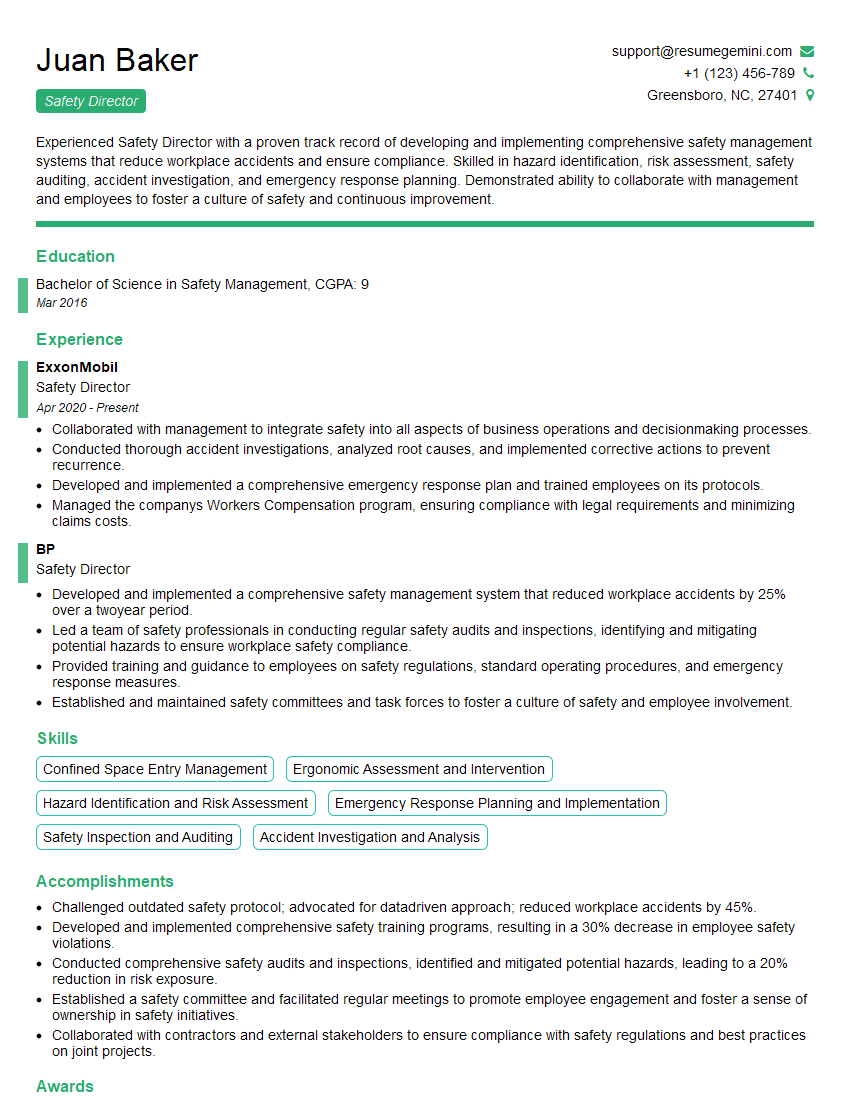
Safety Director Resume Sample
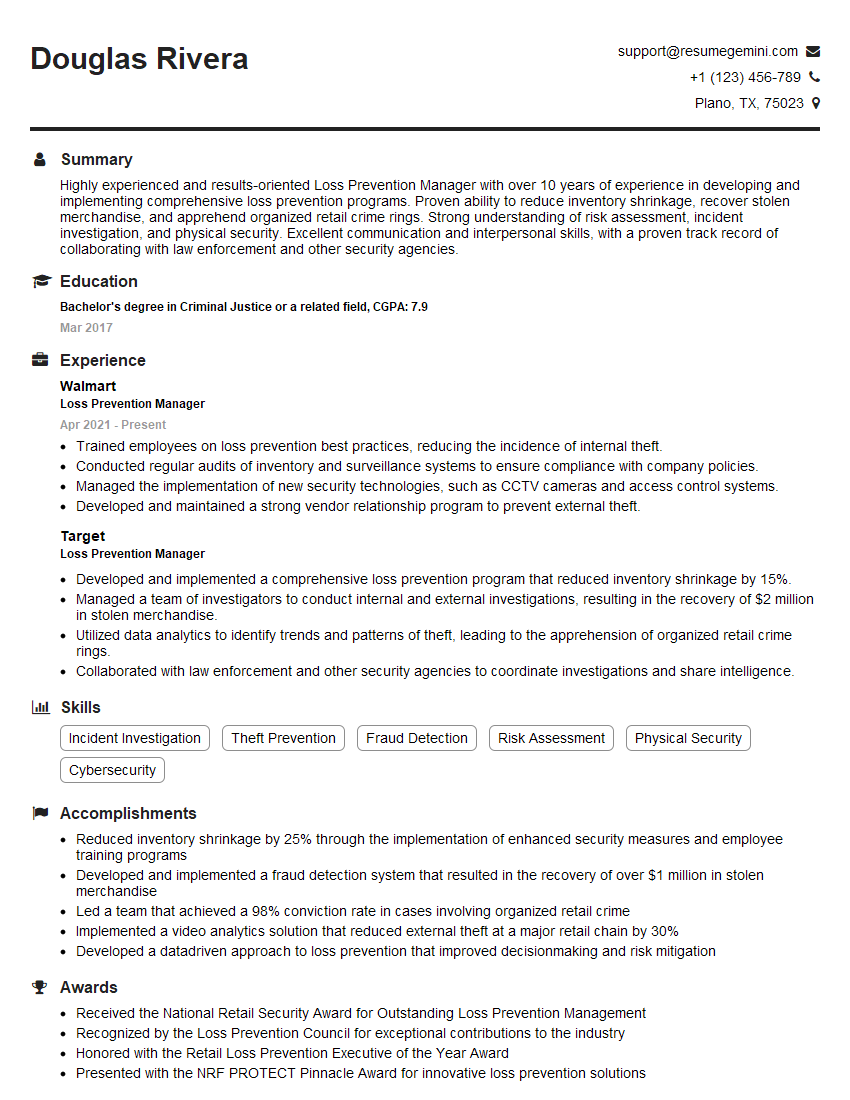
Loss Prevention Manager Resume Sample
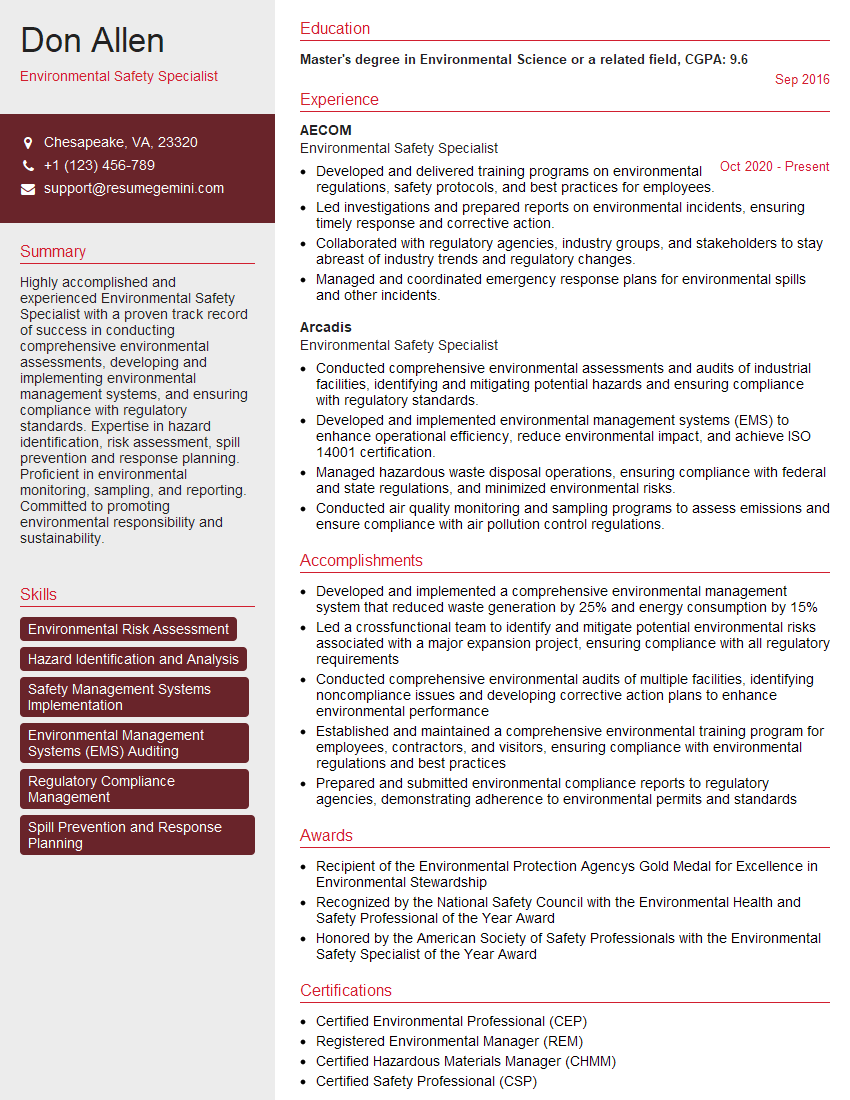
Environmental Safety Specialist Resume Sample
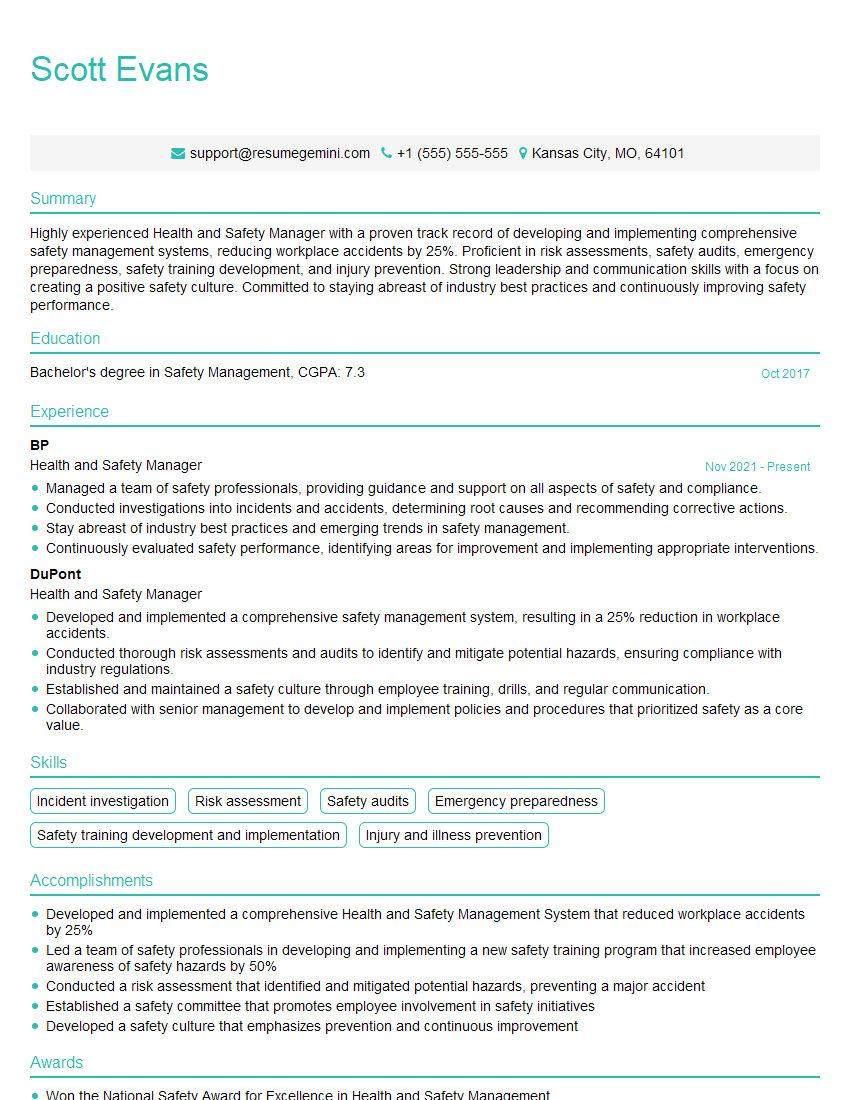
Health and Safety Manager Resume Sample
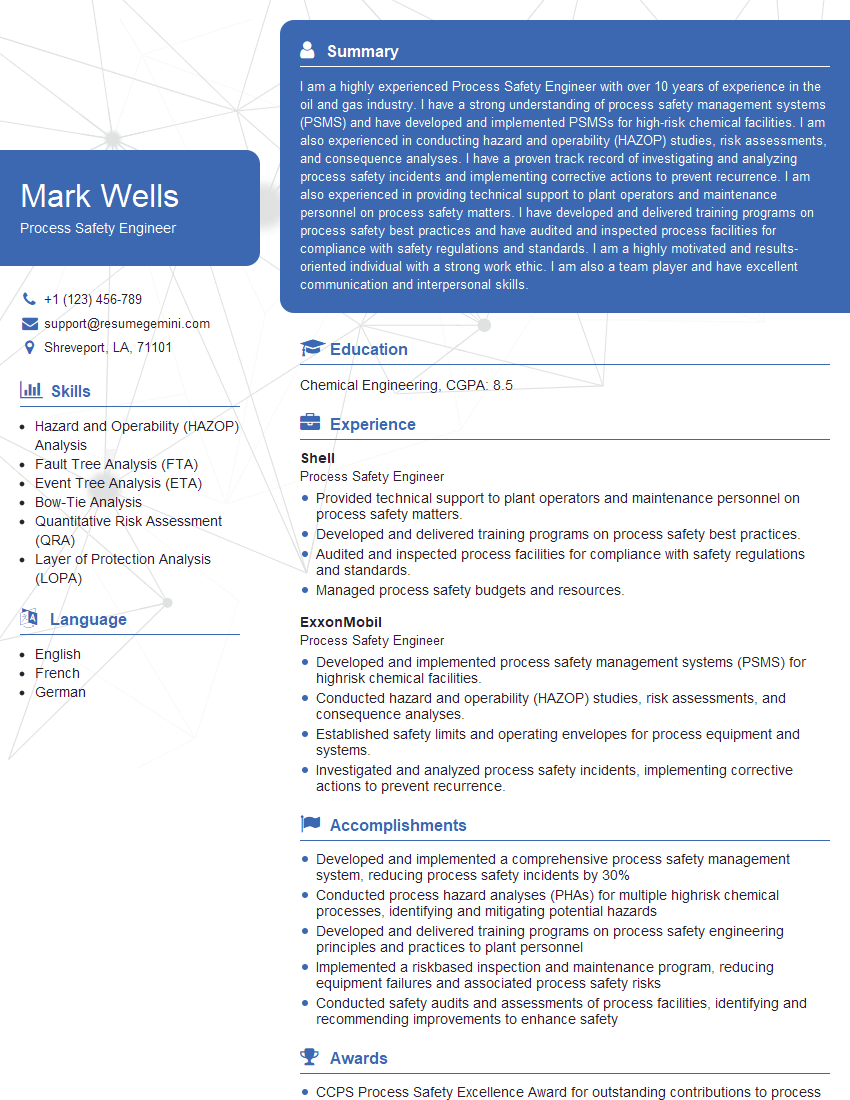
Process Safety Engineer Resume Sample
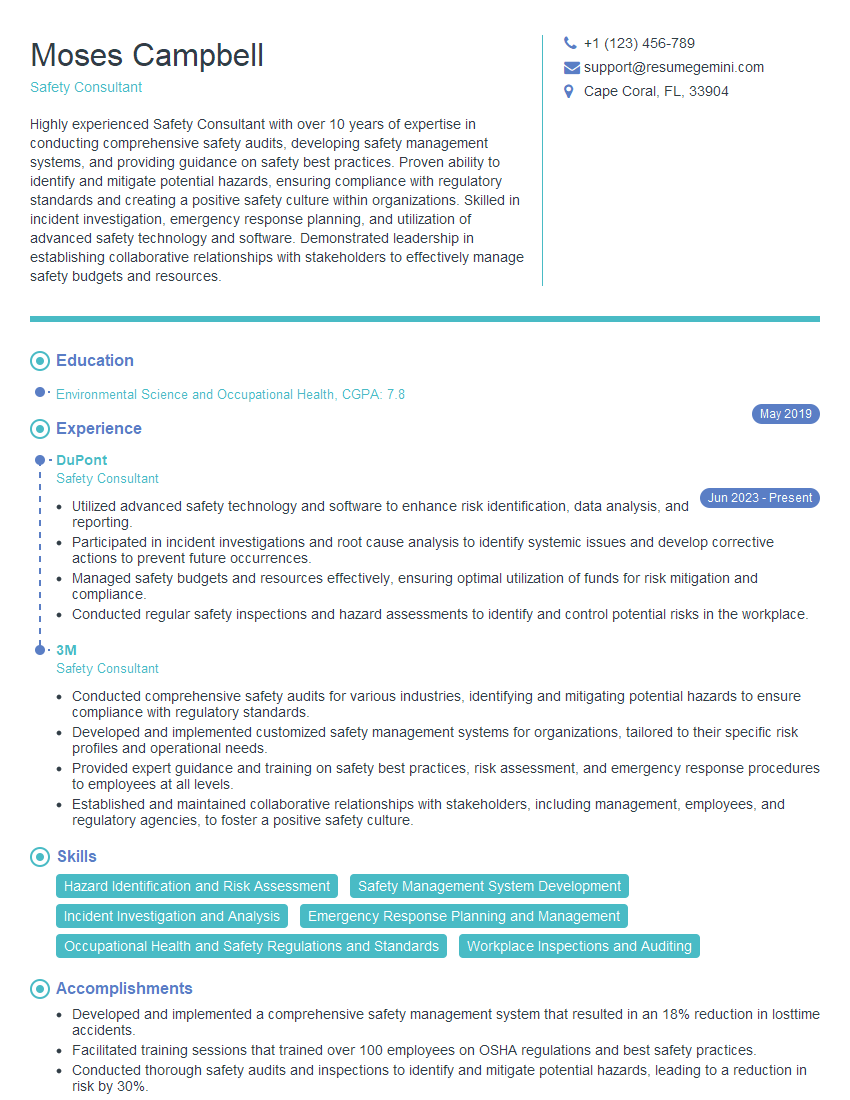
Safety Consultant Resume Sample
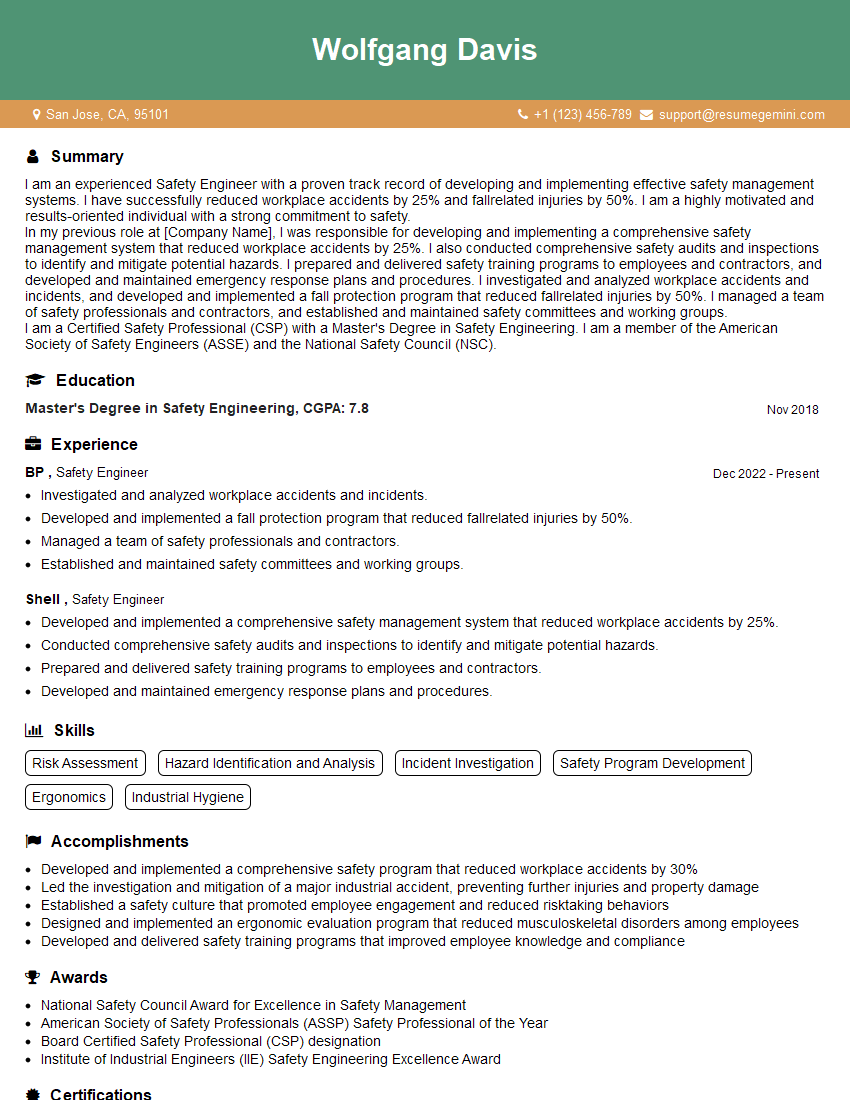
Safety Engineer Resume Sample
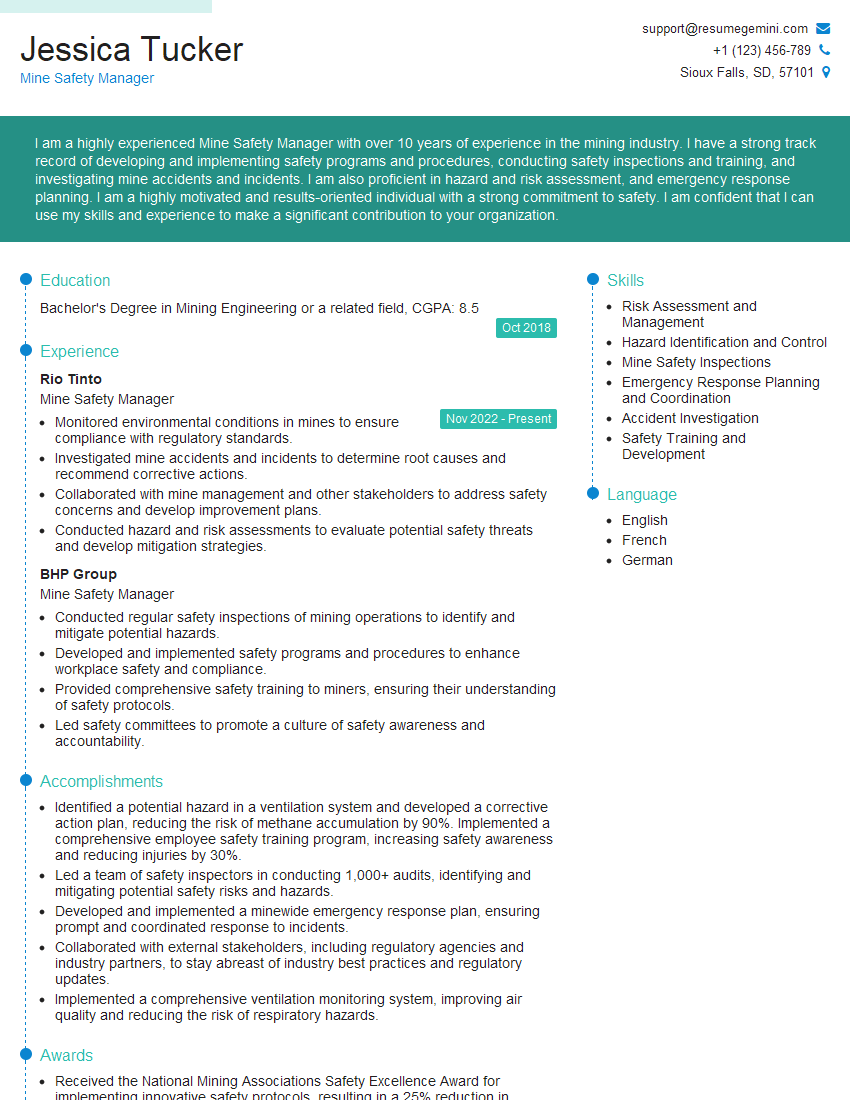
Mine Safety Manager Resume Sample
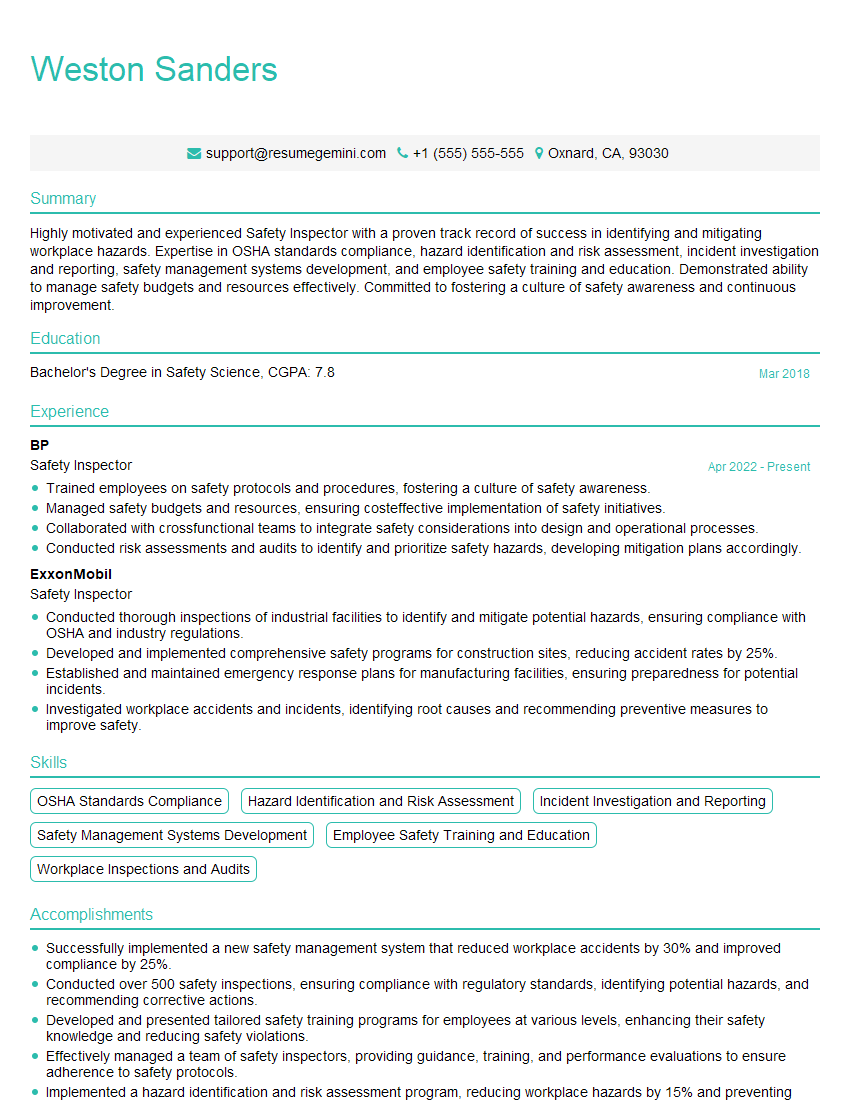
Safety Inspector Resume Sample
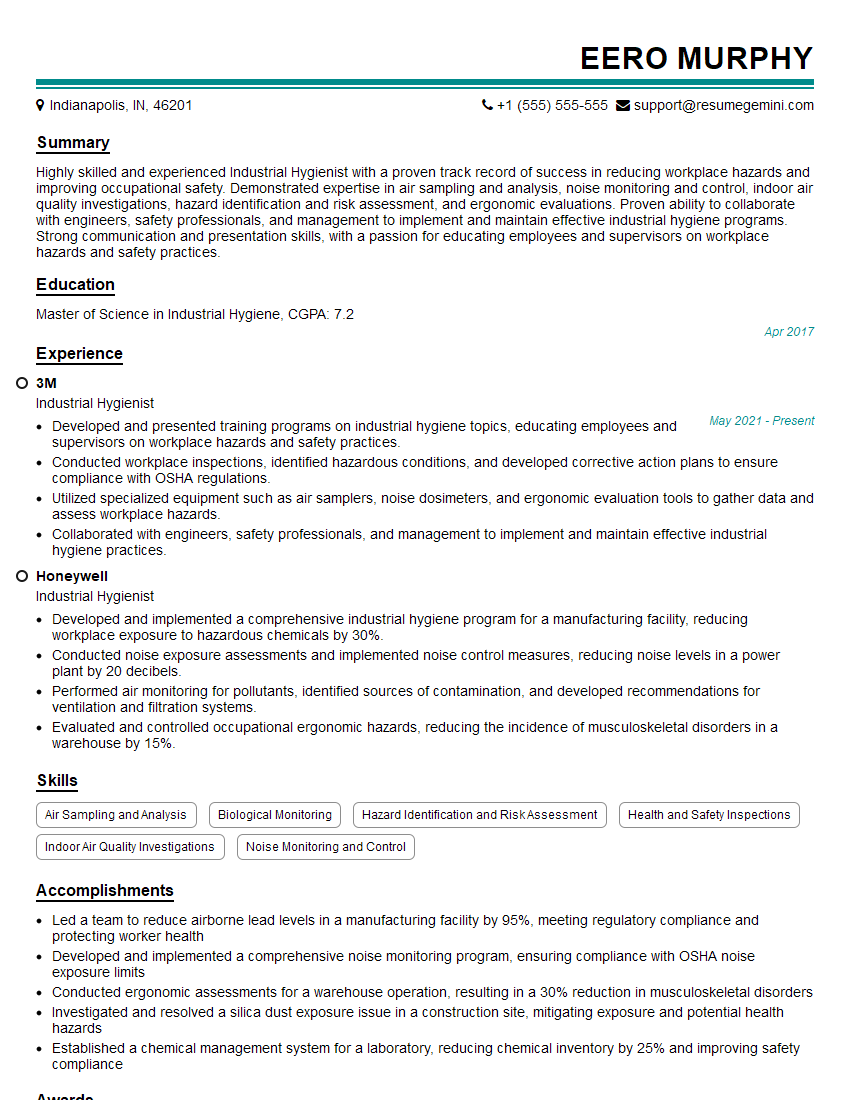
Industrial Hygienist Resume Sample
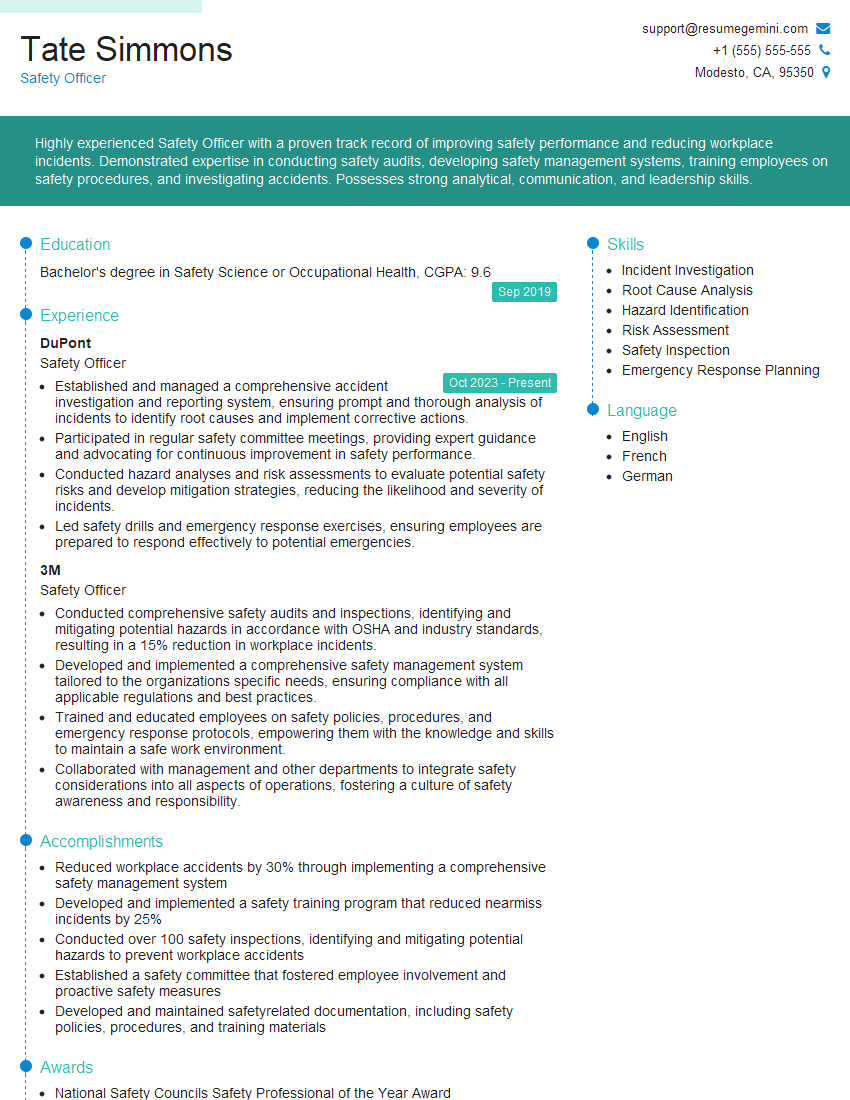
Safety Officer Resume Sample
Explore more articles
Users Rating of Our Blogs
Share Your Experience
We value your feedback! Please rate our content and share your thoughts (optional).
What Readers Say About Our Blog
Very informative content, great job.
good